Skip to content

...

Showing posts sorted by relevance for query free wrap knitting pattern. Sort by date Show all posts

Little Moons Lace Wrap – Free Lace Knitting Pattern

Little Moons Lace Wrap free lace knitting pattern by Jake Canton for Purl Soho

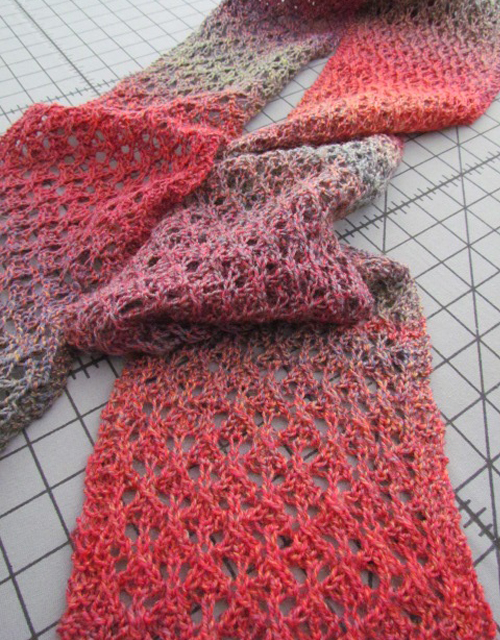
Little Moons Lace Wrap. Photo © Purl Soho

Little Moons Lace Wrap, designed by Jake Canton for Purl Soho, is a free rectangular lace wrap knitting pattern featuring striking diagonal ridges and delicate crescent-shaped eyelets.

Although the finished lace looks intricate, the design is built around a repeating 10-row lace pattern using increases and decreases. The wrap is worked flat in one piece, making it an elegant project for knitters ready to explore lace knitting.

Little Moons Lace Wrap Pattern Details

  • Designer: Jake Canton for Purl Soho
  • Published: June 2019
  • Craft: Knitting
  • Category: Shawl / Wrap
  • Pattern availability: Free on Purl Soho
  • Shape: Rectangle
  • Finished size: Approximately 18 × 78 inches (46 × 198 cm)
  • Yarn weight: Fingering for the current Santolina version
  • Current yarn requirement: Approximately 1,110 yards (1,015 m)
  • Needles: US 6 (4 mm) straight or circular needles
  • Gauge: 22 stitches × 34 rows = 4 inches (10 cm) in stitch pattern
  • Construction: One piece, worked flat
  • Lace repeat: 10 rows
  • Instructions: Written and charted
  • Language: English

A Beautiful Rectangular Lace Wrap

Little Moons is a long rectangular wrap with an airy lace fabric and strong diagonal movement.

Rows of small crescent-shaped openings appear between the diagonal ridges, creating the “little moons” that inspired the pattern's name. The result is delicate without losing the graphic structure of the stitch pattern.

Its simple rectangular shape also means the visual interest comes primarily from the lace rather than complicated garment construction.

A 10-Row Lace Repeat

The most important feature of this pattern is its 10-row lace repeat.

The flowing design is created through a sequence of basic increases, decreases and yarn overs. As the sequence repeats, the stitches form diagonal ridges separated by rows of lacy crescents.

This makes Little Moons a good example of how a relatively compact repeating sequence can produce a much more elaborate-looking finished fabric.

Written Instructions and a Lace Chart

Purl Soho provides the Little Moons stitch pattern in both written and charted formats.

If you prefer following lace line by line, you can use the written instructions. If you find it easier to visualize how the stitches move across the fabric, you can follow the chart instead.

Having both options is especially useful for knitters who are learning to read lace charts and want to compare the chart symbols with written directions.

Worked Flat in One Piece

Little Moons Lace Wrap is worked flat from one short end of the rectangle to the other.

There are no separate motifs to assemble and no garment pieces to seam together. You simply continue repeating the lace pattern until the wrap reaches the required length.

After the knitting is complete, the ends are woven in and the wrap is blocked to its finished dimensions.

Finished Size

The finished Little Moons Lace Wrap measures approximately 18 inches wide × 78 inches long (about 46 × 198 cm) after blocking.

This generous length gives you several styling options. It can be draped loosely over the shoulders as a wrap or worn more like a long, lightweight scarf.

The Current Santolina Version

Purl Soho revisited Little Moons in 2022 using Santolina, a fingering-weight yarn made from 70% organically grown cotton, 20% rayon from bamboo and 10% hemp.

The current Santolina sample requires approximately 1,110 yards (1,015 metres), or four skeins of the original Santolina put-up used for the project.

The plant-fiber blend creates a lightweight fabric with the drape and gentle sheen that work particularly well with this open lace design.

The Original Burnish Version

When Little Moons was first published in 2019, Purl Soho knitted the wrap in Burnish, a 100% rayon-from-bamboo yarn.

The original version used approximately 1,242 yards and the same US 6 (4 mm) needle size.

Purl Soho's later Santolina version gives knitters another useful reference for choosing a yarn with enough drape and stitch definition for the lace.

Choosing Yarn for Little Moons

The lace pattern benefits from a yarn that allows the diagonal ridges and crescent eyelets to remain clearly visible.

A smooth yarn with good stitch definition will generally show the pattern more clearly than a very fuzzy yarn.

Drape is also important for a long wrap. When substituting yarn, use the pattern gauge as your guide and consider how the finished fabric behaves after washing and blocking.

Needles and Gauge

The pattern calls for US 6 (4 mm) straight or circular knitting needles.

The specified gauge is: 22 stitches and 34 rows = 4 inches (10 cm) in the lace stitch pattern.

A circular needle can be convenient even though the wrap is worked flat, since the flexible cable can comfortably hold the width of the project.

Blocking Makes a Big Difference

Blocking is especially important for lace knitting.

Before blocking, the fabric may look narrower and the eyelets may not appear as open or defined as they do in the finished photographs. Blocking allows the lace to relax and helps reveal the repeating crescent shapes and diagonal lines.

Purl Soho's finished dimensions are measured after blocking, so keep this transformation in mind while you are knitting.

Skills Used in the Little Moons Lace Wrap

Useful techniques for this project include:

  • Knitting and purling
  • Working flat
  • Yarn overs
  • Knit-two-together decreases
  • Purl-two-together decreases
  • Lifted increases
  • Purlwise increases
  • Following a 10-row lace repeat
  • Reading written lace instructions or a chart
  • Blocking lace

Is Little Moons a Good First Lace Project?

The finished fabric may look complex, but the underlying structure is surprisingly approachable for a lace design.

Purl Soho describes the pattern as deceptively simple: the repeating design is created with increases and decreases over just ten rows.

You should still be comfortable keeping track of your row and stitch counts, particularly because increases, decreases and yarn overs need to remain correctly aligned for the pattern to develop.

Tips for Knitting the Lace Repeat

When working a repeating lace pattern, it can help to check your stitch count regularly rather than waiting until several rows later to discover a missed yarn over or decrease.

A row counter or simple written note can also help you keep track of where you are within the 10-row repeat.

If you are new to charted lace, Purl Soho also provides supporting tutorials alongside the original pattern.

An Elegant Three-Season Wrap

The open lace fabric and plant-fiber yarn used in the current version make Little Moons especially attractive as a lightweight accessory.

It can provide a little extra coverage without the bulk of a heavy winter shawl, making it suitable for transitional weather, cool summer evenings and special occasions.

The long rectangular shape also makes it easy to style in different ways depending on how much coverage you want.

Why Knit the Little Moons Lace Wrap?

Little Moons combines an uncomplicated rectangular construction with a lace pattern that looks much more intricate than its repeating structure suggests.

The combination of crescent eyelets, diagonal ridges, a 10-row repeat and generous 18 × 78-inch dimensions creates an elegant finished wrap while keeping the focus on the pleasure of knitting lace.

With both written and charted instructions available from the original designer, you can follow the format that works best for you.

Get the Free Little Moons Lace Wrap Pattern

The complete Little Moons Lace Wrap by Jake Canton for Purl Soho, including the written lace instructions and chart, is available free from Purl Soho.

Get the Free Little Moons Lace Wrap Knitting Pattern

Pattern availability was checked when this article was updated. Availability on external websites may change over time.
Tyra Top - Knitting Pattern Guide

Tyra Top - Free Pattern
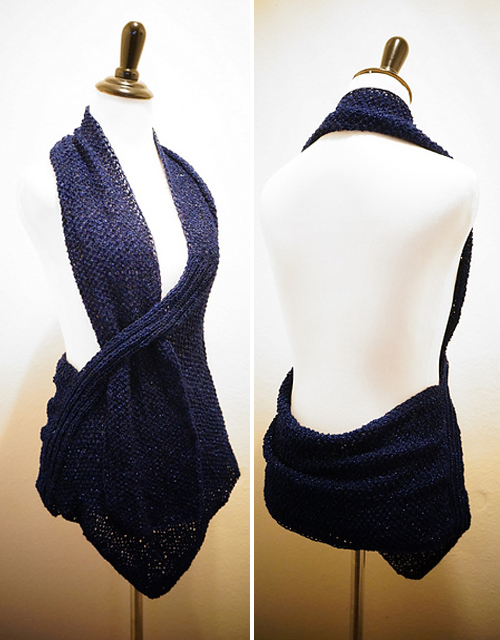
Photos above © Sakura58

Tyra Top by Irina Poludnenko is an unusual textured layering piece originally published in S. Charles Collezione, Modern Living, Fall/Winter 2009.

Despite its name, Ravelry classifies Tyra Top in the shawl/wrap category. Its asymmetric shape, front fastening and textured seed-stitch fabric create a garment that sits somewhere between a vest, wrap and decorative layering piece.

This older design was previously presented on Amazing Knitting as a free pattern. However, the original publication is now out of print, and we could not verify a current authorized free download.

Pattern Availability Update

Tyra Top by Irina Poludnenko was published in the Fall/Winter 2009 issue of S. Charles Collezione, Modern Living. Ravelry currently marks that publication as out of print. We could not verify a current authorized free download, so Amazing Knitting does not link to unofficial copies of the pattern.

Tyra Top at a Glance

Pattern: Tyra Top

Designer: Irina Poludnenko

Published: August 2009

Publication: S. Charles Collezione, Modern Living, Fall/Winter 2009

Category: Shawl / Wrap / Layering Piece

Skill Level: Easy

Yarn Weight: DK, held double

Original Yarn: Stacy Charles Fine Yarns Ritratto

Needles: US 7 / 4.5 mm

Gauge: 14 stitches × 22 rows = 4 in / 10 cm in seed stitch with two strands held together

Yardage: Approx. 990–1,188 yd / 905–1,086 m

Sizes: XS, S/M, L/XL, 2X

Construction: Worked flat and seamed

Current Availability: Original publication out of print

About the Tyra Top

Tyra Top was designed by Irina Poludnenko and first published in August 2009.

It is an unconventional garment. Although the word “Top” appears in its name, Ravelry categorizes the design as a shawl or wrap.

The asymmetric shape and front fastening give it the appearance of a lightweight vest or decorative wrap that can be layered over another garment.

Published Sizes

The pattern includes four size groups:

  • X-Small: 28–32 in / 71–81.5 cm bust
  • Small/Medium: 34–38 in / 86.5–96.5 cm bust
  • Large/XL: 40–44 in / 101.5–112 cm bust
  • 2X: 46–50 in / 117–127 cm bust

Use these published body measurements as a starting point when identifying the intended size.

Original Yarn

Tyra Top was designed using Stacy Charles Fine Yarns Ritratto.

Ravelry lists Ritratto as a DK-weight yarn containing:

  • 53% rayon
  • 28% mohair
  • 10% nylon
  • 9% polyester

Each 50-gram ball is listed at approximately 198 yards.

This unusual fiber combination helps explain the airy, slightly glamorous appearance visible in finished Tyra projects.

Two Strands Held Together

An important detail in the published specifications is that the yarn is worked with two strands held together.

Holding two strands together changes the behavior of the yarn and the resulting fabric, so this detail matters if you are considering a substitute.

Do not assume that any single DK yarn will automatically reproduce the same fabric.

Gauge

The published gauge is:

14 stitches × 22 rows = 4 × 4 inches / 10 × 10 cm

This gauge is measured in seed stitch with two strands of yarn held together.

Because Tyra is worn on the body, making a proper swatch is much more important than it would be for a simple scarf or blanket.

Needles

The published needle size is:

US 7 / 4.5 mm

Treat the published needle size as a starting point. The correct needle is whichever size allows your chosen yarn combination to produce the required gauge and fabric.

Published Yardage

Ravelry lists approximately:

990–1,188 yards / 905–1,086 meters

Remember that this is based on the original yarn and the pattern's two-strands-held-together construction.

Seed Stitch Texture

Seed stitch provides much of the surface texture in Tyra.

The alternating knit-and-purl structure creates a pebbled fabric that works particularly well with a yarn containing mohair and rayon.

The stitch pattern adds visual interest without requiring elaborate lace or cable work.

Keep Seed Stitch Consistent

A common mistake in seed stitch is accidentally creating a column of ribbing.

Learn to read the stitches in the fabric rather than relying only on memory. Checking the texture regularly can help you identify a mistake before it continues for several rows.

Asymmetric Styling

Ravelry tags Tyra as asymmetric.

That asymmetry is an intentional part of the garment's appearance, giving it a more contemporary shape than a conventional rectangular vest.

It also means that understanding the finished schematic or construction is useful before you begin knitting.

Front Fastening

Another defining feature is the front-fastening construction.

This allows the piece to function as a wearable layer rather than a simple rectangular shawl.

When finishing, take care that the fastening sits naturally and does not distort the surrounding knitted fabric.

Worked Flat and Seamed

Ravelry classifies Tyra Top as both worked flat and seamed.

This is useful to know before beginning if you normally prefer seamless garment construction.

Careful finishing will help the unusual shape sit correctly when worn.

Choosing a Substitute Yarn

Yarn substitution deserves extra attention with this pattern because the original yarn combines several fibers and is held double.

Instead of matching only the printed yarn-weight label, consider:

  • Gauge after washing
  • Finished fabric weight
  • Drape
  • Softness against the skin
  • Texture and halo
  • Whether two strands will be held together

A large washed swatch is particularly useful for a garment like Tyra.

Blocking

Blocking can help the seed-stitch fabric settle and allow the finished pieces to reach their intended dimensions before assembly.

Use a blocking method appropriate for the fibers in your substitute yarn and avoid stretching the fabric beyond the measurements required by the pattern.

Skill Level

The original pattern is classified as:

Easy

The stitch pattern itself is approachable, although achieving a good result still depends on consistent gauge, careful shaping and neat finishing.

Skills Used in Tyra Top

  • Knitting and purling
  • Seed stitch
  • Working with two strands held together
  • Following garment shaping
  • Working flat
  • Seaming
  • Finishing a front fastening
  • Blocking garment pieces

Is Tyra Top Still a Free Pattern?

We could not verify a current authorized free download.

Amazing Knitting originally published this page under the title “Tyra Top - Free Pattern,” but the current Ravelry record identifies the original source, S. Charles Collezione, Modern Living, Fall/Winter 2009, as out of print.

Because availability can change over time, we prefer to clearly state the current verified situation rather than continue sending readers to an obsolete download.

Amazing Knitting does not host or direct readers to unauthorized copies of the copyrighted pattern.

View the Tyra Top Pattern Record

Ravelry maintains the historical pattern record with the designer, original publication, sizes, yarn information and project examples:

View Tyra Top on Ravelry →

Looking for a Free Alternative?

If you are looking specifically for a free wearable knitting pattern, explore the verified free sweater and cardigan patterns already available in the Amazing Knitting archive.

Harvest by Tin Can Knits is one reliable option. It is a very different garment from Tyra, but the original Harvest pattern remains available for free and includes a wide range of sizes.

See the Free Harvest Cardigan →

You can also browse:

Before You Start

Tyra Top is an older design from an out-of-print 2009 publication. If you already own a legitimate copy of the original pattern, make a seed-stitch swatch with your chosen yarn combination before casting on.

Pay particular attention to the fact that the original Ritratto yarn is held double and that the published gauge is measured in the actual seed-stitch fabric.

If you do not own the original instructions, use the Ravelry record to identify the pattern and its publication rather than downloading unverified copies from unknown websites.

Pattern credit: Tyra Top was designed by Irina Poludnenko and published in S. Charles Collezione, Modern Living, Fall/Winter 2009. The existing project photographs on this Amazing Knitting page are credited to Sakura58. Amazing Knitting provides an independent historical pattern guide and does not reproduce the designer's copyrighted knitting instructions.

Baby Kimono - Free Knitting Pattern

Baby Kimono - Free Knitting Pattern
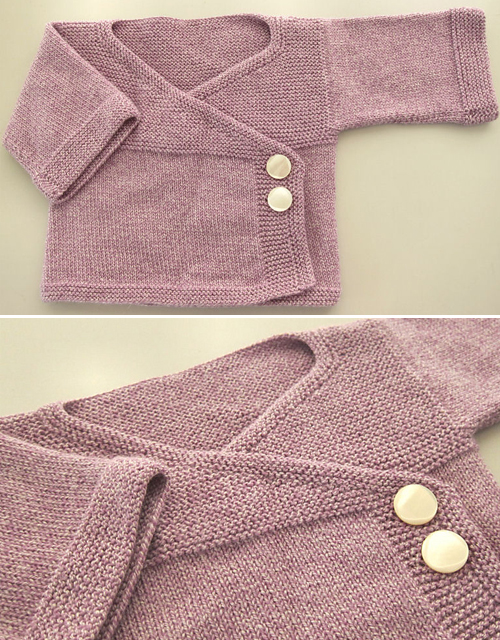
Photos above © Tichiro

Garter Stitch Baby Cardigan by Joji Locatelli, often known by knitters as the Garter Stitch Baby Kimono, is a sweet wrap-style baby cardigan worked almost entirely in garter stitch.

Its crossover front gives the little sweater its kimono-inspired appearance, while the simple stitch pattern makes it an appealing project for knitters ready to try a small baby garment.

✓ Free Pattern

This project is commonly referred to as the Baby Kimono, but the pattern's official name is Garter Stitch Baby Cardigan by Joji Locatelli. A free copy of the designer's original pattern remains available online.

Baby Kimono at a Glance

Official Pattern: Garter Stitch Baby Cardigan

Designer: Joji Locatelli

Craft: Knitting

Category: Baby Cardigan / Kimono-Style Sweater

Sizes: Newborn, 1–3 months, 3–6 months

Main Stitch: Garter stitch

Needles: 2.5–3 mm

Gauge: 28 stitches = 10 cm in garter stitch

Yarn: Approximately 100–150 g, depending on size

Notions: Two approximately 15 mm buttons

Availability: Free pattern

About the Garter Stitch Baby Kimono

Joji Locatelli originally wrote down this design after the knitted cardigan attracted considerable interest from other knitters.

The result is a simple wrap-style baby cardigan with overlapping fronts. Because garter stitch forms most of the fabric, the visual interest comes primarily from the shape of the garment rather than complicated stitch patterns.

The crossover construction also makes it quite different in appearance from a conventional button-front baby cardigan.

Three Baby Sizes

The original pattern includes three sizes:

  • Newborn
  • 1–3 months
  • 3–6 months

The published finished chest measurements are approximately:

  • Newborn: 40 cm / 16 inches
  • 1–3 months: 45 cm / 18 inches
  • 3–6 months: 50 cm / 20 inches

Finished total lengths are approximately 20, 24 and 26 cm (8, 9.5 and 11 inches) respectively.

When possible, choose a size from the finished measurements rather than relying only on the baby's age.

Yarn Requirements

Joji's original sample was knitted with an acrylic yarn called NUBE Dralón, which she found in Argentina.

However, the pattern specifically allows another suitable yarn to be substituted.

The approximate yarn quantities given in the original pattern are:

  • Smaller size: approximately 100 g
  • Larger sizes: approximately 150 g

Rather than choosing a substitute based only on fibre or label, make sure your yarn can produce the required gauge and a fabric appropriate for a soft baby cardigan.

Needles and Gauge

The original pattern recommends needles in the range of:

2.5–3 mm

The designer also notes that you should use whatever needle size is necessary to obtain the correct gauge.

Published gauge is:

28 stitches = 10 cm / 4 inches in garter stitch

Making a small swatch is especially worthwhile for a baby garment because even a modest difference in gauge can noticeably change such a small finished size.

Why Garter Stitch Works So Well

Garter stitch is created by knitting every row when working flat. It produces a fabric with distinctive horizontal ridges and plenty of natural stretch.

It also lies relatively flat, making it particularly useful for a wrap-style cardigan where clean edges help the overlapping fronts sit comfortably.

For a newer knitter, using one familiar stitch throughout much of the garment means more attention can be given to learning the construction and shaping.

The Kimono-Style Front

The crossover front is what gives this cardigan its familiar “baby kimono” nickname.

Rather than meeting at the center like a conventional cardigan, one front overlaps the other. The original design uses buttons together with an inside fastening to help hold the layers in position.

The pattern calls for two buttons approximately 15 mm in diameter.

Skills That Help

Useful skills for this project include:

  • Casting on
  • Garter stitch
  • Basic shaping
  • Increasing and decreasing
  • Making buttonholes
  • Picking up stitches
  • Working sleeves
  • Binding off
  • Simple finishing
  • Weaving in yarn ends

Use Joji Locatelli's original pattern for the exact stitch counts, shaping sequence, sleeve construction and finishing instructions.

A Popular Little Cardigan

One reason this design has remained recognizable for so many years is its simplicity.

Thousands of knitters have made versions of the Garter Stitch Baby Cardigan, experimenting with different yarns, colours and small finishing modifications while retaining the characteristic wrap-front shape.

That makes the Ravelry project gallery especially useful for inspiration before choosing yarn for your own version.

Choosing Yarn for a Baby Cardigan

In addition to matching gauge, consider how the finished garment will be used.

Softness matters for clothing worn close to a baby's skin, while easy washing can be valuable for an everyday garment. Also check that the finished garter-stitch fabric is not excessively dense or loose.

A smooth yarn can emphasize the simple garter ridges, while a gently heathered or subtly variegated yarn can add colour interest without competing with the clean construction.

Is the Baby Kimono Pattern Free?

Yes. The Garter Stitch Baby Cardigan pattern by Joji Locatelli was released as a free knitting pattern.

Amazing Knitting does not reproduce Joji's copyrighted row-by-row instructions. Instead, we link readers to the existing pattern source.

Get the Free Baby Kimono Pattern

The pattern is available as a PDF under its original name, Garter Stitch Baby Kimono / Garter Stitch Baby Cardigan.

View the Free Baby Kimono Pattern →

More Free Baby Cardigans

If you enjoy small wrap-style garments, continue exploring the Amazing Knitting archive for more free baby sweaters and cardigans.

Explore Free Baby Cardigan Patterns →

You can also browse free baby sweaters, newborn knitting patterns, and garter-stitch baby cardigans.

Before You Start

Choose your size from the finished measurements, make a garter-stitch gauge swatch, and check that your yarn creates a soft but stable fabric before beginning the cardigan.

Read the complete original pattern before casting on so that you understand how the overlapping fronts, sleeves and fastenings come together.

Pattern credit: Garter Stitch Baby Cardigan / Baby Kimono was designed by Joji Locatelli. The existing photographs on this Amazing Knitting page are credited to Tichiro. Amazing Knitting does not reproduce the designer's copyrighted row-by-row knitting instructions.

Owlie Sleep Sack - Free Knitting Pattern

Owlie Sleep Sack - Free Pattern
Photo above © bisoubunny

Owlie Sleep Sack by Teresa Cole is a cozy newborn knitting project featuring an adorable band of little cable owls near the top.

The simple stockinette body keeps the overall construction manageable, while the owl motif adds just enough texture and personality to make the finished piece feel special.

Designed for newborns and young infants, this project has become a popular handmade baby gift and photography prop.

Best of all, the original Owlie Sleep Sack pattern is still officially available for free.

Important Baby Safety Note

The designer specifically warns that the Owlie Sleep Sack is not intended for babies to sleep in unattended. Never leave a baby in the sleep sack when the child is out of your sight. Treat it as a supervised cozy wrap or photography accessory, not as an unsupervised sleep product.

✓ Free Pattern Availability

Owlie Sleep Sack by Teresa Cole is currently listed on Ravelry as an available free pattern, with the original source credited to the Comfort Wool Blog.

Owlie Sleep Sack at a Glance

Pattern: Owlie Sleep Sack

Designer: Teresa Cole

Original Source: Comfort Wool Blog

Category: Baby sleep sack / cocoon

Size: Newborn / Infant

Suggested Yarn: Malabrigo Yarn Worsted

Yarn Weight: Aran / 10 ply

Yardage: 150–200 yd / 137–183 m

Needles: US 7 / 4.5 mm

Gauge: 5 sts per inch in stockinette

Construction: One piece, seamless, worked in the round

Featured Technique: Cable owl motif

Availability: Free

About the Owlie Sleep Sack

Owlie Sleep Sack is a small baby cocoon with a smooth knitted body and a decorative band of cable owls near the upper section.

That combination makes the design especially charming: most of the knitting is straightforward, while the owl section provides a fun introduction to cable work.

Because the project is compact, it can also be a practical way to practice new techniques without committing to a full-size garment.

The Owl Cable Motif

The most distinctive feature is the row of little knitted owls.

Cable stitches create the body and shape of each owl by crossing groups of stitches over one another.

Once repeated around the sleep sack, the individual cable motifs become a decorative band that gives the project its recognizable look.

A Good Introduction to Cables

If you already feel comfortable knitting and purling in the round, Owlie can be a useful next project for learning basic cable techniques.

You will be able to practice:

  • Working in the round
  • Maintaining stockinette fabric
  • Following cable instructions
  • Crossing stitches
  • Keeping an even gauge
  • Shaping a simple baby cocoon

Yarn and Yardage

The published pattern record lists Malabrigo Yarn Worsted as the suggested yarn.

The required yardage is approximately:

150–200 yards / 137–183 meters

That relatively small quantity makes Owlie a practical project for a single special skein, depending on skein yardage and your gauge.

Needles and Gauge

The listed needle size is:

US 7 / 4.5 mm

The published gauge is:

5 stitches per inch in stockinette

Gauge matters because the pattern is designed for a very small baby size. A substantially different gauge can change both the width and the length of the finished sack.

Why Gauge Is Especially Important for Baby Projects

Adult accessories such as scarves can often tolerate considerable size variation.

A newborn project is less forgiving.

If your stitches are much looser or tighter than the published gauge, the finished sleep sack may be significantly larger or smaller than intended.

Make a swatch if you are substituting yarn or needles.

Worked in the Round

Owlie is designed as a seamless, one-piece project worked in the round.

That keeps the smooth stockinette body free from a long side seam and allows the owl motifs to continue around the upper section.

If you are new to circular knitting, make sure the cast-on stitches are not twisted before joining in the round.

Choosing a Yarn Substitute

You do not have to use the original Malabrigo yarn, but choose a substitute that can produce the required gauge and a comfortable fabric.

Consider:

  • Yarn weight
  • Gauge
  • Softness
  • Fiber content
  • Washability
  • Stitch definition
  • Total yardage

Choose Yarn That Shows the Owls

Smooth or moderately plied yarns generally make cable motifs easier to see.

Very fuzzy yarn can soften the edges of the little owls, while strong color changes may visually compete with the cable shapes.

A solid or gently tonal color is often an excellent choice when you want the owl pattern to remain the star of the project.

Softness Matters

Any yarn used next to a baby's skin should feel comfortable and avoid irritating fibers or rough finishes.

Washability is also worth considering because baby items often need frequent cleaning.

Always follow the care instructions for the yarn you select.

Do Not Add Loose Decorations

The cable texture itself creates the owl shape, so additional embellishment is not necessary.

For a baby item, avoid loose buttons, beads or decorations that could detach.

If you customize the project, prioritize secure construction and supervised use.

Use Stitch Markers

Markers can help keep repeated owl sections organized.

They are particularly useful when several similar cable motifs repeat around the project and you want to identify an error before completing the entire round.

Check Your Cables Before Moving On

Cable mistakes are easier to correct soon after they happen.

After completing each cable round, pause and look at the motifs before knitting several more rounds.

Check that each owl is crossing in the intended direction and that none of the repeats has shifted.

Is Owlie Sleep Sack Suitable for Beginners?

A knitter who has only just learned the basic knit stitch may find the project ambitious.

It is more approachable if you already know how to:

  • Knit and purl
  • Work in the round
  • Read written pattern instructions
  • Maintain gauge

The owl section can then serve as a manageable introduction to cables.

Newborn / Infant Size

The official pattern record identifies the original size as Newborn/Infant.

Do not assume that enlarging the yarn or needle size automatically creates a safely proportioned older-baby version.

If you modify the dimensions, treat the changes as your own modification rather than as an official additional size from the designer.

Important: This Is Not an Unattended Sleep Product

Please Read Before Making This Project

The original pattern record specifically warns that the sleep sack is not meant for babies to sleep in unattended. Never leave a child in the Owlie Sleep Sack when the child is out of your sight.

This warning is part of the designer's own pattern information and should remain clearly visible on any page discussing the project.

The word "sleep sack" in the pattern name should not be interpreted as permission to use the handmade item as an unsupervised infant sleep product.

A Lovely Supervised Baby Gift

Used appropriately, Owlie can make a charming handmade newborn gift, supervised snuggle wrap or photography accessory.

Its small size also means it can be completed much more quickly than a baby blanket while still showcasing an interesting knitted motif.

Is Owlie Sleep Sack Still Free?

Yes.

Ravelry currently lists Owlie Sleep Sack by Teresa Cole as available for free.

The pattern record points back to the original Comfort Wool Blog source.

Amazing Knitting does not reproduce the designer's complete copyrighted row-by-row instructions. Use the authorized pattern source below for the full directions.

Get the Free Owlie Sleep Sack Pattern

The current Ravelry record is the safest route for confirming the designer, specifications and free availability:

Get the Free Owlie Sleep Sack Pattern →

More Free Baby Knitting Patterns

Continue with these verified free baby patterns already restored in the Amazing Knitting archive:

Explore More Baby Knitting

Before You Cast On

Check that your yarn is soft, appropriate for a baby item and capable of producing the required gauge.

Practice the owl cable motif on a small swatch if cables are new to you, and use stitch markers to keep the repeated sections organized.

Most importantly, remember the designer's safety warning and use the finished Owlie Sleep Sack only with direct adult supervision.

Pattern credit: Owlie Sleep Sack was designed by Teresa Cole and published through the Comfort Wool Blog. The existing Amazing Knitting photograph is credited to bisoubunny. Amazing Knitting provides an independent project guide and does not reproduce the designer's complete copyrighted knitting instructions.

Stitch Stripe Shawl Knitting Patterns

Stitch Stripe Shawl Knitting Patterns
Beauitiful Knitting Shawls 

Stitch stripe shawls are a wonderful way to combine several knitting techniques in one wearable project.

Instead of relying only on color stripes, these shawls alternate sections of garter stitch, lace, slipped stitches, moss stitch, eyelets, dropped stitches and other textures.

The result can look complex while still allowing you to work through one manageable stitch pattern at a time.

About This Guide

This Amazing Knitting page is an independent guide to textured stripe shawls. We do not reproduce designers' complete knitting instructions. Pattern availability can change, so use the original designer or publisher links for the current pattern.

What Is a Stitch Stripe Shawl?

A stitch stripe shawl is built from visible bands or sections where the knitting technique changes.

One section might be simple garter stitch, while the next introduces lace, slipped stitches, moss stitch, eyelets or another texture.

Color changes can make those sections even more obvious, but they are not essential. A single-color shawl can still show dramatic striping when the stitch patterns create enough contrast.

Why These Shawls Are So Interesting to Knit

Long shawls can sometimes become repetitive. A sampler-style design solves that by changing the knitting experience as the fabric grows.

You may spend one section working relaxing garter stitch and the next following a lace or slipped-stitch motif.

This makes textured stripe shawls especially useful for knitters who enjoy variety without wanting to make many separate small projects.

Good Techniques for Stitch Stripe Shawls

Common techniques include:

  • Garter stitch
  • Stockinette and reverse stockinette
  • Moss or seed stitch
  • Lace and eyelets
  • Slipped stitches
  • Mosaic-style colorwork
  • Dropped stitches
  • Twisted stitches
  • Bobbles
  • Textured ribs

You do not need all of these techniques in one design. Even two or three contrasting stitch patterns can produce a strong striped effect.

Free Pattern: Lueur Shawl

Lueur by Audrey Borrego is an excellent modern example of the stitch-sampler idea.

It combines several textures including twisted stitches, bicolour moss stitch, bobbles and a garter tweed motif.

The shawl is an asymmetrical triangle worked sideways and uses two colors of sport-weight yarn.

Lueur is currently available as a free Ravelry download.

View the Free Lueur Shawl Pattern →

Free Pattern: Guild Park

Guild Park by Laura Chau is another interesting textured wrap.

Published by Knitty, it combines a zigzag lace mesh with twisted stitches and dropped-stitch sections that create soft waves across the fabric.

Guild Park is a rectangular wrap worked flat in sport-weight yarn and remains available as a free Knitty pattern.

View the Free Guild Park Pattern →

Free Web Pattern: Cambria Wrap

Cambria Wrap by Alexandra Tavel is a large triangular wrap that alternates simple fabric with eyelet and lace details.

The design uses worsted-weight yarn and is approximately 76 inches / 193 cm wide with a depth of about 38 inches / 97 cm.

The designer currently offers a free web version, while a paid PDF version is also available for knitters who prefer that format.

View Cambria Wrap Pattern Information →

One Color or Several?

Both approaches work.

With a single color, the eye is drawn to the changing stitch texture. This can produce an elegant and understated shawl.

With two or more colors, the stripe structure becomes much more graphic.

If the stitch pattern is already elaborate, consider using relatively simple color combinations so that color and texture do not compete for attention.

These Patterns Are Excellent for Stash Yarn

Multi-section shawls can be useful stash projects because different colors can be assigned to different bands.

Before mixing leftover yarns, make sure they behave reasonably well together.

Similar yarn weights and compatible washing instructions usually make finishing easier.

Watch Your Gauge When the Stitch Changes

Different stitch patterns can produce very different fabric widths even when worked with the same yarn and needle.

Garter stitch, lace, slipped stitches and seed stitch may not all have the same natural gauge.

In a well-designed pattern, the designer has already accounted for these differences. Avoid changing stitch counts or needle sizes inside individual sections unless you understand how that will affect the overall shawl shape.

Use Lifelines in Lace Sections

If a shawl alternates easy texture with more complicated lace, a lifeline can be useful before beginning a difficult section.

That gives you a known-correct row to return to without undoing an earlier completed stripe.

Keep Notes as You Work

Sampler shawls are much easier to manage when you keep a simple record of your progress.

Note which section you are working, which color you used and where you stopped.

This is especially useful if the project is set aside for several days or weeks.

Blocking Makes a Big Difference

Blocking is especially important when several textures appear in one shawl.

Lace usually opens after blocking, while garter and moss stitch settle into a more even surface.

Use a method appropriate for your yarn and follow the designer's finished measurements rather than stretching every section as far as possible.

How to Choose a Stitch Stripe Shawl

Before choosing a pattern, consider what you want from the project.

  • Choose garter and simple texture if you want relaxing knitting.
  • Choose lace sections if you enjoy charts and openwork.
  • Choose slipped stitches if you want color effects without traditional stranded knitting.
  • Choose a sampler shawl if your goal is to practice several techniques in one project.
  • Choose a multicolor design if you want to use leftover yarn or mini skeins.

More Stitch Stripe Shawl Patterns

The original inspiration for this older Amazing Knitting post was a collection from In the Loop Knitting, which continues to maintain a large roundup of stitch-stripe shawl patterns from many different designers.

Some are free, while pattern availability can change over time. Always follow through to the individual designer or publisher before assuming that a pattern is still free.

Explore More Stitch Stripe Shawls at In the Loop Knitting →

Explore More Free Shawls on Amazing Knitting

Before You Start

Check the current pattern source before purchasing yarn because older roundup pages can remain online long after an individual designer has changed a pattern from free to paid or discontinued it.

Once you choose a design, read through all of its stitch sections before casting on and make sure you understand any unfamiliar techniques.

Then choose colors that allow the texture to remain visible and enjoy the changing rhythm of the different stitch patterns.

Editorial note: This Amazing Knitting page is an independent educational and discovery guide. The linked patterns belong to their respective designers and publishers. Amazing Knitting does not reproduce their complete copyrighted instructions.

Preemie Crossover Cardigan – Free Premature Baby Knitting Pattern


Preemie Crossover Cardigan free knitting pattern by Jacqueline Gibb for premature babies

Preemie Crossover Cardigan by Jacqueline Gibb. Project photo © jakeis13.

Preemie Crossover Cardigan by Jacqueline Gibb is a tiny wrap-style baby cardigan knitting pattern designed especially for premature babies weighing approximately 3–5 lb.

Worked primarily in simple garter stitch with DK-weight yarn, the cardigan has a clever crossover front, integrated sleeves and two-button fastening.

It is also a wonderfully economical little project, requiring only around 85–90 yards (78–82 m) of DK yarn.

Good news: the original Preemie Crossover Cardigan is still available as a free knitting pattern directly from designer Jacqueline Gibb through her Jacknitss Ravelry Downloads. You will find the verified free pattern link near the end of this guide.

Preemie Crossover Cardigan at a Glance

  • Pattern: Preemie Crossover Cardigan
  • Designer: Jacqueline Gibb
  • Published: April 2018
  • Category: Premature baby cardigan
  • Style: Crossover / wrap cardigan
  • Size: Preemie, approximately 3–5 lb
  • Chest: Approximately 11 in
  • Underarm to underarm: Approximately 5.5 in
  • Length: Approximately 5 in
  • Yarn weight: DK
  • Yardage: Approximately 85–90 yd (78–82 m)
  • Needles: US 6 / 4 mm
  • Gauge: 5 stitches and 6 rows = 1 in in garter stitch
  • Main texture: Garter stitch
  • Fastening: Two buttons
  • Language: English
  • Current availability: Free Ravelry download

A Tiny Cardigan Designed for Preemie Babies

This pattern was created specifically for very small premature babies rather than simply being a standard newborn cardigan worked on smaller needles.

The designer states that it is intended to fit a premature baby weighing approximately 3 to 5 pounds.

The finished garment measures about 5.5 inches from underarm to underarm and approximately 5 inches in length.

Those tiny measurements make it very different from many ordinary newborn knitting patterns.

Simple Crossover Front

The cardigan uses a practical crossover or wrap-style front.

Instead of two straight front edges meeting in the middle, the fronts overlap diagonally across the baby's body.

Two buttons secure the garment and help keep the crossover shape in place.

The diagonal front also gives this very simple garter-stitch cardigan its distinctive appearance.

Worked Mainly in Garter Stitch

Most of the cardigan is worked in garter stitch, one of the simplest and most useful knitting textures.

When knitting flat, garter stitch is created primarily by knitting every row.

The resulting fabric has soft horizontal ridges and naturally lies flat, making it particularly useful for small garments where you do not want edges constantly curling inward.

A Clever One-Piece Style of Construction

One of the interesting features of Preemie Crossover Cardigan is the way the garment develops as you knit.

The two front sections are shaped first, with stitches added for the sleeves. The fronts are then joined so the knitting can continue down the back.

This construction reduces the number of separate garment pieces that need to be knitted and assembled later.

Some finishing is still required at the underarm and side seams.

DK-Weight Yarn

The pattern is designed for DK-weight yarn.

Jacqueline Gibb originally lists The Women's Institute Premium Acrylic as the suggested yarn.

You do not need to use that exact yarn. A suitable DK yarn can be substituted if it gives you an appropriate fabric and finished size.

Only a Small Amount of Yarn Is Needed

Because the cardigan is designed for a very small premature baby, it requires relatively little yarn.

Published pattern information lists approximately 85–90 yards (78–82 meters).

That makes this a potentially useful project for a suitable quantity of leftover DK yarn, provided the fiber is soft, washable and appropriate for a premature baby's delicate skin.

Choosing Yarn for a Preemie Cardigan

Yarn choice deserves extra attention when knitting clothing for a premature baby.

Look for a yarn that feels very soft against the skin and is practical to wash.

Avoid unnecessarily rough, scratchy or heavily textured fibers. A smooth yarn also makes the simple garter-stitch construction look clean and even.

If you are knitting for a hospital, neonatal unit or charity, always check that organization's current yarn and garment requirements before starting. Individual organizations may have specific rules regarding fibers, colors, buttons, sizing or other garment details.

Needle Size

The main pattern uses US 6 / 4 mm knitting needles.

The designer also notes that the cardigan can be worked using 3.75 mm needles to obtain a slightly smaller finished size.

However, changing needle size also changes the fabric, so consider the softness and flexibility of the finished knitting rather than focusing only on making the garment smaller.

Gauge and Finished Size

Published pattern information lists a gauge of approximately 5 stitches and 6 rows per inch in garter stitch.

Jacqueline Gibb notes that exact gauge is not the central focus of this design because much of the pattern shaping is based on row counts rather than measurements.

Even so, your personal knitting tension will affect the final size.

For such a tiny garment, even a small difference in gauge can represent a meaningful difference in finished dimensions.

Is This a Beginner-Friendly Pattern?

The cardigan uses straightforward stitches, but it is more interesting than a basic rectangular garter-stitch project.

A confident beginner who is comfortable with basic shaping may find it an approachable first baby garment.

The pattern introduces useful techniques such as decreases, yarn overs, casting on additional stitches for sleeves and joining sections of the garment.

Skills You Will Need

Helpful skills for this project include:

  • Casting on
  • Knit stitch
  • Garter stitch
  • Knitting two stitches together
  • Working decreases through the back loops
  • Yarn overs
  • Casting on additional stitches during a row
  • Holding stitches temporarily
  • Binding off
  • Simple seaming
  • Sewing on buttons securely

The Eyelet Detail

A small eyelet detail adds visual interest to the otherwise simple garter-stitch fabric.

Eyelets are created by combining yarn overs with decreases so the stitch count remains controlled while small decorative openings appear in the fabric.

This subtle detail helps give the tiny cardigan a more finished appearance without making the knitting overly complicated.

Shaping the Crossover Front

The diagonal crossover edges are created gradually through decreases.

Because the two front pieces mirror each other, the decreases are worked differently on the left and right sides.

Pay close attention to which decrease is required for each front so the shaping remains balanced.

Integrated Sleeves

Rather than knitting two completely separate sleeves and attaching them later, stitches are cast on as part of the cardigan construction to form the sleeves.

This is an efficient approach for such a small garment and helps reduce the amount of assembly required at the end.

The underarm and side areas are then seamed during finishing.

Keep Track of Your Rows

Row counting is especially important in this pattern because the designer uses row counts to control much of the shaping.

A row counter, notebook or simple tally sheet can help you keep the two fronts symmetrical and ensure that the shaping happens in the correct places.

This is particularly useful if you put the project down between knitting sessions.

Check the Two Fronts Before Joining

Before moving on to the back section, compare the two crossover fronts.

Make sure the sleeve placement, shaping and overall dimensions appear balanced.

Catching an error at this stage is much easier than discovering it after the back has been completed.

Two-Button Fastening

The finished cardigan uses two buttons.

When sewing buttons onto any garment intended for a baby, attach them extremely securely.

If you are making the cardigan for a hospital, neonatal unit or charity, check its current requirements first because some organizations may prefer different fastening methods or may restrict buttons on donated garments.

A Very Quick Baby Knitting Project

With only around 85–90 yards of DK yarn and very small finished dimensions, this cardigan can be considerably quicker to knit than a standard baby sweater.

Garter stitch also allows much of the project to develop at a steady, comfortable rhythm.

The shaping provides enough variety to keep the knitting interesting without requiring complicated cable or colorwork techniques.

A Useful Small-Stash Project

The low yardage makes Preemie Crossover Cardigan a possible project for small amounts of DK yarn remaining from larger projects.

Before using leftover yarn, make sure you know the fiber content and care requirements and that the yarn is suitable for delicate baby garments.

If you are unsure how much yarn remains, weighing the yarn can help you estimate whether you have enough to complete the cardigan.

Knitting Preemie Clothes for Donation

Small premature-baby garments are often knitted with donation in mind, but requirements vary considerably between hospitals and charities.

Before knitting a batch of cardigans, contact the intended organization or check its current published guidelines.

Confirm the accepted sizes, yarn fibers, colors, fastening methods and any finishing requirements.

Following the recipient organization's specifications helps ensure that your handmade garment can actually be used.

Why the Crossover Shape Works So Well

The wrap front gives this tiny cardigan much of its charm.

It creates a clear visual feature even though the garment is primarily knitted in simple garter stitch.

The combination of diagonal fronts, small eyelets and integrated sleeves turns a basic knitted fabric into a distinctive miniature cardigan.

Free Preemie Crossover Cardigan Pattern

Preemie Crossover Cardigan by Jacqueline Gibb is currently available as a free knitting pattern.

The designer provides the original pattern through Jacknitss Ravelry Downloads, and the current listing identifies it as a free download.

This is the exact pattern featured on this Amazing Knitting page: the Jacqueline Gibb crossover cardigan designed for premature babies approximately 3–5 lb.

Pattern availability can change over time, so Amazing Knitting checks older links and prioritizes a legitimate free source whenever the exact pattern is still officially available at no cost.

Get the Free Preemie Crossover Cardigan Pattern

Visit Jacqueline Gibb's current pattern page to see the complete details and download the original free PDF.

Get the Free Preemie Crossover Cardigan Pattern →

Preemie Crossover Cardigan is designed by Jacqueline Gibb (Jacknitss). Amazing Knitting does not reproduce the designer's copyrighted row-by-row instructions. The original pattern is currently offered as a free download by the designer. Availability may change, so please check the linked pattern page for the latest information.

Read Our Pattern Availability Policy →

Baby Cardigan - Free Knitting Pattern

Baby Cardigan - Free Knitting Pattern
Photos above © MmeUlma & © sorrelwood

Looking for a simple and charming baby wrap cardigan knitting pattern? This garter-stitch cardigan is a classic crossover design that is worked largely in one piece, making it especially appealing to knitters who prefer simple construction and minimal finishing.

The cardigan has a soft wrap-over front and a timeless handmade look that works beautifully for newborn gifts, baby showers, and everyday baby wear.

Baby Wrap Cardigan at a Glance

Pattern Type: Baby Wrap Cardigan

Craft: Knitting

Category: Baby Cardigan / Wrap Sweater

Main Stitch: Garter Stitch

Construction: Worked mainly in one piece

Direction: Bottom-up, beginning with the back

Original Source: MmeUlma / Madam Ulma

About This Baby Cardigan

This little cardigan uses a wrap-over construction rather than a traditional button-front shape. The crossover front gives the garment a soft, comfortable look while also making it easy to layer over other baby clothes.

The design was originally shared through the MmeUlma blog and became popular online through knitting and Pinterest communities.

Worked in One Piece

One of the most appealing features of this cardigan is its construction. The garment is worked largely in one piece, beginning at the back and building upward.

One-piece baby garments can be especially attractive to knitters because they reduce the number of separate pieces that need to be assembled at the end.

This also helps create a clean, simple silhouette that suits the minimalist style of the cardigan.

Garter Stitch Texture

The cardigan is worked in garter stitch, one of the most useful and beginner-friendly knitting textures.

Garter stitch creates a soft, ridged fabric that lies flat naturally and does not curl at the edges in the same way as stockinette stitch.

That makes it a practical choice for baby garments, where soft texture and simple finishing are often desirable.

Why Wrap Cardigans Work Well for Babies

Wrap-style cardigans are popular for babies because the crossover front creates a flexible fit and avoids a bulky center-front opening.

They can also be layered over bodysuits, sleepsuits, and lightweight tops, making them useful through changing temperatures.

The simple shape also works well in both traditional baby colors and more modern, gender-neutral shades.

A Good Project for Newer Garment Knitters

Because the design relies on garter stitch and relatively simple construction, this type of cardigan can be a good transition project for knitters who are comfortable with scarves, blankets, or baby accessories and want to try a small garment.

The main skills typically involved include basic knit stitches, shaping, and managing the wrap-front construction.

Choosing Yarn for a Baby Cardigan

The original source page is no longer consistently accessible, so the current yarn specification cannot be verified reliably.

If you are recreating a similar wrap cardigan, choose a soft yarn suitable for baby garments and pay close attention to washability, fiber comfort, and gauge.

Always follow the original pattern specifications if you have a saved copy of the pattern, since yarn weight and needle size directly affect the finished size.

What About the Original Free Pattern?

This Amazing Knitting page originally linked to a free pattern page from MmeUlma.

At the moment, the original external page is no longer reliably accessible without a Google sign-in, so we cannot confirm whether the pattern is still publicly available in its original form.

Amazing Knitting does not reproduce the original designer's knitting instructions.

Original Pattern Source

The button below points to the original MmeUlma page that was linked from this article. Its current accessibility may vary.

Visit the Original Baby Cardigan Source →

Source note: This design was originally shared through MmeUlma. The original source page is currently not consistently accessible, so Amazing Knitting has intentionally avoided adding unverified sizing, yarn, needle, or gauge information.

More Baby Cardigan Knitting Inspiration

Explore more baby cardigan knitting patterns, baby wrap cardigan ideas, and baby sweater knitting patterns from the Amazing Knitting archive.

Before You Start

If you have access to the original MmeUlma instructions, use the designer's specified yarn, needle size, gauge, and measurements rather than relying on substitutions from other baby cardigan patterns.

Best Friend Lace Scarf by Krista Werbil - Pattern Guide

Best Friend Lace Scarf - Free Pattern
Photo above © Krista

Best Friend Lace Scarf by Krista Werbil is an elegant, lightweight scarf built around a delicate repeating lace motif.

Its long, narrow proportions make the lace the main attraction, while the fingering-weight yarn creates a fabric that can be wrapped, draped or worn loosely without the bulk of a heavier winter scarf.

If this beautiful scarf brought you here, this guide will help you identify the original design, understand its yarn, size and construction, and find out what happened to the original pattern.

The original digital pattern is no longer available from its former source, but you still have options. We have included verified free lace patterns later in this guide that you can knit today.

Pattern Availability

Best Friend Lace Scarf is currently discontinued. The Ravelry pattern record states that the digital pattern is no longer available online, and its original source, the knitting buzz, is listed as out of print. Amazing Knitting therefore does not link to unofficial copies or reproduce the designer's complete instructions.

Best Friend Lace Scarf at a Glance

Pattern: Best Friend Lace Scarf

Designer: Krista Werbil

Original Source: the knitting buzz

Published: November 2011

Category: Lace scarf

Yarn Weight: Fingering / 4 ply

Yardage: Approx. 440 yd / 402 m

Needles: US 6 / 4 mm

Finished Size: Approx. 7 × 86 in, or desired length

Construction: One piece, rectangular, worked flat

Instructions: Written

Current Status: Discontinued

About the Best Friend Lace Scarf

Best Friend Lace Scarf is a classic example of how a relatively simple rectangular accessory can become visually striking through stitch pattern alone.

Instead of relying on cables, colorwork or elaborate garment shaping, the design uses open lace to create movement across a long, narrow scarf.

That makes the yarn and stitch definition particularly important to the final appearance.

A Long, Elegant Lace Scarf

The published finished dimensions are approximately:

7 inches wide × 86 inches long

The pattern also allows the scarf to be worked to the desired length.

Those proportions produce a noticeably long and narrow accessory rather than a wide rectangular wrap.

Why the Length Works So Well

An 86-inch scarf gives you considerable flexibility in how it can be worn.

It can be wrapped more than once around the neck, tied loosely, or left hanging so the lace pattern remains visible along most of its length.

If you are working from a legally obtained copy and decide to change the length, remember that the amount of yarn required will change too.

Fingering-Weight Yarn

The original pattern is listed for fingering / 4-ply yarn.

Fine yarn is a natural match for this type of scarf because it allows the openwork to remain light and flexible.

A much heavier yarn would produce a substantially different fabric and could change both the width and the appearance of the lace.

How Much Yarn?

The published requirement is approximately:

440 yards / 402 meters

If you already own the original pattern, use this as a starting point and allow extra yarn if you plan to lengthen the scarf.

Needle Size

The published needle size is:

US 6 / 4 mm

Lace is often worked on needles that create a more open fabric than you might expect for the yarn weight.

The important goal is not simply matching a needle number, but producing an attractive lace fabric with comfortable drape.

Worked Flat in One Piece

Best Friend Lace Scarf is constructed as a one-piece rectangle worked flat.

This means there is no garment assembly and no complicated sleeve or neckline shaping to manage.

The challenge comes instead from maintaining the lace pattern accurately over a long project.

Why Lace Scarves Are Great Skill Builders

A rectangular scarf gives you an opportunity to concentrate on stitch technique without also worrying about garment fit.

Depending on the original lace repeat, skills commonly useful for this style of project include:

  • Working yarn overs
  • Making decreases
  • Recognizing lace stitches
  • Maintaining an accurate stitch count
  • Reading written instructions
  • Keeping even tension
  • Blocking lace

Count Your Stitches Regularly

Lace usually relies on increases and decreases balancing one another.

Missing a yarn over or decrease may change the stitch count and cause the motif to shift.

Checking your stitch count regularly is much easier than discovering a mistake many rows later.

Learn to Read the Lace

One of the most useful skills you can develop is recognizing what the previous row is doing rather than relying only on the written instructions.

Look for the positions of yarn-over holes and decrease columns.

Once the motif becomes visually familiar, misplaced stitches are often easier to notice before they affect several rows.

Use a Lifeline

A lifeline can make a long lace project much less stressful.

After completing a repeat that you know is correct, thread a smooth contrasting strand through the live stitches.

If you later need to unravel your knitting, the lifeline provides a safe row where you can stop and recover the stitches.

Choosing a Substitute Yarn

If you already legally own the original Best Friend Lace Scarf pattern but need a different yarn, start by looking for a suitable fingering-weight substitute.

Consider:

  • Yardage per skein
  • Fiber content
  • Stitch definition
  • Drape
  • Elasticity
  • Behavior after blocking

The yarn does not need to be identical to the original to produce a beautiful scarf, but changing fiber characteristics can noticeably alter the finished lace.

Solid Colors Show the Lace Clearly

A solid or gently tonal yarn is often an excellent choice for a lace scarf because the stitch pattern remains easy to see.

Strongly variegated yarn can also be attractive, but rapid color changes may compete visually with a delicate lace motif.

Swatching is the easiest way to see whether your yarn and lace pattern complement each other.

Blocking Makes a Big Difference

Lace can look compressed or uneven while it is still on the needles.

Appropriate blocking helps open the yarn-over holes, straighten the edges and reveal the intended pattern.

Always use a blocking method suitable for the fiber in your chosen yarn.

Why a Scarf Makes a Thoughtful Gift

The name Best Friend Lace Scarf naturally makes this design appealing as a handmade gift.

A scarf does not require the precise body measurements of a sweater, and the long rectangular shape makes it practical to wear in several different ways.

Choosing a yarn color that suits the recipient can make a simple accessory especially personal.

What Happened to the Original Pattern?

Best Friend Lace Scarf was originally published through the knitting buzz in November 2011.

Older knitting directories may still describe it as a free pattern because that was its historical availability.

The current Ravelry record, however, marks the source as out of print and states that the digital pattern is no longer available online.

Amazing Knitting therefore no longer describes this as a currently available free pattern.

Why We Don't Reproduce the Old Instructions

A discontinued pattern does not automatically become free to copy or redistribute.

The design remains attributed to Krista Werbil, and old copies appearing elsewhere on the web do not necessarily have permission to distribute her complete instructions.

Amazing Knitting therefore provides this independent project guide instead of reconstructing or republishing the original lace pattern.

Already Have the Pattern?

If you previously downloaded or otherwise legally obtained the original Best Friend Lace Scarf pattern, you can continue using your copy. Keep the original instructions safely stored because replacing the discontinued digital pattern may now be difficult.

View the Historical Pattern Record

Ravelry still maintains the Best Friend Lace Scarf record, which is useful for confirming the designer, original specifications and browsing completed projects.

View Best Friend Lace Scarf on Ravelry →

Love This Scarf? Try These Free Lace Patterns

The original Best Friend Lace Scarf may no longer be downloadable, but you can still start a beautiful lace project today.

These free patterns have already been verified in the Amazing Knitting archive:

Explore More Free Scarf Patterns

Can You Still Get Best Friend Lace Scarf?

The original digital pattern is currently discontinued and no longer available from its former source.

Ravelry retains the historical pattern record, but it should not be confused with a current pattern download.

We recommend avoiding unofficial copies whose distribution rights cannot be verified.

If Krista Werbil republishes Best Friend Lace Scarf through an authorized source in the future, this page can be updated with the new link.

A Design Still Worth Remembering

A discontinued pattern can still provide useful knitting inspiration.

Best Friend Lace Scarf shows how a fine yarn, a repeating lace motif and simple rectangular construction can produce an elegant accessory without complicated garment shaping.

Study the finished projects for color and yarn inspiration, or choose one of the verified free lace patterns above and begin a new project today.

Pattern credit: Best Friend Lace Scarf was designed by Krista Werbil and published through the knitting buzz in November 2011. The original digital pattern is currently listed as discontinued. Amazing Knitting provides an independent historical and project guide and does not reproduce or distribute the designer's copyrighted knitting instructions. Please retain the existing photograph and its original credit from the old Amazing Knitting post.

Little Leaf Lace Scarf - Free Pattern

Little Leaf Lace Scarf - Free Pattern
Photo above © bunnyknitter

Little Leaf Lace Scarf by Sivia Harding is a graceful, beginner-friendly lace scarf built around a repeating leaf motif.

The design is light enough to show the lace clearly, yet simple enough to make a practical introduction to yarn overs, decreases and basic lace-pattern rhythm.

Its narrow rectangular shape keeps the construction straightforward, so most of your attention can stay on the decorative stitches rather than shaping or garment assembly.

Best of all, the original Little Leaf Lace Scarf pattern is still officially available as a free Ravelry download.

✓ Free Pattern Availability

Little Leaf Lace Scarf by Sivia Harding is currently listed as a free Ravelry download. The designer's Ravelry store also continues to identify the pattern as free.

Little Leaf Lace Scarf at a Glance

Pattern: Little Leaf Lace Scarf

Designer: Sivia Harding

First Published: January 2004

Historical Publication: Knitting Calendar 2005

Category: Lace scarf

Yarn Weight: Fingering or laceweight

Yardage: Approx. 200 yd / 183 m

Needles: US 5 / 3.75 mm

Gauge: 20 sts × 28 rows = 4 in / 10 cm in blocked lace pattern

Finished Size: Approx. 10.5 × 41 in

Construction: One-piece rectangular scarf worked flat

Skill Focus: Beginner lace knitting

Availability: Free Ravelry download

About the Little Leaf Lace Scarf

Little Leaf Lace Scarf is a classic small lace project in which the stitch pattern provides almost all of the visual interest.

Repeating leaf shapes travel along the scarf, creating an elegant botanical texture without requiring complicated garment construction.

Sivia Harding describes the design as an easy lace project suitable for knitters beginning to explore lace.

A Good Beginner Lace Project

Large lace shawls can feel intimidating when you are still learning how yarn overs and decreases work together.

A narrow scarf gives you a much smaller number of stitches to manage, making it easier to understand the relationship between the individual lace stitches and the finished motif.

Once the repeat becomes familiar, the project can develop a comfortable rhythm.

The Leaf Motif

The main visual feature is a repeating openwork leaf.

Yarn overs create the decorative holes, while paired decreases shape the sides of the leaf and keep the overall stitch count under control.

The result is a recognizable botanical motif created entirely through changes in the knitted fabric rather than colorwork or embroidery.

Why Leaves Work So Well in Lace

Leaf motifs are especially well suited to knitted lace because increases can widen the leaf while decreases gradually narrow it again.

This creates a natural-looking shape using the same basic techniques found in many larger shawls and lace garments.

Learning a small leaf pattern can therefore prepare you for more complex lace projects later.

Original Finished Size

The published finished dimensions are approximately:

10.5 inches wide × 41 inches long

This makes Little Leaf a relatively compact scarf rather than an oversized wrap.

The length is enough to show the repeating leaf pattern clearly while keeping the total yarn requirement modest.

Only About 200 Yards of Yarn

The original pattern calls for approximately:

200 yards / 183 meters

That modest yardage makes this a useful project for a special skein of fingering or laceweight yarn that may not be large enough for a full shawl.

Fingering or Laceweight Yarn

The pattern record recommends fingering or laceweight yarn.

These lighter yarns allow the openwork to remain delicate and keep the finished scarf flexible.

The exact appearance can change considerably depending on fiber content and yarn structure.

Needles and Gauge

The listed needle size is:

US 5 / 3.75 mm

The published blocked gauge is:

20 stitches × 28 rows = 4 inches / 10 cm

This gauge is measured over the lace pattern after blocking.

Why Gauge Still Matters on a Scarf

A scarf does not need the same precision of fit as a sweater, but gauge still affects the finished width, length, drape and yarn usage.

A much looser gauge may make the scarf wider and use more yarn, while a tighter gauge can make the lace look compressed.

A small swatch is useful for checking whether the fabric opens attractively after blocking.

Worked Flat in One Piece

Little Leaf Lace Scarf is a straightforward rectangular accessory worked back and forth in rows.

There are no sleeves, armholes or garment seams to manage.

That simplicity makes it easier to focus on learning the lace motif and maintaining consistent tension.

A Garter-Stitch Border Frames the Lace

The lace panel is framed by simple garter-stitch edging.

This creates a neat visual boundary between the open center and the outer edge of the scarf.

It also gives the knitter a few predictable stitches at the beginning and end of each row.

Skills You May Practice

  • Working yarn overs
  • Knit-two-together decreases
  • Left-leaning decreases
  • Centered decreases
  • Maintaining a lace repeat
  • Working a garter-stitch border
  • Reading your knitting
  • Blocking lace

Count Your Stitches

A missing yarn over or decrease can disturb the shape of the leaf and alter the total stitch count.

Check your stitch count periodically, especially while you are still learning the repeat.

Catching an error after one row is much easier than discovering it several repeats later.

Learn to Recognize the Leaves

Try not to rely only on the written instructions.

Watch how the yarn-over holes and decreases line up from one row to the next.

As the motif becomes familiar, you may start noticing mistakes visually before they cause a larger problem.

Use a Lifeline If You Are New to Lace

After completing a repeat that you know is correct, thread a smooth contrasting strand through the live stitches.

If you later need to unravel several rows, the lifeline provides a safe place to stop.

This can make learning lace much less stressful.

Blocking Reveals the Pattern

Like most knitted lace, Little Leaf may look compressed while it is still on the needles.

Appropriate blocking opens the yarn-over holes, straightens the scarf and makes the leaf shapes more visible.

Always use a blocking method appropriate for your yarn's fiber content.

Choosing a Yarn Substitute

The pattern does not depend on one specific yarn brand.

When choosing a substitute, look for a fingering or laceweight yarn that gives you an attractive open fabric at the required gauge.

Consider:

  • Yardage
  • Fiber content
  • Drape
  • Stitch definition
  • Halo
  • How the yarn behaves after blocking

Solid Colors Show the Leaves Clearly

A solid or gently tonal yarn is particularly effective when you want the leaf shapes to remain the main visual feature.

Strongly variegated yarn can also be attractive, but dramatic color changes may compete with a small lace motif.

Swatching is the best way to see how your chosen yarn interacts with the pattern.

A Good One-Skein Gift Project

With a published requirement of only about 200 yards, Little Leaf Lace Scarf can be an appealing gift project.

The rectangular shape avoids complicated sizing, and the botanical lace adds considerably more visual interest than plain stockinette.

It can also be a useful way to turn a small quantity of special yarn into a finished accessory.

Is Little Leaf Lace Scarf Still Free?

Yes.

Little Leaf Lace Scarf by Sivia Harding is currently listed as a free Ravelry download.

The designer's current Ravelry store also continues to identify Little Leaf Lace Scarf as a free pattern.

Amazing Knitting does not reproduce the designer's complete copyrighted row-by-row pattern. Use the authorized source below for the full instructions.

Get the Free Little Leaf Lace Scarf Pattern

Visit the current Ravelry pattern record:

Get the Free Little Leaf Lace Scarf Pattern →

More Free Lace Scarf Patterns

If you enjoy Little Leaf Lace Scarf, continue with these patterns already restored in the Amazing Knitting archive:

Explore More Lace Knitting

Before You Cast On

Choose a fingering or laceweight yarn that shows the leaf motif clearly, and make sure you have approximately 200 yards available.

Check your blocked fabric, count stitches regularly while learning the repeat, and consider adding a lifeline after successful sections.

For knitters moving from basic knitting into lace, Little Leaf Lace Scarf offers a very useful combination: a small amount of yarn, uncomplicated rectangular construction and a beautiful motif that teaches techniques used in much larger lace projects.

Pattern credit: Little Leaf Lace Scarf was designed by Sivia Harding and first published in 2004, later appearing in Knitting Calendar 2005. The existing project photograph on this Amazing Knitting page is credited to bunnyknitter. Amazing Knitting provides an independent project guide and does not reproduce the designer's complete copyrighted knitting instructions.

Discover More From the Archive

A fresh mix of knitting patterns and tutorials from the Amazing Knitting archive.

Finding patterns from the archive…