Skip to content

...

Showing posts sorted by relevance for query free scarf knitting pattern. Sort by date Show all posts

7 Free Scarf Knitting Patterns for Cozy, Beautiful Projects

7 Free Scarf Knitting Patterns for Cozy, Beautiful Projects


Looking for a beautiful free scarf knitting pattern for your next project? Scarves are one of the most versatile things you can put on your needles: they are easy to customize, useful for experimenting with new stitches and perfect for turning special yarn into something you can actually wear.

This collection brings together 7 free scarf knitting patterns from the Amazing Knitting archive. You'll find quick keyhole scarves, beginner-friendly garter stitch, lace, cables, colorful chevrons and patterns that work beautifully with hand-dyed or gradient yarn.

Most importantly, each pattern below has been reviewed for current availability. Every link first takes you to our detailed Amazing Knitting guide, where you can find yarn, needle, sizing and construction information together with the legitimate current pattern source.

✓ All 7 patterns in this collection currently have a legitimate free pattern source.

7 Beautiful Free Scarf Knitting Patterns

1. ZickZack Scarf

ZickZack Scarf by Christy Kamm is a wonderfully colorful scarf built from simple chevron shaping and self-striping fingering-weight yarn.

Despite its dramatic appearance, the zigzag pattern uses straightforward increases and decreases rather than complicated colorwork techniques. Two different color-changing yarns alternate throughout the project, allowing the yarn itself to create the striking striped effect.

The finished scarf measures approximately 9 × 63 inches and uses about 831 yards of fingering-weight yarn on 3 mm needles.

Best for: Color lovers, self-striping yarn and an impressive project that is easier than it looks.

See the Free ZickZack Scarf Pattern →


2. Cherry Pie Scarf

Cherry Pie Scarf by Yucca is a short keyhole scarf featuring beautiful star-stitch texture.

Instead of wrapping long ends around your neck, one end of the scarf slips through a knitted opening, helping the scarf stay neatly in place under a coat or jacket.

It uses approximately 208 yards of DK yarn and measures about 6 inches wide by 36 inches long. The original pattern also includes a photo tutorial for the star stitch.

Best for: Quick gifts, textured knitting and anyone who wants a compact scarf that stays securely in place.

See the Free Cherry Pie Scarf Pattern →


3. Birch Trees Scarf

Birch Trees Scarf by Julia Marsh is a graceful DK-weight lace scarf with branching motifs that resemble slender trees.

Five lace panels run along the length of the scarf, framed by a moss-stitch border. The result is decorative enough to feel special while still relying on a manageable set of lace techniques.

The scarf uses approximately 380–400 meters of DK yarn and measures about 64 × 10 inches when finished.

Best for: Knitters ready to practice lace while still working a traditional rectangular scarf.

See the Free Birch Trees Scarf Pattern →


4. The Simple Thing

The Simple Thing by Melina Brell sits somewhere between a small scarf and a tiny shawl, which is exactly what makes it so useful.

It is worked sideways in relaxing garter stitch from one narrow point to the other, with tidy I-cord edges along the sides.

The original version uses only one skein of DK yarn—approximately 219–273 yards—but the designer makes the construction easy to adjust. You can knit it longer, shorter, wider or narrower depending on the amount of yarn you have.

Best for: One special skein, simple garter stitch and a lightweight scarf-style accessory.

See The Simple Thing Free Knitting Pattern →


5. Wainscot Scarf

Wainscot Scarf by Pauline Walpole is a simple, unisex bulky-weight scarf with a beautifully textured repeating stitch.

One of its biggest advantages is the rhythm of the pattern: the same stitch sequence is worked repeatedly, making it an excellent choice when you want relaxing knitting without ending up with a plain garter-stitch scarf.

The original scarf uses two skeins of Ewe Ewe Baa Baa Bulky, approximately 260–264 yards in total, and measures around 7 × 68 inches.

Best for: Easy winter knitting, gifts for men or women and quick projects in bulky merino.

See the Free Wainscot Scarf Pattern →


6. Chestnut Street Scarf

Chestnut Street Scarf by Alexandra Davidoff for Lion Brand brings classic cable texture to a straightforward rectangular scarf.

The design uses Fishermen's Wool and a traditional cable motif, producing a warm, substantial accessory with a timeless look.

Because the basic shape remains simple, the project lets you concentrate on cable technique without having to manage garment shaping at the same time.

Best for: Classic cables, wool yarn and a traditional cold- weather scarf.

See the Free Chestnut Street Scarf Pattern →


7. Morning Surf Scarf

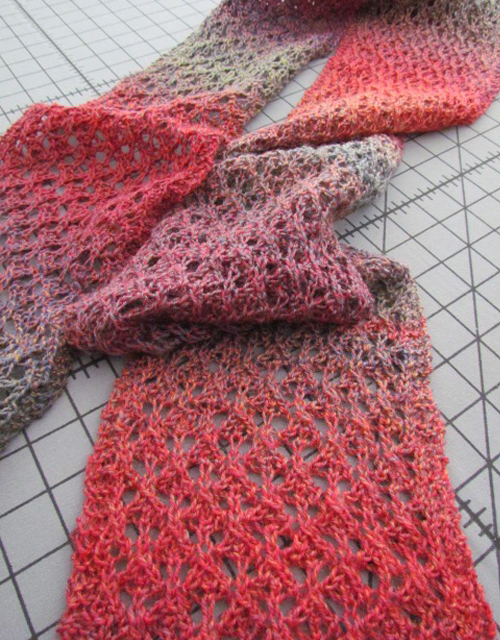
Morning Surf Scarf by Jackie Erickson-Schweitzer is a highly adaptable lace-style scarf designed to work with many different yarn weights.

Its undulating openwork pattern is particularly effective with variegated, hand-dyed or handspun yarn because the stitch structure allows the yarn's colors to remain visible.

The pattern can also be adjusted easily: the cast-on count can be changed in multiples of ten, letting you make the scarf wider or narrower to suit your yarn and preferred finished size.

Best for: Handspun yarn, variegated skeins and knitters who like easily customizable patterns.

See the Free Morning Surf Scarf Pattern →

Which Free Scarf Should You Knit First?

The best choice depends on the kind of knitting you enjoy and the yarn already waiting in your stash.

  • For dramatic color: ZickZack Scarf
  • For a quick gift: Cherry Pie Scarf
  • For lace practice: Birch Trees Scarf
  • For one special skein: The Simple Thing
  • For easy bulky knitting: Wainscot Scarf
  • For classic cables: Chestnut Street Scarf
  • For hand-dyed or handspun yarn: Morning Surf Scarf

Choosing Yarn for a Knitted Scarf

Scarves are particularly forgiving projects for experimenting with yarn because you do not usually have to match body measurements as precisely as you would with a sweater.

That does not mean yarn weight is unimportant. Changing from fingering to DK or bulky yarn can dramatically alter the width, length, drape and amount of yarn required.

For textured stitches and cables, smooth solid or lightly tonal yarns usually show the stitch pattern most clearly. Self-striping and gradient yarns are especially effective in simpler designs such as ZickZack, where the color changes become part of the visual effect.

Scarves Are Great Skill-Building Projects

A scarf can be one of the easiest ways to learn a new knitting technique without also worrying about sweater fit or complicated shaping.

This collection gives you several skills to explore:

  • Garter stitch and I-cord edges
  • Star stitch
  • Lace increases and decreases
  • Chevron shaping
  • Textured knit-and-purl patterns
  • Cable knitting
  • Working with self-striping and variegated yarn

Don't Skip Blocking

Blocking can make a noticeable difference to the appearance of a finished scarf, particularly when lace or cables are involved.

Lace may look compressed directly from the needles. After appropriate washing and blocking, the openwork can relax and the motif becomes much easier to see.

Always use a blocking method appropriate for the fiber content of your yarn and follow the original designer's recommendations when available.

More Free Knitting Collections

If you'd like a larger neck-and-shoulder accessory, explore our separate shawl collection:

Explore 7 Free Shawl Knitting Patterns →

Or if you have only one skein waiting in your stash, we also have a collection built specifically around small-yarn projects:

Explore 7 Free One-Skein Knitting Patterns →

Free Pattern Availability

All seven patterns in this collection were reviewed as currently available through legitimate free sources when this article was prepared.

Pattern availability can change over time. A designer or publisher may move a pattern, discontinue it or change it from free to paid.

For that reason, every project in this collection links first to its corresponding Amazing Knitting guide. Those pages identify the designer, provide useful project information and direct readers toward the current authorized pattern source.

Read Our Pattern Availability & Editorial Policy →

Amazing Knitting is an independent pattern discovery and project-guide site. The knitting patterns featured in this collection remain the intellectual property of their respective designers and publishers. Amazing Knitting does not reproduce their complete copyrighted row-by-row instructions or charts.

Over 50 Websites to Get Free Knitting Patterns

Over 50 Websites to Get Free Knitting Patterns
Designed by © Knit Crush

Looking for free knitting patterns? There are thousands of legitimate patterns available online for baby clothes, sweaters, blankets, scarves, socks, hats, toys and almost every other knitting project you can imagine.

The challenge is no longer simply finding a pattern. It is finding a reliable free pattern from a legitimate source, especially when older Pinterest pins and search results may lead to discontinued pages, outdated downloads or unofficial copies.

This guide will help you find free knitting patterns more safely and efficiently, whether you are searching the Amazing Knitting archive, a designer's website, a yarn company or a large knitting-pattern database.

About This Updated Guide

This Amazing Knitting article was originally published in 2019 as a link to an external roundup of more than 50 free-pattern websites. We have expanded the page into an independent resource for finding legitimate free knitting patterns without reproducing another publisher's list.

Where Can You Find Free Knitting Patterns?

Free knitting patterns are published by many different types of websites.

Some come directly from independent designers. Others are published by yarn manufacturers, knitting magazines, craft websites or pattern databases.

The best source depends on what you are looking for, so it helps to understand the major types of free-pattern resources before beginning your search.

1. Designer Websites

One of the best places to find a knitting pattern is the designer's own website.

Independent designers frequently publish selected patterns free while selling other designs.

Going directly to the designer has several advantages. You are more likely to find the current version of the pattern, corrections, additional photographs and notes from the person who actually created it.

If a pattern has been updated since its original publication, the designer's current page is usually preferable to an old copied version circulating elsewhere.

2. Yarn Company Pattern Libraries

Major yarn companies can be excellent sources of free knitting patterns.

These companies publish patterns to demonstrate how their yarns can be used, which means their libraries often contain projects across many categories and skill levels.

You can find designs for:

  • Baby sweaters and cardigans
  • Baby blankets
  • Adult sweaters and pullovers
  • Hats
  • Scarves and cowls
  • Socks and slippers
  • Shawls
  • Home accessories
  • Seasonal projects

Yarn-company libraries are especially useful because older patterns sometimes remain available long after the original printed booklet has disappeared.

3. Ravelry

Ravelry is one of the most useful resources for researching knitting patterns.

Rather than simply searching the web for a phrase such as “free baby cardigan,” you can narrow results using filters such as category, yarn weight, needle size, age, construction and availability.

Pattern records can also provide useful historical information such as the designer, publication date, suggested yarn and links to the current pattern source.

Remember that a Ravelry record does not automatically mean the pattern itself is still available. Always check the current availability shown on the pattern page.

4. Knitting Magazines and Online Publications

Online knitting magazines have published many excellent free patterns over the years.

Some older designs remain available in permanent online archives, making these publications particularly useful when searching for classic knitting projects.

These sources can also be valuable because they often preserve useful information about the designer, yarn, gauge, construction and original publication date.

5. Large Craft and Pattern Websites

Large craft websites often organize patterns by project type or skill level, which can make them useful when you are looking for inspiration rather than one particular design.

A collection might focus on beginner scarves, baby booties, knitted toys or quick gifts.

When using a roundup, however, follow the link to the original pattern source whenever possible.

6. Knitting Blogs

Knitting blogs remain another useful source of free patterns, tutorials and project inspiration.

Some bloggers are also pattern designers and publish complete original designs. Others curate projects from different designers.

The distinction matters.

When a blog is discussing somebody else's pattern, look for the designer's name and a clear link to the legitimate original source.

7. Vintage and Public-Domain Knitting Resources

Knitters interested in historical projects can also explore digitized vintage knitting books, magazines and pattern leaflets.

Older knitting publications can contain fascinating sweaters, lace, socks, mittens and household projects that differ significantly from modern designs.

However, old does not automatically mean public domain. Copyright status depends on factors including publication date, jurisdiction and publication history.

If you plan to republish rather than simply knit from a vintage pattern, verify its copyright status first.

8. Amazing Knitting

You can also browse the Amazing Knitting archive.

Our library includes hundreds of knitting discoveries covering baby clothes, blankets, sweaters, scarves, hats, socks, slippers, stitches, tutorials and other projects.

We are progressively reviewing older articles to identify original designers, verify pattern availability and direct readers toward legitimate current sources whenever possible.

Browse Free Knitting Patterns →

Free Baby Knitting Patterns

Baby projects are an excellent place to explore free patterns because there are designs for many different skill levels.

You can start with baby cardigans and sweaters:

Explore Free Baby Cardigans →

Or browse baby booties:

Explore Free Baby Booties →

And baby blankets:

Explore Free Baby Blankets →

Free Sweater and Cardigan Patterns

Sweaters range from simple first-garment projects to advanced designs involving cables, lace or colorwork.

When choosing one, pay particular attention to:

  • Finished measurements
  • Recommended ease
  • Gauge
  • Yarn weight
  • Construction method
  • Available sizes
  • Required techniques

Explore Free Sweater Patterns →

Free Blanket Knitting Patterns

Blankets are another large category of free knitting patterns.

Depending on the design, a blanket can be a simple beginner project or an advanced combination of lace, cables, colorwork or modular knitting.

Baby blankets are particularly useful for practicing new techniques on a manageable scale.

Explore Free Blanket Patterns →

Free Scarf and Cowl Patterns

Scarves and cowls are useful projects for testing unfamiliar stitches without committing to the fit requirements of a sweater.

They are also good projects for experimenting with cables, lace, texture and unusual yarn.

Explore Free Scarf Patterns →

How to Tell Whether a Pattern Is Really Free

One of the biggest problems with older knitting links is that pattern availability changes.

A pattern that was free ten years ago may now be paid, discontinued or completely unavailable.

Before calling a pattern free, check the current original source.

Look for clear wording such as:

  • Free pattern
  • Free download
  • Download PDF
  • Pattern available free on the designer's website

If the only evidence that a pattern is free comes from an old Pinterest pin or an old roundup, verify it before downloading.

Free Web Pattern vs. Free PDF

A pattern does not need to include a downloadable PDF to be genuinely free.

Some designers publish the complete pattern as a free webpage while offering an optional printable or ad-free PDF for a fee.

In that situation, describe the availability accurately: free web version with optional paid PDF.

This is more useful than simply labeling everything “free” or “paid.”

Watch for Discontinued Patterns

Older pattern databases can contain records for designs whose original downloads have disappeared.

A historical record is useful for identifying the designer and project, but it does not necessarily provide permission to download a copied PDF from another website.

If the legitimate source is gone, look for a currently available alternative instead of using an unauthorized copy.

Avoid Suspicious Pattern Downloads

Be cautious when a website offers a designer's PDF without clearly identifying itself as the designer, publisher or an authorized distributor.

A safer route is usually:

  1. Identify the exact pattern name.
  2. Identify the designer.
  3. Find the designer or publisher's current page.
  4. Check the current availability.
  5. Download or follow the pattern from that legitimate source.

Check for Pattern Corrections

Another advantage of using the current source is access to corrections and updates.

Designers sometimes discover errors after publication and issue an updated PDF or an errata notice.

An old copy saved elsewhere may not include those corrections.

Check the Yarn Before You Buy It

Older patterns frequently recommend yarns that have since been discontinued.

That does not necessarily make the pattern unusable.

Instead of searching only for the exact old yarn, compare:

  • Yarn weight
  • Gauge
  • Fiber content
  • Yardage or meterage
  • Fabric characteristics

Always make a gauge swatch before committing to a substitute yarn for a fitted garment.

Start with the Project You Want to Make

Searching “free knitting patterns” can return an overwhelming number of results.

A more effective approach is to begin with a specific project:

  • Free newborn cardigan knitting pattern
  • Free baby booties knitting pattern
  • Free cable blanket knitting pattern
  • Free beginner scarf knitting pattern
  • Free top-down sweater knitting pattern
  • Free lace shawl knitting pattern

Then narrow your choices according to yarn weight, size and skill level.

Save the Designer's Name

When you find a pattern you love, save more than the photograph.

Record the pattern name and designer.

This makes it much easier to find the legitimate pattern again if a Pinterest pin, bookmark or old website link stops working in the future.

Our Approach at Amazing Knitting

Amazing Knitting is a curated discovery library rather than the owner of every pattern featured in its archive.

When a project belongs to another designer, our goal is to identify and credit that designer, provide useful independent information about the project and direct knitters to the legitimate pattern source.

If an old pattern that was once free has become paid or unavailable, we aim to make that clear rather than continuing to promise a free download that no longer exists.

Explore Free Knitting Patterns

Ready to find your next project? Browse the Amazing Knitting archive by project type.

Before Downloading a Free Pattern

Take a moment to confirm that you are using the current legitimate version.

Check the designer's name, current availability, size range, yarn requirements and whether any corrections have been published.

A few minutes of checking before casting on can prevent hours of frustration later in the project.

Editorial note: This article was originally published by Amazing Knitting in 2019 as a discovery link to a Knit Crush roundup. It has since been expanded into an original Amazing Knitting resource for finding and evaluating free knitting patterns. The original image used on this page is credited to Knit Crush.

Best Friend Lace Scarf by Krista Werbil - Pattern Guide

Best Friend Lace Scarf - Free Pattern
Photo above © Krista

Best Friend Lace Scarf by Krista Werbil is an elegant, lightweight scarf built around a delicate repeating lace motif.

Its long, narrow proportions make the lace the main attraction, while the fingering-weight yarn creates a fabric that can be wrapped, draped or worn loosely without the bulk of a heavier winter scarf.

If this beautiful scarf brought you here, this guide will help you identify the original design, understand its yarn, size and construction, and find out what happened to the original pattern.

The original digital pattern is no longer available from its former source, but you still have options. We have included verified free lace patterns later in this guide that you can knit today.

Pattern Availability

Best Friend Lace Scarf is currently discontinued. The Ravelry pattern record states that the digital pattern is no longer available online, and its original source, the knitting buzz, is listed as out of print. Amazing Knitting therefore does not link to unofficial copies or reproduce the designer's complete instructions.

Best Friend Lace Scarf at a Glance

Pattern: Best Friend Lace Scarf

Designer: Krista Werbil

Original Source: the knitting buzz

Published: November 2011

Category: Lace scarf

Yarn Weight: Fingering / 4 ply

Yardage: Approx. 440 yd / 402 m

Needles: US 6 / 4 mm

Finished Size: Approx. 7 × 86 in, or desired length

Construction: One piece, rectangular, worked flat

Instructions: Written

Current Status: Discontinued

About the Best Friend Lace Scarf

Best Friend Lace Scarf is a classic example of how a relatively simple rectangular accessory can become visually striking through stitch pattern alone.

Instead of relying on cables, colorwork or elaborate garment shaping, the design uses open lace to create movement across a long, narrow scarf.

That makes the yarn and stitch definition particularly important to the final appearance.

A Long, Elegant Lace Scarf

The published finished dimensions are approximately:

7 inches wide × 86 inches long

The pattern also allows the scarf to be worked to the desired length.

Those proportions produce a noticeably long and narrow accessory rather than a wide rectangular wrap.

Why the Length Works So Well

An 86-inch scarf gives you considerable flexibility in how it can be worn.

It can be wrapped more than once around the neck, tied loosely, or left hanging so the lace pattern remains visible along most of its length.

If you are working from a legally obtained copy and decide to change the length, remember that the amount of yarn required will change too.

Fingering-Weight Yarn

The original pattern is listed for fingering / 4-ply yarn.

Fine yarn is a natural match for this type of scarf because it allows the openwork to remain light and flexible.

A much heavier yarn would produce a substantially different fabric and could change both the width and the appearance of the lace.

How Much Yarn?

The published requirement is approximately:

440 yards / 402 meters

If you already own the original pattern, use this as a starting point and allow extra yarn if you plan to lengthen the scarf.

Needle Size

The published needle size is:

US 6 / 4 mm

Lace is often worked on needles that create a more open fabric than you might expect for the yarn weight.

The important goal is not simply matching a needle number, but producing an attractive lace fabric with comfortable drape.

Worked Flat in One Piece

Best Friend Lace Scarf is constructed as a one-piece rectangle worked flat.

This means there is no garment assembly and no complicated sleeve or neckline shaping to manage.

The challenge comes instead from maintaining the lace pattern accurately over a long project.

Why Lace Scarves Are Great Skill Builders

A rectangular scarf gives you an opportunity to concentrate on stitch technique without also worrying about garment fit.

Depending on the original lace repeat, skills commonly useful for this style of project include:

  • Working yarn overs
  • Making decreases
  • Recognizing lace stitches
  • Maintaining an accurate stitch count
  • Reading written instructions
  • Keeping even tension
  • Blocking lace

Count Your Stitches Regularly

Lace usually relies on increases and decreases balancing one another.

Missing a yarn over or decrease may change the stitch count and cause the motif to shift.

Checking your stitch count regularly is much easier than discovering a mistake many rows later.

Learn to Read the Lace

One of the most useful skills you can develop is recognizing what the previous row is doing rather than relying only on the written instructions.

Look for the positions of yarn-over holes and decrease columns.

Once the motif becomes visually familiar, misplaced stitches are often easier to notice before they affect several rows.

Use a Lifeline

A lifeline can make a long lace project much less stressful.

After completing a repeat that you know is correct, thread a smooth contrasting strand through the live stitches.

If you later need to unravel your knitting, the lifeline provides a safe row where you can stop and recover the stitches.

Choosing a Substitute Yarn

If you already legally own the original Best Friend Lace Scarf pattern but need a different yarn, start by looking for a suitable fingering-weight substitute.

Consider:

  • Yardage per skein
  • Fiber content
  • Stitch definition
  • Drape
  • Elasticity
  • Behavior after blocking

The yarn does not need to be identical to the original to produce a beautiful scarf, but changing fiber characteristics can noticeably alter the finished lace.

Solid Colors Show the Lace Clearly

A solid or gently tonal yarn is often an excellent choice for a lace scarf because the stitch pattern remains easy to see.

Strongly variegated yarn can also be attractive, but rapid color changes may compete visually with a delicate lace motif.

Swatching is the easiest way to see whether your yarn and lace pattern complement each other.

Blocking Makes a Big Difference

Lace can look compressed or uneven while it is still on the needles.

Appropriate blocking helps open the yarn-over holes, straighten the edges and reveal the intended pattern.

Always use a blocking method suitable for the fiber in your chosen yarn.

Why a Scarf Makes a Thoughtful Gift

The name Best Friend Lace Scarf naturally makes this design appealing as a handmade gift.

A scarf does not require the precise body measurements of a sweater, and the long rectangular shape makes it practical to wear in several different ways.

Choosing a yarn color that suits the recipient can make a simple accessory especially personal.

What Happened to the Original Pattern?

Best Friend Lace Scarf was originally published through the knitting buzz in November 2011.

Older knitting directories may still describe it as a free pattern because that was its historical availability.

The current Ravelry record, however, marks the source as out of print and states that the digital pattern is no longer available online.

Amazing Knitting therefore no longer describes this as a currently available free pattern.

Why We Don't Reproduce the Old Instructions

A discontinued pattern does not automatically become free to copy or redistribute.

The design remains attributed to Krista Werbil, and old copies appearing elsewhere on the web do not necessarily have permission to distribute her complete instructions.

Amazing Knitting therefore provides this independent project guide instead of reconstructing or republishing the original lace pattern.

Already Have the Pattern?

If you previously downloaded or otherwise legally obtained the original Best Friend Lace Scarf pattern, you can continue using your copy. Keep the original instructions safely stored because replacing the discontinued digital pattern may now be difficult.

View the Historical Pattern Record

Ravelry still maintains the Best Friend Lace Scarf record, which is useful for confirming the designer, original specifications and browsing completed projects.

View Best Friend Lace Scarf on Ravelry →

Love This Scarf? Try These Free Lace Patterns

The original Best Friend Lace Scarf may no longer be downloadable, but you can still start a beautiful lace project today.

These free patterns have already been verified in the Amazing Knitting archive:

Explore More Free Scarf Patterns

Can You Still Get Best Friend Lace Scarf?

The original digital pattern is currently discontinued and no longer available from its former source.

Ravelry retains the historical pattern record, but it should not be confused with a current pattern download.

We recommend avoiding unofficial copies whose distribution rights cannot be verified.

If Krista Werbil republishes Best Friend Lace Scarf through an authorized source in the future, this page can be updated with the new link.

A Design Still Worth Remembering

A discontinued pattern can still provide useful knitting inspiration.

Best Friend Lace Scarf shows how a fine yarn, a repeating lace motif and simple rectangular construction can produce an elegant accessory without complicated garment shaping.

Study the finished projects for color and yarn inspiration, or choose one of the verified free lace patterns above and begin a new project today.

Pattern credit: Best Friend Lace Scarf was designed by Krista Werbil and published through the knitting buzz in November 2011. The original digital pattern is currently listed as discontinued. Amazing Knitting provides an independent historical and project guide and does not reproduce or distribute the designer's copyrighted knitting instructions. Please retain the existing photograph and its original credit from the old Amazing Knitting post.

Little Leaf Lace Scarf - Free Pattern

Little Leaf Lace Scarf - Free Pattern
Photo above © bunnyknitter

Little Leaf Lace Scarf by Sivia Harding is a graceful, beginner-friendly lace scarf built around a repeating leaf motif.

The design is light enough to show the lace clearly, yet simple enough to make a practical introduction to yarn overs, decreases and basic lace-pattern rhythm.

Its narrow rectangular shape keeps the construction straightforward, so most of your attention can stay on the decorative stitches rather than shaping or garment assembly.

Best of all, the original Little Leaf Lace Scarf pattern is still officially available as a free Ravelry download.

✓ Free Pattern Availability

Little Leaf Lace Scarf by Sivia Harding is currently listed as a free Ravelry download. The designer's Ravelry store also continues to identify the pattern as free.

Little Leaf Lace Scarf at a Glance

Pattern: Little Leaf Lace Scarf

Designer: Sivia Harding

First Published: January 2004

Historical Publication: Knitting Calendar 2005

Category: Lace scarf

Yarn Weight: Fingering or laceweight

Yardage: Approx. 200 yd / 183 m

Needles: US 5 / 3.75 mm

Gauge: 20 sts × 28 rows = 4 in / 10 cm in blocked lace pattern

Finished Size: Approx. 10.5 × 41 in

Construction: One-piece rectangular scarf worked flat

Skill Focus: Beginner lace knitting

Availability: Free Ravelry download

About the Little Leaf Lace Scarf

Little Leaf Lace Scarf is a classic small lace project in which the stitch pattern provides almost all of the visual interest.

Repeating leaf shapes travel along the scarf, creating an elegant botanical texture without requiring complicated garment construction.

Sivia Harding describes the design as an easy lace project suitable for knitters beginning to explore lace.

A Good Beginner Lace Project

Large lace shawls can feel intimidating when you are still learning how yarn overs and decreases work together.

A narrow scarf gives you a much smaller number of stitches to manage, making it easier to understand the relationship between the individual lace stitches and the finished motif.

Once the repeat becomes familiar, the project can develop a comfortable rhythm.

The Leaf Motif

The main visual feature is a repeating openwork leaf.

Yarn overs create the decorative holes, while paired decreases shape the sides of the leaf and keep the overall stitch count under control.

The result is a recognizable botanical motif created entirely through changes in the knitted fabric rather than colorwork or embroidery.

Why Leaves Work So Well in Lace

Leaf motifs are especially well suited to knitted lace because increases can widen the leaf while decreases gradually narrow it again.

This creates a natural-looking shape using the same basic techniques found in many larger shawls and lace garments.

Learning a small leaf pattern can therefore prepare you for more complex lace projects later.

Original Finished Size

The published finished dimensions are approximately:

10.5 inches wide × 41 inches long

This makes Little Leaf a relatively compact scarf rather than an oversized wrap.

The length is enough to show the repeating leaf pattern clearly while keeping the total yarn requirement modest.

Only About 200 Yards of Yarn

The original pattern calls for approximately:

200 yards / 183 meters

That modest yardage makes this a useful project for a special skein of fingering or laceweight yarn that may not be large enough for a full shawl.

Fingering or Laceweight Yarn

The pattern record recommends fingering or laceweight yarn.

These lighter yarns allow the openwork to remain delicate and keep the finished scarf flexible.

The exact appearance can change considerably depending on fiber content and yarn structure.

Needles and Gauge

The listed needle size is:

US 5 / 3.75 mm

The published blocked gauge is:

20 stitches × 28 rows = 4 inches / 10 cm

This gauge is measured over the lace pattern after blocking.

Why Gauge Still Matters on a Scarf

A scarf does not need the same precision of fit as a sweater, but gauge still affects the finished width, length, drape and yarn usage.

A much looser gauge may make the scarf wider and use more yarn, while a tighter gauge can make the lace look compressed.

A small swatch is useful for checking whether the fabric opens attractively after blocking.

Worked Flat in One Piece

Little Leaf Lace Scarf is a straightforward rectangular accessory worked back and forth in rows.

There are no sleeves, armholes or garment seams to manage.

That simplicity makes it easier to focus on learning the lace motif and maintaining consistent tension.

A Garter-Stitch Border Frames the Lace

The lace panel is framed by simple garter-stitch edging.

This creates a neat visual boundary between the open center and the outer edge of the scarf.

It also gives the knitter a few predictable stitches at the beginning and end of each row.

Skills You May Practice

  • Working yarn overs
  • Knit-two-together decreases
  • Left-leaning decreases
  • Centered decreases
  • Maintaining a lace repeat
  • Working a garter-stitch border
  • Reading your knitting
  • Blocking lace

Count Your Stitches

A missing yarn over or decrease can disturb the shape of the leaf and alter the total stitch count.

Check your stitch count periodically, especially while you are still learning the repeat.

Catching an error after one row is much easier than discovering it several repeats later.

Learn to Recognize the Leaves

Try not to rely only on the written instructions.

Watch how the yarn-over holes and decreases line up from one row to the next.

As the motif becomes familiar, you may start noticing mistakes visually before they cause a larger problem.

Use a Lifeline If You Are New to Lace

After completing a repeat that you know is correct, thread a smooth contrasting strand through the live stitches.

If you later need to unravel several rows, the lifeline provides a safe place to stop.

This can make learning lace much less stressful.

Blocking Reveals the Pattern

Like most knitted lace, Little Leaf may look compressed while it is still on the needles.

Appropriate blocking opens the yarn-over holes, straightens the scarf and makes the leaf shapes more visible.

Always use a blocking method appropriate for your yarn's fiber content.

Choosing a Yarn Substitute

The pattern does not depend on one specific yarn brand.

When choosing a substitute, look for a fingering or laceweight yarn that gives you an attractive open fabric at the required gauge.

Consider:

  • Yardage
  • Fiber content
  • Drape
  • Stitch definition
  • Halo
  • How the yarn behaves after blocking

Solid Colors Show the Leaves Clearly

A solid or gently tonal yarn is particularly effective when you want the leaf shapes to remain the main visual feature.

Strongly variegated yarn can also be attractive, but dramatic color changes may compete with a small lace motif.

Swatching is the best way to see how your chosen yarn interacts with the pattern.

A Good One-Skein Gift Project

With a published requirement of only about 200 yards, Little Leaf Lace Scarf can be an appealing gift project.

The rectangular shape avoids complicated sizing, and the botanical lace adds considerably more visual interest than plain stockinette.

It can also be a useful way to turn a small quantity of special yarn into a finished accessory.

Is Little Leaf Lace Scarf Still Free?

Yes.

Little Leaf Lace Scarf by Sivia Harding is currently listed as a free Ravelry download.

The designer's current Ravelry store also continues to identify Little Leaf Lace Scarf as a free pattern.

Amazing Knitting does not reproduce the designer's complete copyrighted row-by-row pattern. Use the authorized source below for the full instructions.

Get the Free Little Leaf Lace Scarf Pattern

Visit the current Ravelry pattern record:

Get the Free Little Leaf Lace Scarf Pattern →

More Free Lace Scarf Patterns

If you enjoy Little Leaf Lace Scarf, continue with these patterns already restored in the Amazing Knitting archive:

Explore More Lace Knitting

Before You Cast On

Choose a fingering or laceweight yarn that shows the leaf motif clearly, and make sure you have approximately 200 yards available.

Check your blocked fabric, count stitches regularly while learning the repeat, and consider adding a lifeline after successful sections.

For knitters moving from basic knitting into lace, Little Leaf Lace Scarf offers a very useful combination: a small amount of yarn, uncomplicated rectangular construction and a beautiful motif that teaches techniques used in much larger lace projects.

Pattern credit: Little Leaf Lace Scarf was designed by Sivia Harding and first published in 2004, later appearing in Knitting Calendar 2005. The existing project photograph on this Amazing Knitting page is credited to bunnyknitter. Amazing Knitting provides an independent project guide and does not reproduce the designer's complete copyrighted knitting instructions.

Scarves to Throws Month 6 - Knitting Pattern Guide

Scarves to Throws - Free Knitting Pattern
Designed by © Rachel

Scarves to Throws – Month 6 by Rachel Young is a lace scarf originally created for the Jimmy Beans Wool Scarves to Throws project.

First published in 2008, the design uses a repeating diamond-style lace pattern and worsted-weight yarn to create a lightweight scarf that opens beautifully after blocking.

This pattern was originally shared free online, but the exact original pattern is no longer available from its original source. This updated Amazing Knitting page therefore preserves the verified project information without reproducing or linking to an unauthorized copy of the instructions.

Pattern Availability Update

Scarves to Throws – Month 6 was originally distributed as a free knitting pattern through Jimmy Beans Wool. Ravelry now marks the original pattern as no longer available. Amazing Knitting does not provide archived or unofficial copies of the designer's instructions.

Scarves to Throws Month 6 at a Glance

Pattern: Scarves to Throws – Month 6

Designer: Rachel Young

Publisher: Jimmy Beans Wool

First Published: April 2008

Craft: Knitting

Category: Scarf

Finished Size: Approx. 5.5 × 65 in

Original Yarn: Lorna's Laces Shepherd Worsted Multi

Yarn Weight: Worsted / Aran

Needles: US 10 / 6 mm

Style: Lace scarf

Original Sample Color: Cedar

Current Availability: Original pattern no longer available

About Scarves to Throws

Scarves to Throws was an unusual knitting project from Jimmy Beans Wool.

Instead of treating each scarf as an unrelated project, the series was conceived around multiple scarves that could ultimately become part of a much larger knitted piece.

Different months introduced different stitch patterns, giving knitters an opportunity to explore a variety of textures while working with coordinating yarns.

About Month 6

Month 6 was designed by Rachel Young and published in April 2008.

It is a lace scarf worked in worsted-weight yarn. The repeating openwork creates a geometric, diamond-like appearance while keeping the project relatively quick to knit.

The designer described it as an easy and fast lace pattern, making it appealing to knitters who want the appearance of lace without committing to a very fine lace-weight project.

Finished Size

The published finished dimensions are approximately:

5.5 inches wide × 65 inches long

The designer noted that the lace stretches considerably during blocking, so the scarf can look significantly shorter while it is still being knitted.

The original sample required only about 15 pattern repeats to block to approximately 65 inches in length.

Original Yarn

The original design used:

Lorna's Laces Shepherd Worsted Multi

This is a 100% merino wool yarn with approximately 225 yards / 206 meters per 113 g skein.

The scarf pictured in the original pattern was knitted in the Cedar colorway.

Needles

The published needle size is:

US 10 / 6 mm

A relatively generous needle size for worsted-weight yarn helps produce the open fabric needed for the lace to expand during blocking.

As always, the published needle size should be treated as a starting point. Different knitters and substitute yarns can produce different fabrics on the same needle size.

A Lace Pattern Designed to Open Up

One of the most important things to understand about this scarf is that its appearance changes during finishing.

Lace can look compressed and much shorter while it is still on the needles. After appropriate blocking, the openings become more defined and the fabric can gain considerable length.

This is why judging the final scarf solely from its unblocked length can be misleading.

Why Worsted-Weight Lace?

Lace knitting does not require lace-weight yarn.

Using worsted-weight yarn makes the individual stitches easier to see and creates a more substantial scarf while still allowing yarn overs and decreases to form decorative openings.

For knitters beginning to explore lace, a project using larger needles and thicker yarn can also be easier to read than very fine lace.

Choosing a Substitute Yarn

If you want to create a similar scarf today, look for a smooth worsted-weight yarn with enough stitch definition to show the lace.

Wool and wool blends can work particularly well because appropriate blocking helps the lace settle into shape.

Variegated yarn can also suit this style nicely, reflecting the multicolor character of the original Lorna's Laces yarn.

Skills Used in This Style of Scarf

A lace scarf of this type typically calls on skills such as:

  • Casting on and binding off
  • Knitting and purling
  • Working yarn overs
  • Working decreases
  • Following a repeating lace pattern
  • Keeping an accurate stitch count
  • Recognizing pattern repeats
  • Blocking knitted lace

Keep Track of Pattern Repeats

Repeating lace patterns become easier once their visual rhythm begins to make sense.

Until that happens, use a row counter or checklist so you always know which row you have just completed.

It is also useful to count your stitches periodically. A missed yarn over or decrease can affect the alignment of the following repeats.

Blocking Is Part of the Project

Blocking is especially important for this design because the original designer specifically noted how much the scarf stretches after blocking.

Before deciding that your scarf is too short, finish a representative swatch and block it using a method appropriate for your chosen fiber.

That will give you a much better idea of how the final fabric behaves.

The Larger Scarves to Throws Idea

Month 6 was not the only design in the original series.

Jimmy Beans Wool published a collection of different monthly scarf designs using a variety of techniques, including lace, cables, drop stitches, entrelac and other textured patterns.

The broader project allowed the individual scarves to work as separate accessories or as components of a larger throw.

Joining Knitted Panels

Jimmy Beans Wool also published guidance about joining the completed Scarves to Throws pieces.

Their later tutorial discusses using a modified mattress-stitch method to sew the long knitted sections together.

This is useful inspiration even if you are creating your own modern version of the concept using different verified scarf or panel patterns.

Is Scarves to Throws Month 6 Still Free?

The pattern was originally free, but the original pattern is no longer available.

Ravelry maintains the historical pattern record for Scarves to Throws – Month 6 by Rachel Young, but currently states that the pattern is no longer available.

For that reason, Amazing Knitting does not provide an unofficial PDF, archived copy or transcription of the original instructions.

This page instead preserves the verified information about the project and helps knitters understand the yarn, construction concept and lace style.

View the Historical Pattern Record

Ravelry still maintains the pattern record, project photographs and basic specifications for the original design.

View Scarves to Throws Month 6 on Ravelry →

Looking for a Free Alternative?

Since the original Month 6 instructions are no longer available, the safest option is to choose a currently available free lace scarf rather than downloading an unofficial copy of the discontinued pattern.

Amazing Knitting already has an excellent verified free option: Lamina by Karen S. Lauger.

Lamina is a free lace scarf with a large leaf motif. Its updated Ravelry version includes both written instructions and charts, while the original pattern is also available free from Knitty.

See the Free Lamina Scarf Pattern →

More Free Scarf Knitting Patterns

You can also explore more currently available scarf projects from the Amazing Knitting archive.

Explore Free Scarf Knitting Patterns →

You can also browse lace scarf patterns, worsted-weight scarves, and free lace knitting patterns.

Before You Start

If your goal is to reproduce the exact original Month 6 scarf, be aware that the designer's pattern is currently unavailable. Avoid websites offering copied PDFs or transcribed instructions without permission.

For a new project, choose a currently available pattern, make a swatch with your chosen worsted-weight yarn and remember that lace dimensions can change considerably after blocking.

Pattern credit: Scarves to Throws – Month 6 was designed by Rachel Young and originally published through Jimmy Beans Wool in April 2008. The original pattern is currently listed as no longer available. Amazing Knitting does not reproduce the designer's copyrighted knitting instructions or provide unauthorized pattern copies.

Birch Trees Scarf - Free Pattern

Birch Trees Scarf - Free Pattern
Photo above © EIGHT-BY-SIX

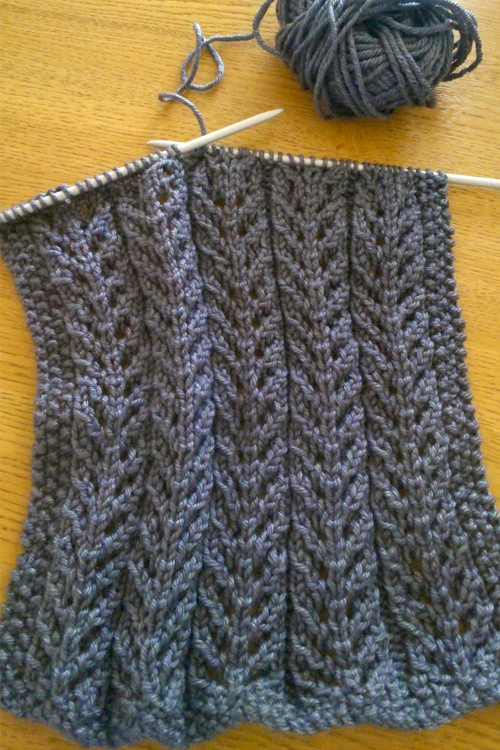
Birch Trees Scarf by Julia Marsh is a beautiful free lace knitting pattern featuring five panels of branching motifs framed by a neat moss-stitch border.

The repeating lace creates the impression of slender tree branches, giving the scarf an elegant woodland-inspired appearance without requiring lace-weight yarn.

Originally published in 2014, the pattern remains available today as a free Ravelry download from the designer.

✓ Free Pattern Availability

Birch Trees Scarf by Julia Marsh is currently available as a free Ravelry download. Use the official pattern link below to obtain the designer's current version.

Birch Trees Scarf at a Glance

Pattern: Birch Trees Scarf

Designer: Julia Marsh

First Published: April 2014

Craft: Knitting

Category: Scarf

Yarn Weight: DK / 8 ply

Yardage: Approx. 416–437 yd / 380–400 m

Needles: US 7 / 4.5 mm

Gauge: 20 stitches × 30 rows = 4 in / 10 cm in stockinette

Finished Size: Approx. 64 × 10 in / 160 × 26 cm

Construction: Worked flat

Main Features: Branching lace panels and moss-stitch edging

Availability: Free Ravelry download

About the Birch Trees Scarf

Birch Trees Scarf is a lace scarf designed by Julia Marsh.

Its main feature is a series of branching lace motifs arranged into five vertical panels. These openwork sections are surrounded by a textured moss-stitch border that helps frame the lace.

The result is decorative without being overly complicated, making the design particularly appealing to knitters who want to move beyond basic scarves and begin exploring simple lace.

A Simple Branching Lace Design

The visual interest in Birch Trees comes from the repeated branching motif.

Rather than using cables or colorwork to create the tree-like effect, the design relies on lace techniques to form lines and openings in the knitted fabric.

Repeating the motif across five panels creates a strong vertical structure that becomes especially clear after blocking.

Finished Size

Julia Marsh gives the approximate finished dimensions as:

160 cm long × 26 cm wide
approximately 64 × 10 inches

These measurements provide a generously sized scarf that can be worn in several ways.

Remember that lace dimensions can change during blocking, so evaluate the finished size after the scarf has been washed and blocked appropriately for your yarn.

Yarn Requirements

The pattern calls for approximately:

380–400 meters / 416–437 yards of DK-weight yarn

DK is a practical choice for this project because it creates visible lace without producing an extremely delicate fabric.

The thicker yarn also makes individual stitches easier to see than they might be in a very fine lace-weight scarf.

Needles

The designer specifies:

4.5 mm / US 7 straight knitting needles

The scarf is worked flat, so straight needles are sufficient.

You can also use another needle style appropriate for flat knitting if that is more comfortable for you, provided you obtain a suitable fabric and gauge.

Gauge

The published gauge is:

20 stitches × 30 rows = 4 inches / 10 cm in stockinette stitch

For a scarf, exact fit is less critical than it would be for a sweater, but gauge still affects the width, length, drape and amount of yarn required.

If your gauge differs substantially, your finished scarf may use more or less yarn than the designer's estimate.

Moss Stitch Edging

The lace panels are bordered by moss stitch.

This provides a textured contrast to the open lace while creating a visually defined edge around the scarf.

When working the project, pay attention to the transition between the border stitches and the lace panels. Keeping those sections clearly separated can make the repeating structure easier to follow.

Skills You'll Need

According to the designer, the main knitting skills required include:

  • Casting on
  • Binding off
  • Knit stitches
  • Working decreases such as knit two together
  • Bringing the yarn forward to create lace openings
  • Knitting through the back loop
  • Following repeating stitch sequences
  • Weaving in yarn ends

You do not need an extensive collection of advanced lace techniques to begin this project.

A Good Introduction to Lace Knitting

Birch Trees Scarf can be an attractive next project for a knitter who is comfortable with basic knit stitches and wants to begin working decorative openwork.

The repeating nature of the branching pattern helps establish a visual rhythm.

Once you understand how each repeat should look, the knitted fabric itself can help you notice mistakes.

Five Lace Panels

The scarf contains five panels of the branching pattern.

This repetition is an important part of the design. Instead of one oversized motif, several narrow vertical sections create the appearance of a small stand of delicate trees.

As the scarf grows, those repeated lines become one of its strongest visual features.

Keep Your Stitch Count Under Control

Lace patterns depend on a balance between increases and decreases.

If a yarn over is forgotten or an extra stitch is accidentally added, the error may affect the alignment of the next repeat.

Count your stitches periodically rather than waiting until the end of a long section.

Finding a mistake quickly is usually much easier than correcting it many rows later.

Use a Row Counter

Even a relatively simple repeating lace design becomes easier when you always know which row you have completed.

A row counter, paper checklist or digital counter can help prevent losing your place when you put the project down.

This is particularly useful when you are still learning to recognize the branching motif by sight.

Add a Lifeline

If lace knitting is new to you, consider adding an occasional lifeline.

A smooth contrasting thread passed through a correctly completed row provides a safe point to return to if you later need to unravel part of the scarf.

It is a simple precaution that can make learning lace much less stressful.

Choosing Yarn for Birch Trees

The designer calls for DK-weight yarn, but fiber and color can have a significant effect on the appearance of the finished scarf.

A relatively smooth yarn can make the branching stitches easy to see. Wool and wool blends can also respond nicely to blocking.

If showing the tree motif clearly is your priority, consider how much visual competition the yarn itself creates.

Solid and gently tonal colors often emphasize stitch structure, while strongly variegated yarns can produce a busier appearance.

Can You Use a Different DK Yarn?

Yes. You do not need one specific brand of yarn to knit the pattern.

Look for a DK-weight substitute that gives you a fabric you like on approximately the recommended needle size.

Compare fiber content, yardage, drape and washing requirements before making your choice.

A swatch is especially useful if you are substituting a yarn with very different fiber characteristics.

Blocking the Scarf

Blocking is an important finishing step for lace.

Before blocking, the branching openings may appear smaller or less defined than expected. Appropriate blocking allows the stitches to settle and the lace structure to become clearer.

Use a method suitable for your yarn's fiber content and avoid excessive stretching.

Allow the scarf to dry completely before removing pins or other blocking aids.

Project Inspiration

Birch Trees Scarf has been knitted in many different yarns and colors. Project examples show how strongly yarn choice can change the personality of the same pattern.

Neutral shades emphasize the woodland character, while brighter colors turn the branching motif into a more graphic lace design.

This makes the pattern useful both as a classic everyday scarf and as a way to experiment with a special DK yarn.

Is Birch Trees Scarf Still Free?

Yes.

Birch Trees Scarf by Julia Marsh is currently available as a free download on Ravelry.

Amazing Knitting does not reproduce Julia Marsh's complete copyrighted knitting instructions. Use the official designer pattern page to obtain the current pattern.

Get the Free Birch Trees Scarf Pattern

Visit Julia Marsh's pattern page on Ravelry for the free download:

Get the Free Birch Trees Scarf Pattern →

More Free Scarf Knitting Patterns

If you enjoy this project, Amazing Knitting has more free scarf and lace-pattern discoveries to explore.

You may especially like Lamina by Karen S. Lauger, another free lace scarf pattern that we have verified and reviewed.

See the Free Lamina Scarf Pattern →

You can also browse:

Before You Start

Download the current pattern from Julia Marsh's Ravelry page, choose approximately 380–400 meters of suitable DK yarn and check that you are comfortable with the basic lace techniques used in the design.

Keep track of your rows and stitch count as you work, and remember that blocking is an important part of revealing the finished branching lace.

Pattern credit: Birch Trees Scarf was designed by Julia Marsh and first published in April 2014. The existing project photograph on this Amazing Knitting page is credited to EIGHT-BY-SIX. Amazing Knitting does not reproduce the designer's copyrighted pattern instructions.

Summer Stream Scarf by Asami Kawa - Pattern Guide

Summer Stream Scarf - Free Pattern
Photo above © kikkou

Photo above © kikkou

Summer Stream Scarf by Asami Kawa is a delicate lace scarf designed for lightweight summer knitting. Its combination of openwork, flowing vertical motifs and pointed lace edges creates an elegant fabric without the visual weight of a winter scarf.

The original pattern was published through Knitting Winterwren in 2009. It was historically available as a free digital pattern, but the authorized download is no longer available online.

Pattern Availability Update

Summer Stream Scarf was originally published as a free pattern by designer Asami Kawa. The original publication is now out of print, and the official pattern listing currently marks the digital pattern as discontinued and no longer available online.

We have preserved this page as a reference to the original design rather than directing readers to unauthorized copies of the discontinued pattern.

Summer Stream Scarf at a Glance

Designer: Asami Kawa

Published: July 2009

Original Publication: Knitting Winterwren

Project: Lace scarf

Original Yarn: Habu Textiles XS-43B 1/10 Non Twist Cotton Boucle

Needles: US 3 (3.25 mm)

Gauge: 28 stitches and 32 rows = 4 inches in pattern stitch

Finished Size: Approximately 8 × 68 inches

Construction: Worked flat in two pieces and grafted together

Current Status: Discontinued

About the Original Design

Summer Stream Scarf was designed as a lightweight cotton scarf for warmer weather. Instead of using one continuous piece of knitting, the scarf is made from two identical sections that are joined together.

This construction allows the decorative lace motifs and pointed ends to face correctly at both ends of the finished scarf.

Yarn and Lace

The original design used Habu Textiles cotton boucle held double. The pattern lists approximately 506–528 yards (463–483 m), with the strands held together while knitting.

The photographs show why a lightweight yarn works particularly well for this design: the open sections remain airy while the solid lace motifs retain enough definition to stand out after blocking.

Lace Knitting Tip

Blocking is especially important for lace projects. The fabric may look compressed while it is still on the needles; careful blocking helps open the eyelets and reveal the shape of the lace motifs and decorative edges.

What Happened to the Free Pattern?

Summer Stream Scarf was genuinely distributed as a free pattern in the past. However, free availability is not necessarily permanent.

The original Knitting Winterwren publication is now out of print, and the current pattern record states that the digital pattern is no longer available online.

You may still encounter copies of the old PDF on file-sharing sites. Amazing Knitting does not link to those copies because we cannot verify that they are being distributed with the designer's authorization.

View the Original Pattern Record

The Ravelry record remains useful for identifying the original design, designer, materials and project history, even though the pattern itself can no longer be downloaded there.

View Summer Stream Scarf on Ravelry →

Looking for a Free Lace Scarf Instead?

If the delicate lace style attracted you to Summer Stream Scarf, these reviewed Amazing Knitting projects have currently available free patterns.

Morning Surf Scarf

Jackie Erickson-Schweitzer's Morning Surf Scarf combines an airy, lightweight fabric with an attractive repeating texture.

View the Free Morning Surf Scarf →

Lamina Scarf

Lamina by Karen S. Lauger is another elegant scarf with an authorized free pattern published through Knitty.

View the Free Lamina Scarf →

Little Leaf Lace Scarf

If the leaf-like lace motifs are what you love most about Summer Stream, explore Sivia Harding's Little Leaf Lace Scarf.

View the Free Little Leaf Lace Scarf →

Pattern credit: Summer Stream Scarf was designed by Asami Kawa and originally published through Knitting Winterwren. Amazing Knitting preserves this page as an independent reference to the original project and does not reproduce the discontinued copyrighted pattern.

See our Pattern Availability & Editorial Policy for more information.

Discover More From the Archive

A fresh mix of knitting patterns and tutorials from the Amazing Knitting archive.

Finding patterns from the archive…