Skip to content

...

Showing posts sorted by relevance for query free vest knitting pattern. Sort by date Show all posts

Outlandish Bodice Vest Free Knitting Pattern

Outlandish Bodice Vest free knitting pattern by bron matheson
Photo and pattern design © bron matheson

The Outlandish Bodice by bron matheson is a distinctive free knitting pattern for a fitted corset-style vest with cables, shaped construction and optional costume-inspired details.

The design can be worn as an eye-catching everyday vest or customized for historical, fantasy or cosplay-inspired outfits. Its fitted shape comes naturally from the cable structure and the designer also includes options for adjusting the overall look.

Outlandish Bodice Pattern at a Glance

Designer: bron matheson

Pattern: Outlandish Bodice

Craft: Knitting

Category: Vest / Bodice

Yarn Weight: Heavy DK to Light Worsted / Worsted

Yardage: 547–711 yards (500–650 m)

Needles: US 6 (4.0 mm) and US 7 (4.5 mm)

Gauge: 26 sts and 28 rows = 4 in

Sizes: Extra Small, Small, Medium, Large

Construction: Bottom-up, worked flat in sections

Techniques: Cables, i-cord, grafting and shaping

Language: English

Pattern Availability: Free Ravelry download

About the Outlandish Bodice

The Outlandish Bodice is designed as a fitted vest with a corset-inspired silhouette. Cable panels provide both decoration and shaping, giving the garment a structured look without relying on a traditional sewn corset construction.

The pattern can be styled with strong negative ease for a close fit or with little to no negative ease for a more relaxed vest. The designer explains the available choices in the original pattern so knitters can select the combination that best suits the intended fit.

Yarn and Needle Notes

The designer recommends sturdy yarns with good wear characteristics, including tweeds and light worsted-weight yarns. The pattern can work with yarns ranging from approximately heavy DK through light worsted.

Total yarn requirements are approximately 547–711 yards (500–650 m), depending on the size and options selected.

The pattern uses US 6 (4.0 mm) and US 7 (4.5 mm) needles. Because the size options are achieved partly through different needle and gauge combinations, consult the designer's sizing tables before beginning.

Construction

The bodice is knitted from the bottom up. The sides and back are first worked flat together in one piece to the underarm.

The back and front straps are then worked separately. Stitches are picked up along the front edges and the front sections are knitted sideways toward the center front. The shoulders are grafted together, while the neckline, armholes and front edges are finished with i-cord.

Customization Ideas

One of the most unusual features of this pattern is its flexibility. It can be knitted as a distinctive everyday vest or adapted for costume-inspired clothing.

The original pattern includes guidance for adding front lacing and for extending the peplum section to work with fuller skirts. These options make the design especially appealing for knitters interested in historical, fantasy or cosplay styling.

Get the Free Outlandish Bodice Pattern

The Outlandish Bodice was designed by bron matheson and published through Bronnymath Designs. The complete pattern is currently available as a free download from the designer's Ravelry listing.

Amazing Knitting does not reproduce the designer's complete knitting instructions. Use the button below to visit the original pattern page and access the current authorized version.

Pattern and photo © bron matheson. Pattern availability is controlled by the designer and may change over time.

Tyra Top - Knitting Pattern Guide

Tyra Top - Free Pattern
Photos above © Sakura58

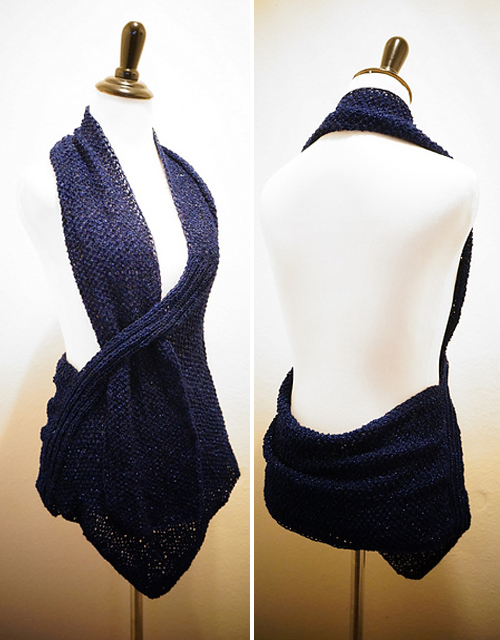
Tyra Top by Irina Poludnenko is an unusual textured layering piece originally published in S. Charles Collezione, Modern Living, Fall/Winter 2009.

Despite its name, Ravelry classifies Tyra Top in the shawl/wrap category. Its asymmetric shape, front fastening and textured seed-stitch fabric create a garment that sits somewhere between a vest, wrap and decorative layering piece.

This older design was previously presented on Amazing Knitting as a free pattern. However, the original publication is now out of print, and we could not verify a current authorized free download.

Pattern Availability Update

Tyra Top by Irina Poludnenko was published in the Fall/Winter 2009 issue of S. Charles Collezione, Modern Living. Ravelry currently marks that publication as out of print. We could not verify a current authorized free download, so Amazing Knitting does not link to unofficial copies of the pattern.

Tyra Top at a Glance

Pattern: Tyra Top

Designer: Irina Poludnenko

Published: August 2009

Publication: S. Charles Collezione, Modern Living, Fall/Winter 2009

Category: Shawl / Wrap / Layering Piece

Skill Level: Easy

Yarn Weight: DK, held double

Original Yarn: Stacy Charles Fine Yarns Ritratto

Needles: US 7 / 4.5 mm

Gauge: 14 stitches × 22 rows = 4 in / 10 cm in seed stitch with two strands held together

Yardage: Approx. 990–1,188 yd / 905–1,086 m

Sizes: XS, S/M, L/XL, 2X

Construction: Worked flat and seamed

Current Availability: Original publication out of print

About the Tyra Top

Tyra Top was designed by Irina Poludnenko and first published in August 2009.

It is an unconventional garment. Although the word “Top” appears in its name, Ravelry categorizes the design as a shawl or wrap.

The asymmetric shape and front fastening give it the appearance of a lightweight vest or decorative wrap that can be layered over another garment.

Published Sizes

The pattern includes four size groups:

  • X-Small: 28–32 in / 71–81.5 cm bust
  • Small/Medium: 34–38 in / 86.5–96.5 cm bust
  • Large/XL: 40–44 in / 101.5–112 cm bust
  • 2X: 46–50 in / 117–127 cm bust

Use these published body measurements as a starting point when identifying the intended size.

Original Yarn

Tyra Top was designed using Stacy Charles Fine Yarns Ritratto.

Ravelry lists Ritratto as a DK-weight yarn containing:

  • 53% rayon
  • 28% mohair
  • 10% nylon
  • 9% polyester

Each 50-gram ball is listed at approximately 198 yards.

This unusual fiber combination helps explain the airy, slightly glamorous appearance visible in finished Tyra projects.

Two Strands Held Together

An important detail in the published specifications is that the yarn is worked with two strands held together.

Holding two strands together changes the behavior of the yarn and the resulting fabric, so this detail matters if you are considering a substitute.

Do not assume that any single DK yarn will automatically reproduce the same fabric.

Gauge

The published gauge is:

14 stitches × 22 rows = 4 × 4 inches / 10 × 10 cm

This gauge is measured in seed stitch with two strands of yarn held together.

Because Tyra is worn on the body, making a proper swatch is much more important than it would be for a simple scarf or blanket.

Needles

The published needle size is:

US 7 / 4.5 mm

Treat the published needle size as a starting point. The correct needle is whichever size allows your chosen yarn combination to produce the required gauge and fabric.

Published Yardage

Ravelry lists approximately:

990–1,188 yards / 905–1,086 meters

Remember that this is based on the original yarn and the pattern's two-strands-held-together construction.

Seed Stitch Texture

Seed stitch provides much of the surface texture in Tyra.

The alternating knit-and-purl structure creates a pebbled fabric that works particularly well with a yarn containing mohair and rayon.

The stitch pattern adds visual interest without requiring elaborate lace or cable work.

Keep Seed Stitch Consistent

A common mistake in seed stitch is accidentally creating a column of ribbing.

Learn to read the stitches in the fabric rather than relying only on memory. Checking the texture regularly can help you identify a mistake before it continues for several rows.

Asymmetric Styling

Ravelry tags Tyra as asymmetric.

That asymmetry is an intentional part of the garment's appearance, giving it a more contemporary shape than a conventional rectangular vest.

It also means that understanding the finished schematic or construction is useful before you begin knitting.

Front Fastening

Another defining feature is the front-fastening construction.

This allows the piece to function as a wearable layer rather than a simple rectangular shawl.

When finishing, take care that the fastening sits naturally and does not distort the surrounding knitted fabric.

Worked Flat and Seamed

Ravelry classifies Tyra Top as both worked flat and seamed.

This is useful to know before beginning if you normally prefer seamless garment construction.

Careful finishing will help the unusual shape sit correctly when worn.

Choosing a Substitute Yarn

Yarn substitution deserves extra attention with this pattern because the original yarn combines several fibers and is held double.

Instead of matching only the printed yarn-weight label, consider:

  • Gauge after washing
  • Finished fabric weight
  • Drape
  • Softness against the skin
  • Texture and halo
  • Whether two strands will be held together

A large washed swatch is particularly useful for a garment like Tyra.

Blocking

Blocking can help the seed-stitch fabric settle and allow the finished pieces to reach their intended dimensions before assembly.

Use a blocking method appropriate for the fibers in your substitute yarn and avoid stretching the fabric beyond the measurements required by the pattern.

Skill Level

The original pattern is classified as:

Easy

The stitch pattern itself is approachable, although achieving a good result still depends on consistent gauge, careful shaping and neat finishing.

Skills Used in Tyra Top

  • Knitting and purling
  • Seed stitch
  • Working with two strands held together
  • Following garment shaping
  • Working flat
  • Seaming
  • Finishing a front fastening
  • Blocking garment pieces

Is Tyra Top Still a Free Pattern?

We could not verify a current authorized free download.

Amazing Knitting originally published this page under the title “Tyra Top - Free Pattern,” but the current Ravelry record identifies the original source, S. Charles Collezione, Modern Living, Fall/Winter 2009, as out of print.

Because availability can change over time, we prefer to clearly state the current verified situation rather than continue sending readers to an obsolete download.

Amazing Knitting does not host or direct readers to unauthorized copies of the copyrighted pattern.

View the Tyra Top Pattern Record

Ravelry maintains the historical pattern record with the designer, original publication, sizes, yarn information and project examples:

View Tyra Top on Ravelry →

Looking for a Free Alternative?

If you are looking specifically for a free wearable knitting pattern, explore the verified free sweater and cardigan patterns already available in the Amazing Knitting archive.

Harvest by Tin Can Knits is one reliable option. It is a very different garment from Tyra, but the original Harvest pattern remains available for free and includes a wide range of sizes.

See the Free Harvest Cardigan →

You can also browse:

Before You Start

Tyra Top is an older design from an out-of-print 2009 publication. If you already own a legitimate copy of the original pattern, make a seed-stitch swatch with your chosen yarn combination before casting on.

Pay particular attention to the fact that the original Ritratto yarn is held double and that the published gauge is measured in the actual seed-stitch fabric.

If you do not own the original instructions, use the Ravelry record to identify the pattern and its publication rather than downloading unverified copies from unknown websites.

Pattern credit: Tyra Top was designed by Irina Poludnenko and published in S. Charles Collezione, Modern Living, Fall/Winter 2009. The existing project photographs on this Amazing Knitting page are credited to Sakura58. Amazing Knitting provides an independent historical pattern guide and does not reproduce the designer's copyrighted knitting instructions.

Fuss Free Baby Cardigan - Free Pattern

Fuss Free Baby Cardigan - Free Pattern
Photos above © grandmasuzibobs

Fuss Free Baby Cardigan by Louise Tilbrook is exactly what its name promises: a simple, practical little cardigan designed to make baby garment knitting feel approachable.

Worked from the top down with raglan shaping and no traditional garment seaming, it is an especially appealing first cardigan for knitters who want to move beyond scarves and blankets.

It is also a wonderful stash project. The cardigan uses less than 100 grams of DK yarn, comes in two small baby sizes, and can easily be personalized with stripes, contrasting borders or longer sleeves.

Best of all, Louise Tilbrook still offers the pattern for free, so you can use this guide to prepare your project and then get the current pattern from the designer.

✓ Free Pattern Availability

Fuss Free Baby Cardigan is currently available as a free pattern from designer Louise Tilbrook. Use the designer's current Free Patterns page or the Ravelry record linked below for access and up-to-date pattern information.

Fuss Free Baby Cardigan at a Glance

Pattern: Fuss Free Baby Cardigan

Designer: Louise Tilbrook

First Published: October 2013

Category: Baby Cardigan

Sizes: 0–3 months and 3–6 months

Finished Chest: 19.5 in and 21 in

Yarn Weight: DK / 8 ply

Yarn Required: Less than 100 g of DK yarn

Construction: Top-down raglan

Sleeves: Short sleeves in the original design

Style: Unisex and customizable

Availability: Free

About the Fuss Free Baby Cardigan

Louise Tilbrook designed Fuss Free Baby Cardigan as a straightforward introduction to seamless garment knitting.

Rather than knitting separate fronts, back and sleeves and then sewing them together, the cardigan begins at the neckline and grows downward using raglan shaping.

This makes the construction easy to understand as you work because you can actually see the cardigan taking shape on your needles.

Two Baby Sizes

The pattern includes:

  • 0–3 months: approximately 19.5 in finished chest
  • 3–6 months: approximately 21 in finished chest

Because babies vary considerably in size, finished garment measurements are often more useful than relying only on an age label.

A Great First Baby Cardigan

One of the strongest reasons to choose this pattern is its approachable construction.

If you have knitted scarves, hats or blankets and want to try your first sweater-style project, a tiny top-down baby cardigan lets you learn garment construction without committing to an adult-sized sweater.

You will see how the neckline, raglan sections, body and sleeves relate to each other while working on a relatively quick project.

Top-Down Raglan Construction

Fuss Free Baby Cardigan is worked from the top down with raglan shaping.

Raglan increases gradually create enough fabric for the fronts, back and sleeves.

Once the yoke reaches the appropriate size, the sleeve stitches are separated from the body and the cardigan continues downward.

This approach eliminates the traditional process of knitting several garment pieces separately and assembling them afterward.

Short Sleeves by Design

The original cardigan deliberately has short sleeves.

Louise Tilbrook describes it as a useful layering piece that can be worn over a baby vest or onesie.

The designer also notes that longer sleeves can be added if desired, making the pattern a useful starting point for customization.

Less Than 100 Grams of DK Yarn

This is an excellent stash-busting baby project.

The designer specifies less than 100 grams of DK-weight yarn for the cardigan.

The sample in the larger 3–6 month size used approximately 60–70 grams.

Actual usage will vary with your yarn, tension and any modifications, particularly if you add longer sleeves.

Original Yarn

The Ravelry pattern record associates the design with Debbie Bliss Rialto DK.

It is a DK-weight 100% merino yarn, but there is no need to use the exact original yarn.

This little cardigan is particularly suitable for experimenting with good-quality DK yarn already in your stash.

Choosing Yarn for a Baby Cardigan

For a baby garment, think beyond color when choosing yarn.

Look for a yarn that offers:

  • Softness against sensitive skin
  • Practical washing instructions
  • Good stitch definition
  • A comfortable finished fabric
  • Enough durability for repeated wear

If the cardigan is intended as a gift, easy-care yarn can be especially useful for new parents.

Perfect for Stash Busting

The small amount of yarn required makes Fuss Free Baby Cardigan a good way to use DK leftovers.

You can use one main color or introduce a contrasting shade at the borders.

Stripes are another natural choice because top-down construction makes it easy to see how the colors are developing as you knit.

Make It Your Own

The designer specifically describes the cardigan as allowing plenty of customization for baby girls and boys.

Simple possibilities include:

  • Using contrasting borders
  • Adding stripes
  • Choosing different button colors
  • Extending the sleeves
  • Using self-striping DK yarn

If you alter the sleeves or body length, remember to allow additional yarn.

Why Top-Down Knitting Is Useful

Top-down construction has several practical advantages.

You can see the proportions of the garment develop while knitting, and length adjustments are generally easier to visualize than when working separate pieces from the bottom upward.

It is also a useful technique to learn because many modern cardigan and sweater patterns use similar construction.

Keeping Track of Raglan Increases

Raglan shaping is simple once you understand the rhythm, but missing an increase can affect the stitch counts for the body or sleeves.

The original pattern helps knitters keep track by providing stitch counts for the rows in a table.

Check your counts periodically rather than waiting until the sleeve separation to discover a discrepancy.

Use Stitch Markers

Stitch markers are particularly helpful for top-down raglan projects.

They visually divide the fronts, sleeves and back so that you can quickly recognize where shaping occurs.

If one section suddenly contains an unexpected number of stitches, finding the mistake is much easier when the garment is clearly divided by markers.

A Useful Project for Learning Seamless Knitting

Louise Tilbrook specifically designed this cardigan with knitters new to seamless knitting in mind.

Working a small garment is a practical way to understand the technique before applying it to a much larger adult sweater.

Once you have completed the cardigan, concepts such as raglan increases, sleeve separation and top-down construction will feel much more familiar.

Buttons and Baby Garments

If you add buttons, attach them very securely and inspect them regularly.

Small detachable items can present a hazard around babies, so finishing deserves the same care as the knitting itself.

Skills Used in Fuss Free Baby Cardigan

  • Knitting and purling
  • Garter stitch
  • Stockinette stitch
  • Top-down knitting
  • Raglan increases
  • Using stitch markers
  • Separating body and sleeve stitches
  • Working a cardigan flat
  • Finishing button bands
  • Weaving in ends

Is Fuss Free Baby Cardigan Still Free?

Yes.

Louise Tilbrook continues to include Fuss Free Baby Cardi in the Free Patterns section of her official website, and Ravelry also currently lists Fuss Free Baby Cardigan as a free pattern.

Amazing Knitting does not reproduce Louise Tilbrook's complete copyrighted knitting instructions. Please use the designer's current pattern source for the instructions.

Get the Free Fuss Free Baby Cardigan Pattern

Start with Louise Tilbrook's official Free Patterns page:

Get the Free Pattern from Louise Tilbrook →

You can also use the Ravelry record for project examples and current pattern information:

View Fuss Free Baby Cardigan on Ravelry →

More Free Baby Cardigans on Amazing Knitting

If you enjoy simple baby garments, these already-verified free patterns in the Amazing Knitting archive are also excellent choices:

Or browse more:

Before You Start

Open the current free pattern from Louise Tilbrook and choose a soft DK yarn appropriate for a baby garment.

Keep stitch markers in place while working the raglan shaping and check the designer's stitch-count table regularly, particularly before separating the sleeves from the body.

If you are using stash yarn, weigh what you have before beginning. The original cardigan requires less than 100 grams, but stripes, longer sleeves or a longer body will change the amount needed.

Most importantly, enjoy the construction. This tiny cardigan is a useful introduction to techniques you can later carry into much larger top-down sweaters.

Pattern credit: Fuss Free Baby Cardigan was designed by Louise Tilbrook and first published in 2013. The existing project photographs on this Amazing Knitting page are credited to grandmasuzibobs. Amazing Knitting provides an independent project guide and does not reproduce the designer's complete copyrighted knitting instructions.

Lättstickad Tröja by Cila - Free Easy Knit Vest Pattern

Easy Knit Women Sweater Vest - Free Pattern
Photos above © by cila

Photo above © by cila

Lättstickad Tröja by Cila is a wonderfully simple sleeveless sweater vest with a relaxed fit, deep cowl neck and longer back hem. Worked in chunky yarn and garter stitch, it is an appealing garment project for knitters who prefer uncomplicated construction.

Good news: this older Amazing Knitting find can still be identified through its original Ravelry record, where the pattern is currently listed as available for free.

✓ Free Pattern Available

Lättstickad Tröja was designed by Cila and published in 2013. The pattern is currently listed on Ravelry as free. The original instructions are in Swedish, so English-speaking knitters may need translation assistance.

Lättstickad Tröja at a Glance

Designer: Cila

Published: November 2013

Project: Sleeveless sweater / cowl-neck vest

Yarn Weight: Bulky

Needles: US 15 (10 mm)

Gauge: 10 stitches = 4 inches

Yardage: Approximately 350–700 yards (320–640 m)

Sizes: S, M, L

Pattern Language: Swedish

Current Availability: Free

Simple Garter-Stitch Style

One of the most attractive things about this vest is its simplicity. The pronounced horizontal ridges of garter stitch become part of the design, so there is no need for complicated cables, lace or colorwork.

Bulky yarn and large needles also allow the fabric to grow relatively quickly, making this an interesting first step into knitted garments for someone already comfortable with basic knitting.

Relaxed Cowl Neck and Longer Back

The generous cowl is the focal point of the garment. It adds warmth around the neck while preserving the loose, casual character of the vest.

Another distinctive detail visible in the original design is the longer back hem. Combined with the open armholes, this makes the vest especially suitable for layering over a shirt or lightweight sweater.

Easy Three-Piece Construction

The original design has also been documented as a vest constructed from three simple knitted pieces. This straightforward approach is one reason the project attracted attention as an accessible garment knit.

Because fit still matters even in a relaxed vest, check the designer's measurements and gauge before choosing your size.

Yarn Substitution Tip

If you cannot find the original yarn, start with another bulky yarn that can achieve the pattern gauge. Also consider drape: a very stiff yarn may make the large cowl and relaxed body behave differently from the original garment.

Get the Free Lättstickad Tröja Pattern

The pattern record below identifies Cila's original design and links knitters to the pattern source. Please note that the original pattern language is Swedish.

View the Free Pattern on Ravelry →

More Easy Knitted Layers

If you like simple, relaxed garments, you may also enjoy this verified free cardigan from our reviewed archive:

Harvest Cardigan - Free Knitting Pattern →

Pattern credit: Lättstickad Tröja was designed by Cila. Amazing Knitting provides an independent project guide and directs knitters to the pattern record rather than reproducing the designer's complete copyrighted instructions.

Knit Vine Lace Vest - Free Pattern

Knit Vine Lace Vest - Free Pattern
The photo above © Cecily Glowik MacDonald

If you're looking for a stylish and versatile summer project, the Knit Vine Lace Vest by Cecily Glowik MacDonald is a fantastic choice! This free pattern offers a beautiful lace design that’s perfect for warm weather knitting. Made with 100% cotton yarn, the vest is not only comfortable but also lightweight, making it an ideal addition to your summer wardrobe. The pattern accommodates multiple sizes, ensuring a great fit for everyone, and it’s beginner-friendly while still providing enough challenge to keep seasoned knitters engaged.

Cecily’s detailed instructions make it easy to follow along, and the simple nine-stitch repeat for the lace is memorable, allowing you to enjoy the process without constantly checking the pattern. Whether you're knitting for yourself or as a thoughtful gift, this vest is sure to impress. Be sure to check out the full pattern and start creating your own stunning Vine Lace Vest today!

Full Post: Knit Vine Lace Vest 

Hobbit Dress - Free Knitting Pattern

Hobbit Dress - Free Knitting Pattern
The photo above © GothKnitty
What beautiful knitting pattern! I found it on Ravelry...
Agnese Vajevska designed this hooded vest knitted in one piece from the bottom up. Lacing can be replaced by buttons. 

Download Pattern: Hobbit Dress

King Charles Brocade - Free Pattern

King Charles Brocade - Free Pattern
Photos above © stevienixed 
I found This knitting stitch pattern on Pinterest...
From the Stitch Description: “This elegant version of Diamond Brocade carries a historical footnote of a rather gruesome nature. It is one of the patterns in a vest worn by King Charles I of England on the day of his execution in 1649. This vest, a marvelous piece of master knitting of the period, was worked in blue silk. it was preserved in the London Museum.”

Download Pattern: King Charles Brocade

Discover More From the Archive

A fresh mix of knitting patterns and tutorials from the Amazing Knitting archive.

Finding patterns from the archive…