Skip to content

...

Showing posts sorted by relevance for query free wrap knitting pattern. Sort by date Show all posts

Tyra Top - Knitting Pattern Guide

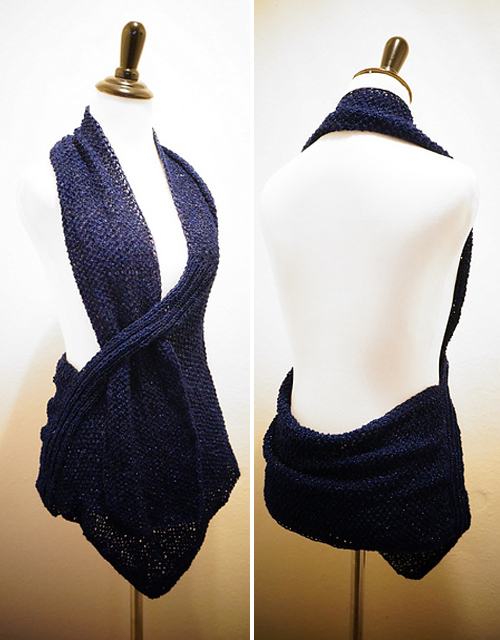
Tyra Top - Free Pattern
Photos above © Sakura58

Tyra Top by Irina Poludnenko is an unusual textured layering piece originally published in S. Charles Collezione, Modern Living, Fall/Winter 2009.

Despite its name, Ravelry classifies Tyra Top in the shawl/wrap category. Its asymmetric shape, front fastening and textured seed-stitch fabric create a garment that sits somewhere between a vest, wrap and decorative layering piece.

This older design was previously presented on Amazing Knitting as a free pattern. However, the original publication is now out of print, and we could not verify a current authorized free download.

Pattern Availability Update

Tyra Top by Irina Poludnenko was published in the Fall/Winter 2009 issue of S. Charles Collezione, Modern Living. Ravelry currently marks that publication as out of print. We could not verify a current authorized free download, so Amazing Knitting does not link to unofficial copies of the pattern.

Tyra Top at a Glance

Pattern: Tyra Top

Designer: Irina Poludnenko

Published: August 2009

Publication: S. Charles Collezione, Modern Living, Fall/Winter 2009

Category: Shawl / Wrap / Layering Piece

Skill Level: Easy

Yarn Weight: DK, held double

Original Yarn: Stacy Charles Fine Yarns Ritratto

Needles: US 7 / 4.5 mm

Gauge: 14 stitches × 22 rows = 4 in / 10 cm in seed stitch with two strands held together

Yardage: Approx. 990–1,188 yd / 905–1,086 m

Sizes: XS, S/M, L/XL, 2X

Construction: Worked flat and seamed

Current Availability: Original publication out of print

About the Tyra Top

Tyra Top was designed by Irina Poludnenko and first published in August 2009.

It is an unconventional garment. Although the word “Top” appears in its name, Ravelry categorizes the design as a shawl or wrap.

The asymmetric shape and front fastening give it the appearance of a lightweight vest or decorative wrap that can be layered over another garment.

Published Sizes

The pattern includes four size groups:

  • X-Small: 28–32 in / 71–81.5 cm bust
  • Small/Medium: 34–38 in / 86.5–96.5 cm bust
  • Large/XL: 40–44 in / 101.5–112 cm bust
  • 2X: 46–50 in / 117–127 cm bust

Use these published body measurements as a starting point when identifying the intended size.

Original Yarn

Tyra Top was designed using Stacy Charles Fine Yarns Ritratto.

Ravelry lists Ritratto as a DK-weight yarn containing:

  • 53% rayon
  • 28% mohair
  • 10% nylon
  • 9% polyester

Each 50-gram ball is listed at approximately 198 yards.

This unusual fiber combination helps explain the airy, slightly glamorous appearance visible in finished Tyra projects.

Two Strands Held Together

An important detail in the published specifications is that the yarn is worked with two strands held together.

Holding two strands together changes the behavior of the yarn and the resulting fabric, so this detail matters if you are considering a substitute.

Do not assume that any single DK yarn will automatically reproduce the same fabric.

Gauge

The published gauge is:

14 stitches × 22 rows = 4 × 4 inches / 10 × 10 cm

This gauge is measured in seed stitch with two strands of yarn held together.

Because Tyra is worn on the body, making a proper swatch is much more important than it would be for a simple scarf or blanket.

Needles

The published needle size is:

US 7 / 4.5 mm

Treat the published needle size as a starting point. The correct needle is whichever size allows your chosen yarn combination to produce the required gauge and fabric.

Published Yardage

Ravelry lists approximately:

990–1,188 yards / 905–1,086 meters

Remember that this is based on the original yarn and the pattern's two-strands-held-together construction.

Seed Stitch Texture

Seed stitch provides much of the surface texture in Tyra.

The alternating knit-and-purl structure creates a pebbled fabric that works particularly well with a yarn containing mohair and rayon.

The stitch pattern adds visual interest without requiring elaborate lace or cable work.

Keep Seed Stitch Consistent

A common mistake in seed stitch is accidentally creating a column of ribbing.

Learn to read the stitches in the fabric rather than relying only on memory. Checking the texture regularly can help you identify a mistake before it continues for several rows.

Asymmetric Styling

Ravelry tags Tyra as asymmetric.

That asymmetry is an intentional part of the garment's appearance, giving it a more contemporary shape than a conventional rectangular vest.

It also means that understanding the finished schematic or construction is useful before you begin knitting.

Front Fastening

Another defining feature is the front-fastening construction.

This allows the piece to function as a wearable layer rather than a simple rectangular shawl.

When finishing, take care that the fastening sits naturally and does not distort the surrounding knitted fabric.

Worked Flat and Seamed

Ravelry classifies Tyra Top as both worked flat and seamed.

This is useful to know before beginning if you normally prefer seamless garment construction.

Careful finishing will help the unusual shape sit correctly when worn.

Choosing a Substitute Yarn

Yarn substitution deserves extra attention with this pattern because the original yarn combines several fibers and is held double.

Instead of matching only the printed yarn-weight label, consider:

  • Gauge after washing
  • Finished fabric weight
  • Drape
  • Softness against the skin
  • Texture and halo
  • Whether two strands will be held together

A large washed swatch is particularly useful for a garment like Tyra.

Blocking

Blocking can help the seed-stitch fabric settle and allow the finished pieces to reach their intended dimensions before assembly.

Use a blocking method appropriate for the fibers in your substitute yarn and avoid stretching the fabric beyond the measurements required by the pattern.

Skill Level

The original pattern is classified as:

Easy

The stitch pattern itself is approachable, although achieving a good result still depends on consistent gauge, careful shaping and neat finishing.

Skills Used in Tyra Top

  • Knitting and purling
  • Seed stitch
  • Working with two strands held together
  • Following garment shaping
  • Working flat
  • Seaming
  • Finishing a front fastening
  • Blocking garment pieces

Is Tyra Top Still a Free Pattern?

We could not verify a current authorized free download.

Amazing Knitting originally published this page under the title “Tyra Top - Free Pattern,” but the current Ravelry record identifies the original source, S. Charles Collezione, Modern Living, Fall/Winter 2009, as out of print.

Because availability can change over time, we prefer to clearly state the current verified situation rather than continue sending readers to an obsolete download.

Amazing Knitting does not host or direct readers to unauthorized copies of the copyrighted pattern.

View the Tyra Top Pattern Record

Ravelry maintains the historical pattern record with the designer, original publication, sizes, yarn information and project examples:

View Tyra Top on Ravelry →

Looking for a Free Alternative?

If you are looking specifically for a free wearable knitting pattern, explore the verified free sweater and cardigan patterns already available in the Amazing Knitting archive.

Harvest by Tin Can Knits is one reliable option. It is a very different garment from Tyra, but the original Harvest pattern remains available for free and includes a wide range of sizes.

See the Free Harvest Cardigan →

You can also browse:

Before You Start

Tyra Top is an older design from an out-of-print 2009 publication. If you already own a legitimate copy of the original pattern, make a seed-stitch swatch with your chosen yarn combination before casting on.

Pay particular attention to the fact that the original Ritratto yarn is held double and that the published gauge is measured in the actual seed-stitch fabric.

If you do not own the original instructions, use the Ravelry record to identify the pattern and its publication rather than downloading unverified copies from unknown websites.

Pattern credit: Tyra Top was designed by Irina Poludnenko and published in S. Charles Collezione, Modern Living, Fall/Winter 2009. The existing project photographs on this Amazing Knitting page are credited to Sakura58. Amazing Knitting provides an independent historical pattern guide and does not reproduce the designer's copyrighted knitting instructions.

Baby Kimono - Free Knitting Pattern

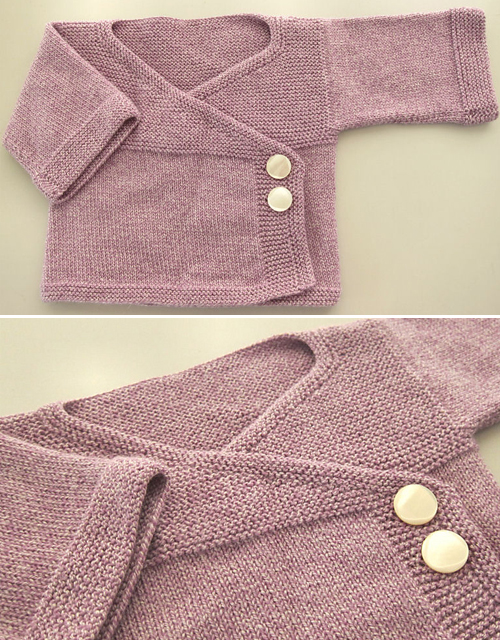
Baby Kimono - Free Knitting Pattern
Photos above © Tichiro

Garter Stitch Baby Cardigan by Joji Locatelli, often known by knitters as the Garter Stitch Baby Kimono, is a sweet wrap-style baby cardigan worked almost entirely in garter stitch.

Its crossover front gives the little sweater its kimono-inspired appearance, while the simple stitch pattern makes it an appealing project for knitters ready to try a small baby garment.

✓ Free Pattern

This project is commonly referred to as the Baby Kimono, but the pattern's official name is Garter Stitch Baby Cardigan by Joji Locatelli. A free copy of the designer's original pattern remains available online.

Baby Kimono at a Glance

Official Pattern: Garter Stitch Baby Cardigan

Designer: Joji Locatelli

Craft: Knitting

Category: Baby Cardigan / Kimono-Style Sweater

Sizes: Newborn, 1–3 months, 3–6 months

Main Stitch: Garter stitch

Needles: 2.5–3 mm

Gauge: 28 stitches = 10 cm in garter stitch

Yarn: Approximately 100–150 g, depending on size

Notions: Two approximately 15 mm buttons

Availability: Free pattern

About the Garter Stitch Baby Kimono

Joji Locatelli originally wrote down this design after the knitted cardigan attracted considerable interest from other knitters.

The result is a simple wrap-style baby cardigan with overlapping fronts. Because garter stitch forms most of the fabric, the visual interest comes primarily from the shape of the garment rather than complicated stitch patterns.

The crossover construction also makes it quite different in appearance from a conventional button-front baby cardigan.

Three Baby Sizes

The original pattern includes three sizes:

  • Newborn
  • 1–3 months
  • 3–6 months

The published finished chest measurements are approximately:

  • Newborn: 40 cm / 16 inches
  • 1–3 months: 45 cm / 18 inches
  • 3–6 months: 50 cm / 20 inches

Finished total lengths are approximately 20, 24 and 26 cm (8, 9.5 and 11 inches) respectively.

When possible, choose a size from the finished measurements rather than relying only on the baby's age.

Yarn Requirements

Joji's original sample was knitted with an acrylic yarn called NUBE Dralón, which she found in Argentina.

However, the pattern specifically allows another suitable yarn to be substituted.

The approximate yarn quantities given in the original pattern are:

  • Smaller size: approximately 100 g
  • Larger sizes: approximately 150 g

Rather than choosing a substitute based only on fibre or label, make sure your yarn can produce the required gauge and a fabric appropriate for a soft baby cardigan.

Needles and Gauge

The original pattern recommends needles in the range of:

2.5–3 mm

The designer also notes that you should use whatever needle size is necessary to obtain the correct gauge.

Published gauge is:

28 stitches = 10 cm / 4 inches in garter stitch

Making a small swatch is especially worthwhile for a baby garment because even a modest difference in gauge can noticeably change such a small finished size.

Why Garter Stitch Works So Well

Garter stitch is created by knitting every row when working flat. It produces a fabric with distinctive horizontal ridges and plenty of natural stretch.

It also lies relatively flat, making it particularly useful for a wrap-style cardigan where clean edges help the overlapping fronts sit comfortably.

For a newer knitter, using one familiar stitch throughout much of the garment means more attention can be given to learning the construction and shaping.

The Kimono-Style Front

The crossover front is what gives this cardigan its familiar “baby kimono” nickname.

Rather than meeting at the center like a conventional cardigan, one front overlaps the other. The original design uses buttons together with an inside fastening to help hold the layers in position.

The pattern calls for two buttons approximately 15 mm in diameter.

Skills That Help

Useful skills for this project include:

  • Casting on
  • Garter stitch
  • Basic shaping
  • Increasing and decreasing
  • Making buttonholes
  • Picking up stitches
  • Working sleeves
  • Binding off
  • Simple finishing
  • Weaving in yarn ends

Use Joji Locatelli's original pattern for the exact stitch counts, shaping sequence, sleeve construction and finishing instructions.

A Popular Little Cardigan

One reason this design has remained recognizable for so many years is its simplicity.

Thousands of knitters have made versions of the Garter Stitch Baby Cardigan, experimenting with different yarns, colours and small finishing modifications while retaining the characteristic wrap-front shape.

That makes the Ravelry project gallery especially useful for inspiration before choosing yarn for your own version.

Choosing Yarn for a Baby Cardigan

In addition to matching gauge, consider how the finished garment will be used.

Softness matters for clothing worn close to a baby's skin, while easy washing can be valuable for an everyday garment. Also check that the finished garter-stitch fabric is not excessively dense or loose.

A smooth yarn can emphasize the simple garter ridges, while a gently heathered or subtly variegated yarn can add colour interest without competing with the clean construction.

Is the Baby Kimono Pattern Free?

Yes. The Garter Stitch Baby Cardigan pattern by Joji Locatelli was released as a free knitting pattern.

Amazing Knitting does not reproduce Joji's copyrighted row-by-row instructions. Instead, we link readers to the existing pattern source.

Get the Free Baby Kimono Pattern

The pattern is available as a PDF under its original name, Garter Stitch Baby Kimono / Garter Stitch Baby Cardigan.

View the Free Baby Kimono Pattern →

More Free Baby Cardigans

If you enjoy small wrap-style garments, continue exploring the Amazing Knitting archive for more free baby sweaters and cardigans.

Explore Free Baby Cardigan Patterns →

You can also browse free baby sweaters, newborn knitting patterns, and garter-stitch baby cardigans.

Before You Start

Choose your size from the finished measurements, make a garter-stitch gauge swatch, and check that your yarn creates a soft but stable fabric before beginning the cardigan.

Read the complete original pattern before casting on so that you understand how the overlapping fronts, sleeves and fastenings come together.

Pattern credit: Garter Stitch Baby Cardigan / Baby Kimono was designed by Joji Locatelli. The existing photographs on this Amazing Knitting page are credited to Tichiro. Amazing Knitting does not reproduce the designer's copyrighted row-by-row knitting instructions.

Stitch Stripe Shawl Knitting Patterns

Stitch Stripe Shawl Knitting Patterns
Beauitiful Knitting Shawls 

Stitch stripe shawls are a wonderful way to combine several knitting techniques in one wearable project.

Instead of relying only on color stripes, these shawls alternate sections of garter stitch, lace, slipped stitches, moss stitch, eyelets, dropped stitches and other textures.

The result can look complex while still allowing you to work through one manageable stitch pattern at a time.

About This Guide

This Amazing Knitting page is an independent guide to textured stripe shawls. We do not reproduce designers' complete knitting instructions. Pattern availability can change, so use the original designer or publisher links for the current pattern.

What Is a Stitch Stripe Shawl?

A stitch stripe shawl is built from visible bands or sections where the knitting technique changes.

One section might be simple garter stitch, while the next introduces lace, slipped stitches, moss stitch, eyelets or another texture.

Color changes can make those sections even more obvious, but they are not essential. A single-color shawl can still show dramatic striping when the stitch patterns create enough contrast.

Why These Shawls Are So Interesting to Knit

Long shawls can sometimes become repetitive. A sampler-style design solves that by changing the knitting experience as the fabric grows.

You may spend one section working relaxing garter stitch and the next following a lace or slipped-stitch motif.

This makes textured stripe shawls especially useful for knitters who enjoy variety without wanting to make many separate small projects.

Good Techniques for Stitch Stripe Shawls

Common techniques include:

  • Garter stitch
  • Stockinette and reverse stockinette
  • Moss or seed stitch
  • Lace and eyelets
  • Slipped stitches
  • Mosaic-style colorwork
  • Dropped stitches
  • Twisted stitches
  • Bobbles
  • Textured ribs

You do not need all of these techniques in one design. Even two or three contrasting stitch patterns can produce a strong striped effect.

Free Pattern: Lueur Shawl

Lueur by Audrey Borrego is an excellent modern example of the stitch-sampler idea.

It combines several textures including twisted stitches, bicolour moss stitch, bobbles and a garter tweed motif.

The shawl is an asymmetrical triangle worked sideways and uses two colors of sport-weight yarn.

Lueur is currently available as a free Ravelry download.

View the Free Lueur Shawl Pattern →

Free Pattern: Guild Park

Guild Park by Laura Chau is another interesting textured wrap.

Published by Knitty, it combines a zigzag lace mesh with twisted stitches and dropped-stitch sections that create soft waves across the fabric.

Guild Park is a rectangular wrap worked flat in sport-weight yarn and remains available as a free Knitty pattern.

View the Free Guild Park Pattern →

Free Web Pattern: Cambria Wrap

Cambria Wrap by Alexandra Tavel is a large triangular wrap that alternates simple fabric with eyelet and lace details.

The design uses worsted-weight yarn and is approximately 76 inches / 193 cm wide with a depth of about 38 inches / 97 cm.

The designer currently offers a free web version, while a paid PDF version is also available for knitters who prefer that format.

View Cambria Wrap Pattern Information →

One Color or Several?

Both approaches work.

With a single color, the eye is drawn to the changing stitch texture. This can produce an elegant and understated shawl.

With two or more colors, the stripe structure becomes much more graphic.

If the stitch pattern is already elaborate, consider using relatively simple color combinations so that color and texture do not compete for attention.

These Patterns Are Excellent for Stash Yarn

Multi-section shawls can be useful stash projects because different colors can be assigned to different bands.

Before mixing leftover yarns, make sure they behave reasonably well together.

Similar yarn weights and compatible washing instructions usually make finishing easier.

Watch Your Gauge When the Stitch Changes

Different stitch patterns can produce very different fabric widths even when worked with the same yarn and needle.

Garter stitch, lace, slipped stitches and seed stitch may not all have the same natural gauge.

In a well-designed pattern, the designer has already accounted for these differences. Avoid changing stitch counts or needle sizes inside individual sections unless you understand how that will affect the overall shawl shape.

Use Lifelines in Lace Sections

If a shawl alternates easy texture with more complicated lace, a lifeline can be useful before beginning a difficult section.

That gives you a known-correct row to return to without undoing an earlier completed stripe.

Keep Notes as You Work

Sampler shawls are much easier to manage when you keep a simple record of your progress.

Note which section you are working, which color you used and where you stopped.

This is especially useful if the project is set aside for several days or weeks.

Blocking Makes a Big Difference

Blocking is especially important when several textures appear in one shawl.

Lace usually opens after blocking, while garter and moss stitch settle into a more even surface.

Use a method appropriate for your yarn and follow the designer's finished measurements rather than stretching every section as far as possible.

How to Choose a Stitch Stripe Shawl

Before choosing a pattern, consider what you want from the project.

  • Choose garter and simple texture if you want relaxing knitting.
  • Choose lace sections if you enjoy charts and openwork.
  • Choose slipped stitches if you want color effects without traditional stranded knitting.
  • Choose a sampler shawl if your goal is to practice several techniques in one project.
  • Choose a multicolor design if you want to use leftover yarn or mini skeins.

More Stitch Stripe Shawl Patterns

The original inspiration for this older Amazing Knitting post was a collection from In the Loop Knitting, which continues to maintain a large roundup of stitch-stripe shawl patterns from many different designers.

Some are free, while pattern availability can change over time. Always follow through to the individual designer or publisher before assuming that a pattern is still free.

Explore More Stitch Stripe Shawls at In the Loop Knitting →

Explore More Free Shawls on Amazing Knitting

Before You Start

Check the current pattern source before purchasing yarn because older roundup pages can remain online long after an individual designer has changed a pattern from free to paid or discontinued it.

Once you choose a design, read through all of its stitch sections before casting on and make sure you understand any unfamiliar techniques.

Then choose colors that allow the texture to remain visible and enjoy the changing rhythm of the different stitch patterns.

Editorial note: This Amazing Knitting page is an independent educational and discovery guide. The linked patterns belong to their respective designers and publishers. Amazing Knitting does not reproduce their complete copyrighted instructions.

Baby Cardigan - Free Knitting Pattern

Baby Cardigan - Free Knitting Pattern
Photos above © MmeUlma & © sorrelwood

Looking for a simple and charming baby wrap cardigan knitting pattern? This garter-stitch cardigan is a classic crossover design that is worked largely in one piece, making it especially appealing to knitters who prefer simple construction and minimal finishing.

The cardigan has a soft wrap-over front and a timeless handmade look that works beautifully for newborn gifts, baby showers, and everyday baby wear.

Baby Wrap Cardigan at a Glance

Pattern Type: Baby Wrap Cardigan

Craft: Knitting

Category: Baby Cardigan / Wrap Sweater

Main Stitch: Garter Stitch

Construction: Worked mainly in one piece

Direction: Bottom-up, beginning with the back

Original Source: MmeUlma / Madam Ulma

About This Baby Cardigan

This little cardigan uses a wrap-over construction rather than a traditional button-front shape. The crossover front gives the garment a soft, comfortable look while also making it easy to layer over other baby clothes.

The design was originally shared through the MmeUlma blog and became popular online through knitting and Pinterest communities.

Worked in One Piece

One of the most appealing features of this cardigan is its construction. The garment is worked largely in one piece, beginning at the back and building upward.

One-piece baby garments can be especially attractive to knitters because they reduce the number of separate pieces that need to be assembled at the end.

This also helps create a clean, simple silhouette that suits the minimalist style of the cardigan.

Garter Stitch Texture

The cardigan is worked in garter stitch, one of the most useful and beginner-friendly knitting textures.

Garter stitch creates a soft, ridged fabric that lies flat naturally and does not curl at the edges in the same way as stockinette stitch.

That makes it a practical choice for baby garments, where soft texture and simple finishing are often desirable.

Why Wrap Cardigans Work Well for Babies

Wrap-style cardigans are popular for babies because the crossover front creates a flexible fit and avoids a bulky center-front opening.

They can also be layered over bodysuits, sleepsuits, and lightweight tops, making them useful through changing temperatures.

The simple shape also works well in both traditional baby colors and more modern, gender-neutral shades.

A Good Project for Newer Garment Knitters

Because the design relies on garter stitch and relatively simple construction, this type of cardigan can be a good transition project for knitters who are comfortable with scarves, blankets, or baby accessories and want to try a small garment.

The main skills typically involved include basic knit stitches, shaping, and managing the wrap-front construction.

Choosing Yarn for a Baby Cardigan

The original source page is no longer consistently accessible, so the current yarn specification cannot be verified reliably.

If you are recreating a similar wrap cardigan, choose a soft yarn suitable for baby garments and pay close attention to washability, fiber comfort, and gauge.

Always follow the original pattern specifications if you have a saved copy of the pattern, since yarn weight and needle size directly affect the finished size.

What About the Original Free Pattern?

This Amazing Knitting page originally linked to a free pattern page from MmeUlma.

At the moment, the original external page is no longer reliably accessible without a Google sign-in, so we cannot confirm whether the pattern is still publicly available in its original form.

Amazing Knitting does not reproduce the original designer's knitting instructions.

Original Pattern Source

The button below points to the original MmeUlma page that was linked from this article. Its current accessibility may vary.

Visit the Original Baby Cardigan Source →

Source note: This design was originally shared through MmeUlma. The original source page is currently not consistently accessible, so Amazing Knitting has intentionally avoided adding unverified sizing, yarn, needle, or gauge information.

More Baby Cardigan Knitting Inspiration

Explore more baby cardigan knitting patterns, baby wrap cardigan ideas, and baby sweater knitting patterns from the Amazing Knitting archive.

Before You Start

If you have access to the original MmeUlma instructions, use the designer's specified yarn, needle size, gauge, and measurements rather than relying on substitutions from other baby cardigan patterns.

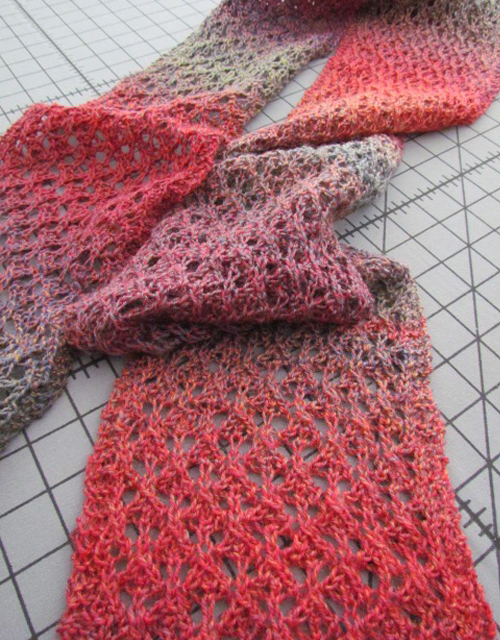
Morning Surf Scarf - Free Pattern

Morning Surf Scarf - Free Pattern
 Photo above © BohoBerry 

Morning Surf Scarf by Jackie Erickson-Schweitzer is a wonderfully adaptable knitted scarf featuring soft, undulating openwork inspired by waves moving across the sea.

The design uses dropped yarnovers to create long, flowing stitches and an airy lace-like fabric. It is particularly attractive in variegated and handspun yarns, but one of the great advantages of Morning Surf is its flexibility: the pattern can be adapted to many different yarn weights and scarf widths.

✓ Free Pattern Availability

Good news: Morning Surf Scarf is still available as a free knitting pattern. The pattern is associated with Jackie Erickson-Schweitzer and HeartStrings FiberArts and has also been published by Spin-Off / Interweave.

Morning Surf Scarf at a Glance

Pattern: Morning Surf Scarf

Designer: Jackie Erickson-Schweitzer

Original Publication: January 1998

Craft: Knitting

Category: Scarf

Yarn Weight: Adaptable to different yarn weights

Gauge: Flexible — choose a needle that produces good drape

Width: Adjustable in 10-stitch increments

Notable Technique: Dropped yarnovers

Construction: Worked flat

Current Availability: Free pattern

About the Morning Surf Scarf

Morning Surf is a scarf where the yarn can become just as important as the stitch pattern.

Instead of dense cables or complicated colourwork, the design creates long open stitches that move gently across the fabric. The result has a wave-like appearance that works especially well with yarns containing several colours or subtle changes in texture.

This makes Morning Surf an interesting choice for a special skein of hand-dyed or handspun yarn that you want to showcase rather than hide inside a very complicated stitch pattern.

The Story Behind Morning Surf

The scarf has an especially fitting origin.

Designer Jackie Erickson-Schweitzer was inspired by a morning walk along the beach while attending a spinning event in Florida. The colours and movement of the water influenced both her choice of fibre and the undulating stitch sequence that eventually became Morning Surf.

The original scarf was created to showcase handspun yarn whose variations in colour and texture became part of the character of the finished piece.

A Pattern Designed for Different Yarns

One of the most useful characteristics of Morning Surf is that it was not designed around one rigid yarn specification.

The pattern can be adapted to a wide range of yarn sizes. Rather than insisting on one yarn weight and one needle size, the designer provides guidance for selecting needles that create a fabric with attractive drape without becoming excessively loose.

This makes Morning Surf particularly useful for:

  • Handspun yarn
  • Variegated yarn
  • Hand-dyed yarn
  • Special single skeins
  • Stash yarn
  • Experimenting with different yarn weights

Adjusting the Width

The scarf width is also easy to customize.

The cast-on can be increased or decreased in increments of 10 stitches, allowing you to make a narrower scarf or a broader wrap-like version.

Remember that increasing the width also increases yarn consumption, so allow extra yardage if you plan to make a substantially wider or longer scarf.

The Dropped-Yarnover Effect

Morning Surf gets much of its distinctive appearance from dropped yarnovers.

Yarnovers create additional loops while knitting. In this design, selected loops are later released in a controlled way, allowing the surrounding stitches to lengthen and form the characteristic open, wave-like sections.

Although the finished fabric looks unusual, the underlying concept is approachable once you understand what is supposed to happen to the extra loops.

This is one of those techniques where a small practice swatch can make the full project much easier to understand.

Why Variegated Yarn Works So Well

Highly variegated yarn can sometimes hide elaborate textured stitches. Morning Surf takes almost the opposite approach.

The elongated stitches create enough visual space for changing colours to remain visible, while the repeating waves add movement without competing heavily with the yarn.

For this reason, the pattern can be particularly effective when you have a colourful skein that looks beautiful by itself but seems difficult to match with a conventional stitch pattern.

Needle Choice

Because Morning Surf is designed for different yarn weights, there is no single needle size that every knitter must use.

The goal is to choose a needle that produces a draping fabric without becoming sloppy.

Make a small swatch first. If the fabric feels stiff, try a larger needle. If the elongated stitches look excessively loose or unstable, try a smaller needle.

Straight or Circular Needles?

The designer specifically recommends straight needles for this project.

Circular needles can technically be used for flat knitting, but the multiple yarnovers used in Morning Surf may be less convenient to slide from the flexible cable back onto the needle tip.

If you normally prefer circular needles, this is worth considering before beginning the project.

Skills That Help

Useful skills for Morning Surf include:

  • Casting on
  • Knit stitches
  • Purl stitches
  • Working yarnovers
  • Handling multiple yarnovers
  • Dropping designated loops intentionally
  • Following a repeating stitch sequence
  • Binding off
  • Blocking a knitted scarf

Use Jackie Erickson-Schweitzer's original pattern for the exact stitch sequence and row-by-row instructions.

A Good Handspun Yarn Project

Morning Surf has a particularly strong connection with handspinning. The original scarf was designed specifically to showcase the character of handspun fibre.

Handspun yarn does not always have the absolute uniformity of commercially produced yarn, but in a design like this those variations can become part of the visual effect rather than something that needs to be hidden.

The pattern later appeared in Spin-Off, making that relationship with spinning even more appropriate.

Blocking Morning Surf

Blocking helps the elongated stitches settle into position and allows the wave-like structure to become more visible.

Follow the washing instructions appropriate for your chosen fibre, especially when working with handspun or unusual blends.

Shape the damp scarf gently and allow it to dry completely before removing it from the blocking surface.

Is Morning Surf Scarf Still Free?

Yes. Morning Surf Scarf by Jackie Erickson-Schweitzer is still listed as a free knitting pattern.

The pattern has a long history, having first appeared in the late 1990s and later being published in Spin-Off.

Amazing Knitting does not reproduce the designer's copyrighted row-by-row instructions. Instead, we provide project information and direct knitters to the legitimate pattern listing.

Get the Free Morning Surf Scarf Pattern

Ravelry currently lists Morning Surf Scarf as a free pattern and provides the pattern information and source details.

Get the Free Morning Surf Scarf Pattern →

More Free Knitted Scarves

If you enjoy adaptable scarf projects, continue exploring the Amazing Knitting archive for more free patterns and stitch ideas.

Explore Free Scarf Knitting Patterns →

You can also browse lace scarf patterns, handspun knitting projects, and projects for variegated yarn.

Before You Start

Choose the yarn you would like to showcase and make a small swatch before deciding on your final needle size and scarf width.

Pay particular attention to the dropped-yarnover technique. Once you understand how the elongated stitches are created, the repeating pattern becomes much easier to recognize as you knit.

Pattern credit: Morning Surf Scarf was designed by Jackie Erickson-Schweitzer of HeartStrings FiberArts. The existing photograph on this Amazing Knitting page is credited to BohoBerry. Amazing Knitting does not reproduce the designer's copyrighted row-by-row knitting instructions.

Tree Rings - Knitting Pattern Guide

Tree Rings - Knitting Pattern
Photo above © Brooklyn Tweed/Jared Flood

Tree Rings by Andrea Rangel is a dramatic circular knitting pattern inspired by the classic pi-shawl construction associated with Elizabeth Zimmermann.

Instead of relying primarily on open lace, Tree Rings builds visual interest through changing textures, geometric movement, chevrons, and a decorative knitted-on edging. The finished piece can be worn as a large circular shawl or used as an impressive knitted throw.

Pattern Availability

Tree Rings is currently available as a paid PDF knitting pattern from Brooklyn Tweed. Amazing Knitting provides this project guide and links readers to the legitimate designer/publisher source rather than reproducing the copyrighted pattern instructions or charts.

Tree Rings at a Glance

Pattern: Tree Rings

Designer: Andrea Rangel

Publisher: Brooklyn Tweed

Collection: Wool People, Volume 6

First Published: November 2013

Craft: Knitting

Category: Circular Shawl / Throw

Yarn Weight: Worsted

Yardage: Approximately 1,820 yards / 1,664 m

Suggested Needles: US 7 / 4.5 mm and US 10 / 6 mm

Finished Size: Approximately 62 inches in diameter

Construction: Center-out, worked in the round

Current Availability: Paid PDF pattern

About Tree Rings

Designed by Andrea Rangel, Tree Rings takes the basic idea of a circular pi shawl and gives it a strongly textured, contemporary appearance.

The design draws the eye outward from the center through changing areas of texture and geometric patterning. As the circumference increases, the knitted fabric develops the layered appearance that inspired the name Tree Rings.

Although officially categorized as a shawl or wrap, its generous circular dimensions also allow it to function beautifully as a decorative throw.

Finished Size

The published finished diameter is approximately:

62 inches / 157.5 cm

That makes Tree Rings a substantial project. It is considerably larger than a typical accessory and requires both a significant amount of yarn and increasingly long circular needles as the work grows.

Yarn and Yardage

The original version was designed for Brooklyn Tweed Shelter, a worsted-weight wool yarn.

The published requirement is:

Approximately 1,820 yards / 1,664 metres of worsted-weight wool

The original sample used 13 skeins of Brooklyn Tweed Shelter.

Because texture is such an important part of this design, yarn choice affects more than the finished size. A yarn with good stitch definition helps the changing surface patterns remain visible after blocking.

Needles

Tree Rings uses two main needle sizes:

  • US 7 / 4.5 mm — suggested for the welted stockinette sections and edging
  • US 10 / 6 mm — suggested for the center lace and horizontal chevron sections

The project begins with double-pointed needles and progresses to circular needles as the number of stitches increases.

The official materials list includes both 32-inch and 60-inch circular needles in the required sizes.

Gauge

Because Tree Rings contains several different stitch patterns, the official pattern provides more than one gauge measurement.

For example, the published gauge for the welted stockinette section is:

18 stitches × 26 rounds = 4 inches / 10 cm after blocking

Other sections have their own row or round gauge because lace, twists, and textured stitches behave differently.

How Tree Rings Is Constructed

Tree Rings is worked from the center outward in the round. This means the circumference becomes progressively larger as the project grows.

Near the outer edge, the construction changes. The lace edging is worked back and forth and attached to the live shawl stitches as it progresses.

This method creates an integrated decorative border without simply binding off the large circular body and sewing on a separate edging later.

Texture Instead of Traditional Lace

One of the most interesting features of Tree Rings is its emphasis on texture.

Many circular pi shawls are dominated by open lace motifs. Tree Rings instead combines welted stockinette, twists, chevrons, lace, and other structural changes to create movement across the circular fabric.

The result is a project whose appearance changes depending on the light and the direction from which the textured stitches are viewed.

Skills That Help

Tree Rings is best suited to a knitter who is already comfortable with the basics and wants a substantial project. Useful skills include:

  • Knitting in the round
  • Working with double-pointed needles
  • Using long circular needles
  • Increasing stitches
  • Following charted stitch patterns
  • Working textured stitches and twists
  • Basic lace techniques
  • Managing a large number of live stitches
  • Working an attached edging
  • Blocking a large circular project

Important: Brooklyn Tweed notes that the stitch patterns for this design are charted. If you strongly prefer written-out row-by-row stitch instructions, check the current pattern details before purchasing.

Shawl or Blanket?

Tree Rings occupies an interesting space between a shawl and a blanket. Brooklyn Tweed presents it as a textured pi shawl, while its 62-inch circular size makes it large enough to work beautifully as a decorative throw.

Many knitters are therefore drawn to the design not only as something wearable, but also as an heirloom-style circular blanket.

Is Tree Rings a Free Knitting Pattern?

No. Tree Rings by Andrea Rangel is currently a paid knitting pattern.

The official Brooklyn Tweed listing currently offers the pattern as a downloadable PDF. Pattern prices and availability can change, so check the publisher's current page for the latest information.

Amazing Knitting does not reproduce the pattern's copyrighted charts, stitch counts, or row-by-row instructions.

Get the Official Tree Rings Pattern

The safest source for the current version, pattern support, and any published corrections is Brooklyn Tweed.

View Tree Rings at Brooklyn Tweed →

Looking for a Free Knitted Blanket?

If you found this page specifically because you were searching for a free blanket pattern, you can explore the free blanket projects collected in the Amazing Knitting archive instead.

Explore Free Blanket Knitting Patterns →

You may also enjoy round knitted blankets, textured blanket patterns, and lace blanket knitting patterns.

Before You Start

Tree Rings is a large project, so read through the official pattern before buying the full yarn quantity. Check your gauge, make sure you have the necessary needle lengths, and become familiar with the charts before the number of stitches becomes large.

Also check the current Brooklyn Tweed pattern page for the latest version and any published errata before beginning.

Pattern credit: Tree Rings was designed by Andrea Rangel and published by Brooklyn Tweed in Wool People, Volume 6. The existing photograph on this Amazing Knitting page is credited to Brooklyn Tweed / Jared Flood. Amazing Knitting does not reproduce the designer's copyrighted charts or knitting instructions.

Birds Nest Shawl - Free Pattern

Birds Nest Shawl - Free Pattern
Photo above © Athanasia Andritsou

Birds Nest Shawl by Athanasia Andritsou is a beautiful deep triangular lace shawl that brings together delicate lace knitting and traditional Estonian-inspired stitches.

Designed for lace-weight yarn, the shawl features intricate texture, elegant openwork and the distinctive raised details created by nupps. Best of all, the designer still offers the pattern as a free Ravelry download.

✓ Free Pattern Availability

Birds Nest Shawl is currently available as a free download directly from the designer's Ravelry store. The designer specifies that the pattern is offered for personal, non-commercial use, so please read and respect the usage terms included with the pattern.

Birds Nest Shawl at a Glance

Pattern: Birds Nest Shawl

Designer: Athanasia Andritsou

First Published: February 2015

Craft: Knitting

Category: Shawl / Wrap

Shape: Deep triangle

Yarn Weight: Lace

Suggested Yarn: Posh Yarn Miranda Lace

Yardage: 766–875 yards / 700–800 m

Needle Size: US 2 / 2.75 mm

Notable Techniques: Estonian-inspired lace and nupps

Sizing: Modular / adjustable

Current Availability: Free Ravelry download

About the Birds Nest Shawl

Designed by Athanasia Andritsou, Birds Nest Shawl is a lace project intended for knitters who want to explore something beyond basic triangular shawl construction.

The designer describes it as a deep triangular shawl featuring some of the beautiful stitches associated with Estonian knitting, including the characteristic raised details known as nupps.

The combination of open lace and dimensional texture gives the finished shawl an intricate appearance that can look especially striking after careful blocking.

The Inspiration Behind Birds Nest

The name has a lovely connection to the designer's surroundings. Athanasia Andritsou originally introduced the design while observing the birds nesting in the trees around her home.

That natural inspiration suits the pattern particularly well: the lace has an organic appearance, with repeating motifs and textured details that create movement across the triangular fabric.

Yarn and Yardage

The original shawl was designed using Posh Yarn Miranda Lace, a luxurious lace-weight yarn.

The published yardage is approximately:

766–875 yards / 700–800 metres

The original Miranda Lace yarn combines fine fibres that produce a soft fabric with a gentle halo.

If you substitute another lace yarn, consider both stitch definition and drape. Highly textured lace details can appear quite different in a very fuzzy yarn compared with a smooth, tightly spun yarn.

Needle Size

The published needle size is:

US 2 / 2.75 mm

Treat the recommended needle size as a starting point. Lace knitters often adjust needle size depending on the yarn and the amount of openness or drape they want in the finished fabric.

A Modular Shawl

One particularly useful feature of Birds Nest Shawl is that its size is modular.

The designer also notes that gauge is not particularly important for this project. That gives the knitter more flexibility than a fitted garment, where a small gauge difference can significantly affect the final size.

Yarn quantity still matters, however. If you plan to make a larger shawl, allow additional yarn rather than relying only on the quantity used for the original project.

What Are Nupps?

Nupps are small raised decorative elements strongly associated with Estonian lace knitting.

They create tiny dimensional points within the lace rather than remaining completely flat like ordinary openwork stitches.

They can require more attention than basic yarn-over lace, particularly when several loops must be handled together. If this is your first project using nupps, practicing the technique on a small swatch before beginning the shawl can make the main project more comfortable.

Charts and Written Support

Birds Nest Shawl is primarily a chart-based lace pattern.

The designer also provides written instructions after the charts, but explains that these are intended as support for the charts rather than a complete replacement for them because the chart repeat boxes need to be taken into account.

For that reason, this pattern is best approached by a knitter who is comfortable reading knitting charts or is willing to learn how chart repeats work.

Skills That Help

Useful skills for Birds Nest Shawl include:

  • Knit and purl stitches
  • Working yarn overs
  • Working decreases
  • Reading lace charts
  • Following chart repeat boxes
  • Working Estonian-style lace techniques
  • Making nupps
  • Managing fine lace-weight yarn
  • Blocking a lace shawl

Blocking the Finished Shawl

Blocking is particularly important for lace knitting.

Freshly knitted lace can look compressed because the stitches have not yet opened into their intended shapes. Careful blocking helps reveal the openwork, defines the triangular shape and allows the decorative motifs to become much easier to see.

Always follow the care instructions appropriate for the yarn you choose.

Pattern Corrections and Updates

Because Birds Nest Shawl has been available for many years, it is worth downloading the current version rather than relying on an old saved copy.

The designer uploaded a corrected version in 2018 addressing specific chart rows. Using the current Ravelry download helps ensure that you are working from the latest version provided by the designer.

Is Birds Nest Shawl Still Free?

Yes. Birds Nest Shawl is currently available as a free Ravelry download from Athanasia Andritsou.

There is an important condition: the designer states that the pattern is provided for personal, non-commercial use.

Please check the designer's complete current terms when downloading the pattern. “Free pattern” means there is no purchase price for the download; it does not mean the designer has given up copyright or usage conditions.

Get the Free Birds Nest Shawl Pattern

Download the current version directly from the designer's Ravelry listing.

Get the Free Birds Nest Shawl Pattern →

More Free Lace Shawls

If you enjoy this style of project, Amazing Knitting has more shawl and lace knitting ideas in the archive.

Explore Free Lace Shawl Patterns →

You can also browse free knitted shawls, lace knitting patterns, and triangular knitted shawls.

Before You Start

Download the latest version of the pattern first and read through the charts before casting on. If nupps are new to you, make a small practice swatch so you can become comfortable with the technique before reaching the more intricate sections of the shawl.

Also check that you have enough yarn for the size you intend to make, particularly if you plan to enlarge the modular design.

Pattern credit: Birds Nest Shawl was designed by Athanasia Andritsou. The existing project photograph on this Amazing Knitting page is credited to Athanasia Andritsou. The pattern remains the designer's copyrighted work and is currently offered free under the designer's stated personal, non-commercial usage terms. Amazing Knitting does not reproduce the designer's charts or row-by-row instructions.

Begonia Swirl - Free Pattern

Begonia Swirl - Free Pattern
Photos above © jane510 & © Sylkre

Begonia Swirl by Carfield Ma is a dramatic lace shawl with a flowing asymmetric shape and a beautiful swirling floral effect.

Designed for lace-weight yarn, the shawl gradually expands into a sweeping curved edge that makes the lace motif particularly striking after blocking.

The original pattern remains available as a free Ravelry download and has been translated into many languages.

✓ Free Pattern Availability

Begonia Swirl by Carfield Ma is currently available as a free Ravelry download. Because the designer has published pattern clarifications over time, use the current Ravelry version rather than an older copied PDF.

Begonia Swirl at a Glance

Pattern: Begonia Swirl

Designer: Carfield Ma

Published: August 2013

Category: Shawl / Wrap

Yarn Weight: Lace

Suggested Yarn: Fischer Wolle Merino Lace

Needles: US 4 / 3.5 mm

Yardage: Approx. 822 yd / 752 m

Construction: Worked flat

Shape: Asymmetric lace shawl

Instructions: Written pattern and chart

Availability: Free Ravelry download

About Begonia Swirl

Begonia Swirl was designed by Carfield Ma and first published in August 2013.

It is an asymmetric lace shawl whose expanding construction creates the distinctive swirling appearance suggested by its name.

The open lace becomes increasingly dramatic as the shawl grows, and careful blocking at the end helps reveal the full shape of the design.

A Lace-Weight Shawl

Begonia Swirl was designed for lace-weight yarn.

The suggested yarn is Fischer Wolle Merino Lace, a fine blend of merino wool and cashmere.

A fine yarn allows the openwork to remain light and helps emphasize the curved lines of the lace.

Published Yardage

The pattern lists approximately:

822 yards / 752 meters

Actual yarn use can vary with your yarn choice, tension and any modifications you make.

For a lace project, it is sensible to leave yourself some extra yarn rather than planning to use every last meter.

Needles

The suggested needle size is:

US 4 / 3.5 mm

Needle size should be treated as a starting point. Lace fabric is strongly affected by the combination of yarn, needle and blocking, so choose the needle that gives you the fabric you want.

Gauge and Shawl Knitting

Ravelry does not list a conventional gauge requirement for Begonia Swirl.

That does not mean tension is irrelevant.

A looser or tighter fabric can change the finished dimensions and the amount of yarn required, so a small lace swatch is still useful when substituting yarn.

The Swirling Lace Effect

The most distinctive feature of Begonia Swirl is the way the lace appears to sweep outward as the shawl expands.

Increases and decreases shape both the openwork and the overall form of the shawl.

This makes stitch-count accuracy particularly important. A missing increase or decrease may affect not only one lace motif but the alignment of later sections.

Use Stitch Markers

Stitch markers can make a large lace project much easier to manage.

Where appropriate, use them to identify repeating sections so that you can check smaller groups of stitches instead of recounting an entire long row.

If one section has the wrong count, investigate it immediately before continuing.

Use Lifelines

Begonia Swirl is also a good project for using lifelines.

Run a contrasting thread through a known-correct row periodically. If you later discover a serious mistake, the lifeline provides a safe point to return to.

This becomes increasingly valuable as the shawl grows and the rows contain many more stitches.

Reading the Lace

Try to understand what the increases and decreases are creating rather than treating every row as an isolated sequence of symbols.

As the motif becomes established, the knitted fabric itself can help you recognize whether the next increase or decrease is correctly positioned.

Learning to read lace this way makes it much easier to catch errors early.

Written Instructions and Charts

Ravelry identifies Begonia Swirl as having both charted and written instructions.

Some knitters find charts much easier for visualizing the developing lace, while others prefer written directions.

If both formats are available in your chosen language, use whichever makes it easiest for you to track your place accurately.

Pattern Corrections and Clarifications

Important Pattern Note

The designer has posted corrections and clarifications to Begonia Swirl over time. For this reason, download the current pattern from the designer's Ravelry page rather than relying on an old copy from another website.

Amazing Knitting intentionally does not reproduce those corrected rows here. The designer's current pattern page should remain the reference for the knitting instructions.

Available in Multiple Languages

One particularly useful feature of Begonia Swirl is the number of translations that have been contributed over the years.

Ravelry currently lists the pattern in numerous languages, including English, Danish, Dutch, French, German, Italian, Polish, Spanish and Turkish, among others.

Check the current Ravelry download options to see which language versions are presently available.

Choosing Yarn for Begonia Swirl

Lace shawls benefit from yarn with enough stitch definition to show the openwork clearly.

When choosing a substitute, consider:

  • Lace-weight or a similarly fine yarn
  • Good stitch definition
  • Comfortable drape
  • Fiber that responds well to blocking
  • Enough yardage to finish without changing dye lots

Wool and wool blends are popular choices because blocking can help open the lace and establish the final shape.

Solid or Variegated Yarn?

A solid or gently tonal yarn makes it easy to see the intricate lace structure.

Gradient yarn can also work beautifully because the expanding shawl gives the changing color room to develop.

With strongly variegated yarn, make a swatch first. Very rapid color changes can sometimes compete visually with detailed lace motifs.

Worked Flat

Begonia Swirl is worked flat.

As the shawl expands, a circular needle can still be convenient because its cable can accommodate the growing number of stitches even though you are knitting back and forth rather than in the round.

The Rows Become Much Longer

One thing to expect with an expanding lace shawl is that later rows can take considerably longer than the early rows.

Do not judge your total project time from how quickly the first section grows.

As the stitch count increases, careful counting becomes more important and each completed row represents substantially more knitting.

Binding Off a Lace Shawl

The final edge of a lace shawl needs enough flexibility to open during blocking.

A bind-off that is too tight can prevent the outer edge from reaching its intended shape.

Follow the current designer instructions for the recommended finishing method rather than substituting a tight standard bind-off automatically.

Blocking Begonia Swirl

Blocking is one of the most important finishing steps for this project.

Freshly knitted lace can look compressed and the motifs may be difficult to appreciate before blocking.

After washing according to your yarn's care instructions, arrange the shawl carefully to reveal its sweeping shape and open the lace evenly.

Allow it to dry completely before removing pins or blocking wires.

Skills Used in Begonia Swirl

  • Knitting and purling
  • Yarn overs
  • Lace increases and decreases
  • Following repeating lace motifs
  • Reading written lace instructions
  • Reading charts
  • Maintaining accurate stitch counts
  • Working increasingly long rows
  • Flexible lace finishing
  • Blocking lace

Is Begonia Swirl Still Free?

Yes.

Begonia Swirl by Carfield Ma is currently available as a free Ravelry download.

Amazing Knitting does not reproduce Carfield Ma's complete copyrighted knitting instructions. Use the designer's Ravelry page for the current pattern and its latest corrections.

Get the Free Begonia Swirl Pattern

Visit Carfield Ma's Ravelry pattern page for the current free download:

Get the Free Begonia Swirl Pattern →

More Free Lace Shawl Patterns

If you enjoy intricate lace shawls, another verified free pattern already restored in the Amazing Knitting archive is Birds Nest Shawl by Athanasia Andritsou.

See the Free Birds Nest Shawl →

You can also explore:

Before You Start

Download the current pattern directly from Carfield Ma's Ravelry page so that you have access to the latest corrections and clarifications.

Prepare enough lace-weight yarn, use stitch markers where helpful and consider adding regular lifelines as the shawl grows.

Most importantly, check your stitch count frequently. Correcting one lace repeat immediately is much easier than discovering the same error after several increasingly long rows.

Pattern credit: Begonia Swirl was designed by Carfield Ma and first published in 2013. The existing project photographs on this Amazing Knitting page are credited to jane510 and Sylkre. Amazing Knitting provides an independent project guide and does not reproduce the designer's complete copyrighted knitting instructions.

Lily of the Valley Rosea - Knitting Pattern

Lily of the Valley Rosea - Knitting Pattern
Photo above © Alla Borisova

Lily-of-the-Valley-Rosea by Alla Borisova is an elaborate lace shawl with an unusual multi-part construction, delicate floral motifs and bead embellishment.

Originally published in 2016, the design combines a wide central section, side wings and separate lace edging to create a dramatic finished shawl suitable for special occasions.

The digital pattern is now discontinued and no longer available online from its original sources, so this page has been updated as a historical pattern guide rather than a download page.

Pattern Availability Update

Lily-of-the-Valley-Rosea by Alla Borisova has been discontinued. Ravelry currently states that the digital pattern is no longer available online, and its original publication sources are listed as out of print. Amazing Knitting does not host or link to unauthorized copies of the pattern.

Lily of the Valley Rosea at a Glance

Pattern: Lily-of-the-Valley-Rosea

Designer: Alla Borisova

Published: February 2016

Category: Shawl / Wrap

Yarn Weight: Cobweb, held three strands together

Suggested Yarn: Moscow Yarn Company Lidiya W

Needles: US 4 / 3.5 mm

Hook Sizes: 0.6 mm and 2.0 mm

Published Yardage: Approx. 2,381–2,406 yd / 2,177–2,200 m

Finished Size: Approx. 90 × 198 cm

Construction: Five-part shawl construction

Instructions: Charts only

Skill Level: Difficult / Advanced

Current Availability: Discontinued / no longer available online

About Lily of the Valley Rosea

Lily-of-the-Valley-Rosea was designed by Alla Borisova and first published in February 2016.

It is a large lace shawl with a highly decorative appearance, combining complex openwork with beads and an unusual structural approach.

The original pattern was available in both English and Russian.

An Unusual Five-Part Construction

One of the most distinctive features of this shawl is its construction.

According to the designer's published pattern information, the shawl consists of five main parts:

  • A wide central back panel
  • A knitted-on lace upper edge
  • Two side wings
  • A lower border

This is much more involved than a conventional triangular shawl worked continuously from one point or from the neckline.

Finished Size

The published finished size is approximately:

90 × 198 cm

The designer also notes that the final dimensions can vary depending on yarn weight, needle size and individual gauge.

Original Yarn

The pattern calls for approximately 135 grams of Lidiya Wool by Moscow Yarn Company.

This is an extremely fine 100% wool yarn listed at approximately 1,613 meters per 100 grams.

The original instructions specify working with three strands held together.

Why Three Fine Strands?

Holding several very fine strands together can create a fabric that still feels delicate while giving the knitter more control over the final thickness and drape.

It also affects yarn substitution. Matching only the label “lace” or “cobweb” is not enough; the combined fabric and finished gauge are what matter.

Published Yardage

Ravelry lists approximately:

2,381–2,406 yards / 2,177–2,200 meters

That figure reflects the very fine yarn and the large finished shawl.

Needles and Hooks

The published needle size is:

US 4 / 3.5 mm

The pattern information also lists crochet hooks in 0.6 mm and 2.0 mm.

These are associated with finishing and bead-related techniques in the original design.

Beaded Lace

Beads are an important decorative feature of Lily-of-the-Valley-Rosea.

The combination of fine lace yarn and beads gives the shawl a formal, almost ceremonial appearance that suits evening wear, weddings and other special occasions.

If working from a legitimate copy of the original pattern, organize the beads before beginning and use the hook size recommended for the specific bead-placement technique.

Charts Only

One important detail for prospective knitters is that the pattern is listed as charts only.

This means it is not a project for someone who relies exclusively on fully written row-by-row lace instructions.

You should be comfortable reading chart symbols and following complex lace repeats before attempting this design.

Chart Direction Matters

The designer notes that some charts show only right-side rows, while others show both right-side and wrong-side rows.

Because different charts follow different conventions, careful reading of the chart key and notes is essential.

Amazing Knitting does not reproduce the charts or the designer's copyrighted row instructions here.

Advanced Lace Techniques

The pattern uses a substantial range of lace techniques.

The designer's pattern information includes techniques such as:

  • Knit and purl stitches
  • Yarn overs
  • Knitting through the back loop
  • K2tog
  • SSK
  • Pass-slipped-stitch-over decreases
  • Centered triple decreases
  • Special multi-stitch manipulations

This combination explains why the design is classified as difficult.

Skill Level

The designer identifies Lily-of-the-Valley-Rosea as:

Difficult — for the advanced knitter

This is not simply because the shawl is large. The challenge comes from complex lace, several construction stages, charts, fine yarn and bead work.

The Lily-of-the-Valley Lace Motif

The central section of the shawl has an interesting historical connection.

The designer states that its central section uses the Maiglöckchen 603/115 stitch pattern by Herbert Niebling, published in Strick-Lehrbuch Burda in 1983.

“Maiglöckchen” is the German word for lily of the valley, which helps explain the floral character and name of the shawl.

Why Lifelines Are Especially Useful

With fine yarn and complicated lace, a lifeline can save a great deal of work.

Place one through a known-correct row at regular intervals, particularly before beginning a new chart or structural section.

If a later mistake requires unraveling, you then have a secure point to return to.

Use a Row Counter

A project with several charts benefits from disciplined row tracking.

Use a row counter, printed chart checklist or another reliable method rather than assuming you will remember where you stopped.

This is particularly important when a project is put aside between knitting sessions.

Check Stitch Counts Frequently

Complex lace can magnify a small error.

A missed yarn over or decrease may not become visually obvious until several rows later.

Checking counts at logical points can make errors much easier to locate and repair.

Choosing Substitute Yarn

If you already own a legitimate copy of the pattern and wish to substitute yarn, focus on the resulting fabric rather than matching only the printed yarn category.

Consider:

  • Combined thickness of the held strands
  • Drape
  • Stitch definition
  • Behavior during blocking
  • Strength when carrying beads
  • Total available yardage

Blocking Is Essential

Intricate lace often looks compressed directly from the needles.

Blocking allows the floral motifs to open and helps establish the final shape of the large lower border and side sections.

Follow the care requirements of your yarn and allow the shawl to dry completely while held in its intended shape.

Is Lily of the Valley Rosea Still Available?

No current authorized online copy could be verified.

Ravelry currently states: “Discontinued. This digital pattern is no longer available online.”

The listed original sources are also marked out of print.

For that reason, Amazing Knitting does not provide links to copied PDFs or unofficial archives.

View the Historical Pattern Record

Ravelry still maintains the official pattern record with the designer, yarn information, project examples and historical specifications:

View Lily of the Valley Rosea on Ravelry →

Looking for a Free Lace Shawl Instead?

If you want a complex lace project with a pattern that is currently available for free, try Begonia Swirl by Carfield Ma.

It is a different design, but it offers substantial lace knitting and its original free Ravelry download remains available.

See the Free Begonia Swirl Shawl →

Another verified free lace option in our archive is:

See the Free Birds Nest Shawl →

More Lace Shawls

Before You Start

Lily-of-the-Valley-Rosea is now a discontinued pattern. If you already own a legitimate copy, read through all of the charts and construction notes before beginning.

Prepare your yarn and beads in advance, use lifelines and a reliable row-tracking system, and expect the different construction stages to require careful attention.

If you do not already own the pattern, use the Ravelry page as a historical reference rather than downloading unverified copies from unknown websites.

Pattern credit: Lily-of-the-Valley-Rosea was designed by Alla Borisova and first published in 2016. The existing photograph on this Amazing Knitting page is credited to Alla Borisova. Amazing Knitting provides an independent historical pattern guide and does not reproduce the designer's copyrighted charts or complete knitting instructions.

Discover More From the Archive

A fresh mix of knitting patterns and tutorials from the Amazing Knitting archive.

Finding patterns from the archive…