Skip to content

...

Showing posts sorted by relevance for query free throw knitting pattern. Sort by date Show all posts

Shivaree Throw - Free Pattern

Shivaree Throw - Free Pattern
Photo above © sonomahead

Shivaree Throw by the Berroco Design Team is a richly textured knitted blanket featuring dramatic braided cables surrounded by classic double seed stitch.

Designed in Berroco Ultra Alpaca, the combination of cables and textured background gives this throw a timeless, substantial appearance. Best of all, the original Shivaree Throw knitting pattern is still available free directly from Berroco.

✓ Free Pattern Availability

Good news: Shivaree Throw is still available as a free knitting pattern from Berroco. We have updated this guide to direct readers to the current official Berroco pattern page rather than relying on older third-party links.

Shivaree Throw at a Glance

Pattern: Shivaree Throw

Designer: Berroco Design Team

Craft: Knitting

Project Type: Throw / Home

Skill Level: Intermediate

Finished Size: Approximately 48 × 60 inches

Suggested Yarn: Berroco Ultra Alpaca

Yarn Required: 13 hanks

Main Needle: US 8 / 5 mm circular needle

Notions: Cable needle

Main Textures: Braided cables and double seed stitch

Current Availability: Free official Berroco pattern

About the Shivaree Throw

Shivaree is a generously sized knitted throw built around a repeating combination of braided cables and double seed stitch.

The cables create strong vertical lines across the blanket, while the surrounding textured stitch provides contrast and helps the cable motifs stand out.

Unlike a blanket assembled from individual squares, Shivaree is worked as one large piece. This creates a continuous pattern across the entire throw and avoids the need to join multiple knitted blocks afterward.

Finished Size

Berroco gives the finished dimensions as approximately:

48 inches wide × 60 inches long

That makes Shivaree large enough to work as a substantial sofa throw or an extra layer for a bed or reading chair.

Berroco Ultra Alpaca

The original design uses Berroco Ultra Alpaca.

The official pattern calls for:

13 hanks of Berroco Ultra Alpaca

The photographed Berroco version was made in the colour Sweet Potato #6229.

If you substitute another yarn, matching the original gauge and creating a fabric with good cable definition are more important than simply choosing a similar colour.

Needles and Equipment

Berroco specifies a:

29-inch US 8 / 5 mm circular knitting needle

The circular needle is used to comfortably hold the large number of stitches in the blanket; the throw itself is worked flat rather than joined in the round.

You will also need a cable needle for the braided cable pattern.

Gauge

Because Shivaree combines two different textures, Berroco provides gauge information for both.

For the double seed stitch section:

20 stitches × 28 rows = 4 inches

For the cable pattern:

13 stitches = 2 inches and 28 rows = 4 inches

These measurements are based on the US 8 / 5 mm needle.

Berroco specifically recommends checking gauge before beginning. With a project this large, even a modest gauge difference can affect both the finished dimensions and the amount of yarn required.

Braided Cable Design

The cables are the visual centerpiece of Shivaree.

Rather than using a single simple rope cable, the pattern creates a more elaborate braided effect through a repeating cable sequence.

Each cable section is worked over 13 stitches, with the cable pattern repeating over eight rows.

The official Berroco pattern provides the complete cable instructions and stitch glossary, including the required front- and back-crossing techniques.

Double Seed Stitch Texture

Between the braided cables is a textured stitch pattern that Berroco identifies as Double Seed Stitch.

This creates a small-scale knit-and-purl texture that contrasts nicely with the larger flowing cable motifs.

The combination is particularly effective because the quieter background texture allows the braided cables to remain the dominant feature.

How the Throw Is Constructed

Shivaree is worked flat on a circular needle.

The pattern begins with a large cast-on and establishes alternating sections of double seed stitch and cable motifs across the row.

Once the stitch patterns are established, the knitter continues the repeating textures until the piece reaches the required length.

Use Berroco's original pattern for the exact cast-on count, cable crossings, stitch sequence and row-by-row instructions.

Why Use a Circular Needle for a Flat Blanket?

A circular needle does not necessarily mean a project is knitted in the round.

Large blankets can contain hundreds of stitches, making conventional straight needles uncomfortable or impractical. A circular needle allows the flexible cable between the needle tips to support much of the weight of the project.

You simply turn the work at the end of each row and knit back and forth as you would with straight needles.

Skill Level

Berroco classifies Shivaree as an Intermediate knitting pattern.

Useful skills include:

  • Casting on a large number of stitches
  • Knitting and purling
  • Following repeating stitch patterns
  • Working with a cable needle
  • Crossing cable stitches to the front and back
  • Maintaining several pattern sections across a long row
  • Checking gauge
  • Binding off evenly
  • Blocking a large knitted project

A Good Project for Learning Cable Rhythm

Although Shivaree is not a small project, repeating cable designs can become easier to follow once their rhythm becomes familiar.

Stitch markers placed between major pattern sections may also help you notice mistakes earlier instead of discovering them several rows later.

If you are relatively new to cables, consider practicing the cable motif with spare yarn before casting on the full blanket.

Choosing a Substitute Yarn

When substituting yarn for a cable blanket, look beyond yarn weight alone.

A yarn with good stitch definition can make the braided structure easier to see. Very fuzzy yarns may soften the appearance of the cables, while a smoother yarn can emphasize every crossing.

Also consider durability, warmth and washing requirements. A throw may receive considerably more everyday use than a decorative shawl or occasional garment.

Is Shivaree Throw Still Free?

Yes. Shivaree Throw remains available as a free knitting pattern directly from Berroco.

This is the best source to use because it comes from the company and design team responsible for the original pattern.

Amazing Knitting does not reproduce Berroco's copyrighted row-by-row pattern instructions. Instead, we provide project information and direct knitters to the legitimate original source.

Get the Free Shivaree Throw Pattern

Berroco currently provides the complete free pattern on its official website.

Get the Free Shivaree Throw Pattern →

More Free Knitted Blankets

If you enjoy textured throws and cable knitting, continue exploring the Amazing Knitting archive for more free blanket patterns.

Explore Free Blanket Knitting Patterns →

You can also browse cable knit blankets, free knitted throws, and seed stitch blankets.

Before You Start

Download or open the current Berroco pattern first, then make a gauge swatch that includes the relevant textured stitches.

Because this is a large project using 13 hanks in the original version, make sure you have enough yarn before casting on. If possible, purchase the yarn for the complete blanket at the same time to reduce the chance of noticeable dye-lot differences.

Pattern credit: Shivaree Throw was designed by the Berroco Design Team. The existing project photograph on this Amazing Knitting page is credited to sonomahead. The knitting pattern remains the property of its respective rights holder. Amazing Knitting does not reproduce Berroco's copyrighted row-by-row instructions.

Slip Stitch Sampler Throw - Free Pattern

Slip Stitch Sampler Throw - Free Pattern
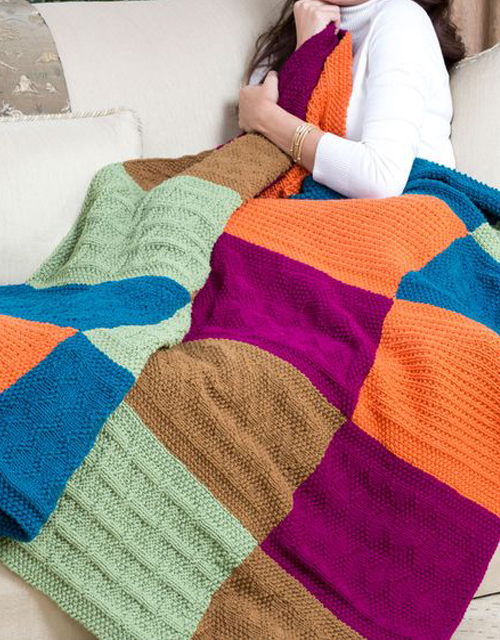
Photos above © DrBron

Slip Stitch Sampler Throw by Irina Poludnenko is a colorful free knitting pattern originally published by Lion Brand. It combines slip-stitch colorwork with a modular log-cabin-inspired construction to create a large, eye-catching throw.

Six sections use the same basic log-cabin design in different color combinations, producing a sampler-style blanket without requiring complicated stranded colorwork.

The pattern is still available as a free knitting pattern, with a current downloadable version available through LoveCrafts.

✓ Free Pattern Availability

Slip Stitch Sampler Throw, Lion Brand pattern L10347, is currently available as a free downloadable knitting pattern. Use the current pattern source below for the complete instructions.

Slip Stitch Sampler Throw at a Glance

Pattern: Slip Stitch Sampler Throw

Designer: Irina Poludnenko

Publisher: Lion Brand Yarn

Pattern Number: L10347

Category: Blanket / Throw

Yarn Weight: Aran

Original Yarn: Lion Brand Vanna's Choice

Needles: US 8 / 5 mm

Gauge: 16 stitches × 24 rows = 4 in / 10 cm in slip-stitch pattern

Yardage: Approx. 3,570 yd / 3,264 m

Finished Size: Approx. 50 × 75 in / 127 × 190.5 cm

Construction: Modular squares, seamed

Techniques: Slip stitches, mosaic-style colorwork, stripes

Availability: Free downloadable pattern

About the Slip Stitch Sampler Throw

Slip Stitch Sampler Throw was designed by Irina Poludnenko for Lion Brand Yarn.

Rather than making one enormous uninterrupted panel, the blanket uses the same log-cabin-inspired design six times in different color combinations.

Once the individual sections are complete, they are assembled into a large rectangular throw.

The result is a colorful sampler blanket with strong geometric structure and plenty of visual variety.

Finished Size

The published finished dimensions are approximately:

50 × 75 inches / 127 × 190.5 cm

This is a substantial throw rather than a small lap blanket, so expect it to become a fairly large project both in knitting time and total yarn requirement.

Original Yarn

The pattern was designed using Lion Brand Vanna's Choice, an Aran-weight acrylic yarn.

The original yarn is listed at approximately 170 yards per 100-gram ball.

The published blanket uses multiple colors to create the changing combinations across its six main sections.

Original Color Plan

The published version uses nine colors:

  • Dusty Blue
  • Chocolate
  • Rust
  • Olive
  • Dusty Purple
  • Brick
  • Pea Green
  • Mustard
  • Purple

The original quantities total 21 balls of Vanna's Choice.

Dusty Blue, Olive and Dusty Purple use three balls each, while the other six colors use two balls each.

Total Yardage

Ravelry records total published yardage of approximately:

3,570 yards / 3,264 meters

That large quantity reflects both the generous finished dimensions and the nine-color construction.

If substituting yarn, calculate your requirements carefully before beginning, particularly if some colors will be difficult to replace later from the same dye lot.

Needles

The published needle size is:

US 8 / 5 mm

Needle size is only a starting point. Use the size that allows you to obtain the required gauge with your chosen yarn.

Gauge

The published gauge is:

16 stitches × 24 rows = 4 × 4 inches / 10 × 10 cm

This gauge is measured in the slip-stitch pattern.

Even though a blanket does not need to fit a body, gauge still matters here because six separate sections eventually need to work together as one finished throw.

What Is Slip-Stitch Colorwork?

Slip-stitch colorwork can create surprisingly elaborate-looking patterns without requiring you to work several yarn colors across the same row at once.

Selected stitches are slipped rather than worked, allowing color from an earlier row to remain visible in the new row.

The technique can produce geometric color effects while keeping the actual knitting relatively approachable.

Why Slip Stitches Work Well Here

The strong colors already give this blanket plenty of visual energy. Slip stitches add another layer of texture and pattern without requiring complex stranded colorwork across every row.

They also complement the geometric log-cabin structure particularly well.

Keep Slipped Stitches Relaxed

One of the most important habits in slip-stitch knitting is avoiding excessive tension.

If the yarn carried past slipped stitches is pulled too tightly, the fabric can become compressed or distorted.

Allow the stitches to remain comfortably spaced on the needle as you work across each section.

Log-Cabin-Inspired Construction

Traditional log-cabin knitting builds outward in sections, creating strong geometric blocks of color.

Slip Stitch Sampler Throw uses this visual idea repeatedly, creating six versions of the same basic design in different color combinations.

This repetition is useful because once you understand how one section develops, the overall construction becomes much easier to visualize.

Six Main Sections

The throw is modular rather than one-piece.

Six major sections are knitted and later assembled to create the finished 50 × 75-inch blanket.

Modular construction has an important practical advantage: you do not need to carry the entire weight of a large blanket on your needles throughout the project.

Managing Nine Colors

A nine-color project benefits from a little organization.

Before casting on, label your colors according to the pattern and keep leftover yarn clearly identified.

Avoid relying only on memory, especially when several shades are similar.

A simple note showing the yarn name, color letter and remaining ball count can prevent confusion later in the project.

Choosing Your Own Palette

You do not have to reproduce the original Lion Brand colors exactly.

The geometric construction makes this an excellent project for creating your own coordinated palette.

Consider combining:

  • Warm autumn shades
  • Cool blues and greens
  • Muted vintage colors
  • Bright contrasting colors
  • Neutrals with a few strong accent shades

Whatever palette you choose, make sure neighboring colors have enough contrast for the slip-stitch pattern to remain visible.

Substituting the Yarn

If you use another Aran-weight yarn, make a slip-stitch swatch before buying the full quantity.

Look for a yarn that provides:

  • Good stitch definition
  • Consistent gauge
  • Comfortable drape
  • Colors with useful contrast
  • Care instructions suitable for a large blanket

Wash your swatch according to the yarn manufacturer's directions to see how the finished fabric changes.

Assembly Matters

Ravelry classifies the design as seamed.

Because separate sections eventually form one large geometric blanket, careful assembly is important.

Before sewing, block the sections if appropriate for your yarn and lay them out in the intended arrangement.

Check orientation and color placement before joining anything permanently.

Keep the Seams Flexible

A blanket seam should be secure without becoming a rigid ridge.

Pulling the joining yarn too tightly can cause the assembled throw to pucker along the seams.

Periodically lay the work flat while joining the sections to make sure the seam tension remains comfortable.

Important Pattern Correction

Important Before You Knit

Lion Brand published corrections for pattern L10347 on April 17, 2013. For that reason, use a current corrected version of the pattern rather than relying on an old copy saved from the original publication period.

Corrections are one of the main reasons Amazing Knitting links readers back to legitimate current pattern sources rather than reproducing old instructions.

Skill Level

Lion Brand classified the project as:

Easy+ / Level 3

The blanket is large, but the modular construction and repetition mean that project size should not automatically be confused with technical difficulty.

Skills Used in This Project

  • Knitting and purling
  • Slipping stitches
  • Changing colors
  • Reading repeating stitch patterns
  • Modular knitting
  • Picking up or working from existing sections as directed
  • Maintaining consistent gauge
  • Seaming knitted sections
  • Weaving in multiple yarn ends
  • Blocking and finishing a large blanket

Is Slip Stitch Sampler Throw Still Free?

Yes.

Slip Stitch Sampler Throw by Irina Poludnenko is still listed as a free knitting pattern, and a free downloadable PDF of Lion Brand pattern L10347 is currently available through LoveCrafts.

Amazing Knitting does not reproduce the designer's complete copyrighted instructions. Use the legitimate pattern source for the complete knitting directions.

Get the Free Slip Stitch Sampler Throw Pattern

The Lion Brand L10347 pattern is currently available as a free downloadable PDF from LoveCrafts:

Get the Free Slip Stitch Sampler Throw Pattern →

You can also view the Ravelry pattern record for project examples, specifications and historical pattern information:

View Slip Stitch Sampler Throw on Ravelry →

More Free Blanket Knitting Patterns

If you enjoy textured and colorful blanket projects, explore more verified free patterns in the Amazing Knitting archive:

Before You Start

This is a large multi-color project, so organize your nine colors before casting on and make a swatch in the actual slip-stitch pattern.

Pay particular attention to keeping slipped stitches relaxed and keeping the dimensions of the modular sections consistent so that assembly is easier later.

Most importantly, use a current corrected version of Lion Brand L10347 rather than an old copied version of the instructions.

Pattern credit: Slip Stitch Sampler Throw was designed by Irina Poludnenko for Lion Brand Yarn. The existing project photographs on this Amazing Knitting page are credited to DrBron. Amazing Knitting provides an independent project guide and does not reproduce the designer's complete copyrighted knitting instructions.

Sampler Block Throw - Free Knitting Pattern

Sampler Block Throw - Free Pattern
Design by © Cathy Payson

Sampler Block Throw by Cathy Payson is a colorful knitted blanket that lets you practice several different stitch patterns while creating one cozy finished project.

The original Red Heart pattern is still available as a free official download from Yarnspirations.

✓ Free Pattern Available

The original Red Heart Sampler Block Throw pattern is currently available as a free download from Yarnspirations. Some of the original yarn shades may have been discontinued, but the knitting pattern itself remains available.

Pattern at a Glance

Pattern: Sampler Block Throw

Designer: Cathy Payson

Brand: Red Heart / Yarnspirations

Craft: Knitting

Skill Level: Easy

Finished Size: 50 × 60 in (127 × 152.5 cm)

Yarn Weight: Aran

Availability: Free official download

A Blanket That Lets You Practice New Stitches

The fun of a sampler blanket is that you do not spend the entire project repeating one stitch pattern.

Sampler Block Throw combines several textured designs, including Moss Diamonds, Broken Rib, Zigzag Moss, Square Lattice and Vertical Zigzag.

The blocks are arranged into panels and then joined to create the finished throw. This also makes the project convenient to work on in smaller sections instead of carrying an entire blanket on your needles.

Written Instructions and Charts

Another useful feature of the original pattern is that the stitch patterns are provided in both written and charted form.

This makes the project a nice opportunity to practice reading knitting charts while still having written instructions available for reference.

Choosing Yarn

The original design uses Red Heart With Love yarn. Some original shades associated with the pattern may no longer be available, but that does not prevent you from knitting the throw.

Choose a compatible yarn and make a gauge swatch before beginning, especially if you want to reproduce the original 50 × 60 inch finished size.

Get the Free Sampler Block Throw Pattern

Yarnspirations currently provides the complete original Red Heart pattern as a free download with no sign-up required.

Get the Free Sampler Block Throw Pattern →

More Free Knitted Blankets

Pattern credit: Sampler Block Throw was designed by Cathy Payson for Red Heart. Amazing Knitting provides this independent project guide and links to the authorized free pattern rather than reproducing the complete knitting instructions.

Basketweave Chunky Knit Blanket - Free Pattern

Basketweave Blanket - Free Pattern
Photos above © iSeL

Basketweave Chunky Knit Blanket is a fast, beginner-friendly throw made with jumbo yarn and oversized knitting needles.

Originally published through Red Heart, this cozy blanket uses simple knit-and-purl texture to create a large basketweave effect without cables or complicated shaping.

Because the yarn is extremely thick and the needles are unusually large, the fabric grows very quickly compared with a conventional knitted blanket.

The original pattern is still officially available as a free download from Yarnspirations / Red Heart.

✓ Free Official Pattern Available

Red Heart's Basketweave Throw remains available as a free knitting pattern from Yarnspirations. The current official page provides the downloadable pattern and project information without requiring sign-up.

Basketweave Chunky Knit Blanket at a Glance

Pattern: Basketweave Throw / Basketweave Chunky Knit Blanket

Publisher: Red Heart / Yarnspirations

Original Credit: Laura Bain for Red Heart

Skill Level: Beginner

Category: Throw / Blanket

Original Yarn: Red Heart Boutique Irresistible

Yarn Weight: Jumbo / Weight 7

Original Amount: 9 balls

Needles: 35 mm / US 100 circular needle, 40 in or longer

Gauge: 2.5 sts and 4 rows = 4 in in garter stitch

Finished Size: Approx. 48 × 50 in / 122 × 127 cm

Availability: Free official download

About the Basketweave Blanket

This is an oversized-texture throw designed to make the most of very thick yarn.

The basketweave appearance comes from alternating blocks of knit and purl stitches rather than from cables.

The result looks more elaborate than the techniques actually required, which is one reason the pattern works so well for newer knitters.

Why This Blanket Knits So Quickly

Standard blankets can require hundreds of stitches across each row.

This design takes a completely different approach by using jumbo yarn and very large needles.

The thick yarn means fewer stitches are needed to create a wide piece of fabric, so each row covers much more physical distance than it would with worsted or DK yarn.

Original Yarn

The pattern was originally designed for Red Heart Boutique Irresistible.

This was a jumbo-weight yarn with a very plush, soft appearance that helped create the oversized, cozy texture shown in the original project.

The original version used approximately:

9 balls

Because older yarn lines may change or become difficult to find, do not rely only on the original product name when choosing a substitute.

Can You Substitute the Yarn?

Yes, but this project depends heavily on yarn thickness.

Look for a yarn that is genuinely close to jumbo / weight 7 and produces a fabric you like at the required gauge.

When comparing substitutes, pay attention to:

  • Yarn weight
  • Recommended needle range
  • Total yardage or meterage
  • Fiber softness
  • Washability
  • How firmly or loosely the yarn holds its shape

Don't Substitute by Ball Count Alone

Different jumbo yarns can contain dramatically different amounts of yarn per ball.

Buying nine balls of another brand does not automatically give you the same total yardage as nine balls of the original yarn.

Compare total yardage or meterage instead of relying only on the number of skeins.

Giant Knitting Needles

The original pattern uses:

35 mm / US 100 circular knitting needles

The circular needle is used for its long cable and ability to support the weight and width of the blanket.

You still work the project back and forth rather than joining it in the round.

Why Use Circular Needles for a Flat Blanket?

Circular needles are often easier to manage for large flat projects because much of the fabric can rest on the flexible cable.

This reduces the amount of weight supported directly by your wrists compared with trying to balance a large blanket on very long straight needles.

Getting Used to 35 mm Needles

Needles this large can feel unusual at first.

You may find it easier to work slowly and use broader hand movements rather than gripping the needles tightly.

Take breaks if your hands, wrists or shoulders become tired. Jumbo knitting requires fewer stitches, but each movement can be physically larger.

Gauge

The historical pattern information lists:

2.5 stitches = 4 inches
4 rows = 4 inches

measured in garter stitch.

That extremely open gauge reflects the very large yarn and needle combination.

Why Gauge Still Matters

Even though a blanket does not have to fit a body, gauge affects the final size, yarn requirement and fabric density.

If your stitches are substantially tighter, you may create a smaller, denser blanket and use more yarn.

If your fabric is much looser, the basketweave structure may lose definition.

Finished Size

The original version measures approximately:

48 × 50 inches

approximately 122 × 127 cm

This makes it a useful throw for a sofa, armchair or the foot of a bed rather than a small baby blanket.

How Basketweave Texture Works

Basketweave knitting creates the illusion of woven blocks by arranging knit and purl stitches in alternating sections.

Knit stitches visually recede or advance differently from purl stitches, depending on which side of the fabric you are viewing.

Switching the blocks after several rows creates the familiar over-and-under basket effect.

No Cables Required

Although the finished texture can look architectural, this design does not depend on traditional cable crossings.

That makes it far less complicated than many highly textured blankets.

If you can knit, purl and keep track of a repeating sequence, you already have the main skills required.

Garter Stitch Border

The blanket also uses garter stitch around the textured section.

A garter border gives the edges a simple visual frame and helps balance the stronger basketweave pattern in the center.

Counting Stitches Matters

Basketweave patterns look regular only when the blocks remain aligned.

An accidentally added or dropped stitch can shift later sections and make the error more noticeable.

Count occasionally and inspect the vertical alignment of your blocks as the blanket grows.

Use Stitch Markers if Helpful

For a simple repeat like this, markers can be placed between texture sections if you find yourself losing track.

They are not required by every knitter, but they can reduce counting mistakes when you are still learning the rhythm of the pattern.

Watch Your Knit-and-Purl Transitions

One common beginner issue occurs when moving the yarn between knit and purl stitches.

Make sure the working yarn moves between the needle tips rather than wrapping over the needle accidentally.

Otherwise, you may create an unintended extra stitch.

Skills Used in This Blanket

  • Casting on
  • Knit stitch
  • Purl stitch
  • Working flat on circular needles
  • Reading a simple repeat
  • Binding off
  • Weaving in ends

Is It Suitable for Beginners?

Yes.

Yarnspirations currently classifies the Basketweave Throw as a Beginner knitting project.

The main challenge is not complicated stitch technique but handling the unusually large yarn and needles while keeping the repeat consistent.

A Good First Blanket?

It can be.

A conventional full-size blanket may feel slow to a beginner, but this jumbo version grows very quickly.

That makes it especially satisfying if you want to practice knit and purl stitches while producing a substantial finished object.

One Thing Beginners Should Know

Faster does not necessarily mean physically effortless.

Jumbo yarn and 35 mm needles can place more strain on your hands than ordinary knitting needles.

Use a relaxed grip and stop when you feel fatigue rather than forcing yourself through long knitting sessions.

Weaving In Jumbo Yarn Ends

Very thick yarn ends can be more difficult to hide neatly than standard yarn.

The original pattern materials even mention an optional sewing needle and matching thread if the large ends are difficult to secure conventionally.

Follow the finishing guidance in the official pattern rather than trimming the yarn too close to the fabric.

Blocking and Finishing

Jumbo blankets usually do not require aggressive blocking.

Follow the current care instructions for whichever yarn you use and allow the blanket to settle naturally into shape.

Avoid excessive stretching, which could distort the large basketweave blocks.

Care Instructions Depend on Your Yarn

If you substitute the original yarn, use the care label on the replacement yarn rather than assuming the same washing method applies.

A large wet blanket can also become surprisingly heavy, so support it carefully during washing and drying.

Why This Pattern Still Works

The design combines three things that remain popular:

  • Very chunky texture
  • Simple beginner knitting
  • A neutral, modern home-decor look

The oversized basketweave blocks make the project visually impressive even though the underlying stitches are basic.

Important: There Are Many Basketweave Blanket Patterns

Same General Name, Different Patterns

Many designers publish blankets called Basketweave Blanket, Basketweave Throw or Basketweave Baby Blanket. The design featured on this Amazing Knitting page is the jumbo-yarn Red Heart Basketweave Throw associated with the Basketweave Chunky Knit Blanket description. Do not mix its yarn, needle size, gauge or measurements with unrelated basketweave designs.

Is the Basketweave Blanket Still Free?

Yes.

Yarnspirations currently publishes the Red Heart Basketweave Throw as a free knitting pattern.

The official listing identifies it as a beginner project and provides a completely free download without requiring registration.

Amazing Knitting does not reproduce the full row-by-row copyrighted pattern. Use the official Yarnspirations page for the complete current instructions.

Get the Free Basketweave Throw Pattern

Visit Yarnspirations / Red Heart for the official free download:

Get the Free Basketweave Throw Pattern →

More Free Blanket Patterns on Amazing Knitting

Explore More Blanket Knitting

Before You Cast On

Make sure your substitute yarn is genuinely close to jumbo weight, then test how it behaves on very large needles.

Check the gauge, keep your knit-and-purl blocks aligned, and use a relaxed grip while handling the oversized needles.

Most importantly, use the official Yarnspirations download for the complete instructions rather than copying an older reposted version from another site.

Pattern credit: Basketweave Throw is a Red Heart pattern, historically associated with Laura Bain for Red Heart. Amazing Knitting provides an independent editorial project guide and does not reproduce the complete copyrighted row-by-row pattern. Preserve the existing image credit: Photos above © iSeL.

7 Free Baby Blanket Knitting Patterns for Beautiful Handmade Gifts

Looking for a beautiful baby blanket to knit for a new arrival? These 7 free baby blanket knitting patterns include simple stripes, textured hearts, classic heirloom designs and cozy stitch patterns that make wonderful handmade gifts.

Every pattern in this collection links to an updated Amazing Knitting guide where you can find the current pattern details and the original free source.

✓ All 7 patterns in this collection are free

Click any photo, title or pattern link below to visit the corresponding Amazing Knitting guide.

1. Easy Striped Baby Blanket

Easy Striped Baby Blanket free knitting pattern

Photos © Jamey - Dabbles and Babbles

Easy Striped Baby Blanket by Jamey of Dabbles & Babbles is a lovely choice for newer knitters. Soft three-color stripes are framed by a textured seed-stitch border, giving the blanket a clean, modern finish.

It is worked flat in DK yarn and measures approximately 34 × 33 inches after blocking.

View the Free Easy Striped Baby Blanket Pattern →


2. Heart Baby Blanket

Heart Baby Blanket free knitting pattern

Photo © katalysis

Heart Baby Blanket by Ann Saglimbene uses knit-and-purl texture to create repeating heart motifs directly in the fabric.

There is no stranded colorwork or intarsia involved, which makes the design especially attractive for knitters who want a decorative single-color blanket.

Our updated guide also explains why knitters should use the designer's corrected March 2024 version rather than an older copy.

View the Free Heart Baby Blanket Pattern →


3. Jordan Baby Blanket

Jordan Baby Blanket free knitting pattern

Photo © danelle1977

Jordan Baby Blanket by marianna mel is a beautiful textured design made with basic knit and purl stitches.

The raised stitch pattern gives the blanket plenty of visual interest without relying on lace or multiple yarn colors, making it a strong choice for a classic handmade baby gift.

The pattern also comes in several sizes and can be adjusted depending on the project you want to make.

View the Free Jordan Baby Blanket Pattern →


4. Treasured Heirloom Baby Blanket

Treasured Heirloom Baby Blanket free knitting pattern

Design © Lion Brand

Treasured Heirloom Baby Blanket is a classic corner-to-corner design with alternating garter and eyelet sections.

The diagonal construction gives the blanket an elegant traditional appearance while allowing the entire project to be worked as one piece.

It is a particularly nice option if you want a baby blanket that feels more like a keepsake than an everyday basic.

View the Free Treasured Heirloom Baby Blanket Pattern →


5. Rice Stitch Baby Blanket

Rice Stitch Baby Blanket free knitting pattern

Photo © Liz Chandler / PurlsAndPixels

Rice Stitch Baby Blanket by Liz Chandler is a practical textured blanket that works beautifully when you want visual interest without complicated lace or colorwork.

The pattern includes two approaches to creating the textured fabric and is a useful project for practicing knit-and-purl combinations.

The finished blanket measures approximately 40 × 40 inches and is worked in worsted-weight yarn.

View the Free Rice Stitch Baby Blanket Pattern →


6. Waffle Blanket

Waffle Blanket free knitting pattern

Waffle Blanket by Alexis Layton is all about texture. Its repeating stitch pattern creates a deeply raised surface that gives the finished blanket a cozy, substantial appearance.

The original pattern is worked in Aran-weight yarn and measures approximately 40 × 51 inches.

It can work well as a larger baby blanket, stroller blanket or small family throw.

View the Free Waffle Blanket Pattern →


7. Little Girl Pink Baby Blanket

Little Girl Pink Baby Blanket free knitting pattern

Little Girl Pink Baby Blanket by Marlaine DesChamps combines cable and lace panels for a more decorative, traditional baby-blanket look.

The original design measures approximately 35 × 46 inches and was designed for Caron Simply Soft worsted-weight yarn.

This is a lovely option when you want a handmade baby gift with a more detailed heirloom-style finish.

View the Free Little Girl Pink Baby Blanket Pattern →

Which Free Baby Blanket Should You Knit?

If you want something simple and modern, start with the Easy Striped Baby Blanket.

For textured knitting, the Jordan Baby Blanket, Rice Stitch Baby Blanket and Waffle Blanket are especially good choices.

If you are knitting for a baby shower or keepsake gift, the Heart Baby Blanket, Treasured Heirloom Baby Blanket and Little Girl Pink Baby Blanket have a more decorative, traditional feel.

Tips for Choosing a Baby Blanket Yarn

Baby blankets are used and washed often, so softness and easy care are both important. Check the original pattern's recommended yarn weight before substituting another yarn, and make a gauge swatch when the finished dimensions matter.

Smooth yarns also tend to show textured stitches, hearts, cables and lace more clearly than very fuzzy yarns.

Before You Cast On

Pattern availability can change over time. Amazing Knitting reviews the projects featured in our collections and links each one to an updated guide with the current pattern information and original designer or publisher source.

More Free Knitting Patterns

Amazing Knitting is gradually reviewing and updating its pattern archive so that older favorites are easier to identify and their current availability is clearer.

Save this collection for your next baby shower or handmade gift and explore the individual guides above to find the blanket that best matches your yarn, skill level and knitting style.

Editorial note: The knitting patterns featured in this collection belong to their respective designers and publishers. Amazing Knitting provides independent pattern guides and links to authorized sources rather than reproducing complete copyrighted pattern instructions.

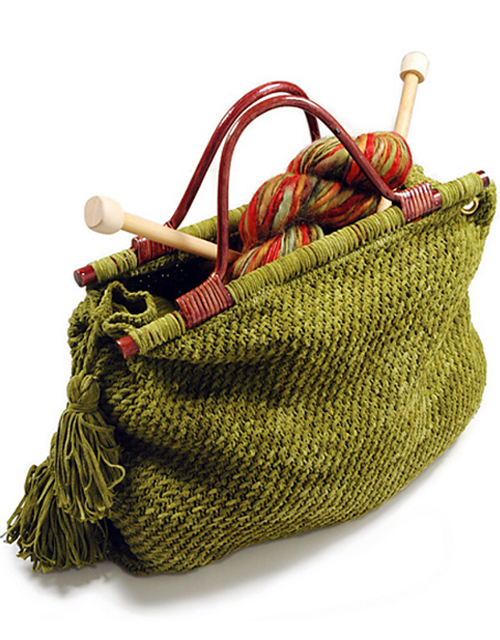
Knitting Tote - Free Bag Knitting Pattern

Knitting Tote - Free Pattern
Photo above © Berroco Inc.

Knitting Tote by Donna Yacino for Berroco is a sturdy, structured knitted bag designed especially for carrying yarn, needles and works in progress.

The combination of textured knitting, wooden handles, decorative grommets and a reinforced bottom gives the tote a polished look while keeping it practical enough for everyday use.

Originally designed in Berroco Suede, this project is a great choice for knitters who want to make something functional rather than another garment or accessory.

Best of all, the complete Knitting Tote pattern is still officially available for free from Berroco.

✓ Free Pattern Availability

Berroco still publishes Knitting Tote by Donna Yacino as a free pattern download on its official website.

Knitting Tote at a Glance

Pattern: Knitting Tote

Designer: Donna Yacino

Publisher: Berroco

Project Type: Knitted tote bag

Skill Level: Intermediate

Suggested Yarn: Berroco Suede

Yarn Weight: Worsted

Approx. Yardage: 500 yd / 457 m

Needles: US 8 / 5 mm, 24-inch circular

Crochet Hook: 4 mm

Gauge: 24 sts × 30 rows = 4 in in pattern stitch

Finished Size: Approx. 15 in wide × 11 in high × 4½ in deep

Availability: Free official Berroco pattern

About the Berroco Knitting Tote

This tote was designed as a practical project bag with enough structure to hold knitting supplies while still looking like a finished handbag.

Berroco describes the design as sturdy and stylish, and the construction supports that goal with a firm knitted fabric, wooden handles and a reinforced base.

Unlike a soft drawstring project pouch, this tote is intended to keep its shape and stand more like a traditional bag.

Finished Size

The official finished measurements are approximately:

15 in wide × 11 in high × 4½ in deep

The height measurement does not include the handles.

This gives the bag enough room for yarn, tools and a medium-sized work in progress without making it excessively bulky.

Original Yarn: Berroco Suede

The original design uses Berroco Suede, a worsted-weight novelty yarn that gives the knitted fabric a distinctive suede-like appearance.

The official materials list calls for:

5 balls of Berroco Suede

The Ravelry record lists the project at approximately 500 yards / 457 meters.

What If Berroco Suede Is Hard to Find?

If you substitute yarn, focus on the finished fabric rather than trying to match only the original fiber appearance.

A tote needs more structure than a soft scarf or sweater.

Look for a yarn that can:

  • Match the published gauge
  • Create a reasonably firm fabric
  • Show the textured stitch clearly
  • Handle the weight of items placed inside the bag
  • Resist excessive stretching

Make a swatch before committing to the full tote, especially if your substitute is much more elastic than the original yarn.

Needles and Gauge

The official pattern specifies a 24-inch US 8 / 5 mm circular needle.

The published gauge is:

24 stitches × 30 rows = 4 inches in pattern stitch

Use the needle size required to obtain gauge rather than assuming that US 8 will produce the correct fabric for every yarn.

Why Gauge Matters for a Tote Bag

Gauge affects more than appearance in a bag project.

If your stitches are too loose, the tote may stretch when filled. If they are too tight, the fabric can become difficult to work and the finished dimensions may be smaller than expected.

A firm, consistent swatch is especially useful before starting a structural project like this.

Worked in the Round

The pattern is designed to be worked in the round using a circular needle.

Circular construction reduces the need for long side seams and helps create a continuous body around the bag.

If you are new to circular knitting, check carefully that the cast-on edge is not twisted before joining.

Textured Pattern Stitch

The tote uses a textured pattern stitch rather than plain stockinette.

This gives the surface more visual interest while also contributing to the structured appearance of the bag.

The Ravelry pattern record also identifies slipped stitches among the techniques used.

Extra Materials You Will Need

This is not a yarn-and-needles-only project.

Berroco's official materials list also includes:

  • A 4 mm crochet hook
  • One pair of wooden handles with a 13-inch lower bar
  • Four 7/16-inch grommets
  • A piece of cardboard for the bottom insert

Check that you can obtain suitable handles and grommets before beginning the knitting.

Wooden Handles

The wooden handles are an important part of the original design.

They provide structure and keep the weight of the bag from being carried entirely by a knitted strap.

If you substitute another style of handle, compare its attachment points and width with the original construction before making permanent changes.

Decorative Grommets

Four metal grommets are used near the upper section of the tote.

These become attachment points for decorative twisted cords and tassels.

When installing hardware in knitted fabric, make sure it is secure and does not cut or damage the surrounding yarn.

Reinforcing the Bottom

One of the most practical details in this pattern is the reinforced base.

Berroco specifies a piece of cardboard approximately:

15 in long × 4½ in wide

as a bottom insert.

The insert helps keep the base flat when yarn and tools are placed inside.

Consider a More Durable Bottom Insert

If you plan to use the tote frequently, you may prefer to cut a removable insert from a suitable lightweight plastic or another moisture-resistant material with similar dimensions.

This would be your own modification rather than part of the original Berroco pattern.

Any substitute insert should have smooth edges so it does not catch the knitted fabric.

Do You Need to Line the Tote?

The original pattern does not require a full fabric lining in order to create the bag.

However, adding a lining can be a useful optional modification if you plan to carry small knitting tools.

A fabric lining can help prevent items such as stitch markers or needle tips from working through the knitted fabric.

Add Pockets If You Want More Organization

A handmade lining also gives you the opportunity to add internal pockets.

Useful pocket sizes might accommodate:

  • Scissors
  • Stitch markers
  • Tape measure
  • Cable needles
  • Crochet hooks
  • Pattern notes

Again, these are optional customizations and not part of the original Donna Yacino instructions.

Decorative Tassels and Twisted Cords

The original Berroco design includes tassels and twisted cords as finishing details.

They give the bag its distinctive decorative appearance and also make use of the installed grommets.

Follow the official pattern for the original finishing method rather than relying on reconstructed instructions from third-party sites.

Skills Used in This Project

This tote is a good project for practicing several skills in one useful object:

  • Knitting in the round
  • Maintaining a textured stitch pattern
  • Working slipped stitches
  • Checking gauge
  • Using a crochet hook for finishing
  • Attaching bag hardware
  • Making twisted cords
  • Making tassels
  • Adding structural reinforcement

Is the Knitting Tote Beginner Friendly?

Berroco classifies the project as Intermediate.

That makes sense because the knitting itself is only one part of the project.

You also need to work a pattern stitch, maintain gauge, handle circular construction and complete several finishing and hardware steps.

An adventurous beginner who is comfortable following detailed instructions may still enjoy it, but it is probably not the ideal first-ever knitting project.

A Useful Project for Practicing Bag Construction

Garments require careful body sizing, while a tote allows you to focus more on structure and finishing.

This makes the project a useful introduction to how knitted fabric can be combined with rigid components such as handles and base inserts.

Prevent the Bag from Stretching

Knitted fabric naturally has some elasticity.

To keep the tote looking its best:

  • Match the intended gauge
  • Avoid extremely loose fabric
  • Use the reinforced bottom
  • Attach the handles securely
  • Avoid routinely overloading the bag
  • Consider a fabric lining for frequent use

Use It as a Knitting Project Bag

The finished tote is particularly well suited to holding an active knitting project.

Depending on the size of your work, it can hold yarn, circular needles, pattern notes and everyday knitting notions together in one place.

The flat reinforced bottom also makes it more practical than an unstructured knitted sack.

Or Use It as an Everyday Tote

Nothing limits the finished bag to knitting supplies.

It can also function as a general-purpose handmade tote, especially if you add a lining and internal pockets.

Keep in mind that the amount of weight it can comfortably carry depends on your yarn, gauge, finishing and hardware.

Is the Berroco Knitting Tote Still Free?

Yes.

Berroco currently maintains an official page for Knitting Tote by Donna Yacino and labels it Free Pattern Download.

Ravelry also currently lists the same pattern as free.

Amazing Knitting does not reproduce Berroco's complete copyrighted knitting instructions. Use the authorized publisher page for the full pattern.

Get the Free Knitting Tote Pattern

Use the official Berroco page for the current free pattern:

Get the Free Knitting Tote Pattern →

Pattern Details on Ravelry

Ravelry is also useful for checking the pattern record and browsing projects made by other knitters:

View Knitting Tote on Ravelry →

More Free Knitting Projects

If you would like to continue with another free project from the Amazing Knitting archive, explore:

Explore More Knitted Bags

Before You Cast On

Read through the complete Berroco materials list before buying yarn.

This project requires more than needles and yarn, so having the handles, grommets, crochet hook and bottom insert ready will make the finishing process much easier.

Make a gauge swatch, aim for a firm structured fabric, and use the current official Berroco instructions for the complete stitch pattern and assembly details.

Pattern credit: Knitting Tote was designed by Donna Yacino and published by Berroco. The existing Amazing Knitting photograph is credited to Berroco Inc. Amazing Knitting provides an independent project guide and does not reproduce Berroco's complete copyrighted pattern instructions.

Waffle Blanket - Free Pattern

Waffle Blanket - Free Pattern
Photo Projects © Ravelry 

Waffle Blanket by Alexis Layton is a free knitted afghan pattern that uses a simple repeating stitch pattern to create an attractive textured fabric.

Worked with Aran-weight yarn on 5 mm / US 8 needles, the finished blanket measures approximately 40 × 51 inches, making it a useful sofa throw or cozy everyday blanket.

Best of all, the original pattern remains available as a free Ravelry download.

✓ Free Pattern Availability

Waffle Blanket by Alexis Layton is currently available as a free Ravelry download. Use the original pattern listing below for the complete knitting instructions.

Waffle Blanket at a Glance

Pattern: Waffle Blanket

Designer: Alexis Layton

Published: January 2010

Category: Blanket / Throw / Afghan

Yarn Weight: Aran

Suggested Yarn: Bernat Super Value Solids (Vintage)

Needles: US 8 / 5 mm

Yardage: Approx. 764 yd / 699 m

Finished Size: Approx. 40 × 51 in / 102 × 130 cm

Features: Textured stitch pattern, eyelet details

Availability: Free Ravelry download

About the Waffle Blanket

Waffle Blanket is a knitted throw designed by Alexis Layton and first published in January 2010.

Its appeal comes from the combination of relatively straightforward knitting and a textured fabric that looks more elaborate than the construction might suggest.

The repeating pattern creates visual depth across the blanket while still allowing the project to function as a warm, practical afghan.

Finished Blanket Size

The published finished dimensions are approximately:

40 inches wide × 51 inches long

approximately 102 × 130 cm

This makes it a useful throw-sized blanket for a sofa, reading chair or an extra layer of warmth.

Yarn

The original pattern lists Bernat Super Value Solids (Vintage), an Aran-weight yarn.

The published yardage is approximately:

764 yards / 699 meters

Because the originally listed yarn is a vintage/discontinued entry, knitters today may prefer to substitute a currently available Aran-weight yarn.

When substituting, focus on producing a fabric with the right balance of texture, drape and warmth rather than trying to match the old yarn by name.

Needles

The published needle size is:

US 8 / 5 mm

For a blanket, many knitters find a long circular needle more comfortable than straight needles because the cable can support the weight of the growing project.

The blanket can still be worked back and forth even when using a circular needle.

The Waffle-Like Texture

The defining feature of this design is its textured stitch pattern.

Repetition across a large rectangular surface creates the visual rhythm that gives the blanket its distinctive appearance.

Texture can also make a single-color blanket visually interesting without requiring complicated color changes.

A Good Pattern for Showing Off Texture

If you want the stitch pattern to be the main feature, consider using a solid or gently tonal yarn.

Highly variegated yarns can be beautiful, but strong color changes may compete visually with a textured stitch pattern.

A lighter or medium shade can also make shadows within the textured fabric easier to see.

Choosing a Substitute Yarn

Since the yarn listed with this older pattern is a vintage yarn entry, substitution is likely for many modern knitters.

Look for a suitable Aran-weight yarn and make a swatch before buying the full blanket quantity.

Your swatch can tell you several things:

  • Whether you like the stitch definition
  • Whether the fabric feels too stiff or too loose
  • How the yarn behaves in the textured pattern
  • Whether the finished fabric has enough drape
  • How the yarn responds to washing or blocking

Gauge and Blanket Size

Ravelry lists the original pattern gauge as 18 stitches in stockinette stitch for the published gauge information.

For a blanket, a small gauge difference is generally less critical than it would be for a fitted sweater, but it will still affect the finished dimensions and yarn consumption.

If your gauge is significantly different, expect the blanket to become larger or smaller and plan your yarn quantity accordingly.

Keep Your Tension Consistent

Repeating textured patterns look their best when the tension remains reasonably consistent from one section to the next.

Try not to tighten your stitches when concentrating on a new part of the repeat.

Once you become familiar with the pattern rhythm, the knitting usually becomes much more relaxed.

Use Stitch Markers if Helpful

Long blanket rows can make it frustrating to discover a mistake only after reaching the end.

If the stitch repeat allows it, markers placed between logical repeat sections can help you identify an error much sooner.

They are especially useful during the first few repeats while you are learning how the stitch pattern should look.

Check the Pattern Visually

One advantage of a strong textured repeat is that the fabric itself eventually becomes a useful error detector.

Stop occasionally and look across the previous rows.

If one section suddenly stops aligning with the others, investigate it before knitting much farther.

Consider a Lifeline

If you are uncomfortable correcting mistakes in textured knitting, periodically inserting a lifeline through a known-correct row can be useful.

It provides a safe point to return to if an error is discovered several rows later.

Working a Large Blanket Comfortably

Blankets become progressively heavier as they grow.

If possible, allow the weight of the project to rest on your lap or a table rather than supporting the entire blanket with your wrists.

A long circular needle can also help distribute the weight more comfortably.

Blocking the Finished Blanket

Blocking can help settle the textured fabric and even out the edges.

Use a blocking method appropriate for your chosen fiber and follow the yarn manufacturer's washing instructions.

Avoid aggressively stretching the blanket if doing so would flatten the texture that gives the design its character.

Skills Used in This Project

Waffle Blanket is useful for practicing:

  • Working long rows consistently
  • Following a repeating stitch pattern
  • Maintaining even tension
  • Reading the knitted fabric
  • Managing a large project on the needles
  • Finishing and weaving in ends
  • Blocking a textured blanket

Is Waffle Blanket Still Free?

Yes.

Waffle Blanket by Alexis Layton is currently listed on Ravelry as a free download.

Amazing Knitting does not reproduce the designer's complete copyrighted knitting instructions. Use the original pattern listing for the complete pattern.

Get the Free Waffle Blanket Pattern

Visit Ravelry for the original free pattern:

Get the Free Waffle Blanket Pattern →

More Free Blanket Knitting Patterns

If you enjoy textured blankets, you can continue with other free blanket patterns already verified in the Amazing Knitting archive.

Shivaree Throw by Berroco Design Team is another excellent choice, combining cables and double seed stitch in a free official pattern.

See the Free Shivaree Throw →

You can also explore:

Before You Start

Choose a suitable Aran-weight yarn, make a swatch and decide whether you like the way your yarn displays the textured stitch pattern.

Make sure you have enough yarn for the full blanket, especially if your gauge or planned dimensions differ from the original.

Finally, use Alexis Layton's current Ravelry download for the complete instructions rather than copied versions found elsewhere online.

Pattern credit: Waffle Blanket was designed by Alexis Layton and first published in January 2010. Amazing Knitting provides an independent project guide and does not reproduce the designer's complete copyrighted knitting instructions. Please preserve the existing photograph and its original credit on this page.

Easy Tweed Blanket – Free Textured Knitting Pattern

Easy Tweed Blanket free textured knitting pattern by Patons UK

The Easy Tweed Blanket by Patons UK, officially listed as A5351 Tweed Blanket, is a classic textured throw made with a simple combination of knit and purl stitches.

The design creates a checkerboard-style surface without cables, lace or complicated shaping, making it an appealing project for knitters who want a large blanket with plenty of texture but relatively straightforward techniques.

Worked in bulky yarn on 5 mm needles, the finished throw measures approximately 136 × 150 cm (53.5 × 59 in), making it large enough for sofas, beds or cozy everyday use.

Design and original pattern © Patons UK.

Easy Tweed Blanket Pattern Overview

  • Designer: Patons UK
  • Pattern: A5351 Tweed Blanket
  • Craft: Knitting
  • Category: Throw / blanket
  • Published: September 2017
  • Finished size: Approximately 136 × 150 cm / 53.5 × 59 in
  • Suggested yarn: Patons UK Tweed Style
  • Yarn weight: Bulky
  • Yardage: Approximately 1968 yd / 1800 m
  • Needles: US 8 / 5 mm
  • Gauge: 16 stitches × 22 rows = 4 in / 10 cm in checkerboard pattern
  • Construction: One piece
  • Direction: Bottom up
  • Shape: Rectangle
  • Main techniques: Knit, purl, textured checkerboard pattern and chart reading
  • Language: English
  • Pattern availability: Free Ravelry download from Patons UK

A Simple Blanket With Rich Texture

The main feature of the Easy Tweed Blanket is its all-over textured surface. Instead of relying on cables or complicated stitch manipulation, the pattern uses combinations of basic knit and purl stitches to form repeating blocks.

Those blocks create a checkerboard-style effect across the entire blanket, giving the finished piece more visual depth than plain stockinette or garter stitch.

This is a good example of how basic knitting techniques can create a much more detailed-looking fabric when arranged carefully.

Why It Is Called a Tweed Blanket

The original design was created for Patons UK Tweed Style, a bulky yarn with a wool-and-acrylic blend and a naturally textured appearance.

The yarn itself adds subtle flecks and visual interest, while the knit-and-purl checkerboard pattern adds a second layer of texture.

Together, those two elements create the rustic tweed look associated with the design.

Checkerboard Texture

The central stitch pattern is based on repeating textured blocks.

Rather than knitting every row in the same way, knit and purl sections are alternated to create raised and recessed areas in the fabric.

The effect is geometric but still soft, making it suitable for a large throw that will be used rather than simply displayed.

Worked in One Piece

The blanket is worked as one continuous rectangular piece.

There are no separate squares to sew together and no complicated assembly at the end.

This keeps the construction simple and allows the main focus to remain on maintaining the repeating textured pattern.

Bottom-Up Construction

The project is worked from the lower edge upward.

As the blanket grows, the checkerboard texture develops in repeated sections across the width.

Because the pattern is geometric, it becomes easier to recognize mistakes once several repeats are visible.

Finished Size

The published size is approximately:

136 × 150 cm / 53.5 × 59 in.

This makes the Easy Tweed Blanket a generous throw rather than a small baby blanket.

It works well for a sofa, reading chair or the foot of a bed.

Yarn for the Easy Tweed Blanket

The original pattern uses Patons UK Tweed Style.

This yarn is classified as bulky and combines approximately 50% wool with 50% acrylic.

The original version uses approximately 24 balls of the Tweed Sage color, which corresponds to roughly 1968 yards / 1800 meters.

Choosing a Yarn Substitute

If the original Patons yarn is difficult to find, choose another bulky yarn that produces the required gauge and has enough stitch definition to show the checkerboard texture.

A wool blend can give the blanket warmth and elasticity, while acrylic blends may offer easier care and durability.

Avoid an extremely fuzzy yarn if you want the knit-and-purl blocks to remain clearly visible.

Gauge

The published gauge is:

16 stitches × 22 rows = 4 in / 10 cm in the checkerboard pattern.

Even though this is a blanket rather than a fitted garment, gauge still affects the final size and total yarn requirement.

If your gauge is looser, the throw may become larger and consume more yarn. If your gauge is tighter, it may become smaller and denser.

Needles

The pattern lists US 8 / 5 mm knitting needles.

For a blanket this wide, many knitters will find a long circular needle more comfortable because the flexible cable can support the weight of the growing fabric.

The blanket can still be worked flat on circular needles.

Skills You'll Use

  • Casting on
  • Knit stitches
  • Purl stitches
  • Working flat
  • Following a chart
  • Maintaining a checkerboard repeat
  • Reading knit-and-purl texture
  • Keeping even tension
  • Binding off
  • Weaving in ends

Is the Easy Tweed Blanket Beginner Friendly?

The stitch techniques themselves are simple because the blanket relies mainly on knit and purl stitches.

For that reason, a confident beginner who already understands those two basic stitches can approach the project successfully.

The main challenge is not technical difficulty but scale: the finished blanket is large, so maintaining consistent tension and keeping track of the repeating pattern requires patience.

Why the Pattern Is Good for Practicing Purl Stitches

Many beginner projects use only garter stitch, but this blanket gives knitters a chance to become more comfortable switching between knit and purl sections.

Repeatedly working the textured blocks helps develop consistency in both stitches while producing a useful finished project.

That makes the blanket a natural progression after very basic knit-only projects.

Using Stitch Markers

Even if the original pattern does not require markers throughout the entire blanket, markers can be useful when first learning the checkerboard repeat.

Place them between major pattern sections to help identify where each block begins and ends.

Once the texture becomes visually obvious, you may find that you no longer need them.

Tips for a Neater Checkerboard Pattern

Read your knitting. Learn to recognize the visual difference between knit and purl stitches so mistakes can be caught quickly.

Count regularly. A missed stitch can shift the pattern and become much harder to fix several rows later.

Keep tension consistent. Alternating frequently between knit and purl can sometimes create uneven stitches if the yarn is pulled differently between transitions.

Use a row counter. This is especially helpful when working a large repeating chart.

Check the pattern before long knitting sessions. Confirm where you are in the repeat before continuing after a break.

Blocking the Finished Blanket

Blocking can help even out the checkerboard texture and improve the overall shape of the finished throw.

Always follow the care instructions for your chosen yarn.

If using a wool blend, avoid excessive heat or agitation that could cause the fabric to felt.

Can You Change the Blanket Size?

The published pattern is designed for one finished size.

Experienced knitters may be able to adjust the width and length by working additional complete pattern repeats, but any modification will change the yarn requirement.

Always preserve the full checkerboard repeat and any edge stitches specified by the original pattern.

Is the Easy Tweed Blanket Pattern Free?

Yes. A5351 Tweed Blanket by Patons UK is currently available as a free knitting pattern.

The exact design is offered as a free download through the Patons UK pattern listing on Ravelry.

Because this is the Patons UK publication source for the pattern, Amazing Knitting links directly to that page rather than to copied PDFs or unofficial pattern websites.

Get the Free Easy Tweed Blanket Pattern →

Why This Blanket Is Worth Knitting

The Easy Tweed Blanket is a strong project for knitters who want a large, classic throw without complicated techniques.

The checkerboard texture creates enough visual interest to keep the blanket from looking plain, while the knit-and-purl construction remains approachable.

Bulky yarn also helps the fabric grow faster than a similar blanket knitted in DK or fingering-weight yarn.

The finished throw has a timeless textured look that can work with traditional, rustic or modern home décor.

Pattern Availability

Amazing Knitting links readers to legitimate designer or publisher sources whenever possible. Pattern prices, download locations and availability can change after an article is published.

Read Our Pattern Availability Policy →

Amazing Knitting is an independent pattern discovery and project-guide site. The A5351 Tweed Blanket design, chart and complete knitting instructions remain the intellectual property of Patons UK. This guide does not reproduce the publisher's complete row-by-row instructions or chart.

Discover More From the Archive

A fresh mix of knitting patterns and tutorials from the Amazing Knitting archive.

Finding patterns from the archive…