
 |
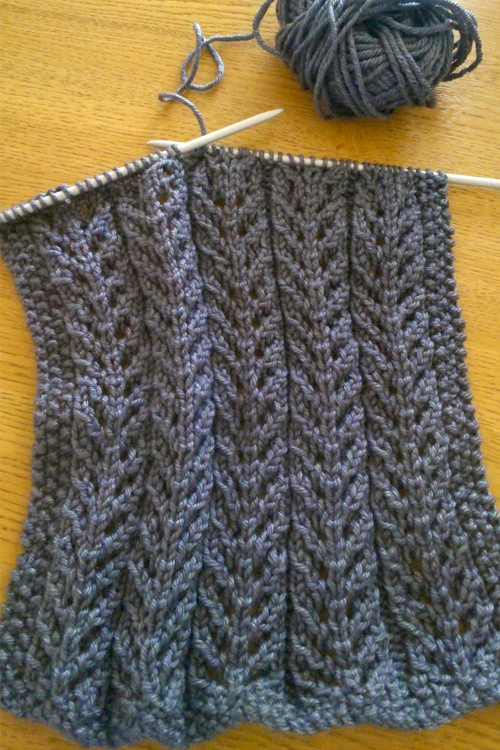
| Photo above © EIGHT-BY-SIX |
Birch Trees Scarf by Julia Marsh is a beautiful free lace knitting pattern featuring five panels of branching motifs framed by a neat moss-stitch border.
The repeating lace creates the impression of slender tree branches, giving the scarf an elegant woodland-inspired appearance without requiring lace-weight yarn.
Originally published in 2014, the pattern remains available today as a free Ravelry download from the designer.
✓ Free Pattern Availability
Birch Trees Scarf by Julia Marsh is currently available as a free Ravelry download. Use the official pattern link below to obtain the designer's current version.
Birch Trees Scarf at a Glance
Pattern: Birch Trees Scarf
Designer: Julia Marsh
First Published: April 2014
Craft: Knitting
Category: Scarf
Yarn Weight: DK / 8 ply
Yardage: Approx. 416–437 yd / 380–400 m
Needles: US 7 / 4.5 mm
Gauge: 20 stitches × 30 rows = 4 in / 10 cm in stockinette
Finished Size: Approx. 64 × 10 in / 160 × 26 cm
Construction: Worked flat
Main Features: Branching lace panels and moss-stitch edging
Availability: Free Ravelry download
About the Birch Trees Scarf
Birch Trees Scarf is a lace scarf designed by Julia Marsh.
Its main feature is a series of branching lace motifs arranged into five vertical panels. These openwork sections are surrounded by a textured moss-stitch border that helps frame the lace.
The result is decorative without being overly complicated, making the design particularly appealing to knitters who want to move beyond basic scarves and begin exploring simple lace.
A Simple Branching Lace Design
The visual interest in Birch Trees comes from the repeated branching motif.
Rather than using cables or colorwork to create the tree-like effect, the design relies on lace techniques to form lines and openings in the knitted fabric.
Repeating the motif across five panels creates a strong vertical structure that becomes especially clear after blocking.
Finished Size
Julia Marsh gives the approximate finished dimensions as:
160 cm long × 26 cm wide
approximately 64 × 10 inches
These measurements provide a generously sized scarf that can be worn in several ways.
Remember that lace dimensions can change during blocking, so evaluate the finished size after the scarf has been washed and blocked appropriately for your yarn.
Yarn Requirements
The pattern calls for approximately:
380–400 meters / 416–437 yards of DK-weight yarn
DK is a practical choice for this project because it creates visible lace without producing an extremely delicate fabric.
The thicker yarn also makes individual stitches easier to see than they might be in a very fine lace-weight scarf.
Needles
The designer specifies:
4.5 mm / US 7 straight knitting needles
The scarf is worked flat, so straight needles are sufficient.
You can also use another needle style appropriate for flat knitting if that is more comfortable for you, provided you obtain a suitable fabric and gauge.
Gauge
The published gauge is:
20 stitches × 30 rows = 4 inches / 10 cm in stockinette stitch
For a scarf, exact fit is less critical than it would be for a sweater, but gauge still affects the width, length, drape and amount of yarn required.
If your gauge differs substantially, your finished scarf may use more or less yarn than the designer's estimate.
Moss Stitch Edging
The lace panels are bordered by moss stitch.
This provides a textured contrast to the open lace while creating a visually defined edge around the scarf.
When working the project, pay attention to the transition between the border stitches and the lace panels. Keeping those sections clearly separated can make the repeating structure easier to follow.
Skills You'll Need
According to the designer, the main knitting skills required include:
- Casting on
- Binding off
- Knit stitches
- Working decreases such as knit two together
- Bringing the yarn forward to create lace openings
- Knitting through the back loop
- Following repeating stitch sequences
- Weaving in yarn ends
You do not need an extensive collection of advanced lace techniques to begin this project.
A Good Introduction to Lace Knitting
Birch Trees Scarf can be an attractive next project for a knitter who is comfortable with basic knit stitches and wants to begin working decorative openwork.
The repeating nature of the branching pattern helps establish a visual rhythm.
Once you understand how each repeat should look, the knitted fabric itself can help you notice mistakes.
Five Lace Panels
The scarf contains five panels of the branching pattern.
This repetition is an important part of the design. Instead of one oversized motif, several narrow vertical sections create the appearance of a small stand of delicate trees.
As the scarf grows, those repeated lines become one of its strongest visual features.
Keep Your Stitch Count Under Control
Lace patterns depend on a balance between increases and decreases.
If a yarn over is forgotten or an extra stitch is accidentally added, the error may affect the alignment of the next repeat.
Count your stitches periodically rather than waiting until the end of a long section.
Finding a mistake quickly is usually much easier than correcting it many rows later.
Use a Row Counter
Even a relatively simple repeating lace design becomes easier when you always know which row you have completed.
A row counter, paper checklist or digital counter can help prevent losing your place when you put the project down.
This is particularly useful when you are still learning to recognize the branching motif by sight.
Add a Lifeline
If lace knitting is new to you, consider adding an occasional lifeline.
A smooth contrasting thread passed through a correctly completed row provides a safe point to return to if you later need to unravel part of the scarf.
It is a simple precaution that can make learning lace much less stressful.
Choosing Yarn for Birch Trees
The designer calls for DK-weight yarn, but fiber and color can have a significant effect on the appearance of the finished scarf.
A relatively smooth yarn can make the branching stitches easy to see. Wool and wool blends can also respond nicely to blocking.
If showing the tree motif clearly is your priority, consider how much visual competition the yarn itself creates.
Solid and gently tonal colors often emphasize stitch structure, while strongly variegated yarns can produce a busier appearance.
Can You Use a Different DK Yarn?
Yes. You do not need one specific brand of yarn to knit the pattern.
Look for a DK-weight substitute that gives you a fabric you like on approximately the recommended needle size.
Compare fiber content, yardage, drape and washing requirements before making your choice.
A swatch is especially useful if you are substituting a yarn with very different fiber characteristics.
Blocking the Scarf
Blocking is an important finishing step for lace.
Before blocking, the branching openings may appear smaller or less defined than expected. Appropriate blocking allows the stitches to settle and the lace structure to become clearer.
Use a method suitable for your yarn's fiber content and avoid excessive stretching.
Allow the scarf to dry completely before removing pins or other blocking aids.
Project Inspiration
Birch Trees Scarf has been knitted in many different yarns and colors. Project examples show how strongly yarn choice can change the personality of the same pattern.
Neutral shades emphasize the woodland character, while brighter colors turn the branching motif into a more graphic lace design.
This makes the pattern useful both as a classic everyday scarf and as a way to experiment with a special DK yarn.
Is Birch Trees Scarf Still Free?
Yes.
Birch Trees Scarf by Julia Marsh is currently available as a free download on Ravelry.
Amazing Knitting does not reproduce Julia Marsh's complete copyrighted knitting instructions. Use the official designer pattern page to obtain the current pattern.
Get the Free Birch Trees Scarf Pattern
Visit Julia Marsh's pattern page on Ravelry for the free download:
Get the Free Birch Trees Scarf Pattern →
More Free Scarf Knitting Patterns
If you enjoy this project, Amazing Knitting has more free scarf and lace-pattern discoveries to explore.
You may especially like Lamina by Karen S. Lauger, another free lace scarf pattern that we have verified and reviewed.
See the Free Lamina Scarf Pattern →
You can also browse:
Before You Start
Download the current pattern from Julia Marsh's Ravelry page, choose approximately 380–400 meters of suitable DK yarn and check that you are comfortable with the basic lace techniques used in the design.
Keep track of your rows and stitch count as you work, and remember that blocking is an important part of revealing the finished branching lace.
Pattern credit: Birch Trees Scarf was designed by Julia Marsh and first published in April 2014. The existing project photograph on this Amazing Knitting page is credited to EIGHT-BY-SIX. Amazing Knitting does not reproduce the designer's copyrighted pattern instructions.