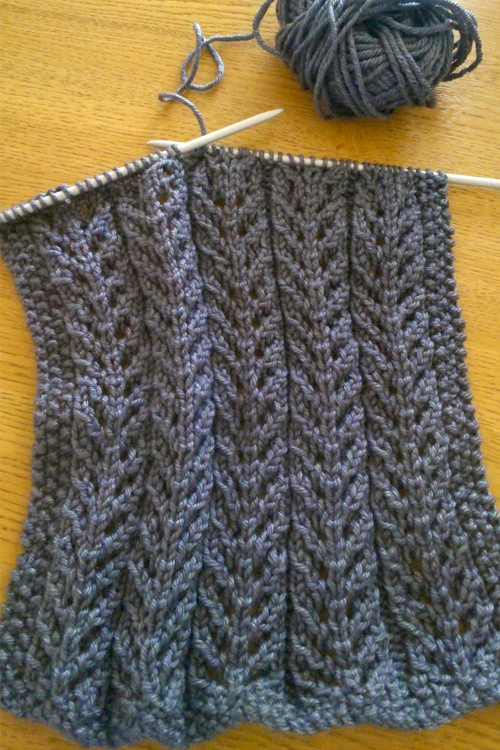
Looking for a beautiful shawl to cast on next? A knitted shawl can be one of the most satisfying projects on your needles: large enough to showcase a special yarn, but usually much less demanding than knitting a full sweater.
This collection brings together 7 free shawl knitting patterns from the Amazing Knitting archive. You'll find everything from an easy one-skein shawl and beginner-friendly lace to dramatic openwork designs for knitters who enjoy a challenge.
Most importantly, we have checked the availability of these patterns so you can start with an Amazing Knitting project guide and then follow its link to the legitimate free pattern source.
7 Beautiful Free Shawl Knitting Patterns
The seven patterns below offer very different knitting experiences. Some are relaxing stash projects, while others feature intricate lace, interesting shaping or traditional techniques.
1. Reyna Shawl
Reyna by Noora Backlund is a wonderfully practical one-skein shawl designed specifically to show off beautiful variegated sock yarn.
Instead of hiding changing colors beneath complicated stitchwork, Reyna alternates simple garter-stitch sections with airy mesh. The result is a light triangular shawl that lets hand-dyed yarn become the star of the project.
It uses approximately 380–420 yards of light fingering or sock yarn and is worked flat from the top down.
Why knit it: Choose Reyna when you have one special skein of sock yarn in your stash and want a project that makes the most of its colors.
See the Free Reyna Shawl Pattern →
2. Multnomah
Multnomah by Kate Flagg is a much-loved shawlette that combines a simple garter-stitch body with a decorative feather-and-fan style border.
The contrast makes it particularly appealing: much of the project offers relaxing knitting before the lace edging adds a more decorative finish.
Its shawlette proportions also make Multnomah useful when you want a lighter accessory rather than a large full-coverage shawl.
Why knit it: Multnomah is a lovely bridge between simple shawl knitting and lace, with enough plain knitting to keep the project relaxing.
See the Free Multnomah Pattern →
3. June Bunnies Shawl
June Bunnies Shawl by Inese Andzane is a customizable top-down triangular shawl that alternates straightforward knitting with decorative lace sections.
One of its best features is flexibility. The designer allows the knitter to work more or fewer lace repeats, making it possible to adapt the shawl to the yarn available and the finished size you prefer.
The pattern is particularly attractive for knitters beginning to explore lace because the entire shawl does not require constant concentration.
Why knit it: Choose June Bunnies if you want to learn lace shawl knitting without jumping immediately into an extremely complicated all-over lace design.
See the Free June Bunnies Shawl Pattern →
4. Begonia Swirl
For something considerably more dramatic, Begonia Swirl by Carfield Ma creates a sweeping asymmetric lace shawl with a distinctive swirling appearance.
Designed for lace-weight yarn, the shawl expands into an elegant curved shape while intricate openwork creates the visual movement that gives Begonia Swirl its name.
Blocking is an especially important part of this project because it opens the lace and reveals the final shape.
Why knit it: Begonia Swirl is the choice for knitters who want the knitting itself to be a showpiece and enjoy watching intricate lace emerge from fine yarn.
See the Free Begonia Swirl Pattern →
5. Birds Nest Shawl
Birds Nest Shawl by Athanasia Andritsou is a deep triangular lace shawl featuring beautiful Estonian-inspired details.
The pattern uses lace-weight yarn and includes the distinctive raised elements known as nupps, giving the fabric texture as well as openwork.
This is one of the more advanced choices in our collection and is particularly suited to knitters who enjoy charts and detailed lace work.
The designer currently provides the pattern free for personal, non-commercial use, so be sure to respect the usage conditions supplied with the pattern.
Why knit it: Pick Birds Nest when you are ready for a more absorbing lace project and would like to explore Estonian-inspired techniques.
See the Free Birds Nest Shawl Pattern →
6. Carol's Clever Little Shawl
Carol's Clever Little Shawl by Carol Sanders offers something quite different from the conventional top-down triangle.
The design was inspired by a historic 1800s shawl and uses sideways construction, short rows and lace to produce its distinctive crescent-like shape.
It also includes a practical front-fastening concept, making the finished piece interesting both as a knitting project and as a wearable accessory.
The original source is now archived, but the pattern continues to be documented as available free.
Why knit it: This is an excellent choice when you want to explore an unusual shawl construction with a little knitting history behind it.
See Carol's Clever Little Shawl →
7. Lacy Baktus
Lacy Baktus by Terhi Montonen is a light, triangular scarf-shawl that combines the famously simple Baktus concept with decorative eyelets.
It is worked sideways in fingering-weight yarn, gradually increasing toward the center before decreasing again toward the opposite point.
With thousands of documented projects, Lacy Baktus has become a classic small accessory project and works particularly well when you want the yarn color to remain highly visible.
Why knit it: Choose Lacy Baktus for a relatively simple, portable project with just enough lace to keep the knitting interesting.
See the Free Lacy Baktus Pattern →
Which Free Shawl Should You Knit First?
If you're having trouble choosing, think about the kind of knitting you enjoy most.
- For one special skein: Reyna
- For simple knitting plus a lace border: Multnomah
- For your first lace shawl: June Bunnies
- For dramatic lace: Begonia Swirl
- For an advanced lace challenge: Birds Nest Shawl
- For unusual historical-inspired construction: Carol's Clever Little Shawl
- For a lightweight scarf-shawl: Lacy Baktus
Choosing Yarn for a Knitted Shawl
Shawls are wonderful projects for experimenting with yarn because fit is usually more forgiving than it is in a sweater.
However, yarn weight still affects the finished size, drape and yardage. Start with the yarn weight recommended by the designer unless the pattern specifically encourages substitution.
For intricate lace, solid and gently tonal yarns often make the stitch pattern easier to see. Simpler shawls such as Reyna can be especially effective with variegated or hand-dyed yarn.
Don't Skip Blocking Your Shawl
Blocking can make an enormous difference to a finished knitted shawl, especially when lace is involved.
The fabric may look compressed while it is still on the needles. After appropriate washing and blocking, eyelets open, edges become more defined and the final shape becomes much easier to appreciate.
Always use a blocking method appropriate for your yarn's fiber content and follow the designer's finishing recommendations.
Free Pattern Availability
Amazing Knitting checks pattern availability when creating and updating our guides. The patterns in this collection were selected because a legitimate free route to the exact design was verified during our latest review.
Pattern availability can change over time. Designers retain ownership of their work and may update, move, discontinue or change the price of a pattern.
For that reason, each link above first takes you to the corresponding Amazing Knitting pattern guide. There you'll find project details, knitting tips and the current legitimate source for the complete pattern.
Read Our Pattern Availability Policy →
More Free Knitting Patterns
Finished choosing your shawl? Amazing Knitting has many more verified free projects to explore, from baby knits and blankets to quick one-skein accessories.
Explore 7 Free One-Skein Knitting Patterns →
Pattern ownership remains with the credited designers. Amazing Knitting provides independent project guides and links to legitimate pattern sources rather than reproducing copyrighted row-by-row instructions. Please check each designer's current terms before beginning a project.