Skip to content

...

Showing posts sorted by date for query stranded knitting. Sort by relevance Show all posts

8 Free Animal Sweater Knitting Patterns for Kids & Babies

8 Free Animal Sweater Knitting Patterns for Kids & Babies

If you love playful colorwork and children's knitting, this collection of 8 free animal sweater knitting patterns is full of charming ideas for babies and kids.

From sheep and penguins to foxes, horses, bunnies and colorful pond creatures, these patterns turn a simple sweater or cardigan into something memorable.

Every project below links first to its corresponding Amazing Knitting pattern guide, where you can check the designer, yarn, sizing and current legitimate pattern source before starting.

8 Free Animal Sweater Knitting Patterns for Kids & Babies

1. Pondemonium Baby Sweater

Pondemonium by Jennifer Small is one of the most playful animal sweaters in the Amazing Knitting archive.

Instead of featuring just one animal, the Fair Isle design creates an entire pond scene filled with ducks, frogs, bugs and snakes, together with rows of lily pads.

The pattern includes baby and toddler sizes and is worked with stranded colorwork, making it a wonderful project for knitters who enjoy detailed picture knitting.

Best for: Colorwork lovers, baby gifts and whimsical animal-themed sweaters.

See the Free Pondemonium Baby Sweater Pattern →


2. Skating Penguin Pullover

Skating Penguin Pullover by Amy Bahrt features a large penguin motif on the front of a classic children's sweater.

The cleverest detail is that the penguin also hides a functional pocket, turning the decorative picture into part of the garment itself.

The pattern includes sizes 2, 4 and 6 years and uses worsted-weight yarn with intarsia colorwork.

Best for: Penguin lovers, picture knitting and unusual children's gifts.

See the Free Penguin Pullover Pattern →


3. Sheep Yoke Baby Cardigan

Sheep Yoke Baby Cardigan by Jennifer Little combines a traditional circular-yoke look with a playful flock of tiny sheep.

The sheep form the decorative focus around the upper part of the cardigan, while the lower body remains simple enough to keep the design balanced.

The free pattern includes two baby sizes and uses DK-weight yarn.

Best for: Baby colorwork, sheep lovers and traditional yoke-style knitting.

See the Free Sheep Yoke Baby Cardigan Pattern →


4. Lamb Dance Kids Jacket

Lamb Dance by DROPS Design is a children's cardigan featuring a cheerful row of sheep around a circular colorwork yoke.

The jacket is worked from the top down and includes five sizes covering approximately ages 3 through 12 years.

Because the body below the yoke is relatively simple, the sheep remain the clear visual focus of the finished cardigan.

Best for: Older children, Scandinavian-style colorwork and knitters who enjoy top-down construction.

See the Free Lamb Dance Kids Jacket Pattern →


5. Child's Foxy Tunic

Child's Foxy Tunic by Heather Lodinsky turns a knitted tunic into a bold fox-themed garment.

A large fox face dominates the upper front, with colorwork creating the main shape and separate knitted details completing the ears and nose.

The pattern includes sizes 2, 4, 6 and 8 years and uses DK-weight yarn.

Best for: Fox lovers, statement knits and intermediate picture-colorwork projects.

See the Free Child's Foxy Tunic Pattern →


6. All the King's Horses Toddler Jumper

All the King's Horses is a charming vintage-style toddler jumper with a decorative horse motif worked across the front.

The design uses classic flat sweater construction with separate front, back and sleeves, while the animal section provides the colorful focal point.

The current free pattern includes the complete horse motif together with the garment instructions.

Best for: Horse lovers, vintage knitting and traditional picture sweaters.

See the Free All the King's Horses Jumper Pattern →


7. Ba-Ba Toddler's Sweater

Ba-Ba Toddler's Sweater is another vintage children's jumper with playful animal-inspired colorwork.

The pattern uses dark and light wool with small contrasting details to build the motif, while the neckline is finished with a classic K2, P2 rib.

The free instructions include the front, back, sleeves and finishing details.

Best for: Vintage-style kids' knitting, animal colorwork and classic toddler sweaters.

See the Free Ba-Ba Toddler Sweater Pattern →


8. Adorable Bunny Motif Kids' Sweater

This Bunny Motif Kids' Sweater uses repeating rabbit shapes to create an all-over stranded-colorwork design.

Instead of placing one large animal on the front, the pattern creates a tessellated field of bunnies across the fabric.

The classic crewneck shape and ribbed cuffs, hem and neckline keep the garment simple enough for the repeating animal motif to become the main attraction.

Best for: Bunny lovers, repeating Fair Isle motifs and high-contrast color combinations.

See the Free Bunny Motif Kids' Sweater Pattern →

Which Animal Sweater Should You Knit First?

  • For the most colorful design: Pondemonium
  • For penguin fans: Skating Penguin Pullover
  • For a baby gift: Sheep Yoke Baby Cardigan
  • For older children: Lamb Dance Kids Jacket
  • For a bold picture motif: Child's Foxy Tunic
  • For horse lovers: All the King's Horses
  • For vintage animal style: Ba-Ba Toddler's Sweater
  • For repeating Fair Isle: Bunny Motif Kids' Sweater

Why Animal Sweaters Are So Much Fun to Knit

Animal motifs give children's knitwear personality without changing the basic purpose of the garment.

Depending on the pattern, the animal can be created with stranded colorwork, intarsia, duplicate stitch or separate knitted details.

That makes this collection useful for knitters who want to practice decorative techniques while still producing a practical sweater, cardigan or tunic.

Choosing Yarn for Children's Animal Sweaters

Smooth yarns usually show animal motifs more clearly than very fuzzy yarns, especially when the pattern relies on picture knitting or stranded colorwork.

For children's garments, also consider softness, washability and durability. Always match the original pattern gauge when substituting yarn, since the dimensions of the animal motif and the garment itself both depend on correct tension.

More Free Knitting Collections

Looking for more baby and children's garments?

Explore Free Baby Sweater & Cardigan Patterns →

Or try another fun accessory collection:

Explore 8 Free Sock & Slipper Knitting Patterns →

Free Pattern Availability

The projects in this collection were reviewed for legitimate free availability when this article was prepared.

Pattern locations, downloads and pricing can change over time. Each project therefore links first to its corresponding Amazing Knitting guide, where the current source can be checked before you begin.

Read Our Pattern Availability & Editorial Policy →

Amazing Knitting is an independent pattern discovery and project-guide site. The knitting patterns and charts featured in this collection remain the intellectual property of their respective designers and publishers. Amazing Knitting does not reproduce complete copyrighted row-by-row instructions or charts unless it has permission to do so.

9 Free Baby Sweater & Cardigan Knitting Patterns You'll Love

9 Free Baby Sweater & Cardigan Knitting Patterns You'll Love

Looking for a beautiful free baby sweater knitting pattern for your next project? This collection brings together nine lovely baby sweaters, cardigans and jackets, from simple beginner-friendly designs to lace, colorwork and textured knits.

Whether you're knitting a handmade baby-shower gift, a cozy newborn cardigan or a little sweater for a growing toddler, these patterns offer a wonderful variety of styles and construction methods.

Best of all, every pattern in this collection is currently available for free. Each project below links to our detailed Amazing Knitting guide, where you can check the yarn, needles, sizing, construction and current legitimate pattern source before casting on.

9 Free Baby Sweater & Cardigan Knitting Patterns

1. Growing Garden Cardigan

If you love cheerful colorwork, the Growing Garden Cardigan by Sandi Rosner is a wonderful place to begin.

Designed for Purl Soho, this top-down baby cardigan uses simple slip-stitch colorwork to create tiny rows of colorful textured dots. Because only one color is worked at a time, it can also be an approachable introduction to colorwork knitting.

The pattern uses DK-weight cotton yarn and includes four sizes from newborn through 18–24 months.

Best for: Easy colorwork, top-down construction and colorful baby gifts.

See the Growing Garden Cardigan Free Pattern Guide →

2. Checco's Dream Baby Cardigan

Checco's Dream by DROPS Design is a sweet textured baby cardigan with a wonderfully unusual construction.

The cardigan is worked back and forth using seed stitch and stockinette, with the sleeves incorporated into the construction rather than being made as completely separate pieces.

It is available in a particularly useful range of sizes, beginning at 1–3 months and extending through 3–4 years.

Best for: Classic baby style, textured knitting and a wide size range.

See the Checco's Dream Free Knitting Pattern Guide →

3. Leaf Love Baby Sweater

For something a little more decorative, try the Leaf Love Baby Sweater by Taiga Hilliard.

This top-down cardigan combines a classic baby sweater shape with an offset button front and a beautiful leaf lace panel. The lace provides enough detail to make the project interesting without covering the entire garment in a complicated stitch pattern.

The free pattern includes four baby sizes from 0–3 months through 12–18 months and is designed for worsted-weight yarn.

Best for: Leaf lace, elegant baby gifts and knitters ready for a little decorative detail.

See the Leaf Love Baby Sweater Free Pattern Guide →

4. Garter Ridge Baby Cardigan

The Garter Ridge Baby Cardigan by Sarah Hoadley proves that simple texture can make a baby sweater look special.

Designed with contrasting garter ridges and smooth stockinette sections, this cardigan has a timeless appearance that works equally well in traditional baby colors or modern neutrals.

The pattern includes sizes from 0–6 months through 2–3 years and uses approximately 336–504 yards of yarn, depending on size.

Best for: Simple texture, classic styling and practical everyday baby cardigans.

See the Garter Ridge Baby Cardigan Free Pattern Guide →

5. Fuss Free Baby Cardigan

Need a tiny cardigan without lots of complicated finishing? The Fuss Free Baby Cardigan by Louise Tilbrook is an excellent choice.

This little raglan cardigan was designed with simplicity in mind and is particularly appealing to knitters who are new to seamless garment knitting.

It uses DK-weight yarn, requires less than 100 grams for the original small sizes and leaves plenty of room for personalization with stripes, contrasting edges or other simple modifications.

Best for: First baby cardigans, stash yarn and knitters learning seamless construction.

See the Fuss Free Baby Cardigan Free Pattern Guide →

6. Harvest Cardigan

Harvest by Tin Can Knits is much more than a baby cardigan pattern. It is a family cardigan with sizes extending from babies all the way through adults.

Part of the designers' Simple Collection, Harvest was created to help knitters learn essential garment-making skills. Its seamless construction and clean styling make the baby sizes particularly appealing for anyone attempting a cardigan for the first time.

The pattern uses worsted-weight yarn and its exceptionally broad size range also makes it possible to knit coordinating cardigans for siblings or other family members.

Best for: First sweaters, family knitting and learning seamless cardigan construction.

See the Harvest Cardigan Free Pattern Guide →

7. Puerperium Cardigan

The Puerperium Cardigan by Kelly Brooker is a wonderfully simple little cardigan created specifically with a newborn baby's earliest weeks in mind.

Its clean, top-down seamless construction makes it a versatile blank canvas. You can keep it beautifully simple or personalize it through yarn choice, buttons, stripes or small embellishments.

Because it is such a compact newborn garment, it can also be an appealing project when you want to knit a thoughtful handmade gift without committing to a large sweater.

Best for: Newborn gifts, simple top-down knitting and personalization.

See the Puerperium Cardigan Free Pattern Guide →

8. French Macaroon Baby Sweater

Prefer a pullover instead of a cardigan? French Macaroon by Caro in the City is a charming garter-stitch baby and child sweater with a distinctive two-color design.

The sweater is worked flat in two main pieces, making it quite different from many of the seamless cardigans in this collection. A boat neckline and small button opening at the back add practical finishing details.

Six sizes are included, ranging from newborn through 4 years, making this a pattern you can return to as a child grows.

Best for: Garter stitch, color blocking and newer garment knitters.

See the French Macaroon Baby Sweater Free Pattern Guide →

9. Seed Stitch Baby Jacket

The Seed Stitch Baby Jacket is another lovely option when texture is more important to you than elaborate colorwork.

Seed stitch creates a beautifully textured knitted fabric using only knit and purl stitches, giving a simple baby jacket plenty of visual interest without requiring complicated cables or stranded colorwork.

It is a particularly nice choice for a solid-color yarn, where the small raised texture can become the main feature of the finished garment.

Best for: Textured knitting, classic baby style and knit-and-purl stitch practice.

See the Seed Stitch Baby Jacket Free Pattern Guide →

Which Free Baby Sweater Should You Knit First?

With nine different designs, the best pattern depends on what you want to practice and the style of garment you want to make.

For a straightforward first cardigan, start with Fuss Free Baby Cardigan or Harvest. Both are excellent choices for learning garment construction without making decorative stitches the main challenge.

If you want lace, Leaf Love Baby Sweater adds a beautiful botanical detail. For texture, look at Garter Ridge Baby Cardigan, Checco's Dream or the Seed Stitch Baby Jacket.

For color, the Growing Garden Cardigan offers a playful introduction to slip-stitch colorwork, while French Macaroon lets two contrasting yarn colors become the focus of a very simple shape.

Free Baby Cardigans for Different Skill Levels

Baby sweaters are excellent projects for developing garment-knitting skills because their smaller scale allows you to practice techniques that also appear in adult sweaters.

Depending on the pattern you choose, you can practice top-down construction, raglan shaping, working sleeves, button bands, lace, seed stitch, garter stitch, color changes and seamless knitting.

If you are relatively new to garments, choose a simpler design first and concentrate on achieving the correct gauge and understanding the construction. You can move on to lace or colorwork once the basic sweater-making process feels familiar.

Choosing Yarn for a Baby Sweater

Always check the individual pattern before buying yarn. These nine designs do not all use the same yarn weight, gauge or yardage.

For baby garments, consider softness and comfort as well as appearance. Washability can also be important for clothing that may need frequent cleaning.

If you substitute yarn, match the pattern's required gauge rather than relying only on the yarn-weight label. A gauge swatch can prevent a beautifully knitted cardigan from ending up much larger or smaller than intended.

A Handmade Baby Gift

A knitted baby cardigan or sweater can make a memorable handmade gift for a newborn, baby shower or first birthday.

Several patterns in this collection require relatively modest amounts of yarn, making them useful for special skeins or leftovers from larger projects. Others include multiple sizes, so a favorite design can be knitted again as the child grows.

Before starting, open the individual Amazing Knitting guide and then follow the link to the designer's current original pattern. Check the latest sizing, yarn requirements, gauge, needle sizes and any pattern updates before casting on.

More Free Knitting Patterns

If baby sweaters aren't the only thing on your knitting list, explore our collection of 7 Free Baby Blanket Knitting Patterns for Beautiful Handmade Gifts.

Together, a tiny cardigan and a coordinating knitted blanket can make an especially lovely handmade baby gift set.

Pattern availability was checked when this collection was prepared. Amazing Knitting does not reproduce the designers' copyrighted row-by-row instructions or charts. Each project links to an Amazing Knitting guide that identifies and directs readers to the legitimate pattern source. Pattern availability may change over time.

7 Free Baby Blanket Knitting Patterns for Beautiful Handmade Gifts

Looking for a beautiful baby blanket to knit for a new arrival? These 7 free baby blanket knitting patterns include simple stripes, textured hearts, classic heirloom designs and cozy stitch patterns that make wonderful handmade gifts.

Every pattern in this collection links to an updated Amazing Knitting guide where you can find the current pattern details and the original free source.

✓ All 7 patterns in this collection are free

Click any photo, title or pattern link below to visit the corresponding Amazing Knitting guide.

1. Easy Striped Baby Blanket

Easy Striped Baby Blanket free knitting pattern

Photos © Jamey - Dabbles and Babbles

Easy Striped Baby Blanket by Jamey of Dabbles & Babbles is a lovely choice for newer knitters. Soft three-color stripes are framed by a textured seed-stitch border, giving the blanket a clean, modern finish.

It is worked flat in DK yarn and measures approximately 34 × 33 inches after blocking.

View the Free Easy Striped Baby Blanket Pattern →


2. Heart Baby Blanket

Heart Baby Blanket free knitting pattern

Photo © katalysis

Heart Baby Blanket by Ann Saglimbene uses knit-and-purl texture to create repeating heart motifs directly in the fabric.

There is no stranded colorwork or intarsia involved, which makes the design especially attractive for knitters who want a decorative single-color blanket.

Our updated guide also explains why knitters should use the designer's corrected March 2024 version rather than an older copy.

View the Free Heart Baby Blanket Pattern →


3. Jordan Baby Blanket

Jordan Baby Blanket free knitting pattern

Photo © danelle1977

Jordan Baby Blanket by marianna mel is a beautiful textured design made with basic knit and purl stitches.

The raised stitch pattern gives the blanket plenty of visual interest without relying on lace or multiple yarn colors, making it a strong choice for a classic handmade baby gift.

The pattern also comes in several sizes and can be adjusted depending on the project you want to make.

View the Free Jordan Baby Blanket Pattern →


4. Treasured Heirloom Baby Blanket

Treasured Heirloom Baby Blanket free knitting pattern

Design © Lion Brand

Treasured Heirloom Baby Blanket is a classic corner-to-corner design with alternating garter and eyelet sections.

The diagonal construction gives the blanket an elegant traditional appearance while allowing the entire project to be worked as one piece.

It is a particularly nice option if you want a baby blanket that feels more like a keepsake than an everyday basic.

View the Free Treasured Heirloom Baby Blanket Pattern →


5. Rice Stitch Baby Blanket

Rice Stitch Baby Blanket free knitting pattern

Photo © Liz Chandler / PurlsAndPixels

Rice Stitch Baby Blanket by Liz Chandler is a practical textured blanket that works beautifully when you want visual interest without complicated lace or colorwork.

The pattern includes two approaches to creating the textured fabric and is a useful project for practicing knit-and-purl combinations.

The finished blanket measures approximately 40 × 40 inches and is worked in worsted-weight yarn.

View the Free Rice Stitch Baby Blanket Pattern →


6. Waffle Blanket

Waffle Blanket free knitting pattern

Waffle Blanket by Alexis Layton is all about texture. Its repeating stitch pattern creates a deeply raised surface that gives the finished blanket a cozy, substantial appearance.

The original pattern is worked in Aran-weight yarn and measures approximately 40 × 51 inches.

It can work well as a larger baby blanket, stroller blanket or small family throw.

View the Free Waffle Blanket Pattern →


7. Little Girl Pink Baby Blanket

Little Girl Pink Baby Blanket free knitting pattern

Little Girl Pink Baby Blanket by Marlaine DesChamps combines cable and lace panels for a more decorative, traditional baby-blanket look.

The original design measures approximately 35 × 46 inches and was designed for Caron Simply Soft worsted-weight yarn.

This is a lovely option when you want a handmade baby gift with a more detailed heirloom-style finish.

View the Free Little Girl Pink Baby Blanket Pattern →

Which Free Baby Blanket Should You Knit?

If you want something simple and modern, start with the Easy Striped Baby Blanket.

For textured knitting, the Jordan Baby Blanket, Rice Stitch Baby Blanket and Waffle Blanket are especially good choices.

If you are knitting for a baby shower or keepsake gift, the Heart Baby Blanket, Treasured Heirloom Baby Blanket and Little Girl Pink Baby Blanket have a more decorative, traditional feel.

Tips for Choosing a Baby Blanket Yarn

Baby blankets are used and washed often, so softness and easy care are both important. Check the original pattern's recommended yarn weight before substituting another yarn, and make a gauge swatch when the finished dimensions matter.

Smooth yarns also tend to show textured stitches, hearts, cables and lace more clearly than very fuzzy yarns.

Before You Cast On

Pattern availability can change over time. Amazing Knitting reviews the projects featured in our collections and links each one to an updated guide with the current pattern information and original designer or publisher source.

More Free Knitting Patterns

Amazing Knitting is gradually reviewing and updating its pattern archive so that older favorites are easier to identify and their current availability is clearer.

Save this collection for your next baby shower or handmade gift and explore the individual guides above to find the blanket that best matches your yarn, skill level and knitting style.

Editorial note: The knitting patterns featured in this collection belong to their respective designers and publishers. Amazing Knitting provides independent pattern guides and links to authorized sources rather than reproducing complete copyrighted pattern instructions.

Cozy Up for Autumn with the Free Squirrel & Oak Leaf Knit Beanie Pattern

Cozy Up for Autumn with the Free Squirrel & Oak Leaf Knit Beanie Pattern

As crisp autumn breezes roll in, there’s nothing better than casting on a project that celebrates the beauty of the fall season. If you love stranded colorwork and nature-inspired motifs, this charming knit beanie featuring playful squirrels, acorns, and oak leaves is going to be your next favorite project.

Featuring a classic color combination of deep navy blue and warm golden oat, this hat brings rustic elegance straight to your knitting needles. Finished with a playful pom-pom, it’s equal parts cozy, stylish, and fun to stitch up.

Why You’ll Love Knitting This Beanie

  • Rich Autumnal Motifs: The intricate colorwork chart details silhouettes of woodland squirrels gathered amidst falling oak leaves and acorns—a delightful pattern to watch unfold row by row.
  • Warm & Structure-Rich: Worked in two contrasting shades, the stranded colorwork creates a double layer of warmth, making it ideal for chilly brisk walks.
  • Classic Folded Ribbing: The thick ribbed brim ensures a snug, comfortable fit around the ears to keep out the cold draft.
  • Clear Colorwork Chart: The pattern includes an easy-to-follow grid chart mapping out every stitch, complete with crown shaping details for a clean decrease.

Project Details

  • Pattern Style: Stranded Colorwork / Fair Isle Knitting
  • Yarn Colors Used: Navy Blue (Main Color) & Golden Oat (Contrast Color)
  • Design Features: Squirrels, oak leaves, acorns, ribbing, and top pom-pom
  • Skill Level: Intermediate (requires basic colorwork chart reading and simple decreases like k2tog and skp)

Whether you're making a thoughtful handmade gift or refreshing your own cold-weather wardrobe, this woodland beanie is a rewarding knit you won't want to put down.

Get Your Free Pattern

Ready to grab your needles and yarn? Download the complete chart and instructions below to start knitting your autumn beanie today:

Download the Free Squirrel & Oak Leaf Beanie Knitting Pattern

Free Knitting Pattern: Adorable Bunny Motif Kids' Sweater

Free Knitting Pattern: Adorable Bunny Motif Kids' Sweater

If you’re looking for a delightful project that combines charm, cozy comfort, and classic stranded colorwork, this children's bunny sweater is a fantastic choice. Featuring an all-over repeating rabbit motif, this design brings a playful touch to everyday knitwear, making it a favorite for toddlers and young children alike.

Design Features

  • Tessellated Bunny Motif: The pattern creates an interlocking grid of sweet white bunnies set against a contrasting background color.
  • Classic Crewneck Style: Designed with ribbed cuffs, hem, and neckline for a snug, comfy fit that keeps little ones warm during chilly seasons.
  • Versatile Color Combinations: While shown here in a striking rust-red and soft white, this motif looks lovely in pastel palettes, bold high-contrast colors, or soft neutrals.

Crafting Tips

  1. Stranded Colorwork (Fair Isle): To keep the fabric elastic and comfortable for active kids, ensure you catch longer floats along the back as you work through the 32-row chart repeat.
  2. Yarn Selection: Opt for a soft, machine-washable wool blend or DK-weight yarn that feels gentle against sensitive skin.
  3. Follow the Grid: The colorwork chart clearly maps out each stitch and row repeat, making it easy to track your progress as the bunny shapes come to life.

Ready to Start Knitting?

Get your needles ready and grab your yarn! You can download the complete pattern and chart for free using the link below:

Download the Free Bunny Sweater Knitting Pattern

Count Sheep, Not Stitches: The Perfect Fair Isle Knitting Pattern for Beginners!

Sleepy Sheep Knitting Pattern

Hello knitting community! Today I’m absolutely delighted to share a delightful (and free!) pattern that is guaranteed to bring a smile to your face. Let me introduce you to the 'Sleepy Sheep' wrist warmers. This pattern is not only charming, but it's also a fantastic introduction to the wonderful world of colorwork.

Take a look at the picture above. Isn't it adorable? The deep, forest green background (created from the yarn you see) provides the perfect canvas for these cute little sheep. The pattern uses classic stranded colorwork techniques, also known as Fair Isle knitting.

Why You’ll Love This Pattern:

  • Adorable Design: The stylized sheep are a classic, beloved motif. Who can resist?
  • Skill-Building: If you've been wanting to try knitting with more than one color, this small, manageable project is the perfect place to start.
  • Quick Project: These wrist warmers are small and quick to finish, giving you that satisfying sense of accomplishment in no time.
  • Perfect Gift: Make a pair for yourself, or create a thoughtful, handmade gift for a friend.
  • It's Free! Yes, this fantastic pattern can be yours for nothing at all.

This pattern is a brilliant opportunity to learn and grow as a knitter. We are thrilled to offer this beautiful resource for free, supporting your journey from a beginner to a master of colorwork.

Ready to start? Let’s count some sheep!

You can get this charming, beginner-friendly pattern as a free download right here on the blog. There is no cost, and we can’t wait to see your own interpretations of these sleepy little sheep!

Download Your Free "Sleepy Sheep" Knitting Pattern!

Harold Fatmus Free Knitting Pattern

Harold Fatmus free knitting pattern by Clare Hutchinson

Harold Fatmus designed by © Clare Hutchinson

Harold Fatmus is a wonderfully characterful free mouse knitting pattern by Clare Hutchinson of Wee County Yarns. Harold combines a plump knitted mouse with a smart Fair Isle jumper, making him a fun small project for knitters who enjoy stranded colorwork.

The original design uses small amounts of Shetland-style yarn in several colors, so Harold is also an appealing project for using leftover yarn. Once finished, he measures approximately 15 cm high.

Harold Fatmus Pattern Details

  • Designer: Clare Hutchinson
  • Published by: Wee County Yarns
  • Craft: Knitting
  • Category: Animal softie / knitted mouse
  • Pattern availability: Free
  • Suggested yarn weight: Light Fingering / 4-ply
  • Suggested yardage: 150–200 yards (137–183 m)
  • Needles: 3.0 mm (US 2½) and 3.25 mm (US 3)
  • Gauge: 28 stitches = 4 inches in stranded colorwork
  • Finished size: Approximately 15 cm high
  • Techniques: Stranded colorwork, Fair Isle, I-cord and seaming
  • Language: English

About Harold Fatmus

Harold's defining feature is his colorful Fair Isle jumper. The stranded colorwork gives this little mouse much of his personality while providing an opportunity to work a traditional knitting technique on a relatively small project.

The original pattern includes written instructions together with a chart for the colorwork section.

Yarn and Colorwork

The original design uses Wee County Yarns Miniballs, a light fingering wool yarn. Harold uses several colors, making the project particularly suitable for small quantities of coordinating yarn.

You do not have to reproduce the original colors exactly. Choosing a main body shade and a small palette of contrasting colors for the Fair Isle jumper is an easy way to give your Harold a different personality.

How Harold Is Constructed

Harold is made from a base and an upper section that are joined together. The pattern includes both knitting in the round and seaming, along with separately attached details such as the ears and tail.

The designer also notes that the construction can be adapted into a more seamless version if you are comfortable modifying the original method.

Toy or Doorstop?

Harold can be made as a soft knitted character, but the original designer also suggests adding weight to the finished mouse so that he can be used as a charming doorstop.

If you intend to make Harold as a toy rather than a decorative piece, choose finishing materials appropriate for the intended recipient and secure all small details carefully.

Get the Free Harold Fatmus Knitting Pattern

The complete Harold Fatmus pattern by Clare Hutchinson is currently available free from the designer's Wee County Yarns website. The pattern is also listed as free on Ravelry.

Get the Free Harold Fatmus Pattern

Pattern availability was checked when this article was updated. External pattern availability may change over time.

Growing Garden Cardigan – Free Baby Knitting Pattern

Growing Garden Cardigan free baby knitting pattern by Sandi Rosner

Growing Garden Cardigan. Photo © Purl Soho

Growing Garden Cardigan is a free baby and toddler knitting pattern designed by Sandi Rosner for Purl Soho. This cheerful top-down cardigan combines a simple background color with little rows of colorful textured dots that look like tiny flowers scattered across the fabric.

The clever part is the colorwork: simple slip stitches mean you work with only one color per row. That makes this little cardigan an inviting project for knitters who want to try colorwork without juggling multiple yarn colors at the same time.

Growing Garden Cardigan Pattern Details

  • Designer: Sandi Rosner
  • Publisher: Purl Soho
  • Craft: Knitting
  • Category: Baby and toddler cardigan
  • Pattern availability: Free
  • Sizes: Newborn, 6–12 months, 12–18 months, 18–24 months
  • Yarn weight: DK / Light Worsted
  • Suggested yarn: Purl Soho Cotton Chirp DK and Cotton Chirp DK Minis
  • Needles: 4 mm (US 6)
  • Gauge: 22 stitches and 40 rows = 4 inches in Dotted Stripe Pattern
  • Construction: Top down
  • Techniques: Slip-stitch colorwork, knitting flat and in the round
  • Language: English

Easy Slip-Stitch Colorwork

The Growing Garden Cardigan gets its playful appearance from Purl Soho's Dotted Stripe Pattern. Small contrast-color bumps appear in staggered rows against the main background color, creating the cardigan's garden-inspired look.

Instead of traditional stranded colorwork with two yarns worked across the same row, this design uses slip stitches so that you only need to work with one color at a time. Purl Soho specifically recommends the project as a gentle introduction to colorwork knitting.

Sizes from Newborn to 24 Months

The free pattern includes four sizes: Newborn, 6–12 months, 12–18 months and 18–24 months.

Finished chest circumferences are approximately 17 (19½, 21, 23½) inches, with about 1–2 inches of positive ease built into the sizing.

This range makes the pattern suitable for everything from a tiny newborn cardigan to a colorful sweater for an active toddler.

Yarn and Needles

The original cardigan uses Purl Soho Cotton Chirp DK for the main color and Cotton Chirp DK Minis for the contrasting colored dots.

Both are 100% Peruvian Pima cotton yarns in the DK / Light Worsted range. The main color requires approximately 230 (300, 380, 445) yards, depending on size, plus smaller quantities of four contrast colors.

The pattern uses 4 mm (US 6) circular needles and double-pointed needles, or the needle size required to achieve the specified gauge.

How the Growing Garden Cardigan Is Constructed

The cardigan is worked from the top down. You begin at the collar and work the yoke and body flat in one piece.

At the armholes, the sleeve stitches are placed on hold while the body continues down to the lower edge. The held sleeve stitches are then returned to the needles and the sleeves are worked in the round down to the cuffs.

Garter-stitch details at the collar, hem, cuffs and button bands provide a simple textured frame around the colorful dotted stripes.

A Great Way to Play with Color

The small amounts of contrast yarn required for the dotted stripes make this design particularly fun for experimenting with color combinations. You can keep the background neutral and choose bright accents, or use a colorful main shade with softer contrasting dots.

Because each contrast color appears in relatively small amounts, the design may also be useful for compatible DK-weight leftovers, provided you can maintain the pattern gauge and choose yarns suitable for the finished garment.

What You'll Need

  • DK / Light Worsted yarn for the main color
  • Four small quantities of contrasting DK yarn
  • 4 mm (US 6) circular knitting needles
  • 4 mm (US 6) double-pointed needles or your preferred method for small circumferences
  • Stitch holders or scrap yarn
  • A stitch marker
  • 4 or 5 small buttons, depending on size

Get the Free Growing Garden Cardigan Pattern

The complete Growing Garden Cardigan by Sandi Rosner is available free from the original publisher, Purl Soho. Their pattern page includes the full instructions, sizing, materials, photos and additional knitting guidance.

Get the Free Growing Garden Cardigan Pattern at Purl Soho

Pattern availability was checked when this article was updated. Availability on external websites may change over time.

Let's Play Hopscotch Baby Blanket – Free Easy Knitting Pattern

Let's Play Hopscotch Baby Blanket free easy knitting pattern by Candylou Creations

Let's Play Hopscotch Baby Blanket by Candylou Creations is a colorful beginner-friendly knitting pattern inspired by the squares and lines of the classic childhood game of hopscotch.

The blanket combines simple knit-and-purl texture with broad blocks of color and contrasting transition rows. The result looks structured and modern while requiring only a small set of basic knitting skills.

The pattern can be made in several sizes, from a compact stroller blanket to a large throw, and the complete instructions are currently available free from the designer's official website.

Pattern and design © Candylou / Candylou Creations.

Let's Play Hopscotch Blanket Overview

  • Designer: Candylou / Candylou Creations
  • Pattern: Let's Play Hopscotch Baby Blanket
  • Craft: Knitting
  • Category: Baby blanket / stroller blanket / throw
  • Skill level: Beginner
  • Yarn weight: Worsted or Aran
  • Colors: Three
  • Needles: US 8 / 5 mm circular needles suggested
  • Circular needle length: Approximately 24 or 32 in
  • Gauge: Approximately 18 stitches = 4 in / 10 cm
  • Construction: Worked flat
  • Main techniques: Knit, purl, garter stitch, color changes and simple textured sections
  • Sizes: Stroller, Baby, Small, Medium and Large
  • Pattern availability: Free web pattern and free PDF from the designer

A Colorful Blanket Inspired by Hopscotch

The inspiration for this blanket comes from the familiar squares and dividing lines of a hopscotch court.

Instead of creating the effect with complicated colorwork, the design uses large blocks of simple textured knitting separated by narrow transition rows. This gives the blanket its geometric appearance while keeping the knitting straightforward.

The three-color layout also makes it easy to personalize. Soft nursery shades can create a gentle baby blanket, while stronger contrasting colors can give the same pattern a more graphic, modern look.

Why This Pattern Works Well for Beginners

Let's Play Hopscotch is designed around basic techniques rather than lace, cables or stranded colorwork.

The main skills used are:

  • Cast on
  • Knit
  • Purl
  • Bind off
  • Change yarn colors
  • Weave in ends

If you already know the knit and purl stitches, this project gives you a useful way to practice maintaining even tension and following a repeating sequence over a larger piece of fabric.

Simple Knit-and-Purl Texture

Within each color block, knit and purl stitches create a subtle geometric texture.

The pattern does not depend on complicated shaping. Instead, the visual interest comes from how the knit-and-purl sections repeat across the width of the blanket.

This is one reason the design can look more detailed than the actual techniques required to make it.

Three-Color Construction

The designer uses three colors, labeled A, B and C.

One color is worked for a section before transitioning to the next color. During the narrow transition rows, two strands are temporarily held together, which creates a stronger visual dividing line between the larger color blocks.

The sequence then repeats through the blanket.

This method gives the finished project a coordinated striped appearance without requiring traditional stranded colorwork.

Garter-Stitch Border

The blanket begins and ends with a simple garter-stitch border, and garter stitches are also maintained along the side edges.

This border frames the textured center and gives the finished blanket a clean, defined edge.

It also provides a useful contrast to the knit-and-purl pattern used in the main sections.

Available Blanket Sizes

One of the strongest features of the current pattern is that it includes several useful sizes rather than only one small baby blanket.

  • Stroller: approximately 22 × 28 in
  • Baby: approximately 28 × 36 in
  • Small: approximately 34 × 40 in
  • Medium: approximately 36 × 46 in
  • Large: approximately 42 × 50 in

The designer notes that finished dimensions are approximate and may vary with your yarn, needle size and personal tension.

How Much Yarn Will You Need?

For worsted or Aran-weight yarn at approximately 4.5 stitches per inch, the designer provides these estimated yarn requirements:

  • Stroller: about 600 yards
  • Baby: about 800 yards
  • Small: about 1,200 yards
  • Medium: about 1,700 yards
  • Large: about 2,200 yards

Because the blanket uses three colors, divide your yarn purchase according to the color sequence you plan to use rather than assuming every shade will be used in exactly the same amount.

Yarn for the Hopscotch Blanket

The pattern is designed for worsted or Aran-weight yarn.

The designer recommends practical fibers such as acrylic, superwash wool or wool blends for baby blankets.

These can be particularly useful choices for a project that may need regular washing.

The designer's examples use Hobby Lobby I Love This Yarn, but the pattern is not limited to that specific brand.

Choosing a Yarn Substitute

A substitute yarn should create a fabric you like while remaining reasonably close to the intended gauge.

For a baby blanket, consider:

  • Softness against the skin
  • Ease of washing
  • Durability
  • Good stitch definition
  • Availability in three coordinating colors

A smooth yarn will show the simple knit-and-purl texture more clearly than a very fuzzy yarn.

Needles

The pattern suggests US 8 / 5 mm circular needles with a 24-inch or 32-inch cord when using worsted-weight yarn.

Although the project is worked flat rather than in the round, circular needles are useful for blankets because the flexible cable can support a large number of stitches and the increasing weight of the fabric.

The designer also recommends adjusting your needle size when necessary to suit your yarn and desired fabric.

Gauge

A useful reference gauge is approximately:

18 stitches = 4 inches / 10 cm.

Exact gauge is not as critical for a blanket as it would be for a fitted sweater, but it still affects both the finished measurements and the amount of yarn required.

A looser gauge will generally create a larger, airier blanket, while tighter knitting can produce a smaller and denser fabric.

Skills You'll Practice

  • Casting on
  • Knit stitch
  • Purl stitch
  • Garter stitch
  • Working flat on circular needles
  • Changing yarn colors
  • Working with two strands together for transition rows
  • Using stitch markers
  • Following a repeating sequence
  • Binding off
  • Weaving in ends

Using Stitch Markers

The original instructions use stitch markers to separate the side borders from the main patterned area.

This is particularly helpful for newer knitters because the markers provide a clear reminder of where the edge stitches end and the central texture begins.

Once placed correctly, the markers can remain useful throughout the project.

Tips for Cleaner Color Changes

Keep your edge tension consistent. Color changes can become loose if the new yarn is not secured with comfortable, even tension.

Do not pull the new color too tightly. Tight joins can distort the side of the blanket.

Leave enough yarn tail for finishing. A proper tail is much easier to weave in securely than a very short one.

Check the color sequence before starting each new block. This reduces the chance of accidentally repeating the wrong color.

Tips for Straighter Blanket Edges

Maintaining consistent tension on the first and last stitches of every row can help the sides stay neat.

Avoid pulling the first stitch unusually tightly after turning your work. Instead, aim for the same tension used across the rest of the row.

The garter-stitch side borders in this design also help provide a stable frame for the patterned center.

Can You Change the Colors?

Yes. The three-color format is one of the easiest features to personalize.

For a soft nursery palette, consider combinations such as:

  • Cream, sage and beige
  • White, pale blue and gray
  • Ivory, dusty pink and taupe
  • Light gray, mint and white

For a more graphic look, choose colors with stronger contrast.

Before beginning, place the three yarns beside one another to make sure the transition from A to B to C creates the effect you want.

Can You Use More Than Three Colors?

The original design is organized around three repeating colors, but experienced knitters can use the basic structure as inspiration for a broader palette.

Keep in mind that changing the color sequence can increase the number of yarn ends that need to be woven in.

If this is your first blanket, following the original three-color structure is the simplest approach.

Baby Blanket Safety

Hand-knit blankets can be useful for supervised cuddling, stroller use, floor time and other age-appropriate situations.

Always follow current infant safe-sleep recommendations and avoid placing loose blankets in an infant sleep space when they are not recommended.

Is the Let's Play Hopscotch Blanket Pattern Free?

Yes. The Let's Play Hopscotch Baby Blanket is currently available free directly from Candylou Creations.

The designer publishes the complete pattern on the official website and also provides a free printable PDF version.

Amazing Knitting therefore sends readers directly to the designer's original source rather than reproducing the complete row-by-row pattern.

View the Free Let's Play Hopscotch Pattern →

Free Printable PDF

Candylou Creations also provides an official printable PDF edition of the pattern for knitters who prefer to work from a separate pattern document.

Download the Free Official PDF →

Why This Baby Blanket Is Worth Knitting

Let's Play Hopscotch is a strong choice for knitters who want a blanket that looks more detailed than a basic garter-stitch rectangle without introducing difficult techniques.

The knit-and-purl texture provides visual interest, the three-color arrangement makes the project easy to personalize, and the five available sizes make the pattern useful well beyond one small stroller blanket.

It is also a practical skill-building project for newer knitters who want to practice purling, color changes and working a larger number of stitches before moving on to more complicated garments.

Pattern Availability

Amazing Knitting links readers to legitimate designer or publisher sources whenever possible. Pattern prices, download locations and availability can change after an article is published.

Read Our Pattern Availability Policy →

Amazing Knitting is an independent pattern discovery and project-guide site. The Let's Play Hopscotch Baby Blanket design and complete knitting instructions remain the intellectual property of Candylou / Candylou Creations. This guide does not reproduce the designer's complete row-by-row pattern instructions.

Rish Cowl Knitting Pattern

Rish Cowl Knitting Pattern
The photo above © Lucía Ruiz de Aguirre

To knit the Rish cowl by Lucía Ruiz de Aguirre, you’ll need to know how to cast on stitches using any method (the long-tail cast on is recommended), knit, purl, and work in the round. Familiarity with stranded colorwork and following charted instructions is essential. You’ll also need to be able to make increases, decreases, and bind off stitches. Please note, the pattern provides charted instructions for the colorwork detail, and no written instructions are included. Click the link below to get the pattern. 

Full Post: Rish Cowl

Fair Isle Mice Free Knitting Pattern

Fair Isle Mice free knitting pattern by Janet McMahon

Fair Isle Mice designed by © Janet McMahon

Fair Isle Mice is a charming free knitting pattern by Janet McMahon for making tiny knitted mice decorated with colorful stranded Fair Isle bands.

These little mice are a great project for using small amounts of leftover DK yarn. The body is knitted flat and seamed, while the decorative colorwork section gives each mouse its own personality.

Fair Isle Mice Pattern Details

  • Designer: Janet McMahon
  • Craft: Knitting
  • Pattern availability: Free
  • Yarn weight: DK / light worsted
  • Needles: 3.75 mm (US 5)
  • Construction: Worked flat and seamed
  • Technique: Stranded / Fair Isle colorwork
  • Finished size: Approximately 3 inches long, excluding the tail
  • Languages: English and Dutch

What You'll Need

The project is designed to use small amounts of DK-weight yarn, making it especially useful for leftover yarn from other projects. Choose one main color for the mouse and several contrasting shades for the Fair Isle band.

You will also need 3.75 mm knitting needles and toy stuffing to shape the finished mouse.

About the Construction

Unlike many small knitted toys worked in the round, the Fair Isle Mice are knitted flat. The shaping creates the mouse body, and the finished piece is then seamed and stuffed.

A stranded-colorwork section forms the decorative Fair Isle band around the body. Because the project is so small, it can also be a manageable way to practice stranded knitting without committing to a large garment.

A Good Scrap-Yarn Project

One of the nicest features of this pattern is how little yarn it requires. Small leftover balls can be combined to create completely different mice, so each finished toy can have its own color scheme.

These tiny mice can work well as small gifts, decorations, stocking stuffers, or simply as a quick knitting project between larger makes.

Get the Free Fair Isle Mice Pattern

Janet McMahon currently provides the complete Fair Isle Mice pattern free through her original website, and a free download is also available from the pattern's Ravelry page.

View the Free Pattern on the Designer's Website

Pattern availability was checked when this article was updated. External pattern availability may change over time.

Autumn Sweater – Free Icelandic Colorwork Knitting Pattern

Autumn Sweater free Icelandic colorwork knitting pattern by Nazilia Zemdikhanova

Autumn Sweater by Nazilia Zemdikhanova is a beautiful free Icelandic-style sweater knitting pattern featuring a bold stranded colorwork yoke and a cozy oversized silhouette.

If you have some knitting experience but have been hesitant to tackle your first colorwork sweater, this is an especially interesting project. The sweater uses bulky yarn and large needles, so the fabric grows much faster than a typical fine-gauge sweater.

Even better, the designer provides the complete pattern as a free download along with video tutorials covering the construction.

Design and photo © Nazilia Zemdikhanova.

Autumn Sweater Pattern Overview

  • Designer: Nazilia Zemdikhanova
  • Pattern: Autumn
  • Craft: Knitting
  • Category: Pullover
  • Style: Icelandic / circular-yoke sweater
  • Yarn weight: Bulky
  • Suggested yarn: Ístex Álafosslopi
  • Main needles: US 10 / 6 mm
  • Smaller needles: US 7 / 4.5 mm
  • Gauge: 13 stitches and 18 rows = 4 in / 10 cm
  • Sizes: XS, S, M, L, XL, 2XL
  • Yardage: Approximately 1,094–1,422 yd (1,000–1,300 m)
  • Construction: Bottom up, in the round
  • Languages: English and French
  • Pattern availability: Free

A Free Icelandic-Style Sweater Pattern

The defining feature of Autumn is its dramatic stranded colorwork circular yoke. Contrasting motifs travel around the shoulders while the body and sleeves remain much simpler.

This creates the classic visual balance associated with Icelandic-style pullovers: straightforward stockinette knitting across large sections of the garment followed by a decorative yoke where the colors and motifs become the focus.

The sweater is designed with positive ease, giving it a comfortable, relaxed appearance that works particularly well with the substantial bulky-weight fabric.

How the Autumn Sweater Is Constructed

Autumn is knitted from the bottom up and in the round. The body is worked first up to the underarm.

The sleeves are knitted separately, then the body and sleeves are joined onto the same circular needle. From there, the upper sweater is worked together as one piece while the stranded colorwork yoke develops toward the neckline.

This method minimizes finishing because the main sections are worked in the round rather than as separate flat front and back pieces that need to be seamed together.

Autumn Sweater Sizes

The pattern includes six adult sizes:

  • XS: 38.2 in / 97 cm finished bust
  • S: 40.1 in / 102 cm
  • M: 41.7 in / 106 cm
  • L: 43.7 in / 111 cm
  • XL: 45.3 in / 115 cm
  • 2XL: 47.2 in / 120 cm

These measurements describe the finished sweater rather than your body measurement. Before choosing a size, compare the finished circumference with your own bust measurement and consider how much positive ease you want.

Yarn and Gauge

The original pattern suggests Ístex Álafosslopi, a bulky Icelandic wool traditionally well suited to warm outer sweaters.

The published gauge is: 13 stitches and 18 rows = 4 inches (10 cm).

The recommended main needle is US 10 / 6 mm, with US 7 / 4.5 mm needles used for the smaller-gauge sections.

Needle sizes are always a starting point. Make a gauge swatch before beginning and change needle size if necessary to obtain the pattern gauge. Gauge is especially important for a sweater because even a small difference can substantially change the finished circumference.

Choosing Colors for the Yoke

The circular yoke is where this sweater really comes alive. The original design uses contrasting colors to make the stranded motifs clearly visible against the main fabric.

When choosing your own palette, aim for enough contrast between the main color and motif colors. Two shades that look very different in the skein can sometimes appear surprisingly similar once knitted together.

You can stay close to traditional earthy Icelandic colors or create a completely different version with brighter contemporary shades.

Skills You'll Practice

  • Knitting in the round
  • Working a sweater from the bottom up
  • Knitting sleeves in the round
  • Joining sleeves and body
  • Stranded colorwork
  • Reading a colorwork chart
  • Working a circular yoke
  • Managing decreases through the yoke
  • Working ribbed edges
  • Finishing a seamless-style sweater

Is This a Good First Colorwork Sweater?

Autumn can be an appealing first larger stranded-colorwork project for a knitter who already understands basic sweater knitting.

Much of the garment consists of straightforward knitting in the round, so you are not working stranded motifs across the entire sweater. Instead, the more concentrated colorwork appears around the yoke.

The bulky yarn and 6 mm main needles are another advantage: progress is easy to see, and the project generally grows faster than a sweater made from DK, sport or fingering-weight yarn.

Tips for Better Stranded Colorwork

Try not to pull the unused yarn too tightly behind your stitches. The floats need enough room to stretch across the back of the fabric without drawing the knitted fabric inward.

It can help to spread the recently worked stitches along the right-hand needle before carrying the unused color across the back.

Check your colorwork frequently as you knit. If the yoke begins to pucker, your floats may be too tight.

Free Video Tutorials

One of the strongest features of this pattern is that the designer has also provided video tutorials to accompany the written instructions.

These videos can be particularly useful if this is your first Icelandic-style sweater because you can see the construction and techniques demonstrated rather than relying only on written directions.

Get the Free Autumn Sweater Pattern

The exact Autumn Sweater by Nazilia Zemdikhanova is currently available as a free knitting pattern.

The designer provides the pattern through Ravelry in English and French. The pattern page also contains the designer's current project information and links to the accompanying tutorials.

Get the Free Autumn Sweater Pattern →

Why We Like the Autumn Sweater

Autumn combines several qualities that make a sweater project rewarding: a bold visual result, relatively fast bulky-yarn knitting and an opportunity to learn or improve stranded colorwork.

The straightforward body lets you settle into comfortable knitting before the circular yoke introduces the decorative part of the project. The result is a warm handmade sweater with the unmistakable character of traditional Icelandic-inspired knitwear.

Pattern Availability

Amazing Knitting checks the availability of the patterns featured in our guides and links to legitimate designer or publisher sources whenever possible.

Patterns can move, become paid or be discontinued over time. If the availability of this pattern changes, the designer's current listing should be treated as the authoritative source.

Read Our Pattern Availability Policy →

Autumn and its pattern instructions remain the intellectual property of Nazilia Zemdikhanova. Amazing Knitting provides an independent project guide and links to the authorized pattern source; the designer's row-by-row instructions and charts are not reproduced here.

Orwell's Garden Cowl – Free Colorwork Knitting Pattern

Orwell's Garden Cowl free colorwork knitting pattern by Julie Cameron Gray

Orwell's Garden Cowl designed by © Julie Cameron Gray / knittedblissJC

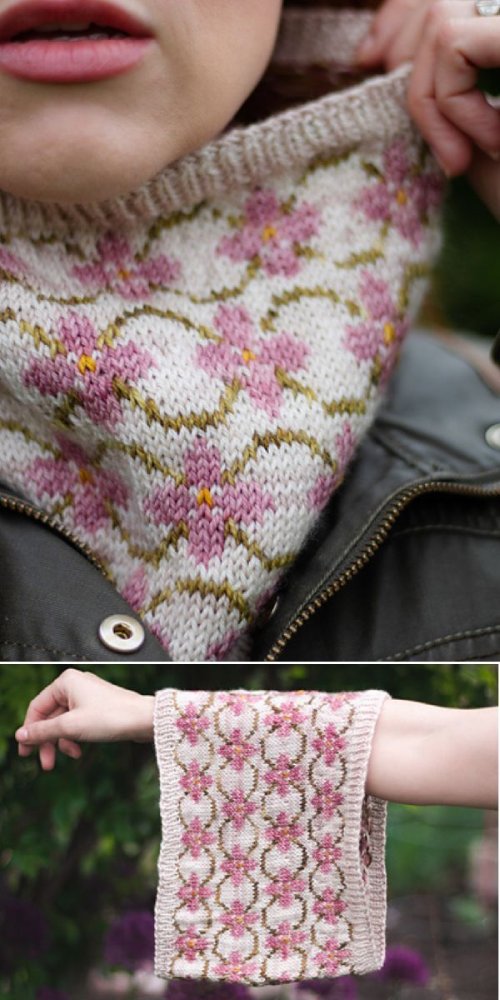
Orwell's Garden Cowl by Julie Cameron Gray (knittedblissJC) is a free stranded colorwork knitting pattern featuring repeating flowers and winding vines.

Worked in the round with fingering-weight yarn, this cozy cowl combines a simple ribbed edging with a colorful charted motif. It is a lovely project for knitters who enjoy Fair Isle and stranded colorwork or want to turn several coordinating sock-yarn colors into a wearable accessory.

Orwell's Garden Cowl Pattern Details

  • Designer: Julie Cameron Gray / knittedblissJC
  • Published in: Taddle Creek
  • Published: Fall 2022
  • Craft: Knitting
  • Category: Cowl
  • Pattern availability: Free web pattern
  • Sizes: Small/Medium and Medium/Large
  • Finished circumference: 19 (20.5) inches
  • Yarn weight: Fingering / sock yarn
  • Suggested yarn: Lichen and Lace 80/20 Sock
  • Needles: 3 mm and 3.5 mm circular needles
  • Gauge: 28 stitches × 36 rounds = 4 inches in the charted design
  • Construction: Worked in the round
  • Technique: Stranded colorwork
  • Language: English

A Floral Stranded Colorwork Cowl

The defining feature of Orwell's Garden Cowl is its stranded colorwork design. Repeating flowers and vines travel around the cowl, creating a botanical pattern that looks especially striking when the main color contrasts clearly with the three accent colors.

Unlike a lace cowl, the decorative effect here comes from changing colors according to a chart while carrying the unused yarn behind the work.

This makes Orwell's Garden Cowl an appealing project for knitters who already know basic knitting in the round and would like to practice maintaining even tension across a repeating colorwork motif.

The Story Behind Orwell's Garden Cowl

This pattern appeared alongside Julie Cameron Gray's A Life Well Spent in the Fall 2022 issue of Taddle Creek.

The accompanying piece reflects on writers and gardens, including George Orwell's roses and the idea that the things people nurture can continue long after they are gone.

That garden theme carries beautifully into the knitted cowl through its repeating flowers and vines.

Yarn and Colors

The original design uses Lichen and Lace 80/20 Sock, a fingering-weight yarn.

You will need one main color and three contrasting colors. The designer estimates approximately 180 yards of the main color and about 70 yards of each contrast color.

The sample combines Linen as the main color with Shrub, Sugar Plum and Amber as the contrasting shades.

Because the individual contrast colors require relatively small amounts, this pattern may also be a useful way to combine coordinating fingering-weight yarn left from other projects, provided you have enough of each color and can achieve the required gauge.

Needles and Gauge

The pattern calls for 3 mm circular needles for the ribbing and 3.5 mm circular needles for the colorwork.

The specified gauge is 28 stitches and 36 rounds = 4 inches (10 cm) in the charted colorwork design on the larger needles.

Colorwork tension can differ from plain stockinette tension, so checking your gauge in the actual stranded pattern is more useful than measuring only a plain stockinette swatch.

Two Cowl Sizes

Orwell's Garden Cowl can be made in Small/Medium or Medium/Large.

The finished circumferences given by the designer are approximately 19 (20.5) inches.

The colorwork chart repeats around the circumference, with the number of repeats adjusted for the selected size.

How Is the Cowl Constructed?

The cowl is knitted in the round, so there is no seam to sew when the knitting is complete.

Ribbing forms the lower and upper edges, while the main section is worked from a repeating stranded-colorwork chart.

Once the knitting is finished, wet blocking helps the stitches settle and allows the colorwork fabric to relax into its finished shape.

Is Orwell's Garden Cowl a Beginner Pattern?

It is better described as a colorwork project than as a basic beginner cowl.

You should be comfortable knitting and purling, working in the round, reading a colorwork chart and handling more than one yarn color.

If you already know those basics, the repeating floral motif provides an enjoyable opportunity to practice stranded knitting on a relatively compact accessory rather than committing to a full colorwork sweater.

Choosing Colors for Your Cowl

Color contrast matters in a stranded design. If the shades are too similar, the flowers and vines can become difficult to distinguish in the finished fabric.

Consider choosing a main color that clearly separates from the contrasting shades. You can keep the palette soft and botanical like the original, or use brighter contrasts for a more dramatic interpretation.

Get the Free Orwell's Garden Cowl Pattern

The complete Orwell's Garden Cowl by Julie Cameron Gray is available free on Taddle Creek, where you can find the designer's original instructions and colorwork chart.

Get the Free Orwell's Garden Cowl Pattern

Pattern availability was checked when this article was updated. Availability on external websites may change over time.

Sheep Yoke Baby Cardigan - Free Knitting Pattern

Sheep Yoke Baby Cardigan free knitting pattern with colorwork sheep yoke

Sheep Yoke Baby Cardigan by Jennifer Little is a charming baby sweater featuring a playful flock of sheep around a colorful patterned yoke. The combination of traditional colorwork, tiny sheep and a practical button-front cardigan makes this an especially memorable hand-knit for a baby.

The pattern was originally published on Jennifer Little's Looking Glass Knits in 2007 and is still available free from the designer's original pattern page.

The cardigan is designed in DK-weight yarn and includes two baby sizes. Instead of changing the stitch counts between sizes, the designer uses different needle sizes and gauges, allowing the same yoke chart and stitch counts to be used for both versions.

Design © Jennifer Little / Looking Glass Knits.

Sheep Yoke Baby Cardigan Pattern Overview

  • Designer: Jennifer Little
  • Design: Sheep Yoke Baby Cardigan
  • Craft: Knitting
  • Category: Baby Cardigan / Sweater
  • Published: October 2007
  • Sizes: 6–9 months and 9–12 months
  • Yarn weight: DK
  • Suggested yarn: Knit Picks Swish DK or suitable DK-weight superwash wool
  • Needles: US 5 / 3.75 mm for the smaller size; US 6 / 4 mm for the larger size
  • Gauge: 6 stitches and 9 rows = 1 in with smaller needles; 5.5 stitches and 8 rows = 1 in with larger needles
  • Construction: Top-down circular-yoke cardigan worked flat
  • Language: English
  • Pattern availability: Free

An Adorable Colorwork Sheep Yoke

The feature that immediately makes this baby cardigan stand out is its sheep-patterned yoke. Small sheep are arranged around the upper part of the sweater and surrounded by contrasting geometric colorwork.

The sheep aren't simply decorative blocks of color. The original design uses texture to help them stand out from the surrounding stockinette fabric, while duplicate-stitch details are added later to create features such as the heads and legs.

One sheep at the center back even faces forward rather than following the direction of the rest of the flock, giving the yoke an especially playful detail.

Two Baby Sizes From the Same Pattern

Jennifer Little designed the cardigan for approximately 6–9 months and 9–12 months.

An interesting feature of the pattern is the way the two sizes are created. The stitch counts and colorwork chart remain the same; instead, the knitter uses a different needle size and gauge to produce the smaller or larger cardigan.

For that reason, making and measuring a gauge swatch is particularly important for this project. Choose the needle size that produces the gauge required for the size you want rather than relying only on the needle number printed in the pattern.

Yarn and Color Choices

The original pattern calls for DK-weight superwash wool. The designer used Knit Picks Swish DK for the sample.

The original palette combines a main neutral color with blue, green, cream and black. A pink accent is also included in the girl's version described by the designer.

You don't have to reproduce the original colors exactly. The sheep motif can work beautifully with many combinations, but choosing shades with enough contrast will help the individual sections of the yoke remain clearly visible.

A soft washable DK yarn is also a practical choice for a baby garment, provided your substitute yarn produces the required gauge and a comfortable fabric.

How the Cardigan Is Constructed

The Sheep Yoke Baby Cardigan is a top-down yoke design. Knitting begins at the neck and progresses through the patterned yoke before the stitches are divided for the sleeves and body.

The cardigan is worked flat rather than as a pullover in the round. After the yoke is complete, sleeve stitches are held while the body is worked downward. The sleeves are then completed separately.

Button bands are added along the front edges by picking up stitches, and the finishing process includes seaming the sleeves, weaving in the ends, blocking and adding the buttons.

Colorwork and Sheep Details

The yoke combines several techniques, making this a fun project for knitters who want to practice decorative colorwork on a relatively small garment.

The designer worked the sheep using stranded colorwork, but notes that intarsia can also be used if that method feels more comfortable.

Some of the final sheep details are added with duplicate stitch. The forward-facing sheep at the center back also receives small French-knot eyes.

Because the cardigan is worked flat, the patterned yoke involves working colorwork on both right-side and wrong-side rows. Knitters who are accustomed only to stranded knitting in the round may want to take their time through this section.

Skills You'll Use

  • Knitting and purling
  • Ribbing
  • Stockinette stitch
  • Following a colorwork chart
  • Stranded colorwork or intarsia
  • Increasing through a circular yoke
  • Holding sleeve stitches
  • Duplicate stitch
  • Picking up and knitting stitches
  • Making buttonholes
  • Basic seaming and finishing

Tips Before You Start

Check your gauge first. This matters more than usual because the designer uses gauge to create the two different cardigan sizes while keeping the underlying stitch counts the same.

When working the yoke increases, read the designer's chart notes carefully. The increases need to be distributed through the appropriate chart sections, but they should not form obvious vertical increase lines.

It can also help to organize your yarn before beginning the sheep section. Several colors appear within a relatively small area, so keeping individual yarn sources separated can make the colorwork much easier to manage.

Finally, don't skip the designer's notes accompanying the original pattern. Jennifer includes several useful explanations about the chart, colorwork options and possible modifications.

Is the Sheep Yoke Baby Cardigan Pattern Free?

Yes. Jennifer Little provides the Sheep Yoke Baby Cardigan pattern free on her original Looking Glass Knits website.

The original web version includes the materials, gauge information, yoke chart guidance, knitting instructions and the designer's additional notes.

Because the designer's original free page is still available, Amazing Knitting links directly to that source rather than to unofficial pattern copies.

View the Free Sheep Yoke Baby Cardigan Pattern →

The link above takes you to Jennifer Little's original Looking Glass Knits pattern page, where you can read the complete free pattern and the designer's notes.

Why This Baby Cardigan Is Worth Knitting

The Sheep Yoke Baby Cardigan has the charm of a traditional Fair Isle-inspired baby sweater without looking overly formal. The little flock turns the colorwork yoke into the focal point, while the simple lower body keeps the overall design balanced.

It is also a manageable way to explore several useful sweater-making skills in one small project: yoke shaping, colorwork, sleeve division, button bands and decorative finishing.

And because the original pattern remains freely available from the designer, it is an excellent choice for knitters looking for a distinctive free baby cardigan knitting pattern.

Pattern Availability

Amazing Knitting links readers to legitimate designer or publisher sources whenever possible. Pattern availability, download locations and other details can change after an article is published.

Read Our Pattern Availability Policy →

Amazing Knitting is an independent pattern discovery and project-guide site. The Sheep Yoke Baby Cardigan design and pattern remain the intellectual property of Jennifer Little. This guide does not reproduce the designer's complete chart or row-by-row knitting instructions.

Storm Trooper Beanie – Stranded Colorwork Knitting Pattern Guide

Storm Trooper Beanie stranded colorwork knitting pattern

Storm Trooper Beanie by Lindsay (Bundle). Project photos @creeksidecrochet & © Marlaatumass.

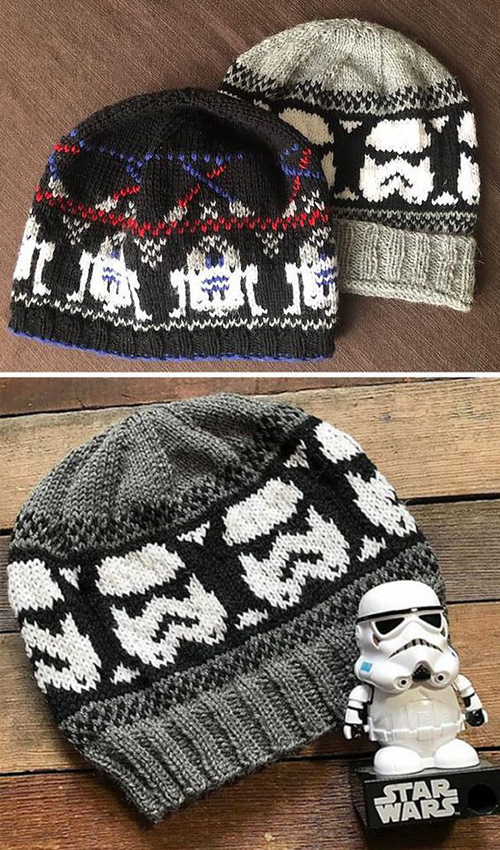
Storm Trooper Beanie by Lindsay (Bundle) is a fun Star Wars-inspired knitted hat featuring a recognizable black-and-white helmet motif created with stranded colorwork.

Originally published in 2017, the design became popular with knitters looking for an approachable introduction to Fair Isle-style colorwork. It combines a straightforward beanie construction with a graphic motif that makes the finished hat stand out.

Pattern availability update: this pattern was previously available as a free digital pattern, but its current Ravelry record lists it as discontinued and no longer available online. We have therefore removed the old “Free Pattern” label from this page.

Storm Trooper Beanie at a Glance

  • Pattern: Storm Trooper Beanie
  • Designer: Lindsay (Bundle)
  • Published: December 2017
  • Category: Beanie / toque
  • Craft: Knitting
  • Yarn weight: Sport
  • Suggested yarn: Knit Picks Brava Sport
  • Yardage: Approximately 160–180 yd (146–165 m)
  • Needles: US 6 / 4.0 mm
  • Gauge: 23 stitches = 4 in / 10 cm
  • Construction: Bottom-up and worked in the round
  • Color technique: Stranded colorwork
  • Language: English
  • Current status: Discontinued

About the Storm Trooper Beanie

The Storm Trooper Beanie takes the familiar shape of a knitted beanie and turns it into a graphic colorwork project.

The hat uses contrasting light and dark yarn to create a Stormtrooper-inspired helmet motif around the body of the hat.

Because most of the visual impact comes from two-color stranded knitting, the project is particularly interesting for knitters who want to move beyond plain hats without tackling a highly complicated garment.

A Beginner-Friendly Introduction to Stranded Colorwork

The designer originally described the pattern as a good introduction to stranded or Fair Isle-style knitting.

Instead of creating the graphic design afterward with embroidery, the contrasting colors are worked directly into the knitted fabric.

This gives the hat its crisp, recognizable appearance while teaching an important knitting technique that can later be used for sweaters, mittens, cowls and many other projects.

How Stranded Colorwork Works

In stranded knitting, two colors are used across the same round.

While one color is being knitted, the unused yarn travels behind the fabric in strands commonly called floats.

The challenge is keeping those floats loose enough that they do not pull or distort the finished fabric.

Once you become comfortable managing two yarns, the technique can become surprisingly rhythmic.

Managing Your Colorwork Tension

Tension is one of the most important parts of stranded knitting.

If the floats behind the work are pulled too tightly, the colorwork section may become narrower than the rest of the hat and the motifs can pucker.

Try spreading the recently worked stitches naturally along the right needle before carrying the unused yarn behind them.

Your goal is a flexible fabric where the colorwork lies flat without loose loops hanging inside the hat.

Watch the Longer Floats

Graphic motifs sometimes create sections where one color is not used for several stitches.

Longer floats require a little more attention because they can become either too tight or too loose.

Depending on the distance involved, experienced colorwork knitters may choose to catch a longer float behind the fabric.

Avoid catching floats in exactly the same location on consecutive rounds, which can make the trapped yarn more visible from the front.

Worked in the Round

The Storm Trooper Beanie is worked in the round.

This construction is particularly convenient for stranded colorwork because the right side of the fabric remains facing you while the graphic motif is being created.

There is also no long vertical seam to sew after completing the main body of the hat.

Bottom-Up Construction

The hat begins at the lower edge and progresses upward toward the crown.

This familiar bottom-up structure lets you establish the circumference before working the main graphic section.

Crown decreases then shape the top of the beanie.

Sport-Weight Yarn

The original pattern uses sport-weight yarn.

The suggested yarn was Knit Picks Brava Sport, an acrylic yarn that provides clear stitch definition for graphic colorwork.

You do not necessarily need to use the exact original yarn, but any substitute should produce the required gauge and a fabric suitable for a fitted hat.

How Much Yarn?

The published pattern information lists approximately 160–180 yards (146–165 meters).

Since this is a colorwork design, you need contrasting colors rather than a single uninterrupted shade.

If you are substituting yarn, compare both yarn weight and meterage and allow a little extra for swatching.

Classic Black and White

Black and white are the obvious color choices when trying to preserve the Stormtrooper-inspired appearance.

The strong contrast also makes the charted motif easy to recognize.

However, knitters can use the same general colorwork concept with other high-contrast combinations for a more personalized result.

Why Contrast Matters

Colorwork motifs depend on contrast.

Two yarns that look very different in the skein can sometimes have surprisingly similar values when knitted together, causing the design to disappear.

A quick way to test your choices is to photograph the yarns together and view the image in grayscale. If they remain clearly different, the motif is more likely to remain visible.

Needles and Gauge

The original pattern information lists US 6 / 4.0 mm needles.

The published gauge is approximately 23 stitches per 4 inches / 10 cm.

Use these numbers as a reference rather than assuming the listed needle automatically produces the correct result.

Individual knitting tension varies, so swatching remains important.

Swatch in Colorwork

If possible, test at least part of your swatch using both colors.

Many knitters discover that their stranded knitting is tighter than their single-color stockinette.

A colorwork swatch can therefore tell you more about the final fit than a plain stockinette swatch alone.

Why Colorwork Hats Are Great Practice Projects

A hat is much smaller than a stranded sweater, making it a practical project for learning a new technique.

You can practice:

  • Reading a colorwork chart
  • Working with two colors
  • Managing floats
  • Maintaining even tension
  • Knitting in the round
  • Following repeated motifs
  • Shaping a knitted crown

Once these skills feel comfortable on a hat, larger stranded projects can seem much less intimidating.

Reading a Colorwork Chart

Colorwork charts visually represent the stitches in each round.

Each square represents a stitch and its color tells you which yarn to use.

When knitting in the round, chart rows are generally read consistently in the direction of your knitting.

Always follow the instructions supplied with the specific pattern or chart because chart conventions can vary.

Use Stitch Markers to Track Repeats

If a colorwork motif repeats around the hat, markers can make it easier to recognize where each repeat begins and ends.

This can help you catch a chart-reading mistake before it continues around several rounds.

Just make sure markers do not interfere with decreases or other shaping later in the project.

Check the Motif Frequently

One advantage of graphic colorwork is that mistakes often become visually obvious.

Stop occasionally and look at the developing design from a short distance.

A misplaced contrasting stitch can be easier to spot in the overall image than while concentrating on individual chart squares.

Keep the Inside Neat

The inside of a stranded hat will naturally show floats.

They do not need to look identical, but they should be reasonably even and flexible.

Extremely tight floats can affect fit, while very loose floats may catch on fingers when the hat is put on.

Blocking Makes a Difference

Gentle blocking can significantly improve stranded knitting.

It allows stitches to settle and can help small irregularities in tension become less noticeable.

Always choose a blocking method appropriate for the fiber content of your yarn.

Who Would Enjoy This Project?

This style of hat is especially appealing to knitters who enjoy pop-culture-inspired projects and graphic colorwork.

It was originally designed as a gift for a Star Wars fan, and that gift idea helped make the pattern popular among knitters.

The combination of a practical winter accessory and a recognizable motif gives the project much of its appeal.

Pattern Availability Update

Storm Trooper Beanie by Lindsay (Bundle) was previously available as a free knitting pattern.

However, its current Ravelry record now states that the design is discontinued and that the digital pattern is no longer available online.

Because Amazing Knitting verifies pattern availability periodically, we have removed the old “Free Pattern” description rather than continue sending readers to an unavailable download.

View the Original Pattern Record

Ravelry still maintains the historical record for the original design. It is useful for confirming the designer, yarn weight, gauge, yardage, construction and project history, even though the pattern itself is no longer available for download.

View the Storm Trooper Beanie Pattern Record →

Looking for an Available Alternative?

Because the original Lindsay (Bundle) pattern is discontinued, look for currently available stranded-colorwork beanie patterns if your main goal is to practice the same knitting techniques.

Search for designs using terms such as stranded colorwork beanie, two-color knitted hat or beginner Fair Isle hat.

Choose an alternative based on its current availability, gauge, size and yarn requirements rather than assuming that another pattern with “Stormtrooper” in its title is the same design.

Storm Trooper Beanie is a design by Lindsay (Bundle). Amazing Knitting does not reproduce the copyrighted pattern instructions. The pattern was formerly available free but is currently listed as discontinued and unavailable online.

Read Our Pattern Availability Policy →

Discover More From the Archive

A fresh mix of knitting patterns and tutorials from the Amazing Knitting archive.

Finding patterns from the archive…