![]() |
| Photos above © lynn nourish and nestle |
...
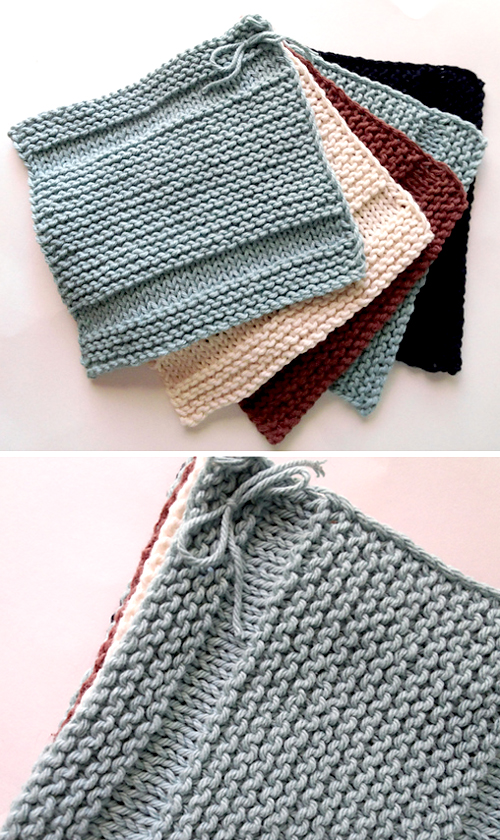
Daisy Stitch Knit Washcloth - Free Pattern
Lace Mesh Wash Cloth - Free Knitting Pattern
![]() |
| Photo above © Coffee & Cream |
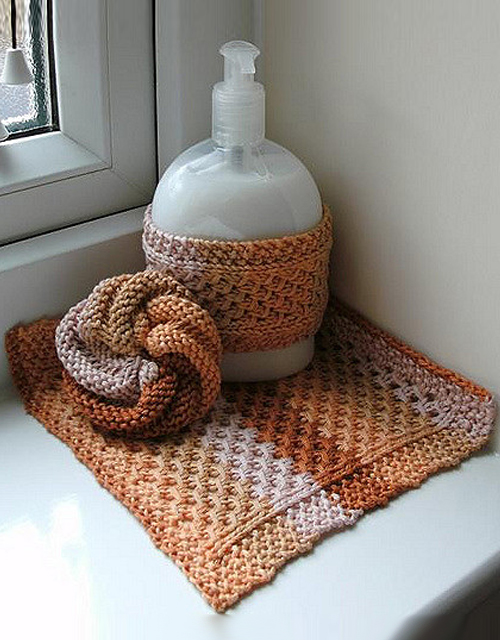
Lace Mesh Wash Cloth by Selina Kyle is a simple, practical knitting project that combines an open lace-mesh center with a neat seed-stitch border.
It is a useful small project for knitters who want to practice basic lace techniques without committing to a large shawl or garment.
The open mesh gives the cloth a light, flexible texture, while the textured border helps frame the square and gives the design a tidy finished appearance.
Free references to the original pattern are still available online, although the designer's old Coffee and Cream blog is no longer as easy to verify as it once was.
✓ Pattern Availability
Lace Mesh Wash Cloth is a free knitting pattern by Selina Kyle. The pattern has historically been associated with her Coffee and Cream blog and is still referenced by established knitting-pattern directories as a free design.
Lace Mesh Wash Cloth at a Glance
Pattern: Lace Mesh Wash Cloth
Designer: Selina Kyle
Original Blog: Coffee and Cream
Category: Washcloth / Dishcloth
Main Feature: Lace mesh center
Border: Seed stitch
Construction: Worked flat
Good For: Practicing basic lace knitting
Availability: Free pattern references remain online
Why This Wash Cloth Is a Good Learning Project
Lace knitting can look intimidating when you first encounter a large shawl covered in charts and complicated motifs.
A washcloth is a much more manageable place to begin.
Because the project is small, you can practice the relationship between yarn overs and decreases without having hundreds of stitches on your needles.
The Lace Mesh Center
The central feature of the design is a simple open mesh.
Mesh lace is created by deliberately making holes in the knitted fabric, usually through yarn overs balanced by decreases.
The result is lighter and more flexible than a completely solid knitted square.
Why Yarn Overs Matter
A yarn over creates an extra loop on the needle.
When worked correctly, that extra loop becomes the decorative opening visible in the finished lace.
The increase created by the yarn over usually needs to be balanced by a decrease elsewhere in the stitch pattern so the overall stitch count remains controlled.
Watch the Stitch Count
One of the most common mistakes in beginner lace knitting is forgetting either a yarn over or a decrease.
Because the two usually work together, a missing stitch can shift the mesh pattern and make the next row harder to understand.
Count your stitches periodically while learning the repeat.
The Seed Stitch Border
The mesh center is surrounded by a seed-stitch border.
Seed stitch alternates knit and purl stitches to create a small, pebbled texture.
It is particularly useful around washcloths because it gives the edge a visually solid frame around an open center.
Seed Stitch Also Helps Control the Edges
A textured border can help a small knitted square sit more neatly than an unbordered piece of stockinette.
It also gives the cloth additional texture around the outside, which is useful both aesthetically and practically.
A Good Introduction to Reading Your Knitting
This type of project encourages you to recognize the difference between:
- Knit stitches
- Purl stitches
- Yarn-over holes
- Decreases
- Border stitches
- Mesh-pattern stitches
Learning to identify those elements visually makes future lace projects much easier.
Worked Flat
A washcloth like this is worked back and forth in rows rather than in the round.
That makes the project convenient for knitters who are still becoming comfortable with basic needles and turning their work at the end of each row.
Choose a Practical Yarn
For washcloths and dishcloths, cotton is usually a very practical yarn choice.
It is absorbent, washable and shows textured stitches clearly.
However, because the exact original yarn specification is not reliably documented in the current sources we could verify, use the yarn recommendation from the original pattern if you have access to it.
Why We Are Not Giving an Exact Needle Size
Older copies and pattern roundups sometimes repeat specifications without making the original source clear.
Rather than turn an uncertain number into an authoritative-looking recommendation, Amazing Knitting does not list a specific needle size here unless it can be verified from the designer's own pattern record.
Use the needle size recommended by the authorized pattern source or select one that produces a flexible but useful cloth fabric with your chosen yarn.
Solid or Gradient Yarn?
Both can work well.
A solid color makes the lace holes and seed-stitch border very easy to see.
A gradient yarn can create a more decorative effect, and one surviving pattern roundup specifically highlights an ombré version of Selina Kyle's washcloth.
Keep the Mesh Relaxed
Lace usually looks better when it is not worked too tightly.
If your tension is extremely firm, the yarn-over holes may appear small and the mesh may lose some of its open character.
A small swatch can help you decide whether you like the fabric before knitting the entire cloth.
Blocking Can Improve the Lace
Washing and gently shaping the finished cloth can help the mesh settle into a more even appearance.
Always follow the care instructions for the yarn you use.
Cotton may behave quite differently from wool or synthetic fibers, so avoid assuming that every washcloth should be blocked in exactly the same way.
A Quick Skill-Building Project
Small household projects are useful because they let you practice a new technique while still producing something practical.
With Lace Mesh Wash Cloth, you can practice:
- Knit and purl stitches
- Seed stitch
- Yarn overs
- Basic lace decreases
- Maintaining a border
- Reading your knitting
- Keeping an even stitch count
Washcloth or Dishcloth?
The same basic knitted square can often be used either in the bathroom or the kitchen, depending on yarn choice and personal preference.
For face or body use, choose a yarn that feels comfortable against the skin.
For kitchen use, durability, absorbency and easy washing may be more important.
Make a Coordinated Set
Small cloths are excellent scrap-yarn projects and can also be made in coordinated colors for a handmade gift set.
Pair several washcloths with handmade soap or other bath items for a simple practical gift.
Is Lace Mesh Wash Cloth Still Free?
Current knitting directories still identify Selina Kyle's cloth pattern as a free design.
The exact original Coffee and Cream blog source is old and not as easy to verify today, but Selina Kyle remains identified as the designer and established knitting sites continue to point knitters toward the free pattern.
Amazing Knitting does not reproduce the designer's complete row-by-row instructions here.
Find the Free Pattern
A reliable current route is the Ravelry ecosystem and knitting directories that still identify the original Selina Kyle design.
View Selina Kyle's Knitting Designs →
More Free Washcloth Patterns
If you enjoy quick household knits, you can also explore:
- Daisy Stitch Knit Washcloth
- Free Washcloth Knitting Patterns
- Dishcloth Knitting Patterns
- Beginner Lace Knitting Projects
Why This Small Pattern Is Still Useful
Lace Mesh Wash Cloth is not a dramatic garment or a huge heirloom project.
Its value is exactly the opposite: it gives you a small, forgiving project where you can concentrate on the mechanics of lace.
The combination of an open mesh center and textured seed-stitch border makes it a useful bridge between beginner knit-and-purl projects and more elaborate lace knitting.
Pattern credit: Lace Mesh Wash Cloth is attributed to Selina Kyle / Coffee and Cream. Amazing Knitting provides an independent project guide and does not reproduce the designer's complete copyrighted knitting instructions. Please retain the existing photograph and its original credit from the old Amazing Knitting post.
Heart Face Scrubby - Free Knitting Pattern
![]() |
| Photo above © PurlsAndPixels |
Heart Face Scrubby by Liz Chandler of PurlsAndPixels is one of those tiny knitting projects that manages to be cute, practical and genuinely useful.
A simple heart appears in the center through carefully placed knit and purl stitches, turning a small cotton square into a reusable face cloth or makeup-remover pad.
It is also an excellent scrap-yarn project: each scrubby uses only about 9.5 yards of worsted-weight cotton yarn and is worked flat with basic stitches.
Best of all, Liz Chandler still provides the complete pattern free to read on PurlsAndPixels. A printable PDF is also available separately for knitters who prefer an ad-free version.
✓ Free Pattern Availability
The complete Heart Face Scrubby knitting pattern is currently free to read on the designer's PurlsAndPixels website. The designer also offers an optional paid printable PDF, but purchasing the PDF is not required to use the free web pattern.
Heart Face Scrubby at a Glance
Pattern: Heart Face Scrubby
Designer: Liz Chandler
Source: PurlsAndPixels
First Published: February 2019
Skill Level: Beginner / Easy
Yarn Weight: Worsted
Suggested Yarn: Lily Sugar 'n Cream 100% Cotton
Yarn per Scrubby: Approx. 9.5 yd / 8.7 m
Needles: US 7 / 4.5 mm
Gauge: 19 sts × 26 rows = 4 in / 10 cm in stockinette
Construction: One piece, worked flat
Finished Size: Approx. 3 × 3 in after washing
Availability: Free web pattern + optional paid PDF
About the Heart Face Scrubby
Liz Chandler designed this little scrubby as a reusable alternative to disposable cotton pads.
Its appeal is in its simplicity. The scrubby is essentially a small knitted square, but strategically placed purl stitches create a heart motif on the front of the fabric.
There is no complicated colorwork and no separate heart to sew onto the finished cloth.
A Beginner-Friendly Project
PurlsAndPixels classifies Heart Face Scrubby as an easy knitting pattern.
The project is suitable for knitters who understand basic skills such as:
- Casting on
- Knitting
- Purling
- Turning the work
- Binding off
- Weaving in yarn ends
Because the project is so small, it can also be a useful way for a newer knitter to practice recognizing knit and purl stitches without committing to a large project.
How the Heart Appears
The heart is created through texture rather than a second yarn color.
Knit and purl stitches reflect light differently and sit differently on the surface of the fabric. By positioning them deliberately, the designer creates a visible heart against the surrounding background.
This is a useful introduction to the idea of creating pictures and motifs with texture alone.
No Complicated Shaping
Despite the heart motif, you are not actually knitting a heart-shaped piece.
The scrubby itself remains a simple square, so there is no elaborate increase or decrease sequence required to shape the outside edges.
This keeps the focus on following the knit-and-purl pattern correctly.
Worked Flat
Heart Face Scrubby is knitted flat, turning the work after each row.
You can therefore make it without learning to knit in the round.
The designer lists either a circular or straight needle option, so use whichever style is most comfortable for you.
Yarn: 100% Cotton
The original pattern uses Lily Sugar 'n Cream 100% Cotton.
Cotton makes sense for this project because it is absorbent, reusable and washable.
You are not limited to the exact original brand, however. The designer notes that another worsted-weight cotton yarn can be used.
Only About 9.5 Yards per Scrubby
This project requires remarkably little yarn.
Approximately 9.5 yards / 8.7 meters per scrubby
That makes Heart Face Scrubby an excellent project for small amounts of cotton yarn left over from washcloths, dishcloths or other household projects.
According to the designer, a 95-yard skein can make roughly ten scrubbies, although actual usage varies with yarn and tension.
Needles
The published needle size is:
US 7 / 4.5 mm
PurlsAndPixels lists both a long circular needle and a short straight needle as options.
The circular needle is still used for flat knitting in this project; you do not join the stitches in the round.
Gauge
The published gauge is:
19 stitches × 26 rows = 4 × 4 inches / 10 × 10 cm in stockinette
Exact gauge is less critical here than it would be for a fitted sweater, but it still affects the size and density of your finished scrubby.
Finished Size
An interesting detail is that the cotton fabric changes slightly after washing.
The designer gives an unwashed measurement of approximately:
3 × 3.5 inches
After washing in cold water as directed, the scrubby is approximately:
3 × 3 inches
This is a useful reminder to judge reusable cotton projects after washing, not only immediately after binding off.
Make One Before Making a Whole Set
Because each scrubby takes so little yarn, make one complete sample and wash it before producing a large batch.
This allows you to check:
- The finished size
- How much your cotton shrinks
- Whether you like the fabric density
- How clearly the heart motif appears
- Whether the texture feels suitable for your intended use
A Great Scrap-Yarn Project
Small leftovers of cotton yarn can be awkward to use because there may not be enough for a dishcloth or larger project.
Heart Face Scrubbies solve that problem nicely.
You can make each one in a different color and gradually turn leftover yarn into a coordinated reusable set.
Make a Set in Different Colors
The textured heart works without colorwork, so every scrubby can be made from a single shade.
Try making a collection in:
- Soft pastels
- Natural cotton shades
- Different tones of one color
- Bright scrap-yarn colors
- Seasonal or gift-themed palettes
A Small Handmade Gift Idea
These scrubbies can also become part of a small handmade gift set.
Several knitted cotton scrubbies paired with soap, a washcloth or other personal-care items can make a thoughtful handmade package without requiring a large amount of knitting time.
They are particularly useful when you want to give something handmade but do not know the recipient's clothing size.
Keep the Heart Motif Easy to See
A smooth solid-color cotton yarn will usually show the textured heart more clearly than a highly variegated or fuzzy yarn.
If the heart motif is the main reason you chose this pattern, consider stitch definition when selecting your yarn.
Watch Your Knit and Purl Placement
The square itself is simple, but the heart depends on placing the textured stitches correctly.
If you accidentally knit where the pattern requires a purl, part of the heart can disappear into the background.
Check each motif row before continuing too far.
Written Instructions and Chart
The designer provides both written instructions and a knitting chart.
If you are new to charts, this is a particularly friendly project for practicing because the motif is small and easy to recognize.
You can also use the written instructions if that format feels more natural to you.
Care
PurlsAndPixels provides washing guidance for scrubbies made with the recommended materials.
The designer suggests washing in cold water, either by hand or on a delicate machine cycle, with low-heat tumble drying or laying flat to dry.
If you substitute another yarn, follow the care instructions for that yarn instead.
Free Pattern vs Printable PDF
Good to Know
You may see a price for Heart Face Scrubby while searching online. That price is for the designer's optional printable PDF. The complete pattern can still be read free on the official PurlsAndPixels website.
This distinction is important because the presence of a paid PDF does not mean the free pattern has disappeared.
If you prefer to knit directly from the website, use the free version. If you prefer a clean printable copy for offline use, the designer offers that separately.
Is Heart Face Scrubby Still Free?
Yes.
Liz Chandler currently provides the complete Heart Face Scrubby knitting pattern free to read on PurlsAndPixels.
The pattern was originally published in 2019 and has since been revised by the designer.
Amazing Knitting does not reproduce Liz Chandler's complete copyrighted row-by-row instructions or chart. Use the official PurlsAndPixels page for the current pattern.
Get the Free Heart Face Scrubby Pattern
Visit Liz Chandler's official PurlsAndPixels page to read the complete pattern for free:
Get the Free Heart Face Scrubby Pattern →
You can also view its Ravelry record for project examples and pattern details:
View Heart Face Scrubby on Ravelry →
Explore More Small Knitting Projects
Small projects are excellent for practicing new stitches, using leftover yarn and making quick handmade gifts.
- Twisted Rib Stitch Tutorial
- Baby Honeycomb Stitch Tutorial
- Browse Free Knitting Patterns
- Easy Knitting Patterns
Before You Start
Choose a smooth worsted-weight cotton yarn and make one scrubby before committing to a full set.
Follow the designer's current instructions carefully so the knit and purl stitches form the heart correctly, then wash your first sample to see its final size and texture.
With only about 9.5 yards of yarn required for each one, Heart Face Scrubby is a wonderfully low-risk project for practicing textured knitting — and a useful way to turn small cotton leftovers into something practical.
Pattern credit: Heart Face Scrubby was designed by Liz Chandler of PurlsAndPixels and first published in 2019. The existing photograph on this Amazing Knitting page is credited to PurlsAndPixels. Amazing Knitting provides an independent project guide and does not reproduce the designer's complete copyrighted knitting instructions or chart.
Discover More From the Archive
A fresh mix of knitting patterns and tutorials from the Amazing Knitting archive.