Skip to content

...

Showing posts sorted by date for query dishcloth knitting pattern. Sort by relevance Show all posts

7 Free One-Skein Knitting Patterns to Make from Your Yarn Stash

7 Free One-Skein Knitting Patterns to Make from Your Yarn Stash

Have a beautiful single skein of yarn sitting in your stash and no idea what to make with it? You don't always need a sweater-sized quantity of yarn to start a satisfying knitting project.

These 7 free one-skein knitting patterns include shawls, a hat, cozy slippers, newborn booties and useful dishcloths. Some use nearly a full skein, while others leave plenty of yarn for another small project.

They are also a great way to use special hand-dyed yarn, leftover cotton, sock yarn or that single ball you bought simply because the color was too beautiful to leave behind.

1. Reyna Shawl

Reyna by Noora Backlund may be one of the best examples of a true one-skein stash project.

The triangular shawl was specifically designed for that single skein of variegated sock yarn that can be difficult to match with the right pattern.

Simple garter-stitch sections alternate with airy mesh, allowing the changing colors of hand-dyed yarn to remain visible rather than disappearing inside complicated stitchwork.

Reyna uses approximately 380–420 yards (347–384 m) of light fingering yarn and is worked from the top down in one seamless piece.

Another useful feature is its flexibility: the garter and mesh sections can be adjusted if your skein contains slightly more or less yarn than the original.

See the Free Reyna Shawl Pattern →

2. The Simple Thing

The Simple Thing by Melina Brell sits somewhere between a small shawl and a scarf, and its flexible construction makes it especially useful for stash yarn.

The original sample uses just one skein of DK yarn, approximately 219–273 yards (200–250 m).

It is worked sideways in relaxing garter stitch, beginning at one narrow tip and finishing at the other, with neat I-cord edges along the sides.

Best of all, the designer explains that the pattern can easily be made longer, shorter, wider or narrower depending on how much yarn you have.

That makes The Simple Thing an excellent choice when you want to use nearly every bit of a special skein instead of leaving a small amount behind.

See The Simple Thing Free Knitting Pattern →

3. Irma Hat

If you would rather turn your single skein into a practical winter accessory, try the Irma Hat by Aneta Gasiorowska.

This free textured beanie uses only about 142–153 yards (130–140 m) of DK-weight yarn.

Irma is worked from the bottom up and seamlessly in the round. Its distinctive swirling texture gives the finished hat a much more elaborate appearance than a basic stockinette beanie.

The pattern provides one adult size with instructions for adjusting the fit, making it a useful candidate for a treasured skein of DK yarn in your stash.

See the Free Irma Hat Knitting Pattern →

4. Cloud Slippers

Cloud Slippers by Adrienne Sullivan are a particularly satisfying option when your stash contains one ball of super bulky yarn.

The designer states that just one ball of Lion Brand Wool-Ease Thick & Quick or an equivalent super bulky yarn is enough to make any of the four available adult sizes.

Depending on size, the slippers require only 55–90 yards (50–82 m).

Each slipper is knitted flat in one piece using garter stitch, then folded and seamed from toe to heel.

With large 10 mm needles and very little yarn required, this is also one of the quickest projects in this collection.

See the Free Cloud Slippers Knitting Pattern →

5. Little Eyes Baby Booties

Tiny baby projects are another excellent way to use small quantities of beautiful yarn.

Little Eyes by Inma Gijón is a free newborn booties pattern requiring only 30–60 yards (27–55 m) of light fingering yarn.

The little boots feature decorative cable detail and are worked flat. The original newborn version uses 2 mm needles, and the designer notes that 2.5 mm needles can be used if you want a slightly larger pair.

Because the yarn requirement is so small, Little Eyes can be an especially good project for leftover fingering yarn from a larger shawl or sock project.

See the Free Little Eyes Baby Booties Pattern →

6. Copycat Dishcloth

Not every special skein needs to become something wearable. Copycat Dishcloth by Michelle Krause is a quick, practical project that uses approximately 80 yards (73 m) of worsted-weight cotton yarn.

The simple square design combines garter and stockinette textures and uses slipped edge stitches to help create neat sides without adding a separate border.

Cotton works particularly well for a kitchen dishcloth, while a soft cotton chenille can turn the same design into a gentle washcloth.

This is a useful pattern to keep bookmarked whenever a partial or single skein of cotton is left in your stash.

See the Free Copycat Dishcloth Knitting Pattern →

7. Easy as Pie Dishcloth

Easy as Pie Dishcloth by Emily E. Williams takes the stash-busting idea even further.

Each circular dishcloth uses only about 40 yards (37 m) of worsted cotton yarn, and the designer notes that you can knit two dishcloths from one ball of Sugar 'n Cream.

The pattern is also a fun introduction to short rows or knitting backward. The finished piece measures approximately 6 inches (15 cm) across.

Beyond dishcloths and washcloths, the designer suggests using them as coasters, trivets or padding between dishes and pots.

See the Free Easy as Pie Dishcloth Pattern →

What Can You Knit With Just One Skein of Yarn?

A single skein can go surprisingly far when you choose a pattern designed around a limited amount of yarn.

Fingering-weight yarn can become a lightweight shawl or tiny baby booties. A skein of DK can become a textured hat or small scarf-shawl. Super bulky yarn can turn into cozy slippers, while leftover cotton is ideal for dishcloths and washcloths.

Before starting, always compare the yardage or meterage of your skein with the amount required by the pattern. Two skeins with the same yarn weight can contain very different lengths of yarn.

Tips for Choosing a One-Skein Knitting Project

Start by checking the yarn label for its weight, total yardage and fiber content. Then choose a pattern that leaves a small safety margin rather than requiring every last yard in your skein.

Fiber matters too. Wool is a natural choice for warm hats, shawls and slippers, while washable cotton is generally more practical for dishcloths.

And if you have only a partial skein left, don't overlook the smallest projects in this collection. Little Eyes Baby Booties, Copycat Dishcloth and Easy as Pie Dishcloth all require relatively small quantities of yarn.

Turn Your Yarn Stash Into Something Useful

That lonely skein in your stash doesn't have to wait for a matching ball.

Whether you choose the colorful Reyna Shawl, the adaptable Simple Thing, a textured Irma Hat, cozy Cloud Slippers, tiny baby booties or a useful cotton dishcloth, these free patterns show how much you can make with a surprisingly small amount of yarn.

Choose the yarn you want to use first, check its yardage, and then pick the project that makes the best match.

Happy knitting—and happy stash busting!

I Heart You Dishcloth - Knitting Pattern

I Heart You Dishcloth - Knitting Pattern
Photos above © Knit On Designs - Deb Buckingham
What a beautiful dishcloth knitting pattern! I found it on Ravelry... Obviously, this design will be fun to make for any of your loves; your valentine(s). It’s written out for your convenience. Good news…when you’re done with these rows, the dishcloth is done...


Full Post: Love Dishcloth 

Be My Dishcloth - Free Knitting Pattern

Be My Dishcloth - Free  Knitting Pattern
Photos above © Kris Patay
What a beautiful knitting dishcloth (free pattern)! I found it on Pinterest...  Fast and easy this cloth should knit up in no time. Make it a sweet gift for someone you love.

Full Post: Be My Dishcloth

Gingersnap Cardigan – Free Baby Knitting Pattern


Gingersnap Cardigan free baby knitting pattern by Kristen Rettig

Gingersnap Cardigan designed and photographed © Kristen Rettig.

Gingersnap by Kristen Rettig is a cheerful striped baby cardigan knitting pattern designed to turn small amounts of leftover worsted-weight yarn into an adorable handmade sweater.

With bold blocks of color, simple shaping and endless possibilities for combining yarn scraps, Gingersnap is the kind of baby cardigan that can look completely different every time you knit it.

The original pattern is written primarily for the one-year size and uses approximately 360–400 yards (329–366 m) of worsted-weight yarn.

Good news: the original Gingersnap Cardigan is still available as a free knitting pattern from designer Kristen Rettig through her Ravelry store. You will find the verified free pattern link near the end of this guide.

Gingersnap Cardigan at a Glance

  • Pattern: Gingersnap
  • Designer: Kristen Rettig
  • First published: July 2015
  • Category: Baby cardigan
  • Main size: Approximately 1 year
  • Yarn weight: Worsted
  • Yardage: Approximately 360–400 yd (329–366 m)
  • Needles: US 5 / 3.75 mm and US 7 / 4.5 mm
  • Gauge: 19 sts × 28 rows = 4 in / 10 cm in stockinette
  • Construction: Worked flat and seamed
  • Color style: Stripes / color blocking
  • Pattern language: English
  • Current availability: Free Ravelry download

A Colorful Baby Cardigan Made for Yarn Scraps

One of the best things about Gingersnap is that it was designed with leftover yarn in mind.

Kristen Rettig originally made her sweaters using scraps of Rowan Pure Wool Superwash Worsted left over from other knitting projects.

That makes the cardigan especially appealing to knitters with small quantities of coordinating worsted-weight yarn waiting in their stash.

Three Colors or More

The written pattern is designed around three colors, but you do not have to limit yourself to three.

The designer encourages knitters to raid their yarn stash and experiment with three, four, five or even more colors.

This flexibility is part of the charm of Gingersnap. A carefully planned palette can create a polished color-block cardigan, while a collection of leftover yarns can produce a playful scrappy sweater.

Choosing Colors for Gingersnap

There is no single correct color combination for this cardigan.

You can use three closely related shades for a subtle effect or combine strongly contrasting colors for a bolder sweater.

Another approach is to choose one neutral shade and pair it with two brighter colors.

Before casting on, place your yarns next to each other and experiment with their order. Changing which shade appears next to another can make a surprisingly large difference to the finished cardigan.

Worsted-Weight Yarn

Gingersnap is designed for worsted-weight yarn.

Yarn options associated with the original pattern include:

  • Rowan Pure Wool Superwash Worsted
  • Rowan Handknit Cotton
  • Rowan Softknit Cotton

You do not need to find the exact original yarn. A suitable worsted-weight substitute can work as long as you can obtain the appropriate gauge and create a fabric you like.

Choosing Yarn for a Baby Sweater

Because Gingersnap is intended for a young child, softness and washability are important considerations.

The designer specifically suggests using a soft, machine-washable yarn. This makes sense for a baby or toddler cardigan that may need frequent washing.

Check the care instructions on every yarn you plan to combine. Using several yarns with very different washing requirements can make caring for the finished cardigan unnecessarily complicated.

A Great Stash-Busting Project

Gingersnap can be particularly useful when you have leftover worsted-weight yarn from larger projects.

Instead of buying several full skeins specifically for a small baby sweater, you may be able to combine suitable leftovers that already coordinate.

Make sure each yarn is similar enough in weight and behavior to produce consistent fabric throughout the cardigan.

How Much Yarn Do You Need?

Published pattern information lists approximately 360–400 yards (329–366 meters) in total.

Because the sweater is designed for multiple colors, the total yardage is divided among the shades used in the cardigan.

Your actual yarn usage can vary with gauge, yarn choice and any changes you make to the color arrangement.

Needle Sizes

The pattern lists two needle sizes:

  • US 5 / 3.75 mm
  • US 7 / 4.5 mm

Different needle sizes are useful for creating appropriate structure in areas such as borders and the main stockinette fabric.

As always, treat the listed needle sizes as a starting point and use the size that allows you to obtain the required gauge.

Gauge

The published gauge is 19 stitches and 28 rows = 4 inches / 10 cm in stockinette stitch.

Gauge matters in a fitted garment, even a small baby cardigan.

If your stitches are significantly larger than the designer's gauge, the cardigan will also become larger. If your gauge is tighter, the finished sweater can become too small.

Make a Swatch With Your Substitute Yarn

Swatching is especially helpful if you are combining several different leftover yarns.

Two yarns may both be labeled worsted weight but still behave differently when knitted.

A small swatch can help you check gauge, fabric softness, color combination and how well your selected yarns work together before you begin the cardigan.

The Original Gingersnap Size

The original free Gingersnap pattern is primarily sized for one year.

Kristen Rettig explains that she particularly likes this size because babies around that age are active, sitting up, moving around and able to show off a handmade sweater.

The pattern listing also includes a note related to making a smaller approximately six-month version.

Gingersnap for Bigger Kids Is a Different Pattern

It is important not to confuse the original free Gingersnap with Gingersnap for Bigger Kids.

The original pattern featured on this page is the free baby cardigan first published in 2015.

Kristen Rettig later developed a separate expanded pattern for bigger children with additional sizes.

That expanded version is a different pattern listing and should not be mistaken for the original free Gingersnap download linked below.

Worked Flat and Seamed

Gingersnap is a worked-flat and seamed cardigan.

This means the garment is not constructed entirely as one seamless piece in the round.

If you are new to garment knitting, this style of construction can be a useful introduction to creating individual sweater sections and assembling them into a finished cardigan.

Stockinette Makes the Colors the Star

Much of the visual impact comes from the color arrangement rather than complicated stitch patterns.

Smooth stockinette fabric provides a simple background that allows the different colored sections to stand out clearly.

This is particularly effective when using bright or strongly contrasting yarns.

Is Gingersnap Beginner Friendly?

Gingersnap can be an approachable project for a knitter who already understands the basic stitches and wants to try a small garment.

Compared with an adult sweater, a baby cardigan requires much less yarn and considerably less knitting.

However, you should be comfortable following garment shaping and finishing instructions rather than expecting the project to be as simple as a rectangular scarf or dishcloth.

Skills That Will Help

Useful skills for this cardigan include:

  • Casting on
  • Knit and purl stitches
  • Stockinette stitch
  • Changing yarn colors
  • Basic increases and decreases
  • Following garment shaping
  • Binding off
  • Seaming knitted pieces
  • Picking up stitches where instructed
  • Weaving in yarn ends
  • Finishing a knitted garment neatly

Changing Colors Neatly

Because color changes are such a visible part of Gingersnap, neat transitions help give the cardigan a polished appearance.

When beginning a new color, leave enough yarn tail to weave in securely later.

Avoid tying bulky knots in the knitted fabric unless the pattern specifically instructs you to do so.

Managing Lots of Yarn Ends

A scrappy version using many colors can create more yarn ends than a simple three-color cardigan.

Consider weaving in some ends as the project progresses rather than leaving every tail until the very end.

Take care not to pull woven ends so tightly that they distort the surrounding stockinette fabric.

Keep Your Color Changes Consistent

Before beginning, decide whether you will follow the designer's three-color arrangement or create your own palette.

If you modify the color sequence, make a simple written plan so you do not have to decide what comes next every time you reach a new section.

A quick sketch or list of color order can be surprisingly helpful.

Use Machine-Washable Yarn When Practical

A handmade baby cardigan is likely to encounter spills, food and everyday wear.

For that reason, easy-care yarn can make the finished sweater much more practical for parents.

Kristen Rettig specifically designed Gingersnap with soft, machine-washable yarns in mind.

A Cotton Version for Warmer Weather

The designer also suggests cotton yarn as an option for knitters who want a lighter sweater for warmer weather.

Rowan Handknit Cotton and Rowan Softknit Cotton are among the yarns associated with the original pattern.

When substituting cotton for wool, remember that the fibers can behave differently, so checking gauge and fabric drape before starting is worthwhile.

Blocking and Finishing

Careful finishing can transform a collection of knitted pieces into a polished little cardigan.

Follow the pattern's assembly instructions, keep seams neat and avoid pulling them excessively tight.

Gentle blocking can help the pieces settle into shape and make the stockinette fabric look more even.

Always use a blocking method appropriate for the yarn fibers you chose.

A Fun Handmade Baby Gift

Gingersnap is particularly well suited to gift knitting because every color combination can create a different personality.

Soft neutrals can make a classic cardigan, while bright contrasting shades create something playful and energetic.

You can even choose colors that match the recipient's wardrobe or use meaningful leftovers from other family knitting projects.

Why Gingersnap Remains Popular

Gingersnap has been available since 2015 and has been knitted by a large number of Ravelry users.

Its lasting appeal is easy to understand: the sweater is small, colorful, practical and adaptable to the yarn already in your stash.

Most importantly, the original baby version remains available as a free pattern from the designer.

Free Gingersnap Cardigan Knitting Pattern

Gingersnap by Kristen Rettig is currently available as a free knitting pattern.

The designer provides the original baby-cardigan pattern through Kristen Rettig's Ravelry Store, where the current listing identifies it as a free Ravelry download.

This is the exact Gingersnap pattern featured on this Amazing Knitting page: the striped worsted-weight baby cardigan first published by Kristen Rettig in 2015.

Please note that the later Gingersnap for Bigger Kids is a separate expanded pattern. The link below is specifically for the original free baby version.

Pattern availability can change over time, so Amazing Knitting checks older links and gives priority to a legitimate free source whenever the exact pattern remains officially available at no cost.

Get the Free Gingersnap Pattern

Visit Kristen Rettig's current pattern page to see the full pattern information and download the original Gingersnap baby cardigan for free.

Get the Free Gingersnap Knitting Pattern →

Gingersnap is designed by Kristen Rettig. Amazing Knitting does not reproduce the designer's copyrighted row-by-row instructions. The original baby version is currently offered as a free download by the designer. Pattern availability may change, so please check the linked source for the latest information.

Read Our Pattern Availability Policy →


Diagonally Knit Dishcloth - Free Knitting Pattern

Diagonally Knit Dishcloth - Free Knitting Pattern
 The photo above © Bestitched 
What beautiful knitting dishcloth pattern! I found it on Ravelry.
This a version of a diagonal knit dishcloth that has a more closely matched beginning and end. It can be knit to any size.

Download Pattern: Diagonally Knit Dishcloth 

Waffle Knit Dishcloth - Free Pattern

Waffle Knit Dishcloth - Free Pattern
The photo above © Homespun Living
What beautiful knitting dishcloth pattern! I found it on Pinterest.
"My favorite is a pattern I came up with using the raised box stitch, which gives the dishcloth a great waffle texture. For anyone interested in making it, I would like to share the pattern."

Easy Socks Two Needle – Free Flat Knit Sock Pattern


Easy Socks Two Needle free flat knitting pattern by Katerina Mushyn

Easy Socks Two Needle by Katerina Mushyn. Photos © Katerina Mushyn.

Easy Socks Two Needle by Katerina Mushyn is a clever free sock knitting pattern for anyone who wants to make cozy socks without double-pointed needles or knitting in the round.

Instead, each sock is worked flat on two straight needles as one simple piece, combining garter stitch with stretchy ribbing. The knitted piece is then folded and seamed to create the finished sock.

The original pattern includes adult shoe sizes 36 through 44 and is designed to be easy to resize. It uses Aran-weight yarn and 5 mm needles, making it a relatively quick sock project.

Best of all, Katerina Mushyn's original instructions are still available free on the Prjaga website, including an English version and accompanying video tutorial.

Easy Socks Two Needle at a Glance

  • Pattern: Easy Socks Two Needle
  • Designer: Katerina Mushyn
  • Published: November 2019
  • Category: Socks / cozy house socks
  • Construction: Worked flat on two needles
  • Shape: One-piece construction, then seamed
  • Yarn weight: Aran
  • Suggested yarn: Alize Superlana Midi
  • Yardage: Approximately 148–153 yd (135–140 m)
  • Needles: US 8 / 5 mm
  • Sizes: EU shoe sizes 36–44
  • Main stitches: Garter stitch and ribbing
  • Worked in the round: No
  • Double-pointed needles required: No
  • Languages: English and Russian
  • Video tutorial: Yes
  • Current availability: Free on the original Prjaga page

Socks You Can Knit on Two Straight Needles

Traditional sock knitting often involves double-pointed needles, magic loop or small circular needles.

Easy Socks Two Needle takes a completely different approach.

The sock begins as a flat piece of knitting. You work back and forth in rows using ordinary straight needles and create the shape through the arrangement of garter stitch and ribbing.

Once the knitting is finished, the piece is folded and sewn into its final sock shape.

A Beginner-Friendly Alternative to Knitting Socks in the Round

Many knitters like the idea of handmade socks but feel uncomfortable using several double-pointed needles at once.

This pattern removes that obstacle completely.

If you can knit flat pieces and sew a simple seam, you can explore sock construction without first learning circular sock knitting.

It can therefore be an interesting first sock project for a confident beginner.

One-Piece Flat Construction

One of the most interesting features of Katerina Mushyn's design is its one-piece construction.

You do not knit a separate sole, heel, toe and cuff and then assemble all of those pieces individually.

Instead, the shape develops in one flat knitted piece. After the knitting is complete, seaming transforms that piece into the recognizable sock.

This clever construction is also demonstrated in the designer's video tutorial.

Garter Stitch and Ribbing

The pattern combines two familiar knitting textures: garter stitch and ribbing.

Garter stitch creates a flexible fabric with distinctive horizontal ridges, while the ribbed section provides extra stretch.

The contrast between these textures also gives the socks their characteristic appearance.

Why Ribbing Works Well for Socks

Ribbing naturally contracts when relaxed and stretches when worn.

This elasticity is especially useful in socks because the knitted fabric needs to accommodate the foot while remaining comfortably in place.

The vertical ribbed texture also adds visual interest without requiring cables, lace or colorwork.

Aran-Weight Yarn Makes These a Quick Knit

Easy Socks Two Needle uses Aran-weight yarn, which is considerably thicker than traditional fingering-weight sock yarn.

Thicker yarn means fewer stitches are needed to build the fabric, so the project can progress relatively quickly.

The resulting socks are especially well suited to cozy indoor wear, lounging or wearing as warm house socks.

Original Yarn: Alize Superlana Midi

The original pattern uses Alize Superlana Midi.

This yarn is a blend of approximately 75% acrylic and 25% wool and has about 170 meters per 100 grams.

The combination provides warmth from the wool while retaining some of the practical characteristics of acrylic.

How Much Yarn Do You Need?

Published pattern information lists approximately 135–140 meters (148–153 yards).

That makes the socks a relatively small project compared with a sweater, blanket or shawl.

If substituting another yarn, compare yardage as well as ball weight. Two 100-gram yarns can contain very different lengths of yarn.

Choosing a Substitute Yarn

You do not have to use the exact original yarn.

Look for a suitable Aran-weight yarn that creates a comfortable, resilient fabric at approximately the required gauge.

For house socks, useful yarn qualities include:

  • Warmth
  • Comfort against the skin
  • Good elasticity
  • Reasonable durability
  • Easy washing
  • Clear stitch definition for the ribbing

Think About Durability

Socks experience more friction than many other knitted items.

If you plan to wear these frequently around the house, choose a yarn that can tolerate regular use rather than an extremely delicate fiber.

Keep in mind that these are knitted house socks rather than hard-soled slippers, so the knitted fabric itself will be in contact with the floor.

Needle Size

The original pattern specifies US 8 / 5 mm knitting needles.

Because the socks are worked flat, ordinary straight knitting needles can be used.

This is one of the pattern's biggest advantages for knitters who do not own or enjoy using double-pointed needles.

Gauge

Ravelry records the published gauge as approximately 17 stitches and 30 rows = 4 inches / 10 cm.

The current Prjaga English instructions display a different tension figure from the Russian section, so it is sensible to treat fit and the designer's sizing guidance as particularly important when substituting yarn.

Because socks need to fit the foot, making a small swatch before starting is worthwhile.

Sizes 36 Through 44

The pattern is designed to accommodate a useful range of adult shoe sizes:

EU 36, 37, 38, 39, 40, 41, 42, 43 and 44.

Katerina Mushyn also describes the construction as easy to resize and demonstrates the process in the accompanying video.

This makes the pattern much more versatile than a flat-knit sock written for only one foot size.

Measure the Foot Before Starting

Shoe-size numbers are useful, but actual foot measurements provide more information when adjusting a handmade sock.

If you are knitting for someone else, measure the intended wearer's foot when possible.

Pay particular attention to foot length and circumference so you can compare the developing fabric with the fit you need.

Worked Back and Forth in Rows

Every part of the knitting is worked flat rather than in a continuous spiral.

At the end of each row, turn the work just as you would when knitting a scarf or dishcloth.

This familiar movement makes the pattern approachable for knitters whose experience is mostly with flat projects.

No Double-Pointed Needles Required

You do not need double-pointed needles to make this design.

You also do not need to learn magic loop or manage a small circular needle.

That is the key difference between Easy Socks Two Needle and many conventional sock patterns.

The Seam Creates the Final Sock Shape

Because the sock begins as a flat piece, finishing is an important part of the construction.

The designer demonstrates how the knitted piece is folded and sewn in the accompanying video.

Take your time with this stage. A neat, flexible seam will make the finished sock more comfortable and polished.

Do Not Make the Seam Too Tight

A sock needs to stretch as it is pulled over the foot.

If the finishing seam is much tighter than the knitted fabric, it can restrict that stretch or create an uncomfortable ridge.

Keep your seaming tension secure but relaxed.

Is This Pattern Good for Beginners?

Easy Socks Two Needle is especially appealing to beginners because the actual knitting uses familiar flat-knitting techniques.

You should be comfortable with knit stitches, simple ribbing and basic finishing.

The unusual part is understanding how the flat rectangle-like structure becomes a sock, which is why the designer's video tutorial is particularly useful.

Skills That Will Help

  • Casting on
  • Knit stitch
  • Purl stitch
  • Garter stitch
  • Working ribbing
  • Working flat on straight needles
  • Binding off
  • Folding knitted fabric accurately
  • Seaming
  • Weaving in yarn ends

Video Tutorial Included

Katerina Mushyn provides a video tutorial alongside the written pattern.

This is particularly helpful for the finishing stage because you can see how the flat knitted piece is transformed into the finished sock.

Visual learners may find it useful to keep the video available while working through the first sock.

English and Russian Instructions

The original Prjaga page contains both Russian and English instructions.

If you open the source page and initially see Russian text, simply continue down the page to the heading Easy Socks Two Needle Knitting Pattern, where the English version begins.

Make the First Sock a Learning Project

If this construction method is new to you, treat the first sock as an opportunity to understand how the pieces fold together.

Once you have completed one sock, the second should be considerably easier because you already understand both the knitting sequence and the finishing method.

Keep Notes for the Second Sock

If you make any adjustments for foot length or fit, write them down.

Recording the number of rows or any sizing changes will help you make the second sock match the first.

Even small differences can be noticeable when the socks are worn as a pair.

A Useful Quick-Gift Pattern

Thick yarn, simple stitches and flat construction make these socks a practical candidate for quick gift knitting.

They can be especially appealing as cozy winter house socks, holiday gifts or a small project between larger knitting commitments.

Try a Solid or Heathered Yarn

A solid color makes the contrast between the garter ridges and vertical ribbing easy to see.

Heathered yarn can add subtle color variation while preserving the definition of the stitch textures.

You can also experiment with contrasting sections once you understand the construction, provided your yarns have similar weight and behavior.

House Socks vs. Slippers

You may have previously seen this design described online as ribbed slipper socks.

The designer's original English title, however, is Easy Socks Two Needle, and the pattern database categorizes the design as a mid-calf sock.

They certainly work well as cozy indoor socks, but using the designer's actual pattern name makes it much easier to locate and verify the original instructions.

Why This Two-Needle Construction Is Worth Trying

Sock knitting often appears more intimidating than it needs to be because many patterns immediately introduce knitting in the round, heel turns and multiple needles.

Katerina Mushyn's design shows another possibility: create the entire sock as flat knitting and let clever folding and seaming provide the final shape.

It is a useful technique to explore even if you eventually decide to learn traditional circular sock knitting.

Free Easy Socks Two Needle Knitting Pattern

Easy Socks Two Needle by Katerina Mushyn is currently available as a free knitting pattern.

The original pattern is published on the Prjaga knitting website and includes both Russian and English written instructions together with a video tutorial.

This is the exact Katerina Mushyn design featured on this Amazing Knitting page: the Aran-weight ribbed socks worked flat on two needles, available in adult shoe sizes 36–44.

Amazing Knitting gives priority to the original legitimate free source whenever the exact pattern remains available there.

Get the Free Easy Socks Two Needle Pattern

Visit the original Prjaga page for Katerina Mushyn's complete free instructions. The page begins in Russian; scroll down to Easy Socks Two Needle Knitting Pattern for the English version.

Get the Free Easy Socks Two Needle Pattern →

Easy Socks Two Needle is designed by Katerina Mushyn. Amazing Knitting does not reproduce the designer's copyrighted row-by-row instructions. The original pattern is currently available free on its published source page. Availability may change, so please check the linked source for the latest information.

Read Our Pattern Availability Policy →

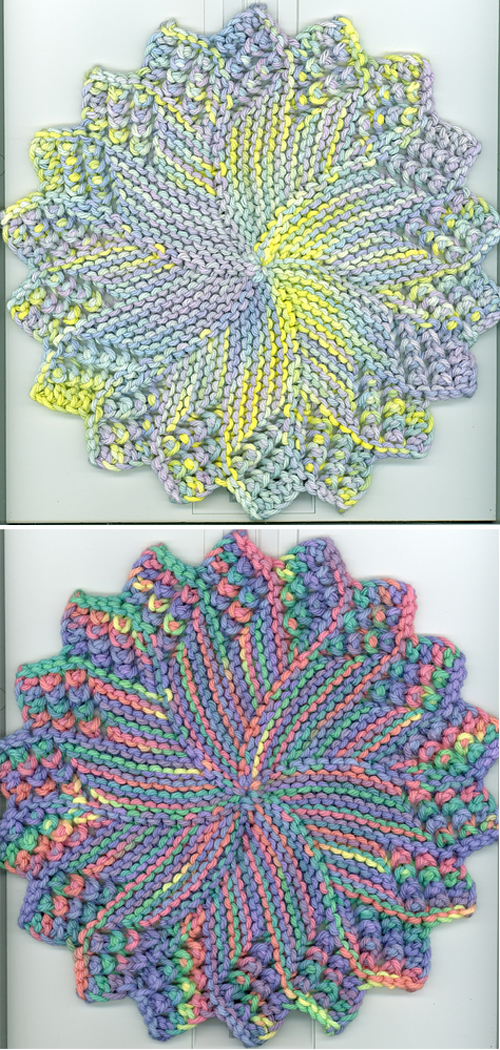
Easy as Pie Dishcloth Free Knitting Pattern

Easy as Pie Dishcloth free knitting pattern by Emily E. Williams
Pattern design © Emily E. Williams

The Easy as Pie Dishcloth by Emily E. Williams is a clever free knitting pattern for a small round dishcloth worked with short-row shaping.

The circular design creates a practical textured cloth while giving knitters a compact project for practicing short rows. With only a small amount of worsted-weight yarn required, it is also a useful project for leftover cotton yarn.

Easy as Pie Dishcloth Pattern at a Glance

Designer: Emily E. Williams

Pattern: Easy as Pie Dishcloth

Craft: Knitting

Category: Dishcloth / Washcloth

Yarn Weight: Worsted

Yardage: Approximately 40 yards (37 m)

Needles: US 6 (4 mm)

Gauge: 20 stitches = 4 in in garter stitch

Finished Size: Approximately 6 in (15 cm) diameter

Construction: Worked flat with short rows

Techniques: Garter stitch, short rows, grafting or seaming

Language: English

Pattern Availability: Free

About the Easy as Pie Dishcloth

Unlike a traditional square dishcloth, Easy as Pie is shaped into a circle. The wedge-shaped sections are created with short rows and joined together to form the finished round cloth.

The garter-stitch texture makes the fabric practical for kitchen use, while the circular construction gives the project a distinctive look. It is a small project, but the shaping makes it more interesting than a basic rectangular dishcloth.

Yarn and Needle Notes

The pattern calls for approximately 40 yards (37 m) of worsted-weight yarn. For a working dishcloth, cotton or a cotton-rich yarn is a practical choice because it is absorbent and easy to wash.

The recommended needle size is US 6 (4 mm). The listed gauge is 20 stitches = 4 inches in garter stitch.

Finished Size

The finished dishcloth measures approximately 6 inches (15 cm) in diameter.

Because this is a household item rather than a fitted garment, achieving a pleasant, useful fabric is generally more important than matching the measurements with extreme precision.

Short-Row Construction

The round shape is created by working a sequence of short-row wedges. These sections gradually build the circle while keeping the knitting itself flat.

The final edges are then joined using the finishing method described in the designer's instructions. This makes the project a useful way to practice short-row shaping and finishing techniques on a small scale.

Get the Free Easy as Pie Dishcloth Pattern

The Easy as Pie Dishcloth was designed by Emily E. Williams. The complete pattern is currently available as a free download from the designer's Ravelry listing.

Amazing Knitting does not reproduce the designer's complete knitting instructions. Use the button below to visit the original pattern page for the current authorized version.

Pattern design © Emily E. Williams. Pattern availability is controlled by the designer and may change over time.

Sunburst Dishcloth - Free Pattern

Sunburst Dishcloth - Free Pattern
Photos above ©  Sara H. Baldwin
What beautiful knitting dishcloth pattern! I found it on Ravelry.
Sara H. Baldwin: "This is a variation of Amy Carpenter’s Round Dishcloth. I tightened up the gauge to make it more durable and reduced the number of stitches to 18 to make it smaller. I also added a slip stitch edge and some extra yarn overs for decoration."

Download Pattern: Sunburst Dishcloth

Pine Cone Hedgehog – Free Easy Hedgehog Knitting Pattern

Pine Cone Hedgehog free easy hedgehog knitting pattern by Aga Tutak

Pine Cone Hedgehog. Photo © Aga Tutak

Pine Cone Hedgehog by Aga Tutak is a clever free knitting pattern that turns a real pine cone into an adorable little hedgehog.

Instead of knitting the entire animal, you knit a tiny head and combine it with a pine cone that forms the hedgehog's wonderfully realistic spiny body. Better still, the knitted part uses only about 11–16 yards (10–15 m) of Aran-weight yarn, making this a fantastic scrap-yarn project.

Pine Cone Hedgehog Pattern Details

  • Designer: Aga Tutak
  • Published: May 2019
  • Craft: Knitting
  • Category: Decorative knitted animal
  • Pattern availability: Free Ravelry download
  • Finished length: Approximately 11.5 cm (4.5 inches)
  • Yarn weight: Aran
  • Yardage: 11–16 yards (10–15 m)
  • Knitting needles: 4 double-pointed needles, 2.5 mm
  • Crochet hook: 2 mm
  • Gauge: 36 stitches × 42 rows = 4 inches in stockinette stitch
  • Construction: Worked in the round
  • Languages: English and Polish
  • Special material: A real pine cone

A Hedgehog Made With a Real Pine Cone

The most charming feature of this project is also the simplest: the pine cone becomes the hedgehog's spiny body.

You only need to knit the small head section that fits onto one end of the cone. Once assembled, the overlapping scales of the pine cone look surprisingly similar to a hedgehog's natural spines.

It is a lovely example of combining knitting with natural materials to create a small seasonal decoration.

A Tiny Scrap-Yarn Knitting Project

Pine Cone Hedgehog requires only about 10–15 metres (11–16 yards) of yarn.

That makes it an excellent project for using a small amount of Aran yarn left over from a larger sweater, hat, scarf or blanket.

You certainly don't need to buy a full skein specifically for one hedgehog if you already have a suitable scrap in your yarn stash.

Materials You'll Need

In addition to a small amount of yarn, the original pattern calls for:

  • A pine cone
  • Aran-weight yarn
  • Four 2.5 mm double-pointed knitting needles
  • A 2 mm crochet hook
  • A darning needle
  • A small amount of stuffing
  • Hot glue
  • Black cotton thread for embroidering the eyes and nose

Most of these supplies are things knitters and crafters may already have at home, which helps make this a wonderfully economical little project.

The Original Yarn

The current Ravelry listing suggests Novita 7 Veljestä, an Aran-weight wool-blend yarn.

Because such a tiny quantity is required, however, this pattern is especially suitable for experimenting with leftover yarn.

Choose a color that works naturally with your pine cone. Warm browns, beige, gray and other earthy shades can create a traditional woodland look, while a brighter yarn can make a more whimsical hedgehog.

Choosing the Pine Cone

Since the pine cone forms most of the finished animal, its shape has a big effect on the final appearance.

Look for a dry cone with an attractive, fairly even shape and scales that are nicely opened.

The knitted head needs to fit naturally against one end, so it can be useful to choose your pine cone before finishing the project rather than treating all cones as identical.

Worked in the Round

The knitted portion of the Pine Cone Hedgehog is worked in the round.

Aga Tutak specifies four double-pointed needles in size 2.5 mm.

This method allows the small head to be shaped as a three-dimensional piece rather than knitting two flat pieces and sewing them together.

Working With Double-Pointed Needles

Because the circumference is tiny, this project is a useful opportunity to practice knitting small objects on double-pointed needles.

Keep the stitches distributed comfortably between your needles and pay extra attention to the joins between needles so that loose ladders do not develop.

The small size also means you can practice the technique without committing to a much larger project such as socks or sleeves.

Finishing the Hedgehog's Face

The original materials list includes black cotton thread for embroidering the eyes and nose.

These tiny facial details are what transform the knitted shape and pine cone into a recognizable little hedgehog.

Because the features are embroidered rather than relying on plastic eyes, you can control their placement and expression while finishing your project.

Stuffing and Assembly

A small amount of stuffing gives the knitted section its shape before it is attached to the pine cone.

The materials list specifies hot glue for assembly. Take care when working with hot glue and allow the attachment to cool completely before handling the finished decoration.

This is a mixed-media decorative craft, so the finishing process is a little different from assembling a traditional fully knitted toy.

How Big Is the Finished Hedgehog?

The finished Pine Cone Hedgehog is approximately 11.5 cm (about 4.5 inches) long.

Since a real pine cone forms the body, the exact finished dimensions and proportions can naturally vary depending on the cone you use.

A Quick Woodland Knitting Project

With only a few yards of knitting required, this is a fun project when you want to make something small between larger projects.

It can also be a charming addition to an autumn woodland display, nature-inspired table decoration or handmade seasonal arrangement.

Make several with differently shaped pine cones and yarn colors and each little hedgehog can develop its own personality.

Skills Used in the Pine Cone Hedgehog

Useful techniques and crafting skills for this project include:

  • Knitting in the round
  • Working with double-pointed needles
  • Stockinette stitch
  • Basic shaping
  • Working with a small circumference
  • Stuffing a small knitted piece
  • Embroidering facial features
  • Using a crochet hook for finishing
  • Attaching the knitted section to a pine cone

Is Pine Cone Hedgehog Beginner Friendly?

The pattern itself is classified as Beginner on its current LoveCrafts listing.

The main consideration for a newer knitter is that the project is worked in the round on small double-pointed needles.

If you are already comfortable with DPNs, the tiny amount of knitting makes this a very manageable little project.

A Fun Way to Use Leftover Yarn

One of the best reasons to save small yarn leftovers is that patterns like this require almost no yardage.

Even a scrap that seems too small for a hat, dishcloth or pair of booties may contain enough yarn for a Pine Cone Hedgehog.

At only 11–16 yards, it is one of the smallest stash-busting knitting projects featured on Amazing Knitting.

A Nature-Inspired Handmade Decoration

The combination of wool and a natural pine cone gives this little hedgehog a rustic woodland character that would be difficult to create with yarn alone.

It is particularly well suited to autumn and woodland-themed decor, but the simple design can be displayed at any time of year.

Because every pine cone is different, no two finished hedgehogs need to look exactly alike.

Important Safety Note

The designer specifically warns to keep the finished Pine Cone Hedgehog away from fire.

It also contains a real pine cone, glue and small decorative elements, so it is best treated as a decorative craft rather than a washable soft toy.

Why Knit the Pine Cone Hedgehog?

This project manages to turn just a few yards of yarn and an ordinary pine cone into something genuinely charming.

It is quick, inexpensive and unusual, and it gives you a practical use for those tiny Aran-weight yarn scraps that are too good to throw away.

The natural pine-cone body also means much less knitting than a traditional stuffed hedgehog while still producing a recognizable little woodland animal.

Get the Free Pine Cone Hedgehog Knitting Pattern

The complete Pine Cone Hedgehog by Aga Tutak is currently available as a free downloadable knitting pattern from the designer's Ravelry store in English and Polish.

Get the Free Pine Cone Hedgehog Knitting Pattern →

Pattern availability was checked when this article was updated. Availability and pattern details on external websites may change over time.

ZigZag Dishcloth - Free Knitting Pattern

ZigZag Dishcloth - Free Knitting Pattern
The photo above © Martingale
What beautiful dishcloth knitting pattern! I found it on Pinterest...
Textured stitches always make fabulous dishcloths - the bumps make it easy to get a good scrub on those dirty dishes! This pattern features an easy to memorize zigzag that is repeated through the pattern and is fun to watch the design move across your dishcloth as you knit it.

Full Post: ZigZag Dishcloth

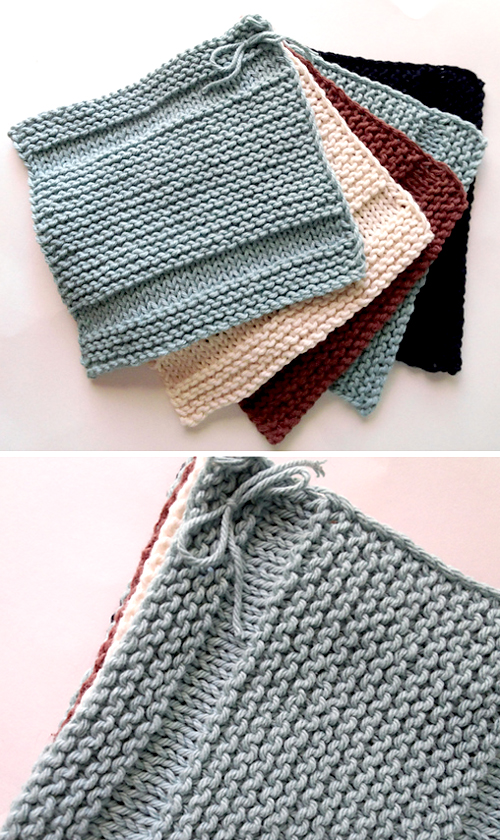
Copycat Dishcloth Free Knitting Pattern

Copycat Dishcloth free knitting pattern by Michelle Krause
Pattern design © Michelle Krause / Leah Michelle Designs

The Copycat Dishcloth by Michelle Krause is a free knitting pattern for a practical textured dishcloth worked with worsted-weight yarn.

Simple garter and stockinette sections create an attractive surface texture without requiring complicated techniques, making this a useful small project for everyday knitting or for using leftover cotton yarn.

Copycat Dishcloth Pattern at a Glance

Designer: Michelle Krause

Pattern: Copycat Dishcloth

Craft: Knitting

Category: Dishcloth / Washcloth

Yarn Weight: Worsted

Yardage: Approximately 80 yards (73 m)

Needles: US 8 (5 mm)

Gauge: 8 sts and 16 rows = 2 in in garter stitch

Size: One size

Construction: One piece

Techniques: Knit, purl, garter stitch and stockinette texture

Language: English

Pattern Availability: Free

About the Copycat Dishcloth

Copycat Dishcloth is a straightforward knitted cloth with a neat, textured appearance. The pattern combines familiar stitches to create visual interest while keeping the project manageable and repetitive.

Its compact size makes it a convenient project for practicing basic knitting skills, testing a new cotton yarn or making a quick handmade item for the kitchen.

Yarn and Needle Notes

The pattern uses approximately 80 yards (73 m) of worsted-weight yarn.

For a dishcloth intended for regular kitchen use, a washable cotton or cotton-rich yarn is a practical choice because it absorbs moisture well and can be washed frequently.

The recommended needle size is US 8 (5 mm). The listed gauge is 8 stitches and 16 rows = 2 inches in garter stitch.

A Useful Small Knitting Project

Dishcloth patterns are especially useful when you want a short project that does not require a large yarn investment. Copycat Dishcloth can also be a good way to use partial skeins left over from other worsted-weight projects.

Because the design relies on basic stitch textures rather than complicated shaping, it is also suitable for relaxed knitting while still producing a finished item with a distinctive surface.

Get the Free Copycat Dishcloth Pattern

The Copycat Dishcloth was designed by Michelle Krause of Leah Michelle Designs. The complete pattern is currently available as a free download.

Amazing Knitting does not reproduce the designer's complete knitting instructions. Use the button below to visit the original pattern page for the current authorized version.

Daisy Stitch Knit Washcloth - Free Pattern

Daisy Stitch Knit Washcloth - Free Pattern
Photos above © lynn nourish and nestle

Photos above © Lynn / Nourish + Nestle

The Daisy Stitch Knit Washcloth is a beautiful little project that combines practical cotton knitting with an eye-catching textured stitch. It is quick enough for a small project and makes a lovely handmade addition to a bathroom, kitchen or gift basket.

Designed by Lynn of Nourish + Nestle, the original pattern is still available free on the designer's website.

✓ Free Pattern Available

The complete Daisy Stitch Knit Washcloth pattern is currently available free from the original designer, Nourish + Nestle.

Daisy Stitch Washcloth at a Glance

Designer: Lynn / Nourish + Nestle

Project: Knitted washcloth or dishcloth

Finished Size: Approximately 10.5 × 10.5 inches

Yarn: Worsted-weight 100% cotton

Knitting Needles: US 6 (4 mm), or size needed for gauge

Finishing: Crochet edging in the original sample

What Makes the Daisy Stitch Special?

Daisy stitch creates small gathered clusters across the fabric, giving this washcloth its distinctive raised texture. The result looks much more decorative than plain stockinette or garter stitch while still working beautifully for a small practical project.

One useful tip from the designer is to avoid knitting too tightly when working the daisy stitch. A little flexibility in the stitches makes working the textured clusters much easier.

Choosing Yarn for Your Washcloth

The original project uses worsted-weight 100% cotton yarn. Cotton is an excellent choice for washcloths and dishcloths because it is absorbent, washable and gives textured stitches good definition.

Lynn used Lily Sugar'n Cream for the original project, but another suitable worsted-weight cotton can be substituted. Check your gauge if you want to stay close to the original finished dimensions.

A Quick Handmade Gift

Small cotton washcloths are useful projects when you want something satisfying without committing to a sweater or blanket. They are also practical for using individual balls of cotton yarn.

Knit several in coordinating colors and combine them with handmade soap or other bath items for a simple handmade gift set.

Get the Free Daisy Stitch Washcloth Pattern

The complete instructions belong to Lynn at Nourish + Nestle, so we do not reproduce the row-by-row pattern here. You can find the full free pattern, materials information and Daisy Stitch guidance directly on the designer's website.

Get the Free Pattern at Nourish + Nestle →

Knitting Tip

If the daisy clusters feel difficult to work, check your tension. Keeping the stitches comfortably relaxed makes it easier to work multiple stitches together.

More Knitting Ideas

Want to practice more interesting knitting textures? Explore these Amazing Knitting guides next:

Diagonal Rib Stitch - Easy Reversible Knitting Guide →

Explore Herringbone Knitting →

Learn the Twisted Rib Stitch →

Pattern credit: Daisy Stitch Knit Washcloth was designed by Lynn of Nourish + Nestle. Amazing Knitting provides an independent project guide and links knitters to the authorized original pattern. Complete copyrighted pattern instructions are not reproduced here.

Speed Bumps Knitting Pattern - Historical Pattern Guide

Speed Bumps - Free Pattern
Photo above © annamal

Speed Bumps is an older knitting design associated with designer Audrey Bochantin.

If this distinctive knitted design brought you to Amazing Knitting, this guide will help you identify the original pattern, understand the information that can still be verified, and avoid confusing it with several newer knitting patterns that use the same name.

The original pattern was previously referenced online through Ravelry, but we could not confirm a currently active authorized download for Audrey Bochantin's exact Speed Bumps pattern.

The good news is that the design can still be documented accurately as part of the knitting archive, and there are currently available free projects with a similar easy, textured-knitting appeal.

Pattern Availability Update

Historical references identify this design as Speed Bumps by Audrey Bochantin. We could not verify a current authorized download page for this exact pattern, so Amazing Knitting does not label it as currently free or provide copied instructions from archived third-party sources.

Speed Bumps at a Glance

Pattern: Speed Bumps

Designer: Audrey Bochantin

Craft: Knitting

Historical Gauge: 16 sts × 20 rows = 4 in in stockinette

Current Availability: Exact authorized source not verified

About the Original Speed Bumps Pattern

Speed Bumps appeared online as a knitting pattern by Audrey Bochantin and was circulated through knitting communities and pattern directories.

Older references still identify the designer and preserve a small amount of technical information, including a stockinette gauge of 16 stitches and 20 rows over 4 inches.

However, an old reference is not the same thing as a current authorized pattern source.

Because the original listing can no longer be reliably verified as an active download, Amazing Knitting does not reconstruct the missing pattern or reproduce instructions from unofficial copies.

Important: There Are Several Patterns Called Speed Bumps

The name Speed Bumps is not unique.

Today you may find completely different knitting patterns with the same or very similar title, including:

  • A women's top by Suzanne Bryan
  • A textured scarf or cowl by another designer
  • Dishcloth patterns using similar wording
  • Sock patterns and other accessories with "Speed Bumps" in the title

These should not be treated as alternate editions of Audrey Bochantin's original design.

Do Not Mix Pattern Specifications

One of the easiest mistakes with an older pattern is to search only by title and then accidentally combine information from another design.

For example, a current Speed Bumps top may have completely different:

  • Yarn weight
  • Needle size
  • Gauge
  • Garment construction
  • Sizes
  • Designer

For that reason, this guide only includes details that can be connected specifically to Audrey Bochantin's pattern.

What Can Still Be Verified?

Historical knitting references preserve two particularly useful pieces of information:

  • The pattern name was Speed Bumps.
  • The designer was Audrey Bochantin.

A historical pattern preview also records a stockinette gauge of:

16 stitches × 20 rows = 4 inches

We are deliberately not adding yarn, needle size, finished measurements or construction details unless they can be confirmed from the exact original source.

Why We Do Not Reconstruct the Missing Pattern

It may be tempting to use photographs, old project notes or snippets from the web to reverse engineer a complete set of instructions.

That would create two problems.

First, reconstructed instructions may not accurately represent the designer's original pattern.

Second, an unavailable pattern does not automatically become free to copy or republish.

Amazing Knitting therefore keeps this page as a useful historical pattern guide rather than pretending to provide the original directions.

If You Already Own the Original Pattern

If you downloaded or purchased a legitimate copy of Speed Bumps in the past, your own copy remains the best source for:

  • Cast-on numbers
  • Pattern repeats
  • Needle size
  • Yarn requirements
  • Shaping instructions
  • Finishing details

Keep that copy together with notes about the yarn and size you used, since the original online listing may be difficult to recover later.

Gauge Still Matters

The surviving historical gauge reference of 16 stitches and 20 rows over 4 inches suggests that gauge was an important part of the original design.

If you are working from a legitimate saved copy, make a swatch with the yarn and needle combination specified there rather than choosing needles based only on the photograph.

Your personal tension can change the finished dimensions substantially.

Why Pattern Names Can Be Confusing

Knitting pattern titles are not always unique identifiers.

Two independent designers may choose the same descriptive name without their projects being related.

For old patterns, always check at least:

  • Designer name
  • Publication date
  • Project category
  • Yarn weight
  • Pattern photograph

before assuming you have found the correct pattern.

A Current Free Pattern with the Same Name

There is currently another pattern called Speed Bumps by Suzanne Bryan.

It is a completely separate design: a loose-fitting women's top worked flat in two main panels.

Suzanne Bryan's version is currently available as a free pattern, but it should not be confused with the older Audrey Bochantin pattern featured on this Amazing Knitting page.

View Suzanne Bryan's Free Speed Bumps Pattern →

About Suzanne Bryan's Version

If you simply liked the name and want a currently available project, Suzanne Bryan's free Speed Bumps top offers a legitimate option.

Her pattern uses fingering-weight yarn and is worked flat in two main panels before being joined.

It is an independent design and is included here only as a clearly labeled alternative.

More Free Knitting Projects on Amazing Knitting

You can also continue with patterns whose current free sources have already been verified:

Explore More Knitting Patterns

Pattern Availability Summary

The historical Speed Bumps pattern associated with Audrey Bochantin can still be identified, but we could not confirm a current authorized download for that exact design.

For that reason, Amazing Knitting preserves this page as a pattern guide rather than presenting an unofficial copy or incorrectly linking to one of the unrelated patterns with the same title.

If an authorized Audrey Bochantin listing becomes available again, this page can be updated with a direct link to that source.

Editorial note: Speed Bumps is credited here to Audrey Bochantin based on historical pattern references. Amazing Knitting does not reproduce unavailable copyrighted instructions or substitute another designer's same-name pattern for the original. Please preserve the photograph and its existing credit from the previous version of this page.

Easy Knitting Projects for Beginners - Where to Start

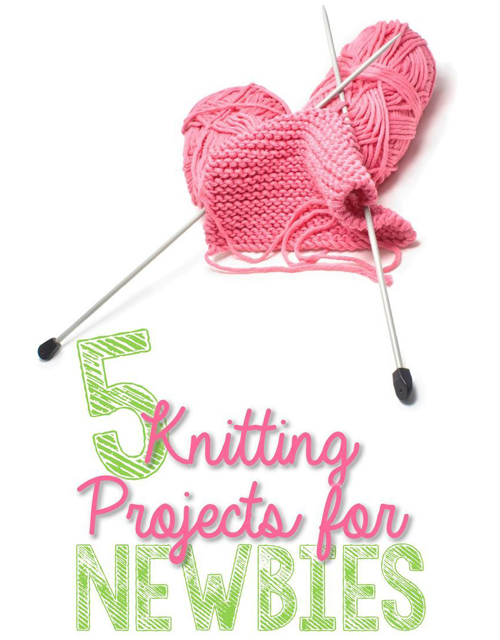
Knitting Projects for Newbies
Photo above © You put it up

Looking for your first knitting project can be more confusing than learning the knit stitch itself.

Hundreds of patterns are described as "easy" or "beginner friendly," but not every easy-looking project is suitable for someone who has only just picked up knitting needles.

A good first project should help you practice a small number of skills, give you visible progress, and be forgiving enough that a few uneven stitches do not ruin the finished result.

This guide will help you choose beginner knitting projects in a sensible order — from simple rectangular pieces to hats, baby projects, lace and your first sweater.

Beginner Knitting Guide

This page is an independent Amazing Knitting learning resource rather than one specific knitting pattern. Use it to choose a project that matches the skills you already know and the skill you want to learn next.

What Makes a Good First Knitting Project?

The best beginner project is not necessarily the smallest or the simplest-looking project.

A useful first project usually has several of these characteristics:

  • A manageable number of stitches
  • Little or no complicated shaping
  • A short repeating stitch pattern
  • Yarn that is easy to see and handle
  • Enough repetition to build muscle memory
  • A finished item you actually want to use

Your first few projects should gradually introduce new techniques rather than requiring you to learn everything at once.

Skills to Learn Before Your First Project

You do not need to know dozens of knitting techniques before starting.

For a very simple first project, focus on:

  • Making a slip knot
  • Casting on stitches
  • The knit stitch
  • Keeping stitches on the needle
  • Binding off
  • Weaving in yarn ends

Once those movements feel comfortable, add the purl stitch, decreases, increases and circular knitting one project at a time.

1. Start with a Garter Stitch Scarf

A garter stitch scarf remains one of the most practical first knitting projects.

When worked flat, you can create garter stitch simply by knitting every row.

That gives you time to practice:

  • Holding the needles
  • Controlling yarn tension
  • Recognizing stitches
  • Turning your work
  • Binding off

The shape is just a rectangle, so there is no garment fitting or complex shaping to worry about.

Why a Scarf Is Useful for Learning

Repetition is one of the fastest ways to make the basic knitting movement feel natural.

A scarf gives you hundreds of opportunities to repeat the same motion while still producing something useful.

The main disadvantage is that a full-length scarf can take time, so a small headband or cowl may be more motivating if you prefer quick projects.

2. Try a Dishcloth or Washcloth

A knitted washcloth is a good alternative when you want a project that finishes quickly.

It gives you a small square where you can practice basic stitches without worrying about exact garment fit.

Cotton yarn is commonly chosen for washable household cloths.

Once you know the knit stitch, a washcloth can also become your practice space for:

  • Purl stitches
  • Seed stitch
  • Ribbing
  • Simple eyelets
  • Textured stitch patterns

3. Knit a Simple Cowl

A cowl can feel more like a finished wearable than a practice square while still remaining relatively simple.

Some beginner cowls are worked flat as rectangles and seamed at the end. Others introduce circular needles and knitting in the round.

Choose the flat version first if circular knitting is still unfamiliar.

4. Try an Easy Baby Blanket

A baby blanket can be an excellent first larger project because it does not require body measurements or garment shaping.

Simple blanket patterns often repeat the same stitches across many rows, allowing you to improve consistency.

The main consideration is commitment: even a baby blanket contains many more stitches than a washcloth or headband.

Free Beginner Blanket Idea: Waffle Blanket

Once you are comfortable maintaining a repeating texture, explore the free Waffle Blanket pattern in the Amazing Knitting archive.

Explore the Waffle Blanket →

5. Move On to a Simple Hat

A basic hat introduces one important new idea: shaping.

Many hats gradually decrease stitches near the crown.

Depending on the pattern, a hat may be:

  • Worked flat and seamed
  • Worked in the round on circular needles
  • Finished with double-pointed needles or another small-circumference method

If you are completely new, a flat-knit hat may feel easier.

6. Try a Textured Scarf

After plain garter stitch feels comfortable, a textured scarf is a good way to learn something new without adding garment shaping.

You can practice new stitches while keeping the overall project shape extremely simple.

Free Next-Step Project: Morning Surf Scarf

Morning Surf Scarf is a verified free pattern already available in the Amazing Knitting archive.

It is a useful option when you are ready to move from plain knitting into a more decorative fabric.

View Morning Surf Scarf →

7. Learn Your First Lace Pattern

Lace does not have to mean an enormous, complicated shawl.

A small lace scarf is a much friendlier introduction because the stitch count is limited and the overall shape remains rectangular.

Before starting, become comfortable with:

  • Yarn overs
  • Basic decreases
  • Counting stitches
  • Reading repeat instructions

Free Beginner Lace Project: Little Leaf Lace Scarf

Little Leaf Lace Scarf by Sivia Harding is a particularly useful bridge into lace knitting because it combines a straightforward scarf shape with a repeating leaf motif.

Explore Little Leaf Lace Scarf →

8. Try Your First Triangle Shawl

A triangular shawl introduces increases and teaches you how knitted shaping develops row by row.

The project can look sophisticated even when the basic construction is relatively logical.

Free Shawl Idea: June Bunnies Shawl

June Bunnies Shawl is a customizable top-down triangular shawl and is especially useful when you are ready to explore simple lace.

Explore June Bunnies Shawl →

9. Try a Baby Cardigan

A baby cardigan can be a practical introduction to garment knitting because the project is much smaller than an adult sweater.

It may introduce:

  • Garment sizing
  • Increasing
  • Sleeves
  • Button bands
  • Reading a multi-size pattern

A top-down construction can be particularly attractive because you can see the garment shape develop as you work.

Free Baby Cardigan: Fuss Free Baby Cardigan

Louise Tilbrook's Fuss Free Baby Cardigan is a free DK-weight pattern with a top-down raglan construction and is a useful next step once your basic knitting feels secure.

Explore Fuss Free Baby Cardigan →

10. Knit Your First Simple Sweater

You do not need to wait years before making a sweater.

The important thing is to choose a design whose construction matches the skills you already have.

Look for patterns with:

  • Simple shapes
  • Clear sizing
  • Minimal complicated stitch work
  • Good construction notes
  • Few finishing steps

Free First-Sweater Idea: French Macaroon

French Macaroon by The Noble Thread is a small garter-stitch children's pullover with a simple boat-neck shape and uncomplicated construction.

It can be a useful way to understand how knitted pieces become a garment without beginning with a large adult sweater.

Explore French Macaroon →

A Simple Beginner Project Progression

A practical learning path:

1. Garter-stitch square or washcloth

2. Simple scarf or headband

3. Textured scarf or cowl

4. Simple blanket

5. Hat with basic shaping

6. Lace scarf or shawl

7. Baby cardigan

8. Simple sweater

This is not a rule. If one particular project excites you, motivation can be more valuable than following a perfect sequence.

What Yarn Is Easiest for Beginners?

A smooth, medium-weight yarn is often easier to learn with than extremely thin, fuzzy or novelty yarn.

You want to be able to see individual stitches clearly so that you can recognize mistakes.

Avoid choosing yarn only because it looks beautiful in the skein.

For your first project, ease of handling is usually more useful than an unusual texture.

Light Colors Can Be Easier to Read

Very dark yarn can make it difficult to see where one stitch ends and the next begins.

A light or medium color can make the structure clearer while you are learning.

Once you can recognize stitches easily, yarn color becomes much less important.

Don't Begin with Extremely Fuzzy Yarn

Mohair-like or heavily textured yarns can hide stitches.

They can also be difficult to unravel when you need to correct an error.

Save highly fuzzy yarn for a later project unless you are already comfortable identifying stitches by touch.

What Needles Should a Beginner Use?

Choose the needle size required by the pattern and appropriate for the yarn rather than buying one universal "beginner needle."

For practice knitting, medium-sized needles and medium-weight yarn can make the stitches easier to see and manipulate.

The important thing is that the needle should not make the fabric so tight that inserting the tip becomes difficult.

Wood or Metal Needles?

Both can work well.

Wooden or bamboo needles tend to offer more surface grip, which some new knitters find reassuring because stitches are less likely to slide away.

Smooth metal needles can feel faster once you become comfortable controlling the stitches.

There is no single correct material for every beginner.

Don't Choose a Project Only Because It Says "Easy"

Difficulty labels vary between designers.

Before starting, scan the skills required.

A project described as beginner-friendly may still require techniques such as:

  • Knitting in the round
  • Cables
  • Lace
  • Short rows
  • Picking up stitches
  • Seaming

None of these techniques is impossible for a beginner, but you should know what you are agreeing to learn.

Choose One New Skill at a Time

A particularly effective approach is to choose each new project because it adds one unfamiliar technique.

For example:

  • Project 1: knit stitch
  • Project 2: purl stitch
  • Project 3: ribbing
  • Project 4: decreases
  • Project 5: knitting in the round
  • Project 6: yarn overs and lace
  • Project 7: garment shaping

This prevents a single project from becoming a collection of ten new problems at once.

Make a Swatch When Size Matters

You can often practice freely on a scarf or washcloth.

But once you begin hats, sweaters, cardigans or fitted baby garments, gauge becomes much more important.

A gauge swatch tells you whether your personal knitting tension produces the dimensions expected by the pattern.

Learn How to Fix Mistakes

Becoming a confident knitter does not mean never making mistakes.

It means learning to recognize and repair them.

Useful early skills include:

  • Recognizing a dropped stitch
  • Unknitting stitches one at a time
  • Counting stitches
  • Checking pattern repeats
  • Using stitch markers
  • Using a lifeline in lace

Finish Your First Projects

A very simple finished project often teaches more than five ambitious projects abandoned halfway through.

Finishing teaches additional skills such as binding off, weaving in ends, seaming and blocking.

Choose something achievable enough that you are likely to reach that final stage.

Don't Worry About Perfect Tension

Your first rows may look different from your twentieth row.

That is normal while your hands are learning a completely new movement.

Concentrate on forming stitches consistently rather than trying to make your first project look machine-made.

More Beginner-Friendly Patterns on Amazing Knitting

Beginner Knitting Stitch Guides

When you want to practice new textures before using them in a full project, explore these Amazing Knitting stitch guides:

Explore More Easy Knitting Patterns

What Should You Knit First?

If you have never completed a project before, start with a small rectangle: a washcloth, headband or simple scarf.

If you already know knit and purl, choose a project that adds one new skill — perhaps ribbing, a simple decrease or a textured stitch.

If you can comfortably follow a basic pattern, move to a hat, shawl or baby cardigan.

The goal is not to remain a "beginner" until you know every technique. Each finished project should teach you enough to make the next project slightly more interesting.

Editorial note: This Amazing Knitting page is an independent beginner-knitting resource. It does not reproduce another publisher's pattern collection or copyrighted instructions. Individual project pages linked above identify and direct readers to their respective designers and authorized pattern sources. Please retain the photograph and original photo credit from the previous version of this page.

Discover More From the Archive

A fresh mix of knitting patterns and tutorials from the Amazing Knitting archive.

Finding patterns from the archive…