Skip to content

...

Showing posts sorted by relevance for query knitting for beginners. Sort by date Show all posts

Easy Knitting Patterns for Beginners - Free Projects & Guides

Knitting for Beginners: 50+ Easy Knitting Patterns
Photo above © allfreeknitting

Photo above © AllFreeKnitting

New to knitting? You do not need to start with a complicated sweater or an intimidating stitch pattern. The best beginner projects help you practice a few essential skills while still giving you something useful and beautiful to enjoy when you finish.

This Amazing Knitting beginner guide brings together easy projects, simple stitches and helpful resources from our knitting archive so you can choose a comfortable place to start.

New to knitting?

Start small, choose a project you genuinely want to make, and focus on learning one or two new skills at a time. You do not need to master everything before beginning your first project.

What Should a Beginner Knitter Learn First?

Before tackling more advanced projects, it helps to become comfortable with a few knitting basics: casting on, the knit stitch, the purl stitch, binding off and recognizing the stitches on your needles.

Once knit and purl stitches begin to feel natural, you can create an impressive variety of textures without learning complicated techniques.

Easy Free Knitting Projects for Beginners

Ready to make something? These beginner-friendly projects from the Amazing Knitting archive are good places to explore.

1. Easy Striped Baby Blanket

A baby blanket gives you plenty of repetition for practicing consistent tension. This striped design combines straightforward knitting with a simple textured border.

Explore the Easy Striped Baby Blanket →

2. Jordan Baby Blanket

If you want to see how basic knit and purl stitches can create beautiful texture, the Jordan Baby Blanket is an excellent example. No complicated colorwork is needed.

Explore the Jordan Baby Blanket →

3. Fuss Free Baby Cardigan

Ready to move beyond flat rectangular projects? A simple baby cardigan is a manageable way to begin exploring garment construction without committing to a full adult sweater.

Explore the Fuss Free Baby Cardigan →

4. French Macaroon Baby Sweater

Small garments are useful confidence-building projects because they let you practice garment techniques on a much smaller scale.

Explore the French Macaroon Baby Sweater →

5. Rice Stitch Baby Blanket

This textured blanket is a useful next step once you are comfortable switching between knit and purl stitches. The simple texture keeps the knitting interesting without requiring elaborate lace or colorwork.

Explore the Rice Stitch Baby Blanket →

Easy Knitting Stitches to Practice

You do not always need to make a complete project to improve your knitting. Small stitch swatches are a quick way to practice new techniques and learn how different combinations of knit and purl stitches change the fabric.

Twisted Rib Stitch

Learn how twisted stitches can create crisp, defined columns of ribbing that are useful for cuffs, hems and decorative details.

Learn the Twisted Rib Stitch →

Diagonal Rib Stitch

Once ordinary ribbing feels comfortable, diagonal rib is an interesting way to explore how simple stitch placement can create movement across knitted fabric.

Explore the Diagonal Rib Stitch Guide →

Herringbone Knitting

Herringbone knitting can be created in several ways. Our guide explains the family of herringbone-style techniques and helps you understand the distinctive woven-looking fabric they produce.

Explore Herringbone Knitting →

Beginner Knitting Tips

Do not worry about knitting quickly. Consistent stitches and understanding what is happening on your needles are more useful than speed.

Choose a light or medium-colored smooth yarn when learning because the individual stitches are easier to see. If you make a mistake, use it as an opportunity to examine the fabric rather than immediately starting the entire project again.

It also helps to keep track of repeated rows when working textured patterns. We have a simple guide for that too:

Easy Trick for Tracking Repeated Knitting Rows →

What Should You Knit First?

If this is your very first project, a scarf, washcloth or simple blanket is usually easier to manage because you can concentrate on your stitches without worrying about complicated shaping.

After that, try textured blankets, baby garments or other small projects that introduce one new technique at a time.

Beginner Tip

The easiest pattern is not necessarily the best first project. Choose something simple enough to learn from but interesting enough that you will actually want to finish it.

Keep Learning with Amazing Knitting

As your confidence grows, explore more free patterns, knitting stitches and tutorials throughout the Amazing Knitting archive. Start with the basics, practice regularly and add new techniques gradually.

Every finished swatch and project teaches you something new — and that is how beginner knitters become confident knitters.

Editorial note: This page is an original Amazing Knitting beginner resource. Patterns featured in linked project guides belong to their respective designers and publishers. Amazing Knitting provides educational guidance and links to authorized pattern sources rather than reproducing complete copyrighted pattern instructions.

Jamma Slippers – Free Easy Slipper Knitting Pattern for the Whole Family

Jamma Slippers free easy slipper knitting pattern for toddler child and adults

Jamma Slippers. Photos © MyJamma Knits

Jamma Slippers by MyJamma Knits is a free beginner-friendly slipper knitting pattern with sizes for almost the whole family, from toddlers and children through adult XL.

These cozy knitted slippers are worked flat and then seamed, so you don't need to knit them in the round. Two strands of worsted-weight yarn are held together throughout, creating a thick, warm fabric while also making the slippers a practical project for combining yarn from your stash.

Jamma Slippers Pattern Details

  • Designer: MyJamma Knits
  • Published: April 2020
  • Craft: Knitting
  • Category: Slippers
  • Pattern availability: Free download
  • Skill level: Beginner-friendly
  • Sizes: Toddler, Child, Adult Small, Adult Medium, Adult Large and Adult XL
  • Yarn: Two strands of worsted-weight yarn held together
  • Yardage: Approximately 100–400 yards (91–366 m), depending on size
  • Needles: 5 mm (US 8)
  • Gauge: 5 stitches = 1 inch in garter stitch
  • Construction: Worked flat and seamed
  • Language: English

Easy Knitted Slippers for the Whole Family

One of the best features of Jamma Slippers is the generous range of sizes included in the free pattern.

The instructions cover:

  • Toddler
  • Child
  • Adult Small
  • Adult Medium
  • Adult Large
  • Adult XL

This makes the pattern useful if you want to knit matching slippers for several members of the family without searching for a different pattern for every size.

A Beginner-Friendly Slipper Pattern

The designer describes Jamma Slippers as a good pattern for beginners.

Unlike sock patterns that require knitting small circumferences in the round, these slippers are knitted back and forth as flat pieces. The finished knitting is then folded and seamed to create the slipper shape.

This straightforward construction makes the project particularly appealing if you are comfortable with basic knitting but haven't yet tried traditional sock construction.

Two Strands of Worsted Yarn Held Together

Jamma Slippers use an easy yarn technique: two strands of worsted-weight yarn are held together and knitted as one.

Holding the yarn double creates a much thicker fabric than knitting with a single strand of worsted yarn. The resulting yarn combination behaves approximately like a super bulky yarn while still allowing you to use common worsted-weight yarns.

This also makes Jamma Slippers a useful stash-busting project. You can combine leftover yarns from other projects, provided that the yarns work together and allow you to achieve the required gauge.

Yarn Ideas for Jamma Slippers

Several worsted-weight yarns are suggested for the pattern, including:

  • Red Heart Super Saver
  • Lion Brand Wool-Ease
  • Cascade 220 Superwash
  • Caron One Pound

You don't have to use one of these exact yarns. A suitable worsted-weight yarn can work as long as you hold two strands together and match the pattern gauge.

For slippers, you may also want to consider durability and ease of washing when choosing yarn, especially if you plan to wear them often.

How Much Yarn Do You Need?

Yarn requirements vary considerably because the pattern ranges from toddler slippers to Adult XL.

The pattern listing gives an overall range of approximately 100–400 yards (91–366 metres).

Check the instructions for your chosen size before selecting yarn, particularly when using leftovers or combining two different colors.

Needles and Gauge

Jamma Slippers call for 5 mm (US 8) knitting needles.

The specified gauge is: 5 stitches = 1 inch in garter stitch.

Remember that the gauge is achieved while knitting with two strands of worsted yarn held together.

Gauge is important for slippers because it directly affects the finished length and width. If your stitches are significantly larger or smaller than the designer's gauge, your slippers may not fit as expected.

Worked Flat and Seamed

Jamma Slippers are worked flat rather than knitted continuously in the round.

After knitting, the slipper is shaped through finishing and seaming. This approach keeps the knitting itself straightforward and avoids the need for double-pointed needles or other small-circumference knitting techniques.

Take your time with the seams, since neat finishing can make a noticeable difference to both the appearance and comfort of knitted slippers.

A Great Stash-Busting Knitting Project

Jamma Slippers have roots in practical scrap-yarn knitting. The designer explains that she learned the basic slipper pattern from her mother-in-law around forty years ago, and her mother-in-law used leftover yarn from other projects to make the slippers.

MyJamma Knits later modified the toe shaping and adapted the design to create the wide range of sizes included in this free version.

That history fits the pattern perfectly: because two strands are held together, you can experiment with different color combinations and put partial skeins of compatible worsted yarn to good use.

Try Two Colors Together

Holding two strands together also creates an easy opportunity to play with color.

Use two strands of the same color for a solid look, or combine two different colors for a marled effect. A solid yarn paired with a variegated or self-striping yarn can create even more variation without changing the knitting itself.

Skills Used in Jamma Slippers

This project is especially approachable for knitters who know the fundamentals and want to make their first pair of slippers.

Useful skills include:

  • Basic knitting
  • Garter stitch
  • Working back and forth
  • Holding two strands of yarn together
  • Simple shaping
  • Binding off
  • Basic seaming and finishing

Why Knit Jamma Slippers?

Jamma Slippers combine several useful qualities in one free pattern: simple flat construction, beginner-friendly techniques, six sizes and the ability to use ordinary worsted-weight yarn held double.

They're also a practical choice for handmade gifts. Once you're familiar with the construction, you can use the same pattern to knit slippers for children and adults in different yarn combinations.

Get the Free Jamma Slippers Knitting Pattern

The complete Jamma Slippers by MyJamma Knits pattern is currently available as a free download from the designer's Ravelry store.

Get the Free Jamma Slippers Knitting Pattern

Pattern availability was checked when this article was updated. Availability on external websites may change over time.

How to Start Knitting - 5 Easy Steps for Beginners

How to Knit: Get Started Knitting
Photo above © Faithful Provisions - Kelly Hancock

Want to learn how to knit but don't know where to begin? You only need a few basic skills to get started.

Follow these five beginner steps in order, and use the linked tutorials whenever you need a closer look at a technique.

What You Need to Start Knitting

You don't need a large collection of supplies for your first practice piece. Start with:

  • A pair of knitting needles
  • A ball of yarn
  • Scissors
  • A yarn needle for finishing

For your first practice swatch, choose a yarn that is easy to see and comfortable to handle rather than a very fuzzy or highly textured yarn.

1. Make a Slip Knot

A slip knot is a simple way to place your first loop of yarn onto the knitting needle.

Once you can make one comfortably, you're ready to cast on the rest of your stitches.

Learn How to Make a Slip Knot →

2. Cast On Your Stitches

Casting on creates the first set of stitches on your needle and forms the starting edge of your knitting.

There are many cast-on methods, so don't worry about learning them all at once. Begin with one simple method and practice until it feels comfortable.

Learn How to Cast On →

3. Learn the Knit Stitch

The knit stitch is the most important basic knitting stitch to learn.

If you knit every row of a flat piece, you create garter stitch — one of the easiest fabrics for a beginner to practice.

Learn the Knit Stitch →

4. Learn the Purl Stitch

Purl is the second fundamental knitting stitch.

Once you understand both knit and purl stitches, you can begin creating many familiar stitch patterns, including stockinette, ribbing, seed stitch and more.

Learn the Purl Stitch →

5. Bind Off

When your knitting reaches the desired length, binding off secures the final row and allows you to remove the finished piece from the needles.

Try not to bind off too tightly, as this can make the finished edge noticeably narrower than the rest of your knitting.

Learn How to Bind Off →

Your first practice project: Cast on a small number of stitches, knit every row until you have a small square, then bind off. Don't worry about perfect tension yet — the goal is simply to become comfortable making stitches.

Ready for Your First Knitting Project?

Once you can cast on, make the knit stitch and bind off, you already have enough skills to try a simple garter-stitch project.

After that, learn the purl stitch and gradually explore ribbing, stockinette and other easy stitch patterns.

More Beginner Knitting Help

Editorial note: This is an original Amazing Knitting beginner guide. The external links above lead to additional educational tutorials for individual knitting techniques.

Easy Knitting Projects for Beginners - Where to Start

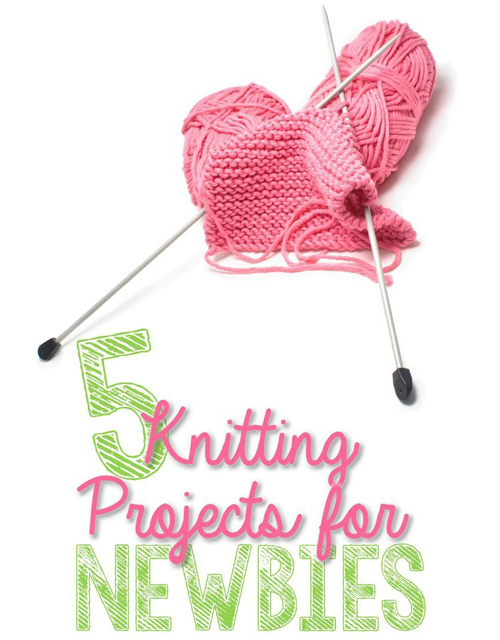
Knitting Projects for Newbies
Photo above © You put it up

Looking for your first knitting project can be more confusing than learning the knit stitch itself.

Hundreds of patterns are described as "easy" or "beginner friendly," but not every easy-looking project is suitable for someone who has only just picked up knitting needles.

A good first project should help you practice a small number of skills, give you visible progress, and be forgiving enough that a few uneven stitches do not ruin the finished result.

This guide will help you choose beginner knitting projects in a sensible order — from simple rectangular pieces to hats, baby projects, lace and your first sweater.

Beginner Knitting Guide

This page is an independent Amazing Knitting learning resource rather than one specific knitting pattern. Use it to choose a project that matches the skills you already know and the skill you want to learn next.

What Makes a Good First Knitting Project?

The best beginner project is not necessarily the smallest or the simplest-looking project.

A useful first project usually has several of these characteristics:

  • A manageable number of stitches
  • Little or no complicated shaping
  • A short repeating stitch pattern
  • Yarn that is easy to see and handle
  • Enough repetition to build muscle memory
  • A finished item you actually want to use

Your first few projects should gradually introduce new techniques rather than requiring you to learn everything at once.

Skills to Learn Before Your First Project

You do not need to know dozens of knitting techniques before starting.

For a very simple first project, focus on:

  • Making a slip knot
  • Casting on stitches
  • The knit stitch
  • Keeping stitches on the needle
  • Binding off
  • Weaving in yarn ends

Once those movements feel comfortable, add the purl stitch, decreases, increases and circular knitting one project at a time.

1. Start with a Garter Stitch Scarf

A garter stitch scarf remains one of the most practical first knitting projects.

When worked flat, you can create garter stitch simply by knitting every row.

That gives you time to practice:

  • Holding the needles
  • Controlling yarn tension
  • Recognizing stitches
  • Turning your work
  • Binding off

The shape is just a rectangle, so there is no garment fitting or complex shaping to worry about.

Why a Scarf Is Useful for Learning

Repetition is one of the fastest ways to make the basic knitting movement feel natural.

A scarf gives you hundreds of opportunities to repeat the same motion while still producing something useful.

The main disadvantage is that a full-length scarf can take time, so a small headband or cowl may be more motivating if you prefer quick projects.

2. Try a Dishcloth or Washcloth

A knitted washcloth is a good alternative when you want a project that finishes quickly.

It gives you a small square where you can practice basic stitches without worrying about exact garment fit.

Cotton yarn is commonly chosen for washable household cloths.

Once you know the knit stitch, a washcloth can also become your practice space for:

  • Purl stitches
  • Seed stitch
  • Ribbing
  • Simple eyelets
  • Textured stitch patterns

3. Knit a Simple Cowl

A cowl can feel more like a finished wearable than a practice square while still remaining relatively simple.

Some beginner cowls are worked flat as rectangles and seamed at the end. Others introduce circular needles and knitting in the round.

Choose the flat version first if circular knitting is still unfamiliar.

4. Try an Easy Baby Blanket

A baby blanket can be an excellent first larger project because it does not require body measurements or garment shaping.

Simple blanket patterns often repeat the same stitches across many rows, allowing you to improve consistency.

The main consideration is commitment: even a baby blanket contains many more stitches than a washcloth or headband.

Free Beginner Blanket Idea: Waffle Blanket

Once you are comfortable maintaining a repeating texture, explore the free Waffle Blanket pattern in the Amazing Knitting archive.

Explore the Waffle Blanket →

5. Move On to a Simple Hat

A basic hat introduces one important new idea: shaping.

Many hats gradually decrease stitches near the crown.

Depending on the pattern, a hat may be:

  • Worked flat and seamed
  • Worked in the round on circular needles
  • Finished with double-pointed needles or another small-circumference method

If you are completely new, a flat-knit hat may feel easier.

6. Try a Textured Scarf

After plain garter stitch feels comfortable, a textured scarf is a good way to learn something new without adding garment shaping.

You can practice new stitches while keeping the overall project shape extremely simple.

Free Next-Step Project: Morning Surf Scarf

Morning Surf Scarf is a verified free pattern already available in the Amazing Knitting archive.

It is a useful option when you are ready to move from plain knitting into a more decorative fabric.

View Morning Surf Scarf →

7. Learn Your First Lace Pattern

Lace does not have to mean an enormous, complicated shawl.

A small lace scarf is a much friendlier introduction because the stitch count is limited and the overall shape remains rectangular.

Before starting, become comfortable with:

  • Yarn overs
  • Basic decreases
  • Counting stitches
  • Reading repeat instructions

Free Beginner Lace Project: Little Leaf Lace Scarf

Little Leaf Lace Scarf by Sivia Harding is a particularly useful bridge into lace knitting because it combines a straightforward scarf shape with a repeating leaf motif.

Explore Little Leaf Lace Scarf →

8. Try Your First Triangle Shawl

A triangular shawl introduces increases and teaches you how knitted shaping develops row by row.

The project can look sophisticated even when the basic construction is relatively logical.

Free Shawl Idea: June Bunnies Shawl

June Bunnies Shawl is a customizable top-down triangular shawl and is especially useful when you are ready to explore simple lace.

Explore June Bunnies Shawl →

9. Try a Baby Cardigan

A baby cardigan can be a practical introduction to garment knitting because the project is much smaller than an adult sweater.

It may introduce:

  • Garment sizing
  • Increasing
  • Sleeves
  • Button bands
  • Reading a multi-size pattern

A top-down construction can be particularly attractive because you can see the garment shape develop as you work.

Free Baby Cardigan: Fuss Free Baby Cardigan

Louise Tilbrook's Fuss Free Baby Cardigan is a free DK-weight pattern with a top-down raglan construction and is a useful next step once your basic knitting feels secure.

Explore Fuss Free Baby Cardigan →

10. Knit Your First Simple Sweater

You do not need to wait years before making a sweater.

The important thing is to choose a design whose construction matches the skills you already have.

Look for patterns with:

  • Simple shapes
  • Clear sizing
  • Minimal complicated stitch work
  • Good construction notes
  • Few finishing steps

Free First-Sweater Idea: French Macaroon

French Macaroon by The Noble Thread is a small garter-stitch children's pullover with a simple boat-neck shape and uncomplicated construction.

It can be a useful way to understand how knitted pieces become a garment without beginning with a large adult sweater.

Explore French Macaroon →

A Simple Beginner Project Progression

A practical learning path:

1. Garter-stitch square or washcloth

2. Simple scarf or headband

3. Textured scarf or cowl

4. Simple blanket

5. Hat with basic shaping

6. Lace scarf or shawl

7. Baby cardigan

8. Simple sweater

This is not a rule. If one particular project excites you, motivation can be more valuable than following a perfect sequence.

What Yarn Is Easiest for Beginners?

A smooth, medium-weight yarn is often easier to learn with than extremely thin, fuzzy or novelty yarn.

You want to be able to see individual stitches clearly so that you can recognize mistakes.

Avoid choosing yarn only because it looks beautiful in the skein.

For your first project, ease of handling is usually more useful than an unusual texture.

Light Colors Can Be Easier to Read

Very dark yarn can make it difficult to see where one stitch ends and the next begins.

A light or medium color can make the structure clearer while you are learning.

Once you can recognize stitches easily, yarn color becomes much less important.

Don't Begin with Extremely Fuzzy Yarn

Mohair-like or heavily textured yarns can hide stitches.

They can also be difficult to unravel when you need to correct an error.

Save highly fuzzy yarn for a later project unless you are already comfortable identifying stitches by touch.

What Needles Should a Beginner Use?

Choose the needle size required by the pattern and appropriate for the yarn rather than buying one universal "beginner needle."

For practice knitting, medium-sized needles and medium-weight yarn can make the stitches easier to see and manipulate.

The important thing is that the needle should not make the fabric so tight that inserting the tip becomes difficult.

Wood or Metal Needles?

Both can work well.

Wooden or bamboo needles tend to offer more surface grip, which some new knitters find reassuring because stitches are less likely to slide away.

Smooth metal needles can feel faster once you become comfortable controlling the stitches.

There is no single correct material for every beginner.

Don't Choose a Project Only Because It Says "Easy"

Difficulty labels vary between designers.

Before starting, scan the skills required.

A project described as beginner-friendly may still require techniques such as:

  • Knitting in the round
  • Cables
  • Lace
  • Short rows
  • Picking up stitches
  • Seaming

None of these techniques is impossible for a beginner, but you should know what you are agreeing to learn.

Choose One New Skill at a Time

A particularly effective approach is to choose each new project because it adds one unfamiliar technique.

For example:

  • Project 1: knit stitch
  • Project 2: purl stitch
  • Project 3: ribbing
  • Project 4: decreases
  • Project 5: knitting in the round
  • Project 6: yarn overs and lace
  • Project 7: garment shaping

This prevents a single project from becoming a collection of ten new problems at once.

Make a Swatch When Size Matters

You can often practice freely on a scarf or washcloth.

But once you begin hats, sweaters, cardigans or fitted baby garments, gauge becomes much more important.

A gauge swatch tells you whether your personal knitting tension produces the dimensions expected by the pattern.

Learn How to Fix Mistakes

Becoming a confident knitter does not mean never making mistakes.

It means learning to recognize and repair them.

Useful early skills include:

  • Recognizing a dropped stitch
  • Unknitting stitches one at a time
  • Counting stitches
  • Checking pattern repeats
  • Using stitch markers
  • Using a lifeline in lace

Finish Your First Projects

A very simple finished project often teaches more than five ambitious projects abandoned halfway through.

Finishing teaches additional skills such as binding off, weaving in ends, seaming and blocking.

Choose something achievable enough that you are likely to reach that final stage.

Don't Worry About Perfect Tension

Your first rows may look different from your twentieth row.

That is normal while your hands are learning a completely new movement.

Concentrate on forming stitches consistently rather than trying to make your first project look machine-made.

More Beginner-Friendly Patterns on Amazing Knitting

Beginner Knitting Stitch Guides

When you want to practice new textures before using them in a full project, explore these Amazing Knitting stitch guides:

Explore More Easy Knitting Patterns

What Should You Knit First?

If you have never completed a project before, start with a small rectangle: a washcloth, headband or simple scarf.

If you already know knit and purl, choose a project that adds one new skill — perhaps ribbing, a simple decrease or a textured stitch.

If you can comfortably follow a basic pattern, move to a hat, shawl or baby cardigan.

The goal is not to remain a "beginner" until you know every technique. Each finished project should teach you enough to make the next project slightly more interesting.

Editorial note: This Amazing Knitting page is an independent beginner-knitting resource. It does not reproduce another publisher's pattern collection or copyrighted instructions. Individual project pages linked above identify and direct readers to their respective designers and authorized pattern sources. Please retain the photograph and original photo credit from the previous version of this page.

Easy Socks Two Needle – Free Flat Knit Sock Pattern


Easy Socks Two Needle free flat knitting pattern by Katerina Mushyn

Easy Socks Two Needle by Katerina Mushyn. Photos © Katerina Mushyn.

Easy Socks Two Needle by Katerina Mushyn is a clever free sock knitting pattern for anyone who wants to make cozy socks without double-pointed needles or knitting in the round.

Instead, each sock is worked flat on two straight needles as one simple piece, combining garter stitch with stretchy ribbing. The knitted piece is then folded and seamed to create the finished sock.

The original pattern includes adult shoe sizes 36 through 44 and is designed to be easy to resize. It uses Aran-weight yarn and 5 mm needles, making it a relatively quick sock project.

Best of all, Katerina Mushyn's original instructions are still available free on the Prjaga website, including an English version and accompanying video tutorial.

Easy Socks Two Needle at a Glance

  • Pattern: Easy Socks Two Needle
  • Designer: Katerina Mushyn
  • Published: November 2019
  • Category: Socks / cozy house socks
  • Construction: Worked flat on two needles
  • Shape: One-piece construction, then seamed
  • Yarn weight: Aran
  • Suggested yarn: Alize Superlana Midi
  • Yardage: Approximately 148–153 yd (135–140 m)
  • Needles: US 8 / 5 mm
  • Sizes: EU shoe sizes 36–44
  • Main stitches: Garter stitch and ribbing
  • Worked in the round: No
  • Double-pointed needles required: No
  • Languages: English and Russian
  • Video tutorial: Yes
  • Current availability: Free on the original Prjaga page

Socks You Can Knit on Two Straight Needles

Traditional sock knitting often involves double-pointed needles, magic loop or small circular needles.

Easy Socks Two Needle takes a completely different approach.

The sock begins as a flat piece of knitting. You work back and forth in rows using ordinary straight needles and create the shape through the arrangement of garter stitch and ribbing.

Once the knitting is finished, the piece is folded and sewn into its final sock shape.

A Beginner-Friendly Alternative to Knitting Socks in the Round

Many knitters like the idea of handmade socks but feel uncomfortable using several double-pointed needles at once.

This pattern removes that obstacle completely.

If you can knit flat pieces and sew a simple seam, you can explore sock construction without first learning circular sock knitting.

It can therefore be an interesting first sock project for a confident beginner.

One-Piece Flat Construction

One of the most interesting features of Katerina Mushyn's design is its one-piece construction.

You do not knit a separate sole, heel, toe and cuff and then assemble all of those pieces individually.

Instead, the shape develops in one flat knitted piece. After the knitting is complete, seaming transforms that piece into the recognizable sock.

This clever construction is also demonstrated in the designer's video tutorial.

Garter Stitch and Ribbing

The pattern combines two familiar knitting textures: garter stitch and ribbing.

Garter stitch creates a flexible fabric with distinctive horizontal ridges, while the ribbed section provides extra stretch.

The contrast between these textures also gives the socks their characteristic appearance.

Why Ribbing Works Well for Socks

Ribbing naturally contracts when relaxed and stretches when worn.

This elasticity is especially useful in socks because the knitted fabric needs to accommodate the foot while remaining comfortably in place.

The vertical ribbed texture also adds visual interest without requiring cables, lace or colorwork.

Aran-Weight Yarn Makes These a Quick Knit

Easy Socks Two Needle uses Aran-weight yarn, which is considerably thicker than traditional fingering-weight sock yarn.

Thicker yarn means fewer stitches are needed to build the fabric, so the project can progress relatively quickly.

The resulting socks are especially well suited to cozy indoor wear, lounging or wearing as warm house socks.

Original Yarn: Alize Superlana Midi

The original pattern uses Alize Superlana Midi.

This yarn is a blend of approximately 75% acrylic and 25% wool and has about 170 meters per 100 grams.

The combination provides warmth from the wool while retaining some of the practical characteristics of acrylic.

How Much Yarn Do You Need?

Published pattern information lists approximately 135–140 meters (148–153 yards).

That makes the socks a relatively small project compared with a sweater, blanket or shawl.

If substituting another yarn, compare yardage as well as ball weight. Two 100-gram yarns can contain very different lengths of yarn.

Choosing a Substitute Yarn

You do not have to use the exact original yarn.

Look for a suitable Aran-weight yarn that creates a comfortable, resilient fabric at approximately the required gauge.

For house socks, useful yarn qualities include:

  • Warmth
  • Comfort against the skin
  • Good elasticity
  • Reasonable durability
  • Easy washing
  • Clear stitch definition for the ribbing

Think About Durability

Socks experience more friction than many other knitted items.

If you plan to wear these frequently around the house, choose a yarn that can tolerate regular use rather than an extremely delicate fiber.

Keep in mind that these are knitted house socks rather than hard-soled slippers, so the knitted fabric itself will be in contact with the floor.

Needle Size

The original pattern specifies US 8 / 5 mm knitting needles.

Because the socks are worked flat, ordinary straight knitting needles can be used.

This is one of the pattern's biggest advantages for knitters who do not own or enjoy using double-pointed needles.

Gauge

Ravelry records the published gauge as approximately 17 stitches and 30 rows = 4 inches / 10 cm.

The current Prjaga English instructions display a different tension figure from the Russian section, so it is sensible to treat fit and the designer's sizing guidance as particularly important when substituting yarn.

Because socks need to fit the foot, making a small swatch before starting is worthwhile.

Sizes 36 Through 44

The pattern is designed to accommodate a useful range of adult shoe sizes:

EU 36, 37, 38, 39, 40, 41, 42, 43 and 44.

Katerina Mushyn also describes the construction as easy to resize and demonstrates the process in the accompanying video.

This makes the pattern much more versatile than a flat-knit sock written for only one foot size.

Measure the Foot Before Starting

Shoe-size numbers are useful, but actual foot measurements provide more information when adjusting a handmade sock.

If you are knitting for someone else, measure the intended wearer's foot when possible.

Pay particular attention to foot length and circumference so you can compare the developing fabric with the fit you need.

Worked Back and Forth in Rows

Every part of the knitting is worked flat rather than in a continuous spiral.

At the end of each row, turn the work just as you would when knitting a scarf or dishcloth.

This familiar movement makes the pattern approachable for knitters whose experience is mostly with flat projects.

No Double-Pointed Needles Required

You do not need double-pointed needles to make this design.

You also do not need to learn magic loop or manage a small circular needle.

That is the key difference between Easy Socks Two Needle and many conventional sock patterns.

The Seam Creates the Final Sock Shape

Because the sock begins as a flat piece, finishing is an important part of the construction.

The designer demonstrates how the knitted piece is folded and sewn in the accompanying video.

Take your time with this stage. A neat, flexible seam will make the finished sock more comfortable and polished.

Do Not Make the Seam Too Tight

A sock needs to stretch as it is pulled over the foot.

If the finishing seam is much tighter than the knitted fabric, it can restrict that stretch or create an uncomfortable ridge.

Keep your seaming tension secure but relaxed.

Is This Pattern Good for Beginners?

Easy Socks Two Needle is especially appealing to beginners because the actual knitting uses familiar flat-knitting techniques.

You should be comfortable with knit stitches, simple ribbing and basic finishing.

The unusual part is understanding how the flat rectangle-like structure becomes a sock, which is why the designer's video tutorial is particularly useful.

Skills That Will Help

  • Casting on
  • Knit stitch
  • Purl stitch
  • Garter stitch
  • Working ribbing
  • Working flat on straight needles
  • Binding off
  • Folding knitted fabric accurately
  • Seaming
  • Weaving in yarn ends

Video Tutorial Included

Katerina Mushyn provides a video tutorial alongside the written pattern.

This is particularly helpful for the finishing stage because you can see how the flat knitted piece is transformed into the finished sock.

Visual learners may find it useful to keep the video available while working through the first sock.

English and Russian Instructions

The original Prjaga page contains both Russian and English instructions.

If you open the source page and initially see Russian text, simply continue down the page to the heading Easy Socks Two Needle Knitting Pattern, where the English version begins.

Make the First Sock a Learning Project

If this construction method is new to you, treat the first sock as an opportunity to understand how the pieces fold together.

Once you have completed one sock, the second should be considerably easier because you already understand both the knitting sequence and the finishing method.

Keep Notes for the Second Sock

If you make any adjustments for foot length or fit, write them down.

Recording the number of rows or any sizing changes will help you make the second sock match the first.

Even small differences can be noticeable when the socks are worn as a pair.

A Useful Quick-Gift Pattern

Thick yarn, simple stitches and flat construction make these socks a practical candidate for quick gift knitting.

They can be especially appealing as cozy winter house socks, holiday gifts or a small project between larger knitting commitments.

Try a Solid or Heathered Yarn

A solid color makes the contrast between the garter ridges and vertical ribbing easy to see.

Heathered yarn can add subtle color variation while preserving the definition of the stitch textures.

You can also experiment with contrasting sections once you understand the construction, provided your yarns have similar weight and behavior.

House Socks vs. Slippers

You may have previously seen this design described online as ribbed slipper socks.

The designer's original English title, however, is Easy Socks Two Needle, and the pattern database categorizes the design as a mid-calf sock.

They certainly work well as cozy indoor socks, but using the designer's actual pattern name makes it much easier to locate and verify the original instructions.

Why This Two-Needle Construction Is Worth Trying

Sock knitting often appears more intimidating than it needs to be because many patterns immediately introduce knitting in the round, heel turns and multiple needles.

Katerina Mushyn's design shows another possibility: create the entire sock as flat knitting and let clever folding and seaming provide the final shape.

It is a useful technique to explore even if you eventually decide to learn traditional circular sock knitting.

Free Easy Socks Two Needle Knitting Pattern

Easy Socks Two Needle by Katerina Mushyn is currently available as a free knitting pattern.

The original pattern is published on the Prjaga knitting website and includes both Russian and English written instructions together with a video tutorial.

This is the exact Katerina Mushyn design featured on this Amazing Knitting page: the Aran-weight ribbed socks worked flat on two needles, available in adult shoe sizes 36–44.

Amazing Knitting gives priority to the original legitimate free source whenever the exact pattern remains available there.

Get the Free Easy Socks Two Needle Pattern

Visit the original Prjaga page for Katerina Mushyn's complete free instructions. The page begins in Russian; scroll down to Easy Socks Two Needle Knitting Pattern for the English version.

Get the Free Easy Socks Two Needle Pattern →

Easy Socks Two Needle is designed by Katerina Mushyn. Amazing Knitting does not reproduce the designer's copyrighted row-by-row instructions. The original pattern is currently available free on its published source page. Availability may change, so please check the linked source for the latest information.

Read Our Pattern Availability Policy →

Beach Baby - Free Dress and Hat Knitting Pattern

Beach Baby - Free Pattern
Photo above © DROPS Design

Beach Baby by DROPS Design is a charming short-sleeved baby and toddler dress with a matching knitted hat.

The design combines a simple summer silhouette with delicate patterned details, making it an attractive handmade outfit for warmer weather, special occasions or a thoughtful baby gift.

Originally published as DROPS Baby 10-7, the pattern includes several sizes from baby through approximately 3–4 years.

Best of all, the complete Beach Baby dress and hat knitting pattern is still officially available for free from DROPS Design.

✓ Free Pattern Availability

Beach Baby / DROPS Baby 10-7 remains available as a free official knitting pattern directly from DROPS Design.

Beach Baby Dress and Hat at a Glance

Pattern: Beach Baby

Pattern Number: DROPS Baby 10-7

Designer / Publisher: DROPS Design

Projects: Short-sleeved dress and matching hat

Sizes: 6/9 months, 12/18 months, 2 years, 3/4 years

Suggested Yarn: DROPS Safran

Yarn Amount: 150-150-200-200 g

Needles: 3 mm / US 2½

Gauge: 24 sts × 32 rows = 10 × 10 cm / 4 × 4 in in stockinette

Buttons: 4

Availability: Free official DROPS pattern

About the Beach Baby Knitting Pattern

Beach Baby is a coordinated child's outfit consisting of a knitted short-sleeved dress and matching hat.

The dress has a light, classic appearance that works especially well in cotton yarn, while the decorative pattern sections add enough interest to make the finished garment feel special.

The matching hat turns the dress into a complete handmade set.

Sizes Included

The official DROPS pattern includes four sizes:

  • 6/9 months — 62/68 cm
  • 12/18 months — 74/80 cm
  • 2 years — 86/92 cm
  • 3/4 years — 98/104 cm

This gives the design a useful size range from baby through early childhood.

Finished Measurements

The published finished bust measurements are:

46-54-60-66 cm / 18-21¼-23⅝-26 in

The published full lengths are:

37-47-51-55 cm / 14½-18-20-21⅝ in

Use the finished garment measurements when choosing a size rather than relying only on the child's age.

Original Yarn: DROPS Safran

The original pattern is written for DROPS Safran.

The published yarn quantities are:

  • 6/9 months: 150 g
  • 12/18 months: 150 g
  • 2 years: 200 g
  • 3/4 years: 200 g

The official sample is shown in white, but the design can naturally be adapted to other suitable colors.

Why Cotton Works Well for This Dress

A smooth cotton yarn is a natural choice for a short-sleeved warm-weather garment.

It can provide good stitch definition for the decorative pattern while keeping the finished dress relatively light.

When substituting yarn, look for a yarn that can reproduce the published gauge and has a comfortable feel suitable for children's clothing.

Needles and Gauge

The official pattern specifies:

3 mm / US 2½ needles

with a stockinette gauge of:

24 stitches × 32 rows = 10 × 10 cm / 4 × 4 in

Both circular and double-pointed needles are used in the published instructions.

Why Gauge Matters

Gauge is especially important for a child's dress because it affects the bust circumference, overall length and fit of the yoke.

If your gauge is tighter than the pattern, the finished dress will become smaller. If it is looser, the garment may become noticeably larger.

Make a gauge swatch before beginning, particularly if you are using a substitute yarn.

Patterned Sections

The design includes decorative stitch patterns represented in the official DROPS charts.

These patterned areas provide contrast with the simpler stockinette sections and give the dress its distinctive appearance.

When following the pattern, use the current official diagrams rather than relying on a copied chart from another website.

Reading DROPS Charts

If DROPS charts are new to you, take a moment to review the symbol key before starting the decorative sections.

Remember that chart symbols represent stitches and that the diagrams are read according to the direction of the row or round being worked.

Place stitch markers between repeats if that helps you keep track of the pattern.

The Yoke and Button Opening

The design includes a buttoned opening on the yoke.

The official instructions specify four buttonholes, with their placement adjusted for each size.

This detail gives the dress a practical opening while also becoming part of the decorative upper section.

Four Buttons

The materials list calls for:

4 buttons

Choose securely attached buttons that are appropriate for a child's garment.

Always check that buttons remain firmly sewn in place before the finished garment is worn.

Short Sleeves for Warmer Weather

The short sleeves are one of the features that distinguish Beach Baby from many heavier knitted children's dresses.

Combined with cotton yarn, they make the design particularly suitable for spring and summer layering.

The dress can be worn on its own in mild weather or over another layer when temperatures are cooler.

The Matching Hat

The included hat allows you to create a coordinated outfit using the same yarn and color.

You can make both pieces as a complete set or knit only the dress if that better suits your project.

A matching hat can also be a practical way to use remaining yarn after the dress is complete, provided you have enough yardage.

Choosing a Yarn Substitute

If DROPS Safran is not available to you, choose a substitute based on the fabric rather than brand name alone.

Check:

  • Gauge
  • Yarn weight
  • Fiber content
  • Softness
  • Washability
  • Stitch definition
  • Total meterage or yardage

The official DROPS page also provides tools for finding alternative yarns.

Choose a Color That Shows the Stitch Pattern

Smooth solid colors tend to make textured and openwork details easy to see.

Light colors can emphasize shadows and stitch structure, but the design can also look beautiful in pastel shades or stronger solid colors.

If you use a strongly variegated yarn, make a swatch first to see whether the color changes compete with the decorative motifs.

Skills You May Practice

  • Working stockinette stitch
  • Working garter stitch
  • Following charted stitch patterns
  • Working in the round
  • Using circular needles
  • Using double-pointed needles
  • Creating buttonholes
  • Garment shaping
  • Finishing a child's garment

Is Beach Baby Suitable for Beginners?

This is probably better viewed as an advanced beginner to intermediate project rather than a first-ever knitting project.

The basic stitches are manageable, but the garment also involves patterned sections, sizing, buttonholes and circular knitting.

If you already know knit and purl stitches and have completed a few simpler projects, Beach Baby can be an appealing next challenge.

Check the Pattern Before Casting On

Read through the complete official instructions once before beginning.

Pay particular attention to:

  • Your selected size
  • The stitch-pattern diagrams
  • Buttonhole placement
  • Where shaping begins
  • When circular or double-pointed needles are required

Highlighting or noting only the numbers for your chosen size can make a multi-size pattern easier to follow.

Is Beach Baby Still Free?

Yes.

Beach Baby / DROPS Baby 10-7 is still published as a complete free knitting pattern by DROPS Design.

The official page includes the materials, sizing, diagrams and complete knitting instructions.

Amazing Knitting does not reproduce the publisher's complete copyrighted row-by-row directions or charts. Use the official DROPS page for the full pattern.

Get the Free Beach Baby Pattern

Use the official DROPS Design page for the complete current pattern:

Get the Free Beach Baby Pattern →

More Free Baby and Child Knitting Patterns

Continue exploring these verified free designs in the Amazing Knitting archive:

Explore More Children's Knitting

Before You Cast On

Choose the size based on the finished measurements, check your gauge, and make sure you have enough yarn for both the dress and hat if you want the complete matching set.

Review the chart symbols and buttonhole placement before reaching the patterned yoke, and use the current official DROPS instructions throughout the project.

With its cotton yarn, short sleeves and matching hat, Beach Baby is a lovely example of a knitted outfit designed specifically for lighter, warmer-weather wear.

Pattern credit: Beach Baby / DROPS Baby 10-7 is a DROPS Design pattern. Amazing Knitting provides an independent project guide and does not reproduce the complete copyrighted charts or row-by-row knitting instructions. Please retain the existing photograph and its original credit from the previous Amazing Knitting post.

Cloud Slippers – Free Easy Slipper Knitting Pattern

Cloud Slippers free easy slipper knitting pattern by Adrienne Sullivan

Cloud Slippers. Photos © Adrienne Sullivan

Looking for an easy free slipper knitting pattern? Cloud Slippers by Adrienne Sullivan are soft, cozy slippers designed to knit up quickly with super bulky yarn and large needles.

This beginner-friendly pattern uses only basic knitting skills, and each slipper is worked flat in one piece before being folded and seamed. With four adult sizes for women and men, Cloud Slippers are a practical choice for cozy house slippers, quick gifts or a satisfying weekend knitting project.

Cloud Slippers Pattern Details

  • Designer: Adrienne Sullivan
  • Published: July 2019
  • Craft: Knitting
  • Category: Adult slippers
  • Pattern availability: Free download
  • Skill level: Beginner-friendly
  • Yarn weight: Super Bulky
  • Suggested yarn: Lion Brand Wool-Ease Thick & Quick
  • Yardage: Approximately 55–90 yards (50–82 m)
  • Needles: 10 mm (US 15)
  • Gauge: 8 stitches × 16 rows = 4 inches in garter stitch
  • Construction: Worked flat in one piece and seamed
  • Sizes: Four adult sizes for women and men

An Easy Slipper Knitting Pattern for Beginners

One of the best features of Cloud Slippers is how little knitting experience you need to make them.

The pattern uses basic knit and purl stitches along with casting on and binding off. There is no complicated sock construction and no need to knit a traditional turned heel.

This makes the project particularly appealing if you want to try knitting something for your feet without starting with a conventional sock pattern.

Worked Flat and Seamed

Cloud Slippers are knitted flat rather than in the round. Each slipper is made as one piece and then folded in half.

The final shape is created by seaming the knitted piece from the toe toward the heel. This simple construction eliminates the need for double-pointed needles or other small-circumference knitting techniques.

If knitting socks in the round feels intimidating, this construction can be a much more approachable way to make a cozy pair of knitted slippers.

Cloud Slippers Sizes

The free pattern includes four adult sizes:

  • Women's Small: US shoe sizes 5–7
  • Women's Medium: US shoe sizes 8–10
  • Men's Medium: US shoe sizes 8–10
  • Men's Large: US shoe sizes 11–13

Choose the size according to the recipient's shoe size and check the designer's original pattern information before beginning.

Super Bulky Yarn Makes Them a Quick Knit

The original Cloud Slippers were designed with Lion Brand Wool-Ease Thick & Quick, a super bulky yarn that produces a thick, warm fabric while knitting up rapidly on large needles.

Depending on the size, the pattern requires only approximately 55–90 yards (50–82 m) of super bulky yarn.

That relatively small yardage makes these slippers an interesting option when you have a partial ball of suitable super bulky yarn left from another project.

Needles and Gauge

The pattern calls for 10 mm (US 15) knitting needles. The specified gauge is:

8 stitches × 16 rows = 4 inches (10 cm) in garter stitch.

Because slippers need to fit the foot reasonably well, gauge is still worth checking even though this is a quick and simple project.

A One-Ball Slipper Project

Adrienne Sullivan designed Cloud Slippers so that a pair can be made with just one ball of the suggested Lion Brand Wool-Ease Thick & Quick or an equivalent amount of suitable super bulky yarn.

Combined with the large needles and simple construction, this makes Cloud Slippers particularly attractive when you need a relatively quick handmade gift.

Why Knit Cloud Slippers?

Cloud Slippers combine several features that make a small knitting project especially satisfying: thick yarn, large needles, simple stitches and minimal construction.

They are also available in both women's and men's sizes, so the same pattern can be used to make cozy slippers for several people.

Consider them for holiday gifts, house slippers, cold-weather knitting or simply as a quick project between larger sweaters and blankets.

A Prize-Winning Slipper Pattern

Cloud Slippers was the winner of the 2019 STIK X Lion Brand Pattern Contest.

Since its publication, the simple one-piece construction has made it a popular choice among knitters looking for an approachable pair of chunky knitted slippers.

Get the Free Cloud Slippers Knitting Pattern

The complete Cloud Slippers pattern by Adrienne Sullivan is currently available as a free download.

Get the Free Cloud Slippers Knitting Pattern

Pattern availability was checked when this article was updated. Availability on external websites may change over time.

Lamb Dance Kids Jacket - Free Knitting Pattern

Lamb Dance - Free Pattern
Photo above © DROPS Design

Lamb Dance by DROPS Design is a cheerful free children's cardigan knitting pattern featuring a flock of little sheep around the circular yoke.

The jacket is worked from the top down in DK-weight yarn, combining stockinette stitch, ribbing and stranded colorwork. With five sizes covering approximately 3 to 12 years, it is a playful project for knitters ready to combine garment construction with colorwork.

Best of all, the complete pattern remains free from DROPS Design.

✓ Free Pattern Availability

Lamb Dance / DROPS Children 34-1 is currently available as a free knitting pattern from DROPS Design. Use the official DROPS link below for the complete current instructions, charts and pattern information.

Lamb Dance Jacket at a Glance

Pattern: Lamb Dance / DROPS Children 34-1

Designer: DROPS Design

Pattern Number: me-054-bn

First Published: March 2019

Craft: Knitting

Category: Children's Cardigan / Jacket

Sizes: 3/4, 5/6, 7/8, 9/10 and 11/12 years

Yarn Weight: DK / 8 ply

Suggested Yarn: DROPS Merino Extra Fine or DROPS Lima

Main Needles: US 6 / 4 mm

Rib Needles: US 2½ / 3 mm

Gauge: 21 stitches × 28 rows = 4 in / 10 cm

Construction: Top down

Features: Circular yoke, stranded colorwork, sheep motif, button front

Availability: Free official pattern

About the Lamb Dance Jacket

Lamb Dance is a children's knitted cardigan from DROPS Design.

Its defining feature is the whimsical band of sheep worked around the circular yoke. Contrasting colors create the sheep and surrounding decorative pattern against the main background color.

Below the patterned yoke, the cardigan becomes much simpler, allowing the colorwork to remain the visual focus of the finished garment.

Five Children's Sizes

The official pattern includes five sizes:

  • 3/4 years — approximately 98/104 cm height
  • 5/6 years — approximately 110/116 cm
  • 7/8 years — approximately 122/128 cm
  • 9/10 years — approximately 134/140 cm
  • 11/12 years — approximately 146/152 cm

When choosing a size, compare the child's measurements with the finished measurements in the official DROPS pattern rather than relying only on age.

Finished Measurements

The published finished chest measurements are approximately:

64 – 68 – 74 – 78 – 80 cm

The corresponding finished body lengths are approximately:

35 – 39 – 43 – 47 – 51 cm

Consult the official schematic before choosing your size, especially when knitting the cardigan as a gift.

Yarn Choices

DROPS provides two suggested yarn options for Lamb Dance:

  • DROPS Merino Extra Fine
  • DROPS Lima

Both belong to DROPS Yarn Group B and fall within the DK-weight range, but their fiber compositions produce somewhat different fabrics.

DROPS Merino Extra Fine is a merino yarn, while DROPS Lima combines wool and alpaca.

If substituting another yarn, matching the required gauge is more important than simply selecting a yarn carrying the same weight label.

How Much Yarn Do You Need?

The main background color requires approximately 150 to 250 grams, depending on size.

Several contrasting colors are then used for the sheep and other elements of the colorwork.

Because the exact amounts vary by size and yarn choice, check the official DROPS materials table before purchasing your yarn.

Knitting Gauge

The official gauge is:

21 stitches × 28 rows = 4 × 4 inches / 10 × 10 cm

This gauge is measured in stockinette stitch using the larger needles.

Gauge is particularly important for children's garments because even a relatively small difference can noticeably change the finished chest circumference and length.

Needles

The pattern uses approximately:

  • 4 mm / US 6 circular needles for the main fabric
  • 4 mm / US 6 double-pointed needles or another suitable small-circumference method
  • 3 mm / US 2½ needles for the ribbing

The official pattern lists circular needle lengths appropriate for the different stages of the garment.

Needle sizes are recommendations. Adjust them if necessary to obtain the required gauge.

Top-Down Construction

Lamb Dance is knitted from the top down.

Top-down construction has several practical advantages. The yoke and upper body develop first, followed by the body and sleeves, reducing the amount of traditional garment seaming.

It can also make the overall construction easier to visualize because the cardigan grows from the neckline toward the hem.

The Circular Yoke

The sheep motif sits within a circular yoke.

Instead of using conventional armhole shaping with separately knitted front and back pieces, shaping is distributed around the upper body.

This creates the smooth rounded line that makes Nordic-style colorwork yokes so recognizable.

The Sheep Colorwork

The playful sheep are the signature feature of Lamb Dance.

The motif is created using stranded colorwork, following the chart supplied by DROPS Design.

Amazing Knitting does not reproduce that copyrighted chart here. Use the current official pattern while working the yoke.

Tips for Stranded Colorwork

If stranded knitting is relatively new to you, pay particular attention to your tension.

The unused yarn carried behind the work should have enough room to span the stitches without pulling the knitted fabric together.

Stretching the stitches gently along the right needle while changing colors can help keep the floats from becoming too tight.

Check the fabric frequently rather than waiting until the entire yoke is complete.

Swatch the Colorwork Too

Your tension when knitting stranded colorwork may differ from your ordinary stockinette tension.

If this happens, the yoke can become tighter than the body even when the stockinette portion matches the published gauge.

A small colorwork swatch can therefore be useful before beginning the main sheep section.

Button Front

Unlike the related Lamb Dance pullover, this version is a front-opening cardigan.

The official pattern calls for:

6 – 6 – 7 – 7 – 7 buttons

The exact number depends on the size being knitted.

Attach buttons securely, particularly when the garment is intended for a younger child.

Skills Used in Lamb Dance

Useful skills for this project include:

  • Casting on and binding off
  • Knit and purl stitches
  • Working ribbing
  • Knitting stockinette stitch
  • Working in the round
  • Working flat where required
  • Increasing and decreasing
  • Reading a colorwork chart
  • Stranded knitting
  • Managing yarn floats
  • Working a circular yoke
  • Making buttonholes
  • Picking up stitches where instructed
  • Weaving in multiple color ends neatly

Is Lamb Dance Suitable for Beginners?

A knitter who has already completed simple garments and is comfortable working in the round should find Lamb Dance an interesting introduction to a more decorative children's cardigan.

The colorwork yoke adds another skill layer, so a complete first-time knitter may prefer to practice stranded knitting on a small swatch before beginning.

DROPS also provides supporting technique information and video tutorials alongside many of its patterns.

A Matching Lamb Dance Collection

The cardigan is part of a small coordinated DROPS collection.

DROPS also published a Lamb Dance Sweater using the same playful sheep theme, as well as a matching Lamb Dance Hat.

This makes the design especially useful if you enjoy the motif and want to create coordinated children's knitwear.

Is Lamb Dance Still Free?

Yes.

Lamb Dance / DROPS Children 34-1 is currently available directly from DROPS Design as a complete free knitting pattern.

The official page contains the current instructions, diagrams, charts, measurements and supporting information.

Amazing Knitting provides this independent project guide rather than reproducing the complete DROPS instructions or charts.

Get the Free Lamb Dance Pattern

Use the official DROPS Design page for the complete free pattern:

Get the Free Lamb Dance Pattern →

More Free Children's Knitting Patterns

You can continue exploring Amazing Knitting for free children's cardigans, sweaters and colorwork projects.

Explore Free Children's Cardigans →

You can also browse:

Before You Start

Choose the size by comparing the child's measurements with the official DROPS schematic, then make a gauge swatch with your chosen Yarn Group B yarn.

If stranded knitting is new to you, practice carrying two colors before reaching the sheep yoke. Keeping the floats relaxed is important for maintaining a comfortable fit across the upper body.

Finally, always work from the current DROPS page so you have access to the latest version of the pattern and its supporting information.

Pattern credit: Lamb Dance / DROPS Children 34-1 was designed and published by DROPS Design. Amazing Knitting does not reproduce the designer's copyrighted charts or complete knitting instructions. Please use the official DROPS page for the free pattern.

Baby Ballerina Booties - Free Knitting Tutorial

Baby Ballerina Booties - Easy Pattern & Tutorial
Photos above © Creativa Atelier

These charming Baby Ballerina Booties are inspired by classic ballet flats and are knitted almost entirely in garter stitch.

The original tutorial was created by Marta Porcel of Creativa Atelier and shows how to make a soft pair of knitted baby shoes using straight needles.

The simple construction makes this a lovely next project for knitters who already know how to cast on, knit garter stitch, pick up stitches, decrease and bind off.

The complete step-by-step tutorial is still available for free on the original Creativa Atelier website.

✓ Free Original Tutorial Available

The original Baby Ballerina-style knitted shoe tutorial by Marta Porcel remains available free on Creativa Atelier. Amazing Knitting provides an independent project guide and links to the creator for the complete instructions.

Baby Ballerina Booties at a Glance

Original Tutorial: Knitted Baby Shoes - Garter Stitch Ballerinas

Creator: Marta Porcel

Source: Creativa Atelier

Project: Knitted baby ballerina shoes

Size Shown: 3–6 months

Main Stitch: Garter stitch

Needles: 4 mm / US 6 straight needles

Yarn: Wool or cotton suitable for 4 mm needles

Finishing: Seamed heel and knitted ankle ties

Availability: Free official web tutorial

About These Knitted Baby Shoes

The defining feature of this project is its ballet-flat shape.

Rather than creating a tall traditional baby bootie, the design sits low around the foot and uses knitted ties around the ankle to help keep the shoes in place.

The garter stitch texture gives the shoes a soft handmade appearance and also keeps the stitch pattern uncomplicated.

Designed for 3–6 Months

The free tutorial is written for approximately 3–6 months.

The designer notes that tying the shoes around the ankle can help them stay in place on a younger baby, while the natural stretch of knitting may allow some continued use as the baby's feet grow.

This should be understood as general fit flexibility rather than a set of officially graded additional sizes.

Yarn and Needles

The original tutorial recommends wool or cotton yarn suitable for 4 mm / US 6 needles.

Marta Porcel used leftover yarn from a matching baby romper project, demonstrating that these shoes can be a useful small project when you have suitable yarn remaining from another baby garment.

Before substituting yarn, check that the finished fabric is soft, comfortable and not excessively loose.

Straight Needles

One attractive feature for beginners is that the shoes are knitted on straight needles.

You do not need to learn double-pointed needles or Magic Loop before attempting this particular design.

The shaping is created while the work is flat, followed by a small amount of finishing.

Why Garter Stitch Works Well Here

Garter stitch is created by knitting every row when working flat.

Its ridged fabric is flexible and forgiving, which makes it useful for small baby accessories.

It also makes individual rows easy to count because the horizontal ridges are clearly visible.

How the Shape Develops

The project begins as a flat knitted piece and gradually develops into a three-dimensional shoe.

The construction can be understood in four broad stages:

  • Forming the upper ankle section
  • Working the central toe area
  • Shaping the sole
  • Adding the ankle ties and finishing the heel

For the exact stitch counts and row sequence, use the creator's original tutorial linked below.

The Central Toe Section

One useful technique in the pattern is temporarily working only a central group of stitches.

This allows the toe section to extend forward while the side stitches wait on the needles.

Later, stitches are picked up along the edges of this central section so the surrounding fabric can continue around it.

Picking Up Stitches

If you have never picked up stitches before, this project provides a small and manageable opportunity to practice.

The designer uses visible edge bumps from the garter-stitch fabric as convenient pickup points.

Keep the picked-up stitches evenly spaced so the sides of the shoe do not become puckered.

Shaping the Sole

The sole is formed by working a small central section while gradually joining it to the surrounding stitches.

Conceptually, this is similar to shaping techniques used in some socks and traditional baby booties.

The process turns the formerly flat knitting into a recognizable little shoe.

Ankle Ties

The finished ballerina shape includes knitted ties that wrap around the ankle.

They are both decorative and practical because the low-cut shoe has less fabric around the ankle than a conventional bootie.

Tie them gently and never tightly around a baby's ankle.

Skills Used in This Project

You should be comfortable with:

  • Casting on
  • Knit stitch
  • Garter stitch
  • Turning the work
  • Picking up stitches
  • Knitting stitches together for decreases
  • Binding off
  • Basic seaming

Is This a Good Beginner Project?

Yes, provided you already know the very basic knitting movements.

The project is more interesting than a plain rectangle but still avoids complicated lace, cables or circular knitting.

It can therefore work well as a first introduction to shaping.

Choose Soft Baby-Friendly Yarn

Because the shoes sit directly against a baby's feet, softness matters.

Look for yarn that is:

  • Comfortable against delicate skin
  • Easy to wash
  • Smooth enough to show the garter texture
  • Strong enough to tolerate gentle stretching

Always follow the care instructions for the yarn you choose.

Cotton or Wool?

Either can work when the yarn is appropriate for the required needle size.

Cotton can create a light, crisp shoe that works well in mild weather, while soft wool may provide additional warmth for cooler conditions.

Different fibers behave differently, so make a small swatch when changing substantially from the yarn used in the original project.

Good Project for Leftover Yarn

Baby shoes require much less yarn than a sweater or blanket.

If you have leftover yarn from a matching baby cardigan, romper or hat, a pair of ballerina booties can turn those leftovers into a coordinated accessory.

Just make sure you have enough of the same yarn to complete both shoes.

Make Both Shoes the Same Size

Small differences in tension are particularly obvious when two matching pieces sit side by side.

To help both shoes match:

  • Use the same needles
  • Use yarn from the same project or dye lot where possible
  • Count garter ridges carefully
  • Keep the ankle ties the same length
  • Compare the first and second shoe as you work

Why Counting Garter Ridges Helps

Garter stitch produces clear horizontal ridges.

These can act as a visual reference when checking whether the two booties contain the same amount of knitting.

This is often easier than trying to judge the size only by stretching the pieces next to each other.

Finishing the Heel

The original construction requires a small seam at the back of the heel.

Use the yarn tail neatly and avoid making a bulky ridge on the inside of the shoe.

Baby items benefit from smooth finishing because thick internal seams can be uncomfortable against small feet.

Check the Finished Shoes Carefully

Before using any handmade baby accessory, inspect the finished item.

Make sure:

  • No yarn ends are loose
  • The heel seam is secure
  • The ankle ties are firmly attached
  • There are no loose decorative pieces
  • The shoe fits comfortably without constricting the foot

A Note About Baby Safety

These booties are soft handmade footwear rather than protective walking shoes.

They are best suited to a non-walking baby and should always fit loosely enough that the toes and ankle are not compressed.

If you add your own decorations, avoid unsecured beads, buttons or other small detachable components.

When Can You Use Them?

Creativa Atelier presents the ballerina shoes as a light option for spring, fall and cooler summer evenings.

They can also make an attractive handmade accessory for photographs, visits or gift sets.

For colder weather, a more fully enclosed baby bootie may provide greater coverage.

Do Not Copy the Original Tutorial

Respect the Designer's Pattern Terms

Marta Porcel states that the original tutorial, pattern and images are protected under a Creative Commons Attribution-NonCommercial-NoDerivatives license and asks other websites to link to the tutorial rather than republish the pattern. For that reason, Amazing Knitting does not copy the complete stitch-by-stitch instructions here.

Is the Baby Ballerina Tutorial Still Free?

Yes.

The original Creativa Atelier article is still online and provides the free step-by-step tutorial for the 3–6 month size.

That makes this a verified current free source rather than an old Pinterest link with uncertain availability.

Get the Free Baby Ballerina Booties Tutorial

Visit Marta Porcel's original Creativa Atelier tutorial for the complete stitch counts, photographs and step-by-step instructions:

View the Free Baby Ballerina Tutorial →

Want Another Free Ballerina Bootie Pattern?

There is also a separate free knitting pattern called Baby Ballerina Booties by Adeline Too.

This is not the same pattern as the Creativa Atelier tutorial featured above, but it is a useful alternative if you prefer a downloadable PDF worked in the round.

Adeline Too's version uses DK-weight yarn, 4 mm / US 6 needles and has a published finished foot length of approximately 4 inches.

View the Free Adeline Too Pattern on Ravelry →

More Free Baby Booties on Amazing Knitting

Explore More Baby Knitting

Before You Cast On

Choose soft yarn suitable for 4 mm needles, make sure you are comfortable with garter stitch and basic decreases, and read through the complete original tutorial before starting.

Pay particular attention to the central toe construction and picked-up stitches, because those steps are what transform the flat knitted fabric into the little ballerina-shoe shape.

Most importantly, use the original Creativa Atelier page for the exact instructions so the creator's work, photographs and publishing terms are respected.

Pattern credit: The original Knitted Baby Shoes - Garter Stitch Ballerinas tutorial was created by Marta Porcel of Creativa Atelier. The existing Amazing Knitting photographs are credited to Creativa Atelier. Amazing Knitting provides an independent project guide and does not reproduce the creator's complete copyrighted knitting instructions or tutorial photographs.

Discover More From the Archive

A fresh mix of knitting patterns and tutorials from the Amazing Knitting archive.

Finding patterns from the archive…