Skip to content

...

Showing posts sorted by relevance for query easy sweater knitting. Sort by date Show all posts

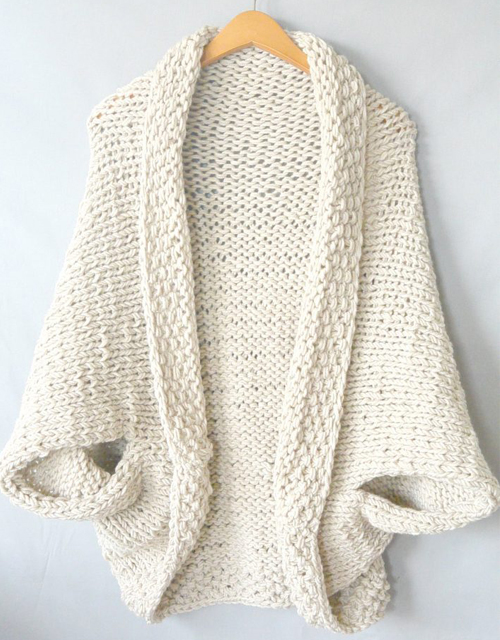
Easy Knit Blanket Sweater - Free Pattern

Easy Knit Blanket Sweater - Free Pattern
Photo above © (Jessica) Mama in a stitch

Easy Knit Blanket Sweater by Jessica Reeves Potasz of Mama In A Stitch is a wonderfully simple idea: knit a large, cozy rectangle, fold and seam it strategically, and turn it into an oversized cocoon-style cardigan.

There is no complicated traditional sweater construction here. The main fabric uses stockinette stitch with seed-stitch edging, making this an approachable wearable project for knitters who are comfortable with basic knit and purl stitches.

The finished sweater is intentionally oversized, soft and blanket-like rather than fitted — perfect if you love relaxed layering pieces.

Best of all, the complete pattern is still available for free from Mama In A Stitch. Below you'll find the key project details, construction notes, yarn-substitution advice and a link to Jessica's current free pattern.

✓ Free Pattern Availability

Easy Knit Blanket Sweater is currently available as a free knitting pattern on the designer's Mama In A Stitch website. An optional printable version may also be offered, but you can read the pattern for free on the official website.

Easy Knit Blanket Sweater at a Glance

Pattern: Easy Knit Blanket Sweater

Designer: Jessica Reeves Potasz

Source: Mama In A Stitch

First Published: October 2016

Category: Cardigan / Cocoon Sweater

Construction: Rectangle, worked flat, then folded and seamed

Main Stitch: Stockinette stitch

Edging: Seed stitch

Original Yarn: Lion Brand Woolspun (discontinued)

Original Yardage: Approx. 1,016 yards / 929 m

Needles: US 19 / 15 mm, 29-inch circular needle

Finished Measurement: Approx. 40.5 × 34 in

Style: Very oversized, loose and blanket-like

Availability: Free on Mama In A Stitch

About the Easy Knit Blanket Sweater

Jessica Reeves Potasz created the knitted Easy Knit Blanket Sweater after receiving requests for a knit version of her crocheted blanket sweater.

The concept is deliberately uncomplicated. Instead of shaping several separate sweater pieces, you create one large piece of knitted fabric and transform it into a wearable cocoon through folding and seaming.

The result looks much more involved than the actual construction.

It Really Is Almost a Knitted Blanket

The name “Blanket Sweater” is especially appropriate here.

The project is essentially a large knitted rectangle. Once the knitting is complete, the fabric is folded and seamed to create the cardigan shape and arm openings.

That makes it an interesting bridge between knitting a blanket and knitting your first wearable.

If traditional sweater shaping feels intimidating, this construction removes much of that complexity.

Beginner-Friendly Construction

You do not need to shape a neckline, calculate a raglan yoke or knit separate fronts, back and sleeves.

The important skills are much more familiar:

  • Knitting
  • Purling
  • Stockinette stitch
  • Seed stitch
  • Working flat
  • Basic seaming
  • Weaving in ends

For a newer knitter who wants to make something wearable, that simplicity is one of the biggest attractions of the design.

Stockinette Body with Seed-Stitch Edging

Most of the sweater is worked in stockinette stitch, creating the smooth, classic knitted surface you see across the oversized body.

Seed stitch is used at the edges to add texture and provide a visual frame around the simpler stockinette section.

This combination keeps the knitting repetitive enough to be relaxing without making the finished piece look completely plain.

The Sweater Is Intentionally Oversized

This is important to understand before beginning: Easy Knit Blanket Sweater is not designed as a fitted cardigan.

Jessica describes it as a heavy, blanket-like cocoon with a loose, drapey appearance.

The oversized dimensions are therefore part of the design rather than an indication that your sweater is turning out too large.

Finished Measurements

The published dimensions are approximately:

40.5 inches × 34 inches

Treat these measurements as especially useful information when deciding whether the original proportions will give you the amount of coverage and drape you want.

Fit Note

This is an intentionally oversized cocoon-style garment rather than a conventionally sized fitted sweater. Compare the published dimensions with a loose cardigan or wrap you already enjoy wearing before making major size modifications.

Original Yarn

The original sample used Lion Brand Woolspun.

The designer notes that the original Woolspun yarn has since been discontinued.

That does not mean the pattern is unavailable. The pattern itself remains free; only the original yarn needs to be substituted.

How Much Yarn?

The original project called for approximately:

1,016 yards / 929 meters

The original instructions used eight skeins of Woolspun at the specified skein yardage.

If you substitute another yarn, calculate by total yardage rather than assuming you will also need eight skeins. Skein sizes vary enormously between yarn brands.

Important Yarn Substitution Note

The Original Yarn Is Discontinued

Don't let that stop you from making the sweater. The pattern is still available, and this simple construction is well suited to yarn substitution. Focus on achieving a fabric and gauge similar to the designer's sample rather than searching indefinitely for discontinued Woolspun.

When choosing a substitute, consider:

  • Gauge
  • Finished fabric thickness
  • Drape
  • Total yardage
  • Fiber weight
  • How much the fabric stretches when worn

A very stiff substitute can dramatically change the character of this garment, because the original design depends on a loose, comfortable, blanket-like fabric.

Large Needles Make This an Interesting Quick-Knit Style

The original pattern calls for:

US 19 / 15 mm circular knitting needles

The designer specifies a 29-inch circular needle.

Although the sweater is worked flat rather than in the round, a circular needle is useful for comfortably holding the large piece of fabric.

Why Gauge Still Matters

A rectangle may seem more forgiving than a fitted sweater, but gauge still controls the dimensions of your finished garment.

Changing yarn thickness or needle size without checking the resulting fabric can make an already oversized design substantially larger or smaller.

This matters even more when substituting for a discontinued yarn.

Make a Swatch with Your Substitute Yarn

Before purchasing a large quantity of substitute yarn, make a generous stockinette swatch.

Check more than stitch count. Hold the swatch up and allow it to hang naturally.

Ask yourself:

  • Does it drape comfortably?
  • Is it too stiff?
  • Is it becoming excessively heavy?
  • Do you like the openness of the stitches?
  • Will the fabric feel comfortable as an oversized cardigan?

Those questions are especially useful for a garment whose appeal comes from its relaxed drape.

From Rectangle to Cardigan

The transformation happens after the main rectangle is complete.

The fabric is folded according to the designer's assembly instructions and partially seamed to create openings for the arms.

This simple finishing step turns what looked like a blanket on the needles into a cocoon-style cardigan.

Follow Jessica's original assembly photographs and instructions rather than guessing where to seam, because seam placement affects both the arm openings and how the cardigan hangs.

Two Buttons Help Hold the Sweater in Place

Jessica added two buttons near the upper portion of the garment.

They are both decorative and practical, helping the oversized sweater remain comfortably positioned when worn.

Because the knitted fabric is very open, the designer notes that the buttons can pass through the stitches without separately knitted buttonholes.

Choosing Buttons

Large buttons suit the scale of this oversized design particularly well.

Before permanently attaching them, temporarily position the buttons and try on the finished sweater.

This lets you check whether their placement gives you the amount of closure and drape you prefer.

Be Patient with Stockinette Curl

Stockinette naturally wants to curl at unsupported edges.

The textured edging and final construction help control the shape, but do not be alarmed if the unfinished rectangle does not lie perfectly flat while you are knitting it.

Watch the Weight of the Fabric

This is a substantial garment.

As the rectangle grows, its own weight can stretch the stitches and affect how the fabric looks compared with when it is resting on a table.

When checking length, allow the fabric to relax naturally rather than aggressively stretching it.

Why This Can Be a Good First Wearable

Many first sweater projects introduce several new skills at once: shaping, sleeve construction, neckline shaping, multiple sizes and seaming several separate pieces.

Easy Knit Blanket Sweater takes a different route.

The knitter can concentrate on making a large, consistent piece of fabric and learning simple assembly at the end.

That makes the project especially appealing if you can knit a rectangle confidently but have not yet attempted a traditional cardigan.

Is the Easy Knit Blanket Sweater Pattern Still Free?

Yes.

Jessica Reeves Potasz currently provides the complete Easy Knit Blanket Sweater pattern free on Mama In A Stitch.

You may also encounter an optional paid printable version. That does not change the availability of the free web pattern.

Amazing Knitting does not reproduce Jessica's complete copyrighted instructions. Use the official Mama In A Stitch article for the stitch counts, row-by-row instructions and assembly details.

Get the Free Easy Knit Blanket Sweater Pattern

Visit Jessica's original Mama In A Stitch tutorial for the complete free pattern, photographs and assembly instructions:

Get the Free Easy Knit Blanket Sweater Pattern →

You can also view the Ravelry record for project examples and additional pattern information:

View Easy Knit Blanket Sweater on Ravelry →

More Free Sweater and Cardigan Patterns

Looking for another approachable cardigan? Explore these free patterns already verified in the Amazing Knitting archive:

Or browse:

Before You Start

Remember that the original Woolspun yarn has been discontinued, but the pattern has not. There is no need to abandon this project simply because you cannot find the original yarn.

Choose a suitable substitute, make a swatch, and pay particular attention to drape and finished dimensions.

Then use the official Mama In A Stitch pattern for the exact stitch counts and assembly instructions.

If you are comfortable knitting a large rectangle, this project offers a clever way to turn those basic skills into a cozy wearable.

Pattern credit: Easy Knit Blanket Sweater was designed by Jessica Reeves Potasz of Mama In A Stitch. The existing photograph on this Amazing Knitting page is credited to Jessica / Mama In A Stitch. Amazing Knitting provides an independent project guide and does not reproduce the designer's complete copyrighted knitting instructions.

September Sweater - Free Nordic Knitting Pattern

September Sweater - Free Knitting Pattern
Photo above © Lisa Clarke

September Sweater / DROPS 150-15 is a classic Nordic-style knitted pullover featuring a patterned round yoke and comfortable everyday shape.

Designed by DROPS Design, the sweater combines traditional stranded colorwork with a practical wool-and-alpaca yarn, creating a warm garment with a timeless Scandinavian look.

The pattern includes a generous adult size range from S through XXXL, making it a useful choice for knitters looking for a traditional round-yoke sweater.

Best of all, the complete September Sweater knitting pattern is still officially available for free from DROPS Design.

✓ Free Official Pattern Available

September Sweater / DROPS 150-15 remains available as a complete free knitting pattern from DROPS Design. The official page includes the current written instructions, diagrams and sizing information.

September Sweater at a Glance

Pattern: September Sweater

Pattern Number: DROPS 150-15

Designer: DROPS Design

Project: Women's Nordic Pullover

Construction: Round yoke

Sizes: S - M - L - XL - XXL - XXXL

Original Yarn: DROPS Lima

Technique: Nordic stranded colorwork

Availability: Free official DROPS pattern

About the September Sweater

September Sweater is a traditional round-yoke pullover with Nordic colorwork concentrated around the upper body.

The design uses contrasting colors to create the recognizable geometric motifs associated with Scandinavian-style knitting while keeping the remainder of the sweater comparatively simple.

This balance makes the patterned yoke the visual focus of the finished garment.

A Classic Nordic Round Yoke

Round-yoke sweaters are popular because the patterned section flows continuously around the shoulders rather than being interrupted by conventional shoulder seams.

In September Sweater, shaping and colorwork work together to create the characteristic circular upper section.

Once the patterned yoke is complete, the simpler areas allow the Nordic motifs to stand out clearly.

Sizes Included

The official DROPS pattern includes:

S - M - L - XL - XXL - XXXL

Always select your size using the measurements provided in the current official pattern rather than relying only on your usual ready-to-wear clothing size.

Original Yarn: DROPS Lima

The sweater was designed for DROPS Lima.

Lima is a wool-and-alpaca yarn that works particularly well for warm garments and traditional colorwork.

The yarn gives the sweater warmth while allowing the contrasting Nordic motifs to remain clearly defined.

Can You Substitute the Yarn?

Yes, but gauge and fabric characteristics should guide your choice.

For a colorwork sweater, a successful substitute should:

  • Match the required gauge after washing
  • Provide clear stitch definition
  • Have enough body for the patterned yoke
  • Be comfortable for a warm pullover
  • Offer enough contrast between motif colors

DROPS also provides yarn-substitution information on the official pattern page.

Choose Colors with Enough Contrast

Color selection is particularly important in Nordic knitting.

If the two shades are too similar in value, the motifs may disappear even if the individual colors look beautiful separately.

Before beginning the yoke, place your yarns next to each other and check whether the motif color is clearly distinguishable from the background.

Try the Black-and-White Photo Test

A useful way to evaluate color contrast is to photograph the yarns together and view the image in grayscale.

If the shades remain easy to distinguish without color, they are more likely to produce clearly visible motifs in the finished sweater.

Working Stranded Colorwork

The patterned yoke requires working with more than one color.

The unused yarn travels behind the active stitches as a float while the other color is being knitted.

The goal is to keep those floats relaxed enough that the finished fabric remains flexible.

Avoid Tight Floats

One of the most common problems in stranded knitting is pulling the unused yarn too tightly behind the work.

Tight floats can cause the yoke to pucker and can reduce the finished circumference.

Spread recently worked stitches along the right needle before changing colors. This helps provide enough yarn for the float to span naturally across the back of the fabric.

Keep Your Colorwork Tension Consistent

Your stockinette gauge and colorwork gauge may not automatically match.

Some knitters tighten their stitches when working with two colors, while others produce a looser fabric.

For that reason, a colorwork swatch is more informative than testing only plain stockinette.

Swatch Before Starting

A sweater represents a substantial investment of yarn and knitting time.

Make a swatch using the yarn combination you intend to use and wash it according to the yarn-care instructions before taking final measurements.

If possible, include some stranded colorwork in your swatch so you can evaluate both gauge and color contrast.

Reading the Nordic Chart

The official DROPS pattern provides diagrams for the patterned sections.

Each square represents a stitch, and the chart shows where the contrasting colors are used.

Place markers between repeats if that helps you notice mistakes before they travel too far around the yoke.

Do Not Copy Charts from Other Websites

Always use the current diagrams on the official DROPS page.

Images reposted on Pinterest, social media or old pattern collections can be incomplete, resized or separated from important written instructions.

The official source is the best place to check both the chart and the accompanying directions.

Working the Body

Much of the body provides a calmer visual background for the decorative yoke.

This makes it a useful section for settling into an even knitting rhythm after the more concentration-intensive colorwork.

Continue checking the garment dimensions as you work rather than relying entirely on row counting.

Working the Sleeves

The sleeves continue the classic pullover silhouette and require careful attention to shaping.

If you are adjusting sleeve length, remember that changes can also alter the amount of yarn required.

Try the Sweater On During Knitting

Whenever the construction allows, checking the sweater against the wearer can help you evaluate body and sleeve length.

This is particularly useful if your row gauge differs slightly from the designer's gauge.

Skills Used in September Sweater

This project can help you practice:

  • Knitting a garment
  • Working in the round
  • Reading colorwork charts
  • Stranded knitting
  • Managing yarn floats
  • Round-yoke shaping
  • Increasing and decreasing
  • Working ribbed edges
  • Blocking colorwork

Is September Sweater Beginner Friendly?

If this is your first knitting project ever, a simpler scarf, hat or plain sweater will probably be easier.

However, knitters who are already comfortable with knit and purl stitches and knitting in the round may find a Nordic yoke sweater an excellent introduction to stranded colorwork.

The key new skill is maintaining relaxed, even tension while following the color chart.

A Good First Colorwork Sweater?

A round-yoke sweater can be an attractive first larger colorwork project because the decorative knitting is concentrated into defined sections.

Work slowly through the chart, use markers between repeats, and check the fabric regularly for puckering.

Correcting a colorwork mistake is much easier when you notice it within the same round.

Blocking Is Especially Important

Freshly knitted stranded colorwork can look slightly uneven.

Proper wet blocking often helps the stitches relax and allows the motif to settle into a smoother fabric.

Follow the washing instructions for your chosen yarn and avoid stretching the sweater beyond its intended measurements.

Check the Yoke After Blocking

The finished yoke should lie comfortably around the shoulders without severe puckering or excessive loose fabric.

This is one reason both gauge and float tension matter before you reach the finishing stage.

Why This Design Still Works

Nordic sweaters have a long-lasting visual appeal because the decorative motifs provide interest without depending heavily on short-lived fashion details.

September Sweater combines that traditional character with a practical everyday pullover shape.

Important: There Is Another Famous September Sweater

Same Name, Different Pattern

PetiteKnit also publishes a very popular design called September Sweater. It is a different sweater first published in 2019 and uses brioche stitch. The pattern featured on this Amazing Knitting page is the older Nordic September Sweater / DROPS 150-15. Do not mix the yarn, gauge, sizing or instructions from the two designs.

Is September Sweater Still Free?

Yes.

DROPS Design continues to publish September Sweater / DROPS 150-15 as a complete free knitting pattern.

The official page contains the current sizing, materials, diagrams and knitting instructions in multiple languages.

Amazing Knitting does not reproduce the complete copyrighted row-by-row directions or charts. Use the official DROPS page for the full pattern.

Get the Free September Sweater Pattern

Visit DROPS Design for the complete official pattern, diagrams and instructions:

Get the Free September Sweater Pattern →

More Free Sweater Patterns on Amazing Knitting

Explore More Nordic Knitting

Before You Cast On

Begin by choosing your size from the official DROPS measurements and making a gauge swatch with your intended yarn.

Check the contrast between your colors before committing to the full yoke, and practice keeping your floats relaxed if stranded knitting is new to you.

Most importantly, keep the official DROPS pattern open while you work so you are following the current diagrams and instructions rather than an incomplete copy from another website.

Pattern credit: September Sweater / DROPS 150-15 is a DROPS Design pattern. Amazing Knitting provides an independent project guide and does not reproduce the complete copyrighted pattern instructions or charts. Please retain the existing photograph and its original credit from the previous Amazing Knitting page.

Silk Gray Sweater - Free Knitting Pattern

Silk Gray - Free Pattern
Photo above © Gralina

Silk Gray by Gralina Frie is a relaxed knitted pullover designed around a simple silhouette, wide neckline and understated ribbed details.

The original sweater was knitted in a bourette silk-blend yarn, producing an airy fabric with a softly textured, slightly tweedy appearance.

Its uncomplicated shape makes Silk Gray especially appealing if you like casual sweaters that can be layered over a tank top, T-shirt or lightweight dress.

Best of all, Silk Gray is still officially available as a free knitting pattern from designer Gralina Frie on Ravelry.

✓ Free Pattern Available

Silk Gray by Gralina Frie remains listed as a free Ravelry download. Use the designer's current pattern page linked below for the complete original instructions.

Silk Gray Sweater at a Glance

Pattern: Silk Gray

Designer: Gralina Frie

Published: May 2013

Category: Pullover

Original Yarn: BC Garn Granite

Yarn Weight: Sport

Approx. Yardage: 1000 yd / 914 m

Gauge: 21 sts × 27 rows = 4 in in stockinette

Needles: 3 mm / US 2½ and 4 mm / US 6

Published Size: One size

Suggested Fit Range: Approx. 36–40 in

Availability: Free Ravelry download

About the Silk Gray Sweater

Silk Gray is designed as a relaxed everyday sweater rather than a heavily fitted garment.

Its appeal comes from the combination of a simple stockinette body, understated ribbed edges and the distinctive character of the original silk-blend yarn.

The wide neckline gives the sweater an easy layering shape, while the relatively simple surface lets the yarn provide much of the visual interest.

The Original Yarn

Gralina Frie's original sample was knitted with BC Garn Granite.

The designer used approximately:

4 skeins / 200 g

with an approximate total requirement of:

900 m / 1000 yd

The original light-gray yarn contributes significantly to the soft, understated appearance of the sweater.

What Makes the Yarn Interesting?

The original design uses a bourette silk-blend yarn.

Bourette or noil-style silk can have a more textured, matte and slightly rustic appearance than the perfectly smooth, glossy silk many knitters first imagine.

That subtle texture works particularly well with a simple stockinette garment because the yarn itself becomes part of the design.

Can You Substitute the Yarn?

Yes.

The designer specifically notes that the original yarn can be replaced with a suitable silk/wool or silk/merino blend that produces an even but airy fabric at the required gauge.

When substituting, concentrate on:

  • Matching gauge
  • Creating a lightweight fabric
  • Choosing yarn with comfortable drape
  • Checking the fiber against your skin
  • Buying enough total meterage or yardage

Gauge

The published stockinette gauge is:

21 stitches × 27 rows = 4 inches / 10 cm

Gauge is particularly important here because the original pattern is written as one size and the amount of ease changes depending on the wearer's measurements.

Needle Sizes

The original pattern specifies:

  • 3 mm / US 2½ for the ribbing
  • 4 mm / US 6 for the main body

These are starting points. Use the needle size that allows you to obtain the published gauge with your chosen yarn.

Why Two Needle Sizes?

Using a smaller needle for ribbing helps the edge look neat and gives it a little more structure.

The larger needle used for the main fabric allows the stockinette section to remain lighter and more relaxed.

This contrast is especially useful in a sweater designed to have an airy rather than dense fabric.

One-Size Pattern

Silk Gray is published in one size.

The designer describes it as suitable for approximately 36–40 inch sizing, depending on the amount of ease you prefer.

On a smaller wearer it will appear more oversized, while toward the upper end of the suggested range it will have a closer fit.

Fit Note

Because this is an older one-size design rather than a modern extensively graded sweater pattern, compare your measurements with the designer's published information before choosing the project.

The Wide Neckline

One of the recognizable features of Silk Gray is its wide, flattering neckline.

A small ribbed detail finishes the neck without creating a heavy collar.

The result suits the casual layering character of the sweater and allows a shirt, tank or dress neckline underneath to remain visible.

1×1 Rib Details

Small sections of 1×1 ribbing are used around the edges.

Alternating knit and purl stitches creates an elastic edge while providing a subtle visual contrast with the stockinette body.

Keep the ribbing tension even, particularly around the neckline.

An Optional Open Side Detail

In the designer's original version, the lower ribbing is left open at the sides.

Gralina Frie notes that this feature is optional.

That makes it possible to preserve the original split-edge appearance or adapt the finishing according to your preference while following the designer's instructions.

Why Swatching Matters with Silk Blends

Different silk blends can behave very differently.

Some have substantial drape, while others contain enough wool to provide more bounce and structure.

Knit a reasonably large swatch and wash it in the same way you intend to care for the finished sweater.

Measure gauge only after the fabric has relaxed and dried.

Check Drape as Well as Gauge

Two yarns can produce the same number of stitches per inch while creating very different sweaters.

One may feel firm and structured while another falls softly against the body.

For Silk Gray, aim for the light, relaxed character intended by the designer rather than matching the gauge with an excessively rigid fabric.

Stockinette Makes Yarn Choice Important

The simple main fabric means there is little lace or cable work competing with the yarn.

This makes Silk Gray a useful project for a yarn with subtle texture, tweedy flecks or gentle natural variation.

A very smooth yarn will create a cleaner appearance, while a rustic silk blend can move the finished sweater closer to the character of the original sample.

Is Silk Gray Beginner Friendly?

The designer describes Silk Gray as an uncomplicated sweater, and the simple stockinette-and-rib combination makes it approachable compared with heavily patterned garments.

However, it is still a sweater project.

You should be comfortable with:

  • Knitting and purling
  • Stockinette stitch
  • 1×1 ribbing
  • Reading garment instructions
  • Checking gauge
  • Basic shaping
  • Finishing a garment

An adventurous beginner who has already completed a few smaller projects may find the straightforward design a useful first step into adult sweater knitting.

Choose Your Ease Before Starting

Because the pattern is written in one size, think about the silhouette you want before investing in yarn.

If you prefer an oversized sweater, compare your bust measurement with the finished dimensions and the designer's suggested fit range.

If you prefer a closer-fitting garment, make sure the resulting amount of ease will still allow comfortable movement.

Layering Ideas

The designer specifically presents Silk Gray as an easy casual layering piece.

Depending on yarn and season, it can be worn over:

  • A simple tank top
  • A T-shirt
  • A lightweight summer dress
  • A long-sleeved base layer in cooler weather

Blocking the Finished Sweater

Blocking is particularly useful when the project contains silk.

Follow the care instructions for your specific yarn and avoid assuming that every silk blend should be treated identically.

Support the weight of the wet garment carefully so it does not stretch unexpectedly.

Lay it out to the intended dimensions and allow it to dry completely.

Important: Don't Confuse It with Another Silk Gray Pattern

Same Name, Different Pattern

A separate knitting pattern called Silk gray was published by Irina Gorbacheva in 2021. That is a different sweater with different yarn, gauge, needles and sizing. The Amazing Knitting page featured here refers to the earlier Silk Gray by Gralina Frie, first published in 2013.

Is Silk Gray Still Free?

Yes.

Gralina Frie's current Ravelry pattern store continues to list Silk Gray as a free knitting pattern.

The pattern record also identifies the design as a pullover first published in May 2013.

Amazing Knitting does not reproduce the designer's complete copyrighted knitting instructions. Use the official designer listing for the full pattern.

Get the Free Silk Gray Pattern

Visit Gralina Frie's official Ravelry listing for the complete free pattern:

Get the Free Silk Gray Pattern →

More Free Sweater Patterns on Amazing Knitting

Explore More Sweater Knitting

Before You Cast On

Start by checking whether the one-size fit works for the silhouette you want.

Then make a generous stockinette swatch, wash it, confirm the 21-stitch × 27-row gauge, and evaluate the drape of your chosen yarn.

A successful substitute does not need to duplicate the original yarn exactly, but it should create the light, comfortable and relaxed fabric that gives Silk Gray its distinctive character.

Pattern credit: Silk Gray was designed by Gralina Frie and first published in 2013. Amazing Knitting provides an independent project guide and does not reproduce the designer's complete copyrighted knitting instructions. Please retain the existing photograph and its original credit from the previous Amazing Knitting page.

103 Free Knitting Patterns for Women, Men & Kids

103 free knitting patterns for women men and kids including hats scarves sweaters socks and baby knits

103 Free Knitting Patterns collection. Original collection by Alea Milham / Premeditated Leftovers.

Looking for your next knitting project? This collection brings together 103 free knitting patterns for women, men and children, with ideas ranging from quick hats and scarves to sweaters, socks, boot cuffs and adorable baby knits.

The original collection was curated by Alea Milham for Premeditated Leftovers and includes projects for different skill levels, from approachable beginner-friendly knits to more detailed intermediate and advanced patterns.

Rather than reproducing the original list here, this guide will help you understand what you can find in the collection, choose a project that matches your skills and yarn, and explore additional free knitting resources on Amazing Knitting.

What's Included in the 103 Free Knitting Patterns?

One of the strengths of this collection is its variety. It is not limited to one type of garment or one age group.

The original roundup is organized into patterns for women, men, kids and babies, covering everything from accessories to garments.

Free Knitting Patterns for Women

The women's section offers one of the widest selections in the original collection, with projects for both quick knitting and more ambitious wardrobe pieces.

Categories include:

  • Knitted hats and berets
  • Scarves, cowls and infinity scarves
  • Sweaters, cardigans and wraps
  • Socks
  • Boot cuffs

This variety makes the collection useful whether you want a small accessory for a weekend project or a larger garment that will keep your needles busy for longer.

Free Hat Knitting Patterns for Women

Hats are a practical place to begin when browsing a large knitting collection because they are generally smaller than sweaters and offer opportunities to practice shaping, knitting in the round, texture and decorative techniques.

The original roundup includes simple hats as well as more detailed designs featuring lace, unusual shaping and other techniques.

When choosing a hat pattern, check the recommended yarn weight and finished circumference rather than selecting a project based only on appearance.

Free Scarf and Cowl Knitting Patterns

Scarves and cowls are another major category in the collection.

They range from relatively straightforward designs to projects using lace and more decorative stitch patterns.

A scarf can be particularly useful for practicing a new technique because fit is generally less critical than it is with a sweater, sock or fitted hat.

Free Sweater Knitting Patterns for Women

If you are ready for a larger project, the original collection also includes women's sweaters and wraps.

Garment knitting requires a little more planning than making a scarf or hat. Before choosing a sweater, check:

  • The available finished sizes
  • The designer's intended ease
  • Gauge and recommended yarn weight
  • Construction method
  • Required techniques
  • Approximate yarn quantity

Taking time to understand these details before casting on can prevent many common fit problems later.

Free Sock and Boot Cuff Patterns

The women's portion of the collection also includes knitted socks and boot cuffs.

Socks are excellent projects for learning small-circumference knitting, heel construction and shaping, while boot cuffs can provide a much quicker introduction to knitting accessories for the legs.

If you are new to sock knitting, look carefully at the listed difficulty level and techniques before choosing your first pair.

Free Knitting Patterns for Men

Finding a varied group of free men's knitting patterns can sometimes be more difficult than finding women's accessories, so the men's section is particularly useful.

The original roundup includes:

  • Men's hats
  • Scarves
  • Sweaters and pullovers
  • Socks
  • Slippers

These range from straightforward everyday accessories to more involved cable and garment projects.

Free Hat Patterns for Men

A knitted hat is one of the most useful handmade gifts for men because it can be practical, relatively quick and easy to customize through yarn and color.

The collection includes both simple designs and hats using techniques such as cables, earflaps and more distinctive shaping.

For gift knitting, pay particular attention to head circumference and the amount of negative ease intended by the designer.

Free Men's Scarf Patterns

Men's scarves offer plenty of room to experiment with texture while keeping construction relatively simple.

When choosing a scarf for everyday wear, consider not only the stitch pattern but also the fiber. Softness matters because the finished scarf will be worn directly against the neck.

Free Men's Sweater Patterns

The roundup also includes men's sweaters, ranging from simpler garments to cable designs.

Before beginning any sweater, take accurate body measurements and compare them with the pattern's finished dimensions.

Do not automatically choose a size based only on a familiar clothing label. Knitting-pattern sizing and intended ease can vary significantly between designers.

Free Men's Sock and Slipper Patterns

Socks and slippers can make useful handmade gifts and allow you to work with smaller amounts of yarn than a full sweater.

The original collection includes several styles and difficulty levels, so check construction details before deciding which one best matches your experience.

Free Knitting Patterns for Kids and Babies

The children's section adds another useful group of projects to the collection, including accessories, garments and footwear.

Categories include:

  • Kids' and baby hats
  • Children's scarves
  • Baby and kids' sweaters
  • Baby booties
  • Children's slippers and socks

Small children's projects can be satisfying choices when you want to practice garment or accessory construction on a smaller scale.

Free Baby and Kids' Hat Patterns

Children's hats are among the most playful projects in the original roundup.

The collection includes simple styles alongside novelty and character designs, making this category particularly useful when you are knitting a personalized gift.

Always choose size by the designer's measurements whenever possible, since children's head sizes can vary considerably even at the same age.

Free Sweater Patterns for Babies and Kids

Baby and children's sweaters provide an opportunity to practice garment construction without the yarn commitment of a full adult sweater.

When selecting a children's garment, consider washability as well as softness. Easy-care yarn can make a handmade sweater much more practical for parents.

Free Baby Booties and Slipper Patterns

The collection finishes with small footwear projects for babies and children, including booties, slippers and socks.

These can be excellent gift projects because they are compact and often require relatively little yarn.

Fit still matters, however, so check gauge and finished measurements carefully even when the project is tiny.

Easy, Intermediate and Advanced Knitting Patterns

Another useful feature of the original 103-pattern roundup is that many projects are identified by general difficulty level: Easy, Intermediate or Advanced.

Treat those labels as a starting point rather than an absolute rule. Difficulty can feel very different depending on which techniques you already know.

How to Choose a Pattern for Your Skill Level

Instead of looking only at a pattern's difficulty label, scan its techniques before starting.

For example, a project may involve:

  • Knitting and purling
  • Working in the round
  • Increasing and decreasing
  • Cables
  • Lace and yarn overs
  • Colorwork
  • Short rows
  • Picking up stitches
  • Seaming
  • Garment shaping

A pattern labeled intermediate may feel quite manageable if you already know its main techniques, while an otherwise simple pattern can feel challenging if it introduces several skills that are new to you.

Good Projects for Beginning Knitters

If you are still building confidence, start by looking for patterns with straightforward construction and familiar stitches.

Scarves, simple cowls, boot cuffs and basic hats can often provide a manageable next step after learning the knit and purl stitches.

Once those skills feel comfortable, you can gradually add shaping, circular knitting, cables, lace or garment construction.

Choosing Yarn for a Free Knitting Pattern

Finding a free pattern is only the beginning. Choosing appropriate yarn is one of the most important steps before casting on.

Start with the yarn weight and gauge specified by the designer rather than choosing a substitute based only on appearance.

Two yarns described with the same general weight can still behave differently because of fiber content, construction and elasticity.

Can You Substitute the Recommended Yarn?

In many knitting projects, yes—but substitution should be based on more than matching the yarn-weight label.

Compare:

  • Gauge
  • Fiber content
  • Yardage per ball or skein
  • Fabric drape
  • Elasticity
  • Care instructions

Make a swatch for projects where finished size matters, especially sweaters, hats, socks and fitted children's garments.

Why Gauge Matters

Gauge tells you how many stitches and rows your knitting produces over a specific measurement.

If your gauge differs significantly from the designer's, a fitted project may come out larger or smaller than intended even when you follow the correct size instructions.

This is why a gauge swatch is worth the extra time for garments and other size-sensitive projects.

Choosing a Project for Gift Knitting

Many of these 103 free patterns can be used for handmade gifts.

Before choosing one, consider how much time you have, whether you know the recipient's measurements and how easy the finished item will be to care for.

Hats, scarves, cowls, baby accessories and slippers can be easier gift projects when precise garment sizing is unavailable.

Check Pattern Availability Before You Cast On

The original 103-pattern collection was published in 2016. Over time, independent knitting websites can move, designers can change how their patterns are distributed, and old links can disappear.

For that reason, always check the current designer or publisher page before buying yarn for an older free pattern.

A pattern that was free when an older roundup was published is not guaranteed to remain free forever.

More Free Knitting Patterns on Amazing Knitting

If you prefer smaller, recently reviewed collections, Amazing Knitting also maintains curated pattern guides organized around specific project types.

7 Free Baby Blanket Knitting Patterns →

9 Free Baby Sweater & Cardigan Knitting Patterns →

7 Free One-Skein Knitting Patterns →

9 Free Baby Hat & Booties Knitting Patterns →

Explore the Original 103 Free Knitting Patterns

The complete original roundup was curated by Alea Milham for Premeditated Leftovers and includes links to knitting patterns for women, men, children and babies.

Because it is an older collection, availability may have changed for individual patterns. Check each designer's current page before starting a project.

Explore the Original 103 Free Knitting Patterns →

The original 103-pattern roundup and its selection belong to Premeditated Leftovers. Amazing Knitting does not reproduce the individual designers' copyrighted pattern instructions. Pattern availability and terms are determined by each designer or publisher.

Easy Knitting Patterns for Beginners - Free Projects & Guides

Knitting for Beginners: 50+ Easy Knitting Patterns
Photo above © allfreeknitting

Photo above © AllFreeKnitting

New to knitting? You do not need to start with a complicated sweater or an intimidating stitch pattern. The best beginner projects help you practice a few essential skills while still giving you something useful and beautiful to enjoy when you finish.

This Amazing Knitting beginner guide brings together easy projects, simple stitches and helpful resources from our knitting archive so you can choose a comfortable place to start.

New to knitting?

Start small, choose a project you genuinely want to make, and focus on learning one or two new skills at a time. You do not need to master everything before beginning your first project.

What Should a Beginner Knitter Learn First?

Before tackling more advanced projects, it helps to become comfortable with a few knitting basics: casting on, the knit stitch, the purl stitch, binding off and recognizing the stitches on your needles.

Once knit and purl stitches begin to feel natural, you can create an impressive variety of textures without learning complicated techniques.

Easy Free Knitting Projects for Beginners

Ready to make something? These beginner-friendly projects from the Amazing Knitting archive are good places to explore.

1. Easy Striped Baby Blanket

A baby blanket gives you plenty of repetition for practicing consistent tension. This striped design combines straightforward knitting with a simple textured border.

Explore the Easy Striped Baby Blanket →

2. Jordan Baby Blanket

If you want to see how basic knit and purl stitches can create beautiful texture, the Jordan Baby Blanket is an excellent example. No complicated colorwork is needed.

Explore the Jordan Baby Blanket →

3. Fuss Free Baby Cardigan

Ready to move beyond flat rectangular projects? A simple baby cardigan is a manageable way to begin exploring garment construction without committing to a full adult sweater.

Explore the Fuss Free Baby Cardigan →

4. French Macaroon Baby Sweater

Small garments are useful confidence-building projects because they let you practice garment techniques on a much smaller scale.

Explore the French Macaroon Baby Sweater →

5. Rice Stitch Baby Blanket

This textured blanket is a useful next step once you are comfortable switching between knit and purl stitches. The simple texture keeps the knitting interesting without requiring elaborate lace or colorwork.

Explore the Rice Stitch Baby Blanket →

Easy Knitting Stitches to Practice

You do not always need to make a complete project to improve your knitting. Small stitch swatches are a quick way to practice new techniques and learn how different combinations of knit and purl stitches change the fabric.

Twisted Rib Stitch

Learn how twisted stitches can create crisp, defined columns of ribbing that are useful for cuffs, hems and decorative details.

Learn the Twisted Rib Stitch →

Diagonal Rib Stitch

Once ordinary ribbing feels comfortable, diagonal rib is an interesting way to explore how simple stitch placement can create movement across knitted fabric.

Explore the Diagonal Rib Stitch Guide →

Herringbone Knitting

Herringbone knitting can be created in several ways. Our guide explains the family of herringbone-style techniques and helps you understand the distinctive woven-looking fabric they produce.

Explore Herringbone Knitting →

Beginner Knitting Tips

Do not worry about knitting quickly. Consistent stitches and understanding what is happening on your needles are more useful than speed.

Choose a light or medium-colored smooth yarn when learning because the individual stitches are easier to see. If you make a mistake, use it as an opportunity to examine the fabric rather than immediately starting the entire project again.

It also helps to keep track of repeated rows when working textured patterns. We have a simple guide for that too:

Easy Trick for Tracking Repeated Knitting Rows →

What Should You Knit First?

If this is your very first project, a scarf, washcloth or simple blanket is usually easier to manage because you can concentrate on your stitches without worrying about complicated shaping.

After that, try textured blankets, baby garments or other small projects that introduce one new technique at a time.

Beginner Tip

The easiest pattern is not necessarily the best first project. Choose something simple enough to learn from but interesting enough that you will actually want to finish it.

Keep Learning with Amazing Knitting

As your confidence grows, explore more free patterns, knitting stitches and tutorials throughout the Amazing Knitting archive. Start with the basics, practice regularly and add new techniques gradually.

Every finished swatch and project teaches you something new — and that is how beginner knitters become confident knitters.

Editorial note: This page is an original Amazing Knitting beginner resource. Patterns featured in linked project guides belong to their respective designers and publishers. Amazing Knitting provides educational guidance and links to authorized pattern sources rather than reproducing complete copyrighted pattern instructions.

Oydis Sweater – A-Line Cable Pullover Knitting Pattern

Oydis Sweater A-line cable pullover knitting pattern by Linda Marveng

Oydis Sweater. Photo © Eivind Røhne

Oydis Sweater by Norwegian knitwear designer Linda Marveng is a striking A-line pullover featuring a dramatic Shadow Diamond Cable, a flattering curved hem and elegant I-cord finishing.

The pattern is available in six sizes from XS through 2XL. The body is worked flat while the sleeves are knitted in the round, combining traditional sweater construction with distinctive cable and finishing details.

Oydis Sweater Pattern Details

  • Designer: Linda Marveng
  • Published: March 2016
  • Craft: Knitting
  • Category: Women's pullover / sweater
  • Pattern availability: Paid digital pattern
  • Sizes: XS, S, M, L, XL and 2XL
  • Finished bust: 33–49.5 inches (84–126 cm)
  • Finished hip: 38.5–55 inches (98–140 cm)
  • Needles: US 6 (4 mm)
  • Gauge: 20 stitches × 30 rows = 4 inches (10 cm) in stockinette stitch
  • Construction: Body worked flat; sleeves worked in the round
  • Shape: A-line with positive ease
  • Neckline: Round / crew neck
  • Features: Shadow Diamond Cable, curved hem, I-cord edging and garter-stitch details

A Striking Shadow Diamond Cable Sweater

The focal point of Oydis is the large Shadow Diamond Cable.

Rather than covering the entire sweater with small cable repeats, Linda Marveng uses a dominant central cable motif to give the design a strong architectural appearance.

The cable is balanced by areas of simpler fabric, allowing its shape and texture to remain the visual focus of the sweater.

A-Line Shape With a Curved Hem

Oydis has a gentle A-line silhouette, with more room around the hips than the bust.

The lower edge is curved rather than perfectly straight. This shaping gives the sweater a distinctive drape and helps emphasize its longer silhouette.

The finished hip measurements range from approximately 38.5 to 55 inches, depending on size.

Six Sizes From XS to 2XL

The pattern includes six sizes: XS (S, M, L, XL, 2XL).

Finished bust measurements are approximately 33 (35.5, 37.75, 41.75, 45.75, 49.5) inches.

Finished hip measurements are approximately 38.5 (41, 43.25, 47.25, 51.25, 55) inches.

The finished sweater length ranges from approximately 29.25 to 31 inches.

Body Worked Flat

Unlike many modern sweaters that are constructed entirely in the round, the body of Oydis is worked flat.

Garter stitches form edging along the sides, while the central cable provides the main decorative feature.

This construction ultimately requires assembly, so knitters should be comfortable with finishing and seaming as well as cable knitting.

Sleeves Worked in the Round

The sleeves use a different construction from the body and are worked in the round.

Linda Marveng's original method begins the sleeve with an I-cord and then picks up stitches from that cord.

The designer also provides an alternative approach: use a provisional cast-on and later finish with an I-cord bind-off similar to the body.

I-Cord Finishing

I-cord is an important design element in Oydis rather than simply a hidden finishing technique.

The neat rounded bands frame the lower edge and complement the clean lines of the sweater.

Together with the garter-stitch side details and neckline, the I-cord gives the garment a polished finish around the more dramatic cable motif.

Round Garter-Stitch Neckline

The sweater has a simple round neckline finished with a narrow garter-stitch band.

Keeping the neckline relatively understated prevents it from competing with the large Shadow Diamond Cable on the body.

Two Yarns Held Together

The original Oydis sample combines one strand of fine merino tweed with one strand of alpaca lace yarn throughout the project.

Linda Marveng chose this combination to produce a fabric with strong stitch definition and a subtle halo.

This is particularly effective for the large cable motif because the tweed contributes texture while the alpaca softens the overall fabric.

Original Yarn Combination

The original sweater combines:

  • Du Store Alpakka Dreamline Soul – a lace-weight alpaca blend
  • Pickles Merino Tweed – a fine merino tweed yarn

One strand of each yarn is held together throughout the sweater.

Depending on size, the pattern lists approximately 1,215–2,481 yards (1,111–2,269 m) for each of the two yarns used together.

Can You Use a Single DK Yarn?

Yes. The designer also suggests that a suitable DK / 8-ply yarn can be used as a single strand instead of combining the original two yarns.

If you make this substitution, matching gauge and producing good cable definition are more important than matching the original fiber blend exactly.

Swatching is particularly worthwhile because a yarn that looks beautiful in stockinette may behave quite differently in the large Shadow Diamond Cable.

Needles and Gauge

The pattern uses US 6 (4 mm) needles, including circular needles and double-pointed needles for different parts of the construction.

The main gauge is 20 stitches × 30 rows = 4 inches (10 cm) in stockinette stitch.

The pattern also gives gauge information for the Shadow Diamond Cable and garter stitch, which is useful because the sweater combines several different textures.

Skills Used in the Oydis Sweater

Oydis combines several garment-knitting and finishing techniques, including:

  • Knitting and purling
  • Cable knitting
  • Reading charts
  • Working flat
  • Knitting in the round
  • Holding two yarns together
  • I-cord and I-cord edging
  • Provisional cast-on
  • Short rows
  • Set-in sleeve construction
  • Three-needle bind-off
  • Seaming and garment finishing

Is Oydis an Easy Sweater?

Oydis is better suited to a knitter who already has some experience with sweater construction and cables.

The project combines flat and circular knitting, a prominent cable, I-cord finishing, short rows, set-in sleeves and seaming.

It can therefore be an interesting project if you are ready to move beyond basic seamless pullovers and want to practice more traditional garment construction.

The Matching Oydis Cowl

Linda Marveng also designed a matching Oydis Cowl using the same Shadow Diamond Cable concept.

The cowl can be worn with the sweater to create the appearance of a dramatic cable collar, or the sweater can be worn by itself with its simple round neckline.

The Oydis Cowl is a separate pattern and is not included with the sweater pattern.

The Norse Goddess Collection

Oydis belongs to Linda Marveng's Norse Goddess Collection.

The sweater takes its name from Oydis, associated in the design story with good luck, while the strong cable motif and natural-toned original yarns give the garment a distinctly Nordic character.

Why Knit the Oydis Sweater?

Oydis is an appealing project if you want a sweater where one strong cable motif does most of the visual work.

The combination of a Shadow Diamond Cable, curved A-line hem, I-cord bands and textured yarn gives the finished pullover a recognizable look without covering every part of the garment in complicated stitchwork.

The six-size range and the option of substituting a single DK yarn also provide useful flexibility when planning your version.

Get the Oydis Sweater Knitting Pattern

The complete Oydis Sweater by Linda Marveng is currently available as a paid digital knitting pattern from the designer's Ravelry store.

Get the Oydis Sweater Knitting Pattern →

This pattern is not currently free. Pattern availability and pricing on external websites may change over time.

Autumn Sweater – Free Icelandic Colorwork Knitting Pattern

Autumn Sweater free Icelandic colorwork knitting pattern by Nazilia Zemdikhanova

Autumn Sweater by Nazilia Zemdikhanova is a beautiful free Icelandic-style sweater knitting pattern featuring a bold stranded colorwork yoke and a cozy oversized silhouette.

If you have some knitting experience but have been hesitant to tackle your first colorwork sweater, this is an especially interesting project. The sweater uses bulky yarn and large needles, so the fabric grows much faster than a typical fine-gauge sweater.

Even better, the designer provides the complete pattern as a free download along with video tutorials covering the construction.

Design and photo © Nazilia Zemdikhanova.

Autumn Sweater Pattern Overview

  • Designer: Nazilia Zemdikhanova
  • Pattern: Autumn
  • Craft: Knitting
  • Category: Pullover
  • Style: Icelandic / circular-yoke sweater
  • Yarn weight: Bulky
  • Suggested yarn: Ístex Álafosslopi
  • Main needles: US 10 / 6 mm
  • Smaller needles: US 7 / 4.5 mm
  • Gauge: 13 stitches and 18 rows = 4 in / 10 cm
  • Sizes: XS, S, M, L, XL, 2XL
  • Yardage: Approximately 1,094–1,422 yd (1,000–1,300 m)
  • Construction: Bottom up, in the round
  • Languages: English and French
  • Pattern availability: Free

A Free Icelandic-Style Sweater Pattern

The defining feature of Autumn is its dramatic stranded colorwork circular yoke. Contrasting motifs travel around the shoulders while the body and sleeves remain much simpler.

This creates the classic visual balance associated with Icelandic-style pullovers: straightforward stockinette knitting across large sections of the garment followed by a decorative yoke where the colors and motifs become the focus.

The sweater is designed with positive ease, giving it a comfortable, relaxed appearance that works particularly well with the substantial bulky-weight fabric.

How the Autumn Sweater Is Constructed

Autumn is knitted from the bottom up and in the round. The body is worked first up to the underarm.

The sleeves are knitted separately, then the body and sleeves are joined onto the same circular needle. From there, the upper sweater is worked together as one piece while the stranded colorwork yoke develops toward the neckline.

This method minimizes finishing because the main sections are worked in the round rather than as separate flat front and back pieces that need to be seamed together.

Autumn Sweater Sizes

The pattern includes six adult sizes:

  • XS: 38.2 in / 97 cm finished bust
  • S: 40.1 in / 102 cm
  • M: 41.7 in / 106 cm
  • L: 43.7 in / 111 cm
  • XL: 45.3 in / 115 cm
  • 2XL: 47.2 in / 120 cm

These measurements describe the finished sweater rather than your body measurement. Before choosing a size, compare the finished circumference with your own bust measurement and consider how much positive ease you want.

Yarn and Gauge

The original pattern suggests Ístex Álafosslopi, a bulky Icelandic wool traditionally well suited to warm outer sweaters.

The published gauge is: 13 stitches and 18 rows = 4 inches (10 cm).

The recommended main needle is US 10 / 6 mm, with US 7 / 4.5 mm needles used for the smaller-gauge sections.

Needle sizes are always a starting point. Make a gauge swatch before beginning and change needle size if necessary to obtain the pattern gauge. Gauge is especially important for a sweater because even a small difference can substantially change the finished circumference.

Choosing Colors for the Yoke

The circular yoke is where this sweater really comes alive. The original design uses contrasting colors to make the stranded motifs clearly visible against the main fabric.

When choosing your own palette, aim for enough contrast between the main color and motif colors. Two shades that look very different in the skein can sometimes appear surprisingly similar once knitted together.

You can stay close to traditional earthy Icelandic colors or create a completely different version with brighter contemporary shades.

Skills You'll Practice

  • Knitting in the round
  • Working a sweater from the bottom up
  • Knitting sleeves in the round
  • Joining sleeves and body
  • Stranded colorwork
  • Reading a colorwork chart
  • Working a circular yoke
  • Managing decreases through the yoke
  • Working ribbed edges
  • Finishing a seamless-style sweater

Is This a Good First Colorwork Sweater?

Autumn can be an appealing first larger stranded-colorwork project for a knitter who already understands basic sweater knitting.

Much of the garment consists of straightforward knitting in the round, so you are not working stranded motifs across the entire sweater. Instead, the more concentrated colorwork appears around the yoke.

The bulky yarn and 6 mm main needles are another advantage: progress is easy to see, and the project generally grows faster than a sweater made from DK, sport or fingering-weight yarn.

Tips for Better Stranded Colorwork

Try not to pull the unused yarn too tightly behind your stitches. The floats need enough room to stretch across the back of the fabric without drawing the knitted fabric inward.

It can help to spread the recently worked stitches along the right-hand needle before carrying the unused color across the back.

Check your colorwork frequently as you knit. If the yoke begins to pucker, your floats may be too tight.

Free Video Tutorials

One of the strongest features of this pattern is that the designer has also provided video tutorials to accompany the written instructions.

These videos can be particularly useful if this is your first Icelandic-style sweater because you can see the construction and techniques demonstrated rather than relying only on written directions.

Get the Free Autumn Sweater Pattern

The exact Autumn Sweater by Nazilia Zemdikhanova is currently available as a free knitting pattern.

The designer provides the pattern through Ravelry in English and French. The pattern page also contains the designer's current project information and links to the accompanying tutorials.

Get the Free Autumn Sweater Pattern →

Why We Like the Autumn Sweater

Autumn combines several qualities that make a sweater project rewarding: a bold visual result, relatively fast bulky-yarn knitting and an opportunity to learn or improve stranded colorwork.

The straightforward body lets you settle into comfortable knitting before the circular yoke introduces the decorative part of the project. The result is a warm handmade sweater with the unmistakable character of traditional Icelandic-inspired knitwear.

Pattern Availability

Amazing Knitting checks the availability of the patterns featured in our guides and links to legitimate designer or publisher sources whenever possible.

Patterns can move, become paid or be discontinued over time. If the availability of this pattern changes, the designer's current listing should be treated as the authoritative source.

Read Our Pattern Availability Policy →

Autumn and its pattern instructions remain the intellectual property of Nazilia Zemdikhanova. Amazing Knitting provides an independent project guide and links to the authorized pattern source; the designer's row-by-row instructions and charts are not reproduced here.

French Macaroon Baby Sweater - Free Knitting Pattern

French Macaroon Baby Sweater - Free Knitting Pattern
Photos above © The Noble Thread

French Macaroon by Caro in the City is a charming little baby and child sweater that proves a simple knitting pattern can still have plenty of personality.

The sweater uses easy garter stitch, playful color blocking and a classic boat neckline. Its straightforward flat construction also makes it an appealing project for newer knitters who are ready to make their first small garment.

With six sizes from newborn through 4 years, this is not just a tiny baby pattern you will immediately outgrow. You can return to the same design several times as a child grows — or knit a colorful set for siblings.

Best of all, French Macaroon is still available as a free pattern. This guide will help you understand the construction, yarn, sizing and useful techniques before you download the original pattern.

✓ Free Pattern Availability

French Macaroon is currently available as a free Ravelry download. Use the official pattern record linked below for the designer's complete instructions and current download.

French Macaroon at a Glance

Pattern: French Macaroon

Designer: Caro in the City

Original Source: The Noble Thread

First Published: September 2017

Category: Baby / Child Pullover

Sizes: Newborn, 3 months, 6–9 months, 12–18 months, 2–3 years, 4 years

Yarn Weight: DK

Suggested Yarn: Cascade Yarns Ultra Pima

Yardage: Approx. 300–600 yd / 274–549 m

Needles: US 5 / 3.75 mm

Gauge: 22 stitches × 44 rows = 4 in / 10 cm in garter stitch

Main Stitch: Garter stitch

Neckline: Boat neck with one-button back opening

Construction: Worked flat in two main sides

Availability: Free Ravelry download

About the French Macaroon Sweater

French Macaroon is a simple garter-stitch pullover with a distinctive two-color look.

Its uncomplicated silhouette allows the color combination to become part of the design, making it a particularly fun project if you enjoy choosing yarn colors.

The boat neckline gives the sweater a clean modern appearance, while the small button opening at the back helps make dressing easier.

Six Sizes from Newborn to 4 Years

One of the strongest features of this free pattern is its useful size range.

  • Newborn
  • 3 months
  • 6–9 months
  • 12–18 months
  • 2–3 years
  • 4 years

This gives the pattern much more longevity than a design written for only one newborn size.

If you enjoy knitting the first sweater, you can revisit the same construction later in a larger size and a completely different color combination.

Simple Garter Stitch

The sweater is primarily knitted in garter stitch, making it approachable for knitters who have mastered the basic knit stitch but are still building confidence with garment construction.

Garter stitch also creates a soft, textured fabric that works especially well with the simple shape of this little pullover.

Worked Flat

You do not need to knit the sweater body in the round.

Each side is worked as one piece, and the garment is assembled afterward. This can be reassuring for knitters who prefer straight back-and-forth knitting.

The shoulders are joined with a three-needle bind-off, followed by simple side seaming.

What Is a Three-Needle Bind-Off?

A three-needle bind-off joins two sets of live stitches while binding them off at the same time.

It creates a neat, stable join and is particularly useful at sweater shoulders.

If this technique is new to you, practice it on a small swatch first. Once understood, it is a useful skill that appears in many other knitting patterns.

The Boat Neck

French Macaroon uses a simple boat-style neckline rather than a deep traditional crew neck.

A one-button opening at the back provides additional room when dressing the baby or child.

This little construction detail is both decorative and practical.

Important Finishing Detail

Pay particular attention to the button-placket area during finishing. The designer includes a note concerning securing the free flap on the inside of the sweater.

Follow the current original pattern for the exact finishing method rather than relying on photographs alone.

Choosing Two Colors

The French Macaroon design is especially attractive when two colors create a clear contrast.

You could try:

  • A soft neutral with a bright accent
  • Two pastel shades
  • Two strong contrasting colors
  • Two tones from the same color family
  • A neutral body with a colorful upper section

Because the sweater itself is so simple, changing the color combination can make two versions of the same pattern look surprisingly different.

Suggested Yarn

The pattern record suggests Cascade Yarns Ultra Pima, a DK-weight cotton yarn.

However, the exact original yarn is less important than producing the correct gauge and a fabric suitable for a baby or child's garment.

How Much Yarn?

Published yardage ranges from approximately:

300–600 yards / 274–549 meters

The amount naturally increases with size.

If you are using two colors, consult the original pattern before buying yarn so you know how the total amount is divided between them for your chosen size.

Gauge

The published gauge is:

22 stitches × 44 rows = 4 inches / 10 cm in garter stitch

The listed needle size is:

US 5 / 3.75 mm

Use the needle size that gives you the required gauge rather than assuming every knitter will obtain the same fabric with 3.75 mm needles.

Gauge Matters on Baby Sweaters

A small difference in gauge can become significant in a small garment.

If your stitches are substantially larger than the designer's gauge, the sweater may fit more like the next size up. If they are smaller, the finished garment can become unexpectedly tight.

Make a garter-stitch swatch with your chosen yarn before beginning, particularly when substituting yarn.

Choosing a Baby-Friendly Yarn

When substituting yarn, consider how the finished sweater will actually be used.

Useful qualities include:

  • Softness
  • Comfort against sensitive skin
  • Easy washing
  • Good stitch definition
  • Appropriate drape
  • Colorfastness

Easy-care yarn can be particularly welcome when the sweater is intended as a frequently worn baby gift.

A Good First Garment Project

French Macaroon is an interesting step between basic rectangular projects and more complicated sweater construction.

The knitting itself remains repetitive and approachable, while the project introduces several garment-making concepts:

  • Following garment measurements
  • Changing colors
  • Creating a neckline
  • Joining shoulders
  • Seaming sides
  • Adding a button
  • Finishing a wearable neatly

Those skills can prepare you for more advanced baby and adult sweater patterns later.

Keep Your Edges Neat

Because the garment is assembled after knitting, clean edges will make the final seaming easier.

Try to maintain consistent tension at the beginning and end of each row.

Avoid pulling the first stitch excessively tight, as this can make the edge harder to seam evenly.

Check Measurements as You Knit

With garter stitch it can be tempting to count rows and continue without measuring.

Instead, periodically compare your work with the measurements in the pattern.

Yarn, washing and individual knitting tension can all influence how the fabric behaves.

Secure the Button Carefully

Because this is a baby and child garment, attach the back button very securely.

Check it periodically during use and replace it if it ever becomes loose.

Good finishing is especially important when small decorative components are used on children's clothing.

A Matching Free Hat Exists Too

If you want to turn French Macaroon into a coordinated gift set, Tiny Tot by Kristen Rettig was designed as a matching hat for the sweater.

Tiny Tot is also currently available as a free pattern and includes sizes from newborn through child.

View the Free Tiny Tot Matching Hat →

Is French Macaroon Still Free?

Yes.

The French Macaroon pattern is currently listed as a free Ravelry download.

Amazing Knitting does not reproduce the designer's complete copyrighted instructions. Use the current Ravelry pattern page for the original instructions, exact stitch counts and finishing details.

Get the Free French Macaroon Pattern

Visit the current pattern record for the free download:

Get the Free French Macaroon Pattern →

More Free Baby Sweater Patterns

If you like simple baby garments, continue with these free patterns already verified in the Amazing Knitting archive:

Or browse more:

Before You Start

Choose your size first, then check the current original pattern for the required yarn quantities and measurements.

Make a garter-stitch gauge swatch, especially if you are substituting yarn, and decide on your two colors before casting on.

Pay attention to the shoulder join and back button-placket finishing. Those small finishing details are what turn two simple pieces of garter stitch into a polished little sweater.

And if you enjoy the first one, the six-size range makes French Macaroon an excellent pattern to revisit in new colors as the child grows.

Pattern credit: French Macaroon was designed by Caro in the City and originally published through The Noble Thread in 2017. The existing photographs on this Amazing Knitting page are credited to The Noble Thread. Amazing Knitting provides an independent project guide and does not reproduce the designer's complete copyrighted knitting instructions.

Discover More From the Archive

A fresh mix of knitting patterns and tutorials from the Amazing Knitting archive.

Finding patterns from the archive…