Skip to content

...

Showing posts sorted by relevance for query round yoke sweater. Sort by date Show all posts

September Sweater - Free Nordic Knitting Pattern

September Sweater - Free Knitting Pattern
Photo above © Lisa Clarke

September Sweater / DROPS 150-15 is a classic Nordic-style knitted pullover featuring a patterned round yoke and comfortable everyday shape.

Designed by DROPS Design, the sweater combines traditional stranded colorwork with a practical wool-and-alpaca yarn, creating a warm garment with a timeless Scandinavian look.

The pattern includes a generous adult size range from S through XXXL, making it a useful choice for knitters looking for a traditional round-yoke sweater.

Best of all, the complete September Sweater knitting pattern is still officially available for free from DROPS Design.

✓ Free Official Pattern Available

September Sweater / DROPS 150-15 remains available as a complete free knitting pattern from DROPS Design. The official page includes the current written instructions, diagrams and sizing information.

September Sweater at a Glance

Pattern: September Sweater

Pattern Number: DROPS 150-15

Designer: DROPS Design

Project: Women's Nordic Pullover

Construction: Round yoke

Sizes: S - M - L - XL - XXL - XXXL

Original Yarn: DROPS Lima

Technique: Nordic stranded colorwork

Availability: Free official DROPS pattern

About the September Sweater

September Sweater is a traditional round-yoke pullover with Nordic colorwork concentrated around the upper body.

The design uses contrasting colors to create the recognizable geometric motifs associated with Scandinavian-style knitting while keeping the remainder of the sweater comparatively simple.

This balance makes the patterned yoke the visual focus of the finished garment.

A Classic Nordic Round Yoke

Round-yoke sweaters are popular because the patterned section flows continuously around the shoulders rather than being interrupted by conventional shoulder seams.

In September Sweater, shaping and colorwork work together to create the characteristic circular upper section.

Once the patterned yoke is complete, the simpler areas allow the Nordic motifs to stand out clearly.

Sizes Included

The official DROPS pattern includes:

S - M - L - XL - XXL - XXXL

Always select your size using the measurements provided in the current official pattern rather than relying only on your usual ready-to-wear clothing size.

Original Yarn: DROPS Lima

The sweater was designed for DROPS Lima.

Lima is a wool-and-alpaca yarn that works particularly well for warm garments and traditional colorwork.

The yarn gives the sweater warmth while allowing the contrasting Nordic motifs to remain clearly defined.

Can You Substitute the Yarn?

Yes, but gauge and fabric characteristics should guide your choice.

For a colorwork sweater, a successful substitute should:

  • Match the required gauge after washing
  • Provide clear stitch definition
  • Have enough body for the patterned yoke
  • Be comfortable for a warm pullover
  • Offer enough contrast between motif colors

DROPS also provides yarn-substitution information on the official pattern page.

Choose Colors with Enough Contrast

Color selection is particularly important in Nordic knitting.

If the two shades are too similar in value, the motifs may disappear even if the individual colors look beautiful separately.

Before beginning the yoke, place your yarns next to each other and check whether the motif color is clearly distinguishable from the background.

Try the Black-and-White Photo Test

A useful way to evaluate color contrast is to photograph the yarns together and view the image in grayscale.

If the shades remain easy to distinguish without color, they are more likely to produce clearly visible motifs in the finished sweater.

Working Stranded Colorwork

The patterned yoke requires working with more than one color.

The unused yarn travels behind the active stitches as a float while the other color is being knitted.

The goal is to keep those floats relaxed enough that the finished fabric remains flexible.

Avoid Tight Floats

One of the most common problems in stranded knitting is pulling the unused yarn too tightly behind the work.

Tight floats can cause the yoke to pucker and can reduce the finished circumference.

Spread recently worked stitches along the right needle before changing colors. This helps provide enough yarn for the float to span naturally across the back of the fabric.

Keep Your Colorwork Tension Consistent

Your stockinette gauge and colorwork gauge may not automatically match.

Some knitters tighten their stitches when working with two colors, while others produce a looser fabric.

For that reason, a colorwork swatch is more informative than testing only plain stockinette.

Swatch Before Starting

A sweater represents a substantial investment of yarn and knitting time.

Make a swatch using the yarn combination you intend to use and wash it according to the yarn-care instructions before taking final measurements.

If possible, include some stranded colorwork in your swatch so you can evaluate both gauge and color contrast.

Reading the Nordic Chart

The official DROPS pattern provides diagrams for the patterned sections.

Each square represents a stitch, and the chart shows where the contrasting colors are used.

Place markers between repeats if that helps you notice mistakes before they travel too far around the yoke.

Do Not Copy Charts from Other Websites

Always use the current diagrams on the official DROPS page.

Images reposted on Pinterest, social media or old pattern collections can be incomplete, resized or separated from important written instructions.

The official source is the best place to check both the chart and the accompanying directions.

Working the Body

Much of the body provides a calmer visual background for the decorative yoke.

This makes it a useful section for settling into an even knitting rhythm after the more concentration-intensive colorwork.

Continue checking the garment dimensions as you work rather than relying entirely on row counting.

Working the Sleeves

The sleeves continue the classic pullover silhouette and require careful attention to shaping.

If you are adjusting sleeve length, remember that changes can also alter the amount of yarn required.

Try the Sweater On During Knitting

Whenever the construction allows, checking the sweater against the wearer can help you evaluate body and sleeve length.

This is particularly useful if your row gauge differs slightly from the designer's gauge.

Skills Used in September Sweater

This project can help you practice:

  • Knitting a garment
  • Working in the round
  • Reading colorwork charts
  • Stranded knitting
  • Managing yarn floats
  • Round-yoke shaping
  • Increasing and decreasing
  • Working ribbed edges
  • Blocking colorwork

Is September Sweater Beginner Friendly?

If this is your first knitting project ever, a simpler scarf, hat or plain sweater will probably be easier.

However, knitters who are already comfortable with knit and purl stitches and knitting in the round may find a Nordic yoke sweater an excellent introduction to stranded colorwork.

The key new skill is maintaining relaxed, even tension while following the color chart.

A Good First Colorwork Sweater?

A round-yoke sweater can be an attractive first larger colorwork project because the decorative knitting is concentrated into defined sections.

Work slowly through the chart, use markers between repeats, and check the fabric regularly for puckering.

Correcting a colorwork mistake is much easier when you notice it within the same round.

Blocking Is Especially Important

Freshly knitted stranded colorwork can look slightly uneven.

Proper wet blocking often helps the stitches relax and allows the motif to settle into a smoother fabric.

Follow the washing instructions for your chosen yarn and avoid stretching the sweater beyond its intended measurements.

Check the Yoke After Blocking

The finished yoke should lie comfortably around the shoulders without severe puckering or excessive loose fabric.

This is one reason both gauge and float tension matter before you reach the finishing stage.

Why This Design Still Works

Nordic sweaters have a long-lasting visual appeal because the decorative motifs provide interest without depending heavily on short-lived fashion details.

September Sweater combines that traditional character with a practical everyday pullover shape.

Important: There Is Another Famous September Sweater

Same Name, Different Pattern

PetiteKnit also publishes a very popular design called September Sweater. It is a different sweater first published in 2019 and uses brioche stitch. The pattern featured on this Amazing Knitting page is the older Nordic September Sweater / DROPS 150-15. Do not mix the yarn, gauge, sizing or instructions from the two designs.

Is September Sweater Still Free?

Yes.

DROPS Design continues to publish September Sweater / DROPS 150-15 as a complete free knitting pattern.

The official page contains the current sizing, materials, diagrams and knitting instructions in multiple languages.

Amazing Knitting does not reproduce the complete copyrighted row-by-row directions or charts. Use the official DROPS page for the full pattern.

Get the Free September Sweater Pattern

Visit DROPS Design for the complete official pattern, diagrams and instructions:

Get the Free September Sweater Pattern →

More Free Sweater Patterns on Amazing Knitting

Explore More Nordic Knitting

Before You Cast On

Begin by choosing your size from the official DROPS measurements and making a gauge swatch with your intended yarn.

Check the contrast between your colors before committing to the full yoke, and practice keeping your floats relaxed if stranded knitting is new to you.

Most importantly, keep the official DROPS pattern open while you work so you are following the current diagrams and instructions rather than an incomplete copy from another website.

Pattern credit: September Sweater / DROPS 150-15 is a DROPS Design pattern. Amazing Knitting provides an independent project guide and does not reproduce the complete copyrighted pattern instructions or charts. Please retain the existing photograph and its original credit from the previous Amazing Knitting page.

Autumn Sweater – Free Icelandic Colorwork Knitting Pattern

Autumn Sweater free Icelandic colorwork knitting pattern by Nazilia Zemdikhanova

Autumn Sweater by Nazilia Zemdikhanova is a beautiful free Icelandic-style sweater knitting pattern featuring a bold stranded colorwork yoke and a cozy oversized silhouette.

If you have some knitting experience but have been hesitant to tackle your first colorwork sweater, this is an especially interesting project. The sweater uses bulky yarn and large needles, so the fabric grows much faster than a typical fine-gauge sweater.

Even better, the designer provides the complete pattern as a free download along with video tutorials covering the construction.

Design and photo © Nazilia Zemdikhanova.

Autumn Sweater Pattern Overview

  • Designer: Nazilia Zemdikhanova
  • Pattern: Autumn
  • Craft: Knitting
  • Category: Pullover
  • Style: Icelandic / circular-yoke sweater
  • Yarn weight: Bulky
  • Suggested yarn: Ístex Álafosslopi
  • Main needles: US 10 / 6 mm
  • Smaller needles: US 7 / 4.5 mm
  • Gauge: 13 stitches and 18 rows = 4 in / 10 cm
  • Sizes: XS, S, M, L, XL, 2XL
  • Yardage: Approximately 1,094–1,422 yd (1,000–1,300 m)
  • Construction: Bottom up, in the round
  • Languages: English and French
  • Pattern availability: Free

A Free Icelandic-Style Sweater Pattern

The defining feature of Autumn is its dramatic stranded colorwork circular yoke. Contrasting motifs travel around the shoulders while the body and sleeves remain much simpler.

This creates the classic visual balance associated with Icelandic-style pullovers: straightforward stockinette knitting across large sections of the garment followed by a decorative yoke where the colors and motifs become the focus.

The sweater is designed with positive ease, giving it a comfortable, relaxed appearance that works particularly well with the substantial bulky-weight fabric.

How the Autumn Sweater Is Constructed

Autumn is knitted from the bottom up and in the round. The body is worked first up to the underarm.

The sleeves are knitted separately, then the body and sleeves are joined onto the same circular needle. From there, the upper sweater is worked together as one piece while the stranded colorwork yoke develops toward the neckline.

This method minimizes finishing because the main sections are worked in the round rather than as separate flat front and back pieces that need to be seamed together.

Autumn Sweater Sizes

The pattern includes six adult sizes:

  • XS: 38.2 in / 97 cm finished bust
  • S: 40.1 in / 102 cm
  • M: 41.7 in / 106 cm
  • L: 43.7 in / 111 cm
  • XL: 45.3 in / 115 cm
  • 2XL: 47.2 in / 120 cm

These measurements describe the finished sweater rather than your body measurement. Before choosing a size, compare the finished circumference with your own bust measurement and consider how much positive ease you want.

Yarn and Gauge

The original pattern suggests Ístex Álafosslopi, a bulky Icelandic wool traditionally well suited to warm outer sweaters.

The published gauge is: 13 stitches and 18 rows = 4 inches (10 cm).

The recommended main needle is US 10 / 6 mm, with US 7 / 4.5 mm needles used for the smaller-gauge sections.

Needle sizes are always a starting point. Make a gauge swatch before beginning and change needle size if necessary to obtain the pattern gauge. Gauge is especially important for a sweater because even a small difference can substantially change the finished circumference.

Choosing Colors for the Yoke

The circular yoke is where this sweater really comes alive. The original design uses contrasting colors to make the stranded motifs clearly visible against the main fabric.

When choosing your own palette, aim for enough contrast between the main color and motif colors. Two shades that look very different in the skein can sometimes appear surprisingly similar once knitted together.

You can stay close to traditional earthy Icelandic colors or create a completely different version with brighter contemporary shades.

Skills You'll Practice

  • Knitting in the round
  • Working a sweater from the bottom up
  • Knitting sleeves in the round
  • Joining sleeves and body
  • Stranded colorwork
  • Reading a colorwork chart
  • Working a circular yoke
  • Managing decreases through the yoke
  • Working ribbed edges
  • Finishing a seamless-style sweater

Is This a Good First Colorwork Sweater?

Autumn can be an appealing first larger stranded-colorwork project for a knitter who already understands basic sweater knitting.

Much of the garment consists of straightforward knitting in the round, so you are not working stranded motifs across the entire sweater. Instead, the more concentrated colorwork appears around the yoke.

The bulky yarn and 6 mm main needles are another advantage: progress is easy to see, and the project generally grows faster than a sweater made from DK, sport or fingering-weight yarn.

Tips for Better Stranded Colorwork

Try not to pull the unused yarn too tightly behind your stitches. The floats need enough room to stretch across the back of the fabric without drawing the knitted fabric inward.

It can help to spread the recently worked stitches along the right-hand needle before carrying the unused color across the back.

Check your colorwork frequently as you knit. If the yoke begins to pucker, your floats may be too tight.

Free Video Tutorials

One of the strongest features of this pattern is that the designer has also provided video tutorials to accompany the written instructions.

These videos can be particularly useful if this is your first Icelandic-style sweater because you can see the construction and techniques demonstrated rather than relying only on written directions.

Get the Free Autumn Sweater Pattern

The exact Autumn Sweater by Nazilia Zemdikhanova is currently available as a free knitting pattern.

The designer provides the pattern through Ravelry in English and French. The pattern page also contains the designer's current project information and links to the accompanying tutorials.

Get the Free Autumn Sweater Pattern →

Why We Like the Autumn Sweater

Autumn combines several qualities that make a sweater project rewarding: a bold visual result, relatively fast bulky-yarn knitting and an opportunity to learn or improve stranded colorwork.

The straightforward body lets you settle into comfortable knitting before the circular yoke introduces the decorative part of the project. The result is a warm handmade sweater with the unmistakable character of traditional Icelandic-inspired knitwear.

Pattern Availability

Amazing Knitting checks the availability of the patterns featured in our guides and links to legitimate designer or publisher sources whenever possible.

Patterns can move, become paid or be discontinued over time. If the availability of this pattern changes, the designer's current listing should be treated as the authoritative source.

Read Our Pattern Availability Policy →

Autumn and its pattern instructions remain the intellectual property of Nazilia Zemdikhanova. Amazing Knitting provides an independent project guide and links to the authorized pattern source; the designer's row-by-row instructions and charts are not reproduced here.

Minilopapeysa Keyring – Free Mini Icelandic Sweater Knitting Pattern

Minilopapeysa Keyring free miniature Icelandic sweater knitting pattern by RodPrjónar

Minilopapeysa Keyring by RodPrjónar is a delightful miniature version of a traditional Icelandic lopapeysa sweater, complete with a stranded colorwork yoke and authentic sweater-style construction.

Although tiny enough to use as a keyring or ornament, the project is built much like a full-size pullover: it is worked in the round from the bottom up, the sleeves and body are joined for a circular yoke, and the underarms are finished with grafting.

The complete pattern is currently available as a free download from the designer's Ravelry store in both English and Spanish.

Design and original pattern © RodPrjónar.

Minilopapeysa Keyring Pattern Overview

  • Designer: RodPrjónar
  • Pattern: Minilopapeysa Keyring
  • Craft: Knitting
  • Category: Miniature accessory / keyring / ornament
  • First published: September 2011
  • Size: One size
  • Suggested yarn: Ístex Léttlopi
  • Yarn weight: Aran
  • Needles: US 2½ / 3.0 mm
  • Construction: Bottom up and worked in the round
  • Yoke: Circular stranded-colorwork yoke
  • Finishing: Grafted underarms
  • Main techniques: Knitting in the round, stranded colorwork, miniature garment construction and Kitchener grafting
  • Languages: English and Spanish
  • Pattern availability: Free Ravelry download

A Tiny Version of an Icelandic Lopapeysa

A lopapeysa is the distinctive Icelandic-style sweater known for its circular colorwork yoke.

The Minilopapeysa Keyring translates that familiar construction into a miniature format. Instead of simply knitting a flat sweater-shaped ornament, the design recreates many of the same techniques used in a wearable pullover.

That makes this tiny project both decorative and surprisingly educational.

Authentic Sweater Construction in Miniature

One of the most interesting features of this pattern is its construction.

The body is worked from the bottom up in the round, and the sleeves are also created before being joined with the body.

Once the pieces are brought together, the upper section forms a circular yoke, just like a traditional Icelandic sweater.

Stranded Colorwork Yoke

The decorative yoke is worked using stranded colorwork.

This means two or more yarn colors are carried across the same round, with the unused strand floating along the back of the work until it is needed again.

Because the circumference is so small, the keyring can be a useful way to practice stranded knitting without committing to a full-size colorwork sweater.

Why a Miniature Sweater Is a Great Practice Project

This project gives knitters a chance to explore sweater construction on a much smaller scale.

You can practice:

  • Working a body in the round
  • Knitting tiny sleeves
  • Joining sleeves and body
  • Working a circular yoke
  • Managing stranded colorwork
  • Grafting underarm stitches
  • Finishing a seamless-style garment

The same concepts appear in many full-size Icelandic and Fair Isle sweaters, so the skills transfer naturally to larger projects.

Yarn for the Minilopapeysa

The original pattern recommends Ístex Léttlopi, an Icelandic wool yarn classified as Aran weight.

Using Icelandic wool is especially appropriate for this design because lopapeysa sweaters are traditionally associated with Icelandic wool.

However, since this is a miniature decorative project, small leftover amounts of compatible Aran-weight yarn can also make it a practical stash-busting project.

Choosing Colors

The stranded yoke gives you plenty of room to experiment with color.

Traditional combinations often use a neutral body color with contrasting shades around the yoke, but the miniature scale also makes this a fun project for brighter or more playful combinations.

Try to choose colors with enough contrast that the yoke motif remains clearly visible.

Needles

The pattern lists US 2½ / 3.0 mm needles.

The small needle size helps create a firm miniature fabric even though the suggested yarn is Aran weight.

Because the project circumference is very small, use whichever small-circumference method you are most comfortable with, such as double-pointed needles or another method compatible with the pattern.

Working With Small Circumferences

The biggest practical challenge may not be the sweater design itself, but the tiny number of stitches around each section.

Keep the first few rounds relaxed enough that the stitches move freely on the needles.

If using double-pointed needles, distribute the stitches evenly and avoid pulling too tightly at the transitions between needles.

Stranded Colorwork Tips

Keep the floats relaxed. Tight floats can cause the miniature yoke to pucker.

Spread the stitches along the needle before carrying the unused color. This helps preserve enough length in the float.

Check color contrast before starting. The motifs are small, so low-contrast shades can disappear visually.

Avoid over-tightening. Small-circumference colorwork is already compact, so firm tension can quickly make the fabric too rigid.

Grafted Underarms

The underarm stitches are finished using grafting, often associated with Kitchener stitch.

This allows the tiny sweater to retain a smooth, nearly seamless appearance rather than closing the underarms with bulky seams.

It is another authentic garment-making technique packed into a very small project.

Skills You'll Use

  • Casting on
  • Knitting in the round
  • Working small circumferences
  • Stranded colorwork
  • Following a colorwork motif
  • Bottom-up sweater construction
  • Joining sleeves and body
  • Circular-yoke construction
  • Decreasing for the yoke
  • Kitchener stitch / grafting
  • Finishing and weaving in ends

Is This Beginner Friendly?

Minilopapeysa Keyring is a small project, but it introduces several real sweater-making techniques.

A knitter who already knows how to knit in the round may find it an excellent first introduction to stranded colorwork and circular-yoke construction.

A complete beginner may find the small circumference and grafting slightly fiddly, but the limited scale makes mistakes much faster to correct than they would be on a full-size sweater.

Ideas for Using the Finished Mini Sweater

  • Keyring: use it as the designer intended.
  • Christmas ornament: add a hanging loop for a handmade tree decoration.
  • Gift topper: attach it to a wrapped knitting-themed gift.
  • Bag charm: use it as a decorative accessory.
  • Miniature display: include several sweaters in a seasonal garland.
  • Knitter's gift: make one for a friend who loves Icelandic sweaters.

A Good Scrap-Yarn Project

Because the sweater is miniature, only small amounts of each yarn color are needed.

That makes it a practical way to use leftover Aran-weight yarn from larger projects, especially small amounts of contrasting colors that would otherwise be difficult to use.

Keep the yarn weights reasonably similar so the colorwork remains balanced.

English and Spanish Pattern Versions

The designer provides the Minilopapeysa Keyring pattern in both English and Spanish.

This makes the design accessible to a wider range of knitters and is a useful feature for a small educational project like this.

Is Minilopapeysa Keyring a Free Knitting Pattern?

Yes. Minilopapeysa Keyring by RodPrjónar is currently available as a free knitting pattern.

The exact pattern is offered as a free download through RodPrjónar's Ravelry store.

Because this is the designer's own publication source, Amazing Knitting links directly to that pattern page rather than to copied PDFs or unofficial downloads.

Get the Free Minilopapeysa Keyring Pattern →

Why This Mini Sweater Is Worth Knitting

Minilopapeysa Keyring is much more than a simple knitted novelty.

Its construction mirrors many of the techniques used in a real Icelandic-style pullover, so it provides useful practice in circular knitting, stranded colorwork, yoke shaping and grafting.

At the same time, its miniature scale makes it quick, inexpensive and ideal for using leftover yarn.

The finished piece also works in several ways—as a keyring, ornament, gift decoration or tiny celebration of traditional sweater knitting.

Pattern Availability

Amazing Knitting links readers to legitimate designer or publisher sources whenever possible. Pattern prices, download locations and availability can change after an article is published.

Read Our Pattern Availability Policy →

Amazing Knitting is an independent pattern discovery and project-guide site. The Minilopapeysa Keyring design and knitting pattern remain the intellectual property of RodPrjónar. This guide does not reproduce the designer's complete row-by-row instructions or colorwork pattern.

Sheep Yoke Baby Cardigan - Free Knitting Pattern

Sheep Yoke Baby Cardigan free knitting pattern with colorwork sheep yoke

Sheep Yoke Baby Cardigan by Jennifer Little is a charming baby sweater featuring a playful flock of sheep around a colorful patterned yoke. The combination of traditional colorwork, tiny sheep and a practical button-front cardigan makes this an especially memorable hand-knit for a baby.

The pattern was originally published on Jennifer Little's Looking Glass Knits in 2007 and is still available free from the designer's original pattern page.

The cardigan is designed in DK-weight yarn and includes two baby sizes. Instead of changing the stitch counts between sizes, the designer uses different needle sizes and gauges, allowing the same yoke chart and stitch counts to be used for both versions.

Design © Jennifer Little / Looking Glass Knits.

Sheep Yoke Baby Cardigan Pattern Overview

  • Designer: Jennifer Little
  • Design: Sheep Yoke Baby Cardigan
  • Craft: Knitting
  • Category: Baby Cardigan / Sweater
  • Published: October 2007
  • Sizes: 6–9 months and 9–12 months
  • Yarn weight: DK
  • Suggested yarn: Knit Picks Swish DK or suitable DK-weight superwash wool
  • Needles: US 5 / 3.75 mm for the smaller size; US 6 / 4 mm for the larger size
  • Gauge: 6 stitches and 9 rows = 1 in with smaller needles; 5.5 stitches and 8 rows = 1 in with larger needles
  • Construction: Top-down circular-yoke cardigan worked flat
  • Language: English
  • Pattern availability: Free

An Adorable Colorwork Sheep Yoke

The feature that immediately makes this baby cardigan stand out is its sheep-patterned yoke. Small sheep are arranged around the upper part of the sweater and surrounded by contrasting geometric colorwork.

The sheep aren't simply decorative blocks of color. The original design uses texture to help them stand out from the surrounding stockinette fabric, while duplicate-stitch details are added later to create features such as the heads and legs.

One sheep at the center back even faces forward rather than following the direction of the rest of the flock, giving the yoke an especially playful detail.

Two Baby Sizes From the Same Pattern

Jennifer Little designed the cardigan for approximately 6–9 months and 9–12 months.

An interesting feature of the pattern is the way the two sizes are created. The stitch counts and colorwork chart remain the same; instead, the knitter uses a different needle size and gauge to produce the smaller or larger cardigan.

For that reason, making and measuring a gauge swatch is particularly important for this project. Choose the needle size that produces the gauge required for the size you want rather than relying only on the needle number printed in the pattern.

Yarn and Color Choices

The original pattern calls for DK-weight superwash wool. The designer used Knit Picks Swish DK for the sample.

The original palette combines a main neutral color with blue, green, cream and black. A pink accent is also included in the girl's version described by the designer.

You don't have to reproduce the original colors exactly. The sheep motif can work beautifully with many combinations, but choosing shades with enough contrast will help the individual sections of the yoke remain clearly visible.

A soft washable DK yarn is also a practical choice for a baby garment, provided your substitute yarn produces the required gauge and a comfortable fabric.

How the Cardigan Is Constructed

The Sheep Yoke Baby Cardigan is a top-down yoke design. Knitting begins at the neck and progresses through the patterned yoke before the stitches are divided for the sleeves and body.

The cardigan is worked flat rather than as a pullover in the round. After the yoke is complete, sleeve stitches are held while the body is worked downward. The sleeves are then completed separately.

Button bands are added along the front edges by picking up stitches, and the finishing process includes seaming the sleeves, weaving in the ends, blocking and adding the buttons.

Colorwork and Sheep Details

The yoke combines several techniques, making this a fun project for knitters who want to practice decorative colorwork on a relatively small garment.

The designer worked the sheep using stranded colorwork, but notes that intarsia can also be used if that method feels more comfortable.

Some of the final sheep details are added with duplicate stitch. The forward-facing sheep at the center back also receives small French-knot eyes.

Because the cardigan is worked flat, the patterned yoke involves working colorwork on both right-side and wrong-side rows. Knitters who are accustomed only to stranded knitting in the round may want to take their time through this section.

Skills You'll Use

  • Knitting and purling
  • Ribbing
  • Stockinette stitch
  • Following a colorwork chart
  • Stranded colorwork or intarsia
  • Increasing through a circular yoke
  • Holding sleeve stitches
  • Duplicate stitch
  • Picking up and knitting stitches
  • Making buttonholes
  • Basic seaming and finishing

Tips Before You Start

Check your gauge first. This matters more than usual because the designer uses gauge to create the two different cardigan sizes while keeping the underlying stitch counts the same.

When working the yoke increases, read the designer's chart notes carefully. The increases need to be distributed through the appropriate chart sections, but they should not form obvious vertical increase lines.

It can also help to organize your yarn before beginning the sheep section. Several colors appear within a relatively small area, so keeping individual yarn sources separated can make the colorwork much easier to manage.

Finally, don't skip the designer's notes accompanying the original pattern. Jennifer includes several useful explanations about the chart, colorwork options and possible modifications.

Is the Sheep Yoke Baby Cardigan Pattern Free?

Yes. Jennifer Little provides the Sheep Yoke Baby Cardigan pattern free on her original Looking Glass Knits website.

The original web version includes the materials, gauge information, yoke chart guidance, knitting instructions and the designer's additional notes.

Because the designer's original free page is still available, Amazing Knitting links directly to that source rather than to unofficial pattern copies.

View the Free Sheep Yoke Baby Cardigan Pattern →

The link above takes you to Jennifer Little's original Looking Glass Knits pattern page, where you can read the complete free pattern and the designer's notes.

Why This Baby Cardigan Is Worth Knitting

The Sheep Yoke Baby Cardigan has the charm of a traditional Fair Isle-inspired baby sweater without looking overly formal. The little flock turns the colorwork yoke into the focal point, while the simple lower body keeps the overall design balanced.

It is also a manageable way to explore several useful sweater-making skills in one small project: yoke shaping, colorwork, sleeve division, button bands and decorative finishing.

And because the original pattern remains freely available from the designer, it is an excellent choice for knitters looking for a distinctive free baby cardigan knitting pattern.

Pattern Availability

Amazing Knitting links readers to legitimate designer or publisher sources whenever possible. Pattern availability, download locations and other details can change after an article is published.

Read Our Pattern Availability Policy →

Amazing Knitting is an independent pattern discovery and project-guide site. The Sheep Yoke Baby Cardigan design and pattern remain the intellectual property of Jennifer Little. This guide does not reproduce the designer's complete chart or row-by-row knitting instructions.

Flax Sweater - Free Pattern

Flax Sweater - Free Pattern
Photo above © Angeldogknitter

Looking for a versatile free sweater knitting pattern for babies, children, and adults? The Flax Sweater by Tin Can Knits is a modern top-down pullover designed to help knitters build confidence while learning seamless sweater construction.

Flax is part of the popular Simple Collection, a series of free patterns and tutorials created to teach essential knitting skills. With sizes ranging from babies to adults, it is a practical pattern that can be used again and again for different family members.

Flax Sweater Pattern at a Glance

Pattern: Flax Sweater

Designer: Tin Can Knits

Craft: Knitting

Category: Pullover / Sweater

Construction: Top-down and seamless

Yarn Weight: Worsted / Aran

Gauge: 18 stitches and 22 rows = 4 inches in stockinette stitch in the round

Needle Sizes: US 6 / 4.0 mm and US 8 / 5.0 mm

Yardage: Approximately 220–2100 yards (201–1920 m)

Sizes: 0–6 months through 6XL

Pattern Availability: Free

About the Flax Sweater

The Flax Sweater is one of those patterns that works especially well as a first garment project. It is designed with clean lines, simple shaping, and a seamless construction method that helps knitters understand how a sweater comes together without adding unnecessary complexity.

The sweater is worked from the top down, which means you begin at the neckline and continue through the yoke, body, and sleeves. This construction style is popular because it allows you to see the garment take shape as you knit.

Flax is also designed as part of a teaching collection, so it is supported by tutorials from Tin Can Knits that explain many of the techniques used throughout the project.

Sizes from Baby to Adult

One of the biggest advantages of the Flax pattern is its wide size range. The current worsted-weight version includes 19 sizes, beginning with babies and continuing through larger adult sizes.

Available sizes include:

  • 0–6 months
  • 6–12 months
  • 1–2 years
  • 2–4 years
  • 4–6 years
  • 6–8 years
  • 8–10 years
  • Adult sizes XS through 6XL

Because the pattern covers such a broad range, it can be a useful staple if you enjoy knitting sweaters for different members of the family.

Yarn and Gauge

The Flax worsted pattern is written for worsted / aran-weight yarn. The published gauge is:

18 stitches × 22 rows = 4 inches in stockinette stitch in the round

The listed yarn requirement ranges from approximately 220 to 2100 yards (201 to 1920 meters), depending on the size you choose.

Since Flax is available in both child and adult sizes, yarn requirements vary significantly. Always check the original pattern for the exact yardage needed for your selected size before purchasing yarn.

Needles

The pattern lists two main needle sizes:

  • US 6 / 4.0 mm
  • US 8 / 5.0 mm

The larger needles are used to achieve the main stockinette gauge, while the smaller size is used for specific sections of the sweater. Follow the original pattern instructions for the exact needle setup and construction details.

Why Flax Is Popular with Newer Sweater Knitters

Flax was created as part of Tin Can Knits' learn-to-knit series, which makes it especially useful for knitters who want to move from smaller projects into garment knitting.

The design introduces several important sweater-making skills in a relatively straightforward project, including top-down construction, knitting in the round, shaping, and finishing a seamless pullover.

At the same time, the finished sweater has a simple modern look that works well for babies, children, teenagers, and adults.

Other Versions of the Flax Sweater

Tin Can Knits now offers Flax in more than one yarn-weight version. In addition to Flax worsted, there are also lighter-weight versions including Flax DK and Flax Light.

These are separate pattern versions with different gauges, needle sizes, and yarn requirements, so be sure you are following the version that matches the yarn weight you want to use.

Is the Flax Sweater Pattern Free?

Yes. The Flax worsted sweater pattern by Tin Can Knits is currently available as a free knitting pattern.

The pattern can be accessed through the official Tin Can Knits website and is also available through Ravelry.

Get the Free Flax Sweater Pattern

Amazing Knitting does not reproduce the designer's knitting instructions. Please visit the official Tin Can Knits pattern page for the complete pattern, current sizing, tutorials, updates, and download options.

Get the Free Flax Sweater Pattern →

Pattern credit: Flax was created by Tin Can Knits as part of The Simple Collection. Pattern availability, sizing, and technical details are controlled by the designers and may change over time.

More Free Sweater Knitting Patterns

If you enjoy knitting simple sweaters, explore more free sweater knitting patterns and baby sweater knitting patterns from the Amazing Knitting archive.

Before You Start

Check the official pattern page before choosing yarn or needles so you can confirm the latest sizing, gauge, materials, and pattern notes for the version you plan to knit.

Bonjour Hi Cowl – Funnel Neck Shoulder Warmer Knitting Pattern

Bonjour Hi Cowl funnel neck shoulder warmer knitting pattern by Melissa Clulow of Espace Tricot

Bonjour Hi Cowl. Photos © Espace Tricot

Bonjour Hi by Melissa Clulow of Espace Tricot is a stylish knitted cowl and shoulder warmer featuring a cozy funnel neck and a generously shaped yoke that sits comfortably over the shoulders.

The design is worked seamlessly from the top down using a fingering-weight yarn held together with laceweight mohair. The result is a lightweight but wonderfully warm accessory that falls somewhere between a traditional cowl and a small capelet.

Bonjour Hi Cowl Pattern Details

  • Designer: Melissa Clulow / Espace Tricot
  • Published: September 2019
  • Craft: Knitting
  • Category: Cowl / shoulder warmer
  • Pattern status: Currently available as part of the 10 Circular Yokes from Espace Tricot collection
  • Sizes: Four
  • Finished bottom circumference: 45.5 (48, 53, 59) inches / 115.5 (122, 135, 149.5) cm
  • Yarn: Fingering or light-fingering yarn held together with laceweight mohair
  • Total listed yardage: 645–951 yards (590–870 m)
  • Needles: US 7 (4.5 mm) and US 8 (5 mm)
  • Gauge: 19 stitches × 24 rows = 4 inches (10 cm) in blocked stockinette with both yarns held together
  • Construction: Top down, one piece and seamless
  • Worked: In the round
  • Neck: Funnel neck with ribbing
  • Languages: English and French

Part Cowl, Part Shoulder Warmer

Bonjour Hi is more substantial than a standard close-fitting cowl. Its tall funnel neck keeps the neck warm, while the lower portion expands generously across the shoulders.

This creates the cozy effect of a miniature capelet without requiring you to knit an entire poncho or sweater.

It can be worn over a shirt, sweater or coat as an extra layer when you want warmth around both the neck and upper body.

Seamless Top-Down Construction

The cowl begins at the neck and is worked from the top down in the round.

After establishing the funnel neck, increases are distributed through the yoke so that the fabric gradually expands toward the shoulders.

Because the entire accessory is worked as one piece, there are no seams to sew when the knitting is complete.

A Circular-Yoke Inspired Cowl

The shaping is similar in concept to the upper portion of a top-down circular-yoke sweater.

Instead of continuing into a full sweater body and sleeves, the design ends after it has expanded sufficiently to cover the shoulders.

This makes Bonjour Hi an interesting smaller project for knitters who want to experience circular-yoke shaping without committing to an entire garment.

Four Finished Circumferences

The pattern includes four sizes with finished bottom circumferences of:

  • 45.5 inches / 115.5 cm
  • 48 inches / 122 cm
  • 53 inches / 135 cm
  • 59 inches / 149.5 cm

These measurements refer to the wide lower edge that sits around the shoulders rather than the circumference of the neck.

Two Yarns Held Together

One of the defining features of Bonjour Hi is its yarn combination.

A fingering or light-fingering yarn is held together with a strand of laceweight mohair-silk yarn throughout the project.

The two strands behave as a single yarn while knitting, combining the structure and color of the fingering yarn with the soft halo of mohair.

The Original Yarn Combination

The original version was made using:

  • Malabrigo Mechita – fingering-weight merino
  • Isager Silk Mohair – laceweight mohair and silk

More recent Espace Tricot versions also reference combinations such as Espace Tricot Grace with Bon Tricot Bliss Mohair.

The important principle is the same: the two strands are held together throughout.

Choosing Substitute Yarns

You do not need to use the exact original yarns, but try to preserve the relationship between the two strands.

A smooth fingering-weight wool or wool blend paired with a laceweight mohair-silk yarn can produce a fabric similar in character to the original.

This construction also creates many opportunities for color play. Two closely related colors can create subtle depth, while contrasting strands can produce a more visible marled effect.

Gauge

The specified blocked gauge is:

19 stitches × 24 rows = 4 inches (10 cm)
in stockinette with both yarns held together

Because mohair can change significantly after washing and blocking, measuring a blocked swatch is particularly useful for this project.

Needles

The pattern lists:

  • US 8 (5 mm)
  • US 7 (4.5 mm)

Circular needles are used because the cowl is knitted in the round.

As always, use the needle size that allows you to achieve the required gauge rather than relying only on the suggested size.

The Funnel Neck

Bonjour Hi begins with a tall ribbed funnel neck.

Unlike a loose traditional cowl that may fall away from the neck, the funnel shape is intended to provide a closer, warmer layer around the neckline.

The ribbing also gives the neck enough elasticity to remain comfortable while retaining its shape.

Generous Yoke Increases

Below the neck, increases are added across the yoke to create the shoulder-warming shape.

These increases are what transform the project from a simple tube into the distinctive flared silhouette shown in the finished design.

As the circumference grows, the fabric settles naturally over the shoulders.

Adjusting the Length

The designer notes that the length of Bonjour Hi can be customized.

This gives you some flexibility if you prefer more or less coverage over the shoulders.

Remember that adding extra length will increase the amount of yarn required, particularly because two strands are being used together throughout.

Skills Used in Bonjour Hi

Useful techniques for this project include:

  • Knitting and purling
  • Ribbing
  • Knitting in the round
  • Holding two strands of yarn together
  • Working top down
  • Yoke increases
  • Stockinette stitch
  • Changing needle sizes
  • Binding off
  • Blocking mohair-blend fabric

Is Bonjour Hi Beginner Friendly?

The construction is relatively approachable because the accessory is seamless and does not require sleeves, heel turns, complicated seaming or intricate cable work.

A knitter who is already comfortable knitting and purling in the round can use the project to practice top-down shaping and working with two yarns held together.

Mohair can be less forgiving when stitches need to be undone, so newer knitters may want to work carefully and check their progress regularly.

A Lightweight but Warm Layer

Pairing fine wool with mohair allows Bonjour Hi to provide warmth without the heavy feel of a bulky cowl.

The funnel neck protects the neck while the wide lower section adds an extra layer across the shoulders, making the design especially useful during transitional weather or under a winter coat.

A Unisex Cowl Pattern

Bonjour Hi is categorized as a unisex adult accessory.

Yarn and color choices can dramatically change its character, from a soft luxurious accessory in delicate neutrals to a more rustic or understated winter layer.

The Little Sister to Getting Warmer

Espace Tricot describes Bonjour Hi as the little sister to its Getting Warmer cowl.

Both designs explore the idea of extending a cowl over the shoulders, but Bonjour Hi uses finer yarns and a mohair combination for a lighter, softer fabric.

Why Knit the Bonjour Hi Cowl?

Bonjour Hi offers more coverage than an ordinary cowl while remaining far quicker and simpler than knitting a full sweater.

Its combination of a funnel neck, circular-yoke shaping and fingering-plus-mohair fabric creates a polished accessory from relatively straightforward knitting techniques.

With four finished circumferences and an adjustable length, there is also useful flexibility for choosing how generously the finished cowl sits over the shoulders.

Get the Bonjour Hi Knitting Pattern

Bonjour Hi by Melissa Clulow / Espace Tricot is currently listed as part of the 10 Circular Yokes from Espace Tricot pattern collection.

View the Bonjour Hi Knitting Pattern →

This design was previously distributed as a free pattern, but its current availability has changed. Pattern availability and pricing on external websites may change over time.

Easy Knit Blanket Sweater - Free Pattern

Easy Knit Blanket Sweater - Free Pattern
Photo above © (Jessica) Mama in a stitch

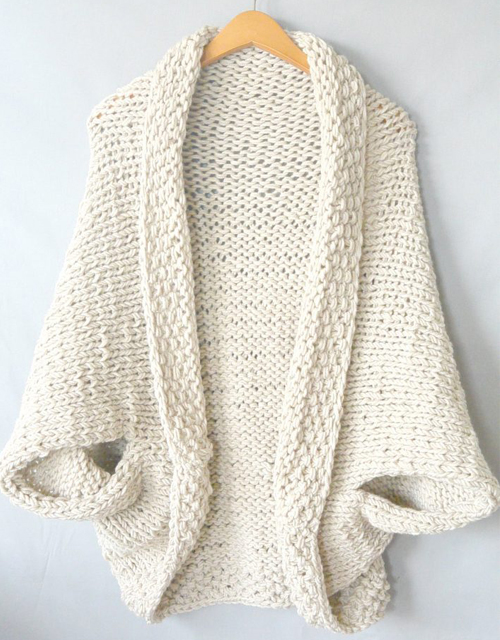
Easy Knit Blanket Sweater by Jessica Reeves Potasz of Mama In A Stitch is a wonderfully simple idea: knit a large, cozy rectangle, fold and seam it strategically, and turn it into an oversized cocoon-style cardigan.

There is no complicated traditional sweater construction here. The main fabric uses stockinette stitch with seed-stitch edging, making this an approachable wearable project for knitters who are comfortable with basic knit and purl stitches.

The finished sweater is intentionally oversized, soft and blanket-like rather than fitted — perfect if you love relaxed layering pieces.

Best of all, the complete pattern is still available for free from Mama In A Stitch. Below you'll find the key project details, construction notes, yarn-substitution advice and a link to Jessica's current free pattern.

✓ Free Pattern Availability

Easy Knit Blanket Sweater is currently available as a free knitting pattern on the designer's Mama In A Stitch website. An optional printable version may also be offered, but you can read the pattern for free on the official website.

Easy Knit Blanket Sweater at a Glance

Pattern: Easy Knit Blanket Sweater

Designer: Jessica Reeves Potasz

Source: Mama In A Stitch

First Published: October 2016

Category: Cardigan / Cocoon Sweater

Construction: Rectangle, worked flat, then folded and seamed

Main Stitch: Stockinette stitch

Edging: Seed stitch

Original Yarn: Lion Brand Woolspun (discontinued)

Original Yardage: Approx. 1,016 yards / 929 m

Needles: US 19 / 15 mm, 29-inch circular needle

Finished Measurement: Approx. 40.5 × 34 in

Style: Very oversized, loose and blanket-like

Availability: Free on Mama In A Stitch

About the Easy Knit Blanket Sweater

Jessica Reeves Potasz created the knitted Easy Knit Blanket Sweater after receiving requests for a knit version of her crocheted blanket sweater.

The concept is deliberately uncomplicated. Instead of shaping several separate sweater pieces, you create one large piece of knitted fabric and transform it into a wearable cocoon through folding and seaming.

The result looks much more involved than the actual construction.

It Really Is Almost a Knitted Blanket

The name “Blanket Sweater” is especially appropriate here.

The project is essentially a large knitted rectangle. Once the knitting is complete, the fabric is folded and seamed to create the cardigan shape and arm openings.

That makes it an interesting bridge between knitting a blanket and knitting your first wearable.

If traditional sweater shaping feels intimidating, this construction removes much of that complexity.

Beginner-Friendly Construction

You do not need to shape a neckline, calculate a raglan yoke or knit separate fronts, back and sleeves.

The important skills are much more familiar:

  • Knitting
  • Purling
  • Stockinette stitch
  • Seed stitch
  • Working flat
  • Basic seaming
  • Weaving in ends

For a newer knitter who wants to make something wearable, that simplicity is one of the biggest attractions of the design.

Stockinette Body with Seed-Stitch Edging

Most of the sweater is worked in stockinette stitch, creating the smooth, classic knitted surface you see across the oversized body.

Seed stitch is used at the edges to add texture and provide a visual frame around the simpler stockinette section.

This combination keeps the knitting repetitive enough to be relaxing without making the finished piece look completely plain.

The Sweater Is Intentionally Oversized

This is important to understand before beginning: Easy Knit Blanket Sweater is not designed as a fitted cardigan.

Jessica describes it as a heavy, blanket-like cocoon with a loose, drapey appearance.

The oversized dimensions are therefore part of the design rather than an indication that your sweater is turning out too large.

Finished Measurements

The published dimensions are approximately:

40.5 inches × 34 inches

Treat these measurements as especially useful information when deciding whether the original proportions will give you the amount of coverage and drape you want.

Fit Note

This is an intentionally oversized cocoon-style garment rather than a conventionally sized fitted sweater. Compare the published dimensions with a loose cardigan or wrap you already enjoy wearing before making major size modifications.

Original Yarn

The original sample used Lion Brand Woolspun.

The designer notes that the original Woolspun yarn has since been discontinued.

That does not mean the pattern is unavailable. The pattern itself remains free; only the original yarn needs to be substituted.

How Much Yarn?

The original project called for approximately:

1,016 yards / 929 meters

The original instructions used eight skeins of Woolspun at the specified skein yardage.

If you substitute another yarn, calculate by total yardage rather than assuming you will also need eight skeins. Skein sizes vary enormously between yarn brands.

Important Yarn Substitution Note

The Original Yarn Is Discontinued

Don't let that stop you from making the sweater. The pattern is still available, and this simple construction is well suited to yarn substitution. Focus on achieving a fabric and gauge similar to the designer's sample rather than searching indefinitely for discontinued Woolspun.

When choosing a substitute, consider:

  • Gauge
  • Finished fabric thickness
  • Drape
  • Total yardage
  • Fiber weight
  • How much the fabric stretches when worn

A very stiff substitute can dramatically change the character of this garment, because the original design depends on a loose, comfortable, blanket-like fabric.

Large Needles Make This an Interesting Quick-Knit Style

The original pattern calls for:

US 19 / 15 mm circular knitting needles

The designer specifies a 29-inch circular needle.

Although the sweater is worked flat rather than in the round, a circular needle is useful for comfortably holding the large piece of fabric.

Why Gauge Still Matters

A rectangle may seem more forgiving than a fitted sweater, but gauge still controls the dimensions of your finished garment.

Changing yarn thickness or needle size without checking the resulting fabric can make an already oversized design substantially larger or smaller.

This matters even more when substituting for a discontinued yarn.

Make a Swatch with Your Substitute Yarn

Before purchasing a large quantity of substitute yarn, make a generous stockinette swatch.

Check more than stitch count. Hold the swatch up and allow it to hang naturally.

Ask yourself:

  • Does it drape comfortably?
  • Is it too stiff?
  • Is it becoming excessively heavy?
  • Do you like the openness of the stitches?
  • Will the fabric feel comfortable as an oversized cardigan?

Those questions are especially useful for a garment whose appeal comes from its relaxed drape.

From Rectangle to Cardigan

The transformation happens after the main rectangle is complete.

The fabric is folded according to the designer's assembly instructions and partially seamed to create openings for the arms.

This simple finishing step turns what looked like a blanket on the needles into a cocoon-style cardigan.

Follow Jessica's original assembly photographs and instructions rather than guessing where to seam, because seam placement affects both the arm openings and how the cardigan hangs.

Two Buttons Help Hold the Sweater in Place

Jessica added two buttons near the upper portion of the garment.

They are both decorative and practical, helping the oversized sweater remain comfortably positioned when worn.

Because the knitted fabric is very open, the designer notes that the buttons can pass through the stitches without separately knitted buttonholes.

Choosing Buttons

Large buttons suit the scale of this oversized design particularly well.

Before permanently attaching them, temporarily position the buttons and try on the finished sweater.

This lets you check whether their placement gives you the amount of closure and drape you prefer.

Be Patient with Stockinette Curl

Stockinette naturally wants to curl at unsupported edges.

The textured edging and final construction help control the shape, but do not be alarmed if the unfinished rectangle does not lie perfectly flat while you are knitting it.

Watch the Weight of the Fabric

This is a substantial garment.

As the rectangle grows, its own weight can stretch the stitches and affect how the fabric looks compared with when it is resting on a table.

When checking length, allow the fabric to relax naturally rather than aggressively stretching it.

Why This Can Be a Good First Wearable

Many first sweater projects introduce several new skills at once: shaping, sleeve construction, neckline shaping, multiple sizes and seaming several separate pieces.

Easy Knit Blanket Sweater takes a different route.

The knitter can concentrate on making a large, consistent piece of fabric and learning simple assembly at the end.

That makes the project especially appealing if you can knit a rectangle confidently but have not yet attempted a traditional cardigan.

Is the Easy Knit Blanket Sweater Pattern Still Free?

Yes.

Jessica Reeves Potasz currently provides the complete Easy Knit Blanket Sweater pattern free on Mama In A Stitch.

You may also encounter an optional paid printable version. That does not change the availability of the free web pattern.

Amazing Knitting does not reproduce Jessica's complete copyrighted instructions. Use the official Mama In A Stitch article for the stitch counts, row-by-row instructions and assembly details.

Get the Free Easy Knit Blanket Sweater Pattern

Visit Jessica's original Mama In A Stitch tutorial for the complete free pattern, photographs and assembly instructions:

Get the Free Easy Knit Blanket Sweater Pattern →

You can also view the Ravelry record for project examples and additional pattern information:

View Easy Knit Blanket Sweater on Ravelry →

More Free Sweater and Cardigan Patterns

Looking for another approachable cardigan? Explore these free patterns already verified in the Amazing Knitting archive:

Or browse:

Before You Start

Remember that the original Woolspun yarn has been discontinued, but the pattern has not. There is no need to abandon this project simply because you cannot find the original yarn.

Choose a suitable substitute, make a swatch, and pay particular attention to drape and finished dimensions.

Then use the official Mama In A Stitch pattern for the exact stitch counts and assembly instructions.

If you are comfortable knitting a large rectangle, this project offers a clever way to turn those basic skills into a cozy wearable.

Pattern credit: Easy Knit Blanket Sweater was designed by Jessica Reeves Potasz of Mama In A Stitch. The existing photograph on this Amazing Knitting page is credited to Jessica / Mama In A Stitch. Amazing Knitting provides an independent project guide and does not reproduce the designer's complete copyrighted knitting instructions.

Lamb Dance Kids Jacket - Free Knitting Pattern

Lamb Dance - Free Pattern
Photo above © DROPS Design

Lamb Dance by DROPS Design is a cheerful free children's cardigan knitting pattern featuring a flock of little sheep around the circular yoke.

The jacket is worked from the top down in DK-weight yarn, combining stockinette stitch, ribbing and stranded colorwork. With five sizes covering approximately 3 to 12 years, it is a playful project for knitters ready to combine garment construction with colorwork.

Best of all, the complete pattern remains free from DROPS Design.

✓ Free Pattern Availability

Lamb Dance / DROPS Children 34-1 is currently available as a free knitting pattern from DROPS Design. Use the official DROPS link below for the complete current instructions, charts and pattern information.

Lamb Dance Jacket at a Glance

Pattern: Lamb Dance / DROPS Children 34-1

Designer: DROPS Design

Pattern Number: me-054-bn

First Published: March 2019

Craft: Knitting

Category: Children's Cardigan / Jacket

Sizes: 3/4, 5/6, 7/8, 9/10 and 11/12 years

Yarn Weight: DK / 8 ply

Suggested Yarn: DROPS Merino Extra Fine or DROPS Lima

Main Needles: US 6 / 4 mm

Rib Needles: US 2½ / 3 mm

Gauge: 21 stitches × 28 rows = 4 in / 10 cm

Construction: Top down

Features: Circular yoke, stranded colorwork, sheep motif, button front

Availability: Free official pattern

About the Lamb Dance Jacket

Lamb Dance is a children's knitted cardigan from DROPS Design.

Its defining feature is the whimsical band of sheep worked around the circular yoke. Contrasting colors create the sheep and surrounding decorative pattern against the main background color.

Below the patterned yoke, the cardigan becomes much simpler, allowing the colorwork to remain the visual focus of the finished garment.

Five Children's Sizes

The official pattern includes five sizes:

  • 3/4 years — approximately 98/104 cm height
  • 5/6 years — approximately 110/116 cm
  • 7/8 years — approximately 122/128 cm
  • 9/10 years — approximately 134/140 cm
  • 11/12 years — approximately 146/152 cm

When choosing a size, compare the child's measurements with the finished measurements in the official DROPS pattern rather than relying only on age.

Finished Measurements

The published finished chest measurements are approximately:

64 – 68 – 74 – 78 – 80 cm

The corresponding finished body lengths are approximately:

35 – 39 – 43 – 47 – 51 cm

Consult the official schematic before choosing your size, especially when knitting the cardigan as a gift.

Yarn Choices

DROPS provides two suggested yarn options for Lamb Dance:

  • DROPS Merino Extra Fine
  • DROPS Lima

Both belong to DROPS Yarn Group B and fall within the DK-weight range, but their fiber compositions produce somewhat different fabrics.

DROPS Merino Extra Fine is a merino yarn, while DROPS Lima combines wool and alpaca.

If substituting another yarn, matching the required gauge is more important than simply selecting a yarn carrying the same weight label.

How Much Yarn Do You Need?

The main background color requires approximately 150 to 250 grams, depending on size.

Several contrasting colors are then used for the sheep and other elements of the colorwork.

Because the exact amounts vary by size and yarn choice, check the official DROPS materials table before purchasing your yarn.

Knitting Gauge

The official gauge is:

21 stitches × 28 rows = 4 × 4 inches / 10 × 10 cm

This gauge is measured in stockinette stitch using the larger needles.

Gauge is particularly important for children's garments because even a relatively small difference can noticeably change the finished chest circumference and length.

Needles

The pattern uses approximately:

  • 4 mm / US 6 circular needles for the main fabric
  • 4 mm / US 6 double-pointed needles or another suitable small-circumference method
  • 3 mm / US 2½ needles for the ribbing

The official pattern lists circular needle lengths appropriate for the different stages of the garment.

Needle sizes are recommendations. Adjust them if necessary to obtain the required gauge.

Top-Down Construction

Lamb Dance is knitted from the top down.

Top-down construction has several practical advantages. The yoke and upper body develop first, followed by the body and sleeves, reducing the amount of traditional garment seaming.

It can also make the overall construction easier to visualize because the cardigan grows from the neckline toward the hem.

The Circular Yoke

The sheep motif sits within a circular yoke.

Instead of using conventional armhole shaping with separately knitted front and back pieces, shaping is distributed around the upper body.

This creates the smooth rounded line that makes Nordic-style colorwork yokes so recognizable.

The Sheep Colorwork

The playful sheep are the signature feature of Lamb Dance.

The motif is created using stranded colorwork, following the chart supplied by DROPS Design.

Amazing Knitting does not reproduce that copyrighted chart here. Use the current official pattern while working the yoke.

Tips for Stranded Colorwork

If stranded knitting is relatively new to you, pay particular attention to your tension.

The unused yarn carried behind the work should have enough room to span the stitches without pulling the knitted fabric together.

Stretching the stitches gently along the right needle while changing colors can help keep the floats from becoming too tight.

Check the fabric frequently rather than waiting until the entire yoke is complete.

Swatch the Colorwork Too

Your tension when knitting stranded colorwork may differ from your ordinary stockinette tension.

If this happens, the yoke can become tighter than the body even when the stockinette portion matches the published gauge.

A small colorwork swatch can therefore be useful before beginning the main sheep section.

Button Front

Unlike the related Lamb Dance pullover, this version is a front-opening cardigan.

The official pattern calls for:

6 – 6 – 7 – 7 – 7 buttons

The exact number depends on the size being knitted.

Attach buttons securely, particularly when the garment is intended for a younger child.

Skills Used in Lamb Dance

Useful skills for this project include:

  • Casting on and binding off
  • Knit and purl stitches
  • Working ribbing
  • Knitting stockinette stitch
  • Working in the round
  • Working flat where required
  • Increasing and decreasing
  • Reading a colorwork chart
  • Stranded knitting
  • Managing yarn floats
  • Working a circular yoke
  • Making buttonholes
  • Picking up stitches where instructed
  • Weaving in multiple color ends neatly

Is Lamb Dance Suitable for Beginners?

A knitter who has already completed simple garments and is comfortable working in the round should find Lamb Dance an interesting introduction to a more decorative children's cardigan.

The colorwork yoke adds another skill layer, so a complete first-time knitter may prefer to practice stranded knitting on a small swatch before beginning.

DROPS also provides supporting technique information and video tutorials alongside many of its patterns.

A Matching Lamb Dance Collection

The cardigan is part of a small coordinated DROPS collection.

DROPS also published a Lamb Dance Sweater using the same playful sheep theme, as well as a matching Lamb Dance Hat.

This makes the design especially useful if you enjoy the motif and want to create coordinated children's knitwear.

Is Lamb Dance Still Free?

Yes.

Lamb Dance / DROPS Children 34-1 is currently available directly from DROPS Design as a complete free knitting pattern.

The official page contains the current instructions, diagrams, charts, measurements and supporting information.

Amazing Knitting provides this independent project guide rather than reproducing the complete DROPS instructions or charts.

Get the Free Lamb Dance Pattern

Use the official DROPS Design page for the complete free pattern:

Get the Free Lamb Dance Pattern →

More Free Children's Knitting Patterns

You can continue exploring Amazing Knitting for free children's cardigans, sweaters and colorwork projects.

Explore Free Children's Cardigans →

You can also browse:

Before You Start

Choose the size by comparing the child's measurements with the official DROPS schematic, then make a gauge swatch with your chosen Yarn Group B yarn.

If stranded knitting is new to you, practice carrying two colors before reaching the sheep yoke. Keeping the floats relaxed is important for maintaining a comfortable fit across the upper body.

Finally, always work from the current DROPS page so you have access to the latest version of the pattern and its supporting information.

Pattern credit: Lamb Dance / DROPS Children 34-1 was designed and published by DROPS Design. Amazing Knitting does not reproduce the designer's copyrighted charts or complete knitting instructions. Please use the official DROPS page for the free pattern.

Clover - Free Pattern

Clover - Free Pattern
Photo above © DROPS Design

Clover / DROPS Children 34-4 is a free children's sweater knitting pattern from DROPS Design, featuring a decorative lace pattern, raglan shaping and comfortable top-down construction.

Designed for children approximately 2 to 12 years old, the sweater can be knitted in DROPS Air or DROPS Paris and is available in six sizes.

The complete pattern remains free on the official DROPS Design website.

✓ Free Pattern Availability

Clover / DROPS Children 34-4 is currently available as a free official knitting pattern from DROPS Design. Use the official link below for the complete current instructions, diagrams and measurements.

Clover Sweater at a Glance

Pattern: Clover / DROPS Children 34-4

Designer: DROPS Design

Pattern Number: ai-014-bn

Craft: Knitting

Category: Children's Sweater / Jumper

Sizes: 2 to 11/12 years

Suggested Yarn: DROPS Air or DROPS Paris

Gauge: 16 stitches × 20 rows = 4 in / 10 cm

Main Needles: US 9 / 5.5 mm

Rib Needles: US 7 / 4.5 mm

Construction: Top down

Features: Lace pattern, raglan shaping, long sleeves

Availability: Free official DROPS pattern

About the Clover Children's Sweater

Clover is a children's pullover designed by DROPS Design.

The sweater combines a relatively simple silhouette with decorative lace across the upper portion of the garment.

It is knitted from the top down with raglan shaping, giving knitters a practical construction method while allowing the lace to become the main decorative feature.

Six Children's Sizes

The official DROPS pattern includes six sizes:

  • 2 years
  • 3/4 years
  • 5/6 years
  • 7/8 years
  • 9/10 years
  • 11/12 years

DROPS associates these sizes with approximate child heights of:

92 – 98/104 – 110/116 – 122/128 – 134/140 – 146/152 cm

Age is only a guide. When possible, compare the child's measurements with the finished measurements in the official DROPS schematic before choosing a size.

Finished Chest Measurements

The published finished chest measurements are approximately:

68 – 72 – 76 – 84 – 86 – 94 cm

That's approximately:

26¾ – 28⅜ – 30 – 33 – 33⅞ – 37 inches

Finished length ranges from approximately 36 cm for the smallest size to 56 cm for the largest.

Two Suggested Yarn Options

One useful feature of the official Clover pattern is that DROPS provides two yarn options.

You can knit the sweater in:

  • DROPS Air
  • DROPS Paris

These yarns have very different fiber compositions and characteristics, so the finished sweater can have a different feel depending on which option you choose.

The important requirement is obtaining the pattern gauge and a fabric suitable for the garment.

DROPS Air Requirements

When using DROPS Air, the official pattern calls for approximately:

150 – 150 – 200 – 200 – 200 – 250 grams

The original DROPS sample lists color 20, Rose.

DROPS Paris Requirements

The alternative DROPS Paris version requires approximately:

300 – 300 – 400 – 400 – 400 – 500 grams

The official pattern lists color 01, Apricot, for this option.

Gauge

The required knitting gauge is:

16 stitches × 20 rows = 4 × 4 inches / 10 × 10 cm

This is measured in stockinette stitch.

Gauge is important for children's garments because it directly affects the finished chest circumference, length and yarn consumption.

Make a gauge swatch before beginning, particularly when substituting another yarn.

Needles

DROPS recommends:

  • 5.5 mm / US 9 circular and double-pointed needles for the main fabric
  • 4.5 mm / US 7 circular and double-pointed needles for the ribbing

The published needle sizes are guides. Use the needle size that allows you to obtain the required gauge.

Top-Down Construction

Clover is knitted from the top down.

This construction begins at the neckline and develops the upper body before moving down toward the hem.

Top-down sweaters can be particularly convenient for children's garments because the overall proportions become easier to visualize as the project grows.

Raglan Shaping

The sweater uses raglan shaping to form the upper body and sleeves.

Raglan construction distributes shaping around the upper garment rather than requiring separately shaped traditional armholes.

Combined with the top-down method, it creates a clean construction that works well with the decorative lace section.

The Lace Pattern

The decorative lace is one of Clover's defining features.

The motif is worked according to the diagrams supplied with the official DROPS pattern.

Amazing Knitting does not reproduce those copyrighted charts here. Follow the current official pattern for the complete stitch sequence and diagrams.

Working from a Knitting Chart

If you are relatively new to charted lace, take a little time to study the symbols before beginning the decorative section.

Keep track of both your current chart row and your position within each repeat.

Stitch markers can be useful for separating repeats where appropriate, making it easier to identify a missing yarn over or decrease before the error travels into later rows.

Count Your Stitches Regularly

Lace depends on increases and decreases remaining correctly balanced.

A forgotten yarn over or an accidental extra stitch can change the alignment of the following rows.

Checking your stitch count at logical points throughout the lace section can save considerable time later.

Consider Using a Lifeline

If lace knitting is still new to you, a lifeline can provide useful insurance.

Pass a smooth contrasting thread through a correctly completed row without interfering with the working stitches.

If you later discover an error, you have a known safe row to return to instead of unraveling blindly through the lace.

Working the Sleeves

After the body has been established, the sleeves are worked using the stitches set aside during the upper-body construction.

Smaller circumferences can be handled with double-pointed needles, magic loop or another method you are comfortable using, while still following the stitch counts and shaping in the official instructions.

Choosing the Right Size

Children's ages do not always correspond perfectly to standardized clothing sizes.

For a better result, measure a sweater that currently fits the child well and compare it with the finished measurements supplied by DROPS.

Pay particular attention to chest circumference, body length and sleeve length.

Substituting Yarn

You can use another suitable yarn instead of the two DROPS options, but do not select a substitute by yarn label alone.

Look for a yarn capable of producing the required 16 stitches × 20 rows per 10 cm while creating a fabric you like.

Fiber content also matters. A cotton yarn such as DROPS Paris behaves differently from a light blown yarn such as DROPS Air.

Always swatch when making a significant substitution.

Skills Used in Clover

This project is useful for practicing several knitting skills:

  • Top-down sweater construction
  • Raglan shaping
  • Knitting in the round
  • Knit and purl stitches
  • Ribbing
  • Increasing and decreasing
  • Yarn overs
  • Following lace diagrams
  • Working sleeves in a small circumference
  • Finishing and weaving in ends

Is Clover Suitable for Beginners?

Clover is more involved than a completely basic stockinette children's sweater because of the lace pattern and shaping.

However, a knitter who is already comfortable with knit and purl stitches, working in the round and basic increases and decreases can use it as a good opportunity to gain experience with charted lace and top-down garment construction.

Important: Use the Current Pattern

DROPS notes that the Clover pattern has received a correction.

The official page currently shows an update dated October 23, 2020 concerning the sleeve instructions.

For this reason, avoid relying on an old saved or copied version of the instructions. Work from the current official DROPS page so you have the corrected pattern.

Is the Clover Sweater Still Free?

Yes.

Clover / DROPS Children 34-4 remains available as a complete free knitting pattern directly from DROPS Design.

The official page includes the instructions, diagrams, measurements and supporting technique information.

Get the Free Clover Knitting Pattern

Visit DROPS Design for the complete current pattern:

Get the Free Clover Pattern →

More Free Children's Sweater Patterns

Looking for another children's project? The recently reviewed Lamb Dance cardigan from DROPS Design is another free pattern, featuring a playful stranded-colorwork sheep yoke.

See the Free Lamb Dance Pattern →

You can also browse more projects in the Amazing Knitting archive:

Before You Start

Choose the size using the child's measurements rather than age alone, then make a gauge swatch with your chosen yarn.

Read through the lace diagrams before reaching the patterned section and consider using stitch markers or a lifeline if charted lace is new to you.

Most importantly, work from the current DROPS page because the pattern has received a published correction since its original release.

Pattern credit: Clover / DROPS Children 34-4 was designed and published by DROPS Design. The existing photograph on this Amazing Knitting page is credited to DROPS Design. Amazing Knitting does not reproduce the designer's complete copyrighted instructions or charts.

Discover More From the Archive

A fresh mix of knitting patterns and tutorials from the Amazing Knitting archive.

Finding patterns from the archive…