Skip to content

...

Showing posts sorted by relevance for query easy knitting pattern. Sort by date Show all posts

Easy Knit Blanket Sweater - Free Pattern

Easy Knit Blanket Sweater - Free Pattern
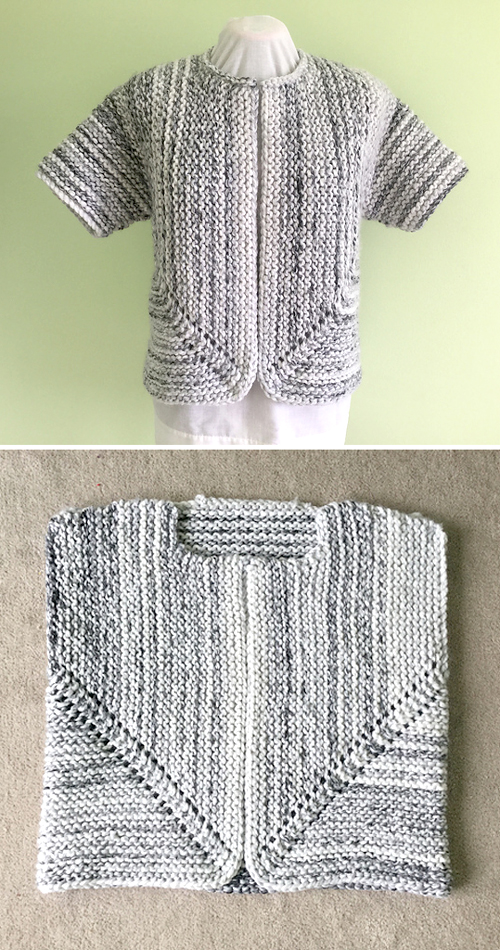
Photo above © (Jessica) Mama in a stitch

Easy Knit Blanket Sweater by Jessica Reeves Potasz of Mama In A Stitch is a wonderfully simple idea: knit a large, cozy rectangle, fold and seam it strategically, and turn it into an oversized cocoon-style cardigan.

There is no complicated traditional sweater construction here. The main fabric uses stockinette stitch with seed-stitch edging, making this an approachable wearable project for knitters who are comfortable with basic knit and purl stitches.

The finished sweater is intentionally oversized, soft and blanket-like rather than fitted — perfect if you love relaxed layering pieces.

Best of all, the complete pattern is still available for free from Mama In A Stitch. Below you'll find the key project details, construction notes, yarn-substitution advice and a link to Jessica's current free pattern.

✓ Free Pattern Availability

Easy Knit Blanket Sweater is currently available as a free knitting pattern on the designer's Mama In A Stitch website. An optional printable version may also be offered, but you can read the pattern for free on the official website.

Easy Knit Blanket Sweater at a Glance

Pattern: Easy Knit Blanket Sweater

Designer: Jessica Reeves Potasz

Source: Mama In A Stitch

First Published: October 2016

Category: Cardigan / Cocoon Sweater

Construction: Rectangle, worked flat, then folded and seamed

Main Stitch: Stockinette stitch

Edging: Seed stitch

Original Yarn: Lion Brand Woolspun (discontinued)

Original Yardage: Approx. 1,016 yards / 929 m

Needles: US 19 / 15 mm, 29-inch circular needle

Finished Measurement: Approx. 40.5 × 34 in

Style: Very oversized, loose and blanket-like

Availability: Free on Mama In A Stitch

About the Easy Knit Blanket Sweater

Jessica Reeves Potasz created the knitted Easy Knit Blanket Sweater after receiving requests for a knit version of her crocheted blanket sweater.

The concept is deliberately uncomplicated. Instead of shaping several separate sweater pieces, you create one large piece of knitted fabric and transform it into a wearable cocoon through folding and seaming.

The result looks much more involved than the actual construction.

It Really Is Almost a Knitted Blanket

The name “Blanket Sweater” is especially appropriate here.

The project is essentially a large knitted rectangle. Once the knitting is complete, the fabric is folded and seamed to create the cardigan shape and arm openings.

That makes it an interesting bridge between knitting a blanket and knitting your first wearable.

If traditional sweater shaping feels intimidating, this construction removes much of that complexity.

Beginner-Friendly Construction

You do not need to shape a neckline, calculate a raglan yoke or knit separate fronts, back and sleeves.

The important skills are much more familiar:

  • Knitting
  • Purling
  • Stockinette stitch
  • Seed stitch
  • Working flat
  • Basic seaming
  • Weaving in ends

For a newer knitter who wants to make something wearable, that simplicity is one of the biggest attractions of the design.

Stockinette Body with Seed-Stitch Edging

Most of the sweater is worked in stockinette stitch, creating the smooth, classic knitted surface you see across the oversized body.

Seed stitch is used at the edges to add texture and provide a visual frame around the simpler stockinette section.

This combination keeps the knitting repetitive enough to be relaxing without making the finished piece look completely plain.

The Sweater Is Intentionally Oversized

This is important to understand before beginning: Easy Knit Blanket Sweater is not designed as a fitted cardigan.

Jessica describes it as a heavy, blanket-like cocoon with a loose, drapey appearance.

The oversized dimensions are therefore part of the design rather than an indication that your sweater is turning out too large.

Finished Measurements

The published dimensions are approximately:

40.5 inches × 34 inches

Treat these measurements as especially useful information when deciding whether the original proportions will give you the amount of coverage and drape you want.

Fit Note

This is an intentionally oversized cocoon-style garment rather than a conventionally sized fitted sweater. Compare the published dimensions with a loose cardigan or wrap you already enjoy wearing before making major size modifications.

Original Yarn

The original sample used Lion Brand Woolspun.

The designer notes that the original Woolspun yarn has since been discontinued.

That does not mean the pattern is unavailable. The pattern itself remains free; only the original yarn needs to be substituted.

How Much Yarn?

The original project called for approximately:

1,016 yards / 929 meters

The original instructions used eight skeins of Woolspun at the specified skein yardage.

If you substitute another yarn, calculate by total yardage rather than assuming you will also need eight skeins. Skein sizes vary enormously between yarn brands.

Important Yarn Substitution Note

The Original Yarn Is Discontinued

Don't let that stop you from making the sweater. The pattern is still available, and this simple construction is well suited to yarn substitution. Focus on achieving a fabric and gauge similar to the designer's sample rather than searching indefinitely for discontinued Woolspun.

When choosing a substitute, consider:

  • Gauge
  • Finished fabric thickness
  • Drape
  • Total yardage
  • Fiber weight
  • How much the fabric stretches when worn

A very stiff substitute can dramatically change the character of this garment, because the original design depends on a loose, comfortable, blanket-like fabric.

Large Needles Make This an Interesting Quick-Knit Style

The original pattern calls for:

US 19 / 15 mm circular knitting needles

The designer specifies a 29-inch circular needle.

Although the sweater is worked flat rather than in the round, a circular needle is useful for comfortably holding the large piece of fabric.

Why Gauge Still Matters

A rectangle may seem more forgiving than a fitted sweater, but gauge still controls the dimensions of your finished garment.

Changing yarn thickness or needle size without checking the resulting fabric can make an already oversized design substantially larger or smaller.

This matters even more when substituting for a discontinued yarn.

Make a Swatch with Your Substitute Yarn

Before purchasing a large quantity of substitute yarn, make a generous stockinette swatch.

Check more than stitch count. Hold the swatch up and allow it to hang naturally.

Ask yourself:

  • Does it drape comfortably?
  • Is it too stiff?
  • Is it becoming excessively heavy?
  • Do you like the openness of the stitches?
  • Will the fabric feel comfortable as an oversized cardigan?

Those questions are especially useful for a garment whose appeal comes from its relaxed drape.

From Rectangle to Cardigan

The transformation happens after the main rectangle is complete.

The fabric is folded according to the designer's assembly instructions and partially seamed to create openings for the arms.

This simple finishing step turns what looked like a blanket on the needles into a cocoon-style cardigan.

Follow Jessica's original assembly photographs and instructions rather than guessing where to seam, because seam placement affects both the arm openings and how the cardigan hangs.

Two Buttons Help Hold the Sweater in Place

Jessica added two buttons near the upper portion of the garment.

They are both decorative and practical, helping the oversized sweater remain comfortably positioned when worn.

Because the knitted fabric is very open, the designer notes that the buttons can pass through the stitches without separately knitted buttonholes.

Choosing Buttons

Large buttons suit the scale of this oversized design particularly well.

Before permanently attaching them, temporarily position the buttons and try on the finished sweater.

This lets you check whether their placement gives you the amount of closure and drape you prefer.

Be Patient with Stockinette Curl

Stockinette naturally wants to curl at unsupported edges.

The textured edging and final construction help control the shape, but do not be alarmed if the unfinished rectangle does not lie perfectly flat while you are knitting it.

Watch the Weight of the Fabric

This is a substantial garment.

As the rectangle grows, its own weight can stretch the stitches and affect how the fabric looks compared with when it is resting on a table.

When checking length, allow the fabric to relax naturally rather than aggressively stretching it.

Why This Can Be a Good First Wearable

Many first sweater projects introduce several new skills at once: shaping, sleeve construction, neckline shaping, multiple sizes and seaming several separate pieces.

Easy Knit Blanket Sweater takes a different route.

The knitter can concentrate on making a large, consistent piece of fabric and learning simple assembly at the end.

That makes the project especially appealing if you can knit a rectangle confidently but have not yet attempted a traditional cardigan.

Is the Easy Knit Blanket Sweater Pattern Still Free?

Yes.

Jessica Reeves Potasz currently provides the complete Easy Knit Blanket Sweater pattern free on Mama In A Stitch.

You may also encounter an optional paid printable version. That does not change the availability of the free web pattern.

Amazing Knitting does not reproduce Jessica's complete copyrighted instructions. Use the official Mama In A Stitch article for the stitch counts, row-by-row instructions and assembly details.

Get the Free Easy Knit Blanket Sweater Pattern

Visit Jessica's original Mama In A Stitch tutorial for the complete free pattern, photographs and assembly instructions:

Get the Free Easy Knit Blanket Sweater Pattern →

You can also view the Ravelry record for project examples and additional pattern information:

View Easy Knit Blanket Sweater on Ravelry →

More Free Sweater and Cardigan Patterns

Looking for another approachable cardigan? Explore these free patterns already verified in the Amazing Knitting archive:

Or browse:

Before You Start

Remember that the original Woolspun yarn has been discontinued, but the pattern has not. There is no need to abandon this project simply because you cannot find the original yarn.

Choose a suitable substitute, make a swatch, and pay particular attention to drape and finished dimensions.

Then use the official Mama In A Stitch pattern for the exact stitch counts and assembly instructions.

If you are comfortable knitting a large rectangle, this project offers a clever way to turn those basic skills into a cozy wearable.

Pattern credit: Easy Knit Blanket Sweater was designed by Jessica Reeves Potasz of Mama In A Stitch. The existing photograph on this Amazing Knitting page is credited to Jessica / Mama In A Stitch. Amazing Knitting provides an independent project guide and does not reproduce the designer's complete copyrighted knitting instructions.

Heart Face Scrubby - Free Knitting Pattern

Heart Face Scrubby  - Free Knitting Pattern
Photo above © PurlsAndPixels

Heart Face Scrubby by Liz Chandler of PurlsAndPixels is one of those tiny knitting projects that manages to be cute, practical and genuinely useful.

A simple heart appears in the center through carefully placed knit and purl stitches, turning a small cotton square into a reusable face cloth or makeup-remover pad.

It is also an excellent scrap-yarn project: each scrubby uses only about 9.5 yards of worsted-weight cotton yarn and is worked flat with basic stitches.

Best of all, Liz Chandler still provides the complete pattern free to read on PurlsAndPixels. A printable PDF is also available separately for knitters who prefer an ad-free version.

✓ Free Pattern Availability

The complete Heart Face Scrubby knitting pattern is currently free to read on the designer's PurlsAndPixels website. The designer also offers an optional paid printable PDF, but purchasing the PDF is not required to use the free web pattern.

Heart Face Scrubby at a Glance

Pattern: Heart Face Scrubby

Designer: Liz Chandler

Source: PurlsAndPixels

First Published: February 2019

Skill Level: Beginner / Easy

Yarn Weight: Worsted

Suggested Yarn: Lily Sugar 'n Cream 100% Cotton

Yarn per Scrubby: Approx. 9.5 yd / 8.7 m

Needles: US 7 / 4.5 mm

Gauge: 19 sts × 26 rows = 4 in / 10 cm in stockinette

Construction: One piece, worked flat

Finished Size: Approx. 3 × 3 in after washing

Availability: Free web pattern + optional paid PDF

About the Heart Face Scrubby

Liz Chandler designed this little scrubby as a reusable alternative to disposable cotton pads.

Its appeal is in its simplicity. The scrubby is essentially a small knitted square, but strategically placed purl stitches create a heart motif on the front of the fabric.

There is no complicated colorwork and no separate heart to sew onto the finished cloth.

A Beginner-Friendly Project

PurlsAndPixels classifies Heart Face Scrubby as an easy knitting pattern.

The project is suitable for knitters who understand basic skills such as:

  • Casting on
  • Knitting
  • Purling
  • Turning the work
  • Binding off
  • Weaving in yarn ends

Because the project is so small, it can also be a useful way for a newer knitter to practice recognizing knit and purl stitches without committing to a large project.

How the Heart Appears

The heart is created through texture rather than a second yarn color.

Knit and purl stitches reflect light differently and sit differently on the surface of the fabric. By positioning them deliberately, the designer creates a visible heart against the surrounding background.

This is a useful introduction to the idea of creating pictures and motifs with texture alone.

No Complicated Shaping

Despite the heart motif, you are not actually knitting a heart-shaped piece.

The scrubby itself remains a simple square, so there is no elaborate increase or decrease sequence required to shape the outside edges.

This keeps the focus on following the knit-and-purl pattern correctly.

Worked Flat

Heart Face Scrubby is knitted flat, turning the work after each row.

You can therefore make it without learning to knit in the round.

The designer lists either a circular or straight needle option, so use whichever style is most comfortable for you.

Yarn: 100% Cotton

The original pattern uses Lily Sugar 'n Cream 100% Cotton.

Cotton makes sense for this project because it is absorbent, reusable and washable.

You are not limited to the exact original brand, however. The designer notes that another worsted-weight cotton yarn can be used.

Only About 9.5 Yards per Scrubby

This project requires remarkably little yarn.

Approximately 9.5 yards / 8.7 meters per scrubby

That makes Heart Face Scrubby an excellent project for small amounts of cotton yarn left over from washcloths, dishcloths or other household projects.

According to the designer, a 95-yard skein can make roughly ten scrubbies, although actual usage varies with yarn and tension.

Needles

The published needle size is:

US 7 / 4.5 mm

PurlsAndPixels lists both a long circular needle and a short straight needle as options.

The circular needle is still used for flat knitting in this project; you do not join the stitches in the round.

Gauge

The published gauge is:

19 stitches × 26 rows = 4 × 4 inches / 10 × 10 cm in stockinette

Exact gauge is less critical here than it would be for a fitted sweater, but it still affects the size and density of your finished scrubby.

Finished Size

An interesting detail is that the cotton fabric changes slightly after washing.

The designer gives an unwashed measurement of approximately:

3 × 3.5 inches

After washing in cold water as directed, the scrubby is approximately:

3 × 3 inches

This is a useful reminder to judge reusable cotton projects after washing, not only immediately after binding off.

Make One Before Making a Whole Set

Because each scrubby takes so little yarn, make one complete sample and wash it before producing a large batch.

This allows you to check:

  • The finished size
  • How much your cotton shrinks
  • Whether you like the fabric density
  • How clearly the heart motif appears
  • Whether the texture feels suitable for your intended use

A Great Scrap-Yarn Project

Small leftovers of cotton yarn can be awkward to use because there may not be enough for a dishcloth or larger project.

Heart Face Scrubbies solve that problem nicely.

You can make each one in a different color and gradually turn leftover yarn into a coordinated reusable set.

Make a Set in Different Colors

The textured heart works without colorwork, so every scrubby can be made from a single shade.

Try making a collection in:

  • Soft pastels
  • Natural cotton shades
  • Different tones of one color
  • Bright scrap-yarn colors
  • Seasonal or gift-themed palettes

A Small Handmade Gift Idea

These scrubbies can also become part of a small handmade gift set.

Several knitted cotton scrubbies paired with soap, a washcloth or other personal-care items can make a thoughtful handmade package without requiring a large amount of knitting time.

They are particularly useful when you want to give something handmade but do not know the recipient's clothing size.

Keep the Heart Motif Easy to See

A smooth solid-color cotton yarn will usually show the textured heart more clearly than a highly variegated or fuzzy yarn.

If the heart motif is the main reason you chose this pattern, consider stitch definition when selecting your yarn.

Watch Your Knit and Purl Placement

The square itself is simple, but the heart depends on placing the textured stitches correctly.

If you accidentally knit where the pattern requires a purl, part of the heart can disappear into the background.

Check each motif row before continuing too far.

Written Instructions and Chart

The designer provides both written instructions and a knitting chart.

If you are new to charts, this is a particularly friendly project for practicing because the motif is small and easy to recognize.

You can also use the written instructions if that format feels more natural to you.

Care

PurlsAndPixels provides washing guidance for scrubbies made with the recommended materials.

The designer suggests washing in cold water, either by hand or on a delicate machine cycle, with low-heat tumble drying or laying flat to dry.

If you substitute another yarn, follow the care instructions for that yarn instead.

Free Pattern vs Printable PDF

Good to Know

You may see a price for Heart Face Scrubby while searching online. That price is for the designer's optional printable PDF. The complete pattern can still be read free on the official PurlsAndPixels website.

This distinction is important because the presence of a paid PDF does not mean the free pattern has disappeared.

If you prefer to knit directly from the website, use the free version. If you prefer a clean printable copy for offline use, the designer offers that separately.

Is Heart Face Scrubby Still Free?

Yes.

Liz Chandler currently provides the complete Heart Face Scrubby knitting pattern free to read on PurlsAndPixels.

The pattern was originally published in 2019 and has since been revised by the designer.

Amazing Knitting does not reproduce Liz Chandler's complete copyrighted row-by-row instructions or chart. Use the official PurlsAndPixels page for the current pattern.

Get the Free Heart Face Scrubby Pattern

Visit Liz Chandler's official PurlsAndPixels page to read the complete pattern for free:

Get the Free Heart Face Scrubby Pattern →

You can also view its Ravelry record for project examples and pattern details:

View Heart Face Scrubby on Ravelry →

Explore More Small Knitting Projects

Small projects are excellent for practicing new stitches, using leftover yarn and making quick handmade gifts.

Before You Start

Choose a smooth worsted-weight cotton yarn and make one scrubby before committing to a full set.

Follow the designer's current instructions carefully so the knit and purl stitches form the heart correctly, then wash your first sample to see its final size and texture.

With only about 9.5 yards of yarn required for each one, Heart Face Scrubby is a wonderfully low-risk project for practicing textured knitting — and a useful way to turn small cotton leftovers into something practical.

Pattern credit: Heart Face Scrubby was designed by Liz Chandler of PurlsAndPixels and first published in 2019. The existing photograph on this Amazing Knitting page is credited to PurlsAndPixels. Amazing Knitting provides an independent project guide and does not reproduce the designer's complete copyrighted knitting instructions or chart.

Jordan Baby Blanket - Free Pattern

Jordan Baby Blanket - Free Pattern
Photo above © danelle1977

Looking for an easy free baby blanket knitting pattern with plenty of texture? The Jordan Baby Blanket by marianna mel is a sweet, adaptable design worked in DK-weight yarn using simple knit-and-purl texture.

The original pattern includes several blanket sizes, from a tiny 15-inch blanket through a 30-inch baby blanket, and the designer explains that the size can be adjusted further. This makes it an especially versatile project for baby gifts, premature babies, or dolls.

Jordan Baby Blanket at a Glance

Pattern: Jordan Baby Blanket

Designer: marianna mel

Published: September 2018

Craft: Knitting

Category: Baby Blanket

Yarn Weight: DK

Needle Size: US 6 / 4.0 mm

Gauge: 24 stitches = 4 inches / 10 cm

Sizes: 15", 18", 24" and 30"

Adjustable: Yes

Pattern Availability: Free

About the Jordan Baby Blanket

Designed by marianna mel of Marianna's Lazy Daisy Days, the Jordan Baby Blanket is a textured knitted blanket with a simple, gender-neutral appearance.

Rather than relying on lace, cables, or multiple yarn colors, the visual interest comes from combinations of basic knit and purl stitches. The resulting texture gives the blanket more character than plain stockinette while keeping the techniques approachable.

A Simple Textured Blanket

One of the most appealing features of the Jordan Baby Blanket is its textured surface.

The design uses knit-and-purl combinations to create raised areas across the fabric. This makes it a useful project for knitters who are comfortable with the basic stitches and want to practice maintaining a repeating textured pattern over a larger piece.

A solid or lightly tonal yarn can be especially effective because it allows the stitch texture to remain visible without competing with strong color changes.

Four Sizes — and Easy to Adjust

The pattern provides stitch counts for four sizes:

  • 15 inches
  • 18 inches
  • 24 inches
  • 30 inches

The smallest 15 × 15 inch version was designed as a very small blanket suitable for a premature or angel baby, or as a doll blanket.

The designer also notes that the pattern is easy to adjust for larger sizes, giving knitters flexibility beyond the four sizes already provided.

Yarn Requirements

The original design uses DK-weight yarn. The smallest 15-inch version requires approximately:

70g of DK yarn

Naturally, the larger versions require more yarn. Check the designer's current instructions for the requirements of the exact blanket size you intend to make before purchasing your yarn.

For a baby blanket, you may also want to consider softness, washability, and durability when choosing a substitute yarn.

Needles and Gauge

The original pattern recommends:

US 6 / 4.0 mm knitting needles

The published gauge is:

24 stitches = 4 inches / 10 cm

If finished dimensions matter to you, make a swatch before beginning and adjust your needle size if necessary.

Knitting Skills Used

The Jordan Baby Blanket is built around fundamental knitting techniques. Helpful skills include:

  • Casting on
  • Knit stitches
  • Purl stitches
  • Following repeating rows
  • Maintaining consistent tension
  • Binding off
  • Weaving in yarn ends

Because the texture comes primarily from knit and purl stitches, the project can be a useful next step after practicing basic knitting.

Important Pattern Correction

The designer notes that an earlier version of the Jordan Baby Blanket contained an error in the purl rows. The instructions have since been corrected. If you saved or printed an older copy, check the current designer version before knitting.

A Useful Baby Gift Project

The adjustable sizing makes this pattern particularly useful when knitting for different purposes.

You can make the small version as a keepsake or doll blanket, choose one of the larger baby sizes, or use the designer's guidance to adapt the dimensions further.

Its simple texture also works with many color choices, making it easy to coordinate the blanket with a nursery or gift theme.

Is the Jordan Baby Blanket Pattern Free?

Yes. The Jordan Baby Blanket is currently listed as a free knitting pattern on Ravelry, with the free pattern linked to the designer's Marianna's Lazy Daisy Days website.

You may also encounter a paid downloadable PDF edition through other marketplaces. That does not change the availability of the designer's free web version linked from the Ravelry listing.

Amazing Knitting does not reproduce the designer's complete row-by-row instructions. Use the original source for the current pattern and its corrected instructions.

Get the Free Jordan Baby Blanket Pattern

Visit the Ravelry pattern page to access the current free pattern information and the link to the designer's original instructions.

Get the Free Jordan Baby Blanket Pattern →

Pattern credit: Jordan Baby Blanket was designed by marianna mel and published through Marianna's Lazy Daisy Days. Pattern availability and technical information may change over time.

More Free Baby Blanket Knitting Patterns

If you enjoy simple textured blankets, explore more free baby blanket knitting patterns, textured baby blankets, and easy baby blanket knitting patterns from the Amazing Knitting archive.

Before You Start

Open the designer's current pattern before casting on, especially if you previously saved an older version. Choose your blanket size, confirm the corresponding yarn requirement and stitch count, check the corrected instructions, and make a gauge swatch if finished dimensions are important.

That Nice Stitch - Free Pattern

That Nice Stitch - Free Pattern
Photos above © stitchnerd

Looking for a simple but eye-catching free cowl knitting pattern? That Nice Stitch by Susan Ashcroft is a clever accessory pattern that uses an easy slipped-stitch texture to create a fabric that looks interesting on both sides.

The design was created especially to show off variegated yarns, which can sometimes be difficult to match with the right knitting pattern. The result is a lightweight, textured cowl that can be adjusted in length and adapted to different yarn weights.

That Nice Stitch Pattern at a Glance

Pattern: That Nice Stitch

Designer: Susan Ashcroft

Published by: Stitchnerd Designs

Craft: Knitting

Category: Cowl

Technique: Slipped-stitch texture

Suggested Needle Size: US 6 / 4.0 mm

Gauge: 22 stitches = 4 inches

Yardage: Approximately 219–437 yards (200–400 m)

Size: Length is easy to adjust

Pattern Availability: Free

About That Nice Stitch

That Nice Stitch is a cowl pattern designed by Susan Ashcroft of Stitchnerd Designs. The pattern grew from a request from the designer's mother, who wanted a cowl made with the same attractive stitch texture Susan had used in another design.

The finished fabric has a subtle woven-looking texture created with slipped stitches. One of the most appealing features of the pattern is that both sides of the fabric look attractive, making it particularly well suited to a cowl that naturally twists and folds while being worn.

A Great Pattern for Variegated Yarn

Variegated yarns can be beautiful in the skein but sometimes difficult to pair with complicated stitch patterns. That Nice Stitch was designed specifically to make the most of those changing colors.

The slipped-stitch texture adds visual interest without competing too strongly with the color changes in the yarn. This makes the pattern an appealing option for hand-dyed, multicolored, and other variegated yarns.

Yarn and Yardage

The original version was made using sock-style yarn, with the designer suggesting yarns such as Malabrigo Sock and Malabrigo Arroyo.

The published yardage range is approximately:

219–437 yards (200–400 meters)

The exact amount you need will depend on your yarn choice and how long or wide you decide to make the cowl.

Needles and Gauge

The pattern lists US 6 / 4.0 mm needles and a published gauge of:

22 stitches = 4 inches

If you substitute a different yarn weight, your gauge and finished measurements will change. Check the designer's original notes before choosing yarn and needles.

Adjustable Length and Size

One of the useful features of this pattern is its flexibility. The length can be adjusted, so you can make a shorter single-loop cowl or a longer version that can be wrapped around the neck more than once.

The original sample was designed as a relatively slim double-loop accessory, but the pattern also includes guidance for adapting the project to different yarn weights and finished sizes.

Skills Used in This Pattern

That Nice Stitch uses a relatively simple textured knitting technique, but the complete cowl also introduces a few useful finishing skills.

  • Slipped stitches
  • Working a repeating texture pattern
  • Provisional cast-on
  • Grafting / Kitchener stitch

The stitch pattern itself is described by the designer as easy to knit. The finishing techniques help create a continuous-looking cowl with an attractive result on both sides.

Why This Pattern Has Stayed Popular

That Nice Stitch combines several qualities knitters often look for in an accessory: a memorable texture, simple repetitive knitting, flexible sizing, and the ability to showcase colorful yarn.

It is also a practical project when you have a special skein of variegated yarn and want the yarn itself to remain the focus of the finished piece.

Is That Nice Stitch Free?

Yes. That Nice Stitch by Susan Ashcroft is currently available as a free Ravelry download.

The pattern and knitting instructions remain the copyrighted work of Susan Ashcroft. Amazing Knitting does not reproduce the pattern instructions here.

Get the Free That Nice Stitch Pattern

Visit the designer's original Ravelry page to download the pattern and view the complete instructions, sizing guidance, yarn information, and any updates.

Get the Free That Nice Stitch Pattern →

Pattern credit: That Nice Stitch was designed by Susan Ashcroft and published through Stitchnerd Designs. Pattern availability and technical details are controlled by the designer and may change over time.

More Knitting Stitch and Cowl Inspiration

If you enjoy textured knitting, explore more knitting stitch patterns and free cowl knitting patterns from the Amazing Knitting archive.

Before You Start

Check the original pattern page before choosing your yarn so you can confirm the latest yarn suggestions, gauge, finishing instructions, and pattern updates.

Lace Mesh Wash Cloth - Free Knitting Pattern

Lace Mesh Wash Cloth/Dish Cloth - Free Pattern
Photo above © Coffee & Cream

Lace Mesh Wash Cloth by Selina Kyle is a simple, practical knitting project that combines an open lace-mesh center with a neat seed-stitch border.

It is a useful small project for knitters who want to practice basic lace techniques without committing to a large shawl or garment.

The open mesh gives the cloth a light, flexible texture, while the textured border helps frame the square and gives the design a tidy finished appearance.

Free references to the original pattern are still available online, although the designer's old Coffee and Cream blog is no longer as easy to verify as it once was.

✓ Pattern Availability

Lace Mesh Wash Cloth is a free knitting pattern by Selina Kyle. The pattern has historically been associated with her Coffee and Cream blog and is still referenced by established knitting-pattern directories as a free design.

Lace Mesh Wash Cloth at a Glance

Pattern: Lace Mesh Wash Cloth

Designer: Selina Kyle

Original Blog: Coffee and Cream

Category: Washcloth / Dishcloth

Main Feature: Lace mesh center

Border: Seed stitch

Construction: Worked flat

Good For: Practicing basic lace knitting

Availability: Free pattern references remain online

Why This Wash Cloth Is a Good Learning Project

Lace knitting can look intimidating when you first encounter a large shawl covered in charts and complicated motifs.

A washcloth is a much more manageable place to begin.

Because the project is small, you can practice the relationship between yarn overs and decreases without having hundreds of stitches on your needles.

The Lace Mesh Center

The central feature of the design is a simple open mesh.

Mesh lace is created by deliberately making holes in the knitted fabric, usually through yarn overs balanced by decreases.

The result is lighter and more flexible than a completely solid knitted square.

Why Yarn Overs Matter

A yarn over creates an extra loop on the needle.

When worked correctly, that extra loop becomes the decorative opening visible in the finished lace.

The increase created by the yarn over usually needs to be balanced by a decrease elsewhere in the stitch pattern so the overall stitch count remains controlled.

Watch the Stitch Count

One of the most common mistakes in beginner lace knitting is forgetting either a yarn over or a decrease.

Because the two usually work together, a missing stitch can shift the mesh pattern and make the next row harder to understand.

Count your stitches periodically while learning the repeat.

The Seed Stitch Border

The mesh center is surrounded by a seed-stitch border.

Seed stitch alternates knit and purl stitches to create a small, pebbled texture.

It is particularly useful around washcloths because it gives the edge a visually solid frame around an open center.

Seed Stitch Also Helps Control the Edges

A textured border can help a small knitted square sit more neatly than an unbordered piece of stockinette.

It also gives the cloth additional texture around the outside, which is useful both aesthetically and practically.

A Good Introduction to Reading Your Knitting

This type of project encourages you to recognize the difference between:

  • Knit stitches
  • Purl stitches
  • Yarn-over holes
  • Decreases
  • Border stitches
  • Mesh-pattern stitches

Learning to identify those elements visually makes future lace projects much easier.

Worked Flat

A washcloth like this is worked back and forth in rows rather than in the round.

That makes the project convenient for knitters who are still becoming comfortable with basic needles and turning their work at the end of each row.

Choose a Practical Yarn

For washcloths and dishcloths, cotton is usually a very practical yarn choice.

It is absorbent, washable and shows textured stitches clearly.

However, because the exact original yarn specification is not reliably documented in the current sources we could verify, use the yarn recommendation from the original pattern if you have access to it.

Why We Are Not Giving an Exact Needle Size

Older copies and pattern roundups sometimes repeat specifications without making the original source clear.

Rather than turn an uncertain number into an authoritative-looking recommendation, Amazing Knitting does not list a specific needle size here unless it can be verified from the designer's own pattern record.

Use the needle size recommended by the authorized pattern source or select one that produces a flexible but useful cloth fabric with your chosen yarn.

Solid or Gradient Yarn?

Both can work well.

A solid color makes the lace holes and seed-stitch border very easy to see.

A gradient yarn can create a more decorative effect, and one surviving pattern roundup specifically highlights an ombré version of Selina Kyle's washcloth.

Keep the Mesh Relaxed

Lace usually looks better when it is not worked too tightly.

If your tension is extremely firm, the yarn-over holes may appear small and the mesh may lose some of its open character.

A small swatch can help you decide whether you like the fabric before knitting the entire cloth.

Blocking Can Improve the Lace

Washing and gently shaping the finished cloth can help the mesh settle into a more even appearance.

Always follow the care instructions for the yarn you use.

Cotton may behave quite differently from wool or synthetic fibers, so avoid assuming that every washcloth should be blocked in exactly the same way.

A Quick Skill-Building Project

Small household projects are useful because they let you practice a new technique while still producing something practical.

With Lace Mesh Wash Cloth, you can practice:

  • Knit and purl stitches
  • Seed stitch
  • Yarn overs
  • Basic lace decreases
  • Maintaining a border
  • Reading your knitting
  • Keeping an even stitch count

Washcloth or Dishcloth?

The same basic knitted square can often be used either in the bathroom or the kitchen, depending on yarn choice and personal preference.

For face or body use, choose a yarn that feels comfortable against the skin.

For kitchen use, durability, absorbency and easy washing may be more important.

Make a Coordinated Set

Small cloths are excellent scrap-yarn projects and can also be made in coordinated colors for a handmade gift set.

Pair several washcloths with handmade soap or other bath items for a simple practical gift.

Is Lace Mesh Wash Cloth Still Free?

Current knitting directories still identify Selina Kyle's cloth pattern as a free design.

The exact original Coffee and Cream blog source is old and not as easy to verify today, but Selina Kyle remains identified as the designer and established knitting sites continue to point knitters toward the free pattern.

Amazing Knitting does not reproduce the designer's complete row-by-row instructions here.

Find the Free Pattern

A reliable current route is the Ravelry ecosystem and knitting directories that still identify the original Selina Kyle design.

View Selina Kyle's Knitting Designs →

More Free Washcloth Patterns

If you enjoy quick household knits, you can also explore:

Why This Small Pattern Is Still Useful

Lace Mesh Wash Cloth is not a dramatic garment or a huge heirloom project.

Its value is exactly the opposite: it gives you a small, forgiving project where you can concentrate on the mechanics of lace.

The combination of an open mesh center and textured seed-stitch border makes it a useful bridge between beginner knit-and-purl projects and more elaborate lace knitting.

Pattern credit: Lace Mesh Wash Cloth is attributed to Selina Kyle / Coffee and Cream. Amazing Knitting provides an independent project guide and does not reproduce the designer's complete copyrighted knitting instructions. Please retain the existing photograph and its original credit from the old Amazing Knitting post.

Fish and Chip Babies - Free Knitting Pattern

Fish and Chip Babies - Free Knitting Pattern
The photo above © Cordelia

Looking for a simple baby jumper and beanie knitting project with a long history of charity knitting? The pattern commonly known as the Fish and Chip Babies jumper has circulated for many years among knitting groups, churches, community organizations, and charity projects.

The design is intentionally simple: a small baby jumper is knitted in one piece and paired with a basic beanie. Its straightforward construction made it popular with knitters who wanted to create warm baby garments quickly for donation.

Fish and Chip Babies Pattern at a Glance

Pattern Type: Baby Jumper and Beanie

Craft: Knitting

Category: Charity Baby Knitting

Construction: Jumper knitted in one piece

Yarn Weight: Double Knitting / DK

Needles: Approximately 4.5–5.0 mm, depending on tension

Matching Item: Baby Beanie

Pattern History: Widely circulated charity pattern

What Are Fish and Chip Baby Jumpers?

“Fish and Chip Babies” is a name that became associated with a simple knitted baby jumper distributed through charity knitting campaigns.

Older appeals explained that the garments were intended for babies in communities where suitable newborn clothing could be difficult to obtain. The unusual name came from stories that some newborns were being kept warm using newspaper.

Versions of the appeal and pattern have circulated through community groups for many years, so there is no single modern pattern publisher that can easily be identified as the original designer.

A Simple One-Piece Baby Jumper

One reason this pattern became popular for charity knitting is its uncomplicated construction. The jumper is worked largely as a single piece, reducing the amount of shaping and finishing required.

Traditional versions combine ribbing and stockinette stitch, with stitches added to form the sleeves and an opening created for the baby's head.

This makes the project approachable for knitters who are comfortable with basic knit and purl stitches but may not yet want to tackle a more complicated baby sweater.

Yarn for the Baby Jumper

The commonly circulated versions specify Double Knitting (DK) yarn, also known as approximately 8-ply in some countries.

Older charity instructions often requested bright or mixed colors rather than very pale shades. However, donation requirements can change significantly between organizations.

If you intend to knit these garments for charity, always check the receiving organization's current requirements before purchasing yarn or starting the project.

Needle Sizes

Traditional copies of the jumper pattern commonly recommend:

  • 5.0 mm needles for tighter knitters
  • 4.5 mm needles for looser knitters

These recommendations are intended to produce an appropriately sized and flexible baby garment, but your personal knitting tension may vary.

The Matching Baby Beanie

A simple knitted beanie is frequently included alongside the jumper pattern. Like the jumper, the hat is designed to be quick to knit and uses basic ribbing, stockinette stitch, and crown decreases.

Matching the hat and jumper in coordinating colors can create a complete little newborn set.

Why This Pattern Became Popular for Charity Knitting

Charity knitting projects often need designs that are economical, practical, and easy to reproduce in larger numbers.

The Fish and Chip baby jumper fits those requirements well because it uses familiar knitting techniques, can be made with relatively small amounts of DK yarn, and does not require complicated garment construction.

It is also useful for groups because knitters of different experience levels can contribute to the same type of project.

Important: Check Current Donation Requirements

Many versions of this pattern online come from older charity appeals. That does not necessarily mean the same organization is currently requesting these garments.

Before knitting specifically for donation, confirm that your chosen charity currently accepts knitted baby jumpers and hats and check its latest requirements for yarn type, colors, sizing, washing, labeling, and delivery.

If no current charity appeal is available in your area, the same simple style can still be useful as inspiration for personal baby knitting or local donation projects that accept handmade garments.

View a Traditional Fish and Chip Baby Pattern

Amazing Knitting does not reproduce the full circulated knitting instructions here. A historical copy of the jumper and hat pattern is available from the source below.

View the Fish and Chip Baby Pattern →

Pattern note: This is a widely circulated charity knitting pattern. Amazing Knitting has not identified a definitive original designer. The linked copy is provided by an external organization, and current charity requirements should always be verified separately.

More Baby Knitting Inspiration

Explore more baby sweater knitting patterns, baby hat knitting patterns, and baby knitting patterns from the Amazing Knitting archive.

Before You Start

If you are knitting this project for donation, contact the intended charity first. Organizations may have specific rules about fiber content, colors, sizing, safety, finishing, and whether handmade baby garments are currently needed.

French Macaroon Baby Sweater - Free Knitting Pattern

French Macaroon Baby Sweater - Free Knitting Pattern
Photos above © The Noble Thread

French Macaroon by Caro in the City is a charming little baby and child sweater that proves a simple knitting pattern can still have plenty of personality.

The sweater uses easy garter stitch, playful color blocking and a classic boat neckline. Its straightforward flat construction also makes it an appealing project for newer knitters who are ready to make their first small garment.

With six sizes from newborn through 4 years, this is not just a tiny baby pattern you will immediately outgrow. You can return to the same design several times as a child grows — or knit a colorful set for siblings.

Best of all, French Macaroon is still available as a free pattern. This guide will help you understand the construction, yarn, sizing and useful techniques before you download the original pattern.

✓ Free Pattern Availability

French Macaroon is currently available as a free Ravelry download. Use the official pattern record linked below for the designer's complete instructions and current download.

French Macaroon at a Glance

Pattern: French Macaroon

Designer: Caro in the City

Original Source: The Noble Thread

First Published: September 2017

Category: Baby / Child Pullover

Sizes: Newborn, 3 months, 6–9 months, 12–18 months, 2–3 years, 4 years

Yarn Weight: DK

Suggested Yarn: Cascade Yarns Ultra Pima

Yardage: Approx. 300–600 yd / 274–549 m

Needles: US 5 / 3.75 mm

Gauge: 22 stitches × 44 rows = 4 in / 10 cm in garter stitch

Main Stitch: Garter stitch

Neckline: Boat neck with one-button back opening

Construction: Worked flat in two main sides

Availability: Free Ravelry download

About the French Macaroon Sweater

French Macaroon is a simple garter-stitch pullover with a distinctive two-color look.

Its uncomplicated silhouette allows the color combination to become part of the design, making it a particularly fun project if you enjoy choosing yarn colors.

The boat neckline gives the sweater a clean modern appearance, while the small button opening at the back helps make dressing easier.

Six Sizes from Newborn to 4 Years

One of the strongest features of this free pattern is its useful size range.

  • Newborn
  • 3 months
  • 6–9 months
  • 12–18 months
  • 2–3 years
  • 4 years

This gives the pattern much more longevity than a design written for only one newborn size.

If you enjoy knitting the first sweater, you can revisit the same construction later in a larger size and a completely different color combination.

Simple Garter Stitch

The sweater is primarily knitted in garter stitch, making it approachable for knitters who have mastered the basic knit stitch but are still building confidence with garment construction.

Garter stitch also creates a soft, textured fabric that works especially well with the simple shape of this little pullover.

Worked Flat

You do not need to knit the sweater body in the round.

Each side is worked as one piece, and the garment is assembled afterward. This can be reassuring for knitters who prefer straight back-and-forth knitting.

The shoulders are joined with a three-needle bind-off, followed by simple side seaming.

What Is a Three-Needle Bind-Off?

A three-needle bind-off joins two sets of live stitches while binding them off at the same time.

It creates a neat, stable join and is particularly useful at sweater shoulders.

If this technique is new to you, practice it on a small swatch first. Once understood, it is a useful skill that appears in many other knitting patterns.

The Boat Neck

French Macaroon uses a simple boat-style neckline rather than a deep traditional crew neck.

A one-button opening at the back provides additional room when dressing the baby or child.

This little construction detail is both decorative and practical.

Important Finishing Detail

Pay particular attention to the button-placket area during finishing. The designer includes a note concerning securing the free flap on the inside of the sweater.

Follow the current original pattern for the exact finishing method rather than relying on photographs alone.

Choosing Two Colors

The French Macaroon design is especially attractive when two colors create a clear contrast.

You could try:

  • A soft neutral with a bright accent
  • Two pastel shades
  • Two strong contrasting colors
  • Two tones from the same color family
  • A neutral body with a colorful upper section

Because the sweater itself is so simple, changing the color combination can make two versions of the same pattern look surprisingly different.

Suggested Yarn

The pattern record suggests Cascade Yarns Ultra Pima, a DK-weight cotton yarn.

However, the exact original yarn is less important than producing the correct gauge and a fabric suitable for a baby or child's garment.

How Much Yarn?

Published yardage ranges from approximately:

300–600 yards / 274–549 meters

The amount naturally increases with size.

If you are using two colors, consult the original pattern before buying yarn so you know how the total amount is divided between them for your chosen size.

Gauge

The published gauge is:

22 stitches × 44 rows = 4 inches / 10 cm in garter stitch

The listed needle size is:

US 5 / 3.75 mm

Use the needle size that gives you the required gauge rather than assuming every knitter will obtain the same fabric with 3.75 mm needles.

Gauge Matters on Baby Sweaters

A small difference in gauge can become significant in a small garment.

If your stitches are substantially larger than the designer's gauge, the sweater may fit more like the next size up. If they are smaller, the finished garment can become unexpectedly tight.

Make a garter-stitch swatch with your chosen yarn before beginning, particularly when substituting yarn.

Choosing a Baby-Friendly Yarn

When substituting yarn, consider how the finished sweater will actually be used.

Useful qualities include:

  • Softness
  • Comfort against sensitive skin
  • Easy washing
  • Good stitch definition
  • Appropriate drape
  • Colorfastness

Easy-care yarn can be particularly welcome when the sweater is intended as a frequently worn baby gift.

A Good First Garment Project

French Macaroon is an interesting step between basic rectangular projects and more complicated sweater construction.

The knitting itself remains repetitive and approachable, while the project introduces several garment-making concepts:

  • Following garment measurements
  • Changing colors
  • Creating a neckline
  • Joining shoulders
  • Seaming sides
  • Adding a button
  • Finishing a wearable neatly

Those skills can prepare you for more advanced baby and adult sweater patterns later.

Keep Your Edges Neat

Because the garment is assembled after knitting, clean edges will make the final seaming easier.

Try to maintain consistent tension at the beginning and end of each row.

Avoid pulling the first stitch excessively tight, as this can make the edge harder to seam evenly.

Check Measurements as You Knit

With garter stitch it can be tempting to count rows and continue without measuring.

Instead, periodically compare your work with the measurements in the pattern.

Yarn, washing and individual knitting tension can all influence how the fabric behaves.

Secure the Button Carefully

Because this is a baby and child garment, attach the back button very securely.

Check it periodically during use and replace it if it ever becomes loose.

Good finishing is especially important when small decorative components are used on children's clothing.

A Matching Free Hat Exists Too

If you want to turn French Macaroon into a coordinated gift set, Tiny Tot by Kristen Rettig was designed as a matching hat for the sweater.

Tiny Tot is also currently available as a free pattern and includes sizes from newborn through child.

View the Free Tiny Tot Matching Hat →

Is French Macaroon Still Free?

Yes.

The French Macaroon pattern is currently listed as a free Ravelry download.

Amazing Knitting does not reproduce the designer's complete copyrighted instructions. Use the current Ravelry pattern page for the original instructions, exact stitch counts and finishing details.

Get the Free French Macaroon Pattern

Visit the current pattern record for the free download:

Get the Free French Macaroon Pattern →

More Free Baby Sweater Patterns

If you like simple baby garments, continue with these free patterns already verified in the Amazing Knitting archive:

Or browse more:

Before You Start

Choose your size first, then check the current original pattern for the required yarn quantities and measurements.

Make a garter-stitch gauge swatch, especially if you are substituting yarn, and decide on your two colors before casting on.

Pay attention to the shoulder join and back button-placket finishing. Those small finishing details are what turn two simple pieces of garter stitch into a polished little sweater.

And if you enjoy the first one, the six-size range makes French Macaroon an excellent pattern to revisit in new colors as the child grows.

Pattern credit: French Macaroon was designed by Caro in the City and originally published through The Noble Thread in 2017. The existing photographs on this Amazing Knitting page are credited to The Noble Thread. Amazing Knitting provides an independent project guide and does not reproduce the designer's complete copyrighted knitting instructions.

Charlie Baby Cardigan - Free Knitting Pattern

Charlie Baby Cardigan - Free Knitting Pattern
The photo above @ peterlinzi

Looking for a sweet and practical free baby cardigan knitting pattern? The Charlie Baby Cardigan Jacket by marianna mel is a classic little knitted cardigan designed for newborns and young babies.

With its simple styling and DK-weight yarn, Charlie works beautifully for both baby boys and girls. The pattern includes several small baby sizes and also offers options for different front styles, making it a versatile project for baby gifts, coming-home outfits, and everyday wear.

Charlie Baby Cardigan Pattern at a Glance

Pattern: Charlie Baby Cardigan Jacket

Designer: marianna mel

Published by: Marianna's Lazy Daisy Days

Craft: Knitting

Category: Baby Cardigan / Jacket

Yarn Weight: DK

Suggested Needle Size: US 6 / 4.0 mm

Gauge: 22 stitches = 4 inches in stocking stitch

Sizes: Newborn, 0–3 months, 3–6 months

Pattern Availability: Free

About the Charlie Baby Cardigan

Charlie is a charming baby cardigan designed by marianna mel of Marianna's Lazy Daisy Days. Its classic shape makes it suitable for either a baby boy or girl, and the smallest size was designed especially with newborn babies in mind.

This is also a useful pattern for knitters who enjoy making handmade baby gifts. The small dimensions keep the project manageable, while the straightforward styling makes it easy to personalize through your choice of yarn color and buttons.

Charlie Baby Cardigan Sizes

The pattern currently includes three baby sizes:

  • Newborn
  • 0–3 months – approximately 17-inch chest
  • 3–6 months – approximately 18½-inch chest

The original newborn version has approximate finished measurements of 16 inches (41 cm) wide, 8½ inches (21.5 cm) long, and a 5-inch (13 cm) sleeve length.

Always check the designer's current pattern instructions before choosing a size, since the original pattern page is the authoritative source for measurements and any later updates.

Yarn for the Charlie Baby Cardigan

Charlie is designed for DK-weight yarn, sometimes also described as 8-ply depending on where you live.

A soft, comfortable yarn suitable for baby garments is a practical choice. Since baby clothes are frequently worn directly over lightweight clothing, consider softness, washability, and care requirements when selecting your yarn.

You can also change the personality of this little cardigan simply through color: classic white and cream create a traditional look, while soft pastels or brighter modern shades can make the same design feel completely different.

Needles and Gauge

The pattern lists:

  • US 6 / 4.0 mm knitting needles
  • Gauge: 22 stitches = 4 inches in stocking stitch

Matching the designer's gauge is particularly important for a small baby garment, where even a relatively small difference in tension can noticeably affect the finished size.

Different Front Options

One interesting feature of the Charlie pattern is that it has developed over time. In addition to the original cardigan, the designer added instructions for a fully buttoned front version in all of the available sizes.

There is also an option for making a shorter cropped version, which the designer suggests can work especially well when worn over a little dress.

Check the current original pattern page to see the available variations before deciding which version you would like to knit.

A Lovely Baby Gift Project

Small cardigans are especially useful projects for baby showers, newborn gifts, and handmade keepsakes. Charlie's simple styling also means that it can be made ahead of time when you do not yet know whether the new baby will be a boy or girl.

Pairing the cardigan with coordinating baby accessories can also turn a single knitted garment into a complete handmade gift set.

Matching Charlie Baby Knits

The designer has created other pieces to coordinate with the Charlie cardigan, including matching baby booties, a hat, mittens, and a blanket.

This makes Charlie particularly useful if you enjoy creating coordinated newborn sets rather than knitting just one garment.

Is the Charlie Baby Cardigan Pattern Free?

Yes. The Charlie Baby Cardigan Jacket by marianna mel is currently available as a free knitting pattern.

Amazing Knitting does not reproduce the designer's knitting instructions. Please visit the original pattern source to view the complete instructions, measurements, variations, and any updates from the designer.

Get the Free Charlie Baby Cardigan Pattern

Visit Marianna's original Charlie Baby Cardigan page for the complete free knitting pattern.

Get the Free Charlie Baby Cardigan Pattern →

Pattern credit: Charlie Baby Cardigan Jacket was designed by marianna mel and published through Marianna's Lazy Daisy Days. Pattern availability, sizing, and technical details are controlled by the designer and may change over time.

More Baby Knitting Inspiration

Looking for another small project? Explore more baby cardigan knitting patterns, baby sweater knitting patterns, and baby booties knitting patterns from the Amazing Knitting archive.

Before You Start

Visit the designer's original pattern page before buying yarn or beginning your project. Confirm the latest size information, gauge, materials, button requirements, and instructions for the version of Charlie you plan to knit.

Newborn Booties - Free Pattern

Newborn Booties - Free Pattern
Photo above © KnotSewPrisca

Looking for a sweet and practical free newborn baby booties knitting pattern? These Newborn Booties by Priscillia Uloho are a lovely small knitting project designed for babies from newborn size through approximately 0–6 months.

The booties are worked flat and seamed, making them a simple project for knitters who enjoy traditional construction. They are also a versatile unisex design that can be made in almost any color for a baby boy or girl.

Newborn Booties Pattern at a Glance

Pattern: Newborn Booties

Designer: Priscillia Uloho

Craft: Knitting

Category: Baby Booties

Construction: Worked flat and seamed

Yarn Weight: DK weight

Needle Sizes: US 2 / 2.75 mm and US 3 / 3.25 mm

Sizes: Newborn and 0–6 months

Language: English

About the Newborn Booties

Baby booties are one of those small knitting projects that are both useful and satisfying to make. This design by Priscillia Uloho has a simple, classic shape and is suitable for either a baby boy or baby girl depending on the yarn color you choose.

Because the booties are worked flat, you do not need to knit the entire project in the round. After the knitting is complete, the pieces are seamed to create the finished bootie. This style of construction can be especially approachable for knitters who are more comfortable using straight needles.

Sizes Included

The pattern includes two baby sizes:

  • Newborn
  • 0–6 months

Baby sizing can vary, so it is always a good idea to check the designer's original pattern notes before you begin, especially if you are making the booties as a gift.

Yarn for These Baby Booties

The pattern is designed for DK-weight yarn. This yarn weight is a practical choice for baby accessories because it creates a fabric that is warm without being excessively bulky.

Since baby booties are a small project, they can also be a useful way to use leftover DK yarn from another baby knitting project, provided you have enough of the same yarn to complete the pair.

Needles

The pattern lists two needle sizes:

  • US 2 / 2.75 mm
  • US 3 / 3.25 mm

Always follow the designer's original instructions for when each needle size is used. If your knitting tension differs from the pattern, your finished booties may also differ in size.

Why This Is a Great Small Knitting Project

Newborn booties are ideal when you want a project that is much smaller than a sweater or blanket. They can be a satisfying choice for gift knitting, baby showers, or simply practicing your knitting skills on a compact project.

The simple unisex style also makes this pattern easy to personalize. Soft neutrals, traditional baby colors, or brighter modern shades can all give the same pattern a very different look.

Is This Newborn Booties Pattern Free?

Yes. The Newborn Booties pattern by Priscillia Uloho is currently available as a free knitting pattern.

The designer notes that finished projects may be used as you wish, but the pattern itself should not be sold. Please respect the designer's original copyright and terms of use.

Get the Free Newborn Booties Pattern

Amazing Knitting does not reproduce the designer's knitting instructions. Please visit the original pattern source to view the complete instructions and any current notes or updates from the designer.

Get the Free Newborn Booties Pattern →

Pattern credit: Newborn Booties was designed by Priscillia Uloho and published through Erica and Eleanor. Pattern availability and details are controlled by the designer and may change over time.

More Baby Knitting Inspiration

If you enjoy making small baby projects, you may also like exploring more baby booties knitting patterns and baby knitting patterns from the Amazing Knitting archive.

Before You Start

Visit the original pattern page before choosing your yarn and needles so you can confirm the latest sizing, materials, and instructions from the designer.

Easy Newborn Baby Booties - Free Knitting Pattern

Easy Newborn Baby Booties - Free Knitting Pattern
Photos above © Gina from Gina Michelle  
What beautiful baby booties knitting pattern! I found it on Pinterest.
These knit baby booties are so easy, it's crazy! You can make these Crazy Easy Knit Baby Booties with this helpful pattern. The simple baby knitting pattern provides tons of handy advice and pictures to make this knitting project as easy as possible. Not only is this free knitting pattern crazy easy, but it's also super quick. So, if you're ever in a pinch for a last-minute baby shower gift, then you can simply turn to this knit bootie pattern and you're done! You'll have a cute, inexpensive, and personal DIY gift in no time.

Click here for free knitting pattern

Sunny Baby Blanket - Free Pattern

Sunny Baby Blanket - Free Pattern
Photo above © Funktious

Looking for a simple and cheerful free baby blanket knitting pattern? The Sunny Baby Blanket by Lucie Sinkler combines easy knit-and-purl texture with a generous garter-stitch border to create a cozy, timeless baby blanket.

The original blanket looks especially bright and cheerful in sunny yellow, but the design works beautifully in almost any color. Its straightforward construction also makes it an appealing project for knitters who want a relaxing blanket without lace or complicated colorwork.

Sunny Baby Blanket at a Glance

Pattern: Sunny Baby Blanket

Designer: Lucie Sinkler

Craft: Knitting

Category: Baby Blanket

Yarn Weight: Worsted

Suggested Yarn: Plymouth Yarn Encore Worsted

Yardage: About 800 yards / 732 meters

Needle Size: US 8 / 5.0 mm

Gauge: 17 stitches and 32 rows = 4 inches in garter stitch

Finished Size: About 30½ × 34 inches / 77.5 × 86.5 cm

Construction: Worked flat

Pattern Availability: Free

About the Sunny Baby Blanket

The Sunny Baby Blanket is a classic textured baby blanket designed by Lucie Sinkler. It was first published in 2007 and has remained a popular choice for knitters looking for an uncomplicated baby blanket with more visual interest than plain garter stitch.

Rather than using cables, lace, or several yarn colors, the design creates its texture through simple combinations of knit and purl stitches.

This gives the blanket a clean geometric appearance while keeping the knitting process relatively straightforward.

A Simple Textured Design

The central area of the blanket alternates smooth and textured sections, creating a subtle block-like pattern across the fabric.

A generous garter-stitch border frames the design and gives the blanket a neat, finished appearance.

Because all of the visual interest comes from the stitches themselves, the pattern works particularly well in a single solid color.

Why Yellow Works So Well

The original pattern highlights bright yellow as a particularly cheerful choice for this blanket, which explains the "Sunny" name.

Yellow can make a lovely gender-neutral baby color, but there is no need to limit the project to the original shade.

Cream, white, sage, soft gray, blue, pink, lavender, or stronger modern colors can all give the same pattern a very different personality.

Yarn and Yardage

The pattern calls for approximately:

800 yards / 732 meters of worsted-weight yarn

The original suggested yarn is Plymouth Yarn Encore Worsted, a machine-washable wool and acrylic blend.

Washability can be especially useful for a baby blanket, since blankets intended for regular use may need frequent cleaning.

If you substitute another worsted-weight yarn, make a gauge swatch before beginning so you can check the resulting fabric and finished dimensions.

Needles and Gauge

The original pattern recommends a:

US 8 / 5.0 mm circular knitting needle

A 29-inch circular needle is recommended to comfortably hold the large number of blanket stitches. The blanket itself is still worked flat rather than in the round.

The published gauge is:

17 stitches × 32 rows = 4 inches in garter stitch

Finished Blanket Size

The finished Sunny Baby Blanket measures approximately:

30½ × 34 inches / 77.5 × 86.5 cm

This creates a useful baby-size blanket suitable for the nursery, supervised cuddling, or taking along in a stroller.

Knitting Skills Used

One reason this pattern remains approachable is that the texture is created with fundamental knitting techniques. Depending on your experience, the project can provide useful practice with:

  • Knit stitches
  • Purl stitches
  • Garter stitch
  • Following repeating rows
  • Maintaining consistent tension
  • Working a large number of stitches on a circular needle
  • Simple finishing and weaving in ends

There is no need to manage multiple yarn colors to create the blanket's textured effect.

A Good First Baby Blanket Project

If you have already practiced basic knit and purl stitches and want to move on to a larger project, the Sunny Baby Blanket can be an appealing next step.

The repeating structure gives you something more interesting than plain knitting while avoiding many of the techniques found in more advanced lace or cable blankets.

A blanket is also useful for practicing consistent tension over a larger piece of fabric.

A Classic Handmade Baby Gift

A knitted baby blanket can make a thoughtful gift for a newborn or baby shower. The Sunny Baby Blanket is especially versatile because its simple geometric texture can suit many different nursery styles.

Choosing a washable yarn can make the finished blanket practical for everyday use as well as attractive enough to give as a handmade keepsake.

Is the Sunny Baby Blanket Pattern Free?

Yes. The Sunny Baby Blanket by Lucie Sinkler is currently available as a free knitting pattern.

The complete instructions are hosted externally by HowStuffWorks, and the pattern is also listed as free on Ravelry.

Amazing Knitting does not reproduce the designer's complete knitting instructions. Please use the original pattern source for the full pattern.

Get the Free Sunny Baby Blanket Pattern

Visit the original pattern page for the complete knitting instructions, materials, gauge, and finishing information.

Get the Free Sunny Baby Blanket Pattern →

Pattern credit: Sunny Baby Blanket was designed by Lucie Sinkler and published through HowStuffWorks. Pattern availability and technical information may change over time.

More Free Baby Blanket Knitting Patterns

If you enjoy this project, explore more free baby blanket knitting patterns, textured baby blankets, and easy baby blanket knitting ideas from the Amazing Knitting archive.

Before You Start

Check the original pattern before purchasing yarn. Confirm the current materials, gauge, finished measurements, and instructions, then make a gauge swatch if finished size is important to you.

Discover More From the Archive

A fresh mix of knitting patterns and tutorials from the Amazing Knitting archive.

Finding patterns from the archive…