Skip to content

...

Showing posts sorted by relevance for query beginner lace knitting. Sort by date Show all posts

Little Leaf Lace Scarf - Free Pattern

Little Leaf Lace Scarf - Free Pattern
Photo above © bunnyknitter

Little Leaf Lace Scarf by Sivia Harding is a graceful, beginner-friendly lace scarf built around a repeating leaf motif.

The design is light enough to show the lace clearly, yet simple enough to make a practical introduction to yarn overs, decreases and basic lace-pattern rhythm.

Its narrow rectangular shape keeps the construction straightforward, so most of your attention can stay on the decorative stitches rather than shaping or garment assembly.

Best of all, the original Little Leaf Lace Scarf pattern is still officially available as a free Ravelry download.

✓ Free Pattern Availability

Little Leaf Lace Scarf by Sivia Harding is currently listed as a free Ravelry download. The designer's Ravelry store also continues to identify the pattern as free.

Little Leaf Lace Scarf at a Glance

Pattern: Little Leaf Lace Scarf

Designer: Sivia Harding

First Published: January 2004

Historical Publication: Knitting Calendar 2005

Category: Lace scarf

Yarn Weight: Fingering or laceweight

Yardage: Approx. 200 yd / 183 m

Needles: US 5 / 3.75 mm

Gauge: 20 sts × 28 rows = 4 in / 10 cm in blocked lace pattern

Finished Size: Approx. 10.5 × 41 in

Construction: One-piece rectangular scarf worked flat

Skill Focus: Beginner lace knitting

Availability: Free Ravelry download

About the Little Leaf Lace Scarf

Little Leaf Lace Scarf is a classic small lace project in which the stitch pattern provides almost all of the visual interest.

Repeating leaf shapes travel along the scarf, creating an elegant botanical texture without requiring complicated garment construction.

Sivia Harding describes the design as an easy lace project suitable for knitters beginning to explore lace.

A Good Beginner Lace Project

Large lace shawls can feel intimidating when you are still learning how yarn overs and decreases work together.

A narrow scarf gives you a much smaller number of stitches to manage, making it easier to understand the relationship between the individual lace stitches and the finished motif.

Once the repeat becomes familiar, the project can develop a comfortable rhythm.

The Leaf Motif

The main visual feature is a repeating openwork leaf.

Yarn overs create the decorative holes, while paired decreases shape the sides of the leaf and keep the overall stitch count under control.

The result is a recognizable botanical motif created entirely through changes in the knitted fabric rather than colorwork or embroidery.

Why Leaves Work So Well in Lace

Leaf motifs are especially well suited to knitted lace because increases can widen the leaf while decreases gradually narrow it again.

This creates a natural-looking shape using the same basic techniques found in many larger shawls and lace garments.

Learning a small leaf pattern can therefore prepare you for more complex lace projects later.

Original Finished Size

The published finished dimensions are approximately:

10.5 inches wide × 41 inches long

This makes Little Leaf a relatively compact scarf rather than an oversized wrap.

The length is enough to show the repeating leaf pattern clearly while keeping the total yarn requirement modest.

Only About 200 Yards of Yarn

The original pattern calls for approximately:

200 yards / 183 meters

That modest yardage makes this a useful project for a special skein of fingering or laceweight yarn that may not be large enough for a full shawl.

Fingering or Laceweight Yarn

The pattern record recommends fingering or laceweight yarn.

These lighter yarns allow the openwork to remain delicate and keep the finished scarf flexible.

The exact appearance can change considerably depending on fiber content and yarn structure.

Needles and Gauge

The listed needle size is:

US 5 / 3.75 mm

The published blocked gauge is:

20 stitches × 28 rows = 4 inches / 10 cm

This gauge is measured over the lace pattern after blocking.

Why Gauge Still Matters on a Scarf

A scarf does not need the same precision of fit as a sweater, but gauge still affects the finished width, length, drape and yarn usage.

A much looser gauge may make the scarf wider and use more yarn, while a tighter gauge can make the lace look compressed.

A small swatch is useful for checking whether the fabric opens attractively after blocking.

Worked Flat in One Piece

Little Leaf Lace Scarf is a straightforward rectangular accessory worked back and forth in rows.

There are no sleeves, armholes or garment seams to manage.

That simplicity makes it easier to focus on learning the lace motif and maintaining consistent tension.

A Garter-Stitch Border Frames the Lace

The lace panel is framed by simple garter-stitch edging.

This creates a neat visual boundary between the open center and the outer edge of the scarf.

It also gives the knitter a few predictable stitches at the beginning and end of each row.

Skills You May Practice

  • Working yarn overs
  • Knit-two-together decreases
  • Left-leaning decreases
  • Centered decreases
  • Maintaining a lace repeat
  • Working a garter-stitch border
  • Reading your knitting
  • Blocking lace

Count Your Stitches

A missing yarn over or decrease can disturb the shape of the leaf and alter the total stitch count.

Check your stitch count periodically, especially while you are still learning the repeat.

Catching an error after one row is much easier than discovering it several repeats later.

Learn to Recognize the Leaves

Try not to rely only on the written instructions.

Watch how the yarn-over holes and decreases line up from one row to the next.

As the motif becomes familiar, you may start noticing mistakes visually before they cause a larger problem.

Use a Lifeline If You Are New to Lace

After completing a repeat that you know is correct, thread a smooth contrasting strand through the live stitches.

If you later need to unravel several rows, the lifeline provides a safe place to stop.

This can make learning lace much less stressful.

Blocking Reveals the Pattern

Like most knitted lace, Little Leaf may look compressed while it is still on the needles.

Appropriate blocking opens the yarn-over holes, straightens the scarf and makes the leaf shapes more visible.

Always use a blocking method appropriate for your yarn's fiber content.

Choosing a Yarn Substitute

The pattern does not depend on one specific yarn brand.

When choosing a substitute, look for a fingering or laceweight yarn that gives you an attractive open fabric at the required gauge.

Consider:

  • Yardage
  • Fiber content
  • Drape
  • Stitch definition
  • Halo
  • How the yarn behaves after blocking

Solid Colors Show the Leaves Clearly

A solid or gently tonal yarn is particularly effective when you want the leaf shapes to remain the main visual feature.

Strongly variegated yarn can also be attractive, but dramatic color changes may compete with a small lace motif.

Swatching is the best way to see how your chosen yarn interacts with the pattern.

A Good One-Skein Gift Project

With a published requirement of only about 200 yards, Little Leaf Lace Scarf can be an appealing gift project.

The rectangular shape avoids complicated sizing, and the botanical lace adds considerably more visual interest than plain stockinette.

It can also be a useful way to turn a small quantity of special yarn into a finished accessory.

Is Little Leaf Lace Scarf Still Free?

Yes.

Little Leaf Lace Scarf by Sivia Harding is currently listed as a free Ravelry download.

The designer's current Ravelry store also continues to identify Little Leaf Lace Scarf as a free pattern.

Amazing Knitting does not reproduce the designer's complete copyrighted row-by-row pattern. Use the authorized source below for the full instructions.

Get the Free Little Leaf Lace Scarf Pattern

Visit the current Ravelry pattern record:

Get the Free Little Leaf Lace Scarf Pattern →

More Free Lace Scarf Patterns

If you enjoy Little Leaf Lace Scarf, continue with these patterns already restored in the Amazing Knitting archive:

Explore More Lace Knitting

Before You Cast On

Choose a fingering or laceweight yarn that shows the leaf motif clearly, and make sure you have approximately 200 yards available.

Check your blocked fabric, count stitches regularly while learning the repeat, and consider adding a lifeline after successful sections.

For knitters moving from basic knitting into lace, Little Leaf Lace Scarf offers a very useful combination: a small amount of yarn, uncomplicated rectangular construction and a beautiful motif that teaches techniques used in much larger lace projects.

Pattern credit: Little Leaf Lace Scarf was designed by Sivia Harding and first published in 2004, later appearing in Knitting Calendar 2005. The existing project photograph on this Amazing Knitting page is credited to bunnyknitter. Amazing Knitting provides an independent project guide and does not reproduce the designer's complete copyrighted knitting instructions.
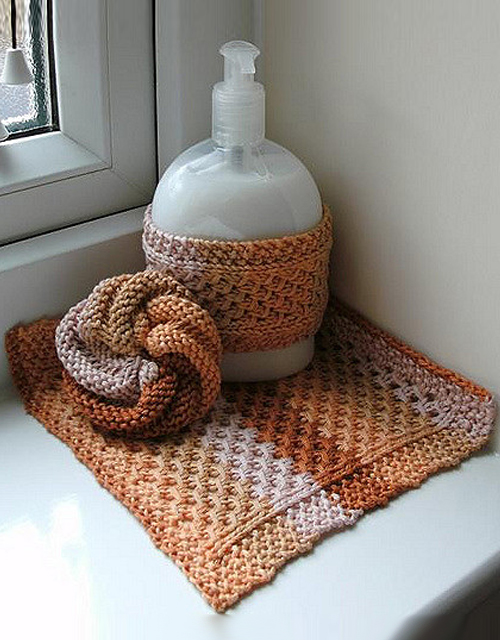
Lace Mesh Wash Cloth - Free Knitting Pattern

Lace Mesh Wash Cloth/Dish Cloth - Free Pattern
Photo above © Coffee & Cream

Lace Mesh Wash Cloth by Selina Kyle is a simple, practical knitting project that combines an open lace-mesh center with a neat seed-stitch border.

It is a useful small project for knitters who want to practice basic lace techniques without committing to a large shawl or garment.

The open mesh gives the cloth a light, flexible texture, while the textured border helps frame the square and gives the design a tidy finished appearance.

Free references to the original pattern are still available online, although the designer's old Coffee and Cream blog is no longer as easy to verify as it once was.

✓ Pattern Availability

Lace Mesh Wash Cloth is a free knitting pattern by Selina Kyle. The pattern has historically been associated with her Coffee and Cream blog and is still referenced by established knitting-pattern directories as a free design.

Lace Mesh Wash Cloth at a Glance

Pattern: Lace Mesh Wash Cloth

Designer: Selina Kyle

Original Blog: Coffee and Cream

Category: Washcloth / Dishcloth

Main Feature: Lace mesh center

Border: Seed stitch

Construction: Worked flat

Good For: Practicing basic lace knitting

Availability: Free pattern references remain online

Why This Wash Cloth Is a Good Learning Project

Lace knitting can look intimidating when you first encounter a large shawl covered in charts and complicated motifs.

A washcloth is a much more manageable place to begin.

Because the project is small, you can practice the relationship between yarn overs and decreases without having hundreds of stitches on your needles.

The Lace Mesh Center

The central feature of the design is a simple open mesh.

Mesh lace is created by deliberately making holes in the knitted fabric, usually through yarn overs balanced by decreases.

The result is lighter and more flexible than a completely solid knitted square.

Why Yarn Overs Matter

A yarn over creates an extra loop on the needle.

When worked correctly, that extra loop becomes the decorative opening visible in the finished lace.

The increase created by the yarn over usually needs to be balanced by a decrease elsewhere in the stitch pattern so the overall stitch count remains controlled.

Watch the Stitch Count

One of the most common mistakes in beginner lace knitting is forgetting either a yarn over or a decrease.

Because the two usually work together, a missing stitch can shift the mesh pattern and make the next row harder to understand.

Count your stitches periodically while learning the repeat.

The Seed Stitch Border

The mesh center is surrounded by a seed-stitch border.

Seed stitch alternates knit and purl stitches to create a small, pebbled texture.

It is particularly useful around washcloths because it gives the edge a visually solid frame around an open center.

Seed Stitch Also Helps Control the Edges

A textured border can help a small knitted square sit more neatly than an unbordered piece of stockinette.

It also gives the cloth additional texture around the outside, which is useful both aesthetically and practically.

A Good Introduction to Reading Your Knitting

This type of project encourages you to recognize the difference between:

  • Knit stitches
  • Purl stitches
  • Yarn-over holes
  • Decreases
  • Border stitches
  • Mesh-pattern stitches

Learning to identify those elements visually makes future lace projects much easier.

Worked Flat

A washcloth like this is worked back and forth in rows rather than in the round.

That makes the project convenient for knitters who are still becoming comfortable with basic needles and turning their work at the end of each row.

Choose a Practical Yarn

For washcloths and dishcloths, cotton is usually a very practical yarn choice.

It is absorbent, washable and shows textured stitches clearly.

However, because the exact original yarn specification is not reliably documented in the current sources we could verify, use the yarn recommendation from the original pattern if you have access to it.

Why We Are Not Giving an Exact Needle Size

Older copies and pattern roundups sometimes repeat specifications without making the original source clear.

Rather than turn an uncertain number into an authoritative-looking recommendation, Amazing Knitting does not list a specific needle size here unless it can be verified from the designer's own pattern record.

Use the needle size recommended by the authorized pattern source or select one that produces a flexible but useful cloth fabric with your chosen yarn.

Solid or Gradient Yarn?

Both can work well.

A solid color makes the lace holes and seed-stitch border very easy to see.

A gradient yarn can create a more decorative effect, and one surviving pattern roundup specifically highlights an ombré version of Selina Kyle's washcloth.

Keep the Mesh Relaxed

Lace usually looks better when it is not worked too tightly.

If your tension is extremely firm, the yarn-over holes may appear small and the mesh may lose some of its open character.

A small swatch can help you decide whether you like the fabric before knitting the entire cloth.

Blocking Can Improve the Lace

Washing and gently shaping the finished cloth can help the mesh settle into a more even appearance.

Always follow the care instructions for the yarn you use.

Cotton may behave quite differently from wool or synthetic fibers, so avoid assuming that every washcloth should be blocked in exactly the same way.

A Quick Skill-Building Project

Small household projects are useful because they let you practice a new technique while still producing something practical.

With Lace Mesh Wash Cloth, you can practice:

  • Knit and purl stitches
  • Seed stitch
  • Yarn overs
  • Basic lace decreases
  • Maintaining a border
  • Reading your knitting
  • Keeping an even stitch count

Washcloth or Dishcloth?

The same basic knitted square can often be used either in the bathroom or the kitchen, depending on yarn choice and personal preference.

For face or body use, choose a yarn that feels comfortable against the skin.

For kitchen use, durability, absorbency and easy washing may be more important.

Make a Coordinated Set

Small cloths are excellent scrap-yarn projects and can also be made in coordinated colors for a handmade gift set.

Pair several washcloths with handmade soap or other bath items for a simple practical gift.

Is Lace Mesh Wash Cloth Still Free?

Current knitting directories still identify Selina Kyle's cloth pattern as a free design.

The exact original Coffee and Cream blog source is old and not as easy to verify today, but Selina Kyle remains identified as the designer and established knitting sites continue to point knitters toward the free pattern.

Amazing Knitting does not reproduce the designer's complete row-by-row instructions here.

Find the Free Pattern

A reliable current route is the Ravelry ecosystem and knitting directories that still identify the original Selina Kyle design.

View Selina Kyle's Knitting Designs →

More Free Washcloth Patterns

If you enjoy quick household knits, you can also explore:

Why This Small Pattern Is Still Useful

Lace Mesh Wash Cloth is not a dramatic garment or a huge heirloom project.

Its value is exactly the opposite: it gives you a small, forgiving project where you can concentrate on the mechanics of lace.

The combination of an open mesh center and textured seed-stitch border makes it a useful bridge between beginner knit-and-purl projects and more elaborate lace knitting.

Pattern credit: Lace Mesh Wash Cloth is attributed to Selina Kyle / Coffee and Cream. Amazing Knitting provides an independent project guide and does not reproduce the designer's complete copyrighted knitting instructions. Please retain the existing photograph and its original credit from the old Amazing Knitting post.

June Bunnies Shawl - Free Knitting Pattern

June Bunnies Shawl - Free Pattern
Photo above © Mardunk

June Bunnies Shawl by Inese Andzane is a soft, customizable triangular lace shawl designed to be simple enough for knitters taking their first steps into lace.

The design alternates relaxing sections of simple knitting with decorative lace insertions, creating an elegant shawl without making every row demanding.

It is also wonderfully flexible: the designer encourages knitters to add as many or as few lace repeats as they like, making it possible to adapt the shawl to different yarns and finished sizes.

Best of all, the original June Bunnies Shawl pattern is still officially available for free.

✓ Free Pattern Availability

June Bunnies Shawl remains available as a free Ravelry download. The designer's original Silver Lining Knits blog post is also still online and identifies the shawl as a free pattern.

June Bunnies Shawl at a Glance

Pattern: June Bunnies Shawl

Designer: Inese Andzane

Published: July 2012

Original Source: Silver Lining Knits

Category: Shawl / Wrap

Shape: Triangle

Construction: Top-down, one piece

Suggested Yarn Weight: Fingering

Published Yardage Range: 400–600 yd / 366–549 m

Size: Customizable

Instructions: Charted and written

Difficulty: Suitable for adventurous lace beginners

Availability: Free Ravelry download

About the June Bunnies Shawl

June Bunnies began with the yarn.

Designer Inese Andzane explains that she had received an exceptionally soft angora, merino and nylon blend and wanted to cast on something immediately.

Because she wanted a project simple enough to knit while watching a movie, she chose a straightforward lace idea and developed it into this triangular shawl.

That relaxed origin is still reflected in the finished design.

Why Is It Called June Bunnies?

The playful name is connected to the yarn used for one of the original shawls.

The soft angora blend reminded the designer of the softness associated with bunnies, giving the project its memorable name.

A Customizable Triangle Shawl

One of the most useful features of June Bunnies is that the finished size is not rigidly fixed.

The designer describes it as a pattern that can be adjusted for different yarn weights and different shawl sizes.

You can add more lace repeats for a larger shawl or use fewer repeats for a smaller accessory.

How Much Yarn Do You Need?

The Ravelry record gives a general range of:

400–600 yards / 366–549 meters

For a full-size shawl in fingering-weight yarn, the designer suggests approximately:

400–500 yards

A finer yarn or a larger shawl may require more.

Fingering Weight Is a Natural Starting Point

Fingering weight is the primary yarn weight associated with the pattern, but the design was intentionally created to be adaptable.

That makes June Bunnies particularly appealing when you have a special skein and want a shawl pattern that does not force you into one exact finished size.

The Original Yarn Inspiration

One of the original versions used a fingering-weight blend of:

  • 40% Angora
  • 40% Merino
  • 20% Nylon

This combination produces a soft fabric with a gentle halo.

Another version was made with a much finer merino, silk and cashmere blend, demonstrating how differently the same design can look when the fiber and yarn thickness change.

There Is No Need to Copy the Original Yarn Exactly

June Bunnies was designed with flexibility in mind.

When substituting yarn, think about the finished fabric you want rather than searching only for an exact discontinued or difficult-to-find yarn.

Consider:

  • Yarn weight
  • Total yardage
  • Drape
  • Fiber content
  • Halo
  • Stitch definition
  • How the yarn behaves after blocking

What Needle Size Should You Use?

June Bunnies is designed to work with different yarn weights, so there is no single needle size that makes sense for every version.

Choose a needle that produces an open, attractive fabric with your selected yarn.

A small swatch is useful if you are unsure whether your yarn and needle combination gives the lace enough room to open after blocking.

Top-Down Construction

June Bunnies is a top-down triangular shawl.

The project begins with relatively few stitches and grows outward as you work.

This construction is especially convenient for a customizable shawl because you can watch the triangle develop and decide how large you want the finished piece to become.

Simple Sections Between the Lace

One of the reasons June Bunnies feels approachable is that the entire shawl is not densely covered in complicated lace.

Decorative lace insertions are separated by simpler sections, giving the knitter periods of more relaxed knitting between the patterned areas.

This creates visual rhythm in the finished shawl and makes the project easier to manage.

A Good First Lace Shawl

The designer specifically describes June Bunnies as well suited to lace beginners.

Experienced lace knitters may also enjoy it as a relaxing project that does not demand constant concentration.

If you already know the basic knit and purl stitches and are ready to practice yarn overs and decreases, this can be an appealing introduction to triangular lace-shawl construction.

Skills You May Practice

  • Top-down shawl construction
  • Yarn overs
  • Lace decreases
  • Reading a lace chart
  • Following written lace directions
  • Maintaining a center line
  • Repeating lace motifs
  • Stretchy binding off
  • Blocking lace

Charted and Written Instructions

June Bunnies is particularly useful for knitters who are still learning how they prefer to follow lace.

The pattern provides both charted and written information, so you can work with the format that feels most comfortable.

Learning to compare the chart with the written instructions can also be a useful way to build chart-reading confidence.

Use a Lifeline While Learning Lace

A lifeline can save a great deal of frustration.

After completing a section you know is correct, thread a smooth contrasting yarn through the live stitches.

If you later make a mistake that requires unraveling several rows, the lifeline gives you a safe place to stop.

Count Your Stitches Regularly

Lace patterns rely on increases and decreases occurring in the correct places.

A forgotten yarn over can affect not only one row but the alignment of the following motif.

Periodic stitch counting helps you catch mistakes while they are still easy to repair.

Blocking Reveals the Lace

Do not judge the finished appearance while the shawl is still bunched together on the needles.

Appropriate blocking opens the lace, evens the stitches and allows the triangular shape to settle.

Always choose a blocking method suitable for the fiber content of your yarn.

Try a Slightly Variegated Yarn

The designer specifically suggests that June Bunnies could look lovely in a slightly variegated yarn.

Because the lace is separated by calmer sections, gentle color variation can add interest without necessarily overwhelming the stitch pattern.

For strongly variegated yarn, however, a swatch is useful to see whether the color changes compete with the lace.

Make It Smaller or Larger

One of June Bunnies' Best Features

The designer intentionally allows you to add as many or as few lace repeats as you like. This means the pattern can become a smaller shawlette or a more generous full-size shawl depending on your yarn supply and preference.

Keep Enough Yarn for the Finish

Customizable shawls create one important planning challenge: it is easy to keep knitting until very little yarn remains.

Remember that you still need enough yarn for the final lace section and bind-off.

If your yarn supply is limited, weighing the remaining yarn between sections can help you make a more informed decision about adding another repeat.

Is June Bunnies Shawl Still Free?

Yes.

June Bunnies Shawl by Inese Andzane remains officially available as a free Ravelry download.

The designer's original Silver Lining Knits blog post is also still online and continues to identify the pattern as free.

Amazing Knitting does not reproduce the designer's complete copyrighted chart or row-by-row instructions. Use the authorized pattern source below for the full directions.

Get the Free June Bunnies Shawl Pattern

The easiest current route is the official Ravelry pattern record:

Get the Free June Bunnies Shawl Pattern →

Visit the Designer's Original Post

You can also visit Inese Andzane's original Silver Lining Knits post introducing the shawl:

Visit the Original June Bunnies Shawl Post →

More Free Lace Shawls

If you enjoy June Bunnies, these verified free patterns in the Amazing Knitting archive are natural next projects:

Explore More Free Shawl Patterns

Before You Cast On

Decide how large you want your June Bunnies Shawl to become and check how much yarn you have available.

The pattern's flexibility means you do not have to reproduce one exact sample size.

Choose a yarn and needle combination that creates a fabric you enjoy, keep track of your lace repeats, and leave enough yarn for the final section and bind-off.

For a first triangular lace shawl, June Bunnies offers a particularly appealing balance: enough lace to learn something new, but enough simple knitting to keep the project relaxing.

Pattern credit: June Bunnies Shawl was designed by Inese Andzane and published through Silver Lining Knits in July 2012. Amazing Knitting provides an independent project guide and does not reproduce the designer's complete copyrighted chart or knitting instructions. Please retain the existing photograph and its original credit from the old Amazing Knitting post.

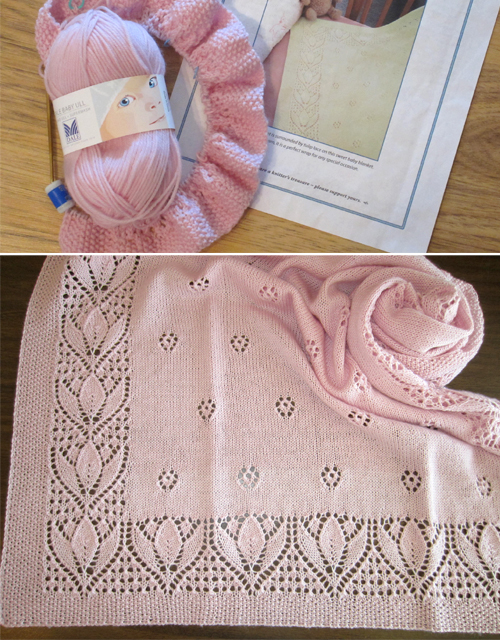
Tulips & Rosebuds Baby Blanket - Knitting Pattern

Tulips & Rosebuds Baby Blanket - Free Pattern
Photos above © KarenFM

The Tulips & Rosebuds Baby Blanket by Eugen Beugler is an elegant lace baby blanket featuring tiny rosebud motifs surrounded by a decorative border of knitted tulips.

Originally published by Fiber Trends, this heirloom-style design combines delicate lace with fine yarn to create a special-occasion baby blanket. The pattern includes both written and charted lace instructions.

Tulips & Rosebuds Baby Blanket at a Glance

Pattern: Tulips & Rosebuds Baby Blanket (CH51)

Designer: Eugen Beugler

Publisher: Fiber Trends

Craft: Knitting

Category: Baby Blanket

Yarn Weight: Fingering

Yardage: About 1,100 yards / 1,006 meters

Needle Size: US 4 / 3.5 mm

Gauge: 24 stitches = 4 inches in stockinette stitch

Finished Size: About 32 × 36 inches / 81 × 91 cm

Construction: One-piece rectangular blanket

Lace Instructions: Written and charted

Pattern Availability: Paid pattern

About the Tulips & Rosebuds Baby Blanket

Designed by Eugen Beugler, Tulips & Rosebuds is an heirloom-style knitted baby blanket built around two delicate floral ideas.

Small rosebud motifs decorate the center of the blanket, while a much more elaborate tulip lace design creates the surrounding border.

The combination gives the blanket an ornate appearance without relying on multiple yarn colors. The flowers are created through the structure of the knitted lace itself.

A Floral Lace Baby Blanket

Floral lace is the defining feature of this design. Instead of adding flowers after the blanket is finished, the rosebuds and tulips emerge as part of the knitted fabric.

The center uses repeating rosebud motifs, while the border introduces the larger tulip lace sections that give the blanket its distinctive frame.

This makes Tulips & Rosebuds especially appealing to knitters who enjoy lace patterns with recognizable botanical motifs.

Written and Charted Instructions

The original pattern provides the lace instructions in both written and charted form.

This is useful because knitters approach lace in different ways. Some prefer following symbols visually on a chart, while others find row-by-row written directions easier to track.

Whichever method you prefer, it is worth using stitch markers and checking your stitch count regularly when working a large lace project.

Finished Blanket Size

The published finished size is approximately:

32 × 36 inches / approximately 81 × 91 cm

This creates a generously sized baby blanket while still keeping the project considerably smaller than a full-size adult throw.

Yarn Requirements

The original pattern calls for approximately:

1,100 yards / 1,006 meters of fingering-weight yarn

Fine yarn helps preserve the definition of the lace motifs and contributes to the delicate appearance of the finished blanket.

When substituting yarn, consider not only the yarn weight but also how well the fiber holds lace definition after washing and blocking.

Needles and Gauge

The published needle size is:

US 4 / 3.5 mm

The listed gauge is:

24 stitches = 4 inches in stockinette stitch

Your individual needle size may need adjustment to achieve the intended gauge and fabric.

Knitting Skills Used

This is a lace project rather than a basic beginner blanket. Helpful skills include:

  • Comfortable knit and purl stitches
  • Reading written lace instructions or charts
  • Yarn overs
  • Lace increases and decreases
  • Keeping track of repeating stitch patterns
  • Checking stitch counts regularly
  • Blocking knitted lace

Knitters new to lace may find it helpful to practice a smaller lace swatch before beginning the full blanket.

Blocking Makes a Difference

Lace often looks very different immediately after it comes off the needles. Careful blocking helps open the eyelets and allows the floral motifs and border to become more visible.

Always follow the care instructions for your chosen yarn and avoid stretching the finished fabric beyond what the fiber can comfortably support.

Important Pattern Update

Fiber Trends has published corrections and updated information for this pattern. Ravelry notes that stitch counts for the Tulip Border section were updated in November 2022. If you are knitting this blanket, use the current official pattern and check the designer/publisher's latest errata rather than relying on an older copy found elsewhere online.

Is the Tulips & Rosebuds Baby Blanket Free?

No. The official Tulips & Rosebuds Baby Blanket (CH51) is currently a paid knitting pattern.

Older pages around the web have sometimes described or redistributed this design as a free pattern. However, the current official listing from Fiber Trends is a paid pattern.

Amazing Knitting does not reproduce the designer's copyrighted lace charts, written row-by-row instructions, or pattern PDF.

Get the Original Tulips & Rosebuds Pattern

Visit the official Ravelry listing for the current pattern, purchase information, project details, and pattern updates.

View the Original Tulips & Rosebuds Pattern →

Pattern credit: Tulips & Rosebuds Baby Blanket (CH51) was designed by Eugen Beugler and published by Fiber Trends. Pattern pricing, availability, errata, and technical information are controlled by the publisher and may change over time.

Looking for a Free Alternative?

If you came to this page specifically looking for a free baby blanket knitting pattern, you do not have to leave empty-handed. Amazing Knitting has other free lace baby blankets in the archive.

Waving Lace Baby Blanket — Free Pattern

This is a different design — not a free version of Tulips & Rosebuds — but it is another elegant knitted baby blanket featuring lace and texture, making it a useful free alternative for knitters drawn to the delicate style of the original.

View the Free Waving Lace Baby Blanket →

More Baby Blanket Knitting Patterns

Explore more baby blanket knitting patterns, lace baby blankets, and free baby blanket knitting patterns from the Amazing Knitting archive.

Before You Start

If you choose the original Tulips & Rosebuds pattern, download or purchase the current official version rather than relying on an old copy circulating elsewhere. Check the latest Fiber Trends corrections, then confirm the yarn, gauge, needle size, stitch counts, and finished measurements before casting on.

Teint de Neige Baby Blanket - Free Knitting Pattern

Blanket with Lacy Pattern - Free Tutorial
Photos above © supergra 

Teint de Neige / DROPS Baby 14-22 is an elegant knitted baby blanket that combines several lace textures in a soft, traditional design.

Designed by DROPS Design and originally published in the DROPS Baby collections, the blanket measures approximately 23½ × 33½ inches (60 × 85 cm). Best of all, the complete original pattern is still available free directly from DROPS Design.

✓ Free Pattern Availability

Teint de Neige / DROPS Baby 14-22 remains available as a free official DROPS knitting pattern. The current DROPS page includes the complete instructions, lace diagrams and an official pattern correction.

Teint de Neige Blanket at a Glance

Pattern: Teint de Neige / DROPS Baby 14-22

Designer: DROPS Design

First Published: January 2006

Craft: Knitting

Category: Baby Blanket

Finished Size: Approx. 23½ × 33½ in / 60 × 85 cm

Suggested Yarn: DROPS Alpaca

Yarn Weight: Sport / 5 ply

Yarn Required: 250 g / 5 skeins

Needle: 3 mm circular needle, approx. 80 cm / 32 in

Gauge: 24 stitches × 32 rows = 4 in / 10 cm in the specified lace sections

Construction: Worked flat on a circular needle

Features: Multiple lace patterns and garter-stitch side borders

Availability: Free official pattern

About the Teint de Neige Baby Blanket

Teint de Neige is a classic lace baby blanket from DROPS Design. Rather than using one stitch repeat from beginning to end, the design combines different lace sections to create changing texture across the length of the blanket.

The off-white color used for the original version gives the project a traditional heirloom appearance and allows the lace structure to remain the main visual feature.

The finished dimensions also make it a practical baby-sized blanket rather than a full-size throw.

Finished Blanket Size

The official finished measurement is approximately:

23½ × 33½ inches / 60 × 85 cm

Remember that lace can change noticeably after washing and blocking. Matching the pattern gauge and treating your swatch in the same way as the finished blanket will give you a better idea of the final fabric.

DROPS Alpaca

The original blanket was designed using DROPS Alpaca.

The official pattern calls for:

250 g / 5 skeins in off-white

DROPS Alpaca is a Sport / 5-ply weight yarn. The relatively fine yarn helps create the delicate appearance of the lace without making the finished baby blanket excessively heavy.

Needles and Gauge

DROPS specifies an approximately 80 cm / 32-inch circular needle in 3 mm.

Although a circular needle is used, the blanket itself is worked back and forth. The circular needle simply provides enough room to comfortably hold the large number of stitches.

For the specified lace sections, the published gauge is:

24 stitches × 32 rows = 4 inches / 10 cm

DROPS also provides a separate width gauge for one of the charted sections, so consult the current official pattern before beginning.

A Blanket Made from Several Lace Sections

One reason Teint de Neige looks more elaborate than many beginner blankets is that the texture changes as the knitting progresses.

DROPS uses several charted stitch patterns rather than simply repeating one motif across the entire blanket.

This creates distinct decorative areas while maintaining a unified monochrome appearance.

Garter-Stitch Side Borders

The decorative lace is framed by simple garter-stitch edges.

These borders provide visual contrast and give the sides of the blanket a cleaner finish.

When working the lace sections, take care to keep the border stitches separate from any increases or decreases that belong only to the main pattern area.

Reading the DROPS Charts

The original pattern uses several DROPS diagrams for the lace sections. The diagrams show the pattern rows as viewed from the right side.

Before beginning a new section, identify the correct diagram and check where its repeat begins and ends.

Amazing Knitting does not reproduce these copyrighted charts. The complete current diagrams are available free on the official DROPS pattern page.

The Two Ends Are Not Identical

There is an interesting detail worth knowing before you begin: DROPS specifically notes that the pattern is not the same at both ends of the blanket.

In other words, do not assume that the second half simply mirrors the first.

Following the sequence of charts in the original instructions is important for reproducing the intended design.

Why a Circular Needle Is Useful

Newer knitters sometimes assume that using a circular needle means the project must be knitted in the round.

That is not the case here.

A circular needle is simply an efficient way to hold the width of a blanket. At the end of each row, the work is turned just as it would be when using straight needles.

Skills That Help

Helpful skills for Teint de Neige include:

  • Casting on and binding off
  • Knitting and purling
  • Working garter stitch
  • Yarn overs
  • Working increases and decreases
  • Reading lace charts
  • Following repeating stitch patterns
  • Keeping accurate stitch counts
  • Working flat on circular needles
  • Blocking knitted lace

Keep Track of Your Stitch Count

Lace knitting depends on increases and decreases balancing correctly. A missed yarn over or an extra decrease can shift the following pattern repeats.

Check your stitch count after important transition rows rather than waiting until the end of a large section.

Stitch markers may also help separate repeats where appropriate.

Consider Adding a Lifeline

If you are less confident with lace, a lifeline can make a large blanket considerably less stressful.

After completing a section correctly, thread a smooth contrasting strand through the live stitches without removing them from the needle.

If you later need to unravel several rows, the lifeline provides a safe point at which to stop.

Choosing a Substitute Yarn

You are not limited to the original off-white DROPS Alpaca, but yarn substitution should be based on more than color.

Look for a yarn that can achieve the required gauge and allows the lace motifs to remain clearly visible.

For a baby blanket, also consider softness, washing requirements, durability and how the chosen fiber behaves after blocking.

Make a Lace Swatch

For this project, a swatch worked only in stockinette will not tell you everything you need to know.

Testing one of the lace sections allows you to check gauge while also seeing whether your yarn provides enough stitch definition for the decorative pattern.

Wash and dry the swatch according to the yarn's care instructions before making your final decision.

Blocking the Finished Blanket

Lace often looks compressed immediately after it comes off the needles. Appropriate blocking allows the decorative openings and lines to settle into their intended shape.

Use a method suitable for your chosen fiber and avoid stretching the blanket far beyond its intended dimensions.

Important Pattern Correction

The official DROPS page states that Teint de Neige has received a pattern correction.

For this reason, knitters should use the current online DROPS version rather than relying solely on an old printed copy, saved transcription or instructions copied to another website many years ago.

This is another reason Amazing Knitting links directly to the current designer/publisher source instead of reproducing the knitting instructions here.

Is Teint de Neige Still Free?

Yes. Teint de Neige / DROPS Baby 14-22 remains available as a completely free knitting pattern directly from DROPS Design.

The official page contains the current instructions, diagrams, measurements and pattern correction.

Amazing Knitting does not reproduce DROPS Design's copyrighted charts or complete row-by-row instructions. This page provides an independent project guide and directs knitters to the legitimate original source.

Get the Free Teint de Neige Pattern

Use the official DROPS Design page for the complete current knitting pattern and diagrams.

Get the Free Teint de Neige Pattern →

More Free Baby Blanket Patterns

If you enjoy Teint de Neige, explore more free lace and baby blanket projects from the Amazing Knitting archive.

Explore Free Baby Blanket Patterns →

You can also browse lace baby blankets, free lace blankets, and DROPS baby blankets.

Before You Start

Open the current DROPS pattern before casting on and review the sequence of lace diagrams. Because the blanket uses several pattern sections, understanding the transitions in advance will make the project easier to follow.

Make a lace swatch, check your gauge and use the current corrected online version of the pattern rather than an old copied set of instructions.

Pattern credit: Teint de Neige / DROPS Baby 14-22 was designed and published by DROPS Design. The existing project photographs on this Amazing Knitting page are credited to supergra. Amazing Knitting does not reproduce DROPS Design's copyrighted charts or complete row-by-row knitting instructions.

Over 50 Websites to Get Free Knitting Patterns

Over 50 Websites to Get Free Knitting Patterns
Designed by © Knit Crush

Looking for free knitting patterns? There are thousands of legitimate patterns available online for baby clothes, sweaters, blankets, scarves, socks, hats, toys and almost every other knitting project you can imagine.

The challenge is no longer simply finding a pattern. It is finding a reliable free pattern from a legitimate source, especially when older Pinterest pins and search results may lead to discontinued pages, outdated downloads or unofficial copies.

This guide will help you find free knitting patterns more safely and efficiently, whether you are searching the Amazing Knitting archive, a designer's website, a yarn company or a large knitting-pattern database.

About This Updated Guide

This Amazing Knitting article was originally published in 2019 as a link to an external roundup of more than 50 free-pattern websites. We have expanded the page into an independent resource for finding legitimate free knitting patterns without reproducing another publisher's list.

Where Can You Find Free Knitting Patterns?

Free knitting patterns are published by many different types of websites.

Some come directly from independent designers. Others are published by yarn manufacturers, knitting magazines, craft websites or pattern databases.

The best source depends on what you are looking for, so it helps to understand the major types of free-pattern resources before beginning your search.

1. Designer Websites

One of the best places to find a knitting pattern is the designer's own website.

Independent designers frequently publish selected patterns free while selling other designs.

Going directly to the designer has several advantages. You are more likely to find the current version of the pattern, corrections, additional photographs and notes from the person who actually created it.

If a pattern has been updated since its original publication, the designer's current page is usually preferable to an old copied version circulating elsewhere.

2. Yarn Company Pattern Libraries

Major yarn companies can be excellent sources of free knitting patterns.

These companies publish patterns to demonstrate how their yarns can be used, which means their libraries often contain projects across many categories and skill levels.

You can find designs for:

  • Baby sweaters and cardigans
  • Baby blankets
  • Adult sweaters and pullovers
  • Hats
  • Scarves and cowls
  • Socks and slippers
  • Shawls
  • Home accessories
  • Seasonal projects

Yarn-company libraries are especially useful because older patterns sometimes remain available long after the original printed booklet has disappeared.

3. Ravelry

Ravelry is one of the most useful resources for researching knitting patterns.

Rather than simply searching the web for a phrase such as “free baby cardigan,” you can narrow results using filters such as category, yarn weight, needle size, age, construction and availability.

Pattern records can also provide useful historical information such as the designer, publication date, suggested yarn and links to the current pattern source.

Remember that a Ravelry record does not automatically mean the pattern itself is still available. Always check the current availability shown on the pattern page.

4. Knitting Magazines and Online Publications

Online knitting magazines have published many excellent free patterns over the years.

Some older designs remain available in permanent online archives, making these publications particularly useful when searching for classic knitting projects.

These sources can also be valuable because they often preserve useful information about the designer, yarn, gauge, construction and original publication date.

5. Large Craft and Pattern Websites

Large craft websites often organize patterns by project type or skill level, which can make them useful when you are looking for inspiration rather than one particular design.

A collection might focus on beginner scarves, baby booties, knitted toys or quick gifts.

When using a roundup, however, follow the link to the original pattern source whenever possible.

6. Knitting Blogs

Knitting blogs remain another useful source of free patterns, tutorials and project inspiration.

Some bloggers are also pattern designers and publish complete original designs. Others curate projects from different designers.

The distinction matters.

When a blog is discussing somebody else's pattern, look for the designer's name and a clear link to the legitimate original source.

7. Vintage and Public-Domain Knitting Resources

Knitters interested in historical projects can also explore digitized vintage knitting books, magazines and pattern leaflets.

Older knitting publications can contain fascinating sweaters, lace, socks, mittens and household projects that differ significantly from modern designs.

However, old does not automatically mean public domain. Copyright status depends on factors including publication date, jurisdiction and publication history.

If you plan to republish rather than simply knit from a vintage pattern, verify its copyright status first.

8. Amazing Knitting

You can also browse the Amazing Knitting archive.

Our library includes hundreds of knitting discoveries covering baby clothes, blankets, sweaters, scarves, hats, socks, slippers, stitches, tutorials and other projects.

We are progressively reviewing older articles to identify original designers, verify pattern availability and direct readers toward legitimate current sources whenever possible.

Browse Free Knitting Patterns →

Free Baby Knitting Patterns

Baby projects are an excellent place to explore free patterns because there are designs for many different skill levels.

You can start with baby cardigans and sweaters:

Explore Free Baby Cardigans →

Or browse baby booties:

Explore Free Baby Booties →

And baby blankets:

Explore Free Baby Blankets →

Free Sweater and Cardigan Patterns

Sweaters range from simple first-garment projects to advanced designs involving cables, lace or colorwork.

When choosing one, pay particular attention to:

  • Finished measurements
  • Recommended ease
  • Gauge
  • Yarn weight
  • Construction method
  • Available sizes
  • Required techniques

Explore Free Sweater Patterns →

Free Blanket Knitting Patterns

Blankets are another large category of free knitting patterns.

Depending on the design, a blanket can be a simple beginner project or an advanced combination of lace, cables, colorwork or modular knitting.

Baby blankets are particularly useful for practicing new techniques on a manageable scale.

Explore Free Blanket Patterns →

Free Scarf and Cowl Patterns

Scarves and cowls are useful projects for testing unfamiliar stitches without committing to the fit requirements of a sweater.

They are also good projects for experimenting with cables, lace, texture and unusual yarn.

Explore Free Scarf Patterns →

How to Tell Whether a Pattern Is Really Free

One of the biggest problems with older knitting links is that pattern availability changes.

A pattern that was free ten years ago may now be paid, discontinued or completely unavailable.

Before calling a pattern free, check the current original source.

Look for clear wording such as:

  • Free pattern
  • Free download
  • Download PDF
  • Pattern available free on the designer's website

If the only evidence that a pattern is free comes from an old Pinterest pin or an old roundup, verify it before downloading.

Free Web Pattern vs. Free PDF

A pattern does not need to include a downloadable PDF to be genuinely free.

Some designers publish the complete pattern as a free webpage while offering an optional printable or ad-free PDF for a fee.

In that situation, describe the availability accurately: free web version with optional paid PDF.

This is more useful than simply labeling everything “free” or “paid.”

Watch for Discontinued Patterns

Older pattern databases can contain records for designs whose original downloads have disappeared.

A historical record is useful for identifying the designer and project, but it does not necessarily provide permission to download a copied PDF from another website.

If the legitimate source is gone, look for a currently available alternative instead of using an unauthorized copy.

Avoid Suspicious Pattern Downloads

Be cautious when a website offers a designer's PDF without clearly identifying itself as the designer, publisher or an authorized distributor.

A safer route is usually:

  1. Identify the exact pattern name.
  2. Identify the designer.
  3. Find the designer or publisher's current page.
  4. Check the current availability.
  5. Download or follow the pattern from that legitimate source.

Check for Pattern Corrections

Another advantage of using the current source is access to corrections and updates.

Designers sometimes discover errors after publication and issue an updated PDF or an errata notice.

An old copy saved elsewhere may not include those corrections.

Check the Yarn Before You Buy It

Older patterns frequently recommend yarns that have since been discontinued.

That does not necessarily make the pattern unusable.

Instead of searching only for the exact old yarn, compare:

  • Yarn weight
  • Gauge
  • Fiber content
  • Yardage or meterage
  • Fabric characteristics

Always make a gauge swatch before committing to a substitute yarn for a fitted garment.

Start with the Project You Want to Make

Searching “free knitting patterns” can return an overwhelming number of results.

A more effective approach is to begin with a specific project:

  • Free newborn cardigan knitting pattern
  • Free baby booties knitting pattern
  • Free cable blanket knitting pattern
  • Free beginner scarf knitting pattern
  • Free top-down sweater knitting pattern
  • Free lace shawl knitting pattern

Then narrow your choices according to yarn weight, size and skill level.

Save the Designer's Name

When you find a pattern you love, save more than the photograph.

Record the pattern name and designer.

This makes it much easier to find the legitimate pattern again if a Pinterest pin, bookmark or old website link stops working in the future.

Our Approach at Amazing Knitting

Amazing Knitting is a curated discovery library rather than the owner of every pattern featured in its archive.

When a project belongs to another designer, our goal is to identify and credit that designer, provide useful independent information about the project and direct knitters to the legitimate pattern source.

If an old pattern that was once free has become paid or unavailable, we aim to make that clear rather than continuing to promise a free download that no longer exists.

Explore Free Knitting Patterns

Ready to find your next project? Browse the Amazing Knitting archive by project type.

Before Downloading a Free Pattern

Take a moment to confirm that you are using the current legitimate version.

Check the designer's name, current availability, size range, yarn requirements and whether any corrections have been published.

A few minutes of checking before casting on can prevent hours of frustration later in the project.

Editorial note: This article was originally published by Amazing Knitting in 2019 as a discovery link to a Knit Crush roundup. It has since been expanded into an original Amazing Knitting resource for finding and evaluating free knitting patterns. The original image used on this page is credited to Knit Crush.

Treasured Heirloom Baby Blanket - Free Pattern

Treasured Heirloom Baby Blanket - Free Pattern
Designed by © Lion Brand

Treasured Heirloom Baby Blanket by Lion Brand is a lovely corner-to-corner knitted blanket that combines relaxing garter stitch with delicate eyelet lace.

The diagonal construction gives this small baby blanket much more visual interest than a basic square, while the repeating garter and lace sections keep the knitting approachable.

Best of all, the original pattern is still available for free from Lion Brand, making this a beautiful choice for a baby gift or handmade keepsake.

✓ Free Pattern Availability

Treasured Heirloom Baby Blanket is currently available as a free knitting pattern from Lion Brand. Use the official Lion Brand page linked below for the complete pattern and current download access.

Treasured Heirloom Baby Blanket at a Glance

Pattern: Treasured Heirloom Baby Blanket

Designer / Publisher: Lion Brand Yarn

Lion Brand Pattern Number: 90485

Category: Baby Blanket / Afghan

Skill Level: Easy (Beginner+)

Original Yarn: LB Collection Cashmere

Yarn Weight: Light / DK

Needles: US 8 / 5 mm circular needle for the 90485 version

Gauge: 17 stitches + 22 rows = 4 in / 10 cm in garter stitch

Finished Size: Approx. 27 × 27 in / 68.5 × 68.5 cm

Construction: One piece, corner to corner

Texture: Garter stitch and diagonal eyelet lace

Availability: Free from Lion Brand

About the Treasured Heirloom Baby Blanket

The Treasured Heirloom Baby Blanket is a classic Lion Brand design that combines a simple diagonal construction with alternating sections of garter stitch and open lace.

Instead of casting on enough stitches for one full side of the blanket, the project begins at a corner and grows diagonally.

Once the blanket reaches its widest point, the shaping reverses and the fabric gradually decreases toward the opposite corner.

Finished Size

The published finished measurement is approximately:

27 × 27 inches / 68.5 × 68.5 cm

This makes it a relatively compact baby blanket that works well for gifting, stroller use or as a handmade nursery keepsake.

Corner-to-Corner Construction

One of the most appealing features of this design is its corner-to-corner construction.

The blanket is worked in one piece, beginning at one corner and increasing to create the first half of the square.

The second half decreases back toward the opposite corner.

This diagonal structure creates strong visual lines even before the lace sections are added.

Garter Stitch and Eyelet Lace

The design alternates comfortable garter-stitch sections with decorative eyelet lace.

This combination is particularly effective in a baby blanket because the garter sections provide texture and structure while the lace keeps the overall fabric visually light.

It also gives the knitter a pleasant rhythm: simple knitting is broken up by sections that require a little more attention.

Skill Level

Lion Brand classifies Treasured Heirloom Baby Blanket as:

Level 2 — Easy (Beginner+)

It is therefore a good next project for a knitter who is comfortable with basic knit stitches and wants to begin exploring simple lace, increases and decreases.

Original Yarn

Lion Brand pattern 90485 was designed using LB Collection Cashmere.

This is the version historically known as the Treasured Heirloom Baby Blanket.

The luxurious cashmere yarn helps explain the “heirloom” name, but you do not need to use the original yarn to enjoy the design.

An Interesting Pattern History

Treasured Heirloom Baby Blanket belongs to a family of Lion Brand versions built from the same basic pattern.

The design has also appeared under the name Diagonal Eyelet Baby Blanket and later as Diagonal Eyelet Baby Afghan.

The basic instructions, gauge and finished dimensions are the same, while Lion Brand changed the suggested yarn and needle size for different versions.

This is useful information if you encounter another Lion Brand version of the blanket while searching online.

Needles

For the Treasured Heirloom version (pattern 90485), the published needle is:

US 8 / 5 mm circular needle, approximately 29 in / 73.5 cm long

A circular needle is useful for holding the growing number of stitches, even though the blanket itself is worked back and forth rather than joined in the round.

Gauge

Lion Brand gives the following gauge:

17 stitches + 22 rows = 4 inches / 10 cm in garter stitch

Gauge is not only about matching a number. It affects the finished size, drape and amount of yarn your blanket will require.

Choosing a Substitute Yarn

The original cashmere creates a very soft and luxurious blanket, but many knitters will prefer a more practical yarn for everyday baby use.

When substituting, consider:

  • Softness against sensitive skin
  • Washability
  • Good stitch definition for the eyelet sections
  • Enough drape for a comfortable blanket
  • The published gauge
  • Care instructions suitable for the recipient

A washable DK or similar yarn that achieves the required gauge can be a practical choice for a frequently used baby blanket.

Do Not Choose Yarn by Weight Label Alone

An interesting detail about this Lion Brand design is that different published versions have recommended different yarns.

For that reason, matching the 17-stitch garter gauge and the fabric you want is more useful than relying only on the yarn-weight name printed on a label.

Make a swatch before committing to the entire blanket if finished size is important to you.

Why the Diagonal Layout Works So Well

Knitting a square diagonally creates natural visual movement from one corner to another.

In Treasured Heirloom, the eyelet panels emphasize those diagonal lines and make a relatively simple square blanket look much more elaborate.

This is one reason the design can look impressive without requiring extremely complicated knitting.

Keeping the Lace Sections Accurate

The eyelet sections depend on increases and decreases being correctly positioned.

If you miss a yarn over or decrease, the problem may affect both the appearance of the lace and your stitch count.

Check your work at the end of each lace section instead of waiting until much later in the blanket.

Use Lifelines If You Are New to Lace

If this is one of your first lace projects, a lifeline can make the experience much less stressful.

Insert a contrasting thread through a known-correct row before a lace section. If something goes seriously wrong, you have a safe point to return to.

Watch the Center Transition

A corner-to-corner blanket has an important transition where the increasing half becomes the decreasing half.

Mark this point carefully in your pattern or row notes so that you do not continue increasing beyond the intended size.

Keep Simple Project Notes

The repeating sections make this an excellent project to pick up and put down, but only if you know where you stopped.

Record whether you are in a garter or lace section and note your current row before putting the project away.

A simple row counter or paper checklist is enough.

Blocking the Finished Blanket

Blocking can make a noticeable difference to this design because it helps the eyelets open and allows the diagonal square to settle into an even shape.

Use a blocking method appropriate for your chosen yarn and arrange the four sides evenly without overstretching the lace.

Baby Blanket Safety and Practicality

For a baby project, yarn choice and finishing deserve as much attention as appearance.

Secure all yarn ends carefully and avoid adding loose decorative elements that could detach.

Always follow current safe-sleep guidance when deciding how and when a handmade blanket is used around an infant.

Skills Used in Treasured Heirloom Baby Blanket

  • Garter stitch
  • Working flat on circular needles
  • Increasing
  • Decreasing
  • Yarn overs
  • Simple eyelet lace
  • Corner-to-corner construction
  • Maintaining stitch counts
  • Blocking

Is Treasured Heirloom Baby Blanket Still Free?

Yes.

Lion Brand currently maintains an official page for the Treasured Heirloom Baby Blanket Pattern (Knit), pattern number 90485, with free pattern access.

Amazing Knitting does not reproduce Lion Brand's complete copyrighted knitting instructions. Use the official Lion Brand page for the current pattern.

Get the Free Treasured Heirloom Baby Blanket Pattern

Visit Lion Brand for the official pattern:

Get the Free Treasured Heirloom Baby Blanket Pattern →

More Free Baby Blankets on Amazing Knitting

If you like this combination of texture and lace, we have already verified several other free baby blanket patterns in the Amazing Knitting archive.

Or explore:

Before You Start

Download or open the current Lion Brand pattern first, then make a small garter-stitch swatch if you are substituting yarn.

Pay attention to the transition from increasing to decreasing and check your stitch count after the lace sections.

Once you understand the corner-to-corner rhythm, this becomes a satisfying combination of relaxing garter stitch and just enough lace to keep the project interesting.

Pattern credit: Treasured Heirloom Baby Blanket is a Lion Brand Yarn design, pattern 90485. The existing image on this Amazing Knitting page is credited to Lion Brand. Amazing Knitting provides an independent project guide and does not reproduce Lion Brand's complete copyrighted knitting instructions.
Discover More From the Archive

A fresh mix of knitting patterns and tutorials from the Amazing Knitting archive.

Finding patterns from the archive…