Skip to content

...

Showing posts sorted by relevance for query novelty hat knitting. Sort by date Show all posts

Sandleford - Free Pattern

Sandleford - Free Pattern
Sandleford by RS Knits © Russell Sansom

Sandleford by Russell Sansom of RS Knits is a whimsical rabbit-inspired knitted hat designed for teens and adults. With its playful ears and colourwork details, it is a wonderful choice for knitters looking for something more imaginative than a traditional winter hat.

The design takes its name and inspiration from Watership Down by Richard Adams. Best of all, the Sandleford knitting pattern is still available as a free downloadable pattern.

✓ Free Pattern Availability

Good news: unlike many older knitting patterns whose availability has changed over the years, Sandleford is still listed as a free downloadable knitting pattern. Always use the current legitimate pattern source rather than copies reproduced by unrelated websites.

Sandleford Hat at a Glance

Pattern: Sandleford

Designer: Russell Sansom / RS Knits

Craft: Knitting

Category: Hat

Theme: Rabbit-inspired novelty hat

Sizes: Teens to Adults

Suggested Yarn: John Arbon Textiles Knit By Numbers DK

Yarn Weight: DK

Language: English

Current Availability: Free downloadable pattern

About the Sandleford Hat

Sandleford is one of those knitting projects that immediately stands apart from an ordinary beanie.

Designed by Russell Sansom, the hat combines a practical knitted accessory with a playful rabbit theme. The prominent ears and contrasting colours give the finished hat plenty of character without turning it into a conventional stuffed-toy project.

The original design is shown in a combination of pink and neutral shades, but the colour palette can be one of the most enjoyable parts of planning your own version.

Inspired by Watership Down

The name Sandleford is a reference to Watership Down, Richard Adams' classic novel about a group of rabbits searching for a new home.

Sandleford Warren is the original home of the rabbits at the beginning of the story, which makes the name particularly appropriate for a rabbit-inspired hat.

You do not need to know the novel to enjoy the pattern, of course, but the literary connection gives the design an extra layer of personality.

Choosing Colours for Sandleford

The original Amazing Knitting feature highlighted John Arbon Textiles Knit By Numbers DK minis, which make it possible to experiment with different colour combinations.

You could keep the soft pink-and-neutral appearance of the photographed version or create something completely different.

Some colour ideas include:

  • Natural rabbit shades such as cream, grey, brown and oatmeal
  • Pink with a soft neutral contrast
  • Black and white for a graphic look
  • Pastel combinations for a softer version
  • Bright contrasting colours for a playful fantasy rabbit

If substituting yarn, use the designer's current pattern specifications and check your gauge rather than relying only on the DK label.

A Fun Use for DK Yarn

Novelty hats can be particularly useful projects for leftover or small-quantity yarn because contrasting details do not necessarily need the same quantity as the main hat colour.

Before using leftovers, however, make sure the yarns behave similarly. Combining fibres with very different stretch, washing requirements, or thickness can affect the finished shape.

Who Is Sandleford Designed For?

The original description lists Sandleford for teens through adults.

That makes it different from many rabbit and animal hats designed only for babies or young children. Sandleford embraces the novelty-hat idea for older knitters and wearers as well.

Skills That Help

Before starting, read the complete designer pattern to see the exact techniques required. In general, useful skills for a shaped novelty hat of this type can include:

  • Casting on and binding off
  • Knit and purl stitches
  • Working decreases for hat shaping
  • Following colour changes
  • Working small shaped pieces
  • Reading written knitting instructions
  • Finishing and securing yarn ends

Use the original pattern for the exact construction, stitch counts, shaping and finishing instructions.

Is Sandleford Still a Free Knitting Pattern?

Yes. During our latest review, Sandleford was still listed as a free downloadable English-language knitting pattern.

This is especially useful to confirm for an older pattern because free knitting patterns sometimes move, become paid, or disappear completely after their original publication.

Amazing Knitting does not reproduce Russell Sansom's copyrighted row-by-row instructions. Instead, use the legitimate current pattern listing to obtain the designer's pattern.

Get the Free Sandleford Knitting Pattern

The current LoveCrafts listing provides the downloadable pattern.

Find the Free Sandleford Pattern →

Look for Sandleford by Russell Sansom / RS Knits on the free hat patterns page.

More Free Knitted Hats

If you enjoy unusual hat projects, continue exploring the Amazing Knitting archive for more free designs.

Explore Free Hat Knitting Patterns →

You can also browse animal-inspired knitted hats, DK hat patterns, and novelty knitting projects.

Before You Start

Download the current designer pattern first and read it completely before choosing your yarn. Confirm the required quantities, gauge, needle sizes, construction method and finishing instructions from the pattern itself.

If you substitute colours, it can help to place the yarns next to each other before casting on so you can check whether there is enough contrast for the rabbit details to remain clearly visible.

Pattern credit: Sandleford was designed by Russell Sansom / RS Knits. The existing project image on this Amazing Knitting page is credited to Russell Sansom. Amazing Knitting does not reproduce the designer's copyrighted knitting instructions.

Gingerbread Hat – Free Cable Knit Hat Pattern

Gingerbread Hat free cable knitting pattern by Angela Whisnant

Gingerbread Hat by Angela Whisnant is a classic cable-knit hat with a wonderfully simple repeating texture. Originally published in 2008, it has become a popular quick-knit project for children, teens and adults.

The design features a bold six-stitch cable worked in a short six-row repeat. The result is a cozy Aran-style hat that looks impressive without requiring an overly complicated cable pattern.

Best of all, Angela Whisnant currently provides the original Gingerbread Hat pattern free on her Rainy Day Crafts website. A printable ad-free PDF is also available separately from the designer, but you do not need to purchase it to access the free pattern.

Gingerbread Hat at a Glance

  • Pattern: Gingerbread Hat
  • Designer: Angela Whisnant
  • First published: October 2008
  • Category: Beanie / toque
  • Yarn weight: Aran
  • Suggested yarn: Lion Brand Fishermen's Wool
  • Needles: US 8 / 5 mm
  • Gauge: 5 stitches and 6 rows = 1 inch
  • Sizes: Small, Medium and Large
  • Main feature: Six-stitch cable
  • Cable repeat: Six rows
  • Pattern language: English
  • Current availability: Free on the designer's website

A Classic Cable Hat With a Short Repeat

The main attraction of Gingerbread Hat is its strong vertical cable texture.

Angela Whisnant adapted an Aran-style stitch idea into a six-stitch cable and built the hat around a manageable six-row repeat.

Short repeats are particularly useful in hat knitting because they quickly become familiar. After working several repeats, you can begin to recognize where each cable crossing belongs simply by looking at the fabric.

The Story Behind Gingerbread Hat

Gingerbread Hat was Angela Whisnant's first knitting pattern.

The designer explains that she created it because she could not find the particular cabled hat she wanted to make. She found an Aran stitch pattern she liked, modified the cable from four stitches to six and developed the hat around it.

The original small size was written for her daughter Emma, who was approximately seven years old at the time.

Angela then calculated additional medium and large sizes so the design could also work for tweens, teens and adults.

Three Useful Sizes

The original Gingerbread Hat includes Small, Medium and Large sizes.

The small version was originally designed for a school-age child, while the additional sizes extend the pattern into tween, teen and adult territory.

This makes Gingerbread Hat particularly useful when you want to knit coordinating hats for several members of a family.

Aran-Weight Yarn

The pattern is designed for Aran-weight yarn.

Lion Brand Fishermen's Wool is the yarn associated with the original pattern, but the design can work in a variety of suitable yarns when the correct gauge is achieved.

Cables usually look best in yarn with clear stitch definition. A smooth wool or wool-blend yarn allows the twists and raised columns to remain visible.

Choosing Yarn for a Cable Hat

The cable pattern is the visual focus of Gingerbread Hat, so yarn choice matters.

Look for yarn that:

  • Shows cable definition clearly
  • Feels comfortable against the forehead
  • Has enough elasticity for a fitted hat
  • Produces a warm but flexible fabric
  • Matches the required gauge

Very fuzzy novelty yarn can hide some of the cable detail, while a smooth Aran yarn generally makes the pattern easier to see.

Solid Colors Show the Cables Beautifully

A solid or gently heathered yarn is an excellent choice for this design.

The shadows created by the raised cable columns provide plenty of visual interest without requiring multiple colors.

Traditional cream, oatmeal and natural wool shades emphasize the Aran character of the pattern, while darker or brighter colors can give the same design a more contemporary appearance.

Needle Size

The published pattern uses US 8 / 5 mm needles.

Treat the listed needle size as a starting point rather than an absolute rule. Your personal knitting tension and yarn choice determine whether you need a slightly larger or smaller needle.

Gauge Matters in a Hat

The published gauge is approximately 5 stitches and 6 rows per inch.

Unlike a scarf or blanket, a hat needs to fit a head comfortably. Significant differences in stitch gauge can therefore make the finished hat too tight or too loose.

A small gauge swatch is worthwhile, especially if you are substituting yarn.

Practice the Cable Before Casting On

If cable knitting is new to you, try the six-stitch cable on a small swatch first.

Practicing separately allows you to learn how the cable crossing works without also worrying about hat sizing and shaping.

Once you understand the movement of the stitches, the repeating cable becomes much easier to recognize.

What Is a Knitted Cable?

Cable knitting changes the order of a small group of stitches before they are worked.

Holding some stitches temporarily in front of or behind the work causes the knitted columns to cross over one another.

Repeating those crossings vertically creates the twisted, rope-like texture associated with traditional cable and Aran knitting.

Why the Six-Row Repeat Is Helpful

Complicated cable projects can contain long charts or many different crossing rows.

Gingerbread Hat is much easier to memorize because the main cable sequence repeats over only six rows.

Once you recognize the cable-crossing row, the rows between crossings become much easier to track.

Use a Row Counter

A row counter is one of the simplest ways to keep the cable crossings evenly spaced.

Reset or mark your counter at the beginning of each repeat so you always know where the next cable row belongs.

A six-line checklist on a piece of paper works just as well if you prefer not to use a physical or digital counter.

Learn to Read Your Cable

As the hat grows, look closely at the distance between cable crossings.

After several repeats, you should begin to recognize visually when the next crossing is approaching.

Learning to read the knitted fabric provides an extra safeguard against accidentally working too many or too few rows between cables.

Keep Cable Tension Relaxed

Cable crossings naturally pull the fabric inward.

Avoid tightening the stitches excessively when working the crossing itself. Keeping a relaxed, consistent tension helps the cable columns look smooth rather than pinched.

Is Gingerbread Hat Beginner Friendly?

Gingerbread Hat is a good introduction to cable knitting for someone who already understands the basic knit and purl stitches.

The hat is more involved than a plain ribbed beanie, but the short repeat makes it considerably more approachable than many elaborate cable designs.

If this is your first cable project, practicing the cable separately before starting the hat can make the project much more comfortable.

Skills That Will Help

  • Casting on
  • Knit stitches
  • Purl stitches
  • Working ribbing
  • Using a cable needle
  • Crossing cable stitches
  • Following a repeating stitch pattern
  • Working decreases for crown shaping
  • Binding off or finishing remaining crown stitches
  • Weaving in yarn ends

Use Stitch Markers When Helpful

Stitch markers can make it easier to see where one cable section ends and another begins.

This is particularly useful during the first few repeats, before the vertical structure of the hat becomes obvious.

Check Your Stitch Count

Count your stitches periodically, especially after working a difficult cable row or crown-shaping section.

Catching a missing or accidental extra stitch quickly is much easier than discovering the problem several cable repeats later.

Try the Hat On During the Project

When your knitting method allows it, checking the developing hat against the intended wearer's head can help confirm that the size is appropriate.

Remember that knitted hats usually rely on some negative ease so they remain comfortably in place rather than matching the exact head circumference without stretch.

A Quick Gift-Knitting Project

Angela Whisnant describes Gingerbread Hat as a quick project suitable when you need a knitted gift without committing to a large garment.

Aran-weight yarn builds fabric relatively quickly, while the repeating cables make the project look more elaborate than a basic beanie.

That combination makes it especially attractive for winter and holiday gift knitting.

Make Several in Different Colors

Because the pattern comes in several sizes and works with many yarn colors, it can easily become a repeat project.

A natural wool shade creates a traditional cable hat, while charcoal, navy or forest green produces a classic winter accessory.

Brighter shades can turn the same pattern into a playful hat for a child or teenager.

Blocking a Cable Hat

Gentle blocking can help the cable stitches settle and make the finished fabric look more even.

Avoid stretching the hat excessively during blocking because that can reduce the elasticity needed for a comfortable fit.

Always follow the washing and blocking recommendations for your chosen yarn.

Why Gingerbread Hat Is Still Popular

Gingerbread Hat has been available since 2008 and has accumulated well over a thousand documented knitting projects.

Its longevity is easy to understand: the design combines a classic cable texture, practical sizing and a repeat short enough to become familiar quickly.

It also remains particularly valuable because the designer continues to make the original instructions available free on her own website.

Free Gingerbread Hat Knitting Pattern

Gingerbread Hat by Angela Whisnant is currently available as a free knitting pattern from the designer.

Angela publishes the original instructions on her Rainy Day Crafts website. She also offers an optional printable ad-free PDF through her shop for knitters who prefer that format.

The free webpage is therefore our preferred link: it is the exact Gingerbread Hat featured here and comes directly from the pattern designer.

Pattern availability can change over time, so Amazing Knitting gives priority to a legitimate free source whenever the exact pattern remains officially available at no cost.

Get the Free Gingerbread Hat Pattern

Visit Angela Whisnant's Rainy Day Crafts page to read the complete original Gingerbread Hat knitting pattern for free.

Get the Free Gingerbread Hat Knitting Pattern →

Gingerbread Hat is designed by Angela Whisnant. Amazing Knitting does not reproduce the designer's copyrighted row-by-row instructions. The original pattern is currently published free on the designer's website. Availability may change, so please check the linked source for the latest information.

Read Our Pattern Availability Policy →

103 Free Knitting Patterns for Women, Men & Kids

103 free knitting patterns for women men and kids including hats scarves sweaters socks and baby knits

103 Free Knitting Patterns collection. Original collection by Alea Milham / Premeditated Leftovers.

Looking for your next knitting project? This collection brings together 103 free knitting patterns for women, men and children, with ideas ranging from quick hats and scarves to sweaters, socks, boot cuffs and adorable baby knits.

The original collection was curated by Alea Milham for Premeditated Leftovers and includes projects for different skill levels, from approachable beginner-friendly knits to more detailed intermediate and advanced patterns.

Rather than reproducing the original list here, this guide will help you understand what you can find in the collection, choose a project that matches your skills and yarn, and explore additional free knitting resources on Amazing Knitting.

What's Included in the 103 Free Knitting Patterns?

One of the strengths of this collection is its variety. It is not limited to one type of garment or one age group.

The original roundup is organized into patterns for women, men, kids and babies, covering everything from accessories to garments.

Free Knitting Patterns for Women

The women's section offers one of the widest selections in the original collection, with projects for both quick knitting and more ambitious wardrobe pieces.

Categories include:

  • Knitted hats and berets
  • Scarves, cowls and infinity scarves
  • Sweaters, cardigans and wraps
  • Socks
  • Boot cuffs

This variety makes the collection useful whether you want a small accessory for a weekend project or a larger garment that will keep your needles busy for longer.

Free Hat Knitting Patterns for Women

Hats are a practical place to begin when browsing a large knitting collection because they are generally smaller than sweaters and offer opportunities to practice shaping, knitting in the round, texture and decorative techniques.

The original roundup includes simple hats as well as more detailed designs featuring lace, unusual shaping and other techniques.

When choosing a hat pattern, check the recommended yarn weight and finished circumference rather than selecting a project based only on appearance.

Free Scarf and Cowl Knitting Patterns

Scarves and cowls are another major category in the collection.

They range from relatively straightforward designs to projects using lace and more decorative stitch patterns.

A scarf can be particularly useful for practicing a new technique because fit is generally less critical than it is with a sweater, sock or fitted hat.

Free Sweater Knitting Patterns for Women

If you are ready for a larger project, the original collection also includes women's sweaters and wraps.

Garment knitting requires a little more planning than making a scarf or hat. Before choosing a sweater, check:

  • The available finished sizes
  • The designer's intended ease
  • Gauge and recommended yarn weight
  • Construction method
  • Required techniques
  • Approximate yarn quantity

Taking time to understand these details before casting on can prevent many common fit problems later.

Free Sock and Boot Cuff Patterns

The women's portion of the collection also includes knitted socks and boot cuffs.

Socks are excellent projects for learning small-circumference knitting, heel construction and shaping, while boot cuffs can provide a much quicker introduction to knitting accessories for the legs.

If you are new to sock knitting, look carefully at the listed difficulty level and techniques before choosing your first pair.

Free Knitting Patterns for Men

Finding a varied group of free men's knitting patterns can sometimes be more difficult than finding women's accessories, so the men's section is particularly useful.

The original roundup includes:

  • Men's hats
  • Scarves
  • Sweaters and pullovers
  • Socks
  • Slippers

These range from straightforward everyday accessories to more involved cable and garment projects.

Free Hat Patterns for Men

A knitted hat is one of the most useful handmade gifts for men because it can be practical, relatively quick and easy to customize through yarn and color.

The collection includes both simple designs and hats using techniques such as cables, earflaps and more distinctive shaping.

For gift knitting, pay particular attention to head circumference and the amount of negative ease intended by the designer.

Free Men's Scarf Patterns

Men's scarves offer plenty of room to experiment with texture while keeping construction relatively simple.

When choosing a scarf for everyday wear, consider not only the stitch pattern but also the fiber. Softness matters because the finished scarf will be worn directly against the neck.

Free Men's Sweater Patterns

The roundup also includes men's sweaters, ranging from simpler garments to cable designs.

Before beginning any sweater, take accurate body measurements and compare them with the pattern's finished dimensions.

Do not automatically choose a size based only on a familiar clothing label. Knitting-pattern sizing and intended ease can vary significantly between designers.

Free Men's Sock and Slipper Patterns

Socks and slippers can make useful handmade gifts and allow you to work with smaller amounts of yarn than a full sweater.

The original collection includes several styles and difficulty levels, so check construction details before deciding which one best matches your experience.

Free Knitting Patterns for Kids and Babies

The children's section adds another useful group of projects to the collection, including accessories, garments and footwear.

Categories include:

  • Kids' and baby hats
  • Children's scarves
  • Baby and kids' sweaters
  • Baby booties
  • Children's slippers and socks

Small children's projects can be satisfying choices when you want to practice garment or accessory construction on a smaller scale.

Free Baby and Kids' Hat Patterns

Children's hats are among the most playful projects in the original roundup.

The collection includes simple styles alongside novelty and character designs, making this category particularly useful when you are knitting a personalized gift.

Always choose size by the designer's measurements whenever possible, since children's head sizes can vary considerably even at the same age.

Free Sweater Patterns for Babies and Kids

Baby and children's sweaters provide an opportunity to practice garment construction without the yarn commitment of a full adult sweater.

When selecting a children's garment, consider washability as well as softness. Easy-care yarn can make a handmade sweater much more practical for parents.

Free Baby Booties and Slipper Patterns

The collection finishes with small footwear projects for babies and children, including booties, slippers and socks.

These can be excellent gift projects because they are compact and often require relatively little yarn.

Fit still matters, however, so check gauge and finished measurements carefully even when the project is tiny.

Easy, Intermediate and Advanced Knitting Patterns

Another useful feature of the original 103-pattern roundup is that many projects are identified by general difficulty level: Easy, Intermediate or Advanced.

Treat those labels as a starting point rather than an absolute rule. Difficulty can feel very different depending on which techniques you already know.

How to Choose a Pattern for Your Skill Level

Instead of looking only at a pattern's difficulty label, scan its techniques before starting.

For example, a project may involve:

  • Knitting and purling
  • Working in the round
  • Increasing and decreasing
  • Cables
  • Lace and yarn overs
  • Colorwork
  • Short rows
  • Picking up stitches
  • Seaming
  • Garment shaping

A pattern labeled intermediate may feel quite manageable if you already know its main techniques, while an otherwise simple pattern can feel challenging if it introduces several skills that are new to you.

Good Projects for Beginning Knitters

If you are still building confidence, start by looking for patterns with straightforward construction and familiar stitches.

Scarves, simple cowls, boot cuffs and basic hats can often provide a manageable next step after learning the knit and purl stitches.

Once those skills feel comfortable, you can gradually add shaping, circular knitting, cables, lace or garment construction.

Choosing Yarn for a Free Knitting Pattern

Finding a free pattern is only the beginning. Choosing appropriate yarn is one of the most important steps before casting on.

Start with the yarn weight and gauge specified by the designer rather than choosing a substitute based only on appearance.

Two yarns described with the same general weight can still behave differently because of fiber content, construction and elasticity.

Can You Substitute the Recommended Yarn?

In many knitting projects, yes—but substitution should be based on more than matching the yarn-weight label.

Compare:

  • Gauge
  • Fiber content
  • Yardage per ball or skein
  • Fabric drape
  • Elasticity
  • Care instructions

Make a swatch for projects where finished size matters, especially sweaters, hats, socks and fitted children's garments.

Why Gauge Matters

Gauge tells you how many stitches and rows your knitting produces over a specific measurement.

If your gauge differs significantly from the designer's, a fitted project may come out larger or smaller than intended even when you follow the correct size instructions.

This is why a gauge swatch is worth the extra time for garments and other size-sensitive projects.

Choosing a Project for Gift Knitting

Many of these 103 free patterns can be used for handmade gifts.

Before choosing one, consider how much time you have, whether you know the recipient's measurements and how easy the finished item will be to care for.

Hats, scarves, cowls, baby accessories and slippers can be easier gift projects when precise garment sizing is unavailable.

Check Pattern Availability Before You Cast On

The original 103-pattern collection was published in 2016. Over time, independent knitting websites can move, designers can change how their patterns are distributed, and old links can disappear.

For that reason, always check the current designer or publisher page before buying yarn for an older free pattern.

A pattern that was free when an older roundup was published is not guaranteed to remain free forever.

More Free Knitting Patterns on Amazing Knitting

If you prefer smaller, recently reviewed collections, Amazing Knitting also maintains curated pattern guides organized around specific project types.

7 Free Baby Blanket Knitting Patterns →

9 Free Baby Sweater & Cardigan Knitting Patterns →

7 Free One-Skein Knitting Patterns →

9 Free Baby Hat & Booties Knitting Patterns →

Explore the Original 103 Free Knitting Patterns

The complete original roundup was curated by Alea Milham for Premeditated Leftovers and includes links to knitting patterns for women, men, children and babies.

Because it is an older collection, availability may have changed for individual patterns. Check each designer's current page before starting a project.

Explore the Original 103 Free Knitting Patterns →

The original 103-pattern roundup and its selection belong to Premeditated Leftovers. Amazing Knitting does not reproduce the individual designers' copyrighted pattern instructions. Pattern availability and terms are determined by each designer or publisher.

Easy Knitting Projects for Beginners - Where to Start

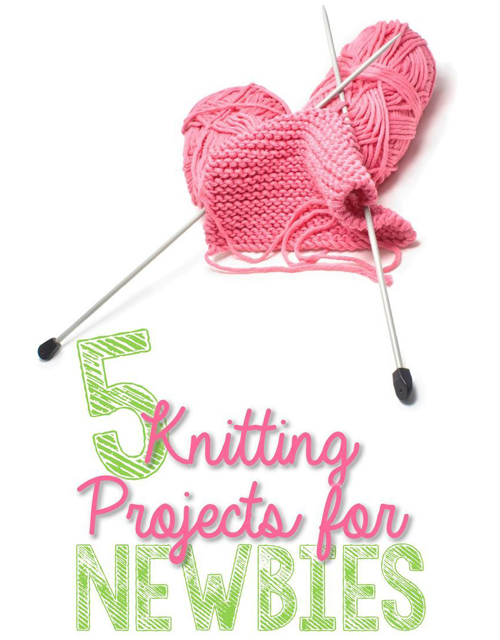
Knitting Projects for Newbies
Photo above © You put it up

Looking for your first knitting project can be more confusing than learning the knit stitch itself.

Hundreds of patterns are described as "easy" or "beginner friendly," but not every easy-looking project is suitable for someone who has only just picked up knitting needles.

A good first project should help you practice a small number of skills, give you visible progress, and be forgiving enough that a few uneven stitches do not ruin the finished result.

This guide will help you choose beginner knitting projects in a sensible order — from simple rectangular pieces to hats, baby projects, lace and your first sweater.

Beginner Knitting Guide

This page is an independent Amazing Knitting learning resource rather than one specific knitting pattern. Use it to choose a project that matches the skills you already know and the skill you want to learn next.

What Makes a Good First Knitting Project?

The best beginner project is not necessarily the smallest or the simplest-looking project.

A useful first project usually has several of these characteristics:

  • A manageable number of stitches
  • Little or no complicated shaping
  • A short repeating stitch pattern
  • Yarn that is easy to see and handle
  • Enough repetition to build muscle memory
  • A finished item you actually want to use

Your first few projects should gradually introduce new techniques rather than requiring you to learn everything at once.

Skills to Learn Before Your First Project

You do not need to know dozens of knitting techniques before starting.

For a very simple first project, focus on:

  • Making a slip knot
  • Casting on stitches
  • The knit stitch
  • Keeping stitches on the needle
  • Binding off
  • Weaving in yarn ends

Once those movements feel comfortable, add the purl stitch, decreases, increases and circular knitting one project at a time.

1. Start with a Garter Stitch Scarf

A garter stitch scarf remains one of the most practical first knitting projects.

When worked flat, you can create garter stitch simply by knitting every row.

That gives you time to practice:

  • Holding the needles
  • Controlling yarn tension
  • Recognizing stitches
  • Turning your work
  • Binding off

The shape is just a rectangle, so there is no garment fitting or complex shaping to worry about.

Why a Scarf Is Useful for Learning

Repetition is one of the fastest ways to make the basic knitting movement feel natural.

A scarf gives you hundreds of opportunities to repeat the same motion while still producing something useful.

The main disadvantage is that a full-length scarf can take time, so a small headband or cowl may be more motivating if you prefer quick projects.

2. Try a Dishcloth or Washcloth

A knitted washcloth is a good alternative when you want a project that finishes quickly.

It gives you a small square where you can practice basic stitches without worrying about exact garment fit.

Cotton yarn is commonly chosen for washable household cloths.

Once you know the knit stitch, a washcloth can also become your practice space for:

  • Purl stitches
  • Seed stitch
  • Ribbing
  • Simple eyelets
  • Textured stitch patterns

3. Knit a Simple Cowl

A cowl can feel more like a finished wearable than a practice square while still remaining relatively simple.

Some beginner cowls are worked flat as rectangles and seamed at the end. Others introduce circular needles and knitting in the round.

Choose the flat version first if circular knitting is still unfamiliar.

4. Try an Easy Baby Blanket

A baby blanket can be an excellent first larger project because it does not require body measurements or garment shaping.

Simple blanket patterns often repeat the same stitches across many rows, allowing you to improve consistency.

The main consideration is commitment: even a baby blanket contains many more stitches than a washcloth or headband.

Free Beginner Blanket Idea: Waffle Blanket

Once you are comfortable maintaining a repeating texture, explore the free Waffle Blanket pattern in the Amazing Knitting archive.

Explore the Waffle Blanket →

5. Move On to a Simple Hat

A basic hat introduces one important new idea: shaping.

Many hats gradually decrease stitches near the crown.

Depending on the pattern, a hat may be:

  • Worked flat and seamed
  • Worked in the round on circular needles
  • Finished with double-pointed needles or another small-circumference method

If you are completely new, a flat-knit hat may feel easier.

6. Try a Textured Scarf

After plain garter stitch feels comfortable, a textured scarf is a good way to learn something new without adding garment shaping.

You can practice new stitches while keeping the overall project shape extremely simple.

Free Next-Step Project: Morning Surf Scarf

Morning Surf Scarf is a verified free pattern already available in the Amazing Knitting archive.

It is a useful option when you are ready to move from plain knitting into a more decorative fabric.

View Morning Surf Scarf →

7. Learn Your First Lace Pattern

Lace does not have to mean an enormous, complicated shawl.

A small lace scarf is a much friendlier introduction because the stitch count is limited and the overall shape remains rectangular.

Before starting, become comfortable with:

  • Yarn overs
  • Basic decreases
  • Counting stitches
  • Reading repeat instructions

Free Beginner Lace Project: Little Leaf Lace Scarf

Little Leaf Lace Scarf by Sivia Harding is a particularly useful bridge into lace knitting because it combines a straightforward scarf shape with a repeating leaf motif.

Explore Little Leaf Lace Scarf →

8. Try Your First Triangle Shawl

A triangular shawl introduces increases and teaches you how knitted shaping develops row by row.

The project can look sophisticated even when the basic construction is relatively logical.

Free Shawl Idea: June Bunnies Shawl

June Bunnies Shawl is a customizable top-down triangular shawl and is especially useful when you are ready to explore simple lace.

Explore June Bunnies Shawl →

9. Try a Baby Cardigan

A baby cardigan can be a practical introduction to garment knitting because the project is much smaller than an adult sweater.

It may introduce:

  • Garment sizing
  • Increasing
  • Sleeves
  • Button bands
  • Reading a multi-size pattern

A top-down construction can be particularly attractive because you can see the garment shape develop as you work.

Free Baby Cardigan: Fuss Free Baby Cardigan

Louise Tilbrook's Fuss Free Baby Cardigan is a free DK-weight pattern with a top-down raglan construction and is a useful next step once your basic knitting feels secure.

Explore Fuss Free Baby Cardigan →

10. Knit Your First Simple Sweater

You do not need to wait years before making a sweater.

The important thing is to choose a design whose construction matches the skills you already have.

Look for patterns with:

  • Simple shapes
  • Clear sizing
  • Minimal complicated stitch work
  • Good construction notes
  • Few finishing steps

Free First-Sweater Idea: French Macaroon

French Macaroon by The Noble Thread is a small garter-stitch children's pullover with a simple boat-neck shape and uncomplicated construction.

It can be a useful way to understand how knitted pieces become a garment without beginning with a large adult sweater.

Explore French Macaroon →

A Simple Beginner Project Progression

A practical learning path:

1. Garter-stitch square or washcloth

2. Simple scarf or headband

3. Textured scarf or cowl

4. Simple blanket

5. Hat with basic shaping

6. Lace scarf or shawl

7. Baby cardigan

8. Simple sweater

This is not a rule. If one particular project excites you, motivation can be more valuable than following a perfect sequence.

What Yarn Is Easiest for Beginners?

A smooth, medium-weight yarn is often easier to learn with than extremely thin, fuzzy or novelty yarn.

You want to be able to see individual stitches clearly so that you can recognize mistakes.

Avoid choosing yarn only because it looks beautiful in the skein.

For your first project, ease of handling is usually more useful than an unusual texture.

Light Colors Can Be Easier to Read

Very dark yarn can make it difficult to see where one stitch ends and the next begins.

A light or medium color can make the structure clearer while you are learning.

Once you can recognize stitches easily, yarn color becomes much less important.

Don't Begin with Extremely Fuzzy Yarn

Mohair-like or heavily textured yarns can hide stitches.

They can also be difficult to unravel when you need to correct an error.

Save highly fuzzy yarn for a later project unless you are already comfortable identifying stitches by touch.

What Needles Should a Beginner Use?

Choose the needle size required by the pattern and appropriate for the yarn rather than buying one universal "beginner needle."

For practice knitting, medium-sized needles and medium-weight yarn can make the stitches easier to see and manipulate.

The important thing is that the needle should not make the fabric so tight that inserting the tip becomes difficult.

Wood or Metal Needles?

Both can work well.

Wooden or bamboo needles tend to offer more surface grip, which some new knitters find reassuring because stitches are less likely to slide away.

Smooth metal needles can feel faster once you become comfortable controlling the stitches.

There is no single correct material for every beginner.

Don't Choose a Project Only Because It Says "Easy"

Difficulty labels vary between designers.

Before starting, scan the skills required.

A project described as beginner-friendly may still require techniques such as:

  • Knitting in the round
  • Cables
  • Lace
  • Short rows
  • Picking up stitches
  • Seaming

None of these techniques is impossible for a beginner, but you should know what you are agreeing to learn.

Choose One New Skill at a Time

A particularly effective approach is to choose each new project because it adds one unfamiliar technique.

For example:

  • Project 1: knit stitch
  • Project 2: purl stitch
  • Project 3: ribbing
  • Project 4: decreases
  • Project 5: knitting in the round
  • Project 6: yarn overs and lace
  • Project 7: garment shaping

This prevents a single project from becoming a collection of ten new problems at once.

Make a Swatch When Size Matters

You can often practice freely on a scarf or washcloth.

But once you begin hats, sweaters, cardigans or fitted baby garments, gauge becomes much more important.

A gauge swatch tells you whether your personal knitting tension produces the dimensions expected by the pattern.

Learn How to Fix Mistakes

Becoming a confident knitter does not mean never making mistakes.

It means learning to recognize and repair them.

Useful early skills include:

  • Recognizing a dropped stitch
  • Unknitting stitches one at a time
  • Counting stitches
  • Checking pattern repeats
  • Using stitch markers
  • Using a lifeline in lace

Finish Your First Projects

A very simple finished project often teaches more than five ambitious projects abandoned halfway through.

Finishing teaches additional skills such as binding off, weaving in ends, seaming and blocking.

Choose something achievable enough that you are likely to reach that final stage.

Don't Worry About Perfect Tension

Your first rows may look different from your twentieth row.

That is normal while your hands are learning a completely new movement.

Concentrate on forming stitches consistently rather than trying to make your first project look machine-made.

More Beginner-Friendly Patterns on Amazing Knitting

Beginner Knitting Stitch Guides

When you want to practice new textures before using them in a full project, explore these Amazing Knitting stitch guides:

Explore More Easy Knitting Patterns

What Should You Knit First?

If you have never completed a project before, start with a small rectangle: a washcloth, headband or simple scarf.

If you already know knit and purl, choose a project that adds one new skill — perhaps ribbing, a simple decrease or a textured stitch.

If you can comfortably follow a basic pattern, move to a hat, shawl or baby cardigan.

The goal is not to remain a "beginner" until you know every technique. Each finished project should teach you enough to make the next project slightly more interesting.

Editorial note: This Amazing Knitting page is an independent beginner-knitting resource. It does not reproduce another publisher's pattern collection or copyrighted instructions. Individual project pages linked above identify and direct readers to their respective designers and authorized pattern sources. Please retain the photograph and original photo credit from the previous version of this page.

8 Free Sock & Slipper Knitting Patterns for Cozy Feet

8 Free Sock & Slipper Knitting Patterns for Cozy Feet

Looking for a cozy free sock or slipper knitting pattern? This collection brings together eight fun and practical footwear projects, from lightweight no-show socks and classic cable designs to warm dorm boots, easy house slippers and playful baby socks.

The patterns include projects for different skill levels and yarn weights, so you can choose something quick and chunky or settle in with a finer sock-yarn project.

Most importantly, each design below has been checked for a currently available legitimate free pattern or authorized free pattern source.

8 Free Sock & Slipper Knitting Patterns

1. Shark Socks

Shark Socks by Fiona Goble may be the most unforgettable project in this collection. Instead of looking like ordinary socks, each one is shaped to resemble a shark swallowing your foot.

The socks are worked in worsted-weight yarn and combine traditional sock construction with knitted fins, teeth, button eyes and a small amount of crochet finishing.

They are best suited to an intermediate knitter, but the finished pair makes a fantastic novelty gift for anyone who loves sharks or playful handmade accessories.

Best for: Fun gifts, novelty knitting and intermediate sock knitters.

See the Free Shark Socks Pattern →


2. Christmas Robin Socks / Blitzen

Christmas Robin Socks by Winwick Mum, now known as Blitzen Socks, feature a beautiful paper-chain-inspired cable running down the leg.

The socks are worked from the top down in fingering-weight yarn with a traditional heel and gusset construction. Four foot-circumference sizes are included.

Although originally designed for a Christmas colorway, the cable pattern works beautifully in solid, tonal and self-striping sock yarns throughout the year.

Best for: Cable lovers, Christmas gifts and knitters ready for an intermediate sock project.

See the Free Christmas Robin / Blitzen Socks Pattern →


3. Skimmer Socks Revisited

Skimmer Socks Revisited by Sheila Toy Stromberg are clever toe-up no-show socks designed to sit low inside shoes.

The pattern includes six sizes, from Extra Small through Extra-Extra Large, and uses fingering-weight sock yarn.

Their low profile makes them particularly useful when you want the comfort of hand-knit socks without a cuff showing above sneakers, loafers or other low-cut shoes.

Best for: Toe-up sock knitting, leftover sock yarn and practical everyday footwear.

See the Free Skimmer Socks Revisited Pattern →


4. Alaskan Cables Ankle Socks

Alaskan Cables / DROPS 125-15 are warm, short cable socks worked in much heavier yarn than a traditional pair of fingering-weight socks.

DROPS Alaska and 4.5 mm needles produce a thick fabric that is particularly well suited to lounging at home or wearing inside roomy winter boots.

Three adult sizes are included, and the short ankle length keeps the project relatively quick despite the decorative cable work.

Best for: Warm winter socks, cable practice and knitters who prefer heavier yarn.

See the Free Alaskan Cables Socks Pattern →


5. Better Dorm Boots

Better Dorm Boots by Kris Basta are substantial knitted slippers with a ribbed ankle cuff and a shaped sole.

The slippers are worked flat and seamed, using two strands of worsted-weight yarn held together. This creates a warm, sturdy fabric without requiring small-circumference sock knitting.

Separate sizing is available for women, and the designer also provides a men's version.

Best for: Cold floors, college gifts and knitters who prefer flat knitting to DPNs.

See the Free Better Dorm Boots Pattern →


6. Easy Cuffed Slippers

Cuffed Slippers by Barbara Breiter are one of the simplest adult footwear options in this collection.

They use ordinary worsted-weight yarn and 5 mm needles and are worked flat before being shaped and seamed.

A comfortable folded cuff gives them a classic house-slipper appearance, and the design can fit either men or women.

Best for: Advanced beginners, stash yarn and a straightforward pair of everyday slippers.

See the Free Easy Cuffed Slippers Pattern →


7. Mini Snow Boots

Mini Snow Boots / DROPS Baby 31-25 are adorable knitted baby socks with cables, ribbing and a tall winter-boot appearance.

The pattern includes sizes from approximately 1 month through 4 years and is worked in the round using DK-weight DROPS Puna.

The combination of cables and ribbing makes these much more decorative than a basic baby sock while still keeping the finished footwear cozy and practical.

Best for: Baby gifts, cable practice and warm little winter socks.

See the Free Mini Snow Boots Pattern →


8. Duck Feet Baby Socks

Duck by Jeny Staiman turns a tiny knitted baby sock into a wonderfully exaggerated webbed duck foot.

Originally published by Knitty, the design was created for babies who are not yet walking, allowing the designer to have much more fun with the shape than would be possible with ordinary adult socks.

The updated free pattern uses fingering-weight yarn and creates an unforgettable little pair for baby photos, shower gifts or anyone who loves whimsical knitting.

Best for: Unique baby gifts, novelty knitting and small sock-yarn projects.

See the Free Duck Feet Baby Socks Pattern →

Which Sock or Slipper Pattern Should You Knit First?

  • For the most fun project: Shark Socks
  • For traditional sock cables: Christmas Robin / Blitzen
  • For everyday shoes: Skimmer Socks Revisited
  • For thick winter socks: Alaskan Cables
  • For warm house boots: Better Dorm Boots
  • For an easier slipper: Easy Cuffed Slippers
  • For a classic baby gift: Mini Snow Boots
  • For the cutest novelty baby project: Duck Feet Socks

Socks vs. Slippers: Which Project Is Easier?

Traditional socks often involve knitting in the round, shaping a heel, working a gusset and finishing a toe. They can be extremely satisfying, but there are several construction stages to learn.

Flat-knitted slippers such as Better Dorm Boots and Easy Cuffed Slippers can be more approachable if you are not yet comfortable with double-pointed needles or Magic Loop.

If you already know basic sock construction, patterns such as Christmas Robin, Skimmer Socks and Alaskan Cables give you a chance to add new techniques without learning an entirely new project shape.

Choosing Yarn for Socks

Not every sock in this collection uses traditional fingering-weight sock yarn.

Skimmer Socks and Christmas Robin use finer yarn for a more conventional wearable sock, while Alaskan Cables and Shark Socks use significantly heavier yarns.

Always follow the original pattern's yarn weight and gauge when possible. Changing yarn thickness can dramatically affect foot circumference, length and comfort.

Choosing Yarn for Slippers

Slippers usually benefit from a thicker and more durable fabric than ordinary socks.

For house footwear, consider warmth, abrasion resistance and washability as well as softness. A very delicate yarn may feel wonderful but wear through quickly when repeatedly rubbed against floors.

Hand-Knit Footwear Makes a Great Gift

Socks and slippers are practical handmade presents because they combine useful everyday wear with plenty of opportunity for personalization.

Color is one of the easiest ways to customize a project. You can use neutral shades for classic slippers, festive yarn for Christmas socks or bright colors for playful baby footwear.

More Free Knitting Collections

If you enjoy small wearable projects, continue with our scarf collection:

Explore 7 Free Scarf Knitting Patterns →

For more small baby projects:

Explore 9 Free Baby Hat & Booties Patterns →

And if you want projects designed around a limited amount of yarn:

Explore 7 Free One-Skein Knitting Patterns →

Free Pattern Availability

The patterns featured in this collection were reviewed for legitimate free availability when this article was prepared.

Pattern locations and availability can change over time. Designers and publishers may move a pattern, update it or change its pricing.

Each project above therefore links first to its Amazing Knitting guide, where you can find project information and the current authorized source.

Read Our Pattern Availability & Editorial Policy →

Amazing Knitting is an independent pattern discovery and project-guide site. The knitting patterns featured in this collection remain the intellectual property of their respective designers and publishers. Amazing Knitting does not reproduce complete copyrighted row-by-row instructions or charts.

Discover More From the Archive

A fresh mix of knitting patterns and tutorials from the Amazing Knitting archive.

Finding patterns from the archive…