Skip to content

...

Showing posts sorted by relevance for query cable baby blanket knitting pattern. Sort by date Show all posts

7 Free Baby Blanket Knitting Patterns for Beautiful Handmade Gifts

Looking for a beautiful baby blanket to knit for a new arrival? These 7 free baby blanket knitting patterns include simple stripes, textured hearts, classic heirloom designs and cozy stitch patterns that make wonderful handmade gifts.

Every pattern in this collection links to an updated Amazing Knitting guide where you can find the current pattern details and the original free source.

✓ All 7 patterns in this collection are free

Click any photo, title or pattern link below to visit the corresponding Amazing Knitting guide.

1. Easy Striped Baby Blanket

Easy Striped Baby Blanket free knitting pattern

Photos © Jamey - Dabbles and Babbles

Easy Striped Baby Blanket by Jamey of Dabbles & Babbles is a lovely choice for newer knitters. Soft three-color stripes are framed by a textured seed-stitch border, giving the blanket a clean, modern finish.

It is worked flat in DK yarn and measures approximately 34 × 33 inches after blocking.

View the Free Easy Striped Baby Blanket Pattern →


2. Heart Baby Blanket

Heart Baby Blanket free knitting pattern

Photo © katalysis

Heart Baby Blanket by Ann Saglimbene uses knit-and-purl texture to create repeating heart motifs directly in the fabric.

There is no stranded colorwork or intarsia involved, which makes the design especially attractive for knitters who want a decorative single-color blanket.

Our updated guide also explains why knitters should use the designer's corrected March 2024 version rather than an older copy.

View the Free Heart Baby Blanket Pattern →


3. Jordan Baby Blanket

Jordan Baby Blanket free knitting pattern

Photo © danelle1977

Jordan Baby Blanket by marianna mel is a beautiful textured design made with basic knit and purl stitches.

The raised stitch pattern gives the blanket plenty of visual interest without relying on lace or multiple yarn colors, making it a strong choice for a classic handmade baby gift.

The pattern also comes in several sizes and can be adjusted depending on the project you want to make.

View the Free Jordan Baby Blanket Pattern →


4. Treasured Heirloom Baby Blanket

Treasured Heirloom Baby Blanket free knitting pattern

Design © Lion Brand

Treasured Heirloom Baby Blanket is a classic corner-to-corner design with alternating garter and eyelet sections.

The diagonal construction gives the blanket an elegant traditional appearance while allowing the entire project to be worked as one piece.

It is a particularly nice option if you want a baby blanket that feels more like a keepsake than an everyday basic.

View the Free Treasured Heirloom Baby Blanket Pattern →


5. Rice Stitch Baby Blanket

Rice Stitch Baby Blanket free knitting pattern

Photo © Liz Chandler / PurlsAndPixels

Rice Stitch Baby Blanket by Liz Chandler is a practical textured blanket that works beautifully when you want visual interest without complicated lace or colorwork.

The pattern includes two approaches to creating the textured fabric and is a useful project for practicing knit-and-purl combinations.

The finished blanket measures approximately 40 × 40 inches and is worked in worsted-weight yarn.

View the Free Rice Stitch Baby Blanket Pattern →


6. Waffle Blanket

Waffle Blanket free knitting pattern

Waffle Blanket by Alexis Layton is all about texture. Its repeating stitch pattern creates a deeply raised surface that gives the finished blanket a cozy, substantial appearance.

The original pattern is worked in Aran-weight yarn and measures approximately 40 × 51 inches.

It can work well as a larger baby blanket, stroller blanket or small family throw.

View the Free Waffle Blanket Pattern →


7. Little Girl Pink Baby Blanket

Little Girl Pink Baby Blanket free knitting pattern

Little Girl Pink Baby Blanket by Marlaine DesChamps combines cable and lace panels for a more decorative, traditional baby-blanket look.

The original design measures approximately 35 × 46 inches and was designed for Caron Simply Soft worsted-weight yarn.

This is a lovely option when you want a handmade baby gift with a more detailed heirloom-style finish.

View the Free Little Girl Pink Baby Blanket Pattern →

Which Free Baby Blanket Should You Knit?

If you want something simple and modern, start with the Easy Striped Baby Blanket.

For textured knitting, the Jordan Baby Blanket, Rice Stitch Baby Blanket and Waffle Blanket are especially good choices.

If you are knitting for a baby shower or keepsake gift, the Heart Baby Blanket, Treasured Heirloom Baby Blanket and Little Girl Pink Baby Blanket have a more decorative, traditional feel.

Tips for Choosing a Baby Blanket Yarn

Baby blankets are used and washed often, so softness and easy care are both important. Check the original pattern's recommended yarn weight before substituting another yarn, and make a gauge swatch when the finished dimensions matter.

Smooth yarns also tend to show textured stitches, hearts, cables and lace more clearly than very fuzzy yarns.

Before You Cast On

Pattern availability can change over time. Amazing Knitting reviews the projects featured in our collections and links each one to an updated guide with the current pattern information and original designer or publisher source.

More Free Knitting Patterns

Amazing Knitting is gradually reviewing and updating its pattern archive so that older favorites are easier to identify and their current availability is clearer.

Save this collection for your next baby shower or handmade gift and explore the individual guides above to find the blanket that best matches your yarn, skill level and knitting style.

Editorial note: The knitting patterns featured in this collection belong to their respective designers and publishers. Amazing Knitting provides independent pattern guides and links to authorized sources rather than reproducing complete copyrighted pattern instructions.

Heavenly Baby Blanket - Free Pattern

Heavenly Baby Blanket - Free Pattern
Photo above © michelerenee

Heavenly Baby Blanket by Joyce Nordstrom is a classic Red Heart baby blanket combining traditional cable panels with delicate lacework.

The blanket was designed in DK-weight baby yarn and measures approximately 37 × 42 inches when worked to the published gauge. Its alternating cable and lace sections create an heirloom-style look suitable for either a baby boy or girl.

This pattern was originally distributed as a free Red Heart knitting pattern. The old Red Heart/Yarnspirations source is no longer active, so we have updated this page to clearly explain its current availability.

Pattern Availability Update

Heavenly Baby Blanket by Joyce Nordstrom was originally published as a free Red Heart pattern. Ravelry still records the pattern as free, but the original Red Heart/Yarnspirations source is no longer available. Amazing Knitting does not host an unauthorized copy of the designer's complete instructions.

Heavenly Baby Blanket at a Glance

Pattern: Heavenly Baby Blanket

Designer: Joyce Nordstrom

Publisher: Red Heart / Yarnspirations

Pattern Number: RHK0202-014753V

Category: Baby Blanket

Yarn Weight: DK

Original Yarn: Red Heart Soft Baby

Needles: US 5 / 3.75 mm

Gauge: 24 stitches × 30 rows = 4 in / 10 cm in pattern

Finished Size: Approx. 37 × 42 in / 94 × 107 cm

Features: Cables, lace, eyelets

Construction: One piece, worked flat, seamless

Availability: Originally free; original publisher source unavailable

About the Heavenly Baby Blanket

Heavenly Baby Blanket was designed by Joyce Nordstrom for Red Heart.

The design alternates structured cable panels with open lace sections, creating a blanket that feels both traditional and decorative.

The contrasting textures are particularly effective in a solid or softly colored baby yarn because the shadows created by the cables and eyelets remain easy to see.

Finished Size

The published blanket measures approximately:

37 × 42 inches / approximately 94 × 107 cm

This is a generous baby-blanket size that provides enough surface area for the repeating cable-and-lace design to become a major visual feature.

Original Yarn

The pattern was originally designed for Red Heart Soft Baby, a DK-weight baby yarn.

Ravelry also associates older versions of the pattern with Red Heart Baby TLC Solids.

Because these are older yarn references, modern knitters should focus on matching the required gauge and producing an appropriately soft, washable fabric rather than feeling restricted to the original yarn.

Published Yardage

Ravelry records a published yarn range of approximately:

1,290–1,725 yards / 1,180–1,577 meters

Your actual requirement can vary with yarn choice, gauge and any changes to the finished dimensions.

Needles

The published needle size is:

US 5 / 3.75 mm

A long circular needle can be convenient for a blanket even though the project is worked flat. The cable supports the weight of the growing fabric while you continue knitting back and forth.

Gauge

The published gauge is:

24 stitches × 30 rows = 4 × 4 inches / 10 × 10 cm

This gauge is measured in the pattern fabric.

A blanket does not require fitted-garment precision, but gauge still affects finished dimensions, stitch definition and total yarn usage.

Cables and Lace Together

The combination of cables and lace is what gives Heavenly Baby Blanket its distinctive appearance.

Cables create raised, sculptural lines while the lace sections introduce lighter open areas into the fabric.

Using both techniques in repeating panels prevents a single-color blanket from looking visually flat.

The Cable Panels

The cable sections provide the strongest vertical structure in the blanket.

If cable knitting is relatively new to you, work slowly through the first repeats and pay attention to where the cable crossings occur. Once the pattern becomes established, the previous sections of knitting can help you recognize whether the next repeat is aligned correctly.

The Lace Panels

The lace sections use eyelets to contrast with the denser cable fabric.

Lace depends on increases and decreases remaining correctly balanced, so checking stitch counts regularly can prevent a small mistake from affecting later rows.

Amazing Knitting does not reproduce Joyce Nordstrom's complete cable or lace instructions here.

A Manageable Repeat

One reason this blanket has remained popular is its repeating structure.

The principal cable sequence uses an 8-row repeat, while the lace/plume section follows a shorter repeating sequence.

After several successful repeats, the visual rhythm of the fabric can make it easier to notice when something is out of place.

Use Stitch Markers

This is an especially useful project for stitch markers because the blanket contains multiple patterned panels across long rows.

Markers can separate logical sections and help you identify an incorrect stitch count before reaching the end of an entire row.

Move each marker carefully as you work so that the boundaries between panels remain clear.

Consider Using a Lifeline

When cables and lace appear in the same project, correcting an error several rows later can become frustrating.

A lifeline placed through a known-correct row gives you a safe place to return to if necessary.

This can be particularly reassuring if Heavenly Baby Blanket is your first larger lace-and-cable project.

Choosing a Modern Substitute Yarn

When substituting for the original Red Heart baby yarn, look for a DK-weight yarn that can produce the published gauge while retaining good stitch definition.

For this particular design, stitch definition matters because both the cables and eyelets should remain clearly visible.

Useful qualities for a baby blanket include:

  • Softness against sensitive skin
  • Easy washing and care
  • Good cable definition
  • Enough elasticity for comfortable knitting
  • Suitable drape after washing

Choosing a Color

A solid color is an excellent choice for a cable-and-lace blanket because it allows the texture to do most of the visual work.

Light and medium shades tend to reveal the shadows created by cables particularly well.

If using a variegated yarn, make a generous swatch first. Strong color changes can sometimes make detailed stitch patterns harder to see.

Worked Flat in One Piece

Ravelry classifies Heavenly Baby Blanket as one-piece, worked-flat and seamless.

That means the decorative blanket body is created without joining a collection of separately knitted squares or motifs.

This can be appealing if you enjoy large continuous projects and prefer to minimize assembly at the end.

Working Long Rows Comfortably

As the blanket grows, allow its weight to rest on your lap or another surface instead of supporting the whole project with your wrists.

Taking regular breaks is also useful during large projects, particularly when working detailed cable sections that require additional hand movement.

Blocking the Blanket

Blocking can help settle the lace and cable sections and make the overall dimensions more even.

Use a method appropriate for your chosen fiber and follow the yarn manufacturer's washing instructions.

Avoid stretching so aggressively that the cables lose their raised definition.

Skills Used in Heavenly Baby Blanket

  • Knitting and purling
  • Cable knitting
  • Using a cable needle
  • Yarn overs
  • Lace decreases
  • Following repeating stitch panels
  • Using stitch markers
  • Working long rows
  • Maintaining consistent tension
  • Blocking textured knitting

Skill Level

Red Heart classified Heavenly Baby Blanket as an Intermediate project.

That classification makes sense because the blanket combines cable crossings and lacework across a relatively large number of stitches.

A confident knitter who already understands basic increases, decreases and cable techniques should find the repeating structure manageable.

Is Heavenly Baby Blanket Still Free?

The pattern was originally published as a free Red Heart pattern.

Ravelry continues to classify Heavenly Baby Blanket as free, but the original Red Heart/Yarnspirations source listed for the pattern is no longer available.

Because we could not verify a current official publisher download, Amazing Knitting will not direct readers to an unauthorized copied PDF or reproduce the complete copyrighted pattern.

View the Original Pattern Record

Ravelry maintains the pattern record with the designer, specifications, project examples and historical source information:

View Heavenly Baby Blanket on Ravelry →

Looking for a Free Alternative?

If you prefer a blanket with a currently active official free pattern, try Shivaree Throw by the Berroco Design Team.

It is also a richly textured knitted blanket, combining braided cables with double seed stitch, and its official Berroco pattern remains free.

See the Free Shivaree Throw →

Or browse more Amazing Knitting blanket projects:

Before You Start

Heavenly Baby Blanket is an older free Red Heart design whose original publisher download is no longer active.

If you already have a legitimate copy of the original pattern, check your gauge before beginning, use markers to separate the patterned sections and consider adding a lifeline as the cable-and-lace fabric develops.

If you do not already have the original instructions, use the Ravelry record to identify the design rather than downloading unverified copies from unknown pattern-hosting sites.

Pattern credit: Heavenly Baby Blanket was designed by Joyce Nordstrom for Red Heart. The existing project photograph on this Amazing Knitting page is credited to michelerenee. Amazing Knitting provides an independent historical project guide and does not reproduce the designer's complete copyrighted knitting instructions.

Sunny Baby Blanket - Free Pattern

Sunny Baby Blanket - Free Pattern
Photo above © Funktious

Looking for a simple and cheerful free baby blanket knitting pattern? The Sunny Baby Blanket by Lucie Sinkler combines easy knit-and-purl texture with a generous garter-stitch border to create a cozy, timeless baby blanket.

The original blanket looks especially bright and cheerful in sunny yellow, but the design works beautifully in almost any color. Its straightforward construction also makes it an appealing project for knitters who want a relaxing blanket without lace or complicated colorwork.

Sunny Baby Blanket at a Glance

Pattern: Sunny Baby Blanket

Designer: Lucie Sinkler

Craft: Knitting

Category: Baby Blanket

Yarn Weight: Worsted

Suggested Yarn: Plymouth Yarn Encore Worsted

Yardage: About 800 yards / 732 meters

Needle Size: US 8 / 5.0 mm

Gauge: 17 stitches and 32 rows = 4 inches in garter stitch

Finished Size: About 30½ × 34 inches / 77.5 × 86.5 cm

Construction: Worked flat

Pattern Availability: Free

About the Sunny Baby Blanket

The Sunny Baby Blanket is a classic textured baby blanket designed by Lucie Sinkler. It was first published in 2007 and has remained a popular choice for knitters looking for an uncomplicated baby blanket with more visual interest than plain garter stitch.

Rather than using cables, lace, or several yarn colors, the design creates its texture through simple combinations of knit and purl stitches.

This gives the blanket a clean geometric appearance while keeping the knitting process relatively straightforward.

A Simple Textured Design

The central area of the blanket alternates smooth and textured sections, creating a subtle block-like pattern across the fabric.

A generous garter-stitch border frames the design and gives the blanket a neat, finished appearance.

Because all of the visual interest comes from the stitches themselves, the pattern works particularly well in a single solid color.

Why Yellow Works So Well

The original pattern highlights bright yellow as a particularly cheerful choice for this blanket, which explains the "Sunny" name.

Yellow can make a lovely gender-neutral baby color, but there is no need to limit the project to the original shade.

Cream, white, sage, soft gray, blue, pink, lavender, or stronger modern colors can all give the same pattern a very different personality.

Yarn and Yardage

The pattern calls for approximately:

800 yards / 732 meters of worsted-weight yarn

The original suggested yarn is Plymouth Yarn Encore Worsted, a machine-washable wool and acrylic blend.

Washability can be especially useful for a baby blanket, since blankets intended for regular use may need frequent cleaning.

If you substitute another worsted-weight yarn, make a gauge swatch before beginning so you can check the resulting fabric and finished dimensions.

Needles and Gauge

The original pattern recommends a:

US 8 / 5.0 mm circular knitting needle

A 29-inch circular needle is recommended to comfortably hold the large number of blanket stitches. The blanket itself is still worked flat rather than in the round.

The published gauge is:

17 stitches × 32 rows = 4 inches in garter stitch

Finished Blanket Size

The finished Sunny Baby Blanket measures approximately:

30½ × 34 inches / 77.5 × 86.5 cm

This creates a useful baby-size blanket suitable for the nursery, supervised cuddling, or taking along in a stroller.

Knitting Skills Used

One reason this pattern remains approachable is that the texture is created with fundamental knitting techniques. Depending on your experience, the project can provide useful practice with:

  • Knit stitches
  • Purl stitches
  • Garter stitch
  • Following repeating rows
  • Maintaining consistent tension
  • Working a large number of stitches on a circular needle
  • Simple finishing and weaving in ends

There is no need to manage multiple yarn colors to create the blanket's textured effect.

A Good First Baby Blanket Project

If you have already practiced basic knit and purl stitches and want to move on to a larger project, the Sunny Baby Blanket can be an appealing next step.

The repeating structure gives you something more interesting than plain knitting while avoiding many of the techniques found in more advanced lace or cable blankets.

A blanket is also useful for practicing consistent tension over a larger piece of fabric.

A Classic Handmade Baby Gift

A knitted baby blanket can make a thoughtful gift for a newborn or baby shower. The Sunny Baby Blanket is especially versatile because its simple geometric texture can suit many different nursery styles.

Choosing a washable yarn can make the finished blanket practical for everyday use as well as attractive enough to give as a handmade keepsake.

Is the Sunny Baby Blanket Pattern Free?

Yes. The Sunny Baby Blanket by Lucie Sinkler is currently available as a free knitting pattern.

The complete instructions are hosted externally by HowStuffWorks, and the pattern is also listed as free on Ravelry.

Amazing Knitting does not reproduce the designer's complete knitting instructions. Please use the original pattern source for the full pattern.

Get the Free Sunny Baby Blanket Pattern

Visit the original pattern page for the complete knitting instructions, materials, gauge, and finishing information.

Get the Free Sunny Baby Blanket Pattern →

Pattern credit: Sunny Baby Blanket was designed by Lucie Sinkler and published through HowStuffWorks. Pattern availability and technical information may change over time.

More Free Baby Blanket Knitting Patterns

If you enjoy this project, explore more free baby blanket knitting patterns, textured baby blankets, and easy baby blanket knitting ideas from the Amazing Knitting archive.

Before You Start

Check the original pattern before purchasing yarn. Confirm the current materials, gauge, finished measurements, and instructions, then make a gauge swatch if finished size is important to you.

Welcome To The World Baby Blanket - Knitting Pattern Guide

Welcome To The World Baby Blanket - Free Pattern
Photos above © breimurray

Welcome To The World Baby Blanket by marianna mel is a sweet, softly textured baby blanket designed for premature babies, newborns and larger baby-blanket use.

The repeating knit-and-purl texture gives the blanket plenty of visual interest without complicated cables or colorwork, making it an appealing project for knitters who enjoy simple, rhythmic patterns.

If this beautiful blanket brought you to Amazing Knitting, this updated guide will help you identify the original design, choose the right size and materials, and find the designer's current pattern source.

The original pattern is still available today. It is now sold as a paid downloadable knitting pattern, but if you are looking specifically for a free baby blanket, keep reading — we have included several verified free alternatives below.

Pattern Availability Update

Welcome To The World Baby Blanket by marianna mel was previously circulated as a free pattern, but the designer's current Ravelry listing now offers it as a paid downloadable pattern. Amazing Knitting has updated this page so visitors are not incorrectly promised a free download.

Welcome To The World Baby Blanket at a Glance

Pattern: Welcome To The World Baby Blanket

Designer: marianna mel

Publisher: made by marianna / Marianna's Lazy Daisy Designs

Published: January 2017

Category: Baby Blanket

Yarn Weight: DK / 8 ply

Needles: US 6 / 4 mm

Gauge: 22 sts = 4 in / 10 cm in stockinette

Construction: One piece, worked flat

Sizes: Premature, Newborn and Baby

Current Availability: Paid downloadable pattern

About the Welcome To The World Baby Blanket

Welcome To The World is a simple textured baby blanket by marianna mel, known for her large collection of baby knitting patterns.

The blanket is worked as one piece and does not require garment shaping, sleeves or assembly.

Its texture is created primarily through combinations of basic knitting stitches, giving the finished fabric an attractive repeating pattern without the complexity of cables or stranded colorwork.

Three Useful Baby Blanket Sizes

The designer provides instructions for three sizes:

Premature Baby: approximately 16 × 18 in

Newborn Baby Blanket: approximately 24 × 24 in

Baby Blanket: approximately 30 × 30 in

This makes the same design useful for everything from a small premature baby blanket to a more conventional square baby blanket.

The Size Can Be Adjusted

One particularly useful feature of the pattern is that the designer explains how the stitch count can be adjusted.

The repeat works with stitch-count adjustments in multiples of 6 stitches.

That gives experienced knitters some flexibility if they want a blanket that is wider than one of the three published sizes.

Remember that increasing the dimensions will also increase the amount of yarn required.

Yarn Requirements

The pattern uses DK / 8-ply yarn.

The designer gives approximate yarn quantities of:

  • 100 g for the premature size
  • 300 g for the newborn size
  • 400 g for the larger baby blanket

These amounts relate to the designer's original specifications. If you change the size, yarn, gauge or fiber, your actual requirement may differ.

Choosing Yarn for a Baby Blanket

You do not necessarily need to use the exact yarn originally used by the designer.

A suitable DK-weight substitute can work well if it produces the required gauge and a fabric you like.

For a baby blanket, consider:

  • Softness against delicate skin
  • Washability
  • Durability
  • Good stitch definition
  • Care instructions suitable for the recipient

Needle Size

The published needle size is:

4 mm / US 6

Treat the recommended needle size as a starting point.

Your personal knitting tension and yarn choice determine whether you need to move up or down a needle size.

Gauge

The designer gives a gauge of:

22 stitches = 4 inches / 10 cm

measured in stockinette stitch.

Gauge is more forgiving in a blanket than in a fitted sweater, but it still affects the finished dimensions and yarn consumption.

A Simple Repeating Texture

The appeal of Welcome To The World comes largely from its repeating textured surface.

Instead of introducing multiple yarn colors, lace motifs or complicated cable crossings, the design allows basic stitches to create the visual pattern.

This makes a solid or gently variegated DK yarn a particularly attractive choice.

Why Solid Colors Work Well

When a blanket depends on knit-and-purl texture, a solid yarn lets shadows between the raised and recessed stitches become part of the design.

Very busy multicolored yarn can sometimes hide subtle stitch texture.

If the texture itself is what attracted you to this blanket, consider a solid, semi-solid or gently tonal shade.

Worked Flat

The blanket is worked flat as a single piece.

That means you do not need to join separate squares or sew multiple blanket panels together at the end.

It also makes the project approachable for knitters who are most comfortable working back and forth.

No Complicated Assembly

Because the blanket is a one-piece project, finishing is relatively simple.

Once the knitting is complete, the main tasks are securing yarn ends and caring for or blocking the finished fabric according to the yarn you used.

Is It Beginner Friendly?

Yes, for a knitter who already understands the basic knit and purl stitches.

The design is repetitive and does not require the shaping associated with garments.

The main challenge is keeping track of where you are in the texture repeat over a relatively large number of rows.

Useful Skills for This Project

  • Casting on
  • Knit stitch
  • Purl stitch
  • Reading a repeating stitch sequence
  • Working flat
  • Maintaining even tension
  • Binding off
  • Weaving in yarn ends

Use a Row Counter

Simple repeating blankets can sometimes be surprisingly easy to lose your place in because many rows begin to look similar.

A row counter, removable marker or written tally can make it much easier to remember where you are in the repeat.

Check Your Texture Regularly

Stop occasionally and look across the entire width of the blanket.

The repeating sections should remain aligned.

Catching an incorrect knit or purl section after one repeat is much easier than discovering it many inches later.

Making the Blanket Larger

The designer specifically notes that the size can be adjusted.

Before making a substantially larger version, create a swatch and estimate your yarn requirement from its weight or area.

A 36-inch or 40-inch blanket can require significantly more yarn than the published 30-inch version.

A Practical Baby-Shower Project

Welcome To The World was designed with baby gifts in mind.

The unisex texture works in traditional baby shades, neutrals or brighter modern colors, so it can be knitted before or after the baby's arrival.

Baby Blanket Safety

Important Baby Safety Note

A handmade blanket can be useful for supervised cuddling, stroller use and other age-appropriate situations. Follow current safe-sleep guidance for infants and do not place loose blankets in an infant sleep space where they are not recommended.

Blocking and Finishing

Blocking can help the textured sections settle and give the blanket a more even finished shape.

Always choose a blocking method appropriate for the fiber content of your yarn.

Avoid stretching the blanket aggressively simply to reach the published measurements.

Can You Still Get the Original Pattern?

Yes.

Welcome To The World Baby Blanket remains available from marianna mel.

However, it is currently sold as a paid downloadable pattern rather than offered as a free pattern.

This is why Amazing Knitting no longer labels this page "Free Pattern."

View the Original Welcome To The World Pattern

Visit the designer's current Ravelry listing for the complete pattern, sizing and purchase information:

View the Welcome To The World Pattern →

Looking for a Free Baby Blanket Instead?

If you love the simple textured style but specifically want a pattern that is still free, try one of these verified Amazing Knitting alternatives.

Jordan Baby Blanket

Jordan Baby Blanket is also designed by marianna mel, making it an especially relevant alternative if you like her simple, textured baby blanket style.

The pattern is currently available free and uses basic knit-and-purl texture with DK-weight yarn.

Jordan Baby Blanket - Free Knitting Pattern →

Rice Stitch Baby Blanket

For another easy textured project, the Rice Stitch Baby Blanket by Liz Chandler remains free to read online.

Rice Stitch Baby Blanket - Free Knitting Pattern →

Treasured Heirloom Baby Blanket

If you prefer a more classic heirloom look, this free Lion Brand design uses diagonal eyelet details in a one-piece blanket.

Treasured Heirloom Baby Blanket - Free Knitting Pattern →

More Baby Blankets on Amazing Knitting

Before You Cast On

First decide which of the three published blanket sizes best suits your project.

Choose a soft DK-weight yarn, check your gauge with 4 mm needles, and make sure you have enough yarn for the selected size.

If you purchase the original pattern, use the current designer version rather than instructions copied from old websites or Pinterest images.

Pattern credit: Welcome To The World Baby Blanket was designed by marianna mel / Marianna's Lazy Daisy Designs. Amazing Knitting provides an independent editorial project guide and does not reproduce the designer's copyrighted row-by-row instructions. Preserve the existing image credit: Photos above © breimurray.

Oden Baby Blanket – Free Easy Chevron Knitting Pattern

Oden Baby Blanket free textured chevron knitting pattern by Gena Shaffer

The Oden Baby Blanket by Gena Shaffer is a beautifully simple textured baby blanket built around a repeating chevron-style stitch pattern. The design creates rows of gentle zigzags without requiring complicated cables, lace charts or colorwork.

The stitch pattern uses an easy 8-stitch, 4-row repeat, making this a particularly appealing project for knitters who enjoy rhythmic, easy-to-memorize patterns.

The blanket is worked flat in one piece with Aran-weight yarn, and the complete pattern is still available as a free download from the designer's Ravelry store.

Design and original pattern © Gena Shaffer.

Oden Baby Blanket Pattern Overview

  • Designer: Gena Shaffer
  • Pattern: The Oden Baby Blanket
  • Craft: Knitting
  • Category: Baby blanket
  • Published: July 2018
  • Construction: One piece, worked flat
  • Direction: Bottom up
  • Stitch pattern: Textured chevron / zigzag
  • Repeat: 8 stitches and 4 rows
  • Yarn weight: Aran
  • Suggested yarn: Caron Simply Soft
  • Yardage: Approximately 750–790 yd / 686–722 m
  • Needles: US 8 / 5 mm
  • Gauge: 18 stitches and 24 rows = 4 in / 10 cm
  • Language: English
  • Pattern format: Written instructions
  • Pattern availability: Free Ravelry download

A Simple Textured Chevron Baby Blanket

The main feature of the Oden Baby Blanket is its repeating zigzag texture.

Instead of creating the chevrons through several yarn colors, the design uses stitch texture to produce the visual effect directly in the knitted fabric. This gives the blanket plenty of interest while allowing it to remain a single-color project if you prefer.

The result is clean and modern, with horizontal rows of raised texture that travel across the blanket.

An Easy 4-Row Repeat

One of the strongest features of this pattern is its short repeat. The textured design is based on only four rows, with an eight-stitch repeat across the width.

Short repeating patterns can be especially enjoyable for larger projects because you spend less time constantly checking complicated charts or long instruction sequences.

Once you become familiar with the rhythm of the four rows, it becomes easier to recognize where you are in the pattern simply by looking at the developing fabric.

Worked Flat in One Piece

The Oden Baby Blanket is knitted flat as one continuous piece.

There are no separate squares or panels to sew together afterward, which keeps the construction straightforward.

This style is particularly convenient for knitters who prefer traditional back-and-forth knitting on straight or circular needles rather than working large projects in the round.

Bottom-Up Construction

The blanket begins along the lower edge and grows upward as you continue the repeating texture.

A bottom-up construction works especially well for this type of design because the chevron pattern gradually builds into horizontal bands across the entire blanket.

As the project grows, the repeating stitch structure makes it easy to see whether the pattern remains correctly aligned.

Yarn for the Oden Baby Blanket

The original pattern recommends Caron Simply Soft, an Aran-weight acrylic yarn.

The published yardage is approximately 750–790 yards / 686–722 meters.

Caron Simply Soft is commonly used for blankets because it creates a soft, washable fabric while still giving textured stitches enough definition to remain visible.

You can substitute another suitable Aran-weight yarn if desired, but always check that your chosen yarn produces a fabric you like at the required gauge.

Choosing a Yarn Substitute

For a textured blanket like this, a relatively smooth yarn is often the best choice.

Very fuzzy yarns can hide the raised chevron texture, while a smooth yarn allows the knit-and-purl structure to remain more visible.

For a baby project, also consider washability and durability. A blanket that can tolerate regular gentle washing is generally more practical for everyday use.

Gauge

The published gauge is:

18 stitches and 24 rows = 4 in / 10 cm.

Gauge is less critical for a blanket than for a fitted garment, but it still affects the final dimensions, texture and amount of yarn required.

If your stitches are significantly larger than the published gauge, the blanket will become larger and may require additional yarn. A tighter gauge will create a smaller, denser blanket.

Needles

The pattern recommends US 8 / 5 mm knitting needles.

A long circular needle can be especially convenient for baby blankets even though the project is worked flat. The flexible cable can support the growing weight of the blanket more comfortably than shorter straight needles.

Use the listed needle size as a starting point and adjust if necessary to achieve the intended gauge and fabric.

Skills You'll Use

  • Casting on
  • Knit stitches
  • Purl stitches
  • Working flat
  • Following a 4-row repeat
  • Maintaining an 8-stitch pattern repeat
  • Reading your knitting
  • Keeping even tension
  • Binding off
  • Weaving in yarn ends

Is the Oden Baby Blanket Beginner Friendly?

The short repeating structure makes the Oden Baby Blanket a good choice for a knitter who already knows the basic knit and purl stitches and wants to move beyond plain garter or stockinette fabric.

There is no stranded colorwork, intarsia or complicated cable construction to manage.

The main challenge is simply keeping track of the stitch repeat and making sure the textured chevrons remain correctly aligned across the rows.

That makes this a useful advanced-beginner blanket project.

Tips for a Neater Oden Baby Blanket

Use stitch markers between repeats if needed. When first learning the pattern, markers can help divide the eight-stitch sections and make mistakes easier to locate.

Count your stitches regularly. A missed stitch can shift the chevron alignment several rows later.

Learn to read the texture. Once several repeats are complete, use the existing V shapes as a visual guide instead of relying only on row numbers.

Keep your tension consistent. Uneven tension is especially noticeable in repeating textured patterns.

Check your yarn supply before starting. The published requirement is roughly 750–790 yards, and a larger gauge or wider customized blanket may use more.

Can You Make the Blanket Larger?

The design is based on an eight-stitch repeating motif, so the structure is naturally suited to width adjustments.

However, changing the cast-on count or final dimensions also changes the total yarn requirement.

If you want to adapt the blanket beyond the designer's published version, first make a swatch and calculate your desired width from the repeat and gauge. Always preserve any edge stitches required by the original pattern.

Baby Blanket Safety

A handmade knitted blanket can be useful for supervised cuddling, stroller use, floor time and other age-appropriate situations.

Always follow current infant safe-sleep recommendations and do not place loose blankets in an infant sleep space when they are not recommended.

Is the Oden Baby Blanket a Free Knitting Pattern?

Yes. The Oden Baby Blanket by Gena Shaffer is currently available as a free knitting pattern.

The designer's Ravelry store currently provides the exact pattern as a free download.

This is the legitimate publication source for the design, so Amazing Knitting links directly to that page rather than to copied PDFs or unofficial pattern websites.

Get the Free Oden Baby Blanket Pattern →

Why This Baby Blanket Is Worth Knitting

The Oden Baby Blanket offers a useful balance between simplicity and visual interest.

The four-row repeat is short enough to become familiar quickly, while the raised zigzag pattern prevents the finished blanket from looking plain.

It is also a practical project for knitters who prefer single-color blankets: the texture creates the design, so there is no need to manage multiple yarn colors or large numbers of loose ends.

With Aran-weight yarn and 5 mm needles, the fabric can also build relatively quickly compared with finer-weight baby blankets.

Pattern Availability

Amazing Knitting links readers to legitimate designer or publisher sources whenever possible. Pattern prices, download locations and availability can change after an article is published.

Read Our Pattern Availability Policy →

Amazing Knitting is an independent pattern discovery and project-guide site. The Oden Baby Blanket design and knitting pattern remain the intellectual property of Gena Shaffer. This guide does not reproduce the designer's complete row-by-row pattern instructions.

Apple Tree Blanket – Free Baby Blanket Knitting Pattern


Apple Tree Blanket free baby knitting pattern by Martin Storey with cable and bobble apple tree motifs

Apple Tree Blanket by Martin Storey. Project photo © Pirett.

Apple Tree Blanket by Martin Storey is a beautiful knitted baby blanket featuring rows of sculptural apple trees created with cables and bobble stitches.

Originally published for Rowan, this classic design combines a simple rectangular blanket shape with highly textured motifs that stand out beautifully against the smoother knitted background.

The result is an heirloom-style baby blanket that looks impressive without requiring complicated multicolor knitting.

Good news: Apple Tree Blanket is currently available as a free PDF knitting pattern from Laughing Hens. You will find the verified pattern link near the end of this guide.

Apple Tree Blanket at a Glance

  • Pattern: Apple Tree Blanket
  • Designer: Martin Storey
  • First published: 2006
  • Publisher: Rowan
  • Category: Baby blanket
  • Finished size: Approximately 24 × 37 in (61 × 94 cm)
  • Yarn weight: DK
  • Original yarn: Rowan RYC Cashsoft Baby DK
  • Yardage: Approximately 852 yd (779 m)
  • Main needles: US 6 / 4 mm
  • Smaller needles: US 3 / 3.25 mm
  • Additional tool: Cable needle
  • Gauge: 22 sts × 30 rows = 4 in / 10 cm in stockinette
  • Techniques: Cables, bobbles, knit and purl stitches
  • Skill level: Intermediate
  • Current availability: Free PDF download

A Baby Blanket Covered in Apple Trees

The feature that makes this blanket immediately recognizable is its repeating apple tree motif.

Rather than creating the trees with different yarn colors, Martin Storey uses knitted texture to make the branches and fruit emerge from the surface of the fabric.

This gives the blanket a dimensional appearance while allowing the project to be worked in a single main color.

Cables Create the Tree Structure

Cable techniques are an important part of the Apple Tree Blanket.

By crossing groups of stitches, raised lines develop across the fabric and help create the branching structure of the trees.

It is a beautiful example of how cable knitting can be used for more than traditional ropes and braids. Carefully positioned crossed stitches can create surprisingly pictorial motifs.

Bobble Stitches Create the Apples

Small raised bobble stitches provide another layer of texture.

Positioned among the cable branches, the rounded bobbles resemble apples growing on the trees.

The combination of cables and bobbles is what gives this blanket its distinctive three-dimensional character.

Texture Instead of Colorwork

One of the appealing things about Apple Tree Blanket is that it creates a strong decorative image without relying on stranded colorwork, intarsia or frequent yarn changes.

Instead, the design uses the structure of the knitted stitches themselves to create the picture.

This allows you to concentrate on texture while working primarily with one yarn color.

Why a Solid Color Works So Well

A solid yarn can be particularly effective for this design because light and shadow reveal the raised cables and bobbles clearly.

Soft cream, oatmeal, gray or other neutral shades can create a traditional heirloom appearance.

Nature-inspired shades such as soft green, sage or warm earthy tones can also complement the apple-tree theme beautifully.

The Original Yarn

The original pattern was designed using Rowan RYC Cashsoft Baby DK.

Published pattern information lists approximately 852 yards / 779 meters for the blanket.

Older yarn ranges can change or become difficult to find over time, so you do not necessarily need the exact original yarn to make this beautiful blanket.

Choosing a Substitute DK Yarn

When choosing a substitute, look for a DK-weight yarn that can produce the required gauge while keeping the textured motifs clearly defined.

Useful qualities include:

  • Good cable and bobble stitch definition
  • Softness suitable for a baby blanket
  • Washability
  • Durability
  • Enough yardage for the complete project
  • A fiber that responds well to gentle blocking

Highly fuzzy yarns may soften the appearance of the cables and bobbles, while smoother yarns generally make the apple-tree motifs easier to see.

Consider Washability for a Baby Blanket

A baby blanket is likely to be washed frequently, so practical yarn care is worth considering before you begin.

A soft machine-washable wool or suitable wool blend can be a convenient choice for a blanket intended for regular use.

Whatever fiber you choose, follow the care instructions supplied by the yarn manufacturer.

Needle Sizes

Published pattern information lists two needle sizes:

  • US 3 / 3.25 mm
  • US 6 / 4 mm

You will also need a cable needle for the crossed-stitch sections.

Remember that recommended needle sizes are a starting point. Use the needle size that allows you to obtain the required gauge with your chosen yarn.

Gauge

The published gauge is approximately 22 stitches and 30 rows = 4 inches / 10 cm in stockinette stitch using the larger needles.

Gauge affects both the finished dimensions and yarn usage, so making a swatch is worthwhile before beginning a project of this size.

Finished Blanket Size

The completed Apple Tree Blanket measures approximately 24 inches wide × 37 inches long, or about 61 × 94 cm.

This gives you a useful baby blanket size while still providing enough room for the repeating tree motifs to become the main visual feature.

Is Apple Tree Blanket Beginner Friendly?

Apple Tree Blanket is best considered an intermediate knitting project.

The rectangular blanket shape itself is straightforward, but the decorative sections require attention to cable crossings, bobbles and motif placement.

If you are already comfortable with knit and purl stitches and want to develop your textured-knitting skills, this can be a rewarding next-step project.

Skills That Will Help

Before beginning, it is useful to be comfortable with:

  • Casting on
  • Knit and purl stitches
  • Stockinette stitch
  • Garter stitch
  • Following patterned rows or charts
  • Cable stitches
  • Using a cable needle
  • Increasing and decreasing
  • Making bobbles
  • Keeping track of pattern repeats
  • Binding off

Learning to Knit Cables

If cables are new to you, their appearance can make them look more difficult than they really are.

A cable is created by changing the order in which a small group of stitches is worked.

Some stitches are temporarily held to the front or back while the next stitches are knitted. The held stitches are then worked, creating the characteristic crossing effect.

Follow the exact cable instructions in the Apple Tree Blanket pattern because the direction and placement of each crossing are important to the tree design.

Take Your Time With the First Tree

The first complete apple-tree motif is the best place to learn the logic of the pattern.

Work slowly, check your stitch counts and pay attention to where cable crossings and bobbles occur.

Once you understand how the first motif develops, later repeats should become much easier to recognize visually.

Use a Row Counter

Repeating textured motifs are easier to manage when you always know which pattern row you are working.

A row counter, removable marker or simple written checklist can help prevent losing your place after putting the project down.

This becomes especially useful on a blanket, where the project may be worked over many knitting sessions.

Check the Fabric as You Knit

Do not look only at the written instructions or chart.

Stop occasionally and examine the tree motifs developing in the fabric.

A misplaced bobble or incorrect cable crossing can sometimes be easier to notice when looking at the complete tree than when concentrating on individual stitches.

Be Consistent With Your Bobbles

Bobbles look best when they are worked with reasonably consistent tension.

If some are considerably tighter or looser than others, the apples may vary noticeably in size.

The first few bobbles are a useful opportunity to establish a comfortable technique before continuing across the rest of the blanket.

Watch Your Cable Tension

Cable crossings naturally pull the knitted fabric inward.

Avoid tightening the stitches excessively after each crossing. Keeping an even, relaxed tension helps the tree branches remain consistent.

Your fabric may look slightly uneven while it is still on the needles; gentle blocking at the end can help the stitches settle.

Use Lifelines if You Need Them

If you are concerned about making mistakes in the more complicated textured sections, consider adding an occasional lifeline.

A lifeline passes through a completed row of stitches and gives you a safe point to return to if you later need to unravel part of the work.

This can be particularly reassuring when knitting a large project with repeating cable motifs.

Blocking the Apple Tree Blanket

Gentle blocking can help the blanket settle into its final dimensions and make the background fabric appear more even.

At the same time, avoid aggressively flattening the surface because the raised cables and bobbles are an important part of the design.

Always use a blocking method appropriate for the fiber in your chosen yarn.

A Beautiful Handmade Baby Gift

Apple Tree Blanket has many of the qualities knitters look for in a special handmade baby gift.

It is practical, but the textured tree design also makes it memorable enough to become a keepsake.

Choosing a soft, washable DK yarn can make the finished blanket easier for parents to use while preserving its beautiful handmade character.

A Lovely Heirloom Knitting Project

The repeating trees give this blanket a timeless quality that works especially well for an heirloom project.

Unlike a highly trend-driven motif, trees and natural textures can remain appealing for many years.

The combination of a classic rectangular shape and distinctive knitted texture also makes the blanket easy to recognize without making it overly decorative.

Why This Pattern Has Lasted

Apple Tree Blanket was first published in 2006, yet knitters continue to search for and make the design many years later.

Much of its appeal comes from the way Martin Storey transforms familiar cable and bobble techniques into a recognizable picture.

Instead of simply decorating the surface, the knitting itself becomes the illustration.

Free Apple Tree Blanket Pattern

Good news for knitters looking for this classic Martin Storey design: Apple Tree Blanket is currently available as a free PDF download from Laughing Hens.

The current Laughing Hens listing identifies it as the Rowan Apple Tree Blanket by Martin Storey and describes the same baby blanket featuring bold textured apple-tree motifs created with cables and bobble stitches.

The listing currently shows the pattern as “PDF Download: Free”.

Because online pattern availability can change over time, Amazing Knitting periodically reviews older pattern links and updates them when a reliable current source becomes available.

Get the Free Apple Tree Blanket Pattern

Visit Laughing Hens to access the currently available free PDF for Martin Storey's original Rowan Apple Tree Blanket.

Get the Free Apple Tree Blanket Pattern →

Apple Tree Blanket is designed by Martin Storey and published by Rowan. Amazing Knitting does not reproduce the copyrighted chart or row-by-row knitting instructions. The pattern is currently offered as a free PDF download by Laughing Hens. Pattern availability may change, so please check the linked source for the latest information.

Read Our Pattern Availability Policy →

3 Color Patchwork Blanket - Knitting Pattern

3 Color Patchwork Blanket - Knitting Pattern
The photo above © Michelle Kupfer

Love the look of a patchwork blanket but not the idea of sewing dozens of separate squares together? 3 Color Patchwork Blanket by Michelle Kupfer creates a bold geometric baby blanket using three colors, while the entire blanket is actually knitted in one piece.

The clever construction uses intarsia colorwork to create the appearance of individual patchwork blocks without traditional patchwork assembly. Worked in chunky yarn, it is also a relatively compact baby blanket project with a modern, graphic look.

3 Color Patchwork Blanket at a Glance

Pattern: 3 Color Patchwork Blanket

Designer: Michelle Kupfer

Craft: Knitting

Category: Baby Blanket

Construction: One piece, seamless, worked flat

Colorwork: Intarsia

Yarn Weight: Bulky / Chunky

Suggested Yarn: Berroco Vintage Chunky

Yardage: About 360–400 yards / 329–366 m

Needle Size: US 10½ / 6.5 mm circular needle

Gauge: 3.5 stitches and 4 rows = 1 inch in stockinette

Finished Size: About 22 × 27 inches / 56 × 68.5 cm

Pattern Availability: Paid pattern

About the 3 Color Patchwork Blanket

Designed by Michelle Kupfer, the 3 Color Patchwork Blanket is a small unisex baby blanket built around a simple but effective idea: creating the visual appearance of patchwork without knitting and joining separate squares.

Instead, three yarn colors are worked across the blanket using intarsia colorwork. The changing blocks of color create the geometric patchwork effect while the blanket remains a single piece.

A Patchwork Look Without Sewing Squares Together

Traditional knitted patchwork blankets are often constructed from many individual squares that must eventually be arranged and joined.

This design takes a different approach. The blanket is worked flat as one continuous piece, so there is no final assembly of separate knitted blocks.

That makes the construction especially interesting for knitters who enjoy the appearance of patchwork but would rather avoid a large seaming project.

Three-Color Intarsia

The patchwork effect is created with three colors worked using intarsia.

With intarsia, different sections of color are worked with separate yarn supplies rather than carrying every color continuously across the entire row.

One of the important skills is managing the yarn correctly where two colors meet so that the sections connect cleanly instead of leaving unwanted gaps.

If intarsia is new to you, practicing a small two-color swatch first can make the full blanket much easier to manage.

Finished Baby Blanket Size

The finished blanket measures approximately:

22 × 27 inches / 56 × 68.5 cm

This is a compact baby-blanket size, making the project more manageable than a full-size throw while still giving plenty of room to experiment with geometric color placement.

Yarn and Color Planning

The original design uses three colors of bulky-weight yarn. Ravelry lists approximately:

360–400 yards / 329–366 meters total

The suggested yarn is Berroco Vintage Chunky.

The designer's current pattern information recommends allowing enough yarn for each color rather than planning around an exact last few yards, since individual knitting tension can affect consumption.

The three-color format also gives you plenty of freedom when choosing a palette. You could combine three soft nursery colors, use neutrals, or create stronger contrast for a more graphic patchwork appearance.

Needles and Gauge

The pattern specifies:

US 10½ / 6.5 mm circular knitting needles

A circular needle approximately 24–32 inches long is useful for holding the blanket stitches, even though the project itself is worked flat.

The published gauge is:

3.5 stitches and 4 rows = 1 inch in stockinette stitch

Check your gauge before starting if you want the finished blanket to match the designer's dimensions.

Knitting Skills Used

The project combines fundamental knitting with basic colorwork skills, including:

  • Casting on
  • Knitting
  • Purling
  • Binding off
  • Changing yarn colors
  • Working intarsia color sections
  • Managing multiple yarn supplies

The blanket can therefore be an interesting introduction to intarsia for a knitter who is already comfortable with basic knit and purl stitches.

Is the 3 Color Patchwork Blanket Free?

No. 3 Color Patchwork Blanket by Michelle Kupfer is currently a paid knitting pattern.

Amazing Knitting does not reproduce the designer's copyrighted row-by-row instructions or color-placement schematic.

Visit the original pattern listing for the current price, complete materials, color placement, and knitting instructions.

View the Original 3 Color Patchwork Blanket →

Pattern credit: 3 Color Patchwork Blanket was designed by Michelle Kupfer. Pattern pricing, availability, materials, and technical information are controlled by the designer and may change over time.

Looking for a Free Alternative?

Prefer a free pattern? Amazing Knitting has another geometric block-style blanket you can explore without purchasing a pattern.

Garter Blocks Blanket — Free Pattern

This is a different design — not a free version of Michelle Kupfer's pattern — but it offers a similar geometric block effect. The blanket combines garter and stockinette blocks with cable divisions and uses super-bulky yarn for a substantial finished blanket.

View the Free Garter Blocks Blanket →

More Baby Blanket Knitting Patterns

You can also explore more baby blanket knitting patterns, patchwork-style blankets, and free blanket knitting patterns from the Amazing Knitting archive.

Before You Start

If you choose the original 3 Color Patchwork Blanket, check Michelle Kupfer's current pattern listing before purchasing yarn. Confirm the current yarn requirements, gauge, needle size, finished measurements, and pattern details before casting on.

Little Girl Pink Baby Blanket - Free Knitting Pattern

Sunshine Baby Blanket - Free Pattern
 Photo above © Daphnetristan

Little Girl Pink Baby Blanket by Marlaine DesChamps is a beautiful heirloom-style baby blanket combining delicate lace with classic cable details.

Originally designed for Caron Simply Soft, the complete knitting pattern is still available as a free official download from Yarnspirations.

Photo above © Daphnetristan

✓ Free Pattern Available

The original Caron pattern is currently available as a free download from Yarnspirations.

Pattern at a Glance

Pattern: Little Girl Pink Baby Blanket

Designer: Marlaine DesChamps

Brand: Caron / Yarnspirations

Skill Level: Intermediate

Finished Size: 35 × 46 in (89 × 117 cm)

Yarn: Caron Simply Soft, 4 balls

Needles: US 7 / 4.5 mm circular needle

Availability: Free official download

About the Blanket

This is more than a simple stockinette baby blanket. The body combines decorative lace sections with cable columns, while a garter-stitch border gives the finished blanket a neat, classic appearance.

Although the original is shown in pink, the design is not limited to baby girls. A neutral, blue, cream or modern nursery color would work equally well.

Yarn, Gauge & Size

The original pattern uses Caron Simply Soft and calls for four balls. The finished blanket measures approximately 35 × 46 inches (89 × 117 cm).

The recommended needle is a US 7 / 4.5 mm circular needle, used to comfortably hold the large number of stitches while the blanket is worked flat.

The stated gauge is 18 stitches and 22 rows = 4 inches in stockinette stitch. Check your gauge before beginning if matching the original finished measurements is important.

Get the Free Pattern

Yarnspirations currently provides the complete original Caron pattern as a free download with no sign-up required.

Get the Free Baby Blanket Pattern →

More Free Baby Blanket Patterns

Pattern credit: Little Girl Pink Baby Blanket was designed by Marlaine DesChamps for Caron. Amazing Knitting provides this independent project guide and links to the authorized free pattern rather than reproducing the complete pattern instructions.

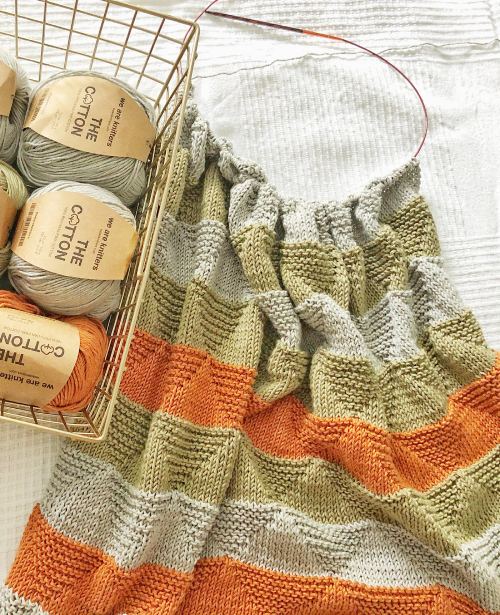
Triss Baby Blanket Free Knitting Pattern

Triss Baby Blanket free knitting pattern by crepleKnits
Pattern design © Agnieszka Wojtkowiak / crepleKnits

The Triss Baby Blanket by crepleKnits is a beautiful free knitting pattern that creates a modern geometric blanket using simple knit and purl stitches.

Its textured triangle design and contrasting stripes give the blanket plenty of visual interest while keeping the knitting approachable. This makes Triss an appealing project for newer knitters as well as experienced knitters looking for a relaxing baby blanket project.

Triss Baby Blanket Pattern at a Glance

Designer: Agnieszka Wojtkowiak / crepleKnits

Pattern: Triss Baby Blanket

Craft: Knitting

Category: Baby Blanket

Yarn Weight: Aran

Suggested Yarn: We Are Knitters The Cotton

Yardage: 1,094–1,203 yards (1,000–1,100 m)

Needles: US 4 (3.5 mm)

Gauge: 19 sts and 28 rows = 4 in in triangle pattern

Techniques: Knit and purl, textured pattern, stripes

Language: English

Pattern Availability: Free download

About the Triss Baby Blanket

Triss uses a combination of knit and purl stitches to form its distinctive geometric texture. Alternating sections and color changes create a clean, contemporary look that works beautifully for a baby blanket.

Because the texture is created with basic stitches rather than complicated lace or cable techniques, the design is a good choice for knitters who want to move beyond plain garter or stockinette blankets.

Yarn and Needle Details

The Ravelry pattern listing recommends We Are Knitters The Cotton and classifies the yarn requirement as Aran weight.

Plan on approximately 1,094–1,203 yards (1,000–1,100 m) of yarn for the blanket.

The recommended needle size is US 4 (3.5 mm). The listed gauge is 19 stitches and 28 rows = 4 inches in the triangle pattern.

A Simple Knit and Purl Baby Blanket

One of the strengths of the Triss Baby Blanket is that its decorative appearance comes from straightforward knitting techniques. The original pattern is described as an easy knit-and-purl design, making it suitable for knitters building confidence with textured stitch patterns.

Choosing two contrasting colors will emphasize the geometric sections, while a softer tonal combination can create a more subtle finished blanket.

Get the Free Triss Baby Blanket Pattern

Triss Baby Blanket was designed by Agnieszka Wojtkowiak of crepleKnits. The complete pattern is currently available as a free download from the designer's Ravelry listing.

Amazing Knitting does not reproduce the designer's complete knitting instructions. Use the button below to visit the original pattern page and obtain the current version directly from its authorized source.

Pattern design © Agnieszka Wojtkowiak / crepleKnits. Pattern availability is controlled by the designer and may change over time.

Treetops Baby Blanket - Free Pattern

Treetops Baby Blanket - Free Pattern
Photo above © bflaible

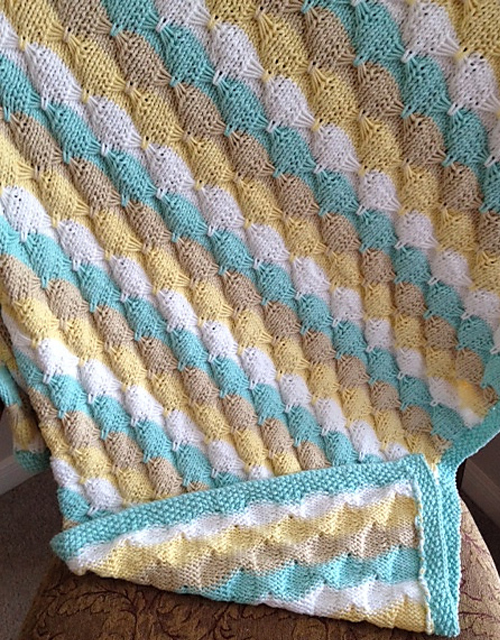
Treetops Baby Blanket by Darlene Dale is a beautiful striped baby blanket built around an eye-catching butterfly stitch texture.

Originally published by Naturally Caron in 2010, the design uses DK-weight yarn and combines the textured center with simple garter-stitch borders.

The pattern was originally distributed for free. However, the original Caron and Yarnspirations pattern pages are no longer available, so this older pattern now needs a little more explanation before you begin.

Pattern Availability Update

Treetops Baby Blanket was originally published as a free pattern by Naturally Caron. The original publisher and Yarnspirations sources are no longer available. Ravelry currently references an archived version of the original pattern.

Treetops Baby Blanket at a Glance

Pattern: Treetops Baby Blanket

Designer: Darlene Dale

Published: February 2010

Original Publisher: Naturally Caron / Caron International Yarns

Category: Baby Blanket

Yarn Weight: DK

Original Yarn: NaturallyCaron.com Spa

Needles: US 7 / 4.5 mm

Yardage: Approx. 962 yd / 880 m

Finished Size: Approx. 31 × 35 in / 79 × 89 cm

Main Feature: Butterfly stitch

Availability: Originally free; original publisher source unavailable

About the Treetops Baby Blanket

Treetops Baby Blanket was designed by Darlene Dale and published in February 2010 through Naturally Caron.

Its distinctive appearance comes from a textured butterfly stitch arranged across colorful stripes.

The resulting fabric has plenty of visual interest without requiring elaborate cables or complicated garment shaping, making the design an appealing blanket project.

Finished Size

The published finished size is approximately:

31 × 35 inches / 79 × 89 cm

This is a practical baby-blanket size that is large enough to showcase the repeating stitch pattern without becoming an especially large knitting project.

The Butterfly Stitch

The main decorative feature is the butterfly stitch.

The pattern uses the stitch across contrasting stripes to create the distinctive gathered texture visible in finished Treetops blankets.

The published pattern information describes the butterfly stitch as a 20-row repeat.

Amazing Knitting does not reproduce the designer's complete stitch instructions here. Use the original pattern information referenced below for the actual knitting sequence.

Gauge

The original pattern gives a butterfly-stitch gauge of:

20 stitches × 24 rows = 4 × 4 inches / 10 × 10 cm

A separate garter-stitch gauge is listed as:

20 stitches × 30 rows = 4 × 4 inches / 10 × 10 cm

Gauge on a blanket does not affect fit in the same way it does on a sweater, but it still influences the finished dimensions and the amount of yarn required.

Needles

The original pattern calls for:

US 7 / 4.5 mm needles

For a blanket, a circular needle can be convenient even when knitting back and forth because the cable helps support the weight of the growing fabric.

Original Yarn

Treetops was designed using NaturallyCaron.com Spa, a DK-weight yarn.

The original yarn contained acrylic and bamboo-derived fiber and came in 251-yard / 230-meter balls.

That yarn is now discontinued, so modern knitters will normally need to make a yarn substitution.

Original Yarn Colors

The published sample used three colors:

  • Ocean Spray
  • Soft Sunshine
  • Naturally

The soft combination of blue-green, yellow and neutral tones works particularly well with the alternating textured stripes.

You can, of course, create an entirely different palette while preserving the same overall design.

How Much Yarn?

Ravelry lists total published yardage of approximately:

962 yards / 880 meters

If you substitute yarn, allow some flexibility in your estimate. Different fibers, gauge and modifications to the blanket dimensions can change the total amount required.

Substituting the Discontinued Yarn

Because Naturally Caron Spa is discontinued, there is no reason to feel that you must locate the original yarn before knitting this blanket.

Instead, look for a suitable modern DK-weight yarn that produces the required gauge and a fabric you like.

For a baby blanket, useful qualities include:

  • Softness
  • Easy washing and care
  • Good stitch definition
  • Comfortable drape
  • Colors with enough contrast to show the striped texture

Make a swatch before purchasing the full blanket quantity whenever possible.

Garter-Stitch Borders

The blanket uses garter stitch to provide a simple visual frame around the more decorative center.

The original construction also involves picking up stitches to work the side borders.

A plain border is particularly effective here because it does not compete with the butterfly-stitch texture.

Picking Up the Side Borders

When picking up stitches along a long knitted edge, distribution is more important than simply picking up one stitch from every row.

Too many picked-up stitches can make the border ruffle. Too few can pull the blanket edge inward.

Follow the pattern's intended distribution and check that the fabric lies comfortably flat as the border develops.

A Useful Tip from a Finished Project

The project shown on this Amazing Knitting page was made by Ravelry member bflaible.

In the project notes, the knitter specifically mentions avoiding picking up every row along the side edge because doing so could create a ruffled border.

That's a useful practical reminder when finishing this type of blanket.

Managing the Color Changes

Because Treetops uses stripes, changing colors neatly can reduce the number of finishing problems later.

Depending on the spacing of the stripes and the instructions in the pattern, yarn may sometimes be carried carefully along an edge rather than cut after every color change.

Avoid carrying yarn so tightly that it shortens or puckers the side of the blanket.

Choose Colors That Show the Texture

Butterfly stitch already provides strong visual texture, so color choices can either emphasize or soften the effect.

Pastel combinations create the gentle appearance associated with many baby blankets, while brighter contrasting colors can make the repeated sections much more graphic.

Solid or lightly tonal yarns will generally allow the stitch structure to remain easier to see than highly variegated yarns.

Check Your Work as You Go

Repeating textured patterns become easier once you recognize how a correct repeat should look.

Stop occasionally and compare the newest section with earlier repeats.

Finding a misplaced stitch early is much easier than discovering it after several more inches of blanket have been knitted.

Skills Used in Treetops

This project is useful for practicing:

  • Working a repeating textured stitch pattern
  • Changing colors
  • Maintaining even tension
  • Working long rows
  • Garter stitch borders
  • Picking up stitches along side edges
  • Managing yarn ends
  • Blocking a baby blanket

Is Treetops Baby Blanket Still Available?

This requires a little clarification.

Treetops Baby Blanket was originally a free pattern published by Naturally Caron.

However, the original Naturally Caron and later Yarnspirations sources are no longer available.

Ravelry currently records the pattern under an archived Internet Archive source rather than an active publisher page.

For copyright reasons, Amazing Knitting does not host or reproduce an unofficial copy of Darlene Dale's complete pattern.

View the Treetops Pattern Record

Ravelry maintains the pattern record, including the original specifications and archived-source information:

View Treetops Baby Blanket on Ravelry →

Looking for a Free Alternative?

If you would rather use a pattern with an active free source, the Jordan Baby Blanket by marianna mel is already verified in the Amazing Knitting archive and remains available for free.

See the Free Jordan Baby Blanket →

You can also explore:

Before You Start

Remember that this is an older pattern whose original publisher page is no longer active.

If you decide to make Treetops, review the archived-source information through its Ravelry record, choose a modern DK substitute for the discontinued Naturally Caron Spa yarn and make a swatch before beginning.

Pay particular attention to maintaining consistent tension through the butterfly-stitch sections and to picking up the side-border stitches evenly during finishing.

Pattern credit: Treetops Baby Blanket was designed by Darlene Dale and originally published by Naturally Caron / Caron International Yarns in 2010. The project photograph currently shown on this Amazing Knitting page is credited to bflaible. Amazing Knitting provides an independent historical project guide and does not reproduce the designer's complete copyrighted knitting instructions.

Discover More From the Archive

A fresh mix of knitting patterns and tutorials from the Amazing Knitting archive.

Finding patterns from the archive…