Skip to content

...

Baby Kimono - Free Knitting Pattern

Baby Kimono - Free Knitting Pattern
Photos above © Tichiro

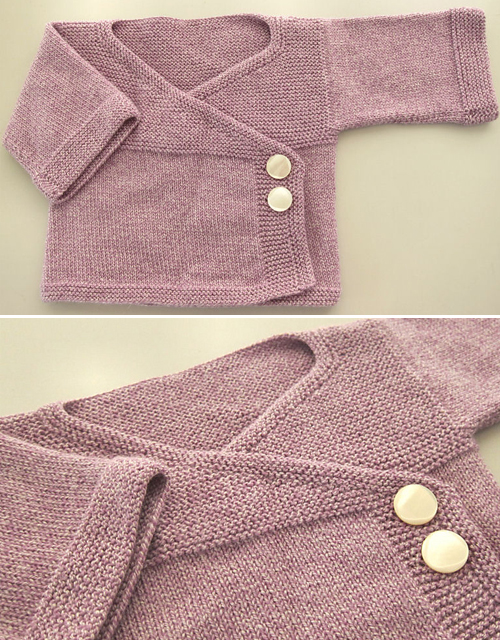
Garter Stitch Baby Cardigan by Joji Locatelli, often known by knitters as the Garter Stitch Baby Kimono, is a sweet wrap-style baby cardigan worked almost entirely in garter stitch.

Its crossover front gives the little sweater its kimono-inspired appearance, while the simple stitch pattern makes it an appealing project for knitters ready to try a small baby garment.

✓ Free Pattern

This project is commonly referred to as the Baby Kimono, but the pattern's official name is Garter Stitch Baby Cardigan by Joji Locatelli. A free copy of the designer's original pattern remains available online.

Baby Kimono at a Glance

Official Pattern: Garter Stitch Baby Cardigan

Designer: Joji Locatelli

Craft: Knitting

Category: Baby Cardigan / Kimono-Style Sweater

Sizes: Newborn, 1–3 months, 3–6 months

Main Stitch: Garter stitch

Needles: 2.5–3 mm

Gauge: 28 stitches = 10 cm in garter stitch

Yarn: Approximately 100–150 g, depending on size

Notions: Two approximately 15 mm buttons

Availability: Free pattern

About the Garter Stitch Baby Kimono

Joji Locatelli originally wrote down this design after the knitted cardigan attracted considerable interest from other knitters.

The result is a simple wrap-style baby cardigan with overlapping fronts. Because garter stitch forms most of the fabric, the visual interest comes primarily from the shape of the garment rather than complicated stitch patterns.

The crossover construction also makes it quite different in appearance from a conventional button-front baby cardigan.

Three Baby Sizes

The original pattern includes three sizes:

  • Newborn
  • 1–3 months
  • 3–6 months

The published finished chest measurements are approximately:

  • Newborn: 40 cm / 16 inches
  • 1–3 months: 45 cm / 18 inches
  • 3–6 months: 50 cm / 20 inches

Finished total lengths are approximately 20, 24 and 26 cm (8, 9.5 and 11 inches) respectively.

When possible, choose a size from the finished measurements rather than relying only on the baby's age.

Yarn Requirements

Joji's original sample was knitted with an acrylic yarn called NUBE Dralón, which she found in Argentina.

However, the pattern specifically allows another suitable yarn to be substituted.

The approximate yarn quantities given in the original pattern are:

  • Smaller size: approximately 100 g
  • Larger sizes: approximately 150 g

Rather than choosing a substitute based only on fibre or label, make sure your yarn can produce the required gauge and a fabric appropriate for a soft baby cardigan.

Needles and Gauge

The original pattern recommends needles in the range of:

2.5–3 mm

The designer also notes that you should use whatever needle size is necessary to obtain the correct gauge.

Published gauge is:

28 stitches = 10 cm / 4 inches in garter stitch

Making a small swatch is especially worthwhile for a baby garment because even a modest difference in gauge can noticeably change such a small finished size.

Why Garter Stitch Works So Well

Garter stitch is created by knitting every row when working flat. It produces a fabric with distinctive horizontal ridges and plenty of natural stretch.

It also lies relatively flat, making it particularly useful for a wrap-style cardigan where clean edges help the overlapping fronts sit comfortably.

For a newer knitter, using one familiar stitch throughout much of the garment means more attention can be given to learning the construction and shaping.

The Kimono-Style Front

The crossover front is what gives this cardigan its familiar “baby kimono” nickname.

Rather than meeting at the center like a conventional cardigan, one front overlaps the other. The original design uses buttons together with an inside fastening to help hold the layers in position.

The pattern calls for two buttons approximately 15 mm in diameter.

Skills That Help

Useful skills for this project include:

  • Casting on
  • Garter stitch
  • Basic shaping
  • Increasing and decreasing
  • Making buttonholes
  • Picking up stitches
  • Working sleeves
  • Binding off
  • Simple finishing
  • Weaving in yarn ends

Use Joji Locatelli's original pattern for the exact stitch counts, shaping sequence, sleeve construction and finishing instructions.

A Popular Little Cardigan

One reason this design has remained recognizable for so many years is its simplicity.

Thousands of knitters have made versions of the Garter Stitch Baby Cardigan, experimenting with different yarns, colours and small finishing modifications while retaining the characteristic wrap-front shape.

That makes the Ravelry project gallery especially useful for inspiration before choosing yarn for your own version.

Choosing Yarn for a Baby Cardigan

In addition to matching gauge, consider how the finished garment will be used.

Softness matters for clothing worn close to a baby's skin, while easy washing can be valuable for an everyday garment. Also check that the finished garter-stitch fabric is not excessively dense or loose.

A smooth yarn can emphasize the simple garter ridges, while a gently heathered or subtly variegated yarn can add colour interest without competing with the clean construction.

Is the Baby Kimono Pattern Free?

Yes. The Garter Stitch Baby Cardigan pattern by Joji Locatelli was released as a free knitting pattern.

Amazing Knitting does not reproduce Joji's copyrighted row-by-row instructions. Instead, we link readers to the existing pattern source.

Get the Free Baby Kimono Pattern

The pattern is available as a PDF under its original name, Garter Stitch Baby Kimono / Garter Stitch Baby Cardigan.

View the Free Baby Kimono Pattern →

More Free Baby Cardigans

If you enjoy small wrap-style garments, continue exploring the Amazing Knitting archive for more free baby sweaters and cardigans.

Explore Free Baby Cardigan Patterns →

You can also browse free baby sweaters, newborn knitting patterns, and garter-stitch baby cardigans.

Before You Start

Choose your size from the finished measurements, make a garter-stitch gauge swatch, and check that your yarn creates a soft but stable fabric before beginning the cardigan.

Read the complete original pattern before casting on so that you understand how the overlapping fronts, sleeves and fastenings come together.

Pattern credit: Garter Stitch Baby Cardigan / Baby Kimono was designed by Joji Locatelli. The existing photographs on this Amazing Knitting page are credited to Tichiro. Amazing Knitting does not reproduce the designer's copyrighted row-by-row knitting instructions.

Harvest Cardigan - Free Pattern

Harvest Cardigan - Free Pattern
Photo above © Tin Can Knits

Harvest by Tin Can Knits is a wonderfully approachable seamless cardigan designed for the whole family. With sizes ranging from babies through adults, it is especially appealing to knitters looking for a first sweater project without complicated seaming.

Harvest is part of the well-known Simple Collection from Tin Can Knits, a series created to help knitters build their skills through practical projects. Best of all, the Harvest cardigan pattern is still available free.

✓ Free Pattern Availability

Good news: Harvest is still available as a free knitting pattern from Tin Can Knits. The current pattern has an even broader size range than the version originally featured on Amazing Knitting, extending from babies all the way through adult 6XL.

Harvest Cardigan at a Glance

Pattern: Harvest

Designer: Tin Can Knits

Collection: The Simple Collection

First Published: December 2013

Craft: Knitting

Category: Cardigan / Sweater

Yarn Weight: Worsted

Needles: US 6 / 4 mm and US 8 / 5 mm

Gauge: 18 stitches × 24 rows = 4 inches / 10 cm

Yardage: Approximately 250–2,300 yards / 229–2,103 m

Sizes: 0–6 months through adult 6XL

Construction: Seamless cardigan

Current Availability: Free pattern

About the Harvest Cardigan

Harvest was designed as an accessible introduction to sweater knitting. Instead of creating separate fronts, back and sleeves and sewing everything together at the end, the cardigan uses a seamless construction.

This makes it particularly attractive to knitters who have already made scarves, hats or other smaller projects and are ready to try their first garment.

The clean design also makes Harvest highly adaptable. A simple change of yarn colour can make the same basic cardigan appropriate for a baby, child or adult.

An Extraordinary Size Range

One of the strongest features of Harvest is its exceptionally broad sizing.

The current pattern includes:

  • 0–6 months
  • 6–12 months
  • 1–2 years
  • 2–4 years
  • 4–6 years
  • 6–8 years
  • 8–10 years
  • XS
  • S
  • S/M
  • M
  • M/L
  • L
  • XL
  • XXL
  • 3XL
  • 4XL
  • 5XL
  • 6XL

This family-friendly range means you can use the same design concept for a tiny baby cardigan, a child's sweater or a full-size adult garment.

Yarn and Yardage

Harvest is designed for worsted-weight yarn. The current pattern lists several suitable yarns, including Cascade 220, SweetGeorgia Merino Worsted, Madelinetosh Tosh Vintage, Brooklyn Tweed Shelter and other comparable worsted yarns.

Because the pattern covers such a large size range, yarn requirements vary substantially:

Approximately 250–2,300 yards / 229–2,103 metres

Always check the current pattern for the exact yardage required for your chosen size before buying yarn.

Needles

The published needle sizes are:

  • US 6 / 4 mm
  • US 8 / 5 mm

Smaller sizes use shorter circular needles, while larger adult sizes need longer circulars to comfortably accommodate the stitches.

The pattern also allows small circumferences to be worked with double-pointed needles or with the magic loop technique using a long circular needle.

Gauge

The published stockinette gauge on the larger needles is:

18 stitches × 24 rows = 4 inches / 10 cm

Gauge matters considerably in a sweater. Even when following the correct size instructions, a different stitch gauge can make the finished garment noticeably larger or smaller than intended.

Make a swatch with your chosen yarn and adjust needle size when necessary rather than assuming the recommended needle will automatically produce the correct gauge.

Why Harvest Is a Good First Cardigan

Tin Can Knits created the Simple Collection specifically around projects that help knitters develop useful skills.

Harvest is especially suitable as a first cardigan because its straightforward style allows you to concentrate on garment construction without combining it with elaborate cables, lace or colourwork.

You still learn valuable sweater-making skills while producing a garment that is practical enough to wear regularly.

Skills You Can Practice

Harvest can help build confidence with techniques such as:

  • Working a gauge swatch
  • Knitting a garment
  • Working with circular needles
  • Increasing and decreasing
  • Working sleeves
  • Knitting small circumferences
  • Using double-pointed needles or magic loop
  • Picking up stitches
  • Finishing and weaving in yarn ends

Use the official Tin Can Knits pattern and tutorials for the exact construction sequence, stitch counts and shaping instructions.

Baby, Child or Adult Harvest?

The same pattern can produce very different projects depending on the size and yarn colour you choose.

A baby Harvest can make a practical handmade gift, while children's sizes create an everyday layering sweater. The adult sizes turn the same clean design into a versatile wardrobe cardigan.

This makes Harvest particularly useful if you enjoy knitting matching or coordinating garments for several members of a family.

Choosing Yarn for Harvest

Since the cardigan has a relatively simple surface, yarn choice can have a strong influence on its final appearance.

A smooth solid yarn emphasizes the clean construction, while heathered or subtly variegated yarn can add visual interest without changing the knitting pattern itself.

For baby and children's sizes, also consider softness, durability and washing requirements. For an adult cardigan, drape and resistance to pilling may become especially important.

Is the Harvest Cardigan Still Free?

Yes. Harvest by Tin Can Knits is still available as a free knitting pattern.

The pattern can currently be obtained through the Tin Can Knits ecosystem and is also listed as a free Ravelry download.

Amazing Knitting does not reproduce the designers' copyrighted row-by-row instructions. Instead, we direct readers to the legitimate current pattern.

Get the Free Harvest Cardigan Pattern

The Ravelry pattern page provides the current free download and links back to Tin Can Knits.

Get the Free Harvest Cardigan Pattern →

More Free Cardigan Patterns

If you enjoy Harvest, continue exploring the Amazing Knitting archive for more free sweaters and cardigans.

Explore Free Cardigan Knitting Patterns →

You can also browse free baby cardigans, children's sweaters, and free sweater patterns.

Before You Start

Download the current Harvest pattern first and choose your size from the designer's finished measurements rather than age or clothing size alone. Then confirm the yarn requirement for that size and make a gauge swatch.

If this is your first cardigan, take advantage of the supporting Tin Can Knits tutorials as you work through the project.

Pattern credit: Harvest was designed by Tin Can Knits and published as part of The Simple Collection. The existing project photograph on this Amazing Knitting page is credited to Tin Can Knits. Amazing Knitting does not reproduce the designers' copyrighted row-by-row knitting instructions.

Birds Nest Shawl - Free Pattern

Birds Nest Shawl - Free Pattern
Photo above © Athanasia Andritsou

Birds Nest Shawl by Athanasia Andritsou is a beautiful deep triangular lace shawl that brings together delicate lace knitting and traditional Estonian-inspired stitches.

Designed for lace-weight yarn, the shawl features intricate texture, elegant openwork and the distinctive raised details created by nupps. Best of all, the designer still offers the pattern as a free Ravelry download.

✓ Free Pattern Availability

Birds Nest Shawl is currently available as a free download directly from the designer's Ravelry store. The designer specifies that the pattern is offered for personal, non-commercial use, so please read and respect the usage terms included with the pattern.

Birds Nest Shawl at a Glance

Pattern: Birds Nest Shawl

Designer: Athanasia Andritsou

First Published: February 2015

Craft: Knitting

Category: Shawl / Wrap

Shape: Deep triangle

Yarn Weight: Lace

Suggested Yarn: Posh Yarn Miranda Lace

Yardage: 766–875 yards / 700–800 m

Needle Size: US 2 / 2.75 mm

Notable Techniques: Estonian-inspired lace and nupps

Sizing: Modular / adjustable

Current Availability: Free Ravelry download

About the Birds Nest Shawl

Designed by Athanasia Andritsou, Birds Nest Shawl is a lace project intended for knitters who want to explore something beyond basic triangular shawl construction.

The designer describes it as a deep triangular shawl featuring some of the beautiful stitches associated with Estonian knitting, including the characteristic raised details known as nupps.

The combination of open lace and dimensional texture gives the finished shawl an intricate appearance that can look especially striking after careful blocking.

The Inspiration Behind Birds Nest

The name has a lovely connection to the designer's surroundings. Athanasia Andritsou originally introduced the design while observing the birds nesting in the trees around her home.

That natural inspiration suits the pattern particularly well: the lace has an organic appearance, with repeating motifs and textured details that create movement across the triangular fabric.

Yarn and Yardage

The original shawl was designed using Posh Yarn Miranda Lace, a luxurious lace-weight yarn.

The published yardage is approximately:

766–875 yards / 700–800 metres

The original Miranda Lace yarn combines fine fibres that produce a soft fabric with a gentle halo.

If you substitute another lace yarn, consider both stitch definition and drape. Highly textured lace details can appear quite different in a very fuzzy yarn compared with a smooth, tightly spun yarn.

Needle Size

The published needle size is:

US 2 / 2.75 mm

Treat the recommended needle size as a starting point. Lace knitters often adjust needle size depending on the yarn and the amount of openness or drape they want in the finished fabric.

A Modular Shawl

One particularly useful feature of Birds Nest Shawl is that its size is modular.

The designer also notes that gauge is not particularly important for this project. That gives the knitter more flexibility than a fitted garment, where a small gauge difference can significantly affect the final size.

Yarn quantity still matters, however. If you plan to make a larger shawl, allow additional yarn rather than relying only on the quantity used for the original project.

What Are Nupps?

Nupps are small raised decorative elements strongly associated with Estonian lace knitting.

They create tiny dimensional points within the lace rather than remaining completely flat like ordinary openwork stitches.

They can require more attention than basic yarn-over lace, particularly when several loops must be handled together. If this is your first project using nupps, practicing the technique on a small swatch before beginning the shawl can make the main project more comfortable.

Charts and Written Support

Birds Nest Shawl is primarily a chart-based lace pattern.

The designer also provides written instructions after the charts, but explains that these are intended as support for the charts rather than a complete replacement for them because the chart repeat boxes need to be taken into account.

For that reason, this pattern is best approached by a knitter who is comfortable reading knitting charts or is willing to learn how chart repeats work.

Skills That Help

Useful skills for Birds Nest Shawl include:

  • Knit and purl stitches
  • Working yarn overs
  • Working decreases
  • Reading lace charts
  • Following chart repeat boxes
  • Working Estonian-style lace techniques
  • Making nupps
  • Managing fine lace-weight yarn
  • Blocking a lace shawl

Blocking the Finished Shawl

Blocking is particularly important for lace knitting.

Freshly knitted lace can look compressed because the stitches have not yet opened into their intended shapes. Careful blocking helps reveal the openwork, defines the triangular shape and allows the decorative motifs to become much easier to see.

Always follow the care instructions appropriate for the yarn you choose.

Pattern Corrections and Updates

Because Birds Nest Shawl has been available for many years, it is worth downloading the current version rather than relying on an old saved copy.

The designer uploaded a corrected version in 2018 addressing specific chart rows. Using the current Ravelry download helps ensure that you are working from the latest version provided by the designer.

Is Birds Nest Shawl Still Free?

Yes. Birds Nest Shawl is currently available as a free Ravelry download from Athanasia Andritsou.

There is an important condition: the designer states that the pattern is provided for personal, non-commercial use.

Please check the designer's complete current terms when downloading the pattern. “Free pattern” means there is no purchase price for the download; it does not mean the designer has given up copyright or usage conditions.

Get the Free Birds Nest Shawl Pattern

Download the current version directly from the designer's Ravelry listing.

Get the Free Birds Nest Shawl Pattern →

More Free Lace Shawls

If you enjoy this style of project, Amazing Knitting has more shawl and lace knitting ideas in the archive.

Explore Free Lace Shawl Patterns →

You can also browse free knitted shawls, lace knitting patterns, and triangular knitted shawls.

Before You Start

Download the latest version of the pattern first and read through the charts before casting on. If nupps are new to you, make a small practice swatch so you can become comfortable with the technique before reaching the more intricate sections of the shawl.

Also check that you have enough yarn for the size you intend to make, particularly if you plan to enlarge the modular design.

Pattern credit: Birds Nest Shawl was designed by Athanasia Andritsou. The existing project photograph on this Amazing Knitting page is credited to Athanasia Andritsou. The pattern remains the designer's copyrighted work and is currently offered free under the designer's stated personal, non-commercial usage terms. Amazing Knitting does not reproduce the designer's charts or row-by-row instructions.

Ciqala Arrowhead Sweater - Knitting Pattern

Ciqala Arrowhead Sweater - Knitting Pattern
Photo above © OGE Knitwear Designs

Ciqala Arrowhead Sweater – P117 by OGE Knitwear Designs is a beautiful baby cardigan featuring a delicate arrowhead lace detail around the yoke.

Worked from the bottom up, the design combines classic baby-cardigan styling with an eye-catching lace feature. Its unisex shape and sizes from newborn through 18 months make it a versatile layering project for cooler weather.

Pattern Availability Update

Ciqala Arrowhead Sweater – P117 is currently available as a paid downloadable knitting pattern from OGE Knitwear Designs. Older links may lead to former pattern marketplaces, so we have updated this guide to point readers toward the designer's current legitimate source.

Ciqala Arrowhead Sweater at a Glance

Pattern: Ciqala Arrowhead Sweater – P117

Designer: OGE Knitwear Designs

First Published: August 2017

Craft: Knitting

Category: Baby Cardigan / Sweater

Skill Level: Intermediate

Sizes: 0–3, 3–6, 6–12 and 12–18 months

Yarn Weight: Sport / 5–6 ply

Needle Size: US 5 / 3.75 mm

Gauge: 25 stitches × 30 rows = 4 inches / 10 cm

Construction: Bottom-up with sleeves joined at the yoke

Current Availability: Paid PDF pattern

About the Ciqala Arrowhead Sweater

The defining feature of Ciqala is the arrowhead lace pattern around the yoke. It adds decorative interest to an otherwise classic baby cardigan shape without overwhelming the small garment.

The result is a sweater that can work equally well for everyday layering or as a more special hand-knitted baby gift.

OGE Knitwear Designs describes the cardigan as having a classic unisex appearance, so yarn colour can completely change the personality of the finished project.

Baby Sizes

The pattern includes four sizes:

  • 0–3 months
  • 3–6 months
  • 6–12 months
  • 12–18 months

Because babies of the same age can vary considerably in size, check the pattern's finished measurements and schematic rather than selecting a size only from the age label.

Yarn Requirements

The original pattern calls for Sport weight / 5–6 ply yarn. The designer specifies 100% superwash extrafine merino with approximately 125 m / 136 yards per 50g ball.

Main-colour requirements are:

  • 0–3 months: 2 × 50g balls
  • 3–6 months: 3 × 50g balls
  • 6–12 months: 4 × 50g balls
  • 12–18 months: 4 × 50g balls

Each size also requires one 50g ball of the contrast colour.

If substituting another yarn, matching the designer's gauge is more important than simply choosing another yarn carrying the same weight label.

Needles and Gauge

The pattern calls for:

US 5 / 3.75 mm extra-long straight or circular needles

The published stockinette gauge is:

25 stitches × 30 rows = 4 inches / 10 cm

Gauge is particularly important in a baby garment because even a small difference can noticeably change the finished chest measurement.

How the Ciqala Cardigan Is Constructed

Ciqala is worked from the bottom up.

The sleeves are knitted separately and then joined to the body when the knitting reaches the yoke. The decorative arrowhead lace becomes the focal point of this upper section.

One appealing feature of the construction is the limited amount of finishing: the designer states that the sleeve seams are the only seams required.

The Arrowhead Lace Yoke

The lace yoke is what gives Ciqala its distinctive identity. The geometric arrowhead motif creates a decorative transition across the upper cardigan while still allowing the garment to retain a clean, classic shape.

Using a contrasting yarn can make this section especially prominent, while a more subtle combination can produce a softer, understated result.

Written Instructions and Charts

The official pattern includes both written and charted instructions, together with a schematic.

This is useful for knitters who prefer one method of following lace patterns over another.

Amazing Knitting does not reproduce those charts or the designer's row-by-row instructions. Use the official pattern for the exact stitch counts, shaping and lace sequence.

Other Materials

In addition to yarn and needles, the designer lists:

  • Stitch holders
  • 3 buttons
  • 14 stitch markers

Having the stitch markers ready before beginning the yoke can make it easier to keep track of pattern sections and shaping.

Skills That Help

OGE Knitwear Designs classifies Ciqala as an Intermediate project. Useful skills include:

  • Casting on and binding off
  • Knit and purl stitches
  • Increasing and decreasing
  • Following lace instructions
  • Reading a knitting chart
  • Working garment shaping
  • Joining sleeves to a yoke
  • Basic seaming
  • Making buttonholes
  • Blocking a finished garment

Choosing Colours

Ciqala uses a main colour together with a contrasting colour, making yarn selection an enjoyable part of planning the project.

A strong contrast can emphasize the arrowhead yoke, while closely related shades can make the lace detail appear more subtle.

For a baby garment, also consider softness and washing requirements. A beautiful yarn that is difficult to care for may not always be the most practical choice for frequently worn baby clothing.

Is Ciqala Arrowhead Sweater Free?

No. Ciqala Arrowhead Sweater – P117 is currently a paid knitting pattern.

It is available directly from OGE Knitwear Designs and is also listed by established pattern marketplaces. Prices can vary by store and currency, so check the current official listing rather than relying on an older price.

Get the Official Ciqala Arrowhead Sweater Pattern

The designer's own store is the preferred source for the current pattern.

View the Official Ciqala Pattern →

Looking for a Free Baby Cardigan?

If you reached this page specifically looking for a free baby cardigan knitting pattern, Amazing Knitting has many other baby sweater and cardigan projects to explore.

Explore Free Baby Cardigan Patterns →

You can also browse free baby sweaters, lace baby cardigans, and baby knitting patterns from the Amazing Knitting archive.

Before You Start

Download the current official pattern before buying yarn and check the schematic and finished measurements for your chosen size. Make a gauge swatch, prepare your contrast colour, and read through the yoke section before beginning the project.

Since both written and charted instructions are supplied, decide which format you find easiest to follow before reaching the arrowhead lace.

Pattern credit: Ciqala Arrowhead Sweater – P117 was designed and published by OGE Knitwear Designs. The existing project photograph on this Amazing Knitting page is credited to OGE Knitwear Designs. Amazing Knitting does not reproduce the designer's copyrighted charts or row-by-row knitting instructions.

Sandleford - Free Pattern

Sandleford - Free Pattern
Sandleford by RS Knits © Russell Sansom

Sandleford by Russell Sansom of RS Knits is a whimsical rabbit-inspired knitted hat designed for teens and adults. With its playful ears and colourwork details, it is a wonderful choice for knitters looking for something more imaginative than a traditional winter hat.

The design takes its name and inspiration from Watership Down by Richard Adams. Best of all, the Sandleford knitting pattern is still available as a free downloadable pattern.

✓ Free Pattern Availability

Good news: unlike many older knitting patterns whose availability has changed over the years, Sandleford is still listed as a free downloadable knitting pattern. Always use the current legitimate pattern source rather than copies reproduced by unrelated websites.

Sandleford Hat at a Glance

Pattern: Sandleford

Designer: Russell Sansom / RS Knits

Craft: Knitting

Category: Hat

Theme: Rabbit-inspired novelty hat

Sizes: Teens to Adults

Suggested Yarn: John Arbon Textiles Knit By Numbers DK

Yarn Weight: DK

Language: English

Current Availability: Free downloadable pattern

About the Sandleford Hat

Sandleford is one of those knitting projects that immediately stands apart from an ordinary beanie.

Designed by Russell Sansom, the hat combines a practical knitted accessory with a playful rabbit theme. The prominent ears and contrasting colours give the finished hat plenty of character without turning it into a conventional stuffed-toy project.

The original design is shown in a combination of pink and neutral shades, but the colour palette can be one of the most enjoyable parts of planning your own version.

Inspired by Watership Down

The name Sandleford is a reference to Watership Down, Richard Adams' classic novel about a group of rabbits searching for a new home.

Sandleford Warren is the original home of the rabbits at the beginning of the story, which makes the name particularly appropriate for a rabbit-inspired hat.

You do not need to know the novel to enjoy the pattern, of course, but the literary connection gives the design an extra layer of personality.

Choosing Colours for Sandleford

The original Amazing Knitting feature highlighted John Arbon Textiles Knit By Numbers DK minis, which make it possible to experiment with different colour combinations.

You could keep the soft pink-and-neutral appearance of the photographed version or create something completely different.

Some colour ideas include:

  • Natural rabbit shades such as cream, grey, brown and oatmeal
  • Pink with a soft neutral contrast
  • Black and white for a graphic look
  • Pastel combinations for a softer version
  • Bright contrasting colours for a playful fantasy rabbit

If substituting yarn, use the designer's current pattern specifications and check your gauge rather than relying only on the DK label.

A Fun Use for DK Yarn

Novelty hats can be particularly useful projects for leftover or small-quantity yarn because contrasting details do not necessarily need the same quantity as the main hat colour.

Before using leftovers, however, make sure the yarns behave similarly. Combining fibres with very different stretch, washing requirements, or thickness can affect the finished shape.

Who Is Sandleford Designed For?

The original description lists Sandleford for teens through adults.

That makes it different from many rabbit and animal hats designed only for babies or young children. Sandleford embraces the novelty-hat idea for older knitters and wearers as well.

Skills That Help

Before starting, read the complete designer pattern to see the exact techniques required. In general, useful skills for a shaped novelty hat of this type can include:

  • Casting on and binding off
  • Knit and purl stitches
  • Working decreases for hat shaping
  • Following colour changes
  • Working small shaped pieces
  • Reading written knitting instructions
  • Finishing and securing yarn ends

Use the original pattern for the exact construction, stitch counts, shaping and finishing instructions.

Is Sandleford Still a Free Knitting Pattern?

Yes. During our latest review, Sandleford was still listed as a free downloadable English-language knitting pattern.

This is especially useful to confirm for an older pattern because free knitting patterns sometimes move, become paid, or disappear completely after their original publication.

Amazing Knitting does not reproduce Russell Sansom's copyrighted row-by-row instructions. Instead, use the legitimate current pattern listing to obtain the designer's pattern.

Get the Free Sandleford Knitting Pattern

The current LoveCrafts listing provides the downloadable pattern.

Find the Free Sandleford Pattern →

Look for Sandleford by Russell Sansom / RS Knits on the free hat patterns page.

More Free Knitted Hats

If you enjoy unusual hat projects, continue exploring the Amazing Knitting archive for more free designs.

Explore Free Hat Knitting Patterns →

You can also browse animal-inspired knitted hats, DK hat patterns, and novelty knitting projects.

Before You Start

Download the current designer pattern first and read it completely before choosing your yarn. Confirm the required quantities, gauge, needle sizes, construction method and finishing instructions from the pattern itself.

If you substitute colours, it can help to place the yarns next to each other before casting on so you can check whether there is enough contrast for the rabbit details to remain clearly visible.

Pattern credit: Sandleford was designed by Russell Sansom / RS Knits. The existing project image on this Amazing Knitting page is credited to Russell Sansom. Amazing Knitting does not reproduce the designer's copyrighted knitting instructions.

Tree Rings - Knitting Pattern Guide

Tree Rings - Knitting Pattern
Photo above © Brooklyn Tweed/Jared Flood

Tree Rings by Andrea Rangel is a dramatic circular knitting pattern inspired by the classic pi-shawl construction associated with Elizabeth Zimmermann.

Instead of relying primarily on open lace, Tree Rings builds visual interest through changing textures, geometric movement, chevrons, and a decorative knitted-on edging. The finished piece can be worn as a large circular shawl or used as an impressive knitted throw.

Pattern Availability

Tree Rings is currently available as a paid PDF knitting pattern from Brooklyn Tweed. Amazing Knitting provides this project guide and links readers to the legitimate designer/publisher source rather than reproducing the copyrighted pattern instructions or charts.

Tree Rings at a Glance

Pattern: Tree Rings

Designer: Andrea Rangel

Publisher: Brooklyn Tweed

Collection: Wool People, Volume 6

First Published: November 2013

Craft: Knitting

Category: Circular Shawl / Throw

Yarn Weight: Worsted

Yardage: Approximately 1,820 yards / 1,664 m

Suggested Needles: US 7 / 4.5 mm and US 10 / 6 mm

Finished Size: Approximately 62 inches in diameter

Construction: Center-out, worked in the round

Current Availability: Paid PDF pattern

About Tree Rings

Designed by Andrea Rangel, Tree Rings takes the basic idea of a circular pi shawl and gives it a strongly textured, contemporary appearance.

The design draws the eye outward from the center through changing areas of texture and geometric patterning. As the circumference increases, the knitted fabric develops the layered appearance that inspired the name Tree Rings.

Although officially categorized as a shawl or wrap, its generous circular dimensions also allow it to function beautifully as a decorative throw.

Finished Size

The published finished diameter is approximately:

62 inches / 157.5 cm

That makes Tree Rings a substantial project. It is considerably larger than a typical accessory and requires both a significant amount of yarn and increasingly long circular needles as the work grows.

Yarn and Yardage

The original version was designed for Brooklyn Tweed Shelter, a worsted-weight wool yarn.

The published requirement is:

Approximately 1,820 yards / 1,664 metres of worsted-weight wool

The original sample used 13 skeins of Brooklyn Tweed Shelter.

Because texture is such an important part of this design, yarn choice affects more than the finished size. A yarn with good stitch definition helps the changing surface patterns remain visible after blocking.

Needles

Tree Rings uses two main needle sizes:

  • US 7 / 4.5 mm — suggested for the welted stockinette sections and edging
  • US 10 / 6 mm — suggested for the center lace and horizontal chevron sections

The project begins with double-pointed needles and progresses to circular needles as the number of stitches increases.

The official materials list includes both 32-inch and 60-inch circular needles in the required sizes.

Gauge

Because Tree Rings contains several different stitch patterns, the official pattern provides more than one gauge measurement.

For example, the published gauge for the welted stockinette section is:

18 stitches × 26 rounds = 4 inches / 10 cm after blocking

Other sections have their own row or round gauge because lace, twists, and textured stitches behave differently.

How Tree Rings Is Constructed

Tree Rings is worked from the center outward in the round. This means the circumference becomes progressively larger as the project grows.

Near the outer edge, the construction changes. The lace edging is worked back and forth and attached to the live shawl stitches as it progresses.

This method creates an integrated decorative border without simply binding off the large circular body and sewing on a separate edging later.

Texture Instead of Traditional Lace

One of the most interesting features of Tree Rings is its emphasis on texture.

Many circular pi shawls are dominated by open lace motifs. Tree Rings instead combines welted stockinette, twists, chevrons, lace, and other structural changes to create movement across the circular fabric.

The result is a project whose appearance changes depending on the light and the direction from which the textured stitches are viewed.

Skills That Help

Tree Rings is best suited to a knitter who is already comfortable with the basics and wants a substantial project. Useful skills include:

  • Knitting in the round
  • Working with double-pointed needles
  • Using long circular needles
  • Increasing stitches
  • Following charted stitch patterns
  • Working textured stitches and twists
  • Basic lace techniques
  • Managing a large number of live stitches
  • Working an attached edging
  • Blocking a large circular project

Important: Brooklyn Tweed notes that the stitch patterns for this design are charted. If you strongly prefer written-out row-by-row stitch instructions, check the current pattern details before purchasing.

Shawl or Blanket?

Tree Rings occupies an interesting space between a shawl and a blanket. Brooklyn Tweed presents it as a textured pi shawl, while its 62-inch circular size makes it large enough to work beautifully as a decorative throw.

Many knitters are therefore drawn to the design not only as something wearable, but also as an heirloom-style circular blanket.

Is Tree Rings a Free Knitting Pattern?

No. Tree Rings by Andrea Rangel is currently a paid knitting pattern.

The official Brooklyn Tweed listing currently offers the pattern as a downloadable PDF. Pattern prices and availability can change, so check the publisher's current page for the latest information.

Amazing Knitting does not reproduce the pattern's copyrighted charts, stitch counts, or row-by-row instructions.

Get the Official Tree Rings Pattern

The safest source for the current version, pattern support, and any published corrections is Brooklyn Tweed.

View Tree Rings at Brooklyn Tweed →

Looking for a Free Knitted Blanket?

If you found this page specifically because you were searching for a free blanket pattern, you can explore the free blanket projects collected in the Amazing Knitting archive instead.

Explore Free Blanket Knitting Patterns →

You may also enjoy round knitted blankets, textured blanket patterns, and lace blanket knitting patterns.

Before You Start

Tree Rings is a large project, so read through the official pattern before buying the full yarn quantity. Check your gauge, make sure you have the necessary needle lengths, and become familiar with the charts before the number of stitches becomes large.

Also check the current Brooklyn Tweed pattern page for the latest version and any published errata before beginning.

Pattern credit: Tree Rings was designed by Andrea Rangel and published by Brooklyn Tweed in Wool People, Volume 6. The existing photograph on this Amazing Knitting page is credited to Brooklyn Tweed / Jared Flood. Amazing Knitting does not reproduce the designer's copyrighted charts or knitting instructions.

No Sew Baby Booties - Knitting Pattern Guide

No Sew Baby Booties - Free Pattern + Tutorial
Photos above © PatternDuchess

No Sew Baby Booties by Mari-Liis Hirv is a clever baby bootie design created for knitters who would rather avoid sewing knitted pieces together after finishing.

The booties are shaped as a seamless project, with only the yarn ends left to hide at the end. The original pattern was published through Pattern Duchess and included sizes for babies from birth to six months.

Pattern Availability Update

This Amazing Knitting page originally described No Sew Baby Booties as a free pattern and tutorial. The original Pattern Duchess digital pattern has since been discontinued and is no longer available online. We have updated this page so readers are not directed to an unavailable free pattern.

No Sew Baby Booties at a Glance

Pattern: No sew baby booties

Designer: Mari-Liis Hirv

Published: June 2015

Original Source: Pattern Duchess

Craft: Knitting

Category: Baby Booties

Yarn Weight: DK

Needle Size: US 6 / 4.0 mm

Gauge: 21 stitches × 28 rows = 4 inches / 10 cm

Yardage: 80–109 yards / 73–100 m

Sizes: 0–3 months and 3–6 months

Construction: No sewing / seamless construction

Current Availability: Discontinued

About the No Sew Baby Booties

Designed by Mari-Liis Hirv, these little booties were created specifically to reduce one of the finishing jobs many knitters dislike: sewing knitted pieces together.

Instead of knitting several separate pieces and joining them afterwards, the construction creates the bootie without a traditional assembly seam. The designer notes that you still need to hide the yarn ends when the knitting is finished.

Yarn and Yardage

The original pattern suggests DROPS Muskat, a DK-weight cotton yarn.

The published requirement is approximately:

80–109 yards / 73–100 metres

The original materials information specifies one 50g ball of DROPS Muskat. If you already own a legitimate copy of the pattern and want to substitute yarn, concentrate on matching the published gauge rather than simply choosing another yarn labelled DK.

Needles and Gauge

The original project uses:

US 6 / 4.0 mm double-pointed needles

The published stockinette gauge is:

21 stitches × 28 rows = 4 inches / 10 cm

The original materials list calls for five double-pointed needles.

Two Baby Sizes

The discontinued pattern was written in two sizes:

  • 0–3 months
  • 3–6 months

When knitting footwear for a baby, finished foot measurements are more useful than age alone whenever the pattern provides them, since babies of the same age can vary considerably in size.

What Does “No Sew” Mean?

In this pattern, “no sew” refers to avoiding the usual construction seam used to assemble separately knitted bootie pieces.

That does not mean the project has no finishing at all. Yarn ends still need to be secured, and the construction involves picking up stitches during the knitting.

This makes the project especially interesting for knitters who want to explore seamless baby footwear while learning how picked-up stitches can become part of the construction.

Skills That Help

Useful skills for this type of project include:

  • Casting on and binding off
  • Knit and purl stitches
  • Working with double-pointed needles
  • Knitting in the round
  • Picking up stitches
  • Basic shaping
  • Following short-row shaping
  • Weaving in yarn ends

Is the Original Free Pattern Still Available?

No. The original Pattern Duchess digital pattern has been discontinued.

Ravelry retains the pattern record and its historical specifications, but currently states that the digital pattern is no longer available online.

Amazing Knitting therefore does not reproduce an archived copy of Mari-Liis Hirv's instructions or send readers to unofficial copies hosted elsewhere.

View the Original Pattern Record →

Looking for a Free No-Sew Alternative?

Fortunately, there is a currently available free pattern with the same core idea: knitting baby booties without a traditional assembly seam.

Free Alternative: One Piece No-Sew Baby Booties

Designed by Emjay Bailey, this is a separate modern no-sew baby bootie design. It starts at the sole, uses seamless construction, and finishes with a cuff worked flat.

The pattern uses worsted-weight yarn and US 6 / 4.0 mm needles and is currently available free.

Get the Free No-Sew Booties Alternative →

More Free Baby Booties

Amazing Knitting has many other baby footwear projects. Explore free baby bootie knitting patterns, seamless baby booties, and baby sock knitting patterns.

Before You Start

If you already obtained the original Pattern Duchess pattern legitimately while it was available, use that copy for the exact stitch counts, shaping, and construction instructions.

If you do not have the original pattern, choose a currently available alternative rather than downloading an unauthorized reproduction from another website.

Pattern credit: No sew baby booties was designed by Mari-Liis Hirv and originally published through Pattern Duchess. The existing photos on this Amazing Knitting page are credited to PatternDuchess. Amazing Knitting does not reproduce the designer's copyrighted pattern instructions.

Toddler Sweater - Free Pattern

Toddler Sweater - Free Pattern
Photo above ©  DROPS Design

Looking for a free toddler sweater knitting pattern? Toddler sweaters are wonderfully practical projects: they are small enough to knit more quickly than an adult garment, while still offering plenty of opportunities to practice shaping, sleeves, necklines, and garment construction.

This Amazing Knitting page was originally created as a collection of free toddler sweater ideas. We have refreshed it as a useful starting point for finding legitimate, currently available children's sweater patterns rather than reproducing designers' knitting instructions.

Free Toddler Sweaters at a Glance

Craft: Knitting

Category: Children's Sweaters / Pullovers

Age Range: Baby and toddler sizes vary by pattern

Styles: Pullovers, cardigans, raglan sweaters and textured designs

Skill Levels: Beginner-friendly through intermediate

Pattern Availability: Free options available

Choosing a Toddler Sweater Pattern

A good toddler sweater pattern should provide more than an attractive photograph. Before choosing a project, check the actual finished measurements, yarn weight, gauge, construction method, and the sizes included in the pattern.

Children's clothing sizes can vary considerably between designers, so choosing a pattern only because it says “2 years” or “3 years” is not always enough.

Compare the pattern's finished chest measurement with a sweater that currently fits the child whenever possible.

Free Toddler Sweater Pattern: Lucky Ducky

Lucky Ducky by DROPS Design is a free children's sweater pattern worked from the top down with raglan shaping and a practical front pocket.

It is particularly useful for this collection because the available sizes bridge the baby and toddler years:

  • 1–3 months
  • 6–9 months
  • 12–18 months
  • 2 years
  • 3–4 years
  • 5–6 years

The design uses DROPS Belle and a gauge of 22 stitches × 30 rows in stockinette stitch. The main recommended needle size is US 4 / 3.5 mm, with smaller needles for the garter-stitch edges.

Get the Free Lucky Ducky Pattern →

Free Toddler Sweater Pattern: Sweet Ivy

Another currently free option from DROPS Design is Sweet Ivy, a baby and children's sweater featuring raglan shaping together with decorative wave and lace patterning.

Sweet Ivy is worked from the top down and includes sizes from newborn through 5–6 years, making it another useful option for knitters looking beyond a single toddler size.

Get the Free Sweet Ivy Pattern →

What to Look for in a Toddler Sweater

Toddler garments need to balance appearance with practicality. When comparing patterns, consider how easily the sweater can be put on and removed, whether the neckline has enough stretch, and how the yarn will handle regular washing.

A beautiful yarn is not automatically the best choice for children's clothing. Softness, durability, washability, and the care instructions can be just as important.

Top-Down or Bottom-Up?

Toddler sweaters can be constructed in many ways. A top-down raglan is popular because the garment begins around the neckline and grows toward the body, often reducing the amount of finishing required.

Other patterns are worked from the bottom upward or knitted as separate pieces and seamed. None of these methods is automatically better; choose the construction style that matches the techniques you enjoy or want to learn.

Useful Skills for Knitting Toddler Sweaters

Depending on the pattern you choose, useful skills may include:

  • Casting on and binding off
  • Knit and purl stitches
  • Working ribbing or garter-stitch edges
  • Increasing and decreasing
  • Raglan shaping
  • Knitting in the round
  • Working sleeves
  • Reading charts or stitch patterns
  • Picking up stitches
  • Weaving in yarn ends

Why Gauge Matters

Gauge deserves special attention when knitting children's clothing. A small difference in stitches per inch can change the finished chest measurement enough to affect the fit.

Use the needle size listed in a pattern as a starting point rather than a guarantee. Make a swatch with your chosen yarn and change needle size when necessary to match the designer's gauge.

More Free Toddler Sweater Patterns

Amazing Knitting has collected many baby and children's sweater projects over the years. You can continue browsing:

Explore Free Toddler Sweater Knitting Patterns →

You can also explore free baby sweater patterns, free baby cardigans, and children's sweater patterns from the Amazing Knitting archive.

Before You Start

Choose the pattern and size first, then read the designer's current instructions before purchasing yarn. Check the finished measurements, yarn requirement, gauge, needle sizes, and construction method rather than relying only on the child's age.

Editorial note: This Amazing Knitting page is a curated guide to toddler sweater knitting patterns. It does not reproduce the designers' copyrighted row-by-row instructions or charts. The existing featured image on this page is credited to DROPS Design.

Gansey Afghan - Knitting Pattern Guide

Gansey Afghan - Knitting Pattern
Photo above © nikmeas

The Gansey Afghan by Lena Skvagerson is a richly textured knitted throw inspired by the traditional stitch patterns associated with classic fishermen's gansey sweaters.

Instead of relying on cables or multiple colours for its visual impact, the blanket uses changing knit-and-purl textures to create a series of distinctive geometric sections across the fabric.

Pattern Availability Update

Older Amazing Knitting references may have described this project as a free knitting pattern. The original Gansey Afghan is currently sold as a paid Annie's Signature Designs pattern. We have updated this page to reflect its current official availability.

Gansey Afghan at a Glance

Pattern: Gansey Afghan

Designer: Lena Skvagerson

Publisher: Annie's Signature Designs

First Published: August 2015

Craft: Knitting

Category: Afghan / Throw

Yarn Weight: Worsted

Needle Size: US 9 / 5.5 mm

Gauge: 17 stitches × 27 rows = 4 inches

Yardage: About 1,580–1,600 yards / 1,445–1,463 m

Finished Size: Approximately 44 × 50 inches

Current Availability: Paid pattern

About the Gansey Afghan

Designed by Lena Skvagerson, the Gansey Afghan translates the traditional textured appearance of fishermen's sweaters into a generously sized knitted throw.

Gansey-style knitting is particularly effective in a single colour because the changing combinations of knit and purl stitches create shadows and raised textures across the fabric.

This makes the blanket visually interesting without requiring frequent yarn changes or elaborate colourwork.

Finished Size

The finished blanket measures approximately:

44 × 50 inches

This makes it a practical throw-sized project rather than a small baby blanket.

Yarn and Yardage

The original design uses Plymouth Yarn Encore Tweed, a worsted-weight yarn.

The published requirement is approximately:

1,580–1,600 yards / 1,445–1,463 metres

The original version uses eight skeins. If substituting another yarn, concentrate on achieving the correct gauge and choosing a fibre suitable for the warmth, weight, and care requirements you want from the finished blanket.

Needles and Gauge

The original pattern recommends a:

US 9 / 5.5 mm, 40-inch circular needle

The circular needle provides room for the large number of blanket stitches; the blanket itself is worked as a flat project.

Published gauge is:

17 stitches × 27 rows = 4 inches / 10 cm in pattern stitch

The Gansey-Inspired Texture

Texture is the defining feature of this blanket. Different combinations of knit and purl stitches create changing geometric areas across the fabric, echoing the richly patterned surfaces associated with traditional gansey knitting.

A solid or lightly heathered yarn can work particularly well for this style because light and shadow help reveal the stitch patterns.

Written Instructions and Charts

The official pattern includes both written instructions and a chart, allowing knitters to follow the textured sections using the format they prefer.

Amazing Knitting does not reproduce those instructions or charts. They remain part of the designer's copyrighted pattern.

Skills That Help

Useful skills for a project of this type include:

  • Casting on a large number of stitches
  • Knit and purl stitches
  • Reading repeated stitch patterns
  • Following written instructions or charts
  • Using stitch markers
  • Maintaining consistent gauge and tension
  • Binding off
  • Weaving in yarn ends

Is the Gansey Afghan Still Free?

No. The original Gansey Afghan by Lena Skvagerson is currently offered as a paid pattern.

Older pages and saved links may describe it differently because pattern availability can change over time. For the current legitimate version, use the designer/publisher listing rather than copies reproduced on unrelated websites.

View the Original Gansey Afghan Pattern

The Ravelry listing provides the current pattern information and links to the official purchase source.

View the Gansey Afghan Pattern →

Looking for a Free Gansey-Style Blanket?

Prefer a free option? There are also gansey-inspired blankets that use knit-and-purl texture to create a similar traditional look without copying Lena Skvagerson's design.

Free Alternative: Gansey Sampler Blanket

Plymouth Yarn's B225 Sampler Blanket uses a collection of textured knit-and-purl stitch sections, including ribs, moss-style texture, diamonds, and other traditional-looking patterns. It is a separate design, not a free copy of the Gansey Afghan.

Find the Free Gansey Sampler Blanket →

You can also browse free afghan knitting patterns, free blanket knitting patterns, and textured knitted blankets from the Amazing Knitting archive.

Before You Start

Check the current official pattern before purchasing yarn, confirm the required yardage, and make a gauge swatch. For a large textured blanket, consistent tension is particularly useful because differences can become more noticeable across long sections of patterned fabric.

Pattern credit: Gansey Afghan was designed by Lena Skvagerson and published by Annie's Signature Designs. Amazing Knitting does not reproduce the designer's copyrighted written instructions or charts.

Discover More From the Archive

A fresh mix of knitting patterns and tutorials from the Amazing Knitting archive.

Finding patterns from the archive…