Skip to content

...

Showing posts sorted by date for query seed stitch blanket. Sort by relevance Show all posts

9 Free Baby Sweater & Cardigan Knitting Patterns You'll Love

9 Free Baby Sweater & Cardigan Knitting Patterns You'll Love

Looking for a beautiful free baby sweater knitting pattern for your next project? This collection brings together nine lovely baby sweaters, cardigans and jackets, from simple beginner-friendly designs to lace, colorwork and textured knits.

Whether you're knitting a handmade baby-shower gift, a cozy newborn cardigan or a little sweater for a growing toddler, these patterns offer a wonderful variety of styles and construction methods.

Best of all, every pattern in this collection is currently available for free. Each project below links to our detailed Amazing Knitting guide, where you can check the yarn, needles, sizing, construction and current legitimate pattern source before casting on.

9 Free Baby Sweater & Cardigan Knitting Patterns

1. Growing Garden Cardigan

If you love cheerful colorwork, the Growing Garden Cardigan by Sandi Rosner is a wonderful place to begin.

Designed for Purl Soho, this top-down baby cardigan uses simple slip-stitch colorwork to create tiny rows of colorful textured dots. Because only one color is worked at a time, it can also be an approachable introduction to colorwork knitting.

The pattern uses DK-weight cotton yarn and includes four sizes from newborn through 18–24 months.

Best for: Easy colorwork, top-down construction and colorful baby gifts.

See the Growing Garden Cardigan Free Pattern Guide →

2. Checco's Dream Baby Cardigan

Checco's Dream by DROPS Design is a sweet textured baby cardigan with a wonderfully unusual construction.

The cardigan is worked back and forth using seed stitch and stockinette, with the sleeves incorporated into the construction rather than being made as completely separate pieces.

It is available in a particularly useful range of sizes, beginning at 1–3 months and extending through 3–4 years.

Best for: Classic baby style, textured knitting and a wide size range.

See the Checco's Dream Free Knitting Pattern Guide →

3. Leaf Love Baby Sweater

For something a little more decorative, try the Leaf Love Baby Sweater by Taiga Hilliard.

This top-down cardigan combines a classic baby sweater shape with an offset button front and a beautiful leaf lace panel. The lace provides enough detail to make the project interesting without covering the entire garment in a complicated stitch pattern.

The free pattern includes four baby sizes from 0–3 months through 12–18 months and is designed for worsted-weight yarn.

Best for: Leaf lace, elegant baby gifts and knitters ready for a little decorative detail.

See the Leaf Love Baby Sweater Free Pattern Guide →

4. Garter Ridge Baby Cardigan

The Garter Ridge Baby Cardigan by Sarah Hoadley proves that simple texture can make a baby sweater look special.

Designed with contrasting garter ridges and smooth stockinette sections, this cardigan has a timeless appearance that works equally well in traditional baby colors or modern neutrals.

The pattern includes sizes from 0–6 months through 2–3 years and uses approximately 336–504 yards of yarn, depending on size.

Best for: Simple texture, classic styling and practical everyday baby cardigans.

See the Garter Ridge Baby Cardigan Free Pattern Guide →

5. Fuss Free Baby Cardigan

Need a tiny cardigan without lots of complicated finishing? The Fuss Free Baby Cardigan by Louise Tilbrook is an excellent choice.

This little raglan cardigan was designed with simplicity in mind and is particularly appealing to knitters who are new to seamless garment knitting.

It uses DK-weight yarn, requires less than 100 grams for the original small sizes and leaves plenty of room for personalization with stripes, contrasting edges or other simple modifications.

Best for: First baby cardigans, stash yarn and knitters learning seamless construction.

See the Fuss Free Baby Cardigan Free Pattern Guide →

6. Harvest Cardigan

Harvest by Tin Can Knits is much more than a baby cardigan pattern. It is a family cardigan with sizes extending from babies all the way through adults.

Part of the designers' Simple Collection, Harvest was created to help knitters learn essential garment-making skills. Its seamless construction and clean styling make the baby sizes particularly appealing for anyone attempting a cardigan for the first time.

The pattern uses worsted-weight yarn and its exceptionally broad size range also makes it possible to knit coordinating cardigans for siblings or other family members.

Best for: First sweaters, family knitting and learning seamless cardigan construction.

See the Harvest Cardigan Free Pattern Guide →

7. Puerperium Cardigan

The Puerperium Cardigan by Kelly Brooker is a wonderfully simple little cardigan created specifically with a newborn baby's earliest weeks in mind.

Its clean, top-down seamless construction makes it a versatile blank canvas. You can keep it beautifully simple or personalize it through yarn choice, buttons, stripes or small embellishments.

Because it is such a compact newborn garment, it can also be an appealing project when you want to knit a thoughtful handmade gift without committing to a large sweater.

Best for: Newborn gifts, simple top-down knitting and personalization.

See the Puerperium Cardigan Free Pattern Guide →

8. French Macaroon Baby Sweater

Prefer a pullover instead of a cardigan? French Macaroon by Caro in the City is a charming garter-stitch baby and child sweater with a distinctive two-color design.

The sweater is worked flat in two main pieces, making it quite different from many of the seamless cardigans in this collection. A boat neckline and small button opening at the back add practical finishing details.

Six sizes are included, ranging from newborn through 4 years, making this a pattern you can return to as a child grows.

Best for: Garter stitch, color blocking and newer garment knitters.

See the French Macaroon Baby Sweater Free Pattern Guide →

9. Seed Stitch Baby Jacket

The Seed Stitch Baby Jacket is another lovely option when texture is more important to you than elaborate colorwork.

Seed stitch creates a beautifully textured knitted fabric using only knit and purl stitches, giving a simple baby jacket plenty of visual interest without requiring complicated cables or stranded colorwork.

It is a particularly nice choice for a solid-color yarn, where the small raised texture can become the main feature of the finished garment.

Best for: Textured knitting, classic baby style and knit-and-purl stitch practice.

See the Seed Stitch Baby Jacket Free Pattern Guide →

Which Free Baby Sweater Should You Knit First?

With nine different designs, the best pattern depends on what you want to practice and the style of garment you want to make.

For a straightforward first cardigan, start with Fuss Free Baby Cardigan or Harvest. Both are excellent choices for learning garment construction without making decorative stitches the main challenge.

If you want lace, Leaf Love Baby Sweater adds a beautiful botanical detail. For texture, look at Garter Ridge Baby Cardigan, Checco's Dream or the Seed Stitch Baby Jacket.

For color, the Growing Garden Cardigan offers a playful introduction to slip-stitch colorwork, while French Macaroon lets two contrasting yarn colors become the focus of a very simple shape.

Free Baby Cardigans for Different Skill Levels

Baby sweaters are excellent projects for developing garment-knitting skills because their smaller scale allows you to practice techniques that also appear in adult sweaters.

Depending on the pattern you choose, you can practice top-down construction, raglan shaping, working sleeves, button bands, lace, seed stitch, garter stitch, color changes and seamless knitting.

If you are relatively new to garments, choose a simpler design first and concentrate on achieving the correct gauge and understanding the construction. You can move on to lace or colorwork once the basic sweater-making process feels familiar.

Choosing Yarn for a Baby Sweater

Always check the individual pattern before buying yarn. These nine designs do not all use the same yarn weight, gauge or yardage.

For baby garments, consider softness and comfort as well as appearance. Washability can also be important for clothing that may need frequent cleaning.

If you substitute yarn, match the pattern's required gauge rather than relying only on the yarn-weight label. A gauge swatch can prevent a beautifully knitted cardigan from ending up much larger or smaller than intended.

A Handmade Baby Gift

A knitted baby cardigan or sweater can make a memorable handmade gift for a newborn, baby shower or first birthday.

Several patterns in this collection require relatively modest amounts of yarn, making them useful for special skeins or leftovers from larger projects. Others include multiple sizes, so a favorite design can be knitted again as the child grows.

Before starting, open the individual Amazing Knitting guide and then follow the link to the designer's current original pattern. Check the latest sizing, yarn requirements, gauge, needle sizes and any pattern updates before casting on.

More Free Knitting Patterns

If baby sweaters aren't the only thing on your knitting list, explore our collection of 7 Free Baby Blanket Knitting Patterns for Beautiful Handmade Gifts.

Together, a tiny cardigan and a coordinating knitted blanket can make an especially lovely handmade baby gift set.

Pattern availability was checked when this collection was prepared. Amazing Knitting does not reproduce the designers' copyrighted row-by-row instructions or charts. Each project links to an Amazing Knitting guide that identifies and directs readers to the legitimate pattern source. Pattern availability may change over time.

7 Free Baby Blanket Knitting Patterns for Beautiful Handmade Gifts

Looking for a beautiful baby blanket to knit for a new arrival? These 7 free baby blanket knitting patterns include simple stripes, textured hearts, classic heirloom designs and cozy stitch patterns that make wonderful handmade gifts.

Every pattern in this collection links to an updated Amazing Knitting guide where you can find the current pattern details and the original free source.

✓ All 7 patterns in this collection are free

Click any photo, title or pattern link below to visit the corresponding Amazing Knitting guide.

1. Easy Striped Baby Blanket

Easy Striped Baby Blanket free knitting pattern

Photos © Jamey - Dabbles and Babbles

Easy Striped Baby Blanket by Jamey of Dabbles & Babbles is a lovely choice for newer knitters. Soft three-color stripes are framed by a textured seed-stitch border, giving the blanket a clean, modern finish.

It is worked flat in DK yarn and measures approximately 34 × 33 inches after blocking.

View the Free Easy Striped Baby Blanket Pattern →


2. Heart Baby Blanket

Heart Baby Blanket free knitting pattern

Photo © katalysis

Heart Baby Blanket by Ann Saglimbene uses knit-and-purl texture to create repeating heart motifs directly in the fabric.

There is no stranded colorwork or intarsia involved, which makes the design especially attractive for knitters who want a decorative single-color blanket.

Our updated guide also explains why knitters should use the designer's corrected March 2024 version rather than an older copy.

View the Free Heart Baby Blanket Pattern →


3. Jordan Baby Blanket

Jordan Baby Blanket free knitting pattern

Photo © danelle1977

Jordan Baby Blanket by marianna mel is a beautiful textured design made with basic knit and purl stitches.

The raised stitch pattern gives the blanket plenty of visual interest without relying on lace or multiple yarn colors, making it a strong choice for a classic handmade baby gift.

The pattern also comes in several sizes and can be adjusted depending on the project you want to make.

View the Free Jordan Baby Blanket Pattern →


4. Treasured Heirloom Baby Blanket

Treasured Heirloom Baby Blanket free knitting pattern

Design © Lion Brand

Treasured Heirloom Baby Blanket is a classic corner-to-corner design with alternating garter and eyelet sections.

The diagonal construction gives the blanket an elegant traditional appearance while allowing the entire project to be worked as one piece.

It is a particularly nice option if you want a baby blanket that feels more like a keepsake than an everyday basic.

View the Free Treasured Heirloom Baby Blanket Pattern →


5. Rice Stitch Baby Blanket

Rice Stitch Baby Blanket free knitting pattern

Photo © Liz Chandler / PurlsAndPixels

Rice Stitch Baby Blanket by Liz Chandler is a practical textured blanket that works beautifully when you want visual interest without complicated lace or colorwork.

The pattern includes two approaches to creating the textured fabric and is a useful project for practicing knit-and-purl combinations.

The finished blanket measures approximately 40 × 40 inches and is worked in worsted-weight yarn.

View the Free Rice Stitch Baby Blanket Pattern →


6. Waffle Blanket

Waffle Blanket free knitting pattern

Waffle Blanket by Alexis Layton is all about texture. Its repeating stitch pattern creates a deeply raised surface that gives the finished blanket a cozy, substantial appearance.

The original pattern is worked in Aran-weight yarn and measures approximately 40 × 51 inches.

It can work well as a larger baby blanket, stroller blanket or small family throw.

View the Free Waffle Blanket Pattern →


7. Little Girl Pink Baby Blanket

Little Girl Pink Baby Blanket free knitting pattern

Little Girl Pink Baby Blanket by Marlaine DesChamps combines cable and lace panels for a more decorative, traditional baby-blanket look.

The original design measures approximately 35 × 46 inches and was designed for Caron Simply Soft worsted-weight yarn.

This is a lovely option when you want a handmade baby gift with a more detailed heirloom-style finish.

View the Free Little Girl Pink Baby Blanket Pattern →

Which Free Baby Blanket Should You Knit?

If you want something simple and modern, start with the Easy Striped Baby Blanket.

For textured knitting, the Jordan Baby Blanket, Rice Stitch Baby Blanket and Waffle Blanket are especially good choices.

If you are knitting for a baby shower or keepsake gift, the Heart Baby Blanket, Treasured Heirloom Baby Blanket and Little Girl Pink Baby Blanket have a more decorative, traditional feel.

Tips for Choosing a Baby Blanket Yarn

Baby blankets are used and washed often, so softness and easy care are both important. Check the original pattern's recommended yarn weight before substituting another yarn, and make a gauge swatch when the finished dimensions matter.

Smooth yarns also tend to show textured stitches, hearts, cables and lace more clearly than very fuzzy yarns.

Before You Cast On

Pattern availability can change over time. Amazing Knitting reviews the projects featured in our collections and links each one to an updated guide with the current pattern information and original designer or publisher source.

More Free Knitting Patterns

Amazing Knitting is gradually reviewing and updating its pattern archive so that older favorites are easier to identify and their current availability is clearer.

Save this collection for your next baby shower or handmade gift and explore the individual guides above to find the blanket that best matches your yarn, skill level and knitting style.

Editorial note: The knitting patterns featured in this collection belong to their respective designers and publishers. Amazing Knitting provides independent pattern guides and links to authorized sources rather than reproducing complete copyrighted pattern instructions.

Holding Hands Baby Blanket Free Knitting Pattern

Holding Hands Baby Blanket free knitting pattern by Yasemin Ersoy

Holding Hands Baby Blanket. Photo © sworley

Holding Hands Baby Blanket by Yasemin Ersoy is a free textured baby blanket knitting pattern that turns a simple rectangular blanket into something much more interesting through repeating raised motifs.

Worked with DK-weight yarn, the design combines large areas of smooth knitting with textured details and a seed-stitch gauge. The result is a classic baby blanket that works beautifully as a handmade newborn or baby-shower gift.

Holding Hands Baby Blanket Pattern Details

  • Designer: Yasemin Ersoy
  • Published in: Knittle Things
  • Craft: Knitting
  • Category: Baby blanket
  • Pattern availability: Free download
  • Yarn weight: DK
  • Suggested yarn: Ingelise Palma
  • Needles: 3.5 mm (US 4)
  • Yardage: Approximately 1,200 yards (1,097 m)
  • Gauge: 12 stitches and 16 rows = 2 inches in seed stitch
  • Shape: Rectangle
  • Language: English

A Textured Baby Blanket with a Distinctive Look

The charm of the Holding Hands Baby Blanket comes from the contrast between its smoother background and repeating textured motifs. These raised sections break up the fabric and create the distinctive look that gives the blanket its name.

Because the texture is built directly into the knitting, there are no separate decorative pieces to attach afterward.

Yarn and Needles

The original pattern calls for DK-weight yarn and 3.5 mm (US 4) knitting needles. Approximately 1,200 yards (1,097 m) of yarn are listed for the project.

The suggested yarn is Ingelise Palma, a DK-weight blend of cotton, rayon and linen. If you substitute another yarn, choose one that gives good stitch definition so the blanket's textured motifs remain clearly visible.

What Skills Are Useful for This Pattern?

The blanket is an appealing choice for knitters who are comfortable with basic knitting and want to move into more interesting textured projects.

The design uses familiar knitting techniques to build the repeating texture across the blanket. Paying attention to the pattern repeats and checking your work as each motif develops will help keep the design consistent.

Why Knit the Holding Hands Baby Blanket?

This pattern offers a nice balance between a practical baby blanket and an interesting knitting project. The neutral geometric texture can work with many different yarn colors, making it easy to adapt for a nursery or handmade gift.

A solid or lightly tonal yarn is especially effective because it allows the shadows created by the raised stitches to become part of the design.

Get the Free Holding Hands Baby Blanket Pattern

The complete Holding Hands Baby Blanket pattern by Yasemin Ersoy is currently available as a free download from the designer's pattern page.

Get the Free Holding Hands Baby Blanket Pattern

Pattern availability was checked when this article was updated. Availability on external websites may change over time.

Easy Cuddler Throw Blanket - Free Pattern

Easy Cuddler Throw Blanket - Free Pattern
Photos above © Jessica from Mama in a Stitch

What beautiful knitting blanket (free pattern)! I found it on Pinterest...

A sampler afghan featuring several easy stitch patterns for texture and interest including Seed Stitch, Ridged Eyelets, Garter Ridges, and Broken Seed Stitch. 2 sizes: a lapghan and throw blanket size. Quick knit in Super Bulky Yarn. Beginner friendly. Designed by Jessica from Mama in a Stitch.

Full Post: Easy Cuddler Throw Blanket

Seed Stitch Throw - Free Pattern

Seed Stitch Throw - Free Pattern
Photos above © Yarnspirations
What beautiful knitting Stitch (Free pattern)! I found it on Pinterest...
Discover the warmth of this easy blanket featuring our uniquely thick, Bernat Maker Big. Knit in one piece, rows of simple texture made working alternating knit and purl stitches look amazing in this chunky tubular yarn. Since the yarn is super-bulky, you'll complete this fun first project in no time!

Download Pattern: Seed Stitch

Elephant Family Baby Blanket – Free Knitting Pattern

Elephant Family Baby Blanket knitting pattern by Mathilde of Le Pavillon Créatif

Elephant Family Blanket by Mathilde of Le Pavillon Créatif is a charming knitted baby blanket featuring a family of elephants walking across a simple stockinette background.

The blanket combines a classic seed-stitch border with an animal motif that can be added using several different colorwork methods, making the project adaptable to different levels of knitting experience.

The finished blanket measures approximately 87 × 80 cm (34 × 31 in) and is designed in Aran-weight yarn for a warm, substantial fabric suitable for a handmade baby gift.

Design and original pattern © Mathilde / Le Pavillon Créatif.

Elephant Family Baby Blanket Pattern Overview

  • Designer: Mathilde – Le Pavillon Créatif
  • Pattern: Elephant Family Blanket
  • Craft: Knitting
  • Category: Baby blanket
  • Published: October 2017
  • Finished size: Approximately 87 × 80 cm / 34 × 31 in
  • Yarn: DROPS Nepal
  • Yarn weight: Aran
  • Fiber: 65% wool, 35% alpaca
  • Needles: US 8 / 5 mm
  • Gauge: 17 stitches × 24 rows = 10 × 10 cm / 4 × 4 in in stockinette stitch
  • Construction: One-piece rectangular blanket
  • Main stitches: Seed stitch and stockinette stitch
  • Motif: Elephant family chart
  • Motif chart size: 115 stitches × 38 rows
  • Colorwork options: Duplicate stitch / embroidery, intarsia or stranded colorwork
  • Languages: English and French

A Baby Blanket With an Elephant Family Motif

The feature that makes this blanket immediately recognizable is the row of elephants across the center of the design.

Rather than covering the entire blanket with complicated texture, the designer uses a simple background so the elephant silhouettes become the focal point. This gives the project a clean and modern look while still making it playful enough for a nursery.

The animal motif also makes this a versatile baby-gift project because the design is not tied to one particular color palette.

Three Ways to Add the Elephant Motif

One of the most useful features of the Elephant Family Blanket is that the elephant design can be worked using different techniques.

The designer explains three possible approaches:

  • Duplicate stitch or embroidery: ideal if you prefer to knit the blanket first and add the elephants afterward.
  • Intarsia: useful for knitting separate blocks of color directly into the fabric.
  • Stranded / Jacquard colorwork: another option for knitters comfortable carrying multiple colors.

This flexibility allows knitters to choose the method that best matches their experience and personal preference.

The Beginner-Friendly Option: Duplicate Stitch

For knitters who are new to colorwork, the easiest approach is often to knit the main blanket in one color and add the elephant shapes afterward using duplicate stitch or embroidery.

This allows you to concentrate first on making an even stockinette fabric without managing several yarn colors at the same time.

Once the blanket is finished, the chart can be used as a guide for positioning the elephants over the existing stitches.

Using Intarsia Instead

More experienced knitters may prefer to incorporate the elephant shapes directly into the blanket using intarsia.

With intarsia, separate lengths or balls of yarn are used for individual color sections rather than carrying the contrasting yarn continuously across the entire row.

This method can create clean blocks of color and eliminates the need to embroider the design afterward.

Seed Stitch Border

The blanket uses seed stitch as part of its border design.

Seed stitch alternates knit and purl stitches to create a textured, pebbled-looking fabric. It gives the edge visual definition and contrasts nicely with the smoother stockinette center.

A textured border can also help a stockinette-based blanket lie more neatly than an entirely plain rectangle.

Stockinette Background

The main background of the blanket is worked in stockinette stitch.

This smooth surface is an excellent choice for the elephant motif because it does not compete visually with the animal shapes.

It also creates a regular grid of stitches that works naturally with the charted design.

Finished Size

The designer lists the finished dimensions as approximately:

87 cm × 80 cm / 34 in × 31 in.

This is a practical baby-blanket size for supervised cuddling, stroller use and other everyday situations.

Always compare the finished measurements with your intended use rather than relying only on the general label “baby blanket.”

Yarn for the Elephant Family Blanket

The original model uses DROPS Nepal, an Aran-weight yarn made from approximately 65% wool and 35% alpaca.

The designer specifies:

  • 7 balls for the main background
  • 3 balls for the border and elephant motifs

The referenced yarn contains approximately 75 meters / 82 yards per 50-gram ball.

That gives the original project enough yarn for both the main fabric and contrasting decorative sections.

Choosing a Yarn Substitute

You do not necessarily have to use the exact original yarn, but choose an Aran-weight substitute that can achieve the required gauge.

For an elephant chart, a relatively smooth yarn with good stitch definition is especially helpful because it keeps the edges of the motifs recognizable.

For a baby blanket, also consider softness, washability and how the yarn will hold up to regular use.

Gauge

The published gauge is:

17 stitches × 24 rows = 10 × 10 cm / 4 × 4 in in stockinette stitch.

Although a blanket does not require the same exact fit as a sweater, gauge still affects the final dimensions and total yarn consumption.

A looser gauge may produce a larger blanket and use more yarn, while a tighter gauge can make the blanket smaller and denser.

Needles

The original pattern specifies 5 mm / US 8 knitting needles.

For a blanket of this width, many knitters may find a long circular needle more comfortable than straight needles because the cable can hold the weight of the growing fabric.

The blanket can still be worked flat even when using a circular needle.

The Elephant Chart

The elephant motif chart covers approximately 115 stitches × 38 rows.

A chart like this represents the knitted fabric as a grid, with each square corresponding to a stitch.

Whether you use duplicate stitch, intarsia or another colorwork technique, checking the placement carefully before beginning the motif will help keep the elephants centered and aligned.

Skills You'll Use

  • Casting on
  • Knit stitches
  • Purl stitches
  • Seed stitch
  • Stockinette stitch
  • Working flat
  • Reading a colorwork chart
  • Keeping an even gauge
  • Duplicate stitch or embroidery
  • Optional intarsia
  • Optional stranded colorwork
  • Binding off
  • Weaving in ends

Is the Elephant Family Blanket Beginner Friendly?

The blanket can be approached by a confident beginner because the designer allows the elephant motif to be added after the main knitting is complete.

Using duplicate stitch means you can make the blanket mainly with basic knit and purl techniques, then treat the elephants as a separate finishing step.

Knitters who already have experience with colorwork can increase the challenge by using intarsia or stranded knitting instead.

This makes the same design suitable for more than one skill level.

Tips for a Neater Elephant Motif

Check the chart position before starting. Count carefully from the blanket edges so the motif remains centered.

Use contrasting colors. The elephant shapes are easiest to see when the motif yarn clearly contrasts with the background.

Keep duplicate stitches relaxed. Pulling embroidery stitches too tightly can distort the stockinette fabric underneath.

Manage intarsia joins carefully. Twist the yarns correctly at color changes to avoid holes between sections.

Block gently. Blocking can help smooth the background and improve the final appearance of the charted motif.

Ideas for Color Combinations

The original style works beautifully with neutral shades, but there is no need to limit the blanket to gray elephants.

Possible combinations include:

  • Cream background with soft gray elephants
  • Pale blue with navy motifs
  • Warm beige with brown elephants
  • White with pastel pink or green
  • Charcoal with a light contrasting motif

The simple silhouette means the design can work with both traditional nursery colors and more modern palettes.

Baby Blanket Safety

A handmade blanket can be useful for supervised cuddling, stroller use, floor time and other age-appropriate situations.

Always follow current infant safe-sleep guidance and avoid placing loose blankets in an infant sleep space when they are not recommended.

Is the Elephant Family Blanket Pattern Free?

A legitimate free English download is currently linked from Mathilde's original Le Pavillon Créatif page for the exact Elephant Family Blanket design.

The same pattern is also currently listed as a paid download in the designer's Ravelry store, but Amazing Knitting prioritizes the designer's own currently available free source when one exists.

View the Free Elephant Family Blanket Pattern →

On the designer's page, choose the link labeled “Click here for the download English version” for the English pattern.

Why This Baby Blanket Is Worth Knitting

Elephant Family Blanket combines a straightforward baby-blanket construction with a memorable animal motif.

Its greatest strength is flexibility: beginners can add the elephants after the knitting is finished, while experienced knitters can integrate the motif using intarsia or stranded colorwork.

The seed-stitch border, smooth central fabric and charming family of elephants give the finished blanket enough detail to feel special without requiring complicated lace or cable construction.

It is an especially appealing project for a handmade baby gift or nursery keepsake.

Pattern Availability

Amazing Knitting links readers to legitimate designer or publisher sources whenever possible. Pattern prices, download locations and availability can change after an article is published.

Read Our Pattern Availability Policy →

Amazing Knitting is an independent pattern discovery and project-guide site. The Elephant Family Blanket design, chart and knitting instructions remain the intellectual property of Mathilde / Le Pavillon Créatif. This guide does not reproduce the designer's complete row-by-row instructions or elephant chart.

Double Seed Stitch Blanket – Free Easy Blanket Knitting Pattern

Double Seed Stitch Blanket free easy textured blanket knitting pattern by Purl Soho

Double Seed Stitch Blanket. Photo © Purl Soho

The Double Seed Stitch Blanket by Purl Soho is a wonderfully simple free blanket knitting pattern that turns basic knit and purl stitches into a rich, nubbly texture.

Originally designed in cozy bulky-weight merino, this reversible blanket is available in five sizes from Baby to Queen. The straightforward repeating stitch pattern makes it a relaxing project while still producing a beautifully textured finished blanket.

Best of all, the original pattern is still available free from Purl Soho.

Double Seed Stitch Blanket Pattern Details

  • Designer: Purl Soho
  • Originally published: January 2013
  • Craft: Knitting
  • Category: Baby blanket, throw and bed blanket
  • Pattern availability: Free
  • Yarn weight: Bulky
  • Original yarn: Purl Soho Super Soft Merino
  • Needles: US 13 (9 mm) circular needles
  • Gauge: 11 stitches = 4 inches in Double Seed Stitch
  • Construction: One-piece rectangle worked flat
  • Stitch pattern: Double Seed Stitch
  • Texture: Reversible
  • Sizes: Baby, Crib, Throw, Twin and Queen

Five Blanket Sizes

One of the most useful features of the original Double Seed Stitch Blanket pattern is its wide range of sizes.

The approximate finished dimensions are:

  • Baby: 28 × 30 inches
  • Crib: 45 × 60 inches
  • Throw: 60 × 60 inches
  • Twin: 66 × 90 inches
  • Queen: 90 × 95 inches

This means you can use the same basic design for anything from a small baby blanket to a substantial bed-sized blanket.

What Is Double Seed Stitch?

Double Seed Stitch is a textured knitting pattern created entirely from knit and purl stitches.

Instead of alternating every stitch and every row exactly as you would in traditional seed stitch, the arrangement changes over a short repeating sequence.

The result is a dense field of small raised textures that gives the blanket its distinctive nubbly surface.

A Simple Knit-and-Purl Blanket

One of the biggest attractions of this design is that the texture looks more complicated than the techniques required to create it.

There are no cables, lace motifs or complicated colorwork sections. The visual interest comes from arranging basic knit and purl stitches into a consistent repeating pattern.

Once you become familiar with the sequence, the blanket can settle into a relaxing rhythm.

A Reversible Knitted Texture

Double Seed Stitch creates an attractive texture on both sides of the fabric.

This is particularly useful for blankets because there is no need to worry about keeping one specific side facing outward when the blanket is being used.

A reversible stitch also gives the finished project a clean, well-finished appearance from either direction.

Original Yarn: Super Soft Merino

The original Purl Soho version was designed using Super Soft Merino, a bulky-weight merino wool.

The original sample color was Oyster Gray, which emphasizes the stitch texture without distracting from it.

Bulky yarn also gives the blanket a substantial feel and allows the textured stitches to appear large and clearly defined.

How Much Yarn Do You Need?

The approximate yardage listed for the five original sizes is:

  • Baby: 522 yards / 477 m
  • Crib: 1,479 yards / 1,352 m
  • Throw: 1,914 yards / 1,750 m
  • Twin: 3,132 yards / 2,864 m
  • Queen: 4,524 yards / 4,137 m

These amounts are based on the original bulky yarn and pattern gauge. Your actual requirement may change if you substitute yarn or alter the blanket dimensions.

Choosing Substitute Yarn

You do not have to use the original Purl Soho yarn to knit this blanket.

Look for a bulky-weight yarn that produces a pleasant fabric at the required gauge. A smooth yarn with good stitch definition will help show off the Double Seed Stitch texture.

For a blanket that will receive frequent use, also consider fiber care. Washable wool blends or other easy-care fibers may be practical choices, particularly for baby and family blankets.

Needles and Gauge

The original pattern uses US 13 (9 mm) circular needles.

The specified gauge is:

11 stitches = 4 inches (10 cm)
in Double Seed Stitch

Circular needles are useful even though the blanket is worked flat. Their flexible cable provides room to hold the large number of stitches, especially for the larger sizes.

Why Use Circular Needles for a Flat Blanket?

Circular needles are not only for knitting in the round.

When knitting a wide blanket flat, a long circular needle can distribute the weight of the project across the cable rather than forcing all the stitches onto a pair of long straight needles.

This becomes increasingly useful as the blanket grows heavier.

Is the Double Seed Stitch Blanket Beginner Friendly?

This is a very approachable project for knitters who already know the basic knit and purl stitches.

The construction is a simple rectangle, and the texture does not require complicated shaping.

The main skill is learning to recognize whether the next stitch should be knitted or purled and keeping your place in the repeating sequence.

A Good First Textured Blanket

If you have already knitted plain garter or stockinette projects and want to try something with more texture, Double Seed Stitch is a natural next step.

It demonstrates how dramatically a fabric can change simply by arranging knit and purl stitches in a different sequence.

Because the same texture continues throughout the blanket, you also get plenty of practice reading your knitting.

Learn to Read Your Knitting

A project like this becomes much easier once you can recognize knit and purl stitches visually.

Rather than relying entirely on counting every stitch from the beginning of each row, look at the texture directly below the stitch on your needle.

Learning to recognize the structure of the fabric can help you catch mistakes before they continue across several rows.

Use Stitch Markers on Larger Blankets

Although the original construction is straightforward, optional stitch markers can be helpful when working one of the larger sizes.

Dividing a very long row into manageable sections gives you convenient checkpoints for spotting mistakes.

Just remember that these markers are an optional organizational aid, not a required part of the original design.

Keep Your Tension Relaxed

Textured knit-and-purl patterns can become tight if the yarn is pulled firmly every time it moves between the front and back of the work.

Try to maintain an even, relaxed tension as you alternate between knit and purl stitches.

A consistent gauge will help the finished texture look regular across the entire blanket.

A Great Solid-Color Blanket

Double Seed Stitch is particularly effective in a single color because the shadows created by the raised texture provide plenty of visual interest on their own.

Neutral shades can create a timeless blanket, while brighter colors can transform the same simple stitch pattern into a cheerful baby or family throw.

Tonal yarns can also work beautifully as long as the color changes do not obscure the stitch definition.

Make It a Baby Blanket

The smallest original size measures approximately 28 × 30 inches, making it suitable as a compact baby blanket.

If knitting for a baby, consider choosing an easy-care yarn that is soft against the skin and appropriate for frequent washing.

Always follow current safe-sleep guidance when deciding how and where a handmade blanket should be used with an infant.

Make It a Cozy Throw

The original Throw size measures approximately 60 × 60 inches.

Combined with bulky yarn and the dense Double Seed Stitch texture, this creates a substantial blanket for a sofa or favorite chair.

It is also a good option when you want a simple pattern that allows the quality and color of the yarn to become the focus.

There Is Also a Cotton Pure Version

Purl Soho later published a separate Double Seed Stitch Blanket in Cotton Pure.

That version uses sport-weight cotton and smaller needles, creating a lighter and more delicate interpretation of the same reversible stitch pattern.

The Cotton Pure version includes Crib and Throw sizes and is also currently available free from Purl Soho.

Bulky Merino or Cotton?

Choose the original bulky version if you want a thick, warm blanket with bold stitch definition.

Consider the later Cotton Pure version if you prefer a lighter blanket, plant-based fiber or a fabric suitable for machine washing according to the yarn's care instructions.

Both designs use the same basic Double Seed Stitch idea, but the different yarn weights produce noticeably different fabrics.

Why Knit the Double Seed Stitch Blanket?

This pattern is a great example of simple knitting producing a polished result.

You need only basic knit-and-purl skills to create a rich reversible texture, while the five original sizes allow the same design to become anything from a baby blanket to a full-size bed blanket.

It is an especially appealing project when you want relaxing knitting without ending up with a completely plain fabric.

Get the Free Double Seed Stitch Blanket Pattern

Double Seed Stitch Blanket by Purl Soho is still available as a free knitting pattern from its original publisher.

Get the Free Pattern from Purl Soho →

Pattern availability was checked when this article was updated. Amazing Knitting does not reproduce the designer's complete pattern; use the official Purl Soho page above for the original instructions.

Easy Striped Baby Blanket - Free Knitting Pattern

Easy Striped Baby Blanket - Free Knitting Pattern
Photos above © Jamey - Dabbles and Babbles 

Easy Striped Baby Blanket by Jamey of Dabbles & Babbles is a simple, modern baby blanket designed with soft stripes and a textured seed-stitch border.

It is especially suitable for newer knitters, and the complete pattern is still available free on the designer's website.

Photos above © Jamey - Dabbles and Babbles

✓ Free Web Pattern Available

The complete Easy Striped Baby Blanket knitting pattern is currently available free on the original Dabbles & Babbles website.

Pattern at a Glance

Pattern: Easy Striped Baby Blanket

Designer: Jamey - Dabbles & Babbles

Published: 2019

Skill Level: Easy

Finished Size: 34 × 33 in, blocked

Yarn Weight: DK

Original Yarn: Berroco Vintage DK

Needles: US 10 / 6 mm circular needles

Construction: Worked flat

A Simple Three-Color Baby Blanket

The beauty of this blanket comes from its simplicity. Wide stripes in blue, white and taupe create a calm modern look, while the textured border gives the blanket a neat finished edge.

The original design uses Berroco Vintage DK, but the color combination is easy to personalize for a nursery or baby gift.

Beginner-Friendly Construction

The blanket is worked flat, even though circular needles are used. The circular needle simply provides enough room to comfortably hold all of the blanket stitches.

A seed-stitch border runs along the sides of the blanket, surrounding the smoother striped center.

This combination gives newer knitters useful practice with both knit and purl stitches without making the project overly complicated.

Size, Yarn & Needles

The finished blocked blanket measures approximately 34 × 33 inches.

Jamey's original version uses three colors of Berroco Vintage DK: blue, white and taupe, together with US 10 / 6 mm circular needles.

If you substitute another DK yarn, make a swatch first if matching the original finished dimensions is important.

Get the Free Pattern

The complete instructions are available directly from Jamey at Dabbles & Babbles.

Get the Free Easy Striped Baby Blanket Pattern →

More Free Baby Blankets

Pattern credit: Easy Striped Baby Blanket was designed by Jamey of Dabbles & Babbles. Amazing Knitting provides this independent project guide and links to the designer's original free pattern rather than reproducing the complete instructions.

Triple Slip Rib Square - Free Loom Knitting Pattern

Triple Slip Rib Square - Free Pattern
Photos above © Bethany A Dailey

Triple Slip Rib Square by Bethany A Dailey is a textured loom-knitting square from the Knitting Board Stitchology series.

The design uses slipped stitches and ribbed texture to create long, alternating raised lines with a rustic woven appearance.

Best of all, the original pattern is still available free, making this an excellent small project for practicing textured loom knitting before using the stitch in a larger scarf, cowl or blanket.

✓ Free Loom Knitting Pattern

Triple Slip Rib Square: Stitchology 17 by Bethany A Dailey remains available as a free loom-knitting pattern. This is a loom knitting project, not a traditional two-needle knitting pattern.

Triple Slip Rib Square at a Glance

Pattern: Triple Slip Rib Square: Stitchology 17

Designer: Bethany A Dailey

Series: Stitchology

Publisher: Knitting Board Blog

Published: January 2016

Craft: Loom Knitting

Project: Afghan Block / Stitch Square

Finished Size: Approx. 8 × 8 in / 20 × 20 cm

Yarn Weight: Worsted

Yardage: Approx. 75 yd / 69 m

Original Sample Yarn: Berroco Vintage

Stitch Repeat: 8 rows

Availability: Free

Important: This Is a Loom Knitting Pattern

Before You Begin

Triple Slip Rib Square was specifically designed for loom knitting. The original instructions refer to loom pegs and loom-knitting techniques rather than conventional knitting needles.

This distinction matters because the words "knitting pattern" are often used for both loom knitting and needle knitting.

If you normally knit with two needles or circular needles, do not assume that conventional needle-knitting instructions can be substituted directly for the original loom pattern.

About the Stitchology Series

Triple Slip Rib is part of the Stitchology collection published through the Knitting Board Blog.

The series explores different stitch patterns that can be created on a knitting loom, often presenting them as small squares.

These squares allow loom knitters to learn a texture on a manageable project before adapting the idea to larger pieces.

What Does Triple Slip Rib Look Like?

The finished fabric features long alternating raised lines that create a strong vertical and horizontal rhythm.

Bethany A Dailey describes the appearance as resembling a rustic weave.

The slipped-stitch structure also creates a relatively thick and sturdy panel.

An 8-Row Repeat

One of the attractive features of Triple Slip Rib is that the texture is based on a relatively short:

8-row repeat

Once the sequence becomes familiar, the repetitive structure can make the stitch easier to remember than textures with very long row repeats.

Use the designer's original instructions for the exact peg-by-peg sequence.

Finished Square Size

The Stitchology sample is designed to produce an approximately:

8 × 8 inch square

approximately 20 × 20 cm

This makes it useful as a practice swatch, sampler square or building block for a larger afghan.

Original Yarn

The published sample uses Berroco Vintage, a worsted-weight yarn.

The original square requires approximately:

75 yards / 69 meters

You do not necessarily need to use the exact sample yarn, but a worsted-weight yarn with good stitch definition will help the slipped texture remain visible.

Choosing a Substitute Yarn

When choosing another worsted-weight yarn, consider:

  • Stitch definition
  • Fiber elasticity
  • Finished fabric thickness
  • Washability
  • Whether the yarn suits your final project

A smooth yarn will generally display the long slipped-stitch lines more clearly than a very fuzzy or highly textured yarn.

Solid Colors Work Especially Well

The Triple Slip Rib texture creates much of its visual interest through light and shadow.

A solid or gently tonal yarn allows those raised and recessed areas to remain easy to see.

Variegated yarn can also work, but strong color changes may compete with the stitch structure.

Original Loom Setup

The designer's sample was created using an Authentic Knitting Board Adjustable Hat Loom configured with rounded pieces and peg connectors for approximately a 3/8-inch gauge.

The designer also identifies the Sock Loom 2 and All-n-One Loom as possible loom options.

Check the current original instructions before setting up your loom, because peg spacing and configuration affect the finished dimensions.

Tools and Notions

In addition to the loom and yarn, the original project calls for basic loom-knitting tools such as:

  • Loom tool
  • Yarn needle
  • Scissors

Helpful optional tools include:

  • Peg markers
  • Row counter
  • Blocking pins

Why a Row Counter Helps

An eight-row repeat is not especially long, but keeping track of your position is important because the alternating slipped sections create the overall woven effect.

A simple row counter can prevent accidentally repeating or skipping part of the sequence.

Use Peg Markers While Learning

Peg markers can help identify repeating sections while you are becoming familiar with the pattern.

As the stitch becomes easier to recognize visually, you may find that you need fewer reminders.

Understanding Slipped Stitches

A slipped stitch is carried without being worked in the same way as its neighboring stitches.

Repeating this strategically allows elongated strands and raised areas to develop in the fabric.

In Triple Slip Rib, those effects contribute to the distinctive long dash-like texture.

A Thick and Sturdy Fabric

The designer specifically notes that Triple Slip Rib creates a fairly thick and sturdy panel.

That characteristic makes it useful for projects where you want more substance than a lightweight open stitch.

More Than an Afghan Square

Although Stitchology presents the pattern as an 8-inch square, the texture can inspire larger projects.

The designer suggests it would work particularly well for:

  • Cowls
  • Scarves
  • Blankets
  • Sampler afghans

Using Triple Slip Rib for a Scarf

The long linear texture can create a strong visual effect when repeated along the length of a scarf.

Before adapting the square, make a sample first so you can evaluate the fabric thickness, drape and reverse side.

Using It for a Cowl

A thick slipped-stitch texture can be particularly suitable for a warm cowl.

However, adapting a flat Stitchology square into a different construction may require changes to the setup and finishing.

Do not assume that the square instructions automatically become an in-the-round cowl pattern.

Using the Squares for a Blanket

The original 8-inch format naturally lends itself to sampler blankets.

You can create multiple loom-knit squares and join them later, or combine Triple Slip Rib with other Stitchology textures for a varied afghan.

Before making many squares, check your first finished and blocked square to make sure its dimensions work with the rest of your project.

Blocking the Square

Blocking can help even the edges and bring a sample closer to its intended dimensions.

Choose a blocking method suitable for the fiber content of your yarn.

Avoid stretching so aggressively that the raised slipped-stitch texture becomes flattened.

Is Triple Slip Rib Beginner Friendly?

It can be a good next project for someone who already understands the basic operation of a knitting loom.

The eight-row repeat is relatively manageable, and the designer describes it as a stitch that does not require excessive tricky finger work.

A complete first-time loom knitter may want to practice basic loom knitting and yarn handling before beginning the square.

Skills You Will Practice

  • Loom setup
  • Working across loom pegs
  • Slipped-stitch texture
  • Following an 8-row repeat
  • Maintaining even tension
  • Binding off
  • Finishing and blocking a square

Keep Your Tension Consistent

Slipped-stitch patterns can exaggerate differences in tension.

Avoid pulling the working yarn excessively tight across the slipped areas, because this can distort the square or make the fabric less flexible.

Consistent yarn handling becomes easier as you repeat the sequence.

Don't Confuse Loom and Needle Instructions

Important

Triple slip rib can also describe textures used in conventional needle knitting. The specific project featured here is Bethany A Dailey's Triple Slip Rib Square: Stitchology 17 and was designed for a knitting loom. Do not combine its specifications with unrelated needle-knitting patterns that happen to use a similar stitch name.

Is Triple Slip Rib Square Still Free?

Yes.

Triple Slip Rib Square: Stitchology 17 is currently documented as a free loom-knitting pattern from the Knitting Board Stitchology series.

Amazing Knitting provides this independent project guide rather than reproducing the designer's complete peg-by-peg instructions.

Get the Free Triple Slip Rib Square Pattern

Visit the original Knitting Board Stitchology resource for the complete loom-knitting instructions:

Get the Free Triple Slip Rib Square Pattern →

Pattern Record on Ravelry

Ravelry also maintains the pattern record with project specifications and designer information:

View Triple Slip Rib Square on Ravelry →

More Stitch Guides on Amazing Knitting

Explore More Knitting Techniques

Before You Begin

Make sure you are following the loom-knitting version of Triple Slip Rib, select an appropriate worsted-weight yarn, and configure your loom according to the designer's current instructions.

Use markers and a row counter if helpful while learning the eight-row sequence, and pay particular attention to maintaining relaxed, consistent tension across the slipped sections.

Once you are comfortable with the square, the same texture can become a useful starting point for larger loom-knitting projects.

Pattern credit: Triple Slip Rib Square: Stitchology 17 was designed by Bethany A Dailey and published through the Knitting Board Stitchology series. Amazing Knitting provides an independent editorial guide and does not reproduce the complete copyrighted pattern instructions. Preserve the existing photograph and its exact original credit from the current Amazing Knitting page.

Lattice with Seed Stitch - Knitting Stitch Guide

Lattice with Seed Stitch - Free Pattern
Photos above © mgb

Lattice with Seed Stitch is a beautiful textured knitting pattern that combines the appearance of broad woven bands with a background of small seed-stitch texture.

Although the finished fabric can look surprisingly complex, the underlying idea is created primarily with basic knit and purl stitches.

This Amazing Knitting guide explains how the texture is constructed, how to recognize the different sections, where it works best, and what to watch for when using it in your own knitting projects.

About This Stitch Guide

Lattice with Seed Stitch is a textured knit-and-purl stitch concept rather than one specific garment pattern. Different stitch references may arrange or begin the repeat differently, so always follow one complete version consistently when knitting a project.

Lattice with Seed Stitch at a Glance

Type: Textured knitting stitch

Main Techniques: Knit and purl

Visual Style: Lattice / basketweave over seed-stitch texture

Common Repeat: 18-row texture sequence

Common Flat-Knitting Multiple: Multiple of 14 + 2 stitches

Skill Level: Advanced beginner / confident beginner

Good For: Blankets, scarves, cushions, panels and home accessories

What Is Lattice with Seed Stitch?

Lattice with Seed Stitch is a textured knitting pattern that creates the illusion of broad strips passing over and under one another.

Between these larger visual bands is a smaller, pebbled texture similar to seed stitch.

Together, these elements create a fabric that can resemble woven basketry even though the effect is produced with ordinary knitting stitches rather than actual weaving.

It Looks More Complicated Than It Is

One of the most appealing things about this texture is the difference between its appearance and its underlying technique.

At first glance, the broad lattice sections can look like cables or crossed stitches.

In common versions of the stitch, however, the effect is created mainly by carefully arranging knit and purl stitches.

This makes it an interesting next step for someone who already knows the basic stitches but wants to create a more sophisticated-looking fabric.

Understanding the Three Textures

It helps to stop thinking of the design as one complicated pattern and instead look for the simpler textures inside it.

1. Seed-Stitch Areas

The small alternating knit-and-purl sections create the pebbled background.

Seed-style texture visually separates the larger bands and gives the fabric additional depth.

2. Smooth Vertical Sections

Columns of smoother stitches help form part of the apparent lattice.

Because smooth stockinette-style areas reflect light differently from seed stitch, they appear to sit above or apart from the background.

3. Horizontal Ridges

Horizontal garter-like sections interrupt the vertical areas.

When these sections alternate across successive repeats, the eye begins to interpret them as strips weaving over and under each other.

Why It Resembles Basketweave

Basketweave knitting does not require actual strands to cross one another.

Instead, contrasting knit-and-purl surfaces create blocks that appear to change direction.

Lattice with Seed Stitch takes that visual idea further by combining the larger woven-looking structure with a finer seed-textured background.

No Cable Needle Is Required

Despite the interlaced appearance, common versions of this stitch do not require traditional cable crossings.

That means you can achieve a surprisingly architectural texture using skills you may already know.

The Repeat Structure

Widely published versions of Lattice with Seed Stitch use an 18-row repeat.

For flat knitting, a commonly published setup is:

Multiple of 14 stitches + 2

The additional stitches help frame the repeating lattice units when the fabric is worked flat.

Why We Are Not Reprinting 18 Rows Here

A Note About Stitch Variations

Published references do not all begin and arrange the 18-row sequence in exactly the same way. Rather than mixing instructions from several tutorials, choose one complete version and follow it consistently from beginning to end.

This is especially important when comparing online stitch dictionaries.

Two instructions may create essentially the same visual texture while numbering the beginning of the repeat differently.

Mixing the first half of one version with the second half of another can destroy the alignment of the lattice.

Is Lattice with Seed Stitch Reversible?

Treat this as a right-side texture.

The decorative lattice effect is intended to be viewed from the front, while the reverse side has a different appearance.

This does not prevent you from using it in scarves or blankets, but it is worth considering when both sides of a finished project will be visible.

What Yarn Works Best?

This stitch is not tied to one specific yarn weight.

You can experiment with different yarns as long as you use needles appropriate for the yarn and create a fabric with enough definition to display the texture.

Smooth yarns usually make the lattice easier to see.

Solid Colors Show the Texture Clearly

If the lattice effect is the main feature of your project, a solid or gently tonal yarn is often a good choice.

The shadows created by knit and purl stitches become part of the design.

Highly variegated yarn can still be attractive, but strong color changes may compete visually with the stitch texture.

Choose Needles for the Fabric You Want

There is no single universal needle size for Lattice with Seed Stitch.

Choose a needle appropriate for your yarn, then make a swatch.

If the fabric is too loose, the woven-looking structure may become less distinct.

If it is too tight, the fabric can become stiff and the knitting may be uncomfortable to work.

Swatching Is Especially Useful

A swatch lets you evaluate more than gauge.

Before committing to a large project, check:

  • How clearly the lattice appears
  • Whether the seed texture is visible
  • How much the fabric curls or lies flat
  • The drape
  • The appearance of the wrong side
  • How the yarn behaves after washing or blocking

Keep Track of the 18-Row Repeat

The individual stitches are straightforward, but an 18-row sequence is long enough to lose your place.

A row counter can make this stitch much easier to manage.

You can also keep a printed or handwritten repeat beside your work and mark each completed row.

Learn to Read the Fabric

As the pattern develops, try to identify the lattice sections visually instead of relying only on the row number.

Ask yourself whether the next section should continue a vertical band, create a horizontal interruption, or return to the seeded background.

Learning to read the fabric makes mistakes easier to spot before they continue through several rows.

Watch Your Knit-to-Purl Transitions

Because this texture frequently switches between knit and purl stitches, pay attention to the position of the working yarn.

Move the yarn between the needle tips when changing from knit to purl or purl to knit.

Accidentally taking the yarn over the needle can create an unwanted extra stitch.

Seed Stitch Can Reveal Tension Differences

Alternating knit and purl stitches can make uneven tension more visible than plain stockinette.

Try to keep your movements relaxed and consistent.

With practice, the small irregularities often become less noticeable, especially after appropriate blocking.

Good Projects for Lattice with Seed Stitch

This texture works particularly well when you want the knitted fabric itself to be the main decorative feature.

  • Blankets and throws
  • Cushion and pillow fronts
  • Scarves
  • Home-decor panels
  • Bag panels
  • Sampler blankets
  • Textured garment panels

Using It for a Blanket

A blanket gives the lattice enough space to repeat several times across the fabric.

Before casting on a full-size blanket, knit a repeat swatch and measure its width after washing.

You can then use that measurement to estimate how many repeats are needed for your desired blanket width.

Using It for a Pillow

A cushion front is an excellent smaller project for experimenting with this texture.

The right side remains visible most of the time, so the non-reversible nature of the stitch is less important.

A simple stockinette or fabric back can keep the lattice as the main decorative feature.

Using It for a Scarf

Lattice with Seed Stitch can create an attractive textured scarf, but remember that the two sides look different.

If you want an identical appearance on both sides, choose a truly reversible stitch instead.

If you are happy with a decorative front and different reverse, the lattice can make a striking scarf fabric.

Is This a Beginner Stitch?

The individual techniques are beginner-friendly because the texture is based primarily on knit and purl stitches.

However, keeping track of a longer repeat requires more concentration than basic garter, stockinette or seed stitch.

For that reason, it is a particularly good project for a confident beginner or advanced beginner.

Skills to Know First

  • Casting on
  • Knit stitch
  • Purl stitch
  • Moving yarn correctly between knit and purl
  • Reading repeated instructions
  • Counting stitches
  • Binding off

Practice on a Small Swatch

There is no need to begin with an entire blanket.

Cast on enough stitches for a few repeats and work until you can clearly see the lattice forming.

A practice swatch gives you a chance to understand the structure before committing yarn to a larger project.

Blocking the Finished Texture

Gentle blocking can help even out the seed-stitch background and make the larger lattice sections look more consistent.

Always use a blocking method appropriate for the fiber content of your yarn.

Avoid overstretching the swatch, because excessive stretching can flatten the raised texture that gives the pattern its character.

Learn the Lattice Seed Stitch

For a complete current demonstration of this stitch, Studio Knit provides both written guidance and a video tutorial for flat knitting and knitting in the round.

View the Lattice Seed Stitch Tutorial →

More Knitting Stitches on Amazing Knitting

Explore More Stitch Tutorials

Before You Begin

Choose a smooth yarn that lets you see the texture clearly and make a small swatch before planning a larger project.

Keep track of your repeat carefully, pay particular attention when moving between knit and purl stitches, and periodically step back to check that the lattice sections remain aligned.

Most importantly, remember that online stitch references may begin the sequence at different points. Follow one complete version consistently rather than combining rows from several tutorials.

Editorial note: This Amazing Knitting page is an educational guide to the Lattice with Seed Stitch texture. Stitch dictionaries and tutorials may present variations or different starting points for similar lattice textures. Always follow the instructions for the specific version you choose.

Easy Knitting Projects for Beginners - Where to Start

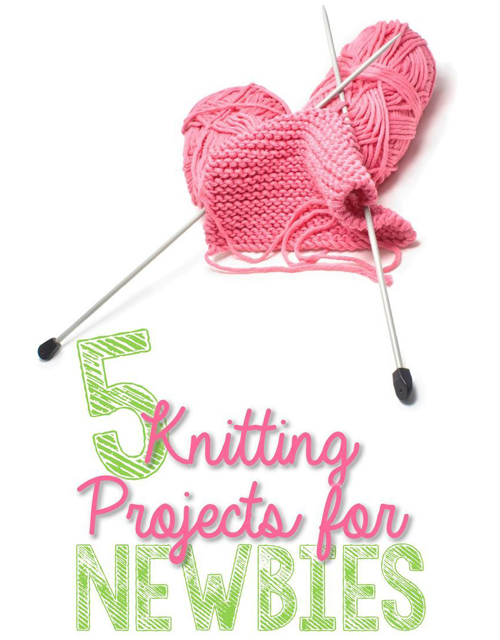
Knitting Projects for Newbies
Photo above © You put it up

Looking for your first knitting project can be more confusing than learning the knit stitch itself.

Hundreds of patterns are described as "easy" or "beginner friendly," but not every easy-looking project is suitable for someone who has only just picked up knitting needles.

A good first project should help you practice a small number of skills, give you visible progress, and be forgiving enough that a few uneven stitches do not ruin the finished result.

This guide will help you choose beginner knitting projects in a sensible order — from simple rectangular pieces to hats, baby projects, lace and your first sweater.

Beginner Knitting Guide

This page is an independent Amazing Knitting learning resource rather than one specific knitting pattern. Use it to choose a project that matches the skills you already know and the skill you want to learn next.

What Makes a Good First Knitting Project?

The best beginner project is not necessarily the smallest or the simplest-looking project.

A useful first project usually has several of these characteristics:

  • A manageable number of stitches
  • Little or no complicated shaping
  • A short repeating stitch pattern
  • Yarn that is easy to see and handle
  • Enough repetition to build muscle memory
  • A finished item you actually want to use

Your first few projects should gradually introduce new techniques rather than requiring you to learn everything at once.

Skills to Learn Before Your First Project

You do not need to know dozens of knitting techniques before starting.

For a very simple first project, focus on:

  • Making a slip knot
  • Casting on stitches
  • The knit stitch
  • Keeping stitches on the needle
  • Binding off
  • Weaving in yarn ends

Once those movements feel comfortable, add the purl stitch, decreases, increases and circular knitting one project at a time.

1. Start with a Garter Stitch Scarf

A garter stitch scarf remains one of the most practical first knitting projects.

When worked flat, you can create garter stitch simply by knitting every row.

That gives you time to practice:

  • Holding the needles
  • Controlling yarn tension
  • Recognizing stitches
  • Turning your work
  • Binding off

The shape is just a rectangle, so there is no garment fitting or complex shaping to worry about.

Why a Scarf Is Useful for Learning

Repetition is one of the fastest ways to make the basic knitting movement feel natural.

A scarf gives you hundreds of opportunities to repeat the same motion while still producing something useful.

The main disadvantage is that a full-length scarf can take time, so a small headband or cowl may be more motivating if you prefer quick projects.

2. Try a Dishcloth or Washcloth

A knitted washcloth is a good alternative when you want a project that finishes quickly.

It gives you a small square where you can practice basic stitches without worrying about exact garment fit.

Cotton yarn is commonly chosen for washable household cloths.

Once you know the knit stitch, a washcloth can also become your practice space for:

  • Purl stitches
  • Seed stitch
  • Ribbing
  • Simple eyelets
  • Textured stitch patterns

3. Knit a Simple Cowl

A cowl can feel more like a finished wearable than a practice square while still remaining relatively simple.

Some beginner cowls are worked flat as rectangles and seamed at the end. Others introduce circular needles and knitting in the round.

Choose the flat version first if circular knitting is still unfamiliar.

4. Try an Easy Baby Blanket

A baby blanket can be an excellent first larger project because it does not require body measurements or garment shaping.

Simple blanket patterns often repeat the same stitches across many rows, allowing you to improve consistency.

The main consideration is commitment: even a baby blanket contains many more stitches than a washcloth or headband.

Free Beginner Blanket Idea: Waffle Blanket

Once you are comfortable maintaining a repeating texture, explore the free Waffle Blanket pattern in the Amazing Knitting archive.

Explore the Waffle Blanket →

5. Move On to a Simple Hat

A basic hat introduces one important new idea: shaping.

Many hats gradually decrease stitches near the crown.

Depending on the pattern, a hat may be:

  • Worked flat and seamed
  • Worked in the round on circular needles
  • Finished with double-pointed needles or another small-circumference method

If you are completely new, a flat-knit hat may feel easier.

6. Try a Textured Scarf

After plain garter stitch feels comfortable, a textured scarf is a good way to learn something new without adding garment shaping.

You can practice new stitches while keeping the overall project shape extremely simple.

Free Next-Step Project: Morning Surf Scarf

Morning Surf Scarf is a verified free pattern already available in the Amazing Knitting archive.

It is a useful option when you are ready to move from plain knitting into a more decorative fabric.

View Morning Surf Scarf →

7. Learn Your First Lace Pattern

Lace does not have to mean an enormous, complicated shawl.

A small lace scarf is a much friendlier introduction because the stitch count is limited and the overall shape remains rectangular.

Before starting, become comfortable with:

  • Yarn overs
  • Basic decreases
  • Counting stitches
  • Reading repeat instructions

Free Beginner Lace Project: Little Leaf Lace Scarf

Little Leaf Lace Scarf by Sivia Harding is a particularly useful bridge into lace knitting because it combines a straightforward scarf shape with a repeating leaf motif.

Explore Little Leaf Lace Scarf →

8. Try Your First Triangle Shawl

A triangular shawl introduces increases and teaches you how knitted shaping develops row by row.

The project can look sophisticated even when the basic construction is relatively logical.

Free Shawl Idea: June Bunnies Shawl

June Bunnies Shawl is a customizable top-down triangular shawl and is especially useful when you are ready to explore simple lace.

Explore June Bunnies Shawl →

9. Try a Baby Cardigan

A baby cardigan can be a practical introduction to garment knitting because the project is much smaller than an adult sweater.

It may introduce:

  • Garment sizing
  • Increasing
  • Sleeves
  • Button bands
  • Reading a multi-size pattern

A top-down construction can be particularly attractive because you can see the garment shape develop as you work.

Free Baby Cardigan: Fuss Free Baby Cardigan

Louise Tilbrook's Fuss Free Baby Cardigan is a free DK-weight pattern with a top-down raglan construction and is a useful next step once your basic knitting feels secure.

Explore Fuss Free Baby Cardigan →

10. Knit Your First Simple Sweater

You do not need to wait years before making a sweater.

The important thing is to choose a design whose construction matches the skills you already have.

Look for patterns with:

  • Simple shapes
  • Clear sizing
  • Minimal complicated stitch work
  • Good construction notes
  • Few finishing steps

Free First-Sweater Idea: French Macaroon

French Macaroon by The Noble Thread is a small garter-stitch children's pullover with a simple boat-neck shape and uncomplicated construction.

It can be a useful way to understand how knitted pieces become a garment without beginning with a large adult sweater.

Explore French Macaroon →

A Simple Beginner Project Progression

A practical learning path:

1. Garter-stitch square or washcloth

2. Simple scarf or headband

3. Textured scarf or cowl

4. Simple blanket

5. Hat with basic shaping

6. Lace scarf or shawl

7. Baby cardigan

8. Simple sweater

This is not a rule. If one particular project excites you, motivation can be more valuable than following a perfect sequence.

What Yarn Is Easiest for Beginners?

A smooth, medium-weight yarn is often easier to learn with than extremely thin, fuzzy or novelty yarn.

You want to be able to see individual stitches clearly so that you can recognize mistakes.

Avoid choosing yarn only because it looks beautiful in the skein.

For your first project, ease of handling is usually more useful than an unusual texture.

Light Colors Can Be Easier to Read

Very dark yarn can make it difficult to see where one stitch ends and the next begins.

A light or medium color can make the structure clearer while you are learning.

Once you can recognize stitches easily, yarn color becomes much less important.

Don't Begin with Extremely Fuzzy Yarn

Mohair-like or heavily textured yarns can hide stitches.

They can also be difficult to unravel when you need to correct an error.

Save highly fuzzy yarn for a later project unless you are already comfortable identifying stitches by touch.

What Needles Should a Beginner Use?

Choose the needle size required by the pattern and appropriate for the yarn rather than buying one universal "beginner needle."

For practice knitting, medium-sized needles and medium-weight yarn can make the stitches easier to see and manipulate.

The important thing is that the needle should not make the fabric so tight that inserting the tip becomes difficult.

Wood or Metal Needles?

Both can work well.

Wooden or bamboo needles tend to offer more surface grip, which some new knitters find reassuring because stitches are less likely to slide away.

Smooth metal needles can feel faster once you become comfortable controlling the stitches.

There is no single correct material for every beginner.

Don't Choose a Project Only Because It Says "Easy"

Difficulty labels vary between designers.

Before starting, scan the skills required.

A project described as beginner-friendly may still require techniques such as:

  • Knitting in the round
  • Cables
  • Lace
  • Short rows
  • Picking up stitches
  • Seaming

None of these techniques is impossible for a beginner, but you should know what you are agreeing to learn.

Choose One New Skill at a Time

A particularly effective approach is to choose each new project because it adds one unfamiliar technique.

For example:

  • Project 1: knit stitch
  • Project 2: purl stitch
  • Project 3: ribbing
  • Project 4: decreases
  • Project 5: knitting in the round
  • Project 6: yarn overs and lace
  • Project 7: garment shaping

This prevents a single project from becoming a collection of ten new problems at once.

Make a Swatch When Size Matters

You can often practice freely on a scarf or washcloth.

But once you begin hats, sweaters, cardigans or fitted baby garments, gauge becomes much more important.

A gauge swatch tells you whether your personal knitting tension produces the dimensions expected by the pattern.

Learn How to Fix Mistakes

Becoming a confident knitter does not mean never making mistakes.

It means learning to recognize and repair them.

Useful early skills include:

  • Recognizing a dropped stitch
  • Unknitting stitches one at a time
  • Counting stitches
  • Checking pattern repeats
  • Using stitch markers
  • Using a lifeline in lace

Finish Your First Projects

A very simple finished project often teaches more than five ambitious projects abandoned halfway through.

Finishing teaches additional skills such as binding off, weaving in ends, seaming and blocking.

Choose something achievable enough that you are likely to reach that final stage.

Don't Worry About Perfect Tension

Your first rows may look different from your twentieth row.

That is normal while your hands are learning a completely new movement.

Concentrate on forming stitches consistently rather than trying to make your first project look machine-made.

More Beginner-Friendly Patterns on Amazing Knitting

Beginner Knitting Stitch Guides

When you want to practice new textures before using them in a full project, explore these Amazing Knitting stitch guides:

Explore More Easy Knitting Patterns

What Should You Knit First?

If you have never completed a project before, start with a small rectangle: a washcloth, headband or simple scarf.

If you already know knit and purl, choose a project that adds one new skill — perhaps ribbing, a simple decrease or a textured stitch.

If you can comfortably follow a basic pattern, move to a hat, shawl or baby cardigan.

The goal is not to remain a "beginner" until you know every technique. Each finished project should teach you enough to make the next project slightly more interesting.

Editorial note: This Amazing Knitting page is an independent beginner-knitting resource. It does not reproduce another publisher's pattern collection or copyrighted instructions. Individual project pages linked above identify and direct readers to their respective designers and authorized pattern sources. Please retain the photograph and original photo credit from the previous version of this page.

Discover More From the Archive

A fresh mix of knitting patterns and tutorials from the Amazing Knitting archive.

Finding patterns from the archive…