| Photo above © marico |
...
Garden View Shawlette - Free Pattern
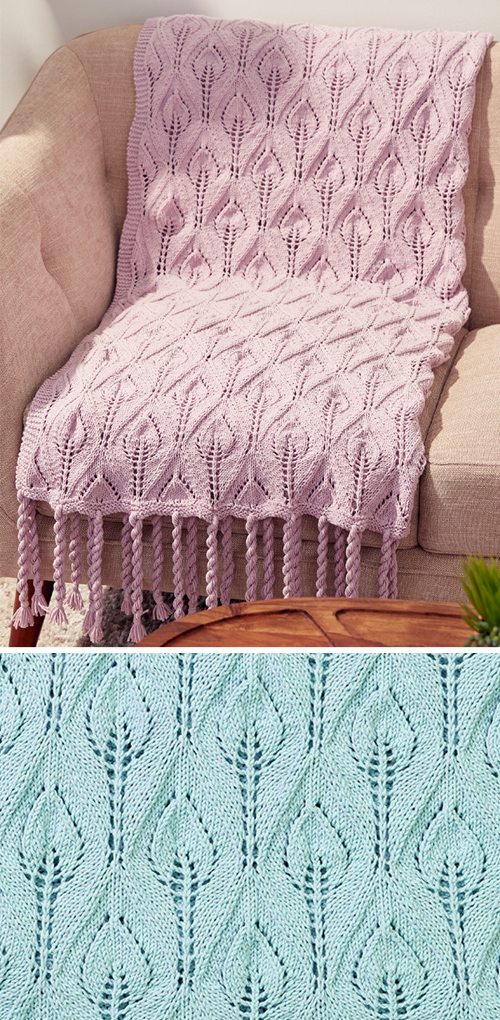
Tasseled Leaf Lace Blanket - Free Pattern
![]() |
| Designed by © Yarnspirations |
Elora Baby Blanket - Knitting Pattern
![]() |
| Designed by © Emily Johannes |
Leaf Lace Baby Sweater - Free Pattern
![]() |
| The photo above © Marlene |
Looking for an elegant free baby knitting pattern with a traditional lace finish? The Bernat Leaf & Lace Set combines a beautiful knitted baby jacket with a matching hat and booties, creating a complete handmade outfit for a new baby.
Worked in soft Bernat Softee Baby yarn, the design uses delicate leaf-inspired lace details to give the set a classic heirloom appearance. You can knit the complete matching set or choose just the jacket, hat, or booties for a smaller project.
Bernat Leaf & Lace Baby Set at a Glance
Pattern: Bernat Leaf & Lace Set
Brand: Bernat
Publisher: Yarnspirations
Craft: Knitting
Set Includes: Baby Jacket, Hat/Bonnet and Booties
Skill Level: Intermediate
Yarn: Bernat Softee Baby
Needles: US 4 / 3.5 mm and US 5 / 3.75 mm
Gauge: 24 stitches and 32 rows = 4 inches in stockinette stitch
Sizes: 3 months and 6/12 months
Pattern Availability: Free download
About the Leaf & Lace Baby Set
The Bernat Leaf & Lace Set is more than a single baby sweater pattern. It is a coordinated knitting set consisting of a jacket, matching hat or bonnet, and baby booties.
A repeating foliage-inspired lace motif gives the pieces their distinctive appearance. The combination of soft baby yarn and decorative eyelet work creates a traditional style that works especially well for baby gifts, special occasions, and handmade keepsakes.
Baby Jacket
The jacket is the centerpiece of the set. It combines a classic baby-cardigan shape with decorative lace details and a shaped yoke.
According to the current pattern, the jacket is worked in one piece from the neck edge down. This top-down approach reduces some of the assembly normally associated with garments knitted as several separate pieces.
The finished cardigan can be paired with the matching accessories or worn by itself as a lightweight knitted baby layer.
Matching Hat and Baby Booties
One of the nicest features of this pattern is the ability to create a complete coordinated outfit.
The matching headwear carries the lace theme from the jacket, while the tiny booties repeat the decorative texture on a much smaller scale.
You do not have to make all three pieces at once. The accessories can also work as individual projects when you want something smaller or have limited knitting time.
Available Baby Sizes
The current Yarnspirations pattern provides two size options:
- 3 months
- 6/12 months
When knitting baby garments, always use the measurements in the current pattern rather than relying only on the age label. Babies of the same age can vary considerably in size.
Yarn for the Leaf & Lace Set
The pattern is designed for Bernat Softee Baby, a lightweight yarn intended for baby garments and accessories.
The amount of yarn required depends on the size and whether you are knitting only the jacket or the complete jacket, hat, and booties set.
If you substitute another yarn, choose one that can achieve the required gauge and that is appropriate for garments worn by babies.
Needles and Gauge
The pattern lists two knitting needle sizes:
- US 4 / 3.5 mm
- US 5 / 3.75 mm
The published gauge is:
24 stitches × 32 rows = 4 inches in stockinette stitch
Matching gauge is especially important when making the jacket because it determines whether the finished garment will correspond to the intended baby size.
Additional Materials
In addition to yarn and knitting needles, the current pattern calls for several finishing supplies, including:
- Stitch holders
- Stitch markers
- US F/5 / 3.75 mm crochet hook
- 2 buttons
- Yarn needle
- Ribbon for the bonnet
Check the official pattern before purchasing materials because requirements can vary by size and by which pieces of the set you plan to make.
The Leaf Lace Design
The decorative stitch pattern is what gives this baby set its name. Yarn overs, decreases, and other lace techniques create repeating shapes reminiscent of small leaves.
This openwork detail adds visual interest without requiring different yarn colors, so a single soft shade can still produce a highly decorative garment.
Soft green emphasizes the botanical theme beautifully, while white, cream, pastel pink, blue, or other baby-friendly shades can give the same pattern a completely different appearance.
Skill Level and Techniques
Yarnspirations currently classifies the Leaf & Lace Set as an Intermediate knitting pattern.
Depending on which pieces you make, you may encounter techniques such as:
- Knit and purl stitches
- Yarn overs
- Knitted increases
- Knitted decreases
- Lace pattern repeats
- Stitch markers and stitch holders
- Garment shaping
- Picking up or managing stitches
- Basic finishing
Reading the entire pattern before casting on is particularly useful when working a lace design because increases and decreases need to remain correctly aligned with the pattern repeat.
A Beautiful Handmade Baby Gift
A coordinated knitted set can make a particularly thoughtful baby-shower, newborn, or keepsake gift.
If you have time, knitting the jacket, hat, and booties together creates an impressive matching outfit. If you prefer a smaller project, the jacket or accessories can also stand alone.
The classic lace texture gives the finished pieces a traditional appearance that can work well as an heirloom-style baby set.
Is the Bernat Leaf & Lace Pattern Free?
Yes. The Bernat Leaf & Lace Set is currently available from Yarnspirations as a 100% free pattern download.
Yarnspirations notes that an item associated with the pattern has been discontinued, but the knitting pattern itself remains available to download for free.
Amazing Knitting does not reproduce the copyrighted pattern instructions. Please use the official Yarnspirations page for the complete pattern.
Get the Free Leaf & Lace Baby Set Pattern
Visit Yarnspirations to download the current pattern and view the latest sizing, materials, instructions, and pattern updates.
Get the Free Leaf & Lace Set Pattern →
Pattern credit: Leaf & Lace Set is a Bernat knitting pattern published by Yarnspirations. Pattern availability, sizing, materials, and technical information are controlled by the publisher and may change over time.
More Baby Knitting Inspiration
Explore more baby cardigan knitting patterns, baby booties knitting patterns, and baby hat knitting patterns from the Amazing Knitting archive.
Before You Start
Visit the current Yarnspirations pattern page before buying yarn or beginning the project. Confirm the size you want to make, yarn quantity, needle sizes, gauge, buttons, ribbon, and any revised instructions before casting on.
Liesel Lace Leaf Scarf - Free Pattern
![]() |
| The photo above © Grace and Alice Schnebly |
Leaf Lace Edging - Free Pattern
![]() |
| Photo above © Stitch Maps |
Silverleaf - Knitting Pattern
![]() |
| Photo above © maliha |
Hint for knitting a repeated pattern
![]() |
| Photos above © primitivespirit |
Little Leaf Lace Scarf - Free Pattern
![]() |
| Photo above © bunnyknitter |
Little Leaf Lace Scarf by Sivia Harding is a graceful, beginner-friendly lace scarf built around a repeating leaf motif.
The design is light enough to show the lace clearly, yet simple enough to make a practical introduction to yarn overs, decreases and basic lace-pattern rhythm.
Its narrow rectangular shape keeps the construction straightforward, so most of your attention can stay on the decorative stitches rather than shaping or garment assembly.
Best of all, the original Little Leaf Lace Scarf pattern is still officially available as a free Ravelry download.
✓ Free Pattern Availability
Little Leaf Lace Scarf by Sivia Harding is currently listed as a free Ravelry download. The designer's Ravelry store also continues to identify the pattern as free.
Little Leaf Lace Scarf at a Glance
Pattern: Little Leaf Lace Scarf
Designer: Sivia Harding
First Published: January 2004
Historical Publication: Knitting Calendar 2005
Category: Lace scarf
Yarn Weight: Fingering or laceweight
Yardage: Approx. 200 yd / 183 m
Needles: US 5 / 3.75 mm
Gauge: 20 sts × 28 rows = 4 in / 10 cm in blocked lace pattern
Finished Size: Approx. 10.5 × 41 in
Construction: One-piece rectangular scarf worked flat
Skill Focus: Beginner lace knitting
Availability: Free Ravelry download
About the Little Leaf Lace Scarf
Little Leaf Lace Scarf is a classic small lace project in which the stitch pattern provides almost all of the visual interest.
Repeating leaf shapes travel along the scarf, creating an elegant botanical texture without requiring complicated garment construction.
Sivia Harding describes the design as an easy lace project suitable for knitters beginning to explore lace.
A Good Beginner Lace Project
Large lace shawls can feel intimidating when you are still learning how yarn overs and decreases work together.
A narrow scarf gives you a much smaller number of stitches to manage, making it easier to understand the relationship between the individual lace stitches and the finished motif.
Once the repeat becomes familiar, the project can develop a comfortable rhythm.
The Leaf Motif
The main visual feature is a repeating openwork leaf.
Yarn overs create the decorative holes, while paired decreases shape the sides of the leaf and keep the overall stitch count under control.
The result is a recognizable botanical motif created entirely through changes in the knitted fabric rather than colorwork or embroidery.
Why Leaves Work So Well in Lace
Leaf motifs are especially well suited to knitted lace because increases can widen the leaf while decreases gradually narrow it again.
This creates a natural-looking shape using the same basic techniques found in many larger shawls and lace garments.
Learning a small leaf pattern can therefore prepare you for more complex lace projects later.
Original Finished Size
The published finished dimensions are approximately:
10.5 inches wide × 41 inches long
This makes Little Leaf a relatively compact scarf rather than an oversized wrap.
The length is enough to show the repeating leaf pattern clearly while keeping the total yarn requirement modest.
Only About 200 Yards of Yarn
The original pattern calls for approximately:
200 yards / 183 meters
That modest yardage makes this a useful project for a special skein of fingering or laceweight yarn that may not be large enough for a full shawl.
Fingering or Laceweight Yarn
The pattern record recommends fingering or laceweight yarn.
These lighter yarns allow the openwork to remain delicate and keep the finished scarf flexible.
The exact appearance can change considerably depending on fiber content and yarn structure.
Needles and Gauge
The listed needle size is:
US 5 / 3.75 mm
The published blocked gauge is:
20 stitches × 28 rows = 4 inches / 10 cm
This gauge is measured over the lace pattern after blocking.
Why Gauge Still Matters on a Scarf
A scarf does not need the same precision of fit as a sweater, but gauge still affects the finished width, length, drape and yarn usage.
A much looser gauge may make the scarf wider and use more yarn, while a tighter gauge can make the lace look compressed.
A small swatch is useful for checking whether the fabric opens attractively after blocking.
Worked Flat in One Piece
Little Leaf Lace Scarf is a straightforward rectangular accessory worked back and forth in rows.
There are no sleeves, armholes or garment seams to manage.
That simplicity makes it easier to focus on learning the lace motif and maintaining consistent tension.
A Garter-Stitch Border Frames the Lace
The lace panel is framed by simple garter-stitch edging.
This creates a neat visual boundary between the open center and the outer edge of the scarf.
It also gives the knitter a few predictable stitches at the beginning and end of each row.
Skills You May Practice
- Working yarn overs
- Knit-two-together decreases
- Left-leaning decreases
- Centered decreases
- Maintaining a lace repeat
- Working a garter-stitch border
- Reading your knitting
- Blocking lace
Count Your Stitches
A missing yarn over or decrease can disturb the shape of the leaf and alter the total stitch count.
Check your stitch count periodically, especially while you are still learning the repeat.
Catching an error after one row is much easier than discovering it several repeats later.
Learn to Recognize the Leaves
Try not to rely only on the written instructions.
Watch how the yarn-over holes and decreases line up from one row to the next.
As the motif becomes familiar, you may start noticing mistakes visually before they cause a larger problem.
Use a Lifeline If You Are New to Lace
After completing a repeat that you know is correct, thread a smooth contrasting strand through the live stitches.
If you later need to unravel several rows, the lifeline provides a safe place to stop.
This can make learning lace much less stressful.
Blocking Reveals the Pattern
Like most knitted lace, Little Leaf may look compressed while it is still on the needles.
Appropriate blocking opens the yarn-over holes, straightens the scarf and makes the leaf shapes more visible.
Always use a blocking method appropriate for your yarn's fiber content.
Choosing a Yarn Substitute
The pattern does not depend on one specific yarn brand.
When choosing a substitute, look for a fingering or laceweight yarn that gives you an attractive open fabric at the required gauge.
Consider:
- Yardage
- Fiber content
- Drape
- Stitch definition
- Halo
- How the yarn behaves after blocking
Solid Colors Show the Leaves Clearly
A solid or gently tonal yarn is particularly effective when you want the leaf shapes to remain the main visual feature.
Strongly variegated yarn can also be attractive, but dramatic color changes may compete with a small lace motif.
Swatching is the best way to see how your chosen yarn interacts with the pattern.
A Good One-Skein Gift Project
With a published requirement of only about 200 yards, Little Leaf Lace Scarf can be an appealing gift project.
The rectangular shape avoids complicated sizing, and the botanical lace adds considerably more visual interest than plain stockinette.
It can also be a useful way to turn a small quantity of special yarn into a finished accessory.
Is Little Leaf Lace Scarf Still Free?
Yes.
Little Leaf Lace Scarf by Sivia Harding is currently listed as a free Ravelry download.
The designer's current Ravelry store also continues to identify Little Leaf Lace Scarf as a free pattern.
Amazing Knitting does not reproduce the designer's complete copyrighted row-by-row pattern. Use the authorized source below for the full instructions.
Get the Free Little Leaf Lace Scarf Pattern
Visit the current Ravelry pattern record:
Get the Free Little Leaf Lace Scarf Pattern →
More Free Lace Scarf Patterns
If you enjoy Little Leaf Lace Scarf, continue with these patterns already restored in the Amazing Knitting archive:
- Lamina Lace Scarf - Free Knitting Pattern
- Morning Surf Scarf - Free Knitting Pattern
- Seascape Stole - Free Knitting Pattern
- June Bunnies Shawl - Free Knitting Pattern
Explore More Lace Knitting
- Free Lace Scarf Knitting Patterns
- Beginner Lace Knitting Projects
- Leaf Lace Knitting Patterns
- Free Scarf Knitting Patterns
Before You Cast On
Choose a fingering or laceweight yarn that shows the leaf motif clearly, and make sure you have approximately 200 yards available.
Check your blocked fabric, count stitches regularly while learning the repeat, and consider adding a lifeline after successful sections.
For knitters moving from basic knitting into lace, Little Leaf Lace Scarf offers a very useful combination: a small amount of yarn, uncomplicated rectangular construction and a beautiful motif that teaches techniques used in much larger lace projects.
Pattern credit: Little Leaf Lace Scarf was designed by Sivia Harding and first published in 2004, later appearing in Knitting Calendar 2005. The existing project photograph on this Amazing Knitting page is credited to bunnyknitter. Amazing Knitting provides an independent project guide and does not reproduce the designer's complete copyrighted knitting instructions.
Soft Coral Sweater - Free Pattern
| Photo above © Cords06 |
This soft coral baby sweater project is based on the Maile Sweater by Nikki Van De Car, a delicate free baby cardigan knitting pattern featuring a graceful leaf-inspired lace motif.
Designed for a young baby and worked in fingering-weight yarn, the Maile Sweater combines a lightweight fabric with decorative lace details for a sweet heirloom-style finish.
Maile Sweater at a Glance
Pattern: Maile Sweater
Designer: Nikki Van De Car
First Published: February 2010
Craft: Knitting
Category: Baby Cardigan / Sweater
Yarn Weight: Fingering
Needle Size: US 4 / 3.5 mm
Gauge: 6 stitches × 9 rows = 1 inch
Yardage: About 200–300 yards / 183–274 m
Published Size: 3 months
Pattern Availability: Free
About the Maile Sweater
The Maile Sweater was designed by Nikki Van De Car as a special baby sweater featuring a decorative leaf motif.
The name comes from the maile vine of Hawaii. The designer explains that the leaf pattern used in the sweater was inspired by the maile leis traditionally worn draped over the shoulders.
That botanical inspiration gives the sweater its distinctive appearance without turning the entire garment into an all-over lace project.
Yarn and Yardage
The original pattern suggests Dream in Color Smooshy, a fingering-weight merino yarn.
The published yardage is approximately:
200–300 yards / 183–274 metres
When substituting yarn, look for a fingering-weight yarn that produces the correct gauge and a fabric soft enough for baby wear.
Washability is also worth considering when choosing yarn for a baby garment.
Needles and Gauge
The original pattern recommends:
US 4 / 3.5 mm knitting needles
The published stockinette gauge is:
6 stitches × 9 rows = 1 inch
Gauge is especially important in a baby sweater because even a relatively small difference can noticeably change the finished size.
About the Size
The original Maile Sweater pattern is published in a 3-month baby size.
If you want to make the sweater for an older baby, do not simply assume that increasing the needle size will create a correctly proportioned garment. A pattern specifically graded for the size you need is generally the safer choice.
The Leaf-Inspired Detail
One of the most recognizable features of the Maile Sweater is its decorative leaf-inspired lace.
This detail gives the cardigan an heirloom appearance while allowing the rest of the garment to remain comparatively simple.
A smooth, solid-colored yarn can help the lace motif remain visible, although softly tonal yarns can also work beautifully.
Skills That Help
Before beginning, it is useful to be comfortable with:
- Casting on
- Knit and purl stitches
- Reading written knitting instructions
- Basic increases and decreases
- Following a lace motif
- Maintaining gauge
- Binding off
- Weaving in yarn ends
If lace knitting is new to you, read through the complete pattern before starting and consider using stitch markers or a row counter to keep track of the decorative section.
Good News: The Maile Sweater Pattern Is Still Free
The original Maile Sweater is currently listed as a free knitting pattern on Ravelry, so readers can still access the legitimate designer-provided pattern without relying on copied instructions from third-party websites.
Why This Baby Sweater Is Still Popular
The Maile Sweater has remained popular because it combines several qualities knitters often look for in a baby project: modest yarn requirements, a lightweight fabric, decorative detail, and an heirloom-style appearance.
Ravelry records thousands of completed Maile Sweater projects, making it one of Nikki Van De Car's best-known baby knitting designs.
Get the Free Maile Sweater Pattern
Visit the Ravelry pattern page for the current free pattern information and the designer's official pattern link.
Get the Free Maile Sweater Pattern →
Pattern credit: Maile Sweater was designed by Nikki Van De Car. The project photo featured on this Amazing Knitting page is credited to Cords06. Amazing Knitting does not reproduce the designer's copyrighted row-by-row pattern instructions.
More Free Baby Sweater Patterns
Explore more free baby sweater knitting patterns, free baby cardigan patterns, and lace baby sweaters from the Amazing Knitting archive.
Before You Start
Open the current designer pattern before casting on, confirm the published size is appropriate for the baby you are knitting for, choose a suitable fingering-weight yarn, and make a gauge swatch if fit is important.
Scarves to Throws Month 6 - Knitting Pattern Guide
![]() |
| Designed by © Rachel |
Scarves to Throws – Month 6 by Rachel Young is a lace scarf originally created for the Jimmy Beans Wool Scarves to Throws project.
First published in 2008, the design uses a repeating diamond-style lace pattern and worsted-weight yarn to create a lightweight scarf that opens beautifully after blocking.
This pattern was originally shared free online, but the exact original pattern is no longer available from its original source. This updated Amazing Knitting page therefore preserves the verified project information without reproducing or linking to an unauthorized copy of the instructions.
Pattern Availability Update
Scarves to Throws – Month 6 was originally distributed as a free knitting pattern through Jimmy Beans Wool. Ravelry now marks the original pattern as no longer available. Amazing Knitting does not provide archived or unofficial copies of the designer's instructions.
Scarves to Throws Month 6 at a Glance
Pattern: Scarves to Throws – Month 6
Designer: Rachel Young
Publisher: Jimmy Beans Wool
First Published: April 2008
Craft: Knitting
Category: Scarf
Finished Size: Approx. 5.5 × 65 in
Original Yarn: Lorna's Laces Shepherd Worsted Multi
Yarn Weight: Worsted / Aran
Needles: US 10 / 6 mm
Style: Lace scarf
Original Sample Color: Cedar
Current Availability: Original pattern no longer available
About Scarves to Throws
Scarves to Throws was an unusual knitting project from Jimmy Beans Wool.
Instead of treating each scarf as an unrelated project, the series was conceived around multiple scarves that could ultimately become part of a much larger knitted piece.
Different months introduced different stitch patterns, giving knitters an opportunity to explore a variety of textures while working with coordinating yarns.
About Month 6
Month 6 was designed by Rachel Young and published in April 2008.
It is a lace scarf worked in worsted-weight yarn. The repeating openwork creates a geometric, diamond-like appearance while keeping the project relatively quick to knit.
The designer described it as an easy and fast lace pattern, making it appealing to knitters who want the appearance of lace without committing to a very fine lace-weight project.
Finished Size
The published finished dimensions are approximately:
5.5 inches wide × 65 inches long
The designer noted that the lace stretches considerably during blocking, so the scarf can look significantly shorter while it is still being knitted.
The original sample required only about 15 pattern repeats to block to approximately 65 inches in length.
Original Yarn
The original design used:
Lorna's Laces Shepherd Worsted Multi
This is a 100% merino wool yarn with approximately 225 yards / 206 meters per 113 g skein.
The scarf pictured in the original pattern was knitted in the Cedar colorway.
Needles
The published needle size is:
US 10 / 6 mm
A relatively generous needle size for worsted-weight yarn helps produce the open fabric needed for the lace to expand during blocking.
As always, the published needle size should be treated as a starting point. Different knitters and substitute yarns can produce different fabrics on the same needle size.
A Lace Pattern Designed to Open Up
One of the most important things to understand about this scarf is that its appearance changes during finishing.
Lace can look compressed and much shorter while it is still on the needles. After appropriate blocking, the openings become more defined and the fabric can gain considerable length.
This is why judging the final scarf solely from its unblocked length can be misleading.
Why Worsted-Weight Lace?
Lace knitting does not require lace-weight yarn.
Using worsted-weight yarn makes the individual stitches easier to see and creates a more substantial scarf while still allowing yarn overs and decreases to form decorative openings.
For knitters beginning to explore lace, a project using larger needles and thicker yarn can also be easier to read than very fine lace.
Choosing a Substitute Yarn
If you want to create a similar scarf today, look for a smooth worsted-weight yarn with enough stitch definition to show the lace.
Wool and wool blends can work particularly well because appropriate blocking helps the lace settle into shape.
Variegated yarn can also suit this style nicely, reflecting the multicolor character of the original Lorna's Laces yarn.
Skills Used in This Style of Scarf
A lace scarf of this type typically calls on skills such as:
- Casting on and binding off
- Knitting and purling
- Working yarn overs
- Working decreases
- Following a repeating lace pattern
- Keeping an accurate stitch count
- Recognizing pattern repeats
- Blocking knitted lace
Keep Track of Pattern Repeats
Repeating lace patterns become easier once their visual rhythm begins to make sense.
Until that happens, use a row counter or checklist so you always know which row you have just completed.
It is also useful to count your stitches periodically. A missed yarn over or decrease can affect the alignment of the following repeats.
Blocking Is Part of the Project
Blocking is especially important for this design because the original designer specifically noted how much the scarf stretches after blocking.
Before deciding that your scarf is too short, finish a representative swatch and block it using a method appropriate for your chosen fiber.
That will give you a much better idea of how the final fabric behaves.
The Larger Scarves to Throws Idea
Month 6 was not the only design in the original series.
Jimmy Beans Wool published a collection of different monthly scarf designs using a variety of techniques, including lace, cables, drop stitches, entrelac and other textured patterns.
The broader project allowed the individual scarves to work as separate accessories or as components of a larger throw.
Joining Knitted Panels
Jimmy Beans Wool also published guidance about joining the completed Scarves to Throws pieces.
Their later tutorial discusses using a modified mattress-stitch method to sew the long knitted sections together.
This is useful inspiration even if you are creating your own modern version of the concept using different verified scarf or panel patterns.
Is Scarves to Throws Month 6 Still Free?
The pattern was originally free, but the original pattern is no longer available.
Ravelry maintains the historical pattern record for Scarves to Throws – Month 6 by Rachel Young, but currently states that the pattern is no longer available.
For that reason, Amazing Knitting does not provide an unofficial PDF, archived copy or transcription of the original instructions.
This page instead preserves the verified information about the project and helps knitters understand the yarn, construction concept and lace style.
View the Historical Pattern Record
Ravelry still maintains the pattern record, project photographs and basic specifications for the original design.
View Scarves to Throws Month 6 on Ravelry →
Looking for a Free Alternative?
Since the original Month 6 instructions are no longer available, the safest option is to choose a currently available free lace scarf rather than downloading an unofficial copy of the discontinued pattern.
Amazing Knitting already has an excellent verified free option: Lamina by Karen S. Lauger.
Lamina is a free lace scarf with a large leaf motif. Its updated Ravelry version includes both written instructions and charts, while the original pattern is also available free from Knitty.
See the Free Lamina Scarf Pattern →
More Free Scarf Knitting Patterns
You can also explore more currently available scarf projects from the Amazing Knitting archive.
Explore Free Scarf Knitting Patterns →
You can also browse lace scarf patterns, worsted-weight scarves, and free lace knitting patterns.
Before You Start
If your goal is to reproduce the exact original Month 6 scarf, be aware that the designer's pattern is currently unavailable. Avoid websites offering copied PDFs or transcribed instructions without permission.
For a new project, choose a currently available pattern, make a swatch with your chosen worsted-weight yarn and remember that lace dimensions can change considerably after blocking.
Pattern credit: Scarves to Throws – Month 6 was designed by Rachel Young and originally published through Jimmy Beans Wool in April 2008. The original pattern is currently listed as no longer available. Amazing Knitting does not reproduce the designer's copyrighted knitting instructions or provide unauthorized pattern copies.
Lamina Scarf - Free Knitting Pattern
![]() |
| Photo above © Foxberryjam |
Lamina by Karen S. Lauger is an elegant knitted lace scarf built around a bold leaf motif with distinctive wavy garter-stitch tips.
Originally published in Knitty's First Fall 2010 issue, Lamina is designed especially well for variegated yarn and is worked in two matching halves from the center outward. The pattern remains completely free, with both the original Knitty version and an updated Ravelry download available today.
✓ Free Pattern Availability
Lamina remains available as a free knitting pattern. The updated Ravelry download includes both written instructions and charts, while the original pattern remains available free from Knitty.
Lamina Scarf at a Glance
Pattern: Lamina
Designer: Karen S. Lauger
Published In: Knitty, First Fall 2010
First Published: July 2010
Craft: Knitting
Category: Scarf
Size: One size
Finished Width: Approx. 7 in / 18 cm
Finished Length: Approx. 63 in / 160 cm
Suggested Yarn: Manos del Uruguay Silk Blend
Yarn Weight: DK / 8 ply
Needles: US 7 / 4.5 mm
Gauge: 18 stitches × 24 rows = 4 in / 10 cm in stockinette
Construction: Worked flat in two halves
Techniques: Lace, provisional cast-on, charts and increases/decreases
Availability: Free pattern
About the Lamina Scarf
Lamina is a decorative lace scarf designed by Karen S. Lauger.
The name is especially appropriate: lamina means the blade of a leaf, and a large leaf shape forms the central visual feature of the scarf.
Rather than creating a small repeating leaf pattern across the entire fabric, the design uses a much bolder motif, accompanied by wavy garter-stitch tips.
Finished Size
After blocking, the original scarf measures approximately:
7 inches wide × 63 inches long
18 cm × 160 cm
These are the designer's finished measurements for the original version. As with most lace knitting, the dimensions can change noticeably during blocking.
Original Yarn
Karen S. Lauger designed Lamina using Manos del Uruguay Silk Blend.
This is a DK-weight blend of approximately 70% merino wool and 30% silk, with about 150 yards / 137 meters per 50 g skein.
The original Knitty version calls for two skeins.
The combination of wool and silk gives the yarn enough definition to show the lace while also providing softness and drape.
A Great Pattern for Variegated Yarn
One of the designer's goals with Lamina was to create a scarf that could show off the beauty of variegated yarn.
The large-scale leaf design provides enough visual structure to remain interesting without relying on a solid-color yarn.
If you have a special hand-dyed DK yarn in your stash, this is the kind of project where its color changes can become an important part of the finished design.
Needles and Gauge
The original Knitty pattern specifies:
US 7 / 4.5 mm straight needles
The published gauge is:
18 stitches × 24 rows = 4 inches / 10 cm in stockinette stitch
Remember that the recommended needle size is only a starting point. Use the needle size necessary for you to obtain an appropriate fabric and gauge.
Worked in Two Halves
One of the most interesting features of Lamina is its construction.
Instead of casting on at one end and knitting continuously to the opposite end, the scarf is worked in two halves from the center.
The first half begins with a provisional cast-on. After that half is completed, the provisional cast-on is removed and the live stitches are placed back on the needle.
The second half is then worked in the opposite direction.
Why Use Two-Half Construction?
This construction is particularly useful for a directional motif such as a leaf.
If the scarf were simply knitted from one end to the other, the motif would appear upright at one end and upside down at the other.
Working outward from the center allows the decorative elements to maintain a balanced orientation when the scarf is worn.
The Provisional Cast-On
A provisional cast-on creates temporary cast-on stitches that can later be removed to expose live stitches.
Lamina uses this technique at the center of the scarf so the second half can be knitted directly from the first half's starting edge.
If provisional cast-ons are new to you, practice the technique on a small swatch before starting the scarf.
The Leaf Lace Motif
The central leaf is formed through carefully arranged yarn overs, decreases and increases.
These operations create both the open lace areas and the shaping that gives the motif its distinctive leaf-blade appearance.
The stitch count changes during parts of the design, so careful row tracking is useful.
Wavy Garter-Stitch Tips
The ends of Lamina contrast with the central lace through their sculptural, wavy appearance.
Garter stitch gives these areas additional texture while helping the scarf's ends stand apart visually from the main leaf section.
Blocking is important for revealing the final shape of these decorative ends.
Charts or Written Instructions?
Knitters have two useful options.
The original Knitty publication provides the pattern with charts, while Karen S. Lauger later made an updated free PDF available through Ravelry that includes written instructions as well as the charts.
This makes the newer version especially useful for knitters who prefer written lace instructions.
Skills That Help
Helpful skills for knitting Lamina include:
- Casting on and binding off
- Knit and purl stitches
- Yarn overs
- Working lace increases and decreases
- Reading a knitting chart
- Following written lace instructions
- Using stitch markers
- Working a provisional cast-on
- Returning live stitches to a needle
- Blocking lace
Use Stitch Markers
The original design uses stitch markers to help separate the edging stitches from the main lace section.
This can make it easier to see whether an accidental increase or decrease has occurred before the error travels into the next section.
Keep Track of Your Rows
Lace projects become much easier when you always know which pattern row you have just completed.
Use a row counter, paper checklist or another method that works reliably for you.
Checking your progress regularly is especially helpful in Lamina because the shape evolves as you move through the charts.
Consider a Lifeline
If you are still becoming comfortable with lace, consider adding a lifeline after a correctly completed section.
A smooth contrasting thread passed through the live stitches gives you a safe point to return to if you later need to unravel several rows.
Blocking Lamina
Blocking is an important finishing step for this design.
Lace often appears compressed while it is still on the needles. Appropriate wet blocking allows the leaf motif and decorative points to open into their intended shapes.
Follow the care requirements of your chosen yarn and use the designer's finished dimensions as a useful reference rather than aggressively stretching the fabric.
Choosing a Substitute Yarn
If you do not use the original Manos del Uruguay Silk Blend, look for a DK-weight yarn with enough stitch definition to show the lace clearly.
A smooth wool, wool blend or another yarn with suitable drape can work well, but always make a swatch before committing a special skein to the project.
Variegated and hand-dyed yarns are particularly worth considering because the original design was intentionally created to showcase them.
Is Lamina Still Free?
Yes. Lamina by Karen S. Lauger remains available as a free knitting pattern.
Ravelry currently provides a free downloadable version containing both written instructions and charts. The original 2010 version also remains available free through Knitty.
Amazing Knitting does not reproduce the designer's complete copyrighted instructions or charts. This page provides an independent project guide and directs knitters to the legitimate original sources.
Get the Free Lamina Pattern
If you prefer written instructions plus charts, use the free Ravelry version:
Get the Free Lamina Pattern on Ravelry →
You can also use the original free Knitty publication:
View the Original Free Pattern on Knitty →
More Free Scarf Knitting Patterns
If you enjoy Lamina, explore more lace scarves and free scarf patterns from the Amazing Knitting archive.
Explore Free Scarf Knitting Patterns →
You can also browse lace scarf patterns, leaf knitting patterns, and free lace knitting patterns.
Before You Start
Decide whether you prefer the chart-based original Knitty version or the updated Ravelry version with both written and charted instructions.
If this is your first provisional cast-on project, practice that technique first. Make a swatch with your chosen yarn, and remember that blocking plays an important role in the final appearance of the leaf lace and wavy ends.
Pattern credit: Lamina was designed by Karen S. Lauger and originally published in Knitty, First Fall 2010. The existing project photograph on this Amazing Knitting page is credited to Foxberryjam. Amazing Knitting does not reproduce the designer's copyrighted charts or complete knitting instructions.
Autumn Leaves - Free Pattern
![]() |
| Photo above © figandplum |
Autumn Leaves by Nikki Van De Car is a charming top-down baby cardigan featuring a beautiful leaf-lace yoke that spreads gracefully across the shoulders.
Designed in three baby sizes, Autumn Leaves combines an eye-catching decorative yoke with a practical cardigan construction. Despite the impressive appearance of the leaf pattern, the designer describes the knitting as intuitive once the repeating structure becomes familiar. Best of all, the original pattern is still available free from the designer.
✓ Free Pattern Availability
Good news: Autumn Leaves by Nikki Van De Car is still available as a free knitting pattern. The designer currently provides the pattern on her own pattern page, making that the preferred source for the current instructions.
Autumn Leaves Cardigan at a Glance
Pattern: Autumn Leaves
Designer: Nikki Van De Car
First Published: October 2008
Craft: Knitting
Category: Baby Cardigan
Sizes: 6–9, 9–12 and 12–15 months
Construction: Top-down, one-piece cardigan
Feature: Leaf-lace circular yoke
Yarn: DK or worsted weight, depending on size
Needles: US 5, US 7 or US 9, depending on size
Notions: 4 stitch markers, tapestry needle and 3 buttons
Current Availability: Free pattern
About the Autumn Leaves Baby Cardigan
The defining feature of Autumn Leaves is its decorative leaf-lace yoke.
The leaves spread around the upper cardigan and create much of the garment's visual interest before the knitting transitions into the simpler body and sleeves.
This balance makes the cardigan particularly appealing: there is enough lace to make the project special without covering the entire garment in a complicated stitch pattern.
Three Baby Sizes
Autumn Leaves includes three sizes:
- 6–9 months
- 9–12 months
- 12–15 months
An important detail is that the designer changes yarn weight, needle size and gauge between the sizes. Do not assume that all three sizes use exactly the same materials.
Yarn Requirements
Nikki Van De Car currently gives the following approximate yarn requirements:
- 6–9 months: approximately 200 yards
- 9–12 months: approximately 250 yards
- 12–15 months: approximately 300 yards
DK yarn is specified for the smaller size, while the designer allows DK or worsted for the middle size depending on the desired fabric. The largest size uses worsted-weight yarn.
Always check the current designer pattern before purchasing yarn because matching the appropriate gauge for your chosen size is essential.
Needle Sizes
Needle size also changes with the cardigan size:
- 6–9 months: US 5 / 3.75 mm
- 9–12 months: US 7 / 4.5 mm
- 12–15 months: US 9 / 5.5 mm
The original materials list calls for a circular needle. The cardigan is worked flat; the circular needle provides a convenient way to hold the increasing number of stitches across the yoke and body.
Gauge by Size
The published gauges are:
- US 5: 24.5 stitches × 32.5 rows = 4 inches / 10 cm
- US 7: 18 stitches × 29 rows = 4 inches / 10 cm
- US 9: 15.5 stitches × 23 rows = 4 inches / 10 cm
This size-specific gauge information is particularly important. Select your intended size first, then swatch with the appropriate yarn and needle combination.
The Leaf-Lace Yoke
The yoke is what gives Autumn Leaves its recognizable appearance.
Lace increases form the expanding leaf motifs as the cardigan grows outward from the neckline. The decorative shaping and garment shaping therefore work together rather than existing as separate features.
Once blocked, the open sections help define the leaves and allow the pattern to spread naturally across the baby's shoulders.
Top-Down Construction
Autumn Leaves is a top-down, one-piece cardigan.
Beginning at the neckline allows the decorative yoke to be established first. The garment then develops downward into the body and sleeves.
One-piece construction also reduces the amount of traditional garment assembly compared with sweaters knitted as separate front, back and sleeve pieces.
Seed Stitch Edging
Seed stitch provides a neat textured contrast to the open leaf lace.
Because seed stitch alternates knit and purl stitches, it creates a compact textured surface that helps frame the cardigan while allowing the lace yoke to remain the main decorative feature.
Buttons and Other Materials
In addition to yarn and needles, the designer lists:
- 3 buttons
- 4 stitch markers
- A tapestry needle
Stitch markers are especially useful around a patterned yoke because they help separate important sections and make it easier to identify an error before it travels through several rows.
Written Instructions and Chart
Autumn Leaves has both written pattern information and a chart available for the decorative section.
If you are new to lace charts, comparing the chart with the written directions can be a useful way to learn how the symbols correspond to actual stitches.
Amazing Knitting does not reproduce the designer's chart or row-by-row instructions. Use Nikki Van De Car's current pattern page for the exact stitch sequence and shaping.
Skills That Help
Useful skills for Autumn Leaves include:
- Casting on
- Knit and purl stitches
- Seed stitch
- Yarn overs
- Basic lace decreases
- Following written lace instructions
- Reading a knitting chart
- Using stitch markers
- Working buttonholes
- Working a top-down garment
- Binding off
- Blocking lace
Why Blocking Matters
Lace often looks much less impressive immediately after it comes off the needles.
Gentle blocking helps the leaf motifs open and allows the shape of the yoke to become clearer.
Always follow the washing and blocking recommendations appropriate for the yarn you choose, especially for a baby garment.
Choosing a Colour
The leaf motif makes Autumn Leaves a natural candidate for warm seasonal colours such as rust, mustard, moss, burgundy or soft brown.
But the design does not need to look autumnal. Cream, pale pink, blue, lavender or soft green can turn the same pattern into a cardigan suitable for any season.
A solid or gently heathered yarn will generally make the lace leaves easier to see than a highly contrasting variegated yarn.
Is Autumn Leaves Still Free?
Yes. Autumn Leaves by Nikki Van De Car is currently available as a free knitting pattern.
The designer maintains a current online version of the pattern, and Ravelry also continues to list Autumn Leaves as free.
Amazing Knitting provides this project guide and directs readers to the legitimate original source rather than reproducing the designer's copyrighted pattern instructions.
Get the Free Autumn Leaves Pattern
The best current source is Nikki Van De Car's own Autumn Leaves pattern page.
Get the Free Autumn Leaves Pattern →
More Free Baby Cardigans
If you enjoy leaf yokes and small top-down garments, continue exploring the Amazing Knitting archive for more free baby sweater patterns.
Explore Free Baby Cardigan Patterns →
You can also browse leaf-lace baby sweaters, top-down baby cardigans, and free baby knitting patterns.
Before You Start
Decide which of the three sizes you are making before buying yarn because the recommended yarn weight, needle size and gauge change between sizes.
Make a gauge swatch, prepare your stitch markers and read through the leaf-yoke section before casting on. If lace charts are unfamiliar, keep the written directions nearby while learning the pattern.
Pattern credit: Autumn Leaves was designed by Nikki Van De Car and published in connection with What To Knit When You're Expecting. The existing photograph on this Amazing Knitting page is credited to figandplum. Amazing Knitting does not reproduce the designer's copyrighted chart or row-by-row knitting instructions.
Discover More From the Archive
A fresh mix of knitting patterns and tutorials from the Amazing Knitting archive.