Skip to content

...

Showing posts sorted by date for query free wrap knitting pattern. Sort by relevance Show all posts

Simple Cowl Free Knitting Pattern

Simple Cowl Free Knitting Pattern
The photo above © The Woolly Brew

Looking for a quick and satisfying knitting project? The Simple Cowl pattern from The Woolly Brew is the perfect choice! This free knitting pattern is designed for 4ply yarn and offers a delightful way to create a cozy accessory that’s both stylish and functional. With easy-to-follow instructions and minimal techniques required, it’s suitable for knitters of all skill levels.

I encourage you to check out the full pattern available for download on The Woolly Brew’s website. This cowl measures approximately 45cm tall and 28cm wide, making it a versatile addition to your winter wardrobe. Don’t miss the opportunity to wrap yourself in comfort—follow the link to get started on this charming project today!

Full Post: Simple Cowl

Elevate Your Knitting: The Cable Cowl Pattern

Elevate Your Knitting: The Cable Cowl Pattern
The photo above © Nimble Needles 

Are you ready to elevate your knitting skills with a beautiful project? The Cable Cowl: Into the Desert pattern is a delightful way to work with luxurious camel hair yarn while mastering cable techniques. Designed for both comfort and style, this cowl features intricate 2x2 cables that add a touch of elegance to your winter wardrobe. With clear instructions and helpful tutorials, this pattern is perfect for knitters looking to challenge themselves while creating something cozy and chic.

I encourage you to check out the full pattern available for free on Nimble Needles. Whether you're a seasoned knitter or just starting out, this project offers flexibility in size and style, allowing you to customize it to your preferences. Don't miss the chance to wrap yourself in this stunning cowl—follow the link and start your knitting adventure today!

Full Post: Cable Cowl Pattern 

The Simple Thing – Free One-Skein Garter Stitch Knitting Pattern

The Simple Thing free one skein garter stitch knitting pattern by Melina Brell

The Simple Thing. Photo © vhglass

The Simple Thing by Melina Brell is a free one-skein knitting pattern that sits somewhere between a small scarf and a shawl. Worked entirely in garter stitch with neat I-cord edges, it is simple, versatile and wonderfully adaptable.

The original sample uses just one skein of DK yarn, but the design can easily be made longer, shorter, wider or narrower. You can even use a different yarn weight or more than one skein to create your own version.

The Simple Thing Pattern Details

  • Designer: Melina Brell
  • Published: December 2022
  • Craft: Knitting
  • Category: Scarf / small shawl
  • Pattern availability: Free Ravelry download
  • Yarn weight: DK / 8 ply for the original sample
  • Suggested yarn: Heathland Knits BFL DK
  • Yardage: Approximately 219–273 yards (200–250 m)
  • Needles: 4.5 mm (US 7)
  • Gauge: 24 stitches × 28 rows = 4 inches (10 cm) in garter stitch
  • Sample size: Approximately 140 × 24 cm (55 × 9.5 inches)
  • Construction: Worked sideways and flat
  • Main stitch: Garter stitch
  • Edging: I-cord
  • Finishing: Kitchener stitch / grafting
  • Construction style: One piece and seamless
  • Languages: English, Dutch, French and German

A One-Skein Knitting Project

One of the biggest attractions of The Simple Thing is that the original version can be knitted from just one skein of yarn.

Melina Brell's sample uses a single skein of DK-weight Bluefaced Leicester yarn and measures approximately 140 cm long × 24 cm wide.

This makes the design a useful choice when you have one beautiful skein in your stash but aren't sure what to make with it.

Not Quite a Scarf, Not Quite a Shawl

The Simple Thing is deliberately difficult to place into a traditional accessory category.

Its long, narrow shape gives it the easy wearability of a scarf, while the gently shaped fabric gives it some of the character of a small shawl.

You can wrap it around your neck, tie it loosely, or wear it draped like a small shawlette depending on the dimensions you choose.

Simple Garter Stitch Construction

The body of the piece is worked in garter stitch, making the texture simple and reversible.

According to the designer, the basic skills required are primarily knitting stitches, knitting two stitches together and slipping stitches.

This simplicity lets the yarn take center stage and makes the project relaxing once you understand the construction.

Worked Sideways From Tip to Tip

Instead of casting on the full length or width of the accessory, The Simple Thing is worked sideways in rows.

You begin at one narrow tip. The piece gradually grows wider, continues through the central portion and then narrows again until you reach the opposite tip.

The result is a symmetrical scarf-like shawl made continuously as one piece.

Beautiful I-Cord Edges

A particularly attractive feature of the pattern is its I-cord edging.

The I-cord runs along the edges of the garter-stitch fabric, giving the otherwise very simple project a clean and polished finish.

This small detail helps the edges maintain a tidy appearance while also adding subtle structure to the finished accessory.

An Adjustable Knitting Pattern

You do not have to reproduce the exact dimensions of Melina Brell's original sample.

The pattern is designed so that it can be adapted to make your Simple Thing longer, shorter, wider or narrower.

This flexibility is especially useful when working with a limited amount of yarn because you can plan the shape around the yardage you actually have available.

Use One Skein — Or Keep Going

Although the original sample is a one-skein project, the concept is not restricted to one skein.

The designer specifically allows the pattern to be adapted to the amount of yarn you want to use. A single skein creates a compact accessory, while additional yarn can produce a larger scarf or shawl-like piece.

This also makes The Simple Thing useful for experimenting with stripes, gradients or multiple coordinating yarns.

Can You Use a Different Yarn Weight?

Yes. The original sample is knitted in DK yarn, but Melina Brell notes that the design can be adapted for different yarn weights.

Changing yarn weight and needle size will naturally change the scale, drape and dimensions of the finished piece, so treat the original DK specifications as a reference rather than a strict limitation.

This flexibility is one reason the pattern works so well as a stash-busting project.

The Original Yarn

The sample shown with the original pattern was knitted using Heathland Knits BFL DK, a 100% Bluefaced Leicester wool yarn.

The pattern lists approximately 219–273 yards (200–250 metres) of yarn.

When choosing a substitute, look for a yarn that creates a garter-stitch fabric with a drape and feel you enjoy.

Needles and Gauge

The original DK version uses 4.5 mm (US 7) knitting needles.

The listed gauge is 24 stitches and 28 rows = 4 inches (10 cm) in garter stitch.

Because the design is so adjustable, matching the original gauge is not necessarily about achieving one rigid finished size. However, gauge still determines how your chosen yarn behaves and how much yarn the project consumes.

Skills Used in The Simple Thing

The project is based on a small group of useful knitting techniques:

  • Knit stitches
  • Garter stitch
  • Working flat
  • Slipping stitches
  • Knitting two stitches together
  • Shaping the piece from tip to tip
  • Working I-cord edges
  • Grafting the final stitches with Kitchener stitch

Helpful Videos From the Designer

Melina Brell provides supporting video links with the free pattern for two parts of the project that may be unfamiliar to some knitters.

One video demonstrates the setup of the shawl, while another shows how to graft the final stitches.

These are particularly useful if this is your first time working this type of I-cord construction or finishing with grafting.

A Good Project for a Special Skein

Many knitters have a single skein in their stash that was too beautiful to leave behind but has never found the right project.

The Simple Thing is particularly well suited to this situation because the design is intentionally adaptable to the yarn available.

A solid, tonal, speckled or gently variegated yarn can all work well because the garter-stitch body provides a simple background for the yarn itself.

Use Your Yarn Without Playing Yarn Chicken

The sideways, adjustable construction is also helpful when you want to make good use of a limited quantity of yarn.

Rather than being locked into one exact finished dimension, you can use the designer's shaping method to plan the accessory around the amount of yarn available.

This makes it particularly appealing for hand-dyed skeins, discontinued yarns or leftovers where buying another matching skein may not be possible.

A Simple Travel or Relaxing Knitting Project

Once the setup is complete, much of the project consists of repetitive garter-stitch knitting.

That makes The Simple Thing a practical project for times when you want something portable and relatively uncomplicated, while the I-cord edges and gradual shaping provide enough structure to keep the knitting interesting.

The Simple Thing and the Cheshire Cat Shawl

Melina Brell describes The Simple Thing as a simplified version of her One Skein Cheshire Cat Shawl, which she published earlier.

The Simple Thing uses garter stitch and I-cord edges. If you prefer a related design worked in stockinette with slipped-stitch edges, the designer points knitters toward the One Skein Cheshire Cat Shawl.

Why Has The Simple Thing Become So Popular?

The appeal is easy to understand: it combines a very simple stitch pattern with enough clever construction to produce an accessory that looks polished rather than basic.

It requires relatively little yarn, works beautifully as a one-skein project and can be customized instead of forcing every knitter into one exact size.

The combination of garter stitch, I-cord edges, tip-to-tip construction and flexible sizing makes it a pattern that can be knitted more than once with very different results.

Get The Simple Thing Free Knitting Pattern

The complete The Simple Thing by Melina Brell is currently available as a free download from the designer's Ravelry store.

Get The Simple Thing Free Knitting Pattern

Pattern availability was checked when this article was updated. Availability on external websites may change over time.

Knit Your Own Coffee Shop Cowl - Free Pattern

Knit Your Own Coffee Shop Cowl - Free Pattern
The photo above © Jem Arrowsmith

If you’re searching for a cozy and stylish accessory to enhance your wardrobe, I highly recommend checking out the Coffee Shop Cowl knitting pattern available at the link below. This free pattern is perfect for beginners and experienced knitters alike, featuring simple knit and purl stitches that create a delightful texture. Made with soft DK yarn, this cowl is both lightweight and warm, making it an ideal companion for chilly outings. The pattern also includes creative ideas for transforming your cowl into a double loop, scarf, or wrap, offering versatility in your knitting projects. Don’t miss the chance to create this beautiful piece that’s sure to become a favorite! 

Full Post: Coffee Shop Cowl

Secession Shawl – Asymmetric Knitting Pattern

Secession asymmetric shawl knitting pattern by Kristina Vilimaite

Secession by Kristina Vilimaite is an elegant asymmetric shawl inspired by the decorative style of the Viennese Secession movement. The design combines a sweeping curved triangular shape with delicate textured details and optional beads.

The shawl is worked sideways in one piece, creating its distinctive asymmetric silhouette without requiring separate sections to be sewn together.

Secession can be knitted in fingering or DK-weight yarn, and the pattern includes guidance for petite, regular, large and custom-sized versions.

Design and original pattern © Kristina Vilimaite / AnimaKnits.

Secession Shawl Pattern Overview

  • Designer: Kristina Vilimaite
  • Pattern: Secession
  • Craft: Knitting
  • Category: Shawl / wrap
  • Published: April 2016
  • Construction: One piece
  • Direction: Worked sideways
  • Shape: Asymmetric curved triangle
  • Sizes: S, M and custom sizing instructions
  • Yarn options: Fingering or DK weight
  • Suggested yarns: Malabrigo Silky Merino and madelinetosh Tosh Merino Light
  • Yardage: Approximately 416–995 yd / 380–910 m
  • Needles: US 2½ / 3.0 mm
  • Gauge: 26 stitches × 31 rows = 4 in / 10 cm in stockinette stitch
  • Beads: Optional
  • Instructions: Written instructions and charts
  • Language: English
  • Pattern availability: Paid pattern

An Asymmetric Curved Triangle Shawl

Secession does not follow the familiar symmetrical triangle construction used for many traditional shawls.

Instead, the fabric grows sideways into an asymmetric curved triangular shape.

This gives the finished shawl a flowing silhouette that can be wrapped around the shoulders or styled more loosely around the neck.

Inspired by the Viennese Secession Movement

The name Secession refers to the Viennese Secession, the Austrian Art Nouveau movement associated with artists such as Gustav Klimt.

The designer describes the shawl as combining simplicity with decorative detail, including the option of adding beads for extra contrast and sparkle.

That balance between a clean silhouette and ornamental detail is one of the features that gives the design its distinctive character.

Worked Sideways in One Piece

The shawl is knitted sideways as a single piece.

This means the shaping develops gradually across the work rather than beginning at the center or lower point of a traditional triangular shawl.

There are no separate panels to assemble afterward, which keeps the basic construction cohesive even though the finished shape is unusual.

Fingering or DK Yarn

One of the most useful features of Secession is that the pattern can be worked with either fingering-weight or DK-weight yarn.

The different yarn weights allow the same design to produce shawls with different scale and drape.

Fingering yarn creates a lighter, more delicate fabric, while DK yarn can give the shawl more substance and warmth.

Suggested Yarns

The pattern lists two suggested yarns:

  • Malabrigo Silky Merino
  • madelinetosh Tosh Merino Light

These represent two different yarn-weight options for the design.

You can substitute another suitable yarn if desired, but consider drape, yardage and stitch definition when choosing an alternative.

Yardage

The published yarn requirement ranges from approximately:

416–995 yards / 380–910 meters.

The amount required depends on the chosen size, yarn weight and customization.

If you plan to enlarge the shawl beyond one of the standard options, allow additional yarn rather than purchasing only the minimum amount.

Custom Sizing

Secession includes instructions for adjusting the shawl beyond the two standard pattern sizes.

This is particularly useful because the same design can be adapted for a petite shawl, a regular wrap or a larger statement piece.

Custom sizing also gives knitters more flexibility when working with a specific amount of yarn.

Optional Beads

Beads are optional, but they are an important decorative possibility in this design.

They can highlight the ornamental sections of the shawl and add small flashes of light against the knitted fabric.

If you prefer a simpler look, the shawl can also be knitted without beads.

Using Beads in a Shawl

If you choose to add beads, make sure the bead size works comfortably with your chosen yarn.

Beads that are too small may be difficult to place, while very large beads can add unnecessary weight to a lightweight shawl.

It is worth testing a few beads with your yarn before beginning the full project.

Needles and Gauge

The pattern lists US 2½ / 3.0 mm needles.

The published gauge is approximately:

26 stitches × 31 rows = 4 in / 10 cm in stockinette stitch.

Because this is a shawl rather than a fitted sweater, drape is especially important. Use the published gauge as a guide while also checking that your fabric feels fluid rather than overly stiff.

Skills You'll Use

  • Casting on
  • Knit and purl stitches
  • Working flat
  • Sideways shawl construction
  • Increasing and decreasing
  • Twisted stitches
  • Reading knitting charts
  • Following written instructions
  • Optional bead placement
  • Blocking a shaped shawl

Is Secession Beginner Friendly?

Secession is better suited to an intermediate knitter or a confident advanced beginner who already feels comfortable following shaping instructions and charts.

The shawl is worked in one piece, but its asymmetric shaping and decorative details require more attention than a basic garter-stitch shawl.

Adding beads introduces another technique, although they are optional.

Charts and Written Instructions

The pattern provides both charted and written information for the design.

This gives knitters some flexibility depending on whether they prefer to follow visual stitch charts or line-by-line written directions.

Keeping a row counter or progress marker nearby can be helpful when working through longer decorative sections.

Blocking the Finished Shawl

Blocking is an important finishing step for a shaped shawl like Secession.

It helps smooth the fabric, open decorative sections and define the curved asymmetric outline.

Always follow the washing and blocking recommendations for your chosen yarn, especially when using silk, merino or other delicate fibers.

Styling Secession

The asymmetric shape allows the shawl to be worn in several ways.

  • Draped traditionally over the shoulders
  • Wrapped around the neck like a scarf
  • Worn with the long point to one side
  • Layered over a simple top or dress

The optional beads make the design especially suitable for dressier styling, while an unbeaded version can feel more understated.

Is the Secession Shawl Pattern Free?

No. Secession by Kristina Vilimaite is currently a paid knitting pattern.

The pattern is presently listed at $7.00 USD in the designer's AnimaKnits Ravelry Store.

Amazing Knitting previously linked readers to the design as a pattern discovery page, but pattern prices and availability can change over time. We therefore identify the current paid status clearly rather than describing the design as free.

View the Secession Shawl Pattern →

Related Secession Designs

Kristina Vilimaite later expanded the Secession concept into additional accessories.

The designer also created Secession Mitts and the Secession Cowl, both inspired by the same decorative style.

These related designs may appeal to knitters who enjoy the look of the shawl but prefer a smaller accessory project.

Why This Shawl Is Worth Considering

Secession stands out because it combines an unusual asymmetric silhouette with decorative details that remain optional.

The ability to choose fingering or DK yarn, adjust the overall size and add or omit beads gives knitters considerable control over the finished result.

Its sideways one-piece construction also offers a different experience from traditional center-out triangular shawls.

Pattern Availability

Amazing Knitting links readers to legitimate designer or publisher sources whenever possible. Pattern prices, download locations and availability can change after an article is published.

Read Our Pattern Availability Policy →

Amazing Knitting is an independent pattern discovery and project-guide site. The Secession design and knitting pattern remain the intellectual property of Kristina Vilimaite / AnimaKnits. This guide does not reproduce the designer's complete row-by-row instructions or charts.

Textured Shawl Recipe – Free Knitting Pattern

Textured Shawl Recipe free knitting pattern by Orlane Sucche

Textured Shawl Recipe designed by © Orlane Sucche

The Textured Shawl Recipe by Orlane Sucche is a free triangular shawl knitting pattern that combines simple texture changes into a beautifully wearable design.

Worked from the top down, the shawl lets you move through different textured sections as it grows. The result is an interesting project that showcases stitch texture without relying on an elaborate construction.

Textured Shawl Recipe Pattern Details

  • Designer: Orlane Sucche
  • Design: Tête Bêche Designs
  • Craft: Knitting
  • Category: Shawl / Wrap
  • Pattern availability: Free download
  • Shape: Triangle
  • Construction: Top down and worked flat
  • Suggested yarn weight: DK
  • Needles: 5.5 mm (US 9)
  • Suggested yardage: 328–492 yards (300–450 m)
  • Languages: English, German and Italian

About the Textured Shawl

Rather than using one stitch pattern throughout, this shawl changes texture as the knitting progresses. Those contrasting sections create visible bands across the triangular shape and give the finished shawl much of its character.

The shawl is worked flat from the top down, so the piece gradually becomes larger as you knit. A solid or softly tonal yarn is especially useful when you want the changing stitch textures to remain clearly visible.

Yarn and Needles

The original pattern information recommends DK-weight yarn and 5.5 mm (US 9) needles, with approximately 328–492 yards (300–450 m) of yarn.

The original project used Blue Sky Fibers Suri Merino. You do not necessarily need to use the original yarn, but choosing a yarn with good stitch definition can help emphasize the textured sections of the shawl.

A Pattern Recipe Rather Than a Strict Pattern

One important thing to know before starting is that the designer describes this design as a shawl recipe. It consists of knitting notes rather than the kind of highly detailed, step-by-step instructions you may expect from a conventional pattern.

For that reason, it may be particularly appealing to knitters who are comfortable reading basic knitting instructions and enjoy having some flexibility while working.

Why This Shawl Is Worth Trying

The changing textures keep a relatively simple triangular shawl visually interesting. It is also a useful project for exploring how different stitch patterns look when worked in the same yarn.

Once finished, the triangular shape makes it easy to wear traditionally around the shoulders or wrapped more casually around the neck as a scarf.

Get the Free Textured Shawl Recipe

The original Textured Shawl Recipe by Orlane Sucche is currently available as a free download through Ravelry.

Get the Free Textured Shawl Recipe on Ravelry

Pattern availability was checked when this article was updated. Availability on external websites may change over time.

Preemie Wrap Cardigan Knitting Pattern

Preemie Wrap Cardigan Knitting Pattern
The photo above © Angela Louise Wood

Download this knitting pattern for free and make a lovely wrap over cardigan for your baby. The cardigan is knitted in one piece, starting from the waist and working up to the neckline. You will need a stitch holder to keep some stitches on hold. The yarn used is double knit baby wool and the needles are 4mm, either straight or circular.

Download Pattern: Preemie Wrap Cardigan 

Rodekool Brioche Scarf - Free Knitting Pattern

Rodekool Brioche Scarf - Free Knitting Pattern
 Knitting By © Nancy Marchant

Rodekool is a stunning brioche scarf that features a striking geometric pattern, Rodekool: "Red cabbage" in Dutch . The scarf is designed by Nancy Marchant, a renowned expert in knitting. The pattern is written in English and includes clear instructions and charts. Enjoy knitting this beautiful scarf and wrap yourself in cozy brioche stitches.

Full Post: Rodekool 

Kindness KAL Shawl – Free One-Skein Lace Shawl Knitting Pattern

Kindness KAL Shawl free one skein lace shawl knitting pattern by Jaala Spiro

Kindness KAL Shawl. Photo © Salamanderknits

Kindness KAL Shawl by Jaala Spiro is a free crescent shawl knitting pattern designed to make beautiful use of a single skein of fingering-weight yarn.

Combining simple shaping with sections of airy mesh and decorative lace, the shawl is especially lovely in gradient or slowly changing yarn. The original version uses approximately 435 yards (398 m) and finishes at about 18 inches deep with a 52-inch wingspan.

Kindness KAL Shawl Pattern Details

  • Designer: Jaala Spiro
  • Published: 2017
  • Craft: Knitting
  • Category: Shawl / Wrap
  • Pattern availability: Free from the designer
  • Shape: Crescent
  • Size: One size
  • Finished measurements: Approximately 18 inches deep × 52-inch wingspan
  • Yarn weight: Fingering / CYC #1
  • Original yarn: Knitcircus Yarns Fairy Dust
  • Yardage: Approximately 435 yards (398 m)
  • Needles: US 6 (4 mm) circular needle
  • Gauge: 18 stitches × 30 rows = 4 inches (10 cm) in blocked stockinette stitch
  • Construction: Worked flat
  • Features: Mesh, lace and crescent shaping
  • Language: English

A Beautiful One-Skein Shawl

Kindness KAL Shawl is an excellent project when you have one special skein of fingering-weight yarn and want to turn it into something more substantial than a small accessory.

The original design uses approximately 435 yards, making a standard 100-gram skein of suitable fingering yarn a natural starting point for the project.

Gradient yarn is particularly effective because the simple sections allow changing colors to flow across the shawl while the lace adds texture and visual interest.

Crescent-Shaped Shawl Construction

Unlike a traditional triangular shawl with a pronounced center point, the original Kindness Shawl has a curved crescent shape.

The shaping is created through increases as the shawl grows, producing a wide wingspan that can wrap comfortably around the shoulders and neck.

The finished dimensions are approximately 18 inches deep and 52 inches across the wingspan.

Mesh and Lace in One Shawl

The design combines relatively open mesh sections with decorative lace.

These changing textures keep the knitting interesting without requiring complicated garment construction or multiple pieces.

The airy stitches also help a single skein create a shawl with a useful wingspan while maintaining a lightweight finished fabric.

A Lovely Pattern for Gradient Yarn

Kindness KAL Shawl has become particularly popular with knitters using gradient fingering yarn.

The broad curved shape provides plenty of space for gradual color changes to develop, while the lace sections add detail without overwhelming the yarn.

You can also knit the shawl in a solid, tonal or lightly speckled yarn if you prefer to emphasize the stitch pattern rather than color changes.

The Original Yarn

Jaala Spiro's original pattern calls for one skein of Knitcircus Yarns Fairy Dust in the colorway Peace, Love and Understanding.

The yarn is a fingering-weight blend of 75% superwash merino, 20% nylon and 5% Stellina, with approximately 435 yards per 100 grams.

The subtle sparkle of Stellina adds another dimension to the lace, but a sparkling yarn is not necessary to make the pattern successfully.

Choosing a Substitute Yarn

When substituting yarn, look for a fingering-weight yarn with enough yardage for the complete shawl.

A yarn with good stitch definition will help the lace remain visible, while a softer yarn with pleasant drape can make the finished shawl comfortable around the neck and shoulders.

If you are using a gradient skein, consider how the colors will travel through the shawl before deciding which end of the skein to begin with.

Needles and Gauge

The original pattern uses a US 6 (4 mm) 24-inch circular needle.

Although the shawl is worked flat, a circular needle is convenient because its cable can comfortably hold the increasing number of stitches as the shawl becomes wider.

The listed gauge is 18 stitches and 30 rows = 4 inches (10 cm) in blocked stockinette stitch.

Why Blocking Matters

Blocking is an important finishing step for this shawl.

Lace often looks compressed or uneven while it is still on the needles. Washing and carefully blocking the finished shawl allows the mesh and lace openings to relax and become more clearly defined.

The pattern's gauge and finished measurements are based on the blocked fabric, so keep that in mind while your project is still in progress.

Skills Used in the Kindness KAL Shawl

The original pattern calls on a useful set of basic lace-knitting techniques:

  • Casting on
  • Knitting
  • Yarn overs
  • SSK decreases
  • K2tog decreases
  • Picking up and knitting stitches
  • Working increases for crescent shaping
  • Following mesh and lace stitch patterns
  • Binding off
  • Blocking lace

Looks More Complicated Than It Is

One of the appealing things about Kindness is the contrast between its intricate finished appearance and its relatively approachable construction.

The shaping uses straightforward increases, while familiar lace techniques such as yarn overs and decreases create the open decorative sections.

Keeping track of stitch counts and lace repeats is still important, but you don't need complicated garment construction skills to make the shawl.

Tips for Knitting the Lace Sections

When working lace, check your stitch count regularly. Finding a missed yarn over immediately is much easier than discovering it several rows later.

Stitch markers can also be useful for separating repeats if that helps you identify mistakes more quickly.

If you are using a gradient yarn, pay attention to both your lace repeat and the developing color transition so you can enjoy watching the two elements come together.

A Shawl Designed Around Kindness

The name of the pattern is an important part of its story.

Jaala Spiro created the original Kindness shawl in 2017 around the idea of kindness and generosity, and the designer continues to make the pattern available free.

The project can be knitted for yourself, given to someone who could use a little comfort, or simply enjoyed as a reminder of the idea behind the design.

Don't Confuse the Three Kindness Shawls

Jaala Spiro has published more than one pattern connected with the Kindness KAL, so similarly named designs can easily be confused.

This page is about the original 2017 Kindness KAL Shawl: the fingering-weight crescent shawl with lace edging.

It is different from Kindness is Everything, published in 2018 as a top-down triangular shawl, and Kindness KAL 2019, a later DK-weight asymmetrical shawl.

Why Knit the Kindness KAL Shawl?

This pattern brings together several features that make a satisfying shawl project: a manageable one-skein yarn requirement, crescent shaping, lace and mesh texture, and plenty of opportunity to showcase beautiful fingering-weight yarn.

It is especially attractive if you have a gradient skein of around 435 yards waiting for the right project.

And because the original pattern remains free from Jaala Spiro, you can get the complete instructions directly from the designer.

Get the Free Kindness KAL Shawl Pattern

The complete Original Kindness Shawl by Jaala Spiro is currently available as a free digital knitting pattern from the designer's official website.

Get the Free Kindness KAL Shawl Knitting Pattern

Pattern availability was checked when this article was updated. Availability on external websites may change over time.

Adult Knitted Slippers – Free Pattern

Adult Knitted Slippers free knitting pattern by Aglaé Laser

Adult Knitted Slippers, originally published as Chaussons pour les adultes – Slippers by Aglaé Laser, are cozy house slippers designed for adults who want warm feet without complicated sock construction.

The slippers are worked flat with yarn held double and use three familiar knitted fabrics: garter stitch for the sole, stockinette for the upper foot and ribbing around the ankle.

Once the knitting is finished, a small amount of seaming transforms the flat piece into the finished slipper.

Best of all, the original pattern is still available as a free download from the designer's Ravelry store.

Pattern and featured photo: Aglaé Laser.

Adult Knitted Slippers Pattern Overview

  • Original pattern: Chaussons pour les adultes – Slippers
  • Designer: Aglaé Laser
  • Published: October 2016
  • Category: Adult slippers / house shoes
  • Construction: Worked flat and seamed
  • Yarn: Yarn held double
  • Suggested yarn: Bergère de France Cho'7
  • Yarn weight: Sport
  • Yardage: Approximately 273–328 yd / 250–300 m
  • Needles: 5.5 mm and 6 mm
  • Gauge: 14 sts × 22 rows = 4 in / 10 cm in stockinette
  • Sizes: 36/37, 38/40 and 40/42
  • Languages: English, French and Italian
  • Pattern availability: Free

About the Adult Knitted Slippers

Aglaé Laser designed these slippers as a simple and practical way to make comfortable knitted footwear for adults.

Rather than using traditional sock construction with a heel turn, gusset and small-circumference knitting, the slippers are built as a flat piece.

The shaping is created while knitting, and the piece is then folded and seamed to form the finished slipper.

Three Simple Knitted Sections

One of the clever features of this pattern is the way three familiar stitch patterns are used for different parts of the slipper.

  • Garter stitch forms the sole section.
  • Stockinette stitch creates the upper part of the foot.
  • Ribbing forms the stretchy ankle cuff.

The combination creates a surprisingly shaped finished project from straightforward flat knitting.

Worked Flat Instead of in the Round

These slippers are particularly interesting for knitters who like the idea of handmade footwear but do not yet want to tackle traditional socks.

The project is worked back and forth, so you do not need to manage several double-pointed needles or use Magic Loop to knit the main slipper.

After the knitting is complete, the slipper is folded and the sole is seamed to create its final shape.

Adult Sizes

The original pattern includes several adult foot sizes:

  • 36–37
  • 38–40
  • 40–42

The pattern includes adjustments for making the slippers smaller or larger. Follow the designer's current instructions for the exact cast-on and shaping numbers for your chosen size.

Yarn

The original pattern suggests Bergère de France Cho'7, a sport-weight yarn.

Approximately 250–300 meters / 273–328 yards are listed for the project.

An important feature of the design is that the yarn is held double while knitting.

Using two strands together produces a thicker and warmer fabric than working with a single strand of the same yarn.

Needles

The published pattern information lists:

  • US 9 / 5.5 mm needles
  • US 10 / 6 mm needles

Needle choice can also be used as part of the sizing adjustments described by the designer, so consult the original pattern before casting on.

Gauge

The documented gauge is:

14 stitches × 22 rows = 4 inches / 10 cm in stockinette stitch.

Gauge matters for knitted slippers because the finished piece needs to fit closely enough to remain comfortably on the foot.

If your stitches are substantially tighter or looser than the pattern gauge, the finished dimensions can change even when you follow the same stitch counts.

Garter Stitch Sole

The first main section of the slipper uses garter stitch.

Garter stitch creates a flexible fabric with pronounced horizontal ridges and is one of the simplest knitted fabrics to work flat.

Its elasticity makes it useful in this construction before the slipper transitions into the shaped upper-foot section.

Stockinette Upper

The upper part of the foot transitions into stockinette stitch.

Decreases gradually change the shape of the knitted piece, creating the narrower section that will eventually wrap around the foot.

The exact decrease sequence varies with the sizing instructions, so use the original designer pattern for the complete row-by-row directions.

Ribbed Ankle Cuff

The final knitted section uses ribbing around the ankle.

Ribbing naturally stretches and contracts, making it well suited to the opening of a slipper where some flexibility helps the finished footwear sit comfortably around the ankle.

The designer also notes that the ribbed section can be knitted in a different color if you are running short of the original yarn, making this a useful stash-friendly detail.

Finishing the Slippers

After the knitting is complete, the flat piece is folded into its slipper shape and seamed.

A neat, reasonably flat seam is particularly important for house slippers because bulky finishing underneath the foot may become uncomfortable during wear.

Once the first slipper is complete, repeat the same process for the second slipper.

Useful Skills for This Pattern

The project uses a useful combination of basic knitting and simple shaping skills:

  • Casting on
  • Knit stitches
  • Purl stitches
  • Garter stitch
  • Stockinette stitch
  • K1, P1 ribbing
  • Working with two strands of yarn held together
  • Decrease stitches
  • Binding off
  • Folding and seaming knitted fabric
  • Weaving in yarn ends

A Good Alternative to Traditional Sock Knitting

Traditional socks often introduce several techniques at once, including working in the round, turning a heel, creating a gusset and shaping the toe.

These slippers take a different approach.

Because they are worked flat, knitters can concentrate on shaping and stitch changes while using ordinary back-and-forth knitting.

That makes the project an appealing introduction to knitted footwear before moving on to more traditional sock construction.

Tips for Better Knitted Slippers

Check your gauge. Footwear is more sensitive to size differences than a scarf or blanket.

Use the correct sizing adjustment. Follow the designer's current instructions rather than estimating the stitch count from the photograph.

Keep both slippers consistent. Write down any changes you make while knitting the first slipper so you can repeat them on the second.

Make the sole seam comfortable. Avoid creating an unnecessarily bulky ridge underneath the foot.

Slipper Safety

Hand-knitted slippers can be slippery on polished wood, tile and other smooth flooring.

If the slippers will be worn regularly on smooth surfaces, consider adding a suitable non-slip sole or fabric treatment designed for footwear.

Why These Adult Slippers Are Worth Knitting

Aglaé Laser's design turns basic knitted fabrics into practical handmade footwear without requiring conventional sock construction.

The combination of flat knitting, yarn held double and simple shaping makes the project approachable while still teaching useful techniques.

And because the original pattern includes multiple adult sizes, you can make pairs for different members of the family.

Get the Free Adult Knitted Slippers Pattern

The complete Chaussons pour les adultes – Slippers pattern by Aglaé Laser is currently available as a free download.

Use the designer's current pattern listing for the complete stitch counts, sizing adjustments, decrease sequence and finishing instructions.

Get the Free Adult Slippers Pattern →

More Free Sock & Slipper Knitting Patterns

If you enjoy knitted footwear projects, explore our recently reviewed collection of free socks, slippers and booties:

Explore 8 Free Sock & Slipper Knitting Patterns →

Pattern Availability

Amazing Knitting links readers to legitimate designer or publisher sources whenever possible. Pattern prices, download locations and availability can change after an article is published.

Read Our Pattern Availability Policy →

Amazing Knitting is an independent pattern discovery and project-guide site. Chaussons pour les adultes – Slippers and its original knitting instructions remain the intellectual property of Aglaé Laser. This guide provides project information and directs knitters to the designer's authorized pattern source rather than reproducing the complete pattern.

Anisah Shawl Free Knitting Pattern

Anisah Shawl knitting pattern by Dee O'Keefe
Photo and pattern design © Dee O'Keefe

The Anisah Shawl by Dee O'Keefe is a beautifully textured asymmetrical shawl that brings together classic garter stitch, cables and lace in one striking design.

Worked in worsted-weight yarn, the shawl combines a textured cable and lace panel with a generous garter-stitch body. The pattern is designed to be approachable while still offering enough variety to keep the knitting interesting.

Anisah Shawl Pattern at a Glance

Designer: Dee O'Keefe

Pattern: Anisah

Craft: Knitting

Category: Shawl / Wrap

Shape: Asymmetrical triangle

Yarn Weight: Worsted

Yardage: Approximately 540–590 yards (494–539 m)

Main Needle: US 8 (5 mm)

Finished Size: Approximately 63 × 27 in (160 × 69 cm)

Construction: Worked flat, one piece

Techniques: Garter stitch, cables and lace

Pattern Language: English

About the Anisah Shawl

Anisah begins with just a few stitches and develops into an asymmetrical triangular shawl. A decorative panel forms one edge of the design, combining a graceful cable with mesh lace, while garter stitch fills the main body of the shawl.

The combination gives the finished piece plenty of texture without losing the relaxed character of a garter-stitch shawl.

Yarn and Needle Notes

The pattern is written for worsted-weight yarn. The standard size uses approximately 540–590 yards (494–539 m).

The main knitting is worked with US 8 (5 mm) needles. The designer also lists a larger US 10 (6 mm) needle for the bind-off.

Size and Customization

The standard finished size is approximately 63 × 27 inches (160 × 69 cm) after blocking. The design can also be customized to create a larger or smaller shawl by adjusting the number of repeats as described in the designer's instructions.

Who Is This Pattern For?

The designer rates Anisah as suitable for an advanced beginner. It offers an opportunity to practice simple lace, cables and triangular shaping while much of the shawl remains relaxing garter-stitch knitting.

Both charted and written instructions are included in the original pattern, making it useful for knitters who prefer either method.

Get the Anisah Shawl Pattern

Anisah was designed by Dee O'Keefe. Amazing Knitting does not reproduce the designer's instructions. Visit the designer's original pattern page below for current pattern details and availability.

Pattern and photo © Dee O'Keefe. Pattern availability and pricing are controlled by the designer and may change over time.

Garden View Shawlette - Free Pattern

Garden View Shawlette - Free Pattern
Photo above © marico
What beautiful knitting shawl / wrap! I found it on Ravelry.
Tracy Withanee designed this wrap with a leaf lace border.

Download Pattern: Garden View Shawlette 

Campfire Cozy Shawl – Oversized Triangle Shawl Knitting Pattern

Campfire Cozy Shawl oversized triangle shawl knitting pattern by Espace Tricot

Campfire Cozy Shawl. Design © Espace Tricot.

Campfire Cozy by Espace Tricot is an oversized triangular shawl designed for exactly what its name suggests: wrapping yourself in a generous layer of handknit warmth.

The design combines several classic knitted fabrics rather than relying on a single stitch pattern. Sections of lace, garter stitch and stockinette flow through the shawl before finishing with a substantial ribbed border.

Older references to Campfire Cozy described it as a free knitting pattern. However, the original free-download route is no longer generally available, so Amazing Knitting no longer classifies this design as a current free pattern.

Campfire Cozy Shawl at a Glance

  • Designer: Espace Tricot
  • Craft: Knitting
  • Category: Shawl / Wrap
  • Shape: Triangular
  • Style: Oversized
  • Yarn weight: Worsted
  • Main fabrics: Lace, garter stitch and stockinette
  • Border: Ribbing
  • Languages: English and French
  • Availability: The older free download is no longer generally available

An Oversized Triangle Shawl for Cozy Layering

Campfire Cozy is not intended to be a tiny decorative shawlette. Its defining feature is its generous triangular shape, creating plenty of fabric to wrap around the shoulders and upper body.

That extra coverage gives the finished piece the character of both a shawl and a warm wrap, making it especially appealing for cool evenings, relaxed indoor wear and layering during colder months.

If you enjoy shawls that feel closer to wearable blankets than delicate accessories, Campfire Cozy is a particularly attractive style of project.

A Combination of Classic Knitting Textures

Much of the visual interest in Campfire Cozy comes from the transition between several different knitted fabrics.

Rather than repeating a single stitch pattern across the entire shawl, the design incorporates:

  • Garter stitch
  • Stockinette stitch
  • Lace sections
  • A ribbed border

These changes create broad areas of texture across the triangular shape while keeping the finished shawl relaxed and wearable.

The Four-Row Lace Repeat

One of the notable features of Campfire Cozy is its four-row lace repeat.

A relatively short repeating lace sequence can make a large shawl more enjoyable to knit. Once the rhythm becomes familiar, the knitter can focus more on the growing fabric instead of constantly learning a new chart or stitch sequence.

Alternating those lace sections with simpler garter and stockinette areas also helps prevent such a large project from becoming visually repetitive.

Garter Stitch Sections

Garter stitch adds visible texture and structure to the shawl.

It provides a useful contrast with the smoother stockinette sections and the more open character of the lace.

On an oversized shawl, these broad changes in texture can have more visual impact than tiny decorative details, helping the design remain interesting even when seen from a distance.

Stockinette for a Smooth Contrast

Stockinette introduces a smoother surface between the more textured portions of Campfire Cozy.

This contrast is one reason the shawl can work particularly well in a solid or subtly tonal yarn. The stitch changes themselves provide visual variety without requiring complicated colorwork.

A Substantial Ribbed Border

The shawl finishes with a ribbed border, giving the lower edge a strong and cozy textural finish.

On a large triangular shawl, the final border occupies a significant visual area, so it becomes an important part of the overall design rather than simply a narrow finishing detail.

Why Worsted-Weight Yarn Suits This Design

Campfire Cozy is designed around worsted-weight yarn.

This heavier yarn contributes to the substantial, warm character of the finished shawl and distinguishes it from lightweight lace shawls intended mainly for decorative wear.

Worsted-weight yarn can also help the differences between garter, stockinette, lace and ribbing remain clearly visible.

Choosing Yarn for an Oversized Shawl

When choosing yarn for a large wrap, consider more than color.

A yarn may feel wonderful in a single skein but behave differently when several skeins are combined into one large finished garment.

Consider:

  • The total weight of the finished shawl
  • Softness against the neck and shoulders
  • Drape
  • Stitch definition
  • Warmth
  • Fiber elasticity
  • Care requirements

A yarn that shows the different stitch textures clearly while remaining comfortable against the skin is especially suitable for this kind of shawl.

Solid or Tonal Yarn?

Because Campfire Cozy already contains several different stitch textures, a solid or gently tonal yarn can allow those details to remain visible.

Strongly variegated yarn may compete with subtle lace and texture, although the final choice depends on the effect you want.

If you are considering a highly multicolored yarn, knitting a generous swatch can help you judge how the color changes interact with the stitch pattern before committing to a large project.

A Good Balance Between Relaxing and Engaging Knitting

The design alternates more engaging lace sections with comparatively straightforward knitted fabrics.

That balance can make an oversized shawl enjoyable over a longer knitting period. Some sections require more attention, while others become rhythmic and relaxing.

This variety is one reason large shawls can remain satisfying projects even though they eventually contain many stitches.

Skills Used in Campfire Cozy

Based on the construction and stitch patterns used in the design, knitters should be comfortable with techniques associated with:

  • Knitting and purling
  • Garter stitch
  • Stockinette stitch
  • Basic lace knitting
  • Following repeating stitch sequences
  • Increasing a triangular shawl
  • Ribbing
  • Managing an increasing number of stitches
  • Binding off a long shawl edge
  • Blocking

Consult the current authorized pattern information for exact stitch counts, construction instructions and required techniques.

Is Campfire Cozy Suitable for Beginners?

A knitter who is already comfortable with basic knit and purl stitches may find Campfire Cozy an interesting next step into larger shawls and simple lace.

The four-row lace repeat is less intimidating than a lace pattern that changes on every row, while the garter and stockinette sections provide simpler stretches between the textured areas.

However, the generous finished size means the project eventually becomes quite wide, so knitters should also be comfortable managing a large number of stitches.

Using a Circular Needle for a Large Shawl

Large triangular shawls can eventually hold a considerable number of stitches.

Even when the piece is worked back and forth rather than joined in the round, a circular needle can make it easier to accommodate a long row of stitches and distribute the weight of the growing fabric.

Always follow the pattern's current needle recommendations and choose the needle size required to achieve the specified gauge.

Why Gauge Still Matters on a Shawl

Shawls are generally more forgiving than fitted sweaters, but gauge can still have a significant effect on the finished project.

A looser gauge can produce a larger and more open shawl while also increasing yarn requirements. A tighter gauge can create a denser, smaller fabric.

That difference becomes particularly important in a project that is intentionally oversized.

Plan Your Yarn Before Casting On

An oversized worsted-weight shawl is not usually a tiny stash-busting project.

Before beginning, check the current pattern information for the required yardage and make sure you have enough yarn for the complete shawl.

If you are using hand-dyed yarn, having sufficient yarn from compatible dye lots or alternating skeins may also help produce a more consistent finished fabric.

Running out near the wide ribbed border can be particularly frustrating, since the rows are longest near the end of a triangular shawl.

Blocking Campfire Cozy

Blocking can be especially valuable when a shawl combines lace with denser knitted textures.

It can help open the lace, settle the garter and stockinette sections, and define the finished triangular shape.

Always choose a blocking method appropriate for your yarn fiber and follow the yarn manufacturer's care instructions.

Ways to Wear an Oversized Triangle Shawl

The generous dimensions of a design like Campfire Cozy provide more styling flexibility than a small shawlette.

It can be:

  • Draped traditionally across the shoulders
  • Wrapped closely around the upper body
  • Worn scarf-style around the neck
  • Positioned with the triangular point toward the front
  • Layered over a sweater or simple top

The substantial worsted-weight fabric makes this style particularly useful when warmth is as important as appearance.

Who Might Enjoy Knitting Campfire Cozy?

This shawl may be a good match if you enjoy:

  • Large wearable wraps
  • Worsted-weight knitting
  • Projects with changing textures
  • Simple repeating lace
  • Garter and stockinette knitting
  • Long-term projects that become relaxing once the rhythm is established

It may be less suitable if you are specifically looking for a very small, lightweight or quick one-skein shawl.

Campfire Cozy Pattern Availability

Important: older Amazing Knitting and web references described Campfire Cozy as a free knitting pattern.

That description reflects the pattern's earlier availability and should not be interpreted as a guarantee that the old free download remains available today.

Amazing Knitting has therefore updated this page and no longer labels Campfire Cozy as a current free pattern.

Pattern availability can change over time as designers and publishers move websites, retire downloads or change how their designs are distributed.

Find the Current Campfire Cozy Pattern

If you would like to knit Campfire Cozy by Espace Tricot, use the current pattern listing below to check the latest availability and purchasing information.

View Campfire Cozy on Ravelry →

Campfire Cozy was previously promoted online as a free pattern, but availability can change over time. Amazing Knitting does not host or reproduce Espace Tricot's copyrighted pattern instructions. Please use the current authorized pattern listing for the latest availability information.

Pattern Availability at Amazing Knitting

We regularly review older Amazing Knitting pages because a knitting pattern that was free when originally featured may later move, become paid or disappear from its original source.

Read Our Pattern Availability Policy →

Odeta Baby Jacket – Free Lace Cardigan Knitting Pattern

Odeta Baby Jacket free lace cardigan knitting pattern by DROPS Design

Odeta Baby Jacket. Photos © DROPS Design & © khc805

Odeta by DROPS Design is a beautiful free baby and toddler cardigan knitting pattern combining delicate lace with classic garter stitch.

The pattern includes an impressive range of sizes from premature through 3–4 years, and the complete Odeta set also includes a pair of matching knitted slippers.

Odeta Baby Jacket Pattern Details

  • Designer: DROPS Design
  • Pattern: DROPS Baby 31-3 / bm-084-by
  • Published: March 2018
  • Craft: Knitting
  • Category: Baby and toddler cardigan
  • Pattern availability: Free from DROPS Design
  • Sizes: Premature, 0/1, 1/3, 6/9, 12/18 months, 2 years and 3/4 years
  • Yarn: DROPS BabyMerino
  • Yarn group: A
  • Yarn required for jacket: 100–200 g depending on size
  • Main needles: 3 mm circular needle
  • Crochet hook: 2.5 mm for edging and cord
  • Gauge: 24 stitches × 48 rows = 4 inches (10 cm) in garter stitch
  • Construction: Bottom up and worked flat
  • Features: Lace, garter stitch, V-neck and crochet edging
  • Matching pattern: Odeta Slippers included in the set

A Free Baby Cardigan from Premature to 4 Years

One of the most useful features of the Odeta pattern is its unusually wide size range.

DROPS provides instructions for premature babies, newborns, babies, toddlers and children up to approximately 3–4 years old.

The corresponding child heights range from approximately 40/44 cm through 98/104 cm, making it possible to use the same design at several stages of a child's early years.

Lace and Garter Stitch

Odeta combines two very different textures: decorative lace and simple garter stitch.

The lace creates the beautiful openwork detail along the lower part of the cardigan, while the garter stitch gives the rest of the jacket a soft, textured appearance.

This contrast is one of the features that makes the design look elaborate without covering the entire garment in lace.

Bottom-Up Construction

The Odeta Jacket is worked from the bottom up.

DROPS begins by working the body back and forth on a circular needle. After the initial lace section is completed, the cardigan continues in garter stitch.

Later, the work is divided for the fronts and back and stitches are added for the sleeves.

How the Sleeves Are Constructed

Odeta does not use the common method of knitting two completely separate sleeves and sewing them into armholes.

Instead, after the body has reached the required length, stitches are cast on for the sleeves as the front and back sections are completed separately.

This creates the characteristic integrated sleeve construction visible in the finished jacket.

V-Neck Shaping

The cardigan has an elegant V-shaped neckline.

Neck decreases are worked along the front edges while the upper sections of the cardigan and sleeves are being formed.

The open neckline works particularly well with the delicate lace and gives Odeta a light wrap-style appearance.

Crocheted Edging and Tie Cord

Although Odeta is primarily a knitting project, a small amount of crochet is used for the finishing.

DROPS specifies a 2.5 mm crochet hook for the decorative edging and cord.

The crocheted finish adds a delicate detail around the cardigan and complements the knitted lace pattern.

DROPS BabyMerino Yarn

The original jacket is knitted in DROPS BabyMerino, a 100% merino wool yarn from DROPS Yarn Group A.

For the jacket alone, the official pattern calls for approximately:

  • 100 g for the premature size
  • 150 g for sizes from 0/1 through 12/18 months
  • 200 g for sizes 2 years and 3/4 years

The original sample is shown in the color Light Sea Green (43).

Choosing an Alternative Yarn

DROPS also allows the design to be knitted with a suitable alternative from Yarn Group A.

When substituting yarn, matching the pattern gauge is more important than simply choosing a yarn with a similar label.

For a baby garment, also consider softness, washability and how the yarn feels against delicate skin.

Needles and Gauge

The jacket uses a 3 mm circular needle, or the needle size required to obtain the correct gauge.

The official gauge is: 24 stitches and 48 rows = 4 inches (10 cm) in garter stitch.

Even though the cardigan is worked back and forth, the circular needle is useful for comfortably holding the large number of stitches across the body and sleeves.

Why Gauge Matters for Baby Clothes

Gauge is particularly important when knitting a fitted garment such as a baby cardigan.

If your stitches are significantly larger than the specified gauge, the jacket can finish too large. If they are too small, the finished garment may be tighter than intended.

Make a swatch in garter stitch before beginning and change needle size if necessary.

Charts and Written Instructions

The Odeta Jacket uses DROPS diagrams for its lace sections together with written construction instructions.

The official pattern includes different diagrams according to size, so make sure you follow the chart specified for the size you are knitting.

DROPS also provides supporting tutorials and videos on its website for many of the techniques used in its patterns.

Skills Used in the Odeta Jacket

This project uses a combination of garment construction, lace and finishing techniques, including:

  • Garter stitch
  • Working back and forth
  • Reading a lace chart
  • Yarn overs and lace decreases
  • Increasing and decreasing
  • V-neck shaping
  • Casting on stitches for sleeves
  • Seaming
  • Picking up stitches
  • Basic crochet for the edging and cord

Is Odeta a Beginner Knitting Pattern?

Odeta is probably better suited to a knitter who is already comfortable with basic knitting and wants to move into lace and baby garment construction.

The individual techniques are manageable, but the project requires you to follow size-specific instructions, work from lace diagrams, shape the neckline and sleeves, and complete the crocheted finishing.

Taking the pattern one section at a time makes the construction much easier to understand.

The Matching Odeta Slippers

The official DROPS Baby 31-3 pattern is actually a coordinated baby set rather than only a cardigan.

It also includes Odeta Slippers, knitted with the same BabyMerino yarn and designed with lace and garter-stitch details to coordinate with the jacket.

Slipper sizes are provided across the same general age range, from premature through approximately 3–4 years.

A Lovely Handmade Baby Gift

The matching jacket and slippers make Odeta especially suitable for a handmade baby gift.

You can knit only the cardigan or make the complete coordinated set. The wide size range also means you are not limited to newborn sizing when knitting for an older baby or toddler.

Tips Before You Start

Choose your size first and mark the corresponding numbers throughout the DROPS instructions before casting on.

Pay particular attention to the section where neck decreases, division of the body and sleeve construction begin to overlap. Reading that entire section before knitting it will make the construction much easier to follow.

It is also useful to check your stitch count after completing each lace section before continuing into the garter-stitch body.

Why Knit the Odeta Baby Jacket?

Odeta combines the practicality of garter stitch with enough lace to make the finished cardigan feel special.

Its premature-to-4-years size range is particularly useful, and the matching slippers give you the option of turning the cardigan into a complete handmade baby set.

Best of all, DROPS provides the full pattern, diagrams and supporting resources free on its official website.

Get the Free Odeta Baby Jacket Pattern

The complete Odeta / DROPS Baby 31-3 pattern, including the baby jacket and matching slippers, is currently available free from DROPS Design.

Get the Free Odeta Baby Jacket Knitting Pattern

Pattern availability was checked when this article was updated. Availability on external websites may change over time.

Ribbed Shawlette - Free Pattern

Ribbed Shawlette - Free Pattern
Designed by © Wiam's Crafts

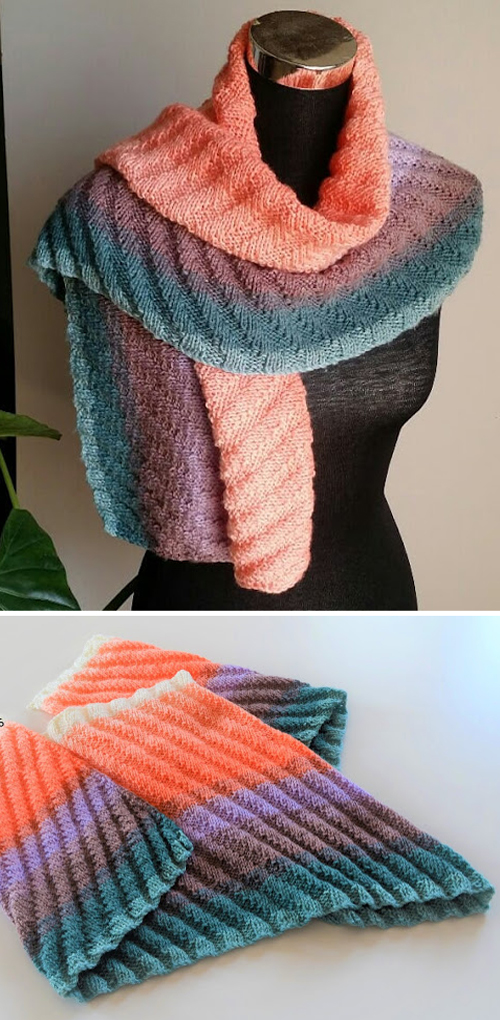
What beautiful knitting shawl/wrap (Free pattern)! Triangular chevron-shaped shawl with a textured rib design that showcases ombre or color change cake yarn. 

Full Post: Ribbed Shawlette

Baby Cardigan - Free Knitting Pattern

Baby Cardigan - Free Knitting Pattern
Photos above © MmeUlma & © sorrelwood

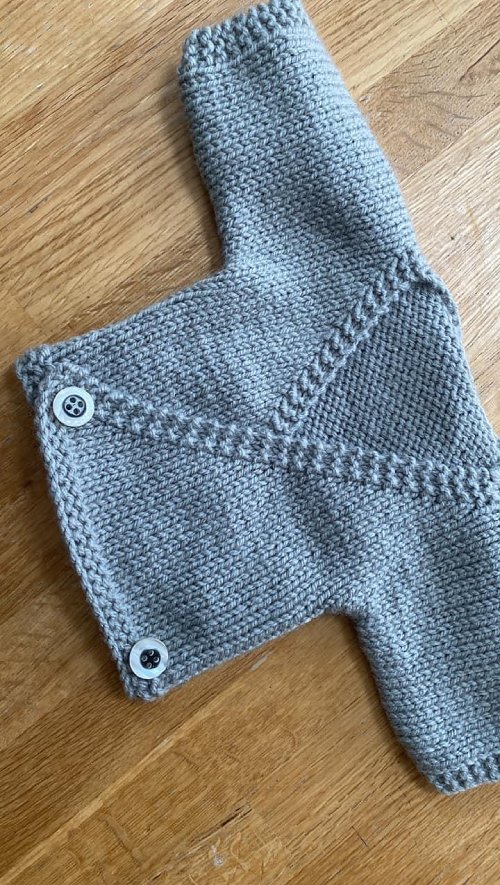
Looking for a simple and charming baby wrap cardigan knitting pattern? This garter-stitch cardigan is a classic crossover design that is worked largely in one piece, making it especially appealing to knitters who prefer simple construction and minimal finishing.

The cardigan has a soft wrap-over front and a timeless handmade look that works beautifully for newborn gifts, baby showers, and everyday baby wear.

Baby Wrap Cardigan at a Glance

Pattern Type: Baby Wrap Cardigan

Craft: Knitting

Category: Baby Cardigan / Wrap Sweater

Main Stitch: Garter Stitch

Construction: Worked mainly in one piece

Direction: Bottom-up, beginning with the back

Original Source: MmeUlma / Madam Ulma

About This Baby Cardigan

This little cardigan uses a wrap-over construction rather than a traditional button-front shape. The crossover front gives the garment a soft, comfortable look while also making it easy to layer over other baby clothes.

The design was originally shared through the MmeUlma blog and became popular online through knitting and Pinterest communities.

Worked in One Piece

One of the most appealing features of this cardigan is its construction. The garment is worked largely in one piece, beginning at the back and building upward.

One-piece baby garments can be especially attractive to knitters because they reduce the number of separate pieces that need to be assembled at the end.

This also helps create a clean, simple silhouette that suits the minimalist style of the cardigan.

Garter Stitch Texture

The cardigan is worked in garter stitch, one of the most useful and beginner-friendly knitting textures.

Garter stitch creates a soft, ridged fabric that lies flat naturally and does not curl at the edges in the same way as stockinette stitch.

That makes it a practical choice for baby garments, where soft texture and simple finishing are often desirable.

Why Wrap Cardigans Work Well for Babies

Wrap-style cardigans are popular for babies because the crossover front creates a flexible fit and avoids a bulky center-front opening.

They can also be layered over bodysuits, sleepsuits, and lightweight tops, making them useful through changing temperatures.

The simple shape also works well in both traditional baby colors and more modern, gender-neutral shades.

A Good Project for Newer Garment Knitters

Because the design relies on garter stitch and relatively simple construction, this type of cardigan can be a good transition project for knitters who are comfortable with scarves, blankets, or baby accessories and want to try a small garment.

The main skills typically involved include basic knit stitches, shaping, and managing the wrap-front construction.

Choosing Yarn for a Baby Cardigan

The original source page is no longer consistently accessible, so the current yarn specification cannot be verified reliably.

If you are recreating a similar wrap cardigan, choose a soft yarn suitable for baby garments and pay close attention to washability, fiber comfort, and gauge.

Always follow the original pattern specifications if you have a saved copy of the pattern, since yarn weight and needle size directly affect the finished size.

What About the Original Free Pattern?

This Amazing Knitting page originally linked to a free pattern page from MmeUlma.

At the moment, the original external page is no longer reliably accessible without a Google sign-in, so we cannot confirm whether the pattern is still publicly available in its original form.

Amazing Knitting does not reproduce the original designer's knitting instructions.

Original Pattern Source

The button below points to the original MmeUlma page that was linked from this article. Its current accessibility may vary.

Visit the Original Baby Cardigan Source →

Source note: This design was originally shared through MmeUlma. The original source page is currently not consistently accessible, so Amazing Knitting has intentionally avoided adding unverified sizing, yarn, needle, or gauge information.

More Baby Cardigan Knitting Inspiration

Explore more baby cardigan knitting patterns, baby wrap cardigan ideas, and baby sweater knitting patterns from the Amazing Knitting archive.

Before You Start

If you have access to the original MmeUlma instructions, use the designer's specified yarn, needle size, gauge, and measurements rather than relying on substitutions from other baby cardigan patterns.

Avonlea Cross Over Baby Sweater - Knitting Pattern

Avonlea Cross Over Baby Sweater - Knitting Pattern
Designed by  © OgeDesigns
What beautiful baby sweater knitting pattern! I found it on Pinterest...
Wrap baby cardigan worked in one piece from the bottom up with a simple pattern on front and back. designed to ensure simple and fuss-free dressing. Knits up quickly in worsted weight yarn, making it a great last-minute Baby Shower gift. 

Stole Dunes – Sculptural Wave Stole Knitting Pattern

Stole Dunes wave stole knitting pattern by Svetlana Gordon

Stole Dunes. Design © Svetlana Gordon.

Stole Dunes by Svetlana Gordon is a dramatic rectangular knitted stole with flowing sections that resemble layers of wind-shaped sand dunes.

Rather than relying on a conventional repeating lace motif, the design uses unusual shaping and changes in knitting direction to create its distinctive sculptural waves.

The result is a lightweight statement wrap that looks complex but is built as one continuous, seamless piece.

Important availability note: Stole Dunes is currently a paid pattern. Older references describing it as free should therefore be considered outdated.

Stole Dunes at a Glance

  • Designer: Svetlana Gordon
  • Published: October 2018
  • Category: Stole / scarf / wrap
  • Shape: Rectangle
  • Construction: One piece and seamless
  • Yarn weight: Lace
  • Suggested yarn: Schachenmayr Fashion Tahiti
  • Yardage: Approximately 2111–2133 yd (1930–1950 m)
  • Main needle: US 2½ / 3.0 mm
  • Additional needle: US 1½ / 2.5 mm
  • Gauge: Approximately 28 sts × 32 rows = 4 in / 10 cm
  • Finished size: Approximately 65 × 220 cm
  • Instructions: Written pattern, charts and photo tutorial
  • Language: English
  • Current availability: Paid pattern

What Makes Stole Dunes So Unusual?

The first thing you notice about Stole Dunes is the movement in the fabric.

Long curved sections appear to flow across the stole rather than simply running vertically or horizontally from one edge to another.

These sweeping lines give the finished wrap the appearance of layered sand dunes shaped by the wind.

This construction is what makes Stole Dunes immediately recognizable among rectangular knitted wraps.

An Unconventional Knitting Construction

Stole Dunes is not constructed like a basic rectangular scarf where you cast on one short edge and simply knit straight to the other end.

The designer uses repeated changes in direction to build the flowing sections of the fabric.

Svetlana specifically notes that the project contains many work turns.

Understanding how those sections connect is therefore more important than approaching the project as an ordinary row-by-row scarf.

One Continuous Seamless Piece

Despite its elaborate appearance, the stole is designed to be knitted seamlessly and without breaking the yarn.

That is one of the most interesting features of the design.

Instead of making numerous individual motifs and sewing them together, the knitter creates the changing directions as part of one continuous construction.

Why the Pattern Looks More Difficult Than It Is

Svetlana describes the project as something that may initially appear complicated.

However, once the underlying knitting principle becomes clear, the process becomes considerably easier to understand.

This makes Stole Dunes a good example of a pattern where understanding the construction can be more important than memorizing individual stitches.

The Wave-Like Dune Sections

The defining feature of the stole is its repeated flowing sections.

Each section changes the visual direction of the fabric, creating the impression that one knitted wave overlaps or continues into another.

When several sections are combined, the eye follows the movement across the entire rectangular stole.

Gradient Yarn Enhances the Design

The original sample uses Schachenmayr Tahiti, a lightweight yarn with gradual color changes.

A gradient works particularly well with Stole Dunes because the changing color helps reveal the unusual direction of the knitted sections.

Instead of producing ordinary horizontal stripes, the color transitions follow the architecture of the fabric and emphasize its flowing shape.

About the Original Yarn

The original pattern information references Schachenmayr Tahiti. Svetlana later noted that availability and naming of this yarn changed in some markets, with Fashion Tahiti appearing as the relevant later product name.

This means knitters should not worry if the exact older yarn listed in photographs is difficult to locate.

The more important goal is choosing a yarn that produces the kind of lightweight fabric and color effect you want.

Yarn Weight and Yardage

The pattern is listed with approximately 2111–2133 yards (1930–1950 meters) of lace-weight yarn.

That may sound like a large amount, but remember that lace yarn contains substantial yardage for its weight and the original stole is a generous wrap measuring around 220 cm long.

Always check the current designer pattern before purchasing yarn, especially if you plan to change the dimensions.

Can You Use a Different Yarn Weight?

Yes. The designer specifically notes that heavier or lighter yarn can be used.

However, changing yarn weight will also change the amount of yarn required and the dimensions of the finished stole.

A heavier yarn can produce a more substantial wrap, while a finer yarn can create an even lighter and more delicate fabric.

Choosing Yarn for Stole Dunes

When substituting yarn, consider more than just the weight printed on the label.

Look at:

  • Drape
  • Total yardage
  • Fiber content
  • Color transitions
  • Stitch definition
  • Finished fabric weight
  • Behavior after blocking

Because the unusual construction is the main feature of Stole Dunes, the yarn should allow that structure to remain visible.

Solid, Tonal or Gradient?

All three can produce interesting results, but each emphasizes something different.

A solid yarn puts the focus almost entirely on the construction and texture.

A tonal yarn introduces subtle variation without overwhelming the knitted structure.

A long gradient can emphasize the changes in knitting direction and create dramatic flowing bands of color.

Needle Sizes

The published pattern lists US 2½ / 3.0 mm and US 1½ / 2.5 mm needles.

Needle size should always be considered together with your yarn, tension and desired fabric.

If substituting a different yarn weight, you may also need to change needle size.

Gauge

The listed gauge is approximately 28 stitches and 32 rows = 4 inches / 10 cm.

Svetlana notes that gauge is somewhat conditional in this project because the knitting moves in different directions.

This is another reason to think about the overall fabric rather than treating the project exactly like a fitted sweater where a small gauge difference can dramatically change fit.

Finished Size

The original finished dimensions are approximately:

  • Width: 65 cm / about 25.6 in
  • Length: 220 cm / about 86.6 in

This creates a generously sized rectangular stole that can be wrapped, draped or worn over the shoulders.

The designer also indicates that the length can be adjusted.

Is Stole Dunes an Easy Pattern?

This is probably not the best choice for someone's very first knitting project.

The individual techniques may be familiar to an experienced knitter, but the unusual construction requires attention until the logic of the pattern becomes clear.

An adventurous intermediate knitter who enjoys learning new construction methods may find it particularly rewarding.

Skills That Will Help

It is useful to be comfortable with:

  • Knit and purl stitches
  • Yarn overs
  • Decreases
  • Slipping stitches
  • Turning the work
  • Following charts
  • Following written instructions
  • Keeping track of repeated sections
  • Reading your knitting

Expect Many Turns

One detail worth knowing before you begin is that the construction uses many turns.

This is intentional and is part of how the fabric changes direction to create the dune effect.

If you are accustomed to knitting straight across every row, the first sections may require more concentration.

Use the Charts to Understand the Structure

The pattern includes charts as well as written information and a photo tutorial.

For a project with unusual directional construction, charts can be especially useful because they help you see relationships that may be harder to visualize from text alone.

Svetlana notes that after the knitting principle becomes familiar, the charts toward the end of the pattern become particularly useful.

Do Not Add Extra Selvedge Stitches

One technical note from the designer is worth highlighting before you begin.

The selvedge stitches are already included in the pattern's stitch counts.

Do not automatically add additional edge stitches simply because that is something you normally do when knitting a scarf or stole.

Follow the designer's stitch counts exactly.

Take Time With the First Section

With an unconventional pattern, the first section is often where the learning happens.

Work slowly, compare the developing fabric with the pattern photographs, and make sure you understand where each turn occurs.

Once you recognize the underlying structure, subsequent sections can become much more intuitive.

Use Lifelines if Needed

If you are nervous about losing progress, a removable lifeline can be helpful at logical points in the project.

This gives you a known-good row to return to if you later discover a mistake.

It can be particularly useful while you are still learning how the directional sections are constructed.

Keep Notes as You Knit

A row counter or simple project notes can save time on a long stole.

Record where you stop, which chart or section you are working on, and any yarn or needle adjustments you make.

This is especially useful if Stole Dunes is a project you work on over several weeks rather than continuously.

Blocking Is an Important Finishing Step

Blocking can help the finished stole settle into its intended shape and reveal the flowing structure more clearly.

The correct blocking method depends on your chosen fiber, so always follow the care instructions for your yarn.

With a large rectangular wrap, take time to arrange the overall dimensions evenly rather than focusing on only one section.

How to Wear Stole Dunes

The generous rectangular shape gives you several styling options.

  • Drape it over both shoulders as a traditional stole.
  • Wrap it around the neck as an oversized scarf.
  • Let the long ends hang freely to display the wave pattern.
  • Wrap one end over a shoulder for an asymmetric look.
  • Use it as a lightweight layer over a dress or simple top.

A Showcase for Gradient Yarn

Stole Dunes is especially interesting for knitters who enjoy gradient yarn but want something more unusual than ordinary stripes.

Because the knitting changes direction, the color progression becomes part of the architecture of the piece.

The finished result can look very different depending on where each color transition appears.

Current Pattern Availability

Stole Dunes is not currently a free knitting pattern.

The current designer listing offers the pattern for purchase through Svetlana Gordon's Ravelry Store.

At the time this guide was reviewed, the listed price was $6.50 USD. Prices and availability can change, so check the designer's current listing for the latest information.

Get the Stole Dunes Knitting Pattern

The current authorized pattern listing includes the complete instructions, charts, schematic and photo tutorial from designer Svetlana Gordon.

View the Stole Dunes Pattern on Ravelry →

Stole Dunes is designed by Svetlana Gordon. Amazing Knitting does not reproduce the designer's complete copyrighted instructions, charts or photo tutorial. Pattern price and availability are controlled by the designer and may change over time.

Read Our Pattern Availability Policy →

Discover More From the Archive

A fresh mix of knitting patterns and tutorials from the Amazing Knitting archive.

Finding patterns from the archive…