Looking for a small and thoughtful project to knit for a new baby? These 9 free baby hat and booties knitting patterns include cozy newborn hats, an adorable pixie bonnet, classic baby booties, tiny cables and sweet ballerina-style shoes.
These projects are much quicker to make than a full baby blanket or sweater, making them especially useful for baby showers, newborn gifts and last-minute handmade presents.
Every pattern in this collection has been reviewed by Amazing Knitting, and each project below links to our updated pattern guide where you can find yarn, needle, sizing and construction information together with the current original free pattern source.
✓ All 9 patterns in this collection are currently free
1. Hello Baby Hat
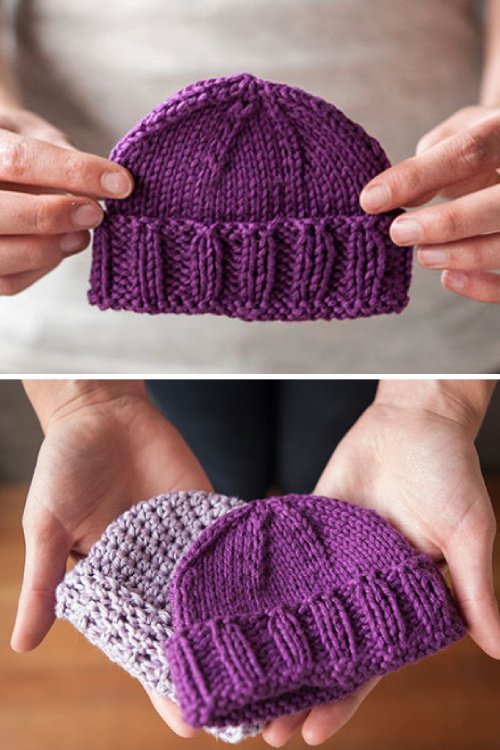
Hello Baby Hat by Susan B. Anderson is a charming newborn hat designed to coordinate with the designer's Hello Baby Cardigan.
It uses worsted-weight yarn and US 7 (4.5 mm) needles and is sized for approximately newborn to 3 months. The smooth stockinette fabric keeps the design simple, while an optional tiny strawberry charm adds a playful finishing touch.
This is an especially nice choice when you want a classic baby hat that can be knitted on its own or turned into part of a matching handmade set.
See the Free Hello Baby Hat Pattern →
2. Little Eyes Baby Booties
If you enjoy tiny projects with beautiful stitch detail, Little Eyes by Inma Gijón is one of the most distinctive bootie patterns in this collection.
These newborn booties feature a decorative cable across the upper foot and are worked flat using light fingering yarn and 2 mm needles.
They require only about 30–60 yards (27–55 m), making them a wonderful project for a small amount of fine yarn left over from another baby knit.
See the Free Little Eyes Baby Booties Pattern →
3. Pixie Baby Hat
For something a little different from a traditional round baby beanie, try the Pixie Baby Hat by Marta Porcel of Creativa Atelier.
This adorable pointed bonnet is worked flat on straight needles, then folded and seamed to create its characteristic pixie shape.
The original tutorial is designed for approximately 1–3 months and uses DK/light yarn with 4 mm needles. An adjustable cord and tassels complete the playful look.
Because there is no need to knit a tiny circumference in the round, it can also be an appealing baby-hat project for knitters who prefer straight needles.
See the Free Pixie Baby Hat Pattern →
4. Baby Ballerina Booties
Baby Ballerina Booties by Marta Porcel of Creativa Atelier turn simple knitting into a sweet pair of ballerina-style baby shoes.
The design uses garter stitch and is worked on straight needles, making it an attractive option if you enjoy simple flat knitting and finishing.
The finished shoes have a delicate wraparound ballerina appearance, making them especially pretty for a baby shower or newborn gift.
See the Free Baby Ballerina Booties Tutorial →
5. Calming Baby Knit Hat
Calming Baby Knit Hat by Stacey Winklepleck is one of the most practical patterns in the collection because it includes Preemie, Baby and Toddler sizes.
The hat uses worsted-weight yarn, US 6 (4 mm) needles and approximately 109 yards (100 m) of yarn.
Its simple stockinette body and cozy folded cuff create a classic baby hat without complicated lace, cables or colorwork.
The range of sizes also makes this a useful pattern to keep for future baby gifts or suitable charity-knitting projects.
See the Free Calming Baby Knit Hat Pattern →
6. Saartje's Bootees
Saartje's Bootees by Saartje de Bruijn have become a classic among knitted baby-shoe patterns.
Originally published in 2007, these little booties are worked flat in fingering-weight yarn and feature distinctive crossover straps with buttons.
Garter stitch gives the shoes a beautifully textured handmade look, while the strap construction makes them immediately recognizable.
This is a particularly lovely choice if you want a vintage-inspired baby project rather than a conventional knitted sock or slipper.
See the Free Saartje's Bootees Pattern →
7. Hat for Hugs
Hat for Hugs by marianna mel is a simple DK-weight baby hat designed to coordinate with the designer's Baby Hug Boots.
The free pattern includes Large Preemie, 0–3 month and 6–9 month sizes.
Unlike many small baby hats, Hat for Hugs is worked flat and seamed, so you do not need to use double-pointed needles or Magic Loop.
Its straightforward construction and multiple baby sizes make it a useful little pattern for gifts and appropriate charity knitting.
See the Free Hat for Hugs Pattern →
8. Newborn Booties
Newborn Booties by Priscillia Uloho are a quick, traditional pair of knitted baby booties suitable for boys or girls.
The pattern uses DK-weight yarn and is worked flat before being seamed, with needle sizes of 2.75 mm and 3.25 mm used for different sections of the project.
Sizes include newborn and 0–6 months, making these a useful basic bootie pattern to keep bookmarked whenever you need a small handmade baby present.
See the Free Newborn Booties Pattern →
9. Dreamy Baby Booties
Our final project offers the widest age range among the booties in this collection.
Dreamy Baby Booties by Dream in Color are written in three sizes: 0–3, 3–6 and 6–9 months.
The pattern uses worsted-weight yarn and US 6 (4 mm) needles, making it a good option if you prefer working with a slightly heavier yarn than the fine yarn used for some traditional baby booties.
The original yarn includes merino, cashmere and nylon, but another soft worsted-weight yarn that produces the correct gauge can be considered when substituting.
See the Free Dreamy Baby Booties Pattern →
Which Baby Hat or Booties Should You Knit First?
If you want a simple classic hat, start with Hello Baby Hat or Calming Baby Knit Hat. If you prefer working flat on straight needles, Hat for Hugs and the Pixie Baby Hat are particularly interesting choices.
For booties, choose Little Eyes if you want to practice a small cable project, Baby Ballerina Booties for a delicate shoe-style design, or Saartje's Bootees for a classic crossover-strap look.
Dreamy Baby Booties are useful when you want several age options, while Newborn Booties make a practical traditional baby gift.
Tips for Knitting Baby Hats and Booties
- Check the size carefully. Baby sizes vary considerably, so use the designer's measurements and gauge rather than relying only on an age label.
- Choose soft yarn. Baby accessories are worn close to sensitive skin, so avoid yarn that feels rough or scratchy.
- Think about washability. Easy-care yarn can make a handmade baby gift much more practical for parents.
- Check your gauge. A small gauge difference can have a surprisingly large effect on tiny hats and booties.
- Finish securely. Weave in ends carefully and make sure any buttons or decorative elements required by a design are securely attached.
- Check donation rules first. Hospitals and charities may have their own requirements for yarn fibers, sizes, embellishments and construction.
Make a Matching Baby Gift Set
One of the easiest ways to turn these small projects into a more substantial handmade gift is to pair a hat with a set of booties.
A simple worsted-weight hat and booties in coordinating colors can make a beautiful newborn set, while a pixie bonnet paired with ballerina shoes creates a more decorative combination.
You can also combine one of these projects with a baby cardigan or blanket if you want to make a larger gift.
More Free Baby Knitting Patterns
If you enjoyed these small baby projects, explore our other curated collections of free knitting patterns on Amazing Knitting.
9 Free Baby Sweater & Cardigan Knitting Patterns →
7 Free Baby Blanket Knitting Patterns →
7 Free One-Skein Knitting Patterns →
Free Pattern Availability
All nine patterns in this collection were checked as free patterns when this article was prepared.
Pattern availability on external designer and publisher websites can change over time. Each link in the collection takes you first to our Amazing Knitting guide, where we maintain the pattern details and direct readers to the current authorized source whenever one is available.
Amazing Knitting does not reproduce designers' copyrighted pattern instructions. Pattern ownership remains with the credited designers and publishers.