Skip to content

...

Showing posts sorted by date for query diagonal baby blanket. Sort by relevance Show all posts

7 Free Baby Blanket Knitting Patterns for Beautiful Handmade Gifts

Looking for a beautiful baby blanket to knit for a new arrival? These 7 free baby blanket knitting patterns include simple stripes, textured hearts, classic heirloom designs and cozy stitch patterns that make wonderful handmade gifts.

Every pattern in this collection links to an updated Amazing Knitting guide where you can find the current pattern details and the original free source.

✓ All 7 patterns in this collection are free

Click any photo, title or pattern link below to visit the corresponding Amazing Knitting guide.

1. Easy Striped Baby Blanket

Easy Striped Baby Blanket free knitting pattern

Photos © Jamey - Dabbles and Babbles

Easy Striped Baby Blanket by Jamey of Dabbles & Babbles is a lovely choice for newer knitters. Soft three-color stripes are framed by a textured seed-stitch border, giving the blanket a clean, modern finish.

It is worked flat in DK yarn and measures approximately 34 × 33 inches after blocking.

View the Free Easy Striped Baby Blanket Pattern →


2. Heart Baby Blanket

Heart Baby Blanket free knitting pattern

Photo © katalysis

Heart Baby Blanket by Ann Saglimbene uses knit-and-purl texture to create repeating heart motifs directly in the fabric.

There is no stranded colorwork or intarsia involved, which makes the design especially attractive for knitters who want a decorative single-color blanket.

Our updated guide also explains why knitters should use the designer's corrected March 2024 version rather than an older copy.

View the Free Heart Baby Blanket Pattern →


3. Jordan Baby Blanket

Jordan Baby Blanket free knitting pattern

Photo © danelle1977

Jordan Baby Blanket by marianna mel is a beautiful textured design made with basic knit and purl stitches.

The raised stitch pattern gives the blanket plenty of visual interest without relying on lace or multiple yarn colors, making it a strong choice for a classic handmade baby gift.

The pattern also comes in several sizes and can be adjusted depending on the project you want to make.

View the Free Jordan Baby Blanket Pattern →


4. Treasured Heirloom Baby Blanket

Treasured Heirloom Baby Blanket free knitting pattern

Design © Lion Brand

Treasured Heirloom Baby Blanket is a classic corner-to-corner design with alternating garter and eyelet sections.

The diagonal construction gives the blanket an elegant traditional appearance while allowing the entire project to be worked as one piece.

It is a particularly nice option if you want a baby blanket that feels more like a keepsake than an everyday basic.

View the Free Treasured Heirloom Baby Blanket Pattern →


5. Rice Stitch Baby Blanket

Rice Stitch Baby Blanket free knitting pattern

Photo © Liz Chandler / PurlsAndPixels

Rice Stitch Baby Blanket by Liz Chandler is a practical textured blanket that works beautifully when you want visual interest without complicated lace or colorwork.

The pattern includes two approaches to creating the textured fabric and is a useful project for practicing knit-and-purl combinations.

The finished blanket measures approximately 40 × 40 inches and is worked in worsted-weight yarn.

View the Free Rice Stitch Baby Blanket Pattern →


6. Waffle Blanket

Waffle Blanket free knitting pattern

Waffle Blanket by Alexis Layton is all about texture. Its repeating stitch pattern creates a deeply raised surface that gives the finished blanket a cozy, substantial appearance.

The original pattern is worked in Aran-weight yarn and measures approximately 40 × 51 inches.

It can work well as a larger baby blanket, stroller blanket or small family throw.

View the Free Waffle Blanket Pattern →


7. Little Girl Pink Baby Blanket

Little Girl Pink Baby Blanket free knitting pattern

Little Girl Pink Baby Blanket by Marlaine DesChamps combines cable and lace panels for a more decorative, traditional baby-blanket look.

The original design measures approximately 35 × 46 inches and was designed for Caron Simply Soft worsted-weight yarn.

This is a lovely option when you want a handmade baby gift with a more detailed heirloom-style finish.

View the Free Little Girl Pink Baby Blanket Pattern →

Which Free Baby Blanket Should You Knit?

If you want something simple and modern, start with the Easy Striped Baby Blanket.

For textured knitting, the Jordan Baby Blanket, Rice Stitch Baby Blanket and Waffle Blanket are especially good choices.

If you are knitting for a baby shower or keepsake gift, the Heart Baby Blanket, Treasured Heirloom Baby Blanket and Little Girl Pink Baby Blanket have a more decorative, traditional feel.

Tips for Choosing a Baby Blanket Yarn

Baby blankets are used and washed often, so softness and easy care are both important. Check the original pattern's recommended yarn weight before substituting another yarn, and make a gauge swatch when the finished dimensions matter.

Smooth yarns also tend to show textured stitches, hearts, cables and lace more clearly than very fuzzy yarns.

Before You Cast On

Pattern availability can change over time. Amazing Knitting reviews the projects featured in our collections and links each one to an updated guide with the current pattern information and original designer or publisher source.

More Free Knitting Patterns

Amazing Knitting is gradually reviewing and updating its pattern archive so that older favorites are easier to identify and their current availability is clearer.

Save this collection for your next baby shower or handmade gift and explore the individual guides above to find the blanket that best matches your yarn, skill level and knitting style.

Editorial note: The knitting patterns featured in this collection belong to their respective designers and publishers. Amazing Knitting provides independent pattern guides and links to authorized sources rather than reproducing complete copyrighted pattern instructions.
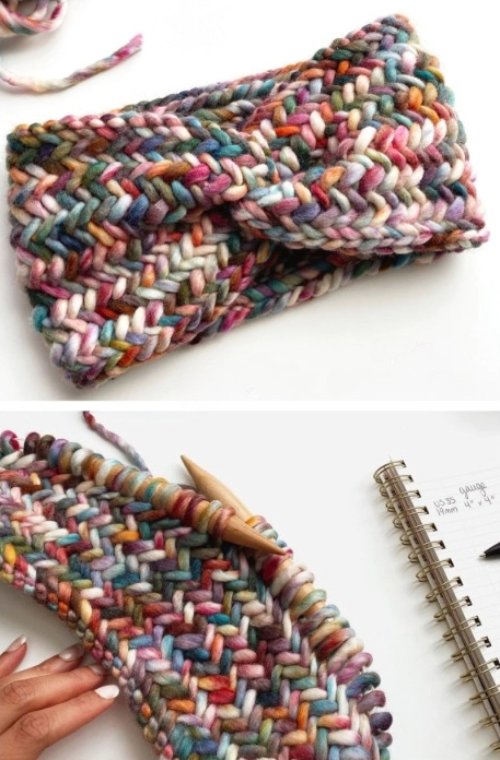
Amina Earwarmer – Free Herringbone Knit Headband Pattern

Amina Earwarmer free herringbone knit headband pattern by Krysten Grymes

Amina Earwarmer. Photo © Krysten Grymes / yarnTh3ory

The Amina Earwarmer by Krysten Grymes of yarnTh3ory is a beautifully textured knit headband featuring an eye-catching herringbone stitch and a stylish twisted front.

Worked with super bulky yarn, the free adult version requires only about 68 yards (62 m), making it a quick winter accessory, market project or last-minute handmade gift.

Best of all, the adult-size knitting pattern is still available free from the designer. An expanded paid version is also available with four sizes and two yarn-weight options.

Amina Earwarmer Knitting Pattern Details

  • Designer: Krysten Grymes
  • Brand: yarnTh3ory
  • Published: November 2022
  • Craft: Knitting
  • Category: Earwarmer / knit headband
  • Free version: Adult size in super bulky yarn
  • Yarn weight: #6 Super Bulky
  • Suggested yarn: Malabrigo Rasta
  • Yardage: 68 yards (62 m)
  • Main needles: US 35 (19 mm)
  • Bind-off needles: US 17 (12 mm)
  • Gauge: 12 stitches × 9 rows = 4 inches (10 cm)
  • Finished adult circumference: 21 inches
  • Finished width: 5.75 inches
  • Skill level: Intermediate
  • Main texture: Herringbone knit stitch
  • Construction: Worked flat and seamed into a twisted earwarmer

What Makes the Amina Earwarmer Special?

The standout feature of this design is its herringbone knit texture.

Instead of a simple ribbed or garter-stitch headband, the fabric has a dense diagonal appearance that gives the finished accessory a polished, almost woven look.

The folded join at the front adds another design element, creating the fashionable twisted shape seen in the finished earwarmer.

The Free Amina Earwarmer Pattern

There are currently two versions of the knitting pattern, so it is useful to understand the difference before starting.

The designer's free version provides the instructions for the adult size using super bulky yarn.

This is a complete free pattern published directly on the yarnTh3ory website, not simply a preview of the paid PDF.

What Is Included in the Paid Version?

Knitters who need additional sizing or want to use a different yarn weight can choose the designer's expanded paid version.

The expanded pattern includes:

  • Baby size
  • Child size
  • Teen size
  • Adult size
  • Super bulky yarn instructions
  • Worsted-weight yarn instructions

If you only want to make the adult super-bulky version shown here, however, the designer continues to provide those instructions free.

Super Bulky Yarn Makes It Quick

The free version uses #6 super bulky yarn.

Krysten Grymes made her sample with Malabrigo Rasta in the color Molino.

Rasta is a thick merino wool yarn with excellent stitch definition, making it particularly effective for showing the strong diagonal lines of the herringbone texture.

Only 68 Yards of Yarn

One of the biggest attractions of the Amina Earwarmer is its modest yarn requirement.

The free adult version calls for approximately:

68 yards / 62 meters
of #6 super bulky yarn

That makes it a useful project for a partial skein left over from another super-bulky project, provided you have enough yardage and can achieve the required gauge.

Choosing Substitute Yarn

You do not have to use the original Malabrigo Rasta to make the earwarmer.

Look for a #6 super bulky yarn that produces a fabric close to the designer's gauge.

Because the herringbone texture is the main visual feature, a relatively smooth yarn with good stitch definition can help the diagonal pattern remain clearly visible.

Solid, tonal and gently variegated colors can all work well, although highly contrasting multicolored yarn may make the herringbone texture less obvious.

Needles

The free pattern uses two unusually large needle sizes:

  • US 35 (19 mm) circular needles for the main fabric
  • US 17 (12 mm) circular needles for binding off

The smaller needle is used at the finishing stage rather than for knitting the main herringbone fabric.

Gauge and Finished Size

The designer's gauge is:

12 stitches × 9 rows = 4 inches (10 cm)

The finished adult earwarmer measures approximately:

  • Circumference: 21 inches
  • Width: 5.75 inches

The free pattern also explains that the size can be adjusted by changing the number of stitches cast on, while the width can be changed by working more or fewer rows.

What Is Herringbone Knit Stitch?

Herringbone knitting creates a distinctive diagonal texture that resembles the classic herringbone pattern found in woven fabrics.

In the Amina Earwarmer, adjacent stitches are worked together in a special way while retaining one of the stitches to continue the sequence.

This creates the dense overlapping appearance that makes the finished headband look much more intricate than an ordinary stockinette accessory.

Is the Amina Earwarmer Beginner Friendly?

The designer rates the knitting pattern as intermediate.

The overall construction is simple, but the herringbone stitch requires more attention than standard knit and purl fabric.

If you are already comfortable handling needles and following a stitch sequence, this can be an excellent small project for learning a new texture without committing to a sweater or large blanket.

Learn the Herringbone Stitch First

Krysten Grymes provides a separate tutorial explaining the basics of the herringbone knit stitch.

It is worth practicing the technique on a small swatch before beginning the earwarmer.

Once your hands become accustomed to the movement, the repeated texture becomes much easier to work consistently.

Worked Flat

Although circular needles are listed, the earwarmer itself is worked flat.

You create a rectangular strip of herringbone fabric and then join the two ends during finishing.

This means you do not need to manage a small circumference in the round, which keeps the overall construction straightforward.

Creating the Twisted Front

The stylish front twist is created during finishing rather than through complicated shaping while knitting.

The ends of the completed strip are folded into position and sewn together. When the earwarmer is turned to the correct side, the folded seam forms the characteristic twist at the front.

The designer includes a demonstration of this finishing technique with the free pattern.

Why Use Smaller Needles for the Bind-Off?

The main fabric is worked on 19 mm needles, while the designer specifies 12 mm needles for the bind-off.

Following the designer's needle change helps reproduce the intended finishing behavior of the original sample.

Herringbone fabric behaves differently from ordinary stockinette, so it is worth following the specified finishing method before making your own adjustments.

Adjusting the Width

The free adult version is approximately 5.75 inches wide.

If you prefer a narrower earwarmer, the designer notes that you can work fewer rows. For additional coverage, work more rows before binding off.

Keep in mind that changing the dimensions will also change the amount of yarn required.

Adjusting the Circumference

The free adult sample finishes at approximately 21 inches in circumference.

The designer notes that the size can be adjusted by changing the number of stitches cast on.

If you make a substantial size adjustment, check your gauge and allow enough yarn before starting.

A Great Quick-Gift Project

The combination of super bulky yarn, a small finished size and only 68 yards of yarn makes the Amina Earwarmer especially appealing for gift knitting.

The designer specifically recommends it for market season and last-minute gifts.

Once you are comfortable with herringbone stitch, making several earwarmers in different colors can be an efficient way to turn small amounts of yarn into finished accessories.

A Useful Market-Knitting Project

Small accessories can be practical projects for craft markets because they require much less yarn and knitting time than full garments.

The strong texture and twisted front give the Amina Earwarmer a distinctive handmade appearance even though the overall construction remains relatively compact.

If you sell finished items, always check the designer's current terms before offering products made from a pattern.

Knitting vs Crochet Amina Earwarmer

Be aware that Krysten Grymes has designed both knit and crochet versions of the Amina Earwarmer.

They share the Amina name and a herringbone-inspired appearance, but they are separate patterns using different techniques and materials.

The pattern featured on this Amazing Knitting page is specifically the knit version published in November 2022.

Why Knit the Amina Earwarmer?

The Amina Earwarmer is a good choice when you want a small project that teaches something more interesting than basic ribbing or garter stitch.

Its herringbone fabric creates striking texture, the super bulky yarn helps the project progress quickly, and the twisted finishing technique gives the simple rectangular construction a stylish final shape.

With the adult instructions still available free from the designer, it is also an accessible way to try herringbone knitting before deciding whether you want the expanded multi-size pattern.

Get the Free Amina Earwarmer Knitting Pattern

The Amina Earwarmer (knit version) by Krysten Grymes is available free for the adult super-bulky version directly from yarnTh3ory.

Get the Free Amina Earwarmer Pattern →

The free designer version currently includes the adult size in super bulky yarn. An expanded paid version includes additional sizes and yarn-weight options. Pattern availability may change over time. Amazing Knitting does not reproduce or distribute the designer's copyrighted pattern instructions.

Easy Knitting Patterns for Beginners - Free Projects & Guides

Knitting for Beginners: 50+ Easy Knitting Patterns
Photo above © allfreeknitting

Photo above © AllFreeKnitting

New to knitting? You do not need to start with a complicated sweater or an intimidating stitch pattern. The best beginner projects help you practice a few essential skills while still giving you something useful and beautiful to enjoy when you finish.

This Amazing Knitting beginner guide brings together easy projects, simple stitches and helpful resources from our knitting archive so you can choose a comfortable place to start.

New to knitting?

Start small, choose a project you genuinely want to make, and focus on learning one or two new skills at a time. You do not need to master everything before beginning your first project.

What Should a Beginner Knitter Learn First?

Before tackling more advanced projects, it helps to become comfortable with a few knitting basics: casting on, the knit stitch, the purl stitch, binding off and recognizing the stitches on your needles.

Once knit and purl stitches begin to feel natural, you can create an impressive variety of textures without learning complicated techniques.

Easy Free Knitting Projects for Beginners

Ready to make something? These beginner-friendly projects from the Amazing Knitting archive are good places to explore.

1. Easy Striped Baby Blanket

A baby blanket gives you plenty of repetition for practicing consistent tension. This striped design combines straightforward knitting with a simple textured border.

Explore the Easy Striped Baby Blanket →

2. Jordan Baby Blanket

If you want to see how basic knit and purl stitches can create beautiful texture, the Jordan Baby Blanket is an excellent example. No complicated colorwork is needed.

Explore the Jordan Baby Blanket →

3. Fuss Free Baby Cardigan

Ready to move beyond flat rectangular projects? A simple baby cardigan is a manageable way to begin exploring garment construction without committing to a full adult sweater.

Explore the Fuss Free Baby Cardigan →

4. French Macaroon Baby Sweater

Small garments are useful confidence-building projects because they let you practice garment techniques on a much smaller scale.

Explore the French Macaroon Baby Sweater →

5. Rice Stitch Baby Blanket

This textured blanket is a useful next step once you are comfortable switching between knit and purl stitches. The simple texture keeps the knitting interesting without requiring elaborate lace or colorwork.

Explore the Rice Stitch Baby Blanket →

Easy Knitting Stitches to Practice

You do not always need to make a complete project to improve your knitting. Small stitch swatches are a quick way to practice new techniques and learn how different combinations of knit and purl stitches change the fabric.

Twisted Rib Stitch

Learn how twisted stitches can create crisp, defined columns of ribbing that are useful for cuffs, hems and decorative details.

Learn the Twisted Rib Stitch →

Diagonal Rib Stitch

Once ordinary ribbing feels comfortable, diagonal rib is an interesting way to explore how simple stitch placement can create movement across knitted fabric.

Explore the Diagonal Rib Stitch Guide →

Herringbone Knitting

Herringbone knitting can be created in several ways. Our guide explains the family of herringbone-style techniques and helps you understand the distinctive woven-looking fabric they produce.

Explore Herringbone Knitting →

Beginner Knitting Tips

Do not worry about knitting quickly. Consistent stitches and understanding what is happening on your needles are more useful than speed.

Choose a light or medium-colored smooth yarn when learning because the individual stitches are easier to see. If you make a mistake, use it as an opportunity to examine the fabric rather than immediately starting the entire project again.

It also helps to keep track of repeated rows when working textured patterns. We have a simple guide for that too:

Easy Trick for Tracking Repeated Knitting Rows →

What Should You Knit First?

If this is your very first project, a scarf, washcloth or simple blanket is usually easier to manage because you can concentrate on your stitches without worrying about complicated shaping.

After that, try textured blankets, baby garments or other small projects that introduce one new technique at a time.

Beginner Tip

The easiest pattern is not necessarily the best first project. Choose something simple enough to learn from but interesting enough that you will actually want to finish it.

Keep Learning with Amazing Knitting

As your confidence grows, explore more free patterns, knitting stitches and tutorials throughout the Amazing Knitting archive. Start with the basics, practice regularly and add new techniques gradually.

Every finished swatch and project teaches you something new — and that is how beginner knitters become confident knitters.

Editorial note: This page is an original Amazing Knitting beginner resource. Patterns featured in linked project guides belong to their respective designers and publishers. Amazing Knitting provides educational guidance and links to authorized pattern sources rather than reproducing complete copyrighted pattern instructions.

Welcome To The World Baby Blanket - Knitting Pattern Guide

Welcome To The World Baby Blanket - Free Pattern
Photos above © breimurray

Welcome To The World Baby Blanket by marianna mel is a sweet, softly textured baby blanket designed for premature babies, newborns and larger baby-blanket use.

The repeating knit-and-purl texture gives the blanket plenty of visual interest without complicated cables or colorwork, making it an appealing project for knitters who enjoy simple, rhythmic patterns.

If this beautiful blanket brought you to Amazing Knitting, this updated guide will help you identify the original design, choose the right size and materials, and find the designer's current pattern source.

The original pattern is still available today. It is now sold as a paid downloadable knitting pattern, but if you are looking specifically for a free baby blanket, keep reading — we have included several verified free alternatives below.

Pattern Availability Update

Welcome To The World Baby Blanket by marianna mel was previously circulated as a free pattern, but the designer's current Ravelry listing now offers it as a paid downloadable pattern. Amazing Knitting has updated this page so visitors are not incorrectly promised a free download.

Welcome To The World Baby Blanket at a Glance

Pattern: Welcome To The World Baby Blanket

Designer: marianna mel

Publisher: made by marianna / Marianna's Lazy Daisy Designs

Published: January 2017

Category: Baby Blanket

Yarn Weight: DK / 8 ply

Needles: US 6 / 4 mm

Gauge: 22 sts = 4 in / 10 cm in stockinette

Construction: One piece, worked flat

Sizes: Premature, Newborn and Baby

Current Availability: Paid downloadable pattern

About the Welcome To The World Baby Blanket

Welcome To The World is a simple textured baby blanket by marianna mel, known for her large collection of baby knitting patterns.

The blanket is worked as one piece and does not require garment shaping, sleeves or assembly.

Its texture is created primarily through combinations of basic knitting stitches, giving the finished fabric an attractive repeating pattern without the complexity of cables or stranded colorwork.

Three Useful Baby Blanket Sizes

The designer provides instructions for three sizes:

Premature Baby: approximately 16 × 18 in

Newborn Baby Blanket: approximately 24 × 24 in

Baby Blanket: approximately 30 × 30 in

This makes the same design useful for everything from a small premature baby blanket to a more conventional square baby blanket.

The Size Can Be Adjusted

One particularly useful feature of the pattern is that the designer explains how the stitch count can be adjusted.

The repeat works with stitch-count adjustments in multiples of 6 stitches.

That gives experienced knitters some flexibility if they want a blanket that is wider than one of the three published sizes.

Remember that increasing the dimensions will also increase the amount of yarn required.

Yarn Requirements

The pattern uses DK / 8-ply yarn.

The designer gives approximate yarn quantities of:

  • 100 g for the premature size
  • 300 g for the newborn size
  • 400 g for the larger baby blanket

These amounts relate to the designer's original specifications. If you change the size, yarn, gauge or fiber, your actual requirement may differ.

Choosing Yarn for a Baby Blanket

You do not necessarily need to use the exact yarn originally used by the designer.

A suitable DK-weight substitute can work well if it produces the required gauge and a fabric you like.

For a baby blanket, consider:

  • Softness against delicate skin
  • Washability
  • Durability
  • Good stitch definition
  • Care instructions suitable for the recipient

Needle Size

The published needle size is:

4 mm / US 6

Treat the recommended needle size as a starting point.

Your personal knitting tension and yarn choice determine whether you need to move up or down a needle size.

Gauge

The designer gives a gauge of:

22 stitches = 4 inches / 10 cm

measured in stockinette stitch.

Gauge is more forgiving in a blanket than in a fitted sweater, but it still affects the finished dimensions and yarn consumption.

A Simple Repeating Texture

The appeal of Welcome To The World comes largely from its repeating textured surface.

Instead of introducing multiple yarn colors, lace motifs or complicated cable crossings, the design allows basic stitches to create the visual pattern.

This makes a solid or gently variegated DK yarn a particularly attractive choice.

Why Solid Colors Work Well

When a blanket depends on knit-and-purl texture, a solid yarn lets shadows between the raised and recessed stitches become part of the design.

Very busy multicolored yarn can sometimes hide subtle stitch texture.

If the texture itself is what attracted you to this blanket, consider a solid, semi-solid or gently tonal shade.

Worked Flat

The blanket is worked flat as a single piece.

That means you do not need to join separate squares or sew multiple blanket panels together at the end.

It also makes the project approachable for knitters who are most comfortable working back and forth.

No Complicated Assembly

Because the blanket is a one-piece project, finishing is relatively simple.

Once the knitting is complete, the main tasks are securing yarn ends and caring for or blocking the finished fabric according to the yarn you used.

Is It Beginner Friendly?

Yes, for a knitter who already understands the basic knit and purl stitches.

The design is repetitive and does not require the shaping associated with garments.

The main challenge is keeping track of where you are in the texture repeat over a relatively large number of rows.

Useful Skills for This Project

  • Casting on
  • Knit stitch
  • Purl stitch
  • Reading a repeating stitch sequence
  • Working flat
  • Maintaining even tension
  • Binding off
  • Weaving in yarn ends

Use a Row Counter

Simple repeating blankets can sometimes be surprisingly easy to lose your place in because many rows begin to look similar.

A row counter, removable marker or written tally can make it much easier to remember where you are in the repeat.

Check Your Texture Regularly

Stop occasionally and look across the entire width of the blanket.

The repeating sections should remain aligned.

Catching an incorrect knit or purl section after one repeat is much easier than discovering it many inches later.

Making the Blanket Larger

The designer specifically notes that the size can be adjusted.

Before making a substantially larger version, create a swatch and estimate your yarn requirement from its weight or area.

A 36-inch or 40-inch blanket can require significantly more yarn than the published 30-inch version.

A Practical Baby-Shower Project

Welcome To The World was designed with baby gifts in mind.

The unisex texture works in traditional baby shades, neutrals or brighter modern colors, so it can be knitted before or after the baby's arrival.

Baby Blanket Safety

Important Baby Safety Note

A handmade blanket can be useful for supervised cuddling, stroller use and other age-appropriate situations. Follow current safe-sleep guidance for infants and do not place loose blankets in an infant sleep space where they are not recommended.

Blocking and Finishing

Blocking can help the textured sections settle and give the blanket a more even finished shape.

Always choose a blocking method appropriate for the fiber content of your yarn.

Avoid stretching the blanket aggressively simply to reach the published measurements.

Can You Still Get the Original Pattern?

Yes.

Welcome To The World Baby Blanket remains available from marianna mel.

However, it is currently sold as a paid downloadable pattern rather than offered as a free pattern.

This is why Amazing Knitting no longer labels this page "Free Pattern."

View the Original Welcome To The World Pattern

Visit the designer's current Ravelry listing for the complete pattern, sizing and purchase information:

View the Welcome To The World Pattern →

Looking for a Free Baby Blanket Instead?

If you love the simple textured style but specifically want a pattern that is still free, try one of these verified Amazing Knitting alternatives.

Jordan Baby Blanket

Jordan Baby Blanket is also designed by marianna mel, making it an especially relevant alternative if you like her simple, textured baby blanket style.

The pattern is currently available free and uses basic knit-and-purl texture with DK-weight yarn.

Jordan Baby Blanket - Free Knitting Pattern →

Rice Stitch Baby Blanket

For another easy textured project, the Rice Stitch Baby Blanket by Liz Chandler remains free to read online.

Rice Stitch Baby Blanket - Free Knitting Pattern →

Treasured Heirloom Baby Blanket

If you prefer a more classic heirloom look, this free Lion Brand design uses diagonal eyelet details in a one-piece blanket.

Treasured Heirloom Baby Blanket - Free Knitting Pattern →

More Baby Blankets on Amazing Knitting

Before You Cast On

First decide which of the three published blanket sizes best suits your project.

Choose a soft DK-weight yarn, check your gauge with 4 mm needles, and make sure you have enough yarn for the selected size.

If you purchase the original pattern, use the current designer version rather than instructions copied from old websites or Pinterest images.

Pattern credit: Welcome To The World Baby Blanket was designed by marianna mel / Marianna's Lazy Daisy Designs. Amazing Knitting provides an independent editorial project guide and does not reproduce the designer's copyrighted row-by-row instructions. Preserve the existing image credit: Photos above © breimurray.

How to Knit Herringbone Stitch - Knitting Stitch Guide

Herringbone Stitch - Free Easy Pattern
Photo above © Room on  the left 

Herringbone Stitch is a beautiful knitting technique that creates a dense fabric with distinctive diagonal lines resembling classic woven herringbone.

At first glance, the finished fabric hardly looks knitted at all. Instead, the stitches appear to interlock and travel diagonally across the surface, creating the familiar V-shaped movement associated with herringbone textiles.

The technique can feel unusual the first time you try it, but once you understand how the stitches overlap, the movement becomes much easier to recognize.

In this guide, we'll explore how knitted herringbone is constructed, why tension matters so much, how to choose yarn and needles, common mistakes to avoid, and where this beautiful texture works best.

Knitting Stitch Guide

Herringbone is a general knitting technique rather than one specific garment pattern. There are several knitted herringbone methods and variations, so instructions from different tutorials may not be identical even when the finished fabrics have a similar woven look.

Herringbone Stitch at a Glance

Technique: Herringbone Stitch

Category: Textured knitting stitch

Appearance: Dense, diagonal, woven-looking texture

Worked: Flat or in the round, depending on the variation

Best For: Scarves, cowls, blankets, bags and textured accessories

Key Challenge: Maintaining loose, even tension

Skill Level: Advanced beginner to intermediate, depending on the variation

What Is Herringbone Stitch?

Herringbone Stitch is a family of knitting techniques designed to create diagonal lines that resemble the structure of traditional woven herringbone fabric.

Instead of seeing clearly separated columns of ordinary knit stitches, the surface develops overlapping diagonal movements.

This gives the fabric an unusually polished and almost woven appearance.

Why Does It Look Woven?

In a common form of knitted herringbone, neighboring stitches are worked together while part of the stitch remains available to interact with the next stitch.

This repeated overlap changes the direction in which the visible loops travel across the fabric.

When those diagonal movements alternate, they create the characteristic herringbone effect.

Herringbone Is Not Just One Stitch Pattern

This is important when following tutorials online.

There is no single universal knitting instruction called "the Herringbone Stitch."

Different designers and knitting teachers use several constructions to produce herringbone-like fabrics.

You may encounter:

  • Traditional dense herringbone techniques
  • Mini herringbone
  • Slip-stitch herringbone
  • Reversible herringbone variations
  • Herringbone worked in the round
  • Two-color herringbone effects

These methods can look related while using different stitch multiples, row repeats and techniques.

Traditional Herringbone Construction

One common herringbone method works neighboring stitches together while allowing one of those stitches to remain involved in the following movement.

Repeating this across the row produces overlapping stitches instead of independent vertical columns.

The reverse row changes the direction of the operation, helping create the distinctive alternating diagonal structure.

Why Tension Is So Important

Herringbone has a natural tendency to become dense.

If every stitch is pulled tightly against the needle, inserting the needle into the next pair of stitches can quickly become uncomfortable.

The finished fabric may also become much stiffer than intended.

Try to keep the working yarn relaxed as each stitch is formed.

Consider Using Larger Needles

Herringbone often benefits from a larger needle than you might normally choose for the same yarn.

The overlapping construction naturally compresses the fabric, so extra needle space can help the stitches move more easily and improve drape.

Do not choose a needle size from the yarn label alone.

Make a swatch and judge the actual herringbone fabric.

Swatching Is Especially Useful

Herringbone is one of those stitches where a small swatch can save a great deal of frustration.

Knit enough rows for the diagonal structure to become visible, then ask:

  • Can I insert the needle comfortably?
  • Does the fabric bend easily?
  • Are the diagonal lines visible?
  • Is the fabric too stiff?
  • Would a larger needle improve the drape?

If the knitting feels difficult, changing needle size may be more useful than simply trying to force the stitches.

Choosing Yarn for Herringbone Stitch

Smooth yarns are particularly useful when you want the diagonal structure to remain clearly visible.

A highly fuzzy yarn can soften the lines, while a smooth wool or wool blend tends to emphasize the interlocking texture.

Herringbone can be worked with many yarn weights, but your yarn and needle combination will strongly influence the density of the finished fabric.

Solid Colors

A solid yarn allows the shadows created by the overlapping stitches to define the pattern.

Neutral colors can make herringbone look especially similar to classic woven textiles.

Rich solid colors can give the same structure a more contemporary appearance.

Variegated and Gradient Yarn

Herringbone can also interact beautifully with color-changing yarn.

Because the stitches overlap diagonally rather than forming ordinary vertical columns, color changes can appear to travel across the fabric in unusual ways.

The result depends heavily on the length and frequency of the color changes, so a swatch is highly recommended.

What Projects Work Well in Herringbone?

The dense, textured fabric makes herringbone especially attractive for projects where structure and warmth are useful.

Good possibilities include:

  • Scarves
  • Cowls
  • Blankets
  • Throws
  • Cushion covers
  • Bags
  • Headbands
  • Textured garment panels

Herringbone Scarves

Scarves are one of the easiest ways to experiment with this stitch.

Their simple rectangular construction lets you concentrate on learning the technique rather than shaping a garment.

The dense fabric can also produce a warm accessory with an elegant tailored appearance.

Herringbone Cowls

Some herringbone variations can be worked in the round, making them particularly attractive for cowls.

Working in the round also avoids having a traditional scarf edge and can emphasize the continuous diagonal movement of the stitch.

Herringbone Blankets

Herringbone can produce a substantial, warm fabric that works beautifully in blankets and throws.

Keep in mind that a dense stitch may consume more yarn and take longer to work than a simple stockinette or garter-stitch fabric.

A generous swatch will help you estimate both gauge and yarn usage before committing to a large blanket.

Common Problem: The Stitches Are Too Tight

This is probably the most common difficulty when learning dense herringbone.

If inserting the needle into neighboring stitches requires significant force, stop and examine your tension.

Try:

  • Relaxing the working yarn
  • Forming stitches farther up the needle rather than at the narrow tip
  • Using a larger needle
  • Choosing a smoother yarn while learning

Common Problem: The Pattern Is Hard to See

Do not judge the stitch after only one or two rows.

Herringbone needs enough fabric for its diagonal structure to become obvious.

Work several rows, gently relax the fabric, and look at it from a little distance.

Common Problem: Uneven Diagonal Lines

Uneven tension can make one section look compressed while another looks loose.

Concentrate on forming each stitch with approximately the same amount of yarn.

Consistency usually improves naturally as the hand movement becomes more familiar.

Is Herringbone Reversible?

It depends on the version.

Some herringbone methods have a clearly different right and wrong side, while other variations are designed to look attractive from both sides.

This is another reason to check the exact tutorial or project pattern you are using instead of assuming that all herringbone methods behave identically.

Mini Herringbone

Mini Herringbone is a popular variation that creates a refined, all-over texture reminiscent of classic herringbone tweed.

It can be a useful next step once you understand how overlapping stitches create diagonal movement.

Purl Soho maintains a detailed free tutorial showing its particular Mini Herringbone technique.

View the Mini Herringbone Tutorial →

Try Herringbone in a Free Project

Once you understand the basic idea, working an actual project is one of the best ways to develop consistent tension.

Purl Soho's free Mini Herringbone Scarf is a useful example of how this dense woven-looking texture can be used in a simple rectangular accessory.

View the Free Mini Herringbone Scarf →

Another Herringbone Variation

Wool and the Gang also maintains a free educational guide to a herringbone knitting method.

Comparing different legitimate tutorials can be helpful because it shows how several knitting constructions can create related herringbone textures.

Explore Another Herringbone Technique →

Herringbone vs. Ordinary Stockinette

Stockinette produces recognizable vertical columns of V-shaped knit stitches.

Herringbone disrupts those vertical columns and redirects the visible stitches diagonally.

It generally produces a denser and more structured fabric, which is why the same yarn can behave very differently in the two stitch patterns.

Before Starting a Large Project

Do not jump directly from learning the technique to casting on a large blanket.

First make a generous practice swatch.

Experiment with needle size until the stitches are comfortable to work and the finished fabric has the amount of drape you want.

Once your hands understand the unusual stitch movement, herringbone becomes much more enjoyable.

More Knitting Stitch Guides

Continue building your knitting skills with these Amazing Knitting resources:

Final Tips for Learning Herringbone Stitch

The biggest secret is not speed — it is tension.

Keep your stitches relaxed, give yourself enough needle space, and allow several rows for the diagonal structure to develop before deciding whether your swatch is successful.

Also remember that different herringbone tutorials may use genuinely different techniques.

Choose one method, learn its movement consistently, and then experiment with other variations once you understand how the woven-looking texture is created.

Editorial note: Herringbone is a general family of knitting techniques with multiple variations. Amazing Knitting provides this independent educational guide rather than reproducing another publisher's tutorial. External tutorials linked above remain the work of their respective authors and publishers. Please retain the existing photograph and its original credit from the old Amazing Knitting post.

Treasured Heirloom Baby Blanket - Free Pattern

Treasured Heirloom Baby Blanket - Free Pattern
Designed by © Lion Brand

Treasured Heirloom Baby Blanket by Lion Brand is a lovely corner-to-corner knitted blanket that combines relaxing garter stitch with delicate eyelet lace.

The diagonal construction gives this small baby blanket much more visual interest than a basic square, while the repeating garter and lace sections keep the knitting approachable.

Best of all, the original pattern is still available for free from Lion Brand, making this a beautiful choice for a baby gift or handmade keepsake.

✓ Free Pattern Availability

Treasured Heirloom Baby Blanket is currently available as a free knitting pattern from Lion Brand. Use the official Lion Brand page linked below for the complete pattern and current download access.

Treasured Heirloom Baby Blanket at a Glance

Pattern: Treasured Heirloom Baby Blanket

Designer / Publisher: Lion Brand Yarn

Lion Brand Pattern Number: 90485

Category: Baby Blanket / Afghan

Skill Level: Easy (Beginner+)

Original Yarn: LB Collection Cashmere

Yarn Weight: Light / DK

Needles: US 8 / 5 mm circular needle for the 90485 version

Gauge: 17 stitches + 22 rows = 4 in / 10 cm in garter stitch

Finished Size: Approx. 27 × 27 in / 68.5 × 68.5 cm

Construction: One piece, corner to corner

Texture: Garter stitch and diagonal eyelet lace

Availability: Free from Lion Brand

About the Treasured Heirloom Baby Blanket

The Treasured Heirloom Baby Blanket is a classic Lion Brand design that combines a simple diagonal construction with alternating sections of garter stitch and open lace.

Instead of casting on enough stitches for one full side of the blanket, the project begins at a corner and grows diagonally.

Once the blanket reaches its widest point, the shaping reverses and the fabric gradually decreases toward the opposite corner.

Finished Size

The published finished measurement is approximately:

27 × 27 inches / 68.5 × 68.5 cm

This makes it a relatively compact baby blanket that works well for gifting, stroller use or as a handmade nursery keepsake.

Corner-to-Corner Construction

One of the most appealing features of this design is its corner-to-corner construction.

The blanket is worked in one piece, beginning at one corner and increasing to create the first half of the square.

The second half decreases back toward the opposite corner.

This diagonal structure creates strong visual lines even before the lace sections are added.

Garter Stitch and Eyelet Lace

The design alternates comfortable garter-stitch sections with decorative eyelet lace.

This combination is particularly effective in a baby blanket because the garter sections provide texture and structure while the lace keeps the overall fabric visually light.

It also gives the knitter a pleasant rhythm: simple knitting is broken up by sections that require a little more attention.

Skill Level

Lion Brand classifies Treasured Heirloom Baby Blanket as:

Level 2 — Easy (Beginner+)

It is therefore a good next project for a knitter who is comfortable with basic knit stitches and wants to begin exploring simple lace, increases and decreases.

Original Yarn

Lion Brand pattern 90485 was designed using LB Collection Cashmere.

This is the version historically known as the Treasured Heirloom Baby Blanket.

The luxurious cashmere yarn helps explain the “heirloom” name, but you do not need to use the original yarn to enjoy the design.

An Interesting Pattern History

Treasured Heirloom Baby Blanket belongs to a family of Lion Brand versions built from the same basic pattern.

The design has also appeared under the name Diagonal Eyelet Baby Blanket and later as Diagonal Eyelet Baby Afghan.

The basic instructions, gauge and finished dimensions are the same, while Lion Brand changed the suggested yarn and needle size for different versions.

This is useful information if you encounter another Lion Brand version of the blanket while searching online.

Needles

For the Treasured Heirloom version (pattern 90485), the published needle is:

US 8 / 5 mm circular needle, approximately 29 in / 73.5 cm long

A circular needle is useful for holding the growing number of stitches, even though the blanket itself is worked back and forth rather than joined in the round.

Gauge

Lion Brand gives the following gauge:

17 stitches + 22 rows = 4 inches / 10 cm in garter stitch

Gauge is not only about matching a number. It affects the finished size, drape and amount of yarn your blanket will require.

Choosing a Substitute Yarn

The original cashmere creates a very soft and luxurious blanket, but many knitters will prefer a more practical yarn for everyday baby use.

When substituting, consider:

  • Softness against sensitive skin
  • Washability
  • Good stitch definition for the eyelet sections
  • Enough drape for a comfortable blanket
  • The published gauge
  • Care instructions suitable for the recipient

A washable DK or similar yarn that achieves the required gauge can be a practical choice for a frequently used baby blanket.

Do Not Choose Yarn by Weight Label Alone

An interesting detail about this Lion Brand design is that different published versions have recommended different yarns.

For that reason, matching the 17-stitch garter gauge and the fabric you want is more useful than relying only on the yarn-weight name printed on a label.

Make a swatch before committing to the entire blanket if finished size is important to you.

Why the Diagonal Layout Works So Well

Knitting a square diagonally creates natural visual movement from one corner to another.

In Treasured Heirloom, the eyelet panels emphasize those diagonal lines and make a relatively simple square blanket look much more elaborate.

This is one reason the design can look impressive without requiring extremely complicated knitting.

Keeping the Lace Sections Accurate

The eyelet sections depend on increases and decreases being correctly positioned.

If you miss a yarn over or decrease, the problem may affect both the appearance of the lace and your stitch count.

Check your work at the end of each lace section instead of waiting until much later in the blanket.

Use Lifelines If You Are New to Lace

If this is one of your first lace projects, a lifeline can make the experience much less stressful.

Insert a contrasting thread through a known-correct row before a lace section. If something goes seriously wrong, you have a safe point to return to.

Watch the Center Transition

A corner-to-corner blanket has an important transition where the increasing half becomes the decreasing half.

Mark this point carefully in your pattern or row notes so that you do not continue increasing beyond the intended size.

Keep Simple Project Notes

The repeating sections make this an excellent project to pick up and put down, but only if you know where you stopped.

Record whether you are in a garter or lace section and note your current row before putting the project away.

A simple row counter or paper checklist is enough.

Blocking the Finished Blanket

Blocking can make a noticeable difference to this design because it helps the eyelets open and allows the diagonal square to settle into an even shape.

Use a blocking method appropriate for your chosen yarn and arrange the four sides evenly without overstretching the lace.

Baby Blanket Safety and Practicality

For a baby project, yarn choice and finishing deserve as much attention as appearance.

Secure all yarn ends carefully and avoid adding loose decorative elements that could detach.

Always follow current safe-sleep guidance when deciding how and when a handmade blanket is used around an infant.

Skills Used in Treasured Heirloom Baby Blanket

  • Garter stitch
  • Working flat on circular needles
  • Increasing
  • Decreasing
  • Yarn overs
  • Simple eyelet lace
  • Corner-to-corner construction
  • Maintaining stitch counts
  • Blocking

Is Treasured Heirloom Baby Blanket Still Free?

Yes.

Lion Brand currently maintains an official page for the Treasured Heirloom Baby Blanket Pattern (Knit), pattern number 90485, with free pattern access.

Amazing Knitting does not reproduce Lion Brand's complete copyrighted knitting instructions. Use the official Lion Brand page for the current pattern.

Get the Free Treasured Heirloom Baby Blanket Pattern

Visit Lion Brand for the official pattern:

Get the Free Treasured Heirloom Baby Blanket Pattern →

More Free Baby Blankets on Amazing Knitting

If you like this combination of texture and lace, we have already verified several other free baby blanket patterns in the Amazing Knitting archive.

Or explore:

Before You Start

Download or open the current Lion Brand pattern first, then make a small garter-stitch swatch if you are substituting yarn.

Pay attention to the transition from increasing to decreasing and check your stitch count after the lace sections.

Once you understand the corner-to-corner rhythm, this becomes a satisfying combination of relaxing garter stitch and just enough lace to keep the project interesting.

Pattern credit: Treasured Heirloom Baby Blanket is a Lion Brand Yarn design, pattern 90485. The existing image on this Amazing Knitting page is credited to Lion Brand. Amazing Knitting provides an independent project guide and does not reproduce Lion Brand's complete copyrighted knitting instructions.

Discover More From the Archive

A fresh mix of knitting patterns and tutorials from the Amazing Knitting archive.

Finding patterns from the archive…