Skip to content

...

Showing posts sorted by date for query animal toy knitting pattern. Sort by relevance Show all posts

Harold Fatmus Free Knitting Pattern

Harold Fatmus free knitting pattern by Clare Hutchinson

Harold Fatmus designed by © Clare Hutchinson

Harold Fatmus is a wonderfully characterful free mouse knitting pattern by Clare Hutchinson of Wee County Yarns. Harold combines a plump knitted mouse with a smart Fair Isle jumper, making him a fun small project for knitters who enjoy stranded colorwork.

The original design uses small amounts of Shetland-style yarn in several colors, so Harold is also an appealing project for using leftover yarn. Once finished, he measures approximately 15 cm high.

Harold Fatmus Pattern Details

  • Designer: Clare Hutchinson
  • Published by: Wee County Yarns
  • Craft: Knitting
  • Category: Animal softie / knitted mouse
  • Pattern availability: Free
  • Suggested yarn weight: Light Fingering / 4-ply
  • Suggested yardage: 150–200 yards (137–183 m)
  • Needles: 3.0 mm (US 2½) and 3.25 mm (US 3)
  • Gauge: 28 stitches = 4 inches in stranded colorwork
  • Finished size: Approximately 15 cm high
  • Techniques: Stranded colorwork, Fair Isle, I-cord and seaming
  • Language: English

About Harold Fatmus

Harold's defining feature is his colorful Fair Isle jumper. The stranded colorwork gives this little mouse much of his personality while providing an opportunity to work a traditional knitting technique on a relatively small project.

The original pattern includes written instructions together with a chart for the colorwork section.

Yarn and Colorwork

The original design uses Wee County Yarns Miniballs, a light fingering wool yarn. Harold uses several colors, making the project particularly suitable for small quantities of coordinating yarn.

You do not have to reproduce the original colors exactly. Choosing a main body shade and a small palette of contrasting colors for the Fair Isle jumper is an easy way to give your Harold a different personality.

How Harold Is Constructed

Harold is made from a base and an upper section that are joined together. The pattern includes both knitting in the round and seaming, along with separately attached details such as the ears and tail.

The designer also notes that the construction can be adapted into a more seamless version if you are comfortable modifying the original method.

Toy or Doorstop?

Harold can be made as a soft knitted character, but the original designer also suggests adding weight to the finished mouse so that he can be used as a charming doorstop.

If you intend to make Harold as a toy rather than a decorative piece, choose finishing materials appropriate for the intended recipient and secure all small details carefully.

Get the Free Harold Fatmus Knitting Pattern

The complete Harold Fatmus pattern by Clare Hutchinson is currently available free from the designer's Wee County Yarns website. The pattern is also listed as free on Ravelry.

Get the Free Harold Fatmus Pattern

Pattern availability was checked when this article was updated. External pattern availability may change over time.

Boo the Bat Knitting Pattern

Boo the Bat knitting pattern by Anna Hrachovec
Photo © carissabrowning

Boo the Bat by Anna Hrachovec is a playful knitted softie featuring wraparound wings and tiny feet designed to hang from a finger, branch or other perch.

This compact bat is a quick character-knitting project worked mainly with worsted-weight yarn. Its distinctive construction combines knitting in the round, picked-up stitches and simple finishing techniques to create Boo's body, wings and hanging feet.

Boo the Bat Pattern at a Glance

Designer: Anna Hrachovec

Publisher: Mochimochi Land

Pattern: Boo the Bat

Craft: Knitting

Category: Softie / Animal

Yarn Weight: Worsted

Suggested Yarn: Cascade 220

Needles: US 6 (4 mm)

Finished Height: Approximately 4 in

Wingspan: Approximately 8 in

Techniques: Knitting in the round, picking up stitches, mattress stitch

Language: English

Current Availability: Paid PDF pattern

About Boo the Bat

Boo is designed as a small three-dimensional knitted bat with wings that wrap around the body. The feet are shaped so the finished toy can hang from a finger or a small branch, giving it extra personality as a Halloween decoration or knitted character.

Despite its small size, the project introduces several useful toy- knitting techniques. The original pattern includes sections worked in the round on double-pointed needles as well as stitches picked up for additional parts of the bat.

Yarn and Needle Notes

The original pattern recommends worsted-weight yarn, with Cascade 220 listed as the suggested yarn.

The recommended needle size is US 6 (4 mm). Because this is a stuffed softie, a firm knitted fabric is useful so that the stuffing remains neatly contained.

Finished Size

Boo measures approximately 4 inches tall with an approximate 8-inch wingspan.

The compact size makes this a relatively small knitting project and a fun option for seasonal decorations, gifts or anyone who enjoys knitted creatures.

Techniques Used

The designer lists techniques including knitting in the round on double-pointed needles, picking up stitches and mattress stitch.

These techniques make Boo a more interesting project than a simple flat knitted toy while still keeping the finished piece small and manageable.

Get the Boo the Bat Pattern

Boo the Bat was designed by Anna Hrachovec of Mochimochi Land.

The pattern was previously described as free on older pages around the web, but the current authorized Ravelry listing is a paid PDF. Amazing Knitting does not reproduce the designer's complete instructions.

Use the button below to visit the original listing for the current price and pattern availability.

Pattern design © Anna Hrachovec / Mochimochi Land. Photo © carissabrowning. Pattern pricing and availability are controlled by the designer and may change over time.

Pine Cone Hedgehog – Free Easy Hedgehog Knitting Pattern

Pine Cone Hedgehog free easy hedgehog knitting pattern by Aga Tutak

Pine Cone Hedgehog. Photo © Aga Tutak

Pine Cone Hedgehog by Aga Tutak is a clever free knitting pattern that turns a real pine cone into an adorable little hedgehog.

Instead of knitting the entire animal, you knit a tiny head and combine it with a pine cone that forms the hedgehog's wonderfully realistic spiny body. Better still, the knitted part uses only about 11–16 yards (10–15 m) of Aran-weight yarn, making this a fantastic scrap-yarn project.

Pine Cone Hedgehog Pattern Details

  • Designer: Aga Tutak
  • Published: May 2019
  • Craft: Knitting
  • Category: Decorative knitted animal
  • Pattern availability: Free Ravelry download
  • Finished length: Approximately 11.5 cm (4.5 inches)
  • Yarn weight: Aran
  • Yardage: 11–16 yards (10–15 m)
  • Knitting needles: 4 double-pointed needles, 2.5 mm
  • Crochet hook: 2 mm
  • Gauge: 36 stitches × 42 rows = 4 inches in stockinette stitch
  • Construction: Worked in the round
  • Languages: English and Polish
  • Special material: A real pine cone

A Hedgehog Made With a Real Pine Cone

The most charming feature of this project is also the simplest: the pine cone becomes the hedgehog's spiny body.

You only need to knit the small head section that fits onto one end of the cone. Once assembled, the overlapping scales of the pine cone look surprisingly similar to a hedgehog's natural spines.

It is a lovely example of combining knitting with natural materials to create a small seasonal decoration.

A Tiny Scrap-Yarn Knitting Project

Pine Cone Hedgehog requires only about 10–15 metres (11–16 yards) of yarn.

That makes it an excellent project for using a small amount of Aran yarn left over from a larger sweater, hat, scarf or blanket.

You certainly don't need to buy a full skein specifically for one hedgehog if you already have a suitable scrap in your yarn stash.

Materials You'll Need

In addition to a small amount of yarn, the original pattern calls for:

  • A pine cone
  • Aran-weight yarn
  • Four 2.5 mm double-pointed knitting needles
  • A 2 mm crochet hook
  • A darning needle
  • A small amount of stuffing
  • Hot glue
  • Black cotton thread for embroidering the eyes and nose

Most of these supplies are things knitters and crafters may already have at home, which helps make this a wonderfully economical little project.

The Original Yarn

The current Ravelry listing suggests Novita 7 Veljestä, an Aran-weight wool-blend yarn.

Because such a tiny quantity is required, however, this pattern is especially suitable for experimenting with leftover yarn.

Choose a color that works naturally with your pine cone. Warm browns, beige, gray and other earthy shades can create a traditional woodland look, while a brighter yarn can make a more whimsical hedgehog.

Choosing the Pine Cone

Since the pine cone forms most of the finished animal, its shape has a big effect on the final appearance.

Look for a dry cone with an attractive, fairly even shape and scales that are nicely opened.

The knitted head needs to fit naturally against one end, so it can be useful to choose your pine cone before finishing the project rather than treating all cones as identical.

Worked in the Round

The knitted portion of the Pine Cone Hedgehog is worked in the round.

Aga Tutak specifies four double-pointed needles in size 2.5 mm.

This method allows the small head to be shaped as a three-dimensional piece rather than knitting two flat pieces and sewing them together.

Working With Double-Pointed Needles

Because the circumference is tiny, this project is a useful opportunity to practice knitting small objects on double-pointed needles.

Keep the stitches distributed comfortably between your needles and pay extra attention to the joins between needles so that loose ladders do not develop.

The small size also means you can practice the technique without committing to a much larger project such as socks or sleeves.

Finishing the Hedgehog's Face

The original materials list includes black cotton thread for embroidering the eyes and nose.

These tiny facial details are what transform the knitted shape and pine cone into a recognizable little hedgehog.

Because the features are embroidered rather than relying on plastic eyes, you can control their placement and expression while finishing your project.

Stuffing and Assembly

A small amount of stuffing gives the knitted section its shape before it is attached to the pine cone.

The materials list specifies hot glue for assembly. Take care when working with hot glue and allow the attachment to cool completely before handling the finished decoration.

This is a mixed-media decorative craft, so the finishing process is a little different from assembling a traditional fully knitted toy.

How Big Is the Finished Hedgehog?

The finished Pine Cone Hedgehog is approximately 11.5 cm (about 4.5 inches) long.

Since a real pine cone forms the body, the exact finished dimensions and proportions can naturally vary depending on the cone you use.

A Quick Woodland Knitting Project

With only a few yards of knitting required, this is a fun project when you want to make something small between larger projects.

It can also be a charming addition to an autumn woodland display, nature-inspired table decoration or handmade seasonal arrangement.

Make several with differently shaped pine cones and yarn colors and each little hedgehog can develop its own personality.

Skills Used in the Pine Cone Hedgehog

Useful techniques and crafting skills for this project include:

  • Knitting in the round
  • Working with double-pointed needles
  • Stockinette stitch
  • Basic shaping
  • Working with a small circumference
  • Stuffing a small knitted piece
  • Embroidering facial features
  • Using a crochet hook for finishing
  • Attaching the knitted section to a pine cone

Is Pine Cone Hedgehog Beginner Friendly?

The pattern itself is classified as Beginner on its current LoveCrafts listing.

The main consideration for a newer knitter is that the project is worked in the round on small double-pointed needles.

If you are already comfortable with DPNs, the tiny amount of knitting makes this a very manageable little project.

A Fun Way to Use Leftover Yarn

One of the best reasons to save small yarn leftovers is that patterns like this require almost no yardage.

Even a scrap that seems too small for a hat, dishcloth or pair of booties may contain enough yarn for a Pine Cone Hedgehog.

At only 11–16 yards, it is one of the smallest stash-busting knitting projects featured on Amazing Knitting.

A Nature-Inspired Handmade Decoration

The combination of wool and a natural pine cone gives this little hedgehog a rustic woodland character that would be difficult to create with yarn alone.

It is particularly well suited to autumn and woodland-themed decor, but the simple design can be displayed at any time of year.

Because every pine cone is different, no two finished hedgehogs need to look exactly alike.

Important Safety Note

The designer specifically warns to keep the finished Pine Cone Hedgehog away from fire.

It also contains a real pine cone, glue and small decorative elements, so it is best treated as a decorative craft rather than a washable soft toy.

Why Knit the Pine Cone Hedgehog?

This project manages to turn just a few yards of yarn and an ordinary pine cone into something genuinely charming.

It is quick, inexpensive and unusual, and it gives you a practical use for those tiny Aran-weight yarn scraps that are too good to throw away.

The natural pine-cone body also means much less knitting than a traditional stuffed hedgehog while still producing a recognizable little woodland animal.

Get the Free Pine Cone Hedgehog Knitting Pattern

The complete Pine Cone Hedgehog by Aga Tutak is currently available as a free downloadable knitting pattern from the designer's Ravelry store in English and Polish.

Get the Free Pine Cone Hedgehog Knitting Pattern →

Pattern availability was checked when this article was updated. Availability and pattern details on external websites may change over time.

Fawn by Claire Garland - Woodland Animal Knitting Pattern

Woodland Animal Knitting Patterns
Photo above © DotpebblesKnits

If this beautiful little woodland deer caught your eye, you're looking at Fawn by Claire Garland of Dot Pebbles Knits — a remarkably lifelike knitted animal with delicate legs, spotted coloring and wonderfully realistic shaping.

Claire Garland is known for knitted animals that capture the character and proportions of real wildlife, and this little fawn is a lovely example of her style.

Pattern Availability Update

Fawn was first published in 2018. The pattern is still available from designer Claire Garland, but it is currently offered as a paid pattern rather than a permanently free download.

Fawn at a Glance

Pattern: Fawn

Designer: Claire Garland

Designer Brand: Dot Pebbles Knits

Published: June 2018

Project: Knitted Woodland Animal / Fawn

Yarn Weight: Sport

Needles: 3.5 mm and 3.75 mm

Construction: Almost entirely in one piece

Current Availability: Paid pattern

A Surprisingly Realistic Knitted Fawn

What makes this project special is the amount of character Claire Garland achieves with knitting.

Instead of looking like a conventional stuffed toy, the finished fawn has long slender legs, a shaped muzzle, large ears and subtle changes of color that imitate the coat of a young deer.

The white spots across the back are especially effective and give the finished animal its recognizable woodland appearance.

How the Fawn Is Constructed

Claire describes the fawn as being knitted almost in one piece, joining as you go. The legs and ears are attached afterwards.

The original version combines fine alpaca and alpaca-blend yarns, sometimes holding several colors together to create the subtle, natural variations in the animal's coat.

The pattern also includes access to a video showing how to assemble and finish the fawn for a more realistic appearance.

Part of Claire Garland's Woodland Collection

Fawn also appears in Claire Garland's Magical Woodland Knits, a collection of realistic knitted woodland animals.

The collection includes animals such as a squirrel, barn owl, mouse, wolf, fox, rabbit, roe deer fawn, mallard, pheasant and badger.

Get the Original Fawn Pattern

The original pattern is currently available directly through Claire Garland's Dot Pebbles pattern store on Ravelry.

View the Original Fawn Pattern →

Explore More Woodland Animal Knitting Patterns

If you love knitted forest animals, there are many other designs to explore, including foxes, rabbits, squirrels, owls and deer.

You can browse a large collection of woodland animal knitting patterns at In the Loop Knitting:

Explore Woodland Animal Knitting Patterns →

Pattern availability: Pattern availability and pricing can change over time. Amazing Knitting links to the original or authorized source whenever it can be verified. See our Pattern Availability & Editorial Policy .

Pattern credit: Fawn was designed by Claire Garland of Dot Pebbles Knits. Amazing Knitting provides this independent project guide and does not reproduce the designer's complete pattern instructions.

Free Fox Knitting Patterns - Scarves, Toys & More

Fox Knitting Patterns
Photo above © DMC

Fox knitting patterns are a fun way to bring a little woodland character to your needles. From quirky fox scarves to small knitted animals, here are a few free patterns you can explore.

1. Fox Scarf by Rian Anderson

This playful knitted fox wraps around the neck like a faux fox stole. Rian Anderson's pattern was first published in 2011 and is still available as a free Ravelry download.

  • Designer: Rian Anderson
  • Project: Fox scarf
  • Size: Teen / Adult
  • Construction: Worked flat
  • Availability: Free PDF

Get the Free Fox Scarf Pattern →

2. Fox Scarf by Kitty Adventures

Another free option is this knitted fox scarf from Kitty Adventures. The fox's head and body are worked flat, while the tail is worked in the round.

  • Designer: Kitty Adventures
  • Published: 2014
  • Yarn: Worsted weight
  • Needles: 4.5 mm / US 7
  • Availability: Free PDF

Get the Free Fox Scarf Pattern →

3. Cubby the Fox

Prefer a knitted toy? Cubby the Fox by Amanda Berry is a cute seated fox worked flat on straight needles. The pattern uses simple shaping together with intarsia, stripes and duplicate stitch for the colorwork.

  • Designer: Amanda Berry
  • Project: Knitted fox toy
  • Finished height: About 18 cm
  • Yarn: DK
  • Needles: 3.25 mm / US 3
  • Availability: Free PDF

Get the Free Cubby the Fox Pattern →

Which Fox Pattern Should You Choose?

Choose one of the fox scarves if you want a fun wearable project. If you would rather knit a small woodland animal, Cubby the Fox is a good toy option and is worked on straight needles.

Pattern note: These patterns belong to their respective designers. Amazing Knitting provides this curated guide and links to the authorized pattern listings rather than reproducing the complete pattern instructions.

Penguin Pullover - Free Pattern

Penguin Pullover - Free Pattern
Photo above © Amy Bahrt

Skating Penguin Pullover by Amy Bahrt is a playful children's sweater featuring a colorful penguin motif with a clever surprise: the penguin also hides a practical pocket.

Designed for Cascade Yarns in sizes 2, 4 and 6, this long-sleeved pullover combines classic sweater construction with intarsia colorwork and fun details. Best of all, the original pattern is still available as a free knitting pattern.

✓ Free Pattern Availability

Good news: the original Skating Penguin Pullover by Amy Bahrt is still listed as a free knitting pattern. This guide identifies the original design and provides the key project details before directing knitters to the legitimate pattern source.

Penguin Pullover at a Glance

Official Pattern: Skating Penguin Pullover

Designer: Amy Bahrt

Publisher: Cascade Yarns

First Published: October 2014

Craft: Knitting

Category: Children's Pullover

Sizes: 2, 4 and 6 years

Skill Level: Intermediate

Yarn Weight: Worsted

Needles: US 5 / 3.75 mm and US 7 / 4.5 mm

Gauge: 20 stitches × 24 rows = 4 inches / 10 cm in stockinette stitch

Techniques: Intarsia, colorwork, shaping and seaming

Special Feature: Penguin motif with hidden patch pocket

Availability: Free pattern

About the Skating Penguin Pullover

The Skating Penguin Pullover is a children's sweater designed by Amy Bahrt for Cascade Yarns.

At first glance, the colorful penguin is simply the decorative focus of the sweater. Look more closely, however, and the design reveals one of its most charming features: the penguin incorporates a functional pocket.

That combination of playful design and practical detail makes this much more memorable than a basic children's pullover.

Three Children's Sizes

The pattern includes three sizes:

  • 2 years
  • 4 years
  • 6 years

The published finished chest measurements are approximately:

  • Size 2: 26 inches
  • Size 4: 28 inches
  • Size 6: 30 inches

Finished body lengths are approximately 14½, 15½ and 16½ inches, respectively.

When choosing a size, use the finished measurements in the original pattern rather than relying only on the child's age.

Original Yarn

The original version was designed using Cascade Yarns Sateen Worsted.

It uses several colors to create the sweater, stripes and penguin illustration, including a main blue shade together with white, black, orange and yellow tones.

Because this is an intarsia project, you do not necessarily need a full sweater quantity of every contrast color. Check the original pattern before purchasing yarn for the exact requirements of your chosen size.

Needles and Gauge

The published needle sizes are:

  • US 5 / 3.75 mm
  • US 7 / 4.5 mm

The published gauge is:

20 stitches × 24 rows = 4 inches / 10 cm in stockinette stitch

Always use the needle size that allows you to obtain the required gauge. Gauge is particularly important for a child's sweater because it affects both the fit and the placement of the colorwork design.

The Penguin Motif

The large penguin gives this sweater its personality.

Instead of repeating a small motif around the garment, the design uses a prominent picture motif as the focal point of the front.

Contrasting colors define the penguin and its details against the sweater background.

The original pattern includes the information needed to position and work the colorwork correctly.

A Penguin That Hides a Pocket

The most unusual feature of this sweater is the hidden patch pocket incorporated into the penguin design.

It is a clever detail because the pocket becomes part of the illustration instead of looking like an unrelated addition to the front of the sweater.

For a child, that makes the garment both fun to wear and useful for carrying a tiny toy or other small treasure.

Working the Intarsia

The penguin motif uses intarsia, a colorwork technique particularly suited to large blocks of color.

Rather than carrying every yarn across the entire row, separate sections of yarn are used for the different color areas.

When changing colors, the yarns need to be managed carefully at the boundary so that the sections remain connected without creating holes.

If intarsia is new to you, practicing a small two-color swatch before starting the sweater can make the main project much easier.

Worked Flat and Seamed

The Skating Penguin Pullover is constructed flat in pieces and then seamed.

This traditional construction is useful for an intarsia sweater because the picture motif can be worked back and forth across the front rather than requiring the colorwork to be managed in the round.

Careful seaming at the end helps give the finished pullover a neat, structured shape.

Skill Level

The original pattern is classified as Intermediate.

Useful skills include:

  • Casting on and binding off
  • Knitting and purling
  • Working ribbing
  • Following garment shaping
  • Increasing and decreasing
  • Reading a colorwork chart
  • Working intarsia
  • Managing several yarn colors
  • Making and attaching a patch pocket
  • Seaming sweater pieces
  • Finishing and weaving in ends

Managing Several Colors

Intarsia projects can quickly become tangled if every color is worked directly from a full ball of yarn.

Small yarn bobbins or manageable lengths of contrast yarn can make the different sections easier to control.

Periodically untangling the yarn before it becomes a problem can also make the knitting much more enjoyable.

Check the Chart Placement

Before beginning the penguin section, identify the center of the sweater front and understand where the motif begins relative to your selected size.

With picture knitting, correcting a placement mistake after many rows of colorwork can be time-consuming.

A removable marker near the center of the work can provide a useful visual reference while following the chart.

Choosing Substitute Yarn

If you cannot find the original yarn, choose a substitute based primarily on gauge and fabric characteristics.

For picture knitting, a relatively smooth yarn with good stitch definition can help the edges of the penguin motif appear crisp.

Also consider washability and durability because this is a garment intended for children.

Color Ideas

You do not have to reproduce the original color palette exactly.

The penguin naturally benefits from strong contrast between black, white and the sweater background, but the main sweater color could be changed considerably.

Navy, turquoise, red, green, grey or a softer winter blue could all give the same design a different personality while preserving the recognizable penguin motif.

Is Penguin Pullover Still Free?

Yes. Skating Penguin Pullover by Amy Bahrt is still listed as a free knitting pattern.

Ravelry continues to identify the design as free, and a free downloadable version is also listed through established knitting-pattern retailers.

Amazing Knitting does not reproduce Amy Bahrt's copyrighted chart or complete row-by-row instructions. Instead, this page provides an independent project guide and directs knitters to the legitimate pattern listing.

Get the Free Penguin Pullover Pattern

Ravelry provides the pattern record and identifies the original free Cascade Yarns pattern.

Get the Free Penguin Pullover Pattern →

More Free Children's Sweaters

If you enjoy playful picture sweaters like the Penguin Pullover, continue exploring the Amazing Knitting archive for more free children's knitting patterns.

Explore Free Children's Sweater Patterns →

You can also browse animal sweaters, intarsia sweaters, and free pullover patterns.

Before You Start

Select the correct size and make a stockinette gauge swatch before beginning. Then review the penguin chart and identify where the intarsia section begins for your chosen size.

Organize the contrast yarns before reaching the colorwork section and read through the pocket construction in advance so you understand how this clever detail becomes part of the finished penguin.

Pattern credit: Skating Penguin Pullover was designed by Amy Bahrt for Cascade Yarns. The existing photograph on this Amazing Knitting page is credited to Amy Bahrt. Amazing Knitting does not reproduce the designer's copyrighted chart or complete row-by-row knitting instructions.

Sandleford - Free Pattern

Sandleford - Free Pattern
Sandleford by RS Knits © Russell Sansom

Sandleford by Russell Sansom of RS Knits is a whimsical rabbit-inspired knitted hat designed for teens and adults. With its playful ears and colourwork details, it is a wonderful choice for knitters looking for something more imaginative than a traditional winter hat.

The design takes its name and inspiration from Watership Down by Richard Adams. Best of all, the Sandleford knitting pattern is still available as a free downloadable pattern.

✓ Free Pattern Availability

Good news: unlike many older knitting patterns whose availability has changed over the years, Sandleford is still listed as a free downloadable knitting pattern. Always use the current legitimate pattern source rather than copies reproduced by unrelated websites.

Sandleford Hat at a Glance

Pattern: Sandleford

Designer: Russell Sansom / RS Knits

Craft: Knitting

Category: Hat

Theme: Rabbit-inspired novelty hat

Sizes: Teens to Adults

Suggested Yarn: John Arbon Textiles Knit By Numbers DK

Yarn Weight: DK

Language: English

Current Availability: Free downloadable pattern

About the Sandleford Hat

Sandleford is one of those knitting projects that immediately stands apart from an ordinary beanie.

Designed by Russell Sansom, the hat combines a practical knitted accessory with a playful rabbit theme. The prominent ears and contrasting colours give the finished hat plenty of character without turning it into a conventional stuffed-toy project.

The original design is shown in a combination of pink and neutral shades, but the colour palette can be one of the most enjoyable parts of planning your own version.

Inspired by Watership Down

The name Sandleford is a reference to Watership Down, Richard Adams' classic novel about a group of rabbits searching for a new home.

Sandleford Warren is the original home of the rabbits at the beginning of the story, which makes the name particularly appropriate for a rabbit-inspired hat.

You do not need to know the novel to enjoy the pattern, of course, but the literary connection gives the design an extra layer of personality.

Choosing Colours for Sandleford

The original Amazing Knitting feature highlighted John Arbon Textiles Knit By Numbers DK minis, which make it possible to experiment with different colour combinations.

You could keep the soft pink-and-neutral appearance of the photographed version or create something completely different.

Some colour ideas include:

  • Natural rabbit shades such as cream, grey, brown and oatmeal
  • Pink with a soft neutral contrast
  • Black and white for a graphic look
  • Pastel combinations for a softer version
  • Bright contrasting colours for a playful fantasy rabbit

If substituting yarn, use the designer's current pattern specifications and check your gauge rather than relying only on the DK label.

A Fun Use for DK Yarn

Novelty hats can be particularly useful projects for leftover or small-quantity yarn because contrasting details do not necessarily need the same quantity as the main hat colour.

Before using leftovers, however, make sure the yarns behave similarly. Combining fibres with very different stretch, washing requirements, or thickness can affect the finished shape.

Who Is Sandleford Designed For?

The original description lists Sandleford for teens through adults.

That makes it different from many rabbit and animal hats designed only for babies or young children. Sandleford embraces the novelty-hat idea for older knitters and wearers as well.

Skills That Help

Before starting, read the complete designer pattern to see the exact techniques required. In general, useful skills for a shaped novelty hat of this type can include:

  • Casting on and binding off
  • Knit and purl stitches
  • Working decreases for hat shaping
  • Following colour changes
  • Working small shaped pieces
  • Reading written knitting instructions
  • Finishing and securing yarn ends

Use the original pattern for the exact construction, stitch counts, shaping and finishing instructions.

Is Sandleford Still a Free Knitting Pattern?

Yes. During our latest review, Sandleford was still listed as a free downloadable English-language knitting pattern.

This is especially useful to confirm for an older pattern because free knitting patterns sometimes move, become paid, or disappear completely after their original publication.

Amazing Knitting does not reproduce Russell Sansom's copyrighted row-by-row instructions. Instead, use the legitimate current pattern listing to obtain the designer's pattern.

Get the Free Sandleford Knitting Pattern

The current LoveCrafts listing provides the downloadable pattern.

Find the Free Sandleford Pattern →

Look for Sandleford by Russell Sansom / RS Knits on the free hat patterns page.

More Free Knitted Hats

If you enjoy unusual hat projects, continue exploring the Amazing Knitting archive for more free designs.

Explore Free Hat Knitting Patterns →

You can also browse animal-inspired knitted hats, DK hat patterns, and novelty knitting projects.

Before You Start

Download the current designer pattern first and read it completely before choosing your yarn. Confirm the required quantities, gauge, needle sizes, construction method and finishing instructions from the pattern itself.

If you substitute colours, it can help to place the yarns next to each other before casting on so you can check whether there is enough contrast for the rabbit details to remain clearly visible.

Pattern credit: Sandleford was designed by Russell Sansom / RS Knits. The existing project image on this Amazing Knitting page is credited to Russell Sansom. Amazing Knitting does not reproduce the designer's copyrighted knitting instructions.

Wee Dragon - Knitting Pattern Guide

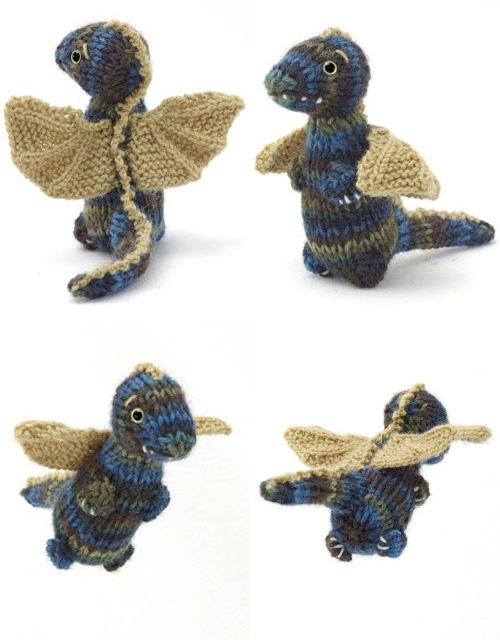
Wee Dragon - Knitting Pattern
Photos above © Fuzzy Mitten

The Wee Dragon is a charming knitted toy project associated with Fuzzy Mitten, the toy-pattern brand created by designer Barbara Prime.

This little dragon has a playful fantasy-toy shape and was originally featured on Amazing Knitting as an intermediate knitting project. We have updated this page to provide useful project information while avoiding unverified claims about the pattern's current availability.

Pattern Availability Note

Older Amazing Knitting references placed this project among free knitting patterns. We could not verify a current official Wee Dragon pattern page from Fuzzy Mitten, so we are not describing the pattern as free or paid until a current designer source can be confirmed.

Wee Dragon at a Glance

Project: Wee Dragon

Designer / Brand: Fuzzy Mitten / Barbara Prime

Craft: Knitting

Category: Stuffed Toy / Dragon

Style: Three-dimensional knitted toy

Historic Difficulty: Intermediate

Current Pattern Availability: Not verified

About the Wee Dragon

The Wee Dragon is a small fantasy-themed knitted toy with the recognizable features of a dragon in a soft, handmade form.

Toy knitting differs from garment knitting because the finished result depends not only on the knitted pieces but also on shaping, stuffing, assembly, and the placement of small features.

That makes a dragon project especially appealing to knitters who enjoy creating three-dimensional characters rather than flat accessories or clothing.

Designed by Fuzzy Mitten

Fuzzy Mitten was created by Barbara Prime, a designer known for knitted animal and character toys.

Her designs typically focus on small three-dimensional projects with carefully shaped pieces and expressive details.

Because older pattern links sometimes disappear or move when designers update their websites and shops, it is important to use a current designer-controlled source whenever one is available.

Why Knitted Dragons Are Interesting Projects

A knitted dragon combines ordinary knitting techniques with toy-making skills. The body creates the main shape, while features such as legs, wings, ears, horns, a tail, or facial details give the creature its personality.

Small changes in yarn colour can also produce very different results, from a friendly nursery toy to a bright fantasy creature.

Skills That Help With Knitted Toys

Depending on the exact version of the pattern, useful skills for this type of project may include:

  • Casting on and binding off
  • Knit and purl stitches
  • Increasing and decreasing
  • Shaping small knitted pieces
  • Seaming
  • Stuffing evenly
  • Attaching small parts securely
  • Embroidering simple facial details
  • Weaving in yarn ends

The original Amazing Knitting entry described the project as Intermediate, which is a reasonable reminder that a shaped toy usually involves more finishing work than a basic scarf or rectangular blanket.

Choosing Yarn for a Knitted Toy

Since we could not verify the Wee Dragon's original current materials list, we do not recommend a specific yarn weight or needle size here.

If you obtain the designer's original pattern, follow its yarn and needle recommendations first.

In general, knitted toys benefit from a firm fabric so that stuffing is less likely to show between stitches. Smooth yarn can also make shaping and decorative details easier to see.

Finishing Matters

Much of the character of a knitted toy appears during assembly. Take time to distribute stuffing evenly and position matching pieces symmetrically before sewing them permanently in place.

If the toy is intended for a young child, choose finishing methods and facial details appropriate for that use. Embroidered features can be a practical alternative to detachable decorative components.

Can I Still Get the Original Wee Dragon Pattern?

We could not verify a current official listing for this exact Wee Dragon pattern during our latest review.

Fuzzy Mitten and designer Barbara Prime are still represented online, but that does not by itself prove that this particular older pattern is currently free, paid, or available for download.

For that reason, Amazing Knitting does not link to unofficial copies or reproduce the designer's original instructions.

Visit Barbara Prime's Current Designs →

Looking for a Free Knitted Dragon?

If your main goal is to find a currently available free dragon project, you can also browse the Amazing Knitting archive for toy patterns:

Explore Free Dragon Knitting Patterns →

You can also explore free knitted toy patterns and knitted animal toys.

Before You Start

If you already own the original Wee Dragon pattern, use your legitimate designer copy for the exact materials, stitch counts, shaping, and assembly instructions.

If you do not already have the pattern, avoid downloading copies reproduced on unrelated websites. Check the designer's current shop or choose another currently available dragon or knitted-toy pattern instead.

Pattern credit: Wee Dragon is associated with Fuzzy Mitten, the knitting-toy brand of designer Barbara Prime. The existing project photos on this Amazing Knitting page are credited to Fuzzy Mitten. Amazing Knitting does not reproduce the designer's copyrighted pattern instructions.

Discover More From the Archive

A fresh mix of knitting patterns and tutorials from the Amazing Knitting archive.

Finding patterns from the archive…