Skip to content

...

Showing posts sorted by relevance for query yoke sweater knitting. Sort by date Show all posts

Ciqala Arrowhead Sweater - Knitting Pattern

Ciqala Arrowhead Sweater - Knitting Pattern
Photo above © OGE Knitwear Designs

Ciqala Arrowhead Sweater – P117 by OGE Knitwear Designs is a beautiful baby cardigan featuring a delicate arrowhead lace detail around the yoke.

Worked from the bottom up, the design combines classic baby-cardigan styling with an eye-catching lace feature. Its unisex shape and sizes from newborn through 18 months make it a versatile layering project for cooler weather.

Pattern Availability Update

Ciqala Arrowhead Sweater – P117 is currently available as a paid downloadable knitting pattern from OGE Knitwear Designs. Older links may lead to former pattern marketplaces, so we have updated this guide to point readers toward the designer's current legitimate source.

Ciqala Arrowhead Sweater at a Glance

Pattern: Ciqala Arrowhead Sweater – P117

Designer: OGE Knitwear Designs

First Published: August 2017

Craft: Knitting

Category: Baby Cardigan / Sweater

Skill Level: Intermediate

Sizes: 0–3, 3–6, 6–12 and 12–18 months

Yarn Weight: Sport / 5–6 ply

Needle Size: US 5 / 3.75 mm

Gauge: 25 stitches × 30 rows = 4 inches / 10 cm

Construction: Bottom-up with sleeves joined at the yoke

Current Availability: Paid PDF pattern

About the Ciqala Arrowhead Sweater

The defining feature of Ciqala is the arrowhead lace pattern around the yoke. It adds decorative interest to an otherwise classic baby cardigan shape without overwhelming the small garment.

The result is a sweater that can work equally well for everyday layering or as a more special hand-knitted baby gift.

OGE Knitwear Designs describes the cardigan as having a classic unisex appearance, so yarn colour can completely change the personality of the finished project.

Baby Sizes

The pattern includes four sizes:

  • 0–3 months
  • 3–6 months
  • 6–12 months
  • 12–18 months

Because babies of the same age can vary considerably in size, check the pattern's finished measurements and schematic rather than selecting a size only from the age label.

Yarn Requirements

The original pattern calls for Sport weight / 5–6 ply yarn. The designer specifies 100% superwash extrafine merino with approximately 125 m / 136 yards per 50g ball.

Main-colour requirements are:

  • 0–3 months: 2 × 50g balls
  • 3–6 months: 3 × 50g balls
  • 6–12 months: 4 × 50g balls
  • 12–18 months: 4 × 50g balls

Each size also requires one 50g ball of the contrast colour.

If substituting another yarn, matching the designer's gauge is more important than simply choosing another yarn carrying the same weight label.

Needles and Gauge

The pattern calls for:

US 5 / 3.75 mm extra-long straight or circular needles

The published stockinette gauge is:

25 stitches × 30 rows = 4 inches / 10 cm

Gauge is particularly important in a baby garment because even a small difference can noticeably change the finished chest measurement.

How the Ciqala Cardigan Is Constructed

Ciqala is worked from the bottom up.

The sleeves are knitted separately and then joined to the body when the knitting reaches the yoke. The decorative arrowhead lace becomes the focal point of this upper section.

One appealing feature of the construction is the limited amount of finishing: the designer states that the sleeve seams are the only seams required.

The Arrowhead Lace Yoke

The lace yoke is what gives Ciqala its distinctive identity. The geometric arrowhead motif creates a decorative transition across the upper cardigan while still allowing the garment to retain a clean, classic shape.

Using a contrasting yarn can make this section especially prominent, while a more subtle combination can produce a softer, understated result.

Written Instructions and Charts

The official pattern includes both written and charted instructions, together with a schematic.

This is useful for knitters who prefer one method of following lace patterns over another.

Amazing Knitting does not reproduce those charts or the designer's row-by-row instructions. Use the official pattern for the exact stitch counts, shaping and lace sequence.

Other Materials

In addition to yarn and needles, the designer lists:

  • Stitch holders
  • 3 buttons
  • 14 stitch markers

Having the stitch markers ready before beginning the yoke can make it easier to keep track of pattern sections and shaping.

Skills That Help

OGE Knitwear Designs classifies Ciqala as an Intermediate project. Useful skills include:

  • Casting on and binding off
  • Knit and purl stitches
  • Increasing and decreasing
  • Following lace instructions
  • Reading a knitting chart
  • Working garment shaping
  • Joining sleeves to a yoke
  • Basic seaming
  • Making buttonholes
  • Blocking a finished garment

Choosing Colours

Ciqala uses a main colour together with a contrasting colour, making yarn selection an enjoyable part of planning the project.

A strong contrast can emphasize the arrowhead yoke, while closely related shades can make the lace detail appear more subtle.

For a baby garment, also consider softness and washing requirements. A beautiful yarn that is difficult to care for may not always be the most practical choice for frequently worn baby clothing.

Is Ciqala Arrowhead Sweater Free?

No. Ciqala Arrowhead Sweater – P117 is currently a paid knitting pattern.

It is available directly from OGE Knitwear Designs and is also listed by established pattern marketplaces. Prices can vary by store and currency, so check the current official listing rather than relying on an older price.

Get the Official Ciqala Arrowhead Sweater Pattern

The designer's own store is the preferred source for the current pattern.

View the Official Ciqala Pattern →

Looking for a Free Baby Cardigan?

If you reached this page specifically looking for a free baby cardigan knitting pattern, Amazing Knitting has many other baby sweater and cardigan projects to explore.

Explore Free Baby Cardigan Patterns →

You can also browse free baby sweaters, lace baby cardigans, and baby knitting patterns from the Amazing Knitting archive.

Before You Start

Download the current official pattern before buying yarn and check the schematic and finished measurements for your chosen size. Make a gauge swatch, prepare your contrast colour, and read through the yoke section before beginning the project.

Since both written and charted instructions are supplied, decide which format you find easiest to follow before reaching the arrowhead lace.

Pattern credit: Ciqala Arrowhead Sweater – P117 was designed and published by OGE Knitwear Designs. The existing project photograph on this Amazing Knitting page is credited to OGE Knitwear Designs. Amazing Knitting does not reproduce the designer's copyrighted charts or row-by-row knitting instructions.

The Blue Shimmer Yoke Cardigan - Bohus Knitting Pattern Guide

The Blue Shimmer Yoke Cardigan - Free Pattern
Photos above © schrouderknits

The Blue Shimmer (Blå Skimmer) is one of the most celebrated designs associated with the Swedish Bohus Stickning tradition.

Designed by Anna-Lisa Mannheimer Lunn in 1947, Blue Shimmer became the most popular design produced by Bohus Stickning and remains instantly recognizable for its extraordinary circular yoke, subtle color transitions and mixture of colorwork and texture.

If this beautiful cardigan brought you here, this guide will help you identify the original design, understand what makes Bohus knitting distinctive, and avoid an important source of confusion: more than one authorized reproduction of Blue Shimmer has existed, and their knitting instructions are not interchangeable.

Pattern Availability

Blue Shimmer is a historic copyrighted design with multiple authorized reproductions. We could not verify a current authorized free version of the exact Blue Shimmer Yoke Cardigan. One well-known English-language reproduction appeared in the book Poems of Color, which is now listed as out of print, while another historically accurate reproduction was produced through SOLsilke / AngoraGarnet. Amazing Knitting therefore does not reproduce the charts or direct readers to unofficial copies.

The Blue Shimmer at a Glance

Original Name: Blue Shimmer / Blå Skimmer

Designer: Anna-Lisa Mannheimer Lunn

Original Design: 1947

Tradition: Bohus Stickning

Garment Style: Circular-yoke sweater / cardigan variations

Techniques: Stranded colorwork and textured stitches

Notable Feature: Multi-color patterned yoke

Historical English Source: Poems of Color: Knitting in the Bohus Tradition

Current Status: No verified current free version of the exact cardigan

What Is Blue Shimmer?

Blue Shimmer, or Blå Skimmer, is much more than an ordinary stranded-colorwork sweater.

It belongs to the remarkable knitting tradition developed by Bohus Stickning in Sweden during the twentieth century.

The original Blue Shimmer design dates to 1947 and became one of the best-known garments associated with Bohus knitting.

Its patterned yoke combines carefully arranged colors with changes in stitch texture, producing the soft, shimmering effect that inspired the design's name.

What Was Bohus Stickning?

Bohus Stickning was a Swedish knitting organization known for exceptionally sophisticated hand-knitted garments.

Its designs became famous for combining fine yarns, unusual color relationships and technically sophisticated patterned yokes.

Unlike many stranded-knitting traditions that rely primarily on two-color geometric motifs, Bohus designs often use several closely related shades to create subtle visual transitions.

Why Blue Shimmer Became So Famous

Blue Shimmer is often singled out because its yoke demonstrates many of the qualities that made Bohus knitting distinctive.

Rather than creating a hard boundary between one motif and the next, the colors appear to move and shimmer across the surface.

Texture adds another layer of complexity, so the design changes not only through color but through the way individual stitches catch the light.

The Circular Yoke Is the Star

The patterned yoke is the visual center of Blue Shimmer.

Multiple shades are arranged around the upper body so the pattern develops continuously around the garment.

This means consistent tension is particularly important. A section worked too tightly can reduce the elasticity of the yoke, while loose floats can make the fabric uneven.

More Than Ordinary Stranded Colorwork

One reason Bohus knitting is so interesting is that the patterned areas may combine color changes with knit and purl texture.

That combination produces a surface quite different from completely smooth stranded stockinette.

For knitters familiar with Fair Isle or other stranded traditions, Bohus knitting can therefore introduce a different approach to creating depth and visual movement.

The Original Design Dates to 1947

Anna-Lisa Mannheimer Lunn designed Blue Shimmer in 1947.

Historical pattern records identify it as the most popular design produced by Bohus Stickning.

That history is important because many modern photographs show reproductions rather than garments knitted directly from an original 1940s pattern sheet.

Important: There Is More Than One Blue Shimmer Pattern

Do Not Mix the Instructions

Two authorized reproductions of the historic Blue Shimmer design are documented. They look similar but use different yarn weights, gauges, stitch counts, construction methods and directions. Choose one complete version and follow its specifications throughout.

The Poems of Color Version

One well-known reproduction appears in Poems of Color: Knitting in the Bohus Tradition.

Ravelry records the Blue Shimmer Yoke Cardigan from this source as using a sport-weight interpretation and providing sizes S, M and L.

The book itself is currently listed as out of print.

Poems of Color Cardigan Specifications

For historical reference, the Ravelry record for this specific reproduction lists:

  • Sizes: S, M, L
  • Approximate finished bust: 40, 44, 48 inches
  • Yarn weight: Sport / 5-ply interpretation
  • Main gauge: 7 stitches per inch
  • Needles listed: US 1, US 2 and US 3
  • Yardage: approximately 1,699–1,999 yards
  • Colorwork: Chart provided for the patterned section

These specifications apply to the Poems of Color reproduction. They should not be assumed to apply to other Blue Shimmer reproductions.

The SOLsilke / AngoraGarnet Reproduction

A separate authorized recreation was developed by Solveig Gustafsson in 1999.

This reproduction was created using fine Bohus-style angora-merino yarn and later became associated with AngoraGarnet.

It is not simply the Poems of Color instructions rewritten with a different yarn.

Why the Two Versions Cannot Be Combined

The documented differences include:

  • Yarn weight
  • Gauge
  • Neck stitch count
  • Bust stitch count
  • Waist stitch count
  • Construction
  • Written directions

For example, the Poems of Color interpretation uses approximately 7 stitches per inch, while the historically oriented SOLsilke / AngoraGarnet version uses a substantially finer gauge of approximately 8.25 stitches per inch.

Substituting numbers from one version into the other could therefore create serious sizing and construction problems.

The Famous Angora-Merino Fabric

Fine angora-blend yarn is closely associated with the characteristic appearance of many Bohus garments.

The halo softens transitions between neighboring colors and contributes to the almost painted appearance of the patterned yoke.

This is one reason a modern reproduction worked in a very different fiber may look sharper and less blended even when the colors are similar.

Color Is Everything

Blue Shimmer demonstrates how sophisticated colorwork does not require extremely bright contrasts.

Closely related blues, neutrals and accent shades interact to create depth rather than simple graphic separation.

When viewed from a distance, the individual motifs merge into a shimmering field of color around the shoulders.

Swatching Is Essential

Blue Shimmer is not a project where gauge should be treated casually.

A proper swatch helps you evaluate:

  • Gauge
  • Stranded tension
  • Color interaction
  • Fabric density
  • Float management
  • Behavior after washing

If you are working from an authorized reproduction, swatch using the yarn and gauge specified by that particular version.

Practice Stranded Tension First

The patterned yoke contains many stitches where uneven stranded tension would be immediately visible.

If you are new to stranded knitting, practicing on a smaller project before beginning a historic Bohus reproduction can be worthwhile.

The goal is to keep the unused yarn relaxed behind the work without allowing excessively loose floats.

Why the Wrong Yarn Can Change the Look

Matching gauge alone does not guarantee the same visual result.

Fiber content, halo, elasticity and color blending all influence the character of a Bohus-style fabric.

A smooth yarn may produce beautifully clear stitches, but it will not necessarily create the same soft transitions associated with an angora-merino blend.

Read the Chart Carefully

Historic colorwork designs reward careful chart reading.

Keep track of your current row and make sure color changes remain aligned with the intended motif.

A magnetic chart keeper, removable tape or another row-tracking method can make a large colorwork chart easier to manage.

Is The Blue Shimmer Yoke Cardigan Still Free?

We could not verify a current authorized free pattern for the exact Blue Shimmer Yoke Cardigan.

The old Amazing Knitting page described it as a free pattern, but the currently documented sources do not support continuing that claim.

One authorized English reproduction appears in the out-of-print Poems of Color book, while another authorized reproduction has been associated with SOLsilke / AngoraGarnet.

Amazing Knitting therefore treats this page as a historical pattern guide rather than a free-pattern download page.

View the Historical Pattern Record

Ravelry maintains a detailed record for the Poems of Color Blue Shimmer Yoke Cardigan, including specifications and completed projects.

View The Blue Shimmer Yoke Cardigan on Ravelry →

Why We Don't Link to Unofficial Pattern Copies

Historic knitting patterns frequently appear as scans, copied charts or PDFs on blogs, document-sharing sites and image boards.

Age alone does not establish that a particular reproduction or adaptation can be freely redistributed.

Blue Shimmer also has multiple authorized reproductions with meaningful technical differences, making an unidentified copy especially risky from both a copyright and knitting-accuracy perspective.

For those reasons, Amazing Knitting does not host the chart or link to an unofficial download.

Love This Style? Explore Free Colorwork Patterns

If Blue Shimmer brought you here because you love decorative yokes and stranded knitting, you can still use this historic garment as inspiration while choosing a currently available pattern for your next project.

Explore Amazing Knitting for:

Blue Shimmer as Knitting History

Even if you never knit the complete cardigan, Blue Shimmer is worth studying.

It demonstrates how yarn texture, subtle color relationships and carefully planned stitch patterns can work together to create something far richer than ordinary two-color knitting.

More than seventy years after the original design appeared, the yoke still looks distinctive — a strong reminder that exceptional knitting design does not depend on following short-lived trends.

Before Starting a Blue Shimmer Reproduction

First identify exactly which authorized version you own.

Then use only the yarn requirements, gauge, stitch counts and construction instructions belonging to that version.

Do not combine specifications from the Poems of Color pattern with those from the SOLsilke / AngoraGarnet reproduction simply because the finished garments look similar.

Swatch carefully, practice your stranded tension and pay close attention to the extraordinary color relationships that make Blue Shimmer one of the most memorable Bohus Stickning designs.

Historical pattern credit: Blue Shimmer / Blå Skimmer was designed by Anna-Lisa Mannheimer Lunn for the Bohus Stickning tradition in 1947. Later authorized reproductions include versions associated with Poems of Color and SOLsilke / AngoraGarnet. The existing project photograph on this Amazing Knitting page is credited to schrouderknits. Amazing Knitting provides an independent historical and project guide and does not reproduce copyrighted charts or complete knitting instructions.

Flax Sweater - Free Pattern

Flax Sweater - Free Pattern
Photo above © Angeldogknitter

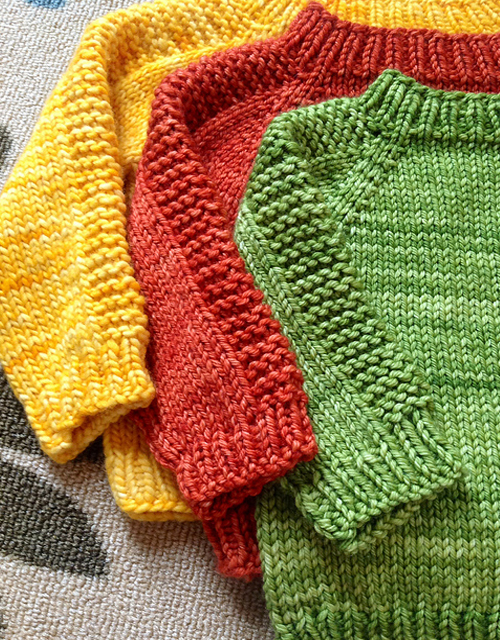
Looking for a versatile free sweater knitting pattern for babies, children, and adults? The Flax Sweater by Tin Can Knits is a modern top-down pullover designed to help knitters build confidence while learning seamless sweater construction.

Flax is part of the popular Simple Collection, a series of free patterns and tutorials created to teach essential knitting skills. With sizes ranging from babies to adults, it is a practical pattern that can be used again and again for different family members.

Flax Sweater Pattern at a Glance

Pattern: Flax Sweater

Designer: Tin Can Knits

Craft: Knitting

Category: Pullover / Sweater

Construction: Top-down and seamless

Yarn Weight: Worsted / Aran

Gauge: 18 stitches and 22 rows = 4 inches in stockinette stitch in the round

Needle Sizes: US 6 / 4.0 mm and US 8 / 5.0 mm

Yardage: Approximately 220–2100 yards (201–1920 m)

Sizes: 0–6 months through 6XL

Pattern Availability: Free

About the Flax Sweater

The Flax Sweater is one of those patterns that works especially well as a first garment project. It is designed with clean lines, simple shaping, and a seamless construction method that helps knitters understand how a sweater comes together without adding unnecessary complexity.

The sweater is worked from the top down, which means you begin at the neckline and continue through the yoke, body, and sleeves. This construction style is popular because it allows you to see the garment take shape as you knit.

Flax is also designed as part of a teaching collection, so it is supported by tutorials from Tin Can Knits that explain many of the techniques used throughout the project.

Sizes from Baby to Adult

One of the biggest advantages of the Flax pattern is its wide size range. The current worsted-weight version includes 19 sizes, beginning with babies and continuing through larger adult sizes.

Available sizes include:

  • 0–6 months
  • 6–12 months
  • 1–2 years
  • 2–4 years
  • 4–6 years
  • 6–8 years
  • 8–10 years
  • Adult sizes XS through 6XL

Because the pattern covers such a broad range, it can be a useful staple if you enjoy knitting sweaters for different members of the family.

Yarn and Gauge

The Flax worsted pattern is written for worsted / aran-weight yarn. The published gauge is:

18 stitches × 22 rows = 4 inches in stockinette stitch in the round

The listed yarn requirement ranges from approximately 220 to 2100 yards (201 to 1920 meters), depending on the size you choose.

Since Flax is available in both child and adult sizes, yarn requirements vary significantly. Always check the original pattern for the exact yardage needed for your selected size before purchasing yarn.

Needles

The pattern lists two main needle sizes:

  • US 6 / 4.0 mm
  • US 8 / 5.0 mm

The larger needles are used to achieve the main stockinette gauge, while the smaller size is used for specific sections of the sweater. Follow the original pattern instructions for the exact needle setup and construction details.

Why Flax Is Popular with Newer Sweater Knitters

Flax was created as part of Tin Can Knits' learn-to-knit series, which makes it especially useful for knitters who want to move from smaller projects into garment knitting.

The design introduces several important sweater-making skills in a relatively straightforward project, including top-down construction, knitting in the round, shaping, and finishing a seamless pullover.

At the same time, the finished sweater has a simple modern look that works well for babies, children, teenagers, and adults.

Other Versions of the Flax Sweater

Tin Can Knits now offers Flax in more than one yarn-weight version. In addition to Flax worsted, there are also lighter-weight versions including Flax DK and Flax Light.

These are separate pattern versions with different gauges, needle sizes, and yarn requirements, so be sure you are following the version that matches the yarn weight you want to use.

Is the Flax Sweater Pattern Free?

Yes. The Flax worsted sweater pattern by Tin Can Knits is currently available as a free knitting pattern.

The pattern can be accessed through the official Tin Can Knits website and is also available through Ravelry.

Get the Free Flax Sweater Pattern

Amazing Knitting does not reproduce the designer's knitting instructions. Please visit the official Tin Can Knits pattern page for the complete pattern, current sizing, tutorials, updates, and download options.

Get the Free Flax Sweater Pattern →

Pattern credit: Flax was created by Tin Can Knits as part of The Simple Collection. Pattern availability, sizing, and technical details are controlled by the designers and may change over time.

More Free Sweater Knitting Patterns

If you enjoy knitting simple sweaters, explore more free sweater knitting patterns and baby sweater knitting patterns from the Amazing Knitting archive.

Before You Start

Check the official pattern page before choosing yarn or needles so you can confirm the latest sizing, gauge, materials, and pattern notes for the version you plan to knit.

Easy Knit Blanket Sweater - Free Pattern

Easy Knit Blanket Sweater - Free Pattern
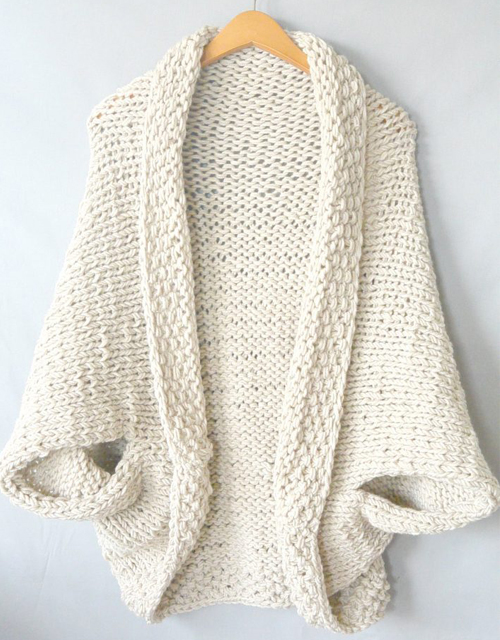
Photo above © (Jessica) Mama in a stitch

Easy Knit Blanket Sweater by Jessica Reeves Potasz of Mama In A Stitch is a wonderfully simple idea: knit a large, cozy rectangle, fold and seam it strategically, and turn it into an oversized cocoon-style cardigan.

There is no complicated traditional sweater construction here. The main fabric uses stockinette stitch with seed-stitch edging, making this an approachable wearable project for knitters who are comfortable with basic knit and purl stitches.

The finished sweater is intentionally oversized, soft and blanket-like rather than fitted — perfect if you love relaxed layering pieces.

Best of all, the complete pattern is still available for free from Mama In A Stitch. Below you'll find the key project details, construction notes, yarn-substitution advice and a link to Jessica's current free pattern.

✓ Free Pattern Availability

Easy Knit Blanket Sweater is currently available as a free knitting pattern on the designer's Mama In A Stitch website. An optional printable version may also be offered, but you can read the pattern for free on the official website.

Easy Knit Blanket Sweater at a Glance

Pattern: Easy Knit Blanket Sweater

Designer: Jessica Reeves Potasz

Source: Mama In A Stitch

First Published: October 2016

Category: Cardigan / Cocoon Sweater

Construction: Rectangle, worked flat, then folded and seamed

Main Stitch: Stockinette stitch

Edging: Seed stitch

Original Yarn: Lion Brand Woolspun (discontinued)

Original Yardage: Approx. 1,016 yards / 929 m

Needles: US 19 / 15 mm, 29-inch circular needle

Finished Measurement: Approx. 40.5 × 34 in

Style: Very oversized, loose and blanket-like

Availability: Free on Mama In A Stitch

About the Easy Knit Blanket Sweater

Jessica Reeves Potasz created the knitted Easy Knit Blanket Sweater after receiving requests for a knit version of her crocheted blanket sweater.

The concept is deliberately uncomplicated. Instead of shaping several separate sweater pieces, you create one large piece of knitted fabric and transform it into a wearable cocoon through folding and seaming.

The result looks much more involved than the actual construction.

It Really Is Almost a Knitted Blanket

The name “Blanket Sweater” is especially appropriate here.

The project is essentially a large knitted rectangle. Once the knitting is complete, the fabric is folded and seamed to create the cardigan shape and arm openings.

That makes it an interesting bridge between knitting a blanket and knitting your first wearable.

If traditional sweater shaping feels intimidating, this construction removes much of that complexity.

Beginner-Friendly Construction

You do not need to shape a neckline, calculate a raglan yoke or knit separate fronts, back and sleeves.

The important skills are much more familiar:

  • Knitting
  • Purling
  • Stockinette stitch
  • Seed stitch
  • Working flat
  • Basic seaming
  • Weaving in ends

For a newer knitter who wants to make something wearable, that simplicity is one of the biggest attractions of the design.

Stockinette Body with Seed-Stitch Edging

Most of the sweater is worked in stockinette stitch, creating the smooth, classic knitted surface you see across the oversized body.

Seed stitch is used at the edges to add texture and provide a visual frame around the simpler stockinette section.

This combination keeps the knitting repetitive enough to be relaxing without making the finished piece look completely plain.

The Sweater Is Intentionally Oversized

This is important to understand before beginning: Easy Knit Blanket Sweater is not designed as a fitted cardigan.

Jessica describes it as a heavy, blanket-like cocoon with a loose, drapey appearance.

The oversized dimensions are therefore part of the design rather than an indication that your sweater is turning out too large.

Finished Measurements

The published dimensions are approximately:

40.5 inches × 34 inches

Treat these measurements as especially useful information when deciding whether the original proportions will give you the amount of coverage and drape you want.

Fit Note

This is an intentionally oversized cocoon-style garment rather than a conventionally sized fitted sweater. Compare the published dimensions with a loose cardigan or wrap you already enjoy wearing before making major size modifications.

Original Yarn

The original sample used Lion Brand Woolspun.

The designer notes that the original Woolspun yarn has since been discontinued.

That does not mean the pattern is unavailable. The pattern itself remains free; only the original yarn needs to be substituted.

How Much Yarn?

The original project called for approximately:

1,016 yards / 929 meters

The original instructions used eight skeins of Woolspun at the specified skein yardage.

If you substitute another yarn, calculate by total yardage rather than assuming you will also need eight skeins. Skein sizes vary enormously between yarn brands.

Important Yarn Substitution Note

The Original Yarn Is Discontinued

Don't let that stop you from making the sweater. The pattern is still available, and this simple construction is well suited to yarn substitution. Focus on achieving a fabric and gauge similar to the designer's sample rather than searching indefinitely for discontinued Woolspun.

When choosing a substitute, consider:

  • Gauge
  • Finished fabric thickness
  • Drape
  • Total yardage
  • Fiber weight
  • How much the fabric stretches when worn

A very stiff substitute can dramatically change the character of this garment, because the original design depends on a loose, comfortable, blanket-like fabric.

Large Needles Make This an Interesting Quick-Knit Style

The original pattern calls for:

US 19 / 15 mm circular knitting needles

The designer specifies a 29-inch circular needle.

Although the sweater is worked flat rather than in the round, a circular needle is useful for comfortably holding the large piece of fabric.

Why Gauge Still Matters

A rectangle may seem more forgiving than a fitted sweater, but gauge still controls the dimensions of your finished garment.

Changing yarn thickness or needle size without checking the resulting fabric can make an already oversized design substantially larger or smaller.

This matters even more when substituting for a discontinued yarn.

Make a Swatch with Your Substitute Yarn

Before purchasing a large quantity of substitute yarn, make a generous stockinette swatch.

Check more than stitch count. Hold the swatch up and allow it to hang naturally.

Ask yourself:

  • Does it drape comfortably?
  • Is it too stiff?
  • Is it becoming excessively heavy?
  • Do you like the openness of the stitches?
  • Will the fabric feel comfortable as an oversized cardigan?

Those questions are especially useful for a garment whose appeal comes from its relaxed drape.

From Rectangle to Cardigan

The transformation happens after the main rectangle is complete.

The fabric is folded according to the designer's assembly instructions and partially seamed to create openings for the arms.

This simple finishing step turns what looked like a blanket on the needles into a cocoon-style cardigan.

Follow Jessica's original assembly photographs and instructions rather than guessing where to seam, because seam placement affects both the arm openings and how the cardigan hangs.

Two Buttons Help Hold the Sweater in Place

Jessica added two buttons near the upper portion of the garment.

They are both decorative and practical, helping the oversized sweater remain comfortably positioned when worn.

Because the knitted fabric is very open, the designer notes that the buttons can pass through the stitches without separately knitted buttonholes.

Choosing Buttons

Large buttons suit the scale of this oversized design particularly well.

Before permanently attaching them, temporarily position the buttons and try on the finished sweater.

This lets you check whether their placement gives you the amount of closure and drape you prefer.

Be Patient with Stockinette Curl

Stockinette naturally wants to curl at unsupported edges.

The textured edging and final construction help control the shape, but do not be alarmed if the unfinished rectangle does not lie perfectly flat while you are knitting it.

Watch the Weight of the Fabric

This is a substantial garment.

As the rectangle grows, its own weight can stretch the stitches and affect how the fabric looks compared with when it is resting on a table.

When checking length, allow the fabric to relax naturally rather than aggressively stretching it.

Why This Can Be a Good First Wearable

Many first sweater projects introduce several new skills at once: shaping, sleeve construction, neckline shaping, multiple sizes and seaming several separate pieces.

Easy Knit Blanket Sweater takes a different route.

The knitter can concentrate on making a large, consistent piece of fabric and learning simple assembly at the end.

That makes the project especially appealing if you can knit a rectangle confidently but have not yet attempted a traditional cardigan.

Is the Easy Knit Blanket Sweater Pattern Still Free?

Yes.

Jessica Reeves Potasz currently provides the complete Easy Knit Blanket Sweater pattern free on Mama In A Stitch.

You may also encounter an optional paid printable version. That does not change the availability of the free web pattern.

Amazing Knitting does not reproduce Jessica's complete copyrighted instructions. Use the official Mama In A Stitch article for the stitch counts, row-by-row instructions and assembly details.

Get the Free Easy Knit Blanket Sweater Pattern

Visit Jessica's original Mama In A Stitch tutorial for the complete free pattern, photographs and assembly instructions:

Get the Free Easy Knit Blanket Sweater Pattern →

You can also view the Ravelry record for project examples and additional pattern information:

View Easy Knit Blanket Sweater on Ravelry →

More Free Sweater and Cardigan Patterns

Looking for another approachable cardigan? Explore these free patterns already verified in the Amazing Knitting archive:

Or browse:

Before You Start

Remember that the original Woolspun yarn has been discontinued, but the pattern has not. There is no need to abandon this project simply because you cannot find the original yarn.

Choose a suitable substitute, make a swatch, and pay particular attention to drape and finished dimensions.

Then use the official Mama In A Stitch pattern for the exact stitch counts and assembly instructions.

If you are comfortable knitting a large rectangle, this project offers a clever way to turn those basic skills into a cozy wearable.

Pattern credit: Easy Knit Blanket Sweater was designed by Jessica Reeves Potasz of Mama In A Stitch. The existing photograph on this Amazing Knitting page is credited to Jessica / Mama In A Stitch. Amazing Knitting provides an independent project guide and does not reproduce the designer's complete copyrighted knitting instructions.

Lamb Dance Kids Jacket - Free Knitting Pattern

Lamb Dance - Free Pattern
Photo above © DROPS Design

Lamb Dance by DROPS Design is a cheerful free children's cardigan knitting pattern featuring a flock of little sheep around the circular yoke.

The jacket is worked from the top down in DK-weight yarn, combining stockinette stitch, ribbing and stranded colorwork. With five sizes covering approximately 3 to 12 years, it is a playful project for knitters ready to combine garment construction with colorwork.

Best of all, the complete pattern remains free from DROPS Design.

✓ Free Pattern Availability

Lamb Dance / DROPS Children 34-1 is currently available as a free knitting pattern from DROPS Design. Use the official DROPS link below for the complete current instructions, charts and pattern information.

Lamb Dance Jacket at a Glance

Pattern: Lamb Dance / DROPS Children 34-1

Designer: DROPS Design

Pattern Number: me-054-bn

First Published: March 2019

Craft: Knitting

Category: Children's Cardigan / Jacket

Sizes: 3/4, 5/6, 7/8, 9/10 and 11/12 years

Yarn Weight: DK / 8 ply

Suggested Yarn: DROPS Merino Extra Fine or DROPS Lima

Main Needles: US 6 / 4 mm

Rib Needles: US 2½ / 3 mm

Gauge: 21 stitches × 28 rows = 4 in / 10 cm

Construction: Top down

Features: Circular yoke, stranded colorwork, sheep motif, button front

Availability: Free official pattern

About the Lamb Dance Jacket

Lamb Dance is a children's knitted cardigan from DROPS Design.

Its defining feature is the whimsical band of sheep worked around the circular yoke. Contrasting colors create the sheep and surrounding decorative pattern against the main background color.

Below the patterned yoke, the cardigan becomes much simpler, allowing the colorwork to remain the visual focus of the finished garment.

Five Children's Sizes

The official pattern includes five sizes:

  • 3/4 years — approximately 98/104 cm height
  • 5/6 years — approximately 110/116 cm
  • 7/8 years — approximately 122/128 cm
  • 9/10 years — approximately 134/140 cm
  • 11/12 years — approximately 146/152 cm

When choosing a size, compare the child's measurements with the finished measurements in the official DROPS pattern rather than relying only on age.

Finished Measurements

The published finished chest measurements are approximately:

64 – 68 – 74 – 78 – 80 cm

The corresponding finished body lengths are approximately:

35 – 39 – 43 – 47 – 51 cm

Consult the official schematic before choosing your size, especially when knitting the cardigan as a gift.

Yarn Choices

DROPS provides two suggested yarn options for Lamb Dance:

  • DROPS Merino Extra Fine
  • DROPS Lima

Both belong to DROPS Yarn Group B and fall within the DK-weight range, but their fiber compositions produce somewhat different fabrics.

DROPS Merino Extra Fine is a merino yarn, while DROPS Lima combines wool and alpaca.

If substituting another yarn, matching the required gauge is more important than simply selecting a yarn carrying the same weight label.

How Much Yarn Do You Need?

The main background color requires approximately 150 to 250 grams, depending on size.

Several contrasting colors are then used for the sheep and other elements of the colorwork.

Because the exact amounts vary by size and yarn choice, check the official DROPS materials table before purchasing your yarn.

Knitting Gauge

The official gauge is:

21 stitches × 28 rows = 4 × 4 inches / 10 × 10 cm

This gauge is measured in stockinette stitch using the larger needles.

Gauge is particularly important for children's garments because even a relatively small difference can noticeably change the finished chest circumference and length.

Needles

The pattern uses approximately:

  • 4 mm / US 6 circular needles for the main fabric
  • 4 mm / US 6 double-pointed needles or another suitable small-circumference method
  • 3 mm / US 2½ needles for the ribbing

The official pattern lists circular needle lengths appropriate for the different stages of the garment.

Needle sizes are recommendations. Adjust them if necessary to obtain the required gauge.

Top-Down Construction

Lamb Dance is knitted from the top down.

Top-down construction has several practical advantages. The yoke and upper body develop first, followed by the body and sleeves, reducing the amount of traditional garment seaming.

It can also make the overall construction easier to visualize because the cardigan grows from the neckline toward the hem.

The Circular Yoke

The sheep motif sits within a circular yoke.

Instead of using conventional armhole shaping with separately knitted front and back pieces, shaping is distributed around the upper body.

This creates the smooth rounded line that makes Nordic-style colorwork yokes so recognizable.

The Sheep Colorwork

The playful sheep are the signature feature of Lamb Dance.

The motif is created using stranded colorwork, following the chart supplied by DROPS Design.

Amazing Knitting does not reproduce that copyrighted chart here. Use the current official pattern while working the yoke.

Tips for Stranded Colorwork

If stranded knitting is relatively new to you, pay particular attention to your tension.

The unused yarn carried behind the work should have enough room to span the stitches without pulling the knitted fabric together.

Stretching the stitches gently along the right needle while changing colors can help keep the floats from becoming too tight.

Check the fabric frequently rather than waiting until the entire yoke is complete.

Swatch the Colorwork Too

Your tension when knitting stranded colorwork may differ from your ordinary stockinette tension.

If this happens, the yoke can become tighter than the body even when the stockinette portion matches the published gauge.

A small colorwork swatch can therefore be useful before beginning the main sheep section.

Button Front

Unlike the related Lamb Dance pullover, this version is a front-opening cardigan.

The official pattern calls for:

6 – 6 – 7 – 7 – 7 buttons

The exact number depends on the size being knitted.

Attach buttons securely, particularly when the garment is intended for a younger child.

Skills Used in Lamb Dance

Useful skills for this project include:

  • Casting on and binding off
  • Knit and purl stitches
  • Working ribbing
  • Knitting stockinette stitch
  • Working in the round
  • Working flat where required
  • Increasing and decreasing
  • Reading a colorwork chart
  • Stranded knitting
  • Managing yarn floats
  • Working a circular yoke
  • Making buttonholes
  • Picking up stitches where instructed
  • Weaving in multiple color ends neatly

Is Lamb Dance Suitable for Beginners?

A knitter who has already completed simple garments and is comfortable working in the round should find Lamb Dance an interesting introduction to a more decorative children's cardigan.

The colorwork yoke adds another skill layer, so a complete first-time knitter may prefer to practice stranded knitting on a small swatch before beginning.

DROPS also provides supporting technique information and video tutorials alongside many of its patterns.

A Matching Lamb Dance Collection

The cardigan is part of a small coordinated DROPS collection.

DROPS also published a Lamb Dance Sweater using the same playful sheep theme, as well as a matching Lamb Dance Hat.

This makes the design especially useful if you enjoy the motif and want to create coordinated children's knitwear.

Is Lamb Dance Still Free?

Yes.

Lamb Dance / DROPS Children 34-1 is currently available directly from DROPS Design as a complete free knitting pattern.

The official page contains the current instructions, diagrams, charts, measurements and supporting information.

Amazing Knitting provides this independent project guide rather than reproducing the complete DROPS instructions or charts.

Get the Free Lamb Dance Pattern

Use the official DROPS Design page for the complete free pattern:

Get the Free Lamb Dance Pattern →

More Free Children's Knitting Patterns

You can continue exploring Amazing Knitting for free children's cardigans, sweaters and colorwork projects.

Explore Free Children's Cardigans →

You can also browse:

Before You Start

Choose the size by comparing the child's measurements with the official DROPS schematic, then make a gauge swatch with your chosen Yarn Group B yarn.

If stranded knitting is new to you, practice carrying two colors before reaching the sheep yoke. Keeping the floats relaxed is important for maintaining a comfortable fit across the upper body.

Finally, always work from the current DROPS page so you have access to the latest version of the pattern and its supporting information.

Pattern credit: Lamb Dance / DROPS Children 34-1 was designed and published by DROPS Design. Amazing Knitting does not reproduce the designer's copyrighted charts or complete knitting instructions. Please use the official DROPS page for the free pattern.

Clover - Free Pattern

Clover - Free Pattern
Photo above © DROPS Design

Clover / DROPS Children 34-4 is a free children's sweater knitting pattern from DROPS Design, featuring a decorative lace pattern, raglan shaping and comfortable top-down construction.

Designed for children approximately 2 to 12 years old, the sweater can be knitted in DROPS Air or DROPS Paris and is available in six sizes.

The complete pattern remains free on the official DROPS Design website.

✓ Free Pattern Availability

Clover / DROPS Children 34-4 is currently available as a free official knitting pattern from DROPS Design. Use the official link below for the complete current instructions, diagrams and measurements.

Clover Sweater at a Glance

Pattern: Clover / DROPS Children 34-4

Designer: DROPS Design

Pattern Number: ai-014-bn

Craft: Knitting

Category: Children's Sweater / Jumper

Sizes: 2 to 11/12 years

Suggested Yarn: DROPS Air or DROPS Paris

Gauge: 16 stitches × 20 rows = 4 in / 10 cm

Main Needles: US 9 / 5.5 mm

Rib Needles: US 7 / 4.5 mm

Construction: Top down

Features: Lace pattern, raglan shaping, long sleeves

Availability: Free official DROPS pattern

About the Clover Children's Sweater

Clover is a children's pullover designed by DROPS Design.

The sweater combines a relatively simple silhouette with decorative lace across the upper portion of the garment.

It is knitted from the top down with raglan shaping, giving knitters a practical construction method while allowing the lace to become the main decorative feature.

Six Children's Sizes

The official DROPS pattern includes six sizes:

  • 2 years
  • 3/4 years
  • 5/6 years
  • 7/8 years
  • 9/10 years
  • 11/12 years

DROPS associates these sizes with approximate child heights of:

92 – 98/104 – 110/116 – 122/128 – 134/140 – 146/152 cm

Age is only a guide. When possible, compare the child's measurements with the finished measurements in the official DROPS schematic before choosing a size.

Finished Chest Measurements

The published finished chest measurements are approximately:

68 – 72 – 76 – 84 – 86 – 94 cm

That's approximately:

26¾ – 28⅜ – 30 – 33 – 33⅞ – 37 inches

Finished length ranges from approximately 36 cm for the smallest size to 56 cm for the largest.

Two Suggested Yarn Options

One useful feature of the official Clover pattern is that DROPS provides two yarn options.

You can knit the sweater in:

  • DROPS Air
  • DROPS Paris

These yarns have very different fiber compositions and characteristics, so the finished sweater can have a different feel depending on which option you choose.

The important requirement is obtaining the pattern gauge and a fabric suitable for the garment.

DROPS Air Requirements

When using DROPS Air, the official pattern calls for approximately:

150 – 150 – 200 – 200 – 200 – 250 grams

The original DROPS sample lists color 20, Rose.

DROPS Paris Requirements

The alternative DROPS Paris version requires approximately:

300 – 300 – 400 – 400 – 400 – 500 grams

The official pattern lists color 01, Apricot, for this option.

Gauge

The required knitting gauge is:

16 stitches × 20 rows = 4 × 4 inches / 10 × 10 cm

This is measured in stockinette stitch.

Gauge is important for children's garments because it directly affects the finished chest circumference, length and yarn consumption.

Make a gauge swatch before beginning, particularly when substituting another yarn.

Needles

DROPS recommends:

  • 5.5 mm / US 9 circular and double-pointed needles for the main fabric
  • 4.5 mm / US 7 circular and double-pointed needles for the ribbing

The published needle sizes are guides. Use the needle size that allows you to obtain the required gauge.

Top-Down Construction

Clover is knitted from the top down.

This construction begins at the neckline and develops the upper body before moving down toward the hem.

Top-down sweaters can be particularly convenient for children's garments because the overall proportions become easier to visualize as the project grows.

Raglan Shaping

The sweater uses raglan shaping to form the upper body and sleeves.

Raglan construction distributes shaping around the upper garment rather than requiring separately shaped traditional armholes.

Combined with the top-down method, it creates a clean construction that works well with the decorative lace section.

The Lace Pattern

The decorative lace is one of Clover's defining features.

The motif is worked according to the diagrams supplied with the official DROPS pattern.

Amazing Knitting does not reproduce those copyrighted charts here. Follow the current official pattern for the complete stitch sequence and diagrams.

Working from a Knitting Chart

If you are relatively new to charted lace, take a little time to study the symbols before beginning the decorative section.

Keep track of both your current chart row and your position within each repeat.

Stitch markers can be useful for separating repeats where appropriate, making it easier to identify a missing yarn over or decrease before the error travels into later rows.

Count Your Stitches Regularly

Lace depends on increases and decreases remaining correctly balanced.

A forgotten yarn over or an accidental extra stitch can change the alignment of the following rows.

Checking your stitch count at logical points throughout the lace section can save considerable time later.

Consider Using a Lifeline

If lace knitting is still new to you, a lifeline can provide useful insurance.

Pass a smooth contrasting thread through a correctly completed row without interfering with the working stitches.

If you later discover an error, you have a known safe row to return to instead of unraveling blindly through the lace.

Working the Sleeves

After the body has been established, the sleeves are worked using the stitches set aside during the upper-body construction.

Smaller circumferences can be handled with double-pointed needles, magic loop or another method you are comfortable using, while still following the stitch counts and shaping in the official instructions.

Choosing the Right Size

Children's ages do not always correspond perfectly to standardized clothing sizes.

For a better result, measure a sweater that currently fits the child well and compare it with the finished measurements supplied by DROPS.

Pay particular attention to chest circumference, body length and sleeve length.

Substituting Yarn

You can use another suitable yarn instead of the two DROPS options, but do not select a substitute by yarn label alone.

Look for a yarn capable of producing the required 16 stitches × 20 rows per 10 cm while creating a fabric you like.

Fiber content also matters. A cotton yarn such as DROPS Paris behaves differently from a light blown yarn such as DROPS Air.

Always swatch when making a significant substitution.

Skills Used in Clover

This project is useful for practicing several knitting skills:

  • Top-down sweater construction
  • Raglan shaping
  • Knitting in the round
  • Knit and purl stitches
  • Ribbing
  • Increasing and decreasing
  • Yarn overs
  • Following lace diagrams
  • Working sleeves in a small circumference
  • Finishing and weaving in ends

Is Clover Suitable for Beginners?

Clover is more involved than a completely basic stockinette children's sweater because of the lace pattern and shaping.

However, a knitter who is already comfortable with knit and purl stitches, working in the round and basic increases and decreases can use it as a good opportunity to gain experience with charted lace and top-down garment construction.

Important: Use the Current Pattern

DROPS notes that the Clover pattern has received a correction.

The official page currently shows an update dated October 23, 2020 concerning the sleeve instructions.

For this reason, avoid relying on an old saved or copied version of the instructions. Work from the current official DROPS page so you have the corrected pattern.

Is the Clover Sweater Still Free?

Yes.

Clover / DROPS Children 34-4 remains available as a complete free knitting pattern directly from DROPS Design.

The official page includes the instructions, diagrams, measurements and supporting technique information.

Get the Free Clover Knitting Pattern

Visit DROPS Design for the complete current pattern:

Get the Free Clover Pattern →

More Free Children's Sweater Patterns

Looking for another children's project? The recently reviewed Lamb Dance cardigan from DROPS Design is another free pattern, featuring a playful stranded-colorwork sheep yoke.

See the Free Lamb Dance Pattern →

You can also browse more projects in the Amazing Knitting archive:

Before You Start

Choose the size using the child's measurements rather than age alone, then make a gauge swatch with your chosen yarn.

Read through the lace diagrams before reaching the patterned section and consider using stitch markers or a lifeline if charted lace is new to you.

Most importantly, work from the current DROPS page because the pattern has received a published correction since its original release.

Pattern credit: Clover / DROPS Children 34-4 was designed and published by DROPS Design. The existing photograph on this Amazing Knitting page is credited to DROPS Design. Amazing Knitting does not reproduce the designer's complete copyrighted instructions or charts.

Autumn Leaves - Free Pattern

Autumn Leaves - Free Pattern
Photo above © figandplum 

Autumn Leaves by Nikki Van De Car is a charming top-down baby cardigan featuring a beautiful leaf-lace yoke that spreads gracefully across the shoulders.

Designed in three baby sizes, Autumn Leaves combines an eye-catching decorative yoke with a practical cardigan construction. Despite the impressive appearance of the leaf pattern, the designer describes the knitting as intuitive once the repeating structure becomes familiar. Best of all, the original pattern is still available free from the designer.

✓ Free Pattern Availability

Good news: Autumn Leaves by Nikki Van De Car is still available as a free knitting pattern. The designer currently provides the pattern on her own pattern page, making that the preferred source for the current instructions.

Autumn Leaves Cardigan at a Glance

Pattern: Autumn Leaves

Designer: Nikki Van De Car

First Published: October 2008

Craft: Knitting

Category: Baby Cardigan

Sizes: 6–9, 9–12 and 12–15 months

Construction: Top-down, one-piece cardigan

Feature: Leaf-lace circular yoke

Yarn: DK or worsted weight, depending on size

Needles: US 5, US 7 or US 9, depending on size

Notions: 4 stitch markers, tapestry needle and 3 buttons

Current Availability: Free pattern

About the Autumn Leaves Baby Cardigan

The defining feature of Autumn Leaves is its decorative leaf-lace yoke.

The leaves spread around the upper cardigan and create much of the garment's visual interest before the knitting transitions into the simpler body and sleeves.

This balance makes the cardigan particularly appealing: there is enough lace to make the project special without covering the entire garment in a complicated stitch pattern.

Three Baby Sizes

Autumn Leaves includes three sizes:

  • 6–9 months
  • 9–12 months
  • 12–15 months

An important detail is that the designer changes yarn weight, needle size and gauge between the sizes. Do not assume that all three sizes use exactly the same materials.

Yarn Requirements

Nikki Van De Car currently gives the following approximate yarn requirements:

  • 6–9 months: approximately 200 yards
  • 9–12 months: approximately 250 yards
  • 12–15 months: approximately 300 yards

DK yarn is specified for the smaller size, while the designer allows DK or worsted for the middle size depending on the desired fabric. The largest size uses worsted-weight yarn.

Always check the current designer pattern before purchasing yarn because matching the appropriate gauge for your chosen size is essential.

Needle Sizes

Needle size also changes with the cardigan size:

  • 6–9 months: US 5 / 3.75 mm
  • 9–12 months: US 7 / 4.5 mm
  • 12–15 months: US 9 / 5.5 mm

The original materials list calls for a circular needle. The cardigan is worked flat; the circular needle provides a convenient way to hold the increasing number of stitches across the yoke and body.

Gauge by Size

The published gauges are:

  • US 5: 24.5 stitches × 32.5 rows = 4 inches / 10 cm
  • US 7: 18 stitches × 29 rows = 4 inches / 10 cm
  • US 9: 15.5 stitches × 23 rows = 4 inches / 10 cm

This size-specific gauge information is particularly important. Select your intended size first, then swatch with the appropriate yarn and needle combination.

The Leaf-Lace Yoke

The yoke is what gives Autumn Leaves its recognizable appearance.

Lace increases form the expanding leaf motifs as the cardigan grows outward from the neckline. The decorative shaping and garment shaping therefore work together rather than existing as separate features.

Once blocked, the open sections help define the leaves and allow the pattern to spread naturally across the baby's shoulders.

Top-Down Construction

Autumn Leaves is a top-down, one-piece cardigan.

Beginning at the neckline allows the decorative yoke to be established first. The garment then develops downward into the body and sleeves.

One-piece construction also reduces the amount of traditional garment assembly compared with sweaters knitted as separate front, back and sleeve pieces.

Seed Stitch Edging

Seed stitch provides a neat textured contrast to the open leaf lace.

Because seed stitch alternates knit and purl stitches, it creates a compact textured surface that helps frame the cardigan while allowing the lace yoke to remain the main decorative feature.

Buttons and Other Materials

In addition to yarn and needles, the designer lists:

  • 3 buttons
  • 4 stitch markers
  • A tapestry needle

Stitch markers are especially useful around a patterned yoke because they help separate important sections and make it easier to identify an error before it travels through several rows.

Written Instructions and Chart

Autumn Leaves has both written pattern information and a chart available for the decorative section.

If you are new to lace charts, comparing the chart with the written directions can be a useful way to learn how the symbols correspond to actual stitches.

Amazing Knitting does not reproduce the designer's chart or row-by-row instructions. Use Nikki Van De Car's current pattern page for the exact stitch sequence and shaping.

Skills That Help

Useful skills for Autumn Leaves include:

  • Casting on
  • Knit and purl stitches
  • Seed stitch
  • Yarn overs
  • Basic lace decreases
  • Following written lace instructions
  • Reading a knitting chart
  • Using stitch markers
  • Working buttonholes
  • Working a top-down garment
  • Binding off
  • Blocking lace

Why Blocking Matters

Lace often looks much less impressive immediately after it comes off the needles.

Gentle blocking helps the leaf motifs open and allows the shape of the yoke to become clearer.

Always follow the washing and blocking recommendations appropriate for the yarn you choose, especially for a baby garment.

Choosing a Colour

The leaf motif makes Autumn Leaves a natural candidate for warm seasonal colours such as rust, mustard, moss, burgundy or soft brown.

But the design does not need to look autumnal. Cream, pale pink, blue, lavender or soft green can turn the same pattern into a cardigan suitable for any season.

A solid or gently heathered yarn will generally make the lace leaves easier to see than a highly contrasting variegated yarn.

Is Autumn Leaves Still Free?

Yes. Autumn Leaves by Nikki Van De Car is currently available as a free knitting pattern.

The designer maintains a current online version of the pattern, and Ravelry also continues to list Autumn Leaves as free.

Amazing Knitting provides this project guide and directs readers to the legitimate original source rather than reproducing the designer's copyrighted pattern instructions.

Get the Free Autumn Leaves Pattern

The best current source is Nikki Van De Car's own Autumn Leaves pattern page.

Get the Free Autumn Leaves Pattern →

More Free Baby Cardigans

If you enjoy leaf yokes and small top-down garments, continue exploring the Amazing Knitting archive for more free baby sweater patterns.

Explore Free Baby Cardigan Patterns →

You can also browse leaf-lace baby sweaters, top-down baby cardigans, and free baby knitting patterns.

Before You Start

Decide which of the three sizes you are making before buying yarn because the recommended yarn weight, needle size and gauge change between sizes.

Make a gauge swatch, prepare your stitch markers and read through the leaf-yoke section before casting on. If lace charts are unfamiliar, keep the written directions nearby while learning the pattern.

Pattern credit: Autumn Leaves was designed by Nikki Van De Car and published in connection with What To Knit When You're Expecting. The existing photograph on this Amazing Knitting page is credited to figandplum. Amazing Knitting does not reproduce the designer's copyrighted chart or row-by-row knitting instructions.

Discover More From the Archive

A fresh mix of knitting patterns and tutorials from the Amazing Knitting archive.

Finding patterns from the archive…