Skip to content

...

Showing posts sorted by relevance for query free cowl knitting pattern. Sort by date Show all posts

Autopilot Cowl – Free Easy 2-Row Cowl Knitting Pattern

Autopilot Cowl free easy two row repeat cowl knitting pattern by Dominique Trad

Autopilot Cowl. Photo © Dominique Trad

Autopilot Cowl by Dominique Trad is a free, relaxing cowl knitting pattern built around an easy 2-row repeat. Worked seamlessly in the round with worsted-weight yarn, it's designed for the kind of knitting you can enjoy while traveling, watching TV or chatting at knit night.

The combination of simple eyelets and mesh creates an attractive textured fabric without a complicated stitch sequence. Better still, the designer provides guidance for adjusting both the width and circumference, so you can customize the finished cowl to suit your preferred fit.

Autopilot Cowl Pattern Details

  • Designer: Dominique Trad
  • Published: February 2015
  • Craft: Knitting
  • Category: Cowl / infinity-style neckwear
  • Pattern availability: Free download
  • Yarn weight: Worsted / 10 ply
  • Suggested yarn: Malabrigo Rios
  • Yardage: Approximately 328–437 yards (300–400 m)
  • Needles: 6 mm (US 10) and 5.5 mm (US 9)
  • Construction: Bottom up, worked in the round
  • Finishing: Seamless, one-piece construction
  • Stitch pattern: Easy 2-row repeat with eyelets and mesh
  • Size: One size with instructions for customization
  • Language: English

An Easy 2-Row Repeat Cowl

The main attraction of Autopilot is its wonderfully repetitive stitch pattern. The cowl uses a 2-row repeat, creating an attractive open texture without requiring you to keep track of a long sequence of rows.

That's exactly where the name comes from. Dominique Trad designed the project for relaxed knitting: something that lets you enjoy beautiful yarn while your hands settle into a comfortable rhythm.

It can be an especially appealing project for knitting while commuting, traveling, watching television or spending time with other knitters.

Worked Seamlessly in the Round

Autopilot is worked in the round from the bottom up. The cowl is knitted as one continuous piece, so there is no long seam to sew after the knitting is finished.

Working in the round also makes the repeating stitch pattern particularly satisfying once you become familiar with it: simply continue around the cowl while the textured mesh fabric develops on your needles.

Eyelets and Mesh Texture

Although the pattern is intentionally simple, the finished fabric has plenty of visual interest.

Eyelets create an airy mesh-like texture that works especially well with soft worsted-weight yarn. The repeated openings also help the fabric drape rather than becoming too dense around the neck.

This makes Autopilot a good example of how a very short stitch repeat can produce a finished accessory that looks much more intricate than the knitting experience suggests.

Yarn for the Autopilot Cowl

The original pattern is designed for worsted-weight / 10-ply yarn and suggests Malabrigo Rios.

Rios is a worsted-weight merino yarn, and its hand-dyed colorways can work beautifully with the simple textured structure of this cowl.

The pattern calls for approximately 328–437 yards (300–400 metres), depending on how you customize the project.

Can You Use a Different Yarn?

Yes. One of the useful features of Autopilot is its flexibility. Dominique Trad designed the original version for worsted-weight yarn, but notes that the cowl can be made with other yarn weights as well.

Changing yarn weight will affect the finished fabric, dimensions and needle requirements, so treat the original worsted version as your reference point and adjust accordingly.

This flexibility can also make the pattern useful when you have a special yarn in your stash and want a straightforward project that allows the yarn itself to be the focus.

Needles

The original worsted-weight version uses:

  • 6 mm (US 10) needles
  • 5.5 mm (US 9) needles

Because the cowl is worked in the round, use circular needles with a cable length appropriate for your chosen circumference.

An Adjustable Cowl Knitting Pattern

Although the pattern is written with one basic size, the designer provides the information needed to customize both the width and circumference.

This means you are not limited to reproducing the sample exactly. You can adjust the dimensions depending on how you want to wear your finished cowl and how much yarn you have available.

A longer circumference can create a generously draped cowl that can be wrapped around the neck, while a shorter version can be worn closer to the neck.

Great for Hand-Dyed and Variegated Yarn

A simple repeating pattern can be an excellent partner for colorful yarn because the stitch pattern doesn't compete with the yarn.

Autopilot works beautifully in solid colors, but it can also showcase tonal, hand-dyed or variegated worsted yarns. The eyelets and mesh add texture while allowing color changes to remain visible.

Skills Used in the Autopilot Cowl

The pattern is straightforward, but you should be comfortable with a few basic techniques before beginning.

Useful skills include:

  • Knitting in the round
  • Knit and purl stitches
  • Yarn overs
  • Simple decreases
  • Following a 2-row repeat
  • Working eyelets and mesh
  • Binding off loosely

Don't Forget a Stretchy Bind-Off

The designer specifically recommends using a stretchy bind-off or binding off loosely.

This is worth paying attention to. A bind-off that is significantly tighter than the knitted fabric can restrict the edge and affect how comfortably the cowl sits or wraps around the neck.

Why Knit the Autopilot Cowl?

Autopilot is a particularly appealing pattern when you want knitting that feels relaxing without producing a completely plain accessory.

The 2-row repeat is easy to settle into, while the eyelet texture, seamless construction and customizable dimensions keep the finished cowl interesting.

It can also be a useful project between more complicated sweaters, shawls or lace patterns when you want something you don't need to concentrate on constantly.

A Popular Free Cowl Pattern

Autopilot has become a well-established free knitting pattern since its publication in 2015, with knitters creating it in many different yarns, colors and dimensions.

Its combination of a memorable 2-row repeat and flexible sizing makes it particularly easy to personalize while retaining the character of Dominique Trad's original design.

Get the Free Autopilot Cowl Knitting Pattern

The complete Autopilot Cowl by Dominique Trad is currently available as a free downloadable knitting pattern from the designer's Ravelry page.

Get the Free Autopilot Cowl Knitting Pattern

Pattern availability was checked when this article was updated. Availability on external websites may change over time.

Over 50 Websites to Get Free Knitting Patterns

Over 50 Websites to Get Free Knitting Patterns
Designed by © Knit Crush

Looking for free knitting patterns? There are thousands of legitimate patterns available online for baby clothes, sweaters, blankets, scarves, socks, hats, toys and almost every other knitting project you can imagine.

The challenge is no longer simply finding a pattern. It is finding a reliable free pattern from a legitimate source, especially when older Pinterest pins and search results may lead to discontinued pages, outdated downloads or unofficial copies.

This guide will help you find free knitting patterns more safely and efficiently, whether you are searching the Amazing Knitting archive, a designer's website, a yarn company or a large knitting-pattern database.

About This Updated Guide

This Amazing Knitting article was originally published in 2019 as a link to an external roundup of more than 50 free-pattern websites. We have expanded the page into an independent resource for finding legitimate free knitting patterns without reproducing another publisher's list.

Where Can You Find Free Knitting Patterns?

Free knitting patterns are published by many different types of websites.

Some come directly from independent designers. Others are published by yarn manufacturers, knitting magazines, craft websites or pattern databases.

The best source depends on what you are looking for, so it helps to understand the major types of free-pattern resources before beginning your search.

1. Designer Websites

One of the best places to find a knitting pattern is the designer's own website.

Independent designers frequently publish selected patterns free while selling other designs.

Going directly to the designer has several advantages. You are more likely to find the current version of the pattern, corrections, additional photographs and notes from the person who actually created it.

If a pattern has been updated since its original publication, the designer's current page is usually preferable to an old copied version circulating elsewhere.

2. Yarn Company Pattern Libraries

Major yarn companies can be excellent sources of free knitting patterns.

These companies publish patterns to demonstrate how their yarns can be used, which means their libraries often contain projects across many categories and skill levels.

You can find designs for:

  • Baby sweaters and cardigans
  • Baby blankets
  • Adult sweaters and pullovers
  • Hats
  • Scarves and cowls
  • Socks and slippers
  • Shawls
  • Home accessories
  • Seasonal projects

Yarn-company libraries are especially useful because older patterns sometimes remain available long after the original printed booklet has disappeared.

3. Ravelry

Ravelry is one of the most useful resources for researching knitting patterns.

Rather than simply searching the web for a phrase such as “free baby cardigan,” you can narrow results using filters such as category, yarn weight, needle size, age, construction and availability.

Pattern records can also provide useful historical information such as the designer, publication date, suggested yarn and links to the current pattern source.

Remember that a Ravelry record does not automatically mean the pattern itself is still available. Always check the current availability shown on the pattern page.

4. Knitting Magazines and Online Publications

Online knitting magazines have published many excellent free patterns over the years.

Some older designs remain available in permanent online archives, making these publications particularly useful when searching for classic knitting projects.

These sources can also be valuable because they often preserve useful information about the designer, yarn, gauge, construction and original publication date.

5. Large Craft and Pattern Websites

Large craft websites often organize patterns by project type or skill level, which can make them useful when you are looking for inspiration rather than one particular design.

A collection might focus on beginner scarves, baby booties, knitted toys or quick gifts.

When using a roundup, however, follow the link to the original pattern source whenever possible.

6. Knitting Blogs

Knitting blogs remain another useful source of free patterns, tutorials and project inspiration.

Some bloggers are also pattern designers and publish complete original designs. Others curate projects from different designers.

The distinction matters.

When a blog is discussing somebody else's pattern, look for the designer's name and a clear link to the legitimate original source.

7. Vintage and Public-Domain Knitting Resources

Knitters interested in historical projects can also explore digitized vintage knitting books, magazines and pattern leaflets.

Older knitting publications can contain fascinating sweaters, lace, socks, mittens and household projects that differ significantly from modern designs.

However, old does not automatically mean public domain. Copyright status depends on factors including publication date, jurisdiction and publication history.

If you plan to republish rather than simply knit from a vintage pattern, verify its copyright status first.

8. Amazing Knitting

You can also browse the Amazing Knitting archive.

Our library includes hundreds of knitting discoveries covering baby clothes, blankets, sweaters, scarves, hats, socks, slippers, stitches, tutorials and other projects.

We are progressively reviewing older articles to identify original designers, verify pattern availability and direct readers toward legitimate current sources whenever possible.

Browse Free Knitting Patterns →

Free Baby Knitting Patterns

Baby projects are an excellent place to explore free patterns because there are designs for many different skill levels.

You can start with baby cardigans and sweaters:

Explore Free Baby Cardigans →

Or browse baby booties:

Explore Free Baby Booties →

And baby blankets:

Explore Free Baby Blankets →

Free Sweater and Cardigan Patterns

Sweaters range from simple first-garment projects to advanced designs involving cables, lace or colorwork.

When choosing one, pay particular attention to:

  • Finished measurements
  • Recommended ease
  • Gauge
  • Yarn weight
  • Construction method
  • Available sizes
  • Required techniques

Explore Free Sweater Patterns →

Free Blanket Knitting Patterns

Blankets are another large category of free knitting patterns.

Depending on the design, a blanket can be a simple beginner project or an advanced combination of lace, cables, colorwork or modular knitting.

Baby blankets are particularly useful for practicing new techniques on a manageable scale.

Explore Free Blanket Patterns →

Free Scarf and Cowl Patterns

Scarves and cowls are useful projects for testing unfamiliar stitches without committing to the fit requirements of a sweater.

They are also good projects for experimenting with cables, lace, texture and unusual yarn.

Explore Free Scarf Patterns →

How to Tell Whether a Pattern Is Really Free

One of the biggest problems with older knitting links is that pattern availability changes.

A pattern that was free ten years ago may now be paid, discontinued or completely unavailable.

Before calling a pattern free, check the current original source.

Look for clear wording such as:

  • Free pattern
  • Free download
  • Download PDF
  • Pattern available free on the designer's website

If the only evidence that a pattern is free comes from an old Pinterest pin or an old roundup, verify it before downloading.

Free Web Pattern vs. Free PDF

A pattern does not need to include a downloadable PDF to be genuinely free.

Some designers publish the complete pattern as a free webpage while offering an optional printable or ad-free PDF for a fee.

In that situation, describe the availability accurately: free web version with optional paid PDF.

This is more useful than simply labeling everything “free” or “paid.”

Watch for Discontinued Patterns

Older pattern databases can contain records for designs whose original downloads have disappeared.

A historical record is useful for identifying the designer and project, but it does not necessarily provide permission to download a copied PDF from another website.

If the legitimate source is gone, look for a currently available alternative instead of using an unauthorized copy.

Avoid Suspicious Pattern Downloads

Be cautious when a website offers a designer's PDF without clearly identifying itself as the designer, publisher or an authorized distributor.

A safer route is usually:

  1. Identify the exact pattern name.
  2. Identify the designer.
  3. Find the designer or publisher's current page.
  4. Check the current availability.
  5. Download or follow the pattern from that legitimate source.

Check for Pattern Corrections

Another advantage of using the current source is access to corrections and updates.

Designers sometimes discover errors after publication and issue an updated PDF or an errata notice.

An old copy saved elsewhere may not include those corrections.

Check the Yarn Before You Buy It

Older patterns frequently recommend yarns that have since been discontinued.

That does not necessarily make the pattern unusable.

Instead of searching only for the exact old yarn, compare:

  • Yarn weight
  • Gauge
  • Fiber content
  • Yardage or meterage
  • Fabric characteristics

Always make a gauge swatch before committing to a substitute yarn for a fitted garment.

Start with the Project You Want to Make

Searching “free knitting patterns” can return an overwhelming number of results.

A more effective approach is to begin with a specific project:

  • Free newborn cardigan knitting pattern
  • Free baby booties knitting pattern
  • Free cable blanket knitting pattern
  • Free beginner scarf knitting pattern
  • Free top-down sweater knitting pattern
  • Free lace shawl knitting pattern

Then narrow your choices according to yarn weight, size and skill level.

Save the Designer's Name

When you find a pattern you love, save more than the photograph.

Record the pattern name and designer.

This makes it much easier to find the legitimate pattern again if a Pinterest pin, bookmark or old website link stops working in the future.

Our Approach at Amazing Knitting

Amazing Knitting is a curated discovery library rather than the owner of every pattern featured in its archive.

When a project belongs to another designer, our goal is to identify and credit that designer, provide useful independent information about the project and direct knitters to the legitimate pattern source.

If an old pattern that was once free has become paid or unavailable, we aim to make that clear rather than continuing to promise a free download that no longer exists.

Explore Free Knitting Patterns

Ready to find your next project? Browse the Amazing Knitting archive by project type.

Before Downloading a Free Pattern

Take a moment to confirm that you are using the current legitimate version.

Check the designer's name, current availability, size range, yarn requirements and whether any corrections have been published.

A few minutes of checking before casting on can prevent hours of frustration later in the project.

Editorial note: This article was originally published by Amazing Knitting in 2019 as a discovery link to a Knit Crush roundup. It has since been expanded into an original Amazing Knitting resource for finding and evaluating free knitting patterns. The original image used on this page is credited to Knit Crush.

Leaves Bandana Cowl

Leaves Bandana Cowl
The photo above © KnittedWishes

This beautiful Leaves Bandana Cowl project is based on the popular Bandana Cowl by Purl Soho, a clever free knitting pattern that combines the warmth of a cowl with the pointed shape and extra front coverage of a bandana.

Instead of simply knitting a straight tube, the design uses short rows to create its distinctive shape. The result sits comfortably around the neck while extending farther down at the front — especially useful under a coat or jacket in colder weather.

Bandana Cowl at a Glance

Pattern: Bandana Cowl

Designer: Purl Soho

First Published: October 2011

Craft: Knitting

Category: Cowl / Neck Warmer

Yarn Weight: Aran / 10 ply

Needle Size: US 10 / 6.0 mm

Gauge: 16 stitches × 24 rows = 4 inches / 10 cm

Yardage: About 139 yards / 127 m for the one-color version

Size: One Size

Construction: In the round with short-row shaping

Pattern Availability: Free

About the Purl Soho Bandana Cowl

Purl Soho's Bandana Cowl has become a modern knitting classic because it solves a simple problem: traditional tubular cowls do not always provide much coverage at the front of the neck.

This design adds a pointed section that extends downward like a bandana, while keeping the convenience and secure fit of a cowl.

The shaping is created with short rows rather than by sewing a separate triangular piece onto the cowl.

Finished Size

The current pattern is written in one size. The finished measurements are approximately:

  • Neck opening: 17¼ inches in circumference
  • Height from the front point: 13½ inches

The neck opening is designed to stretch comfortably when the cowl is pulled over the head.

Yarn and Yardage

The current Purl Soho version uses Plenty, an Aran-weight extra-fine merino yarn.

For the standard one-color version, approximately 139 yards / 127 metres are required.

You do not have to use the original yarn, but when substituting yarn, concentrate on matching the published gauge and choosing a yarn that will feel comfortable against the neck.

Needles and Gauge

The current pattern recommends a US 10 / 6.0 mm, 16-inch circular needle.

The published gauge is:

16 stitches × 24 rows = 4 inches / 10 cm in stockinette stitch

Needle size is only a starting point. Use the needle size that allows you to obtain the correct gauge with your chosen yarn.

How the Bandana Shape Is Created

The clever part of this project is its construction. The cowl is worked in the round, but short-row shaping creates extra fabric at the front.

This gradually develops the distinctive pointed bandana shape without requiring a separate scarf or shawl to be tied around the neck.

If short rows are new to you, read through the designer's complete instructions before beginning so you understand where the shaping occurs.

Skills Used

Helpful skills for this project include:

  • Casting on
  • Knitting in the round
  • Using circular needles
  • Stockinette stitch
  • Short-row shaping
  • Binding off
  • Weaving in yarn ends

More Than One Version

Purl Soho has expanded the pattern over time, so the current version offers several styling possibilities rather than only the original solid-color cowl.

Options include a classic one-color version as well as colorblock, Breton stripe, transitional stripe, and monogram variations.

Yarn requirements vary between versions, so check the current pattern before purchasing yarn for a striped or two-color cowl.

Good News: The Pattern Is Still Free

Purl Soho's Bandana Cowl is currently available as a free knitting pattern. Ravelry also provides a free pattern download and links to Purl Soho's current version.

Why This Pattern Has Stayed Popular

The Bandana Cowl has been knitted thousands of times, and its enduring appeal is easy to understand: it uses relatively little yarn, has an unusual but practical shape, and introduces short-row shaping in a manageable accessory-sized project.

It can also be a useful way to turn a special skein of warm yarn into something that is both decorative and practical.

Get the Free Bandana Cowl Pattern

Visit the Ravelry pattern page for the current free pattern information and access to Purl Soho's pattern.

Get the Free Bandana Cowl Pattern →

Pattern credit: Bandana Cowl was designed and published by Purl Soho. The project photo featured on this Amazing Knitting page is credited to KnittedWishes. Pattern specifications and availability may change over time.

More Free Cowl Knitting Patterns

Explore more free cowl knitting patterns, bandana-style cowls, and free scarf knitting patterns from the Amazing Knitting archive.

Before You Start

Check the current Purl Soho pattern before casting on, choose which version you want to make, confirm its yarn requirements, and swatch your chosen yarn if finished size and fit are important to you.

That Nice Stitch - Free Pattern

That Nice Stitch - Free Pattern
Photos above © stitchnerd

Looking for a simple but eye-catching free cowl knitting pattern? That Nice Stitch by Susan Ashcroft is a clever accessory pattern that uses an easy slipped-stitch texture to create a fabric that looks interesting on both sides.

The design was created especially to show off variegated yarns, which can sometimes be difficult to match with the right knitting pattern. The result is a lightweight, textured cowl that can be adjusted in length and adapted to different yarn weights.

That Nice Stitch Pattern at a Glance

Pattern: That Nice Stitch

Designer: Susan Ashcroft

Published by: Stitchnerd Designs

Craft: Knitting

Category: Cowl

Technique: Slipped-stitch texture

Suggested Needle Size: US 6 / 4.0 mm

Gauge: 22 stitches = 4 inches

Yardage: Approximately 219–437 yards (200–400 m)

Size: Length is easy to adjust

Pattern Availability: Free

About That Nice Stitch

That Nice Stitch is a cowl pattern designed by Susan Ashcroft of Stitchnerd Designs. The pattern grew from a request from the designer's mother, who wanted a cowl made with the same attractive stitch texture Susan had used in another design.

The finished fabric has a subtle woven-looking texture created with slipped stitches. One of the most appealing features of the pattern is that both sides of the fabric look attractive, making it particularly well suited to a cowl that naturally twists and folds while being worn.

A Great Pattern for Variegated Yarn

Variegated yarns can be beautiful in the skein but sometimes difficult to pair with complicated stitch patterns. That Nice Stitch was designed specifically to make the most of those changing colors.

The slipped-stitch texture adds visual interest without competing too strongly with the color changes in the yarn. This makes the pattern an appealing option for hand-dyed, multicolored, and other variegated yarns.

Yarn and Yardage

The original version was made using sock-style yarn, with the designer suggesting yarns such as Malabrigo Sock and Malabrigo Arroyo.

The published yardage range is approximately:

219–437 yards (200–400 meters)

The exact amount you need will depend on your yarn choice and how long or wide you decide to make the cowl.

Needles and Gauge

The pattern lists US 6 / 4.0 mm needles and a published gauge of:

22 stitches = 4 inches

If you substitute a different yarn weight, your gauge and finished measurements will change. Check the designer's original notes before choosing yarn and needles.

Adjustable Length and Size

One of the useful features of this pattern is its flexibility. The length can be adjusted, so you can make a shorter single-loop cowl or a longer version that can be wrapped around the neck more than once.

The original sample was designed as a relatively slim double-loop accessory, but the pattern also includes guidance for adapting the project to different yarn weights and finished sizes.

Skills Used in This Pattern

That Nice Stitch uses a relatively simple textured knitting technique, but the complete cowl also introduces a few useful finishing skills.

  • Slipped stitches
  • Working a repeating texture pattern
  • Provisional cast-on
  • Grafting / Kitchener stitch

The stitch pattern itself is described by the designer as easy to knit. The finishing techniques help create a continuous-looking cowl with an attractive result on both sides.

Why This Pattern Has Stayed Popular

That Nice Stitch combines several qualities knitters often look for in an accessory: a memorable texture, simple repetitive knitting, flexible sizing, and the ability to showcase colorful yarn.

It is also a practical project when you have a special skein of variegated yarn and want the yarn itself to remain the focus of the finished piece.

Is That Nice Stitch Free?

Yes. That Nice Stitch by Susan Ashcroft is currently available as a free Ravelry download.

The pattern and knitting instructions remain the copyrighted work of Susan Ashcroft. Amazing Knitting does not reproduce the pattern instructions here.

Get the Free That Nice Stitch Pattern

Visit the designer's original Ravelry page to download the pattern and view the complete instructions, sizing guidance, yarn information, and any updates.

Get the Free That Nice Stitch Pattern →

Pattern credit: That Nice Stitch was designed by Susan Ashcroft and published through Stitchnerd Designs. Pattern availability and technical details are controlled by the designer and may change over time.

More Knitting Stitch and Cowl Inspiration

If you enjoy textured knitting, explore more knitting stitch patterns and free cowl knitting patterns from the Amazing Knitting archive.

Before You Start

Check the original pattern page before choosing your yarn so you can confirm the latest yarn suggestions, gauge, finishing instructions, and pattern updates.

Speed Bumps Knitting Pattern - Historical Pattern Guide

Speed Bumps - Free Pattern
Photo above © annamal

Speed Bumps is an older knitting design associated with designer Audrey Bochantin.

If this distinctive knitted design brought you to Amazing Knitting, this guide will help you identify the original pattern, understand the information that can still be verified, and avoid confusing it with several newer knitting patterns that use the same name.

The original pattern was previously referenced online through Ravelry, but we could not confirm a currently active authorized download for Audrey Bochantin's exact Speed Bumps pattern.

The good news is that the design can still be documented accurately as part of the knitting archive, and there are currently available free projects with a similar easy, textured-knitting appeal.

Pattern Availability Update

Historical references identify this design as Speed Bumps by Audrey Bochantin. We could not verify a current authorized download page for this exact pattern, so Amazing Knitting does not label it as currently free or provide copied instructions from archived third-party sources.

Speed Bumps at a Glance

Pattern: Speed Bumps

Designer: Audrey Bochantin

Craft: Knitting

Historical Gauge: 16 sts × 20 rows = 4 in in stockinette

Current Availability: Exact authorized source not verified

About the Original Speed Bumps Pattern

Speed Bumps appeared online as a knitting pattern by Audrey Bochantin and was circulated through knitting communities and pattern directories.

Older references still identify the designer and preserve a small amount of technical information, including a stockinette gauge of 16 stitches and 20 rows over 4 inches.

However, an old reference is not the same thing as a current authorized pattern source.

Because the original listing can no longer be reliably verified as an active download, Amazing Knitting does not reconstruct the missing pattern or reproduce instructions from unofficial copies.

Important: There Are Several Patterns Called Speed Bumps

The name Speed Bumps is not unique.

Today you may find completely different knitting patterns with the same or very similar title, including:

  • A women's top by Suzanne Bryan
  • A textured scarf or cowl by another designer
  • Dishcloth patterns using similar wording
  • Sock patterns and other accessories with "Speed Bumps" in the title

These should not be treated as alternate editions of Audrey Bochantin's original design.

Do Not Mix Pattern Specifications

One of the easiest mistakes with an older pattern is to search only by title and then accidentally combine information from another design.

For example, a current Speed Bumps top may have completely different:

  • Yarn weight
  • Needle size
  • Gauge
  • Garment construction
  • Sizes
  • Designer

For that reason, this guide only includes details that can be connected specifically to Audrey Bochantin's pattern.

What Can Still Be Verified?

Historical knitting references preserve two particularly useful pieces of information:

  • The pattern name was Speed Bumps.
  • The designer was Audrey Bochantin.

A historical pattern preview also records a stockinette gauge of:

16 stitches × 20 rows = 4 inches

We are deliberately not adding yarn, needle size, finished measurements or construction details unless they can be confirmed from the exact original source.

Why We Do Not Reconstruct the Missing Pattern

It may be tempting to use photographs, old project notes or snippets from the web to reverse engineer a complete set of instructions.

That would create two problems.

First, reconstructed instructions may not accurately represent the designer's original pattern.

Second, an unavailable pattern does not automatically become free to copy or republish.

Amazing Knitting therefore keeps this page as a useful historical pattern guide rather than pretending to provide the original directions.

If You Already Own the Original Pattern

If you downloaded or purchased a legitimate copy of Speed Bumps in the past, your own copy remains the best source for:

  • Cast-on numbers
  • Pattern repeats
  • Needle size
  • Yarn requirements
  • Shaping instructions
  • Finishing details

Keep that copy together with notes about the yarn and size you used, since the original online listing may be difficult to recover later.

Gauge Still Matters

The surviving historical gauge reference of 16 stitches and 20 rows over 4 inches suggests that gauge was an important part of the original design.

If you are working from a legitimate saved copy, make a swatch with the yarn and needle combination specified there rather than choosing needles based only on the photograph.

Your personal tension can change the finished dimensions substantially.

Why Pattern Names Can Be Confusing

Knitting pattern titles are not always unique identifiers.

Two independent designers may choose the same descriptive name without their projects being related.

For old patterns, always check at least:

  • Designer name
  • Publication date
  • Project category
  • Yarn weight
  • Pattern photograph

before assuming you have found the correct pattern.

A Current Free Pattern with the Same Name

There is currently another pattern called Speed Bumps by Suzanne Bryan.

It is a completely separate design: a loose-fitting women's top worked flat in two main panels.

Suzanne Bryan's version is currently available as a free pattern, but it should not be confused with the older Audrey Bochantin pattern featured on this Amazing Knitting page.

View Suzanne Bryan's Free Speed Bumps Pattern →

About Suzanne Bryan's Version

If you simply liked the name and want a currently available project, Suzanne Bryan's free Speed Bumps top offers a legitimate option.

Her pattern uses fingering-weight yarn and is worked flat in two main panels before being joined.

It is an independent design and is included here only as a clearly labeled alternative.

More Free Knitting Projects on Amazing Knitting

You can also continue with patterns whose current free sources have already been verified:

Explore More Knitting Patterns

Pattern Availability Summary

The historical Speed Bumps pattern associated with Audrey Bochantin can still be identified, but we could not confirm a current authorized download for that exact design.

For that reason, Amazing Knitting preserves this page as a pattern guide rather than presenting an unofficial copy or incorrectly linking to one of the unrelated patterns with the same title.

If an authorized Audrey Bochantin listing becomes available again, this page can be updated with a direct link to that source.

Editorial note: Speed Bumps is credited here to Audrey Bochantin based on historical pattern references. Amazing Knitting does not reproduce unavailable copyrighted instructions or substitute another designer's same-name pattern for the original. Please preserve the photograph and its existing credit from the previous version of this page.

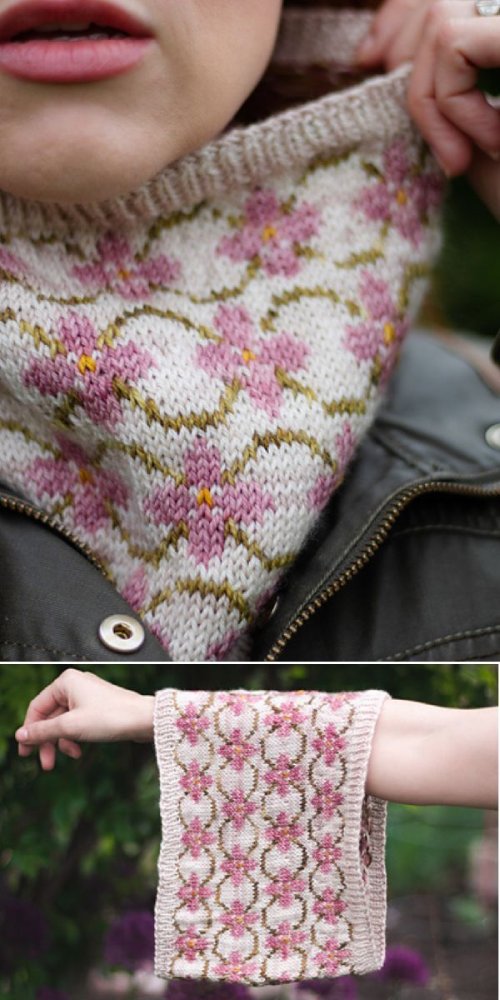
Orwell's Garden Cowl – Free Colorwork Knitting Pattern

Orwell's Garden Cowl free colorwork knitting pattern by Julie Cameron Gray

Orwell's Garden Cowl designed by © Julie Cameron Gray / knittedblissJC

Orwell's Garden Cowl by Julie Cameron Gray (knittedblissJC) is a free stranded colorwork knitting pattern featuring repeating flowers and winding vines.

Worked in the round with fingering-weight yarn, this cozy cowl combines a simple ribbed edging with a colorful charted motif. It is a lovely project for knitters who enjoy Fair Isle and stranded colorwork or want to turn several coordinating sock-yarn colors into a wearable accessory.

Orwell's Garden Cowl Pattern Details

  • Designer: Julie Cameron Gray / knittedblissJC
  • Published in: Taddle Creek
  • Published: Fall 2022
  • Craft: Knitting
  • Category: Cowl
  • Pattern availability: Free web pattern
  • Sizes: Small/Medium and Medium/Large
  • Finished circumference: 19 (20.5) inches
  • Yarn weight: Fingering / sock yarn
  • Suggested yarn: Lichen and Lace 80/20 Sock
  • Needles: 3 mm and 3.5 mm circular needles
  • Gauge: 28 stitches × 36 rounds = 4 inches in the charted design
  • Construction: Worked in the round
  • Technique: Stranded colorwork
  • Language: English

A Floral Stranded Colorwork Cowl

The defining feature of Orwell's Garden Cowl is its stranded colorwork design. Repeating flowers and vines travel around the cowl, creating a botanical pattern that looks especially striking when the main color contrasts clearly with the three accent colors.

Unlike a lace cowl, the decorative effect here comes from changing colors according to a chart while carrying the unused yarn behind the work.

This makes Orwell's Garden Cowl an appealing project for knitters who already know basic knitting in the round and would like to practice maintaining even tension across a repeating colorwork motif.

The Story Behind Orwell's Garden Cowl

This pattern appeared alongside Julie Cameron Gray's A Life Well Spent in the Fall 2022 issue of Taddle Creek.

The accompanying piece reflects on writers and gardens, including George Orwell's roses and the idea that the things people nurture can continue long after they are gone.

That garden theme carries beautifully into the knitted cowl through its repeating flowers and vines.

Yarn and Colors

The original design uses Lichen and Lace 80/20 Sock, a fingering-weight yarn.

You will need one main color and three contrasting colors. The designer estimates approximately 180 yards of the main color and about 70 yards of each contrast color.

The sample combines Linen as the main color with Shrub, Sugar Plum and Amber as the contrasting shades.

Because the individual contrast colors require relatively small amounts, this pattern may also be a useful way to combine coordinating fingering-weight yarn left from other projects, provided you have enough of each color and can achieve the required gauge.

Needles and Gauge

The pattern calls for 3 mm circular needles for the ribbing and 3.5 mm circular needles for the colorwork.

The specified gauge is 28 stitches and 36 rounds = 4 inches (10 cm) in the charted colorwork design on the larger needles.

Colorwork tension can differ from plain stockinette tension, so checking your gauge in the actual stranded pattern is more useful than measuring only a plain stockinette swatch.

Two Cowl Sizes

Orwell's Garden Cowl can be made in Small/Medium or Medium/Large.

The finished circumferences given by the designer are approximately 19 (20.5) inches.

The colorwork chart repeats around the circumference, with the number of repeats adjusted for the selected size.

How Is the Cowl Constructed?

The cowl is knitted in the round, so there is no seam to sew when the knitting is complete.

Ribbing forms the lower and upper edges, while the main section is worked from a repeating stranded-colorwork chart.

Once the knitting is finished, wet blocking helps the stitches settle and allows the colorwork fabric to relax into its finished shape.

Is Orwell's Garden Cowl a Beginner Pattern?

It is better described as a colorwork project than as a basic beginner cowl.

You should be comfortable knitting and purling, working in the round, reading a colorwork chart and handling more than one yarn color.

If you already know those basics, the repeating floral motif provides an enjoyable opportunity to practice stranded knitting on a relatively compact accessory rather than committing to a full colorwork sweater.

Choosing Colors for Your Cowl

Color contrast matters in a stranded design. If the shades are too similar, the flowers and vines can become difficult to distinguish in the finished fabric.

Consider choosing a main color that clearly separates from the contrasting shades. You can keep the palette soft and botanical like the original, or use brighter contrasts for a more dramatic interpretation.

Get the Free Orwell's Garden Cowl Pattern

The complete Orwell's Garden Cowl by Julie Cameron Gray is available free on Taddle Creek, where you can find the designer's original instructions and colorwork chart.

Get the Free Orwell's Garden Cowl Pattern

Pattern availability was checked when this article was updated. Availability on external websites may change over time.

Flying Solo Cowl – Free Ombre Ribbed Cowl Knitting Pattern

Flying Solo free ombre ribbed cowl knitting pattern by Espace Tricot

Flying Solo. Photos © Espace Tricot

Flying Solo by Espace Tricot is a free unisex cowl knitting pattern with a clean ribbed texture and beautiful ombre color transitions.

The design uses two strands of fingering-weight yarn held together throughout. By changing only one strand at a time, the colors blend gradually from one shade into the next, creating the distinctive striped gradient effect.

Flying Solo Cowl Pattern Details

  • Designer: Espace Tricot
  • Published: November 2017
  • Craft: Knitting
  • Category: Cowl
  • Pattern availability: Free Ravelry download
  • Style: Unisex
  • Size: One size
  • Yarn: Two strands of fingering-weight yarn held together
  • Suggested yarn: ArtFil Solo
  • Total yardage: Approximately 600 yards (549 m)
  • Needles: US 7 (4.5 mm)
  • Gauge: 27 stitches × 27 rows = 4 inches (10 cm) in 1×1 rib with yarn held double
  • Main stitch: 1×1 ribbing
  • Construction: Bottom up
  • Construction style: One piece
  • Techniques: Worked flat first, then joined to work in the round
  • Languages: English and French

A Simple Ribbed Cowl With an Ombre Effect

Flying Solo has a minimalist shape, but the changing yarn colors give the finished cowl much more visual depth than a basic ribbed accessory.

The entire design is based around classic 1×1 ribbing, which creates a stretchy fabric that sits comfortably around the neck. The color changes then become the main decorative element.

This combination makes Flying Solo a great choice if you prefer simple stitch patterns but still want a finished project with a distinctive look.

How the Ombre Stripes Are Created

The cleverest feature of Flying Solo is the way Espace Tricot creates the color transitions.

Instead of working with a single strand of yarn, you hold two strands together throughout the project.

When it is time to introduce a new color, only one strand is changed. For example, two strands of Color A might be followed by one strand of Color A held together with one strand of Color B. Later, both strands can become Color B.

This gradual replacement of one strand at a time produces soft ombre transitions rather than abrupt color changes.

Three Colors, Many Different Looks

The original Flying Solo sample uses three colors of ArtFil Solo.

Espace Tricot chose a neutral palette for its sample, but the designer specifically notes that the cowl can also look striking in saturated, speckled, bright or jewel-toned hand-dyed colors.

Because the colors overlap as you change one strand at a time, three yarn colors can create several visually distinct blended sections.

Using Fingering Yarn Held Double

Flying Solo uses fingering-weight yarn held double. This means you knit with two strands at the same time as though they were a single working yarn.

Holding yarn double creates a thicker fabric while also making the gradual color blending possible.

It is important to remember that the pattern's listed gauge is measured with both strands held together, not with a single strand of fingering yarn.

The Original ArtFil Solo Yarn

The suggested yarn is ArtFil Solo, a fingering-weight single-ply yarn made from 100% merino wool.

Ravelry lists ArtFil Solo at approximately 366 metres per 100 grams.

Espace Tricot describes it as a soft yarn suitable for accessories and garments worn next to the skin, which makes it a natural choice for a cowl.

Choosing Substitute Yarn

You do not need to use the original ArtFil Solo to enjoy the color concept of Flying Solo.

Look for fingering-weight yarns that work well together when held double and that produce the required ribbed gauge on 4.5 mm needles.

Using yarns with similar fiber content and yardage can make the color changes easier to manage, especially if you want the sections to have a consistent texture.

Use Hand-Dyed Yarn for Dramatic Color Blending

Flying Solo is especially well suited to hand-dyed yarn because the held-double construction naturally mixes neighboring colors.

A tonal yarn can create subtle transitions, while speckled or highly saturated yarns can produce a much bolder effect.

You can also choose three related colors for a smooth gradient or use contrasting shades for more dramatic stripes.

Bottom-Up Construction

The cowl is worked from the bottom up.

However, it does not begin entirely in the round. The lower section has separate front and back flaps, which gives the finished cowl its characteristic longer shape at the front and back.

These two sections are knitted separately first and then joined before the upper portion of the cowl continues in the round.

Front and Back Flaps

The front and back flaps are an important part of the Flying Solo design.

They extend lower than the sides of the cowl, providing additional coverage over the upper chest and back without making the entire cowl equally long.

This shaping is particularly useful when the cowl is worn beneath a coat or jacket because the longer sections can help cover the area near the neckline.

From Flat Knitting to Knitting in the Round

Flying Solo uses both flat knitting and knitting in the round.

You begin by working the two lower flaps separately. Once they are complete, the pieces are joined and the remaining cowl is worked continuously in the round.

This construction creates the shaped lower edge without requiring the entire cowl to be seamed afterward.

One-Piece Construction

Although part of the project is initially worked back and forth, the pattern is classified as a one-piece construction.

After the lower sections are joined, the main body grows upward as one continuous ribbed tube.

This keeps finishing relatively limited while preserving the unusual dipped shape at the bottom.

Needles and Gauge

The pattern uses US 7 (4.5 mm) knitting needles.

The specified gauge is: 27 stitches and 27 rows = 4 inches (10 cm) in 1×1 ribbing with the yarn held double.

Ribbing is naturally elastic, so gauge affects both the finished dimensions and the way the cowl stretches around the neck.

Make your gauge swatch using two strands together just as you will for the actual project.

How Much Yarn Does Flying Solo Need?

The pattern lists approximately 600 yards (549 metres) of fingering-weight yarn in total.

Because the project uses two strands simultaneously and changes colors throughout, check the original pattern carefully for the recommended distribution of the three colors before beginning.

If you substitute yarn, having a little extra can also be useful when planning your own color transitions.

Skills Used in the Flying Solo Cowl

Useful techniques for this project include:

  • Knitting and purling
  • 1×1 ribbing
  • Working flat
  • Knitting in the round
  • Holding two strands of yarn together
  • Changing colors
  • Joining knitted sections
  • Following a bottom-up construction
  • Kitchener stitch / grafting

A Good Project for Learning to Hold Yarn Double

If you have never knitted with two strands held together, Flying Solo provides a practical reason to learn the technique.

The stitch pattern itself remains simple, so your attention can stay on keeping the two yarn strands together and managing the color changes.

Once you become comfortable treating two strands as one, the technique can also be useful for many other knitting projects.

Managing Two Strands of Yarn

When knitting with two strands, it helps to keep the working balls separate so they do not become unnecessarily tangled.

Check periodically that you have caught both strands when forming each stitch, particularly if the yarn colors are very similar.

When changing one color, take a moment to organize the yarn before continuing. This makes the ombre transitions easier to manage and keeps the knitting relaxing.

A Unisex Cowl

Flying Solo is designed as a unisex accessory.

The simple ribbed structure has no strongly gendered decorative elements, and the finished look changes dramatically depending on the colors you choose.

Neutral shades create a classic minimalist cowl, while brighter hand-dyed yarns can produce a much more expressive version.

Why Knit Flying Solo?

Flying Solo combines a very familiar stitch pattern with a clever color technique and practical shaping.

The 1×1 ribbing keeps the knitting straightforward, while holding two strands together and changing one strand at a time creates sophisticated-looking ombre stripes.

The separate front and back flaps also give the cowl more coverage than a simple straight tube, making the construction visually interesting as well as functional.

Get the Free Flying Solo Cowl Pattern

The complete Flying Solo by Espace Tricot is currently available as a free downloadable knitting pattern from the Espace Tricot Ravelry Store.

Get the Free Flying Solo Cowl Knitting Pattern

Pattern availability was checked when this article was updated. Availability on external websites may change over time.

Copycat Cowl Free Knitting Pattern by Verna Glass

Copycat Cowl free knitting pattern by Verna Glass
Photos © Verna Glass

Looking for an easy cowl knitting pattern with beautiful texture and a relaxed, cozy fit? The Copycat Cowl by Verna Glass is a lovely free knitting pattern worked in the round with simple knit and purl stitches and gentle increases that create a softly draped shape.

This cozy neck warmer is a practical cold-weather project and a good choice for knitters who enjoy straightforward circular knitting without complicated stitch patterns.

Copycat Cowl Pattern at a Glance

Designer: Verna Glass

Pattern: Copycat Cowl

Craft: Knitting

Category: Cowl / Neckwear

Yarn Weight: Worsted

Yardage: Approximately 219 yards (200 m)

Needles: US 8 (5 mm) and US 7 (4.5 mm)

Construction: Worked in the round, top down

Size: One size

Pattern Language: English

Why We Like the Copycat Cowl

The Copycat Cowl combines simple knitting with a polished finished look. Bands of knit and purl texture create subtle horizontal detail, while gentle increases toward the lower portion help the fabric sit comfortably around the neck and shoulders.

Because it uses worsted-weight yarn and uncomplicated stitches, it can be a satisfying project when you want to knit a useful cold-weather accessory without committing to a large garment.

Yarn and Needle Notes

The original pattern calls for approximately 219 yards (200 m) of worsted-weight yarn. For a cowl worn directly around the neck, consider choosing a soft yarn with comfortable drape.

The pattern lists US 8 (5 mm) and US 7 (4.5 mm) needles.

Before You Start

The designer includes a useful note for the Chinese Waitress Cast On: the slip knot is not counted as a stitch and is dropped before joining the work in the round.

The pattern page also notes that knitters should use the updated Version 2 of the pattern.

Get the Free Copycat Cowl Pattern

The Copycat Cowl was designed by Verna Glass. Amazing Knitting does not reproduce the designer's instructions. Visit the original pattern page below to access the current free version.

Pattern and photos © Verna Glass. Linked to the original designer's pattern page.

103 Free Knitting Patterns for Women, Men & Kids

103 free knitting patterns for women men and kids including hats scarves sweaters socks and baby knits

103 Free Knitting Patterns collection. Original collection by Alea Milham / Premeditated Leftovers.

Looking for your next knitting project? This collection brings together 103 free knitting patterns for women, men and children, with ideas ranging from quick hats and scarves to sweaters, socks, boot cuffs and adorable baby knits.

The original collection was curated by Alea Milham for Premeditated Leftovers and includes projects for different skill levels, from approachable beginner-friendly knits to more detailed intermediate and advanced patterns.

Rather than reproducing the original list here, this guide will help you understand what you can find in the collection, choose a project that matches your skills and yarn, and explore additional free knitting resources on Amazing Knitting.

What's Included in the 103 Free Knitting Patterns?

One of the strengths of this collection is its variety. It is not limited to one type of garment or one age group.

The original roundup is organized into patterns for women, men, kids and babies, covering everything from accessories to garments.

Free Knitting Patterns for Women

The women's section offers one of the widest selections in the original collection, with projects for both quick knitting and more ambitious wardrobe pieces.

Categories include:

  • Knitted hats and berets
  • Scarves, cowls and infinity scarves
  • Sweaters, cardigans and wraps
  • Socks
  • Boot cuffs

This variety makes the collection useful whether you want a small accessory for a weekend project or a larger garment that will keep your needles busy for longer.

Free Hat Knitting Patterns for Women

Hats are a practical place to begin when browsing a large knitting collection because they are generally smaller than sweaters and offer opportunities to practice shaping, knitting in the round, texture and decorative techniques.

The original roundup includes simple hats as well as more detailed designs featuring lace, unusual shaping and other techniques.

When choosing a hat pattern, check the recommended yarn weight and finished circumference rather than selecting a project based only on appearance.

Free Scarf and Cowl Knitting Patterns

Scarves and cowls are another major category in the collection.

They range from relatively straightforward designs to projects using lace and more decorative stitch patterns.

A scarf can be particularly useful for practicing a new technique because fit is generally less critical than it is with a sweater, sock or fitted hat.

Free Sweater Knitting Patterns for Women

If you are ready for a larger project, the original collection also includes women's sweaters and wraps.

Garment knitting requires a little more planning than making a scarf or hat. Before choosing a sweater, check:

  • The available finished sizes
  • The designer's intended ease
  • Gauge and recommended yarn weight
  • Construction method
  • Required techniques
  • Approximate yarn quantity

Taking time to understand these details before casting on can prevent many common fit problems later.

Free Sock and Boot Cuff Patterns

The women's portion of the collection also includes knitted socks and boot cuffs.

Socks are excellent projects for learning small-circumference knitting, heel construction and shaping, while boot cuffs can provide a much quicker introduction to knitting accessories for the legs.

If you are new to sock knitting, look carefully at the listed difficulty level and techniques before choosing your first pair.

Free Knitting Patterns for Men

Finding a varied group of free men's knitting patterns can sometimes be more difficult than finding women's accessories, so the men's section is particularly useful.

The original roundup includes:

  • Men's hats
  • Scarves
  • Sweaters and pullovers
  • Socks
  • Slippers

These range from straightforward everyday accessories to more involved cable and garment projects.

Free Hat Patterns for Men

A knitted hat is one of the most useful handmade gifts for men because it can be practical, relatively quick and easy to customize through yarn and color.

The collection includes both simple designs and hats using techniques such as cables, earflaps and more distinctive shaping.

For gift knitting, pay particular attention to head circumference and the amount of negative ease intended by the designer.

Free Men's Scarf Patterns

Men's scarves offer plenty of room to experiment with texture while keeping construction relatively simple.

When choosing a scarf for everyday wear, consider not only the stitch pattern but also the fiber. Softness matters because the finished scarf will be worn directly against the neck.

Free Men's Sweater Patterns

The roundup also includes men's sweaters, ranging from simpler garments to cable designs.

Before beginning any sweater, take accurate body measurements and compare them with the pattern's finished dimensions.

Do not automatically choose a size based only on a familiar clothing label. Knitting-pattern sizing and intended ease can vary significantly between designers.

Free Men's Sock and Slipper Patterns

Socks and slippers can make useful handmade gifts and allow you to work with smaller amounts of yarn than a full sweater.

The original collection includes several styles and difficulty levels, so check construction details before deciding which one best matches your experience.

Free Knitting Patterns for Kids and Babies

The children's section adds another useful group of projects to the collection, including accessories, garments and footwear.

Categories include:

  • Kids' and baby hats
  • Children's scarves
  • Baby and kids' sweaters
  • Baby booties
  • Children's slippers and socks

Small children's projects can be satisfying choices when you want to practice garment or accessory construction on a smaller scale.

Free Baby and Kids' Hat Patterns

Children's hats are among the most playful projects in the original roundup.

The collection includes simple styles alongside novelty and character designs, making this category particularly useful when you are knitting a personalized gift.

Always choose size by the designer's measurements whenever possible, since children's head sizes can vary considerably even at the same age.

Free Sweater Patterns for Babies and Kids

Baby and children's sweaters provide an opportunity to practice garment construction without the yarn commitment of a full adult sweater.

When selecting a children's garment, consider washability as well as softness. Easy-care yarn can make a handmade sweater much more practical for parents.

Free Baby Booties and Slipper Patterns

The collection finishes with small footwear projects for babies and children, including booties, slippers and socks.

These can be excellent gift projects because they are compact and often require relatively little yarn.

Fit still matters, however, so check gauge and finished measurements carefully even when the project is tiny.

Easy, Intermediate and Advanced Knitting Patterns

Another useful feature of the original 103-pattern roundup is that many projects are identified by general difficulty level: Easy, Intermediate or Advanced.

Treat those labels as a starting point rather than an absolute rule. Difficulty can feel very different depending on which techniques you already know.

How to Choose a Pattern for Your Skill Level

Instead of looking only at a pattern's difficulty label, scan its techniques before starting.

For example, a project may involve:

  • Knitting and purling
  • Working in the round
  • Increasing and decreasing
  • Cables
  • Lace and yarn overs
  • Colorwork
  • Short rows
  • Picking up stitches
  • Seaming
  • Garment shaping

A pattern labeled intermediate may feel quite manageable if you already know its main techniques, while an otherwise simple pattern can feel challenging if it introduces several skills that are new to you.

Good Projects for Beginning Knitters

If you are still building confidence, start by looking for patterns with straightforward construction and familiar stitches.

Scarves, simple cowls, boot cuffs and basic hats can often provide a manageable next step after learning the knit and purl stitches.

Once those skills feel comfortable, you can gradually add shaping, circular knitting, cables, lace or garment construction.

Choosing Yarn for a Free Knitting Pattern

Finding a free pattern is only the beginning. Choosing appropriate yarn is one of the most important steps before casting on.

Start with the yarn weight and gauge specified by the designer rather than choosing a substitute based only on appearance.

Two yarns described with the same general weight can still behave differently because of fiber content, construction and elasticity.

Can You Substitute the Recommended Yarn?

In many knitting projects, yes—but substitution should be based on more than matching the yarn-weight label.

Compare:

  • Gauge
  • Fiber content
  • Yardage per ball or skein
  • Fabric drape
  • Elasticity
  • Care instructions

Make a swatch for projects where finished size matters, especially sweaters, hats, socks and fitted children's garments.

Why Gauge Matters

Gauge tells you how many stitches and rows your knitting produces over a specific measurement.

If your gauge differs significantly from the designer's, a fitted project may come out larger or smaller than intended even when you follow the correct size instructions.

This is why a gauge swatch is worth the extra time for garments and other size-sensitive projects.

Choosing a Project for Gift Knitting

Many of these 103 free patterns can be used for handmade gifts.

Before choosing one, consider how much time you have, whether you know the recipient's measurements and how easy the finished item will be to care for.

Hats, scarves, cowls, baby accessories and slippers can be easier gift projects when precise garment sizing is unavailable.

Check Pattern Availability Before You Cast On

The original 103-pattern collection was published in 2016. Over time, independent knitting websites can move, designers can change how their patterns are distributed, and old links can disappear.

For that reason, always check the current designer or publisher page before buying yarn for an older free pattern.

A pattern that was free when an older roundup was published is not guaranteed to remain free forever.

More Free Knitting Patterns on Amazing Knitting

If you prefer smaller, recently reviewed collections, Amazing Knitting also maintains curated pattern guides organized around specific project types.

7 Free Baby Blanket Knitting Patterns →

9 Free Baby Sweater & Cardigan Knitting Patterns →

7 Free One-Skein Knitting Patterns →

9 Free Baby Hat & Booties Knitting Patterns →

Explore the Original 103 Free Knitting Patterns

The complete original roundup was curated by Alea Milham for Premeditated Leftovers and includes links to knitting patterns for women, men, children and babies.

Because it is an older collection, availability may have changed for individual patterns. Check each designer's current page before starting a project.

Explore the Original 103 Free Knitting Patterns →

The original 103-pattern roundup and its selection belong to Premeditated Leftovers. Amazing Knitting does not reproduce the individual designers' copyrighted pattern instructions. Pattern availability and terms are determined by each designer or publisher.

Triple Slip Rib Square - Free Loom Knitting Pattern

Triple Slip Rib Square - Free Pattern
Photos above © Bethany A Dailey

Triple Slip Rib Square by Bethany A Dailey is a textured loom-knitting square from the Knitting Board Stitchology series.

The design uses slipped stitches and ribbed texture to create long, alternating raised lines with a rustic woven appearance.

Best of all, the original pattern is still available free, making this an excellent small project for practicing textured loom knitting before using the stitch in a larger scarf, cowl or blanket.

✓ Free Loom Knitting Pattern

Triple Slip Rib Square: Stitchology 17 by Bethany A Dailey remains available as a free loom-knitting pattern. This is a loom knitting project, not a traditional two-needle knitting pattern.

Triple Slip Rib Square at a Glance

Pattern: Triple Slip Rib Square: Stitchology 17

Designer: Bethany A Dailey

Series: Stitchology

Publisher: Knitting Board Blog

Published: January 2016

Craft: Loom Knitting

Project: Afghan Block / Stitch Square

Finished Size: Approx. 8 × 8 in / 20 × 20 cm

Yarn Weight: Worsted

Yardage: Approx. 75 yd / 69 m

Original Sample Yarn: Berroco Vintage

Stitch Repeat: 8 rows

Availability: Free

Important: This Is a Loom Knitting Pattern

Before You Begin

Triple Slip Rib Square was specifically designed for loom knitting. The original instructions refer to loom pegs and loom-knitting techniques rather than conventional knitting needles.

This distinction matters because the words "knitting pattern" are often used for both loom knitting and needle knitting.

If you normally knit with two needles or circular needles, do not assume that conventional needle-knitting instructions can be substituted directly for the original loom pattern.

About the Stitchology Series

Triple Slip Rib is part of the Stitchology collection published through the Knitting Board Blog.

The series explores different stitch patterns that can be created on a knitting loom, often presenting them as small squares.

These squares allow loom knitters to learn a texture on a manageable project before adapting the idea to larger pieces.

What Does Triple Slip Rib Look Like?

The finished fabric features long alternating raised lines that create a strong vertical and horizontal rhythm.

Bethany A Dailey describes the appearance as resembling a rustic weave.

The slipped-stitch structure also creates a relatively thick and sturdy panel.

An 8-Row Repeat

One of the attractive features of Triple Slip Rib is that the texture is based on a relatively short:

8-row repeat

Once the sequence becomes familiar, the repetitive structure can make the stitch easier to remember than textures with very long row repeats.

Use the designer's original instructions for the exact peg-by-peg sequence.

Finished Square Size

The Stitchology sample is designed to produce an approximately:

8 × 8 inch square

approximately 20 × 20 cm

This makes it useful as a practice swatch, sampler square or building block for a larger afghan.

Original Yarn

The published sample uses Berroco Vintage, a worsted-weight yarn.

The original square requires approximately:

75 yards / 69 meters

You do not necessarily need to use the exact sample yarn, but a worsted-weight yarn with good stitch definition will help the slipped texture remain visible.

Choosing a Substitute Yarn

When choosing another worsted-weight yarn, consider:

  • Stitch definition
  • Fiber elasticity
  • Finished fabric thickness
  • Washability
  • Whether the yarn suits your final project

A smooth yarn will generally display the long slipped-stitch lines more clearly than a very fuzzy or highly textured yarn.

Solid Colors Work Especially Well

The Triple Slip Rib texture creates much of its visual interest through light and shadow.

A solid or gently tonal yarn allows those raised and recessed areas to remain easy to see.

Variegated yarn can also work, but strong color changes may compete with the stitch structure.

Original Loom Setup

The designer's sample was created using an Authentic Knitting Board Adjustable Hat Loom configured with rounded pieces and peg connectors for approximately a 3/8-inch gauge.

The designer also identifies the Sock Loom 2 and All-n-One Loom as possible loom options.

Check the current original instructions before setting up your loom, because peg spacing and configuration affect the finished dimensions.

Tools and Notions

In addition to the loom and yarn, the original project calls for basic loom-knitting tools such as:

  • Loom tool
  • Yarn needle
  • Scissors

Helpful optional tools include:

  • Peg markers
  • Row counter
  • Blocking pins

Why a Row Counter Helps

An eight-row repeat is not especially long, but keeping track of your position is important because the alternating slipped sections create the overall woven effect.

A simple row counter can prevent accidentally repeating or skipping part of the sequence.

Use Peg Markers While Learning

Peg markers can help identify repeating sections while you are becoming familiar with the pattern.

As the stitch becomes easier to recognize visually, you may find that you need fewer reminders.

Understanding Slipped Stitches

A slipped stitch is carried without being worked in the same way as its neighboring stitches.

Repeating this strategically allows elongated strands and raised areas to develop in the fabric.

In Triple Slip Rib, those effects contribute to the distinctive long dash-like texture.

A Thick and Sturdy Fabric

The designer specifically notes that Triple Slip Rib creates a fairly thick and sturdy panel.

That characteristic makes it useful for projects where you want more substance than a lightweight open stitch.

More Than an Afghan Square

Although Stitchology presents the pattern as an 8-inch square, the texture can inspire larger projects.

The designer suggests it would work particularly well for:

  • Cowls
  • Scarves
  • Blankets
  • Sampler afghans

Using Triple Slip Rib for a Scarf

The long linear texture can create a strong visual effect when repeated along the length of a scarf.

Before adapting the square, make a sample first so you can evaluate the fabric thickness, drape and reverse side.

Using It for a Cowl

A thick slipped-stitch texture can be particularly suitable for a warm cowl.

However, adapting a flat Stitchology square into a different construction may require changes to the setup and finishing.

Do not assume that the square instructions automatically become an in-the-round cowl pattern.

Using the Squares for a Blanket

The original 8-inch format naturally lends itself to sampler blankets.

You can create multiple loom-knit squares and join them later, or combine Triple Slip Rib with other Stitchology textures for a varied afghan.

Before making many squares, check your first finished and blocked square to make sure its dimensions work with the rest of your project.

Blocking the Square

Blocking can help even the edges and bring a sample closer to its intended dimensions.

Choose a blocking method suitable for the fiber content of your yarn.

Avoid stretching so aggressively that the raised slipped-stitch texture becomes flattened.

Is Triple Slip Rib Beginner Friendly?

It can be a good next project for someone who already understands the basic operation of a knitting loom.

The eight-row repeat is relatively manageable, and the designer describes it as a stitch that does not require excessive tricky finger work.

A complete first-time loom knitter may want to practice basic loom knitting and yarn handling before beginning the square.

Skills You Will Practice

  • Loom setup
  • Working across loom pegs
  • Slipped-stitch texture
  • Following an 8-row repeat
  • Maintaining even tension
  • Binding off
  • Finishing and blocking a square

Keep Your Tension Consistent

Slipped-stitch patterns can exaggerate differences in tension.

Avoid pulling the working yarn excessively tight across the slipped areas, because this can distort the square or make the fabric less flexible.

Consistent yarn handling becomes easier as you repeat the sequence.

Don't Confuse Loom and Needle Instructions

Important

Triple slip rib can also describe textures used in conventional needle knitting. The specific project featured here is Bethany A Dailey's Triple Slip Rib Square: Stitchology 17 and was designed for a knitting loom. Do not combine its specifications with unrelated needle-knitting patterns that happen to use a similar stitch name.

Is Triple Slip Rib Square Still Free?

Yes.

Triple Slip Rib Square: Stitchology 17 is currently documented as a free loom-knitting pattern from the Knitting Board Stitchology series.

Amazing Knitting provides this independent project guide rather than reproducing the designer's complete peg-by-peg instructions.

Get the Free Triple Slip Rib Square Pattern

Visit the original Knitting Board Stitchology resource for the complete loom-knitting instructions:

Get the Free Triple Slip Rib Square Pattern →

Pattern Record on Ravelry

Ravelry also maintains the pattern record with project specifications and designer information:

View Triple Slip Rib Square on Ravelry →

More Stitch Guides on Amazing Knitting

Explore More Knitting Techniques

Before You Begin

Make sure you are following the loom-knitting version of Triple Slip Rib, select an appropriate worsted-weight yarn, and configure your loom according to the designer's current instructions.

Use markers and a row counter if helpful while learning the eight-row sequence, and pay particular attention to maintaining relaxed, consistent tension across the slipped sections.

Once you are comfortable with the square, the same texture can become a useful starting point for larger loom-knitting projects.

Pattern credit: Triple Slip Rib Square: Stitchology 17 was designed by Bethany A Dailey and published through the Knitting Board Stitchology series. Amazing Knitting provides an independent editorial guide and does not reproduce the complete copyrighted pattern instructions. Preserve the existing photograph and its exact original credit from the current Amazing Knitting page.

Discover More From the Archive

A fresh mix of knitting patterns and tutorials from the Amazing Knitting archive.

Finding patterns from the archive…