Skip to content

...

Baby Aviator Hat - Knitting Pattern

Baby Aviator Hat - Knitting Pattern
Photos above © lovefibres
What beautiful knitting pattern! Aviator hats look so cute on babies! 
It is an easy pattern, which has instructions for both knitting flat and knitting in the round.
The earflaps are button fastening under the chin to keep little heads from wriggling out of it, and tiny toddler hands from pulling it off after two seconds, but if you are knitting for an older child and want the earflaps to hang freely just make two of the left earflap and don't add a button.

Full Post: Baby Aviator Hat 

How to knit a Bunny - Free Pattern & Tutorial

How to knit a Bunny - Free Pattern & Tutorial
Photo above © FromBritainWithLove
What amazing knitting bunny amigurumi! I found it on Pinterest.
How to knit a bunny. Click through for easy step by step tutorial and free knitting pattern to make a knitted easter bunny rabbit. Click through to get tips and all the info you need to make your own.

Full Post: Knitting Bunny 

Lucky 4-Leaf Afghan Block – Free 12-Inch Knitting Pattern

Lucky 4-Leaf Afghan Block free 12-inch knitting pattern by Margaret MacInnis

Lucky 4-Leaf Afghan Block project shown above. Photo © ladybugaustin.

Lucky 4-Leaf Afghan Block by Margaret MacInnis is a striking knitted square built around four textured leaf shapes that meet in the center to create a four-leaf-clover effect.

Unlike a traditional blanket square worked back and forth from one edge to the other, this design is knitted from the center outward. The construction creates the four leaves as part of one continuous block, so you do not have to knit four separate leaves and sew them together.

The finished block measures approximately 12 inches square and the pattern is currently available as a free download.

Lucky 4-Leaf Afghan Block at a Glance

  • Designer: Margaret MacInnis
  • Published: February 2010
  • Source: Designs By Muggins
  • Craft: Knitting
  • Category: Afghan / blanket block
  • Finished size: Approximately 12 inches square
  • Construction: Center-out
  • Yarn weight: Aran
  • Suggested yarn: Lion Brand Vanna's Choice
  • Yardage: Approximately 150–175 yards (137–160 m)
  • Needles: US 7 / 4.5 mm
  • Gauge: 16 stitches and 24 rows = 4 inches in stockinette
  • Techniques: In-the-round, lace and textured knitting
  • Language: English
  • Availability: Free

A Knitted Four-Leaf Clover Block

The feature that immediately distinguishes this afghan block is the four-leaf motif formed across the center of the square.

Each leaf grows outward as the block expands, creating a symmetrical design that resembles a four-leaf clover.

Because the motif is created through the knitted structure rather than simply added afterward, texture and shaping become an important part of the finished appearance.

Inspired by Traditional Counterpane Knitting

Margaret MacInnis explains that the basic block has roots in an antique counterpane design.

Counterpanes are traditional knitted bed coverings often constructed from individual motifs or blocks that are later combined into a larger textile.

Many historical counterpane designs use geometric, floral and leaf motifs, making this four-leaf construction a natural fit for that tradition.

Margaret adapted the older concept specifically for use in afghan block exchanges and made her version available to knitters as a free pattern.

Worked From the Center Out

One of the most interesting features of the Lucky 4-Leaf Afghan Block is its center-out construction.

Instead of casting on enough stitches for one full side of the square, the knitter begins in the middle and gradually increases the circumference of the block.

As more stitches are added, the four leaf sections expand outward and the square gradually takes shape.

Why Center-Out Knitting Is Different

Center-out construction creates a very different knitting experience from working a conventional square in rows.

At the beginning, only a small number of stitches need to be managed. As the block grows, the rounds become progressively longer.

This method also makes it possible to create strong radial symmetry, which is especially useful for floral and geometric motifs.

Knitting in the Round

The Lucky 4-Leaf Afghan Block is worked in the round.

This allows the four sections of the design to develop simultaneously without creating seams between the individual leaves.

If you have mainly knitted flat scarves or dishcloths, this project can be an interesting opportunity to practice circular construction on a relatively small piece.

Starting With Double-Pointed Needles

Margaret's pattern begins the center-out construction using double-pointed needles (DPNs).

DPNs are useful at the center of a project because the initial circumference is too small for many standard circular needles.

The stitches are distributed across several needles while another needle is used to knit around the developing motif.

Moving to a Circular Needle

As the block grows, more stitches are created and the circumference becomes larger.

At that stage, many knitters find it more comfortable to transfer the stitches to a circular needle of the same size.

This can make the increasingly long rounds easier to manage and reduces the number of needle changes required while working around the square.

Aran-Weight Yarn

The published pattern calls for Aran-weight yarn.

Margaret's original recommendation is Lion Brand Vanna's Choice, a yarn frequently used for afghans and other practical home projects.

An Aran-weight yarn gives the leaf motif enough substance for the textured details to remain visible while producing a useful blanket block.

How Much Yarn Do You Need?

The 12-inch version lists approximately 150–175 yards (137–160 meters).

Actual yarn use can vary with your gauge, yarn substitution and finishing choices, so having a little extra yarn is sensible if you need the block to match a specific finished measurement.

Choosing Yarn for an Afghan Block

If you substitute another yarn, try to choose one with similar weight and suitable stitch definition.

Consider:

  • Aran or compatible worsted-weight construction
  • Good stitch definition
  • Washability
  • Durability
  • Colorfastness
  • How the yarn behaves after blocking

These considerations become particularly important when multiple blocks will eventually be joined into one blanket.

Solid Colors Show the Leaf Texture

A solid or gently tonal yarn can be especially effective for this pattern because it allows the shadows and raised areas of the leaf motif to remain visible.

Highly variegated yarn can still create an interesting block, but strong color changes may compete with some of the textured details.

If the four-leaf shape is the feature you most want to emphasize, consider a yarn with enough visual consistency for the stitch pattern to stand out.

Needle Size

The published recommendation is US 7 / 4.5 mm needles.

Use this as the starting point and adjust only when necessary to obtain the required gauge and finished block size.

For a modular afghan, consistent gauge is especially important because blocks that differ significantly in size can be difficult to join neatly.

Gauge for the 12-Inch Block

The listed gauge is approximately 16 stitches and 24 rows = 4 inches in stockinette.

Although the finished block contains texture and shaping rather than plain stockinette throughout, the published gauge gives you a useful reference for choosing needles and yarn.

Why Block Size Matters

If you are making only one square as a decorative piece, a small difference in finished size may not matter very much.

But if you plan to join several blocks into an afghan, matching their dimensions becomes much more important.

A consistent 12-inch size makes it easier to arrange blocks into rows and join them without stretching one square excessively to fit another.

Skills Used in the Lucky 4-Leaf Block

This project can introduce or reinforce several useful knitting skills, including:

  • Knitting in the round
  • Working with double-pointed needles
  • Center-out construction
  • Increasing
  • Decreasing
  • Following repeated motif sections
  • Lace-style shaping
  • Textured knitting
  • Managing a growing stitch count
  • Blocking a knitted square

Is This a Beginner Knitting Pattern?

Lucky 4-Leaf is probably better suited to a knitter who already knows the basic knit and purl stitches and is ready to work in the round.

The unusual center-out construction and use of DPNs can make the first few rounds feel more challenging than a simple flat square.

Once the block becomes larger and the motif is established, however, the construction can become easier to visualize.

The First Few Rounds May Feel Fiddly

This is common with many center-out projects.

A small number of stitches distributed across several double-pointed needles can feel awkward because there is very little fabric available to stabilize the needles.

Work slowly at the beginning and check that the stitches have not become twisted before the structure is firmly established.

Use Stitch Markers to Track the Four Sections

The strong four-part symmetry of the design can make stitch markers useful.

Separating the repeated sections can help you identify an increase or decrease error before it affects the entire round.

Always follow the original pattern's marker placement and stitch counts rather than adding markers where they might interfere with the motif.

Count Your Stitches Regularly

Center-out patterns rely on controlled increases to produce the intended geometry.

If an increase is missed, the mistake may not become visually obvious until several rounds later.

Checking stitch counts at useful points in the pattern can save much more time than discovering an error near the outer edge of the block.

Blocking the Finished Square

Blocking is particularly useful for an afghan block containing textured or lace-like shaping.

After knitting, the square may not immediately measure exactly 12 inches or the four leaf sections may look slightly uneven.

Gentle blocking can help the stitches settle and allow the square to reach a cleaner, more consistent shape.

Always use a blocking method appropriate for your yarn fiber.

Using the Block in a Knitted Afghan

One Lucky 4-Leaf block can be attractive on its own, but the design was created specifically with afghan exchanges and modular blankets in mind.

You could knit several matching blocks for a repeating four-leaf blanket or combine Lucky 4-Leaf with other 12-inch squares.

Using a consistent yarn weight and block size will make the final assembly much easier.

Try a Two-Color or Multi-Color Afghan

Although each individual block can be worked in a single color, the finished blanket does not need to be monochromatic.

For example, you could alternate light and dark blocks, create a gradient across the blanket, or use several coordinated colors while keeping the same four-leaf motif.

Repeating the same texture while changing color can produce a cohesive blanket without making every square identical.

A Useful Block for Afghan Exchanges

Margaret MacInnis originally developed her version of the block after using it in several afghan exchanges.

Standardized block sizes are useful for group projects because different knitters can make individual squares that are later assembled into one blanket.

The 12-inch format makes Lucky 4-Leaf particularly suitable for that type of modular project.

There Is Also a 9-Inch Version

Margaret MacInnis later published a separate 9-inch Lucky 4-Leaf Afghan Block.

In that version, the leaves were modified to be shorter and the border construction was changed to suit the smaller finished square.

If you need a smaller block for your blanket layout, make sure you select the 9-inch pattern rather than simply trying to reduce the 12-inch version yourself.

12-Inch vs. 9-Inch Lucky 4-Leaf

The two patterns are related but they are not identical.

  • 12-inch version: the original larger afghan block
  • 9-inch version: later adaptation with shorter leaves
  • Both: designed by Margaret MacInnis
  • Both: currently available free

Choose the version that matches the other squares in your planned blanket.

Get the Free Lucky 4-Leaf Afghan Block Pattern

The Lucky 4-Leaf Afghan 12" Block by Margaret MacInnis is currently available as a free authorized download through the designer's Ravelry listing.

Get the Free 12-Inch Lucky 4-Leaf Pattern →

If you prefer the smaller version, Margaret also offers the 9-inch Lucky 4-Leaf Afghan Block as a separate free pattern.

View the Free 9-Inch Version →

Lucky 4-Leaf Afghan Block is by Margaret MacInnis / Designs By Muggins. The designer notes that her block was developed from an older counterpane design and significantly adapted for afghan use. Amazing Knitting does not reproduce the designer's complete pattern instructions.

Read Our Pattern Availability Policy →

Classy Twist Headband - Free Knitting Pattern

Classy Twist Headband - Free Knitting Pattern
Photos above © Emilie Luis
What beautiful knitting headband Free Pattern! I found it on Ravelry...
The headband is knit back and forth in the English rib, which is very warm and comfortable to wear. This fabulous Knit Headband is a basic essential accessory for you and your princess all year, a great way to keep warm while staying stylish! It has a twist in the middle – not only this look classy, but it’s also a clever way to hide the seam. What’s better is that the size is easily adjustable to fit for any head width.

Download Pattern: Frida

Perky Little Hat Knitting Pattern

Perky Little Hat knitting pattern by Sharon Lentsch
Photo © GretchenHam

The Perky Little Hat by Sharon Lentsch is a quick, chunky knitted beanie designed for super bulky yarn. Its simple shape, textured brim and oversized pom-pom make it a fun cold-weather project for both children and adults.

With only about 80–85 yards of yarn required, this is also a practical one-skein project and a good choice when you want to knit a handmade gift without committing to a long project.

Perky Little Hat Pattern at a Glance

Designer: Sharon Lentsch

Craft: Knitting

Category: Beanie / Toque

Yarn Weight: Super Bulky

Suggested Yarn: Malabrigo Rasta

Yardage: 80–85 yd (73–78 m)

Needles: US 15 (10 mm)

Gauge: 2 sts and 3 rows = 1 in

Sizes: Child and Adult

Construction: Worked in the round

Instructions: Written pattern

Current Availability: Paid PDF pattern

About the Perky Little Hat

Perky Little Hat is designed as a fast, satisfying knit with a playful finished look. The super bulky yarn creates a thick fabric quickly, while the decorative brim and pom-pom give the hat its distinctive personality.

The original designer describes it as a quick project and a good gift idea. Because the pattern includes both child and adult sizing, it can also work well for coordinating family hats.

Yarn and Yardage

The pattern recommends Malabrigo Rasta, a super bulky 100% merino yarn. The listed requirement is approximately 80–85 yards (73–78 meters).

A smooth or lightly spun super bulky yarn will help preserve the definition of the brim while keeping the hat warm and substantial. Always compare your substitute yarn with the pattern gauge before beginning.

Needles and Gauge

The recommended needle size is US 15 (10 mm).

The pattern gauge is approximately 2 stitches and 3 rows per inch. Because super bulky yarn can vary considerably between brands, a gauge swatch is useful if you want the finished hat to match the intended size.

Sizes

The original pattern includes both Child and Adult sizes.

This makes Perky Little Hat useful for gift knitting, especially when you need a quick project in more than one size.

Construction and Skills

The hat is worked in the round, so familiarity with circular knitting is useful. The pattern is written rather than charted.

Its combination of super bulky yarn and straightforward construction makes it a relatively fast project, while the finished brim and pom-pom add enough detail to keep the design visually interesting.

Is the Perky Little Hat Pattern Free?

No. Although older pages around the web may describe Perky Little Hat as a free knitting pattern, the current authorized Ravelry listing is a paid PDF pattern.

Pattern pricing can change over time, so use the original designer's listing below for the latest price and availability.

Get the Perky Little Hat Pattern

Visit Sharon Lentsch's official Ravelry listing to see the complete pattern details and current purchase options.

Amazing Knitting provides project information and links readers to the authorized source rather than reproducing the designer's complete copyrighted instructions.

Simple yet Gorgeous - Slippers Tutorial

Simple yet Gorgeous - Slippers Tutorial
Photos above © canselin örgü dünyası
I found this knitting tutorial on Pinterest...
Today’s tutorial is for beautiful knitted slippers. The whole project should not take much of your time. As you can see the slippers have a decorative flower on top of them. I believe that you might come up with some different flower idea, something that you have already mastered to make and add it on top of this beautiful slipper design.

Full Post: Slippers Tutorial

Box Stitch - Free Pattern

Box Stitch - Free Pattern
Photos above © Jennifer - Brome Fields
What beautiful knitting Stitch (Free pattern)! I found it on Pinterest...
Learn how to knit the Box Knit Stitch in this Video Tutorial & Free Pattern.

Full Post: Box Stitch

Kittens Baby Blanket - Knitting Pattern

Kittens Baby Blanket - Knitting Pattern
Designed by © Sandy Chapman of MotherOfPurlPatterns
What beautiful baby blanket knitting tutorial! I found it on Pinterest...
This blankets features nine cute little kittens in knit and purl stitches. The pattern is worked all in one, so there’s no need to sew the border on afterwards, and the finished blanket will measure approx. 67 x 80 cm (27 x 32 inches). 

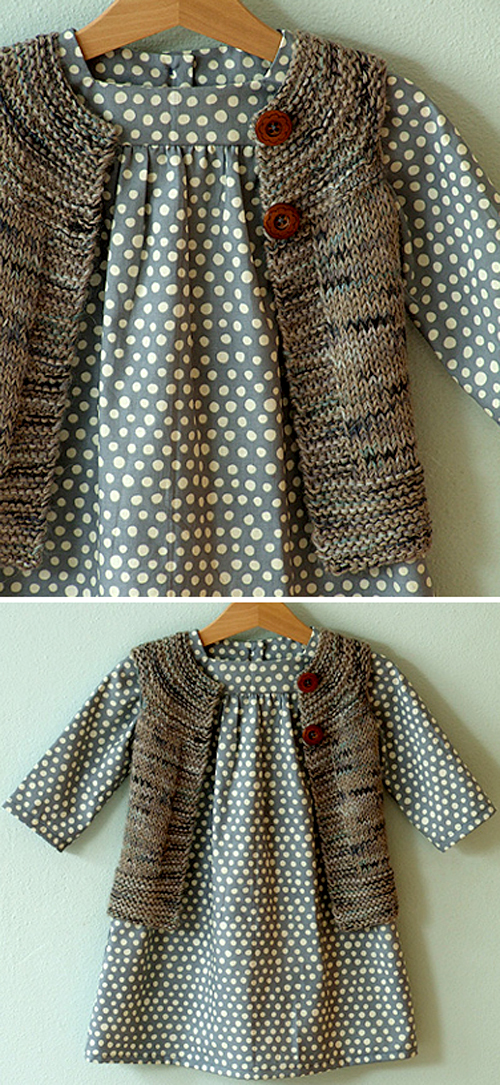
Plain Vest - Knitting Pattern

Plain Vest - Knitting Pattern
Photos above © Alicia Paulson
So adorable! knitting vest pattern! I found it on Pinterest...
Love those colors...very earthy and, at the same time, dreamy. They remind me of Scotland.

Full Post: Plain Vest 

Anisah Shawl Free Knitting Pattern

Anisah Shawl knitting pattern by Dee O'Keefe
Photo and pattern design © Dee O'Keefe

The Anisah Shawl by Dee O'Keefe is a beautifully textured asymmetrical shawl that brings together classic garter stitch, cables and lace in one striking design.

Worked in worsted-weight yarn, the shawl combines a textured cable and lace panel with a generous garter-stitch body. The pattern is designed to be approachable while still offering enough variety to keep the knitting interesting.

Anisah Shawl Pattern at a Glance

Designer: Dee O'Keefe

Pattern: Anisah

Craft: Knitting

Category: Shawl / Wrap

Shape: Asymmetrical triangle

Yarn Weight: Worsted

Yardage: Approximately 540–590 yards (494–539 m)

Main Needle: US 8 (5 mm)

Finished Size: Approximately 63 × 27 in (160 × 69 cm)

Construction: Worked flat, one piece

Techniques: Garter stitch, cables and lace

Pattern Language: English

About the Anisah Shawl

Anisah begins with just a few stitches and develops into an asymmetrical triangular shawl. A decorative panel forms one edge of the design, combining a graceful cable with mesh lace, while garter stitch fills the main body of the shawl.

The combination gives the finished piece plenty of texture without losing the relaxed character of a garter-stitch shawl.

Yarn and Needle Notes

The pattern is written for worsted-weight yarn. The standard size uses approximately 540–590 yards (494–539 m).

The main knitting is worked with US 8 (5 mm) needles. The designer also lists a larger US 10 (6 mm) needle for the bind-off.

Size and Customization

The standard finished size is approximately 63 × 27 inches (160 × 69 cm) after blocking. The design can also be customized to create a larger or smaller shawl by adjusting the number of repeats as described in the designer's instructions.

Who Is This Pattern For?

The designer rates Anisah as suitable for an advanced beginner. It offers an opportunity to practice simple lace, cables and triangular shaping while much of the shawl remains relaxing garter-stitch knitting.

Both charted and written instructions are included in the original pattern, making it useful for knitters who prefer either method.

Get the Anisah Shawl Pattern

Anisah was designed by Dee O'Keefe. Amazing Knitting does not reproduce the designer's instructions. Visit the designer's original pattern page below for current pattern details and availability.

Pattern and photo © Dee O'Keefe. Pattern availability and pricing are controlled by the designer and may change over time.

Favorite Cardigan Baby by PixenDk – Knitting Pattern Guide

Favorite Cardigan Baby knitting pattern by PixenDk

Favorite Cardigan Baby by PixenDk is a beautiful top-down baby and toddler cardigan featuring raglan shaping and subtle textured details across the shoulders.

The cardigan is worked while holding two strands of yarn together, creating a comfortable fabric while allowing the simple stockinette body and decorative shoulder sections to remain the focus of the design.

Pattern availability update: this pattern was originally available digitally through the designer's Ravelry store, but that source is now marked as discontinued and the digital pattern is no longer available online.

Design and featured photos: PixenDk.

Favorite Cardigan Baby Pattern Overview

  • Pattern: Favorite Cardigan Baby (ENG)
  • Designer: PixenDk
  • Published: July 2019
  • Category: Baby and toddler cardigan
  • Construction: Top-down raglan
  • Main fabric: Stockinette stitch with textured shoulders
  • Yarn: CaMaRose Yaku
  • Yarn weight: Fingering, held double
  • Gauge: 19 stitches × 27 rows = 4 in / 10 cm
  • Sizes: 0 months through 3 years
  • Pattern language: English
  • Current availability: Discontinued / no longer available online

About the Favorite Cardigan Baby

Favorite Cardigan Baby uses a classic top-down raglan construction that allows the cardigan to develop from the neckline toward the body.

Most of the garment is worked in stockinette stitch, while textured sections on the shoulders add visual interest to the otherwise clean design.

The designer also notes that the shoulder texture can be continued farther down the sleeves if you prefer a more pronounced textured effect.

Sizes

The original pattern was published in six baby and toddler sizes:

  • 0 months
  • 6 months
  • 9 months
  • 1 year
  • 2 years
  • 3 years

The approximate finished bust measurements were: 48 (54) 57 (59) 63 (65) cm.

Approximate body lengths were: 14 (16) 18 (20) 22 (24) cm.

These measurements are preserved here as useful information about the original design. They are not a replacement for the designer's complete sizing and knitting instructions.

Yarn

The featured version was knitted with CaMaRose Yaku, a 100% merino wool yarn with approximately 200 meters per 50g.

The original yarn requirements were approximately:

  • 3 skeins for the smallest sizes
  • 4 skeins for the intermediate sizes
  • 5 skeins for the largest sizes

The sample cardigan was knitted in Yaku color 1809.

The original pattern also suggested alternatives including CaMaRose Pimabomuld and Økologisk Sommeruld.

Holding Two Strands Together

An important feature of this design is that the yarn is held double while knitting.

Holding two strands of a finer yarn together produces a thicker working yarn and changes both the density and appearance of the finished fabric.

If recreating a similar cardigan with another currently available pattern, remember that simply choosing a yarn labelled with the same weight does not guarantee identical gauge.

Needles and Notions

The original published pattern information listed:

  • 3.5 mm circular needle, approximately 40 cm
  • 4 mm circular needle, approximately 60 cm
  • 4.5 mm circular needle, approximately 60 cm
  • 4 mm double-pointed needles
  • 4.5 mm double-pointed needles
  • Approximately 5–7 buttons, about 15 mm in diameter

Gauge

The documented gauge for the original design is:

19 stitches × 27 rows = 10 × 10 cm / 4 × 4 inches in stockinette stitch, holding two strands together on 4.5 mm needles.

Gauge is especially important for children's garments because it affects the finished chest circumference, sleeve proportions and overall fit.

Top-Down Raglan Construction

The cardigan is knitted from the top down using raglan shaping.

Top-down construction is popular for baby and children's sweaters because much of the garment develops as one connected piece rather than requiring several large pieces to be assembled afterward.

It can also make it easier to visualize the proportions of the garment as the body and sleeves develop.

The Textured Shoulders

Although much of Favorite Cardigan Baby is worked in simple stockinette, the shoulders introduce a contrasting textured detail.

This gives the cardigan additional visual interest without covering the entire garment in a complex stitch pattern.

According to the original description, the shoulder texture can also be continued through the full sleeve length if desired.

Useful Skills for a Similar Project

Knitters interested in top-down baby cardigans of this style will generally benefit from experience with:

  • Casting on
  • Knitting and purling
  • Working stockinette stitch
  • Raglan shaping
  • Increasing stitches
  • Working with circular needles
  • Working small circumferences
  • Making buttonholes
  • Binding off
  • Weaving in ends

Why Top-Down Baby Cardigans Are Popular

A top-down cardigan is an appealing project because the construction begins with the relatively small neckline and gradually develops into the full garment.

Baby and toddler sizes also provide an opportunity to practice garment construction on a smaller scale before committing to an adult sweater.

The button-front design makes a cardigan practical for layering, while the raglan lines give the garment a classic knitted-sweater shape.

Is Favorite Cardigan Baby Still Available?

No current authorized digital download could be verified for this exact pattern during our latest review.

The original pattern page identifies the design as Favorite Cardigan Baby (ENG) by PixenDk, but the source is now listed as out of print and the digital pattern is described as no longer available online.

For that reason, Amazing Knitting does not link to unofficial copies, reuploads or reconstructed versions of the pattern.

If PixenDk or another authorized publisher makes the exact pattern available again, this guide can be updated with the new legitimate source.

Looking for a Baby Cardigan Pattern You Can Knit Now?

You can explore our collection of baby sweaters and cardigans whose individual pattern pages provide current availability information.

Explore 9 Free Baby Sweater & Cardigan Knitting Patterns →

Pattern Availability

Amazing Knitting links readers to legitimate designer or publisher sources whenever possible. Pattern prices, download locations and availability can change after an article is published.

Read Our Pattern Availability Policy →

Amazing Knitting is an independent pattern discovery and project-guide site. Favorite Cardigan Baby and its original knitting instructions remain the intellectual property of PixenDk. This article preserves project information and does not reproduce the discontinued pattern instructions.

Easy Baby Sweater - Free Knitting Pattern

Easy Baby Sweater - Free Knitting Pattern
Photos above © Gina Michele
What beautiful knitting sweater free pattern! I found it on Pinterest...
If you’re looking for a fast and easy knitting pattern for a baby sweater, look no further! This sweater is knit using Stockinette Stitch (knit one side, purl the other). The shaping is very minimal. The project is ideal for beginner knitters!

Full Post: Easy Baby Sweater

Discover More From the Archive

A fresh mix of knitting patterns and tutorials from the Amazing Knitting archive.

Finding patterns from the archive…