Skip to content

...

Baby Angel Top – Seamless Baby Top Knitting Pattern

Baby Angel Top seamless baby top knitting pattern by OGE Knitwear Designs

Baby Angel Top. Photo © OGE Knitwear Designs

The Baby Angel Top by OGE Knitwear Designs is a sweet seamless baby top knitting pattern worked sideways in soft DK-weight yarn. Its simple shape makes it lovely for summer, while it can also be layered over long sleeves during cooler weather.

One of the most interesting features of this design is its side-to-side construction. The top is worked in one piece with no sewing required, and the pattern includes three sizes from 0–6 months to 1–2 years.

The designer also provides two versions of the top: a simpler version for newer knitters and a second version featuring decorative lace around the hemline and yoke.

Baby Angel Top Pattern Details

  • Designer: OGE Knitwear Designs
  • Pattern number: P057
  • Craft: Knitting
  • Category: Baby sleeveless top
  • Construction: Side to side
  • Seaming: Seamless / no sewing required
  • Yarn weight: DK / Light Worsted / 8-ply
  • Yardage: Approximately 252–378 yards (230–346 m)
  • Needles: US 6 (4 mm)
  • Gauge: 23 stitches × 36 rows = 4 inches (10 cm) in garter stitch
  • Sizes: 0–6 months, 6–12 months and 1–2 years
  • Languages: English; a German version is also currently listed
  • Current availability: Paid digital pattern

Three Baby and Toddler Sizes

Baby Angel Top includes three sizes:

  • 0–6 months
  • 6–12 months
  • 1–2 years

The approximate finished lengths are:

  • 0–6 months: 24 cm / 9½ inches
  • 6–12 months: 28 cm / 11 inches
  • 1–2 years: 33 cm / 13 inches

This size range lets you use the same basic design from early infancy into the toddler stage.

A Clever Side-to-Side Construction

Baby Angel Top is unusual because it is worked from side to side rather than from the neck down or hem upward.

The sideways construction allows the garment to be created as one continuous piece and eliminates traditional garment seaming.

This is particularly appealing if you enjoy knitting garments but prefer to avoid sewing several finished pieces together at the end.

No Sewing Required

The designer specifically describes Baby Angel Top as requiring absolutely no sewing.

That makes the construction itself one of the pattern's strongest features. Once the knitting and finishing details are complete, there are no major garment seams waiting to be assembled.

Two Versions in One Design

Another useful feature is that the designer created two versions of Baby Angel Top.

The first is intended as the more approachable version for a newer knitter. After gaining confidence, the knitter can progress to the more decorative version.

The second version introduces a lace pattern around the hemline and yoke, adding extra visual detail while retaining the same charming basic silhouette.

A Baby Top for More Than Summer

Although Baby Angel Top works beautifully as a lightweight summer garment, it does not have to be limited to warm weather.

The sleeveless shape can be layered over a long-sleeved top during autumn and winter, extending the usefulness of the finished garment.

Yarn fiber and color can also change the seasonal feel considerably.

Yarn Weight

The pattern calls for DK / Light Worsted / 8-ply yarn.

The original specification references Peter Pan Merino Baby DK, with approximately 126 yards (116 m) per 50-gram ball.

The documented total requirement is approximately 252–378 yards (230–346 m), depending on size.

How Much Yarn Do You Need?

Using the original 50-gram yarn specification, the designer lists:

  • 0–6 months: 2 balls
  • 6–12 months: 3 balls
  • 1–2 years: 3 balls

When substituting another DK yarn, compare the meterage or yardage per ball rather than relying only on the number of balls.

Choosing Substitute Yarn

Many DK-weight yarns can potentially work for this project as long as they produce the correct gauge and a comfortable fabric.

For a baby garment, softness and ease of care are particularly useful considerations.

Merino, washable wool blends, cotton blends and other baby-friendly DK yarns can produce different seasonal versions of the same design.

Needles and Gauge

Baby Angel Top uses US 6 (4 mm) needles.

The specified gauge is:

23 stitches × 36 rows = 4 inches (10 cm)
in garter stitch

Gauge matters more for a fitted baby garment than it does for something like a scarf. A significant difference can change both the finished size and the amount of yarn required.

Garter Stitch Texture

Garter stitch plays an important role in the construction and gives the garment a soft, textured appearance.

Because garter stitch is created primarily with the basic knit stitch when working flat, it also makes the simpler version approachable for knitters who are beginning to move from scarves and blankets into garments.

The Lace Version

Once you are comfortable with the simpler Baby Angel Top, the decorative version offers a natural next step.

Lace detailing around the hemline and yoke gives the garment a more delicate appearance without changing its fundamental side-to-side concept.

A smooth, solid or gently tonal yarn can help the lace remain clearly visible.

Buttons and Finishing

The pattern calls for approximately 2–3 buttons, depending on the version or size being made.

Buttons can also provide an opportunity to personalize the garment. Simple wooden, shell-look or colorful washable buttons can give the same knitted top very different personalities.

For garments intended for babies and young children, make sure buttons are attached very securely and inspect them regularly.

Skills Used in Baby Angel Top

Depending on which version you choose, useful techniques include:

  • Knitting and purling
  • Garter stitch
  • Side-to-side garment construction
  • Increasing and decreasing
  • Using stitch holders
  • Creating buttonholes
  • Picking up stitches where directed
  • Following a lace pattern for the decorative version
  • Blocking and finishing a baby garment

Is Baby Angel Top Beginner Friendly?

The designer specifically created a simpler version with the developing knitter in mind.

That makes Baby Angel Top an interesting project for someone who has mastered basic knitting and wants to begin exploring garment construction.

The more decorative lace version can then provide a natural progression once the simpler top feels comfortable.

Read the Construction Before Starting

Sideways garments can feel unfamiliar if you normally knit sweaters from the top down or bottom up.

Before casting on, read through the construction notes and identify how the garment grows from one side toward the other.

Understanding the overall direction of the knitting makes the individual shaping instructions much easier to visualize.

Why Swatching Matters

A gauge swatch is particularly worthwhile for this project because the pattern includes specific baby and toddler sizes.

Wash and dry your swatch as you intend to care for the finished garment, then measure the gauge after the fabric has settled.

This also lets you check whether your chosen yarn feels soft and flexible enough for a small child's garment.

A Handmade Baby Gift

Baby Angel Top can make a lovely handmade gift because it is more substantial than a small accessory while still requiring far less yarn than an adult garment.

Choosing a practical washable yarn can make the finished top easier for parents to use regularly.

If you are knitting ahead for a gift, consider choosing a larger size so the baby has room to grow into the garment.

Why Knit the Baby Angel Top?

Baby Angel Top combines several useful features in a relatively small garment: seamless construction, DK-weight yarn, three sizes and two versions with different skill levels.

The sideways construction also makes it more interesting than a standard baby vest while eliminating the need for traditional garment seaming.

Knit the simpler version for a clean garter-stitch look, or choose the lace version when you want a more decorative handmade baby garment.

Get the Baby Angel Top Knitting Pattern

Baby angel top – P057 by OGE Knitwear Designs is currently available as a paid digital knitting pattern.

View the Baby Angel Top Knitting Pattern →

Pattern availability and pricing can change over time. Amazing Knitting does not reproduce or distribute the designer's copyrighted pattern instructions.

Pfeilraupe - Free Pattern

Pfeilraupe Shawl free knitting pattern by Alpi Alpenrose

Pfeilraupe by Alpi Alpenrose is a distinctive asymmetrical knitted shawl that combines simple garter stitch with a clever construction detail: a series of openings that let you thread one end of the shawl through the fabric.

Those slots are more than decorative. They help hold the shawl in place and make it possible to arrange the finished piece in several different ways around the neck and shoulders.

Despite its unusual finished shape, Pfeilraupe is primarily a garter-stitch project, making the construction much more approachable than the finished shawl might initially suggest.

The original Pfeilraupe knitting pattern is currently available as a free download from the designer through Ravelry.

Design: Alpi Alpenrose. Featured project photo: christa-l.

Pfeilraupe Shawl Pattern Overview

  • Pattern: Pfeilraupe
  • Designer: Alpi Alpenrose
  • Publisher: Alpenrose Designs
  • Published: August 2015
  • Project type: Shawl / wrap
  • Shape: Elongated asymmetrical triangle
  • Yarn weight: Sport
  • Yardage: Approximately 571 yd / 522 m
  • Needles: US 4 / 3.5 mm
  • Gauge: 21 stitches × 48 rows = 4 in / 10 cm
  • Finished size: Approximately 160 × 45 cm
  • Size: One size
  • Main fabric: Garter stitch
  • Pattern availability: Free

What Makes Pfeilraupe Different?

At first glance, Pfeilraupe looks like an unusual asymmetrical shawl, but its most recognizable feature becomes clearer when you look at the openings worked into the wider section of the fabric.

These knitted slots allow the narrow end of the shawl to pass through the fabric.

That simple idea gives the shawl a practical advantage: it can stay wrapped around the wearer without relying entirely on a shawl pin or constant readjustment.

A Versatile Asymmetrical Shawl

Pfeilraupe is shaped as a long, stretched triangle rather than a traditional symmetrical triangular shawl.

The unusual proportions and strategically placed openings provide several possibilities for draping the finished piece.

It can be worn loosely over the shoulders, wrapped more closely around the neck, or arranged with the narrow end passing through one of the openings.

This versatility is one of the characteristics that made the design stand out among garter-stitch shawls.

Mostly Garter Stitch

The visual shape of Pfeilraupe may look complicated, but the basic knitted fabric is refreshingly simple.

The designer describes the shawl as essentially simple garter-stitch knitting with a few clever details.

Because garter stitch is created by knitting every row when working flat, much of the project has a comfortable repetitive rhythm.

The construction details and shaping provide the interest while the basic fabric remains straightforward.

Yarn and Yardage

The published pattern information lists approximately:

571 yards / 522 meters of sport-weight yarn.

The designer's original version was made using handspun yarn, which helps explain the organic texture and character of the original shawl.

A yarn with good stitch definition can help emphasize the horizontal garter ridges and the distinctive openings.

As with any shawl substitution, differences in fiber, elasticity and gauge may change the final dimensions and drape.

Needle Size

The published pattern calls for:

US 4 / 3.5 mm knitting needles.

Choose a needle type that is comfortable for holding the growing number of stitches. A circular needle can be convenient even though the shawl itself is worked flat.

Gauge

The listed gauge is:

21 stitches × 48 rows = 4 inches / 10 cm.

For a shawl, exact gauge is generally less critical than it would be for a fitted sweater, but it still affects the finished dimensions, fabric density and amount of yarn required.

If your gauge is substantially looser than the designer's, you may need more yarn than the amount listed in the pattern.

Finished Size

Using the designer's handspun yarn, the approximate finished dimensions after washing, without blocking, were:

  • Length: approximately 160 cm
  • Width: approximately 45 cm

Treat these measurements as a useful reference rather than a guarantee. Different yarns and individual knitting tension can produce different final dimensions.

The Signature Slots

The openings are the feature that transforms Pfeilraupe from a simple garter-stitch triangle into a highly recognizable shawl.

They are incorporated into the knitting rather than cut into the fabric afterward.

Once the shawl is finished, the narrow end can be threaded through a chosen opening to create different wrapped arrangements.

This means the openings serve both a decorative and functional purpose.

Shaping the Shawl

The elongated triangular shape develops through increases and shaping as the shawl progresses.

The design also uses short-row techniques to help create its distinctive geometry.

Although the main fabric is garter stitch, it is important to follow the designer's instructions carefully when you reach the shaping and slot sections.

Useful Skills for Pfeilraupe

It is helpful to be comfortable with:

  • Casting on
  • Knit stitches
  • Garter stitch
  • Increasing stitches
  • Short-row shaping
  • Binding off and casting on stitches within a row
  • Following repeated shaping instructions
  • Binding off
  • Weaving in yarn ends

Choosing Yarn for Pfeilraupe

Because the pattern creates a long shawl with several openings, yarn choice affects both appearance and function.

A yarn that produces a very loose or extremely slippery fabric may behave differently when the narrow end is passed through one of the slots.

A sport-weight yarn that creates a comfortable but reasonably stable garter-stitch fabric is a good starting point.

Before beginning, check that you have enough yarn to complete the full shawl, especially if you plan to alter the size.

Blocking and Finishing

After knitting, weave in the yarn ends securely and wash or block the shawl according to the care requirements of your chosen yarn.

Blocking can help settle the garter-stitch fabric and improve the overall shape, but avoid stretching the piece more aggressively than your yarn can comfortably tolerate.

The designer's published measurements were taken after washing without blocking, so your finished dimensions may differ depending on your finishing method.

Why Pfeilraupe Is Worth Knitting

Pfeilraupe is a good example of how a relatively simple knitted fabric can become an unusual finished accessory through thoughtful construction.

The garter stitch provides relaxed knitting, while the asymmetrical shaping, short rows and signature openings keep the project interesting.

The result is not simply another triangular shawl. The built-in slots give the finished piece multiple styling possibilities and help keep it securely wrapped.

Get the Free Pfeilraupe Knitting Pattern

The original Pfeilraupe pattern by Alpi Alpenrose is currently available as a free Ravelry download.

Use the designer's original pattern for the complete stitch counts, short-row sequence, slot construction and finishing instructions.

Get the Free Pfeilraupe Pattern →

More Free Shawl Knitting Patterns

Looking for another shawl project? Explore our collection of free shawl knitting patterns:

Explore 7 Free Shawl Knitting Patterns →

Pattern Availability

Amazing Knitting links readers to legitimate designer or publisher sources whenever possible. Pattern prices, download locations and availability can change after an article is published.

Read Our Pattern Availability Policy →

Amazing Knitting is an independent pattern discovery and project-guide site. Pfeilraupe and its original knitting instructions remain the intellectual property of Alpi Alpenrose. This guide provides project information and directs knitters to the designer's authorized pattern source rather than reproducing the complete pattern.

Kimono Jacket - Free Pattern

Kimono Jacket - Free Pattern
Photos above © Creativa Atelier
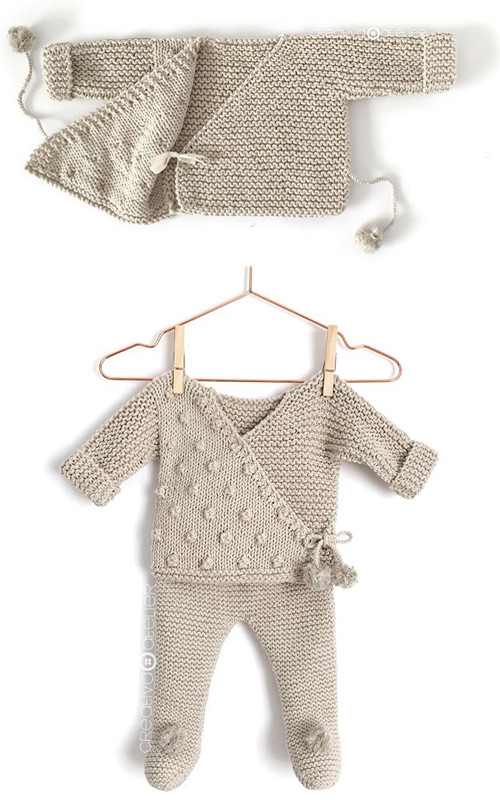
What beautiful kimono jacket knitting pattern! I found it on BeautifulSkills...
If there is one thing I’m completely certain about baby clothes, is that it has to be the most comfortable garment and it has to be super easy to put on and take off. So today, I want to show you how to make a knitted kimono jacket for babies which, for me, is the star of the tops and your best ally for your baby’s first weeks.

Full Post: Kimono Jacket

Teddy Bear Stripes - Free Pattern

 Teddy Bear Stripes - Free Pattern
Photo above © mimouna 
This pattern can be used to knit a plain teddy bear or one that’s covered in stripes. When worked in DK weight yarn the bear is 30cm tall but the size could be altered by using thinner or thicker yarn. Tips are given on managing all those colors, including sewing the seams neatly.

Download Pattern: Teddy Bear Stripes 

Cute Little Rucksack - Free Pattern

Cute Little Rucksack - Free Pattern
Photo above © Wollmaus-Claudia
What beautiful little rucksack knitting pattern! I found it on Ravelry...
Wintogreen designed this cute little rucksack that can be conveniently attached to a keyring or purse ring. Available in English and German. Great stash buster!

Download Pattern: Little Rucksack

Pocket Ted - Free Teddy Bear Knitting Pattern

Pocket Ted - Free Pattern
 Photos above © Frankie Brown

Pocket Ted by Frankie Brown is a tiny knitted teddy with a particularly charming idea: at only about 8 cm (3 inches) tall, Ted has his own little knitted bed inside a small mint tin.

It is a wonderful scrap-yarn project and, even better, the original pattern is still officially available as a free download.

✓ Free Pattern Still Available

We checked Frankie Brown's original Pocket Ted pattern and confirmed that it is currently available as a free Ravelry download.

Pocket Ted at a Glance

Designer: Frankie Brown

Published: May 2013

Project: Miniature knitted teddy and bedding

Finished Teddy: About 8 cm / 3 inches tall

Yarn Weight: Fingering / thin 4-ply

Needles: 2 mm and 2.75 mm

Construction: Worked flat

Pattern Language: English

Availability: Free Ravelry download

A Tiny Teddy With His Own Bed

Pocket Ted is more than a miniature teddy bear. The project includes knitted bedding sized to fit inside a small mint tin, turning the tin into a portable little bedroom.

Because the bear and bedding require only small amounts of thin yarn, this is also a clever project for using leftover fingering or sock yarn.

What You'll Need

In addition to small amounts of thin 4-ply yarn, the original project uses 2 mm and 2.75 mm knitting needles and a small mint tin or similar container.

The original design also uses fluffy pipe cleaners inside Ted's arms and legs so that the little bear can be posed sitting or standing.

Safety Note

Because the original project uses pipe cleaners and small components, consider the intended recipient carefully. For a very young child, review the materials and finishing choices and avoid components that could create sharp points or small detachable parts.

A Great Scrap-Yarn Project

One of Pocket Ted's best features is how little yarn it requires. Different leftover colors can be used for the teddy, blanket, pillow and knitted cover, making every finished tin unique.

The tiny scale also makes it an appealing handmade gift or stocking stuffer for knitters who enjoy miniature projects.

Get the Free Pocket Ted Pattern

The complete pattern was designed by Frankie Brown and is available from her original Ravelry pattern page.

Get the Free Pocket Ted Pattern →

An Alternative Authorized Source

Frankie Brown also published Pocket Ted on Cut Out + Keep, where the project page includes the downloadable pattern and a materials list.

View Pocket Ted on Cut Out + Keep →

Pattern credit: Pocket Ted was designed by Frankie Brown. Amazing Knitting provides an independent project guide and directs knitters to the designer's free pattern rather than reproducing the complete copyrighted instructions.

Free Pumpkin Knitting Patterns - Easy Fall Decor Ideas

Knit Pumpkins - Free Pattern & Tutorial
Photo above © DAN330

Knitted pumpkins are one of those small projects that are perfect for autumn: quick to make, easy to customize and ideal for using leftover yarn.

Make them in traditional orange, rustic autumn shades, cream or multicolored yarn, then group several sizes together for a handmade pumpkin-patch display.

✓ Free Pumpkin Patterns Available

This older Amazing Knitting page has been refreshed as a seasonal project guide. Instead of relying on an old pattern link whose exact original source could not be confirmed, we have included currently available free pumpkin knitting patterns from identifiable designers below.

Why Knit a Pumpkin?

Pumpkins are excellent stash-busting projects because they can be made with relatively small quantities of yarn. Changing the yarn weight, color and finished size can also produce an entire collection without every pumpkin looking identical.

They work particularly well as fall table decorations, Halloween displays and Thanksgiving decor.

1. Pumpkins for Beginners by Helen Kennedy

Helen Kennedy's beginner-friendly pattern is especially flexible. The pumpkins can be knitted flat or in the round, and different yarn weights can be used to create pumpkins from about 1 to 4½ inches.

The pattern is currently available as a free Ravelry download.

Get the Free Pumpkin Pattern →

2. Easy Knit Pumpkins by B.Hooked

This is another approachable option if you want a simple stuffed pumpkin. The design uses basic knit and purl stitches and does not require increases or decreases to create the main knitted piece.

The finished pumpkin is approximately 5½ inches in diameter, and the complete pattern is available free on the designer's website.

View the Free B.Hooked Pattern →

3. Free Pumpkin Patterns in Three Sizes

Handy Little Me offers another useful option when you want to create a group rather than a single pumpkin. The free instructions include small, medium and large versions, making it easy to build a varied autumn display.

View the Free Pumpkin Patterns →

Choosing Yarn for Knitted Pumpkins

There is no need to limit yourself to pumpkin orange. Rust, mustard, brown, cream, burgundy and muted green can create a beautiful autumn palette, while variegated yarn can make every pumpkin unique.

Yarn weight also changes the character of the project. Lighter yarn creates small decorative pumpkins, while bulky yarn produces a larger, softer and more substantial piece.

Easy Decorating Idea

Knit several pumpkins in different sizes and related autumn colors rather than making them all identical. Mixing solids, tweeds and gently variegated yarns creates the look of a handmade pumpkin patch.

How Knitted Pumpkins Get Their Shape

Many simple pumpkin patterns begin with a knitted tube or rectangle. After the piece is joined and stuffed, the openings are gathered and additional shaping creates the characteristic pumpkin segments.

The exact construction varies by designer, so follow the instructions supplied with the pattern you choose rather than trying to reproduce an older project from a photograph alone.

Editorial note: Amazing Knitting independently reviews older archive content and links readers to identifiable, authorized pattern sources. Pattern instructions and photographs remain the property of their respective designers and copyright holders.

Double Waves Lace Scarf - Knitting Pattern Guide

Double Waves Scarf - Free Pattern
Photo above © cactuscathy2

This beautiful Double Waves Lace Scarf combines flowing chevron shapes with open lacework and gradual color changes. The repeating peaks and valleys create a striking wave effect that works especially well with a long color-changing yarn.

This project appeared in the older Amazing Knitting archive as a free pattern find. During our latest review, however, we could not confirm a current authorized source for the exact lace scarf shown in the original photograph.

Pattern Availability Update

The original Amazing Knitting post linked this project under “Easy Lace Scarf” and credited the photograph to cactuscathy2. We could not verify a currently available authorized copy of that exact original pattern.

Rather than redirecting readers to a different pattern with the same or a similar name, we are preserving this page as a reference to the original lace design.

Double Waves Scarf at a Glance

Project: Lace scarf

Design: Repeating wave / chevron lace

Construction: Worked flat

Best Feature: Strong interaction between lace texture and color changes

Current Status: Exact authorized pattern source unverified

Why This Scarf Is So Eye-Catching

The scarf uses repeating lace motifs to form pronounced waves across the fabric. Open eyelet sections emphasize the peaks while denser knitted areas give the pattern enough structure to keep the waves clearly defined.

The multicolored yarn makes the effect even stronger. Instead of creating separate stripes manually, gradual changes in the yarn move across the lace and highlight different parts of each repeat.

A Great Style for Color-Changing Yarn

Wave and chevron patterns are particularly effective with yarns that contain long color transitions. Because the rows travel across peaks and valleys, each new shade interacts differently with the lace motif.

A solid yarn would give the scarf a quieter appearance and make the stitch definition more prominent, while a self-striping or gradient yarn emphasizes movement and color.

Lace Knitting Tip

Use stitch markers between repeats when working a long lace row. They make it much easier to notice a missed yarn over or decrease before you reach the end of the row.

Blocking Makes a Big Difference

Lace often looks compressed while it is still on the needles. Blocking the finished scarf helps open the eyelets, define the wave-shaped edges and reveal the full structure of the pattern.

About the Original Pattern

The older Amazing Knitting page described this project as a free Ravelry find and referred readers to an “Easy Lace Scarf” post. The photograph was credited to cactuscathy2.

We have not been able to confirm a current authorized source for the exact pattern represented by that photograph. For that reason, we do not reproduce or reconstruct its row-by-row lace instructions here.

Looking for a Free Lace Scarf Pattern?

You can still explore these free patterns from our reviewed Amazing Knitting archive:

Morning Surf Scarf

A lightweight textured scarf by Jackie Erickson-Schweitzer with a currently available free pattern.

View the Free Morning Surf Scarf →

Lamina Scarf

Karen S. Lauger's Lamina is an elegant free scarf pattern published through Knitty.

View the Free Lamina Scarf →

Little Leaf Lace Scarf

For another decorative lace project, explore Sivia Harding's Little Leaf Lace Scarf.

View the Free Little Leaf Lace Scarf →

Editorial note: Amazing Knitting reviews older archive posts against currently available sources. When the exact authorized pattern can no longer be confirmed, we preserve useful information about the project without linking to unofficial copies or recreating copyrighted instructions.

See our Pattern Availability & Editorial Policy for more information.

Lättstickad Tröja by Cila - Free Easy Knit Vest Pattern

Easy Knit Women Sweater Vest - Free Pattern
Photos above © by cila

Photo above © by cila

Lättstickad Tröja by Cila is a wonderfully simple sleeveless sweater vest with a relaxed fit, deep cowl neck and longer back hem. Worked in chunky yarn and garter stitch, it is an appealing garment project for knitters who prefer uncomplicated construction.

Good news: this older Amazing Knitting find can still be identified through its original Ravelry record, where the pattern is currently listed as available for free.

✓ Free Pattern Available

Lättstickad Tröja was designed by Cila and published in 2013. The pattern is currently listed on Ravelry as free. The original instructions are in Swedish, so English-speaking knitters may need translation assistance.

Lättstickad Tröja at a Glance

Designer: Cila

Published: November 2013

Project: Sleeveless sweater / cowl-neck vest

Yarn Weight: Bulky

Needles: US 15 (10 mm)

Gauge: 10 stitches = 4 inches

Yardage: Approximately 350–700 yards (320–640 m)

Sizes: S, M, L

Pattern Language: Swedish

Current Availability: Free

Simple Garter-Stitch Style

One of the most attractive things about this vest is its simplicity. The pronounced horizontal ridges of garter stitch become part of the design, so there is no need for complicated cables, lace or colorwork.

Bulky yarn and large needles also allow the fabric to grow relatively quickly, making this an interesting first step into knitted garments for someone already comfortable with basic knitting.

Relaxed Cowl Neck and Longer Back

The generous cowl is the focal point of the garment. It adds warmth around the neck while preserving the loose, casual character of the vest.

Another distinctive detail visible in the original design is the longer back hem. Combined with the open armholes, this makes the vest especially suitable for layering over a shirt or lightweight sweater.

Easy Three-Piece Construction

The original design has also been documented as a vest constructed from three simple knitted pieces. This straightforward approach is one reason the project attracted attention as an accessible garment knit.

Because fit still matters even in a relaxed vest, check the designer's measurements and gauge before choosing your size.

Yarn Substitution Tip

If you cannot find the original yarn, start with another bulky yarn that can achieve the pattern gauge. Also consider drape: a very stiff yarn may make the large cowl and relaxed body behave differently from the original garment.

Get the Free Lättstickad Tröja Pattern

The pattern record below identifies Cila's original design and links knitters to the pattern source. Please note that the original pattern language is Swedish.

View the Free Pattern on Ravelry →

More Easy Knitted Layers

If you like simple, relaxed garments, you may also enjoy this verified free cardigan from our reviewed archive:

Harvest Cardigan - Free Knitting Pattern →

Pattern credit: Lättstickad Tröja was designed by Cila. Amazing Knitting provides an independent project guide and directs knitters to the pattern record rather than reproducing the designer's complete copyrighted instructions.

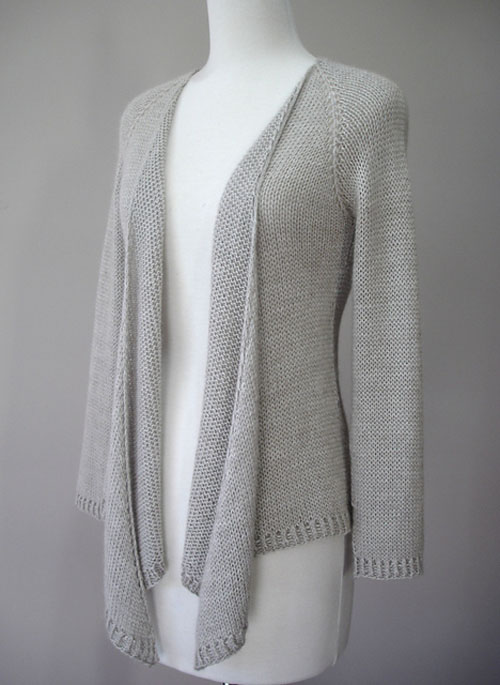
Hamlin Peak Cardigan by Pam Allen - Knitting Pattern

Hamlin Peak - Knitting Pattern
Photo above © CharliGee

Hamlin Peak by Pam Allen is a lightweight, open-front cardigan with a beautifully relaxed drape. Its clean stockinette fabric, raglan shaping and long waterfall fronts create an elegant garment that works especially well in linen.

The original Hamlin Peak pattern is still officially available from Quince & Co., although it is currently sold as a paid PDF pattern.

Pattern Availability Update

Hamlin Peak is currently available from its original publisher, Quince & Co., as a paid knitting pattern. If you found an older reference describing this pattern as free, please use the official source below for its current availability.

Looking specifically for a free cardigan? We have included a verified free alternative further down this page.

Hamlin Peak at a Glance

Designer: Pam Allen

Publisher: Quince & Co.

Collection: Kestrel 2014

Project: Open-front cardigan

Original Yarn: Quince & Co. Kestrel

Needles: US 8 (5 mm)

Gauge: 16½ stitches and 22 rows = 4 inches in stockinette after blocking

Construction: Top-down raglan

Current Availability: Paid pattern

What Makes Hamlin Peak Special?

Hamlin Peak is a good example of how simple knitting can produce a sophisticated garment. Most of the cardigan is worked in stockinette, allowing the shape and drape of the fabric to become the main design features.

The cardigan is worked from the top down with raglan yoke shaping. Small eyelet increases are worked along the neck edges, gradually creating the distinctive draped fronts.

Designed for Linen

The original yarn is Quince & Co. Kestrel, a linen tape yarn. Linen is particularly appropriate for this design because the finished fabric can fall softly rather than creating a stiff, structured cardigan.

If substituting yarn, matching the pattern gauge and considering the drape of the finished fabric are both important. A yarn that behaves very differently from linen may change the appearance of the waterfall fronts.

Sizes and Fit

The current pattern provides a particularly broad size range, with finished bust measurements from approximately 30 to 57¼ inches (76 to 145.5 cm).

The original sample is shown with a small amount of positive ease. Check the finished measurements before selecting your size rather than choosing only by your usual clothing size.

Skills Used

Although Hamlin Peak has an elegant finished appearance, the construction relies on familiar sweater techniques: increasing, decreasing, working in the round, picking up stitches and raglan shaping.

The official pattern includes both charts and line-by-line instructions.

Get the Original Hamlin Peak Pattern

The complete pattern belongs to Pam Allen and is published by Quince & Co. Amazing Knitting does not reproduce the copyrighted row-by-row instructions.

View Hamlin Peak at Quince & Co. →

Looking for a Free Cardigan Pattern?

Harvest Cardigan by Tin Can Knits

If you like the relaxed open-front style but specifically want a free project, Harvest is an excellent alternative from our reviewed archive. It is a seamless cardigan worked from the top down and the original pattern is currently available free.

View the Free Harvest Cardigan →

Archive Update

Amazing Knitting reviews older archive pages against current designer and publisher sources. When a pattern is currently paid, we update its status rather than continuing to describe it as free.

Pattern credit: Hamlin Peak was designed by Pam Allen and published by Quince & Co. Amazing Knitting provides an independent project guide and directs knitters to the authorized publisher.

See our Pattern Availability & Editorial Policy for more information.

Waffle Stitch Neck Warmer Scarf - Free Knitting Pattern

Waffle Stitch Neck Warmer Scarf - Free Pattern & Tutorial
Photos above © Studio Knit

Photos above © Studio Knit

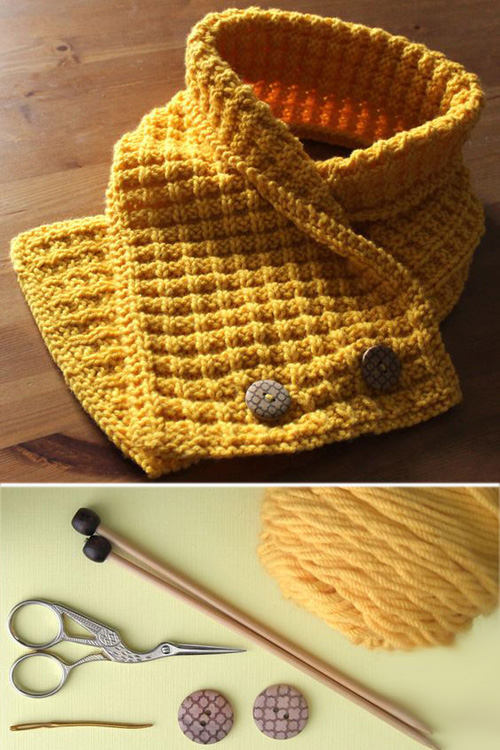
Waffle Neck Warmer Scarf by Kristen McDonnell of Studio Knit is a cozy textured scarf worked with simple knit and purl stitches. The waffle-like surface gives the fabric plenty of dimension, while buttons allow the scarf to wrap securely around the neck.

Good news for knitters who discovered this project through our older archive: the original pattern is still available free from Studio Knit.

✓ Free Pattern Still Available

We reviewed this archive page and confirmed that Kristen McDonnell's original Waffle Neck Warmer Scarf pattern is still published free on the official Studio Knit website.

Waffle Neck Warmer Scarf at a Glance

Designer: Kristen McDonnell / Studio Knit

Project: Neck warmer scarf

Skill Level: Experienced beginner

Yarn Weight: #4 Worsted Weight

Needles: US 7 (4.5 mm)

Gauge: 16 stitches × 26 rows = 4 inches in Waffle Stitch

Construction: Worked flat on straight needles

Sample Size: Approximately 8 × 38 inches

Availability: Free

Why This Is a Good Beginner Project

Although the finished fabric looks highly textured, the design is built from basic knit and purl stitches. That makes it a useful next project for knitters who have already learned the fundamentals and want to practice following a repeating stitch pattern.

The scarf is knitted flat rather than in the round, so there is no need to manage circular construction.

The Waffle Stitch Texture

The main attraction is the raised grid-like texture created by alternating knit and purl sections. Studio Knit's version uses a short repeating sequence that produces the characteristic waffle appearance.

Garter-stitch edging helps frame the textured center and gives the scarf a neat finished appearance.

Two Width Options

The original pattern gives knitters a choice between a wider and narrower scarf. The wider version is approximately 8 inches across, while a narrower version can be made at approximately 6 inches.

Length is also easy to customize: simply continue the waffle section until the scarf reaches the length you prefer.

Buttons Are Optional

The two buttons shown in the original project turn the scarf into a practical neck warmer by holding the overlapping ends in place.

Studio Knit also suggests other ways to secure the scarf, including a brooch or pin, so buttons are not essential if you prefer a simpler finish.

Knitting Tip

Textured knit-and-purl patterns look best when the stitches are worked at an even tension. If your fabric feels noticeably tighter or looser than expected, make a small gauge swatch before knitting the full scarf.

Get the Free Waffle Neck Warmer Scarf Pattern

The complete pattern and tutorial are published by Kristen McDonnell at Studio Knit. Use the official source below for the current instructions and tutorial.

Get the Free Pattern at Studio Knit →

More Textured Knitting Ideas

If you enjoy the texture of this scarf, explore these Amazing Knitting stitch guides and projects next:

Trinity / Raspberry Stitch Guide →

Herringbone Stitch Guide →

Diagonal Rib Stitch Guide →

Pattern credit: Waffle Neck Warmer Scarf was designed by Kristen McDonnell of Studio Knit. Amazing Knitting provides an independent project guide and directs knitters to the designer's authorized free pattern. Complete copyrighted instructions are not reproduced here.

Free Boot Cuffs Knitting Patterns - Easy & Cozy Designs

Free Boot Cuffs Knitting Patterns - Easy & Cozy Designs
Easy & Cozy Designs


Knitted boot cuffs are a quick way to add warmth and handmade texture to tall boots without knitting a full pair of leg warmers. They are also excellent small projects for practicing ribbing, cables, textured stitches and knitting in the round.

This older Amazing Knitting roundup has been reviewed and refreshed. Instead of sending you through a collection of outdated links, the patterns below were selected because we could verify a currently available free source.

✓ Free Pattern Collection

The patterns below were checked for current free availability when this page was updated. Pattern availability can change, so always check the designer's page before beginning your project.

1. Livvy's Button Cuff Boot Topper

Designed by Lisa W. James, these boot toppers combine simple textured knitting with a decorative buttoned cuff. The pattern uses worsted-to-Aran weight yarn and combines flat knitting with knitting in the round.

The finished cuff is approximately 7½ inches tall and is designed to fit around a 13-inch calf.

Get the Free Livvy's Button Cuff Pattern →

2. Cobblestone Boot Cuffs

Cobblestone Boot Cuffs by Taiga Hilliard use a simple seed-stitch texture with a decorative button at the side. The design is seamless and worked in the round.

One especially useful feature is the size range, with instructions covering approximately 10–18 inch leg circumferences.

Get the Free Cobblestone Boot Cuffs Pattern →

3. Cozy Cable Boot Topper

If cables are what attracted you to the original boot-cuff collection, the Cozy Cable Boot Topper from Biscotte Yarns is a particularly good option.

It combines chunky cables with optional decorative buttons and is designed to fit a leg circumference of up to approximately 13 inches.

Get the Free Cozy Cable Boot Topper Pattern →

4. Cabled Boot Cuffs

Creativity Strikes offers another free cabled boot-cuff pattern. The original sample was made for a child using 3.25 mm double-pointed needles, while the designer explains how larger needles can be used to create an adult-sized version.

Decorative buttons can also be added to personalize the finished cuffs.

Visit Creativity Strikes for the Free Cabled Boot Cuffs →

Choosing a Boot Cuff Pattern

The best design depends on what you want to practice. Ribbed cuffs are usually a good choice for newer knitters, while seed stitch adds texture without requiring cables. Cable designs are ideal when you want a small project for practicing cable techniques.

Also check the finished circumference carefully. Boot cuffs need enough stretch to fit comfortably around your calf while still sitting neatly above the top of the boot.

Quick Project Tip

Before casting on, measure your leg at the exact height where the cuff will sit. Compare that measurement with the finished circumference and gauge given by the designer rather than choosing a size by appearance alone.

More Free Knitting Projects

Looking for another small project? Explore these reviewed Amazing Knitting pages:

Better Dorm Boots - Free Knitting Pattern →

Saartje's Bootees - Free Baby Booties Pattern →

Daisy Stitch Knit Washcloth →

Editorial note: Amazing Knitting independently reviews older pattern collections and checks current sources before recommending them. Complete copyrighted pattern instructions remain with their respective designers and publishers.

Discover More From the Archive

A fresh mix of knitting patterns and tutorials from the Amazing Knitting archive.

Finding patterns from the archive…