Skip to content

...

Showing posts sorted by date for query vintage knitting. Sort by relevance Show all posts

Harold Fatmus Free Knitting Pattern

Harold Fatmus Free Knitting Pattern
The photo above ©  Clare Hutchinson

Finding the perfect quick-knit project that combines character with classic technique can be a challenge, but the Harold Fatmus Free Knitting Pattern is a standout choice for any fiber artist. Harold is more than just a charming mascot; he is a "tubby cutie" designed to bring a sense of whimsy and warmth to any room he occupies. With his distinctive personality and vintage appeal, he quickly becomes a central figure in the household, making him a rewarding project for those who love knitting with personality.

What makes this pattern truly irresistible is the attention to detail in his wardrobe. Harold sports an adorable, old-fashioned Fair Isle sweater that allows you to practice intricate colorwork on a delightful, small-scale canvas. Whether you are looking for a unique gift or a new companion for your bookshelf, this pattern offers a perfect blend of traditional style and modern charm.

You can find the full instructions and get started on your own version of this iconic character at the link below:

Harold Fatmus Fair Isle Mouse

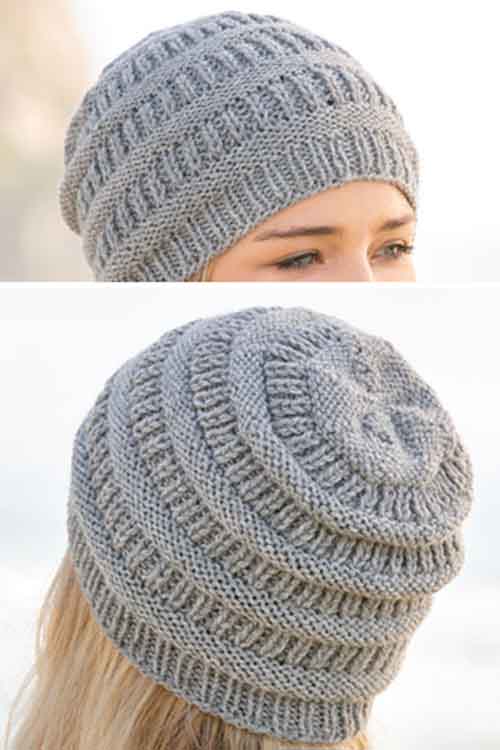
Chica Beanie - Knit Pattern

Chica Beanie - Knit Pattern
Designed by © Lena Skvagerson

What a beautiful knitting Beanie pattern! I found it on Pinterest. Keep that head of yours warm while still looking stylish! Knit with Berroco Vintage worsted-weight yarn using U.S. size 8/5mm 16-inch circular and double point needles. Finished size: circumference 17 3/4 (19 1/2).

Download Pattern: Chica Beanie

3 Color Patchwork Blanket - Knitting Pattern

3 Color Patchwork Blanket - Knitting Pattern
The photo above © Michelle Kupfer

Love the look of a patchwork blanket but not the idea of sewing dozens of separate squares together? 3 Color Patchwork Blanket by Michelle Kupfer creates a bold geometric baby blanket using three colors, while the entire blanket is actually knitted in one piece.

The clever construction uses intarsia colorwork to create the appearance of individual patchwork blocks without traditional patchwork assembly. Worked in chunky yarn, it is also a relatively compact baby blanket project with a modern, graphic look.

3 Color Patchwork Blanket at a Glance

Pattern: 3 Color Patchwork Blanket

Designer: Michelle Kupfer

Craft: Knitting

Category: Baby Blanket

Construction: One piece, seamless, worked flat

Colorwork: Intarsia

Yarn Weight: Bulky / Chunky

Suggested Yarn: Berroco Vintage Chunky

Yardage: About 360–400 yards / 329–366 m

Needle Size: US 10½ / 6.5 mm circular needle

Gauge: 3.5 stitches and 4 rows = 1 inch in stockinette

Finished Size: About 22 × 27 inches / 56 × 68.5 cm

Pattern Availability: Paid pattern

About the 3 Color Patchwork Blanket

Designed by Michelle Kupfer, the 3 Color Patchwork Blanket is a small unisex baby blanket built around a simple but effective idea: creating the visual appearance of patchwork without knitting and joining separate squares.

Instead, three yarn colors are worked across the blanket using intarsia colorwork. The changing blocks of color create the geometric patchwork effect while the blanket remains a single piece.

A Patchwork Look Without Sewing Squares Together

Traditional knitted patchwork blankets are often constructed from many individual squares that must eventually be arranged and joined.

This design takes a different approach. The blanket is worked flat as one continuous piece, so there is no final assembly of separate knitted blocks.

That makes the construction especially interesting for knitters who enjoy the appearance of patchwork but would rather avoid a large seaming project.

Three-Color Intarsia

The patchwork effect is created with three colors worked using intarsia.

With intarsia, different sections of color are worked with separate yarn supplies rather than carrying every color continuously across the entire row.

One of the important skills is managing the yarn correctly where two colors meet so that the sections connect cleanly instead of leaving unwanted gaps.

If intarsia is new to you, practicing a small two-color swatch first can make the full blanket much easier to manage.

Finished Baby Blanket Size

The finished blanket measures approximately:

22 × 27 inches / 56 × 68.5 cm

This is a compact baby-blanket size, making the project more manageable than a full-size throw while still giving plenty of room to experiment with geometric color placement.

Yarn and Color Planning

The original design uses three colors of bulky-weight yarn. Ravelry lists approximately:

360–400 yards / 329–366 meters total

The suggested yarn is Berroco Vintage Chunky.

The designer's current pattern information recommends allowing enough yarn for each color rather than planning around an exact last few yards, since individual knitting tension can affect consumption.

The three-color format also gives you plenty of freedom when choosing a palette. You could combine three soft nursery colors, use neutrals, or create stronger contrast for a more graphic patchwork appearance.

Needles and Gauge

The pattern specifies:

US 10½ / 6.5 mm circular knitting needles

A circular needle approximately 24–32 inches long is useful for holding the blanket stitches, even though the project itself is worked flat.

The published gauge is:

3.5 stitches and 4 rows = 1 inch in stockinette stitch

Check your gauge before starting if you want the finished blanket to match the designer's dimensions.

Knitting Skills Used

The project combines fundamental knitting with basic colorwork skills, including:

  • Casting on
  • Knitting
  • Purling
  • Binding off
  • Changing yarn colors
  • Working intarsia color sections
  • Managing multiple yarn supplies

The blanket can therefore be an interesting introduction to intarsia for a knitter who is already comfortable with basic knit and purl stitches.

Is the 3 Color Patchwork Blanket Free?

No. 3 Color Patchwork Blanket by Michelle Kupfer is currently a paid knitting pattern.

Amazing Knitting does not reproduce the designer's copyrighted row-by-row instructions or color-placement schematic.

Visit the original pattern listing for the current price, complete materials, color placement, and knitting instructions.

View the Original 3 Color Patchwork Blanket →

Pattern credit: 3 Color Patchwork Blanket was designed by Michelle Kupfer. Pattern pricing, availability, materials, and technical information are controlled by the designer and may change over time.

Looking for a Free Alternative?

Prefer a free pattern? Amazing Knitting has another geometric block-style blanket you can explore without purchasing a pattern.

Garter Blocks Blanket — Free Pattern

This is a different design — not a free version of Michelle Kupfer's pattern — but it offers a similar geometric block effect. The blanket combines garter and stockinette blocks with cable divisions and uses super-bulky yarn for a substantial finished blanket.

View the Free Garter Blocks Blanket →

More Baby Blanket Knitting Patterns

You can also explore more baby blanket knitting patterns, patchwork-style blankets, and free blanket knitting patterns from the Amazing Knitting archive.

Before You Start

If you choose the original 3 Color Patchwork Blanket, check Michelle Kupfer's current pattern listing before purchasing yarn. Confirm the current yarn requirements, gauge, needle size, finished measurements, and pattern details before casting on.

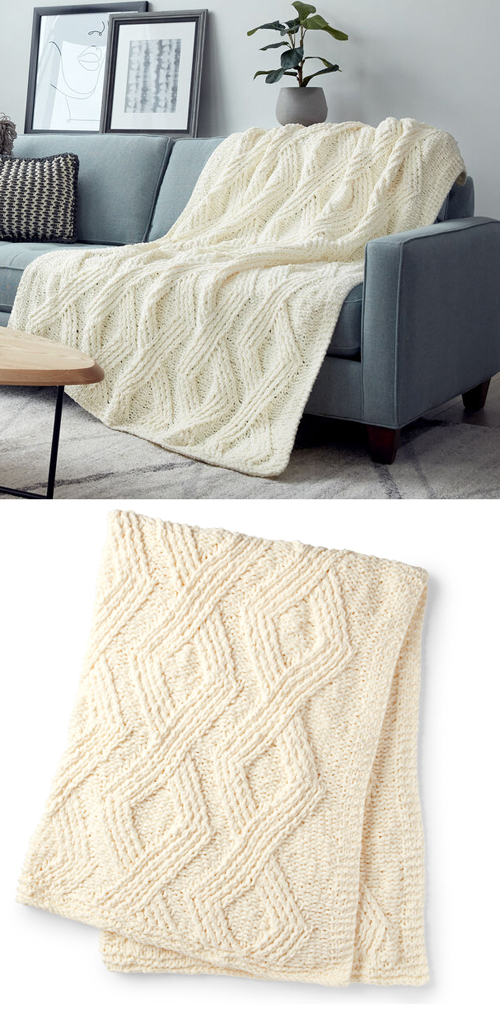
Twisted Stitch Knit Blanket - Free Knitting Pattern

Twisted Stitch Knit Blanket - Free Knitting Pattern
Photos above © Yarnspirations

What a beautiful knitting blanket (free knitting pattern)! We love this modern "twist" on the traditional knit cable blanket! Here, twisted stitches are used to create a striking geometric cable motif. Vintage White truly lets the stitches shine, but we think this would look amazing in any shade fromt he wide range of super-soft, easy to care for Bernat Blanket yarn!

Download Pattern: Twisted Stitch Blanket 

The Round Vintage Pillow - Free Pattern & Tutorial

The Round Vintage Pillow - Free Pattern & Tutorial
Photos above © Marilyn Pruett
What beautiful knitting tutorial! I found it on Pinterest.
Super great and easy explanation of knitting short rows, and you end up with a round mat or pillow cover.

Vintage Cardigan - Knitting Pattern

Vintage Cardigan - Knitting Pattern
The photo above © kararstanley
I found this beautiful knitting cardigan on Ravelry...
Helen Rose: "This is a sweet little cardigan worked from the top down with a small amount of cable detail. Inspired by a sweater knit for me in 1972.
Need to do yarn overs, various decreases, cables. Written for a novice knitter."

Full Post: Vintage Cardigan

Vintage Booties - Free Pattern

Vintage Booties - Free Pattern
Photo above © mdcim
Love This knitting booties pattern!  I found it on Ravelry.
These booties are perfect for the baby who loves to read, play and laugh. Designed and made by me, these booties are lightweight, soft and easy to care for. Perfect for any occasion, they go with anything and you'll receive compliments all the time. These booties are fashionable while keeping your baby's little toes warm and cozy...

Download Pattern: Vintage Booties 

The Blue Shimmer Yoke Cardigan - Bohus Knitting Pattern Guide

The Blue Shimmer Yoke Cardigan - Free Pattern
Photos above © schrouderknits

The Blue Shimmer (Blå Skimmer) is one of the most celebrated designs associated with the Swedish Bohus Stickning tradition.

Designed by Anna-Lisa Mannheimer Lunn in 1947, Blue Shimmer became the most popular design produced by Bohus Stickning and remains instantly recognizable for its extraordinary circular yoke, subtle color transitions and mixture of colorwork and texture.

If this beautiful cardigan brought you here, this guide will help you identify the original design, understand what makes Bohus knitting distinctive, and avoid an important source of confusion: more than one authorized reproduction of Blue Shimmer has existed, and their knitting instructions are not interchangeable.

Pattern Availability

Blue Shimmer is a historic copyrighted design with multiple authorized reproductions. We could not verify a current authorized free version of the exact Blue Shimmer Yoke Cardigan. One well-known English-language reproduction appeared in the book Poems of Color, which is now listed as out of print, while another historically accurate reproduction was produced through SOLsilke / AngoraGarnet. Amazing Knitting therefore does not reproduce the charts or direct readers to unofficial copies.

The Blue Shimmer at a Glance

Original Name: Blue Shimmer / Blå Skimmer

Designer: Anna-Lisa Mannheimer Lunn

Original Design: 1947

Tradition: Bohus Stickning

Garment Style: Circular-yoke sweater / cardigan variations

Techniques: Stranded colorwork and textured stitches

Notable Feature: Multi-color patterned yoke

Historical English Source: Poems of Color: Knitting in the Bohus Tradition

Current Status: No verified current free version of the exact cardigan

What Is Blue Shimmer?

Blue Shimmer, or Blå Skimmer, is much more than an ordinary stranded-colorwork sweater.

It belongs to the remarkable knitting tradition developed by Bohus Stickning in Sweden during the twentieth century.

The original Blue Shimmer design dates to 1947 and became one of the best-known garments associated with Bohus knitting.

Its patterned yoke combines carefully arranged colors with changes in stitch texture, producing the soft, shimmering effect that inspired the design's name.

What Was Bohus Stickning?

Bohus Stickning was a Swedish knitting organization known for exceptionally sophisticated hand-knitted garments.

Its designs became famous for combining fine yarns, unusual color relationships and technically sophisticated patterned yokes.

Unlike many stranded-knitting traditions that rely primarily on two-color geometric motifs, Bohus designs often use several closely related shades to create subtle visual transitions.

Why Blue Shimmer Became So Famous

Blue Shimmer is often singled out because its yoke demonstrates many of the qualities that made Bohus knitting distinctive.

Rather than creating a hard boundary between one motif and the next, the colors appear to move and shimmer across the surface.

Texture adds another layer of complexity, so the design changes not only through color but through the way individual stitches catch the light.

The Circular Yoke Is the Star

The patterned yoke is the visual center of Blue Shimmer.

Multiple shades are arranged around the upper body so the pattern develops continuously around the garment.

This means consistent tension is particularly important. A section worked too tightly can reduce the elasticity of the yoke, while loose floats can make the fabric uneven.

More Than Ordinary Stranded Colorwork

One reason Bohus knitting is so interesting is that the patterned areas may combine color changes with knit and purl texture.

That combination produces a surface quite different from completely smooth stranded stockinette.

For knitters familiar with Fair Isle or other stranded traditions, Bohus knitting can therefore introduce a different approach to creating depth and visual movement.

The Original Design Dates to 1947

Anna-Lisa Mannheimer Lunn designed Blue Shimmer in 1947.

Historical pattern records identify it as the most popular design produced by Bohus Stickning.

That history is important because many modern photographs show reproductions rather than garments knitted directly from an original 1940s pattern sheet.

Important: There Is More Than One Blue Shimmer Pattern

Do Not Mix the Instructions

Two authorized reproductions of the historic Blue Shimmer design are documented. They look similar but use different yarn weights, gauges, stitch counts, construction methods and directions. Choose one complete version and follow its specifications throughout.

The Poems of Color Version

One well-known reproduction appears in Poems of Color: Knitting in the Bohus Tradition.

Ravelry records the Blue Shimmer Yoke Cardigan from this source as using a sport-weight interpretation and providing sizes S, M and L.

The book itself is currently listed as out of print.

Poems of Color Cardigan Specifications

For historical reference, the Ravelry record for this specific reproduction lists:

  • Sizes: S, M, L
  • Approximate finished bust: 40, 44, 48 inches
  • Yarn weight: Sport / 5-ply interpretation
  • Main gauge: 7 stitches per inch
  • Needles listed: US 1, US 2 and US 3
  • Yardage: approximately 1,699–1,999 yards
  • Colorwork: Chart provided for the patterned section

These specifications apply to the Poems of Color reproduction. They should not be assumed to apply to other Blue Shimmer reproductions.

The SOLsilke / AngoraGarnet Reproduction

A separate authorized recreation was developed by Solveig Gustafsson in 1999.

This reproduction was created using fine Bohus-style angora-merino yarn and later became associated with AngoraGarnet.

It is not simply the Poems of Color instructions rewritten with a different yarn.

Why the Two Versions Cannot Be Combined

The documented differences include:

  • Yarn weight
  • Gauge
  • Neck stitch count
  • Bust stitch count
  • Waist stitch count
  • Construction
  • Written directions

For example, the Poems of Color interpretation uses approximately 7 stitches per inch, while the historically oriented SOLsilke / AngoraGarnet version uses a substantially finer gauge of approximately 8.25 stitches per inch.

Substituting numbers from one version into the other could therefore create serious sizing and construction problems.

The Famous Angora-Merino Fabric

Fine angora-blend yarn is closely associated with the characteristic appearance of many Bohus garments.

The halo softens transitions between neighboring colors and contributes to the almost painted appearance of the patterned yoke.

This is one reason a modern reproduction worked in a very different fiber may look sharper and less blended even when the colors are similar.

Color Is Everything

Blue Shimmer demonstrates how sophisticated colorwork does not require extremely bright contrasts.

Closely related blues, neutrals and accent shades interact to create depth rather than simple graphic separation.

When viewed from a distance, the individual motifs merge into a shimmering field of color around the shoulders.

Swatching Is Essential

Blue Shimmer is not a project where gauge should be treated casually.

A proper swatch helps you evaluate:

  • Gauge
  • Stranded tension
  • Color interaction
  • Fabric density
  • Float management
  • Behavior after washing

If you are working from an authorized reproduction, swatch using the yarn and gauge specified by that particular version.

Practice Stranded Tension First

The patterned yoke contains many stitches where uneven stranded tension would be immediately visible.

If you are new to stranded knitting, practicing on a smaller project before beginning a historic Bohus reproduction can be worthwhile.

The goal is to keep the unused yarn relaxed behind the work without allowing excessively loose floats.

Why the Wrong Yarn Can Change the Look

Matching gauge alone does not guarantee the same visual result.

Fiber content, halo, elasticity and color blending all influence the character of a Bohus-style fabric.

A smooth yarn may produce beautifully clear stitches, but it will not necessarily create the same soft transitions associated with an angora-merino blend.

Read the Chart Carefully

Historic colorwork designs reward careful chart reading.

Keep track of your current row and make sure color changes remain aligned with the intended motif.

A magnetic chart keeper, removable tape or another row-tracking method can make a large colorwork chart easier to manage.

Is The Blue Shimmer Yoke Cardigan Still Free?

We could not verify a current authorized free pattern for the exact Blue Shimmer Yoke Cardigan.

The old Amazing Knitting page described it as a free pattern, but the currently documented sources do not support continuing that claim.

One authorized English reproduction appears in the out-of-print Poems of Color book, while another authorized reproduction has been associated with SOLsilke / AngoraGarnet.

Amazing Knitting therefore treats this page as a historical pattern guide rather than a free-pattern download page.

View the Historical Pattern Record

Ravelry maintains a detailed record for the Poems of Color Blue Shimmer Yoke Cardigan, including specifications and completed projects.

View The Blue Shimmer Yoke Cardigan on Ravelry →

Why We Don't Link to Unofficial Pattern Copies

Historic knitting patterns frequently appear as scans, copied charts or PDFs on blogs, document-sharing sites and image boards.

Age alone does not establish that a particular reproduction or adaptation can be freely redistributed.

Blue Shimmer also has multiple authorized reproductions with meaningful technical differences, making an unidentified copy especially risky from both a copyright and knitting-accuracy perspective.

For those reasons, Amazing Knitting does not host the chart or link to an unofficial download.

Love This Style? Explore Free Colorwork Patterns

If Blue Shimmer brought you here because you love decorative yokes and stranded knitting, you can still use this historic garment as inspiration while choosing a currently available pattern for your next project.

Explore Amazing Knitting for:

Blue Shimmer as Knitting History

Even if you never knit the complete cardigan, Blue Shimmer is worth studying.

It demonstrates how yarn texture, subtle color relationships and carefully planned stitch patterns can work together to create something far richer than ordinary two-color knitting.

More than seventy years after the original design appeared, the yoke still looks distinctive — a strong reminder that exceptional knitting design does not depend on following short-lived trends.

Before Starting a Blue Shimmer Reproduction

First identify exactly which authorized version you own.

Then use only the yarn requirements, gauge, stitch counts and construction instructions belonging to that version.

Do not combine specifications from the Poems of Color pattern with those from the SOLsilke / AngoraGarnet reproduction simply because the finished garments look similar.

Swatch carefully, practice your stranded tension and pay close attention to the extraordinary color relationships that make Blue Shimmer one of the most memorable Bohus Stickning designs.

Historical pattern credit: Blue Shimmer / Blå Skimmer was designed by Anna-Lisa Mannheimer Lunn for the Bohus Stickning tradition in 1947. Later authorized reproductions include versions associated with Poems of Color and SOLsilke / AngoraGarnet. The existing project photograph on this Amazing Knitting page is credited to schrouderknits. Amazing Knitting provides an independent historical and project guide and does not reproduce copyrighted charts or complete knitting instructions.

Rosabel Cardigan by Anne Dresow - Pattern Guide

Rosabel Cardigan - Free Pattern
Photo above © sugarmom96

Rosabel Cardigan by Anne Dresow is a beautiful vintage-inspired baby and toddler cardigan combining delicate lace, classic button-front styling and a circular yoke.

The decorative lower section gives the cardigan much of its charm, while the fine yarn and understated silhouette create the heirloom look that made Rosabel a popular baby-knit project.

If this beautiful cardigan brought you here, this guide will help you understand the original Rosabel design, its sizing, yarn, gauge and construction — and what happened to the original pattern.

Although the original digital pattern is no longer available from its former source, you still have options. Below you'll also find free cardigan patterns you can knit today.

Pattern Availability

Rosabel Cardigan is currently discontinued. The Ravelry pattern record states that the digital pattern is no longer available online, and its original publication source, Nordic Baby Knits, is listed as out of print. Amazing Knitting therefore does not link to unofficial copies of the copyrighted pattern.

Rosabel Cardigan at a Glance

Pattern: Rosabel Cardigan

Designer: Anne Dresow

Designer Label: Elle & Rose Knitwear

Original Publication: Nordic Baby Knits

First Published: February 2010

Category: Baby / Toddler Cardigan

Sizes: 3–6 months, 1 year, 2 years, 4 years

Original Yarn: Sandnes Garn Babyull Lanett

Yarn Weight: Light Fingering

Yardage: Approx. 600–801 yd / 549–732 m

Needles: US 2½ / 3 mm

Gauge: 22 sts × 32 rows = 4 in / 10 cm in stockinette

Style: Vintage-inspired lace cardigan

Current Status: Discontinued / original source out of print

About the Rosabel Cardigan

Anne Dresow's Rosabel Cardigan has the kind of styling that makes a baby knit feel like an heirloom rather than an everyday basic.

The cardigan combines a traditional button front with decorative openwork and a circular-yoke construction.

The result is feminine and vintage-inspired without requiring complicated colorwork.

A Vintage-Inspired Baby Cardigan

Rosabel's appeal comes largely from the balance between simple stockinette fabric and decorative lace.

Instead of covering the entire garment in an elaborate stitch pattern, the lace creates areas of visual interest while allowing the classic cardigan shape to remain clear.

This makes the design particularly attractive in soft solid colors, where the eyelets and stitch definition can be easily seen.

Four Baby and Toddler Sizes

The original pattern was published in four sizes:

  • 3–6 months
  • 1 year
  • 2 years
  • 4 years

That range allowed knitters to use the same vintage-inspired design from early babyhood into the preschool years.

If you already legally own a copy of Rosabel, use the measurements and stitch counts for your chosen size from that original pattern rather than estimating from age alone.

Original Yarn

Rosabel was designed for Sandnes Garn Babyull Lanett, a fine merino baby yarn.

The yarn's relatively fine gauge helps produce the delicate fabric that suits the cardigan's lace details.

The published pattern record gives an approximate total requirement of:

600–801 yards / 549–732 meters

The exact amount depends on the size being knitted.

Gauge

The published stockinette gauge is:

22 stitches × 32 rows = 4 inches / 10 cm

The listed needle size is:

US 2½ / 3 mm

Needle size should always be treated as a starting point. If you legally own the original pattern and plan to knit Rosabel, use whatever needle size allows you to achieve its required gauge.

Why Gauge Matters on This Cardigan

Gauge is particularly important in a baby garment because even a small difference can noticeably change the finished circumference and length.

It also affects the appearance of lace.

Fabric that is too tight may prevent the eyelets from opening clearly, while fabric that is too loose may lose the neat structure visible in the original cardigan.

The Circular Yoke

One of Rosabel's characteristic construction features is its circular yoke.

Rather than relying on conventional rectangular armholes and separately shaped shoulder pieces, the garment's upper sections come together into a rounded yoke.

This contributes to the smooth vintage silhouette around the shoulders.

Lace Is the Main Decorative Feature

Rosabel does not need multiple colors to create visual interest.

Yarn overs and decreases form openwork details that stand out against the smoother knitted fabric.

If you are working from a legally obtained copy, read the chart or lace instructions carefully and check stitch counts at the end of pattern repeats.

Use Lifelines for Lace

A lifeline can be particularly helpful when knitting a lace section.

Run a contrasting strand through a known-correct row before continuing into another repeat.

If you later discover a mistake, the lifeline gives you a safe point to return to without unraveling the entire decorative section.

Keep Track of Yarn Overs and Decreases

Lace usually balances increases created by yarn overs with decreases elsewhere in the repeat.

Missing either one can change the total stitch count and shift the motif out of alignment.

Count stitches periodically rather than waiting until the end of a long section to check your work.

Choosing a Substitute Yarn

If you already own the original Rosabel pattern but cannot find the suggested yarn, choose a substitute based on gauge and fabric characteristics rather than brand name alone.

Consider:

  • Gauge
  • Yardage per skein
  • Fiber content
  • Softness
  • Stitch definition
  • Washability
  • Drape after blocking

Good stitch definition is particularly useful because it allows the lace details to remain visible.

Choosing Color

Rosabel works especially well in a solid or gently heathered color.

Highly variegated yarn can sometimes compete visually with delicate lace, while a quieter color lets the texture become the main feature.

Soft pinks, creams and pastels naturally reinforce the vintage look, but richer modern colors could give the same cardigan a completely different character.

Blocking Helps the Lace Open

Lace often looks compressed immediately after it comes off the needles.

Appropriate wet blocking can help the openwork settle into its intended shape and make the motif easier to see.

Always follow the care instructions for the yarn you actually use and avoid overstretching a small baby garment.

Buttons and Baby Garments

Rosabel is a button-front cardigan.

If you knit it from a copy you already own, attach every button very securely and check them regularly during use.

Loose buttons and other small detachable components can present a hazard around babies and young children.

What Happened to the Free Rosabel Pattern?

When this Amazing Knitting page was originally published in 2019, Rosabel circulated online as a free digital knitting pattern.

That situation has changed.

The current Ravelry record identifies the original source Nordic Baby Knits as out of print and states that the digital pattern is no longer available online.

For that reason, Amazing Knitting no longer describes Rosabel as a currently available free download.

Why We Don't Link to Reuploaded PDFs

You may encounter copies of Rosabel on document-sharing websites, Pinterest links or old knitting blogs.

Their existence does not establish that they are authorized distributions.

Rosabel is a copyrighted design by Anne Dresow. Amazing Knitting therefore does not link to third-party copies of the complete pattern when we cannot verify permission from the designer.

Already Own Rosabel?

If you downloaded or purchased an authorized copy while it was available, you can of course continue using your copy. Keep the original instructions and charts together, since replacing them may now be difficult.

View the Historical Rosabel Pattern Record

Ravelry still maintains the pattern record, which is useful for identifying the design, checking its original specifications and browsing completed projects.

View Rosabel Cardigan on Ravelry →

Love Rosabel? Try These Free Cardigans Instead

Rosabel may no longer have an authorized digital download, but there are still beautiful baby and child cardigans you can start today.

These free patterns have already been verified in the Amazing Knitting archive:

Explore More Baby Cardigan Patterns

Can You Still Get Rosabel Cardigan?

The original digital Rosabel Cardigan pattern is currently discontinued.

Its Ravelry record remains online for identification and project information, but it states that the digital pattern itself is no longer available.

We recommend avoiding unofficial PDF copies whose distribution rights cannot be verified.

If Anne Dresow or an authorized publisher makes Rosabel available again, this Amazing Knitting guide can be updated with the new official source.

Why Rosabel Is Still Worth Remembering

An unavailable pattern does not make the design irrelevant.

Rosabel remains a lovely example of how a relatively simple baby cardigan silhouette can be transformed through a circular yoke, delicate openwork and careful finishing.

Use it as inspiration, browse the historical projects, or choose one of the verified free alternatives above to begin a new baby cardigan today.

Pattern credit: Rosabel Cardigan was designed by Anne Dresow / Elle & Rose Knitwear and first published in 2010. The existing project photograph on this Amazing Knitting page is credited to sugarmom96. Rosabel is currently listed as discontinued. Amazing Knitting provides an independent historical and project guide and does not reproduce or distribute the designer's copyrighted knitting instructions or charts.

Vintage Baby Bonnet With Visor - Tutorial

Vintage Baby Bonnet With Visor - Tutorial
Photo above © Liveinternet

This Vintage Baby Bonnet With Visor has a wonderfully old-fashioned silhouette: deep ribbed texture, a small knitted visor and ties that secure the bonnet beneath the chin.

It is the kind of practical baby knit that combines warmth with a distinctive vintage look, and the strongly textured fabric makes the simple shape especially attractive.

If this bonnet brought you here, this guide will help you understand the design, the knitting techniques visible in the original project, yarn considerations, fit and finishing — as well as what we could verify about the historical tutorial.

Pattern Availability

This bonnet circulated online as a free tutorial and was historically associated with a Turkish-language video tutorial. However, we could not verify a current authorized pattern page or a clearly identified original designer for the exact project. For that reason, Amazing Knitting does not reproduce or reconstruct the original instructions.

Vintage Baby Bonnet With Visor at a Glance

Project: Vintage Baby Bonnet With Visor

Type: Baby bonnet / knitted cap

Style: Vintage-inspired

Texture: Strong ribbed texture

Features: Small visor and chin ties

Techniques Associated with the Historical Tutorial: Knit and purl stitches

Historical Tutorial Language: Reported as Turkish

Original Image Credit: Liveinternet

Current Status: Exact authorized source not verified

What Makes This Vintage Bonnet So Appealing?

The most distinctive feature is the combination of a traditional bonnet shape with a small visor at the front.

Most knitted baby bonnets frame the face with a simple edge. Adding a visor gives this design more structure and creates the charming old-fashioned cap appearance that made the project popular online.

The ties at either side complete the traditional bonnet silhouette.

A Beautiful Ribbed Texture

The original project is dominated by pronounced vertical texture.

Ribbed knitting is particularly useful for hats because the alternating stitch structure allows the fabric to stretch and recover more easily than plain stockinette.

Visually, the ribs also add depth to a project made in only one color.

Basic Knit and Purl Skills

Historical descriptions of this tutorial identify knit and purl stitches as the foundation of the design.

That does not necessarily make every part of the bonnet a first-project beginner exercise. Shaping a bonnet and creating a structured visor can introduce additional construction and finishing challenges.

A knitter who is already comfortable recognizing knit and purl stitches will therefore have an easier time understanding this style of project.

The Visor Is the Defining Detail

Without the visor, this would resemble many traditional ribbed baby bonnets.

The short brim changes the silhouette completely and gives the hat its distinctive vintage character.

A visor also requires careful attention to shaping and tension. Uneven stitches can become more noticeable on a small structured section than on the flexible body of a hat.

Why the Chin Ties Matter

Ties are a familiar feature of traditional baby bonnets because they help keep the hat positioned around the head.

They also contribute significantly to the vintage appearance of the finished piece.

Baby Safety Note

Any baby hat with ties or cords should be used only with appropriate adult supervision. Never leave a baby unattended or sleeping in an accessory with long ties, cords or other elements that could present an entanglement hazard.

Choosing Yarn for a Baby Bonnet

Because we could not verify authoritative yarn specifications for the exact historical tutorial, we do not recommend inventing a yarn weight or needle size for this project.

If you make a similar bonnet from another verified pattern, choose yarn with baby use in mind.

Useful qualities include:

  • Softness against sensitive skin
  • Good stitch definition for the ribbed texture
  • Comfortable stretch and recovery
  • Practical washing instructions
  • A fiber appropriate for the intended season

Stitch Definition Is Especially Important

Much of the visual appeal comes from the raised ribbed structure.

A smooth yarn with clear stitch definition will usually show that texture more strongly than an extremely fuzzy yarn.

Before committing to a full bonnet, knit a small ribbed swatch and see whether you like the depth and elasticity of the fabric.

Why We Are Not Giving a Needle Size

You may find websites describing this project as using “medium” or “mid-thick” yarn.

Those descriptions are too vague to establish a reliable yarn weight, gauge or needle size.

Rather than turning an uncertain historical description into a false specification, Amazing Knitting recommends following the gauge and materials from a currently verified bonnet pattern.

Fit Matters More Than the Age Label

Baby head sizes vary, so a finished circumference measurement is more useful than relying only on an age such as “3 months” or “6 months.”

Ribbing provides useful stretch, but that does not mean the same bonnet will comfortably fit every baby.

When working from a verified baby-hat pattern, compare its finished measurements with the intended recipient whenever possible.

Practice the Ribbing First

If the texture is what attracted you to this bonnet, you can practice the basic idea independently of the original project.

Knit a small ribbed swatch and concentrate on:

  • Keeping knit columns consistent
  • Keeping purl columns consistent
  • Avoiding accidental shifts in the rib sequence
  • Maintaining even edge tension
  • Observing how the fabric stretches

This gives you useful practice without attempting to reverse-engineer someone else's original bonnet instructions.

Blocking Ribbed Baby Knits

Be careful not to stretch ribbing aggressively during blocking.

The elasticity and raised texture are part of the design, and excessive stretching can flatten the ribs.

Follow the washing and blocking instructions appropriate for the yarn used in your chosen verified pattern.

Why the Original Tutorial Is Difficult to Verify

The Vintage Baby Bonnet With Visor was widely shared across knitting websites and image-sharing pages.

Historical copies commonly credit the image to Liveinternet, while another surviving reference associates the free video tutorial with Anne Isleri and describes it as Turkish-language instruction.

However, those references do not give us enough reliable evidence to identify a current authorized source for the exact pattern.

That distinction matters. A pattern appearing on many websites does not automatically establish who created it or who currently has permission to distribute its instructions.

Why Amazing Knitting Doesn't Reproduce the Instructions

Our goal is to help you find and understand knitting projects while respecting the people who created them.

Since we cannot currently establish an authorized original source for the exact bonnet instructions, reproducing instructions copied from an old website or reconstructing them from a video would not be appropriate.

Instead, we preserve the historical project page, explain what can be verified, and help you continue toward a reliable pattern.

Love This Vintage Bonnet Style?

If the visor, ribbed texture or old-fashioned baby-bonnet silhouette is what attracted you, don't give up on the project.

Look for a currently published baby bonnet pattern with clear sizing, gauge and designer attribution, then use this vintage example as inspiration for the style you want.

You can also explore the Amazing Knitting archive for baby hats and other small baby projects:

More Baby Knitting Patterns

Can You Still Get the Exact Original Pattern?

We could not verify a current authorized source for the exact Vintage Baby Bonnet With Visor tutorial.

Historical references indicate that a free video tutorial circulated online and that it was presented in Turkish, but we do not want to send knitters to copied instructions, unauthorized pattern reproductions or an uncertain download.

If a clearly identified original designer or authorized current source becomes available, this page can be updated with that information.

Before You Choose a Similar Bonnet Pattern

Look for a pattern that clearly provides:

  • Designer or publisher attribution
  • Baby head circumference or finished measurements
  • Yarn weight
  • Gauge
  • Needle size
  • Clear visor or brim construction
  • Finishing instructions

Those details are much more useful than trying to reconstruct a project from a photograph alone.

The original Vintage Baby Bonnet With Visor remains wonderful inspiration: a strongly ribbed little cap, a charming structured visor and a classic bonnet silhouette that still feels distinctive years after the image first circulated online.

Historical source note: The original Amazing Knitting post credited the photograph to Liveinternet. Surviving third-party references associate the project with a Turkish-language video tutorial, but Amazing Knitting could not verify a current authorized source or definitive original designer for the exact pattern. This updated page therefore provides independent editorial guidance rather than reproducing or reconstructing the historical instructions.

Slip Stitch Sampler Throw - Free Pattern

Slip Stitch Sampler Throw - Free Pattern
Photos above © DrBron

Slip Stitch Sampler Throw by Irina Poludnenko is a colorful free knitting pattern originally published by Lion Brand. It combines slip-stitch colorwork with a modular log-cabin-inspired construction to create a large, eye-catching throw.

Six sections use the same basic log-cabin design in different color combinations, producing a sampler-style blanket without requiring complicated stranded colorwork.

The pattern is still available as a free knitting pattern, with a current downloadable version available through LoveCrafts.

✓ Free Pattern Availability

Slip Stitch Sampler Throw, Lion Brand pattern L10347, is currently available as a free downloadable knitting pattern. Use the current pattern source below for the complete instructions.

Slip Stitch Sampler Throw at a Glance

Pattern: Slip Stitch Sampler Throw

Designer: Irina Poludnenko

Publisher: Lion Brand Yarn

Pattern Number: L10347

Category: Blanket / Throw

Yarn Weight: Aran

Original Yarn: Lion Brand Vanna's Choice

Needles: US 8 / 5 mm

Gauge: 16 stitches × 24 rows = 4 in / 10 cm in slip-stitch pattern

Yardage: Approx. 3,570 yd / 3,264 m

Finished Size: Approx. 50 × 75 in / 127 × 190.5 cm

Construction: Modular squares, seamed

Techniques: Slip stitches, mosaic-style colorwork, stripes

Availability: Free downloadable pattern

About the Slip Stitch Sampler Throw

Slip Stitch Sampler Throw was designed by Irina Poludnenko for Lion Brand Yarn.

Rather than making one enormous uninterrupted panel, the blanket uses the same log-cabin-inspired design six times in different color combinations.

Once the individual sections are complete, they are assembled into a large rectangular throw.

The result is a colorful sampler blanket with strong geometric structure and plenty of visual variety.

Finished Size

The published finished dimensions are approximately:

50 × 75 inches / 127 × 190.5 cm

This is a substantial throw rather than a small lap blanket, so expect it to become a fairly large project both in knitting time and total yarn requirement.

Original Yarn

The pattern was designed using Lion Brand Vanna's Choice, an Aran-weight acrylic yarn.

The original yarn is listed at approximately 170 yards per 100-gram ball.

The published blanket uses multiple colors to create the changing combinations across its six main sections.

Original Color Plan

The published version uses nine colors:

  • Dusty Blue
  • Chocolate
  • Rust
  • Olive
  • Dusty Purple
  • Brick
  • Pea Green
  • Mustard
  • Purple

The original quantities total 21 balls of Vanna's Choice.

Dusty Blue, Olive and Dusty Purple use three balls each, while the other six colors use two balls each.

Total Yardage

Ravelry records total published yardage of approximately:

3,570 yards / 3,264 meters

That large quantity reflects both the generous finished dimensions and the nine-color construction.

If substituting yarn, calculate your requirements carefully before beginning, particularly if some colors will be difficult to replace later from the same dye lot.

Needles

The published needle size is:

US 8 / 5 mm

Needle size is only a starting point. Use the size that allows you to obtain the required gauge with your chosen yarn.

Gauge

The published gauge is:

16 stitches × 24 rows = 4 × 4 inches / 10 × 10 cm

This gauge is measured in the slip-stitch pattern.

Even though a blanket does not need to fit a body, gauge still matters here because six separate sections eventually need to work together as one finished throw.

What Is Slip-Stitch Colorwork?

Slip-stitch colorwork can create surprisingly elaborate-looking patterns without requiring you to work several yarn colors across the same row at once.

Selected stitches are slipped rather than worked, allowing color from an earlier row to remain visible in the new row.

The technique can produce geometric color effects while keeping the actual knitting relatively approachable.

Why Slip Stitches Work Well Here

The strong colors already give this blanket plenty of visual energy. Slip stitches add another layer of texture and pattern without requiring complex stranded colorwork across every row.

They also complement the geometric log-cabin structure particularly well.

Keep Slipped Stitches Relaxed

One of the most important habits in slip-stitch knitting is avoiding excessive tension.

If the yarn carried past slipped stitches is pulled too tightly, the fabric can become compressed or distorted.

Allow the stitches to remain comfortably spaced on the needle as you work across each section.

Log-Cabin-Inspired Construction

Traditional log-cabin knitting builds outward in sections, creating strong geometric blocks of color.

Slip Stitch Sampler Throw uses this visual idea repeatedly, creating six versions of the same basic design in different color combinations.

This repetition is useful because once you understand how one section develops, the overall construction becomes much easier to visualize.

Six Main Sections

The throw is modular rather than one-piece.

Six major sections are knitted and later assembled to create the finished 50 × 75-inch blanket.

Modular construction has an important practical advantage: you do not need to carry the entire weight of a large blanket on your needles throughout the project.

Managing Nine Colors

A nine-color project benefits from a little organization.

Before casting on, label your colors according to the pattern and keep leftover yarn clearly identified.

Avoid relying only on memory, especially when several shades are similar.

A simple note showing the yarn name, color letter and remaining ball count can prevent confusion later in the project.

Choosing Your Own Palette

You do not have to reproduce the original Lion Brand colors exactly.

The geometric construction makes this an excellent project for creating your own coordinated palette.

Consider combining:

  • Warm autumn shades
  • Cool blues and greens
  • Muted vintage colors
  • Bright contrasting colors
  • Neutrals with a few strong accent shades

Whatever palette you choose, make sure neighboring colors have enough contrast for the slip-stitch pattern to remain visible.

Substituting the Yarn

If you use another Aran-weight yarn, make a slip-stitch swatch before buying the full quantity.

Look for a yarn that provides:

  • Good stitch definition
  • Consistent gauge
  • Comfortable drape
  • Colors with useful contrast
  • Care instructions suitable for a large blanket

Wash your swatch according to the yarn manufacturer's directions to see how the finished fabric changes.

Assembly Matters

Ravelry classifies the design as seamed.

Because separate sections eventually form one large geometric blanket, careful assembly is important.

Before sewing, block the sections if appropriate for your yarn and lay them out in the intended arrangement.

Check orientation and color placement before joining anything permanently.

Keep the Seams Flexible

A blanket seam should be secure without becoming a rigid ridge.

Pulling the joining yarn too tightly can cause the assembled throw to pucker along the seams.

Periodically lay the work flat while joining the sections to make sure the seam tension remains comfortable.

Important Pattern Correction

Important Before You Knit

Lion Brand published corrections for pattern L10347 on April 17, 2013. For that reason, use a current corrected version of the pattern rather than relying on an old copy saved from the original publication period.

Corrections are one of the main reasons Amazing Knitting links readers back to legitimate current pattern sources rather than reproducing old instructions.

Skill Level

Lion Brand classified the project as:

Easy+ / Level 3

The blanket is large, but the modular construction and repetition mean that project size should not automatically be confused with technical difficulty.

Skills Used in This Project

  • Knitting and purling
  • Slipping stitches
  • Changing colors
  • Reading repeating stitch patterns
  • Modular knitting
  • Picking up or working from existing sections as directed
  • Maintaining consistent gauge
  • Seaming knitted sections
  • Weaving in multiple yarn ends
  • Blocking and finishing a large blanket

Is Slip Stitch Sampler Throw Still Free?

Yes.

Slip Stitch Sampler Throw by Irina Poludnenko is still listed as a free knitting pattern, and a free downloadable PDF of Lion Brand pattern L10347 is currently available through LoveCrafts.

Amazing Knitting does not reproduce the designer's complete copyrighted instructions. Use the legitimate pattern source for the complete knitting directions.

Get the Free Slip Stitch Sampler Throw Pattern

The Lion Brand L10347 pattern is currently available as a free downloadable PDF from LoveCrafts:

Get the Free Slip Stitch Sampler Throw Pattern →

You can also view the Ravelry pattern record for project examples, specifications and historical pattern information:

View Slip Stitch Sampler Throw on Ravelry →

More Free Blanket Knitting Patterns

If you enjoy textured and colorful blanket projects, explore more verified free patterns in the Amazing Knitting archive:

Before You Start

This is a large multi-color project, so organize your nine colors before casting on and make a swatch in the actual slip-stitch pattern.

Pay particular attention to keeping slipped stitches relaxed and keeping the dimensions of the modular sections consistent so that assembly is easier later.

Most importantly, use a current corrected version of Lion Brand L10347 rather than an old copied version of the instructions.

Pattern credit: Slip Stitch Sampler Throw was designed by Irina Poludnenko for Lion Brand Yarn. The existing project photographs on this Amazing Knitting page are credited to DrBron. Amazing Knitting provides an independent project guide and does not reproduce the designer's complete copyrighted knitting instructions.

Waffle Blanket - Free Pattern

Waffle Blanket - Free Pattern
Photo Projects © Ravelry 

Waffle Blanket by Alexis Layton is a free knitted afghan pattern that uses a simple repeating stitch pattern to create an attractive textured fabric.

Worked with Aran-weight yarn on 5 mm / US 8 needles, the finished blanket measures approximately 40 × 51 inches, making it a useful sofa throw or cozy everyday blanket.

Best of all, the original pattern remains available as a free Ravelry download.

✓ Free Pattern Availability

Waffle Blanket by Alexis Layton is currently available as a free Ravelry download. Use the original pattern listing below for the complete knitting instructions.

Waffle Blanket at a Glance

Pattern: Waffle Blanket

Designer: Alexis Layton

Published: January 2010

Category: Blanket / Throw / Afghan

Yarn Weight: Aran

Suggested Yarn: Bernat Super Value Solids (Vintage)

Needles: US 8 / 5 mm

Yardage: Approx. 764 yd / 699 m

Finished Size: Approx. 40 × 51 in / 102 × 130 cm

Features: Textured stitch pattern, eyelet details

Availability: Free Ravelry download

About the Waffle Blanket

Waffle Blanket is a knitted throw designed by Alexis Layton and first published in January 2010.

Its appeal comes from the combination of relatively straightforward knitting and a textured fabric that looks more elaborate than the construction might suggest.

The repeating pattern creates visual depth across the blanket while still allowing the project to function as a warm, practical afghan.

Finished Blanket Size

The published finished dimensions are approximately:

40 inches wide × 51 inches long

approximately 102 × 130 cm

This makes it a useful throw-sized blanket for a sofa, reading chair or an extra layer of warmth.

Yarn

The original pattern lists Bernat Super Value Solids (Vintage), an Aran-weight yarn.

The published yardage is approximately:

764 yards / 699 meters

Because the originally listed yarn is a vintage/discontinued entry, knitters today may prefer to substitute a currently available Aran-weight yarn.

When substituting, focus on producing a fabric with the right balance of texture, drape and warmth rather than trying to match the old yarn by name.

Needles

The published needle size is:

US 8 / 5 mm

For a blanket, many knitters find a long circular needle more comfortable than straight needles because the cable can support the weight of the growing project.

The blanket can still be worked back and forth even when using a circular needle.

The Waffle-Like Texture

The defining feature of this design is its textured stitch pattern.

Repetition across a large rectangular surface creates the visual rhythm that gives the blanket its distinctive appearance.

Texture can also make a single-color blanket visually interesting without requiring complicated color changes.

A Good Pattern for Showing Off Texture

If you want the stitch pattern to be the main feature, consider using a solid or gently tonal yarn.

Highly variegated yarns can be beautiful, but strong color changes may compete visually with a textured stitch pattern.

A lighter or medium shade can also make shadows within the textured fabric easier to see.

Choosing a Substitute Yarn

Since the yarn listed with this older pattern is a vintage yarn entry, substitution is likely for many modern knitters.

Look for a suitable Aran-weight yarn and make a swatch before buying the full blanket quantity.

Your swatch can tell you several things:

  • Whether you like the stitch definition
  • Whether the fabric feels too stiff or too loose
  • How the yarn behaves in the textured pattern
  • Whether the finished fabric has enough drape
  • How the yarn responds to washing or blocking

Gauge and Blanket Size

Ravelry lists the original pattern gauge as 18 stitches in stockinette stitch for the published gauge information.

For a blanket, a small gauge difference is generally less critical than it would be for a fitted sweater, but it will still affect the finished dimensions and yarn consumption.

If your gauge is significantly different, expect the blanket to become larger or smaller and plan your yarn quantity accordingly.

Keep Your Tension Consistent

Repeating textured patterns look their best when the tension remains reasonably consistent from one section to the next.

Try not to tighten your stitches when concentrating on a new part of the repeat.

Once you become familiar with the pattern rhythm, the knitting usually becomes much more relaxed.

Use Stitch Markers if Helpful

Long blanket rows can make it frustrating to discover a mistake only after reaching the end.

If the stitch repeat allows it, markers placed between logical repeat sections can help you identify an error much sooner.

They are especially useful during the first few repeats while you are learning how the stitch pattern should look.

Check the Pattern Visually

One advantage of a strong textured repeat is that the fabric itself eventually becomes a useful error detector.

Stop occasionally and look across the previous rows.

If one section suddenly stops aligning with the others, investigate it before knitting much farther.

Consider a Lifeline

If you are uncomfortable correcting mistakes in textured knitting, periodically inserting a lifeline through a known-correct row can be useful.

It provides a safe point to return to if an error is discovered several rows later.

Working a Large Blanket Comfortably

Blankets become progressively heavier as they grow.

If possible, allow the weight of the project to rest on your lap or a table rather than supporting the entire blanket with your wrists.

A long circular needle can also help distribute the weight more comfortably.

Blocking the Finished Blanket

Blocking can help settle the textured fabric and even out the edges.

Use a blocking method appropriate for your chosen fiber and follow the yarn manufacturer's washing instructions.

Avoid aggressively stretching the blanket if doing so would flatten the texture that gives the design its character.

Skills Used in This Project

Waffle Blanket is useful for practicing:

  • Working long rows consistently
  • Following a repeating stitch pattern
  • Maintaining even tension
  • Reading the knitted fabric
  • Managing a large project on the needles
  • Finishing and weaving in ends
  • Blocking a textured blanket

Is Waffle Blanket Still Free?

Yes.

Waffle Blanket by Alexis Layton is currently listed on Ravelry as a free download.

Amazing Knitting does not reproduce the designer's complete copyrighted knitting instructions. Use the original pattern listing for the complete pattern.

Get the Free Waffle Blanket Pattern

Visit Ravelry for the original free pattern:

Get the Free Waffle Blanket Pattern →

More Free Blanket Knitting Patterns

If you enjoy textured blankets, you can continue with other free blanket patterns already verified in the Amazing Knitting archive.

Shivaree Throw by Berroco Design Team is another excellent choice, combining cables and double seed stitch in a free official pattern.

See the Free Shivaree Throw →

You can also explore:

Before You Start

Choose a suitable Aran-weight yarn, make a swatch and decide whether you like the way your yarn displays the textured stitch pattern.

Make sure you have enough yarn for the full blanket, especially if your gauge or planned dimensions differ from the original.

Finally, use Alexis Layton's current Ravelry download for the complete instructions rather than copied versions found elsewhere online.

Pattern credit: Waffle Blanket was designed by Alexis Layton and first published in January 2010. Amazing Knitting provides an independent project guide and does not reproduce the designer's complete copyrighted knitting instructions. Please preserve the existing photograph and its original credit on this page.

Over 50 Websites to Get Free Knitting Patterns

Over 50 Websites to Get Free Knitting Patterns
Designed by © Knit Crush

Looking for free knitting patterns? There are thousands of legitimate patterns available online for baby clothes, sweaters, blankets, scarves, socks, hats, toys and almost every other knitting project you can imagine.

The challenge is no longer simply finding a pattern. It is finding a reliable free pattern from a legitimate source, especially when older Pinterest pins and search results may lead to discontinued pages, outdated downloads or unofficial copies.

This guide will help you find free knitting patterns more safely and efficiently, whether you are searching the Amazing Knitting archive, a designer's website, a yarn company or a large knitting-pattern database.

About This Updated Guide

This Amazing Knitting article was originally published in 2019 as a link to an external roundup of more than 50 free-pattern websites. We have expanded the page into an independent resource for finding legitimate free knitting patterns without reproducing another publisher's list.

Where Can You Find Free Knitting Patterns?

Free knitting patterns are published by many different types of websites.

Some come directly from independent designers. Others are published by yarn manufacturers, knitting magazines, craft websites or pattern databases.

The best source depends on what you are looking for, so it helps to understand the major types of free-pattern resources before beginning your search.

1. Designer Websites

One of the best places to find a knitting pattern is the designer's own website.

Independent designers frequently publish selected patterns free while selling other designs.

Going directly to the designer has several advantages. You are more likely to find the current version of the pattern, corrections, additional photographs and notes from the person who actually created it.

If a pattern has been updated since its original publication, the designer's current page is usually preferable to an old copied version circulating elsewhere.

2. Yarn Company Pattern Libraries

Major yarn companies can be excellent sources of free knitting patterns.

These companies publish patterns to demonstrate how their yarns can be used, which means their libraries often contain projects across many categories and skill levels.

You can find designs for:

  • Baby sweaters and cardigans
  • Baby blankets
  • Adult sweaters and pullovers
  • Hats
  • Scarves and cowls
  • Socks and slippers
  • Shawls
  • Home accessories
  • Seasonal projects

Yarn-company libraries are especially useful because older patterns sometimes remain available long after the original printed booklet has disappeared.

3. Ravelry

Ravelry is one of the most useful resources for researching knitting patterns.

Rather than simply searching the web for a phrase such as “free baby cardigan,” you can narrow results using filters such as category, yarn weight, needle size, age, construction and availability.

Pattern records can also provide useful historical information such as the designer, publication date, suggested yarn and links to the current pattern source.

Remember that a Ravelry record does not automatically mean the pattern itself is still available. Always check the current availability shown on the pattern page.

4. Knitting Magazines and Online Publications

Online knitting magazines have published many excellent free patterns over the years.

Some older designs remain available in permanent online archives, making these publications particularly useful when searching for classic knitting projects.

These sources can also be valuable because they often preserve useful information about the designer, yarn, gauge, construction and original publication date.

5. Large Craft and Pattern Websites

Large craft websites often organize patterns by project type or skill level, which can make them useful when you are looking for inspiration rather than one particular design.

A collection might focus on beginner scarves, baby booties, knitted toys or quick gifts.

When using a roundup, however, follow the link to the original pattern source whenever possible.

6. Knitting Blogs

Knitting blogs remain another useful source of free patterns, tutorials and project inspiration.

Some bloggers are also pattern designers and publish complete original designs. Others curate projects from different designers.

The distinction matters.

When a blog is discussing somebody else's pattern, look for the designer's name and a clear link to the legitimate original source.

7. Vintage and Public-Domain Knitting Resources

Knitters interested in historical projects can also explore digitized vintage knitting books, magazines and pattern leaflets.

Older knitting publications can contain fascinating sweaters, lace, socks, mittens and household projects that differ significantly from modern designs.

However, old does not automatically mean public domain. Copyright status depends on factors including publication date, jurisdiction and publication history.

If you plan to republish rather than simply knit from a vintage pattern, verify its copyright status first.

8. Amazing Knitting

You can also browse the Amazing Knitting archive.

Our library includes hundreds of knitting discoveries covering baby clothes, blankets, sweaters, scarves, hats, socks, slippers, stitches, tutorials and other projects.

We are progressively reviewing older articles to identify original designers, verify pattern availability and direct readers toward legitimate current sources whenever possible.

Browse Free Knitting Patterns →

Free Baby Knitting Patterns

Baby projects are an excellent place to explore free patterns because there are designs for many different skill levels.

You can start with baby cardigans and sweaters:

Explore Free Baby Cardigans →

Or browse baby booties:

Explore Free Baby Booties →

And baby blankets:

Explore Free Baby Blankets →

Free Sweater and Cardigan Patterns

Sweaters range from simple first-garment projects to advanced designs involving cables, lace or colorwork.

When choosing one, pay particular attention to:

  • Finished measurements
  • Recommended ease
  • Gauge
  • Yarn weight
  • Construction method
  • Available sizes
  • Required techniques

Explore Free Sweater Patterns →

Free Blanket Knitting Patterns

Blankets are another large category of free knitting patterns.

Depending on the design, a blanket can be a simple beginner project or an advanced combination of lace, cables, colorwork or modular knitting.

Baby blankets are particularly useful for practicing new techniques on a manageable scale.

Explore Free Blanket Patterns →

Free Scarf and Cowl Patterns

Scarves and cowls are useful projects for testing unfamiliar stitches without committing to the fit requirements of a sweater.

They are also good projects for experimenting with cables, lace, texture and unusual yarn.

Explore Free Scarf Patterns →

How to Tell Whether a Pattern Is Really Free

One of the biggest problems with older knitting links is that pattern availability changes.

A pattern that was free ten years ago may now be paid, discontinued or completely unavailable.

Before calling a pattern free, check the current original source.

Look for clear wording such as:

  • Free pattern
  • Free download
  • Download PDF
  • Pattern available free on the designer's website

If the only evidence that a pattern is free comes from an old Pinterest pin or an old roundup, verify it before downloading.

Free Web Pattern vs. Free PDF

A pattern does not need to include a downloadable PDF to be genuinely free.

Some designers publish the complete pattern as a free webpage while offering an optional printable or ad-free PDF for a fee.

In that situation, describe the availability accurately: free web version with optional paid PDF.

This is more useful than simply labeling everything “free” or “paid.”

Watch for Discontinued Patterns

Older pattern databases can contain records for designs whose original downloads have disappeared.

A historical record is useful for identifying the designer and project, but it does not necessarily provide permission to download a copied PDF from another website.

If the legitimate source is gone, look for a currently available alternative instead of using an unauthorized copy.

Avoid Suspicious Pattern Downloads

Be cautious when a website offers a designer's PDF without clearly identifying itself as the designer, publisher or an authorized distributor.

A safer route is usually:

  1. Identify the exact pattern name.
  2. Identify the designer.
  3. Find the designer or publisher's current page.
  4. Check the current availability.
  5. Download or follow the pattern from that legitimate source.

Check for Pattern Corrections

Another advantage of using the current source is access to corrections and updates.

Designers sometimes discover errors after publication and issue an updated PDF or an errata notice.

An old copy saved elsewhere may not include those corrections.

Check the Yarn Before You Buy It

Older patterns frequently recommend yarns that have since been discontinued.

That does not necessarily make the pattern unusable.

Instead of searching only for the exact old yarn, compare:

  • Yarn weight
  • Gauge
  • Fiber content
  • Yardage or meterage
  • Fabric characteristics

Always make a gauge swatch before committing to a substitute yarn for a fitted garment.

Start with the Project You Want to Make

Searching “free knitting patterns” can return an overwhelming number of results.

A more effective approach is to begin with a specific project:

  • Free newborn cardigan knitting pattern
  • Free baby booties knitting pattern
  • Free cable blanket knitting pattern
  • Free beginner scarf knitting pattern
  • Free top-down sweater knitting pattern
  • Free lace shawl knitting pattern

Then narrow your choices according to yarn weight, size and skill level.

Save the Designer's Name

When you find a pattern you love, save more than the photograph.

Record the pattern name and designer.

This makes it much easier to find the legitimate pattern again if a Pinterest pin, bookmark or old website link stops working in the future.

Our Approach at Amazing Knitting

Amazing Knitting is a curated discovery library rather than the owner of every pattern featured in its archive.

When a project belongs to another designer, our goal is to identify and credit that designer, provide useful independent information about the project and direct knitters to the legitimate pattern source.

If an old pattern that was once free has become paid or unavailable, we aim to make that clear rather than continuing to promise a free download that no longer exists.

Explore Free Knitting Patterns

Ready to find your next project? Browse the Amazing Knitting archive by project type.

Before Downloading a Free Pattern

Take a moment to confirm that you are using the current legitimate version.

Check the designer's name, current availability, size range, yarn requirements and whether any corrections have been published.

A few minutes of checking before casting on can prevent hours of frustration later in the project.

Editorial note: This article was originally published by Amazing Knitting in 2019 as a discovery link to a Knit Crush roundup. It has since been expanded into an original Amazing Knitting resource for finding and evaluating free knitting patterns. The original image used on this page is credited to Knit Crush.

Discover More From the Archive

A fresh mix of knitting patterns and tutorials from the Amazing Knitting archive.

Finding patterns from the archive…