Skip to content

...

Showing posts sorted by date for query textured baby blanket. Sort by relevance Show all posts

9 Free Baby Hat & Booties Knitting Patterns for Quick Handmade Gifts

9 free baby hat and booties knitting patterns for quick handmade gifts


Looking for a small and thoughtful project to knit for a new baby? These 9 free baby hat and booties knitting patterns include cozy newborn hats, an adorable pixie bonnet, classic baby booties, tiny cables and sweet ballerina-style shoes.

These projects are much quicker to make than a full baby blanket or sweater, making them especially useful for baby showers, newborn gifts and last-minute handmade presents.

Every pattern in this collection has been reviewed by Amazing Knitting, and each project below links to our updated pattern guide where you can find yarn, needle, sizing and construction information together with the current original free pattern source.

✓ All 9 patterns in this collection are currently free

1. Hello Baby Hat

Hello Baby Hat by Susan B. Anderson is a charming newborn hat designed to coordinate with the designer's Hello Baby Cardigan.

It uses worsted-weight yarn and US 7 (4.5 mm) needles and is sized for approximately newborn to 3 months. The smooth stockinette fabric keeps the design simple, while an optional tiny strawberry charm adds a playful finishing touch.

This is an especially nice choice when you want a classic baby hat that can be knitted on its own or turned into part of a matching handmade set.

See the Free Hello Baby Hat Pattern →

2. Little Eyes Baby Booties

If you enjoy tiny projects with beautiful stitch detail, Little Eyes by Inma Gijón is one of the most distinctive bootie patterns in this collection.

These newborn booties feature a decorative cable across the upper foot and are worked flat using light fingering yarn and 2 mm needles.

They require only about 30–60 yards (27–55 m), making them a wonderful project for a small amount of fine yarn left over from another baby knit.

See the Free Little Eyes Baby Booties Pattern →

3. Pixie Baby Hat

For something a little different from a traditional round baby beanie, try the Pixie Baby Hat by Marta Porcel of Creativa Atelier.

This adorable pointed bonnet is worked flat on straight needles, then folded and seamed to create its characteristic pixie shape.

The original tutorial is designed for approximately 1–3 months and uses DK/light yarn with 4 mm needles. An adjustable cord and tassels complete the playful look.

Because there is no need to knit a tiny circumference in the round, it can also be an appealing baby-hat project for knitters who prefer straight needles.

See the Free Pixie Baby Hat Pattern →

4. Baby Ballerina Booties

Baby Ballerina Booties by Marta Porcel of Creativa Atelier turn simple knitting into a sweet pair of ballerina-style baby shoes.

The design uses garter stitch and is worked on straight needles, making it an attractive option if you enjoy simple flat knitting and finishing.

The finished shoes have a delicate wraparound ballerina appearance, making them especially pretty for a baby shower or newborn gift.

See the Free Baby Ballerina Booties Tutorial →

5. Calming Baby Knit Hat

Calming Baby Knit Hat by Stacey Winklepleck is one of the most practical patterns in the collection because it includes Preemie, Baby and Toddler sizes.

The hat uses worsted-weight yarn, US 6 (4 mm) needles and approximately 109 yards (100 m) of yarn.

Its simple stockinette body and cozy folded cuff create a classic baby hat without complicated lace, cables or colorwork.

The range of sizes also makes this a useful pattern to keep for future baby gifts or suitable charity-knitting projects.

See the Free Calming Baby Knit Hat Pattern →

6. Saartje's Bootees

Saartje's Bootees by Saartje de Bruijn have become a classic among knitted baby-shoe patterns.

Originally published in 2007, these little booties are worked flat in fingering-weight yarn and feature distinctive crossover straps with buttons.

Garter stitch gives the shoes a beautifully textured handmade look, while the strap construction makes them immediately recognizable.

This is a particularly lovely choice if you want a vintage-inspired baby project rather than a conventional knitted sock or slipper.

See the Free Saartje's Bootees Pattern →

7. Hat for Hugs

Hat for Hugs by marianna mel is a simple DK-weight baby hat designed to coordinate with the designer's Baby Hug Boots.

The free pattern includes Large Preemie, 0–3 month and 6–9 month sizes.

Unlike many small baby hats, Hat for Hugs is worked flat and seamed, so you do not need to use double-pointed needles or Magic Loop.

Its straightforward construction and multiple baby sizes make it a useful little pattern for gifts and appropriate charity knitting.

See the Free Hat for Hugs Pattern →

8. Newborn Booties

Newborn Booties by Priscillia Uloho are a quick, traditional pair of knitted baby booties suitable for boys or girls.

The pattern uses DK-weight yarn and is worked flat before being seamed, with needle sizes of 2.75 mm and 3.25 mm used for different sections of the project.

Sizes include newborn and 0–6 months, making these a useful basic bootie pattern to keep bookmarked whenever you need a small handmade baby present.

See the Free Newborn Booties Pattern →

9. Dreamy Baby Booties

Our final project offers the widest age range among the booties in this collection.

Dreamy Baby Booties by Dream in Color are written in three sizes: 0–3, 3–6 and 6–9 months.

The pattern uses worsted-weight yarn and US 6 (4 mm) needles, making it a good option if you prefer working with a slightly heavier yarn than the fine yarn used for some traditional baby booties.

The original yarn includes merino, cashmere and nylon, but another soft worsted-weight yarn that produces the correct gauge can be considered when substituting.

See the Free Dreamy Baby Booties Pattern →

Which Baby Hat or Booties Should You Knit First?

If you want a simple classic hat, start with Hello Baby Hat or Calming Baby Knit Hat. If you prefer working flat on straight needles, Hat for Hugs and the Pixie Baby Hat are particularly interesting choices.

For booties, choose Little Eyes if you want to practice a small cable project, Baby Ballerina Booties for a delicate shoe-style design, or Saartje's Bootees for a classic crossover-strap look.

Dreamy Baby Booties are useful when you want several age options, while Newborn Booties make a practical traditional baby gift.

Tips for Knitting Baby Hats and Booties

  • Check the size carefully. Baby sizes vary considerably, so use the designer's measurements and gauge rather than relying only on an age label.
  • Choose soft yarn. Baby accessories are worn close to sensitive skin, so avoid yarn that feels rough or scratchy.
  • Think about washability. Easy-care yarn can make a handmade baby gift much more practical for parents.
  • Check your gauge. A small gauge difference can have a surprisingly large effect on tiny hats and booties.
  • Finish securely. Weave in ends carefully and make sure any buttons or decorative elements required by a design are securely attached.
  • Check donation rules first. Hospitals and charities may have their own requirements for yarn fibers, sizes, embellishments and construction.

Make a Matching Baby Gift Set

One of the easiest ways to turn these small projects into a more substantial handmade gift is to pair a hat with a set of booties.

A simple worsted-weight hat and booties in coordinating colors can make a beautiful newborn set, while a pixie bonnet paired with ballerina shoes creates a more decorative combination.

You can also combine one of these projects with a baby cardigan or blanket if you want to make a larger gift.

More Free Baby Knitting Patterns

If you enjoyed these small baby projects, explore our other curated collections of free knitting patterns on Amazing Knitting.

9 Free Baby Sweater & Cardigan Knitting Patterns →

7 Free Baby Blanket Knitting Patterns →

7 Free One-Skein Knitting Patterns →

Free Pattern Availability

All nine patterns in this collection were checked as free patterns when this article was prepared.

Pattern availability on external designer and publisher websites can change over time. Each link in the collection takes you first to our Amazing Knitting guide, where we maintain the pattern details and direct readers to the current authorized source whenever one is available.

Amazing Knitting does not reproduce designers' copyrighted pattern instructions. Pattern ownership remains with the credited designers and publishers.

Read Our Pattern Availability & Editorial Policy →

9 Free Baby Sweater & Cardigan Knitting Patterns You'll Love

9 Free Baby Sweater & Cardigan Knitting Patterns You'll Love

Looking for a beautiful free baby sweater knitting pattern for your next project? This collection brings together nine lovely baby sweaters, cardigans and jackets, from simple beginner-friendly designs to lace, colorwork and textured knits.

Whether you're knitting a handmade baby-shower gift, a cozy newborn cardigan or a little sweater for a growing toddler, these patterns offer a wonderful variety of styles and construction methods.

Best of all, every pattern in this collection is currently available for free. Each project below links to our detailed Amazing Knitting guide, where you can check the yarn, needles, sizing, construction and current legitimate pattern source before casting on.

9 Free Baby Sweater & Cardigan Knitting Patterns

1. Growing Garden Cardigan

If you love cheerful colorwork, the Growing Garden Cardigan by Sandi Rosner is a wonderful place to begin.

Designed for Purl Soho, this top-down baby cardigan uses simple slip-stitch colorwork to create tiny rows of colorful textured dots. Because only one color is worked at a time, it can also be an approachable introduction to colorwork knitting.

The pattern uses DK-weight cotton yarn and includes four sizes from newborn through 18–24 months.

Best for: Easy colorwork, top-down construction and colorful baby gifts.

See the Growing Garden Cardigan Free Pattern Guide →

2. Checco's Dream Baby Cardigan

Checco's Dream by DROPS Design is a sweet textured baby cardigan with a wonderfully unusual construction.

The cardigan is worked back and forth using seed stitch and stockinette, with the sleeves incorporated into the construction rather than being made as completely separate pieces.

It is available in a particularly useful range of sizes, beginning at 1–3 months and extending through 3–4 years.

Best for: Classic baby style, textured knitting and a wide size range.

See the Checco's Dream Free Knitting Pattern Guide →

3. Leaf Love Baby Sweater

For something a little more decorative, try the Leaf Love Baby Sweater by Taiga Hilliard.

This top-down cardigan combines a classic baby sweater shape with an offset button front and a beautiful leaf lace panel. The lace provides enough detail to make the project interesting without covering the entire garment in a complicated stitch pattern.

The free pattern includes four baby sizes from 0–3 months through 12–18 months and is designed for worsted-weight yarn.

Best for: Leaf lace, elegant baby gifts and knitters ready for a little decorative detail.

See the Leaf Love Baby Sweater Free Pattern Guide →

4. Garter Ridge Baby Cardigan

The Garter Ridge Baby Cardigan by Sarah Hoadley proves that simple texture can make a baby sweater look special.

Designed with contrasting garter ridges and smooth stockinette sections, this cardigan has a timeless appearance that works equally well in traditional baby colors or modern neutrals.

The pattern includes sizes from 0–6 months through 2–3 years and uses approximately 336–504 yards of yarn, depending on size.

Best for: Simple texture, classic styling and practical everyday baby cardigans.

See the Garter Ridge Baby Cardigan Free Pattern Guide →

5. Fuss Free Baby Cardigan

Need a tiny cardigan without lots of complicated finishing? The Fuss Free Baby Cardigan by Louise Tilbrook is an excellent choice.

This little raglan cardigan was designed with simplicity in mind and is particularly appealing to knitters who are new to seamless garment knitting.

It uses DK-weight yarn, requires less than 100 grams for the original small sizes and leaves plenty of room for personalization with stripes, contrasting edges or other simple modifications.

Best for: First baby cardigans, stash yarn and knitters learning seamless construction.

See the Fuss Free Baby Cardigan Free Pattern Guide →

6. Harvest Cardigan

Harvest by Tin Can Knits is much more than a baby cardigan pattern. It is a family cardigan with sizes extending from babies all the way through adults.

Part of the designers' Simple Collection, Harvest was created to help knitters learn essential garment-making skills. Its seamless construction and clean styling make the baby sizes particularly appealing for anyone attempting a cardigan for the first time.

The pattern uses worsted-weight yarn and its exceptionally broad size range also makes it possible to knit coordinating cardigans for siblings or other family members.

Best for: First sweaters, family knitting and learning seamless cardigan construction.

See the Harvest Cardigan Free Pattern Guide →

7. Puerperium Cardigan

The Puerperium Cardigan by Kelly Brooker is a wonderfully simple little cardigan created specifically with a newborn baby's earliest weeks in mind.

Its clean, top-down seamless construction makes it a versatile blank canvas. You can keep it beautifully simple or personalize it through yarn choice, buttons, stripes or small embellishments.

Because it is such a compact newborn garment, it can also be an appealing project when you want to knit a thoughtful handmade gift without committing to a large sweater.

Best for: Newborn gifts, simple top-down knitting and personalization.

See the Puerperium Cardigan Free Pattern Guide →

8. French Macaroon Baby Sweater

Prefer a pullover instead of a cardigan? French Macaroon by Caro in the City is a charming garter-stitch baby and child sweater with a distinctive two-color design.

The sweater is worked flat in two main pieces, making it quite different from many of the seamless cardigans in this collection. A boat neckline and small button opening at the back add practical finishing details.

Six sizes are included, ranging from newborn through 4 years, making this a pattern you can return to as a child grows.

Best for: Garter stitch, color blocking and newer garment knitters.

See the French Macaroon Baby Sweater Free Pattern Guide →

9. Seed Stitch Baby Jacket

The Seed Stitch Baby Jacket is another lovely option when texture is more important to you than elaborate colorwork.

Seed stitch creates a beautifully textured knitted fabric using only knit and purl stitches, giving a simple baby jacket plenty of visual interest without requiring complicated cables or stranded colorwork.

It is a particularly nice choice for a solid-color yarn, where the small raised texture can become the main feature of the finished garment.

Best for: Textured knitting, classic baby style and knit-and-purl stitch practice.

See the Seed Stitch Baby Jacket Free Pattern Guide →

Which Free Baby Sweater Should You Knit First?

With nine different designs, the best pattern depends on what you want to practice and the style of garment you want to make.

For a straightforward first cardigan, start with Fuss Free Baby Cardigan or Harvest. Both are excellent choices for learning garment construction without making decorative stitches the main challenge.

If you want lace, Leaf Love Baby Sweater adds a beautiful botanical detail. For texture, look at Garter Ridge Baby Cardigan, Checco's Dream or the Seed Stitch Baby Jacket.

For color, the Growing Garden Cardigan offers a playful introduction to slip-stitch colorwork, while French Macaroon lets two contrasting yarn colors become the focus of a very simple shape.

Free Baby Cardigans for Different Skill Levels

Baby sweaters are excellent projects for developing garment-knitting skills because their smaller scale allows you to practice techniques that also appear in adult sweaters.

Depending on the pattern you choose, you can practice top-down construction, raglan shaping, working sleeves, button bands, lace, seed stitch, garter stitch, color changes and seamless knitting.

If you are relatively new to garments, choose a simpler design first and concentrate on achieving the correct gauge and understanding the construction. You can move on to lace or colorwork once the basic sweater-making process feels familiar.

Choosing Yarn for a Baby Sweater

Always check the individual pattern before buying yarn. These nine designs do not all use the same yarn weight, gauge or yardage.

For baby garments, consider softness and comfort as well as appearance. Washability can also be important for clothing that may need frequent cleaning.

If you substitute yarn, match the pattern's required gauge rather than relying only on the yarn-weight label. A gauge swatch can prevent a beautifully knitted cardigan from ending up much larger or smaller than intended.

A Handmade Baby Gift

A knitted baby cardigan or sweater can make a memorable handmade gift for a newborn, baby shower or first birthday.

Several patterns in this collection require relatively modest amounts of yarn, making them useful for special skeins or leftovers from larger projects. Others include multiple sizes, so a favorite design can be knitted again as the child grows.

Before starting, open the individual Amazing Knitting guide and then follow the link to the designer's current original pattern. Check the latest sizing, yarn requirements, gauge, needle sizes and any pattern updates before casting on.

More Free Knitting Patterns

If baby sweaters aren't the only thing on your knitting list, explore our collection of 7 Free Baby Blanket Knitting Patterns for Beautiful Handmade Gifts.

Together, a tiny cardigan and a coordinating knitted blanket can make an especially lovely handmade baby gift set.

Pattern availability was checked when this collection was prepared. Amazing Knitting does not reproduce the designers' copyrighted row-by-row instructions or charts. Each project links to an Amazing Knitting guide that identifies and directs readers to the legitimate pattern source. Pattern availability may change over time.

7 Free Baby Blanket Knitting Patterns for Beautiful Handmade Gifts

Looking for a beautiful baby blanket to knit for a new arrival? These 7 free baby blanket knitting patterns include simple stripes, textured hearts, classic heirloom designs and cozy stitch patterns that make wonderful handmade gifts.

Every pattern in this collection links to an updated Amazing Knitting guide where you can find the current pattern details and the original free source.

✓ All 7 patterns in this collection are free

Click any photo, title or pattern link below to visit the corresponding Amazing Knitting guide.

1. Easy Striped Baby Blanket

Easy Striped Baby Blanket free knitting pattern

Photos © Jamey - Dabbles and Babbles

Easy Striped Baby Blanket by Jamey of Dabbles & Babbles is a lovely choice for newer knitters. Soft three-color stripes are framed by a textured seed-stitch border, giving the blanket a clean, modern finish.

It is worked flat in DK yarn and measures approximately 34 × 33 inches after blocking.

View the Free Easy Striped Baby Blanket Pattern →


2. Heart Baby Blanket

Heart Baby Blanket free knitting pattern

Photo © katalysis

Heart Baby Blanket by Ann Saglimbene uses knit-and-purl texture to create repeating heart motifs directly in the fabric.

There is no stranded colorwork or intarsia involved, which makes the design especially attractive for knitters who want a decorative single-color blanket.

Our updated guide also explains why knitters should use the designer's corrected March 2024 version rather than an older copy.

View the Free Heart Baby Blanket Pattern →


3. Jordan Baby Blanket

Jordan Baby Blanket free knitting pattern

Photo © danelle1977

Jordan Baby Blanket by marianna mel is a beautiful textured design made with basic knit and purl stitches.

The raised stitch pattern gives the blanket plenty of visual interest without relying on lace or multiple yarn colors, making it a strong choice for a classic handmade baby gift.

The pattern also comes in several sizes and can be adjusted depending on the project you want to make.

View the Free Jordan Baby Blanket Pattern →


4. Treasured Heirloom Baby Blanket

Treasured Heirloom Baby Blanket free knitting pattern

Design © Lion Brand

Treasured Heirloom Baby Blanket is a classic corner-to-corner design with alternating garter and eyelet sections.

The diagonal construction gives the blanket an elegant traditional appearance while allowing the entire project to be worked as one piece.

It is a particularly nice option if you want a baby blanket that feels more like a keepsake than an everyday basic.

View the Free Treasured Heirloom Baby Blanket Pattern →


5. Rice Stitch Baby Blanket

Rice Stitch Baby Blanket free knitting pattern

Photo © Liz Chandler / PurlsAndPixels

Rice Stitch Baby Blanket by Liz Chandler is a practical textured blanket that works beautifully when you want visual interest without complicated lace or colorwork.

The pattern includes two approaches to creating the textured fabric and is a useful project for practicing knit-and-purl combinations.

The finished blanket measures approximately 40 × 40 inches and is worked in worsted-weight yarn.

View the Free Rice Stitch Baby Blanket Pattern →


6. Waffle Blanket

Waffle Blanket free knitting pattern

Waffle Blanket by Alexis Layton is all about texture. Its repeating stitch pattern creates a deeply raised surface that gives the finished blanket a cozy, substantial appearance.

The original pattern is worked in Aran-weight yarn and measures approximately 40 × 51 inches.

It can work well as a larger baby blanket, stroller blanket or small family throw.

View the Free Waffle Blanket Pattern →


7. Little Girl Pink Baby Blanket

Little Girl Pink Baby Blanket free knitting pattern

Little Girl Pink Baby Blanket by Marlaine DesChamps combines cable and lace panels for a more decorative, traditional baby-blanket look.

The original design measures approximately 35 × 46 inches and was designed for Caron Simply Soft worsted-weight yarn.

This is a lovely option when you want a handmade baby gift with a more detailed heirloom-style finish.

View the Free Little Girl Pink Baby Blanket Pattern →

Which Free Baby Blanket Should You Knit?

If you want something simple and modern, start with the Easy Striped Baby Blanket.

For textured knitting, the Jordan Baby Blanket, Rice Stitch Baby Blanket and Waffle Blanket are especially good choices.

If you are knitting for a baby shower or keepsake gift, the Heart Baby Blanket, Treasured Heirloom Baby Blanket and Little Girl Pink Baby Blanket have a more decorative, traditional feel.

Tips for Choosing a Baby Blanket Yarn

Baby blankets are used and washed often, so softness and easy care are both important. Check the original pattern's recommended yarn weight before substituting another yarn, and make a gauge swatch when the finished dimensions matter.

Smooth yarns also tend to show textured stitches, hearts, cables and lace more clearly than very fuzzy yarns.

Before You Cast On

Pattern availability can change over time. Amazing Knitting reviews the projects featured in our collections and links each one to an updated guide with the current pattern information and original designer or publisher source.

More Free Knitting Patterns

Amazing Knitting is gradually reviewing and updating its pattern archive so that older favorites are easier to identify and their current availability is clearer.

Save this collection for your next baby shower or handmade gift and explore the individual guides above to find the blanket that best matches your yarn, skill level and knitting style.

Editorial note: The knitting patterns featured in this collection belong to their respective designers and publishers. Amazing Knitting provides independent pattern guides and links to authorized sources rather than reproducing complete copyrighted pattern instructions.

Dimple Blanket – Free Scrap Yarn Blanket Knitting Pattern

Dimple Blanket free scrap yarn blanket knitting pattern by LizAnn Petch

Dimple Blanket. Design and photo © LizAnn Petch

Dimple Blanket by LizAnn Petch is a wonderfully creative free scrap yarn blanket knitting pattern designed to transform small amounts of leftover DK yarn into a colorful, textured throw.

Each raised “Dimple” uses only about 3 grams of DK yarn, making this an excellent stash-busting project. The dimples are shaped with short rows and joined as you knit, so the blanket grows as one piece without sewing hundreds of separate motifs together.

Dimple Blanket Pattern Details

  • Designer: LizAnn Petch
  • Published: May 2020
  • Craft: Knitting
  • Category: Throw / Afghan / Blanket
  • Pattern availability: Free download
  • Finished size: Approximately 130 × 150 cm (51 × 59 inches)
  • Yarn weight: DK / 8 ply
  • Total yardage: Approximately 3,828–4,374 yards (3,500–4,000 m)
  • Contrast yarn: Approximately 100 g DK yarn for stripes and border
  • Needles: 4.5 mm (US 7)
  • Gauge: 20 stitches × 29 rows = 4 inches (10 cm) in stockinette stitch
  • Construction: Worked flat as one continuous blanket
  • Technique: Short-row shaping
  • Finishing: Dimples are joined as you go — no motif seaming
  • Language: English

A Perfect Scrap Yarn Blanket

If your yarn stash contains lots of small balls of leftover DK yarn, Dimple Blanket gives you a practical way to turn them into something substantial.

Each individual Dimple requires only about 3 grams of DK yarn. That means even relatively small leftovers from sweaters, hats, baby garments and other projects can become part of the finished blanket.

You can coordinate your colors carefully for a planned palette or take a true scrap-blanket approach and let each leftover yarn determine the next section.

324 Colorful Dimples

LizAnn Petch's original blanket consists of 36 rows of 9 Dimples.

That creates a total of 324 individual textured Dimples across the finished throw.

Because each one can be knitted from a small amount of yarn, the design provides plenty of opportunities to introduce different colors while retaining a consistent overall structure.

How Are the Dimples Made?

The distinctive three-dimensional shapes are created using short-row shaping.

Instead of knitting every row all the way across a section, short rows allow the fabric to be shaped locally. In Dimple Blanket, this technique produces the raised textured forms that give the design its name.

The shapes are arranged so that the Dimples fit into one another in consecutive sections, creating the unusual geometric surface of the blanket.

No Sewing Hundreds of Motifs Together

One of the best features of this design is that the Dimples do not need to be knitted as hundreds of independent pieces and sewn together at the end.

Instead, the blanket is constructed as one piece, joining the sections as you knit.

This gives you the visual appeal of a modular scrap blanket without a huge pile of separate motifs waiting to be assembled.

The designer does offer one particularly useful piece of finishing advice: weave in your yarn ends as you knit. With hundreds of color sections, leaving every end until the end of the project could create a very large finishing job.

DK Yarn Makes It Easy to Use Your Stash

Dimple Blanket is designed for DK-weight yarn. You don't need every Dimple to come from the same yarn brand.

This is exactly what makes the project so useful for leftovers: compatible DK yarns from different projects can be combined into one blanket.

When mixing yarns, consider fiber content and washing requirements as well as yarn weight. A blanket is easier to care for when the yarns you combine have reasonably compatible care instructions.

How Much Yarn Does the Dimple Blanket Need?

Although each Dimple uses only a tiny amount of yarn, the complete blanket is a substantial project.

The original pattern lists approximately 3,828–4,374 yards (3,500–4,000 metres) of DK yarn for the full-size blanket.

Think of this less as yarn you need to purchase all at once and more as an opportunity to gradually transform a large collection of DK leftovers into one finished project.

Contrast Yarn for the Stripes and Border

In addition to the yarn used for the colorful Dimples, the original design requires approximately 100 grams of contrasting DK yarn.

This contrast color is used for the garter-stitch stripes separating the Dimples and for the border.

Using one consistent contrast color is a clever way to visually connect a wide variety of scrap colors and make the finished blanket look intentional rather than random.

Finished Blanket Size

LizAnn Petch's sample blanket measures approximately 130 × 150 cm, or about 51 × 59 inches.

This creates a useful throw or afghan size for a sofa, chair or bed.

However, you don't have to make exactly the same dimensions. The designer includes information in the free pattern explaining how the size can be adjusted.

Make the Blanket Smaller or Larger

The modular nature of the design makes Dimple Blanket particularly adaptable.

The free pattern includes information about adjusting the blanket size, allowing you to use the basic Dimple construction for dimensions that better suit your project or available yarn.

This can be especially useful if you want to create a smaller lap blanket or if you have enough leftover yarn to continue beyond the dimensions of the original throw.

More Than Just a Blanket

LizAnn Petch also notes that the Dimple design can be adapted for other knitted items.

Once you understand how the short-row shapes are constructed and joined, the same textured idea can potentially become the basis for smaller accessories or other creative projects.

The full free pattern provides the designer's guidance for adapting the concept.

Needles and Gauge

The original blanket uses 4.5 mm (US 7) knitting needles.

The specified gauge is: 20 stitches and 29 rows = 4 inches (10 cm) in stockinette stitch.

Gauge can become particularly important when combining scraps from several different yarns. Two yarns may both be labelled DK but still produce noticeably different fabrics.

Try to choose scraps that work together at a reasonably consistent gauge so that the Dimples maintain a harmonious size and texture.

Skills Used in the Dimple Blanket

Useful techniques for this project include:

  • Knitting and purling
  • Working flat
  • Garter stitch
  • Stockinette stitch
  • Short-row shaping
  • Joining sections as you knit
  • Changing colors
  • Picking up stitches
  • Weaving in yarn ends as you work

A Portable Long-Term Knitting Project

Large blankets can become physically cumbersome long before they are finished. The repeating Dimple sections, however, give this project natural milestones as you work through your collection of colors.

Rather than thinking about thousands of metres of yarn at once, you can concentrate on the next small Dimple and watch the blanket gradually grow.

It could make a particularly satisfying long-term project for gradually using DK scraps accumulated from other knitting.

Color Ideas for Your Dimple Blanket

There are many ways to approach the color layout.

For a true stash-buster, use scraps in the order you find them and allow the blanket to become a record of previous knitting projects.

For a more coordinated look, sort your leftovers into a limited palette, such as warm colors, cool colors, pastels or neutrals.

Whichever approach you choose, a consistent contrast color for the separating garter stripes and border can help bring the entire design together.

Why Knit the Dimple Blanket?

Dimple Blanket solves one of the most common problems for knitters: what to do with all those small amounts of good yarn that are too useful to throw away but too small for another full project.

Its combination of 3-gram scrap sections, short-row shaping, join-as-you-go construction and adjustable sizing makes it especially well suited to stash busting.

Instead of hiding leftover DK yarn in a box, you can gradually turn it into a colorful, textured blanket with a story behind every section.

Get the Free Dimple Blanket Knitting Pattern

The complete Dimple Blanket by LizAnn Petch is currently available as a free downloadable knitting pattern from the designer's Ravelry store.

Get the Free Dimple Blanket Knitting Pattern

Pattern availability was checked when this article was updated. Availability on external websites may change over time.

How to Knit a 3-Color Pattern: Easy Step-by-Step Tutorial

How to Knit a 3-Color Pattern: Easy Step-by-Step Tutorial
Photos above © Susan's Knitting World

If you’re looking for a fresh project that adds a vibrant pop of color to your knitting basket, you have to check out this stunning 3-color knitting pattern. Using a clever combination of white, yellow, and gray, this tutorial demonstrates how to create a sophisticated, textured fabric that looks far more complex than it actually is. It’s a fantastic way to play with your favorite yarn scraps or create a high-contrast masterpiece for a new baby blanket or a cozy sweater.

The beauty of this easy knitting pattern tutorial lies in its rhythmic simplicity and fast-paced progress. Designed with a stitch multiple of 8 + 3 and worked on 3.5 mm needles, the pattern uses a slip-stitch technique that allows you to achieve beautiful geometric transitions without the stress of carrying multiple strands at once. Whether you are knitting for a little one or crafting a stylish accessory for an adult, the alternating rows create a professional finish that is both durable and eye-catching.

I highly recommend giving this a try—it’s an incredibly enjoyable project that builds quickly and keeps you engaged with every color change. From the crisp garter stitch base to the final alternating repeat, the steps are clear and rewarding. Click the link below to follow the full tutorial and start your next favorite knitting project today!

Full Tutorial: How to Knit a 3-Color Pattern

Amina Earwarmer – Free Herringbone Knit Headband Pattern

Amina Earwarmer free herringbone knit headband pattern by Krysten Grymes

Amina Earwarmer. Photo © Krysten Grymes / yarnTh3ory

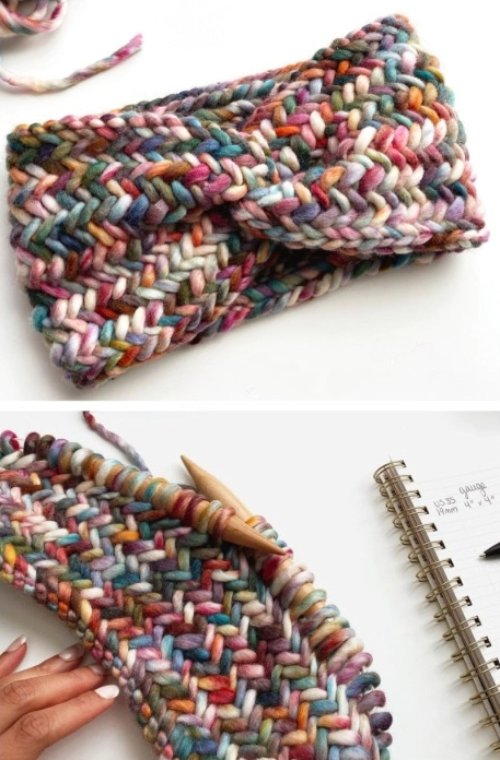
The Amina Earwarmer by Krysten Grymes of yarnTh3ory is a beautifully textured knit headband featuring an eye-catching herringbone stitch and a stylish twisted front.

Worked with super bulky yarn, the free adult version requires only about 68 yards (62 m), making it a quick winter accessory, market project or last-minute handmade gift.

Best of all, the adult-size knitting pattern is still available free from the designer. An expanded paid version is also available with four sizes and two yarn-weight options.

Amina Earwarmer Knitting Pattern Details

  • Designer: Krysten Grymes
  • Brand: yarnTh3ory
  • Published: November 2022
  • Craft: Knitting
  • Category: Earwarmer / knit headband
  • Free version: Adult size in super bulky yarn
  • Yarn weight: #6 Super Bulky
  • Suggested yarn: Malabrigo Rasta
  • Yardage: 68 yards (62 m)
  • Main needles: US 35 (19 mm)
  • Bind-off needles: US 17 (12 mm)
  • Gauge: 12 stitches × 9 rows = 4 inches (10 cm)
  • Finished adult circumference: 21 inches
  • Finished width: 5.75 inches
  • Skill level: Intermediate
  • Main texture: Herringbone knit stitch
  • Construction: Worked flat and seamed into a twisted earwarmer

What Makes the Amina Earwarmer Special?

The standout feature of this design is its herringbone knit texture.

Instead of a simple ribbed or garter-stitch headband, the fabric has a dense diagonal appearance that gives the finished accessory a polished, almost woven look.

The folded join at the front adds another design element, creating the fashionable twisted shape seen in the finished earwarmer.

The Free Amina Earwarmer Pattern

There are currently two versions of the knitting pattern, so it is useful to understand the difference before starting.

The designer's free version provides the instructions for the adult size using super bulky yarn.

This is a complete free pattern published directly on the yarnTh3ory website, not simply a preview of the paid PDF.

What Is Included in the Paid Version?

Knitters who need additional sizing or want to use a different yarn weight can choose the designer's expanded paid version.

The expanded pattern includes:

  • Baby size
  • Child size
  • Teen size
  • Adult size
  • Super bulky yarn instructions
  • Worsted-weight yarn instructions

If you only want to make the adult super-bulky version shown here, however, the designer continues to provide those instructions free.

Super Bulky Yarn Makes It Quick

The free version uses #6 super bulky yarn.

Krysten Grymes made her sample with Malabrigo Rasta in the color Molino.

Rasta is a thick merino wool yarn with excellent stitch definition, making it particularly effective for showing the strong diagonal lines of the herringbone texture.

Only 68 Yards of Yarn

One of the biggest attractions of the Amina Earwarmer is its modest yarn requirement.

The free adult version calls for approximately:

68 yards / 62 meters
of #6 super bulky yarn

That makes it a useful project for a partial skein left over from another super-bulky project, provided you have enough yardage and can achieve the required gauge.

Choosing Substitute Yarn

You do not have to use the original Malabrigo Rasta to make the earwarmer.

Look for a #6 super bulky yarn that produces a fabric close to the designer's gauge.

Because the herringbone texture is the main visual feature, a relatively smooth yarn with good stitch definition can help the diagonal pattern remain clearly visible.

Solid, tonal and gently variegated colors can all work well, although highly contrasting multicolored yarn may make the herringbone texture less obvious.

Needles

The free pattern uses two unusually large needle sizes:

  • US 35 (19 mm) circular needles for the main fabric
  • US 17 (12 mm) circular needles for binding off

The smaller needle is used at the finishing stage rather than for knitting the main herringbone fabric.

Gauge and Finished Size

The designer's gauge is:

12 stitches × 9 rows = 4 inches (10 cm)

The finished adult earwarmer measures approximately:

  • Circumference: 21 inches
  • Width: 5.75 inches

The free pattern also explains that the size can be adjusted by changing the number of stitches cast on, while the width can be changed by working more or fewer rows.

What Is Herringbone Knit Stitch?

Herringbone knitting creates a distinctive diagonal texture that resembles the classic herringbone pattern found in woven fabrics.

In the Amina Earwarmer, adjacent stitches are worked together in a special way while retaining one of the stitches to continue the sequence.

This creates the dense overlapping appearance that makes the finished headband look much more intricate than an ordinary stockinette accessory.

Is the Amina Earwarmer Beginner Friendly?

The designer rates the knitting pattern as intermediate.

The overall construction is simple, but the herringbone stitch requires more attention than standard knit and purl fabric.

If you are already comfortable handling needles and following a stitch sequence, this can be an excellent small project for learning a new texture without committing to a sweater or large blanket.

Learn the Herringbone Stitch First

Krysten Grymes provides a separate tutorial explaining the basics of the herringbone knit stitch.

It is worth practicing the technique on a small swatch before beginning the earwarmer.

Once your hands become accustomed to the movement, the repeated texture becomes much easier to work consistently.

Worked Flat

Although circular needles are listed, the earwarmer itself is worked flat.

You create a rectangular strip of herringbone fabric and then join the two ends during finishing.

This means you do not need to manage a small circumference in the round, which keeps the overall construction straightforward.

Creating the Twisted Front

The stylish front twist is created during finishing rather than through complicated shaping while knitting.

The ends of the completed strip are folded into position and sewn together. When the earwarmer is turned to the correct side, the folded seam forms the characteristic twist at the front.

The designer includes a demonstration of this finishing technique with the free pattern.

Why Use Smaller Needles for the Bind-Off?

The main fabric is worked on 19 mm needles, while the designer specifies 12 mm needles for the bind-off.

Following the designer's needle change helps reproduce the intended finishing behavior of the original sample.

Herringbone fabric behaves differently from ordinary stockinette, so it is worth following the specified finishing method before making your own adjustments.

Adjusting the Width

The free adult version is approximately 5.75 inches wide.

If you prefer a narrower earwarmer, the designer notes that you can work fewer rows. For additional coverage, work more rows before binding off.

Keep in mind that changing the dimensions will also change the amount of yarn required.

Adjusting the Circumference

The free adult sample finishes at approximately 21 inches in circumference.

The designer notes that the size can be adjusted by changing the number of stitches cast on.

If you make a substantial size adjustment, check your gauge and allow enough yarn before starting.

A Great Quick-Gift Project

The combination of super bulky yarn, a small finished size and only 68 yards of yarn makes the Amina Earwarmer especially appealing for gift knitting.

The designer specifically recommends it for market season and last-minute gifts.

Once you are comfortable with herringbone stitch, making several earwarmers in different colors can be an efficient way to turn small amounts of yarn into finished accessories.

A Useful Market-Knitting Project

Small accessories can be practical projects for craft markets because they require much less yarn and knitting time than full garments.

The strong texture and twisted front give the Amina Earwarmer a distinctive handmade appearance even though the overall construction remains relatively compact.

If you sell finished items, always check the designer's current terms before offering products made from a pattern.

Knitting vs Crochet Amina Earwarmer

Be aware that Krysten Grymes has designed both knit and crochet versions of the Amina Earwarmer.

They share the Amina name and a herringbone-inspired appearance, but they are separate patterns using different techniques and materials.

The pattern featured on this Amazing Knitting page is specifically the knit version published in November 2022.

Why Knit the Amina Earwarmer?

The Amina Earwarmer is a good choice when you want a small project that teaches something more interesting than basic ribbing or garter stitch.

Its herringbone fabric creates striking texture, the super bulky yarn helps the project progress quickly, and the twisted finishing technique gives the simple rectangular construction a stylish final shape.

With the adult instructions still available free from the designer, it is also an accessible way to try herringbone knitting before deciding whether you want the expanded multi-size pattern.

Get the Free Amina Earwarmer Knitting Pattern

The Amina Earwarmer (knit version) by Krysten Grymes is available free for the adult super-bulky version directly from yarnTh3ory.

Get the Free Amina Earwarmer Pattern →

The free designer version currently includes the adult size in super bulky yarn. An expanded paid version includes additional sizes and yarn-weight options. Pattern availability may change over time. Amazing Knitting does not reproduce or distribute the designer's copyrighted pattern instructions.

Knit Double Ankle Baby Booties

Knit Double Ankle Baby Booties
Photos above © Gülümseten Marifetler 

Want to knit a cozy pair of Double Ankle Baby Booties? This cute two-needle baby booties project features a tall, textured ankle section that gives the finished pair their distinctive look.

The project is demonstrated in a video tutorial by Gülümseten Marifetler. On this page, we've organized the essential project information, explained what makes the design interesting, and linked directly to the original tutorial so you can follow the creator's instructions.

Double Ankle Baby Booties at a Glance

Project: Double Ankle Baby Booties

Craft: Knitting

Category: Baby Booties / Baby Socks

Construction: Two-needle knitting

Feature: Tall double-ankle section

Tutorial Format: Video

Tutorial Credit: Gülümseten Marifetler

About the Double Ankle Baby Booties

These knitted baby booties combine a compact foot with a taller ankle section, giving them a cozy sock-like appearance.

The ankle is the feature that makes this project stand out from many traditional short baby booties. The extra knitted section creates more visual texture around the ankle and gives you another area where yarn color and stitch definition can become part of the design.

Knitted with Two Needles

One useful feature of this tutorial is its two-needle construction. That makes the project particularly interesting for knitters who prefer working back and forth rather than knitting small circumferences in the round.

If you've been looking at knitted baby socks but aren't ready to work with double-pointed needles or other small-circumference techniques, a two-needle bootie tutorial can be an approachable alternative.

What Makes the Double Ankle Different?

Traditional knitted baby booties often finish relatively close to the ankle. This design extends the upper section, creating the characteristic double-ankle look.

Besides changing the silhouette of the bootie, the taller upper gives the project a cozy appearance that works especially well with soft baby yarns.

A Small Project for Practicing Your Knitting

Baby booties are compact projects, which makes them useful when you want to practice garment shaping without committing to an entire sweater or blanket.

Because you need to make two matching pieces, booties also provide useful practice in keeping your tension and shaping consistent from one piece to the next.

Choosing Yarn and Color

The original tutorial should be your guide for the materials needed to reproduce the demonstrated booties. We have intentionally not added an unverified yarn weight, needle size, gauge, or stitch count here.

If you choose to experiment with another yarn, remember that changing yarn thickness or needle size can significantly change the finished dimensions of a small project like baby booties.

Color is an easy way to personalize the design. Soft neutrals can create a classic look, while brighter colors can turn the same booties into a cheerful handmade baby gift.

Before Knitting for a Baby

Baby feet vary considerably in size, so don't rely on appearance alone when choosing a project for a particular age.

Follow the measurements and materials provided by the original tutorial where available, and compare the finished size with the baby you are knitting for.

For baby projects, choose comfortable yarn and make sure all finishing is secure. Avoid adding loose decorative pieces that could detach during use.

Watch the Original Double Ankle Baby Booties Tutorial

The original video tutorial demonstrates how the booties are made. Use the creator's tutorial for the actual knitting sequence and construction details.

Watch the Baby Booties Tutorial →

Tutorial credit: Gülümseten Marifetler. Amazing Knitting does not reproduce the creator's video instructions. Please use the original tutorial for the complete knitting process.

More Baby Booties Knitting Ideas

Explore more baby booties knitting patterns, newborn booties, and baby socks knitting patterns from the Amazing Knitting archive.

Before You Start

Watch through the original tutorial before casting on so you understand the overall construction. Prepare the materials demonstrated by the creator and check the intended finished size before making the pair for a specific baby.

Triss Baby Blanket Free Knitting Pattern

Triss Baby Blanket free knitting pattern by crepleKnits
Pattern design © Agnieszka Wojtkowiak / crepleKnits

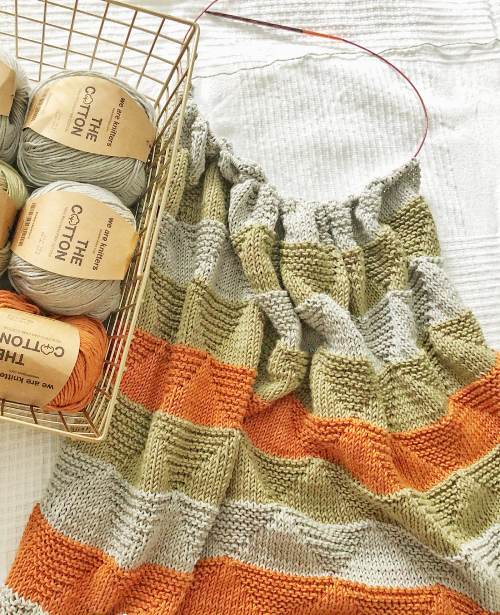
The Triss Baby Blanket by crepleKnits is a beautiful free knitting pattern that creates a modern geometric blanket using simple knit and purl stitches.

Its textured triangle design and contrasting stripes give the blanket plenty of visual interest while keeping the knitting approachable. This makes Triss an appealing project for newer knitters as well as experienced knitters looking for a relaxing baby blanket project.

Triss Baby Blanket Pattern at a Glance

Designer: Agnieszka Wojtkowiak / crepleKnits

Pattern: Triss Baby Blanket

Craft: Knitting

Category: Baby Blanket

Yarn Weight: Aran

Suggested Yarn: We Are Knitters The Cotton

Yardage: 1,094–1,203 yards (1,000–1,100 m)

Needles: US 4 (3.5 mm)

Gauge: 19 sts and 28 rows = 4 in in triangle pattern

Techniques: Knit and purl, textured pattern, stripes

Language: English

Pattern Availability: Free download

About the Triss Baby Blanket

Triss uses a combination of knit and purl stitches to form its distinctive geometric texture. Alternating sections and color changes create a clean, contemporary look that works beautifully for a baby blanket.

Because the texture is created with basic stitches rather than complicated lace or cable techniques, the design is a good choice for knitters who want to move beyond plain garter or stockinette blankets.

Yarn and Needle Details

The Ravelry pattern listing recommends We Are Knitters The Cotton and classifies the yarn requirement as Aran weight.

Plan on approximately 1,094–1,203 yards (1,000–1,100 m) of yarn for the blanket.

The recommended needle size is US 4 (3.5 mm). The listed gauge is 19 stitches and 28 rows = 4 inches in the triangle pattern.

A Simple Knit and Purl Baby Blanket

One of the strengths of the Triss Baby Blanket is that its decorative appearance comes from straightforward knitting techniques. The original pattern is described as an easy knit-and-purl design, making it suitable for knitters building confidence with textured stitch patterns.

Choosing two contrasting colors will emphasize the geometric sections, while a softer tonal combination can create a more subtle finished blanket.

Get the Free Triss Baby Blanket Pattern

Triss Baby Blanket was designed by Agnieszka Wojtkowiak of crepleKnits. The complete pattern is currently available as a free download from the designer's Ravelry listing.

Amazing Knitting does not reproduce the designer's complete knitting instructions. Use the button below to visit the original pattern page and obtain the current version directly from its authorized source.

Pattern design © Agnieszka Wojtkowiak / crepleKnits. Pattern availability is controlled by the designer and may change over time.

Sweet Pea Baby Blanket Free Knitting Pattern

Sweet Pea Baby Blanket free knitting pattern by Suzanne Middlebrooks
Photo © janem

The Sweet Pea Baby Blanket by Suzanne Middlebrooks is a soft, colorful knitted baby blanket with a simple textured pattern and an easy-to-follow construction.

Designed for worsted-weight cotton yarn, this free blanket pattern produces a finished size of approximately 30 × 40 inches, making it a practical size for a crib, stroller or handmade baby gift.

Sweet Pea Baby Blanket Pattern at a Glance

Designer: Suzanne Middlebrooks

Publisher: Hill Country Weavers

Craft: Knitting

Category: Baby Blanket

Yarn Weight: Worsted

Suggested Yarn: Blue Sky Alpacas Worsted Cotton Multi

Needles: US 9 (5.5 mm)

Gauge: 16.5 sts × 18 rows = 4 × 4 in in pattern

Finished Size: 30 in wide × 40 in long

Notions: Tapestry needle; blocking wires and pins optional

Availability: Free PDF pattern

About the Sweet Pea Baby Blanket

Sweet Pea is designed as a soft and snuggly baby blanket with a straightforward textured stitch pattern. Hill Country Weavers describes it as a fast, fun and easy project, making it appealing for knitters who want a useful baby blanket without an overly complicated construction.

The finished proportions are rectangular, with enough length for wrapping a baby while still remaining manageable as a portable knitting project.

Yarn Requirements

The original version uses Blue Sky Alpacas Worsted Cotton Multi, a worsted-weight cotton yarn with approximately 150 yards per skein.

The multicolor version shown by the publisher uses 6 skeins. If you substitute the solid-color version of the same worsted cotton yarn, the publisher notes that approximately 4 skeins are needed.

A soft worsted-weight cotton yarn is particularly suitable for a baby blanket because it provides good stitch definition while creating a comfortable, washable fabric.

Needles and Gauge

The recommended needle size is US 9 (5.5 mm).

The stated gauge is 16.5 stitches × 18 rows = 4 × 4 inches in pattern. Checking gauge before beginning can help keep the finished blanket close to the intended dimensions.

Finished Size

The completed Sweet Pea Baby Blanket measures approximately 30 inches wide by 40 inches long.

This is a versatile baby-blanket size for use in a nursery, stroller or as a handmade shower gift.

Is the Sweet Pea Baby Blanket Pattern Free?

Yes. The Sweet Pea Baby Blanket is currently available as a free knitting pattern from the original publisher, Hill Country Weavers.

The publisher's page lists the pattern at $0.00 and also provides a direct free PDF download.

Amazing Knitting provides project information and links readers to the authorized source rather than reproducing the complete copyrighted pattern instructions.

Get the Free Sweet Pea Baby Blanket Pattern

Visit Hill Country Weavers to view the original pattern page and access the free PDF.

Holding Hands Baby Blanket Free Knitting Pattern

Holding Hands Baby Blanket free knitting pattern by Yasemin Ersoy

Holding Hands Baby Blanket. Photo © sworley

Holding Hands Baby Blanket by Yasemin Ersoy is a free textured baby blanket knitting pattern that turns a simple rectangular blanket into something much more interesting through repeating raised motifs.

Worked with DK-weight yarn, the design combines large areas of smooth knitting with textured details and a seed-stitch gauge. The result is a classic baby blanket that works beautifully as a handmade newborn or baby-shower gift.

Holding Hands Baby Blanket Pattern Details

  • Designer: Yasemin Ersoy
  • Published in: Knittle Things
  • Craft: Knitting
  • Category: Baby blanket
  • Pattern availability: Free download
  • Yarn weight: DK
  • Suggested yarn: Ingelise Palma
  • Needles: 3.5 mm (US 4)
  • Yardage: Approximately 1,200 yards (1,097 m)
  • Gauge: 12 stitches and 16 rows = 2 inches in seed stitch
  • Shape: Rectangle
  • Language: English

A Textured Baby Blanket with a Distinctive Look

The charm of the Holding Hands Baby Blanket comes from the contrast between its smoother background and repeating textured motifs. These raised sections break up the fabric and create the distinctive look that gives the blanket its name.

Because the texture is built directly into the knitting, there are no separate decorative pieces to attach afterward.

Yarn and Needles

The original pattern calls for DK-weight yarn and 3.5 mm (US 4) knitting needles. Approximately 1,200 yards (1,097 m) of yarn are listed for the project.

The suggested yarn is Ingelise Palma, a DK-weight blend of cotton, rayon and linen. If you substitute another yarn, choose one that gives good stitch definition so the blanket's textured motifs remain clearly visible.

What Skills Are Useful for This Pattern?

The blanket is an appealing choice for knitters who are comfortable with basic knitting and want to move into more interesting textured projects.

The design uses familiar knitting techniques to build the repeating texture across the blanket. Paying attention to the pattern repeats and checking your work as each motif develops will help keep the design consistent.

Why Knit the Holding Hands Baby Blanket?

This pattern offers a nice balance between a practical baby blanket and an interesting knitting project. The neutral geometric texture can work with many different yarn colors, making it easy to adapt for a nursery or handmade gift.

A solid or lightly tonal yarn is especially effective because it allows the shadows created by the raised stitches to become part of the design.

Get the Free Holding Hands Baby Blanket Pattern

The complete Holding Hands Baby Blanket pattern by Yasemin Ersoy is currently available as a free download from the designer's pattern page.

Get the Free Holding Hands Baby Blanket Pattern

Pattern availability was checked when this article was updated. Availability on external websites may change over time.

These Days Blanket – Easy Reversible Knitting Pattern

These Days Blanket reversible geometric knitting pattern by Fifty Four Ten Studio

These Days Blanket designed by © Fifty Four Ten Studio.

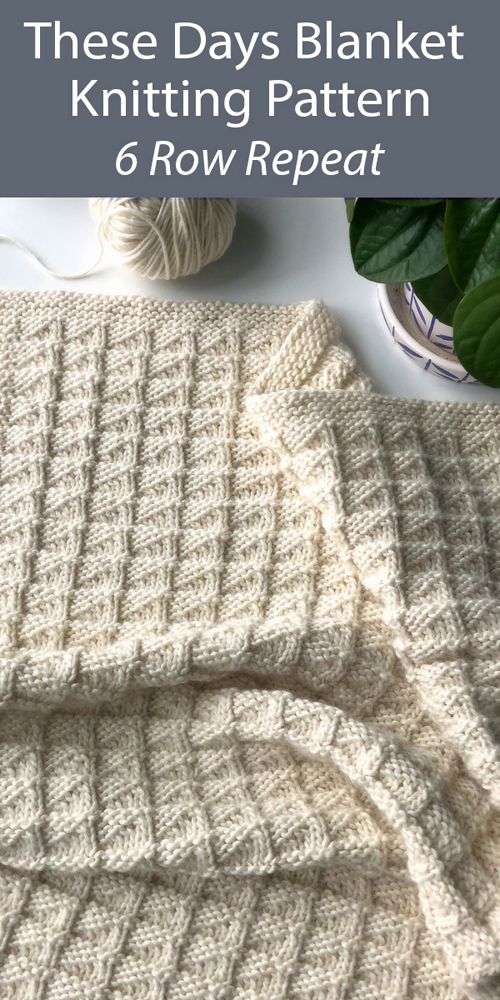
These Days Blanket by Fifty Four Ten Studio is a modern reversible blanket knitting pattern featuring a beautifully simple geometric texture made entirely with knit and purl stitches.

The repeating design resembles small triangles inside squares, creating a clean contemporary texture that looks attractive on both sides of the blanket.

Even better, the blanket is knitted flat in one piece and the pattern includes six sizes, from a baby blanket to a generous XXL throw.

Pattern availability: These Days Blanket is currently available as a paid PDF knitting pattern directly from Fifty Four Ten Studio. You will find the official pattern link near the end of this guide.

These Days Blanket at a Glance

  • Pattern: These Days Blanket
  • Designer: Mary Lee / Fifty Four Ten Studio
  • Published: February 2020
  • Category: Baby blanket / throw
  • Construction: Worked flat in one piece
  • Yarn weight: Worsted #4
  • Needles: US 7 / 4.5 mm circular needles
  • Gauge: Approximately 19 sts × 30 rows = 4 in / 10 cm in pattern stitch
  • Yardage: Approximately 760–2,400 yd (695–2,195 m), depending on size
  • Sizes: Baby, Small, Medium, Large, XL and XXL
  • Stitch pattern: 6-row knit-and-purl repeat
  • Design: Fully reversible geometric texture
  • Skill level: Easy / confident beginner
  • Pattern language: English, using standard U.S. knitting terms
  • Current availability: Paid PDF pattern

A Modern Geometric Knitted Blanket

The main attraction of These Days Blanket is its understated geometric texture.

A repeating combination of knit and purl stitches creates small triangle-in-a-square shapes across the surface of the blanket.

From a distance, the repeated shapes form a clean modern pattern. Up close, the raised and recessed stitches give the fabric plenty of texture without the need for cables, lace or colorwork.

The Blanket Is Fully Reversible

One of the most useful features of These Days Blanket is that the stitch pattern is reversible.

The geometric design looks the same on both sides, so there is no obvious right or wrong side of the finished blanket.

This is especially useful for baby blankets and throws because they are constantly folded, wrapped and turned over during everyday use.

Only Knit and Purl Stitches

Although the finished texture looks detailed, the stitch pattern is created entirely with knit and purl stitches.

There are no complicated cables or lace techniques required to produce the geometric design.

This makes These Days Blanket an appealing project for knitters who have mastered the basic stitches and are ready to practice following a repeating textured pattern.

A Simple 6-Row Repeat

The geometric texture is built from a six-row repeating stitch pattern.

Short repeats can make a large blanket much more enjoyable to knit because the rhythm of the design becomes familiar after you have worked several repetitions.

You still need to keep track of your rows carefully, but once the pattern becomes recognizable it can develop into relaxing, straightforward knitting.

Six Blanket Sizes

The pattern includes instructions for six finished sizes, making it useful for everything from a baby gift to a large sofa throw.

  • Baby: approximately 27 × 30 in
  • Small: approximately 30 × 34 in
  • Medium: approximately 33.5 × 37 in
  • Large: approximately 36 × 41 in
  • XL: approximately 39 × 48 in
  • XXL: approximately 46 × 54 in

These measurements are approximate after blocking. Your finished dimensions may vary slightly depending on your yarn, gauge and knitting tension.

You Can Make the Blanket Longer

Another useful feature of the design is the ability to add extra pattern repeats if you want a longer blanket.

According to the designer, each additional repeat adds approximately 0.75 inch to the length.

Remember that making the blanket longer will require additional yarn, so plan your yardage before modifying the size.

Yarn Requirements

These Days Blanket is designed primarily for worsted #4 weight yarn.

Approximate yarn requirements for the six sizes are:

  • Baby: 760–780 yd
  • Small: 950–980 yd
  • Medium: 1,140–1,180 yd
  • Large: 1,350–1,400 yd
  • XL: 1,700–1,800 yd
  • XXL: 2,300–2,400 yd

Buy additional yarn if you plan to increase the length or if your gauge differs significantly from the pattern gauge.

Choosing Yarn for These Days Blanket

The designer recommends using a solid-color yarn for the best appearance.

This is good advice for textured knitting. The shadows created by knit and purl stitches are easier to see when the yarn color does not compete with the stitch pattern.

Light and medium shades can make the geometric shapes particularly visible.

Wool, Cotton or Acrylic?

The pattern can work with many worsted-weight yarns and is not limited to one particular fiber.

Wool can provide warmth and excellent stitch definition. A washable wool or wool blend can be especially practical for a baby blanket.

Acrylic may offer easy care and a wide range of affordable colors, while suitable cotton yarn can create a different drape and feel.

Whatever fiber you choose, make a swatch first to make sure you like the appearance and feel of the textured fabric.

Needles

The designer used US 7 / 4.5 mm needles.

Although the blanket is knitted flat rather than in the round, circular needles are recommended because the cable can comfortably hold the large number of stitches required for a blanket.

Work back and forth on the circular needle exactly as you would on straight needles.

Gauge

The listed gauge is approximately 19 stitches and 30 rows = 4 inches / 10 cm in the pattern stitch using US 7 / 4.5 mm needles.

The designer notes that exact gauge is not essential, but the textured pattern tends to look best when the stitches are fairly firm.

A significantly different gauge can change the finished dimensions and the amount of yarn required.

Is These Days Blanket Beginner Friendly?

The designer rates These Days Blanket as an easy knitting pattern.

It is particularly suitable for a confident beginner who already knows how to knit and purl and wants to move beyond plain stockinette or garter-stitch projects.

The main challenge is not a difficult knitting technique. Instead, it is accurately following the row-by-row sequence that creates the geometric texture.

Skills You Will Need

Before beginning These Days Blanket, you should be comfortable with:

  • Casting on stitches
  • Knitting
  • Purling
  • Reading row-by-row knitting instructions
  • Keeping track of pattern repeats
  • Binding off
  • Weaving in yarn ends

No advanced cable or lace techniques are required to create the main geometric texture.

Use a Row Counter

Because the design depends on a six-row repeat, keeping track of your current row is important.

A row counter, notebook, phone app or simple pencil mark beside each completed row can help prevent mistakes.

Once you have knitted several repeats, you may begin to recognize the visual rhythm of the pattern, but it is still useful to maintain an accurate row count.

Check Your Texture Regularly

Take a moment every few rows to look at the geometric shapes developing across the blanket.

Since the design is created by the placement of knit and purl stitches, a mistake can interrupt the repeating texture.

Catching an error early is much easier than discovering it after many additional rows have been knitted.

Why Solid Yarn Is a Smart Choice

Highly variegated yarn can sometimes hide subtle knit-and-purl textures.

If the geometric pattern is the feature you love most about These Days Blanket, consider a solid or gently tonal yarn that allows the triangle-in-a-square design to remain visible.

The simplicity of one color also gives the finished blanket a clean, contemporary appearance.

Knitting the Baby Size

The smallest version measures approximately 27 × 30 inches after blocking and requires roughly 760–780 yards of worsted-weight yarn.

This size can be a good choice for a handmade baby gift because it allows you to enjoy the complete geometric design without committing to the yardage required for a full-size throw.

If the blanket will be used for a baby, choose a soft yarn with care instructions that suit the recipient.

Knitting a Larger Throw

If you want a blanket for a sofa, reading chair or bedroom, one of the larger sizes may be more appropriate.

The XL and XXL versions allow the repeating texture to cover a much larger surface, producing a simple but visually impressive throw.

Larger sizes require considerably more yarn, so checking dye lots and purchasing enough yarn at the beginning of the project is a sensible precaution.

Blocking Makes a Difference

Blocking is particularly useful for a textured blanket like this one.

Before blocking, the edges may appear slightly wavy and the geometric texture may not look completely settled.

Gentle blocking can help square the blanket, relax the fabric and make the stitch pattern appear more defined.

Always use a blocking method appropriate for the fiber content of your chosen yarn.

A Relaxing Repetitive Project

Large blankets often involve many hours of knitting, so a memorable stitch repeat can make the process much more enjoyable.

These Days Blanket combines enough texture to keep the project interesting with a short enough repeat to become familiar.

For many knitters, this balance makes it a good project for relaxed evening knitting once the pattern sequence has been learned.

The Story Behind the Name

Designer Mary Lee named the pattern These Days because the geometric stitch design reminded her of the boxes on a paper calendar.

The repeating squares reflect the idea of individual days: some filled with important events, others with challenges, and many with the simple everyday moments that are easy to overlook.

That inspiration gives the otherwise minimalist geometric blanket a thoughtful personal story.

Why These Days Blanket Is So Versatile

The combination of six sizes, worsted-weight yarn and a reversible texture makes this pattern useful for many different projects.

Knit the smaller version as a baby blanket, choose a middle size for a lap blanket, or work one of the larger versions as a cozy throw.

Because the design is geometric rather than themed, it also works well with many decorating styles and gift occasions.

These Days Blanket Pattern Availability

These Days Blanket is currently a paid knitting pattern.

The original designer, Fifty Four Ten Studio, currently offers the downloadable PDF directly through the official studio website.

At the time of our latest availability check, the official PDF is listed at $6 USD.

We also checked for a legitimate currently available free version of this exact pattern but did not find one. Therefore, we are linking directly to the designer's official pattern page rather than directing readers to an unofficial copy.

Get the These Days Blanket Pattern

Visit Fifty Four Ten Studio to see the complete pattern details and purchase the downloadable PDF directly from the designer.

Get the These Days Blanket Pattern →

These Days Blanket is designed by Mary Lee of Fifty Four Ten Studio. Amazing Knitting does not reproduce the copyrighted row-by-row pattern instructions. Pattern pricing and availability may change, so please check the designer's official page for the latest information.

Read Our Pattern Availability Policy →


Bramble Baby Blanket – Free Easy Textured Knitting Pattern

Bramble Baby Blanket free knitting pattern by Rachael Tindale

Bramble Baby Blanket designed and photographed © Rachael Tindale.

Bramble Baby Blanket by Rachael Tindale is a beautifully textured baby blanket that turns a simple repeating stitch pattern into soft clusters of raised texture.

The blanket uses Aran-weight yarn and a memorable bramble stitch pattern, making it an appealing project for knitters who want something more interesting than plain garter or stockinette without moving into complicated cables or lace.

Even better, the original Bramble Baby Blanket is still available as a free knitting pattern directly from Rachael Tindale through her Ravelry store.

Bramble Baby Blanket at a Glance

  • Pattern: Bramble Baby Blanket
  • Designer: Rachael Tindale
  • Published: July 2018
  • Category: Baby blanket
  • Yarn weight: Aran
  • Suggested yarn: Caron Simply Soft
  • Yardage: 600–630 yd (549–576 m)
  • Needles: US 5 / 3.75 mm
  • Gauge: 10 stitches = 2 inches
  • Construction: Worked flat
  • Main feature: Bramble / berry stitch texture
  • Pattern language: English
  • Current availability: Free Ravelry download

What Makes the Bramble Baby Blanket Special?

The star of this blanket is its rich all-over texture.

Bramble stitch, sometimes associated with berry-like or cluster textures, creates small raised sections across the knitted fabric. These textured areas catch the light differently from smooth stockinette, giving the blanket depth even when it is worked in just one color.

The result looks decorative without requiring complicated colorwork.

An Easy Four-Row Repeat

One reason this pattern is so attractive for everyday knitting is its short four-row main stitch repeat.

Short repeats are useful in larger projects such as blankets because they become easier to recognize after you have worked them several times.

Instead of constantly checking a long sequence of different rows, you can begin to recognize the rhythm of the textured fabric as it develops.

What Is Bramble Stitch?

Bramble stitch is a dimensional knitting texture built by combining increases and decreases in a repeating arrangement.

These changes in stitch structure produce the characteristic clustered or berry-like surface.

Although the finished fabric can look intricate, the designer describes the stitch as easy to learn.

This makes the blanket an interesting next step for a knitter who is comfortable with basic knitting and purling and wants to explore a more decorative texture.

A Single Color Lets the Texture Shine

Bramble Baby Blanket works beautifully in a solid color because the stitch pattern provides plenty of visual interest on its own.

Without stripes or complex color changes competing for attention, the raised texture becomes the focal point of the blanket.

Light and medium shades are particularly effective when you want the shadows between the textured stitches to remain easy to see.

Original Yarn: Caron Simply Soft

Rachael Tindale designed the blanket using Caron Simply Soft.

The yarn is an easy-care acrylic yarn commonly used for blankets, garments and accessories.

The original pattern uses approximately 600–630 yards (549–576 meters).

Can You Substitute the Yarn?

Yes. You do not necessarily need the exact original yarn to knit the blanket.

Look for an Aran-weight yarn that produces a comfortable fabric and gives good stitch definition.

Because the bramble texture is the main decorative feature, a very fuzzy yarn may hide some of the detail. A smoother yarn generally makes the raised pattern easier to see.

Choose a Baby-Friendly Yarn

When choosing yarn for a baby blanket, think beyond color.

Useful qualities include:

  • Softness against sensitive skin
  • Easy washing and drying
  • Good stitch definition
  • Durability for frequent use
  • A comfortable finished weight

Always check the yarn manufacturer's care instructions before beginning so the finished blanket will be practical for the recipient.

How Much Yarn Will You Need?

The published pattern calls for approximately 600–630 yards of Aran-weight yarn.

The original project uses two balls of Caron Simply Soft.

If you substitute another yarn, check the yardage on the label rather than simply buying the same number of balls. Skein and ball sizes vary considerably between yarn brands.

Needle Size

The pattern specifies US 5 / 3.75 mm knitting needles.

The designer lists straight needles in the original materials, although some knitters prefer using a circular needle for blankets even when the project is worked back and forth.

A circular needle can hold a large number of stitches while allowing the growing weight of the blanket to rest more comfortably in your lap.

Changing the type of needle does not mean you need to knit the blanket in the round; you can still turn the work at the end of each row.

Gauge

The designer gives a gauge of approximately 10 stitches = 2 inches.

Gauge affects the dimensions of the finished blanket and the amount of yarn you use.

If your stitches are much larger than the designer's, your blanket may become wider and require more yarn. If your knitting is considerably tighter, the blanket may turn out smaller and denser.

Make a Bramble Stitch Swatch First

A small practice swatch is particularly worthwhile if you have never knitted bramble stitch before.

Use the swatch to become comfortable with the texture before managing an entire blanket-width row.

It will also show you how clearly your chosen yarn displays the raised pattern and whether you like the resulting fabric.

Worked Flat

Bramble Baby Blanket is worked flat.

You knit back and forth in rows rather than working continuously in the round.

This familiar construction makes the project accessible to knitters who have not yet learned circular knitting techniques.

Is Bramble Baby Blanket Beginner Friendly?

The designer describes the bramble stitch as easy to learn, but the project is more interesting than a blanket made entirely from basic knit stitches.

It is a good choice for an adventurous beginner or confident beginner who wants to practice maintaining a repeating texture across a larger project.

If you are completely new to knitting, practice the stitch pattern on a small swatch before casting on the full blanket.

Skills That Will Help

Useful skills for this project include:

  • Casting on
  • Knit stitches
  • Purl stitches
  • Working increases
  • Working decreases
  • Following a repeating stitch pattern
  • Counting stitches
  • Keeping track of rows
  • Binding off
  • Weaving in yarn ends

Keep Track of the Four-Row Repeat

A short repeat becomes easier with practice, but it is still worth tracking your rows carefully.

Use a row counter, notebook, phone counter or simple four-row checklist.

Marking each completed row can prevent you from accidentally repeating or skipping part of the texture after putting the project down.

Count Your Stitches Regularly

Bramble-style textures involve changes in stitch structure, so an unnoticed mistake can affect the alignment of later repeats.

Count your stitches periodically rather than waiting until the texture visibly shifts.

Catching an extra or missing stitch early can save a great deal of unknitting later.

Learn to Read the Texture

As the blanket grows, spend some time looking at how each completed bramble section appears.

Once you recognize the structure of a correct repeat, the knitted fabric itself becomes an additional way to check your progress.

If one section suddenly looks different from the others, stop and check your work before continuing.

Do Not Pull the Textured Stitches Too Tight

Dimensional stitch patterns need enough room to form properly.

Try to maintain relaxed, consistent tension when working the increases and decreases that create the bramble effect.

Pulling certain stitches much tighter than others can make the texture look uneven.

Check Your Work Every Few Rows

Lay the knitting out occasionally and look across the entire width.

The texture should develop consistently from one section to another.

This simple habit is especially useful on a blanket because a small mistake can otherwise remain unnoticed for many long rows.

Why Textured Baby Blankets Make Great Gifts

A single-color textured blanket has a timeless look that works for many different nurseries and color schemes.

The bramble surface makes the project visually distinctive while the simple rectangular shape keeps construction straightforward.

Choose a washable yarn and the finished blanket can be both decorative and practical.

Try Neutral or Modern Colors

You do not have to use traditional pastel baby shades.

Cream, oatmeal, soft gray, sage, dusty blue and muted rose can all show off textured stitches beautifully.

A stronger color such as teal, mustard or deep blue can create a more contemporary look while preserving the classic texture.

Blocking the Finished Blanket

Gentle blocking can help the blanket settle into an even rectangular shape and improve the appearance of the stitches.

Do not aggressively flatten the fabric because the raised bramble texture is one of the defining features of the design.

Follow the care instructions for your chosen yarn when washing and blocking the finished blanket.

Why This Pattern Is Worth Knitting

Bramble Baby Blanket combines several qualities that make a satisfying knitting project: a short repeat, interesting texture, straightforward flat construction and a manageable amount of yarn.

It can help a newer knitter move beyond plain knitting while remaining repetitive enough for comfortable blanket knitting once the stitch rhythm becomes familiar.

And because the original designer still provides the pattern for free, knitters can continue to access the exact pattern featured here rather than relying on unofficial copies.

Free Bramble Baby Blanket Knitting Pattern

Bramble Baby Blanket by Rachael Tindale is currently available as a free knitting pattern.

The original pattern is provided through Rachael Tindale's Ravelry Store as a free Ravelry download.

This is the exact pattern featured on this Amazing Knitting page: the Aran-weight textured baby blanket published by Rachael Tindale in 2018.

Pattern availability can change over time, so Amazing Knitting checks older pattern links and gives priority to a legitimate free source whenever the exact design remains officially available at no cost.

Get the Free Bramble Baby Blanket Pattern

Visit Rachael Tindale's pattern page for the complete original knitting instructions and free download.

Get the Free Bramble Baby Blanket Pattern →

Bramble Baby Blanket is designed by Rachael Tindale. Amazing Knitting does not reproduce the designer's copyrighted row-by-row instructions. The original pattern is currently offered as a free download by the designer. Availability may change, so please check the linked source for the latest information.

Read Our Pattern Availability Policy →

Discover More From the Archive

A fresh mix of knitting patterns and tutorials from the Amazing Knitting archive.

Finding patterns from the archive…