Skip to content

...

Showing posts sorted by date for query round yoke sweater. Sort by relevance Show all posts

Growing Garden Cardigan – Free Baby Knitting Pattern

Growing Garden Cardigan free baby knitting pattern by Sandi Rosner

Growing Garden Cardigan. Photo © Purl Soho

Growing Garden Cardigan is a free baby and toddler knitting pattern designed by Sandi Rosner for Purl Soho. This cheerful top-down cardigan combines a simple background color with little rows of colorful textured dots that look like tiny flowers scattered across the fabric.

The clever part is the colorwork: simple slip stitches mean you work with only one color per row. That makes this little cardigan an inviting project for knitters who want to try colorwork without juggling multiple yarn colors at the same time.

Growing Garden Cardigan Pattern Details

  • Designer: Sandi Rosner
  • Publisher: Purl Soho
  • Craft: Knitting
  • Category: Baby and toddler cardigan
  • Pattern availability: Free
  • Sizes: Newborn, 6–12 months, 12–18 months, 18–24 months
  • Yarn weight: DK / Light Worsted
  • Suggested yarn: Purl Soho Cotton Chirp DK and Cotton Chirp DK Minis
  • Needles: 4 mm (US 6)
  • Gauge: 22 stitches and 40 rows = 4 inches in Dotted Stripe Pattern
  • Construction: Top down
  • Techniques: Slip-stitch colorwork, knitting flat and in the round
  • Language: English

Easy Slip-Stitch Colorwork

The Growing Garden Cardigan gets its playful appearance from Purl Soho's Dotted Stripe Pattern. Small contrast-color bumps appear in staggered rows against the main background color, creating the cardigan's garden-inspired look.

Instead of traditional stranded colorwork with two yarns worked across the same row, this design uses slip stitches so that you only need to work with one color at a time. Purl Soho specifically recommends the project as a gentle introduction to colorwork knitting.

Sizes from Newborn to 24 Months

The free pattern includes four sizes: Newborn, 6–12 months, 12–18 months and 18–24 months.

Finished chest circumferences are approximately 17 (19½, 21, 23½) inches, with about 1–2 inches of positive ease built into the sizing.

This range makes the pattern suitable for everything from a tiny newborn cardigan to a colorful sweater for an active toddler.

Yarn and Needles

The original cardigan uses Purl Soho Cotton Chirp DK for the main color and Cotton Chirp DK Minis for the contrasting colored dots.

Both are 100% Peruvian Pima cotton yarns in the DK / Light Worsted range. The main color requires approximately 230 (300, 380, 445) yards, depending on size, plus smaller quantities of four contrast colors.

The pattern uses 4 mm (US 6) circular needles and double-pointed needles, or the needle size required to achieve the specified gauge.

How the Growing Garden Cardigan Is Constructed

The cardigan is worked from the top down. You begin at the collar and work the yoke and body flat in one piece.

At the armholes, the sleeve stitches are placed on hold while the body continues down to the lower edge. The held sleeve stitches are then returned to the needles and the sleeves are worked in the round down to the cuffs.

Garter-stitch details at the collar, hem, cuffs and button bands provide a simple textured frame around the colorful dotted stripes.

A Great Way to Play with Color

The small amounts of contrast yarn required for the dotted stripes make this design particularly fun for experimenting with color combinations. You can keep the background neutral and choose bright accents, or use a colorful main shade with softer contrasting dots.

Because each contrast color appears in relatively small amounts, the design may also be useful for compatible DK-weight leftovers, provided you can maintain the pattern gauge and choose yarns suitable for the finished garment.

What You'll Need

  • DK / Light Worsted yarn for the main color
  • Four small quantities of contrasting DK yarn
  • 4 mm (US 6) circular knitting needles
  • 4 mm (US 6) double-pointed needles or your preferred method for small circumferences
  • Stitch holders or scrap yarn
  • A stitch marker
  • 4 or 5 small buttons, depending on size

Get the Free Growing Garden Cardigan Pattern

The complete Growing Garden Cardigan by Sandi Rosner is available free from the original publisher, Purl Soho. Their pattern page includes the full instructions, sizing, materials, photos and additional knitting guidance.

Get the Free Growing Garden Cardigan Pattern at Purl Soho

Pattern availability was checked when this article was updated. Availability on external websites may change over time.

Autumn Sweater – Free Icelandic Colorwork Knitting Pattern

Autumn Sweater free Icelandic colorwork knitting pattern by Nazilia Zemdikhanova

Autumn Sweater by Nazilia Zemdikhanova is a beautiful free Icelandic-style sweater knitting pattern featuring a bold stranded colorwork yoke and a cozy oversized silhouette.

If you have some knitting experience but have been hesitant to tackle your first colorwork sweater, this is an especially interesting project. The sweater uses bulky yarn and large needles, so the fabric grows much faster than a typical fine-gauge sweater.

Even better, the designer provides the complete pattern as a free download along with video tutorials covering the construction.

Design and photo © Nazilia Zemdikhanova.

Autumn Sweater Pattern Overview

  • Designer: Nazilia Zemdikhanova
  • Pattern: Autumn
  • Craft: Knitting
  • Category: Pullover
  • Style: Icelandic / circular-yoke sweater
  • Yarn weight: Bulky
  • Suggested yarn: Ístex Álafosslopi
  • Main needles: US 10 / 6 mm
  • Smaller needles: US 7 / 4.5 mm
  • Gauge: 13 stitches and 18 rows = 4 in / 10 cm
  • Sizes: XS, S, M, L, XL, 2XL
  • Yardage: Approximately 1,094–1,422 yd (1,000–1,300 m)
  • Construction: Bottom up, in the round
  • Languages: English and French
  • Pattern availability: Free

A Free Icelandic-Style Sweater Pattern

The defining feature of Autumn is its dramatic stranded colorwork circular yoke. Contrasting motifs travel around the shoulders while the body and sleeves remain much simpler.

This creates the classic visual balance associated with Icelandic-style pullovers: straightforward stockinette knitting across large sections of the garment followed by a decorative yoke where the colors and motifs become the focus.

The sweater is designed with positive ease, giving it a comfortable, relaxed appearance that works particularly well with the substantial bulky-weight fabric.

How the Autumn Sweater Is Constructed

Autumn is knitted from the bottom up and in the round. The body is worked first up to the underarm.

The sleeves are knitted separately, then the body and sleeves are joined onto the same circular needle. From there, the upper sweater is worked together as one piece while the stranded colorwork yoke develops toward the neckline.

This method minimizes finishing because the main sections are worked in the round rather than as separate flat front and back pieces that need to be seamed together.

Autumn Sweater Sizes

The pattern includes six adult sizes:

  • XS: 38.2 in / 97 cm finished bust
  • S: 40.1 in / 102 cm
  • M: 41.7 in / 106 cm
  • L: 43.7 in / 111 cm
  • XL: 45.3 in / 115 cm
  • 2XL: 47.2 in / 120 cm

These measurements describe the finished sweater rather than your body measurement. Before choosing a size, compare the finished circumference with your own bust measurement and consider how much positive ease you want.

Yarn and Gauge

The original pattern suggests Ístex Álafosslopi, a bulky Icelandic wool traditionally well suited to warm outer sweaters.

The published gauge is: 13 stitches and 18 rows = 4 inches (10 cm).

The recommended main needle is US 10 / 6 mm, with US 7 / 4.5 mm needles used for the smaller-gauge sections.

Needle sizes are always a starting point. Make a gauge swatch before beginning and change needle size if necessary to obtain the pattern gauge. Gauge is especially important for a sweater because even a small difference can substantially change the finished circumference.

Choosing Colors for the Yoke

The circular yoke is where this sweater really comes alive. The original design uses contrasting colors to make the stranded motifs clearly visible against the main fabric.

When choosing your own palette, aim for enough contrast between the main color and motif colors. Two shades that look very different in the skein can sometimes appear surprisingly similar once knitted together.

You can stay close to traditional earthy Icelandic colors or create a completely different version with brighter contemporary shades.

Skills You'll Practice

  • Knitting in the round
  • Working a sweater from the bottom up
  • Knitting sleeves in the round
  • Joining sleeves and body
  • Stranded colorwork
  • Reading a colorwork chart
  • Working a circular yoke
  • Managing decreases through the yoke
  • Working ribbed edges
  • Finishing a seamless-style sweater

Is This a Good First Colorwork Sweater?

Autumn can be an appealing first larger stranded-colorwork project for a knitter who already understands basic sweater knitting.

Much of the garment consists of straightforward knitting in the round, so you are not working stranded motifs across the entire sweater. Instead, the more concentrated colorwork appears around the yoke.

The bulky yarn and 6 mm main needles are another advantage: progress is easy to see, and the project generally grows faster than a sweater made from DK, sport or fingering-weight yarn.

Tips for Better Stranded Colorwork

Try not to pull the unused yarn too tightly behind your stitches. The floats need enough room to stretch across the back of the fabric without drawing the knitted fabric inward.

It can help to spread the recently worked stitches along the right-hand needle before carrying the unused color across the back.

Check your colorwork frequently as you knit. If the yoke begins to pucker, your floats may be too tight.

Free Video Tutorials

One of the strongest features of this pattern is that the designer has also provided video tutorials to accompany the written instructions.

These videos can be particularly useful if this is your first Icelandic-style sweater because you can see the construction and techniques demonstrated rather than relying only on written directions.

Get the Free Autumn Sweater Pattern

The exact Autumn Sweater by Nazilia Zemdikhanova is currently available as a free knitting pattern.

The designer provides the pattern through Ravelry in English and French. The pattern page also contains the designer's current project information and links to the accompanying tutorials.

Get the Free Autumn Sweater Pattern →

Why We Like the Autumn Sweater

Autumn combines several qualities that make a sweater project rewarding: a bold visual result, relatively fast bulky-yarn knitting and an opportunity to learn or improve stranded colorwork.

The straightforward body lets you settle into comfortable knitting before the circular yoke introduces the decorative part of the project. The result is a warm handmade sweater with the unmistakable character of traditional Icelandic-inspired knitwear.

Pattern Availability

Amazing Knitting checks the availability of the patterns featured in our guides and links to legitimate designer or publisher sources whenever possible.

Patterns can move, become paid or be discontinued over time. If the availability of this pattern changes, the designer's current listing should be treated as the authoritative source.

Read Our Pattern Availability Policy →

Autumn and its pattern instructions remain the intellectual property of Nazilia Zemdikhanova. Amazing Knitting provides an independent project guide and links to the authorized pattern source; the designer's row-by-row instructions and charts are not reproduced here.

Sheep Yoke Baby Cardigan - Free Knitting Pattern

Sheep Yoke Baby Cardigan free knitting pattern with colorwork sheep yoke

Sheep Yoke Baby Cardigan by Jennifer Little is a charming baby sweater featuring a playful flock of sheep around a colorful patterned yoke. The combination of traditional colorwork, tiny sheep and a practical button-front cardigan makes this an especially memorable hand-knit for a baby.

The pattern was originally published on Jennifer Little's Looking Glass Knits in 2007 and is still available free from the designer's original pattern page.

The cardigan is designed in DK-weight yarn and includes two baby sizes. Instead of changing the stitch counts between sizes, the designer uses different needle sizes and gauges, allowing the same yoke chart and stitch counts to be used for both versions.

Design © Jennifer Little / Looking Glass Knits.

Sheep Yoke Baby Cardigan Pattern Overview

  • Designer: Jennifer Little
  • Design: Sheep Yoke Baby Cardigan
  • Craft: Knitting
  • Category: Baby Cardigan / Sweater
  • Published: October 2007
  • Sizes: 6–9 months and 9–12 months
  • Yarn weight: DK
  • Suggested yarn: Knit Picks Swish DK or suitable DK-weight superwash wool
  • Needles: US 5 / 3.75 mm for the smaller size; US 6 / 4 mm for the larger size
  • Gauge: 6 stitches and 9 rows = 1 in with smaller needles; 5.5 stitches and 8 rows = 1 in with larger needles
  • Construction: Top-down circular-yoke cardigan worked flat
  • Language: English
  • Pattern availability: Free

An Adorable Colorwork Sheep Yoke

The feature that immediately makes this baby cardigan stand out is its sheep-patterned yoke. Small sheep are arranged around the upper part of the sweater and surrounded by contrasting geometric colorwork.

The sheep aren't simply decorative blocks of color. The original design uses texture to help them stand out from the surrounding stockinette fabric, while duplicate-stitch details are added later to create features such as the heads and legs.

One sheep at the center back even faces forward rather than following the direction of the rest of the flock, giving the yoke an especially playful detail.

Two Baby Sizes From the Same Pattern

Jennifer Little designed the cardigan for approximately 6–9 months and 9–12 months.

An interesting feature of the pattern is the way the two sizes are created. The stitch counts and colorwork chart remain the same; instead, the knitter uses a different needle size and gauge to produce the smaller or larger cardigan.

For that reason, making and measuring a gauge swatch is particularly important for this project. Choose the needle size that produces the gauge required for the size you want rather than relying only on the needle number printed in the pattern.

Yarn and Color Choices

The original pattern calls for DK-weight superwash wool. The designer used Knit Picks Swish DK for the sample.

The original palette combines a main neutral color with blue, green, cream and black. A pink accent is also included in the girl's version described by the designer.

You don't have to reproduce the original colors exactly. The sheep motif can work beautifully with many combinations, but choosing shades with enough contrast will help the individual sections of the yoke remain clearly visible.

A soft washable DK yarn is also a practical choice for a baby garment, provided your substitute yarn produces the required gauge and a comfortable fabric.

How the Cardigan Is Constructed

The Sheep Yoke Baby Cardigan is a top-down yoke design. Knitting begins at the neck and progresses through the patterned yoke before the stitches are divided for the sleeves and body.

The cardigan is worked flat rather than as a pullover in the round. After the yoke is complete, sleeve stitches are held while the body is worked downward. The sleeves are then completed separately.

Button bands are added along the front edges by picking up stitches, and the finishing process includes seaming the sleeves, weaving in the ends, blocking and adding the buttons.

Colorwork and Sheep Details

The yoke combines several techniques, making this a fun project for knitters who want to practice decorative colorwork on a relatively small garment.

The designer worked the sheep using stranded colorwork, but notes that intarsia can also be used if that method feels more comfortable.

Some of the final sheep details are added with duplicate stitch. The forward-facing sheep at the center back also receives small French-knot eyes.

Because the cardigan is worked flat, the patterned yoke involves working colorwork on both right-side and wrong-side rows. Knitters who are accustomed only to stranded knitting in the round may want to take their time through this section.

Skills You'll Use

  • Knitting and purling
  • Ribbing
  • Stockinette stitch
  • Following a colorwork chart
  • Stranded colorwork or intarsia
  • Increasing through a circular yoke
  • Holding sleeve stitches
  • Duplicate stitch
  • Picking up and knitting stitches
  • Making buttonholes
  • Basic seaming and finishing

Tips Before You Start

Check your gauge first. This matters more than usual because the designer uses gauge to create the two different cardigan sizes while keeping the underlying stitch counts the same.

When working the yoke increases, read the designer's chart notes carefully. The increases need to be distributed through the appropriate chart sections, but they should not form obvious vertical increase lines.

It can also help to organize your yarn before beginning the sheep section. Several colors appear within a relatively small area, so keeping individual yarn sources separated can make the colorwork much easier to manage.

Finally, don't skip the designer's notes accompanying the original pattern. Jennifer includes several useful explanations about the chart, colorwork options and possible modifications.

Is the Sheep Yoke Baby Cardigan Pattern Free?

Yes. Jennifer Little provides the Sheep Yoke Baby Cardigan pattern free on her original Looking Glass Knits website.

The original web version includes the materials, gauge information, yoke chart guidance, knitting instructions and the designer's additional notes.

Because the designer's original free page is still available, Amazing Knitting links directly to that source rather than to unofficial pattern copies.

View the Free Sheep Yoke Baby Cardigan Pattern →

The link above takes you to Jennifer Little's original Looking Glass Knits pattern page, where you can read the complete free pattern and the designer's notes.

Why This Baby Cardigan Is Worth Knitting

The Sheep Yoke Baby Cardigan has the charm of a traditional Fair Isle-inspired baby sweater without looking overly formal. The little flock turns the colorwork yoke into the focal point, while the simple lower body keeps the overall design balanced.

It is also a manageable way to explore several useful sweater-making skills in one small project: yoke shaping, colorwork, sleeve division, button bands and decorative finishing.

And because the original pattern remains freely available from the designer, it is an excellent choice for knitters looking for a distinctive free baby cardigan knitting pattern.

Pattern Availability

Amazing Knitting links readers to legitimate designer or publisher sources whenever possible. Pattern availability, download locations and other details can change after an article is published.

Read Our Pattern Availability Policy →

Amazing Knitting is an independent pattern discovery and project-guide site. The Sheep Yoke Baby Cardigan design and pattern remain the intellectual property of Jennifer Little. This guide does not reproduce the designer's complete chart or row-by-row knitting instructions.

Bonjour Hi Cowl – Funnel Neck Shoulder Warmer Knitting Pattern

Bonjour Hi Cowl funnel neck shoulder warmer knitting pattern by Melissa Clulow of Espace Tricot

Bonjour Hi Cowl. Photos © Espace Tricot

Bonjour Hi by Melissa Clulow of Espace Tricot is a stylish knitted cowl and shoulder warmer featuring a cozy funnel neck and a generously shaped yoke that sits comfortably over the shoulders.

The design is worked seamlessly from the top down using a fingering-weight yarn held together with laceweight mohair. The result is a lightweight but wonderfully warm accessory that falls somewhere between a traditional cowl and a small capelet.

Bonjour Hi Cowl Pattern Details

  • Designer: Melissa Clulow / Espace Tricot
  • Published: September 2019
  • Craft: Knitting
  • Category: Cowl / shoulder warmer
  • Pattern status: Currently available as part of the 10 Circular Yokes from Espace Tricot collection
  • Sizes: Four
  • Finished bottom circumference: 45.5 (48, 53, 59) inches / 115.5 (122, 135, 149.5) cm
  • Yarn: Fingering or light-fingering yarn held together with laceweight mohair
  • Total listed yardage: 645–951 yards (590–870 m)
  • Needles: US 7 (4.5 mm) and US 8 (5 mm)
  • Gauge: 19 stitches × 24 rows = 4 inches (10 cm) in blocked stockinette with both yarns held together
  • Construction: Top down, one piece and seamless
  • Worked: In the round
  • Neck: Funnel neck with ribbing
  • Languages: English and French

Part Cowl, Part Shoulder Warmer

Bonjour Hi is more substantial than a standard close-fitting cowl. Its tall funnel neck keeps the neck warm, while the lower portion expands generously across the shoulders.

This creates the cozy effect of a miniature capelet without requiring you to knit an entire poncho or sweater.

It can be worn over a shirt, sweater or coat as an extra layer when you want warmth around both the neck and upper body.

Seamless Top-Down Construction

The cowl begins at the neck and is worked from the top down in the round.

After establishing the funnel neck, increases are distributed through the yoke so that the fabric gradually expands toward the shoulders.

Because the entire accessory is worked as one piece, there are no seams to sew when the knitting is complete.

A Circular-Yoke Inspired Cowl

The shaping is similar in concept to the upper portion of a top-down circular-yoke sweater.

Instead of continuing into a full sweater body and sleeves, the design ends after it has expanded sufficiently to cover the shoulders.

This makes Bonjour Hi an interesting smaller project for knitters who want to experience circular-yoke shaping without committing to an entire garment.

Four Finished Circumferences

The pattern includes four sizes with finished bottom circumferences of:

  • 45.5 inches / 115.5 cm
  • 48 inches / 122 cm
  • 53 inches / 135 cm
  • 59 inches / 149.5 cm

These measurements refer to the wide lower edge that sits around the shoulders rather than the circumference of the neck.

Two Yarns Held Together

One of the defining features of Bonjour Hi is its yarn combination.

A fingering or light-fingering yarn is held together with a strand of laceweight mohair-silk yarn throughout the project.

The two strands behave as a single yarn while knitting, combining the structure and color of the fingering yarn with the soft halo of mohair.

The Original Yarn Combination

The original version was made using:

  • Malabrigo Mechita – fingering-weight merino
  • Isager Silk Mohair – laceweight mohair and silk

More recent Espace Tricot versions also reference combinations such as Espace Tricot Grace with Bon Tricot Bliss Mohair.

The important principle is the same: the two strands are held together throughout.

Choosing Substitute Yarns

You do not need to use the exact original yarns, but try to preserve the relationship between the two strands.

A smooth fingering-weight wool or wool blend paired with a laceweight mohair-silk yarn can produce a fabric similar in character to the original.

This construction also creates many opportunities for color play. Two closely related colors can create subtle depth, while contrasting strands can produce a more visible marled effect.

Gauge

The specified blocked gauge is:

19 stitches × 24 rows = 4 inches (10 cm)
in stockinette with both yarns held together

Because mohair can change significantly after washing and blocking, measuring a blocked swatch is particularly useful for this project.

Needles

The pattern lists:

  • US 8 (5 mm)
  • US 7 (4.5 mm)

Circular needles are used because the cowl is knitted in the round.

As always, use the needle size that allows you to achieve the required gauge rather than relying only on the suggested size.

The Funnel Neck

Bonjour Hi begins with a tall ribbed funnel neck.

Unlike a loose traditional cowl that may fall away from the neck, the funnel shape is intended to provide a closer, warmer layer around the neckline.

The ribbing also gives the neck enough elasticity to remain comfortable while retaining its shape.

Generous Yoke Increases

Below the neck, increases are added across the yoke to create the shoulder-warming shape.

These increases are what transform the project from a simple tube into the distinctive flared silhouette shown in the finished design.

As the circumference grows, the fabric settles naturally over the shoulders.

Adjusting the Length

The designer notes that the length of Bonjour Hi can be customized.

This gives you some flexibility if you prefer more or less coverage over the shoulders.

Remember that adding extra length will increase the amount of yarn required, particularly because two strands are being used together throughout.

Skills Used in Bonjour Hi

Useful techniques for this project include:

  • Knitting and purling
  • Ribbing
  • Knitting in the round
  • Holding two strands of yarn together
  • Working top down
  • Yoke increases
  • Stockinette stitch
  • Changing needle sizes
  • Binding off
  • Blocking mohair-blend fabric

Is Bonjour Hi Beginner Friendly?

The construction is relatively approachable because the accessory is seamless and does not require sleeves, heel turns, complicated seaming or intricate cable work.

A knitter who is already comfortable knitting and purling in the round can use the project to practice top-down shaping and working with two yarns held together.

Mohair can be less forgiving when stitches need to be undone, so newer knitters may want to work carefully and check their progress regularly.

A Lightweight but Warm Layer

Pairing fine wool with mohair allows Bonjour Hi to provide warmth without the heavy feel of a bulky cowl.

The funnel neck protects the neck while the wide lower section adds an extra layer across the shoulders, making the design especially useful during transitional weather or under a winter coat.

A Unisex Cowl Pattern

Bonjour Hi is categorized as a unisex adult accessory.

Yarn and color choices can dramatically change its character, from a soft luxurious accessory in delicate neutrals to a more rustic or understated winter layer.

The Little Sister to Getting Warmer

Espace Tricot describes Bonjour Hi as the little sister to its Getting Warmer cowl.

Both designs explore the idea of extending a cowl over the shoulders, but Bonjour Hi uses finer yarns and a mohair combination for a lighter, softer fabric.

Why Knit the Bonjour Hi Cowl?

Bonjour Hi offers more coverage than an ordinary cowl while remaining far quicker and simpler than knitting a full sweater.

Its combination of a funnel neck, circular-yoke shaping and fingering-plus-mohair fabric creates a polished accessory from relatively straightforward knitting techniques.

With four finished circumferences and an adjustable length, there is also useful flexibility for choosing how generously the finished cowl sits over the shoulders.

Get the Bonjour Hi Knitting Pattern

Bonjour Hi by Melissa Clulow / Espace Tricot is currently listed as part of the 10 Circular Yokes from Espace Tricot pattern collection.

View the Bonjour Hi Knitting Pattern →

This design was previously distributed as a free pattern, but its current availability has changed. Pattern availability and pricing on external websites may change over time.

Minilopapeysa Keyring – Free Mini Icelandic Sweater Knitting Pattern

Minilopapeysa Keyring free miniature Icelandic sweater knitting pattern by RodPrjónar

Minilopapeysa Keyring by RodPrjónar is a delightful miniature version of a traditional Icelandic lopapeysa sweater, complete with a stranded colorwork yoke and authentic sweater-style construction.

Although tiny enough to use as a keyring or ornament, the project is built much like a full-size pullover: it is worked in the round from the bottom up, the sleeves and body are joined for a circular yoke, and the underarms are finished with grafting.

The complete pattern is currently available as a free download from the designer's Ravelry store in both English and Spanish.

Design and original pattern © RodPrjónar.

Minilopapeysa Keyring Pattern Overview

  • Designer: RodPrjónar
  • Pattern: Minilopapeysa Keyring
  • Craft: Knitting
  • Category: Miniature accessory / keyring / ornament
  • First published: September 2011
  • Size: One size
  • Suggested yarn: Ístex Léttlopi
  • Yarn weight: Aran
  • Needles: US 2½ / 3.0 mm
  • Construction: Bottom up and worked in the round
  • Yoke: Circular stranded-colorwork yoke
  • Finishing: Grafted underarms
  • Main techniques: Knitting in the round, stranded colorwork, miniature garment construction and Kitchener grafting
  • Languages: English and Spanish
  • Pattern availability: Free Ravelry download

A Tiny Version of an Icelandic Lopapeysa

A lopapeysa is the distinctive Icelandic-style sweater known for its circular colorwork yoke.

The Minilopapeysa Keyring translates that familiar construction into a miniature format. Instead of simply knitting a flat sweater-shaped ornament, the design recreates many of the same techniques used in a wearable pullover.

That makes this tiny project both decorative and surprisingly educational.

Authentic Sweater Construction in Miniature

One of the most interesting features of this pattern is its construction.

The body is worked from the bottom up in the round, and the sleeves are also created before being joined with the body.

Once the pieces are brought together, the upper section forms a circular yoke, just like a traditional Icelandic sweater.

Stranded Colorwork Yoke

The decorative yoke is worked using stranded colorwork.

This means two or more yarn colors are carried across the same round, with the unused strand floating along the back of the work until it is needed again.

Because the circumference is so small, the keyring can be a useful way to practice stranded knitting without committing to a full-size colorwork sweater.

Why a Miniature Sweater Is a Great Practice Project

This project gives knitters a chance to explore sweater construction on a much smaller scale.

You can practice:

  • Working a body in the round
  • Knitting tiny sleeves
  • Joining sleeves and body
  • Working a circular yoke
  • Managing stranded colorwork
  • Grafting underarm stitches
  • Finishing a seamless-style garment

The same concepts appear in many full-size Icelandic and Fair Isle sweaters, so the skills transfer naturally to larger projects.

Yarn for the Minilopapeysa

The original pattern recommends Ístex Léttlopi, an Icelandic wool yarn classified as Aran weight.

Using Icelandic wool is especially appropriate for this design because lopapeysa sweaters are traditionally associated with Icelandic wool.

However, since this is a miniature decorative project, small leftover amounts of compatible Aran-weight yarn can also make it a practical stash-busting project.

Choosing Colors

The stranded yoke gives you plenty of room to experiment with color.

Traditional combinations often use a neutral body color with contrasting shades around the yoke, but the miniature scale also makes this a fun project for brighter or more playful combinations.

Try to choose colors with enough contrast that the yoke motif remains clearly visible.

Needles

The pattern lists US 2½ / 3.0 mm needles.

The small needle size helps create a firm miniature fabric even though the suggested yarn is Aran weight.

Because the project circumference is very small, use whichever small-circumference method you are most comfortable with, such as double-pointed needles or another method compatible with the pattern.

Working With Small Circumferences

The biggest practical challenge may not be the sweater design itself, but the tiny number of stitches around each section.

Keep the first few rounds relaxed enough that the stitches move freely on the needles.

If using double-pointed needles, distribute the stitches evenly and avoid pulling too tightly at the transitions between needles.

Stranded Colorwork Tips

Keep the floats relaxed. Tight floats can cause the miniature yoke to pucker.

Spread the stitches along the needle before carrying the unused color. This helps preserve enough length in the float.

Check color contrast before starting. The motifs are small, so low-contrast shades can disappear visually.

Avoid over-tightening. Small-circumference colorwork is already compact, so firm tension can quickly make the fabric too rigid.

Grafted Underarms

The underarm stitches are finished using grafting, often associated with Kitchener stitch.

This allows the tiny sweater to retain a smooth, nearly seamless appearance rather than closing the underarms with bulky seams.

It is another authentic garment-making technique packed into a very small project.

Skills You'll Use

  • Casting on
  • Knitting in the round
  • Working small circumferences
  • Stranded colorwork
  • Following a colorwork motif
  • Bottom-up sweater construction
  • Joining sleeves and body
  • Circular-yoke construction
  • Decreasing for the yoke
  • Kitchener stitch / grafting
  • Finishing and weaving in ends

Is This Beginner Friendly?

Minilopapeysa Keyring is a small project, but it introduces several real sweater-making techniques.

A knitter who already knows how to knit in the round may find it an excellent first introduction to stranded colorwork and circular-yoke construction.

A complete beginner may find the small circumference and grafting slightly fiddly, but the limited scale makes mistakes much faster to correct than they would be on a full-size sweater.

Ideas for Using the Finished Mini Sweater

  • Keyring: use it as the designer intended.
  • Christmas ornament: add a hanging loop for a handmade tree decoration.
  • Gift topper: attach it to a wrapped knitting-themed gift.
  • Bag charm: use it as a decorative accessory.
  • Miniature display: include several sweaters in a seasonal garland.
  • Knitter's gift: make one for a friend who loves Icelandic sweaters.

A Good Scrap-Yarn Project

Because the sweater is miniature, only small amounts of each yarn color are needed.

That makes it a practical way to use leftover Aran-weight yarn from larger projects, especially small amounts of contrasting colors that would otherwise be difficult to use.

Keep the yarn weights reasonably similar so the colorwork remains balanced.

English and Spanish Pattern Versions

The designer provides the Minilopapeysa Keyring pattern in both English and Spanish.

This makes the design accessible to a wider range of knitters and is a useful feature for a small educational project like this.

Is Minilopapeysa Keyring a Free Knitting Pattern?

Yes. Minilopapeysa Keyring by RodPrjónar is currently available as a free knitting pattern.

The exact pattern is offered as a free download through RodPrjónar's Ravelry store.

Because this is the designer's own publication source, Amazing Knitting links directly to that pattern page rather than to copied PDFs or unofficial downloads.

Get the Free Minilopapeysa Keyring Pattern →

Why This Mini Sweater Is Worth Knitting

Minilopapeysa Keyring is much more than a simple knitted novelty.

Its construction mirrors many of the techniques used in a real Icelandic-style pullover, so it provides useful practice in circular knitting, stranded colorwork, yoke shaping and grafting.

At the same time, its miniature scale makes it quick, inexpensive and ideal for using leftover yarn.

The finished piece also works in several ways—as a keyring, ornament, gift decoration or tiny celebration of traditional sweater knitting.

Pattern Availability

Amazing Knitting links readers to legitimate designer or publisher sources whenever possible. Pattern prices, download locations and availability can change after an article is published.

Read Our Pattern Availability Policy →

Amazing Knitting is an independent pattern discovery and project-guide site. The Minilopapeysa Keyring design and knitting pattern remain the intellectual property of RodPrjónar. This guide does not reproduce the designer's complete row-by-row instructions or colorwork pattern.

Hamlin Peak Cardigan by Pam Allen - Knitting Pattern

Hamlin Peak - Knitting Pattern
Photo above © CharliGee

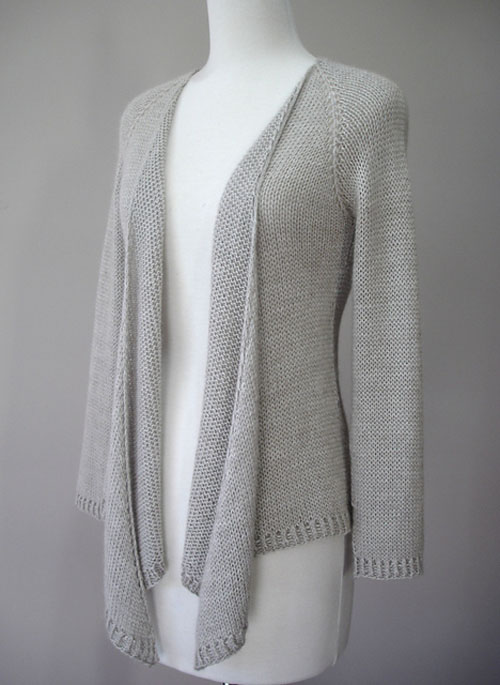
Hamlin Peak by Pam Allen is a lightweight, open-front cardigan with a beautifully relaxed drape. Its clean stockinette fabric, raglan shaping and long waterfall fronts create an elegant garment that works especially well in linen.

The original Hamlin Peak pattern is still officially available from Quince & Co., although it is currently sold as a paid PDF pattern.

Pattern Availability Update

Hamlin Peak is currently available from its original publisher, Quince & Co., as a paid knitting pattern. If you found an older reference describing this pattern as free, please use the official source below for its current availability.

Looking specifically for a free cardigan? We have included a verified free alternative further down this page.

Hamlin Peak at a Glance

Designer: Pam Allen

Publisher: Quince & Co.

Collection: Kestrel 2014

Project: Open-front cardigan

Original Yarn: Quince & Co. Kestrel

Needles: US 8 (5 mm)

Gauge: 16½ stitches and 22 rows = 4 inches in stockinette after blocking

Construction: Top-down raglan

Current Availability: Paid pattern

What Makes Hamlin Peak Special?

Hamlin Peak is a good example of how simple knitting can produce a sophisticated garment. Most of the cardigan is worked in stockinette, allowing the shape and drape of the fabric to become the main design features.

The cardigan is worked from the top down with raglan yoke shaping. Small eyelet increases are worked along the neck edges, gradually creating the distinctive draped fronts.

Designed for Linen

The original yarn is Quince & Co. Kestrel, a linen tape yarn. Linen is particularly appropriate for this design because the finished fabric can fall softly rather than creating a stiff, structured cardigan.

If substituting yarn, matching the pattern gauge and considering the drape of the finished fabric are both important. A yarn that behaves very differently from linen may change the appearance of the waterfall fronts.

Sizes and Fit

The current pattern provides a particularly broad size range, with finished bust measurements from approximately 30 to 57¼ inches (76 to 145.5 cm).

The original sample is shown with a small amount of positive ease. Check the finished measurements before selecting your size rather than choosing only by your usual clothing size.

Skills Used

Although Hamlin Peak has an elegant finished appearance, the construction relies on familiar sweater techniques: increasing, decreasing, working in the round, picking up stitches and raglan shaping.

The official pattern includes both charts and line-by-line instructions.

Get the Original Hamlin Peak Pattern

The complete pattern belongs to Pam Allen and is published by Quince & Co. Amazing Knitting does not reproduce the copyrighted row-by-row instructions.

View Hamlin Peak at Quince & Co. →

Looking for a Free Cardigan Pattern?

Harvest Cardigan by Tin Can Knits

If you like the relaxed open-front style but specifically want a free project, Harvest is an excellent alternative from our reviewed archive. It is a seamless cardigan worked from the top down and the original pattern is currently available free.

View the Free Harvest Cardigan →

Archive Update

Amazing Knitting reviews older archive pages against current designer and publisher sources. When a pattern is currently paid, we update its status rather than continuing to describe it as free.

Pattern credit: Hamlin Peak was designed by Pam Allen and published by Quince & Co. Amazing Knitting provides an independent project guide and directs knitters to the authorized publisher.

See our Pattern Availability & Editorial Policy for more information.

September Sweater - Free Nordic Knitting Pattern

September Sweater - Free Knitting Pattern
Photo above © Lisa Clarke

September Sweater / DROPS 150-15 is a classic Nordic-style knitted pullover featuring a patterned round yoke and comfortable everyday shape.

Designed by DROPS Design, the sweater combines traditional stranded colorwork with a practical wool-and-alpaca yarn, creating a warm garment with a timeless Scandinavian look.

The pattern includes a generous adult size range from S through XXXL, making it a useful choice for knitters looking for a traditional round-yoke sweater.

Best of all, the complete September Sweater knitting pattern is still officially available for free from DROPS Design.

✓ Free Official Pattern Available

September Sweater / DROPS 150-15 remains available as a complete free knitting pattern from DROPS Design. The official page includes the current written instructions, diagrams and sizing information.

September Sweater at a Glance

Pattern: September Sweater

Pattern Number: DROPS 150-15

Designer: DROPS Design

Project: Women's Nordic Pullover

Construction: Round yoke

Sizes: S - M - L - XL - XXL - XXXL

Original Yarn: DROPS Lima

Technique: Nordic stranded colorwork

Availability: Free official DROPS pattern

About the September Sweater

September Sweater is a traditional round-yoke pullover with Nordic colorwork concentrated around the upper body.

The design uses contrasting colors to create the recognizable geometric motifs associated with Scandinavian-style knitting while keeping the remainder of the sweater comparatively simple.

This balance makes the patterned yoke the visual focus of the finished garment.

A Classic Nordic Round Yoke

Round-yoke sweaters are popular because the patterned section flows continuously around the shoulders rather than being interrupted by conventional shoulder seams.

In September Sweater, shaping and colorwork work together to create the characteristic circular upper section.

Once the patterned yoke is complete, the simpler areas allow the Nordic motifs to stand out clearly.

Sizes Included

The official DROPS pattern includes:

S - M - L - XL - XXL - XXXL

Always select your size using the measurements provided in the current official pattern rather than relying only on your usual ready-to-wear clothing size.

Original Yarn: DROPS Lima

The sweater was designed for DROPS Lima.

Lima is a wool-and-alpaca yarn that works particularly well for warm garments and traditional colorwork.

The yarn gives the sweater warmth while allowing the contrasting Nordic motifs to remain clearly defined.

Can You Substitute the Yarn?

Yes, but gauge and fabric characteristics should guide your choice.

For a colorwork sweater, a successful substitute should:

  • Match the required gauge after washing
  • Provide clear stitch definition
  • Have enough body for the patterned yoke
  • Be comfortable for a warm pullover
  • Offer enough contrast between motif colors

DROPS also provides yarn-substitution information on the official pattern page.

Choose Colors with Enough Contrast

Color selection is particularly important in Nordic knitting.

If the two shades are too similar in value, the motifs may disappear even if the individual colors look beautiful separately.

Before beginning the yoke, place your yarns next to each other and check whether the motif color is clearly distinguishable from the background.

Try the Black-and-White Photo Test

A useful way to evaluate color contrast is to photograph the yarns together and view the image in grayscale.

If the shades remain easy to distinguish without color, they are more likely to produce clearly visible motifs in the finished sweater.

Working Stranded Colorwork

The patterned yoke requires working with more than one color.

The unused yarn travels behind the active stitches as a float while the other color is being knitted.

The goal is to keep those floats relaxed enough that the finished fabric remains flexible.

Avoid Tight Floats

One of the most common problems in stranded knitting is pulling the unused yarn too tightly behind the work.

Tight floats can cause the yoke to pucker and can reduce the finished circumference.

Spread recently worked stitches along the right needle before changing colors. This helps provide enough yarn for the float to span naturally across the back of the fabric.

Keep Your Colorwork Tension Consistent

Your stockinette gauge and colorwork gauge may not automatically match.

Some knitters tighten their stitches when working with two colors, while others produce a looser fabric.

For that reason, a colorwork swatch is more informative than testing only plain stockinette.

Swatch Before Starting

A sweater represents a substantial investment of yarn and knitting time.

Make a swatch using the yarn combination you intend to use and wash it according to the yarn-care instructions before taking final measurements.

If possible, include some stranded colorwork in your swatch so you can evaluate both gauge and color contrast.

Reading the Nordic Chart

The official DROPS pattern provides diagrams for the patterned sections.

Each square represents a stitch, and the chart shows where the contrasting colors are used.

Place markers between repeats if that helps you notice mistakes before they travel too far around the yoke.

Do Not Copy Charts from Other Websites

Always use the current diagrams on the official DROPS page.

Images reposted on Pinterest, social media or old pattern collections can be incomplete, resized or separated from important written instructions.

The official source is the best place to check both the chart and the accompanying directions.

Working the Body

Much of the body provides a calmer visual background for the decorative yoke.

This makes it a useful section for settling into an even knitting rhythm after the more concentration-intensive colorwork.

Continue checking the garment dimensions as you work rather than relying entirely on row counting.

Working the Sleeves

The sleeves continue the classic pullover silhouette and require careful attention to shaping.

If you are adjusting sleeve length, remember that changes can also alter the amount of yarn required.

Try the Sweater On During Knitting

Whenever the construction allows, checking the sweater against the wearer can help you evaluate body and sleeve length.

This is particularly useful if your row gauge differs slightly from the designer's gauge.

Skills Used in September Sweater

This project can help you practice:

  • Knitting a garment
  • Working in the round
  • Reading colorwork charts
  • Stranded knitting
  • Managing yarn floats
  • Round-yoke shaping
  • Increasing and decreasing
  • Working ribbed edges
  • Blocking colorwork

Is September Sweater Beginner Friendly?

If this is your first knitting project ever, a simpler scarf, hat or plain sweater will probably be easier.

However, knitters who are already comfortable with knit and purl stitches and knitting in the round may find a Nordic yoke sweater an excellent introduction to stranded colorwork.

The key new skill is maintaining relaxed, even tension while following the color chart.

A Good First Colorwork Sweater?

A round-yoke sweater can be an attractive first larger colorwork project because the decorative knitting is concentrated into defined sections.

Work slowly through the chart, use markers between repeats, and check the fabric regularly for puckering.

Correcting a colorwork mistake is much easier when you notice it within the same round.

Blocking Is Especially Important

Freshly knitted stranded colorwork can look slightly uneven.

Proper wet blocking often helps the stitches relax and allows the motif to settle into a smoother fabric.

Follow the washing instructions for your chosen yarn and avoid stretching the sweater beyond its intended measurements.

Check the Yoke After Blocking

The finished yoke should lie comfortably around the shoulders without severe puckering or excessive loose fabric.

This is one reason both gauge and float tension matter before you reach the finishing stage.

Why This Design Still Works

Nordic sweaters have a long-lasting visual appeal because the decorative motifs provide interest without depending heavily on short-lived fashion details.

September Sweater combines that traditional character with a practical everyday pullover shape.

Important: There Is Another Famous September Sweater

Same Name, Different Pattern

PetiteKnit also publishes a very popular design called September Sweater. It is a different sweater first published in 2019 and uses brioche stitch. The pattern featured on this Amazing Knitting page is the older Nordic September Sweater / DROPS 150-15. Do not mix the yarn, gauge, sizing or instructions from the two designs.

Is September Sweater Still Free?

Yes.

DROPS Design continues to publish September Sweater / DROPS 150-15 as a complete free knitting pattern.

The official page contains the current sizing, materials, diagrams and knitting instructions in multiple languages.

Amazing Knitting does not reproduce the complete copyrighted row-by-row directions or charts. Use the official DROPS page for the full pattern.

Get the Free September Sweater Pattern

Visit DROPS Design for the complete official pattern, diagrams and instructions:

Get the Free September Sweater Pattern →

More Free Sweater Patterns on Amazing Knitting

Explore More Nordic Knitting

Before You Cast On

Begin by choosing your size from the official DROPS measurements and making a gauge swatch with your intended yarn.

Check the contrast between your colors before committing to the full yoke, and practice keeping your floats relaxed if stranded knitting is new to you.

Most importantly, keep the official DROPS pattern open while you work so you are following the current diagrams and instructions rather than an incomplete copy from another website.

Pattern credit: September Sweater / DROPS 150-15 is a DROPS Design pattern. Amazing Knitting provides an independent project guide and does not reproduce the complete copyrighted pattern instructions or charts. Please retain the existing photograph and its original credit from the previous Amazing Knitting page.

Beach Baby - Free Dress and Hat Knitting Pattern

Beach Baby - Free Pattern
Photo above © DROPS Design

Beach Baby by DROPS Design is a charming short-sleeved baby and toddler dress with a matching knitted hat.

The design combines a simple summer silhouette with delicate patterned details, making it an attractive handmade outfit for warmer weather, special occasions or a thoughtful baby gift.

Originally published as DROPS Baby 10-7, the pattern includes several sizes from baby through approximately 3–4 years.

Best of all, the complete Beach Baby dress and hat knitting pattern is still officially available for free from DROPS Design.

✓ Free Pattern Availability

Beach Baby / DROPS Baby 10-7 remains available as a free official knitting pattern directly from DROPS Design.

Beach Baby Dress and Hat at a Glance

Pattern: Beach Baby

Pattern Number: DROPS Baby 10-7

Designer / Publisher: DROPS Design

Projects: Short-sleeved dress and matching hat

Sizes: 6/9 months, 12/18 months, 2 years, 3/4 years

Suggested Yarn: DROPS Safran

Yarn Amount: 150-150-200-200 g

Needles: 3 mm / US 2½

Gauge: 24 sts × 32 rows = 10 × 10 cm / 4 × 4 in in stockinette

Buttons: 4

Availability: Free official DROPS pattern

About the Beach Baby Knitting Pattern

Beach Baby is a coordinated child's outfit consisting of a knitted short-sleeved dress and matching hat.

The dress has a light, classic appearance that works especially well in cotton yarn, while the decorative pattern sections add enough interest to make the finished garment feel special.

The matching hat turns the dress into a complete handmade set.

Sizes Included

The official DROPS pattern includes four sizes:

  • 6/9 months — 62/68 cm
  • 12/18 months — 74/80 cm
  • 2 years — 86/92 cm
  • 3/4 years — 98/104 cm

This gives the design a useful size range from baby through early childhood.

Finished Measurements

The published finished bust measurements are:

46-54-60-66 cm / 18-21¼-23⅝-26 in

The published full lengths are:

37-47-51-55 cm / 14½-18-20-21⅝ in

Use the finished garment measurements when choosing a size rather than relying only on the child's age.

Original Yarn: DROPS Safran

The original pattern is written for DROPS Safran.

The published yarn quantities are:

  • 6/9 months: 150 g
  • 12/18 months: 150 g
  • 2 years: 200 g
  • 3/4 years: 200 g

The official sample is shown in white, but the design can naturally be adapted to other suitable colors.

Why Cotton Works Well for This Dress

A smooth cotton yarn is a natural choice for a short-sleeved warm-weather garment.

It can provide good stitch definition for the decorative pattern while keeping the finished dress relatively light.

When substituting yarn, look for a yarn that can reproduce the published gauge and has a comfortable feel suitable for children's clothing.

Needles and Gauge

The official pattern specifies:

3 mm / US 2½ needles

with a stockinette gauge of:

24 stitches × 32 rows = 10 × 10 cm / 4 × 4 in

Both circular and double-pointed needles are used in the published instructions.

Why Gauge Matters

Gauge is especially important for a child's dress because it affects the bust circumference, overall length and fit of the yoke.

If your gauge is tighter than the pattern, the finished dress will become smaller. If it is looser, the garment may become noticeably larger.

Make a gauge swatch before beginning, particularly if you are using a substitute yarn.

Patterned Sections

The design includes decorative stitch patterns represented in the official DROPS charts.

These patterned areas provide contrast with the simpler stockinette sections and give the dress its distinctive appearance.

When following the pattern, use the current official diagrams rather than relying on a copied chart from another website.

Reading DROPS Charts

If DROPS charts are new to you, take a moment to review the symbol key before starting the decorative sections.

Remember that chart symbols represent stitches and that the diagrams are read according to the direction of the row or round being worked.

Place stitch markers between repeats if that helps you keep track of the pattern.

The Yoke and Button Opening

The design includes a buttoned opening on the yoke.

The official instructions specify four buttonholes, with their placement adjusted for each size.

This detail gives the dress a practical opening while also becoming part of the decorative upper section.

Four Buttons

The materials list calls for:

4 buttons

Choose securely attached buttons that are appropriate for a child's garment.

Always check that buttons remain firmly sewn in place before the finished garment is worn.

Short Sleeves for Warmer Weather

The short sleeves are one of the features that distinguish Beach Baby from many heavier knitted children's dresses.

Combined with cotton yarn, they make the design particularly suitable for spring and summer layering.

The dress can be worn on its own in mild weather or over another layer when temperatures are cooler.

The Matching Hat

The included hat allows you to create a coordinated outfit using the same yarn and color.

You can make both pieces as a complete set or knit only the dress if that better suits your project.

A matching hat can also be a practical way to use remaining yarn after the dress is complete, provided you have enough yardage.

Choosing a Yarn Substitute

If DROPS Safran is not available to you, choose a substitute based on the fabric rather than brand name alone.

Check:

  • Gauge
  • Yarn weight
  • Fiber content
  • Softness
  • Washability
  • Stitch definition
  • Total meterage or yardage

The official DROPS page also provides tools for finding alternative yarns.

Choose a Color That Shows the Stitch Pattern

Smooth solid colors tend to make textured and openwork details easy to see.

Light colors can emphasize shadows and stitch structure, but the design can also look beautiful in pastel shades or stronger solid colors.

If you use a strongly variegated yarn, make a swatch first to see whether the color changes compete with the decorative motifs.

Skills You May Practice

  • Working stockinette stitch
  • Working garter stitch
  • Following charted stitch patterns
  • Working in the round
  • Using circular needles
  • Using double-pointed needles
  • Creating buttonholes
  • Garment shaping
  • Finishing a child's garment

Is Beach Baby Suitable for Beginners?

This is probably better viewed as an advanced beginner to intermediate project rather than a first-ever knitting project.

The basic stitches are manageable, but the garment also involves patterned sections, sizing, buttonholes and circular knitting.

If you already know knit and purl stitches and have completed a few simpler projects, Beach Baby can be an appealing next challenge.

Check the Pattern Before Casting On

Read through the complete official instructions once before beginning.

Pay particular attention to:

  • Your selected size
  • The stitch-pattern diagrams
  • Buttonhole placement
  • Where shaping begins
  • When circular or double-pointed needles are required

Highlighting or noting only the numbers for your chosen size can make a multi-size pattern easier to follow.

Is Beach Baby Still Free?

Yes.

Beach Baby / DROPS Baby 10-7 is still published as a complete free knitting pattern by DROPS Design.

The official page includes the materials, sizing, diagrams and complete knitting instructions.

Amazing Knitting does not reproduce the publisher's complete copyrighted row-by-row directions or charts. Use the official DROPS page for the full pattern.

Get the Free Beach Baby Pattern

Use the official DROPS Design page for the complete current pattern:

Get the Free Beach Baby Pattern →

More Free Baby and Child Knitting Patterns

Continue exploring these verified free designs in the Amazing Knitting archive:

Explore More Children's Knitting

Before You Cast On

Choose the size based on the finished measurements, check your gauge, and make sure you have enough yarn for both the dress and hat if you want the complete matching set.

Review the chart symbols and buttonhole placement before reaching the patterned yoke, and use the current official DROPS instructions throughout the project.

With its cotton yarn, short sleeves and matching hat, Beach Baby is a lovely example of a knitted outfit designed specifically for lighter, warmer-weather wear.

Pattern credit: Beach Baby / DROPS Baby 10-7 is a DROPS Design pattern. Amazing Knitting provides an independent project guide and does not reproduce the complete copyrighted charts or row-by-row knitting instructions. Please retain the existing photograph and its original credit from the previous Amazing Knitting post.

Rabbit Ears Knitting Stitch - Textured Stitch Guide

Colorful Rabbit Ears Knitting Stitch - Tutorial
Photos above © canselin örgü dünyası

Rabbit Ears Knitting Stitch is a decorative textured knitting stitch with small raised motifs that create a playful, repeating surface across the fabric.

The stitch has appeared in online knitting tutorials under names such as Rabbit Ears Stitch, particularly in visual and video-based knitting lessons.

Its textured appearance can add interest to simple projects such as scarves, hats, children's garments, sweater panels and other knitted accessories.

This guide explains how to approach the texture, choose yarn and needles, swatch successfully, recognize common problems and decide where this decorative stitch can work best.

About This Stitch

"Rabbit Ears Stitch" is a descriptive name used in online knitting tutorials rather than a standardized pattern name with one universally documented designer, gauge or yarn requirement. Different tutorials using similar names may not necessarily use identical instructions.

Rabbit Ears Knitting Stitch at a Glance

Technique: Rabbit Ears Knitting Stitch

Category: Decorative textured knitting

Appearance: Repeating raised motifs

Best For: Scarves, hats, sweater panels and children's garments

Yarn: Choose a yarn that gives clear stitch definition

Needles: Match to your yarn and desired fabric

Recommended First Step: Make a swatch before using the stitch in a project

What Is Rabbit Ears Knitting Stitch?

Rabbit Ears Stitch is a descriptive name used for a decorative knitted texture in which repeating stitch formations create small raised shapes across the fabric.

The texture is more visually active than ordinary stockinette, making it useful when you want the knitted fabric itself to provide the decoration.

Instead of adding colorwork, embroidery or sewn embellishments, the surface interest comes directly from manipulating the knitted stitches.

Why the Name "Rabbit Ears"?

The name refers to the appearance of the individual textured motifs.

When repeated across the fabric, the raised elements can suggest pairs of small ears emerging from the knitted background.

As with many informal stitch names, the exact appearance can vary between tutorials and knitting traditions.

Important: The Name Is Not a Universal Formula

When searching for Rabbit Ears Stitch online, you may find different tutorials using similar terminology.

Do not automatically assume that every tutorial called Rabbit Ears uses the same:

  • Cast-on multiple
  • Number of repeat rows
  • Stitch manipulation
  • Yarn weight
  • Needle size
  • Right-side and wrong-side sequence

Follow one complete version consistently rather than combining individual rows or techniques from unrelated tutorials.

Why Swatching Matters

A textured stitch can behave very differently from ordinary stockinette.

Before using Rabbit Ears Stitch in a scarf, sweater or hat, make a reasonably sized sample.

Your swatch will help you answer several important questions:

  • Are the motifs clearly visible?
  • Is the fabric too stiff?
  • Does the yarn hide the texture?
  • Does the fabric curl?
  • How much does the stitch contract horizontally?
  • How does it change after washing or blocking?

Choosing Yarn for Rabbit Ears Stitch

Because the attraction of this stitch is its surface texture, yarn selection can make a major difference.

A smooth yarn with good stitch definition usually makes small textured motifs easier to see.

Very fuzzy yarn may soften the edges of the pattern and make the individual shapes less distinct.

Solid Colors Show Texture Clearly

A solid color is often the easiest choice when your goal is to emphasize stitch structure.

Light and medium shades can make shadows around raised stitches more visible, especially in photographs.

Dark yarn can also look beautiful, but very dark shades may make subtle stitch details harder to see.

Can You Use Variegated Yarn?

Yes, but swatch first.

Strong color changes and a strong textured stitch are both competing for visual attention.

Sometimes that combination produces an exciting fabric; in other cases the color variation makes the individual motifs difficult to recognize.

Gently tonal yarn is often a useful middle ground.

Choosing Needle Size

There is no single universal needle size for a stitch called Rabbit Ears.

Begin with a needle appropriate for your yarn, then evaluate the actual fabric rather than relying only on the recommendation printed on the yarn label.

If the texture feels compressed and difficult to work, experiment with a slightly larger needle.

If the motifs look loose and poorly defined, a slightly smaller needle may give the fabric more structure.

Do Not Invent Gauge from a Photograph

A photograph can show the character of a stitch, but it cannot reliably tell us the original yarn, needle size or gauge.

If you are adapting this texture to your own project, measure the gauge from your own washed or blocked swatch.

This is especially important for fitted garments.

Using Rabbit Ears Stitch in a Scarf

A scarf is one of the easiest ways to experiment with a new textured stitch.

The rectangular construction lets you concentrate on maintaining the stitch repeat without worrying about armholes, neck shaping or garment sizing.

Before casting on a full scarf, check whether the edges of your swatch lie reasonably flat.

Using It in Hats

A textured motif can make an otherwise simple hat much more interesting.

However, converting a stitch worked flat into circular knitting is not always automatic.

Wrong-side rows in a flat pattern may need to be reconsidered when the work is always facing you in the round.

Use a version specifically written for circular knitting unless you are comfortable adapting stitch patterns yourself.

Using It in Sweaters and Pullovers

Rabbit Ears texture does not necessarily have to cover an entire sweater.

It can be used as a decorative panel on:

  • The center front
  • The upper yoke
  • Sleeves
  • Pockets
  • A cardigan front
  • A children's pullover

Combining textured and simpler sections can also keep a garment from becoming visually overwhelming.

Children's Knitting Projects

The playful name and raised texture make Rabbit Ears Stitch particularly appealing for children's garments and accessories.

Possible uses include:

  • Cardigans
  • Pullovers
  • Vests
  • Hats
  • Scarves
  • Blanket panels

For children's clothing, choose comfortable yarn and avoid adding loose decorative pieces simply to enhance the rabbit theme.

Adding a Border

If your textured swatch tends to curl or the edges look unfinished, consider surrounding it with a simple border.

Depending on the project, possibilities include:

  • Garter stitch
  • Seed stitch
  • Ribbing
  • Another simple non-curling edge

Keep the border visually simple so it does not compete with the central texture.

Keep Your Tension Consistent

Textured stitches often exaggerate changes in tension.

If one motif is worked tightly and the next loosely, the difference may be much more obvious than it would be in plain stockinette.

Work at a comfortable pace and avoid pulling the working yarn sharply after each manipulated stitch.

Learn to Read the Texture

After several repeats, stop looking only at the instructions and examine the fabric itself.

Identify where each motif begins and how it relates to the motifs in the previous row.

Learning to recognize the structure visually can help you notice mistakes much sooner.

Use Stitch Markers for Wide Projects

If the stitch pattern repeats several times across a wide scarf, blanket or sweater panel, markers can help separate the repeats.

If the stitch count is wrong at one marker, you know the problem is probably within that section rather than somewhere across the entire row.

Common Problem: The Motifs Look Uneven

Uneven motifs are often related to tension.

Give yourself enough yarn when forming each textured element and try to make the same movement consistently throughout the row.

The fabric usually becomes more uniform as your hands become familiar with the technique.

Common Problem: The Texture Is Hard to See

Several things can hide a textured stitch:

  • Very fuzzy yarn
  • Highly variegated colors
  • Extremely loose gauge
  • Extremely dark yarn
  • Too few completed repeats

Try changing only one variable at a time so you can see which adjustment improves your swatch.

Common Problem: The Fabric Is Too Dense

If the fabric feels much stiffer than expected, compare your gauge and tension with the type of project you want to make.

A structured fabric may work beautifully for a bag or cushion but feel uncomfortable as a scarf.

Moving up a needle size and making another swatch is a simple experiment.

Blocking a Textured Stitch

Blocking can help even the fabric, but the goal is not necessarily to stretch every raised element completely flat.

Use a method appropriate for your yarn fiber and allow the natural texture to remain visible.

Always test your finishing method on a swatch first when using an unfamiliar yarn.

Rabbit Ears Stitch vs. Lace

A decorative textured stitch and an open lace stitch create visual interest in different ways.

Lace relies heavily on deliberate openings, increases and decreases, while textured knitting may emphasize raised or manipulated stitch formations.

If you want a warmer, more substantial surface, a textured stitch may be preferable to very open lace.

Rabbit Ears Stitch vs. Cables

Cable patterns usually create strong crossing lines, ropes or braided structures.

Rabbit Ears-style texture can create smaller individual motifs instead, making it useful when you want repeated surface detail rather than large cable columns.

Make a Reference Swatch

When you find a Rabbit Ears technique you enjoy, keep the swatch instead of unraveling it.

Attach a small note recording:

  • Yarn name and weight
  • Needle size
  • Stitch multiple used by your tutorial
  • Gauge after washing
  • Source of the instructions

This turns a practice piece into a useful addition to your personal stitch library.

About the Original Tutorial Referenced by This Page

The original Amazing Knitting post was created as a short discovery page pointing readers toward an external video tutorial for the colorful Rabbit Ears Stitch shown in the photograph.

Because third-party videos and links can change over time, and because we could not verify a definitive original designer or standardized published specification for this exact stitch, Amazing Knitting does not reproduce or reconstruct another creator's row-by-row instructions here.

Instead, this page is maintained as an independent educational guide to help you understand the texture and use a legitimate tutorial safely and successfully.

More Knitting Stitch Guides

Continue exploring textured knitting with these Amazing Knitting guides:

Before You Start

Choose a yarn that shows texture clearly and begin with a swatch rather than a full garment.

Learn one complete Rabbit Ears technique from a reliable source, work several repeats until you understand how the motifs develop, and measure the finished fabric after washing or blocking.

Once you know how your chosen version behaves, you can decide whether it is best suited to a scarf, hat, sweater panel, vest or another textured knitting project.

Editorial note: "Rabbit Ears Stitch" is used here as a descriptive name for the textured knitting technique shown in the original Amazing Knitting post. We could not verify a single definitive designer or standardized specification for the exact stitch, so this page does not claim one. Amazing Knitting provides an independent educational guide and does not reproduce another creator's complete video or row-by-row instructions. Please retain the original photograph credit: Photos above © canselin örgü dünyası.

Flax Sweater - Free Pattern

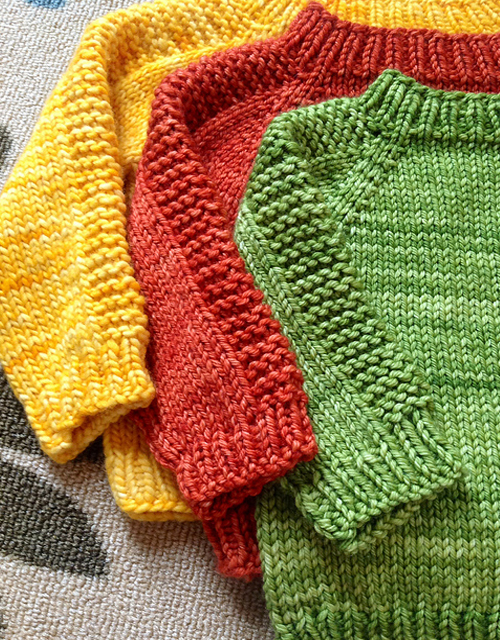
Flax Sweater - Free Pattern
Photo above © Angeldogknitter

Looking for a versatile free sweater knitting pattern for babies, children, and adults? The Flax Sweater by Tin Can Knits is a modern top-down pullover designed to help knitters build confidence while learning seamless sweater construction.

Flax is part of the popular Simple Collection, a series of free patterns and tutorials created to teach essential knitting skills. With sizes ranging from babies to adults, it is a practical pattern that can be used again and again for different family members.

Flax Sweater Pattern at a Glance

Pattern: Flax Sweater

Designer: Tin Can Knits

Craft: Knitting

Category: Pullover / Sweater

Construction: Top-down and seamless

Yarn Weight: Worsted / Aran

Gauge: 18 stitches and 22 rows = 4 inches in stockinette stitch in the round

Needle Sizes: US 6 / 4.0 mm and US 8 / 5.0 mm

Yardage: Approximately 220–2100 yards (201–1920 m)

Sizes: 0–6 months through 6XL

Pattern Availability: Free

About the Flax Sweater

The Flax Sweater is one of those patterns that works especially well as a first garment project. It is designed with clean lines, simple shaping, and a seamless construction method that helps knitters understand how a sweater comes together without adding unnecessary complexity.

The sweater is worked from the top down, which means you begin at the neckline and continue through the yoke, body, and sleeves. This construction style is popular because it allows you to see the garment take shape as you knit.

Flax is also designed as part of a teaching collection, so it is supported by tutorials from Tin Can Knits that explain many of the techniques used throughout the project.

Sizes from Baby to Adult

One of the biggest advantages of the Flax pattern is its wide size range. The current worsted-weight version includes 19 sizes, beginning with babies and continuing through larger adult sizes.

Available sizes include:

  • 0–6 months
  • 6–12 months
  • 1–2 years
  • 2–4 years
  • 4–6 years
  • 6–8 years
  • 8–10 years
  • Adult sizes XS through 6XL

Because the pattern covers such a broad range, it can be a useful staple if you enjoy knitting sweaters for different members of the family.

Yarn and Gauge

The Flax worsted pattern is written for worsted / aran-weight yarn. The published gauge is:

18 stitches × 22 rows = 4 inches in stockinette stitch in the round

The listed yarn requirement ranges from approximately 220 to 2100 yards (201 to 1920 meters), depending on the size you choose.

Since Flax is available in both child and adult sizes, yarn requirements vary significantly. Always check the original pattern for the exact yardage needed for your selected size before purchasing yarn.

Needles

The pattern lists two main needle sizes:

  • US 6 / 4.0 mm
  • US 8 / 5.0 mm

The larger needles are used to achieve the main stockinette gauge, while the smaller size is used for specific sections of the sweater. Follow the original pattern instructions for the exact needle setup and construction details.

Why Flax Is Popular with Newer Sweater Knitters

Flax was created as part of Tin Can Knits' learn-to-knit series, which makes it especially useful for knitters who want to move from smaller projects into garment knitting.

The design introduces several important sweater-making skills in a relatively straightforward project, including top-down construction, knitting in the round, shaping, and finishing a seamless pullover.

At the same time, the finished sweater has a simple modern look that works well for babies, children, teenagers, and adults.

Other Versions of the Flax Sweater

Tin Can Knits now offers Flax in more than one yarn-weight version. In addition to Flax worsted, there are also lighter-weight versions including Flax DK and Flax Light.

These are separate pattern versions with different gauges, needle sizes, and yarn requirements, so be sure you are following the version that matches the yarn weight you want to use.

Is the Flax Sweater Pattern Free?

Yes. The Flax worsted sweater pattern by Tin Can Knits is currently available as a free knitting pattern.

The pattern can be accessed through the official Tin Can Knits website and is also available through Ravelry.

Get the Free Flax Sweater Pattern

Amazing Knitting does not reproduce the designer's knitting instructions. Please visit the official Tin Can Knits pattern page for the complete pattern, current sizing, tutorials, updates, and download options.

Get the Free Flax Sweater Pattern →

Pattern credit: Flax was created by Tin Can Knits as part of The Simple Collection. Pattern availability, sizing, and technical details are controlled by the designers and may change over time.

More Free Sweater Knitting Patterns

If you enjoy knitting simple sweaters, explore more free sweater knitting patterns and baby sweater knitting patterns from the Amazing Knitting archive.

Before You Start

Check the official pattern page before choosing yarn or needles so you can confirm the latest sizing, gauge, materials, and pattern notes for the version you plan to knit.

Discover More From the Archive

A fresh mix of knitting patterns and tutorials from the Amazing Knitting archive.

Finding patterns from the archive…