Skip to content

...

Showing posts sorted by date for query lace stole knitting. Sort by relevance Show all posts

Little Leaf Lace Scarf - Free Pattern

Little Leaf Lace Scarf - Free Pattern
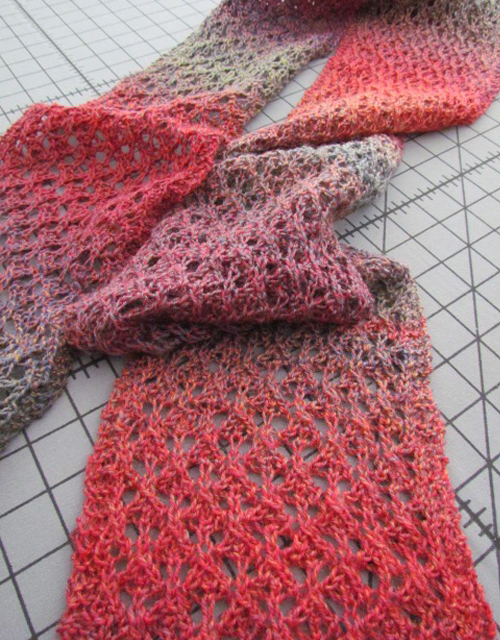
Photo above © bunnyknitter

Little Leaf Lace Scarf by Sivia Harding is a graceful, beginner-friendly lace scarf built around a repeating leaf motif.

The design is light enough to show the lace clearly, yet simple enough to make a practical introduction to yarn overs, decreases and basic lace-pattern rhythm.

Its narrow rectangular shape keeps the construction straightforward, so most of your attention can stay on the decorative stitches rather than shaping or garment assembly.

Best of all, the original Little Leaf Lace Scarf pattern is still officially available as a free Ravelry download.

✓ Free Pattern Availability

Little Leaf Lace Scarf by Sivia Harding is currently listed as a free Ravelry download. The designer's Ravelry store also continues to identify the pattern as free.

Little Leaf Lace Scarf at a Glance

Pattern: Little Leaf Lace Scarf

Designer: Sivia Harding

First Published: January 2004

Historical Publication: Knitting Calendar 2005

Category: Lace scarf

Yarn Weight: Fingering or laceweight

Yardage: Approx. 200 yd / 183 m

Needles: US 5 / 3.75 mm

Gauge: 20 sts × 28 rows = 4 in / 10 cm in blocked lace pattern

Finished Size: Approx. 10.5 × 41 in

Construction: One-piece rectangular scarf worked flat

Skill Focus: Beginner lace knitting

Availability: Free Ravelry download

About the Little Leaf Lace Scarf

Little Leaf Lace Scarf is a classic small lace project in which the stitch pattern provides almost all of the visual interest.

Repeating leaf shapes travel along the scarf, creating an elegant botanical texture without requiring complicated garment construction.

Sivia Harding describes the design as an easy lace project suitable for knitters beginning to explore lace.

A Good Beginner Lace Project

Large lace shawls can feel intimidating when you are still learning how yarn overs and decreases work together.

A narrow scarf gives you a much smaller number of stitches to manage, making it easier to understand the relationship between the individual lace stitches and the finished motif.

Once the repeat becomes familiar, the project can develop a comfortable rhythm.

The Leaf Motif

The main visual feature is a repeating openwork leaf.

Yarn overs create the decorative holes, while paired decreases shape the sides of the leaf and keep the overall stitch count under control.

The result is a recognizable botanical motif created entirely through changes in the knitted fabric rather than colorwork or embroidery.

Why Leaves Work So Well in Lace

Leaf motifs are especially well suited to knitted lace because increases can widen the leaf while decreases gradually narrow it again.

This creates a natural-looking shape using the same basic techniques found in many larger shawls and lace garments.

Learning a small leaf pattern can therefore prepare you for more complex lace projects later.

Original Finished Size

The published finished dimensions are approximately:

10.5 inches wide × 41 inches long

This makes Little Leaf a relatively compact scarf rather than an oversized wrap.

The length is enough to show the repeating leaf pattern clearly while keeping the total yarn requirement modest.

Only About 200 Yards of Yarn

The original pattern calls for approximately:

200 yards / 183 meters

That modest yardage makes this a useful project for a special skein of fingering or laceweight yarn that may not be large enough for a full shawl.

Fingering or Laceweight Yarn

The pattern record recommends fingering or laceweight yarn.

These lighter yarns allow the openwork to remain delicate and keep the finished scarf flexible.

The exact appearance can change considerably depending on fiber content and yarn structure.

Needles and Gauge

The listed needle size is:

US 5 / 3.75 mm

The published blocked gauge is:

20 stitches × 28 rows = 4 inches / 10 cm

This gauge is measured over the lace pattern after blocking.

Why Gauge Still Matters on a Scarf

A scarf does not need the same precision of fit as a sweater, but gauge still affects the finished width, length, drape and yarn usage.

A much looser gauge may make the scarf wider and use more yarn, while a tighter gauge can make the lace look compressed.

A small swatch is useful for checking whether the fabric opens attractively after blocking.

Worked Flat in One Piece

Little Leaf Lace Scarf is a straightforward rectangular accessory worked back and forth in rows.

There are no sleeves, armholes or garment seams to manage.

That simplicity makes it easier to focus on learning the lace motif and maintaining consistent tension.

A Garter-Stitch Border Frames the Lace

The lace panel is framed by simple garter-stitch edging.

This creates a neat visual boundary between the open center and the outer edge of the scarf.

It also gives the knitter a few predictable stitches at the beginning and end of each row.

Skills You May Practice

  • Working yarn overs
  • Knit-two-together decreases
  • Left-leaning decreases
  • Centered decreases
  • Maintaining a lace repeat
  • Working a garter-stitch border
  • Reading your knitting
  • Blocking lace

Count Your Stitches

A missing yarn over or decrease can disturb the shape of the leaf and alter the total stitch count.

Check your stitch count periodically, especially while you are still learning the repeat.

Catching an error after one row is much easier than discovering it several repeats later.

Learn to Recognize the Leaves

Try not to rely only on the written instructions.

Watch how the yarn-over holes and decreases line up from one row to the next.

As the motif becomes familiar, you may start noticing mistakes visually before they cause a larger problem.

Use a Lifeline If You Are New to Lace

After completing a repeat that you know is correct, thread a smooth contrasting strand through the live stitches.

If you later need to unravel several rows, the lifeline provides a safe place to stop.

This can make learning lace much less stressful.

Blocking Reveals the Pattern

Like most knitted lace, Little Leaf may look compressed while it is still on the needles.

Appropriate blocking opens the yarn-over holes, straightens the scarf and makes the leaf shapes more visible.

Always use a blocking method appropriate for your yarn's fiber content.

Choosing a Yarn Substitute

The pattern does not depend on one specific yarn brand.

When choosing a substitute, look for a fingering or laceweight yarn that gives you an attractive open fabric at the required gauge.

Consider:

  • Yardage
  • Fiber content
  • Drape
  • Stitch definition
  • Halo
  • How the yarn behaves after blocking

Solid Colors Show the Leaves Clearly

A solid or gently tonal yarn is particularly effective when you want the leaf shapes to remain the main visual feature.

Strongly variegated yarn can also be attractive, but dramatic color changes may compete with a small lace motif.

Swatching is the best way to see how your chosen yarn interacts with the pattern.

A Good One-Skein Gift Project

With a published requirement of only about 200 yards, Little Leaf Lace Scarf can be an appealing gift project.

The rectangular shape avoids complicated sizing, and the botanical lace adds considerably more visual interest than plain stockinette.

It can also be a useful way to turn a small quantity of special yarn into a finished accessory.

Is Little Leaf Lace Scarf Still Free?

Yes.

Little Leaf Lace Scarf by Sivia Harding is currently listed as a free Ravelry download.

The designer's current Ravelry store also continues to identify Little Leaf Lace Scarf as a free pattern.

Amazing Knitting does not reproduce the designer's complete copyrighted row-by-row pattern. Use the authorized source below for the full instructions.

Get the Free Little Leaf Lace Scarf Pattern

Visit the current Ravelry pattern record:

Get the Free Little Leaf Lace Scarf Pattern →

More Free Lace Scarf Patterns

If you enjoy Little Leaf Lace Scarf, continue with these patterns already restored in the Amazing Knitting archive:

Explore More Lace Knitting

Before You Cast On

Choose a fingering or laceweight yarn that shows the leaf motif clearly, and make sure you have approximately 200 yards available.

Check your blocked fabric, count stitches regularly while learning the repeat, and consider adding a lifeline after successful sections.

For knitters moving from basic knitting into lace, Little Leaf Lace Scarf offers a very useful combination: a small amount of yarn, uncomplicated rectangular construction and a beautiful motif that teaches techniques used in much larger lace projects.

Pattern credit: Little Leaf Lace Scarf was designed by Sivia Harding and first published in 2004, later appearing in Knitting Calendar 2005. The existing project photograph on this Amazing Knitting page is credited to bunnyknitter. Amazing Knitting provides an independent project guide and does not reproduce the designer's complete copyrighted knitting instructions.

June Bunnies Shawl - Free Knitting Pattern

June Bunnies Shawl - Free Pattern
Photo above © Mardunk

June Bunnies Shawl by Inese Andzane is a soft, customizable triangular lace shawl designed to be simple enough for knitters taking their first steps into lace.

The design alternates relaxing sections of simple knitting with decorative lace insertions, creating an elegant shawl without making every row demanding.

It is also wonderfully flexible: the designer encourages knitters to add as many or as few lace repeats as they like, making it possible to adapt the shawl to different yarns and finished sizes.

Best of all, the original June Bunnies Shawl pattern is still officially available for free.

✓ Free Pattern Availability

June Bunnies Shawl remains available as a free Ravelry download. The designer's original Silver Lining Knits blog post is also still online and identifies the shawl as a free pattern.

June Bunnies Shawl at a Glance

Pattern: June Bunnies Shawl

Designer: Inese Andzane

Published: July 2012

Original Source: Silver Lining Knits

Category: Shawl / Wrap

Shape: Triangle

Construction: Top-down, one piece

Suggested Yarn Weight: Fingering

Published Yardage Range: 400–600 yd / 366–549 m

Size: Customizable

Instructions: Charted and written

Difficulty: Suitable for adventurous lace beginners

Availability: Free Ravelry download

About the June Bunnies Shawl

June Bunnies began with the yarn.

Designer Inese Andzane explains that she had received an exceptionally soft angora, merino and nylon blend and wanted to cast on something immediately.

Because she wanted a project simple enough to knit while watching a movie, she chose a straightforward lace idea and developed it into this triangular shawl.

That relaxed origin is still reflected in the finished design.

Why Is It Called June Bunnies?

The playful name is connected to the yarn used for one of the original shawls.

The soft angora blend reminded the designer of the softness associated with bunnies, giving the project its memorable name.

A Customizable Triangle Shawl

One of the most useful features of June Bunnies is that the finished size is not rigidly fixed.

The designer describes it as a pattern that can be adjusted for different yarn weights and different shawl sizes.

You can add more lace repeats for a larger shawl or use fewer repeats for a smaller accessory.

How Much Yarn Do You Need?

The Ravelry record gives a general range of:

400–600 yards / 366–549 meters

For a full-size shawl in fingering-weight yarn, the designer suggests approximately:

400–500 yards

A finer yarn or a larger shawl may require more.

Fingering Weight Is a Natural Starting Point

Fingering weight is the primary yarn weight associated with the pattern, but the design was intentionally created to be adaptable.

That makes June Bunnies particularly appealing when you have a special skein and want a shawl pattern that does not force you into one exact finished size.

The Original Yarn Inspiration

One of the original versions used a fingering-weight blend of:

  • 40% Angora
  • 40% Merino
  • 20% Nylon

This combination produces a soft fabric with a gentle halo.

Another version was made with a much finer merino, silk and cashmere blend, demonstrating how differently the same design can look when the fiber and yarn thickness change.

There Is No Need to Copy the Original Yarn Exactly

June Bunnies was designed with flexibility in mind.

When substituting yarn, think about the finished fabric you want rather than searching only for an exact discontinued or difficult-to-find yarn.

Consider:

  • Yarn weight
  • Total yardage
  • Drape
  • Fiber content
  • Halo
  • Stitch definition
  • How the yarn behaves after blocking

What Needle Size Should You Use?

June Bunnies is designed to work with different yarn weights, so there is no single needle size that makes sense for every version.

Choose a needle that produces an open, attractive fabric with your selected yarn.

A small swatch is useful if you are unsure whether your yarn and needle combination gives the lace enough room to open after blocking.

Top-Down Construction

June Bunnies is a top-down triangular shawl.

The project begins with relatively few stitches and grows outward as you work.

This construction is especially convenient for a customizable shawl because you can watch the triangle develop and decide how large you want the finished piece to become.

Simple Sections Between the Lace

One of the reasons June Bunnies feels approachable is that the entire shawl is not densely covered in complicated lace.

Decorative lace insertions are separated by simpler sections, giving the knitter periods of more relaxed knitting between the patterned areas.

This creates visual rhythm in the finished shawl and makes the project easier to manage.

A Good First Lace Shawl

The designer specifically describes June Bunnies as well suited to lace beginners.

Experienced lace knitters may also enjoy it as a relaxing project that does not demand constant concentration.

If you already know the basic knit and purl stitches and are ready to practice yarn overs and decreases, this can be an appealing introduction to triangular lace-shawl construction.

Skills You May Practice

  • Top-down shawl construction
  • Yarn overs
  • Lace decreases
  • Reading a lace chart
  • Following written lace directions
  • Maintaining a center line
  • Repeating lace motifs
  • Stretchy binding off
  • Blocking lace

Charted and Written Instructions

June Bunnies is particularly useful for knitters who are still learning how they prefer to follow lace.

The pattern provides both charted and written information, so you can work with the format that feels most comfortable.

Learning to compare the chart with the written instructions can also be a useful way to build chart-reading confidence.

Use a Lifeline While Learning Lace

A lifeline can save a great deal of frustration.

After completing a section you know is correct, thread a smooth contrasting yarn through the live stitches.

If you later make a mistake that requires unraveling several rows, the lifeline gives you a safe place to stop.

Count Your Stitches Regularly

Lace patterns rely on increases and decreases occurring in the correct places.

A forgotten yarn over can affect not only one row but the alignment of the following motif.

Periodic stitch counting helps you catch mistakes while they are still easy to repair.

Blocking Reveals the Lace

Do not judge the finished appearance while the shawl is still bunched together on the needles.

Appropriate blocking opens the lace, evens the stitches and allows the triangular shape to settle.

Always choose a blocking method suitable for the fiber content of your yarn.

Try a Slightly Variegated Yarn

The designer specifically suggests that June Bunnies could look lovely in a slightly variegated yarn.

Because the lace is separated by calmer sections, gentle color variation can add interest without necessarily overwhelming the stitch pattern.

For strongly variegated yarn, however, a swatch is useful to see whether the color changes compete with the lace.

Make It Smaller or Larger

One of June Bunnies' Best Features

The designer intentionally allows you to add as many or as few lace repeats as you like. This means the pattern can become a smaller shawlette or a more generous full-size shawl depending on your yarn supply and preference.

Keep Enough Yarn for the Finish

Customizable shawls create one important planning challenge: it is easy to keep knitting until very little yarn remains.

Remember that you still need enough yarn for the final lace section and bind-off.

If your yarn supply is limited, weighing the remaining yarn between sections can help you make a more informed decision about adding another repeat.

Is June Bunnies Shawl Still Free?

Yes.

June Bunnies Shawl by Inese Andzane remains officially available as a free Ravelry download.

The designer's original Silver Lining Knits blog post is also still online and continues to identify the pattern as free.

Amazing Knitting does not reproduce the designer's complete copyrighted chart or row-by-row instructions. Use the authorized pattern source below for the full directions.

Get the Free June Bunnies Shawl Pattern

The easiest current route is the official Ravelry pattern record:

Get the Free June Bunnies Shawl Pattern →

Visit the Designer's Original Post

You can also visit Inese Andzane's original Silver Lining Knits post introducing the shawl:

Visit the Original June Bunnies Shawl Post →

More Free Lace Shawls

If you enjoy June Bunnies, these verified free patterns in the Amazing Knitting archive are natural next projects:

Explore More Free Shawl Patterns

Before You Cast On

Decide how large you want your June Bunnies Shawl to become and check how much yarn you have available.

The pattern's flexibility means you do not have to reproduce one exact sample size.

Choose a yarn and needle combination that creates a fabric you enjoy, keep track of your lace repeats, and leave enough yarn for the final section and bind-off.

For a first triangular lace shawl, June Bunnies offers a particularly appealing balance: enough lace to learn something new, but enough simple knitting to keep the project relaxing.

Pattern credit: June Bunnies Shawl was designed by Inese Andzane and published through Silver Lining Knits in July 2012. Amazing Knitting provides an independent project guide and does not reproduce the designer's complete copyrighted chart or knitting instructions. Please retain the existing photograph and its original credit from the old Amazing Knitting post.

Best Friend Lace Scarf by Krista Werbil - Pattern Guide

Best Friend Lace Scarf - Free Pattern
Photo above © Krista

Best Friend Lace Scarf by Krista Werbil is an elegant, lightweight scarf built around a delicate repeating lace motif.

Its long, narrow proportions make the lace the main attraction, while the fingering-weight yarn creates a fabric that can be wrapped, draped or worn loosely without the bulk of a heavier winter scarf.

If this beautiful scarf brought you here, this guide will help you identify the original design, understand its yarn, size and construction, and find out what happened to the original pattern.

The original digital pattern is no longer available from its former source, but you still have options. We have included verified free lace patterns later in this guide that you can knit today.

Pattern Availability

Best Friend Lace Scarf is currently discontinued. The Ravelry pattern record states that the digital pattern is no longer available online, and its original source, the knitting buzz, is listed as out of print. Amazing Knitting therefore does not link to unofficial copies or reproduce the designer's complete instructions.

Best Friend Lace Scarf at a Glance

Pattern: Best Friend Lace Scarf

Designer: Krista Werbil

Original Source: the knitting buzz

Published: November 2011

Category: Lace scarf

Yarn Weight: Fingering / 4 ply

Yardage: Approx. 440 yd / 402 m

Needles: US 6 / 4 mm

Finished Size: Approx. 7 × 86 in, or desired length

Construction: One piece, rectangular, worked flat

Instructions: Written

Current Status: Discontinued

About the Best Friend Lace Scarf

Best Friend Lace Scarf is a classic example of how a relatively simple rectangular accessory can become visually striking through stitch pattern alone.

Instead of relying on cables, colorwork or elaborate garment shaping, the design uses open lace to create movement across a long, narrow scarf.

That makes the yarn and stitch definition particularly important to the final appearance.

A Long, Elegant Lace Scarf

The published finished dimensions are approximately:

7 inches wide × 86 inches long

The pattern also allows the scarf to be worked to the desired length.

Those proportions produce a noticeably long and narrow accessory rather than a wide rectangular wrap.

Why the Length Works So Well

An 86-inch scarf gives you considerable flexibility in how it can be worn.

It can be wrapped more than once around the neck, tied loosely, or left hanging so the lace pattern remains visible along most of its length.

If you are working from a legally obtained copy and decide to change the length, remember that the amount of yarn required will change too.

Fingering-Weight Yarn

The original pattern is listed for fingering / 4-ply yarn.

Fine yarn is a natural match for this type of scarf because it allows the openwork to remain light and flexible.

A much heavier yarn would produce a substantially different fabric and could change both the width and the appearance of the lace.

How Much Yarn?

The published requirement is approximately:

440 yards / 402 meters

If you already own the original pattern, use this as a starting point and allow extra yarn if you plan to lengthen the scarf.

Needle Size

The published needle size is:

US 6 / 4 mm

Lace is often worked on needles that create a more open fabric than you might expect for the yarn weight.

The important goal is not simply matching a needle number, but producing an attractive lace fabric with comfortable drape.

Worked Flat in One Piece

Best Friend Lace Scarf is constructed as a one-piece rectangle worked flat.

This means there is no garment assembly and no complicated sleeve or neckline shaping to manage.

The challenge comes instead from maintaining the lace pattern accurately over a long project.

Why Lace Scarves Are Great Skill Builders

A rectangular scarf gives you an opportunity to concentrate on stitch technique without also worrying about garment fit.

Depending on the original lace repeat, skills commonly useful for this style of project include:

  • Working yarn overs
  • Making decreases
  • Recognizing lace stitches
  • Maintaining an accurate stitch count
  • Reading written instructions
  • Keeping even tension
  • Blocking lace

Count Your Stitches Regularly

Lace usually relies on increases and decreases balancing one another.

Missing a yarn over or decrease may change the stitch count and cause the motif to shift.

Checking your stitch count regularly is much easier than discovering a mistake many rows later.

Learn to Read the Lace

One of the most useful skills you can develop is recognizing what the previous row is doing rather than relying only on the written instructions.

Look for the positions of yarn-over holes and decrease columns.

Once the motif becomes visually familiar, misplaced stitches are often easier to notice before they affect several rows.

Use a Lifeline

A lifeline can make a long lace project much less stressful.

After completing a repeat that you know is correct, thread a smooth contrasting strand through the live stitches.

If you later need to unravel your knitting, the lifeline provides a safe row where you can stop and recover the stitches.

Choosing a Substitute Yarn

If you already legally own the original Best Friend Lace Scarf pattern but need a different yarn, start by looking for a suitable fingering-weight substitute.

Consider:

  • Yardage per skein
  • Fiber content
  • Stitch definition
  • Drape
  • Elasticity
  • Behavior after blocking

The yarn does not need to be identical to the original to produce a beautiful scarf, but changing fiber characteristics can noticeably alter the finished lace.

Solid Colors Show the Lace Clearly

A solid or gently tonal yarn is often an excellent choice for a lace scarf because the stitch pattern remains easy to see.

Strongly variegated yarn can also be attractive, but rapid color changes may compete visually with a delicate lace motif.

Swatching is the easiest way to see whether your yarn and lace pattern complement each other.

Blocking Makes a Big Difference

Lace can look compressed or uneven while it is still on the needles.

Appropriate blocking helps open the yarn-over holes, straighten the edges and reveal the intended pattern.

Always use a blocking method suitable for the fiber in your chosen yarn.

Why a Scarf Makes a Thoughtful Gift

The name Best Friend Lace Scarf naturally makes this design appealing as a handmade gift.

A scarf does not require the precise body measurements of a sweater, and the long rectangular shape makes it practical to wear in several different ways.

Choosing a yarn color that suits the recipient can make a simple accessory especially personal.

What Happened to the Original Pattern?

Best Friend Lace Scarf was originally published through the knitting buzz in November 2011.

Older knitting directories may still describe it as a free pattern because that was its historical availability.

The current Ravelry record, however, marks the source as out of print and states that the digital pattern is no longer available online.

Amazing Knitting therefore no longer describes this as a currently available free pattern.

Why We Don't Reproduce the Old Instructions

A discontinued pattern does not automatically become free to copy or redistribute.

The design remains attributed to Krista Werbil, and old copies appearing elsewhere on the web do not necessarily have permission to distribute her complete instructions.

Amazing Knitting therefore provides this independent project guide instead of reconstructing or republishing the original lace pattern.

Already Have the Pattern?

If you previously downloaded or otherwise legally obtained the original Best Friend Lace Scarf pattern, you can continue using your copy. Keep the original instructions safely stored because replacing the discontinued digital pattern may now be difficult.

View the Historical Pattern Record

Ravelry still maintains the Best Friend Lace Scarf record, which is useful for confirming the designer, original specifications and browsing completed projects.

View Best Friend Lace Scarf on Ravelry →

Love This Scarf? Try These Free Lace Patterns

The original Best Friend Lace Scarf may no longer be downloadable, but you can still start a beautiful lace project today.

These free patterns have already been verified in the Amazing Knitting archive:

Explore More Free Scarf Patterns

Can You Still Get Best Friend Lace Scarf?

The original digital pattern is currently discontinued and no longer available from its former source.

Ravelry retains the historical pattern record, but it should not be confused with a current pattern download.

We recommend avoiding unofficial copies whose distribution rights cannot be verified.

If Krista Werbil republishes Best Friend Lace Scarf through an authorized source in the future, this page can be updated with the new link.

A Design Still Worth Remembering

A discontinued pattern can still provide useful knitting inspiration.

Best Friend Lace Scarf shows how a fine yarn, a repeating lace motif and simple rectangular construction can produce an elegant accessory without complicated garment shaping.

Study the finished projects for color and yarn inspiration, or choose one of the verified free lace patterns above and begin a new project today.

Pattern credit: Best Friend Lace Scarf was designed by Krista Werbil and published through the knitting buzz in November 2011. The original digital pattern is currently listed as discontinued. Amazing Knitting provides an independent historical and project guide and does not reproduce or distribute the designer's copyrighted knitting instructions. Please retain the existing photograph and its original credit from the old Amazing Knitting post.

Seascape Stole - Free Pattern

Seascape Stole - Free Pattern
Photo above © Mary E

Seascape Stole by Kieran Foley is a beautifully light lace wrap inspired by the movement of the sea.

Flowing yarn-over motifs create long, shifting lines across the fabric, giving the stole the appearance of ocean waves and strings of pearls. The result is delicate and dramatic without relying on colorwork.

Originally published in Knitty, Summer 2008, Seascape has become a modern lace-knitting classic with thousands of completed projects.

Best of all, the original pattern is still officially available for free.

✓ Free Pattern Availability

Seascape Stole is currently available free from authorized sources. The original charted version remains on Knitty, while Kieran Foley also provides free downloadable versions through his own pattern resources and Ravelry.

Seascape Stole at a Glance

Pattern: Seascape Stole

Designer: Kieran Foley

Original Publication: Knitty, Summer 2008

Category: Lace stole / rectangular wrap

Size: One size

Original Finished Size: Approx. 63 × 15 in

Suggested Yarn: Rowan Kidsilk Haze

Fiber: Mohair / silk blend

Original Yarn Requirement: 3 balls

Needles: US 4 / 3.5 mm

Gauge: 22 sts × 26 rows = 4 in / 10 cm in stockinette after blocking

Construction: One piece, rectangular

Technique: Lace with yarn overs and decreases

Availability: Free

About the Seascape Stole

Seascape is a featherweight rectangular wrap built around flowing lace motifs.

The design uses shifting yarn overs and decreases to create long wave-like lines rather than isolated floral or geometric lace motifs.

That movement is what gives the stole its unmistakable ocean-inspired appearance.

A Modern Lace Classic

Seascape was first published in 2008, but it remains widely knitted many years later.

Its appeal comes from the combination of a dramatic finished appearance and a relatively logical repeating structure once the lace rhythm becomes familiar.

Ravelry records nearly two thousand completed projects, giving knitters a large gallery of yarn substitutions, color choices and size modifications to explore.

Original Finished Size

The original Knitty version gives finished measurements of approximately:

63 inches long × 15 inches wide

Because a stole is a rectangular accessory rather than a fitted garment, there is more flexibility for adjusting the final proportions than there would be with a sweater.

Original Yarn: Rowan Kidsilk Haze

The original sample uses Rowan Kidsilk Haze, a lightweight blend of super kid mohair and silk.

This type of yarn contributes significantly to the appearance of the finished stole.

Mohair creates a soft halo, while silk adds lightness and subtle shine. Together they allow the open lace to look airy rather than heavy.

How Much Yarn Does Seascape Need?

The Knitty materials list calls for:

3 balls of Rowan Kidsilk Haze

Knitty also notes that the photographed stole actually used about 515 yards / 473 meters.

Having the full recommended quantity gives you useful margin for gauge differences, swatching and any length adjustment you decide to make.

Needles and Gauge

The original Knitty version recommends:

US 4 / 3.5 mm needles

The published gauge after blocking is:

22 stitches × 26 rows = 4 inches / 10 cm in stockinette

As always, use the needle size that gives you the fabric and gauge required by the particular version you are following.

Blocking Is Essential for Lace

Seascape can look surprisingly compressed while it is still on the needles.

Blocking opens the yarn-over holes, straightens the long flowing lines and allows the stole to reach its intended dimensions.

This is one of those projects where the transformation after blocking can be dramatic.

The Lace Is Built from Yarn Overs and Decreases

Much of the pattern's movement comes from the relationship between increases and decreases.

Yarn overs create the open spaces, while directional and centered decreases shape the lines that travel through the fabric.

The original Knitty instructions include techniques such as:

  • Yarn overs
  • M1L and M1R increases
  • Single decreases
  • Centered double decreases
  • Chart reading

Is Seascape Suitable for a First Lace Project?

Knitty describes the lace as straightforward for experienced knitters and learnable for beginners.

That does not mean the entire stole will feel effortless to someone completely new to lace.

The charts are large and the project contains many repeated lace rows, so careful row tracking is extremely helpful.

Use a Lifeline

A lifeline is one of the most useful tools you can add to a lace project like Seascape.

After completing a section that you know is correct, run a contrasting smooth thread through the live stitches.

If a later mistake requires unraveling several rows, the lifeline gives you a safe place to stop.

Count Stitches Frequently

Lace patterns depend on balancing yarn overs with decreases.

Missing a single yarn over or decrease can shift the motif and make later rows increasingly difficult to understand.

Check stitch counts periodically instead of waiting until the end of a long chart section.

Use Markers Carefully

Stitch markers can help divide long repeats into manageable sections.

However, lace stitches can move across repeat boundaries depending on the chart structure.

Follow the pattern carefully rather than assuming every marker can remain permanently in the same location.

The Original Knitty Charts Are Large

Knitty specifically notes that the Seascape charts are large.

The original publication therefore divides the charts into sections for easier viewing and printing.

If you use the original 2008 version, keep each chart section clearly labeled and track the current row carefully.

There Is Also a Simplified 2015 Version

Two Free Versions

Kieran Foley later released a simplified one-page version of Seascape in 2015. The motif and edging were adjusted so the chart and written directions could fit into a much more compact format.

This simplified version should be treated as its own published version, rather than mixing its numbers casually with those from the original 2008 Knitty pattern.

The 2015 One-Page Version Uses Different Specifications

The designer's 2015 simplified version is worked on US 8 / 5 mm needles with three skeins of Rowan Kidsilk Haze.

Its blocked size is approximately:

60 × 22 inches / 157 × 56 cm

Its approximate blocked lace gauge is:

15 stitches × 21 rows = 4 inches

These numbers belong to the 2015 simplified version, not the original Knitty version.

Do Not Mix the Two Versions

The original 2008 pattern and the simplified 2015 version are both legitimate Seascape patterns, but they are not identical.

Their needle sizes, gauge, cast-on counts, motif arrangement and final proportions differ.

Choose one version and follow that version consistently from beginning to end.

Want a Longer Seascape?

One of the most common modifications is to add another repeat to the central lace section.

Both Knitty and Ravelry note that some knitters prefer an extra repeat for additional length.

If you make the stole longer, remember to allow extra yarn before beginning.

Choosing a Substitute Yarn

You do not have to use the exact Rowan yarn, but a successful substitute should create a similarly light lace fabric.

Consider:

  • Yarn weight
  • Halo
  • Fiber content
  • Meterage per skein
  • Drape
  • Behavior after blocking

A smooth lace yarn can produce sharper stitch definition, while a mohair-silk blend produces the soft haze seen in many Seascape projects.

Dark or Light Yarn?

Both can work beautifully, but the choice changes how the lace is seen.

Light colors can make the individual openings easy to read, while deep jewel tones can emphasize the shimmering, ocean-like quality of the finished wrap.

Highly variegated yarn may compete with the long flowing motifs, so swatching is particularly useful if your yarn contains strong color changes.

A Beautiful Special-Occasion Wrap

The light fabric and elegant rectangular shape make Seascape particularly suitable as an evening or special-occasion wrap.

It can add warmth without the visual weight of a heavy shawl and works especially well when the lace is allowed to remain the main feature.

Is Seascape Stole Still Free?

Yes.

Seascape Stole by Kieran Foley remains officially available free.

The original 2008 charted pattern is still hosted by Knitty, and free downloadable versions are also available through the designer's resources and Ravelry.

Amazing Knitting does not reproduce Kieran Foley's complete copyrighted charts or row-by-row instructions. Use one of the authorized sources below for the full pattern.

Get the Original Free Seascape Pattern

Read the original 2008 pattern on Knitty:

Get the Original Free Seascape Pattern →

Get the Simplified One-Page Version

Kieran Foley also provides a simplified 2015 version:

View the Free One-Page Seascape Pattern →

View Seascape on Ravelry

Ravelry is useful for browsing completed projects, yarn substitutions and modifications:

View Seascape Stole on Ravelry →

More Free Lace Patterns

If you enjoy elegant lace wraps and shawls, continue with these patterns already restored in Amazing Knitting:

Explore More Lace Knitting

Before You Cast On

First decide whether you want to knit the original 2008 Knitty version or Kieran Foley's simplified 2015 version.

Do not mix their gauges or stitch counts.

Whichever version you choose, make a swatch, keep careful track of the lace rows and consider using a lifeline before each major repeat.

After blocking, the flowing yarn-over motifs reveal why Seascape has remained such a memorable lace design for so many years.

Pattern credit: Seascape Stole was designed by Kieran Foley and first published in Knitty, Summer 2008. Amazing Knitting provides an independent project guide and does not reproduce the designer's complete copyrighted charts or knitting instructions. Please keep the existing photograph and its original credit from the old Amazing Knitting post.

Discover More From the Archive

A fresh mix of knitting patterns and tutorials from the Amazing Knitting archive.

Finding patterns from the archive…