Skip to content

...

Showing posts sorted by date for query cable blanket knitting pattern. Sort by relevance Show all posts

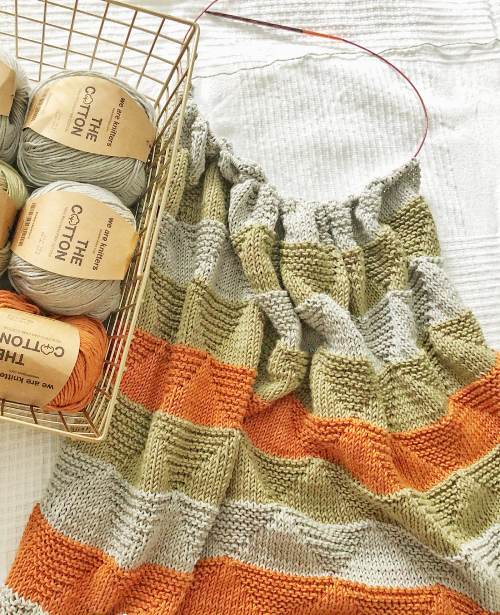
3 Color Patchwork Blanket - Knitting Pattern

3 Color Patchwork Blanket - Knitting Pattern
The photo above © Michelle Kupfer

Love the look of a patchwork blanket but not the idea of sewing dozens of separate squares together? 3 Color Patchwork Blanket by Michelle Kupfer creates a bold geometric baby blanket using three colors, while the entire blanket is actually knitted in one piece.

The clever construction uses intarsia colorwork to create the appearance of individual patchwork blocks without traditional patchwork assembly. Worked in chunky yarn, it is also a relatively compact baby blanket project with a modern, graphic look.

3 Color Patchwork Blanket at a Glance

Pattern: 3 Color Patchwork Blanket

Designer: Michelle Kupfer

Craft: Knitting

Category: Baby Blanket

Construction: One piece, seamless, worked flat

Colorwork: Intarsia

Yarn Weight: Bulky / Chunky

Suggested Yarn: Berroco Vintage Chunky

Yardage: About 360–400 yards / 329–366 m

Needle Size: US 10½ / 6.5 mm circular needle

Gauge: 3.5 stitches and 4 rows = 1 inch in stockinette

Finished Size: About 22 × 27 inches / 56 × 68.5 cm

Pattern Availability: Paid pattern

About the 3 Color Patchwork Blanket

Designed by Michelle Kupfer, the 3 Color Patchwork Blanket is a small unisex baby blanket built around a simple but effective idea: creating the visual appearance of patchwork without knitting and joining separate squares.

Instead, three yarn colors are worked across the blanket using intarsia colorwork. The changing blocks of color create the geometric patchwork effect while the blanket remains a single piece.

A Patchwork Look Without Sewing Squares Together

Traditional knitted patchwork blankets are often constructed from many individual squares that must eventually be arranged and joined.

This design takes a different approach. The blanket is worked flat as one continuous piece, so there is no final assembly of separate knitted blocks.

That makes the construction especially interesting for knitters who enjoy the appearance of patchwork but would rather avoid a large seaming project.

Three-Color Intarsia

The patchwork effect is created with three colors worked using intarsia.

With intarsia, different sections of color are worked with separate yarn supplies rather than carrying every color continuously across the entire row.

One of the important skills is managing the yarn correctly where two colors meet so that the sections connect cleanly instead of leaving unwanted gaps.

If intarsia is new to you, practicing a small two-color swatch first can make the full blanket much easier to manage.

Finished Baby Blanket Size

The finished blanket measures approximately:

22 × 27 inches / 56 × 68.5 cm

This is a compact baby-blanket size, making the project more manageable than a full-size throw while still giving plenty of room to experiment with geometric color placement.

Yarn and Color Planning

The original design uses three colors of bulky-weight yarn. Ravelry lists approximately:

360–400 yards / 329–366 meters total

The suggested yarn is Berroco Vintage Chunky.

The designer's current pattern information recommends allowing enough yarn for each color rather than planning around an exact last few yards, since individual knitting tension can affect consumption.

The three-color format also gives you plenty of freedom when choosing a palette. You could combine three soft nursery colors, use neutrals, or create stronger contrast for a more graphic patchwork appearance.

Needles and Gauge

The pattern specifies:

US 10½ / 6.5 mm circular knitting needles

A circular needle approximately 24–32 inches long is useful for holding the blanket stitches, even though the project itself is worked flat.

The published gauge is:

3.5 stitches and 4 rows = 1 inch in stockinette stitch

Check your gauge before starting if you want the finished blanket to match the designer's dimensions.

Knitting Skills Used

The project combines fundamental knitting with basic colorwork skills, including:

  • Casting on
  • Knitting
  • Purling
  • Binding off
  • Changing yarn colors
  • Working intarsia color sections
  • Managing multiple yarn supplies

The blanket can therefore be an interesting introduction to intarsia for a knitter who is already comfortable with basic knit and purl stitches.

Is the 3 Color Patchwork Blanket Free?

No. 3 Color Patchwork Blanket by Michelle Kupfer is currently a paid knitting pattern.

Amazing Knitting does not reproduce the designer's copyrighted row-by-row instructions or color-placement schematic.

Visit the original pattern listing for the current price, complete materials, color placement, and knitting instructions.

View the Original 3 Color Patchwork Blanket →

Pattern credit: 3 Color Patchwork Blanket was designed by Michelle Kupfer. Pattern pricing, availability, materials, and technical information are controlled by the designer and may change over time.

Looking for a Free Alternative?

Prefer a free pattern? Amazing Knitting has another geometric block-style blanket you can explore without purchasing a pattern.

Garter Blocks Blanket — Free Pattern

This is a different design — not a free version of Michelle Kupfer's pattern — but it offers a similar geometric block effect. The blanket combines garter and stockinette blocks with cable divisions and uses super-bulky yarn for a substantial finished blanket.

View the Free Garter Blocks Blanket →

More Baby Blanket Knitting Patterns

You can also explore more baby blanket knitting patterns, patchwork-style blankets, and free blanket knitting patterns from the Amazing Knitting archive.

Before You Start

If you choose the original 3 Color Patchwork Blanket, check Michelle Kupfer's current pattern listing before purchasing yarn. Confirm the current yarn requirements, gauge, needle size, finished measurements, and pattern details before casting on.

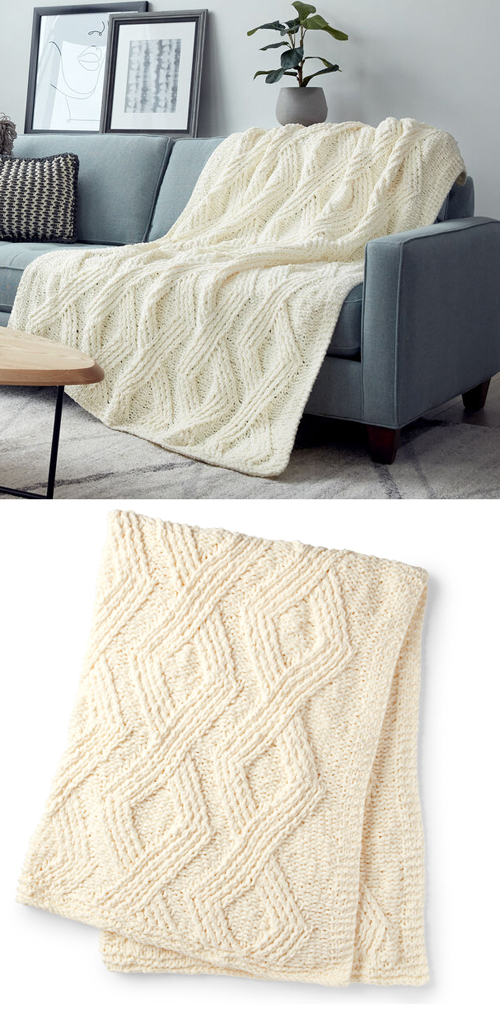
Twisted Stitch Knit Blanket - Free Knitting Pattern

Twisted Stitch Knit Blanket - Free Knitting Pattern
Photos above © Yarnspirations

What a beautiful knitting blanket (free knitting pattern)! We love this modern "twist" on the traditional knit cable blanket! Here, twisted stitches are used to create a striking geometric cable motif. Vintage White truly lets the stitches shine, but we think this would look amazing in any shade fromt he wide range of super-soft, easy to care for Bernat Blanket yarn!

Download Pattern: Twisted Stitch Blanket 

Easy Cable Blanket - Knitting Pattern

Easy Cable Blanket - Knitting Pattern
Photos above © Caroline Brooke
What beautiful knitting slippers! I found it on Pinterest... This pattern from Matilda’s Meadow features easy braided cables alternating with a ridge stitch section. Three sizes from a small baby blanket to large afghan. Rated easy by the designer.

Full Post: Easy Cable Blanket

Sweet Gemma Baby Blanket - Knitting Pattern

Sweet Gemma Baby Blanket - Knitting Pattern
Photos above © Triona Murphy & © Savbacke Photography
What beautiful knitting baby blanket pattern! I found it on Ravelry...
Cable and lace number blanket squares are worked individually in the round from the center out and then joined using a crochet hook for this modular blanket. The cable and lace pattern is provided in both charted and written out formats. Knit up in worsted weight yarn, it’s the perfect size for a crib or stroller blanket. You can even use individual squares to make matching pillows.

Full Post: Sweet Gemma

Once Upon A Cable Blanket - Knitting Pattern

Once Upon A Cable Blanket - Knitting Pattern
Photos above © melmorman
What beautiful knitting baby blanket pattern! I found it on Ravelry...
The beautiful cable pattern used for this blanket creates a classic look and makes it ideal for boy or girl. This blanket would also make a gorgeous throw.


Astrophil Blanket - Free Knitting Pattern

Astrophil Blanket - Free Knitting Pattern
Photos above © Chicory Sticks
What beautiful knitting blanket free pattern! I found it on Ravelry...
Astrophil is a free baby blanket pattern suitable for beginning knitters which uses a traditional Aran cable motif.

Download Pattern: Astrophil Blanket 

Apple Tree Blanket - Free Pattern

 Apple Tree Blanket - Free Pattern
The photo above © Pirett
What beautiful knitting blanket pattern! I found it on Pinterest.
Gorgeous baby blanket with bold textured apple tree motif using cable and bobble stitches and Rowan Dk yarn. Why not try knitting this in Rowan Baby Merino Silk DK for a super soft and snuggly blanket?

Download Pattern: Apple Tree Blanket

Sunny Baby Blanket - Free Pattern

Sunny Baby Blanket - Free Pattern
Photo above © Funktious

Looking for a simple and cheerful free baby blanket knitting pattern? The Sunny Baby Blanket by Lucie Sinkler combines easy knit-and-purl texture with a generous garter-stitch border to create a cozy, timeless baby blanket.

The original blanket looks especially bright and cheerful in sunny yellow, but the design works beautifully in almost any color. Its straightforward construction also makes it an appealing project for knitters who want a relaxing blanket without lace or complicated colorwork.

Sunny Baby Blanket at a Glance

Pattern: Sunny Baby Blanket

Designer: Lucie Sinkler

Craft: Knitting

Category: Baby Blanket

Yarn Weight: Worsted

Suggested Yarn: Plymouth Yarn Encore Worsted

Yardage: About 800 yards / 732 meters

Needle Size: US 8 / 5.0 mm

Gauge: 17 stitches and 32 rows = 4 inches in garter stitch

Finished Size: About 30½ × 34 inches / 77.5 × 86.5 cm

Construction: Worked flat

Pattern Availability: Free

About the Sunny Baby Blanket

The Sunny Baby Blanket is a classic textured baby blanket designed by Lucie Sinkler. It was first published in 2007 and has remained a popular choice for knitters looking for an uncomplicated baby blanket with more visual interest than plain garter stitch.

Rather than using cables, lace, or several yarn colors, the design creates its texture through simple combinations of knit and purl stitches.

This gives the blanket a clean geometric appearance while keeping the knitting process relatively straightforward.

A Simple Textured Design

The central area of the blanket alternates smooth and textured sections, creating a subtle block-like pattern across the fabric.

A generous garter-stitch border frames the design and gives the blanket a neat, finished appearance.

Because all of the visual interest comes from the stitches themselves, the pattern works particularly well in a single solid color.

Why Yellow Works So Well

The original pattern highlights bright yellow as a particularly cheerful choice for this blanket, which explains the "Sunny" name.

Yellow can make a lovely gender-neutral baby color, but there is no need to limit the project to the original shade.

Cream, white, sage, soft gray, blue, pink, lavender, or stronger modern colors can all give the same pattern a very different personality.

Yarn and Yardage

The pattern calls for approximately:

800 yards / 732 meters of worsted-weight yarn

The original suggested yarn is Plymouth Yarn Encore Worsted, a machine-washable wool and acrylic blend.

Washability can be especially useful for a baby blanket, since blankets intended for regular use may need frequent cleaning.

If you substitute another worsted-weight yarn, make a gauge swatch before beginning so you can check the resulting fabric and finished dimensions.

Needles and Gauge

The original pattern recommends a:

US 8 / 5.0 mm circular knitting needle

A 29-inch circular needle is recommended to comfortably hold the large number of blanket stitches. The blanket itself is still worked flat rather than in the round.

The published gauge is:

17 stitches × 32 rows = 4 inches in garter stitch

Finished Blanket Size

The finished Sunny Baby Blanket measures approximately:

30½ × 34 inches / 77.5 × 86.5 cm

This creates a useful baby-size blanket suitable for the nursery, supervised cuddling, or taking along in a stroller.

Knitting Skills Used

One reason this pattern remains approachable is that the texture is created with fundamental knitting techniques. Depending on your experience, the project can provide useful practice with:

  • Knit stitches
  • Purl stitches
  • Garter stitch
  • Following repeating rows
  • Maintaining consistent tension
  • Working a large number of stitches on a circular needle
  • Simple finishing and weaving in ends

There is no need to manage multiple yarn colors to create the blanket's textured effect.

A Good First Baby Blanket Project

If you have already practiced basic knit and purl stitches and want to move on to a larger project, the Sunny Baby Blanket can be an appealing next step.

The repeating structure gives you something more interesting than plain knitting while avoiding many of the techniques found in more advanced lace or cable blankets.

A blanket is also useful for practicing consistent tension over a larger piece of fabric.

A Classic Handmade Baby Gift

A knitted baby blanket can make a thoughtful gift for a newborn or baby shower. The Sunny Baby Blanket is especially versatile because its simple geometric texture can suit many different nursery styles.

Choosing a washable yarn can make the finished blanket practical for everyday use as well as attractive enough to give as a handmade keepsake.

Is the Sunny Baby Blanket Pattern Free?

Yes. The Sunny Baby Blanket by Lucie Sinkler is currently available as a free knitting pattern.

The complete instructions are hosted externally by HowStuffWorks, and the pattern is also listed as free on Ravelry.

Amazing Knitting does not reproduce the designer's complete knitting instructions. Please use the original pattern source for the full pattern.

Get the Free Sunny Baby Blanket Pattern

Visit the original pattern page for the complete knitting instructions, materials, gauge, and finishing information.

Get the Free Sunny Baby Blanket Pattern →

Pattern credit: Sunny Baby Blanket was designed by Lucie Sinkler and published through HowStuffWorks. Pattern availability and technical information may change over time.

More Free Baby Blanket Knitting Patterns

If you enjoy this project, explore more free baby blanket knitting patterns, textured baby blankets, and easy baby blanket knitting ideas from the Amazing Knitting archive.

Before You Start

Check the original pattern before purchasing yarn. Confirm the current materials, gauge, finished measurements, and instructions, then make a gauge swatch if finished size is important to you.

Heavenly Baby Blanket - Free Pattern

Heavenly Baby Blanket - Free Pattern
Photo above © michelerenee
I found this amazing knitting pattern list on RedHeart.
A lovely combination of cable panels and lacework creates a baby blanket that will become a family favorite. Designed for the discriminating knitter, it will show just how much you care.

Download Pattern: Heavenly Baby Blanket 

Over 50 Websites to Get Free Knitting Patterns

Over 50 Websites to Get Free Knitting Patterns
Designed by © Knit Crush

Looking for free knitting patterns? There are thousands of legitimate patterns available online for baby clothes, sweaters, blankets, scarves, socks, hats, toys and almost every other knitting project you can imagine.

The challenge is no longer simply finding a pattern. It is finding a reliable free pattern from a legitimate source, especially when older Pinterest pins and search results may lead to discontinued pages, outdated downloads or unofficial copies.

This guide will help you find free knitting patterns more safely and efficiently, whether you are searching the Amazing Knitting archive, a designer's website, a yarn company or a large knitting-pattern database.

About This Updated Guide

This Amazing Knitting article was originally published in 2019 as a link to an external roundup of more than 50 free-pattern websites. We have expanded the page into an independent resource for finding legitimate free knitting patterns without reproducing another publisher's list.

Where Can You Find Free Knitting Patterns?

Free knitting patterns are published by many different types of websites.

Some come directly from independent designers. Others are published by yarn manufacturers, knitting magazines, craft websites or pattern databases.

The best source depends on what you are looking for, so it helps to understand the major types of free-pattern resources before beginning your search.

1. Designer Websites

One of the best places to find a knitting pattern is the designer's own website.

Independent designers frequently publish selected patterns free while selling other designs.

Going directly to the designer has several advantages. You are more likely to find the current version of the pattern, corrections, additional photographs and notes from the person who actually created it.

If a pattern has been updated since its original publication, the designer's current page is usually preferable to an old copied version circulating elsewhere.

2. Yarn Company Pattern Libraries

Major yarn companies can be excellent sources of free knitting patterns.

These companies publish patterns to demonstrate how their yarns can be used, which means their libraries often contain projects across many categories and skill levels.

You can find designs for:

  • Baby sweaters and cardigans
  • Baby blankets
  • Adult sweaters and pullovers
  • Hats
  • Scarves and cowls
  • Socks and slippers
  • Shawls
  • Home accessories
  • Seasonal projects

Yarn-company libraries are especially useful because older patterns sometimes remain available long after the original printed booklet has disappeared.

3. Ravelry

Ravelry is one of the most useful resources for researching knitting patterns.

Rather than simply searching the web for a phrase such as “free baby cardigan,” you can narrow results using filters such as category, yarn weight, needle size, age, construction and availability.

Pattern records can also provide useful historical information such as the designer, publication date, suggested yarn and links to the current pattern source.

Remember that a Ravelry record does not automatically mean the pattern itself is still available. Always check the current availability shown on the pattern page.

4. Knitting Magazines and Online Publications

Online knitting magazines have published many excellent free patterns over the years.

Some older designs remain available in permanent online archives, making these publications particularly useful when searching for classic knitting projects.

These sources can also be valuable because they often preserve useful information about the designer, yarn, gauge, construction and original publication date.

5. Large Craft and Pattern Websites

Large craft websites often organize patterns by project type or skill level, which can make them useful when you are looking for inspiration rather than one particular design.

A collection might focus on beginner scarves, baby booties, knitted toys or quick gifts.

When using a roundup, however, follow the link to the original pattern source whenever possible.

6. Knitting Blogs

Knitting blogs remain another useful source of free patterns, tutorials and project inspiration.

Some bloggers are also pattern designers and publish complete original designs. Others curate projects from different designers.

The distinction matters.

When a blog is discussing somebody else's pattern, look for the designer's name and a clear link to the legitimate original source.

7. Vintage and Public-Domain Knitting Resources

Knitters interested in historical projects can also explore digitized vintage knitting books, magazines and pattern leaflets.

Older knitting publications can contain fascinating sweaters, lace, socks, mittens and household projects that differ significantly from modern designs.

However, old does not automatically mean public domain. Copyright status depends on factors including publication date, jurisdiction and publication history.

If you plan to republish rather than simply knit from a vintage pattern, verify its copyright status first.

8. Amazing Knitting

You can also browse the Amazing Knitting archive.

Our library includes hundreds of knitting discoveries covering baby clothes, blankets, sweaters, scarves, hats, socks, slippers, stitches, tutorials and other projects.

We are progressively reviewing older articles to identify original designers, verify pattern availability and direct readers toward legitimate current sources whenever possible.

Browse Free Knitting Patterns →

Free Baby Knitting Patterns

Baby projects are an excellent place to explore free patterns because there are designs for many different skill levels.

You can start with baby cardigans and sweaters:

Explore Free Baby Cardigans →

Or browse baby booties:

Explore Free Baby Booties →

And baby blankets:

Explore Free Baby Blankets →

Free Sweater and Cardigan Patterns

Sweaters range from simple first-garment projects to advanced designs involving cables, lace or colorwork.

When choosing one, pay particular attention to:

  • Finished measurements
  • Recommended ease
  • Gauge
  • Yarn weight
  • Construction method
  • Available sizes
  • Required techniques

Explore Free Sweater Patterns →

Free Blanket Knitting Patterns

Blankets are another large category of free knitting patterns.

Depending on the design, a blanket can be a simple beginner project or an advanced combination of lace, cables, colorwork or modular knitting.

Baby blankets are particularly useful for practicing new techniques on a manageable scale.

Explore Free Blanket Patterns →

Free Scarf and Cowl Patterns

Scarves and cowls are useful projects for testing unfamiliar stitches without committing to the fit requirements of a sweater.

They are also good projects for experimenting with cables, lace, texture and unusual yarn.

Explore Free Scarf Patterns →

How to Tell Whether a Pattern Is Really Free

One of the biggest problems with older knitting links is that pattern availability changes.

A pattern that was free ten years ago may now be paid, discontinued or completely unavailable.

Before calling a pattern free, check the current original source.

Look for clear wording such as:

  • Free pattern
  • Free download
  • Download PDF
  • Pattern available free on the designer's website

If the only evidence that a pattern is free comes from an old Pinterest pin or an old roundup, verify it before downloading.

Free Web Pattern vs. Free PDF

A pattern does not need to include a downloadable PDF to be genuinely free.

Some designers publish the complete pattern as a free webpage while offering an optional printable or ad-free PDF for a fee.

In that situation, describe the availability accurately: free web version with optional paid PDF.

This is more useful than simply labeling everything “free” or “paid.”

Watch for Discontinued Patterns

Older pattern databases can contain records for designs whose original downloads have disappeared.

A historical record is useful for identifying the designer and project, but it does not necessarily provide permission to download a copied PDF from another website.

If the legitimate source is gone, look for a currently available alternative instead of using an unauthorized copy.

Avoid Suspicious Pattern Downloads

Be cautious when a website offers a designer's PDF without clearly identifying itself as the designer, publisher or an authorized distributor.

A safer route is usually:

  1. Identify the exact pattern name.
  2. Identify the designer.
  3. Find the designer or publisher's current page.
  4. Check the current availability.
  5. Download or follow the pattern from that legitimate source.

Check for Pattern Corrections

Another advantage of using the current source is access to corrections and updates.

Designers sometimes discover errors after publication and issue an updated PDF or an errata notice.

An old copy saved elsewhere may not include those corrections.

Check the Yarn Before You Buy It

Older patterns frequently recommend yarns that have since been discontinued.

That does not necessarily make the pattern unusable.

Instead of searching only for the exact old yarn, compare:

  • Yarn weight
  • Gauge
  • Fiber content
  • Yardage or meterage
  • Fabric characteristics

Always make a gauge swatch before committing to a substitute yarn for a fitted garment.

Start with the Project You Want to Make

Searching “free knitting patterns” can return an overwhelming number of results.

A more effective approach is to begin with a specific project:

  • Free newborn cardigan knitting pattern
  • Free baby booties knitting pattern
  • Free cable blanket knitting pattern
  • Free beginner scarf knitting pattern
  • Free top-down sweater knitting pattern
  • Free lace shawl knitting pattern

Then narrow your choices according to yarn weight, size and skill level.

Save the Designer's Name

When you find a pattern you love, save more than the photograph.

Record the pattern name and designer.

This makes it much easier to find the legitimate pattern again if a Pinterest pin, bookmark or old website link stops working in the future.

Our Approach at Amazing Knitting

Amazing Knitting is a curated discovery library rather than the owner of every pattern featured in its archive.

When a project belongs to another designer, our goal is to identify and credit that designer, provide useful independent information about the project and direct knitters to the legitimate pattern source.

If an old pattern that was once free has become paid or unavailable, we aim to make that clear rather than continuing to promise a free download that no longer exists.

Explore Free Knitting Patterns

Ready to find your next project? Browse the Amazing Knitting archive by project type.

Before Downloading a Free Pattern

Take a moment to confirm that you are using the current legitimate version.

Check the designer's name, current availability, size range, yarn requirements and whether any corrections have been published.

A few minutes of checking before casting on can prevent hours of frustration later in the project.

Editorial note: This article was originally published by Amazing Knitting in 2019 as a discovery link to a Knit Crush roundup. It has since been expanded into an original Amazing Knitting resource for finding and evaluating free knitting patterns. The original image used on this page is credited to Knit Crush.

Cable Square Blanket - Knitting Pattern Guide

Cable Square Blanked - Knitting Pattern
Photo above © Audurbjort 

Cable Square Blanket by Auður Björt Skúladóttir is a striking modular knitted blanket built from colorful cable squares with an unusual feature: the cable designs are intended to look attractive from both sides.

Originally listed under the Icelandic name Kaðlabútateppi and the English title Cable Square Blanked, the project combines reversible cable knitting, multiple colors and modular blanket construction.

Pattern Availability Note

This design is still listed among Auður Björt Skúladóttir's patterns, but we could not verify a current legitimate free download for the original pattern. For that reason, Amazing Knitting does not describe it as a free pattern or link to unauthorized archived copies.

Cable Square Blanket at a Glance

Original Name: Kaðlabútateppi / Cable Square Blanked

Designer: Auður Björt Skúladóttir

Craft: Knitting

Category: Blanket / Throw

Construction: Knitted cable squares joined into a blanket

Special Feature: Reversible cable designs

Color: Designed to work beautifully with multiple colors

Finishing: I-cord edging/bind-off is associated with the designer's blanket workshop

Current Pattern Status: Original design verified; free availability not verified

About the Cable Square Blanket

Cable Square Blanket is a modular knitting project by Icelandic designer Auður Björt Skúladóttir.

Instead of knitting one very large blanket from edge to edge, the project is based around individual knitted squares. Each square provides an opportunity to work cable textures while different yarn colors add variety across the finished blanket.

The result is particularly effective because the strong cable textures and changing colors give every section its own identity while the repeated square format holds the complete design together.

The Original Icelandic Name

The pattern appears in the designer's catalog as:

Kaðlabútateppi / cable square blanked

You may therefore encounter both this original listing and the more natural English description Cable Square Blanket when searching for the project.

Amazing Knitting uses “Cable Square Blanket” in this guide because it clearly describes the project for English-speaking knitters, while retaining the original pattern name above for identification.

Reversible Cable Knitting

One of the most interesting aspects of this project is the use of reversible cables.

Traditional cable knitting often has a very obvious right side and a much less decorative reverse side. Auður Björt Skúladóttir has a particular interest in designing knitted pieces that remain attractive when viewed from either side.

This characteristic is especially useful for blankets, scarves and shawls because both surfaces are likely to remain visible during normal use.

Why Reversible Cables Work Well for Blankets

A blanket is rarely displayed with only one side visible.

It may be folded over a chair, wrapped around someone or turned in different directions. A reversible texture therefore makes practical as well as decorative sense.

In this design, the cable structure becomes part of the appearance of both sides rather than leaving the reverse as something that always needs to be hidden.

Modular Square Construction

Working a blanket as separate squares has several practical advantages.

Individual blocks are easier to carry than an entire growing blanket, making modular knitting convenient for travel or short knitting sessions.

It also allows you to experiment with different colors without carrying all of the blanket's yarn at once.

The squares are eventually arranged and joined to create the complete throw.

Playing With Color

The original project is especially attractive when worked in several colors.

You might choose a coordinated palette of related shades, use contrasting colors for a more graphic effect, or build the blanket gradually from suitable yarn in your stash.

When planning a multi-color blanket, laying the finished squares on the floor before joining them can help distribute light, dark and dominant colors more evenly.

I-Cord Finishing

Auður Björt Skúladóttir has taught this particular Cable Square Blanket as a workshop project.

In that workshop, knitters first explored reversible cable techniques and then worked on assembling and finishing the blanket with an I-cord bind off.

An I-cord finish can give a modular blanket a clean outer edge and help visually unite the individual blocks.

Needles

A Reykjavík knitting workshop taught by the designer for this blanket asked participants to bring:

4 mm / US 6 circular needles, 60–80 cm / 24–32 inches

This is useful historical information about how the project has been taught, but always follow the specifications in any current copy of the designer's pattern rather than assuming workshop materials necessarily replace the pattern's complete requirements.

Skill Level

A Reykjavík Knitting Festival class devoted to this blanket was classified as Advanced.

That does not necessarily mean every individual square will feel equally difficult, but knitters should be comfortable managing cable techniques and following textured stitch patterns.

Skills That Help

Useful skills for a project of this type include:

  • Casting on and binding off
  • Knitting and purling confidently
  • Working cable stitches
  • Understanding cable crossings
  • Following repeating stitch patterns
  • Working reversible textures
  • Maintaining consistent gauge between squares
  • Joining knitted blocks
  • Working an I-cord edge or bind-off
  • Blocking individual squares

Keeping the Squares Consistent

Gauge deserves particular attention in a modular blanket.

If one square is noticeably larger than the others, joining the blocks neatly becomes much more difficult.

Try to use yarns with compatible weights and characteristics, and check the dimensions of your first completed squares before producing a large number of blocks.

Blocking Before Assembly

Blocking the squares before final assembly can make joining considerably easier.

It allows you to bring the blocks to consistent dimensions and straighten their edges before arranging the final blanket.

Follow the care instructions appropriate for your yarn and avoid overstretching the cable texture.

Planning the Final Layout

One of the enjoyable stages of a modular blanket is arranging the finished squares.

Before joining anything permanently, place the blocks together and try several layouts. Pay attention to color balance as well as the direction and visual weight of the cable motifs.

Taking a quick photograph of each possible arrangement can make the alternatives easier to compare.

Is the Original Cable Square Blanket Pattern Free?

We could verify that Kaðlabútateppi / Cable Square Blanked is an original design by Auður Björt Skúladóttir and remains associated with her pattern catalog.

However, we could not verify a current legitimate free download for the complete original pattern.

For that reason, Amazing Knitting does not label this project as a free pattern and does not reproduce or link to unauthorized copies of the designer's instructions.

Find the Original Designer

The safest place to check the current status of the original design is Auður Björt Skúladóttir's Ravelry designer catalog.

View Auður Björt Skúladóttir's Designs →

Looking for a Free Alternative?

If you mainly like the idea of building a blanket from knitted squares, you do not need to rely on an unauthorized copy of the original pattern.

Amazing Knitting has many free blanket and cable-knitting projects in the archive that you can explore instead.

Explore Free Knitted Blanket Squares →

You can also browse free cable blankets, knitted square blankets, and free blanket knitting patterns.

Before You Start

If you obtain the original pattern legitimately, read through the designer's instructions before selecting yarn or beginning a large number of squares.

Make one test square first. Check its dimensions, cable definition and appearance from both sides before committing yarn to the complete blanket.

Pattern credit: Kaðlabútateppi / Cable Square Blanked was designed by Auður Björt Skúladóttir. The existing photograph on this Amazing Knitting page is credited to Audurbjort. Amazing Knitting does not reproduce the designer's copyrighted charts or row-by-row knitting instructions.

Cable Snooze - Free Pattern

Cable Snooze - Free Pattern
Photo above © DROPS design

Cable Snooze / DROPS Baby 33-7 is a cozy knitted baby sleeping bag by DROPS Design, combining delicate lace, double moss stitch and a practical hood.

Designed in soft merino yarn, the pattern includes sizes from premature babies through 2 years. Best of all, the complete Cable Snooze knitting pattern is still available free directly from DROPS Design.

✓ Free Pattern Availability

Cable Snooze remains available as a free official DROPS knitting pattern. This page has also been updated to correct an older size reference: the official pattern currently includes sizes from premature through 2 years.

Cable Snooze at a Glance

Pattern: Cable Snooze / DROPS Baby 33-7

Designer: DROPS Design

First Published: November 2018

Craft: Knitting

Category: Baby Sleeping / Bunting Bag

Sizes: Premature to 2 years

Suggested Yarn: DROPS Merino Extra Fine

Yarn Weight: DK / Yarn Group B

Needle: US 6 / 4 mm circular needle

Gauge: 21 stitches × 28 rows = 4 inches / 10 cm in stockinette

Main Features: Lace, double moss stitch, hood and button fastening

Current Availability: Free official pattern

About the Cable Snooze Baby Bag

Cable Snooze is more than a simple knitted blanket. DROPS designed it as a shaped baby sleeping or bunting bag with a hood and button fastening.

The combination of lace and textured double moss stitch gives the piece considerably more visual interest than a plain stockinette baby cocoon, while the hood completes the cozy wrapped appearance.

The design is unisex, so changing the yarn colour can easily give the finished project a completely different look.

Sizes from Premature to 2 Years

The current official DROPS pattern includes six sizes:

  • Premature — approximate height 40/44 cm
  • 0–1 month — approximate height 48/52 cm
  • 1–3 months — approximate height 56/62 cm
  • 6–9 months — approximate height 68/74 cm
  • 12–18 months — approximate height 80/86 cm
  • 2 years — approximate height 92 cm

Older references to this pattern sometimes describe the size range differently. For your project, always use the measurements and sizing information in the current DROPS pattern.

DROPS Merino Extra Fine

Cable Snooze was designed using DROPS Merino Extra Fine, a DK-weight merino yarn in DROPS Yarn Group B.

The official yarn quantities are:

  • Premature: 350 g
  • 0–1 month: 400 g
  • 1–3 months: 450 g
  • 6–9 months: 500 g
  • 12–18 months: 600 g
  • 2 years: 650 g

The original sample is shown in a soft light grey-green shade.

If substituting another yarn, choose one capable of producing the required gauge and a comfortable fabric suitable for a baby garment.

Needles and Gauge

DROPS specifies an:

US 6 / 4 mm circular needle, approximately 80 cm long

The published stockinette gauge is:

21 stitches × 28 rows = 4 inches / 10 cm

The recommended needle size is only a starting point. Use the needle size necessary for you to obtain the designer's gauge.

Lace and Double Moss Stitch

One of the most attractive features of Cable Snooze is the combination of two different surface textures.

The lace sections create decorative openwork, while double moss stitch provides a denser textured contrast.

Together they prevent the large knitted surface from appearing flat while still allowing the design to remain soft and suitable for a baby project.

The Hood

Cable Snooze includes an integrated knitted hood that gives the project its distinctive cozy appearance.

This also makes the construction more interesting than knitting a simple rectangular blanket or sleep sack.

Follow the current DROPS instructions and diagrams for the exact hood shaping and assembly.

Button Fastening

Buttons are another important design feature.

The number required varies with size:

  • Premature: 8 buttons
  • 0–1 month: 9 buttons
  • 1–3 months: 10 buttons
  • 6–9 months: 11 buttons
  • 12–18 months: 12 buttons
  • 2 years: 12 buttons

DROPS used its Oak No. 503 wooden buttons for the original project. If substituting buttons, check the current pattern for the appropriate size and placement.

How Cable Snooze Is Constructed

The pattern is worked primarily back and forth rather than in the round.

It combines several pattern sections, button bands and shaping before the finished pieces are assembled into the sleeping-bag form.

Ravelry classifies the pattern as worked flat and seamed, with features including lace, eyelets, a hood, buttonholes and textured stitches.

Use the original DROPS instructions for the exact stitch counts, diagrams, shaping and assembly sequence.

Charts and Written Instructions

DROPS provides diagrams for the decorative stitch patterns together with written explanations for the construction.

Before beginning, familiarize yourself with the relevant chart for your chosen size because different sizes use different diagram combinations.

Amazing Knitting does not reproduce the DROPS charts or row-by-row instructions. The complete current pattern is available free from the official source.

Skills That Help

Useful skills for Cable Snooze include:

  • Casting on and binding off
  • Knit and purl stitches
  • Working double moss stitch
  • Working yarn overs and lace decreases
  • Reading knitting charts
  • Making buttonholes
  • Working garment shaping
  • Picking up stitches
  • Basic seaming
  • Attaching buttons securely

Choosing Yarn for a Baby Project

When substituting yarn for a baby item, consider more than colour.

The yarn should produce the correct gauge and a fabric that feels soft and comfortable. Washing requirements are also important for an item likely to need frequent cleaning.

A smooth solid or gently heathered yarn can be especially effective here because it allows both the lace and moss-stitch textures to remain clearly visible.

Important Baby Safety Note

This is a wearable baby bunting or sleeping-bag style knitting project, not a substitute for current safe-sleep guidance or approved infant sleep products.

Always supervise appropriately, make sure buttons and other fastenings are attached securely, and follow current child-safety recommendations for the age and situation in which the finished item will be used.

Is Cable Snooze Still Free?

Yes. Cable Snooze / DROPS Baby 33-7 remains available as a completely free knitting pattern directly from DROPS Design.

The official DROPS page includes the current instructions, diagrams, measurements and pattern tools.

Amazing Knitting does not reproduce the copyrighted charts or complete row-by-row instructions. Instead, this guide provides project information and directs knitters to the legitimate original pattern.

Get the Free Cable Snooze Pattern

The complete current pattern is available directly from DROPS Design.

Get the Free Cable Snooze Pattern →

More Free Baby Knitting Patterns

If you enjoy Cable Snooze, explore more free baby projects from the Amazing Knitting archive.

Explore Free Baby Knitting Patterns →

You can also browse free baby blankets, free baby cardigans, and DROPS baby patterns.

Before You Start

Open the current DROPS pattern first and select the correct size before buying yarn. Check the yarn quantity, number of buttons and diagrams required for that particular size.

Make a gauge swatch in your chosen yarn before beginning. Since this is a shaped baby project rather than a simple blanket, correct gauge is important for achieving the intended finished measurements.

Pattern credit: Cable Snooze / DROPS Baby 33-7 was designed and published by DROPS Design. The existing photograph on this Amazing Knitting page is credited to DROPS Design. Amazing Knitting does not reproduce DROPS Design's charts or complete row-by-row knitting instructions.

Shivaree Throw - Free Pattern

Shivaree Throw - Free Pattern
Photo above © sonomahead

Shivaree Throw by the Berroco Design Team is a richly textured knitted blanket featuring dramatic braided cables surrounded by classic double seed stitch.

Designed in Berroco Ultra Alpaca, the combination of cables and textured background gives this throw a timeless, substantial appearance. Best of all, the original Shivaree Throw knitting pattern is still available free directly from Berroco.

✓ Free Pattern Availability

Good news: Shivaree Throw is still available as a free knitting pattern from Berroco. We have updated this guide to direct readers to the current official Berroco pattern page rather than relying on older third-party links.

Shivaree Throw at a Glance

Pattern: Shivaree Throw

Designer: Berroco Design Team

Craft: Knitting

Project Type: Throw / Home

Skill Level: Intermediate

Finished Size: Approximately 48 × 60 inches

Suggested Yarn: Berroco Ultra Alpaca

Yarn Required: 13 hanks

Main Needle: US 8 / 5 mm circular needle

Notions: Cable needle

Main Textures: Braided cables and double seed stitch

Current Availability: Free official Berroco pattern

About the Shivaree Throw

Shivaree is a generously sized knitted throw built around a repeating combination of braided cables and double seed stitch.

The cables create strong vertical lines across the blanket, while the surrounding textured stitch provides contrast and helps the cable motifs stand out.

Unlike a blanket assembled from individual squares, Shivaree is worked as one large piece. This creates a continuous pattern across the entire throw and avoids the need to join multiple knitted blocks afterward.

Finished Size

Berroco gives the finished dimensions as approximately:

48 inches wide × 60 inches long

That makes Shivaree large enough to work as a substantial sofa throw or an extra layer for a bed or reading chair.

Berroco Ultra Alpaca

The original design uses Berroco Ultra Alpaca.

The official pattern calls for:

13 hanks of Berroco Ultra Alpaca

The photographed Berroco version was made in the colour Sweet Potato #6229.

If you substitute another yarn, matching the original gauge and creating a fabric with good cable definition are more important than simply choosing a similar colour.

Needles and Equipment

Berroco specifies a:

29-inch US 8 / 5 mm circular knitting needle

The circular needle is used to comfortably hold the large number of stitches in the blanket; the throw itself is worked flat rather than joined in the round.

You will also need a cable needle for the braided cable pattern.

Gauge

Because Shivaree combines two different textures, Berroco provides gauge information for both.

For the double seed stitch section:

20 stitches × 28 rows = 4 inches

For the cable pattern:

13 stitches = 2 inches and 28 rows = 4 inches

These measurements are based on the US 8 / 5 mm needle.

Berroco specifically recommends checking gauge before beginning. With a project this large, even a modest gauge difference can affect both the finished dimensions and the amount of yarn required.

Braided Cable Design

The cables are the visual centerpiece of Shivaree.

Rather than using a single simple rope cable, the pattern creates a more elaborate braided effect through a repeating cable sequence.

Each cable section is worked over 13 stitches, with the cable pattern repeating over eight rows.

The official Berroco pattern provides the complete cable instructions and stitch glossary, including the required front- and back-crossing techniques.

Double Seed Stitch Texture

Between the braided cables is a textured stitch pattern that Berroco identifies as Double Seed Stitch.

This creates a small-scale knit-and-purl texture that contrasts nicely with the larger flowing cable motifs.

The combination is particularly effective because the quieter background texture allows the braided cables to remain the dominant feature.

How the Throw Is Constructed

Shivaree is worked flat on a circular needle.

The pattern begins with a large cast-on and establishes alternating sections of double seed stitch and cable motifs across the row.

Once the stitch patterns are established, the knitter continues the repeating textures until the piece reaches the required length.

Use Berroco's original pattern for the exact cast-on count, cable crossings, stitch sequence and row-by-row instructions.

Why Use a Circular Needle for a Flat Blanket?

A circular needle does not necessarily mean a project is knitted in the round.

Large blankets can contain hundreds of stitches, making conventional straight needles uncomfortable or impractical. A circular needle allows the flexible cable between the needle tips to support much of the weight of the project.

You simply turn the work at the end of each row and knit back and forth as you would with straight needles.

Skill Level

Berroco classifies Shivaree as an Intermediate knitting pattern.

Useful skills include:

  • Casting on a large number of stitches
  • Knitting and purling
  • Following repeating stitch patterns
  • Working with a cable needle
  • Crossing cable stitches to the front and back
  • Maintaining several pattern sections across a long row
  • Checking gauge
  • Binding off evenly
  • Blocking a large knitted project

A Good Project for Learning Cable Rhythm

Although Shivaree is not a small project, repeating cable designs can become easier to follow once their rhythm becomes familiar.

Stitch markers placed between major pattern sections may also help you notice mistakes earlier instead of discovering them several rows later.

If you are relatively new to cables, consider practicing the cable motif with spare yarn before casting on the full blanket.

Choosing a Substitute Yarn

When substituting yarn for a cable blanket, look beyond yarn weight alone.

A yarn with good stitch definition can make the braided structure easier to see. Very fuzzy yarns may soften the appearance of the cables, while a smoother yarn can emphasize every crossing.

Also consider durability, warmth and washing requirements. A throw may receive considerably more everyday use than a decorative shawl or occasional garment.

Is Shivaree Throw Still Free?

Yes. Shivaree Throw remains available as a free knitting pattern directly from Berroco.

This is the best source to use because it comes from the company and design team responsible for the original pattern.

Amazing Knitting does not reproduce Berroco's copyrighted row-by-row pattern instructions. Instead, we provide project information and direct knitters to the legitimate original source.

Get the Free Shivaree Throw Pattern

Berroco currently provides the complete free pattern on its official website.

Get the Free Shivaree Throw Pattern →

More Free Knitted Blankets

If you enjoy textured throws and cable knitting, continue exploring the Amazing Knitting archive for more free blanket patterns.

Explore Free Blanket Knitting Patterns →

You can also browse cable knit blankets, free knitted throws, and seed stitch blankets.

Before You Start

Download or open the current Berroco pattern first, then make a gauge swatch that includes the relevant textured stitches.

Because this is a large project using 13 hanks in the original version, make sure you have enough yarn before casting on. If possible, purchase the yarn for the complete blanket at the same time to reduce the chance of noticeable dye-lot differences.

Pattern credit: Shivaree Throw was designed by the Berroco Design Team. The existing project photograph on this Amazing Knitting page is credited to sonomahead. The knitting pattern remains the property of its respective rights holder. Amazing Knitting does not reproduce Berroco's copyrighted row-by-row instructions.

Discover More From the Archive

A fresh mix of knitting patterns and tutorials from the Amazing Knitting archive.

Finding patterns from the archive…