Skip to content

...

Showing posts sorted by relevance for query free dress knitting pattern. Sort by date Show all posts

Beach Baby - Free Dress and Hat Knitting Pattern

Beach Baby - Free Pattern
Photo above © DROPS Design

Beach Baby by DROPS Design is a charming short-sleeved baby and toddler dress with a matching knitted hat.

The design combines a simple summer silhouette with delicate patterned details, making it an attractive handmade outfit for warmer weather, special occasions or a thoughtful baby gift.

Originally published as DROPS Baby 10-7, the pattern includes several sizes from baby through approximately 3–4 years.

Best of all, the complete Beach Baby dress and hat knitting pattern is still officially available for free from DROPS Design.

✓ Free Pattern Availability

Beach Baby / DROPS Baby 10-7 remains available as a free official knitting pattern directly from DROPS Design.

Beach Baby Dress and Hat at a Glance

Pattern: Beach Baby

Pattern Number: DROPS Baby 10-7

Designer / Publisher: DROPS Design

Projects: Short-sleeved dress and matching hat

Sizes: 6/9 months, 12/18 months, 2 years, 3/4 years

Suggested Yarn: DROPS Safran

Yarn Amount: 150-150-200-200 g

Needles: 3 mm / US 2½

Gauge: 24 sts × 32 rows = 10 × 10 cm / 4 × 4 in in stockinette

Buttons: 4

Availability: Free official DROPS pattern

About the Beach Baby Knitting Pattern

Beach Baby is a coordinated child's outfit consisting of a knitted short-sleeved dress and matching hat.

The dress has a light, classic appearance that works especially well in cotton yarn, while the decorative pattern sections add enough interest to make the finished garment feel special.

The matching hat turns the dress into a complete handmade set.

Sizes Included

The official DROPS pattern includes four sizes:

  • 6/9 months — 62/68 cm
  • 12/18 months — 74/80 cm
  • 2 years — 86/92 cm
  • 3/4 years — 98/104 cm

This gives the design a useful size range from baby through early childhood.

Finished Measurements

The published finished bust measurements are:

46-54-60-66 cm / 18-21¼-23⅝-26 in

The published full lengths are:

37-47-51-55 cm / 14½-18-20-21⅝ in

Use the finished garment measurements when choosing a size rather than relying only on the child's age.

Original Yarn: DROPS Safran

The original pattern is written for DROPS Safran.

The published yarn quantities are:

  • 6/9 months: 150 g
  • 12/18 months: 150 g
  • 2 years: 200 g
  • 3/4 years: 200 g

The official sample is shown in white, but the design can naturally be adapted to other suitable colors.

Why Cotton Works Well for This Dress

A smooth cotton yarn is a natural choice for a short-sleeved warm-weather garment.

It can provide good stitch definition for the decorative pattern while keeping the finished dress relatively light.

When substituting yarn, look for a yarn that can reproduce the published gauge and has a comfortable feel suitable for children's clothing.

Needles and Gauge

The official pattern specifies:

3 mm / US 2½ needles

with a stockinette gauge of:

24 stitches × 32 rows = 10 × 10 cm / 4 × 4 in

Both circular and double-pointed needles are used in the published instructions.

Why Gauge Matters

Gauge is especially important for a child's dress because it affects the bust circumference, overall length and fit of the yoke.

If your gauge is tighter than the pattern, the finished dress will become smaller. If it is looser, the garment may become noticeably larger.

Make a gauge swatch before beginning, particularly if you are using a substitute yarn.

Patterned Sections

The design includes decorative stitch patterns represented in the official DROPS charts.

These patterned areas provide contrast with the simpler stockinette sections and give the dress its distinctive appearance.

When following the pattern, use the current official diagrams rather than relying on a copied chart from another website.

Reading DROPS Charts

If DROPS charts are new to you, take a moment to review the symbol key before starting the decorative sections.

Remember that chart symbols represent stitches and that the diagrams are read according to the direction of the row or round being worked.

Place stitch markers between repeats if that helps you keep track of the pattern.

The Yoke and Button Opening

The design includes a buttoned opening on the yoke.

The official instructions specify four buttonholes, with their placement adjusted for each size.

This detail gives the dress a practical opening while also becoming part of the decorative upper section.

Four Buttons

The materials list calls for:

4 buttons

Choose securely attached buttons that are appropriate for a child's garment.

Always check that buttons remain firmly sewn in place before the finished garment is worn.

Short Sleeves for Warmer Weather

The short sleeves are one of the features that distinguish Beach Baby from many heavier knitted children's dresses.

Combined with cotton yarn, they make the design particularly suitable for spring and summer layering.

The dress can be worn on its own in mild weather or over another layer when temperatures are cooler.

The Matching Hat

The included hat allows you to create a coordinated outfit using the same yarn and color.

You can make both pieces as a complete set or knit only the dress if that better suits your project.

A matching hat can also be a practical way to use remaining yarn after the dress is complete, provided you have enough yardage.

Choosing a Yarn Substitute

If DROPS Safran is not available to you, choose a substitute based on the fabric rather than brand name alone.

Check:

  • Gauge
  • Yarn weight
  • Fiber content
  • Softness
  • Washability
  • Stitch definition
  • Total meterage or yardage

The official DROPS page also provides tools for finding alternative yarns.

Choose a Color That Shows the Stitch Pattern

Smooth solid colors tend to make textured and openwork details easy to see.

Light colors can emphasize shadows and stitch structure, but the design can also look beautiful in pastel shades or stronger solid colors.

If you use a strongly variegated yarn, make a swatch first to see whether the color changes compete with the decorative motifs.

Skills You May Practice

  • Working stockinette stitch
  • Working garter stitch
  • Following charted stitch patterns
  • Working in the round
  • Using circular needles
  • Using double-pointed needles
  • Creating buttonholes
  • Garment shaping
  • Finishing a child's garment

Is Beach Baby Suitable for Beginners?

This is probably better viewed as an advanced beginner to intermediate project rather than a first-ever knitting project.

The basic stitches are manageable, but the garment also involves patterned sections, sizing, buttonholes and circular knitting.

If you already know knit and purl stitches and have completed a few simpler projects, Beach Baby can be an appealing next challenge.

Check the Pattern Before Casting On

Read through the complete official instructions once before beginning.

Pay particular attention to:

  • Your selected size
  • The stitch-pattern diagrams
  • Buttonhole placement
  • Where shaping begins
  • When circular or double-pointed needles are required

Highlighting or noting only the numbers for your chosen size can make a multi-size pattern easier to follow.

Is Beach Baby Still Free?

Yes.

Beach Baby / DROPS Baby 10-7 is still published as a complete free knitting pattern by DROPS Design.

The official page includes the materials, sizing, diagrams and complete knitting instructions.

Amazing Knitting does not reproduce the publisher's complete copyrighted row-by-row directions or charts. Use the official DROPS page for the full pattern.

Get the Free Beach Baby Pattern

Use the official DROPS Design page for the complete current pattern:

Get the Free Beach Baby Pattern →

More Free Baby and Child Knitting Patterns

Continue exploring these verified free designs in the Amazing Knitting archive:

Explore More Children's Knitting

Before You Cast On

Choose the size based on the finished measurements, check your gauge, and make sure you have enough yarn for both the dress and hat if you want the complete matching set.

Review the chart symbols and buttonhole placement before reaching the patterned yoke, and use the current official DROPS instructions throughout the project.

With its cotton yarn, short sleeves and matching hat, Beach Baby is a lovely example of a knitted outfit designed specifically for lighter, warmer-weather wear.

Pattern credit: Beach Baby / DROPS Baby 10-7 is a DROPS Design pattern. Amazing Knitting provides an independent project guide and does not reproduce the complete copyrighted charts or row-by-row knitting instructions. Please retain the existing photograph and its original credit from the previous Amazing Knitting post.

Silk Gray Sweater - Free Knitting Pattern

Silk Gray - Free Pattern
Photo above © Gralina

Silk Gray by Gralina Frie is a relaxed knitted pullover designed around a simple silhouette, wide neckline and understated ribbed details.

The original sweater was knitted in a bourette silk-blend yarn, producing an airy fabric with a softly textured, slightly tweedy appearance.

Its uncomplicated shape makes Silk Gray especially appealing if you like casual sweaters that can be layered over a tank top, T-shirt or lightweight dress.

Best of all, Silk Gray is still officially available as a free knitting pattern from designer Gralina Frie on Ravelry.

✓ Free Pattern Available

Silk Gray by Gralina Frie remains listed as a free Ravelry download. Use the designer's current pattern page linked below for the complete original instructions.

Silk Gray Sweater at a Glance

Pattern: Silk Gray

Designer: Gralina Frie

Published: May 2013

Category: Pullover

Original Yarn: BC Garn Granite

Yarn Weight: Sport

Approx. Yardage: 1000 yd / 914 m

Gauge: 21 sts × 27 rows = 4 in in stockinette

Needles: 3 mm / US 2½ and 4 mm / US 6

Published Size: One size

Suggested Fit Range: Approx. 36–40 in

Availability: Free Ravelry download

About the Silk Gray Sweater

Silk Gray is designed as a relaxed everyday sweater rather than a heavily fitted garment.

Its appeal comes from the combination of a simple stockinette body, understated ribbed edges and the distinctive character of the original silk-blend yarn.

The wide neckline gives the sweater an easy layering shape, while the relatively simple surface lets the yarn provide much of the visual interest.

The Original Yarn

Gralina Frie's original sample was knitted with BC Garn Granite.

The designer used approximately:

4 skeins / 200 g

with an approximate total requirement of:

900 m / 1000 yd

The original light-gray yarn contributes significantly to the soft, understated appearance of the sweater.

What Makes the Yarn Interesting?

The original design uses a bourette silk-blend yarn.

Bourette or noil-style silk can have a more textured, matte and slightly rustic appearance than the perfectly smooth, glossy silk many knitters first imagine.

That subtle texture works particularly well with a simple stockinette garment because the yarn itself becomes part of the design.

Can You Substitute the Yarn?

Yes.

The designer specifically notes that the original yarn can be replaced with a suitable silk/wool or silk/merino blend that produces an even but airy fabric at the required gauge.

When substituting, concentrate on:

  • Matching gauge
  • Creating a lightweight fabric
  • Choosing yarn with comfortable drape
  • Checking the fiber against your skin
  • Buying enough total meterage or yardage

Gauge

The published stockinette gauge is:

21 stitches × 27 rows = 4 inches / 10 cm

Gauge is particularly important here because the original pattern is written as one size and the amount of ease changes depending on the wearer's measurements.

Needle Sizes

The original pattern specifies:

  • 3 mm / US 2½ for the ribbing
  • 4 mm / US 6 for the main body

These are starting points. Use the needle size that allows you to obtain the published gauge with your chosen yarn.

Why Two Needle Sizes?

Using a smaller needle for ribbing helps the edge look neat and gives it a little more structure.

The larger needle used for the main fabric allows the stockinette section to remain lighter and more relaxed.

This contrast is especially useful in a sweater designed to have an airy rather than dense fabric.

One-Size Pattern

Silk Gray is published in one size.

The designer describes it as suitable for approximately 36–40 inch sizing, depending on the amount of ease you prefer.

On a smaller wearer it will appear more oversized, while toward the upper end of the suggested range it will have a closer fit.

Fit Note

Because this is an older one-size design rather than a modern extensively graded sweater pattern, compare your measurements with the designer's published information before choosing the project.

The Wide Neckline

One of the recognizable features of Silk Gray is its wide, flattering neckline.

A small ribbed detail finishes the neck without creating a heavy collar.

The result suits the casual layering character of the sweater and allows a shirt, tank or dress neckline underneath to remain visible.

1×1 Rib Details

Small sections of 1×1 ribbing are used around the edges.

Alternating knit and purl stitches creates an elastic edge while providing a subtle visual contrast with the stockinette body.

Keep the ribbing tension even, particularly around the neckline.

An Optional Open Side Detail

In the designer's original version, the lower ribbing is left open at the sides.

Gralina Frie notes that this feature is optional.

That makes it possible to preserve the original split-edge appearance or adapt the finishing according to your preference while following the designer's instructions.

Why Swatching Matters with Silk Blends

Different silk blends can behave very differently.

Some have substantial drape, while others contain enough wool to provide more bounce and structure.

Knit a reasonably large swatch and wash it in the same way you intend to care for the finished sweater.

Measure gauge only after the fabric has relaxed and dried.

Check Drape as Well as Gauge

Two yarns can produce the same number of stitches per inch while creating very different sweaters.

One may feel firm and structured while another falls softly against the body.

For Silk Gray, aim for the light, relaxed character intended by the designer rather than matching the gauge with an excessively rigid fabric.

Stockinette Makes Yarn Choice Important

The simple main fabric means there is little lace or cable work competing with the yarn.

This makes Silk Gray a useful project for a yarn with subtle texture, tweedy flecks or gentle natural variation.

A very smooth yarn will create a cleaner appearance, while a rustic silk blend can move the finished sweater closer to the character of the original sample.

Is Silk Gray Beginner Friendly?

The designer describes Silk Gray as an uncomplicated sweater, and the simple stockinette-and-rib combination makes it approachable compared with heavily patterned garments.

However, it is still a sweater project.

You should be comfortable with:

  • Knitting and purling
  • Stockinette stitch
  • 1×1 ribbing
  • Reading garment instructions
  • Checking gauge
  • Basic shaping
  • Finishing a garment

An adventurous beginner who has already completed a few smaller projects may find the straightforward design a useful first step into adult sweater knitting.

Choose Your Ease Before Starting

Because the pattern is written in one size, think about the silhouette you want before investing in yarn.

If you prefer an oversized sweater, compare your bust measurement with the finished dimensions and the designer's suggested fit range.

If you prefer a closer-fitting garment, make sure the resulting amount of ease will still allow comfortable movement.

Layering Ideas

The designer specifically presents Silk Gray as an easy casual layering piece.

Depending on yarn and season, it can be worn over:

  • A simple tank top
  • A T-shirt
  • A lightweight summer dress
  • A long-sleeved base layer in cooler weather

Blocking the Finished Sweater

Blocking is particularly useful when the project contains silk.

Follow the care instructions for your specific yarn and avoid assuming that every silk blend should be treated identically.

Support the weight of the wet garment carefully so it does not stretch unexpectedly.

Lay it out to the intended dimensions and allow it to dry completely.

Important: Don't Confuse It with Another Silk Gray Pattern

Same Name, Different Pattern

A separate knitting pattern called Silk gray was published by Irina Gorbacheva in 2021. That is a different sweater with different yarn, gauge, needles and sizing. The Amazing Knitting page featured here refers to the earlier Silk Gray by Gralina Frie, first published in 2013.

Is Silk Gray Still Free?

Yes.

Gralina Frie's current Ravelry pattern store continues to list Silk Gray as a free knitting pattern.

The pattern record also identifies the design as a pullover first published in May 2013.

Amazing Knitting does not reproduce the designer's complete copyrighted knitting instructions. Use the official designer listing for the full pattern.

Get the Free Silk Gray Pattern

Visit Gralina Frie's official Ravelry listing for the complete free pattern:

Get the Free Silk Gray Pattern →

More Free Sweater Patterns on Amazing Knitting

Explore More Sweater Knitting

Before You Cast On

Start by checking whether the one-size fit works for the silhouette you want.

Then make a generous stockinette swatch, wash it, confirm the 21-stitch × 27-row gauge, and evaluate the drape of your chosen yarn.

A successful substitute does not need to duplicate the original yarn exactly, but it should create the light, comfortable and relaxed fabric that gives Silk Gray its distinctive character.

Pattern credit: Silk Gray was designed by Gralina Frie and first published in 2013. Amazing Knitting provides an independent project guide and does not reproduce the designer's complete copyrighted knitting instructions. Please retain the existing photograph and its original credit from the previous Amazing Knitting page.

Charlie Baby Cardigan - Free Knitting Pattern

Charlie Baby Cardigan - Free Knitting Pattern
The photo above @ peterlinzi

Looking for a sweet and practical free baby cardigan knitting pattern? The Charlie Baby Cardigan Jacket by marianna mel is a classic little knitted cardigan designed for newborns and young babies.

With its simple styling and DK-weight yarn, Charlie works beautifully for both baby boys and girls. The pattern includes several small baby sizes and also offers options for different front styles, making it a versatile project for baby gifts, coming-home outfits, and everyday wear.

Charlie Baby Cardigan Pattern at a Glance

Pattern: Charlie Baby Cardigan Jacket

Designer: marianna mel

Published by: Marianna's Lazy Daisy Days

Craft: Knitting

Category: Baby Cardigan / Jacket

Yarn Weight: DK

Suggested Needle Size: US 6 / 4.0 mm

Gauge: 22 stitches = 4 inches in stocking stitch

Sizes: Newborn, 0–3 months, 3–6 months

Pattern Availability: Free

About the Charlie Baby Cardigan

Charlie is a charming baby cardigan designed by marianna mel of Marianna's Lazy Daisy Days. Its classic shape makes it suitable for either a baby boy or girl, and the smallest size was designed especially with newborn babies in mind.

This is also a useful pattern for knitters who enjoy making handmade baby gifts. The small dimensions keep the project manageable, while the straightforward styling makes it easy to personalize through your choice of yarn color and buttons.

Charlie Baby Cardigan Sizes

The pattern currently includes three baby sizes:

  • Newborn
  • 0–3 months – approximately 17-inch chest
  • 3–6 months – approximately 18½-inch chest

The original newborn version has approximate finished measurements of 16 inches (41 cm) wide, 8½ inches (21.5 cm) long, and a 5-inch (13 cm) sleeve length.

Always check the designer's current pattern instructions before choosing a size, since the original pattern page is the authoritative source for measurements and any later updates.

Yarn for the Charlie Baby Cardigan

Charlie is designed for DK-weight yarn, sometimes also described as 8-ply depending on where you live.

A soft, comfortable yarn suitable for baby garments is a practical choice. Since baby clothes are frequently worn directly over lightweight clothing, consider softness, washability, and care requirements when selecting your yarn.

You can also change the personality of this little cardigan simply through color: classic white and cream create a traditional look, while soft pastels or brighter modern shades can make the same design feel completely different.

Needles and Gauge

The pattern lists:

  • US 6 / 4.0 mm knitting needles
  • Gauge: 22 stitches = 4 inches in stocking stitch

Matching the designer's gauge is particularly important for a small baby garment, where even a relatively small difference in tension can noticeably affect the finished size.

Different Front Options

One interesting feature of the Charlie pattern is that it has developed over time. In addition to the original cardigan, the designer added instructions for a fully buttoned front version in all of the available sizes.

There is also an option for making a shorter cropped version, which the designer suggests can work especially well when worn over a little dress.

Check the current original pattern page to see the available variations before deciding which version you would like to knit.

A Lovely Baby Gift Project

Small cardigans are especially useful projects for baby showers, newborn gifts, and handmade keepsakes. Charlie's simple styling also means that it can be made ahead of time when you do not yet know whether the new baby will be a boy or girl.

Pairing the cardigan with coordinating baby accessories can also turn a single knitted garment into a complete handmade gift set.

Matching Charlie Baby Knits

The designer has created other pieces to coordinate with the Charlie cardigan, including matching baby booties, a hat, mittens, and a blanket.

This makes Charlie particularly useful if you enjoy creating coordinated newborn sets rather than knitting just one garment.

Is the Charlie Baby Cardigan Pattern Free?

Yes. The Charlie Baby Cardigan Jacket by marianna mel is currently available as a free knitting pattern.

Amazing Knitting does not reproduce the designer's knitting instructions. Please visit the original pattern source to view the complete instructions, measurements, variations, and any updates from the designer.

Get the Free Charlie Baby Cardigan Pattern

Visit Marianna's original Charlie Baby Cardigan page for the complete free knitting pattern.

Get the Free Charlie Baby Cardigan Pattern →

Pattern credit: Charlie Baby Cardigan Jacket was designed by marianna mel and published through Marianna's Lazy Daisy Days. Pattern availability, sizing, and technical details are controlled by the designer and may change over time.

More Baby Knitting Inspiration

Looking for another small project? Explore more baby cardigan knitting patterns, baby sweater knitting patterns, and baby booties knitting patterns from the Amazing Knitting archive.

Before You Start

Visit the designer's original pattern page before buying yarn or beginning your project. Confirm the latest size information, gauge, materials, button requirements, and instructions for the version of Charlie you plan to knit.

Smockie Baby Dress – Vintage Smocked Knitting Pattern

Smockie baby dress knitting pattern by Sublime Yarns with textured smocked yoke

Smockie by Sublime Yarns. Project photo © karriesknits.

Smockie by Sublime Yarns is a charming sleeveless baby dress with a vintage-inspired shape, square neckline and beautifully textured smocked yoke.

Originally published in 2007 in The Second Little Sublime Hand Knit Book, the design combines simple garter and stockinette knitting with decorative smocking to create a classic little garment for babies.

Smockie was originally available through a Sublime Yarns pattern book. That publication is now listed as out of print, so this Amazing Knitting page is presented as a pattern guide rather than promising a current free download.

Smockie at a Glance

  • Pattern: Smockie
  • Designer: Sublime Yarns
  • Published: August 2007
  • Original source: Sublime #606, The Second Little Sublime Hand Knit Book
  • Category: Baby dress / sleeveless smock
  • Construction: Worked flat, bottom-up and seamed
  • Neckline: Square neck
  • Fastening: Shoulder fastening with 2 buttons
  • Yarn weight: DK
  • Suggested yarn: Sublime Baby Cashmere Merino Silk DK
  • Yardage: Approximately 381–635 yd (348–581 m)
  • Needles: US 6 / 4.0 mm and US 3 / 3.25 mm
  • Gauge: 22 sts × 28 rows = 4 in / 10 cm in stockinette
  • Sizes: 0–3, 3–6, 6–12 and 12–18 months
  • Languages: English and Finnish editions recorded
  • Current status: Original publication out of print

What Is the Smockie Knitting Pattern?

Smockie is a sleeveless knitted baby smock that combines the simplicity of a small dress with a decorative textured upper section.

The lower part of the garment has a clean, understated appearance, allowing the distinctive smocked yoke to become the focal point.

Its square neckline and small shoulder fastening add to the traditional look and make the design immediately recognizable.

A Vintage-Inspired Baby Smock

Although Smockie was published in 2007, its styling draws strongly on traditional children's clothing.

Smocked dresses and tops have been used in children's wardrobes for generations, particularly when a decorative yoke is paired with a simpler lower body.

Sublime translated that familiar look into knitting, using texture rather than fabric embroidery to give the upper section its distinctive appearance.

The Smocked Yoke Is the Star

The most eye-catching feature is the textured smocked section across the upper part of the garment.

It adds dimension to an otherwise straightforward silhouette and gives the finished dress much of its vintage character.

A solid or gently tonal yarn can be particularly effective here because light and shadow can emphasize the raised texture.

Square Neckline

Smockie's square neckline is another important part of the design.

It creates a crisp frame around the textured yoke and gives the garment a noticeably different look from the round-neck baby sweaters and cardigans commonly seen in knitting patterns.

Sleeveless Construction

Because Smockie is sleeveless, there are no full sleeves to knit.

This keeps the silhouette light and makes the finished piece suitable for layering over a bodysuit, blouse or long-sleeved top when additional warmth is needed.

It also keeps attention focused on the yoke and dress shape.

Worked Flat and Seamed

Smockie is a traditional worked-flat knitting pattern.

Rather than knitting the entire dress seamlessly in the round, the garment pieces are worked back and forth and later assembled.

Knitters who prefer classic garment construction may find this approach familiar and easy to understand.

Bottom-Up Construction

The pattern is worked from the bottom upward.

This means the simpler lower portion is established before reaching the more decorative upper section.

As you approach the yoke and neckline, shaping and texture become more important, so careful row tracking becomes increasingly useful.

Garter and Stockinette Stitch

The design uses familiar knitting foundations including garter stitch and stockinette stitch.

These simpler areas provide a visual contrast with the smocked texture.

They also mean that much of the garment uses techniques that many knitters already know.

Four Baby Sizes

Smockie was published in four sizes:

  • 0–3 months
  • 3–6 months
  • 6–12 months
  • 12–18 months

This range makes the design suitable from newborn-size knitting through the early toddler stage.

Always select your size using the measurements and gauge in the original pattern rather than relying only on the age label.

Suggested Yarn

The original pattern recommends Sublime Baby Cashmere Merino Silk DK.

This DK yarn combines approximately:

  • 75% Merino wool
  • 20% Silk
  • 5% Cashmere

It is a soft luxury blend that was widely associated with Sublime's baby knitting collections.

How Much Yarn Does Smockie Need?

Depending on the size, the published pattern lists approximately 381–635 yards (348–581 meters).

Larger sizes naturally require more yarn.

If substituting yarn, compare meterage as well as ball weight because two DK yarns can contain very different lengths per ball.

Choosing a Substitute DK Yarn

You do not necessarily need the exact original Sublime yarn to create a similar garment.

When selecting a substitute, consider:

  • DK weight
  • Gauge compatibility
  • Softness for baby clothing
  • Stitch definition for the smocked texture
  • Washability
  • Fiber care requirements
  • Total yardage

For a textured design like Smockie, good stitch definition can be particularly valuable.

Needle Sizes

The pattern lists two needle sizes:

  • US 6 / 4.0 mm
  • US 3 / 3.25 mm

The smaller needles are useful where a firmer fabric is required, while the larger needles are used for the main stockinette gauge.

Treat the recommended needle sizes as a starting point and choose the size that gives you the required gauge.

Gauge

The published gauge is 22 stitches and 28 rows = 4 inches / 10 cm in stockinette stitch using the larger needles.

Gauge is particularly important for baby garments because it affects both the finished dimensions and how much yarn you will use.

Make and measure a swatch before beginning if you are substituting yarn or tend to knit especially tightly or loosely.

Two Buttons Complete the Dress

The original pattern calls for two buttons.

These are used with the shoulder fastening, a practical feature that helps make the neckline easier to open when dressing a baby.

Choose buttons that are suitable for baby clothing and attach them very securely.

Optional Decorative Flowers

Some knitters have personalized their Smockie projects with crocheted flowers or other small embellishments.

These are decorative additions rather than the defining feature of the original knitted design.

If you add embellishments to a baby garment, make sure every component is securely attached and appropriate for the intended wearer.

Is Smockie Beginner Friendly?

Smockie combines straightforward knitting with a more decorative textured section.

A knitter who already understands basic garment construction should find much of the project familiar, while the smocked yoke offers something more interesting than plain stockinette.

It is therefore better viewed as a project for a confident beginner or intermediate knitter rather than a first-ever knitting project.

Skills That Will Help

Useful skills include:

  • Casting on
  • Knit and purl stitches
  • Garter stitch
  • Stockinette stitch
  • Following textured stitch instructions
  • Basic garment shaping
  • Buttonholes
  • Seaming knitted pieces
  • Picking up or finishing neckline edges as directed
  • Sewing on buttons securely

Pay Attention to the Smocked Section

The decorative yoke is where careful row tracking matters most.

If you lose your place in a textured stitch sequence, the difference may become visible several rows later.

A row counter or simple written notes can make it easier to resume the project accurately after a break.

Check Your Stitch Counts

When shaping the upper garment, check stitch counts at the points given in the pattern.

Catching a missed decrease or shaping instruction early is much easier than discovering it during final assembly.

Take Time With the Seams

Because Smockie is worked flat, neat finishing is an important part of the final result.

Use a mattress-style or other appropriate garment seam where suitable, and avoid pulling the seam so tightly that it changes the dimensions of the knitted fabric.

Good seaming can make a traditionally constructed baby garment look almost as clean as a seamless design.

Blocking the Finished Smock

Gentle blocking can help even the stitches, settle the textured yoke and prepare the individual pieces for neat assembly.

Always follow the care instructions for your chosen yarn.

If you use a wool, silk or cashmere blend, avoid excessive heat or agitation that could damage the fibers.

Why Smockie Still Appeals to Knitters

Smockie combines several qualities that have helped it remain recognizable long after its original 2007 publication.

The basic silhouette is simple, but the textured yoke, square neckline and shoulder buttons give the garment a strong identity.

It also offers the satisfaction of traditional baby-garment knitting without requiring sleeves.

Smockie Pattern Availability

Smockie originally appeared in Sublime #606, The Second Little Sublime Hand Knit Book.

That publication is currently listed as out of print.

Older Amazing Knitting references described Smockie as a free pattern, but we could not verify a current free download supplied directly by Sublime Yarns or another current authorized publisher.

For that reason, we no longer label this page as a currently available free pattern.

View the Smockie Pattern Record

Ravelry maintains a useful record for the original Smockie design, including the designer, publication, yarn, sizes, gauge and historical source information.

View Smockie by Sublime Yarns on Ravelry →

Smockie is a Sublime Yarns design originally published in The Second Little Sublime Hand Knit Book. Amazing Knitting does not reproduce the complete copyrighted pattern instructions. The original publication is currently listed as out of print, and we have not verified a current authorized free download for the complete pattern.

Read Our Pattern Availability Policy →

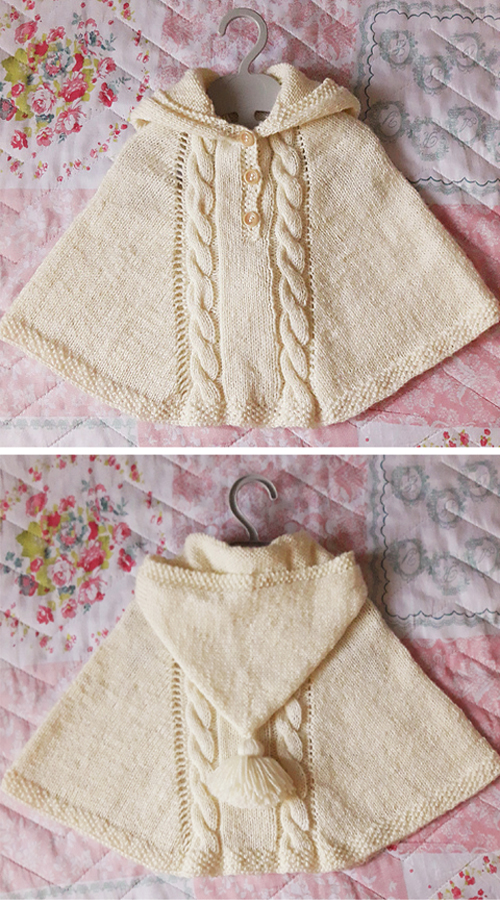
Lolo Poncho – Free Hooded Baby Poncho Knitting Pattern

Lolo Poncho free hooded baby poncho knitting pattern by Noura Sabbagh

Lolo Poncho. Photo © Noura Sabbagh

Lolo Poncho by Noura Sabbagh is a charming free hooded baby poncho knitting pattern featuring cable braids, seed stitch details and a cozy buttoned neckline.

Designed for little ones approximately 8–18 months, this sweet poncho is worked from the top down in DK-weight yarn. A pointed hood finished with a tassel and decorative cables along the sides give the design its distinctive storybook look.

Lolo Poncho Pattern Details

  • Designer: Noura Sabbagh
  • Published: January 2019
  • Craft: Knitting
  • Category: Baby / toddler poncho
  • Pattern availability: Free download
  • Size: 8–18 months
  • Yarn weight: DK / Light Weight #3
  • Suggested yarn: Nako Elit Baby
  • Yardage: Approximately 246–273 yards (225–250 m)
  • Needles: 3.5 mm (US 4) circular needles
  • Gauge: 20 stitches × 32 rows = 4 inches (10 cm) in stockinette stitch
  • Construction: Top down, one piece, worked in the round
  • Features: Hood, cables, seed stitch, buttons and tassel
  • Languages: English and Arabic

A Cozy Hooded Baby Poncho

Lolo Poncho combines the relaxed shape of a knitted poncho with several details normally associated with more structured children's garments.

The hood provides extra warmth around the head and neck, while a short buttoned opening at the front makes the poncho easier to put on and take off.

A tassel at the top of the hood adds a playful finishing touch that works especially well with the vintage-inspired shape of the design.

Beautiful Cable and Seed Stitch Details

Although much of the poncho uses simple stockinette stitch, Noura Sabbagh adds texture with seed stitch and cable braids.

The cable details run along both sides of the poncho, providing a strong decorative feature without covering the entire garment in cables.

This combination allows the smooth stockinette sections, textured seed stitch and raised cable braids to complement one another.

Lolo Poncho Size

The free pattern is written for one baby/toddler size: approximately 8–18 months.

Because children's proportions can vary considerably at the same age, check the designer's pattern information and your gauge before beginning rather than choosing the project based only on age.

Yarn Requirements

The original Lolo Poncho uses Nako Elit Baby, a DK-weight acrylic yarn.

The designer specifies approximately 100 g of lightweight #3 acrylic yarn. The pattern listing gives an estimated yardage of around 246–273 yards (225–250 m).

If you substitute another yarn, choose a suitable DK-weight option and make sure you can achieve the required gauge.

For a garment intended for a young child, softness and practical care are also useful considerations when selecting yarn.

Needles and Gauge

Lolo Poncho calls for 3.5 mm (US 4) circular needles, approximately 80 cm or longer, or the needle size needed to achieve the designer's gauge.

The specified gauge is: 20 stitches and 32 rows = 4 inches (10 cm) in stockinette stitch.

Making a gauge swatch is particularly useful for a children's garment because a difference of only a few stitches can noticeably change the finished dimensions.

Top-Down One-Piece Construction

Lolo Poncho is constructed from the top down and is primarily worked in the round as one piece.

This construction allows the poncho to grow outward and downward from the neckline while incorporating the decorative sections into the garment.

It also reduces the amount of traditional garment seaming compared with a poncho made from several large separate panels.

A Buttoned Neckline

Three buttons at the upper front add both decoration and function. They create a short opening near the neckline, making the hooded poncho easier to dress over a baby's head.

Choosing contrasting buttons can make this feature stand out, while buttons close to the yarn color create a more understated finish.

Skills Used in the Lolo Poncho

This project combines several knitting techniques, including:

  • Knitting and purling
  • Working in the round
  • Top-down construction
  • Seed stitch
  • Cable knitting
  • Reading a chart
  • Buttonholes
  • Shaping
  • Finishing a hood and tassel

For that reason, Lolo Poncho is more interesting as a skill-building project than a completely basic first knitting project.

Why Knit the Lolo Poncho?

Lolo Poncho has a distinctive look without requiring an elaborate all-over stitch pattern. The hood, cable braids, seed stitch, buttons and tassel provide plenty of visual interest while leaving large areas of simpler knitting.

The poncho shape also makes it a fun alternative to knitting another conventional baby cardigan or pullover.

It could make a lovely handmade gift for a baby or toddler, especially for cooler autumn and winter days.

About the Lolo Poncho Design

Noura Sabbagh named the pattern after her daughter. It was also her first written knitting pattern.

The pattern is available in both English and Arabic, which makes it especially useful to knitters looking for an Arabic-language version of a baby garment pattern.

Get the Free Lolo Poncho Knitting Pattern

The complete Lolo Poncho by Noura Sabbagh is currently available as a free downloadable knitting pattern from the designer's Ravelry store.

Get the Free Lolo Poncho Knitting Pattern

Pattern availability was checked when this article was updated. Availability on external websites may change over time.

Child's Foxy Tunic - Free Pattern

Child's Foxy Tunic - Free Pattern
Photo above © katring

Child's Foxy Tunic by Heather Lodinsky is a playful knitted tunic for children featuring a clever fox face worked into the upper front of the garment.

Designed for Red Heart in sizes 2 through 8 years, the tunic combines simple garter and stockinette textures with colorwork and adorable finishing details. Best of all, the original pattern is still available as a free download from Yarnspirations.

✓ Free Pattern Availability

Good news: Child's Foxy Tunic is still officially available as a 100% free knitting pattern from Yarnspirations. No unofficial or archived copy is needed.

Child's Foxy Tunic at a Glance

Pattern: Child's Foxy Tunic

Designer: Heather Lodinsky

Publisher: Red Heart / Yarnspirations

First Published: May 2014

Craft: Knitting

Category: Child's Tunic / Dress

Sizes: 2, 4, 6 and 8 years

Skill Level: Intermediate

Suggested Yarn: Red Heart Anne Geddes Baby

Yarn Weight: DK

Main Needle: US 6 / 4 mm

Stockinette Gauge: 22 stitches × 34 rows = 4 inches / 10 cm

Main Techniques: Garter stitch, stockinette, shaping and colorwork

Special Feature: Fox face with knitted ears, nose and button eyes

Current Availability: Free official download

About the Child's Foxy Tunic

Child's Foxy Tunic turns a practical knitted garment into a playful animal-themed design.

The lower part of the tunic has a relatively simple shape, allowing the large fox face at the upper front to become the visual focus of the project.

The result can be worn as a tunic over a shirt and leggings in cooler weather, making it both decorative and practical.

Sizes 2 to 8 Years

The pattern includes four children's sizes:

  • 2 years
  • 4 years
  • 6 years
  • 8 years

Before choosing a size, check the finished measurements in the current Yarnspirations pattern rather than relying only on the child's age.

This is especially useful for a tunic because the amount of ease you prefer may depend on whether it will be worn alone or layered over another garment.

Original Yarn

Heather Lodinsky designed the tunic using Red Heart Anne Geddes Baby, a DK-weight yarn.

The original yarn is listed as an acrylic and nylon blend. If it is no longer convenient to obtain in your region, another suitable DK yarn may be considered as long as you can match the required gauge and produce a comfortable fabric.

For a child's garment, washability and durability can be just as important as softness and color.

Needles and Gauge

The pattern specifies:

US 6 / 4 mm knitting needles

The published stockinette gauge is:

22 stitches × 34 rows = 4 inches / 10 cm

The pattern also uses garter stitch, where the published row gauge differs from stockinette.

Always use the needle size necessary for you to obtain the designer's gauge rather than assuming the recommended needle will produce identical results for every knitter.

The Fox Face

The fox is created as part of the upper front of the tunic using contrasting colors.

The changing color sections gradually form the recognizable shape of the fox's face as the front is knitted.

Because the motif occupies a substantial part of the garment rather than being a tiny repeated decoration, it gives the finished tunic a strong graphic appearance.

Knitted Ears and Nose

The fox doesn't rely only on flat colorwork.

Separate knitted pieces are used to add dimensional details such as the ears and nose. These are attached during finishing using the original photograph and pattern as placement guides.

This small amount of three-dimensional finishing helps transform the colorwork shape into a much more recognizable fox character.

Button Eyes

The original design uses two buttons for the fox's eyes.

Yarnspirations currently lists the buttons, together with a sewing needle and matching thread, among the additional supplies needed for the project.

Attach buttons very securely on children's clothing and consider the age and intended use of the garment when choosing embellishments.

Garter and Stockinette Stitch

Two familiar knitting textures play important roles in the design.

Garter stitch creates textured sections and finishing details, while stockinette stitch provides the smoother fabric used across much of the garment.

This relatively simple stitch foundation allows the shaping and fox colorwork to provide most of the project's challenge.

Shaping the Tunic

The garment does not simply continue upward as a straight rectangle. Gradual shaping creates the tunic silhouette before the knitting reaches the fox face and upper body.

Later shaping forms the armholes and upper sections of the garment.

Use Heather Lodinsky's original pattern for the exact stitch counts, decreases, color changes and shaping sequence for your selected size.

Worked Flat and Seamed

The tunic is constructed from flat knitted pieces that are finished and assembled afterward.

Flat construction is particularly convenient for this type of picture colorwork because the knitter works back and forth across the fox motif.

Careful finishing at the side seams and shoulder areas helps the final garment sit neatly.

Working the Color Changes

When working separate areas of color, avoid simply carrying unused yarn across very large sections of the back of the fabric.

Keep the different yarn sections organized and make sure adjoining colors connect neatly when you change from one to another.

If this style of colorwork is unfamiliar, practicing with two colors on a small swatch can make the fox section much easier to manage.

Skill Level

Yarnspirations currently classifies Child's Foxy Tunic as an Intermediate knitting pattern.

Helpful skills include:

  • Casting on and binding off
  • Knitting and purling
  • Garter stitch
  • Stockinette stitch
  • Increasing and decreasing
  • Garment shaping
  • Changing colors
  • Managing multiple sections of yarn
  • Working flat pieces
  • Basic seaming
  • Attaching knitted embellishments
  • Sewing buttons securely

Choosing Colors

Fox designs naturally work beautifully with warm orange, rust, cream and dark brown or black.

However, there is no reason your fox needs to be realistic. A pink, turquoise, purple or other imaginative color combination could make the tunic even more playful.

Whatever palette you choose, maintaining enough contrast between the face sections will help the animal motif remain easy to recognize.

Choosing a Substitute Yarn

If you substitute for the original Red Heart yarn, begin by looking for a DK-weight yarn that can achieve the required gauge.

A relatively smooth yarn is useful because it keeps the boundaries between the different colors visible and makes the fox motif easier to read.

Since this is children's clothing, also consider easy washing, softness and durability when selecting your yarn.

Make a Gauge Swatch First

Gauge affects more than the overall width of the tunic.

It also influences the proportions of the fox design and where the shaping falls on the child's body.

Make a stockinette swatch before beginning and adjust needle size if necessary to match the published gauge.

Is Child's Foxy Tunic Still Free?

Yes. Child's Foxy Tunic by Heather Lodinsky is currently available as a free knitting pattern from Yarnspirations.

Yarnspirations provides the official pattern as a free download without requiring a sign-up.

Amazing Knitting does not reproduce the designer's complete copyrighted row-by-row instructions. Instead, this page provides an independent project guide and directs knitters to the legitimate original source.

Get the Free Foxy Tunic Pattern

The best current source is the official Yarnspirations page, where the complete pattern can be downloaded free.

Get the Free Foxy Tunic Pattern →

More Free Children's Knitting Patterns

If you enjoy playful animal-themed garments, continue exploring the Amazing Knitting archive for more free children's sweaters, tunics and dresses.

Explore Free Children's Knitting Patterns →

You can also browse animal knitting patterns, free children's sweaters, and free knitted dresses and tunics.

Before You Start

Download the current Yarnspirations pattern first and choose your size from the finished measurements. Make a gauge swatch before purchasing or preparing all of the yarn.

Organize your contrast colors before reaching the fox section, and read through the finishing instructions so you understand how the ears, nose and eyes complete the character.

Pattern credit: Child's Foxy Tunic was designed by Heather Lodinsky and published by Red Heart, now available through Yarnspirations. The existing photograph on this Amazing Knitting page is credited to katring. Amazing Knitting does not reproduce the designer's complete copyrighted row-by-row knitting instructions.

Carol’s Clever Little Shawl – Free Vintage-Inspired Knitting Pattern

Carol's Clever Little Shawl free vintage-inspired keyhole shawl knitting pattern

Carol's Clever Little Shawl by Carol Sanders. Photo © hellskitsch.

Carol's Clever Little Shawl by Carol Sanders is a charming vintage-inspired wrap with an unusual construction and an especially clever way of staying securely around the shoulders.

Inspired by a historic shawl from the 1800s, the design is worked sideways in garter stitch, shaped with short rows and decorated with lace points that are created as you knit.

The most memorable feature appears at the front: instead of relying on a separate shawl pin or button, the knitted tips interlace to help hold the shawl closed.

The original designer website is no longer available, but the pattern has been archived and is still available free.

Carol's Clever Little Shawl at a Glance

  • Designer: Carol Sanders
  • First published: November 2007
  • Inspiration: Historic 1800s shawl
  • Category: Shawl / wrap
  • Construction: Worked sideways
  • Main fabric: Garter stitch
  • Shaping: Short rows
  • Detail: Lace points worked as part of the shawl
  • Yarn weight: DK or worsted
  • Yardage: Approximately 550–650 yd (503–594 m)
  • Main needles: US 10½ / 6.5 mm
  • Additional needles: US 10 double-pointed needles
  • Sizes: Small and Large
  • Language: English
  • Availability: Free archived pattern

A Shawl Inspired by the 1800s

One of the most interesting things about Carol's Clever Little Shawl is the history behind its shape.

Carol Sanders created the pattern after studying a historic shawl from the 1800s.

Rather than attempting to reproduce a museum piece stitch for stitch, she developed a knitting pattern based on the construction and distinctive features she observed.

The result feels traditional without looking like a conventional modern triangular shawl.

What Makes This Little Shawl So Clever?

The answer is primarily in the front closure.

The ends of the shawl form elongated decorative points. These front tips can be interlaced, allowing the shawl to stay around the shoulders without an ordinary button or separate shawl pin.

It is a practical detail that also becomes one of the main decorative features of the finished piece.

A Keyhole-Style Front Fastening

This interlocking construction gives Carol's shawl something of a keyhole shawl character.

Instead of constantly adjusting loose ends, the wearer can use the knitted front sections to help secure the wrap.

That makes the design especially appealing when you want the warmth of a small shawl but need your hands to remain free.

Worked Sideways

Carol's Clever Little Shawl is knitted from side to side.

This is quite different from a traditional triangular shawl worked from the neck downward or from the bottom point upward.

The sideways construction allows the shape, decorative points and shoulder curve to develop gradually as the knitting progresses.

Garter Stitch Forms the Main Fabric

Much of the shawl is based on simple garter stitch.

This makes the design approachable even though its finished shape looks unusual.

Garter stitch also creates a soft, reversible fabric with plenty of texture and flexibility—both useful qualities in a small shoulder wrap.

Lace Edging Is Added as You Knit

The decorative lace is not simply sewn onto the shawl after the main body is finished.

Instead, the lace points are incorporated as the shawl is knitted.

This integrated construction keeps the project visually interesting while avoiding the need to make one long separate lace edging and attach it afterward.

The Distinctive Knitted Points

The pointed sections are an important part of the personality of this design.

They give the lower edge a decorative rhythm and help distinguish the shawl from a plain garter-stitch wrap.

Although the points may look complicated in finished photographs, knitters who have made the shawl often note that the construction becomes easier to understand once the first point has been completed.

Short Rows Shape the Shawl

Short rows allow the fabric to curve around the shoulders.

Instead of working every stitch across every row, the knitting is turned before reaching the end at specific points.

Repeating this controlled shaping adds fabric where it is needed and creates a more wearable curved form.

Why Short Rows Are Useful Here

Without shaping, a simple rectangular strip would tend to sit very differently around the shoulders.

Short rows allow the shawl to gain depth through the back while maintaining its distinctive front sections.

This is a useful example of how knitting construction can create shape without sewing separate garment pieces together.

Two Sizes

The archived pattern provides Small and Large options.

The larger shawl is created by working additional points in the body, making the design relatively adaptable without completely changing the underlying construction.

Check the original pattern carefully before beginning so you know which size instructions you intend to follow.

How Much Yarn Do You Need?

The published materials call for approximately:

  • Small: about 550 yards
  • Large: about 650 yards

This corresponds to roughly 503–594 meters, depending on size.

Actual usage can vary with your yarn, gauge and any size modifications, so having a little extra yarn is always useful.

DK or Worsted-Weight Yarn

The pattern is suitable for approximately DK to worsted-weight yarn.

This gives knitters considerably more flexibility than a pattern tied to one highly specific yarn.

When substituting, focus on obtaining a fabric that is soft enough to drape around the shoulders while still showing the garter texture and lace points clearly.

Choosing Yarn for This Shawl

Since the shawl is worn close to the neck and shoulders, comfort matters.

Consider:

  • Softness against the skin
  • Drape
  • Warmth
  • Stitch definition
  • Total yardage
  • Fiber care requirements

A yarn that is very stiff may make the interlocking front sections less comfortable, while a yarn with pleasant drape can help the shawl settle naturally around the shoulders.

Solid or Tonal Colors Work Beautifully

Because the construction itself provides plenty of visual interest, a solid or tonal yarn can be an excellent choice.

It allows the garter ridges, lace points and curved shaping to remain clearly visible.

A gently variegated yarn can also work, but very dramatic color changes may compete with some of the structural details.

Needle Sizes

The pattern lists US 10½ / 6.5 mm needles for the main knitting.

It also calls for US 10 double-pointed needles for part of the construction.

As always, the listed needle sizes are a starting point. Your yarn and individual tension determine the fabric you actually create.

Why Are Double-Pointed Needles Used?

The unusual front and pointed sections require more flexibility than a basic rectangular scarf.

Double-pointed needles make it possible to manipulate smaller groups of stitches during these parts of the construction.

If you have never used DPNs before, review how to hold and control them before reaching that stage of the pattern.

Is Carol's Clever Little Shawl Beginner Friendly?

A confident beginner who already knows basic knitting may find the project an interesting next step, but it is not quite as simple as a plain garter-stitch scarf.

The main body uses familiar stitches, while the short-row shaping, lace points and unusual front construction add the challenge.

For an intermediate knitter, the pattern can be a relatively accessible introduction to historical-inspired shawl construction.

Skills That Will Help

Before beginning, it is useful to be comfortable with:

  • Casting on
  • Knit stitches
  • Garter stitch
  • Basic lace techniques
  • Increases and decreases
  • Short rows
  • Turning the work
  • Using double-pointed needles
  • Keeping track of repeated sections
  • Binding off

Take Your Time With the First Point

The decorative points are likely to be the least familiar part of the project for many knitters.

Work slowly through the first one and pay attention to how the stitches create the shape.

Once you understand the construction, later points should be much easier to visualize.

Keep Track of the Short Rows

Short-row shaping works best when the turning points remain consistent.

A row counter, removable marker or simple written notes can help you remember where you are, especially if you put the project down between knitting sessions.

Avoid relying entirely on memory when working an unfamiliar shaping sequence.

Check Your Stitch Counts

Lace, shaping and decorative points can make an unnoticed mistake more difficult to find several rows later.

Check stitch counts at useful points in the pattern and correct errors early.

This is particularly helpful while you are learning the logic of the shawl's construction.

Blocking the Finished Shawl

Blocking can help the lace points open and allow the curved body of the shawl to settle into a smoother shape.

The appropriate blocking method depends on your chosen fiber, so follow the care instructions for your yarn.

Avoid overstretching the garter-stitch body simply to make the lace points more dramatic.

How to Wear Carol's Clever Little Shawl

The compact shape makes this shawl particularly useful as a shoulder warmer.

You can:

  • Interlace the front tips to secure it around the shoulders.
  • Wear it over a blouse or simple top.
  • Layer it over a dress for extra warmth.
  • Use it as a lightweight alternative to a cardigan.
  • Wear the ends loose when you do not need the front fastening.

A Practical Alternative to a Large Shawl

Not every shawl needs to be large enough to wrap several times around the body.

Carol's design concentrates warmth around the neck, upper back and shoulders while keeping the overall piece relatively compact.

The secure front construction also makes it useful when you want to move around without constantly readjusting a loose wrap.

Why This Pattern Has Lasted

Carol's Clever Little Shawl was first published in 2007, yet knitters continue to seek out the pattern many years later.

Its appeal comes from a combination of historical inspiration, approachable garter stitch and a construction that is genuinely different from most modern shawls.

Hundreds of completed projects have been recorded by knitters, showing how adaptable the design can be across different yarns and colors.

Important Note About the Original Website

The original Cheryl Oberle Designs website that hosted the pattern is no longer accessible.

This does not mean the pattern has become unavailable.

The free pattern has been preserved through the Internet Archive / Wayback Machine, and its current Ravelry record directs knitters to that archived source.

Pattern Use Note From the Designer

Carol Sanders shared the pattern freely but included an important request with it.

The archived pattern states that the pattern should not be sold and asks knitters not to make finished shawls from it for sale. It is intended to be freely shared with appropriate credit to the designer.

Please respect those terms when using the pattern.

Get the Free Carol's Clever Little Shawl Pattern

Carol's Clever Little Shawl is currently listed as a free pattern on Ravelry.

Because the original designer website is no longer online, Ravelry is particularly useful here: its current pattern record identifies the correct design and directs knitters to the archived authorized pattern.

Get the Free Carol's Clever Little Shawl Pattern →

Carol's Clever Little Shawl is designed by Carol Sanders and was created after studying a historic 1800s shawl. Amazing Knitting does not reproduce the complete copyrighted pattern instructions. The original website is no longer accessible, so please use the current Ravelry record to reach the archived pattern.

Read Our Pattern Availability Policy →

Secession Shawl – Asymmetric Knitting Pattern

Secession asymmetric shawl knitting pattern by Kristina Vilimaite

Secession by Kristina Vilimaite is an elegant asymmetric shawl inspired by the decorative style of the Viennese Secession movement. The design combines a sweeping curved triangular shape with delicate textured details and optional beads.

The shawl is worked sideways in one piece, creating its distinctive asymmetric silhouette without requiring separate sections to be sewn together.

Secession can be knitted in fingering or DK-weight yarn, and the pattern includes guidance for petite, regular, large and custom-sized versions.

Design and original pattern © Kristina Vilimaite / AnimaKnits.

Secession Shawl Pattern Overview

  • Designer: Kristina Vilimaite
  • Pattern: Secession
  • Craft: Knitting
  • Category: Shawl / wrap
  • Published: April 2016
  • Construction: One piece
  • Direction: Worked sideways
  • Shape: Asymmetric curved triangle
  • Sizes: S, M and custom sizing instructions
  • Yarn options: Fingering or DK weight
  • Suggested yarns: Malabrigo Silky Merino and madelinetosh Tosh Merino Light
  • Yardage: Approximately 416–995 yd / 380–910 m
  • Needles: US 2½ / 3.0 mm
  • Gauge: 26 stitches × 31 rows = 4 in / 10 cm in stockinette stitch
  • Beads: Optional
  • Instructions: Written instructions and charts
  • Language: English
  • Pattern availability: Paid pattern

An Asymmetric Curved Triangle Shawl

Secession does not follow the familiar symmetrical triangle construction used for many traditional shawls.

Instead, the fabric grows sideways into an asymmetric curved triangular shape.

This gives the finished shawl a flowing silhouette that can be wrapped around the shoulders or styled more loosely around the neck.

Inspired by the Viennese Secession Movement

The name Secession refers to the Viennese Secession, the Austrian Art Nouveau movement associated with artists such as Gustav Klimt.

The designer describes the shawl as combining simplicity with decorative detail, including the option of adding beads for extra contrast and sparkle.

That balance between a clean silhouette and ornamental detail is one of the features that gives the design its distinctive character.

Worked Sideways in One Piece

The shawl is knitted sideways as a single piece.

This means the shaping develops gradually across the work rather than beginning at the center or lower point of a traditional triangular shawl.

There are no separate panels to assemble afterward, which keeps the basic construction cohesive even though the finished shape is unusual.

Fingering or DK Yarn

One of the most useful features of Secession is that the pattern can be worked with either fingering-weight or DK-weight yarn.

The different yarn weights allow the same design to produce shawls with different scale and drape.

Fingering yarn creates a lighter, more delicate fabric, while DK yarn can give the shawl more substance and warmth.

Suggested Yarns

The pattern lists two suggested yarns:

  • Malabrigo Silky Merino
  • madelinetosh Tosh Merino Light

These represent two different yarn-weight options for the design.

You can substitute another suitable yarn if desired, but consider drape, yardage and stitch definition when choosing an alternative.

Yardage

The published yarn requirement ranges from approximately:

416–995 yards / 380–910 meters.

The amount required depends on the chosen size, yarn weight and customization.

If you plan to enlarge the shawl beyond one of the standard options, allow additional yarn rather than purchasing only the minimum amount.

Custom Sizing

Secession includes instructions for adjusting the shawl beyond the two standard pattern sizes.

This is particularly useful because the same design can be adapted for a petite shawl, a regular wrap or a larger statement piece.

Custom sizing also gives knitters more flexibility when working with a specific amount of yarn.

Optional Beads

Beads are optional, but they are an important decorative possibility in this design.

They can highlight the ornamental sections of the shawl and add small flashes of light against the knitted fabric.

If you prefer a simpler look, the shawl can also be knitted without beads.

Using Beads in a Shawl

If you choose to add beads, make sure the bead size works comfortably with your chosen yarn.

Beads that are too small may be difficult to place, while very large beads can add unnecessary weight to a lightweight shawl.

It is worth testing a few beads with your yarn before beginning the full project.

Needles and Gauge

The pattern lists US 2½ / 3.0 mm needles.

The published gauge is approximately:

26 stitches × 31 rows = 4 in / 10 cm in stockinette stitch.

Because this is a shawl rather than a fitted sweater, drape is especially important. Use the published gauge as a guide while also checking that your fabric feels fluid rather than overly stiff.

Skills You'll Use

  • Casting on
  • Knit and purl stitches
  • Working flat
  • Sideways shawl construction
  • Increasing and decreasing
  • Twisted stitches
  • Reading knitting charts
  • Following written instructions
  • Optional bead placement
  • Blocking a shaped shawl

Is Secession Beginner Friendly?

Secession is better suited to an intermediate knitter or a confident advanced beginner who already feels comfortable following shaping instructions and charts.

The shawl is worked in one piece, but its asymmetric shaping and decorative details require more attention than a basic garter-stitch shawl.

Adding beads introduces another technique, although they are optional.

Charts and Written Instructions

The pattern provides both charted and written information for the design.

This gives knitters some flexibility depending on whether they prefer to follow visual stitch charts or line-by-line written directions.

Keeping a row counter or progress marker nearby can be helpful when working through longer decorative sections.

Blocking the Finished Shawl

Blocking is an important finishing step for a shaped shawl like Secession.

It helps smooth the fabric, open decorative sections and define the curved asymmetric outline.

Always follow the washing and blocking recommendations for your chosen yarn, especially when using silk, merino or other delicate fibers.

Styling Secession

The asymmetric shape allows the shawl to be worn in several ways.

  • Draped traditionally over the shoulders
  • Wrapped around the neck like a scarf
  • Worn with the long point to one side
  • Layered over a simple top or dress

The optional beads make the design especially suitable for dressier styling, while an unbeaded version can feel more understated.

Is the Secession Shawl Pattern Free?

No. Secession by Kristina Vilimaite is currently a paid knitting pattern.

The pattern is presently listed at $7.00 USD in the designer's AnimaKnits Ravelry Store.

Amazing Knitting previously linked readers to the design as a pattern discovery page, but pattern prices and availability can change over time. We therefore identify the current paid status clearly rather than describing the design as free.

View the Secession Shawl Pattern →

Related Secession Designs

Kristina Vilimaite later expanded the Secession concept into additional accessories.

The designer also created Secession Mitts and the Secession Cowl, both inspired by the same decorative style.

These related designs may appeal to knitters who enjoy the look of the shawl but prefer a smaller accessory project.

Why This Shawl Is Worth Considering

Secession stands out because it combines an unusual asymmetric silhouette with decorative details that remain optional.

The ability to choose fingering or DK yarn, adjust the overall size and add or omit beads gives knitters considerable control over the finished result.

Its sideways one-piece construction also offers a different experience from traditional center-out triangular shawls.

Pattern Availability

Amazing Knitting links readers to legitimate designer or publisher sources whenever possible. Pattern prices, download locations and availability can change after an article is published.

Read Our Pattern Availability Policy →

Amazing Knitting is an independent pattern discovery and project-guide site. The Secession design and knitting pattern remain the intellectual property of Kristina Vilimaite / AnimaKnits. This guide does not reproduce the designer's complete row-by-row instructions or charts.

Stole Dunes – Sculptural Wave Stole Knitting Pattern

Stole Dunes wave stole knitting pattern by Svetlana Gordon

Stole Dunes. Design © Svetlana Gordon.

Stole Dunes by Svetlana Gordon is a dramatic rectangular knitted stole with flowing sections that resemble layers of wind-shaped sand dunes.

Rather than relying on a conventional repeating lace motif, the design uses unusual shaping and changes in knitting direction to create its distinctive sculptural waves.

The result is a lightweight statement wrap that looks complex but is built as one continuous, seamless piece.

Important availability note: Stole Dunes is currently a paid pattern. Older references describing it as free should therefore be considered outdated.

Stole Dunes at a Glance

  • Designer: Svetlana Gordon
  • Published: October 2018
  • Category: Stole / scarf / wrap
  • Shape: Rectangle
  • Construction: One piece and seamless
  • Yarn weight: Lace
  • Suggested yarn: Schachenmayr Fashion Tahiti
  • Yardage: Approximately 2111–2133 yd (1930–1950 m)
  • Main needle: US 2½ / 3.0 mm
  • Additional needle: US 1½ / 2.5 mm
  • Gauge: Approximately 28 sts × 32 rows = 4 in / 10 cm
  • Finished size: Approximately 65 × 220 cm
  • Instructions: Written pattern, charts and photo tutorial
  • Language: English
  • Current availability: Paid pattern

What Makes Stole Dunes So Unusual?

The first thing you notice about Stole Dunes is the movement in the fabric.

Long curved sections appear to flow across the stole rather than simply running vertically or horizontally from one edge to another.

These sweeping lines give the finished wrap the appearance of layered sand dunes shaped by the wind.

This construction is what makes Stole Dunes immediately recognizable among rectangular knitted wraps.

An Unconventional Knitting Construction

Stole Dunes is not constructed like a basic rectangular scarf where you cast on one short edge and simply knit straight to the other end.

The designer uses repeated changes in direction to build the flowing sections of the fabric.

Svetlana specifically notes that the project contains many work turns.

Understanding how those sections connect is therefore more important than approaching the project as an ordinary row-by-row scarf.

One Continuous Seamless Piece

Despite its elaborate appearance, the stole is designed to be knitted seamlessly and without breaking the yarn.

That is one of the most interesting features of the design.

Instead of making numerous individual motifs and sewing them together, the knitter creates the changing directions as part of one continuous construction.

Why the Pattern Looks More Difficult Than It Is

Svetlana describes the project as something that may initially appear complicated.

However, once the underlying knitting principle becomes clear, the process becomes considerably easier to understand.

This makes Stole Dunes a good example of a pattern where understanding the construction can be more important than memorizing individual stitches.

The Wave-Like Dune Sections

The defining feature of the stole is its repeated flowing sections.

Each section changes the visual direction of the fabric, creating the impression that one knitted wave overlaps or continues into another.

When several sections are combined, the eye follows the movement across the entire rectangular stole.

Gradient Yarn Enhances the Design

The original sample uses Schachenmayr Tahiti, a lightweight yarn with gradual color changes.

A gradient works particularly well with Stole Dunes because the changing color helps reveal the unusual direction of the knitted sections.

Instead of producing ordinary horizontal stripes, the color transitions follow the architecture of the fabric and emphasize its flowing shape.

About the Original Yarn

The original pattern information references Schachenmayr Tahiti. Svetlana later noted that availability and naming of this yarn changed in some markets, with Fashion Tahiti appearing as the relevant later product name.

This means knitters should not worry if the exact older yarn listed in photographs is difficult to locate.

The more important goal is choosing a yarn that produces the kind of lightweight fabric and color effect you want.

Yarn Weight and Yardage

The pattern is listed with approximately 2111–2133 yards (1930–1950 meters) of lace-weight yarn.

That may sound like a large amount, but remember that lace yarn contains substantial yardage for its weight and the original stole is a generous wrap measuring around 220 cm long.

Always check the current designer pattern before purchasing yarn, especially if you plan to change the dimensions.

Can You Use a Different Yarn Weight?

Yes. The designer specifically notes that heavier or lighter yarn can be used.

However, changing yarn weight will also change the amount of yarn required and the dimensions of the finished stole.

A heavier yarn can produce a more substantial wrap, while a finer yarn can create an even lighter and more delicate fabric.

Choosing Yarn for Stole Dunes

When substituting yarn, consider more than just the weight printed on the label.

Look at:

  • Drape
  • Total yardage
  • Fiber content
  • Color transitions
  • Stitch definition
  • Finished fabric weight
  • Behavior after blocking

Because the unusual construction is the main feature of Stole Dunes, the yarn should allow that structure to remain visible.

Solid, Tonal or Gradient?

All three can produce interesting results, but each emphasizes something different.

A solid yarn puts the focus almost entirely on the construction and texture.

A tonal yarn introduces subtle variation without overwhelming the knitted structure.

A long gradient can emphasize the changes in knitting direction and create dramatic flowing bands of color.

Needle Sizes

The published pattern lists US 2½ / 3.0 mm and US 1½ / 2.5 mm needles.

Needle size should always be considered together with your yarn, tension and desired fabric.

If substituting a different yarn weight, you may also need to change needle size.

Gauge

The listed gauge is approximately 28 stitches and 32 rows = 4 inches / 10 cm.

Svetlana notes that gauge is somewhat conditional in this project because the knitting moves in different directions.

This is another reason to think about the overall fabric rather than treating the project exactly like a fitted sweater where a small gauge difference can dramatically change fit.

Finished Size

The original finished dimensions are approximately:

  • Width: 65 cm / about 25.6 in
  • Length: 220 cm / about 86.6 in

This creates a generously sized rectangular stole that can be wrapped, draped or worn over the shoulders.

The designer also indicates that the length can be adjusted.

Is Stole Dunes an Easy Pattern?

This is probably not the best choice for someone's very first knitting project.

The individual techniques may be familiar to an experienced knitter, but the unusual construction requires attention until the logic of the pattern becomes clear.

An adventurous intermediate knitter who enjoys learning new construction methods may find it particularly rewarding.

Skills That Will Help

It is useful to be comfortable with:

  • Knit and purl stitches
  • Yarn overs
  • Decreases
  • Slipping stitches
  • Turning the work
  • Following charts
  • Following written instructions
  • Keeping track of repeated sections
  • Reading your knitting

Expect Many Turns

One detail worth knowing before you begin is that the construction uses many turns.

This is intentional and is part of how the fabric changes direction to create the dune effect.

If you are accustomed to knitting straight across every row, the first sections may require more concentration.

Use the Charts to Understand the Structure

The pattern includes charts as well as written information and a photo tutorial.

For a project with unusual directional construction, charts can be especially useful because they help you see relationships that may be harder to visualize from text alone.

Svetlana notes that after the knitting principle becomes familiar, the charts toward the end of the pattern become particularly useful.

Do Not Add Extra Selvedge Stitches

One technical note from the designer is worth highlighting before you begin.

The selvedge stitches are already included in the pattern's stitch counts.

Do not automatically add additional edge stitches simply because that is something you normally do when knitting a scarf or stole.

Follow the designer's stitch counts exactly.

Take Time With the First Section

With an unconventional pattern, the first section is often where the learning happens.

Work slowly, compare the developing fabric with the pattern photographs, and make sure you understand where each turn occurs.

Once you recognize the underlying structure, subsequent sections can become much more intuitive.

Use Lifelines if Needed

If you are nervous about losing progress, a removable lifeline can be helpful at logical points in the project.

This gives you a known-good row to return to if you later discover a mistake.

It can be particularly useful while you are still learning how the directional sections are constructed.

Keep Notes as You Knit

A row counter or simple project notes can save time on a long stole.

Record where you stop, which chart or section you are working on, and any yarn or needle adjustments you make.

This is especially useful if Stole Dunes is a project you work on over several weeks rather than continuously.

Blocking Is an Important Finishing Step

Blocking can help the finished stole settle into its intended shape and reveal the flowing structure more clearly.

The correct blocking method depends on your chosen fiber, so always follow the care instructions for your yarn.

With a large rectangular wrap, take time to arrange the overall dimensions evenly rather than focusing on only one section.

How to Wear Stole Dunes

The generous rectangular shape gives you several styling options.

  • Drape it over both shoulders as a traditional stole.
  • Wrap it around the neck as an oversized scarf.
  • Let the long ends hang freely to display the wave pattern.
  • Wrap one end over a shoulder for an asymmetric look.
  • Use it as a lightweight layer over a dress or simple top.

A Showcase for Gradient Yarn

Stole Dunes is especially interesting for knitters who enjoy gradient yarn but want something more unusual than ordinary stripes.

Because the knitting changes direction, the color progression becomes part of the architecture of the piece.

The finished result can look very different depending on where each color transition appears.

Current Pattern Availability

Stole Dunes is not currently a free knitting pattern.

The current designer listing offers the pattern for purchase through Svetlana Gordon's Ravelry Store.

At the time this guide was reviewed, the listed price was $6.50 USD. Prices and availability can change, so check the designer's current listing for the latest information.

Get the Stole Dunes Knitting Pattern

The current authorized pattern listing includes the complete instructions, charts, schematic and photo tutorial from designer Svetlana Gordon.

View the Stole Dunes Pattern on Ravelry →

Stole Dunes is designed by Svetlana Gordon. Amazing Knitting does not reproduce the designer's complete copyrighted instructions, charts or photo tutorial. Pattern price and availability are controlled by the designer and may change over time.

Read Our Pattern Availability Policy →

Discover More From the Archive

A fresh mix of knitting patterns and tutorials from the Amazing Knitting archive.

Finding patterns from the archive…