Skip to content

...

Showing posts sorted by relevance for query free baby cardigan knitting pattern. Sort by date Show all posts

Charlie Baby Cardigan - Free Knitting Pattern

Charlie Baby Cardigan - Free Knitting Pattern
The photo above @ peterlinzi

Looking for a sweet and practical free baby cardigan knitting pattern? The Charlie Baby Cardigan Jacket by marianna mel is a classic little knitted cardigan designed for newborns and young babies.

With its simple styling and DK-weight yarn, Charlie works beautifully for both baby boys and girls. The pattern includes several small baby sizes and also offers options for different front styles, making it a versatile project for baby gifts, coming-home outfits, and everyday wear.

Charlie Baby Cardigan Pattern at a Glance

Pattern: Charlie Baby Cardigan Jacket

Designer: marianna mel

Published by: Marianna's Lazy Daisy Days

Craft: Knitting

Category: Baby Cardigan / Jacket

Yarn Weight: DK

Suggested Needle Size: US 6 / 4.0 mm

Gauge: 22 stitches = 4 inches in stocking stitch

Sizes: Newborn, 0–3 months, 3–6 months

Pattern Availability: Free

About the Charlie Baby Cardigan

Charlie is a charming baby cardigan designed by marianna mel of Marianna's Lazy Daisy Days. Its classic shape makes it suitable for either a baby boy or girl, and the smallest size was designed especially with newborn babies in mind.

This is also a useful pattern for knitters who enjoy making handmade baby gifts. The small dimensions keep the project manageable, while the straightforward styling makes it easy to personalize through your choice of yarn color and buttons.

Charlie Baby Cardigan Sizes

The pattern currently includes three baby sizes:

  • Newborn
  • 0–3 months – approximately 17-inch chest
  • 3–6 months – approximately 18½-inch chest

The original newborn version has approximate finished measurements of 16 inches (41 cm) wide, 8½ inches (21.5 cm) long, and a 5-inch (13 cm) sleeve length.

Always check the designer's current pattern instructions before choosing a size, since the original pattern page is the authoritative source for measurements and any later updates.

Yarn for the Charlie Baby Cardigan

Charlie is designed for DK-weight yarn, sometimes also described as 8-ply depending on where you live.

A soft, comfortable yarn suitable for baby garments is a practical choice. Since baby clothes are frequently worn directly over lightweight clothing, consider softness, washability, and care requirements when selecting your yarn.

You can also change the personality of this little cardigan simply through color: classic white and cream create a traditional look, while soft pastels or brighter modern shades can make the same design feel completely different.

Needles and Gauge

The pattern lists:

  • US 6 / 4.0 mm knitting needles
  • Gauge: 22 stitches = 4 inches in stocking stitch

Matching the designer's gauge is particularly important for a small baby garment, where even a relatively small difference in tension can noticeably affect the finished size.

Different Front Options

One interesting feature of the Charlie pattern is that it has developed over time. In addition to the original cardigan, the designer added instructions for a fully buttoned front version in all of the available sizes.

There is also an option for making a shorter cropped version, which the designer suggests can work especially well when worn over a little dress.

Check the current original pattern page to see the available variations before deciding which version you would like to knit.

A Lovely Baby Gift Project

Small cardigans are especially useful projects for baby showers, newborn gifts, and handmade keepsakes. Charlie's simple styling also means that it can be made ahead of time when you do not yet know whether the new baby will be a boy or girl.

Pairing the cardigan with coordinating baby accessories can also turn a single knitted garment into a complete handmade gift set.

Matching Charlie Baby Knits

The designer has created other pieces to coordinate with the Charlie cardigan, including matching baby booties, a hat, mittens, and a blanket.

This makes Charlie particularly useful if you enjoy creating coordinated newborn sets rather than knitting just one garment.

Is the Charlie Baby Cardigan Pattern Free?

Yes. The Charlie Baby Cardigan Jacket by marianna mel is currently available as a free knitting pattern.

Amazing Knitting does not reproduce the designer's knitting instructions. Please visit the original pattern source to view the complete instructions, measurements, variations, and any updates from the designer.

Get the Free Charlie Baby Cardigan Pattern

Visit Marianna's original Charlie Baby Cardigan page for the complete free knitting pattern.

Get the Free Charlie Baby Cardigan Pattern →

Pattern credit: Charlie Baby Cardigan Jacket was designed by marianna mel and published through Marianna's Lazy Daisy Days. Pattern availability, sizing, and technical details are controlled by the designer and may change over time.

More Baby Knitting Inspiration

Looking for another small project? Explore more baby cardigan knitting patterns, baby sweater knitting patterns, and baby booties knitting patterns from the Amazing Knitting archive.

Before You Start

Visit the designer's original pattern page before buying yarn or beginning your project. Confirm the latest size information, gauge, materials, button requirements, and instructions for the version of Charlie you plan to knit.

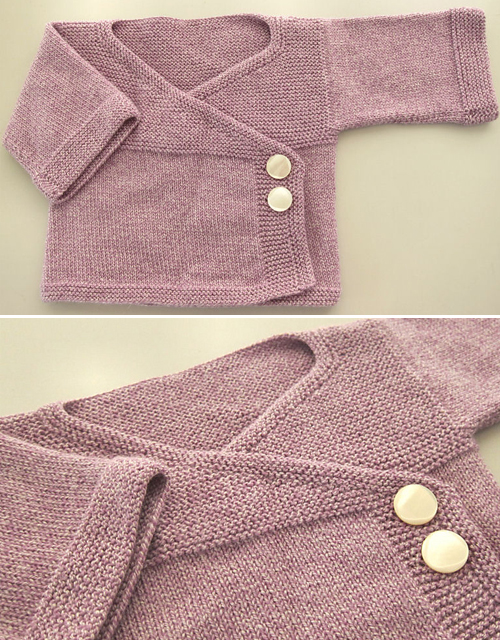
Baby Kimono - Free Knitting Pattern

Baby Kimono - Free Knitting Pattern
Photos above © Tichiro

Garter Stitch Baby Cardigan by Joji Locatelli, often known by knitters as the Garter Stitch Baby Kimono, is a sweet wrap-style baby cardigan worked almost entirely in garter stitch.

Its crossover front gives the little sweater its kimono-inspired appearance, while the simple stitch pattern makes it an appealing project for knitters ready to try a small baby garment.

✓ Free Pattern

This project is commonly referred to as the Baby Kimono, but the pattern's official name is Garter Stitch Baby Cardigan by Joji Locatelli. A free copy of the designer's original pattern remains available online.

Baby Kimono at a Glance

Official Pattern: Garter Stitch Baby Cardigan

Designer: Joji Locatelli

Craft: Knitting

Category: Baby Cardigan / Kimono-Style Sweater

Sizes: Newborn, 1–3 months, 3–6 months

Main Stitch: Garter stitch

Needles: 2.5–3 mm

Gauge: 28 stitches = 10 cm in garter stitch

Yarn: Approximately 100–150 g, depending on size

Notions: Two approximately 15 mm buttons

Availability: Free pattern

About the Garter Stitch Baby Kimono

Joji Locatelli originally wrote down this design after the knitted cardigan attracted considerable interest from other knitters.

The result is a simple wrap-style baby cardigan with overlapping fronts. Because garter stitch forms most of the fabric, the visual interest comes primarily from the shape of the garment rather than complicated stitch patterns.

The crossover construction also makes it quite different in appearance from a conventional button-front baby cardigan.

Three Baby Sizes

The original pattern includes three sizes:

  • Newborn
  • 1–3 months
  • 3–6 months

The published finished chest measurements are approximately:

  • Newborn: 40 cm / 16 inches
  • 1–3 months: 45 cm / 18 inches
  • 3–6 months: 50 cm / 20 inches

Finished total lengths are approximately 20, 24 and 26 cm (8, 9.5 and 11 inches) respectively.

When possible, choose a size from the finished measurements rather than relying only on the baby's age.

Yarn Requirements

Joji's original sample was knitted with an acrylic yarn called NUBE Dralón, which she found in Argentina.

However, the pattern specifically allows another suitable yarn to be substituted.

The approximate yarn quantities given in the original pattern are:

  • Smaller size: approximately 100 g
  • Larger sizes: approximately 150 g

Rather than choosing a substitute based only on fibre or label, make sure your yarn can produce the required gauge and a fabric appropriate for a soft baby cardigan.

Needles and Gauge

The original pattern recommends needles in the range of:

2.5–3 mm

The designer also notes that you should use whatever needle size is necessary to obtain the correct gauge.

Published gauge is:

28 stitches = 10 cm / 4 inches in garter stitch

Making a small swatch is especially worthwhile for a baby garment because even a modest difference in gauge can noticeably change such a small finished size.

Why Garter Stitch Works So Well

Garter stitch is created by knitting every row when working flat. It produces a fabric with distinctive horizontal ridges and plenty of natural stretch.

It also lies relatively flat, making it particularly useful for a wrap-style cardigan where clean edges help the overlapping fronts sit comfortably.

For a newer knitter, using one familiar stitch throughout much of the garment means more attention can be given to learning the construction and shaping.

The Kimono-Style Front

The crossover front is what gives this cardigan its familiar “baby kimono” nickname.

Rather than meeting at the center like a conventional cardigan, one front overlaps the other. The original design uses buttons together with an inside fastening to help hold the layers in position.

The pattern calls for two buttons approximately 15 mm in diameter.

Skills That Help

Useful skills for this project include:

  • Casting on
  • Garter stitch
  • Basic shaping
  • Increasing and decreasing
  • Making buttonholes
  • Picking up stitches
  • Working sleeves
  • Binding off
  • Simple finishing
  • Weaving in yarn ends

Use Joji Locatelli's original pattern for the exact stitch counts, shaping sequence, sleeve construction and finishing instructions.

A Popular Little Cardigan

One reason this design has remained recognizable for so many years is its simplicity.

Thousands of knitters have made versions of the Garter Stitch Baby Cardigan, experimenting with different yarns, colours and small finishing modifications while retaining the characteristic wrap-front shape.

That makes the Ravelry project gallery especially useful for inspiration before choosing yarn for your own version.

Choosing Yarn for a Baby Cardigan

In addition to matching gauge, consider how the finished garment will be used.

Softness matters for clothing worn close to a baby's skin, while easy washing can be valuable for an everyday garment. Also check that the finished garter-stitch fabric is not excessively dense or loose.

A smooth yarn can emphasize the simple garter ridges, while a gently heathered or subtly variegated yarn can add colour interest without competing with the clean construction.

Is the Baby Kimono Pattern Free?

Yes. The Garter Stitch Baby Cardigan pattern by Joji Locatelli was released as a free knitting pattern.

Amazing Knitting does not reproduce Joji's copyrighted row-by-row instructions. Instead, we link readers to the existing pattern source.

Get the Free Baby Kimono Pattern

The pattern is available as a PDF under its original name, Garter Stitch Baby Kimono / Garter Stitch Baby Cardigan.

View the Free Baby Kimono Pattern →

More Free Baby Cardigans

If you enjoy small wrap-style garments, continue exploring the Amazing Knitting archive for more free baby sweaters and cardigans.

Explore Free Baby Cardigan Patterns →

You can also browse free baby sweaters, newborn knitting patterns, and garter-stitch baby cardigans.

Before You Start

Choose your size from the finished measurements, make a garter-stitch gauge swatch, and check that your yarn creates a soft but stable fabric before beginning the cardigan.

Read the complete original pattern before casting on so that you understand how the overlapping fronts, sleeves and fastenings come together.

Pattern credit: Garter Stitch Baby Cardigan / Baby Kimono was designed by Joji Locatelli. The existing photographs on this Amazing Knitting page are credited to Tichiro. Amazing Knitting does not reproduce the designer's copyrighted row-by-row knitting instructions.

Over 50 Websites to Get Free Knitting Patterns

Over 50 Websites to Get Free Knitting Patterns
Designed by © Knit Crush

Looking for free knitting patterns? There are thousands of legitimate patterns available online for baby clothes, sweaters, blankets, scarves, socks, hats, toys and almost every other knitting project you can imagine.

The challenge is no longer simply finding a pattern. It is finding a reliable free pattern from a legitimate source, especially when older Pinterest pins and search results may lead to discontinued pages, outdated downloads or unofficial copies.

This guide will help you find free knitting patterns more safely and efficiently, whether you are searching the Amazing Knitting archive, a designer's website, a yarn company or a large knitting-pattern database.

About This Updated Guide

This Amazing Knitting article was originally published in 2019 as a link to an external roundup of more than 50 free-pattern websites. We have expanded the page into an independent resource for finding legitimate free knitting patterns without reproducing another publisher's list.

Where Can You Find Free Knitting Patterns?

Free knitting patterns are published by many different types of websites.

Some come directly from independent designers. Others are published by yarn manufacturers, knitting magazines, craft websites or pattern databases.

The best source depends on what you are looking for, so it helps to understand the major types of free-pattern resources before beginning your search.

1. Designer Websites

One of the best places to find a knitting pattern is the designer's own website.

Independent designers frequently publish selected patterns free while selling other designs.

Going directly to the designer has several advantages. You are more likely to find the current version of the pattern, corrections, additional photographs and notes from the person who actually created it.

If a pattern has been updated since its original publication, the designer's current page is usually preferable to an old copied version circulating elsewhere.

2. Yarn Company Pattern Libraries

Major yarn companies can be excellent sources of free knitting patterns.

These companies publish patterns to demonstrate how their yarns can be used, which means their libraries often contain projects across many categories and skill levels.

You can find designs for:

  • Baby sweaters and cardigans
  • Baby blankets
  • Adult sweaters and pullovers
  • Hats
  • Scarves and cowls
  • Socks and slippers
  • Shawls
  • Home accessories
  • Seasonal projects

Yarn-company libraries are especially useful because older patterns sometimes remain available long after the original printed booklet has disappeared.

3. Ravelry

Ravelry is one of the most useful resources for researching knitting patterns.

Rather than simply searching the web for a phrase such as “free baby cardigan,” you can narrow results using filters such as category, yarn weight, needle size, age, construction and availability.

Pattern records can also provide useful historical information such as the designer, publication date, suggested yarn and links to the current pattern source.

Remember that a Ravelry record does not automatically mean the pattern itself is still available. Always check the current availability shown on the pattern page.

4. Knitting Magazines and Online Publications

Online knitting magazines have published many excellent free patterns over the years.

Some older designs remain available in permanent online archives, making these publications particularly useful when searching for classic knitting projects.

These sources can also be valuable because they often preserve useful information about the designer, yarn, gauge, construction and original publication date.

5. Large Craft and Pattern Websites

Large craft websites often organize patterns by project type or skill level, which can make them useful when you are looking for inspiration rather than one particular design.

A collection might focus on beginner scarves, baby booties, knitted toys or quick gifts.

When using a roundup, however, follow the link to the original pattern source whenever possible.

6. Knitting Blogs

Knitting blogs remain another useful source of free patterns, tutorials and project inspiration.

Some bloggers are also pattern designers and publish complete original designs. Others curate projects from different designers.

The distinction matters.

When a blog is discussing somebody else's pattern, look for the designer's name and a clear link to the legitimate original source.

7. Vintage and Public-Domain Knitting Resources

Knitters interested in historical projects can also explore digitized vintage knitting books, magazines and pattern leaflets.

Older knitting publications can contain fascinating sweaters, lace, socks, mittens and household projects that differ significantly from modern designs.

However, old does not automatically mean public domain. Copyright status depends on factors including publication date, jurisdiction and publication history.

If you plan to republish rather than simply knit from a vintage pattern, verify its copyright status first.

8. Amazing Knitting

You can also browse the Amazing Knitting archive.

Our library includes hundreds of knitting discoveries covering baby clothes, blankets, sweaters, scarves, hats, socks, slippers, stitches, tutorials and other projects.

We are progressively reviewing older articles to identify original designers, verify pattern availability and direct readers toward legitimate current sources whenever possible.

Browse Free Knitting Patterns →

Free Baby Knitting Patterns

Baby projects are an excellent place to explore free patterns because there are designs for many different skill levels.

You can start with baby cardigans and sweaters:

Explore Free Baby Cardigans →

Or browse baby booties:

Explore Free Baby Booties →

And baby blankets:

Explore Free Baby Blankets →

Free Sweater and Cardigan Patterns

Sweaters range from simple first-garment projects to advanced designs involving cables, lace or colorwork.

When choosing one, pay particular attention to:

  • Finished measurements
  • Recommended ease
  • Gauge
  • Yarn weight
  • Construction method
  • Available sizes
  • Required techniques

Explore Free Sweater Patterns →

Free Blanket Knitting Patterns

Blankets are another large category of free knitting patterns.

Depending on the design, a blanket can be a simple beginner project or an advanced combination of lace, cables, colorwork or modular knitting.

Baby blankets are particularly useful for practicing new techniques on a manageable scale.

Explore Free Blanket Patterns →

Free Scarf and Cowl Patterns

Scarves and cowls are useful projects for testing unfamiliar stitches without committing to the fit requirements of a sweater.

They are also good projects for experimenting with cables, lace, texture and unusual yarn.

Explore Free Scarf Patterns →

How to Tell Whether a Pattern Is Really Free

One of the biggest problems with older knitting links is that pattern availability changes.

A pattern that was free ten years ago may now be paid, discontinued or completely unavailable.

Before calling a pattern free, check the current original source.

Look for clear wording such as:

  • Free pattern
  • Free download
  • Download PDF
  • Pattern available free on the designer's website

If the only evidence that a pattern is free comes from an old Pinterest pin or an old roundup, verify it before downloading.

Free Web Pattern vs. Free PDF

A pattern does not need to include a downloadable PDF to be genuinely free.

Some designers publish the complete pattern as a free webpage while offering an optional printable or ad-free PDF for a fee.

In that situation, describe the availability accurately: free web version with optional paid PDF.

This is more useful than simply labeling everything “free” or “paid.”

Watch for Discontinued Patterns

Older pattern databases can contain records for designs whose original downloads have disappeared.

A historical record is useful for identifying the designer and project, but it does not necessarily provide permission to download a copied PDF from another website.

If the legitimate source is gone, look for a currently available alternative instead of using an unauthorized copy.

Avoid Suspicious Pattern Downloads

Be cautious when a website offers a designer's PDF without clearly identifying itself as the designer, publisher or an authorized distributor.

A safer route is usually:

  1. Identify the exact pattern name.
  2. Identify the designer.
  3. Find the designer or publisher's current page.
  4. Check the current availability.
  5. Download or follow the pattern from that legitimate source.

Check for Pattern Corrections

Another advantage of using the current source is access to corrections and updates.

Designers sometimes discover errors after publication and issue an updated PDF or an errata notice.

An old copy saved elsewhere may not include those corrections.

Check the Yarn Before You Buy It

Older patterns frequently recommend yarns that have since been discontinued.

That does not necessarily make the pattern unusable.

Instead of searching only for the exact old yarn, compare:

  • Yarn weight
  • Gauge
  • Fiber content
  • Yardage or meterage
  • Fabric characteristics

Always make a gauge swatch before committing to a substitute yarn for a fitted garment.

Start with the Project You Want to Make

Searching “free knitting patterns” can return an overwhelming number of results.

A more effective approach is to begin with a specific project:

  • Free newborn cardigan knitting pattern
  • Free baby booties knitting pattern
  • Free cable blanket knitting pattern
  • Free beginner scarf knitting pattern
  • Free top-down sweater knitting pattern
  • Free lace shawl knitting pattern

Then narrow your choices according to yarn weight, size and skill level.

Save the Designer's Name

When you find a pattern you love, save more than the photograph.

Record the pattern name and designer.

This makes it much easier to find the legitimate pattern again if a Pinterest pin, bookmark or old website link stops working in the future.

Our Approach at Amazing Knitting

Amazing Knitting is a curated discovery library rather than the owner of every pattern featured in its archive.

When a project belongs to another designer, our goal is to identify and credit that designer, provide useful independent information about the project and direct knitters to the legitimate pattern source.

If an old pattern that was once free has become paid or unavailable, we aim to make that clear rather than continuing to promise a free download that no longer exists.

Explore Free Knitting Patterns

Ready to find your next project? Browse the Amazing Knitting archive by project type.

Before Downloading a Free Pattern

Take a moment to confirm that you are using the current legitimate version.

Check the designer's name, current availability, size range, yarn requirements and whether any corrections have been published.

A few minutes of checking before casting on can prevent hours of frustration later in the project.

Editorial note: This article was originally published by Amazing Knitting in 2019 as a discovery link to a Knit Crush roundup. It has since been expanded into an original Amazing Knitting resource for finding and evaluating free knitting patterns. The original image used on this page is credited to Knit Crush.

Beautiful Baby Jacket - Knitting Pattern Guide

Beautiful Baby Jacket - Free Pattern
Photo above © bubbs

This Beautiful Baby Jacket is a sweet newborn cardigan discovered through an older knitting project shared online. The original knitter praised the fit and noted that the version shown was suitable for Iben as a newborn.

This Amazing Knitting page was originally published in 2019 as a free-pattern discovery. During our latest review, however, we could not reliably identify the original pattern or verify a legitimate current free download for the exact jacket shown.

Pattern Availability Update

This page was originally described as a free knitting pattern. We can still verify the historical project information shown here, but we have not been able to verify the exact original pattern source or a legitimate current free download. For that reason, Amazing Knitting no longer labels the exact photographed jacket as a currently available free pattern.

Beautiful Baby Jacket at a Glance

Project: Beautiful Baby Jacket

Craft: Knitting

Category: Baby Jacket / Cardigan

Shown Size: Newborn, according to the original knitter's project note

Original Designer: Not reliably identified

Project Photo: © bubbs

Current Availability: Exact original pattern not verified

About This Baby Jacket

The appeal of this little jacket is its simple, traditional baby-cardigan style. It is the kind of practical knitted layer that can work well over a bodysuit, sleepsuit or other lightweight baby clothing.

What made the original project particularly interesting was the knitter's comment about the fit. She described it as the best-fitting baby jacket she had knitted and said that the version shown fitted Iben as a newborn.

That is useful historical context for the photographed project, but it should not be treated as a complete sizing specification for another pattern.

Why We Are Not Guessing the Original Pattern

Many baby jackets share similar shapes, construction methods and finishing details.

A photograph alone is therefore not enough to identify a knitting pattern accurately.

Several different baby-cardigan patterns found online resemble this general style, but similarity does not prove that they are the pattern used for the photographed jacket.

Rather than incorrectly crediting another designer, Amazing Knitting leaves the original designer unidentified until a reliable source can be established.

Choosing a Newborn Jacket Pattern

If you are looking for a similar baby jacket to knit, start by checking the pattern's actual finished measurements rather than relying entirely on an age label such as “newborn.”

Babies vary considerably in size, and designers do not always use identical measurements for newborn, 0–1 month or 0–3 month sizing.

Compare the pattern measurements with a well-fitting baby garment when possible and remember to allow appropriate room for layering.

Yarn for a Baby Jacket

We have not verified the yarn used for the exact jacket pictured here, so we do not provide an invented yarn specification.

For whichever verified pattern you choose, use the yarn weight and gauge specified by that designer.

For baby garments, useful yarn characteristics often include:

  • Softness against sensitive skin
  • Practical washing and care
  • Good stitch definition
  • Comfortable weight
  • Durability for repeated wear and washing

Gauge Matters for Baby Clothes

A small difference in gauge can have a surprisingly large effect on a tiny garment.

If your stitches are larger than the designer's gauge, the jacket can finish considerably wider and longer. If they are smaller, the finished garment may be too tight.

Always make a gauge swatch using the requirements of the verified pattern you decide to follow.

Check the Finished Measurements

Before casting on, look for measurements such as chest circumference, body length and sleeve length.

Finished measurements are usually much more useful than an age label when deciding whether a knitted baby jacket will fit as intended.

They are also useful if you are knitting the garment as a gift and want to choose a slightly larger size for future wear.

Useful Baby Cardigan Skills

The exact techniques required depend on the pattern you select, but common skills for knitted baby jackets include:

  • Casting on and binding off
  • Knit and purl stitches
  • Garter or stockinette stitch
  • Increasing and decreasing
  • Basic garment shaping
  • Working buttonholes
  • Picking up stitches
  • Working sleeves
  • Seaming, when required
  • Weaving in yarn ends neatly

Top-Down or Seamed?

Baby jackets are available in many different constructions.

A top-down cardigan may allow you to work much of the garment in one piece and can reduce finishing. Traditional patterns may instead use separate fronts, back and sleeves that are sewn together.

Neither method is automatically better. Choose a verified pattern whose construction matches the knitting techniques you enjoy.

Button Safety

If your chosen baby cardigan uses buttons, attach them very securely and inspect them regularly.

Small detachable components can present a hazard to babies and young children, so finishing deserves the same care as the knitting itself.

Is the Original Beautiful Baby Jacket Pattern Still Free?

We cannot currently confirm that.

The original Amazing Knitting article from 2019 presented this jacket as a free-pattern discovery, but it did not preserve enough reliable source information for us to identify the exact pattern and designer with confidence today.

We therefore do not provide an unverified download or point readers to a visually similar pattern while claiming that it is the original.

If the original source can be reliably identified in the future, this guide can be updated with the correct designer credit and availability.

Looking for a Free Alternative?

Fortunately, you do not need an unverified copy of this old pattern to knit a beautiful baby cardigan.

Amazing Knitting already has several baby jackets and cardigans whose original patterns have been identified and verified.

Harvest Cardigan

Harvest by Tin Can Knits is an excellent free alternative if you want a practical baby cardigan. It is a seamless design with sizes beginning at baby sizes and continuing all the way into adult sizes.

See the Free Harvest Cardigan →

Baby Kimono

For another small baby garment, explore our guide to the Garter Stitch Baby Cardigan by Joji Locatelli, also known as the Garter Stitch Baby Kimono.

See the Free Baby Kimono →

More Free Baby Knitting Patterns

You can continue exploring the Amazing Knitting archive for verified baby cardigans, sweaters, booties and blankets.

Explore Free Baby Cardigan Patterns →

You can also browse free baby sweaters, free baby booties, and free baby blankets.

Before You Start

Because the exact original instructions for the photographed jacket have not been verified, do not use measurements or material requirements from an unrelated pattern simply because its photograph looks similar.

Choose a verified baby-jacket pattern first, select the appropriate size, and then follow that designer's yarn, needle and gauge specifications.

Source note: This Amazing Knitting page was originally published in 2019 as a free-pattern discovery. The existing project photograph is credited to bubbs. During our latest review, the exact original pattern and designer could not be reliably identified. Amazing Knitting does not claim ownership of the photographed design and does not reproduce unverified or unauthorized pattern instructions.

Baby Cardigan with Cables - Free Pattern

Baby Cardigan with Cables - Free Pattern
Photos above © Cheval Blanc

CB21 Cardigan-Jumper N°30-31 by Cheval Blanc is a classic cable-knit baby and children's cardigan originally published in the Cheval Blanc Autumn-Winter 2015/2016 collection.

The design combines traditional cable texture with a practical button-front cardigan and was published in sizes ranging from newborn through 4 years.

Pattern Availability Update

This Cheval Blanc design was originally distributed as a free knitting pattern. However, the original Cheval Blanc download page previously linked from this article is no longer reliably available. We therefore identify and document the original pattern here without linking to unauthorized copies.

Baby Cardigan with Cables at a Glance

Official Pattern: CB21 Cardigan-Jumper N°30-31

Designer / Publisher: Cheval Blanc Official

Collection: Catalogue Cheval Blanc N°21 Automne-Hiver 2015/2016

First Published: May 2015

Craft: Knitting

Category: Baby & Child Cardigan / Jumper

Sizes: Newborn to 4 years

Feature: Decorative cable knitting

Skill Level: Intermediate

Original Distribution: Free Cheval Blanc pattern; original download currently unavailable

About the Cheval Blanc Cable Cardigan

This cable cardigan comes from Cheval Blanc's Autumn-Winter 2015/2016 children's collection.

The original publication grouped a cardigan and jumper together under the pattern reference CB21 Cardigan-Jumper N°30-31. The cardigan is the design featured in the photographs on this Amazing Knitting page.

Its combination of a traditional button-front shape and prominent knitted cables gives it a classic appearance that works well for both babies and young children.

Sizes from Newborn to 4 Years

One of the strongest features of the original pattern is its generous range of children's sizes.

Cheval Blanc published the design in:

  • Newborn / birth
  • 6 months
  • 1 year
  • 2 years
  • 3 years
  • 4 years

Older English references sometimes describe the smallest sizes as 0–3 months, 6 months and 12 months. The original Cheval Blanc catalog listing identifies them as birth, 6 months and 1 year.

If you obtain an original copy of the pattern, use its finished measurements rather than relying only on age labels when choosing a size.

Classic Cable Texture

Cables give knitted children's garments a traditional, substantial appearance without requiring multiple yarn colors.

The raised texture is produced by changing the order of selected stitches so that sections appear to cross over one another.

Because the cable pattern is one of the main visual features of this cardigan, a yarn with clear stitch definition will usually show the design more effectively than an extremely fuzzy yarn.

Why Cable Cardigans Remain Popular

Cable knitting has remained a favorite for baby and children's sweaters because a relatively small number of textured panels can transform a simple cardigan.

The texture also works in almost any color. Traditional cream and natural shades emphasize the classic look, while brighter colors can make the same cable structure feel much more modern.

Choosing Yarn for a Cable Cardigan

If you have access to the original Cheval Blanc instructions and want to substitute yarn, begin with gauge rather than simply choosing a yarn that looks similar.

Cables can pull knitted fabric inward, so gauge is particularly important for a fitted garment.

Look for yarn that produces:

  • Good stitch definition
  • A comfortable fabric for a baby or child
  • Enough elasticity for the cable texture
  • Practical washing characteristics
  • The required gauge for the selected size

Swatch the Cable Pattern

For a textured cardigan, a plain stockinette swatch does not always tell the complete story.

If possible, include part of the cable motif in your test swatch. This allows you to see how the yarn behaves when stitches are crossed and whether the finished cables have enough definition.

It also gives you an opportunity to practice the cable technique before beginning the actual garment.

Skills That Help

This project was described as suitable for an intermediate knitter.

Useful skills for a cable cardigan of this type include:

  • Casting on and binding off
  • Knitting and purling
  • Working ribbing
  • Reading a cable pattern
  • Crossing stitches with a cable needle
  • Increasing and decreasing
  • Garment shaping
  • Working buttonholes
  • Seaming knitted pieces
  • Picking up stitches when required
  • Attaching buttons securely

Working With a Cable Needle

Traditional cables are commonly created by temporarily holding several stitches either in front of or behind the work while the next stitches are knitted.

When the held stitches are worked, the two groups cross and form the characteristic cable.

Pay close attention to whether stitches are held at the front or back, because changing that position changes the direction of the cable.

Keeping Track of Cable Rows

Cable patterns usually contain crossing rows separated by several simpler rows.

A row counter, removable marker or written note can help you keep track of your position in the repeat.

Checking the cable direction after every crossing is also much easier than discovering an incorrect cable many rows later.

Blocking the Finished Cardigan

Gentle blocking can help even out the knitted fabric and allow the cable motifs to settle into their final shape.

Avoid stretching the cardigan aggressively because excessive stretching can flatten the raised cable texture.

Always follow the washing and care instructions appropriate for the yarn you actually use.

About the Original Free Pattern

This pattern was originally offered by Cheval Blanc as a free knitting pattern under the reference CB21 Cardigan-Jumper N°30-31.

The original Cheval Blanc web address used by older pattern directories is no longer a reliable current download source.

Ravelry still documents the original design, designer/publisher, publication and size range, which allows the pattern to be identified accurately.

Amazing Knitting does not host or reproduce the copyrighted Cheval Blanc pattern instructions, charts or unauthorized PDF copies.

View the Original Pattern Record

You can view the Ravelry record for the original Cheval Blanc design to confirm the pattern identity and publication details.

View the Original Cheval Blanc Pattern →

Looking for a Free Alternative?

If you came here specifically looking for a cable baby cardigan that you can start knitting today, explore the free baby cardigan patterns in the Amazing Knitting archive.

Find Free Cable Baby Cardigans →

You can also browse free baby cardigans, cable baby sweaters, and free baby knitting patterns.

Before You Start

If you already have a legitimate copy of the original Cheval Blanc pattern, select your size first and check its yarn, needle and gauge requirements before purchasing materials.

Make a gauge swatch and practice the cable motif if necessary before casting on the complete cardigan. For children's garments, also make sure all buttons are attached securely.

Pattern credit: CB21 Cardigan-Jumper N°30-31 was published by Cheval Blanc in Catalogue N°21 Automne-Hiver 2015/2016. The existing photographs on this Amazing Knitting page are credited to Cheval Blanc. Amazing Knitting does not reproduce Cheval Blanc's copyrighted pattern instructions or charts.

Ciqala Arrowhead Sweater - Knitting Pattern

Ciqala Arrowhead Sweater - Knitting Pattern
Photo above © OGE Knitwear Designs

Ciqala Arrowhead Sweater – P117 by OGE Knitwear Designs is a beautiful baby cardigan featuring a delicate arrowhead lace detail around the yoke.

Worked from the bottom up, the design combines classic baby-cardigan styling with an eye-catching lace feature. Its unisex shape and sizes from newborn through 18 months make it a versatile layering project for cooler weather.

Pattern Availability Update

Ciqala Arrowhead Sweater – P117 is currently available as a paid downloadable knitting pattern from OGE Knitwear Designs. Older links may lead to former pattern marketplaces, so we have updated this guide to point readers toward the designer's current legitimate source.

Ciqala Arrowhead Sweater at a Glance

Pattern: Ciqala Arrowhead Sweater – P117

Designer: OGE Knitwear Designs

First Published: August 2017

Craft: Knitting

Category: Baby Cardigan / Sweater

Skill Level: Intermediate

Sizes: 0–3, 3–6, 6–12 and 12–18 months

Yarn Weight: Sport / 5–6 ply

Needle Size: US 5 / 3.75 mm

Gauge: 25 stitches × 30 rows = 4 inches / 10 cm

Construction: Bottom-up with sleeves joined at the yoke

Current Availability: Paid PDF pattern

About the Ciqala Arrowhead Sweater

The defining feature of Ciqala is the arrowhead lace pattern around the yoke. It adds decorative interest to an otherwise classic baby cardigan shape without overwhelming the small garment.

The result is a sweater that can work equally well for everyday layering or as a more special hand-knitted baby gift.

OGE Knitwear Designs describes the cardigan as having a classic unisex appearance, so yarn colour can completely change the personality of the finished project.

Baby Sizes

The pattern includes four sizes:

  • 0–3 months
  • 3–6 months
  • 6–12 months
  • 12–18 months

Because babies of the same age can vary considerably in size, check the pattern's finished measurements and schematic rather than selecting a size only from the age label.

Yarn Requirements

The original pattern calls for Sport weight / 5–6 ply yarn. The designer specifies 100% superwash extrafine merino with approximately 125 m / 136 yards per 50g ball.

Main-colour requirements are:

  • 0–3 months: 2 × 50g balls
  • 3–6 months: 3 × 50g balls
  • 6–12 months: 4 × 50g balls
  • 12–18 months: 4 × 50g balls

Each size also requires one 50g ball of the contrast colour.

If substituting another yarn, matching the designer's gauge is more important than simply choosing another yarn carrying the same weight label.

Needles and Gauge

The pattern calls for:

US 5 / 3.75 mm extra-long straight or circular needles

The published stockinette gauge is:

25 stitches × 30 rows = 4 inches / 10 cm

Gauge is particularly important in a baby garment because even a small difference can noticeably change the finished chest measurement.

How the Ciqala Cardigan Is Constructed

Ciqala is worked from the bottom up.

The sleeves are knitted separately and then joined to the body when the knitting reaches the yoke. The decorative arrowhead lace becomes the focal point of this upper section.

One appealing feature of the construction is the limited amount of finishing: the designer states that the sleeve seams are the only seams required.

The Arrowhead Lace Yoke

The lace yoke is what gives Ciqala its distinctive identity. The geometric arrowhead motif creates a decorative transition across the upper cardigan while still allowing the garment to retain a clean, classic shape.

Using a contrasting yarn can make this section especially prominent, while a more subtle combination can produce a softer, understated result.

Written Instructions and Charts

The official pattern includes both written and charted instructions, together with a schematic.

This is useful for knitters who prefer one method of following lace patterns over another.

Amazing Knitting does not reproduce those charts or the designer's row-by-row instructions. Use the official pattern for the exact stitch counts, shaping and lace sequence.

Other Materials

In addition to yarn and needles, the designer lists:

  • Stitch holders
  • 3 buttons
  • 14 stitch markers

Having the stitch markers ready before beginning the yoke can make it easier to keep track of pattern sections and shaping.

Skills That Help

OGE Knitwear Designs classifies Ciqala as an Intermediate project. Useful skills include:

  • Casting on and binding off
  • Knit and purl stitches
  • Increasing and decreasing
  • Following lace instructions
  • Reading a knitting chart
  • Working garment shaping
  • Joining sleeves to a yoke
  • Basic seaming
  • Making buttonholes
  • Blocking a finished garment

Choosing Colours

Ciqala uses a main colour together with a contrasting colour, making yarn selection an enjoyable part of planning the project.

A strong contrast can emphasize the arrowhead yoke, while closely related shades can make the lace detail appear more subtle.

For a baby garment, also consider softness and washing requirements. A beautiful yarn that is difficult to care for may not always be the most practical choice for frequently worn baby clothing.

Is Ciqala Arrowhead Sweater Free?

No. Ciqala Arrowhead Sweater – P117 is currently a paid knitting pattern.

It is available directly from OGE Knitwear Designs and is also listed by established pattern marketplaces. Prices can vary by store and currency, so check the current official listing rather than relying on an older price.

Get the Official Ciqala Arrowhead Sweater Pattern

The designer's own store is the preferred source for the current pattern.

View the Official Ciqala Pattern →

Looking for a Free Baby Cardigan?

If you reached this page specifically looking for a free baby cardigan knitting pattern, Amazing Knitting has many other baby sweater and cardigan projects to explore.

Explore Free Baby Cardigan Patterns →

You can also browse free baby sweaters, lace baby cardigans, and baby knitting patterns from the Amazing Knitting archive.

Before You Start

Download the current official pattern before buying yarn and check the schematic and finished measurements for your chosen size. Make a gauge swatch, prepare your contrast colour, and read through the yoke section before beginning the project.

Since both written and charted instructions are supplied, decide which format you find easiest to follow before reaching the arrowhead lace.

Pattern credit: Ciqala Arrowhead Sweater – P117 was designed and published by OGE Knitwear Designs. The existing project photograph on this Amazing Knitting page is credited to OGE Knitwear Designs. Amazing Knitting does not reproduce the designer's copyrighted charts or row-by-row knitting instructions.

Baby Cardigan - Free Knitting Pattern

Baby Cardigan - Free Knitting Pattern
Photos above © MmeUlma & © sorrelwood

Looking for a simple and charming baby wrap cardigan knitting pattern? This garter-stitch cardigan is a classic crossover design that is worked largely in one piece, making it especially appealing to knitters who prefer simple construction and minimal finishing.

The cardigan has a soft wrap-over front and a timeless handmade look that works beautifully for newborn gifts, baby showers, and everyday baby wear.

Baby Wrap Cardigan at a Glance

Pattern Type: Baby Wrap Cardigan

Craft: Knitting

Category: Baby Cardigan / Wrap Sweater

Main Stitch: Garter Stitch

Construction: Worked mainly in one piece

Direction: Bottom-up, beginning with the back

Original Source: MmeUlma / Madam Ulma

About This Baby Cardigan

This little cardigan uses a wrap-over construction rather than a traditional button-front shape. The crossover front gives the garment a soft, comfortable look while also making it easy to layer over other baby clothes.

The design was originally shared through the MmeUlma blog and became popular online through knitting and Pinterest communities.

Worked in One Piece

One of the most appealing features of this cardigan is its construction. The garment is worked largely in one piece, beginning at the back and building upward.

One-piece baby garments can be especially attractive to knitters because they reduce the number of separate pieces that need to be assembled at the end.

This also helps create a clean, simple silhouette that suits the minimalist style of the cardigan.

Garter Stitch Texture

The cardigan is worked in garter stitch, one of the most useful and beginner-friendly knitting textures.

Garter stitch creates a soft, ridged fabric that lies flat naturally and does not curl at the edges in the same way as stockinette stitch.

That makes it a practical choice for baby garments, where soft texture and simple finishing are often desirable.

Why Wrap Cardigans Work Well for Babies

Wrap-style cardigans are popular for babies because the crossover front creates a flexible fit and avoids a bulky center-front opening.

They can also be layered over bodysuits, sleepsuits, and lightweight tops, making them useful through changing temperatures.

The simple shape also works well in both traditional baby colors and more modern, gender-neutral shades.

A Good Project for Newer Garment Knitters

Because the design relies on garter stitch and relatively simple construction, this type of cardigan can be a good transition project for knitters who are comfortable with scarves, blankets, or baby accessories and want to try a small garment.

The main skills typically involved include basic knit stitches, shaping, and managing the wrap-front construction.

Choosing Yarn for a Baby Cardigan

The original source page is no longer consistently accessible, so the current yarn specification cannot be verified reliably.

If you are recreating a similar wrap cardigan, choose a soft yarn suitable for baby garments and pay close attention to washability, fiber comfort, and gauge.

Always follow the original pattern specifications if you have a saved copy of the pattern, since yarn weight and needle size directly affect the finished size.

What About the Original Free Pattern?

This Amazing Knitting page originally linked to a free pattern page from MmeUlma.

At the moment, the original external page is no longer reliably accessible without a Google sign-in, so we cannot confirm whether the pattern is still publicly available in its original form.

Amazing Knitting does not reproduce the original designer's knitting instructions.

Original Pattern Source

The button below points to the original MmeUlma page that was linked from this article. Its current accessibility may vary.

Visit the Original Baby Cardigan Source →

Source note: This design was originally shared through MmeUlma. The original source page is currently not consistently accessible, so Amazing Knitting has intentionally avoided adding unverified sizing, yarn, needle, or gauge information.

More Baby Cardigan Knitting Inspiration

Explore more baby cardigan knitting patterns, baby wrap cardigan ideas, and baby sweater knitting patterns from the Amazing Knitting archive.

Before You Start

If you have access to the original MmeUlma instructions, use the designer's specified yarn, needle size, gauge, and measurements rather than relying on substitutions from other baby cardigan patterns.

Hat for Hugs - Free Baby Hat Knitting Pattern

Hat for Hugs - Free Pattern
Photo above ©  marianna mel

Hat for Hugs by marianna mel is a sweet and practical free baby hat knitting pattern designed to coordinate with the designer's popular Baby Hug Boots.

Worked in DK-weight yarn using straight-forward flat construction, the pattern includes sizes for a large premature baby through approximately 6–9 months.

The original pattern remains available for free from Marianna's Lazy Daisy Days.

✓ Free Pattern Availability

Hat for Hugs by marianna mel is currently available as a free knitting pattern. Use the designer's current pattern link below for the complete instructions.

Hat for Hugs at a Glance

Pattern: Hat for Hugs (matching Hat for Hug Boots)

Designer: marianna mel

Published: July 2016

Category: Baby Hat / Beanie

Yarn Weight: DK / 8 ply

Needles: 3.5 mm / US 4 and 4 mm / US 6

Gauge: 22 stitches = 4 inches in stockinette stitch

Sizes: Large Preemie, 0–3 months, 6–9 months

Construction: Worked flat, bottom up, one piece, seamed

Availability: Free

About Hat for Hugs

Hat for Hugs was designed by marianna mel as a coordinating hat for her popular Baby Hug Boots.

It is a small DK-weight baby project with simple flat construction, making it particularly useful for knitters who prefer not to work baby hats in the round.

Because the design includes premature and early baby sizes, it can also be useful for charity knitting where appropriately sized garments are requested.

Three Baby Sizes

The published pattern includes three sizes:

  • Large Preemie
  • 0–3 months
  • 6–9 months

Baby head sizes can vary considerably, so when knitting for a specific child it is always useful to compare measurements where possible.

For charity or hospital knitting, check the organization's current size and material requirements before beginning.

DK-Weight Yarn

Hat for Hugs is designed for DK / 8-ply yarn.

This makes it a useful small project for leftover DK yarn, provided you have enough of a suitable fiber and can obtain the required gauge.

For baby items, choose a yarn that feels comfortable against delicate skin and can be cared for easily.

Needles

The pattern uses two needle sizes:

  • 3.5 mm / US 4
  • 4 mm / US 6

Using two sizes allows the designer to create different fabric characteristics where needed while maintaining the intended fit.

Remember that the published needle sizes are recommendations. Your own tension determines which needles will produce the correct gauge.

Gauge

The published gauge is:

22 stitches = 4 inches / 10 cm in stockinette stitch

Gauge matters even on a small baby hat. A difference of several stitches across 10 cm can noticeably alter the finished circumference.

If you are knitting for a specific baby, checking your gauge before beginning can help avoid a hat that is significantly too small or too large.

Worked Flat — No Circular Needles Required

One particularly useful feature of Hat for Hugs is that it is worked flat.

You do not need to be comfortable with double-pointed needles, magic loop or another small-circumference technique to make this baby hat.

The knitting is worked back and forth and the hat is seamed during finishing.

Bottom-Up Construction

The pattern is worked from the bottom up.

This means the lower portion of the hat is established first before the knitting progresses toward the crown.

For knitters who have made scarves or other flat projects but have not yet attempted many hats, this construction can feel familiar and approachable.

A One-Piece Baby Hat

Ravelry classifies Hat for Hugs as a one-piece, seamed design.

The main hat is therefore created as one knitted piece rather than assembling several separately knitted sections.

This keeps the project compact and limits the amount of finishing required.

Is Hat for Hugs Beginner Friendly?

The combination of DK yarn, flat knitting and a relatively small project makes Hat for Hugs an appealing option for knitters building confidence with baby accessories.

You should be comfortable with basic knitting skills and following written instructions.

Read through the designer's complete pattern before casting on so you know how the shaping and finishing are handled.

Making a Neat Seam

Because the hat is worked flat, finishing the seam neatly is an important part of the project.

Avoid pulling the seam excessively tight. A baby hat needs enough flexibility to stretch comfortably.

Try to maintain an even seam from the lower edge toward the crown so the finished hat sits smoothly.

Choosing Yarn for a Baby Hat

When choosing a substitute DK yarn, consider more than color.

Useful characteristics for baby garments include:

  • Softness against the skin
  • Easy washing and care
  • Good stitch definition
  • Appropriate elasticity
  • Ability to match the required gauge

Always check the yarn manufacturer's care instructions before giving the finished hat to its recipient.

Knitting for Premature Babies

The inclusion of a Large Preemie size makes this pattern particularly interesting to knitters making garments for premature babies.

However, hospitals and charities can have very specific requirements concerning fiber, size, washing, embellishments and construction.

If the hat is intended for donation, contact the receiving organization first and follow its current guidelines.

Baby Safety

For baby accessories, keep finishing simple and secure.

Avoid adding loose decorations, long cords or poorly secured embellishments.

Weave yarn ends in carefully and inspect the finished hat before use.

Matching Baby Hug Boots

The full pattern name is Hat for Hugs (matching Hat for Hug Boots).

Marianna designed the hat after many knitters enjoyed making her Baby Hug Boots.

This makes the two designs a natural combination when you want to knit a coordinated baby gift set.

A Useful Small-Yarn Project

Baby hats can be a practical way to use suitable DK yarn remaining from a larger project.

Before using leftovers, make sure you know the fiber content and have enough yarn to complete the chosen size.

When in doubt, keeping a little extra yarn is preferable to running out during crown shaping.

About the Designer

marianna mel is the designer behind Marianna's Lazy Daisy Days, a large collection of knitting patterns with a particularly strong selection of baby projects.

Other designs in her collection include baby cardigans, hats, blankets, mittens, rompers and the popular Baby Hug Boots.

Amazing Knitting has featured several of Marianna's designs over the years.

Is Hat for Hugs Still Free?

Yes.

Hat for Hugs remains listed as a free knitting pattern, with the Ravelry record directing knitters to Marianna's Lazy Daisy Days for the free pattern.

Amazing Knitting does not reproduce Marianna's complete copyrighted knitting instructions. Use the designer's original pattern page for the instructions.

Get the Free Hat for Hugs Pattern

You can access the designer's free pattern through its Ravelry record:

Get the Free Hat for Hugs Pattern →

More Free Baby Knitting Patterns

If you like Marianna's baby patterns, you may also enjoy her Jordan Baby Blanket, which we have already reviewed and verified as a free pattern.

See the Free Jordan Baby Blanket →

You can also explore more baby projects from the Amazing Knitting archive:

Before You Start

Select the correct size, choose a suitable DK yarn and check your gauge before beginning.

If you are making the premature size for donation, check the receiving hospital or charity's current requirements before knitting.

Finally, use Marianna's current original pattern page for the complete instructions rather than an unofficial copied version.

Pattern credit: Hat for Hugs (matching Hat for Hug Boots) was designed by marianna mel and published through Marianna's Lazy Daisy Days. Amazing Knitting provides an independent project guide and does not reproduce the designer's complete copyrighted knitting instructions. Please preserve the existing photograph credit shown on this page.

Discover More From the Archive

A fresh mix of knitting patterns and tutorials from the Amazing Knitting archive.

Finding patterns from the archive…