Skip to content

...

Showing posts sorted by relevance for query DK hat knitting pattern. Sort by date Show all posts

Hat for Hugs - Free Baby Hat Knitting Pattern

Hat for Hugs - Free Pattern
Photo above ©  marianna mel

Hat for Hugs by marianna mel is a sweet and practical free baby hat knitting pattern designed to coordinate with the designer's popular Baby Hug Boots.

Worked in DK-weight yarn using straight-forward flat construction, the pattern includes sizes for a large premature baby through approximately 6–9 months.

The original pattern remains available for free from Marianna's Lazy Daisy Days.

✓ Free Pattern Availability

Hat for Hugs by marianna mel is currently available as a free knitting pattern. Use the designer's current pattern link below for the complete instructions.

Hat for Hugs at a Glance

Pattern: Hat for Hugs (matching Hat for Hug Boots)

Designer: marianna mel

Published: July 2016

Category: Baby Hat / Beanie

Yarn Weight: DK / 8 ply

Needles: 3.5 mm / US 4 and 4 mm / US 6

Gauge: 22 stitches = 4 inches in stockinette stitch

Sizes: Large Preemie, 0–3 months, 6–9 months

Construction: Worked flat, bottom up, one piece, seamed

Availability: Free

About Hat for Hugs

Hat for Hugs was designed by marianna mel as a coordinating hat for her popular Baby Hug Boots.

It is a small DK-weight baby project with simple flat construction, making it particularly useful for knitters who prefer not to work baby hats in the round.

Because the design includes premature and early baby sizes, it can also be useful for charity knitting where appropriately sized garments are requested.

Three Baby Sizes

The published pattern includes three sizes:

  • Large Preemie
  • 0–3 months
  • 6–9 months

Baby head sizes can vary considerably, so when knitting for a specific child it is always useful to compare measurements where possible.

For charity or hospital knitting, check the organization's current size and material requirements before beginning.

DK-Weight Yarn

Hat for Hugs is designed for DK / 8-ply yarn.

This makes it a useful small project for leftover DK yarn, provided you have enough of a suitable fiber and can obtain the required gauge.

For baby items, choose a yarn that feels comfortable against delicate skin and can be cared for easily.

Needles

The pattern uses two needle sizes:

  • 3.5 mm / US 4
  • 4 mm / US 6

Using two sizes allows the designer to create different fabric characteristics where needed while maintaining the intended fit.

Remember that the published needle sizes are recommendations. Your own tension determines which needles will produce the correct gauge.

Gauge

The published gauge is:

22 stitches = 4 inches / 10 cm in stockinette stitch

Gauge matters even on a small baby hat. A difference of several stitches across 10 cm can noticeably alter the finished circumference.

If you are knitting for a specific baby, checking your gauge before beginning can help avoid a hat that is significantly too small or too large.

Worked Flat — No Circular Needles Required

One particularly useful feature of Hat for Hugs is that it is worked flat.

You do not need to be comfortable with double-pointed needles, magic loop or another small-circumference technique to make this baby hat.

The knitting is worked back and forth and the hat is seamed during finishing.

Bottom-Up Construction

The pattern is worked from the bottom up.

This means the lower portion of the hat is established first before the knitting progresses toward the crown.

For knitters who have made scarves or other flat projects but have not yet attempted many hats, this construction can feel familiar and approachable.

A One-Piece Baby Hat

Ravelry classifies Hat for Hugs as a one-piece, seamed design.

The main hat is therefore created as one knitted piece rather than assembling several separately knitted sections.

This keeps the project compact and limits the amount of finishing required.

Is Hat for Hugs Beginner Friendly?

The combination of DK yarn, flat knitting and a relatively small project makes Hat for Hugs an appealing option for knitters building confidence with baby accessories.

You should be comfortable with basic knitting skills and following written instructions.

Read through the designer's complete pattern before casting on so you know how the shaping and finishing are handled.

Making a Neat Seam

Because the hat is worked flat, finishing the seam neatly is an important part of the project.

Avoid pulling the seam excessively tight. A baby hat needs enough flexibility to stretch comfortably.

Try to maintain an even seam from the lower edge toward the crown so the finished hat sits smoothly.

Choosing Yarn for a Baby Hat

When choosing a substitute DK yarn, consider more than color.

Useful characteristics for baby garments include:

  • Softness against the skin
  • Easy washing and care
  • Good stitch definition
  • Appropriate elasticity
  • Ability to match the required gauge

Always check the yarn manufacturer's care instructions before giving the finished hat to its recipient.

Knitting for Premature Babies

The inclusion of a Large Preemie size makes this pattern particularly interesting to knitters making garments for premature babies.

However, hospitals and charities can have very specific requirements concerning fiber, size, washing, embellishments and construction.

If the hat is intended for donation, contact the receiving organization first and follow its current guidelines.

Baby Safety

For baby accessories, keep finishing simple and secure.

Avoid adding loose decorations, long cords or poorly secured embellishments.

Weave yarn ends in carefully and inspect the finished hat before use.

Matching Baby Hug Boots

The full pattern name is Hat for Hugs (matching Hat for Hug Boots).

Marianna designed the hat after many knitters enjoyed making her Baby Hug Boots.

This makes the two designs a natural combination when you want to knit a coordinated baby gift set.

A Useful Small-Yarn Project

Baby hats can be a practical way to use suitable DK yarn remaining from a larger project.

Before using leftovers, make sure you know the fiber content and have enough yarn to complete the chosen size.

When in doubt, keeping a little extra yarn is preferable to running out during crown shaping.

About the Designer

marianna mel is the designer behind Marianna's Lazy Daisy Days, a large collection of knitting patterns with a particularly strong selection of baby projects.

Other designs in her collection include baby cardigans, hats, blankets, mittens, rompers and the popular Baby Hug Boots.

Amazing Knitting has featured several of Marianna's designs over the years.

Is Hat for Hugs Still Free?

Yes.

Hat for Hugs remains listed as a free knitting pattern, with the Ravelry record directing knitters to Marianna's Lazy Daisy Days for the free pattern.

Amazing Knitting does not reproduce Marianna's complete copyrighted knitting instructions. Use the designer's original pattern page for the instructions.

Get the Free Hat for Hugs Pattern

You can access the designer's free pattern through its Ravelry record:

Get the Free Hat for Hugs Pattern →

More Free Baby Knitting Patterns

If you like Marianna's baby patterns, you may also enjoy her Jordan Baby Blanket, which we have already reviewed and verified as a free pattern.

See the Free Jordan Baby Blanket →

You can also explore more baby projects from the Amazing Knitting archive:

Before You Start

Select the correct size, choose a suitable DK yarn and check your gauge before beginning.

If you are making the premature size for donation, check the receiving hospital or charity's current requirements before knitting.

Finally, use Marianna's current original pattern page for the complete instructions rather than an unofficial copied version.

Pattern credit: Hat for Hugs (matching Hat for Hug Boots) was designed by marianna mel and published through Marianna's Lazy Daisy Days. Amazing Knitting provides an independent project guide and does not reproduce the designer's complete copyrighted knitting instructions. Please preserve the existing photograph credit shown on this page.

Sandleford - Free Pattern

Sandleford - Free Pattern
Sandleford by RS Knits © Russell Sansom

Sandleford by Russell Sansom of RS Knits is a whimsical rabbit-inspired knitted hat designed for teens and adults. With its playful ears and colourwork details, it is a wonderful choice for knitters looking for something more imaginative than a traditional winter hat.

The design takes its name and inspiration from Watership Down by Richard Adams. Best of all, the Sandleford knitting pattern is still available as a free downloadable pattern.

✓ Free Pattern Availability

Good news: unlike many older knitting patterns whose availability has changed over the years, Sandleford is still listed as a free downloadable knitting pattern. Always use the current legitimate pattern source rather than copies reproduced by unrelated websites.

Sandleford Hat at a Glance

Pattern: Sandleford

Designer: Russell Sansom / RS Knits

Craft: Knitting

Category: Hat

Theme: Rabbit-inspired novelty hat

Sizes: Teens to Adults

Suggested Yarn: John Arbon Textiles Knit By Numbers DK

Yarn Weight: DK

Language: English

Current Availability: Free downloadable pattern

About the Sandleford Hat

Sandleford is one of those knitting projects that immediately stands apart from an ordinary beanie.

Designed by Russell Sansom, the hat combines a practical knitted accessory with a playful rabbit theme. The prominent ears and contrasting colours give the finished hat plenty of character without turning it into a conventional stuffed-toy project.

The original design is shown in a combination of pink and neutral shades, but the colour palette can be one of the most enjoyable parts of planning your own version.

Inspired by Watership Down

The name Sandleford is a reference to Watership Down, Richard Adams' classic novel about a group of rabbits searching for a new home.

Sandleford Warren is the original home of the rabbits at the beginning of the story, which makes the name particularly appropriate for a rabbit-inspired hat.

You do not need to know the novel to enjoy the pattern, of course, but the literary connection gives the design an extra layer of personality.

Choosing Colours for Sandleford

The original Amazing Knitting feature highlighted John Arbon Textiles Knit By Numbers DK minis, which make it possible to experiment with different colour combinations.

You could keep the soft pink-and-neutral appearance of the photographed version or create something completely different.

Some colour ideas include:

  • Natural rabbit shades such as cream, grey, brown and oatmeal
  • Pink with a soft neutral contrast
  • Black and white for a graphic look
  • Pastel combinations for a softer version
  • Bright contrasting colours for a playful fantasy rabbit

If substituting yarn, use the designer's current pattern specifications and check your gauge rather than relying only on the DK label.

A Fun Use for DK Yarn

Novelty hats can be particularly useful projects for leftover or small-quantity yarn because contrasting details do not necessarily need the same quantity as the main hat colour.

Before using leftovers, however, make sure the yarns behave similarly. Combining fibres with very different stretch, washing requirements, or thickness can affect the finished shape.

Who Is Sandleford Designed For?

The original description lists Sandleford for teens through adults.

That makes it different from many rabbit and animal hats designed only for babies or young children. Sandleford embraces the novelty-hat idea for older knitters and wearers as well.

Skills That Help

Before starting, read the complete designer pattern to see the exact techniques required. In general, useful skills for a shaped novelty hat of this type can include:

  • Casting on and binding off
  • Knit and purl stitches
  • Working decreases for hat shaping
  • Following colour changes
  • Working small shaped pieces
  • Reading written knitting instructions
  • Finishing and securing yarn ends

Use the original pattern for the exact construction, stitch counts, shaping and finishing instructions.

Is Sandleford Still a Free Knitting Pattern?

Yes. During our latest review, Sandleford was still listed as a free downloadable English-language knitting pattern.

This is especially useful to confirm for an older pattern because free knitting patterns sometimes move, become paid, or disappear completely after their original publication.

Amazing Knitting does not reproduce Russell Sansom's copyrighted row-by-row instructions. Instead, use the legitimate current pattern listing to obtain the designer's pattern.

Get the Free Sandleford Knitting Pattern

The current LoveCrafts listing provides the downloadable pattern.

Find the Free Sandleford Pattern →

Look for Sandleford by Russell Sansom / RS Knits on the free hat patterns page.

More Free Knitted Hats

If you enjoy unusual hat projects, continue exploring the Amazing Knitting archive for more free designs.

Explore Free Hat Knitting Patterns →

You can also browse animal-inspired knitted hats, DK hat patterns, and novelty knitting projects.

Before You Start

Download the current designer pattern first and read it completely before choosing your yarn. Confirm the required quantities, gauge, needle sizes, construction method and finishing instructions from the pattern itself.

If you substitute colours, it can help to place the yarns next to each other before casting on so you can check whether there is enough contrast for the rabbit details to remain clearly visible.

Pattern credit: Sandleford was designed by Russell Sansom / RS Knits. The existing project image on this Amazing Knitting page is credited to Russell Sansom. Amazing Knitting does not reproduce the designer's copyrighted knitting instructions.

Irma Hat – Free Textured Hat Knitting Pattern

Irma Hat free textured hat knitting pattern by Aneta Gasiorowska

Irma Hat. Photos © Aneta Gasiorowska & © aKnitOnTheSide

Irma Hat by Aneta Gasiorowska is a free textured hat knitting pattern with an eye-catching diagonal design. Worked seamlessly in the round from the bottom up, this stylish adult beanie uses DK-weight yarn and only a relatively small amount of yarn.

The swirling texture looks much more complicated than it actually is. Rather than traditional cable crossings, the pattern creates its distinctive diagonal movement through carefully placed increases and decreases.

Irma Hat Pattern Details

  • Designer: Aneta Gasiorowska
  • Published: October 2017
  • Craft: Knitting
  • Category: Beanie / toque
  • Pattern availability: Free download
  • Size: One adult size, adjustable according to the pattern
  • Style: Unisex
  • Yarn weight: DK / 8 ply
  • Yardage: Approximately 142–153 yards (130–140 m)
  • Needles: 3.5 mm (US 4) and 4.5 mm (US 7)
  • Gauge: 22 stitches × 28 rows = 4 inches (10 cm) in stockinette stitch
  • Construction: Bottom up and worked in the round
  • Finishing: Seamless, one-piece construction
  • Pattern format: Written instructions
  • Language: English

A Beautiful Textured Knitted Hat

The most striking feature of the Irma Hat is its diagonal textured pattern. The stitches appear to travel around the hat, creating a swirling effect that continues toward the crown.

This gives the finished beanie plenty of visual interest even when it is knitted in a single solid color.

A smooth yarn with good stitch definition can be particularly effective for showing off the structure of the design.

The Look of Cables Without Traditional Cable Crossings

At first glance, the diagonal lines of Irma can look a little like twisted cables. However, the pattern does not rely on traditional cable crossings to produce its distinctive shape.

Instead, the movement is created through strategically placed increases and decreases. As these stitches shift around the hat, they create the flowing diagonal effect visible in the finished design.

This makes Irma an interesting choice if you enjoy strongly textured knitting but want to try something different from a conventional cable-knit hat.

Worked Seamlessly in the Round

Irma Hat is knitted from the bottom up. You begin at the brim and work upward in the round toward the crown.

Because the entire hat is worked as one piece in the round, there is no side seam to sew after the knitting is complete.

The seamless construction also allows the diagonal stitch pattern to flow continuously around the hat.

An Adjustable Adult Hat Pattern

The pattern is written for one adult size, but Aneta Gasiorowska includes information for adjusting the circumference.

This makes the design more flexible than a fixed one-size pattern. Follow the designer's sizing instructions carefully if you want to make the hat smaller or larger than the original version.

Remember that both stitch count and gauge influence the final fit, so checking your gauge is particularly useful when making size adjustments.

Yarn for the Irma Hat

Irma is listed as a DK-weight pattern and requires approximately 142–153 yards (130–140 metres).

The designer lists several suggested yarns, including:

  • Malabrigo Yarn Rios
  • Garnstudio DROPS Lima
  • Zagroda Unique

These suggestions demonstrate that the design can work with different fiber blends and yarn characteristics as long as you can achieve a suitable gauge and fabric.

Because the pattern uses a relatively small amount of yarn, it can also be a good project for a special skein left from another project.

Choosing a Yarn for the Textured Stitch Pattern

The diagonal design is the star of this hat, so yarn choice can make a noticeable difference to the finished appearance.

Solid and semi-solid colors allow the stitch movement to remain very clear. Gently tonal yarn can add depth without hiding the texture.

Highly contrasting variegated yarn can also be used, but strong color changes may compete visually with the diagonal stitch pattern.

Needles and Gauge

The pattern uses two needle sizes: 3.5 mm (US 4) and 4.5 mm (US 7).

The smaller needles are useful for creating a firm, stretchy brim, while the larger needles are used for the main textured section of the hat.

The specified gauge is: 22 stitches and 28 rows = 4 inches (10 cm) in stockinette stitch.

Since hats rely on a comfortable amount of negative ease to stay in place, checking gauge can help prevent the finished hat from becoming unexpectedly loose or tight.

A Great One-Skein Style Project

With a requirement of only around 130–140 metres, Irma is a relatively small knitting project compared with sweaters, shawls or large accessories.

That makes it useful when you want a satisfying project without a large yarn commitment, or when you have a beautiful partial skein that you would like to turn into a wearable accessory.

Skills Used in the Irma Hat

Useful techniques for this project include:

  • Knitting in the round
  • 1x1 ribbing
  • Increases
  • Left-leaning decreases
  • Following a repeating stitch sequence
  • Changing needle sizes
  • Crown shaping
  • Finishing a seamless hat

The construction is straightforward enough to make Irma approachable for knitters who are comfortable working in the round, while the traveling texture keeps the project interesting.

Blocking the Finished Hat

Light blocking can help even out the stitches and make the diagonal texture look more polished.

Avoid aggressively stretching the ribbed brim, since you want it to retain enough elasticity to fit comfortably around the head.

Always follow the care instructions for the yarn you choose when washing and blocking the finished hat.

Add a Pom-Pom or Keep It Simple

Irma looks attractive as a simple textured beanie, but the crown also works well with an optional pom-pom.

A pom-pom can give the hat a more playful winter look, while leaving the crown unembellished keeps the focus entirely on the diagonal texture.

Why Knit the Irma Hat?

Irma offers an appealing balance between simple construction and an unusual finished appearance.

It is seamless, uses a modest amount of yarn and is worked entirely in the round, yet the shifting increases and decreases create a design that looks far more elaborate than plain stockinette.

The adjustable sizing also makes it a useful pattern to keep in your collection when you want to knit a textured winter hat for yourself or as a handmade gift.

Get the Free Irma Hat Knitting Pattern

The complete Irma Hat by Aneta Gasiorowska is currently available as a free downloadable knitting pattern from the designer's Ravelry store.

Get the Free Irma Hat Knitting Pattern

Pattern availability was checked when this article was updated. Availability on external websites may change over time.

Lullaby Layette - Free Baby Knitting Pattern

Lullaby Layette - Free Pattern
Photo above © Lion Brand

Lullaby Layette by Lion Brand Yarn is a beautiful coordinated baby knitting set featuring four matching projects: a cardigan, hat, booties and baby blanket.

A delicate eyelet pattern ties the entire collection together, creating a classic lace-inspired look that works especially well for a handmade baby gift or coordinated newborn wardrobe.

You can knit the complete layette as a matching set or choose just one piece, such as the cardigan or blanket, as a standalone project.

Best of all, the original Lullaby Layette pattern is still officially available for free.

✓ Free Pattern Availability

Lion Brand's Lullaby Layette (Pattern #90060AD) remains available as a free knitting pattern. Current authorized sources include Lion Brand, and the pattern is also listed as free through Ravelry and LoveCrafts.

Important Pattern Update

Lion Brand has published corrections to this pattern over the years, including corrections applied in 2010 and 2021. If you have an older saved or printed copy, compare it with the current official version before beginning.

Lullaby Layette at a Glance

Pattern: Lullaby Layette / Aqua Layette Set

Designer / Publisher: Lion Brand Yarn

Pattern Number: 90060AD

First Published: January 2002

Projects: Cardigan, hat, booties and baby blanket

Suggested Yarn: Lion Brand Baby Soft

Yarn Weight: DK

Total Published Yardage: Approx. 1836 yd / 1679 m for the set

Cardigan Sizes: 3–6 months, 12 months, 24 months

Hat: One size

Booties: One size

Blanket: Approx. 22 × 33 in / 56 × 84 cm

Main Feature: Eyelet lace pattern

Availability: Free

What's Included in the Lullaby Layette?

Unlike a single baby garment pattern, Lullaby Layette gives you a coordinated collection of four projects:

  • A buttoned baby cardigan
  • A matching hat
  • A pair of baby booties
  • A rectangular baby blanket

The shared eyelet texture makes the individual pieces look like a deliberately coordinated set.

You do not have to knit all four pieces. The pattern is also useful when you simply want one matching baby accessory or garment.

The Eyelet Pattern

The defining feature of Lullaby Layette is its repeating eyelet texture.

Small openings created through lace-knitting techniques give the fabric a light decorative appearance without turning the projects into extremely open lace.

Because the same visual language appears throughout the set, the cardigan, hat, booties and blanket look especially attractive when made in the same yarn and color.

Cardigan Sizes

The cardigan is written in three sizes:

  • 3–6 months
  • 12 months
  • 24 months / 2 years

The published finished chest measurements are approximately:

18 (22, 26) in / 45.5 (56, 66) cm

Finished lengths are approximately:

10 (12, 14) in / 25.5 (30.5, 36.5) cm

Always compare the finished measurements with the intended baby's measurements rather than choosing a size only by age.

Baby Blanket Size

The finished blanket measures approximately:

22 × 33 inches / 56 × 84 cm

This compact size makes it a manageable baby project and also allows the eyelet texture to remain the main decorative feature.

Hat and Booties

The matching hat and booties are listed in one size.

They can be knitted as part of the complete set or paired with the cardigan for a smaller coordinated baby gift.

Original Yarn

The pattern was designed for Lion Brand Baby Soft, a DK-weight baby yarn.

The Ravelry pattern record lists approximately:

1836 yards / 1679 meters

for the complete set.

If you plan to make only one item, consult the current official pattern for the materials required for that specific piece.

Choosing a Substitute Yarn

You do not need to match only the brand name when choosing a substitute.

More important considerations include:

  • DK yarn weight
  • Correct gauge
  • Softness against baby's skin
  • Washability
  • Good eyelet stitch definition
  • Suitable fiber content
  • Enough yardage for your chosen pieces

Make a gauge swatch before committing to the full project, especially when substituting yarn.

Cardigan, Hat and Booties Gauge

For the smaller pieces, the published eyelet-pattern gauge is:

24 stitches × 32 rows = 4 in / 10 cm

using the specified US 4 / 3.5 mm needle.

Blanket Gauge

The blanket uses a different gauge:

22 stitches × 34 rows = 4 in / 10 cm

in the eyelet pattern with approximately US 6 / 4 mm needles.

Do not assume that the same needle size is used for every item in the layette.

Why Gauge Matters

Gauge is particularly important for the cardigan because it determines whether the finished garment matches the intended chest measurement.

It also affects the booties and hat, where even a relatively small difference in stitch size can noticeably change the finished dimensions.

For the blanket, gauge affects both finished size and yarn usage.

A Useful Introduction to Eyelet Knitting

If you already know basic knitting and purling, this set gives you an opportunity to practice decorative openwork across several different project types.

Useful skills include:

  • Knitting and purling
  • Working yarn overs
  • Working decreases
  • Maintaining an eyelet repeat
  • Checking gauge
  • Garment shaping
  • Finishing and seaming
  • Picking up or managing edge stitches where required

Keep Track of the Eyelet Repeat

Lace and eyelet patterns depend on increases and decreases occurring in the correct places.

If you accidentally omit a yarn over or decrease, the stitch count may change and later rows can become harder to follow.

Count stitches regularly while you are becoming familiar with the repeat.

Make One Piece First

If you are unsure whether you want to commit to the complete layette, begin with one of the smaller projects.

A hat or pair of booties can help you become familiar with the yarn, gauge and eyelet pattern before beginning the larger cardigan or blanket.

A Coordinated Handmade Baby Gift

The strongest appeal of Lullaby Layette is the ability to build a gift gradually.

You might knit only the cardigan, or combine the cardigan and hat, or create the entire four-piece collection for a more substantial handmade gift.

Using the same yarn and color across the pieces creates a particularly polished result.

Check the Current Pattern Before Starting

Using an Old Copy?

Lion Brand has issued corrections to Lullaby Layette. Corrections were incorporated into later versions of the pattern, including updates in 2010 and 2021. For that reason, we recommend using the latest official file rather than relying on an old printout or an unofficial copy.

Don't Confuse It with the Vintage Paragon Lullaby Layette

There is another vintage knitting pattern online called Lullaby Layette, originally published by Paragon.

That is a completely different design.

The pattern featured on this Amazing Knitting page is Lion Brand Lullaby Layette #90060AD, consisting of the eyelet cardigan, hat, booties and blanket.

When searching for project notes or yarn substitutions, including the Lion Brand pattern number can help avoid mixing information from the two unrelated patterns.

Is Lullaby Layette Still Free?

Yes.

Lion Brand's Lullaby Layette #90060AD remains available as a free knitting pattern.

Ravelry also currently identifies the pattern as free, and an authorized free downloadable version is available through LoveCrafts.

Amazing Knitting does not reproduce Lion Brand's complete copyrighted knitting instructions. Use an authorized source for the complete pattern.

Get the Free Lullaby Layette Pattern

Start with Lion Brand, the original publisher:

Get the Free Lullaby Layette Pattern →

Free PDF Alternative

LoveCrafts also currently lists the Lion Brand 90060AD pattern as a free downloadable PDF.

View the Free Pattern on LoveCrafts →

View Projects and Pattern Details

Ravelry is especially useful for browsing completed Lullaby Layette projects and checking the pattern record:

View Lullaby Layette on Ravelry →

More Free Baby Knitting Patterns

Continue with these verified free patterns already restored in the Amazing Knitting archive:

Explore More Baby Knitting

Before You Cast On

Decide whether you want to knit the complete four-piece set or begin with just one item.

Check your gauge carefully, particularly for the cardigan, hat and booties, and remember that the blanket uses a different published gauge and needle size.

Most importantly, use the current official version of Pattern #90060AD so that Lion Brand's published corrections are already incorporated.

Pattern credit: Lullaby Layette / Aqua Layette Set #90060AD is a Lion Brand Yarn design. The existing Amazing Knitting photograph is credited to Lion Brand. Amazing Knitting provides an independent project guide and does not reproduce Lion Brand's complete copyrighted knitting instructions.

Winterstorm Hat – Nordic Snowflake Colorwork Knitting Pattern

Winterstorm Hat knitting pattern by MaBe with Nordic snowflake stranded colorwork

Vinterstormlua / Winterstorm Hat by MaBe. Project photo © stevienixed.

Vinterstormlua / Winterstorm Hat by MaBe is a striking Nordic-style knitted beanie featuring a large snowflake motif worked in two-color stranded knitting.

The crisp geometric colorwork makes this hat look much more elaborate than an ordinary winter beanie, while the limited two-color palette keeps the overall design clean and traditional.

Worked from the bottom up in DK-weight yarn, Winterstorm Hat is an appealing project for knitters who want to practice stranded colorwork on a relatively small project.

Pattern availability: We checked for a currently available legitimate free version of this exact pattern but could not verify one. The original Winterstorm Hat pattern is currently available as a paid PDF through MaBe's Ravelry store.

Winterstorm Hat at a Glance

  • Original name: Vinterstormlua / Winterstorm Hat
  • Designer: MaBe (Marit Berg)
  • Published: July 2016
  • Category: Beanie / toque
  • Construction: Bottom-up
  • Technique: Stranded colorwork
  • Design feature: Two-color snowflake motif
  • Yarn weight: DK
  • Suggested yarns: Sandnes Garn Smart or DROPS Lima
  • Needles: US 4 / 3.5 mm and US 6 / 4 mm
  • Adult sizes: Small and Medium
  • Pattern format: Charted colorwork
  • Languages: English and Norwegian
  • Current availability: Paid PDF pattern

A Classic Nordic Snowflake Hat

The defining feature of Winterstorm Hat is the bold snowflake design that wraps around the crown.

The motif uses only two colors, but the contrast between them creates a dramatic winter pattern with a distinctly Scandinavian feel.

Choosing colors with strong contrast will help the snowflake remain clearly visible from a distance.

Two-Color Stranded Knitting

Winterstorm Hat uses stranded colorwork, a technique in which two yarn colors are used across the same round.

The color that is not currently being knitted travels behind the work as a float until it is needed again.

This technique is responsible for the crisp geometric motifs seen in many traditional Nordic and Fair Isle-inspired knitting designs.

A Great Project for Learning Colorwork

A hat can be an excellent way to practice stranded knitting before committing to a larger colorwork sweater.

You still get the experience of reading a chart, changing colors and managing floats, but the project is considerably smaller than a full-size garment.

If this is your first stranded project, work slowly through the first few rounds until you become comfortable following the chart.

Choosing Colors for Winterstorm Hat

Strong contrast is one of the most important considerations when selecting yarn colors for this design.

Traditional combinations such as white with navy, charcoal, red or forest green can create a classic winter appearance.

You can also reverse the usual arrangement by using a light motif against a dark background or a dark motif against a pale background.

Check Your Color Contrast Before Knitting

Two colors can look different when they are placed next to each other in knitted fabric.

Before casting on, place the yarns together and check that there is enough light-and-dark contrast between them.

One useful trick is to take a photo of the yarns and view it in grayscale. If the colors appear almost identical in value, the snowflake motif may not stand out as clearly as you would like.

DK-Weight Yarn

The pattern is designed for DK-weight yarn.

The designer lists both Sandnes Garn Smart and DROPS Lima as suggested yarn options.

Sandnes Garn Smart is a wool yarn, while DROPS Lima combines wool and alpaca. A suitable DK substitute can also work if it produces the required fabric and fits the pattern gauge.

Choosing a Substitute Yarn

For stranded colorwork, look for yarn with good stitch definition so the edges of the snowflake remain crisp.

Wool and wool-rich yarns are popular choices because the fibers tend to work well together in stranded knitting and can create a warm, cohesive fabric.

Whatever yarn you choose, make a swatch if accurate sizing is important.

Needle Sizes

The adult pattern lists:

  • US 4 / 3.5 mm
  • US 6 / 4 mm

Using different needle sizes allows the ribbed or lower section and the main colorwork fabric to maintain appropriate structure.

Treat the listed sizes as recommendations. Your own tension determines which needles will produce the correct finished fabric.

Adult Sizes

The published pattern includes Adult Small and Adult Medium.

The designer also notes that the hat can be adapted for younger wearers by changing the yarn and needle size.

For a child-size version, MaBe specifically suggests using 2.5 mm and 3 mm needles with a thinner yarn.

Because changing yarn and needle size affects both circumference and length, check your gauge carefully when making this type of modification.

Worked From the Bottom Up

Winterstorm Hat is constructed from the bottom up.

You begin at the lower edge of the hat and work upward toward the crown, introducing the snowflake colorwork according to the pattern chart.

This is a familiar construction for knitters who have already made basic beanies in the round.

Reading the Colorwork Chart

The snowflake design is presented as a chart.

In a colorwork chart, each square represents one stitch and the color of the square tells you which yarn color to use.

When knitting in the round, chart rows are generally read repeatedly in the same direction as you work around the hat. Follow the pattern's chart instructions carefully rather than assuming the direction.

Keep Your Floats Relaxed

One of the most important skills in stranded knitting is managing the yarn carried across the back of the work.

These strands are called floats.

If the floats are pulled too tightly, the hat can pucker and lose elasticity. If they are excessively loose, they may create untidy loops inside the hat.

Aim for floats that lie comfortably behind the stitches without pulling the fabric inward.

Spread the Stitches Along the Needle

A useful way to avoid tight floats is to spread the recently worked stitches along the right-hand needle before carrying the unused color behind them.

This encourages the float to span the true width of the knitted fabric rather than a compressed group of stitches.

Check your work regularly while knitting the first few colorwork rounds.

Colorwork Tension Matters

Many knitters naturally work stranded colorwork more tightly than ordinary stockinette.

If your colorwork section suddenly becomes narrower than the lower part of the hat, tight floats or tighter overall tension may be the cause.

Relax your hands and periodically stretch the stitches gently along the needle as you work.

Consider a Colorwork Swatch

A plain stockinette swatch does not always predict your stranded colorwork gauge accurately.

If fit is important, consider swatching using both colors and a motif similar to the actual pattern.

This gives you a better idea of how your yarn, needles and colorwork tension behave together.

Keep the Yarn Organized

Working with only two colors keeps this project relatively manageable, but the yarns can still twist around each other.

Develop a consistent method for holding the background and motif colors. Some knitters hold one yarn in each hand, while others carry both yarns in the same hand.

There is no single method that works best for everyone. The important thing is maintaining comfortable, even tension.

Understanding Color Dominance

In stranded knitting, the way the two yarns are carried can subtly affect how prominent each color appears.

This is often called color dominance.

Whichever yarn-holding method you choose, try to keep the relationship between the background and motif yarns consistent throughout the snowflake section.

Consistency helps the motif look uniform across the entire hat.

Check the Snowflake as It Develops

Colorwork charts can become surprisingly intuitive once the motif starts appearing on the fabric.

Stop occasionally and look at the developing snowflake.

If one section suddenly breaks the symmetry of the design, check the chart before continuing. Catching a misplaced color early can save a great deal of unraveling later.

Blocking Your Winterstorm Hat

Gentle blocking can make a noticeable difference to stranded colorwork.

It allows the stitches to settle, helps minor tension variations relax and can make the snowflake motif appear smoother and more even.

Use a blocking method appropriate for the fiber content of your chosen yarn and avoid overstretching the ribbing.

A Warm Winter Knitting Project

Winterstorm Hat combines a practical cold-weather shape with a decorative motif that immediately suggests snow and winter.

A wool or wool-rich DK yarn can produce a warm fabric while still allowing the stranded design to remain clearly defined.

The finished hat can make a thoughtful handmade winter gift, especially when the two colors are chosen specifically for the recipient.

Winterstorm Hat Pattern Availability

Vinterstormlua / Winterstorm Hat is currently a paid knitting pattern.

During our latest review, we searched for a legitimate currently available free version of this exact MaBe design but could not verify one.

The designer currently offers the original pattern through MaBe's Ravelry Store.

The listing includes both English and Norwegian versions and is currently priced at $5.95 USD.

Older pins or websites may describe the pattern as free. Pattern availability can change over time, so we use the designer's currently available listing rather than directing readers to unofficial copies.

Get the Winterstorm Hat Pattern

Visit MaBe's current pattern listing to see the complete pattern information and obtain the original Vinterstormlua / Winterstorm Hat instructions.

Get the Winterstorm Hat Pattern →

Vinterstormlua / Winterstorm Hat is designed by MaBe. Amazing Knitting does not reproduce the designer's copyrighted chart or complete row-by-row instructions. Pattern pricing and availability can change, so please check the designer's current listing for the latest information.

Read Our Pattern Availability Policy →

Lamb Dance Hat - Free Pattern

Lamb Dance Hat - Free Pattern
Photo above © DROPS Design

Lamb Dance Hat / DROPS Children 34-2 is a playful free children's hat knitting pattern featuring a flock of little sheep worked in stranded colorwork.

Designed for children approximately 3 to 12 years old, the hat is worked from the bottom up in the round and finished with a pompom. It coordinates beautifully with the other Lamb Dance children's designs from DROPS.

The complete pattern remains free from DROPS Design.

✓ Free Pattern Availability

Lamb Dance Hat / DROPS Children 34-2 is currently available as a free official knitting pattern from DROPS Design. Use the official DROPS link below for the complete current instructions, chart and supporting information.

Lamb Dance Hat at a Glance

Pattern: Lamb Dance Hat / DROPS Children 34-2

Designer: DROPS Design

Pattern Number: me-053-bn

Published: March 2019

Category: Children's Hat / Beanie

Sizes: 3/4, 5/6, 7/8, 9/10 and 11/12 years

Yarn Weight: DK / Yarn Group B

Suggested Yarn: DROPS Merino Extra Fine or DROPS Lima

Main Needles: 3 mm / US 2½

Rib Needles: 2.5 mm / US 1½

Gauge: 23 stitches × 32 rows = 4 in / 10 cm

Construction: Bottom up, worked in the round

Features: Sheep colorwork, ribbing, pompom

Availability: Free official DROPS pattern

About the Lamb Dance Hat

Lamb Dance Hat is a children's colorwork hat designed by DROPS Design.

The most distinctive feature is the cheerful band of sheep worked around the hat using stranded colorwork.

Ribbing creates a comfortable lower edge, while the crown is shaped above the decorative section and finished with a pompom.

It is a particularly fun project if you want to practice stranded knitting on something smaller than a sweater or cardigan.

Five Children's Sizes

The official pattern includes five sizes:

  • 3/4 years
  • 5/6 years
  • 7/8 years
  • 9/10 years
  • 11/12 years

The corresponding published head circumferences are approximately:

50/53 – 50/53 – 53/54 – 54/56 – 54/56 cm

That's approximately 19¾–22 inches across the size range.

Age is only a general guide. If you are knitting for a specific child, measuring the head circumference is preferable.

Finished Hat Height

DROPS gives approximate finished heights of:

19 – 20 – 21 – 22 – 23 cm

That's approximately:

7½ – 8 – 8¼ – 8¾ – 9 inches

Yarn Choices

DROPS provides two suggested yarn options:

  • DROPS Merino Extra Fine
  • DROPS Lima

Both belong to DROPS Yarn Group B and work at the required DK-weight gauge, but their fiber compositions and finished feel differ.

Merino Extra Fine is a merino wool yarn, while Lima combines wool and alpaca.

Five Colors Create the Sheep Design

The original version uses five colors.

For DROPS Merino Extra Fine, the published color combination is:

  • Pistachio
  • Light Grey Blue
  • Off White
  • Black
  • Cerise

DROPS specifies 50 grams of each color for every published size.

A corresponding five-color palette is also provided for DROPS Lima.

Can You Choose Different Colors?

Absolutely. One of the enjoyable features of stranded colorwork is the opportunity to create your own palette.

The most important consideration is contrast.

The sheep and other chart details need enough contrast with the background to remain visible.

Before casting on, place your chosen colors next to each other and make sure the important motifs will not disappear into the background.

Gauge

The official gauge is:

23 stitches × 32 rows = 4 × 4 inches / 10 × 10 cm

This is measured in stockinette stitch using the larger needles.

Gauge matters for hats because the finished circumference must be comfortable without being excessively tight or loose.

Check Your Colorwork Gauge

Stranded knitting can sometimes produce a tighter gauge than ordinary one-color stockinette.

This usually happens when the floats carried behind the work are too tight.

If you are new to stranded knitting, consider making a small colorwork swatch in addition to checking your normal stockinette gauge.

Needles

DROPS recommends:

  • 3 mm / US 2½ circular needle, 40 cm / 16 in
  • 3 mm / US 2½ double-pointed needles
  • 2.5 mm / US 1½ circular needle, 40 cm / 16 in for ribbing

The published sizes are recommendations. Adjust your needles if necessary to obtain the required gauge.

Bottom-Up Construction

Lamb Dance Hat is knitted from the bottom up.

You begin with the lower edge and ribbing, then progress into the main hat and sheep colorwork before shaping the crown.

This construction allows the decorative motif to form a continuous band around the hat.

Worked in the Round

Unlike a flat-knitted hat that requires a back seam, Lamb Dance Hat is worked in the round.

Ravelry classifies the design as one-piece and seamless.

A short circular needle can be used while enough stitches remain on the needle, with double-pointed needles or another suitable small-circumference method used as the crown becomes narrower.

The Sheep Colorwork

The little sheep are the signature feature of the Lamb Dance collection.

They are created using stranded colorwork according to the chart supplied by DROPS Design.

Amazing Knitting does not reproduce the copyrighted chart here. Use the current official DROPS pattern while knitting the motif.

Keep Your Floats Relaxed

When carrying an unused color behind the work, avoid pulling it too tightly.

Tight floats can reduce the circumference of the hat and cause the colorwork fabric to pucker.

Spread the recently worked stitches gently along the right needle before changing colors. This gives the carried yarn enough length to span the stitches comfortably.

Watch Color Dominance

When two colors are carried together, the way you consistently hold them can affect how prominent each color appears in the finished motif.

Try to maintain the same relationship between your background and motif colors throughout each section.

Consistency usually produces cleaner-looking stranded colorwork.

Managing Multiple Colors

Although several colors are used across the complete hat, you will not necessarily be actively knitting with every color at the same moment.

Follow the official chart carefully and organize the yarn so that strands do not become unnecessarily tangled.

Small balls or bobbins can sometimes make multiple contrast colors easier to manage.

Crown Shaping

After the main decorative portion is complete, decreases shape the top of the hat.

As the circumference becomes too small for the short circular needle, switch to double-pointed needles or your preferred small-circumference method while following the official instructions.

The Pompom

A pompom completes the original Lamb Dance Hat.

Take care to attach it securely, particularly when the hat is intended for a child.

As with any children's garment, periodically inspect attached decorations for wear or looseness.

Skills Used in Lamb Dance Hat

This project provides practice with:

  • Knitting in the round
  • Ribbing
  • Stockinette stitch
  • Reading a colorwork chart
  • Stranded knitting
  • Managing yarn floats
  • Working with multiple colors
  • Crown decreases
  • Working a small circumference
  • Making and attaching a pompom

A Good Small Colorwork Project

If you want to try stranded knitting but are not ready to commit to a full colorwork sweater, a hat can be an excellent intermediate step.

You still get experience reading a chart, controlling floats and maintaining colorwork tension, but on a much smaller project.

Part of the Lamb Dance Collection

The hat belongs to the same DROPS children's collection as the Lamb Dance Jacket already featured on Amazing Knitting.

Both designs use the playful sheep theme, making them natural coordinating projects.

See the Free Lamb Dance Jacket →

DROPS also published a matching Lamb Dance Sweater, giving knitters several ways to use the same cheerful colorwork theme.

Is Lamb Dance Hat Still Free?

Yes.

Lamb Dance Hat / DROPS Children 34-2 remains available as a complete free knitting pattern directly from DROPS Design.

The official page includes the current written instructions, diagram and supporting information.

Amazing Knitting provides this independent project guide rather than reproducing DROPS Design's complete copyrighted pattern or chart.

Get the Free Lamb Dance Hat Pattern

Visit DROPS Design for the complete free pattern:

Get the Free Lamb Dance Hat Pattern →

More Free Children's Knitting Patterns

Continue exploring free children's projects from the Amazing Knitting archive:

Before You Start

Measure the child's head if possible, choose a suitable Yarn Group B yarn and make sure you can obtain the required gauge.

If stranded knitting is new to you, practice carrying two colors before starting the sheep section and pay particular attention to keeping your floats relaxed.

Finally, work from the current official DROPS page so that you have the complete pattern, chart and supporting information beside you.

Pattern credit: Lamb Dance Hat / DROPS Children 34-2 was designed and published by DROPS Design. Amazing Knitting does not reproduce the designer's complete copyrighted knitting instructions or colorwork chart. Please preserve the existing photograph credit shown on this page.

9 Free Baby Hat & Booties Knitting Patterns for Quick Handmade Gifts

9 free baby hat and booties knitting patterns for quick handmade gifts


Looking for a small and thoughtful project to knit for a new baby? These 9 free baby hat and booties knitting patterns include cozy newborn hats, an adorable pixie bonnet, classic baby booties, tiny cables and sweet ballerina-style shoes.

These projects are much quicker to make than a full baby blanket or sweater, making them especially useful for baby showers, newborn gifts and last-minute handmade presents.

Every pattern in this collection has been reviewed by Amazing Knitting, and each project below links to our updated pattern guide where you can find yarn, needle, sizing and construction information together with the current original free pattern source.

✓ All 9 patterns in this collection are currently free

1. Hello Baby Hat

Hello Baby Hat by Susan B. Anderson is a charming newborn hat designed to coordinate with the designer's Hello Baby Cardigan.

It uses worsted-weight yarn and US 7 (4.5 mm) needles and is sized for approximately newborn to 3 months. The smooth stockinette fabric keeps the design simple, while an optional tiny strawberry charm adds a playful finishing touch.

This is an especially nice choice when you want a classic baby hat that can be knitted on its own or turned into part of a matching handmade set.

See the Free Hello Baby Hat Pattern →

2. Little Eyes Baby Booties

If you enjoy tiny projects with beautiful stitch detail, Little Eyes by Inma Gijón is one of the most distinctive bootie patterns in this collection.

These newborn booties feature a decorative cable across the upper foot and are worked flat using light fingering yarn and 2 mm needles.

They require only about 30–60 yards (27–55 m), making them a wonderful project for a small amount of fine yarn left over from another baby knit.

See the Free Little Eyes Baby Booties Pattern →

3. Pixie Baby Hat

For something a little different from a traditional round baby beanie, try the Pixie Baby Hat by Marta Porcel of Creativa Atelier.

This adorable pointed bonnet is worked flat on straight needles, then folded and seamed to create its characteristic pixie shape.

The original tutorial is designed for approximately 1–3 months and uses DK/light yarn with 4 mm needles. An adjustable cord and tassels complete the playful look.

Because there is no need to knit a tiny circumference in the round, it can also be an appealing baby-hat project for knitters who prefer straight needles.

See the Free Pixie Baby Hat Pattern →

4. Baby Ballerina Booties

Baby Ballerina Booties by Marta Porcel of Creativa Atelier turn simple knitting into a sweet pair of ballerina-style baby shoes.

The design uses garter stitch and is worked on straight needles, making it an attractive option if you enjoy simple flat knitting and finishing.

The finished shoes have a delicate wraparound ballerina appearance, making them especially pretty for a baby shower or newborn gift.

See the Free Baby Ballerina Booties Tutorial →

5. Calming Baby Knit Hat

Calming Baby Knit Hat by Stacey Winklepleck is one of the most practical patterns in the collection because it includes Preemie, Baby and Toddler sizes.

The hat uses worsted-weight yarn, US 6 (4 mm) needles and approximately 109 yards (100 m) of yarn.

Its simple stockinette body and cozy folded cuff create a classic baby hat without complicated lace, cables or colorwork.

The range of sizes also makes this a useful pattern to keep for future baby gifts or suitable charity-knitting projects.

See the Free Calming Baby Knit Hat Pattern →

6. Saartje's Bootees

Saartje's Bootees by Saartje de Bruijn have become a classic among knitted baby-shoe patterns.

Originally published in 2007, these little booties are worked flat in fingering-weight yarn and feature distinctive crossover straps with buttons.

Garter stitch gives the shoes a beautifully textured handmade look, while the strap construction makes them immediately recognizable.

This is a particularly lovely choice if you want a vintage-inspired baby project rather than a conventional knitted sock or slipper.

See the Free Saartje's Bootees Pattern →

7. Hat for Hugs

Hat for Hugs by marianna mel is a simple DK-weight baby hat designed to coordinate with the designer's Baby Hug Boots.

The free pattern includes Large Preemie, 0–3 month and 6–9 month sizes.

Unlike many small baby hats, Hat for Hugs is worked flat and seamed, so you do not need to use double-pointed needles or Magic Loop.

Its straightforward construction and multiple baby sizes make it a useful little pattern for gifts and appropriate charity knitting.

See the Free Hat for Hugs Pattern →

8. Newborn Booties

Newborn Booties by Priscillia Uloho are a quick, traditional pair of knitted baby booties suitable for boys or girls.

The pattern uses DK-weight yarn and is worked flat before being seamed, with needle sizes of 2.75 mm and 3.25 mm used for different sections of the project.

Sizes include newborn and 0–6 months, making these a useful basic bootie pattern to keep bookmarked whenever you need a small handmade baby present.

See the Free Newborn Booties Pattern →

9. Dreamy Baby Booties

Our final project offers the widest age range among the booties in this collection.

Dreamy Baby Booties by Dream in Color are written in three sizes: 0–3, 3–6 and 6–9 months.

The pattern uses worsted-weight yarn and US 6 (4 mm) needles, making it a good option if you prefer working with a slightly heavier yarn than the fine yarn used for some traditional baby booties.

The original yarn includes merino, cashmere and nylon, but another soft worsted-weight yarn that produces the correct gauge can be considered when substituting.

See the Free Dreamy Baby Booties Pattern →

Which Baby Hat or Booties Should You Knit First?

If you want a simple classic hat, start with Hello Baby Hat or Calming Baby Knit Hat. If you prefer working flat on straight needles, Hat for Hugs and the Pixie Baby Hat are particularly interesting choices.

For booties, choose Little Eyes if you want to practice a small cable project, Baby Ballerina Booties for a delicate shoe-style design, or Saartje's Bootees for a classic crossover-strap look.

Dreamy Baby Booties are useful when you want several age options, while Newborn Booties make a practical traditional baby gift.

Tips for Knitting Baby Hats and Booties

  • Check the size carefully. Baby sizes vary considerably, so use the designer's measurements and gauge rather than relying only on an age label.
  • Choose soft yarn. Baby accessories are worn close to sensitive skin, so avoid yarn that feels rough or scratchy.
  • Think about washability. Easy-care yarn can make a handmade baby gift much more practical for parents.
  • Check your gauge. A small gauge difference can have a surprisingly large effect on tiny hats and booties.
  • Finish securely. Weave in ends carefully and make sure any buttons or decorative elements required by a design are securely attached.
  • Check donation rules first. Hospitals and charities may have their own requirements for yarn fibers, sizes, embellishments and construction.

Make a Matching Baby Gift Set

One of the easiest ways to turn these small projects into a more substantial handmade gift is to pair a hat with a set of booties.

A simple worsted-weight hat and booties in coordinating colors can make a beautiful newborn set, while a pixie bonnet paired with ballerina shoes creates a more decorative combination.

You can also combine one of these projects with a baby cardigan or blanket if you want to make a larger gift.

More Free Baby Knitting Patterns

If you enjoyed these small baby projects, explore our other curated collections of free knitting patterns on Amazing Knitting.

9 Free Baby Sweater & Cardigan Knitting Patterns →

7 Free Baby Blanket Knitting Patterns →

7 Free One-Skein Knitting Patterns →

Free Pattern Availability

All nine patterns in this collection were checked as free patterns when this article was prepared.

Pattern availability on external designer and publisher websites can change over time. Each link in the collection takes you first to our Amazing Knitting guide, where we maintain the pattern details and direct readers to the current authorized source whenever one is available.

Amazing Knitting does not reproduce designers' copyrighted pattern instructions. Pattern ownership remains with the credited designers and publishers.

Read Our Pattern Availability & Editorial Policy →

Fish and Chip Babies - Free Knitting Pattern

Fish and Chip Babies - Free Knitting Pattern
The photo above © Cordelia

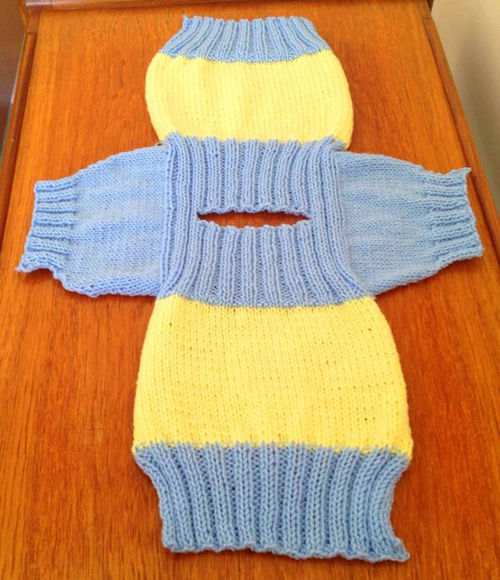
Looking for a simple baby jumper and beanie knitting project with a long history of charity knitting? The pattern commonly known as the Fish and Chip Babies jumper has circulated for many years among knitting groups, churches, community organizations, and charity projects.

The design is intentionally simple: a small baby jumper is knitted in one piece and paired with a basic beanie. Its straightforward construction made it popular with knitters who wanted to create warm baby garments quickly for donation.

Fish and Chip Babies Pattern at a Glance

Pattern Type: Baby Jumper and Beanie

Craft: Knitting

Category: Charity Baby Knitting

Construction: Jumper knitted in one piece

Yarn Weight: Double Knitting / DK

Needles: Approximately 4.5–5.0 mm, depending on tension

Matching Item: Baby Beanie

Pattern History: Widely circulated charity pattern

What Are Fish and Chip Baby Jumpers?

“Fish and Chip Babies” is a name that became associated with a simple knitted baby jumper distributed through charity knitting campaigns.

Older appeals explained that the garments were intended for babies in communities where suitable newborn clothing could be difficult to obtain. The unusual name came from stories that some newborns were being kept warm using newspaper.

Versions of the appeal and pattern have circulated through community groups for many years, so there is no single modern pattern publisher that can easily be identified as the original designer.

A Simple One-Piece Baby Jumper

One reason this pattern became popular for charity knitting is its uncomplicated construction. The jumper is worked largely as a single piece, reducing the amount of shaping and finishing required.

Traditional versions combine ribbing and stockinette stitch, with stitches added to form the sleeves and an opening created for the baby's head.

This makes the project approachable for knitters who are comfortable with basic knit and purl stitches but may not yet want to tackle a more complicated baby sweater.

Yarn for the Baby Jumper

The commonly circulated versions specify Double Knitting (DK) yarn, also known as approximately 8-ply in some countries.

Older charity instructions often requested bright or mixed colors rather than very pale shades. However, donation requirements can change significantly between organizations.

If you intend to knit these garments for charity, always check the receiving organization's current requirements before purchasing yarn or starting the project.

Needle Sizes

Traditional copies of the jumper pattern commonly recommend:

  • 5.0 mm needles for tighter knitters
  • 4.5 mm needles for looser knitters

These recommendations are intended to produce an appropriately sized and flexible baby garment, but your personal knitting tension may vary.

The Matching Baby Beanie

A simple knitted beanie is frequently included alongside the jumper pattern. Like the jumper, the hat is designed to be quick to knit and uses basic ribbing, stockinette stitch, and crown decreases.

Matching the hat and jumper in coordinating colors can create a complete little newborn set.

Why This Pattern Became Popular for Charity Knitting

Charity knitting projects often need designs that are economical, practical, and easy to reproduce in larger numbers.

The Fish and Chip baby jumper fits those requirements well because it uses familiar knitting techniques, can be made with relatively small amounts of DK yarn, and does not require complicated garment construction.

It is also useful for groups because knitters of different experience levels can contribute to the same type of project.

Important: Check Current Donation Requirements

Many versions of this pattern online come from older charity appeals. That does not necessarily mean the same organization is currently requesting these garments.

Before knitting specifically for donation, confirm that your chosen charity currently accepts knitted baby jumpers and hats and check its latest requirements for yarn type, colors, sizing, washing, labeling, and delivery.

If no current charity appeal is available in your area, the same simple style can still be useful as inspiration for personal baby knitting or local donation projects that accept handmade garments.

View a Traditional Fish and Chip Baby Pattern

Amazing Knitting does not reproduce the full circulated knitting instructions here. A historical copy of the jumper and hat pattern is available from the source below.

View the Fish and Chip Baby Pattern →

Pattern note: This is a widely circulated charity knitting pattern. Amazing Knitting has not identified a definitive original designer. The linked copy is provided by an external organization, and current charity requirements should always be verified separately.

More Baby Knitting Inspiration

Explore more baby sweater knitting patterns, baby hat knitting patterns, and baby knitting patterns from the Amazing Knitting archive.

Before You Start

If you are knitting this project for donation, contact the intended charity first. Organizations may have specific rules about fiber content, colors, sizing, safety, finishing, and whether handmade baby garments are currently needed.

Discover More From the Archive

A fresh mix of knitting patterns and tutorials from the Amazing Knitting archive.

Finding patterns from the archive…