Skip to content

...

Nola’s Slippers – Free Easy Slipper Knitting Pattern

Nola's Slippers free easy slipper knitting pattern by Nola Miller

Nola's Slippers. Photos © annakg

Nola's Slippers by Nola Miller is a classic free slipper knitting pattern from the Seamen's Church Institute Christmas at Sea program.

Warm, practical and surprisingly straightforward to construct, these slippers are worked flat using two strands of worsted-weight yarn held together. Most of the project is simple garter stitch, with a comfortable ribbed cuff around the ankle.

Nola's Slippers Pattern Details

  • Designer: Nola Miller
  • Publisher: The Seamen's Church Institute – Christmas at Sea
  • Craft: Knitting
  • Category: Adult slippers
  • Pattern availability: Free
  • Construction: Worked flat and seamed
  • Yarn: Worsted weight held double
  • Yardage: Approximately 500 yards (457 m) total
  • Needles: US 9 (5.5 mm) circular needle, 24 inches or longer
  • Gauge: 12 stitches × 24 rows = 4 inches (10 cm) in garter stitch
  • Finished height: Approximately 9 inches from top of cuff to sole
  • Finished length: Approximately 11 inches from heel to toe
  • Techniques: Ribbing, garter stitch, shaping, picking up stitches and seaming
  • Skill level: Level 3 in the official Christmas at Sea handbook
  • Language: English

A Classic Cozy Slipper Pattern

Nola's Slippers have a wonderfully traditional handmade look, with a tall ribbed cuff, garter-stitch foot and substantial fabric that helps keep feet warm.

The design was created for the Christmas at Sea program, which provides handmade knitted and crocheted gifts to mariners.

The official handbook describes the slippers as a welcome comfort after spending a day in steel-toed boots.

Worked Flat, Not in the Round

One detail worth emphasizing is that the original Nola's Slippers pattern is worked flat.

You do not need double-pointed needles or magic loop to follow the official instructions.

A circular needle is recommended, but it is used to accommodate the stitches and make picking up stitches around the foot easier—not because the slipper is knitted continuously in the round.

Two Strands of Worsted Yarn Held Together

The official pattern calls for two strands of worsted-weight yarn held together throughout the project.

Holding the yarn double creates the thick, warm fabric that gives these slippers their cozy character.

Approximately 500 yards (457 m) of worsted-weight yarn are listed for the pair.

Can You Use One Strand of Bulky Yarn?

Some knitters choose a bulky or super-bulky yarn instead of holding two strands of worsted together, but that is a substitution rather than the original pattern specification.

If you make this change, choose your yarn and needle size according to the required gauge rather than relying only on the yarn-weight label.

For the original pattern, the target gauge is 12 stitches and 24 rows = 4 inches in garter stitch.

US 9 / 5.5 mm Needles

The official instructions recommend a US 9 (5.5 mm) circular needle, or the needle size required to obtain gauge.

A circular needle at least 24 inches long is useful when the pattern reaches the stage where stitches are picked up along both sides of the foot.

Again, the circular needle is being used for convenience while working flat; the original slippers are not constructed in the round.

Ribbed Cuff

The project begins with a tall 1×1 ribbed cuff.

Ribbing gives the upper portion of the slipper elasticity, helping it sit comfortably around the ankle while providing extra warmth.

After the cuff is established, the construction changes as the center stitches are used to form the tongue and upper foot.

Garter-Stitch Tongue and Foot

Much of Nola's Slippers is worked in garter stitch, making the fabric thick, stretchy and comfortable.

The tongue is formed from the center section of the cuff. Stitches are then picked up along its sides so that the knitting can expand around the foot.

This unusual construction is one of the reasons the slippers look much more structured than a simple flat rectangle even though they are knitted back and forth.

How the Toe Is Shaped

The toe takes shape through a series of decreases at the end of the knitted tongue.

After that shaping is complete, stitches are picked up along the sides of the tongue and combined with stitches from the cuff.

This creates the upper foot section without needing to knit a separate piece and sew it on later.

How the Sole Is Finished

After the foot has reached the required depth, decreases shape the sole of the slipper.

The official instructions provide two options for joining the live stitches underneath: Kitchener stitch or a three-needle bind-off.

The Seamen's Church Institute specifically notes that Kitchener stitch creates the smoother finish because it avoids leaving a ridge along the center of the sole.

Why Kitchener Stitch Is Useful Here

A ridge that would be harmless on a shoulder seam can become uncomfortable when it sits directly beneath your foot.

Kitchener stitch grafts the live stitches together and creates a much flatter join.

If you have never tried grafting before, a pair of slippers can be a practical project for learning the technique because the benefit of a smooth seam is immediately noticeable.

Final Seaming

Once the sole has been joined, the remaining yarn tail can be used to sew the heel and cuff seam.

The official pattern suggests either whipstitch or mattress stitch for this finishing step.

After the ends are woven in, the flat knitted piece has transformed into a warm, structured slipper.

Finished Size

The official finished measurements are approximately:

  • Height: 9 inches from the top of the cuff to the sole
  • Length: 11 inches from heel to toe

The original pattern is essentially a single adult size rather than a graded pattern with a full range of shoe sizes.

Keep this in mind if you are knitting for someone with particularly small or large feet.

A Unisex Slipper Design

Nola's Slippers have a simple, practical shape that works well as a unisex design.

The appearance can change dramatically depending on the yarn you choose. Natural wool shades create a rustic traditional slipper, while brighter or multicolored yarns can give the same pattern a more playful look.

Great for Using Worsted Yarn

Because the pattern uses two strands together, it can be a useful way to combine worsted-weight yarns already in your stash.

You can use matching strands for a solid look or experiment with two coordinating colors for a marled effect.

Just remember that changing yarns can affect gauge, thickness and the final size, so checking gauge remains important.

Skills Used in Nola's Slippers

Techniques used in the original pattern include:

  • Knitting and purling
  • 1×1 ribbing
  • Garter stitch
  • Working flat
  • Holding two strands of yarn together
  • Basic decreases
  • Picking up and knitting stitches
  • Kitchener stitch or three-needle bind-off
  • Whipstitch or mattress stitch
  • Weaving in ends

Is Nola's Slippers Beginner Friendly?

Most of the actual knitting uses very accessible stitches, particularly ribbing and garter stitch.

The more interesting learning opportunities come from the construction: picking up stitches along the tongue, shaping the foot and joining the sole.

The current Christmas at Sea handbook labels the pattern Skill Level 3, so it is better viewed as an approachable project for a knitter who already knows the basic knit and purl stitches rather than an absolute first project.

A Practical Handmade Gift

Thick knitted slippers make a useful cold-weather gift, and this pattern has a particularly practical history.

It comes from the Seamen's Church Institute's Christmas at Sea program, whose volunteers make handmade items for mariners.

That practical purpose is reflected in the design: warm yarn, a secure ribbed cuff, substantial garter-stitch fabric and a smooth sole are more important here than decorative complexity.

Why Knit Nola's Slippers?

Nola's Slippers are a great choice if you want a cozy accessory that looks more complicated than the individual stitches actually are.

You get to practice ribbing, garter stitch, picking up stitches and shaping while producing a genuinely useful finished project.

The doubled worsted yarn also creates a satisfyingly substantial fabric, making these slippers especially appealing for cold floors and winter evenings.

Get the Free Nola's Slippers Knitting Pattern

Nola's Slippers by Nola Miller are part of the official free Christmas at Sea pattern collection from the Seamen's Church Institute.

Get the Free Nola's Slippers Knitting Pattern →

Pattern availability was checked when this article was updated. Availability and access on external websites may change over time.

Baby Cable Booties - Knitting Pattern

Baby Cable Booties - Knitting Pattern
Designed by © matildasmeadow
What beautiful baby booties knitting pattern! I found it on Etsy...
Baby Booties with Aran Cable Cuffs with double turn-down cuffs for comfort, luxury and security - difficult to kick-off! 2 sizes - 0-6 months and 6-12 months.

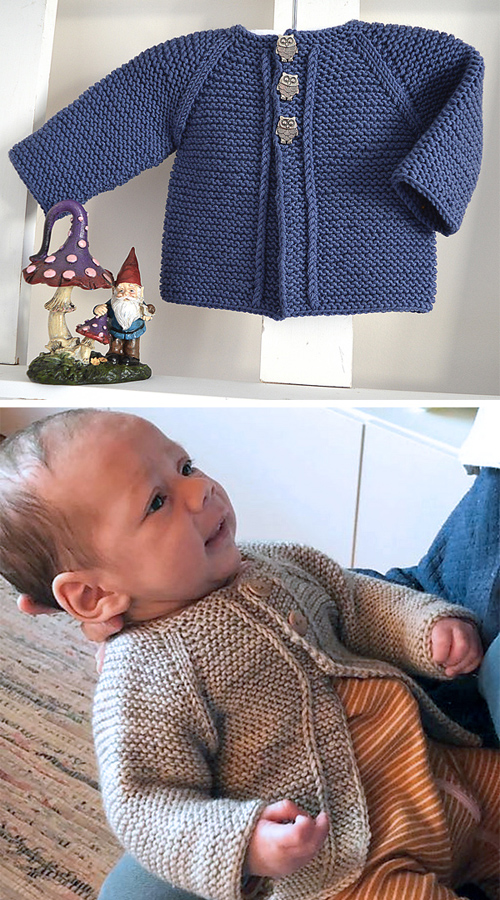
Balina Top Down Cardigan - Knitting Pattern

Balina Top Down Cardigan - Knitting Pattern
Photos above © OGE Knitwear Designs & © mermade
What beautiful baby cardigan knitting pattern! I found it on Etsy...
Perfect pattern for the confident beginner who is ready to try knitting a top-down sweater according to the designer. Sleeves can be knitted in the round, or for those knitters not ready to tackle working with a set of double-pointed needles, there are also instructions included for the sleeves to be knitted flat. Rated easy by the designer. Sizes 1-3 months, 3-6 months, 6-12 months. DK weight yarn.

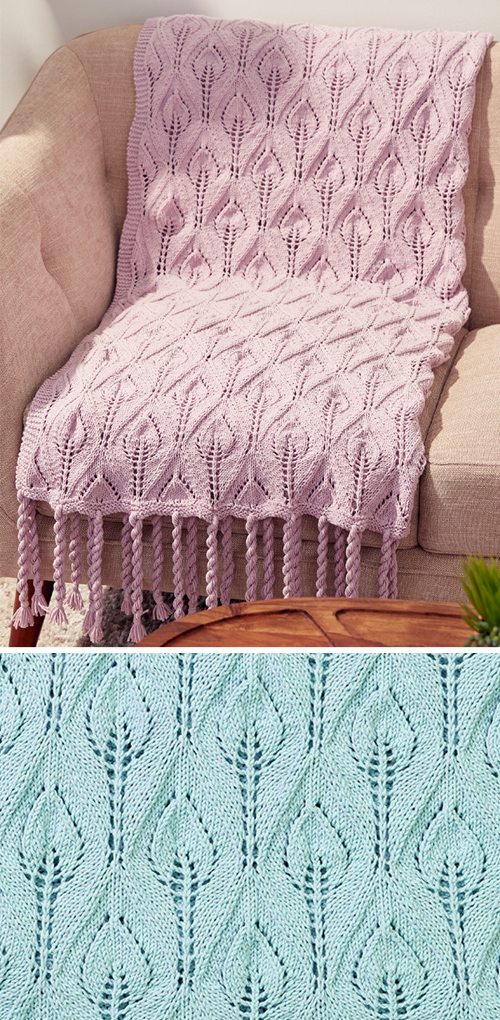
Tasseled Leaf Lace Blanket - Free Pattern

Tasseled Leaf Lace Blanket - Free Pattern
Designed by © Yarnspirations
What beautiful baby blanket (Free knitting pattern)! I found it on Pinterest...
Large modern lace leaves are bordered by a garter stitch edge and finished off with an attractive twisted cord fringe on this elegant throw. Approx 45" x 54" [114.5 x 137 cm], excluding tassels.

Download Pattern: Tasseled Leaf Lace Blanket 

Simple Bunny Lovey - Free Pattern

Simple Bunny Lovey - Free Pattern
Photos above © Julia VR
What beautiful soft bunnies knitting pattern! I found it on Ravelry...
This is just a simple recipe for making quick soft bunnies. Years ago I improvised one of these with a knitted square and was asked several times how I did it, so here it is.
These bunnies can be easily turned into teethers if added a wooden theether at the bottom.

Download Pattern: Simple Stripe Knit Blanket 

Baby Yoda for Babies - Knitting Pattern

Baby Yoda for Babies - Knitting Pattern
Designed by © Arianna Soloway
What beautiful baby cardigan knitting pattern! I found it on Ravelry...
Baby cardigan with hood inspired by the Star Wars The Mandalorian baby alien. The sleeves roll up and the hood cinches down for an adjustable fit. Bulky weight yarn.

Elora Baby Blanket - Knitting Pattern

Elora Baby Blanket - Knitting Pattern
Designed by © Emily Johannes
What beautiful baby blanket  knitting pattern! I found it on Etsy...
Leaf lace cascades down and around the edges of this lovely blanket. Lace pattern is written and charted. Size: After blocking 81cm x 105cm (32 in x 41½ in) approx.

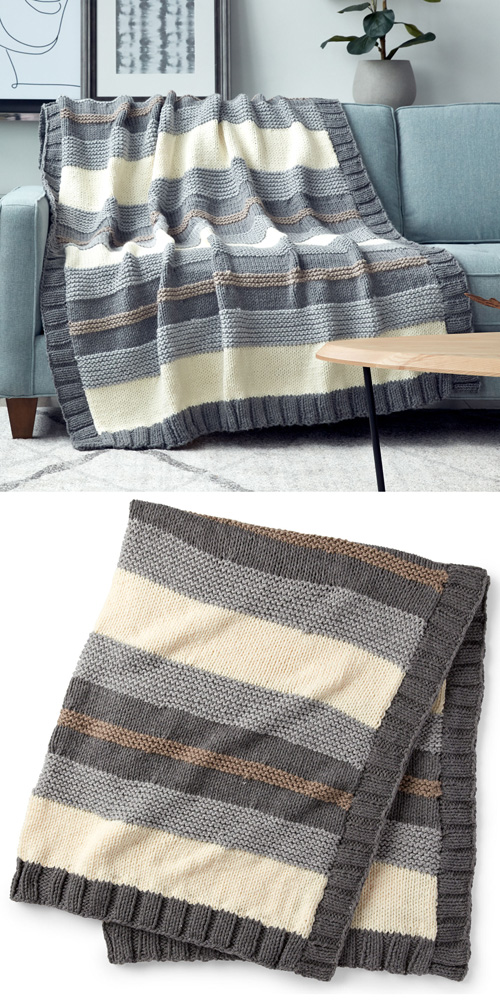
Simple Stripe Knit Blanket - Free Pattern

Simple Stripe Knit Blanket - Free Pattern
Photos above © Bernat
What beautiful shawl /wrap knitting tutorial! I found it on Pinterest...
Bold bands of color accent the simple textures on this easy-to-knit blanket. Perfect for seasoned knitters or those new to the craft, this is a fun and easy project that has you working basic stitches and a fun to work border that is picked up along the side edges for a tidy finish. 

Download Pattern: Simple Stripe Knit Blanket 

Baby Cardigan and Romper - Knitting Pattern

Baby Cardigan and Romper - Knitting Pattern
Designed by © OGE Knitwear Designs
What beautiful baby cardigan and romper knitting pattern! I found it on Etsy...
Seamless top down sweater can be knitted with or without sleeves. Oneseie is knitted in garter stitch with a small amount of seaming required. Rated easy by Ravelrers. Sizes Cardigan -- 3 to 6 months, 6 to 12 months, 12 to 18 months : Onesie -- 0 to 3 months, 6 to 9 months, 9 to 12 months. DK weight yarn.

Chunky Slipper Socks - Free Knitting Pattern

Chunky Slipper Socks - Free Knitting Pattern
Photos above © Churchmouse Yarns and Teas & © Christinabouchard
What beautiful socks knitting pattern! I found it on Pinterest...
I quite enjoyed this pattern. Very easy to knit and the overall look is lovely. It’s the best looking knit slipper I’ve seen in a while. Would make an excellent gift.

Fox Paws Knitting Tutorial – Learn the Stacked Stitch Technique

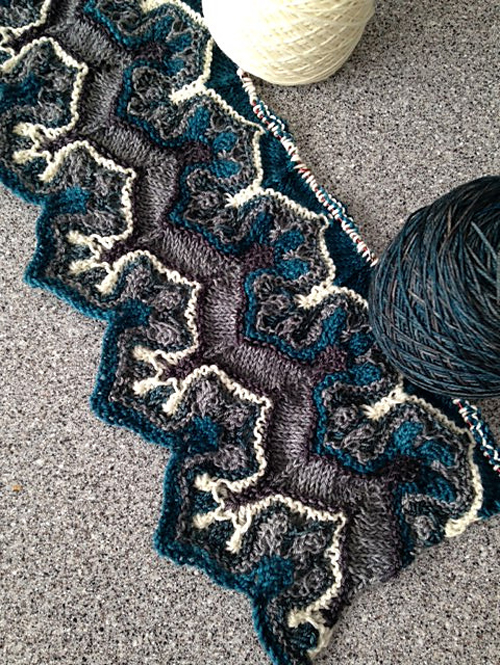
Fox Paws knitting tutorial and colorful stacked stitch wrap by Xandy Peters

Fox Paws project shown above. Photo © cdncarol.

Fox Paws by Xandy Peters is one of those knitting designs that can make you stop and wonder: how were those extraordinary waves of color created?

Although the finished fabric looks like highly complex colorwork, the secret is an unusual technique known as stacked stitches. Dramatic increases and decreases bend ordinary knitted stripes into the distinctive interlocking shapes that give Fox Paws its name.

This guide introduces the construction and techniques behind Fox Paws, explains what makes stacked stitches unusual, and points you to Xandy Peters' official learning resources if you want to practice the technique before beginning the full wrap.

Fox Paws at a Glance

  • Designer: Xandy Peters
  • Published: September 2014
  • Craft: Knitting
  • Category: Shawl / Wrap
  • Shape: Rectangle
  • Construction: Worked flat
  • Yarn weight: Fingering
  • Suggested yarn: Knit Picks Palette
  • Yardage: Approximately 1,100–1,300 yards (1,006–1,189 m)
  • Needles: US 6 / 4 mm circular needle, or size needed for gauge
  • Finished size: Approximately 70 × 20 in (157 × 43 cm)
  • Skill level: Intermediate / adventurous knitter
  • Pattern status: Paid pattern

What Makes Fox Paws So Unusual?

The defining feature of Fox Paws is its extraordinary wavy striped motif.

The shapes resemble rows of interlocking fox feet, but they are not created with conventional stranded colorwork or intarsia.

Instead, Xandy Peters manipulates ordinary knitted stripes using concentrated increases and decreases. These techniques force sections of the rows to expand and contract dramatically, bending the stripes into waves.

The result looks much more complicated than the basic idea behind it: shape the fabric itself, and the stripes follow that shape.

What Are Stacked Stitches?

Stacked stitches are unusual increases and decreases worked repeatedly into the same area of the knitting.

Instead of making a single increase or decrease and continuing across the row, stitches can be slipped back to the left needle and worked again. Repeating this process builds a concentrated stack of shaping.

In Fox Paws, these dramatic changes in stitch count are used to bend rows of garter stitch into the characteristic peaks, valleys and interlocking motifs.

Stacked Decreases

A normal knitting decrease may reduce the stitch count by one or two stitches. A stacked decrease takes the concept considerably further.

Xandy Peters describes stacked decreases as multiple decreases worked on top of one another. Stitches are worked together, selected stitches are slipped back to the left needle, and another decrease is worked through the same area.

This creates a strong inward pull in the fabric and helps form the deep valleys seen in stacked-stitch designs.

Practice Stacked Decreases First

If this technique is new to you, practicing it separately before starting Fox Paws can make the full project much easier to understand.

Xandy Peters provides an official free tutorial explaining stacked decreases, including a small practice swatch and video demonstration.

Learn Stacked Decreases with Xandy Peters →

Stacked Increases

The opposite side of the technique is the stacked increase.

Instead of rapidly removing stitches, stacked increases create many stitches in a concentrated area. Working increases and decreases in carefully positioned groups allows the knitted stripes to move sharply up and down across the fabric.

One of the techniques associated with Xandy Peters' stacked-stitch work is KYOK — knit, yarn over, knit — which creates multiple stitches from one stitch before the stacking process continues.

A Free Way to Practice Stacked Increases

You do not need to begin with the full Fox Paws wrap to learn the increase technique.

Xandy Peters offers a free Star Pattern specifically designed as a way to practice stacked increases.

It is a much smaller project and can help you understand how the technique behaves before committing to more than a thousand yards of fingering-weight yarn.

Practice Stacked Increases with the Free Star Pattern →

Complex-Looking Colorwork Without Stranding

One of the most fascinating aspects of Fox Paws is that the dramatic multicolored fabric does not require traditional stranded knitting or intarsia.

You work the stripes one color at a time.

The extraordinary shapes appear because the stacked increases and decreases physically distort those stripes into extreme waves.

This means you do not have to carry several colors simultaneously across the row or manage intarsia bobbins to create the signature motif.

Five Colors in the Original Fox Paws

The original sample uses five colors, rotating them through the repeats to create the distinctive layered appearance.

The suggested yarn is Knit Picks Palette, a fingering-weight wool yarn.

The original color arrangement uses approximately one 50 g skein of each of five colors.

However, the designer notes that Fox Paws can be worked with two or more colors, giving knitters considerable freedom to develop their own stripe sequence.

Choosing Colors for Fox Paws

Color choice has an unusually strong influence on the appearance of this project because the entire motif is built from stripes.

Before buying yarn, consider:

  • Contrast between neighboring colors
  • Light and dark values
  • Warm versus cool colors
  • How frequently each color will repeat
  • Whether you want a bold or subtle finished wrap

High contrast can emphasize the unusual geometry, while closer values can produce a softer and more blended effect.

Check Your Colors in Grayscale

A simple way to judge contrast is to photograph your yarn choices and temporarily view the image in grayscale.

Colors that look very different to the eye can sometimes have nearly identical values. If they merge together in grayscale, the boundaries between some of your Fox Paws stripes may appear less distinct.

That is not necessarily wrong—it simply produces a different visual effect.

Fingering-Weight Yarn

Fox Paws is designed for fingering-weight yarn.

The original pattern calls for approximately 1,100–1,300 yards (1,006–1,189 m) in total.

Because the wrap relies so heavily on stitch definition and color interaction, yarn choice can influence both the appearance of the motif and the behavior of the finished fabric.

Needle Size

The published recommendation is a US 6 / 4 mm circular needle, or the needle size necessary to obtain gauge.

Although Fox Paws is worked flat, a circular needle is practical for holding the width of the project and distributing the weight of the growing wrap.

Fox Paws Gauge

The designer specifies gauge in the Fox Paws motif rather than using only a conventional stockinette gauge.

Because stacked stitches dramatically alter the geometry of the fabric, checking the pattern's specified motif gauge is more meaningful than assuming a standard fingering-weight gauge.

Swatching also gives you a valuable opportunity to practice the unusual increases and decreases before beginning the full project.

Finished Size

The published finished size is approximately 70 inches long × 20 inches wide (157 × 43 cm).

This produces a generous rectangular wrap that can be worn across the shoulders or styled more like a large scarf.

Is Fox Paws Difficult to Knit?

The official pattern is rated intermediate, but the designer specifically recommends it for adventurous knitters because it contains unusual increases and decreases.

The challenge is not conventional stranded colorwork. Instead, it is learning the logic of stacked stitches and keeping the stitch count accurate while large increases and decreases are being worked.

An adventurous beginner who is already confident reading patterns and working basic increases and decreases may prefer to practice stacked stitches separately before attempting the full wrap.

Skills That Will Help

Before beginning Fox Paws, it helps to be comfortable with:

  • Knit stitches
  • Basic increases and decreases
  • Reading written knitting instructions
  • Changing colors for stripes
  • Counting stitches carefully
  • Recognizing mistakes in your knitting
  • Working flat on circular needles
  • Blocking

You do not need previous experience with traditional stranded colorwork to understand the color effect used in Fox Paws.

Count Your Stitches Frequently

Accurate stitch counts are particularly important with stacked-stitch knitting.

Large increases and decreases mean that one missed step can affect the geometry of the motif much more dramatically than a small mistake in ordinary garter stitch.

Check your stitch count regularly instead of waiting until several rows later to discover that something has gone wrong.

Use Stitch Markers Between Repeats

Stitch markers can make a complex-looking row easier to manage by dividing it into smaller logical sections.

Checking each repeat as you finish it can help identify an error while you are still close to the place where it occurred.

This is often much easier than trying to diagnose a stitch-count problem after completing an entire long row.

Use Smooth Needles

Some of the stacked decreases require several stitches to be worked together.

A needle with a smooth surface and a useful tip can make these maneuvers easier than a particularly blunt or sticky needle.

The best choice still depends on your yarn and knitting tension, so use a needle that gives you control without making the multi-stitch decreases unnecessarily difficult.

Avoid Knitting the Stacks Too Tightly

Very tight tension can make unusual multi-stitch increases and decreases considerably harder to work.

If you normally knit tightly, pay attention to the amount of room available when the pattern asks you to manipulate several stitches in the same area.

Practicing on a small swatch first is much easier than discovering a tension problem halfway through the full wrap.

Weaving in the Many Color Ends

A striped five-color project can potentially create many yarn ends.

Xandy Peters has developed guidance for weaving in ends as the project progresses, reducing the amount of finishing waiting at the end of the wrap.

This can be especially useful for Fox Paws because frequent color changes are an important part of the design.

Blocking Fox Paws

Blocking helps the distinctive stacked-stitch shapes settle into their finished form.

The official materials include pins and a steamer for blocking, although the exact method you use should always be appropriate for your chosen yarn fiber.

Follow the yarn manufacturer's care instructions and the designer's finishing guidance rather than applying excessive heat or stretching.

Practice Before Starting the Full Wrap

Fox Paws is a particularly good example of a project where a practice swatch has value beyond simply checking gauge.

Use your swatch to learn:

  • How stacked increases feel on your needles
  • How stacked decreases are constructed
  • How tightly you naturally work the stitches
  • Whether your chosen needle works comfortably
  • How your colors interact
  • How the fabric changes after blocking

Once the movements begin to feel familiar, the full Fox Paws pattern becomes much easier to approach confidently.

Fox Paws Is a Paid Pattern

Important: Fox Paws itself should not be confused with the free tutorials used to teach its techniques.

Xandy Peters provides free educational resources for learning stacked increases and stacked decreases, but the complete Fox Paws knitting pattern is a paid pattern.

Older Amazing Knitting labeling that placed this page under “Free Knitting Pattern” should therefore not be interpreted as meaning that the complete Fox Paws pattern is free.

Get the Official Fox Paws Pattern

The complete pattern is available directly from Xandy Peters.

Buying through the designer's official website gives you the current authorized pattern and supports the designer who created the stacked-stitch design.

Get the Official Fox Paws Pattern →

Free Official Stacked Stitch Tutorials

If you are not ready to begin Fox Paws yet, start with Xandy Peters' free learning resources.

Learn Stacked Decreases →

Practice Stacked Increases →

Fox Paws and its pattern instructions are © Xandy Peters. Amazing Knitting does not reproduce the copyrighted Fox Paws pattern. This page is an independent guide to the design and the techniques used in it. Pattern availability and pricing are determined by the designer.

Read Our Pattern Availability Policy →

Big Dipper Hat - Knitting Pattern

Big Dipper Hat - Knitting Pattern
Photos above © NataliaGracheva
What beautiful knitting hat pattern! I found it on Ravelry...
This hat is offered for children and adults. At night I see over the surrounding mountains.
The Big Dipper and I knitted it . For the project choose Aran weight and needles 7 US. This is the simple knitting but you should be careful when working with two color yarns to not reduce the gauge. Embroider the constellation with simple cross stitches and it looks cute.

Full Post: Big Dipper Hat

Discover More From the Archive

A fresh mix of knitting patterns and tutorials from the Amazing Knitting archive.

Finding patterns from the archive…