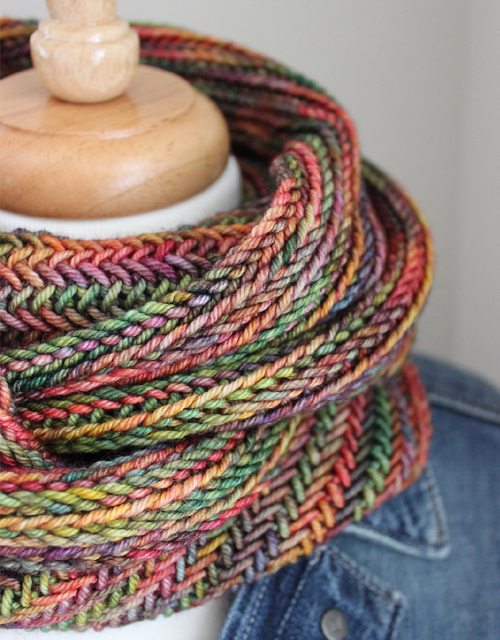
Gradient Wurm is a colorful interpretation of the popular Wurm hat by katushika, using gradient yarn to emphasize the design's distinctive raised ridges.
The original Wurm pattern is a seamless unisex beanie worked in the round. Its simple alternating textured sections make it especially effective with slow color-changing or gradient yarns, where each ridge can highlight a new part of the color transition.
The exact hat pattern remains available as a free Ravelry download.
Original Wurm design © katushika. Gradient project photo © EspaceTricot.
Gradient Wurm Hat Overview
- Original pattern: wurm
- Designer: katushika
- Gradient project: EspaceTricot
- Craft: Knitting
- Category: Beanie / toque
- Published: May 2009
- Construction: One piece, worked in the round
- Finishing: Seamless
- Style: Unisex
- Sizes: Small, Medium and Large
- Head circumference: Approximately 53–55, 55–57 and 57–59 cm
- Suggested yarn: Lana Grossa Cool Wool Merino 2000
- Yarn weight: Sport
- Needles: US 4 / 3.5 mm and US 6 / 4.0 mm
- Gauge: 24 stitches × 34 rows = 4 in / 10 cm in stockinette stitch
- Main techniques: Knitting in the round, stockinette stitch, purl ridges and crown decreases
- Pattern availability: Free Ravelry download
What Is Gradient Wurm?
Gradient Wurm is not a separate knitting pattern. It is a project variation of the original Wurm hat designed by katushika.
The version shown here was knitted by EspaceTricot using gradient yarn, which allows the changing colors to move naturally through the horizontal textured ridges.
That combination works particularly well because the structure of Wurm is simple enough to let the yarn become a major part of the visual design.
The Original Wurm Hat
Wurm is a relaxed textured beanie designed for both women and men.
The hat is worked in the round as one seamless piece and features repeated horizontal ridges that create its recognizable slouchy texture.
The original designer describes it as a practical hat that works with many different hairstyles and provides extra warmth around the ears.
Why Gradient Yarn Works So Well
Slow color-changing yarn is especially effective in this pattern because the hat contains broad horizontal bands.
As the yarn gradually changes shade, each ridge can develop a slightly different color, making the simple texture look much more complex.
A long gradient generally creates the smoothest transition, but self-striping or hand-dyed yarn can also produce interesting results.
Choosing Gradient Yarn
For a look similar to the featured Gradient Wurm, choose a yarn with gradual rather than abrupt color changes.
Useful options include:
- Long-gradient yarn
- Hand-dyed gradient yarn
- Ombre yarn
- Self-striping sport-weight yarn
- Two coordinating yarns used strategically
Strong contrast between colors will emphasize the ridges, while a subtle gradient creates a softer blended effect.
Sport-Weight Yarn
The original Wurm pattern recommends sport-weight yarn.
The suggested yarn is Lana Grossa Cool Wool Merino 2000, a 100% merino wool yarn.
A similar sport-weight substitute can be used as long as it produces the required gauge and a fabric with enough elasticity for a comfortable hat.
Needles
The pattern uses two needle sizes:
- US 4 / 3.5 mm
- US 6 / 4.0 mm
The smaller needles are used where a firmer fabric is required, while the larger size creates the main body of the hat.
Use the needle size that allows you to obtain the published gauge rather than relying only on the number printed on the pattern.
Gauge
The official gauge is:
24 stitches × 34 rows = 4 in / 10 cm in stockinette stitch.
Gauge matters for a hat because it determines both the circumference and the overall fit.
A hat that is too loose may slip, while excessively tight gauge can reduce stretch and make the brim uncomfortable.
Three Adult Sizes
The Wurm pattern includes three sizes:
- Small: fits approximately 53–55 cm head circumference
- Medium: fits approximately 55–57 cm
- Large: fits approximately 57–59 cm
Measure around the widest part of the head before choosing a size.
Worked in the Round
Wurm is knitted entirely in the round.
This means there is no vertical seam running up the finished hat.
The seamless construction also makes the repeating ridges look continuous all the way around the head.
The Textured Ridges
The signature feature of Wurm is the sequence of horizontal raised ridges.
These are created through simple changes in the knitted fabric rather than traditional cables or complex lace.
Because the texture is repetitive, it also provides an easy framework for showing off gradient yarn.
An Important Note About the Hem
The designer specifically notes that the lower hem is plain stockinette stitch rather than ribbing.
Some finished project photos can make the edge look ribbed, but that appearance comes from the folded construction rather than a conventional knit-and-purl rib.
Following the original pattern structure will produce the intended result.
Skills You'll Use
- Casting on
- Knitting in the round
- Stockinette stitch
- Purling in the round
- Creating textured horizontal ridges
- Using a provisional technique for the hem
- Decreasing for crown shaping
- Working a seamless hat
- Weaving in ends
Is Wurm Beginner Friendly?
Wurm can be a good next-step project for a knitter who already understands basic knit and purl stitches and is ready to work in the round.
There are no complicated cables or lace motifs to manage.
The main skills beyond basic knitting are the folded hem construction, maintaining the textured ridge sequence and shaping the crown.
Tips for Knitting With Gradient Yarn
Check the color sequence before casting on. Decide whether you want to begin with the lightest or darkest end of the gradient.
Do not cut the yarn unnecessarily. Keeping the strand continuous preserves the natural color transition.
Consider the crown colors. If you want a particular shade at the top of the hat, estimate how much yarn the body will use before beginning.
Swatch the yarn. Some gradient yarns look very different once knitted compared with how they appear in the ball.
Can You Use Solid Yarn?
Yes. The original Wurm pattern was not created exclusively for gradient yarn.
A solid color emphasizes the texture of the raised ridges, while gradient yarn adds an additional color effect.
Speckled, tonal and lightly variegated yarns can also work well.
Unisex Hat Design
One reason Wurm has remained popular is its simple unisex shape.
The hat does not rely on decorative details tied to one particular style, so changing the yarn color can dramatically alter the finished look.
Neutral shades create a classic everyday hat, while bright gradients produce a more playful version.
Is the Wurm Hat Pattern Free?
Yes. The original Wurm hat by katushika is currently available as a free knitting pattern.
The exact pattern is offered as a free download through its original Ravelry pattern page.
Gradient Wurm uses this same pattern; the gradient effect comes from yarn choice rather than from a separate set of knitting instructions.
Get the Free Wurm Hat Pattern →
See the Featured Gradient Wurm Project
The photo featured in this article comes from EspaceTricot's Gradient Wurm project, which demonstrates how effectively the original hat works with gradient yarn.
View the Gradient Wurm Project →
Why This Hat Is Worth Knitting
Wurm combines a straightforward construction with a distinctive textured appearance.
Its repetitive ridges make the knitting easy to follow once established, while the seamless construction keeps finishing to a minimum.
Using gradient yarn transforms the same simple structure into a much more colorful project without adding any additional knitting techniques.
That makes Gradient Wurm particularly appealing for knitters who want to let a special skein of yarn do most of the visual work.
Pattern Availability
Amazing Knitting links readers to legitimate designer or publisher sources whenever possible. Pattern prices, download locations and availability can change after an article is published.
Read Our Pattern Availability Policy →
Amazing Knitting is an independent pattern discovery and project-guide site. The original Wurm design and knitting pattern remain the intellectual property of katushika. The featured Gradient Wurm project photo is credited to EspaceTricot. This guide does not reproduce the designer's complete row-by-row pattern instructions.