 |
| The photo above © Ksenia - lifeiscozy |
Full Post: Komorebi Sweater

|
| The photo above © Ksenia - lifeiscozy |
Full Post: Komorebi Sweater
 |
| Photos above © Yarnspirations |
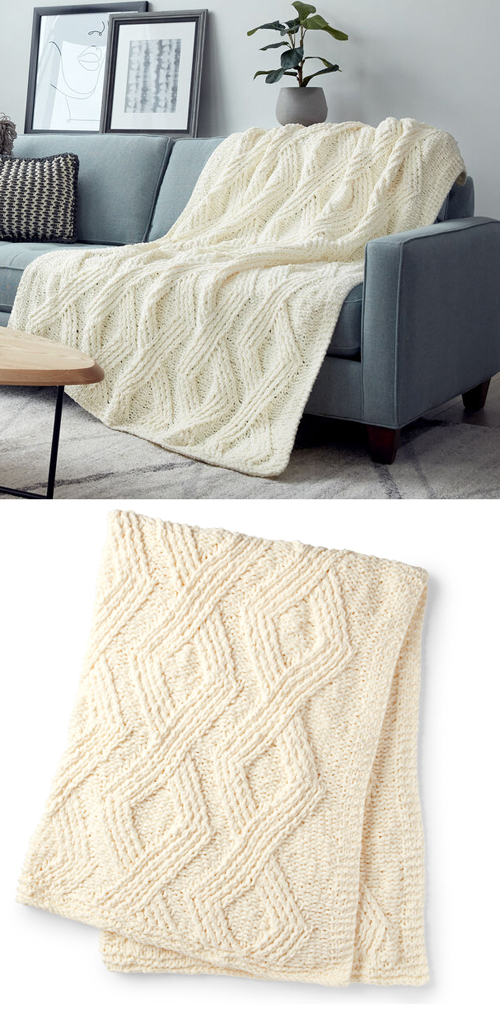
What a beautiful knitting blanket (free knitting pattern)! We love this modern "twist" on the traditional knit cable blanket! Here, twisted stitches are used to create a striking geometric cable motif. Vintage White truly lets the stitches shine, but we think this would look amazing in any shade fromt he wide range of super-soft, easy to care for Bernat Blanket yarn!
Download Pattern: Twisted Stitch Blanket
 |
| Photos above © Wollweg Knits |
What a beautiful knitting pullover (Free pattern)! I found it on Ravelry... Sixty Years is knitted seamlessly from the top-down. After finishing the folded collar, increases for front and back are done to produce the dropped shoulder line. Once the desired width is achieved, front and back are worked separately along the armhole. Front and back are rejoined and the body is again worked in the round down to the split hem. Stitches are picked up around the armhole and the sleeves are knitted in the round in stockinette stitch down to the long k1/p1 ribbed cuffs.
Download Pattern: Sixty Years

Looking for an easy scarf knitting pattern with a clean, modern texture? The Wainscot Scarf by Pauline Walpole is a free knitting pattern designed for bulky-weight yarn and worked with a simple one-row stitch pattern.
The repetitive construction makes this a relaxing project for knitters who want an attractive cold-weather accessory without a complicated stitch sequence.
Designer: Pauline Walpole
Pattern: Wainscot Scarf
Craft: Knitting
Category: Scarf / Neckwear
Yarn Weight: Bulky
Yardage: Approximately 260–264 yards
Needles: US 10.5 (6.5 mm)
Finished Size: Approximately 7 × 68 inches
Stitch Pattern: One-row repeat
Pattern Availability: Free
The Wainscot Scarf has a simple textured appearance that works especially well with bulky yarn. The one-row repeat keeps the knitting easy to follow while still producing a scarf with plenty of visual interest.
Because the stitch pattern is repetitive, this can be a good project for relaxed knitting, travel knitting, or a handmade gift when you want a straightforward pattern with a polished result.
The original pattern uses bulky-weight yarn and calls for approximately 260–264 yards. Bulky yarn helps the scarf work up relatively quickly while giving the textured stitch pattern good definition.
The pattern lists US 10.5 (6.5 mm) knitting needles. As with any scarf project, checking your fabric and adjusting needle size if needed can help you achieve the drape you prefer.
The finished scarf measures approximately 7 inches wide by 68 inches long, giving it enough length for comfortable wrapping and everyday cold-weather wear.
The Wainscot Scarf was designed by Pauline Walpole. Amazing Knitting does not reproduce the designer's knitting instructions. Visit the original pattern source below to access the free pattern.
Pattern © Pauline Walpole. Linked to the original pattern source.
 |
| Photos above © Kris Patay |
Full Post: Be My Dishcloth
 |
| Photos above © Katerina Mushyn |
Full Post: Yellow Easy Slippers
 |
| Photos above © beautifulskills |
Full Post: Knitting Baby Vests
 |
| Photos above © pamcamas |
Download Pattern: Mystery KAL
 |
| The photo above @ Gülümseten Marifetler |
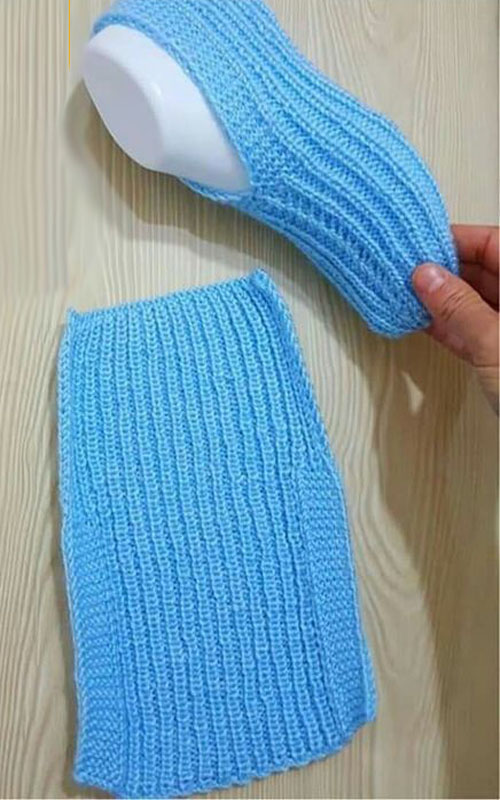
Full Post: Super Easy Booties
 |
| Photos above © MmeUlma & © sorrelwood |
Looking for a simple and charming baby wrap cardigan knitting pattern? This garter-stitch cardigan is a classic crossover design that is worked largely in one piece, making it especially appealing to knitters who prefer simple construction and minimal finishing.
The cardigan has a soft wrap-over front and a timeless handmade look that works beautifully for newborn gifts, baby showers, and everyday baby wear.
Pattern Type: Baby Wrap Cardigan
Craft: Knitting
Category: Baby Cardigan / Wrap Sweater
Main Stitch: Garter Stitch
Construction: Worked mainly in one piece
Direction: Bottom-up, beginning with the back
Original Source: MmeUlma / Madam Ulma
This little cardigan uses a wrap-over construction rather than a traditional button-front shape. The crossover front gives the garment a soft, comfortable look while also making it easy to layer over other baby clothes.
The design was originally shared through the MmeUlma blog and became popular online through knitting and Pinterest communities.
One of the most appealing features of this cardigan is its construction. The garment is worked largely in one piece, beginning at the back and building upward.
One-piece baby garments can be especially attractive to knitters because they reduce the number of separate pieces that need to be assembled at the end.
This also helps create a clean, simple silhouette that suits the minimalist style of the cardigan.
The cardigan is worked in garter stitch, one of the most useful and beginner-friendly knitting textures.
Garter stitch creates a soft, ridged fabric that lies flat naturally and does not curl at the edges in the same way as stockinette stitch.
That makes it a practical choice for baby garments, where soft texture and simple finishing are often desirable.
Wrap-style cardigans are popular for babies because the crossover front creates a flexible fit and avoids a bulky center-front opening.
They can also be layered over bodysuits, sleepsuits, and lightweight tops, making them useful through changing temperatures.
The simple shape also works well in both traditional baby colors and more modern, gender-neutral shades.
Because the design relies on garter stitch and relatively simple construction, this type of cardigan can be a good transition project for knitters who are comfortable with scarves, blankets, or baby accessories and want to try a small garment.
The main skills typically involved include basic knit stitches, shaping, and managing the wrap-front construction.
The original source page is no longer consistently accessible, so the current yarn specification cannot be verified reliably.
If you are recreating a similar wrap cardigan, choose a soft yarn suitable for baby garments and pay close attention to washability, fiber comfort, and gauge.
Always follow the original pattern specifications if you have a saved copy of the pattern, since yarn weight and needle size directly affect the finished size.
This Amazing Knitting page originally linked to a free pattern page from MmeUlma.
At the moment, the original external page is no longer reliably accessible without a Google sign-in, so we cannot confirm whether the pattern is still publicly available in its original form.
Amazing Knitting does not reproduce the original designer's knitting instructions.
The button below points to the original MmeUlma page that was linked from this article. Its current accessibility may vary.
Visit the Original Baby Cardigan Source →
Source note: This design was originally shared through MmeUlma. The original source page is currently not consistently accessible, so Amazing Knitting has intentionally avoided adding unverified sizing, yarn, needle, or gauge information.
Explore more baby cardigan knitting patterns, baby wrap cardigan ideas, and baby sweater knitting patterns from the Amazing Knitting archive.
If you have access to the original MmeUlma instructions, use the designer's specified yarn, needle size, gauge, and measurements rather than relying on substitutions from other baby cardigan patterns.

Sheep Yoke Baby Cardigan by Jennifer Little is a charming baby sweater featuring a playful flock of sheep around a colorful patterned yoke. The combination of traditional colorwork, tiny sheep and a practical button-front cardigan makes this an especially memorable hand-knit for a baby.
The pattern was originally published on Jennifer Little's Looking Glass Knits in 2007 and is still available free from the designer's original pattern page.
The cardigan is designed in DK-weight yarn and includes two baby sizes. Instead of changing the stitch counts between sizes, the designer uses different needle sizes and gauges, allowing the same yoke chart and stitch counts to be used for both versions.
Design © Jennifer Little / Looking Glass Knits.
The feature that immediately makes this baby cardigan stand out is its sheep-patterned yoke. Small sheep are arranged around the upper part of the sweater and surrounded by contrasting geometric colorwork.
The sheep aren't simply decorative blocks of color. The original design uses texture to help them stand out from the surrounding stockinette fabric, while duplicate-stitch details are added later to create features such as the heads and legs.
One sheep at the center back even faces forward rather than following the direction of the rest of the flock, giving the yoke an especially playful detail.
Jennifer Little designed the cardigan for approximately 6–9 months and 9–12 months.
An interesting feature of the pattern is the way the two sizes are created. The stitch counts and colorwork chart remain the same; instead, the knitter uses a different needle size and gauge to produce the smaller or larger cardigan.
For that reason, making and measuring a gauge swatch is particularly important for this project. Choose the needle size that produces the gauge required for the size you want rather than relying only on the needle number printed in the pattern.
The original pattern calls for DK-weight superwash wool. The designer used Knit Picks Swish DK for the sample.
The original palette combines a main neutral color with blue, green, cream and black. A pink accent is also included in the girl's version described by the designer.
You don't have to reproduce the original colors exactly. The sheep motif can work beautifully with many combinations, but choosing shades with enough contrast will help the individual sections of the yoke remain clearly visible.
A soft washable DK yarn is also a practical choice for a baby garment, provided your substitute yarn produces the required gauge and a comfortable fabric.
The Sheep Yoke Baby Cardigan is a top-down yoke design. Knitting begins at the neck and progresses through the patterned yoke before the stitches are divided for the sleeves and body.
The cardigan is worked flat rather than as a pullover in the round. After the yoke is complete, sleeve stitches are held while the body is worked downward. The sleeves are then completed separately.
Button bands are added along the front edges by picking up stitches, and the finishing process includes seaming the sleeves, weaving in the ends, blocking and adding the buttons.
The yoke combines several techniques, making this a fun project for knitters who want to practice decorative colorwork on a relatively small garment.
The designer worked the sheep using stranded colorwork, but notes that intarsia can also be used if that method feels more comfortable.
Some of the final sheep details are added with duplicate stitch. The forward-facing sheep at the center back also receives small French-knot eyes.
Because the cardigan is worked flat, the patterned yoke involves working colorwork on both right-side and wrong-side rows. Knitters who are accustomed only to stranded knitting in the round may want to take their time through this section.
Check your gauge first. This matters more than usual because the designer uses gauge to create the two different cardigan sizes while keeping the underlying stitch counts the same.
When working the yoke increases, read the designer's chart notes carefully. The increases need to be distributed through the appropriate chart sections, but they should not form obvious vertical increase lines.
It can also help to organize your yarn before beginning the sheep section. Several colors appear within a relatively small area, so keeping individual yarn sources separated can make the colorwork much easier to manage.
Finally, don't skip the designer's notes accompanying the original pattern. Jennifer includes several useful explanations about the chart, colorwork options and possible modifications.
Yes. Jennifer Little provides the Sheep Yoke Baby Cardigan pattern free on her original Looking Glass Knits website.
The original web version includes the materials, gauge information, yoke chart guidance, knitting instructions and the designer's additional notes.
Because the designer's original free page is still available, Amazing Knitting links directly to that source rather than to unofficial pattern copies.
View the Free Sheep Yoke Baby Cardigan Pattern →
The link above takes you to Jennifer Little's original Looking Glass Knits pattern page, where you can read the complete free pattern and the designer's notes.
The Sheep Yoke Baby Cardigan has the charm of a traditional Fair Isle-inspired baby sweater without looking overly formal. The little flock turns the colorwork yoke into the focal point, while the simple lower body keeps the overall design balanced.
It is also a manageable way to explore several useful sweater-making skills in one small project: yoke shaping, colorwork, sleeve division, button bands and decorative finishing.
And because the original pattern remains freely available from the designer, it is an excellent choice for knitters looking for a distinctive free baby cardigan knitting pattern.
Amazing Knitting links readers to legitimate designer or publisher sources whenever possible. Pattern availability, download locations and other details can change after an article is published.
Read Our Pattern Availability Policy →
Amazing Knitting is an independent pattern discovery and project-guide site. The Sheep Yoke Baby Cardigan design and pattern remain the intellectual property of Jennifer Little. This guide does not reproduce the designer's complete chart or row-by-row knitting instructions.
