 |
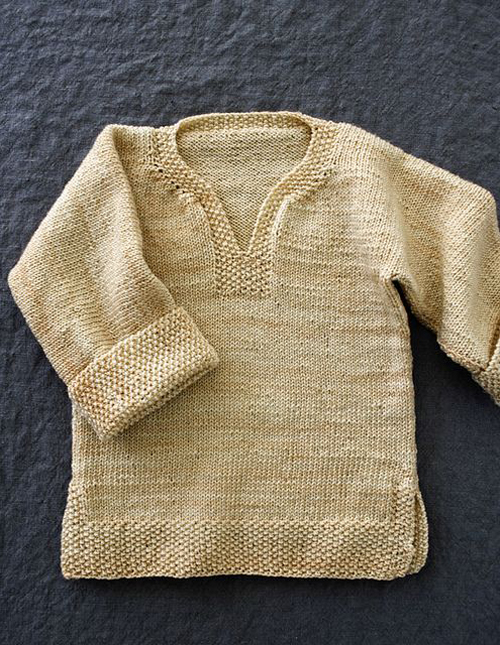
| The photo above © Purl Soho |
What beautiful knitting pullover for babies, toddlers, and kids (Free pattern)! I found it on Pinterest...
very easy to follow and a nice pattern. follow the link below to get the free pattern.
Full Post: Easy Pullover

|
| The photo above © Purl Soho |
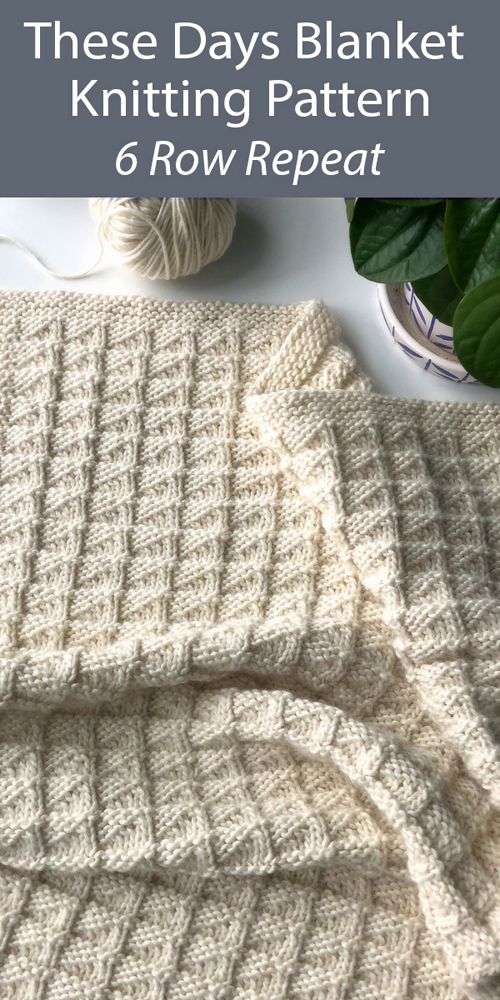
These Days Blanket designed by © Fifty Four Ten Studio.
These Days Blanket by Fifty Four Ten Studio is a modern reversible blanket knitting pattern featuring a beautifully simple geometric texture made entirely with knit and purl stitches.
The repeating design resembles small triangles inside squares, creating a clean contemporary texture that looks attractive on both sides of the blanket.
Even better, the blanket is knitted flat in one piece and the pattern includes six sizes, from a baby blanket to a generous XXL throw.
Pattern availability: These Days Blanket is currently available as a paid PDF knitting pattern directly from Fifty Four Ten Studio. You will find the official pattern link near the end of this guide.
The main attraction of These Days Blanket is its understated geometric texture.
A repeating combination of knit and purl stitches creates small triangle-in-a-square shapes across the surface of the blanket.
From a distance, the repeated shapes form a clean modern pattern. Up close, the raised and recessed stitches give the fabric plenty of texture without the need for cables, lace or colorwork.
One of the most useful features of These Days Blanket is that the stitch pattern is reversible.
The geometric design looks the same on both sides, so there is no obvious right or wrong side of the finished blanket.
This is especially useful for baby blankets and throws because they are constantly folded, wrapped and turned over during everyday use.
Although the finished texture looks detailed, the stitch pattern is created entirely with knit and purl stitches.
There are no complicated cables or lace techniques required to produce the geometric design.
This makes These Days Blanket an appealing project for knitters who have mastered the basic stitches and are ready to practice following a repeating textured pattern.
The geometric texture is built from a six-row repeating stitch pattern.
Short repeats can make a large blanket much more enjoyable to knit because the rhythm of the design becomes familiar after you have worked several repetitions.
You still need to keep track of your rows carefully, but once the pattern becomes recognizable it can develop into relaxing, straightforward knitting.
The pattern includes instructions for six finished sizes, making it useful for everything from a baby gift to a large sofa throw.
These measurements are approximate after blocking. Your finished dimensions may vary slightly depending on your yarn, gauge and knitting tension.
Another useful feature of the design is the ability to add extra pattern repeats if you want a longer blanket.
According to the designer, each additional repeat adds approximately 0.75 inch to the length.
Remember that making the blanket longer will require additional yarn, so plan your yardage before modifying the size.
These Days Blanket is designed primarily for worsted #4 weight yarn.
Approximate yarn requirements for the six sizes are:
Buy additional yarn if you plan to increase the length or if your gauge differs significantly from the pattern gauge.
The designer recommends using a solid-color yarn for the best appearance.
This is good advice for textured knitting. The shadows created by knit and purl stitches are easier to see when the yarn color does not compete with the stitch pattern.
Light and medium shades can make the geometric shapes particularly visible.
The pattern can work with many worsted-weight yarns and is not limited to one particular fiber.
Wool can provide warmth and excellent stitch definition. A washable wool or wool blend can be especially practical for a baby blanket.
Acrylic may offer easy care and a wide range of affordable colors, while suitable cotton yarn can create a different drape and feel.
Whatever fiber you choose, make a swatch first to make sure you like the appearance and feel of the textured fabric.
The designer used US 7 / 4.5 mm needles.
Although the blanket is knitted flat rather than in the round, circular needles are recommended because the cable can comfortably hold the large number of stitches required for a blanket.
Work back and forth on the circular needle exactly as you would on straight needles.
The listed gauge is approximately 19 stitches and 30 rows = 4 inches / 10 cm in the pattern stitch using US 7 / 4.5 mm needles.
The designer notes that exact gauge is not essential, but the textured pattern tends to look best when the stitches are fairly firm.
A significantly different gauge can change the finished dimensions and the amount of yarn required.
The designer rates These Days Blanket as an easy knitting pattern.
It is particularly suitable for a confident beginner who already knows how to knit and purl and wants to move beyond plain stockinette or garter-stitch projects.
The main challenge is not a difficult knitting technique. Instead, it is accurately following the row-by-row sequence that creates the geometric texture.
Before beginning These Days Blanket, you should be comfortable with:
No advanced cable or lace techniques are required to create the main geometric texture.
Because the design depends on a six-row repeat, keeping track of your current row is important.
A row counter, notebook, phone app or simple pencil mark beside each completed row can help prevent mistakes.
Once you have knitted several repeats, you may begin to recognize the visual rhythm of the pattern, but it is still useful to maintain an accurate row count.
Take a moment every few rows to look at the geometric shapes developing across the blanket.
Since the design is created by the placement of knit and purl stitches, a mistake can interrupt the repeating texture.
Catching an error early is much easier than discovering it after many additional rows have been knitted.
Highly variegated yarn can sometimes hide subtle knit-and-purl textures.
If the geometric pattern is the feature you love most about These Days Blanket, consider a solid or gently tonal yarn that allows the triangle-in-a-square design to remain visible.
The simplicity of one color also gives the finished blanket a clean, contemporary appearance.
The smallest version measures approximately 27 × 30 inches after blocking and requires roughly 760–780 yards of worsted-weight yarn.
This size can be a good choice for a handmade baby gift because it allows you to enjoy the complete geometric design without committing to the yardage required for a full-size throw.
If the blanket will be used for a baby, choose a soft yarn with care instructions that suit the recipient.
If you want a blanket for a sofa, reading chair or bedroom, one of the larger sizes may be more appropriate.
The XL and XXL versions allow the repeating texture to cover a much larger surface, producing a simple but visually impressive throw.
Larger sizes require considerably more yarn, so checking dye lots and purchasing enough yarn at the beginning of the project is a sensible precaution.
Blocking is particularly useful for a textured blanket like this one.
Before blocking, the edges may appear slightly wavy and the geometric texture may not look completely settled.
Gentle blocking can help square the blanket, relax the fabric and make the stitch pattern appear more defined.
Always use a blocking method appropriate for the fiber content of your chosen yarn.
Large blankets often involve many hours of knitting, so a memorable stitch repeat can make the process much more enjoyable.
These Days Blanket combines enough texture to keep the project interesting with a short enough repeat to become familiar.
For many knitters, this balance makes it a good project for relaxed evening knitting once the pattern sequence has been learned.
Designer Mary Lee named the pattern These Days because the geometric stitch design reminded her of the boxes on a paper calendar.
The repeating squares reflect the idea of individual days: some filled with important events, others with challenges, and many with the simple everyday moments that are easy to overlook.
That inspiration gives the otherwise minimalist geometric blanket a thoughtful personal story.
The combination of six sizes, worsted-weight yarn and a reversible texture makes this pattern useful for many different projects.
Knit the smaller version as a baby blanket, choose a middle size for a lap blanket, or work one of the larger versions as a cozy throw.
Because the design is geometric rather than themed, it also works well with many decorating styles and gift occasions.
These Days Blanket is currently a paid knitting pattern.
The original designer, Fifty Four Ten Studio, currently offers the downloadable PDF directly through the official studio website.
At the time of our latest availability check, the official PDF is listed at $6 USD.
We also checked for a legitimate currently available free version of this exact pattern but did not find one. Therefore, we are linking directly to the designer's official pattern page rather than directing readers to an unofficial copy.
Visit Fifty Four Ten Studio to see the complete pattern details and purchase the downloadable PDF directly from the designer.
Get the These Days Blanket Pattern →
These Days Blanket is designed by Mary Lee of Fifty Four Ten Studio. Amazing Knitting does not reproduce the copyrighted row-by-row pattern instructions. Pattern pricing and availability may change, so please check the designer's official page for the latest information.
Read Our Pattern Availability Policy →
 |
| The photo above © Cassie May |
 |
| Designed by © Terry Kimbrough, Susan Leitzsch, Lucie Sinkler |
 |
| Photos above © Knitting Knife Crochet Paradise |
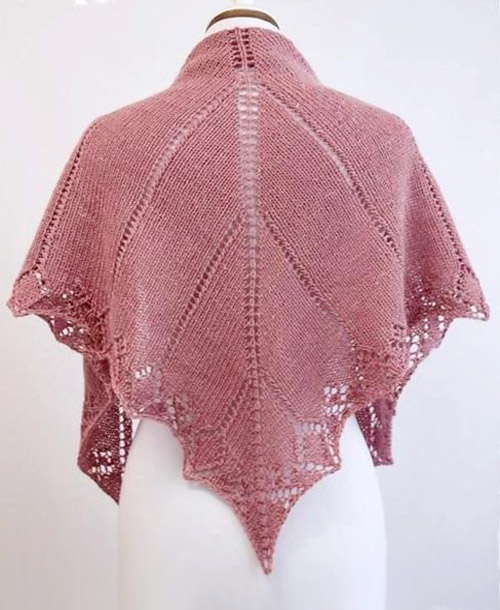 |
| The photo above © Jolanda Schneider |

Maebry Top Down Cardigan designed by © OGE Knitwear Designs
Maebry Top Down Cardigan - P152 by OGE Knitwear Designs is a beautifully detailed baby and toddler cardigan knitting pattern featuring simple stockinette, garter stitch sleeves and a decorative daisy-stitch border.
Worked from the top down in one piece, Maebry is available in five sizes from 3 months through 2 years. The pattern is designed for DK-weight yarn and is rated for intermediate knitters.
Maebry begins at the neckline and is worked downward in one piece. After the garter-stitch neckband, the fronts and back are worked mainly in stockinette stitch, with garter-stitch borders running along the front edges.
This construction gives the cardigan a clean, classic appearance while avoiding the need to assemble separate front and back body pieces.
One of the prettiest details in the Maebry Cardigan is the decorative border worked in OGE Knitwear Designs' version of daisy stitch.
The textured border contrasts nicely with the smooth stockinette body and garter-stitch sections, giving the otherwise simple cardigan a distinctive handmade finish.
The pattern offers knitters a useful choice when making the sleeves. They can be worked flat, or they can be knitted in the round.
The sleeves themselves are worked in garter stitch, adding another layer of texture to the design.
The Maebry Top Down Cardigan includes five sizes: 3 months, 6 months, 12 months, 18 months and 2 years.
This makes the same design useful for both small babies and toddlers. Check the designer's finished measurements in the purchased pattern before selecting the size you want to knit.
The original pattern was designed using Sublime Extra Fine Merino DK, with approximately 127 yards (116 m) per 50 g ball.
The original yarn requirements are approximately 3, 3, 4, 4 and 5 balls for the five sizes respectively.
The cardigan uses 3.75 mm (US 5) needles. If you choose to knit the sleeves in the round, you will also need suitable double-pointed needles or your preferred method for knitting small circumferences.
The specified gauge is 22 stitches and 31 rows or rounds = 4 inches (10 cm) in stockinette stitch on 3.75 mm needles.
Matching gauge is particularly important for a fitted baby or toddler garment, so make a swatch before beginning if you are substituting another DK-weight yarn.
No. Maebry Top Down Cardigan - P152 is currently a paid knitting pattern from OGE Knitwear Designs.
This is worth noting because older posts and saved links online may not accurately reflect the pattern's current availability. Always check the designer's official shop for the current price and availability.
The complete Maebry Top Down Cardigan - P152 is available directly from OGE Knitwear Designs. Visit the designer's official shop for the current price and downloadable PDF.
Get the Maebry Cardigan Pattern at OGE Knitwear Designs
Pattern availability and status were checked when this article was updated. Prices and availability may change over time.

Trellis by Britta Stolfus Rueschhoff is a classic baby cardigan featuring decorative cables, seed stitch and a cozy shawl collar. Originally published in Knitty in 2005, the design remains a popular choice for knitters who enjoy traditional texture and structured garment knitting.
The sweater is worked in pieces from the bottom up and then seamed together. Its most distinctive feature is the repeating trellis cable motif, which creates a rich textured surface across the body while the shawl collar gives the cardigan a timeless, polished look.
The complete Trellis pattern is still available free from its original publisher, Knitty.
Design and original pattern © Britta Stolfus Rueschhoff.
The feature that makes Trellis immediately recognizable is its all-over cable texture.
The cable motifs form repeated interlocking shapes across the knitted fabric, creating the visual effect of a trellis or lattice.
This gives the sweater much more depth than a plain stockinette cardigan while still keeping the overall design traditional and suitable for either boys or girls.
The central texture is built around an 18-row repeating cable pattern.
Although that sounds long compared with a simple rib repeat, cable patterns often become much easier once the structure begins to appear in the fabric. The growing cables themselves provide visual clues about where you are in the repeat.
It is still worth keeping a row counter nearby, especially during the first few repeats.
Trellis combines the cable pattern with seed stitch, which adds another layer of texture without competing with the main cable motifs.
Seed stitch alternates knit and purl stitches to create a small pebbled surface. In this design, it helps frame the more pronounced cable sections and gives the cardigan a carefully finished look.
A shawl collar is one of the most attractive features of Trellis.
Unlike a simple ribbed neckline, the collar creates extra fabric around the neck and front opening, giving the sweater a warm, jacket-like appearance.
This style works especially well with the traditional cable texture because both elements give the cardigan a classic hand-knit character.
The cardigan is worked flat from the bottom up.
The individual garment pieces are knitted separately and then assembled with seams. This is a more traditional sweater-construction method than seamless top-down knitting.
Because the pieces are worked flat, knitters do not need to manage the entire garment in the round while following the cable pattern.
Trellis is not a seamless cardigan. The finished pieces must be joined during the finishing stage.
Good seaming can make a major difference in the final appearance of a cable sweater. Align the row edges carefully so that the texture remains balanced across the garment.
Blocking the individual pieces before final assembly can also help make the edges easier to match.
The original pattern includes three baby sizes:
The corresponding finished lengths are approximately 11, 12 and 13 inches.
As with any baby garment, use the finished measurements rather than relying only on the age label when selecting a size.
The original sample uses Rowan All Seasons Cotton, an Aran-weight cotton and acrylic blend.
The published yardage is approximately 392–490 yards / 358–448 meters, depending on size.
An Aran-weight yarn with clear stitch definition is a good choice for this project because the cable texture is one of the main visual features.
When substituting yarn, look for an Aran-weight yarn that can produce the required gauge while still showing cables clearly.
Very fuzzy yarns may hide some of the trellis definition, while a smooth wool, cotton blend or similarly structured yarn will usually make the cable crossings more visible.
For a baby garment, also consider softness, washability and durability.
The published gauge is:
21 stitches and 28 rows = 4 in / 10 cm in the pattern stitch.
Gauge is especially important for a fitted garment because it directly affects the finished chest measurement and sleeve length.
Cable fabrics can behave differently from plain stockinette, so make your swatch in the actual pattern stitch whenever possible.
The original pattern recommends US 7 / 4.5 mm needles.
Treat that size as a starting point rather than a fixed requirement. Use whichever needle size allows you to match the published gauge with your chosen yarn.
Trellis is better suited to an intermediate knitter or a confident advanced beginner ready to learn garment construction and cables.
The project combines several skills at once: cable work, pattern tracking, shaping, seaming and collar finishing.
None of these techniques is unusually difficult on its own, but together they make the sweater more involved than a basic garter-stitch baby cardigan.
Use a smooth yarn. Clear stitch definition helps the trellis motifs remain visible.
Keep cable tension even. Avoid pulling too tightly immediately after crossing stitches.
Track the 18-row repeat. A row counter can prevent accidental misalignment between garment pieces.
Block before seaming. This can help the cable fabric relax and make the garment pieces easier to join neatly.
Check cable orientation regularly. Catching a reversed cable crossing early is much easier than fixing it several repeats later.
Before assembling the cardigan, lay out the blocked pieces and make sure the edges and pattern sections align correctly.
Use consistent tension while seaming. Pulling the seam too tightly can distort the cable fabric, while a very loose seam may create visible gaps.
Take particular care where sleeves meet the body, since bulky cable fabrics can create extra thickness at garment joins.
Yes. Trellis by Britta Stolfus Rueschhoff is currently listed as a free knitting pattern.
The design was originally published by Knitty in its Spring 2005 issue, and the free pattern remains associated with that original publication.
Amazing Knitting therefore directs readers to the original Knitty pattern rather than to copied PDFs or unofficial downloads.
View the Free Trellis Pattern at Knitty →
Trellis is a strong choice if you want a baby sweater that feels more substantial and traditional than a very simple beginner cardigan.
The cables provide enough repetition to make the knitting interesting, while the seed stitch and shawl collar give the finished garment a polished, heirloom-style appearance.
It is also an excellent small-scale project for practicing techniques that transfer directly to adult cable sweaters, including chart reading, shaping, seaming and collar construction.
Amazing Knitting links readers to legitimate designer or publisher sources whenever possible. Pattern prices, download locations and availability can change after an article is published.
Read Our Pattern Availability Policy →
Amazing Knitting is an independent pattern discovery and project-guide site. The Trellis design and knitting pattern remain the intellectual property of Britta Stolfus Rueschhoff and its original publisher, Knitty. This guide does not reproduce the designer's complete row-by-row pattern instructions or charts.
 |
| The photo above © Purlsoho |
 |
| The photo above © delorme designs |
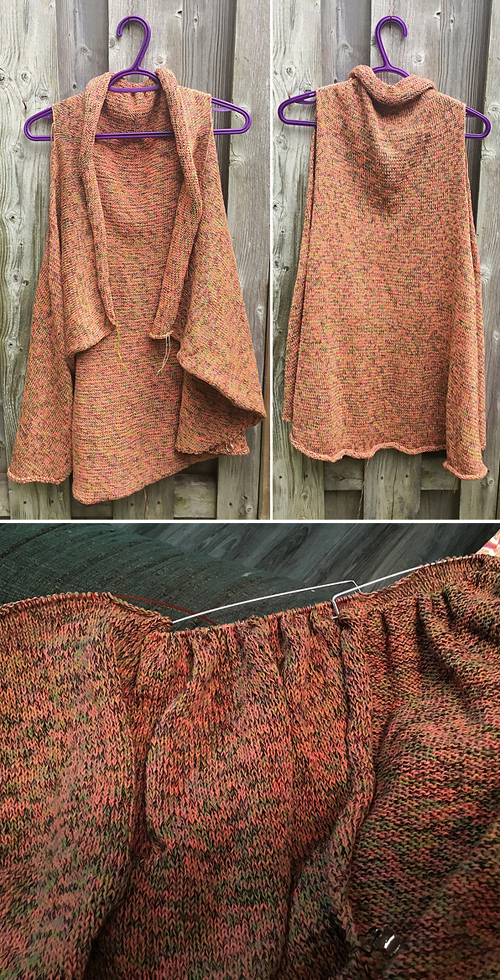 |
| Photos above © MonsoonCalamity |
 |
| Photos above © Betty Fay Wallace |