Skip to content

...

Honeycomb Stroller Blanket - Free Pattern

Honeycomb Stroller Blanket - Free Pattern
Designed by © Terry Kimbrough, Susan Leitzsch, Lucie Sinkler
What beautiful knitting blanket (Free pattern)! I found it on Pinterest...
Unlike most typical baby blankets, this one features a unique honeycomb pattern. It may look complicated, but the pattern is actually easy enough to master. The blanket's small size, perfect for a stroller or crib, is another welcome feature.


Beautiful stitch for all types of knit projects - Tutorial

Beautiful stitch for all types of knit projects - Tutorial
Photos above ©  Knitting Knife Crochet Paradise
Awesome...  I found this knitting stitch on Youtube. it is simply fantastic!
The very easy and beautiful one-row pattern for all types of knit projects.

Full Post: Beautiful stitch 

My First Lace Shawl - Free Knitting Pattern

My First Lace Shawl - Free Knitting Pattern
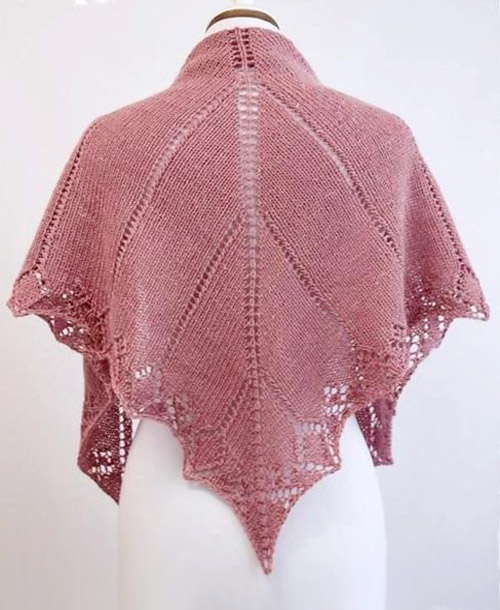
The photo above © Jolanda Schneider
What beautiful shawl knitting pattern! I found it on Ravelry...
Knit a Lace Shawl is not magic. With this detailed manual. many photos and a step-by-step description how to knit the shawl.

Download Pattern: My First Lace Shawl

Maebry Top Down Baby Cardigan Knitting Pattern

Maebry Top Down Baby Cardigan knitting pattern by OGE Knitwear Designs

Maebry Top Down Cardigan designed by © OGE Knitwear Designs

Maebry Top Down Cardigan - P152 by OGE Knitwear Designs is a beautifully detailed baby and toddler cardigan knitting pattern featuring simple stockinette, garter stitch sleeves and a decorative daisy-stitch border.

Worked from the top down in one piece, Maebry is available in five sizes from 3 months through 2 years. The pattern is designed for DK-weight yarn and is rated for intermediate knitters.

Maebry Top Down Cardigan Pattern Details

  • Designer: OGE Knitwear Designs
  • Pattern number: P152
  • Craft: Knitting
  • Category: Baby and toddler cardigan
  • Pattern availability: Paid PDF pattern
  • Skill level: Intermediate
  • Sizes: 3 months, 6 months, 12 months, 18 months and 2 years
  • Yarn weight: DK / Light Worsted
  • Original yarn: Sublime Extra Fine Merino DK
  • Needles: 3.75 mm (US 5)
  • Gauge: 22 stitches × 31 rows = 4 inches (10 cm) in stockinette stitch
  • Construction: Top down in one piece
  • Language: English

A Classic Top-Down Baby Cardigan

Maebry begins at the neckline and is worked downward in one piece. After the garter-stitch neckband, the fronts and back are worked mainly in stockinette stitch, with garter-stitch borders running along the front edges.

This construction gives the cardigan a clean, classic appearance while avoiding the need to assemble separate front and back body pieces.

Daisy Stitch Border

One of the prettiest details in the Maebry Cardigan is the decorative border worked in OGE Knitwear Designs' version of daisy stitch.

The textured border contrasts nicely with the smooth stockinette body and garter-stitch sections, giving the otherwise simple cardigan a distinctive handmade finish.

Two Ways to Knit the Sleeves

The pattern offers knitters a useful choice when making the sleeves. They can be worked flat, or they can be knitted in the round.

The sleeves themselves are worked in garter stitch, adding another layer of texture to the design.

Sizes from 3 Months to 2 Years

The Maebry Top Down Cardigan includes five sizes: 3 months, 6 months, 12 months, 18 months and 2 years.

This makes the same design useful for both small babies and toddlers. Check the designer's finished measurements in the purchased pattern before selecting the size you want to knit.

Yarn and Needles

The original pattern was designed using Sublime Extra Fine Merino DK, with approximately 127 yards (116 m) per 50 g ball.

The original yarn requirements are approximately 3, 3, 4, 4 and 5 balls for the five sizes respectively.

The cardigan uses 3.75 mm (US 5) needles. If you choose to knit the sleeves in the round, you will also need suitable double-pointed needles or your preferred method for knitting small circumferences.

Gauge

The specified gauge is 22 stitches and 31 rows or rounds = 4 inches (10 cm) in stockinette stitch on 3.75 mm needles.

Matching gauge is particularly important for a fitted baby or toddler garment, so make a swatch before beginning if you are substituting another DK-weight yarn.

What You'll Need

  • DK-weight yarn in the amount required for your chosen size
  • 3.75 mm (US 5) long straight or circular knitting needles
  • 3.75 mm (US 5) double-pointed needles if working the sleeves in the round
  • 1 button
  • 6 stitch markers
  • Stitch holder

Is the Maebry Cardigan Pattern Free?

No. Maebry Top Down Cardigan - P152 is currently a paid knitting pattern from OGE Knitwear Designs.

This is worth noting because older posts and saved links online may not accurately reflect the pattern's current availability. Always check the designer's official shop for the current price and availability.

Get the Maebry Top Down Cardigan Pattern

The complete Maebry Top Down Cardigan - P152 is available directly from OGE Knitwear Designs. Visit the designer's official shop for the current price and downloadable PDF.

Get the Maebry Cardigan Pattern at OGE Knitwear Designs

Pattern availability and status were checked when this article was updated. Prices and availability may change over time.

Trellis Baby Sweater – Free Cable Cardigan Knitting Pattern

Trellis Baby Sweater free cable cardigan knitting pattern by Britta Stolfus Rueschhoff

Trellis by Britta Stolfus Rueschhoff is a classic baby cardigan featuring decorative cables, seed stitch and a cozy shawl collar. Originally published in Knitty in 2005, the design remains a popular choice for knitters who enjoy traditional texture and structured garment knitting.

The sweater is worked in pieces from the bottom up and then seamed together. Its most distinctive feature is the repeating trellis cable motif, which creates a rich textured surface across the body while the shawl collar gives the cardigan a timeless, polished look.

The complete Trellis pattern is still available free from its original publisher, Knitty.

Design and original pattern © Britta Stolfus Rueschhoff.

Trellis Baby Sweater Pattern Overview

  • Designer: Britta Stolfus Rueschhoff
  • Pattern: Trellis
  • Craft: Knitting
  • Category: Baby cardigan / sweater
  • Published: March 2005
  • Original publication: Knitty, Spring 2005
  • Sizes: 6, 12 and 18 months
  • Finished chest: Approximately 21, 23 and 25 in
  • Finished length: Approximately 11, 12 and 13 in
  • Yarn weight: Aran
  • Suggested yarn: Rowan All Seasons Cotton
  • Yardage: Approximately 392–490 yd / 358–448 m
  • Needles: US 7 / 4.5 mm
  • Gauge: 21 stitches and 28 rows = 4 in / 10 cm in pattern
  • Construction: Bottom up, worked flat and seamed
  • Main techniques: Cables, seed stitch, shaping, seaming and shawl collar construction
  • Pattern availability: Free

A Classic Baby Cardigan With Trellis Cables

The feature that makes Trellis immediately recognizable is its all-over cable texture.

The cable motifs form repeated interlocking shapes across the knitted fabric, creating the visual effect of a trellis or lattice.

This gives the sweater much more depth than a plain stockinette cardigan while still keeping the overall design traditional and suitable for either boys or girls.

The 18-Row Cable Repeat

The central texture is built around an 18-row repeating cable pattern.

Although that sounds long compared with a simple rib repeat, cable patterns often become much easier once the structure begins to appear in the fabric. The growing cables themselves provide visual clues about where you are in the repeat.

It is still worth keeping a row counter nearby, especially during the first few repeats.

Seed Stitch Details

Trellis combines the cable pattern with seed stitch, which adds another layer of texture without competing with the main cable motifs.

Seed stitch alternates knit and purl stitches to create a small pebbled surface. In this design, it helps frame the more pronounced cable sections and gives the cardigan a carefully finished look.

The Shawl Collar

A shawl collar is one of the most attractive features of Trellis.

Unlike a simple ribbed neckline, the collar creates extra fabric around the neck and front opening, giving the sweater a warm, jacket-like appearance.

This style works especially well with the traditional cable texture because both elements give the cardigan a classic hand-knit character.

How Trellis Is Constructed

The cardigan is worked flat from the bottom up.

The individual garment pieces are knitted separately and then assembled with seams. This is a more traditional sweater-construction method than seamless top-down knitting.

Because the pieces are worked flat, knitters do not need to manage the entire garment in the round while following the cable pattern.

Seamed Construction

Trellis is not a seamless cardigan. The finished pieces must be joined during the finishing stage.

Good seaming can make a major difference in the final appearance of a cable sweater. Align the row edges carefully so that the texture remains balanced across the garment.

Blocking the individual pieces before final assembly can also help make the edges easier to match.

Baby Sizes

The original pattern includes three baby sizes:

  • 6 months: approximately 21 in finished chest
  • 12 months: approximately 23 in finished chest
  • 18 months: approximately 25 in finished chest

The corresponding finished lengths are approximately 11, 12 and 13 inches.

As with any baby garment, use the finished measurements rather than relying only on the age label when selecting a size.

Yarn for the Trellis Cardigan

The original sample uses Rowan All Seasons Cotton, an Aran-weight cotton and acrylic blend.

The published yardage is approximately 392–490 yards / 358–448 meters, depending on size.

An Aran-weight yarn with clear stitch definition is a good choice for this project because the cable texture is one of the main visual features.

Choosing a Yarn Substitute

When substituting yarn, look for an Aran-weight yarn that can produce the required gauge while still showing cables clearly.

Very fuzzy yarns may hide some of the trellis definition, while a smooth wool, cotton blend or similarly structured yarn will usually make the cable crossings more visible.

For a baby garment, also consider softness, washability and durability.

Gauge

The published gauge is:

21 stitches and 28 rows = 4 in / 10 cm in the pattern stitch.

Gauge is especially important for a fitted garment because it directly affects the finished chest measurement and sleeve length.

Cable fabrics can behave differently from plain stockinette, so make your swatch in the actual pattern stitch whenever possible.

Needles

The original pattern recommends US 7 / 4.5 mm needles.

Treat that size as a starting point rather than a fixed requirement. Use whichever needle size allows you to match the published gauge with your chosen yarn.

Skills You'll Use

  • Casting on
  • Knit stitches
  • Purl stitches
  • Seed stitch
  • Working cables
  • Reading a cable chart
  • Increasing and decreasing
  • Garment shaping
  • Working flat
  • Seaming sweater pieces
  • Working a shawl collar
  • Button placement and finishing
  • Blocking

Is Trellis Beginner Friendly?

Trellis is better suited to an intermediate knitter or a confident advanced beginner ready to learn garment construction and cables.

The project combines several skills at once: cable work, pattern tracking, shaping, seaming and collar finishing.

None of these techniques is unusually difficult on its own, but together they make the sweater more involved than a basic garter-stitch baby cardigan.

Tips for Better Cable Definition

Use a smooth yarn. Clear stitch definition helps the trellis motifs remain visible.

Keep cable tension even. Avoid pulling too tightly immediately after crossing stitches.

Track the 18-row repeat. A row counter can prevent accidental misalignment between garment pieces.

Block before seaming. This can help the cable fabric relax and make the garment pieces easier to join neatly.

Check cable orientation regularly. Catching a reversed cable crossing early is much easier than fixing it several repeats later.

Tips for Neater Seams

Before assembling the cardigan, lay out the blocked pieces and make sure the edges and pattern sections align correctly.

Use consistent tension while seaming. Pulling the seam too tightly can distort the cable fabric, while a very loose seam may create visible gaps.

Take particular care where sleeves meet the body, since bulky cable fabrics can create extra thickness at garment joins.

Is Trellis a Free Knitting Pattern?

Yes. Trellis by Britta Stolfus Rueschhoff is currently listed as a free knitting pattern.

The design was originally published by Knitty in its Spring 2005 issue, and the free pattern remains associated with that original publication.

Amazing Knitting therefore directs readers to the original Knitty pattern rather than to copied PDFs or unofficial downloads.

View the Free Trellis Pattern at Knitty →

Why This Baby Cardigan Is Worth Knitting

Trellis is a strong choice if you want a baby sweater that feels more substantial and traditional than a very simple beginner cardigan.

The cables provide enough repetition to make the knitting interesting, while the seed stitch and shawl collar give the finished garment a polished, heirloom-style appearance.

It is also an excellent small-scale project for practicing techniques that transfer directly to adult cable sweaters, including chart reading, shaping, seaming and collar construction.

Pattern Availability

Amazing Knitting links readers to legitimate designer or publisher sources whenever possible. Pattern prices, download locations and availability can change after an article is published.

Read Our Pattern Availability Policy →

Amazing Knitting is an independent pattern discovery and project-guide site. The Trellis design and knitting pattern remain the intellectual property of Britta Stolfus Rueschhoff and its original publisher, Knitty. This guide does not reproduce the designer's complete row-by-row pattern instructions or charts.

Reversible Rivulet Scarf - Free Knitting Pattern

Reversible Rivulet Scarf - Free Knitting Pattern
The photo above © Purlsoho
What beautiful knitting scarf pattern! I found it on Pinterest...
The Reversible Rivulet Scarf looks the same from all angles, so you can drape it over your neck with no fuss! This intermediate knitting pattern gives the illusion of a waterfall cascading down your neck. This unique knit scarf pattern is made up of tiny chains of yarn that provide an interesting look and texture that anyone can appreciate! It is not the easiest scarf to cobble together, so beginner knitters may want to get more practice before attempting this, but the completed project is more than worth the challenge.


Easy as Pie Scarf - Knitting Pattern

Easy as Pie Scarf - Knitting Pattern
The photo above © delorme designs
What beautiful scarf knitting pattern! I found it on Ravelry...
This really is an easy pattern. I’ve got about 4 or 5” done and it looks great. Can’t wait to see it blocked.


Briarfield Vest - Knitting Pattern

Briarfield Vest - Knitting Pattern
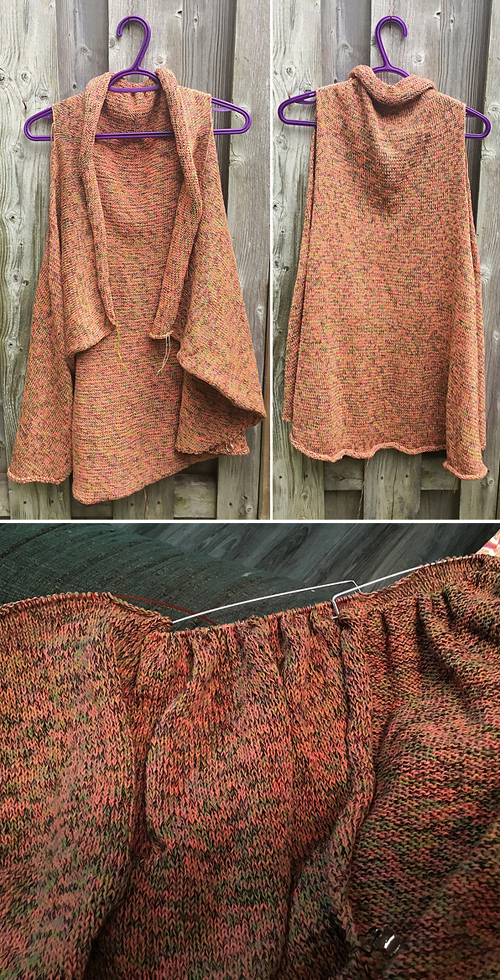
Photos above © MonsoonCalamity
What beautiful knitting vest pattern! I found it on Pinterest...
A simple shape and exquisite yarn make for a stunning shrug you can wear all year long. The body is worked back and forth in one piece to armholes, then fronts and back are worked separately to shoulders and rejoined for the collar.


Angels Among Us Blanket - Knitting Pattern

Angels Among Us Blanket - Knitting Pattern
Photos above © Betty Fay Wallace
What beautiful knitting baby blanket pattern! I found it on Pinterest...
Angels line up to softly cover the precious one. This beautiful blanket will be a very special keepsake to be treasured for generations to come.


Homemade Simple & Warm Slippers - Free Pattern & Tutorial

Homemade Simple & Warm Slippers - Free Pattern & Tutorial
Photos above © Prjaga
What beautiful knitting slippers (fee pattern)! I found it on Pinterest...
There’s nothing better than coming in from the cold and popping your feet in some soft and warm slippers…especially when you’ve made them yourself. Enjoy!


Knit Batwing Swoncho - Free Pattern

Knit Batwing Swoncho - Free Pattern
Photos above © Svetlana Avrakh
What beautiful knitting poncho Free Pattern! I found it on Pinterest...
Toss aside the jacket in favor of this stylish knit swoncho with a stocking stitch pattern, batwing sleeves, and a rich center cable. Pattern features knit, knit 2 together, slip knit and yarn over techniques to keep you engaged. Patons Classic Wool Worsted, Cool Gray makes it versatile over jeans or a skirt, dressed up or dressed down. In any shade that suits your taste, it’s wooly and wonderful and a gorgeous project for yourself or as a gift.

Download Pattern: Batwing Swoncho

Flying Solo Cowl – Free Ombre Ribbed Cowl Knitting Pattern

Flying Solo free ombre ribbed cowl knitting pattern by Espace Tricot

Flying Solo. Photos © Espace Tricot

Flying Solo by Espace Tricot is a free unisex cowl knitting pattern with a clean ribbed texture and beautiful ombre color transitions.

The design uses two strands of fingering-weight yarn held together throughout. By changing only one strand at a time, the colors blend gradually from one shade into the next, creating the distinctive striped gradient effect.

Flying Solo Cowl Pattern Details

  • Designer: Espace Tricot
  • Published: November 2017
  • Craft: Knitting
  • Category: Cowl
  • Pattern availability: Free Ravelry download
  • Style: Unisex
  • Size: One size
  • Yarn: Two strands of fingering-weight yarn held together
  • Suggested yarn: ArtFil Solo
  • Total yardage: Approximately 600 yards (549 m)
  • Needles: US 7 (4.5 mm)
  • Gauge: 27 stitches × 27 rows = 4 inches (10 cm) in 1×1 rib with yarn held double
  • Main stitch: 1×1 ribbing
  • Construction: Bottom up
  • Construction style: One piece
  • Techniques: Worked flat first, then joined to work in the round
  • Languages: English and French

A Simple Ribbed Cowl With an Ombre Effect

Flying Solo has a minimalist shape, but the changing yarn colors give the finished cowl much more visual depth than a basic ribbed accessory.

The entire design is based around classic 1×1 ribbing, which creates a stretchy fabric that sits comfortably around the neck. The color changes then become the main decorative element.

This combination makes Flying Solo a great choice if you prefer simple stitch patterns but still want a finished project with a distinctive look.

How the Ombre Stripes Are Created

The cleverest feature of Flying Solo is the way Espace Tricot creates the color transitions.

Instead of working with a single strand of yarn, you hold two strands together throughout the project.

When it is time to introduce a new color, only one strand is changed. For example, two strands of Color A might be followed by one strand of Color A held together with one strand of Color B. Later, both strands can become Color B.

This gradual replacement of one strand at a time produces soft ombre transitions rather than abrupt color changes.

Three Colors, Many Different Looks

The original Flying Solo sample uses three colors of ArtFil Solo.

Espace Tricot chose a neutral palette for its sample, but the designer specifically notes that the cowl can also look striking in saturated, speckled, bright or jewel-toned hand-dyed colors.

Because the colors overlap as you change one strand at a time, three yarn colors can create several visually distinct blended sections.

Using Fingering Yarn Held Double

Flying Solo uses fingering-weight yarn held double. This means you knit with two strands at the same time as though they were a single working yarn.

Holding yarn double creates a thicker fabric while also making the gradual color blending possible.

It is important to remember that the pattern's listed gauge is measured with both strands held together, not with a single strand of fingering yarn.

The Original ArtFil Solo Yarn

The suggested yarn is ArtFil Solo, a fingering-weight single-ply yarn made from 100% merino wool.

Ravelry lists ArtFil Solo at approximately 366 metres per 100 grams.

Espace Tricot describes it as a soft yarn suitable for accessories and garments worn next to the skin, which makes it a natural choice for a cowl.

Choosing Substitute Yarn

You do not need to use the original ArtFil Solo to enjoy the color concept of Flying Solo.

Look for fingering-weight yarns that work well together when held double and that produce the required ribbed gauge on 4.5 mm needles.

Using yarns with similar fiber content and yardage can make the color changes easier to manage, especially if you want the sections to have a consistent texture.

Use Hand-Dyed Yarn for Dramatic Color Blending

Flying Solo is especially well suited to hand-dyed yarn because the held-double construction naturally mixes neighboring colors.

A tonal yarn can create subtle transitions, while speckled or highly saturated yarns can produce a much bolder effect.

You can also choose three related colors for a smooth gradient or use contrasting shades for more dramatic stripes.

Bottom-Up Construction

The cowl is worked from the bottom up.

However, it does not begin entirely in the round. The lower section has separate front and back flaps, which gives the finished cowl its characteristic longer shape at the front and back.

These two sections are knitted separately first and then joined before the upper portion of the cowl continues in the round.

Front and Back Flaps

The front and back flaps are an important part of the Flying Solo design.

They extend lower than the sides of the cowl, providing additional coverage over the upper chest and back without making the entire cowl equally long.

This shaping is particularly useful when the cowl is worn beneath a coat or jacket because the longer sections can help cover the area near the neckline.

From Flat Knitting to Knitting in the Round

Flying Solo uses both flat knitting and knitting in the round.

You begin by working the two lower flaps separately. Once they are complete, the pieces are joined and the remaining cowl is worked continuously in the round.

This construction creates the shaped lower edge without requiring the entire cowl to be seamed afterward.

One-Piece Construction

Although part of the project is initially worked back and forth, the pattern is classified as a one-piece construction.

After the lower sections are joined, the main body grows upward as one continuous ribbed tube.

This keeps finishing relatively limited while preserving the unusual dipped shape at the bottom.

Needles and Gauge

The pattern uses US 7 (4.5 mm) knitting needles.

The specified gauge is: 27 stitches and 27 rows = 4 inches (10 cm) in 1×1 ribbing with the yarn held double.

Ribbing is naturally elastic, so gauge affects both the finished dimensions and the way the cowl stretches around the neck.

Make your gauge swatch using two strands together just as you will for the actual project.

How Much Yarn Does Flying Solo Need?

The pattern lists approximately 600 yards (549 metres) of fingering-weight yarn in total.

Because the project uses two strands simultaneously and changes colors throughout, check the original pattern carefully for the recommended distribution of the three colors before beginning.

If you substitute yarn, having a little extra can also be useful when planning your own color transitions.

Skills Used in the Flying Solo Cowl

Useful techniques for this project include:

  • Knitting and purling
  • 1×1 ribbing
  • Working flat
  • Knitting in the round
  • Holding two strands of yarn together
  • Changing colors
  • Joining knitted sections
  • Following a bottom-up construction
  • Kitchener stitch / grafting

A Good Project for Learning to Hold Yarn Double

If you have never knitted with two strands held together, Flying Solo provides a practical reason to learn the technique.

The stitch pattern itself remains simple, so your attention can stay on keeping the two yarn strands together and managing the color changes.

Once you become comfortable treating two strands as one, the technique can also be useful for many other knitting projects.

Managing Two Strands of Yarn

When knitting with two strands, it helps to keep the working balls separate so they do not become unnecessarily tangled.

Check periodically that you have caught both strands when forming each stitch, particularly if the yarn colors are very similar.

When changing one color, take a moment to organize the yarn before continuing. This makes the ombre transitions easier to manage and keeps the knitting relaxing.

A Unisex Cowl

Flying Solo is designed as a unisex accessory.

The simple ribbed structure has no strongly gendered decorative elements, and the finished look changes dramatically depending on the colors you choose.

Neutral shades create a classic minimalist cowl, while brighter hand-dyed yarns can produce a much more expressive version.

Why Knit Flying Solo?

Flying Solo combines a very familiar stitch pattern with a clever color technique and practical shaping.

The 1×1 ribbing keeps the knitting straightforward, while holding two strands together and changing one strand at a time creates sophisticated-looking ombre stripes.

The separate front and back flaps also give the cowl more coverage than a simple straight tube, making the construction visually interesting as well as functional.

Get the Free Flying Solo Cowl Pattern

The complete Flying Solo by Espace Tricot is currently available as a free downloadable knitting pattern from the Espace Tricot Ravelry Store.

Get the Free Flying Solo Cowl Knitting Pattern

Pattern availability was checked when this article was updated. Availability on external websites may change over time.

Discover More From the Archive

A fresh mix of knitting patterns and tutorials from the Amazing Knitting archive.

Finding patterns from the archive…