Skip to content

...

Bonjour Hi Cowl – Funnel Neck Shoulder Warmer Knitting Pattern

Bonjour Hi Cowl funnel neck shoulder warmer knitting pattern by Melissa Clulow of Espace Tricot

Bonjour Hi Cowl. Photos © Espace Tricot

Bonjour Hi by Melissa Clulow of Espace Tricot is a stylish knitted cowl and shoulder warmer featuring a cozy funnel neck and a generously shaped yoke that sits comfortably over the shoulders.

The design is worked seamlessly from the top down using a fingering-weight yarn held together with laceweight mohair. The result is a lightweight but wonderfully warm accessory that falls somewhere between a traditional cowl and a small capelet.

Bonjour Hi Cowl Pattern Details

  • Designer: Melissa Clulow / Espace Tricot
  • Published: September 2019
  • Craft: Knitting
  • Category: Cowl / shoulder warmer
  • Pattern status: Currently available as part of the 10 Circular Yokes from Espace Tricot collection
  • Sizes: Four
  • Finished bottom circumference: 45.5 (48, 53, 59) inches / 115.5 (122, 135, 149.5) cm
  • Yarn: Fingering or light-fingering yarn held together with laceweight mohair
  • Total listed yardage: 645–951 yards (590–870 m)
  • Needles: US 7 (4.5 mm) and US 8 (5 mm)
  • Gauge: 19 stitches × 24 rows = 4 inches (10 cm) in blocked stockinette with both yarns held together
  • Construction: Top down, one piece and seamless
  • Worked: In the round
  • Neck: Funnel neck with ribbing
  • Languages: English and French

Part Cowl, Part Shoulder Warmer

Bonjour Hi is more substantial than a standard close-fitting cowl. Its tall funnel neck keeps the neck warm, while the lower portion expands generously across the shoulders.

This creates the cozy effect of a miniature capelet without requiring you to knit an entire poncho or sweater.

It can be worn over a shirt, sweater or coat as an extra layer when you want warmth around both the neck and upper body.

Seamless Top-Down Construction

The cowl begins at the neck and is worked from the top down in the round.

After establishing the funnel neck, increases are distributed through the yoke so that the fabric gradually expands toward the shoulders.

Because the entire accessory is worked as one piece, there are no seams to sew when the knitting is complete.

A Circular-Yoke Inspired Cowl

The shaping is similar in concept to the upper portion of a top-down circular-yoke sweater.

Instead of continuing into a full sweater body and sleeves, the design ends after it has expanded sufficiently to cover the shoulders.

This makes Bonjour Hi an interesting smaller project for knitters who want to experience circular-yoke shaping without committing to an entire garment.

Four Finished Circumferences

The pattern includes four sizes with finished bottom circumferences of:

  • 45.5 inches / 115.5 cm
  • 48 inches / 122 cm
  • 53 inches / 135 cm
  • 59 inches / 149.5 cm

These measurements refer to the wide lower edge that sits around the shoulders rather than the circumference of the neck.

Two Yarns Held Together

One of the defining features of Bonjour Hi is its yarn combination.

A fingering or light-fingering yarn is held together with a strand of laceweight mohair-silk yarn throughout the project.

The two strands behave as a single yarn while knitting, combining the structure and color of the fingering yarn with the soft halo of mohair.

The Original Yarn Combination

The original version was made using:

  • Malabrigo Mechita – fingering-weight merino
  • Isager Silk Mohair – laceweight mohair and silk

More recent Espace Tricot versions also reference combinations such as Espace Tricot Grace with Bon Tricot Bliss Mohair.

The important principle is the same: the two strands are held together throughout.

Choosing Substitute Yarns

You do not need to use the exact original yarns, but try to preserve the relationship between the two strands.

A smooth fingering-weight wool or wool blend paired with a laceweight mohair-silk yarn can produce a fabric similar in character to the original.

This construction also creates many opportunities for color play. Two closely related colors can create subtle depth, while contrasting strands can produce a more visible marled effect.

Gauge

The specified blocked gauge is:

19 stitches × 24 rows = 4 inches (10 cm)
in stockinette with both yarns held together

Because mohair can change significantly after washing and blocking, measuring a blocked swatch is particularly useful for this project.

Needles

The pattern lists:

  • US 8 (5 mm)
  • US 7 (4.5 mm)

Circular needles are used because the cowl is knitted in the round.

As always, use the needle size that allows you to achieve the required gauge rather than relying only on the suggested size.

The Funnel Neck

Bonjour Hi begins with a tall ribbed funnel neck.

Unlike a loose traditional cowl that may fall away from the neck, the funnel shape is intended to provide a closer, warmer layer around the neckline.

The ribbing also gives the neck enough elasticity to remain comfortable while retaining its shape.

Generous Yoke Increases

Below the neck, increases are added across the yoke to create the shoulder-warming shape.

These increases are what transform the project from a simple tube into the distinctive flared silhouette shown in the finished design.

As the circumference grows, the fabric settles naturally over the shoulders.

Adjusting the Length

The designer notes that the length of Bonjour Hi can be customized.

This gives you some flexibility if you prefer more or less coverage over the shoulders.

Remember that adding extra length will increase the amount of yarn required, particularly because two strands are being used together throughout.

Skills Used in Bonjour Hi

Useful techniques for this project include:

  • Knitting and purling
  • Ribbing
  • Knitting in the round
  • Holding two strands of yarn together
  • Working top down
  • Yoke increases
  • Stockinette stitch
  • Changing needle sizes
  • Binding off
  • Blocking mohair-blend fabric

Is Bonjour Hi Beginner Friendly?

The construction is relatively approachable because the accessory is seamless and does not require sleeves, heel turns, complicated seaming or intricate cable work.

A knitter who is already comfortable knitting and purling in the round can use the project to practice top-down shaping and working with two yarns held together.

Mohair can be less forgiving when stitches need to be undone, so newer knitters may want to work carefully and check their progress regularly.

A Lightweight but Warm Layer

Pairing fine wool with mohair allows Bonjour Hi to provide warmth without the heavy feel of a bulky cowl.

The funnel neck protects the neck while the wide lower section adds an extra layer across the shoulders, making the design especially useful during transitional weather or under a winter coat.

A Unisex Cowl Pattern

Bonjour Hi is categorized as a unisex adult accessory.

Yarn and color choices can dramatically change its character, from a soft luxurious accessory in delicate neutrals to a more rustic or understated winter layer.

The Little Sister to Getting Warmer

Espace Tricot describes Bonjour Hi as the little sister to its Getting Warmer cowl.

Both designs explore the idea of extending a cowl over the shoulders, but Bonjour Hi uses finer yarns and a mohair combination for a lighter, softer fabric.

Why Knit the Bonjour Hi Cowl?

Bonjour Hi offers more coverage than an ordinary cowl while remaining far quicker and simpler than knitting a full sweater.

Its combination of a funnel neck, circular-yoke shaping and fingering-plus-mohair fabric creates a polished accessory from relatively straightforward knitting techniques.

With four finished circumferences and an adjustable length, there is also useful flexibility for choosing how generously the finished cowl sits over the shoulders.

Get the Bonjour Hi Knitting Pattern

Bonjour Hi by Melissa Clulow / Espace Tricot is currently listed as part of the 10 Circular Yokes from Espace Tricot pattern collection.

View the Bonjour Hi Knitting Pattern →

This design was previously distributed as a free pattern, but its current availability has changed. Pattern availability and pricing on external websites may change over time.
Abstract Rainbow - Free Knitting Pattern

Abstract Rainbow - Free Knitting Pattern
Photos above © DROPS Design
What beautiful knitting blanket (Free Pattern)! I found it on Pinterest...
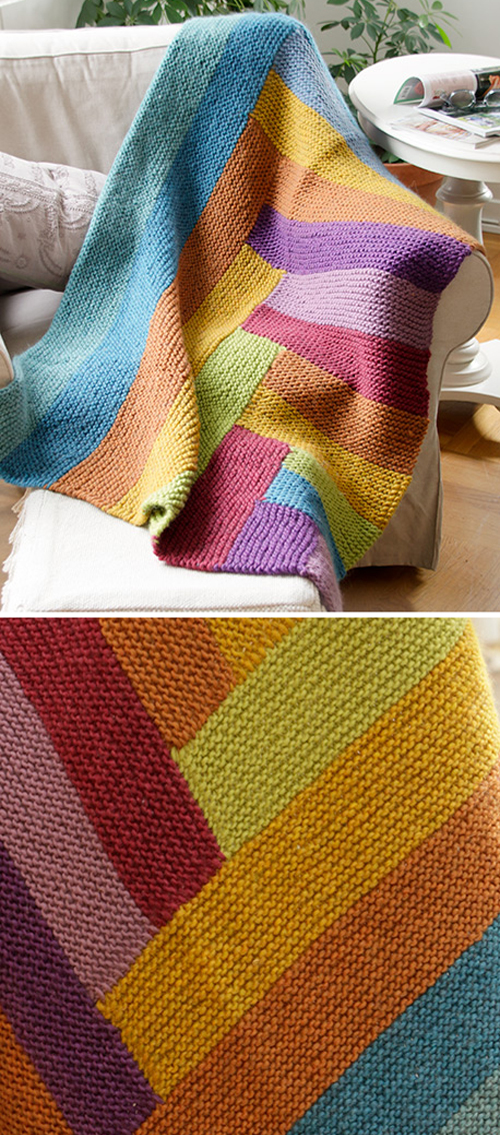
Destress and relax with this cheery Abstract Rainbow knitted blanket. Its bright colors will boost your mood after a tiring day.


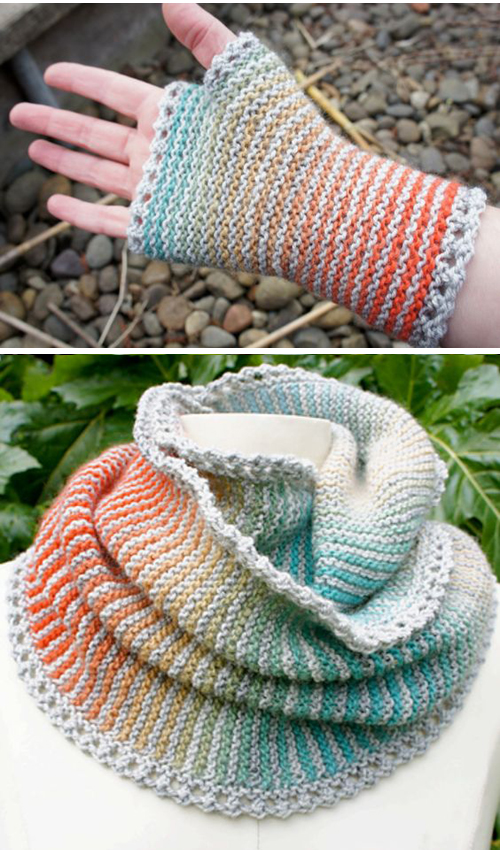
Prisma Mitts - Free Knitting Pattern

Prisma Mitts - Free Knitting Pattern
Photos above © Cloud House Studio
What beautiful knitting mitts (Free Pattern)! I found it on Ravelry...
Knit in the round in squishy garter stitch stripes, these mitts have two edging options. Option A features a simple garter stitch edge and is worked from the cuff up. Option B has an eyelet edging with a picot bind off. This version starts with a provisional cast-on and is worked in two directions.

Download Pattern: Prisma Mitts

Prisma Loop Cowl Infinite Scarf - Free Knitting Pattern

Prisma Loop Cowl Infinite Scarf - Free Knitting Pattern
Photos above © Cloud House Studio
What beautiful knitting cowl infinity scarf (Free Pattern)! I found it on Ravelry...
Garter stitch stripes combined with gradient yarn create a colorful cowl or infinite scarf.

Download Pattern: Prisma Loop

Stroll in the Park Hat - Free Knitting Pattern

Stroll in the Park Hat - Free Knitting Pattern
Photos above © DROPS Design
What beautiful knitting baby hat (free knitting pattern)! I found it on Pinterest.
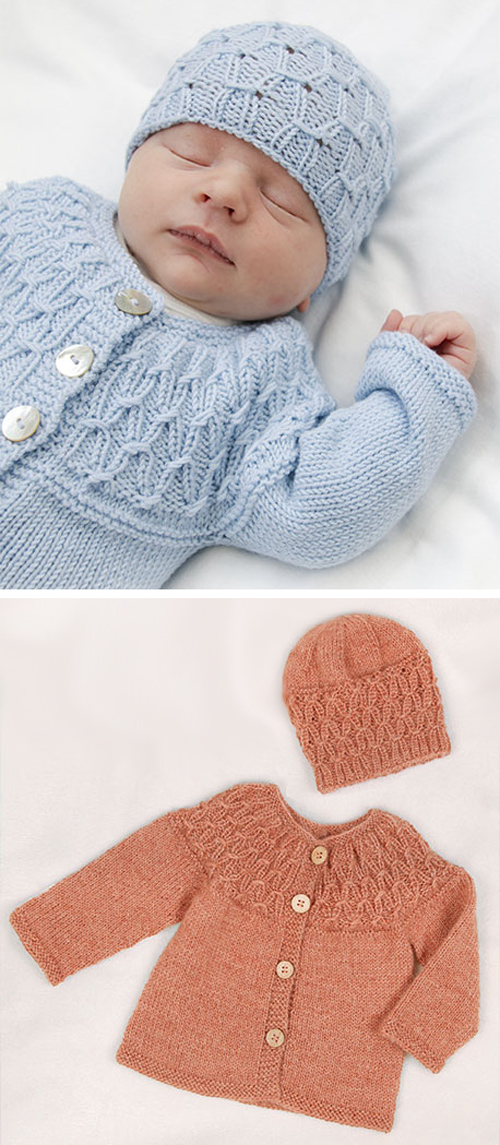
Hat with a textured pattern for a baby that matches the above baby set.


From the Heart Bonnet or Beanie - Free Pattern

From the Heart Bonnet or Beanie - Free Pattern
Photos above © oduvan & © mettetufta
What beautiful knitting baby beanie/toque (free knitting pattern)! I found it on Ravelry.
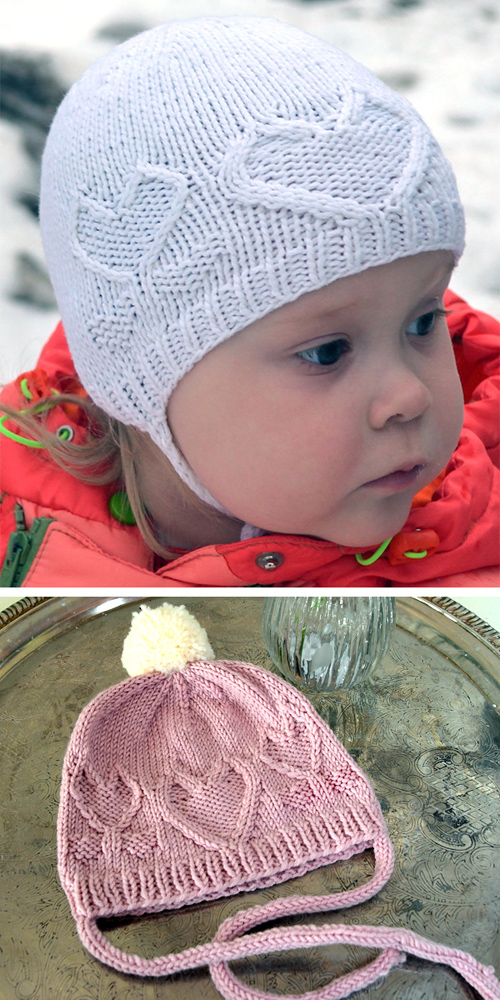
Hat featuring cable hearts and cable heart flowers. Sizes baby (3 different gauges), child sizes, adult sizes. Designed by Ágnes Kutas-Keresztes. Sport weight. Available in English and Hungarian.

Download Pattern: From the Heart

Pixie Love - Free Knitting Pattern

Pixie Love - Free Knitting Pattern
Photos above © pamela w allen
Wonderful pixie hat (free knitting pattern)! I found it on Pinterest...
The beauty is that you can make a pixie hat at the same time it takes to make a rolled-brim beanie! The trick is to elongate the crown decreases. 

Full Post: Pixie Love 

Knit Chevron Stitch - Tutorial

Knit Chevron Stitch - Tutorial
The photo above © bhooked
What beautiful knitting stitch  (knitting tutorial)! I found it on Pinterest...
The knit chevron stitch is a great way to add dimension to your knitting projects. It’s dense, yet stretchy making it great for wearables.

Ode to Doris – Free Newborn Lace Cardigan Knitting Pattern

Ode to Doris free newborn lace cardigan knitting pattern by Kelly van Niekerk

Ode to Doris. Photos © Kelly van Niekerk

Ode to Doris by Kelly van Niekerk is a beautiful free newborn cardigan knitting pattern inspired by feminine 1950s style.

Worked from the top down in DK-weight yarn, this tiny cardigan combines classic raglan shaping with delicate lace fronts, a rounded garter-stitch neckline and softly gathered sleeves.

The free version is designed specifically for a newborn baby of approximately 3–4 kg (7–9 lb), making it a lovely small project for a new baby or handmade gift.

Ode to Doris Pattern Details

  • Designer: Kelly van Niekerk
  • Design studio: PEKAPEKA Design Studio
  • Published: February 2015
  • Craft: Knitting
  • Category: Newborn cardigan
  • Pattern availability: Free download
  • Size: Newborn, approximately 3–4 kg (7–9 lb)
  • Finished chest: Approximately 37.5 cm
  • Yarn weight: DK / 8 ply
  • Suggested yarn: Red Riding Hood Yarns Belle 8ply Superwash
  • Yardage: Approximately 200–215 m (219–235 yd)
  • Needles: 4 mm (US 6)
  • Gauge: 22 stitches × 28 rows = 10 cm, blocked
  • Construction: Top-down raglan
  • Features: Lace fronts, garter neckline and gathered sleeves
  • Language: English

A Vintage-Inspired Newborn Cardigan

Ode to Doris was created as a tribute to Kelly van Niekerk's Dainty Doris hat design and draws inspiration from the practical yet feminine style associated with the 1950s.

The combination of a softly rounded neckline, lace panels and gathered short sleeves gives the cardigan a distinctly vintage feel without requiring an all-over lace pattern.

Beautiful Lace Front Panels

The decorative feature of Ode to Doris is the simple lacework across the cardigan fronts.

The lace adds texture and delicacy while the remainder of the cardigan stays relatively understated. This balance lets the lace remain the focal point of the design.

A solid or lightly tonal yarn is a particularly good choice if you want the lace stitches to remain clearly visible.

Top-Down Raglan Construction

Ode to Doris begins at the neckline and is worked downward using raglan increases.

The rounded garter-stitch neckline is formed first. The cardigan is then worked flat while the raglan shaping develops the fronts, back and sleeves.

Once the required chest size is reached, the sleeve stitches are placed on waste yarn or stitch holders while the body is completed.

Sleeves Worked in the Round

After the body is finished, the held sleeve stitches are returned to the needles and the sleeves are worked in the round.

The sleeves finish with a softly gathered shape near the elbow, adding another vintage-inspired detail to the cardigan.

Because the sleeves are worked in the round, knitters should be comfortable with a method for knitting small circumferences.

Newborn Size

The original free Ode to Doris pattern contains one size only.

It is intended for a newborn baby weighing approximately 3–4 kg (7–9 lb), with an approximate finished chest circumference of 37.5 cm.

This distinction is important because larger versions of the design do exist, but they belong to the designer's separate My Aunt Doris pattern collection.

Need a Larger Size?

If you love the Ode to Doris style but need a cardigan beyond newborn size, Kelly van Niekerk also created the expanded My Aunt Doris designs.

Those extended patterns cover a much broader age range and are separate paid patterns. The free Ode to Doris download itself remains the original newborn-size version.

Yarn Requirements

The cardigan is written for DK / 8-ply yarn. The suggested yarn is Red Riding Hood Yarns Belle 8ply Superwash.

The pattern requires approximately 200–215 metres (219–235 yards).

Because this is such a small newborn garment, it can be a lovely use for a special skein of soft DK yarn.

If you substitute yarn, choose something comfortable against a baby's skin and pay close attention to gauge.

Needles and Gauge

The pattern calls for 4 mm (US 6) knitting needles.

The specified gauge is approximately 22 stitches and 28 rows = 10 cm (4 inches) in both stockinette and the lace pattern after blocking.

Matching gauge matters particularly for a newborn garment, where even a relatively small difference can noticeably affect the finished size.

Skills Used in Ode to Doris

The designer identifies several techniques that are useful for this pattern:

  • Top-down raglan construction
  • Simple lace knitting
  • Long-tail cast on
  • Working small circumferences in the round
  • Basic garment shaping
  • Working sleeves from held stitches

Ode to Doris is therefore a nice project for knitters who already know the basic knit and purl stitches and want to add lace and top-down garment construction to their skills.

Why Knit Ode to Doris?

This pattern packs a surprising amount of detail into a very small cardigan. You get to practice raglan shaping, lace, working in the round and garment construction without committing to the yardage or time required for an adult sweater.

The vintage-inspired styling also makes Ode to Doris particularly lovely for a newborn gift, special photograph or keepsake baby garment.

Get the Free Ode to Doris Knitting Pattern

The complete Ode to Doris by Kelly van Niekerk is currently available as a free downloadable knitting pattern from the designer's Ravelry store.

Get the Free Ode to Doris Knitting Pattern

Pattern availability was checked when this article was updated. Availability on external websites may change over time.

Linnie Cardigan - Free Knitting Pattern

Linnie Cardigan - Free Knitting Pattern
The photo above © Justyna Lorkowska
What beautiful knitting baby cardigan (free knitting pattern)! I found it on Ravelry...
Linnie is a seamless cardigan knit utilizing the top-down raglan shaping method. It is perfect if you wish to destash some sock yarn lying around somewhere in your house :-)

Download Pattern: Linnie 

Knitting Market Bags - Free Patterns

Knitting Market Bags - Free Patterns
A list of market bag
A collection of Market Bag Free Knitting Patterns. Today going to share this breezy list of market bag/grocery bag to get ready for all the farmer's markets and grocery store shopping and fresh produce storage!  These bags are machine wash and dry, in keeping with your eco-friendly, ethical lifestyle. They are quick projects to knit and purl out in a day or two with different styles.


Bramble Baby Blanket – Free Easy Textured Knitting Pattern

Bramble Baby Blanket free knitting pattern by Rachael Tindale

Bramble Baby Blanket designed and photographed © Rachael Tindale.

Bramble Baby Blanket by Rachael Tindale is a beautifully textured baby blanket that turns a simple repeating stitch pattern into soft clusters of raised texture.

The blanket uses Aran-weight yarn and a memorable bramble stitch pattern, making it an appealing project for knitters who want something more interesting than plain garter or stockinette without moving into complicated cables or lace.

Even better, the original Bramble Baby Blanket is still available as a free knitting pattern directly from Rachael Tindale through her Ravelry store.

Bramble Baby Blanket at a Glance

  • Pattern: Bramble Baby Blanket
  • Designer: Rachael Tindale
  • Published: July 2018
  • Category: Baby blanket
  • Yarn weight: Aran
  • Suggested yarn: Caron Simply Soft
  • Yardage: 600–630 yd (549–576 m)
  • Needles: US 5 / 3.75 mm
  • Gauge: 10 stitches = 2 inches
  • Construction: Worked flat
  • Main feature: Bramble / berry stitch texture
  • Pattern language: English
  • Current availability: Free Ravelry download

What Makes the Bramble Baby Blanket Special?

The star of this blanket is its rich all-over texture.

Bramble stitch, sometimes associated with berry-like or cluster textures, creates small raised sections across the knitted fabric. These textured areas catch the light differently from smooth stockinette, giving the blanket depth even when it is worked in just one color.

The result looks decorative without requiring complicated colorwork.

An Easy Four-Row Repeat

One reason this pattern is so attractive for everyday knitting is its short four-row main stitch repeat.

Short repeats are useful in larger projects such as blankets because they become easier to recognize after you have worked them several times.

Instead of constantly checking a long sequence of different rows, you can begin to recognize the rhythm of the textured fabric as it develops.

What Is Bramble Stitch?

Bramble stitch is a dimensional knitting texture built by combining increases and decreases in a repeating arrangement.

These changes in stitch structure produce the characteristic clustered or berry-like surface.

Although the finished fabric can look intricate, the designer describes the stitch as easy to learn.

This makes the blanket an interesting next step for a knitter who is comfortable with basic knitting and purling and wants to explore a more decorative texture.

A Single Color Lets the Texture Shine

Bramble Baby Blanket works beautifully in a solid color because the stitch pattern provides plenty of visual interest on its own.

Without stripes or complex color changes competing for attention, the raised texture becomes the focal point of the blanket.

Light and medium shades are particularly effective when you want the shadows between the textured stitches to remain easy to see.

Original Yarn: Caron Simply Soft

Rachael Tindale designed the blanket using Caron Simply Soft.

The yarn is an easy-care acrylic yarn commonly used for blankets, garments and accessories.

The original pattern uses approximately 600–630 yards (549–576 meters).

Can You Substitute the Yarn?

Yes. You do not necessarily need the exact original yarn to knit the blanket.

Look for an Aran-weight yarn that produces a comfortable fabric and gives good stitch definition.

Because the bramble texture is the main decorative feature, a very fuzzy yarn may hide some of the detail. A smoother yarn generally makes the raised pattern easier to see.

Choose a Baby-Friendly Yarn

When choosing yarn for a baby blanket, think beyond color.

Useful qualities include:

  • Softness against sensitive skin
  • Easy washing and drying
  • Good stitch definition
  • Durability for frequent use
  • A comfortable finished weight

Always check the yarn manufacturer's care instructions before beginning so the finished blanket will be practical for the recipient.

How Much Yarn Will You Need?

The published pattern calls for approximately 600–630 yards of Aran-weight yarn.

The original project uses two balls of Caron Simply Soft.

If you substitute another yarn, check the yardage on the label rather than simply buying the same number of balls. Skein and ball sizes vary considerably between yarn brands.

Needle Size

The pattern specifies US 5 / 3.75 mm knitting needles.

The designer lists straight needles in the original materials, although some knitters prefer using a circular needle for blankets even when the project is worked back and forth.

A circular needle can hold a large number of stitches while allowing the growing weight of the blanket to rest more comfortably in your lap.

Changing the type of needle does not mean you need to knit the blanket in the round; you can still turn the work at the end of each row.

Gauge

The designer gives a gauge of approximately 10 stitches = 2 inches.

Gauge affects the dimensions of the finished blanket and the amount of yarn you use.

If your stitches are much larger than the designer's, your blanket may become wider and require more yarn. If your knitting is considerably tighter, the blanket may turn out smaller and denser.

Make a Bramble Stitch Swatch First

A small practice swatch is particularly worthwhile if you have never knitted bramble stitch before.

Use the swatch to become comfortable with the texture before managing an entire blanket-width row.

It will also show you how clearly your chosen yarn displays the raised pattern and whether you like the resulting fabric.

Worked Flat

Bramble Baby Blanket is worked flat.

You knit back and forth in rows rather than working continuously in the round.

This familiar construction makes the project accessible to knitters who have not yet learned circular knitting techniques.

Is Bramble Baby Blanket Beginner Friendly?

The designer describes the bramble stitch as easy to learn, but the project is more interesting than a blanket made entirely from basic knit stitches.

It is a good choice for an adventurous beginner or confident beginner who wants to practice maintaining a repeating texture across a larger project.

If you are completely new to knitting, practice the stitch pattern on a small swatch before casting on the full blanket.

Skills That Will Help

Useful skills for this project include:

  • Casting on
  • Knit stitches
  • Purl stitches
  • Working increases
  • Working decreases
  • Following a repeating stitch pattern
  • Counting stitches
  • Keeping track of rows
  • Binding off
  • Weaving in yarn ends

Keep Track of the Four-Row Repeat

A short repeat becomes easier with practice, but it is still worth tracking your rows carefully.

Use a row counter, notebook, phone counter or simple four-row checklist.

Marking each completed row can prevent you from accidentally repeating or skipping part of the texture after putting the project down.

Count Your Stitches Regularly

Bramble-style textures involve changes in stitch structure, so an unnoticed mistake can affect the alignment of later repeats.

Count your stitches periodically rather than waiting until the texture visibly shifts.

Catching an extra or missing stitch early can save a great deal of unknitting later.

Learn to Read the Texture

As the blanket grows, spend some time looking at how each completed bramble section appears.

Once you recognize the structure of a correct repeat, the knitted fabric itself becomes an additional way to check your progress.

If one section suddenly looks different from the others, stop and check your work before continuing.

Do Not Pull the Textured Stitches Too Tight

Dimensional stitch patterns need enough room to form properly.

Try to maintain relaxed, consistent tension when working the increases and decreases that create the bramble effect.

Pulling certain stitches much tighter than others can make the texture look uneven.

Check Your Work Every Few Rows

Lay the knitting out occasionally and look across the entire width.

The texture should develop consistently from one section to another.

This simple habit is especially useful on a blanket because a small mistake can otherwise remain unnoticed for many long rows.

Why Textured Baby Blankets Make Great Gifts

A single-color textured blanket has a timeless look that works for many different nurseries and color schemes.

The bramble surface makes the project visually distinctive while the simple rectangular shape keeps construction straightforward.

Choose a washable yarn and the finished blanket can be both decorative and practical.

Try Neutral or Modern Colors

You do not have to use traditional pastel baby shades.

Cream, oatmeal, soft gray, sage, dusty blue and muted rose can all show off textured stitches beautifully.

A stronger color such as teal, mustard or deep blue can create a more contemporary look while preserving the classic texture.

Blocking the Finished Blanket

Gentle blocking can help the blanket settle into an even rectangular shape and improve the appearance of the stitches.

Do not aggressively flatten the fabric because the raised bramble texture is one of the defining features of the design.

Follow the care instructions for your chosen yarn when washing and blocking the finished blanket.

Why This Pattern Is Worth Knitting

Bramble Baby Blanket combines several qualities that make a satisfying knitting project: a short repeat, interesting texture, straightforward flat construction and a manageable amount of yarn.

It can help a newer knitter move beyond plain knitting while remaining repetitive enough for comfortable blanket knitting once the stitch rhythm becomes familiar.

And because the original designer still provides the pattern for free, knitters can continue to access the exact pattern featured here rather than relying on unofficial copies.

Free Bramble Baby Blanket Knitting Pattern

Bramble Baby Blanket by Rachael Tindale is currently available as a free knitting pattern.

The original pattern is provided through Rachael Tindale's Ravelry Store as a free Ravelry download.

This is the exact pattern featured on this Amazing Knitting page: the Aran-weight textured baby blanket published by Rachael Tindale in 2018.

Pattern availability can change over time, so Amazing Knitting checks older pattern links and gives priority to a legitimate free source whenever the exact design remains officially available at no cost.

Get the Free Bramble Baby Blanket Pattern

Visit Rachael Tindale's pattern page for the complete original knitting instructions and free download.

Get the Free Bramble Baby Blanket Pattern →

Bramble Baby Blanket is designed by Rachael Tindale. Amazing Knitting does not reproduce the designer's copyrighted row-by-row instructions. The original pattern is currently offered as a free download by the designer. Availability may change, so please check the linked source for the latest information.

Read Our Pattern Availability Policy →

Discover More From the Archive

A fresh mix of knitting patterns and tutorials from the Amazing Knitting archive.

Finding patterns from the archive…