Skip to content

...

Knitted House Slippers - Easy Tutorial

Knitted House Slippers - Easy Tutorial
Photos above © Вяжем вместе с Леночкой
What beautiful knitting slippers pattern! I found it on Pinterest...
This free video tutorial will teach you how to make these knitted house slippers. Not only do these gorgeous knitted slippers can prevent a cold that is caused by walking barefoot around the house, they also help maintain a fashionable-yet-comfy home look!

Knit Barfi Stitch – Easy Diamond Stitch Tutorial

Knit Barfi Stitch diamond knitting stitch tutorial
Photo © Knit with Suman

The Knit Barfi Stitch is an eye-catching textured knitting stitch with a repeating diamond or rhombus-like appearance. Its geometric surface can add strong visual interest even when worked in a single yarn color.

This stitch can be a beautiful choice for projects such as blankets, scarves, cushion covers, wraps and decorative knitted panels. The original tutorial linked below demonstrates how the stitch is worked.

What Is the Barfi Stitch?

Barfi Stitch is a decorative knitting stitch distinguished by repeating geometric shapes across the fabric. The finished texture creates diamond-like sections that stand out clearly against the surrounding stitches.

Because the design itself provides the visual detail, it can work well in a solid color where the texture remains the main feature of the finished project.

What Does the Barfi Stitch Look Like?

The stitch produces a structured surface made up of repeating diamond or rhombus motifs. These motifs create a decorative all-over pattern rather than a plain stockinette fabric.

Choosing a smooth yarn with good stitch definition can make the geometric texture easier to see. Very fuzzy yarns may soften or hide some of the detail.

Projects You Can Make With Barfi Stitch

A textured stitch like Barfi can be adapted to many rectangular or repeating-pattern knitting projects.

Blankets: Use the repeating texture for baby blankets, throws or larger afghans.

Scarves: A solid-color scarf can showcase the diamond pattern clearly.

Cushion Covers: The structured surface can create an attractive decorative panel.

Wraps and Shawls: Use the motif as an all-over textured fabric or a feature section.

Garment Panels: The stitch can also provide decorative texture in suitable sweater or cardigan designs.

Choosing Yarn for a Textured Knitting Stitch

For a stitch pattern with strong geometric detail, a smooth yarn is usually useful because it allows individual stitches and raised areas to remain visible.

Light and medium shades can make shadows within the texture easier to see, while darker yarns can produce a more subtle effect.

Before using Barfi Stitch in a large project, knit a small swatch with your chosen yarn and needles. This lets you check the appearance, drape and width of the repeating pattern before committing to a larger piece.

Tips Before You Start

Watch the complete stitch repeat before beginning so you can see how the geometric sections develop. Keeping an even tension is particularly helpful with textured stitches because uneven tension can distort the repeated shapes.

If you plan to incorporate the stitch into your own blanket, scarf or garment, first determine the stitch-repeat requirements shown in the original tutorial and make a gauge swatch.

A row counter or simple notes can also be useful when working repeated textured sections, especially on larger projects.

Watch the Knit Barfi Stitch Tutorial

The original video tutorial featured on this page is from Knit with Suman. Use the button below to watch the demonstration and follow the stitch construction directly from the source.

Amazing Knitting provides an editorial introduction to the stitch and directs readers to the original tutorial rather than reproducing the complete row-by-row instructions.

Pistachio Knitting Stitch – Easy Textured Stitch Tutorial

Pistachio Knitting Stitch textured V stitch tutorial

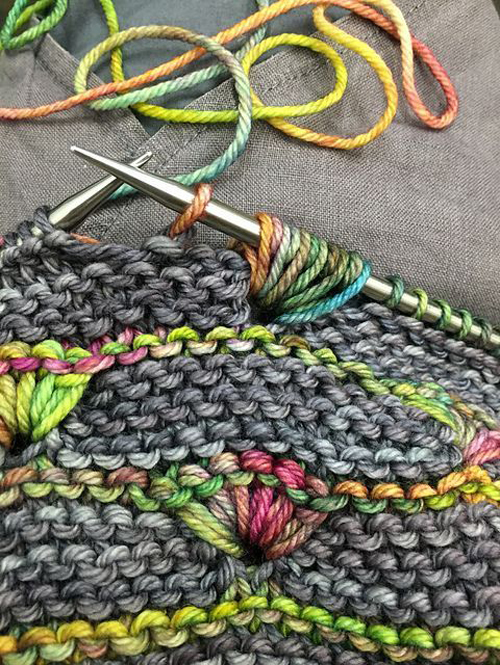
The Pistachio Knitting Stitch is an eye-catching textured stitch pattern that creates rows of distinctive raised V-shaped motifs across the knitted fabric.

The texture is produced by combining basic stockinette-style knitting with elongated loops that are drawn up from lower rows and later worked together with surrounding stitches. The result is decorative without requiring cables or complicated lace charts.

This stitch can be especially attractive for sweaters, cardigans, scarves, blankets, cushion covers and other projects where you want the fabric itself to become the main design feature.

Original stitch tutorial and image credit: Страна Вязания.

Pistachio Knitting Stitch Overview

  • Craft: Knitting
  • Type: Textured knitting stitch
  • Stitch repeat: Multiple of 4
  • Main effect: Raised repeating V-shaped motifs
  • Key technique: Elongated stitches / drawn-up loops
  • Fabric base: Knit and purl rows
  • Useful skills: Knit, purl, slipped stitches, decreases and elongated stitches
  • Best for: Sweaters, cardigans, scarves, blankets and decorative panels
  • Tutorial availability: Free video tutorial

What Does the Pistachio Stitch Look Like?

The most recognizable feature of this stitch is the repeated V-shaped texture. The V motifs sit against a smoother knitted background and are staggered across the fabric, producing a structured pattern that looks more complicated than the basic stitches used to create it.

Because the motifs have both height and depth, the Pistachio Stitch can create a particularly attractive effect with solid-colored yarn. A single color lets the shadows formed by the elongated loops emphasize the texture naturally.

How the Texture Is Created

The Pistachio Stitch begins with simple knit and purl fabric. The distinctive pattern appears when longer loops are drawn up from several rows below the current working row.

Those elongated loops are carried through subsequent rows and then combined with neighboring stitches. This brings the two sides of each motif together and forms the characteristic V shape.

The motifs are offset in the next repeat so the texture develops across the fabric rather than forming only straight vertical columns.

Why Elongated Stitches Matter

The elongated stitches are the key decorative element in this pattern. Instead of forming every stitch through the normal loop immediately below the needle, selected loops are drawn from lower in the knitted fabric.

These longer strands travel across the surface of the work and become part of the raised motif.

It is important not to pull these loops too tightly. If the elongated strands are significantly tighter than the surrounding knitting, the fabric may pucker and the V shapes can lose their clean appearance.

Skills You'll Use

  • Casting on
  • Knit stitches
  • Purl stitches
  • Working stockinette-style rows
  • Drawing up elongated stitches from lower rows
  • Slipping stitches
  • Working decreases
  • Keeping even tension across textured motifs
  • Following a repeating stitch sequence

Is the Pistachio Stitch Beginner Friendly?

A knitter who is comfortable with basic knit and purl stitches can certainly learn the Pistachio Stitch, but it is slightly more involved than a basic ribbing or seed-stitch pattern.

The part that may feel unfamiliar at first is drawing the elongated loops from lower rows and then handling those loops correctly on the following rows. Watching the technique demonstrated visually is especially useful the first time you try it.

For that reason, this is a good next-step textured stitch for a confident beginner or intermediate knitter who wants to learn something beyond basic knit-and-purl combinations.

Choosing Yarn for the Pistachio Stitch

One advantage of this stitch is that the texture can work with many different yarn types. A smooth yarn generally makes the V-shaped motifs easier to see than an extremely fuzzy or novelty yarn.

Cotton can produce crisp stitch definition, while wool gives the fabric a softer and more elastic feel. The best choice depends on the project you plan to make.

Rather than choosing needles from a fixed size recommendation, use a needle appropriate for your yarn and make a small swatch first. The elongated loops need enough freedom to lie neatly without making the fabric excessively loose.

Projects That Work Well With This Stitch

The Pistachio Stitch is versatile enough to be used as either an all-over fabric or as a decorative panel within a simpler project.

  • Cardigans: the vertical texture can make a plain cardigan more distinctive.
  • Sweaters: use the stitch across the body or as a central textured panel.
  • Baby garments: a softer yarn can create a decorative cardigan or sweater fabric.
  • Scarves: the repeated motifs create visual interest without traditional cables.
  • Blankets: the stitch can be repeated across larger panels for an embossed effect.
  • Cushions: solid colors show the three-dimensional texture particularly well.

Tips for a Neater Pistachio Stitch

Keep the elongated loops relaxed. These strands need enough length to travel over the surface of the fabric without pulling the lower rows upward.

Count the repeat carefully. The stitch is built around a four-stitch repeat, so checking your stitch count before beginning a large project can prevent alignment problems later.

Watch the placement of the second motif. The textured V shapes are staggered. Correctly offsetting the next group is what creates the balanced all-over appearance.

Swatch before using it in a garment. Textured stitches can change both the width and vertical gauge of a fabric compared with plain stockinette.

Is the Pistachio Knitting Stitch Tutorial Free?

Yes. A free video demonstration of the Pistachio Knitting Stitch is currently available from Страна Вязания on YouTube.

The video shows how the elongated loops are formed and how the textured motifs develop across the knitted fabric.

Because this is a stitch tutorial rather than a complete sweater or cardigan pattern, you can use the technique as inspiration when planning your own projects or when a pattern specifically calls for a similar textured stitch.

Watch the Free Pistachio Stitch Tutorial →

Prefer an English Step-by-Step Tutorial?

If you would like an English-language explanation of the same type of Pistachio Stitch construction, We Are Knitters also provides a detailed tutorial showing the elongated stitches, decreases and repeating V motifs.

View the English Pistachio Stitch Tutorial →

Why This Stitch Is Worth Learning

The Pistachio Stitch is a useful example of how a few relatively familiar knitting techniques can create fabric with much more visual depth.

It gives knitters a way to add texture without relying on conventional cable crossings, and the repeating V motifs work particularly well when you want a project to look decorative while remaining based primarily on knit and purl fabric.

Once you understand how the elongated loops are formed and incorporated into the following rows, the same concept can also help you understand many other textured and drawn-up-loop knitting stitches.

Tutorial Availability

Amazing Knitting links readers to legitimate designer, publisher and tutorial sources whenever possible. External tutorials, videos and download locations can change after an article is published.

Read Our Pattern Availability Policy →

Amazing Knitting is an independent knitting resource and project-guide site. The linked Pistachio Stitch tutorials and their original instructional content remain the property of their respective creators. This guide explains the stitch and its uses without reproducing a source tutorial's complete row-by-row instructions.

Easy Knit Pattern You Should Learn - Tutorial

Easy Knit Pattern You Should Learn - Tutorial
Photos above © Sk Knitting
What beautiful knitting stitch! I found it on Pinterest...
Learn how to work this easy knit pattern by watching this free video tutorial! Keep reading for tips on how to master the technique of making this tight pattern.

Full Post: Easy Knit Pattern

Leaf Love Baby Sweater – Free Knitting Pattern

Leaf Love Baby Sweater free knitting pattern by Taiga Hilliard

Leaf Love Baby Sweater. Photo © AnaDs

Leaf Love Baby Sweater by Taiga Hilliard is a free baby cardigan knitting pattern featuring a delicate leaf lace panel and an eye-catching offset button front.

Worked from the top down in worsted-weight yarn, this sweet little cardigan is available in four baby sizes from 0–3 months through 12–18 months. The combination of simple cardigan construction and decorative leaf lace gives the finished sweater a classic handmade look.

Leaf Love Baby Sweater Pattern Details

  • Designer: Taiga Hilliard
  • Published in: Cashmere Junkie
  • Craft: Knitting
  • Category: Baby cardigan
  • Pattern availability: Free download
  • Sizes: 0–3, 3–6, 6–12 and 12–18 months
  • Yarn weight: Worsted
  • Yardage: Approximately 200–450 yards (183–411 m)
  • Needles: 4 mm (US 6) and 4.5 mm (US 7)
  • Gauge: 20 stitches = 4 inches (10 cm)
  • Construction: Top down
  • Features: Leaf lace panel, offset button front and buttonholes

A Beautiful Leaf Lace Baby Cardigan

The decorative leaf lace panel is the feature that makes this little cardigan stand out. It adds a delicate botanical detail without covering the entire sweater in lace.

Combined with the offset button front, the lace gives Leaf Love a distinctive asymmetrical appearance while keeping the overall cardigan simple and wearable.

Sizes from 0 to 18 Months

The free pattern includes four baby sizes: 0–3, 3–6, 6–12 and 12–18 months.

Approximate finished chest measurements are 16, 18, 19 and 21 inches, depending on the size selected. Check the original pattern measurements before beginning to choose the best size for your project.

Yarn and Needles

Leaf Love Baby Sweater is designed for worsted-weight yarn. Suggested yarns include Malabrigo Worsted, Cascade 220 Superwash and Anzula For Better or Worsted.

The pattern lists approximately 200–450 yards (183–411 m), depending on size.

You will need 4 mm (US 6) and 4.5 mm (US 7) knitting needles, or the needle sizes required to achieve the specified gauge of 20 stitches per 4 inches.

Top-Down Construction

The cardigan is knitted from the top down. This style of construction is especially useful for baby garments because the sweater develops from the neckline toward the body rather than being assembled entirely from separate front and back pieces.

The offset button placement and lace panel are incorporated into the design as the cardigan grows, creating the distinctive Leaf Love appearance.

Choosing Yarn for a Baby Cardigan

A soft worsted-weight yarn with good stitch definition will help the leaf motif remain visible. A solid or lightly tonal color is particularly effective when you want the lace panel to be the main decorative feature.

For a frequently worn baby garment, you may also want to consider how easy the finished yarn will be to wash and care for.

Why Knit the Leaf Love Baby Sweater?

Leaf Love combines a practical baby cardigan with enough decorative detail to keep the knitting interesting. The leaf panel adds an elegant touch, while the four available sizes make the pattern useful throughout much of a baby's first year and beyond.

It would make a lovely handmade baby-shower gift, newborn cardigan or special sweater for a little one's wardrobe.

Get the Free Leaf Love Baby Sweater Pattern

The complete Leaf Love Baby Sweater by Taiga Hilliard is currently available as a free downloadable knitting pattern.

Get the Free Leaf Love Baby Sweater Pattern

Pattern availability was checked when this article was updated. Availability on external websites may change over time.

Leaf Lace Baby Sweater - Free Pattern

Leaf Lace Baby Sweater - Free Pattern
The photo above © Marlene

Looking for an elegant free baby knitting pattern with a traditional lace finish? The Bernat Leaf & Lace Set combines a beautiful knitted baby jacket with a matching hat and booties, creating a complete handmade outfit for a new baby.

Worked in soft Bernat Softee Baby yarn, the design uses delicate leaf-inspired lace details to give the set a classic heirloom appearance. You can knit the complete matching set or choose just the jacket, hat, or booties for a smaller project.

Bernat Leaf & Lace Baby Set at a Glance

Pattern: Bernat Leaf & Lace Set

Brand: Bernat

Publisher: Yarnspirations

Craft: Knitting

Set Includes: Baby Jacket, Hat/Bonnet and Booties

Skill Level: Intermediate

Yarn: Bernat Softee Baby

Needles: US 4 / 3.5 mm and US 5 / 3.75 mm

Gauge: 24 stitches and 32 rows = 4 inches in stockinette stitch

Sizes: 3 months and 6/12 months

Pattern Availability: Free download

About the Leaf & Lace Baby Set

The Bernat Leaf & Lace Set is more than a single baby sweater pattern. It is a coordinated knitting set consisting of a jacket, matching hat or bonnet, and baby booties.

A repeating foliage-inspired lace motif gives the pieces their distinctive appearance. The combination of soft baby yarn and decorative eyelet work creates a traditional style that works especially well for baby gifts, special occasions, and handmade keepsakes.

Baby Jacket

The jacket is the centerpiece of the set. It combines a classic baby-cardigan shape with decorative lace details and a shaped yoke.

According to the current pattern, the jacket is worked in one piece from the neck edge down. This top-down approach reduces some of the assembly normally associated with garments knitted as several separate pieces.

The finished cardigan can be paired with the matching accessories or worn by itself as a lightweight knitted baby layer.

Matching Hat and Baby Booties

One of the nicest features of this pattern is the ability to create a complete coordinated outfit.

The matching headwear carries the lace theme from the jacket, while the tiny booties repeat the decorative texture on a much smaller scale.

You do not have to make all three pieces at once. The accessories can also work as individual projects when you want something smaller or have limited knitting time.

Available Baby Sizes

The current Yarnspirations pattern provides two size options:

  • 3 months
  • 6/12 months

When knitting baby garments, always use the measurements in the current pattern rather than relying only on the age label. Babies of the same age can vary considerably in size.

Yarn for the Leaf & Lace Set

The pattern is designed for Bernat Softee Baby, a lightweight yarn intended for baby garments and accessories.

The amount of yarn required depends on the size and whether you are knitting only the jacket or the complete jacket, hat, and booties set.

If you substitute another yarn, choose one that can achieve the required gauge and that is appropriate for garments worn by babies.

Needles and Gauge

The pattern lists two knitting needle sizes:

  • US 4 / 3.5 mm
  • US 5 / 3.75 mm

The published gauge is:

24 stitches × 32 rows = 4 inches in stockinette stitch

Matching gauge is especially important when making the jacket because it determines whether the finished garment will correspond to the intended baby size.

Additional Materials

In addition to yarn and knitting needles, the current pattern calls for several finishing supplies, including:

  • Stitch holders
  • Stitch markers
  • US F/5 / 3.75 mm crochet hook
  • 2 buttons
  • Yarn needle
  • Ribbon for the bonnet

Check the official pattern before purchasing materials because requirements can vary by size and by which pieces of the set you plan to make.

The Leaf Lace Design

The decorative stitch pattern is what gives this baby set its name. Yarn overs, decreases, and other lace techniques create repeating shapes reminiscent of small leaves.

This openwork detail adds visual interest without requiring different yarn colors, so a single soft shade can still produce a highly decorative garment.

Soft green emphasizes the botanical theme beautifully, while white, cream, pastel pink, blue, or other baby-friendly shades can give the same pattern a completely different appearance.

Skill Level and Techniques

Yarnspirations currently classifies the Leaf & Lace Set as an Intermediate knitting pattern.

Depending on which pieces you make, you may encounter techniques such as:

  • Knit and purl stitches
  • Yarn overs
  • Knitted increases
  • Knitted decreases
  • Lace pattern repeats
  • Stitch markers and stitch holders
  • Garment shaping
  • Picking up or managing stitches
  • Basic finishing

Reading the entire pattern before casting on is particularly useful when working a lace design because increases and decreases need to remain correctly aligned with the pattern repeat.

A Beautiful Handmade Baby Gift

A coordinated knitted set can make a particularly thoughtful baby-shower, newborn, or keepsake gift.

If you have time, knitting the jacket, hat, and booties together creates an impressive matching outfit. If you prefer a smaller project, the jacket or accessories can also stand alone.

The classic lace texture gives the finished pieces a traditional appearance that can work well as an heirloom-style baby set.

Is the Bernat Leaf & Lace Pattern Free?

Yes. The Bernat Leaf & Lace Set is currently available from Yarnspirations as a 100% free pattern download.

Yarnspirations notes that an item associated with the pattern has been discontinued, but the knitting pattern itself remains available to download for free.

Amazing Knitting does not reproduce the copyrighted pattern instructions. Please use the official Yarnspirations page for the complete pattern.

Get the Free Leaf & Lace Baby Set Pattern

Visit Yarnspirations to download the current pattern and view the latest sizing, materials, instructions, and pattern updates.

Get the Free Leaf & Lace Set Pattern →

Pattern credit: Leaf & Lace Set is a Bernat knitting pattern published by Yarnspirations. Pattern availability, sizing, materials, and technical information are controlled by the publisher and may change over time.

More Baby Knitting Inspiration

Explore more baby cardigan knitting patterns, baby booties knitting patterns, and baby hat knitting patterns from the Amazing Knitting archive.

Before You Start

Visit the current Yarnspirations pattern page before buying yarn or beginning the project. Confirm the size you want to make, yarn quantity, needle sizes, gauge, buttons, ribbon, and any revised instructions before casting on.

Tulips, A Colorful Cardigan for Baby - Knitting Pattern

Tulips, A Colorful Cardigan for Baby - Knitting Pattern
The photo above © Nicole
What beautiful knitting baby cardigan! I found it on Ravelry...
Super Easy and a great way to use up small amounts of pretty yarn.
Knitting with worsted is like a little vacation after a fingering weight sweater with a bunch of seed stitch!

Full Post: Tulips Cardigan

Aurora Baby Romper – Free Lace Baby Romper Knitting Pattern

Aurora Baby Romper free lace baby romper knitting pattern

Aurora Baby Romper. Photos © Gynka Knitwear

Aurora Baby Girl Romper Suit by Mici Harangozó of Gynka Knitwear is a beautiful free baby romper knitting pattern featuring an all-over lace design, short sleeves and two practical little pockets.

Designed for approximately 9–12 months, the romper is knitted in cotton yarn and worked from the bottom up. The delicate openwork makes blocking an especially important finishing step for this project.

Aurora Baby Romper Pattern Details

  • Designer: Mici Harangozó / Gynka Knitwear
  • Craft: Knitting
  • Category: Baby romper / onesie
  • Pattern availability: Free pattern
  • Size: 9–12 months
  • Yarn: DROPS Muskat
  • Yarn weight: DK
  • Yarn quantity: Just under 5 skeins of the original yarn
  • Needles: US 4 and US 6
  • Gauge: 23 stitches × 35 rows = 4 inches (10 cm) in garter stitch
  • Construction: Bottom up
  • Features: Lace, short sleeves and front pockets

A Beautiful Lace Baby Romper

Aurora stands out from many basic knitted baby rompers because the lace is not simply a small decorative border.

The openwork motif extends across much of the garment, giving the finished romper a light and delicate appearance.

At the same time, garter-stitch details provide visual contrast around areas such as the upper edge and pockets.

Bottom-Up Construction

The Aurora Baby Romper is knitted from the bottom up.

This means the project begins around the lower portion of the romper and gradually develops upward into the body.

Because this is a fitted baby garment rather than a blanket or scarf, keeping track of your gauge and measurements is particularly important.

The Lace Pattern

The defining feature of Aurora is its repeating lace motif.

Yarn overs and decreases create the open areas of the fabric and the flowing vertical appearance visible in the finished romper.

If you are new to lace knitting, it is useful to check your stitch count regularly. A missed yarn over or decrease can affect the alignment of later repeats.

Why Blocking Is Important

Blocking is particularly useful for this design because lace often looks compressed while it is still on the needles.

After the finished garment is washed and carefully shaped, the openwork can relax and the individual motifs become much easier to see.

This is one project where the difference between the fabric before and after blocking can be quite noticeable.

DROPS Muskat Cotton Yarn

The original Aurora romper uses DROPS Muskat, a DK-weight cotton yarn.

Cotton is a natural choice for this type of baby garment because it can create a breathable fabric while also giving lace stitches good definition.

For the published 9–12 month size, the designer states that the project requires five skeins of DROPS Muskat, with a little yarn left over.

Choosing a Substitute Yarn

If you substitute another yarn, don't choose by fiber or yarn-weight label alone.

The replacement yarn needs to produce the required gauge and a fabric suitable for a baby's garment.

A smooth yarn with good stitch definition can be especially helpful here because it allows the lace motif to remain clearly visible.

Needles and Gauge

The published pattern information lists US 4 and US 6 knitting needles.

The listed gauge is 23 stitches and 35 rows = 4 inches (10 cm) in garter stitch.

Always check your gauge before beginning the main garment. Even a small difference can noticeably change the dimensions of a baby romper.

Two Little Front Pockets

One of Aurora's most recognizable design details is the pair of garter-stitch pockets on the front.

Their dense horizontal texture contrasts nicely with the more delicate lace fabric around them.

They also give the finished romper the look of a tiny knitted overall, making the design especially distinctive.

Short Sleeves for a Lighter Baby Outfit

Aurora has short sleeves rather than the long sleeves found on many knitted baby onesies.

Combined with cotton yarn and open lace, this gives the romper a lighter appearance that can work particularly well as a special handmade outfit.

Skills Useful for This Pattern

Before starting Aurora, it helps to be comfortable with:

  • Knitting and purling
  • Garter stitch
  • Yarn overs
  • Basic increases and decreases
  • Following a repeating lace pattern
  • Keeping an accurate stitch count
  • Garment shaping
  • Finishing and blocking lace

Is Aurora a Beginner Baby Knitting Pattern?

Aurora is more suitable for a knitter who already understands the basic knit and purl stitches and is ready to work with lace and garment shaping.

The repeating openwork requires more attention than plain stockinette or garter stitch, particularly because an incorrect stitch count can disturb the following lace repeats.

Working slowly and checking the pattern regularly can make the project much easier to manage.

Tips for Knitting Aurora

Make a gauge swatch before casting on, especially if you are replacing the original DROPS Muskat.

While working the lace, check your stitch count at regular intervals instead of waiting until the end of a large section.

Finally, allow time for proper blocking. The finished lace is one of the main attractions of this romper, and blocking helps reveal the pattern you have spent so much time knitting.

A Special Handmade Baby Gift

A knitted romper requires more time than a small hat or pair of booties, but the finished result can make a memorable handmade baby gift.

Aurora is particularly appealing if you want something different from the usual baby cardigan. The combination of lace, short sleeves, pockets and an all-in-one silhouette gives it a very recognizable style.

Get the Free Aurora Baby Romper Pattern

The complete Aurora Baby Girl Romper Suit by Mici Harangozó / Gynka Knitwear is available from the designer's pattern page. Visit the original source for the complete knitting instructions and any current pattern updates.

Get the Free Aurora Baby Romper Knitting Pattern

Pattern availability was checked when this article was updated. Availability, sizing and pattern details on external websites may change over time.

Wee Leafy Baby Set - Free Pattern

Wee Leafy Baby Set - Free Pattern
Photos above © flintknits & © juliebie

What beautiful knitting baby set (free pattern)! I found it on Ravelry...
A super-simple, super-quick baby gift. Written for newborns, but easily adapted to larger sizes.

Download Pattern: Chestnut Street Scarf 

Cabled Fingerless Mittens - Free Pattern

Cabled Fingerless Mittens - Free Pattern
Photos above © FitzBirch Crafts
What beautiful knitting fingerless mittens (free pattern)! I found it on Pinterest...
Beautifully detailed cabled fingerless mittens to knit from sock wool. Free pattern.

Lehigh Shawl - Knitting Pattern

Lehigh Shawl - Knitting Pattern
The photo above © urbanfarmwife
What beautiful knitting shawl! I found it on Ravelry.
The shawl is worked from the triangle point, with increases worked each side on every row up to the top edge.

Full Post: Lehigh Shawl 

Knit Twine Scrubbing Sponge - Tutorial

Knit Twine Scrubbing Sponge - Tutorial
The photo above © Emily Johnson
What beautiful knitting tutorial! I found it on Pinterest...

Discover More From the Archive

A fresh mix of knitting patterns and tutorials from the Amazing Knitting archive.

Finding patterns from the archive…