Skip to content

...

Minilopapeysa Keyring – Free Mini Icelandic Sweater Knitting Pattern

Minilopapeysa Keyring free miniature Icelandic sweater knitting pattern by RodPrjónar

Minilopapeysa Keyring by RodPrjónar is a delightful miniature version of a traditional Icelandic lopapeysa sweater, complete with a stranded colorwork yoke and authentic sweater-style construction.

Although tiny enough to use as a keyring or ornament, the project is built much like a full-size pullover: it is worked in the round from the bottom up, the sleeves and body are joined for a circular yoke, and the underarms are finished with grafting.

The complete pattern is currently available as a free download from the designer's Ravelry store in both English and Spanish.

Design and original pattern © RodPrjónar.

Minilopapeysa Keyring Pattern Overview

  • Designer: RodPrjónar
  • Pattern: Minilopapeysa Keyring
  • Craft: Knitting
  • Category: Miniature accessory / keyring / ornament
  • First published: September 2011
  • Size: One size
  • Suggested yarn: Ístex Léttlopi
  • Yarn weight: Aran
  • Needles: US 2½ / 3.0 mm
  • Construction: Bottom up and worked in the round
  • Yoke: Circular stranded-colorwork yoke
  • Finishing: Grafted underarms
  • Main techniques: Knitting in the round, stranded colorwork, miniature garment construction and Kitchener grafting
  • Languages: English and Spanish
  • Pattern availability: Free Ravelry download

A Tiny Version of an Icelandic Lopapeysa

A lopapeysa is the distinctive Icelandic-style sweater known for its circular colorwork yoke.

The Minilopapeysa Keyring translates that familiar construction into a miniature format. Instead of simply knitting a flat sweater-shaped ornament, the design recreates many of the same techniques used in a wearable pullover.

That makes this tiny project both decorative and surprisingly educational.

Authentic Sweater Construction in Miniature

One of the most interesting features of this pattern is its construction.

The body is worked from the bottom up in the round, and the sleeves are also created before being joined with the body.

Once the pieces are brought together, the upper section forms a circular yoke, just like a traditional Icelandic sweater.

Stranded Colorwork Yoke

The decorative yoke is worked using stranded colorwork.

This means two or more yarn colors are carried across the same round, with the unused strand floating along the back of the work until it is needed again.

Because the circumference is so small, the keyring can be a useful way to practice stranded knitting without committing to a full-size colorwork sweater.

Why a Miniature Sweater Is a Great Practice Project

This project gives knitters a chance to explore sweater construction on a much smaller scale.

You can practice:

  • Working a body in the round
  • Knitting tiny sleeves
  • Joining sleeves and body
  • Working a circular yoke
  • Managing stranded colorwork
  • Grafting underarm stitches
  • Finishing a seamless-style garment

The same concepts appear in many full-size Icelandic and Fair Isle sweaters, so the skills transfer naturally to larger projects.

Yarn for the Minilopapeysa

The original pattern recommends Ístex Léttlopi, an Icelandic wool yarn classified as Aran weight.

Using Icelandic wool is especially appropriate for this design because lopapeysa sweaters are traditionally associated with Icelandic wool.

However, since this is a miniature decorative project, small leftover amounts of compatible Aran-weight yarn can also make it a practical stash-busting project.

Choosing Colors

The stranded yoke gives you plenty of room to experiment with color.

Traditional combinations often use a neutral body color with contrasting shades around the yoke, but the miniature scale also makes this a fun project for brighter or more playful combinations.

Try to choose colors with enough contrast that the yoke motif remains clearly visible.

Needles

The pattern lists US 2½ / 3.0 mm needles.

The small needle size helps create a firm miniature fabric even though the suggested yarn is Aran weight.

Because the project circumference is very small, use whichever small-circumference method you are most comfortable with, such as double-pointed needles or another method compatible with the pattern.

Working With Small Circumferences

The biggest practical challenge may not be the sweater design itself, but the tiny number of stitches around each section.

Keep the first few rounds relaxed enough that the stitches move freely on the needles.

If using double-pointed needles, distribute the stitches evenly and avoid pulling too tightly at the transitions between needles.

Stranded Colorwork Tips

Keep the floats relaxed. Tight floats can cause the miniature yoke to pucker.

Spread the stitches along the needle before carrying the unused color. This helps preserve enough length in the float.

Check color contrast before starting. The motifs are small, so low-contrast shades can disappear visually.

Avoid over-tightening. Small-circumference colorwork is already compact, so firm tension can quickly make the fabric too rigid.

Grafted Underarms

The underarm stitches are finished using grafting, often associated with Kitchener stitch.

This allows the tiny sweater to retain a smooth, nearly seamless appearance rather than closing the underarms with bulky seams.

It is another authentic garment-making technique packed into a very small project.

Skills You'll Use

  • Casting on
  • Knitting in the round
  • Working small circumferences
  • Stranded colorwork
  • Following a colorwork motif
  • Bottom-up sweater construction
  • Joining sleeves and body
  • Circular-yoke construction
  • Decreasing for the yoke
  • Kitchener stitch / grafting
  • Finishing and weaving in ends

Is This Beginner Friendly?

Minilopapeysa Keyring is a small project, but it introduces several real sweater-making techniques.

A knitter who already knows how to knit in the round may find it an excellent first introduction to stranded colorwork and circular-yoke construction.

A complete beginner may find the small circumference and grafting slightly fiddly, but the limited scale makes mistakes much faster to correct than they would be on a full-size sweater.

Ideas for Using the Finished Mini Sweater

  • Keyring: use it as the designer intended.
  • Christmas ornament: add a hanging loop for a handmade tree decoration.
  • Gift topper: attach it to a wrapped knitting-themed gift.
  • Bag charm: use it as a decorative accessory.
  • Miniature display: include several sweaters in a seasonal garland.
  • Knitter's gift: make one for a friend who loves Icelandic sweaters.

A Good Scrap-Yarn Project

Because the sweater is miniature, only small amounts of each yarn color are needed.

That makes it a practical way to use leftover Aran-weight yarn from larger projects, especially small amounts of contrasting colors that would otherwise be difficult to use.

Keep the yarn weights reasonably similar so the colorwork remains balanced.

English and Spanish Pattern Versions

The designer provides the Minilopapeysa Keyring pattern in both English and Spanish.

This makes the design accessible to a wider range of knitters and is a useful feature for a small educational project like this.

Is Minilopapeysa Keyring a Free Knitting Pattern?

Yes. Minilopapeysa Keyring by RodPrjónar is currently available as a free knitting pattern.

The exact pattern is offered as a free download through RodPrjónar's Ravelry store.

Because this is the designer's own publication source, Amazing Knitting links directly to that pattern page rather than to copied PDFs or unofficial downloads.

Get the Free Minilopapeysa Keyring Pattern →

Why This Mini Sweater Is Worth Knitting

Minilopapeysa Keyring is much more than a simple knitted novelty.

Its construction mirrors many of the techniques used in a real Icelandic-style pullover, so it provides useful practice in circular knitting, stranded colorwork, yoke shaping and grafting.

At the same time, its miniature scale makes it quick, inexpensive and ideal for using leftover yarn.

The finished piece also works in several ways—as a keyring, ornament, gift decoration or tiny celebration of traditional sweater knitting.

Pattern Availability

Amazing Knitting links readers to legitimate designer or publisher sources whenever possible. Pattern prices, download locations and availability can change after an article is published.

Read Our Pattern Availability Policy →

Amazing Knitting is an independent pattern discovery and project-guide site. The Minilopapeysa Keyring design and knitting pattern remain the intellectual property of RodPrjónar. This guide does not reproduce the designer's complete row-by-row instructions or colorwork pattern.

Reversible Cabled Brioche Stitch Scarf – Free Knitting Pattern

Reversible Cabled Brioche Stitch Scarf free knitting pattern by Saralyn Harvey

Reversible Cabled Brioche Stitch Scarf by Saralyn Harvey is a wonderfully plush scarf that combines the deep softness of brioche knitting with bold cable crossings.

Unlike many cable scarves that have a clearly defined right and wrong side, this design looks attractive from both sides, making it especially practical for an accessory that naturally twists and turns while being worn.

The complete pattern is still available free from the designer's original FireFlower Knits page.

Design and original pattern © Saralyn Harvey / FireFlower Knits.

Reversible Cabled Brioche Scarf Pattern Overview

  • Designer: Saralyn Harvey
  • Original source: FireFlower Knits
  • Pattern: Reversible Cabled Brioche Stitch Scarf
  • Craft: Knitting
  • Category: Scarf
  • Published: October 2007
  • Finished size: Approximately 5 × 56 in
  • Yarn weight: Worsted
  • Suggested yarn: Knit Picks Andean Silk
  • Yardage: Approximately 350–400 yd / 320–366 m
  • Needles: US 7 / 4.5 mm
  • Additional tool: Cable needle
  • Main techniques: Brioche stitch, yarn overs, slipped stitches and brioche cables
  • Skill level: Intermediate
  • Construction: Worked flat
  • Fabric: Thick, soft and reversible
  • Pattern availability: Free from the designer

Why This Scarf Is Truly Reversible

The special appeal of this scarf is that there is no unattractive back side.

Traditional cables usually look very different on the reverse of the fabric, but this design combines cabling with brioche structure so the scarf remains visually interesting from both directions.

That is especially useful for scarves because the fabric naturally flips, folds and twists while being worn.

What Is Brioche Stitch?

Brioche knitting creates a thick, elastic fabric by combining slipped stitches, yarn overs and worked-together stitches.

The result has more depth and loft than ordinary ribbing or stockinette, which is why brioche scarves often feel especially soft and warm.

In this pattern, the brioche structure becomes the foundation for the cable design.

Brioche Cables

The defining technical feature of the scarf is the brioche cable.

Instead of crossing ordinary knit stitches, groups that include brioche stitches and yarn overs are moved together using a cable needle.

This produces broad raised twists while preserving the soft, dimensional quality of the brioche fabric.

How Often Are the Cables Worked?

One helpful feature is that you do not cable on every row.

The designer notes that the cable crossings are separated by long sections of ordinary brioche knitting.

This gives the project a comfortable rhythm: once the brioche sequence becomes familiar, most rows can be worked relatively smoothly until the next cable crossing.

Original Finished Size

The original scarf measures approximately:

5 inches wide × 56 inches long.

The designer also notes that additional yarn can be used to make a longer version.

For example, the original source mentions that five skeins would allow a scarf around 70 inches long.

Can You Make the Scarf Wider?

Yes. The designer provides guidance for adding extra cable repeats.

Each additional cable section requires extra cast-on stitches and increases the finished width.

This allows you to adapt the project from a relatively narrow scarf to a wider wrap-style accessory if desired.

Yarn for the Reversible Cabled Brioche Scarf

The original pattern uses Knit Picks Andean Silk, a worsted-weight blend of alpaca, silk and merino.

The published requirement is approximately:

350–400 yards / 320–366 meters.

A soft yarn is particularly suitable for this project because brioche creates a thick fabric that sits directly against the neck.

Choosing a Yarn Substitute

If the original yarn is unavailable, choose a smooth worsted-weight yarn with good stitch definition.

Useful characteristics include:

  • Softness
  • Elasticity
  • Good cable definition
  • Enough loft for brioche texture
  • Comfort against the skin

Very fuzzy yarn can soften the appearance of the cables, while extremely stiff yarn may reduce the natural squishiness of the brioche fabric.

Needles

The original pattern recommends US 7 / 4.5 mm knitting needles.

Because brioche tension varies from knitter to knitter, use the listed size as a starting point rather than an absolute rule.

Your finished fabric should feel soft and full rather than excessively loose or stiff.

Why a Cable Needle Is Recommended

The designer specifically recommends using a cable needle for the brioche cable crossings.

Brioche stitches can be more difficult to control than standard cable stitches because yarn overs are part of the stitch structure.

Using a cable needle helps prevent those loops from slipping or becoming misaligned during the crossing.

A Row Counter Is Useful

Saralyn Harvey also recommends using a row counter.

The majority of the scarf is repetitive brioche, so it can be easy to lose track of when the next cable row should occur.

A row counter allows you to enjoy the repetitive sections without constantly recounting the fabric.

Skills You'll Use

  • Casting on
  • Knit stitches
  • Slipping stitches
  • Yarn overs
  • Working brioche stitch
  • Working stitches together
  • Using a cable needle
  • Crossing brioche cables
  • Tracking row repeats
  • Binding off in pattern
  • Weaving in ends

Is This a Beginner Pattern?

The designer classifies the scarf as an intermediate knitting project.

The basic cable concept is not unusually difficult, but brioche stitch behaves differently from ordinary knit-and-purl fabric.

It is therefore best suited to knitters who already understand basic brioche or are comfortable carefully learning a new stitch structure.

If this is your first brioche project, practice the basic brioche sequence on a small swatch before beginning the full scarf.

Tips for Brioche Knitting

Do not rush dropped stitches. Brioche fabric contains yarn overs and slipped stitches, so a dropped stitch can travel through the fabric differently from ordinary stockinette.

Use lifelines if needed. Running a lifeline through a stable row can make it easier to recover if you need to unravel several rows.

Watch your yarn-over placement. Missing one yarn over can change the stitch count and disrupt the next row.

Count regularly. Brioche mistakes are often easier to fix immediately than after several cable repeats.

Tips for Neater Brioche Cables

Keep the cable crossing relaxed. Tightening too much can make the crossing narrower than the surrounding fabric.

Make sure yarn overs stay with the correct stitches. This is especially important while moving stitches onto the cable needle.

Use a cable needle with enough grip. A very slippery cable needle can make brioche loops harder to control.

Check both sides. Because the scarf is reversible, inspect the front and back after each cable row to catch problems early.

Blocking the Finished Scarf

Brioche fabric can stretch considerably during blocking.

Block gently and avoid pulling the scarf aggressively unless you intentionally want to increase the length or width.

Always follow the care instructions for your chosen yarn.

Natural-fiber blends may relax noticeably after washing, so taking measurements before and during blocking can be useful.

Why This Scarf Is So Warm

Brioche creates a deeper fabric than standard stockinette because the stitch structure contains extra yarn and trapped air.

That added thickness helps make the finished scarf soft, cushioned and warm.

Using wool, alpaca or another insulating fiber can enhance that effect further.

Is the Reversible Cabled Brioche Stitch Scarf Free?

Yes. Reversible Cabled Brioche Stitch Scarf by Saralyn Harvey is currently available free from the designer's original FireFlower Knits website.

Amazing Knitting links directly to the original designer source rather than reproducing the complete row-by-row pattern.

View the Free Reversible Cabled Brioche Scarf Pattern →

Why This Scarf Is Worth Knitting

This design combines three qualities that are unusually useful in one scarf: reversibility, warmth and dramatic texture.

Brioche makes the fabric soft and thick, while the cable crossings add enough visual interest to turn a simple rectangular scarf into a distinctive accessory.

Because the scarf looks attractive from both sides, you also do not have to worry about arranging it so that one particular surface always faces outward.

For knitters ready to move beyond basic brioche, it is an excellent project for learning how cables can be incorporated into brioche fabric.

Pattern Availability

Amazing Knitting links readers to legitimate designer or publisher sources whenever possible. Pattern prices, download locations and availability can change after an article is published.

Read Our Pattern Availability Policy →

Amazing Knitting is an independent pattern discovery and project-guide site. The Reversible Cabled Brioche Stitch Scarf design and complete knitting instructions remain the intellectual property of Saralyn Harvey / FireFlower Knits. This guide does not reproduce the designer's complete row-by-row pattern instructions.

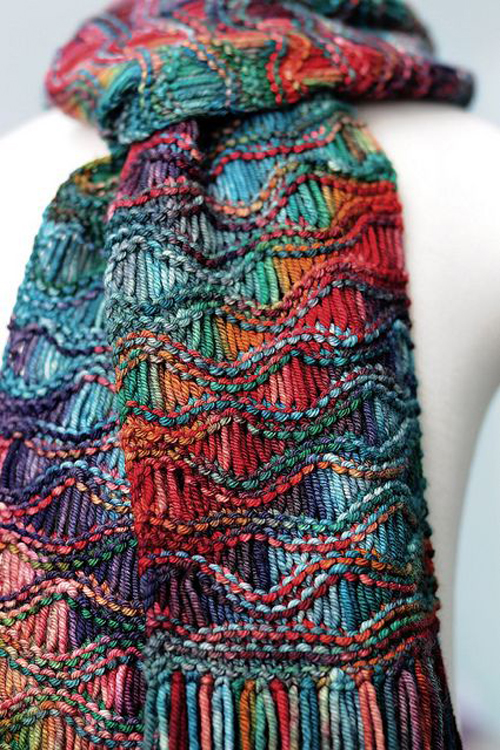
Easy Drop Stitch Scarf - Free Pattern

Easy Drop Stitch Scarf - Free Pattern
The photo above © sbavier
What beautiful knitting scarf (Easy pattern)! I found it on Pinterest.
This scarf uses a horizontal drop stitch or seafoam pattern. It is fun and easy to make, and looks beautiful in a variegated yarn. It is well suited to yarns that are a little slippery or silky. 

Full Post: Drop Stitch Scarf 

Boo the Bat Knitting Pattern

Boo the Bat knitting pattern by Anna Hrachovec
Photo © carissabrowning

Boo the Bat by Anna Hrachovec is a playful knitted softie featuring wraparound wings and tiny feet designed to hang from a finger, branch or other perch.

This compact bat is a quick character-knitting project worked mainly with worsted-weight yarn. Its distinctive construction combines knitting in the round, picked-up stitches and simple finishing techniques to create Boo's body, wings and hanging feet.

Boo the Bat Pattern at a Glance

Designer: Anna Hrachovec

Publisher: Mochimochi Land

Pattern: Boo the Bat

Craft: Knitting

Category: Softie / Animal

Yarn Weight: Worsted

Suggested Yarn: Cascade 220

Needles: US 6 (4 mm)

Finished Height: Approximately 4 in

Wingspan: Approximately 8 in

Techniques: Knitting in the round, picking up stitches, mattress stitch

Language: English

Current Availability: Paid PDF pattern

About Boo the Bat

Boo is designed as a small three-dimensional knitted bat with wings that wrap around the body. The feet are shaped so the finished toy can hang from a finger or a small branch, giving it extra personality as a Halloween decoration or knitted character.

Despite its small size, the project introduces several useful toy- knitting techniques. The original pattern includes sections worked in the round on double-pointed needles as well as stitches picked up for additional parts of the bat.

Yarn and Needle Notes

The original pattern recommends worsted-weight yarn, with Cascade 220 listed as the suggested yarn.

The recommended needle size is US 6 (4 mm). Because this is a stuffed softie, a firm knitted fabric is useful so that the stuffing remains neatly contained.

Finished Size

Boo measures approximately 4 inches tall with an approximate 8-inch wingspan.

The compact size makes this a relatively small knitting project and a fun option for seasonal decorations, gifts or anyone who enjoys knitted creatures.

Techniques Used

The designer lists techniques including knitting in the round on double-pointed needles, picking up stitches and mattress stitch.

These techniques make Boo a more interesting project than a simple flat knitted toy while still keeping the finished piece small and manageable.

Get the Boo the Bat Pattern

Boo the Bat was designed by Anna Hrachovec of Mochimochi Land.

The pattern was previously described as free on older pages around the web, but the current authorized Ravelry listing is a paid PDF. Amazing Knitting does not reproduce the designer's complete instructions.

Use the button below to visit the original listing for the current price and pattern availability.

Pattern design © Anna Hrachovec / Mochimochi Land. Photo © carissabrowning. Pattern pricing and availability are controlled by the designer and may change over time.

Felted Bell Ornaments - Free Pattern

Felted Bell Ornaments - Free Pattern
The photo above © marico
What beautiful knitting felted bell pattern! I found it on Pinterest.
The pattern can be made with sport weight for a pin or worsted for an ornament. Scrap quantities are sufficient. No needle size is given.

Full Post: Felted Bell 

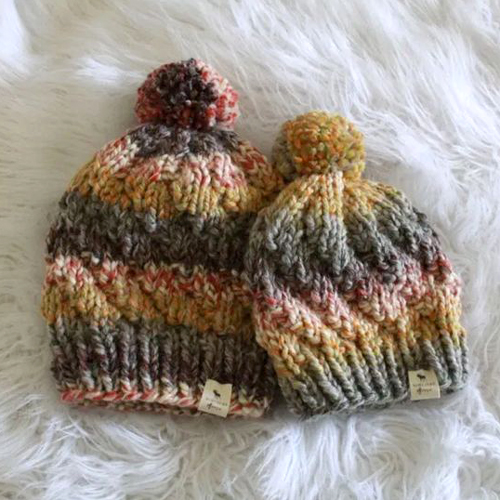
The Spiral Beanie - Free Knitting Pattern

The Spiral Beanie - Free Knitting Pattern
The photo above © Northern Moose
What beautiful knitting beanie pattern! I found it on Pinterest.
This hat pattern is slightly slouchy and is extra stretchy due to the stitch pattern which is great if you like a looser fitting hat. The spiral knit hat is fun to work up and looks good in any color. Try mixing it up and making the brim of the hat a different color than the body of the hat.

Full Post: The Spiral Beanie

Split Hem Cable Pullover - Free Pattern

Split Hem Cable Pullover - Free Pattern
Photos above © Patons
What beautiful knitting pullover pattern! I found it on Pinterest.
Long-sleeved tunic sweater with a variety of cables described in both written instructions and charts. Sizes XS/S, M, L, XL. Designed by Patons. Bulky weight yarn.

Download Pattern: Split Hem Cable Pullover 

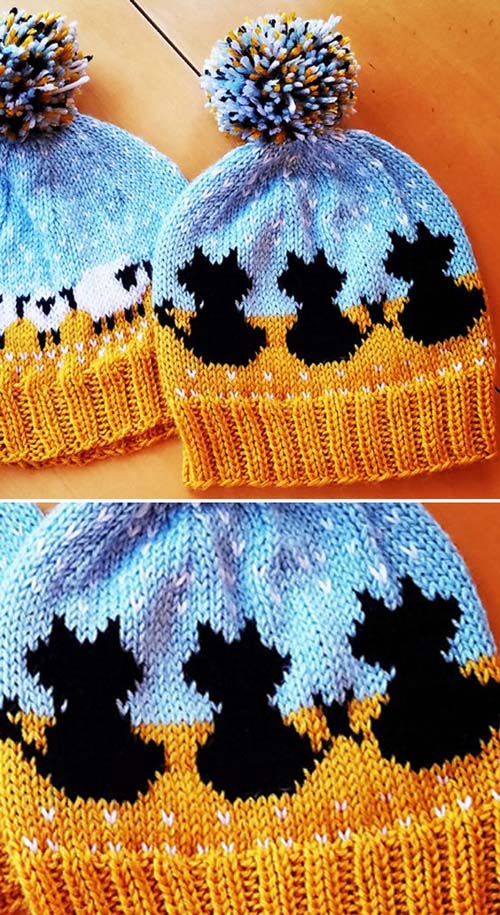
Meowf Hat - Free Pattern

Meowf Hat - Free Pattern
Photos above © KnitsterMonika
What beautiful knitting cowl pattern! I found it on Ravelry.
The Meowf hat is inspired by the Baa-ble hat but differs slightly in the design technique and by the fact that is features cats instead of sheep.

Download Pattern: Meowf Hat 

Knitted Fair Isle Hats - Knitting Pattern

Knitted Fair Isle Hats - Knitting Pattern
The photo above © All About Ami
What beautiful Knitted Hats! I found it on Pinterest.
How to learn to work the Fair Isle, and Links to patterns that are not free.
I love to have both patterns!


Lorena - Rectangle Shawl - Knitting Pattern

Lorena - Rectangle Shawl - Knitting Pattern
The photo above © Rita Maassen
What beautiful knitting Shawl pattern! I found it on Pinterest.
Lorena is a cuddly soft and warm shawl with sophisticated slings. The slings prevent the shawl from slipping from the shoulders. The shawl fits very well to sporty clothing - in addition, if drapped over a jacket, it keeps warm in winter. 

Full Post: Lorena

Winter Wonderland (Mitts) - Free Knitting Pattern

Winter Wonderland (Mitts) - Free Knitting Pattern
Photos above © Interweave & © kittyneedles
What beautiful knitting mitts(free pattern)! I found it on Pinterest.
I love the pattern! Just enough interest, but easy to memorize and follow the row before. Perfect! Just when I start to get a teeny bored, it switches up.

Download Pattern: Winter Wonderland

Beautiful Slippers - Free Pattern

Beautiful Slippers - Free Pattern
Photos above ©Luyda52
What beautiful knitting slippers (free pattern)! I found it on Pinterest.
These slippers are worked in a long strip that folds over the top of the foot. The cast-on makes the cuff edge, the back of the heel is seamed closed, and the stitches are joined at the center of the sole with a three-needle bind-off...

Full Post: Beautiful Slippers

Discover More From the Archive

A fresh mix of knitting patterns and tutorials from the Amazing Knitting archive.

Finding patterns from the archive…