Skip to content

...

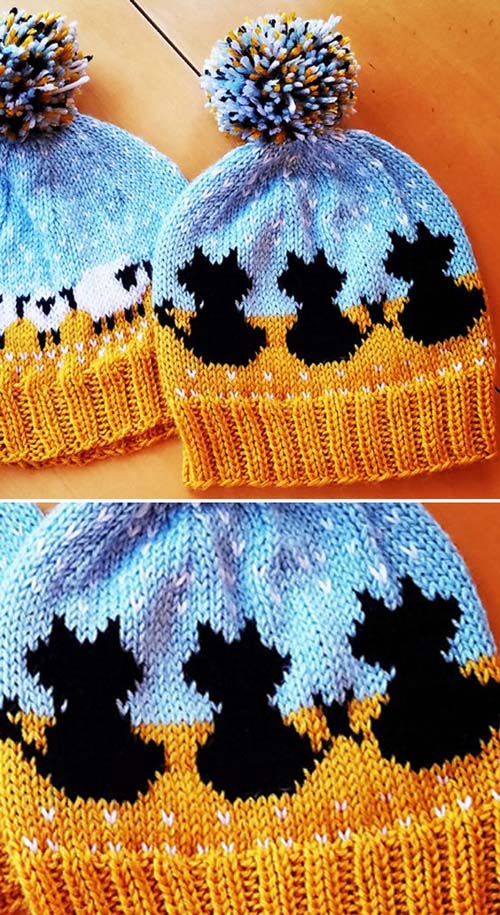
Meowf Hat - Free Pattern

Meowf Hat - Free Pattern
Photos above © KnitsterMonika
What beautiful knitting cowl pattern! I found it on Ravelry.
The Meowf hat is inspired by the Baa-ble hat but differs slightly in the design technique and by the fact that is features cats instead of sheep.

Download Pattern: Meowf Hat 

Knitted Fair Isle Hats - Knitting Pattern

Knitted Fair Isle Hats - Knitting Pattern
The photo above © All About Ami
What beautiful Knitted Hats! I found it on Pinterest.
How to learn to work the Fair Isle, and Links to patterns that are not free.
I love to have both patterns!


Lorena - Rectangle Shawl - Knitting Pattern

Lorena - Rectangle Shawl - Knitting Pattern
The photo above © Rita Maassen
What beautiful knitting Shawl pattern! I found it on Pinterest.
Lorena is a cuddly soft and warm shawl with sophisticated slings. The slings prevent the shawl from slipping from the shoulders. The shawl fits very well to sporty clothing - in addition, if drapped over a jacket, it keeps warm in winter. 

Full Post: Lorena

Winter Wonderland (Mitts) - Free Knitting Pattern

Winter Wonderland (Mitts) - Free Knitting Pattern
Photos above © Interweave & © kittyneedles
What beautiful knitting mitts(free pattern)! I found it on Pinterest.
I love the pattern! Just enough interest, but easy to memorize and follow the row before. Perfect! Just when I start to get a teeny bored, it switches up.

Download Pattern: Winter Wonderland

Beautiful Slippers - Free Pattern

Beautiful Slippers - Free Pattern
Photos above ©Luyda52
What beautiful knitting slippers (free pattern)! I found it on Pinterest.
These slippers are worked in a long strip that folds over the top of the foot. The cast-on makes the cuff edge, the back of the heel is seamed closed, and the stitches are joined at the center of the sole with a three-needle bind-off...

Full Post: Beautiful Slippers

Animal Car Seat Blankets - Knitting Patterns

Designed by © Creative Knits.
A variety of baby blankets either hooded or with hats. Some include toy animal patterns. Pictured are bear, tiger, lion, zebra, and giraffe. 

Jo's Pride Hooded Shawl - Knitting Pattern

Jo's Pride Hooded Shawl - Knitting Pattern
The photo above © Sivia Harding
What beautiful knitting hooded shawl pattern! I found it on Pinterest.
Lace shawl knit from the bottom up to the top of the hood. Shoulder shaping produces an excellent fit. This pattern is both written out and charted. This shawl was designed as a tribute to Little Women by Louisa May Alcott as a garment that might have been worn by Jo as an evening coverup in those Civil War days. Instructions included for adding beads.

Alex's Baby Blanket Free Knitting Pattern

Alex's Baby Blanket free knitting pattern by Angie Jaszek

Alex's Baby Blanket. Photos above © wingweave & © Bekenef

Alex's Baby Blanket is a free baby blanket knitting pattern by Angie Jaszek, featuring a pretty tulip-inspired lace design framed by a simple textured border.

Designed as a small carriage blanket for a newborn, the pattern is worked flat in one piece. The designer also provides guidance for adjusting the width and length if you would like to make a larger blanket.

Alex's Baby Blanket Pattern Details

  • Designer: Angie Jaszek
  • Craft: Knitting
  • Category: Baby blanket / carriage blanket
  • Pattern availability: Free download
  • Suggested yarn: Lion Brand Pound of Love
  • Yarn weight: Worsted / 10 ply
  • Needles: 4.5 mm (US 7)
  • Yardage: Approximately 500 yards (457 m)
  • Construction: Worked flat in one piece
  • Language: English

Tulip Lace Baby Blanket

The main attraction of Alex's Baby Blanket is its repeating tulip-inspired lace motif. The floral texture gives the blanket an elegant look while the surrounding border provides a simple frame for the lace section.

The repeating design also makes this an appealing project for knitters who enjoy lace patterns that become easier to recognize as the blanket grows.

Yarn and Needles

The original pattern recommends worsted-weight yarn and 4.5 mm (US 7) knitting needles. The suggested yarn is Lion Brand Pound of Love, with approximately 500 yards (457 m) listed for the project.

The designer specifically recommends using worsted-weight yarn or heavier if you want a width similar to the original blanket. A lighter yarn will produce a narrower result unless the pattern is adjusted.

Can You Make the Blanket Larger?

Yes. Although Alex's Baby Blanket was originally designed as a small carriage blanket for a newborn, the design can be adapted to make a wider or longer blanket.

The original pattern includes information about adding repeats, so you can adjust the dimensions to suit the size you want. Making a gauge swatch first is especially helpful when changing yarn or modifying the finished size.

Why Knit Alex's Baby Blanket?

This design combines the practicality of a one-piece baby blanket with an attractive floral lace pattern. There are no separate blanket panels to assemble, and the repeating tulip motif creates plenty of visual interest.

It would make a lovely handmade newborn gift, carriage blanket or smaller nursery blanket, while the adjustable construction gives you the option of knitting a larger version.

Get the Free Alex's Baby Blanket Pattern

Alex's Baby Blanket by Angie Jaszek is currently available as a free pattern download.

Get the Free Alex's Baby Blanket Pattern

Pattern availability was checked when this article was updated. Availability on external websites may change over time.

Dragon Baby Blanket - Easy Level Knitting Pattern

Dragon Baby Blanket - Easy Level Knitting Pattern
Designed by © Lynn Venghaus
What beautiful knitting baby blanket! I found it on Etsy.
Knitting pattern for Dragon Baby Blanket - Easy quick pattern for a blanket that got its name because the stitch resembles scales. Looks great in multi-color yarn!

Elephant Family Baby Blanket – Free Knitting Pattern

Elephant Family Baby Blanket knitting pattern by Mathilde of Le Pavillon Créatif

Elephant Family Blanket by Mathilde of Le Pavillon Créatif is a charming knitted baby blanket featuring a family of elephants walking across a simple stockinette background.

The blanket combines a classic seed-stitch border with an animal motif that can be added using several different colorwork methods, making the project adaptable to different levels of knitting experience.

The finished blanket measures approximately 87 × 80 cm (34 × 31 in) and is designed in Aran-weight yarn for a warm, substantial fabric suitable for a handmade baby gift.

Design and original pattern © Mathilde / Le Pavillon Créatif.

Elephant Family Baby Blanket Pattern Overview

  • Designer: Mathilde – Le Pavillon Créatif
  • Pattern: Elephant Family Blanket
  • Craft: Knitting
  • Category: Baby blanket
  • Published: October 2017
  • Finished size: Approximately 87 × 80 cm / 34 × 31 in
  • Yarn: DROPS Nepal
  • Yarn weight: Aran
  • Fiber: 65% wool, 35% alpaca
  • Needles: US 8 / 5 mm
  • Gauge: 17 stitches × 24 rows = 10 × 10 cm / 4 × 4 in in stockinette stitch
  • Construction: One-piece rectangular blanket
  • Main stitches: Seed stitch and stockinette stitch
  • Motif: Elephant family chart
  • Motif chart size: 115 stitches × 38 rows
  • Colorwork options: Duplicate stitch / embroidery, intarsia or stranded colorwork
  • Languages: English and French

A Baby Blanket With an Elephant Family Motif

The feature that makes this blanket immediately recognizable is the row of elephants across the center of the design.

Rather than covering the entire blanket with complicated texture, the designer uses a simple background so the elephant silhouettes become the focal point. This gives the project a clean and modern look while still making it playful enough for a nursery.

The animal motif also makes this a versatile baby-gift project because the design is not tied to one particular color palette.

Three Ways to Add the Elephant Motif

One of the most useful features of the Elephant Family Blanket is that the elephant design can be worked using different techniques.

The designer explains three possible approaches:

  • Duplicate stitch or embroidery: ideal if you prefer to knit the blanket first and add the elephants afterward.
  • Intarsia: useful for knitting separate blocks of color directly into the fabric.
  • Stranded / Jacquard colorwork: another option for knitters comfortable carrying multiple colors.

This flexibility allows knitters to choose the method that best matches their experience and personal preference.

The Beginner-Friendly Option: Duplicate Stitch

For knitters who are new to colorwork, the easiest approach is often to knit the main blanket in one color and add the elephant shapes afterward using duplicate stitch or embroidery.

This allows you to concentrate first on making an even stockinette fabric without managing several yarn colors at the same time.

Once the blanket is finished, the chart can be used as a guide for positioning the elephants over the existing stitches.

Using Intarsia Instead

More experienced knitters may prefer to incorporate the elephant shapes directly into the blanket using intarsia.

With intarsia, separate lengths or balls of yarn are used for individual color sections rather than carrying the contrasting yarn continuously across the entire row.

This method can create clean blocks of color and eliminates the need to embroider the design afterward.

Seed Stitch Border

The blanket uses seed stitch as part of its border design.

Seed stitch alternates knit and purl stitches to create a textured, pebbled-looking fabric. It gives the edge visual definition and contrasts nicely with the smoother stockinette center.

A textured border can also help a stockinette-based blanket lie more neatly than an entirely plain rectangle.

Stockinette Background

The main background of the blanket is worked in stockinette stitch.

This smooth surface is an excellent choice for the elephant motif because it does not compete visually with the animal shapes.

It also creates a regular grid of stitches that works naturally with the charted design.

Finished Size

The designer lists the finished dimensions as approximately:

87 cm × 80 cm / 34 in × 31 in.

This is a practical baby-blanket size for supervised cuddling, stroller use and other everyday situations.

Always compare the finished measurements with your intended use rather than relying only on the general label “baby blanket.”

Yarn for the Elephant Family Blanket

The original model uses DROPS Nepal, an Aran-weight yarn made from approximately 65% wool and 35% alpaca.

The designer specifies:

  • 7 balls for the main background
  • 3 balls for the border and elephant motifs

The referenced yarn contains approximately 75 meters / 82 yards per 50-gram ball.

That gives the original project enough yarn for both the main fabric and contrasting decorative sections.

Choosing a Yarn Substitute

You do not necessarily have to use the exact original yarn, but choose an Aran-weight substitute that can achieve the required gauge.

For an elephant chart, a relatively smooth yarn with good stitch definition is especially helpful because it keeps the edges of the motifs recognizable.

For a baby blanket, also consider softness, washability and how the yarn will hold up to regular use.

Gauge

The published gauge is:

17 stitches × 24 rows = 10 × 10 cm / 4 × 4 in in stockinette stitch.

Although a blanket does not require the same exact fit as a sweater, gauge still affects the final dimensions and total yarn consumption.

A looser gauge may produce a larger blanket and use more yarn, while a tighter gauge can make the blanket smaller and denser.

Needles

The original pattern specifies 5 mm / US 8 knitting needles.

For a blanket of this width, many knitters may find a long circular needle more comfortable than straight needles because the cable can hold the weight of the growing fabric.

The blanket can still be worked flat even when using a circular needle.

The Elephant Chart

The elephant motif chart covers approximately 115 stitches × 38 rows.

A chart like this represents the knitted fabric as a grid, with each square corresponding to a stitch.

Whether you use duplicate stitch, intarsia or another colorwork technique, checking the placement carefully before beginning the motif will help keep the elephants centered and aligned.

Skills You'll Use

  • Casting on
  • Knit stitches
  • Purl stitches
  • Seed stitch
  • Stockinette stitch
  • Working flat
  • Reading a colorwork chart
  • Keeping an even gauge
  • Duplicate stitch or embroidery
  • Optional intarsia
  • Optional stranded colorwork
  • Binding off
  • Weaving in ends

Is the Elephant Family Blanket Beginner Friendly?

The blanket can be approached by a confident beginner because the designer allows the elephant motif to be added after the main knitting is complete.

Using duplicate stitch means you can make the blanket mainly with basic knit and purl techniques, then treat the elephants as a separate finishing step.

Knitters who already have experience with colorwork can increase the challenge by using intarsia or stranded knitting instead.

This makes the same design suitable for more than one skill level.

Tips for a Neater Elephant Motif

Check the chart position before starting. Count carefully from the blanket edges so the motif remains centered.

Use contrasting colors. The elephant shapes are easiest to see when the motif yarn clearly contrasts with the background.

Keep duplicate stitches relaxed. Pulling embroidery stitches too tightly can distort the stockinette fabric underneath.

Manage intarsia joins carefully. Twist the yarns correctly at color changes to avoid holes between sections.

Block gently. Blocking can help smooth the background and improve the final appearance of the charted motif.

Ideas for Color Combinations

The original style works beautifully with neutral shades, but there is no need to limit the blanket to gray elephants.

Possible combinations include:

  • Cream background with soft gray elephants
  • Pale blue with navy motifs
  • Warm beige with brown elephants
  • White with pastel pink or green
  • Charcoal with a light contrasting motif

The simple silhouette means the design can work with both traditional nursery colors and more modern palettes.

Baby Blanket Safety

A handmade blanket can be useful for supervised cuddling, stroller use, floor time and other age-appropriate situations.

Always follow current infant safe-sleep guidance and avoid placing loose blankets in an infant sleep space when they are not recommended.

Is the Elephant Family Blanket Pattern Free?

A legitimate free English download is currently linked from Mathilde's original Le Pavillon Créatif page for the exact Elephant Family Blanket design.

The same pattern is also currently listed as a paid download in the designer's Ravelry store, but Amazing Knitting prioritizes the designer's own currently available free source when one exists.

View the Free Elephant Family Blanket Pattern →

On the designer's page, choose the link labeled “Click here for the download English version” for the English pattern.

Why This Baby Blanket Is Worth Knitting

Elephant Family Blanket combines a straightforward baby-blanket construction with a memorable animal motif.

Its greatest strength is flexibility: beginners can add the elephants after the knitting is finished, while experienced knitters can integrate the motif using intarsia or stranded colorwork.

The seed-stitch border, smooth central fabric and charming family of elephants give the finished blanket enough detail to feel special without requiring complicated lace or cable construction.

It is an especially appealing project for a handmade baby gift or nursery keepsake.

Pattern Availability

Amazing Knitting links readers to legitimate designer or publisher sources whenever possible. Pattern prices, download locations and availability can change after an article is published.

Read Our Pattern Availability Policy →

Amazing Knitting is an independent pattern discovery and project-guide site. The Elephant Family Blanket design, chart and knitting instructions remain the intellectual property of Mathilde / Le Pavillon Créatif. This guide does not reproduce the designer's complete row-by-row instructions or elephant chart.

Irma Hat – Free Textured Hat Knitting Pattern

Irma Hat free textured hat knitting pattern by Aneta Gasiorowska

Irma Hat. Photos © Aneta Gasiorowska & © aKnitOnTheSide

Irma Hat by Aneta Gasiorowska is a free textured hat knitting pattern with an eye-catching diagonal design. Worked seamlessly in the round from the bottom up, this stylish adult beanie uses DK-weight yarn and only a relatively small amount of yarn.

The swirling texture looks much more complicated than it actually is. Rather than traditional cable crossings, the pattern creates its distinctive diagonal movement through carefully placed increases and decreases.

Irma Hat Pattern Details

  • Designer: Aneta Gasiorowska
  • Published: October 2017
  • Craft: Knitting
  • Category: Beanie / toque
  • Pattern availability: Free download
  • Size: One adult size, adjustable according to the pattern
  • Style: Unisex
  • Yarn weight: DK / 8 ply
  • Yardage: Approximately 142–153 yards (130–140 m)
  • Needles: 3.5 mm (US 4) and 4.5 mm (US 7)
  • Gauge: 22 stitches × 28 rows = 4 inches (10 cm) in stockinette stitch
  • Construction: Bottom up and worked in the round
  • Finishing: Seamless, one-piece construction
  • Pattern format: Written instructions
  • Language: English

A Beautiful Textured Knitted Hat

The most striking feature of the Irma Hat is its diagonal textured pattern. The stitches appear to travel around the hat, creating a swirling effect that continues toward the crown.

This gives the finished beanie plenty of visual interest even when it is knitted in a single solid color.

A smooth yarn with good stitch definition can be particularly effective for showing off the structure of the design.

The Look of Cables Without Traditional Cable Crossings

At first glance, the diagonal lines of Irma can look a little like twisted cables. However, the pattern does not rely on traditional cable crossings to produce its distinctive shape.

Instead, the movement is created through strategically placed increases and decreases. As these stitches shift around the hat, they create the flowing diagonal effect visible in the finished design.

This makes Irma an interesting choice if you enjoy strongly textured knitting but want to try something different from a conventional cable-knit hat.

Worked Seamlessly in the Round

Irma Hat is knitted from the bottom up. You begin at the brim and work upward in the round toward the crown.

Because the entire hat is worked as one piece in the round, there is no side seam to sew after the knitting is complete.

The seamless construction also allows the diagonal stitch pattern to flow continuously around the hat.

An Adjustable Adult Hat Pattern

The pattern is written for one adult size, but Aneta Gasiorowska includes information for adjusting the circumference.

This makes the design more flexible than a fixed one-size pattern. Follow the designer's sizing instructions carefully if you want to make the hat smaller or larger than the original version.

Remember that both stitch count and gauge influence the final fit, so checking your gauge is particularly useful when making size adjustments.

Yarn for the Irma Hat

Irma is listed as a DK-weight pattern and requires approximately 142–153 yards (130–140 metres).

The designer lists several suggested yarns, including:

  • Malabrigo Yarn Rios
  • Garnstudio DROPS Lima
  • Zagroda Unique

These suggestions demonstrate that the design can work with different fiber blends and yarn characteristics as long as you can achieve a suitable gauge and fabric.

Because the pattern uses a relatively small amount of yarn, it can also be a good project for a special skein left from another project.

Choosing a Yarn for the Textured Stitch Pattern

The diagonal design is the star of this hat, so yarn choice can make a noticeable difference to the finished appearance.

Solid and semi-solid colors allow the stitch movement to remain very clear. Gently tonal yarn can add depth without hiding the texture.

Highly contrasting variegated yarn can also be used, but strong color changes may compete visually with the diagonal stitch pattern.

Needles and Gauge

The pattern uses two needle sizes: 3.5 mm (US 4) and 4.5 mm (US 7).

The smaller needles are useful for creating a firm, stretchy brim, while the larger needles are used for the main textured section of the hat.

The specified gauge is: 22 stitches and 28 rows = 4 inches (10 cm) in stockinette stitch.

Since hats rely on a comfortable amount of negative ease to stay in place, checking gauge can help prevent the finished hat from becoming unexpectedly loose or tight.

A Great One-Skein Style Project

With a requirement of only around 130–140 metres, Irma is a relatively small knitting project compared with sweaters, shawls or large accessories.

That makes it useful when you want a satisfying project without a large yarn commitment, or when you have a beautiful partial skein that you would like to turn into a wearable accessory.

Skills Used in the Irma Hat

Useful techniques for this project include:

  • Knitting in the round
  • 1x1 ribbing
  • Increases
  • Left-leaning decreases
  • Following a repeating stitch sequence
  • Changing needle sizes
  • Crown shaping
  • Finishing a seamless hat

The construction is straightforward enough to make Irma approachable for knitters who are comfortable working in the round, while the traveling texture keeps the project interesting.

Blocking the Finished Hat

Light blocking can help even out the stitches and make the diagonal texture look more polished.

Avoid aggressively stretching the ribbed brim, since you want it to retain enough elasticity to fit comfortably around the head.

Always follow the care instructions for the yarn you choose when washing and blocking the finished hat.

Add a Pom-Pom or Keep It Simple

Irma looks attractive as a simple textured beanie, but the crown also works well with an optional pom-pom.

A pom-pom can give the hat a more playful winter look, while leaving the crown unembellished keeps the focus entirely on the diagonal texture.

Why Knit the Irma Hat?

Irma offers an appealing balance between simple construction and an unusual finished appearance.

It is seamless, uses a modest amount of yarn and is worked entirely in the round, yet the shifting increases and decreases create a design that looks far more elaborate than plain stockinette.

The adjustable sizing also makes it a useful pattern to keep in your collection when you want to knit a textured winter hat for yourself or as a handmade gift.

Get the Free Irma Hat Knitting Pattern

The complete Irma Hat by Aneta Gasiorowska is currently available as a free downloadable knitting pattern from the designer's Ravelry store.

Get the Free Irma Hat Knitting Pattern

Pattern availability was checked when this article was updated. Availability on external websites may change over time.

Gingerbread Hat – Free Cable Knit Hat Pattern

Gingerbread Hat free cable knitting pattern by Angela Whisnant

Gingerbread Hat by Angela Whisnant is a classic cable-knit hat with a wonderfully simple repeating texture. Originally published in 2008, it has become a popular quick-knit project for children, teens and adults.

The design features a bold six-stitch cable worked in a short six-row repeat. The result is a cozy Aran-style hat that looks impressive without requiring an overly complicated cable pattern.

Best of all, Angela Whisnant currently provides the original Gingerbread Hat pattern free on her Rainy Day Crafts website. A printable ad-free PDF is also available separately from the designer, but you do not need to purchase it to access the free pattern.

Gingerbread Hat at a Glance

  • Pattern: Gingerbread Hat
  • Designer: Angela Whisnant
  • First published: October 2008
  • Category: Beanie / toque
  • Yarn weight: Aran
  • Suggested yarn: Lion Brand Fishermen's Wool
  • Needles: US 8 / 5 mm
  • Gauge: 5 stitches and 6 rows = 1 inch
  • Sizes: Small, Medium and Large
  • Main feature: Six-stitch cable
  • Cable repeat: Six rows
  • Pattern language: English
  • Current availability: Free on the designer's website

A Classic Cable Hat With a Short Repeat

The main attraction of Gingerbread Hat is its strong vertical cable texture.

Angela Whisnant adapted an Aran-style stitch idea into a six-stitch cable and built the hat around a manageable six-row repeat.

Short repeats are particularly useful in hat knitting because they quickly become familiar. After working several repeats, you can begin to recognize where each cable crossing belongs simply by looking at the fabric.

The Story Behind Gingerbread Hat

Gingerbread Hat was Angela Whisnant's first knitting pattern.

The designer explains that she created it because she could not find the particular cabled hat she wanted to make. She found an Aran stitch pattern she liked, modified the cable from four stitches to six and developed the hat around it.

The original small size was written for her daughter Emma, who was approximately seven years old at the time.

Angela then calculated additional medium and large sizes so the design could also work for tweens, teens and adults.

Three Useful Sizes

The original Gingerbread Hat includes Small, Medium and Large sizes.

The small version was originally designed for a school-age child, while the additional sizes extend the pattern into tween, teen and adult territory.

This makes Gingerbread Hat particularly useful when you want to knit coordinating hats for several members of a family.

Aran-Weight Yarn

The pattern is designed for Aran-weight yarn.

Lion Brand Fishermen's Wool is the yarn associated with the original pattern, but the design can work in a variety of suitable yarns when the correct gauge is achieved.

Cables usually look best in yarn with clear stitch definition. A smooth wool or wool-blend yarn allows the twists and raised columns to remain visible.

Choosing Yarn for a Cable Hat

The cable pattern is the visual focus of Gingerbread Hat, so yarn choice matters.

Look for yarn that:

  • Shows cable definition clearly
  • Feels comfortable against the forehead
  • Has enough elasticity for a fitted hat
  • Produces a warm but flexible fabric
  • Matches the required gauge

Very fuzzy novelty yarn can hide some of the cable detail, while a smooth Aran yarn generally makes the pattern easier to see.

Solid Colors Show the Cables Beautifully

A solid or gently heathered yarn is an excellent choice for this design.

The shadows created by the raised cable columns provide plenty of visual interest without requiring multiple colors.

Traditional cream, oatmeal and natural wool shades emphasize the Aran character of the pattern, while darker or brighter colors can give the same design a more contemporary appearance.

Needle Size

The published pattern uses US 8 / 5 mm needles.

Treat the listed needle size as a starting point rather than an absolute rule. Your personal knitting tension and yarn choice determine whether you need a slightly larger or smaller needle.

Gauge Matters in a Hat

The published gauge is approximately 5 stitches and 6 rows per inch.

Unlike a scarf or blanket, a hat needs to fit a head comfortably. Significant differences in stitch gauge can therefore make the finished hat too tight or too loose.

A small gauge swatch is worthwhile, especially if you are substituting yarn.

Practice the Cable Before Casting On

If cable knitting is new to you, try the six-stitch cable on a small swatch first.

Practicing separately allows you to learn how the cable crossing works without also worrying about hat sizing and shaping.

Once you understand the movement of the stitches, the repeating cable becomes much easier to recognize.

What Is a Knitted Cable?

Cable knitting changes the order of a small group of stitches before they are worked.

Holding some stitches temporarily in front of or behind the work causes the knitted columns to cross over one another.

Repeating those crossings vertically creates the twisted, rope-like texture associated with traditional cable and Aran knitting.

Why the Six-Row Repeat Is Helpful

Complicated cable projects can contain long charts or many different crossing rows.

Gingerbread Hat is much easier to memorize because the main cable sequence repeats over only six rows.

Once you recognize the cable-crossing row, the rows between crossings become much easier to track.

Use a Row Counter

A row counter is one of the simplest ways to keep the cable crossings evenly spaced.

Reset or mark your counter at the beginning of each repeat so you always know where the next cable row belongs.

A six-line checklist on a piece of paper works just as well if you prefer not to use a physical or digital counter.

Learn to Read Your Cable

As the hat grows, look closely at the distance between cable crossings.

After several repeats, you should begin to recognize visually when the next crossing is approaching.

Learning to read the knitted fabric provides an extra safeguard against accidentally working too many or too few rows between cables.

Keep Cable Tension Relaxed

Cable crossings naturally pull the fabric inward.

Avoid tightening the stitches excessively when working the crossing itself. Keeping a relaxed, consistent tension helps the cable columns look smooth rather than pinched.

Is Gingerbread Hat Beginner Friendly?

Gingerbread Hat is a good introduction to cable knitting for someone who already understands the basic knit and purl stitches.

The hat is more involved than a plain ribbed beanie, but the short repeat makes it considerably more approachable than many elaborate cable designs.

If this is your first cable project, practicing the cable separately before starting the hat can make the project much more comfortable.

Skills That Will Help

  • Casting on
  • Knit stitches
  • Purl stitches
  • Working ribbing
  • Using a cable needle
  • Crossing cable stitches
  • Following a repeating stitch pattern
  • Working decreases for crown shaping
  • Binding off or finishing remaining crown stitches
  • Weaving in yarn ends

Use Stitch Markers When Helpful

Stitch markers can make it easier to see where one cable section ends and another begins.

This is particularly useful during the first few repeats, before the vertical structure of the hat becomes obvious.

Check Your Stitch Count

Count your stitches periodically, especially after working a difficult cable row or crown-shaping section.

Catching a missing or accidental extra stitch quickly is much easier than discovering the problem several cable repeats later.

Try the Hat On During the Project

When your knitting method allows it, checking the developing hat against the intended wearer's head can help confirm that the size is appropriate.

Remember that knitted hats usually rely on some negative ease so they remain comfortably in place rather than matching the exact head circumference without stretch.

A Quick Gift-Knitting Project

Angela Whisnant describes Gingerbread Hat as a quick project suitable when you need a knitted gift without committing to a large garment.

Aran-weight yarn builds fabric relatively quickly, while the repeating cables make the project look more elaborate than a basic beanie.

That combination makes it especially attractive for winter and holiday gift knitting.

Make Several in Different Colors

Because the pattern comes in several sizes and works with many yarn colors, it can easily become a repeat project.

A natural wool shade creates a traditional cable hat, while charcoal, navy or forest green produces a classic winter accessory.

Brighter shades can turn the same pattern into a playful hat for a child or teenager.

Blocking a Cable Hat

Gentle blocking can help the cable stitches settle and make the finished fabric look more even.

Avoid stretching the hat excessively during blocking because that can reduce the elasticity needed for a comfortable fit.

Always follow the washing and blocking recommendations for your chosen yarn.

Why Gingerbread Hat Is Still Popular

Gingerbread Hat has been available since 2008 and has accumulated well over a thousand documented knitting projects.

Its longevity is easy to understand: the design combines a classic cable texture, practical sizing and a repeat short enough to become familiar quickly.

It also remains particularly valuable because the designer continues to make the original instructions available free on her own website.

Free Gingerbread Hat Knitting Pattern

Gingerbread Hat by Angela Whisnant is currently available as a free knitting pattern from the designer.

Angela publishes the original instructions on her Rainy Day Crafts website. She also offers an optional printable ad-free PDF through her shop for knitters who prefer that format.

The free webpage is therefore our preferred link: it is the exact Gingerbread Hat featured here and comes directly from the pattern designer.

Pattern availability can change over time, so Amazing Knitting gives priority to a legitimate free source whenever the exact pattern remains officially available at no cost.

Get the Free Gingerbread Hat Pattern

Visit Angela Whisnant's Rainy Day Crafts page to read the complete original Gingerbread Hat knitting pattern for free.

Get the Free Gingerbread Hat Knitting Pattern →

Gingerbread Hat is designed by Angela Whisnant. Amazing Knitting does not reproduce the designer's copyrighted row-by-row instructions. The original pattern is currently published free on the designer's website. Availability may change, so please check the linked source for the latest information.

Read Our Pattern Availability Policy →

Discover More From the Archive

A fresh mix of knitting patterns and tutorials from the Amazing Knitting archive.

Finding patterns from the archive…