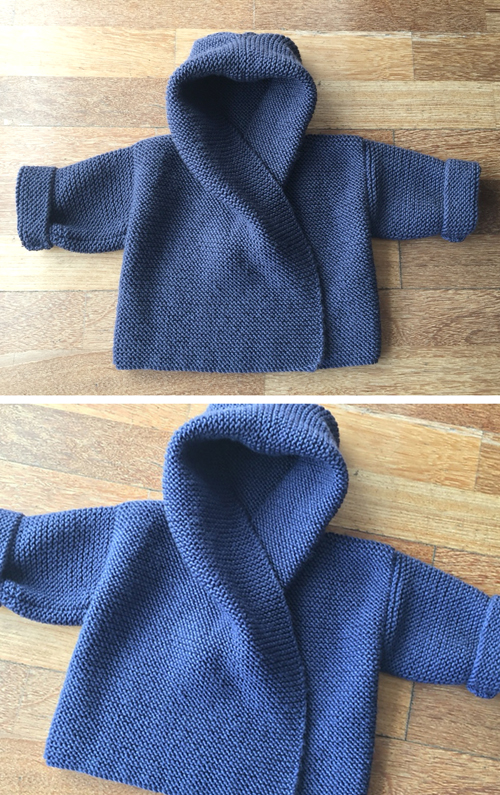
![]() |
| Photos above © eireluv |
...
Kimono Baby Booties - Free Pattern
Apple Tree Blanket – Free Baby Blanket Knitting Pattern
Apple Tree Blanket by Martin Storey. Project photo © Pirett.
Apple Tree Blanket by Martin Storey is a beautiful knitted baby blanket featuring rows of sculptural apple trees created with cables and bobble stitches.
Originally published for Rowan, this classic design combines a simple rectangular blanket shape with highly textured motifs that stand out beautifully against the smoother knitted background.
The result is an heirloom-style baby blanket that looks impressive without requiring complicated multicolor knitting.
Good news: Apple Tree Blanket is currently available as a free PDF knitting pattern from Laughing Hens. You will find the verified pattern link near the end of this guide.
Apple Tree Blanket at a Glance
- Pattern: Apple Tree Blanket
- Designer: Martin Storey
- First published: 2006
- Publisher: Rowan
- Category: Baby blanket
- Finished size: Approximately 24 × 37 in (61 × 94 cm)
- Yarn weight: DK
- Original yarn: Rowan RYC Cashsoft Baby DK
- Yardage: Approximately 852 yd (779 m)
- Main needles: US 6 / 4 mm
- Smaller needles: US 3 / 3.25 mm
- Additional tool: Cable needle
- Gauge: 22 sts × 30 rows = 4 in / 10 cm in stockinette
- Techniques: Cables, bobbles, knit and purl stitches
- Skill level: Intermediate
- Current availability: Free PDF download
A Baby Blanket Covered in Apple Trees
The feature that makes this blanket immediately recognizable is its repeating apple tree motif.
Rather than creating the trees with different yarn colors, Martin Storey uses knitted texture to make the branches and fruit emerge from the surface of the fabric.
This gives the blanket a dimensional appearance while allowing the project to be worked in a single main color.
Cables Create the Tree Structure
Cable techniques are an important part of the Apple Tree Blanket.
By crossing groups of stitches, raised lines develop across the fabric and help create the branching structure of the trees.
It is a beautiful example of how cable knitting can be used for more than traditional ropes and braids. Carefully positioned crossed stitches can create surprisingly pictorial motifs.
Bobble Stitches Create the Apples
Small raised bobble stitches provide another layer of texture.
Positioned among the cable branches, the rounded bobbles resemble apples growing on the trees.
The combination of cables and bobbles is what gives this blanket its distinctive three-dimensional character.
Texture Instead of Colorwork
One of the appealing things about Apple Tree Blanket is that it creates a strong decorative image without relying on stranded colorwork, intarsia or frequent yarn changes.
Instead, the design uses the structure of the knitted stitches themselves to create the picture.
This allows you to concentrate on texture while working primarily with one yarn color.
Why a Solid Color Works So Well
A solid yarn can be particularly effective for this design because light and shadow reveal the raised cables and bobbles clearly.
Soft cream, oatmeal, gray or other neutral shades can create a traditional heirloom appearance.
Nature-inspired shades such as soft green, sage or warm earthy tones can also complement the apple-tree theme beautifully.
The Original Yarn
The original pattern was designed using Rowan RYC Cashsoft Baby DK.
Published pattern information lists approximately 852 yards / 779 meters for the blanket.
Older yarn ranges can change or become difficult to find over time, so you do not necessarily need the exact original yarn to make this beautiful blanket.
Choosing a Substitute DK Yarn
When choosing a substitute, look for a DK-weight yarn that can produce the required gauge while keeping the textured motifs clearly defined.
Useful qualities include:
- Good cable and bobble stitch definition
- Softness suitable for a baby blanket
- Washability
- Durability
- Enough yardage for the complete project
- A fiber that responds well to gentle blocking
Highly fuzzy yarns may soften the appearance of the cables and bobbles, while smoother yarns generally make the apple-tree motifs easier to see.
Consider Washability for a Baby Blanket
A baby blanket is likely to be washed frequently, so practical yarn care is worth considering before you begin.
A soft machine-washable wool or suitable wool blend can be a convenient choice for a blanket intended for regular use.
Whatever fiber you choose, follow the care instructions supplied by the yarn manufacturer.
Needle Sizes
Published pattern information lists two needle sizes:
- US 3 / 3.25 mm
- US 6 / 4 mm
You will also need a cable needle for the crossed-stitch sections.
Remember that recommended needle sizes are a starting point. Use the needle size that allows you to obtain the required gauge with your chosen yarn.
Gauge
The published gauge is approximately 22 stitches and 30 rows = 4 inches / 10 cm in stockinette stitch using the larger needles.
Gauge affects both the finished dimensions and yarn usage, so making a swatch is worthwhile before beginning a project of this size.
Finished Blanket Size
The completed Apple Tree Blanket measures approximately 24 inches wide × 37 inches long, or about 61 × 94 cm.
This gives you a useful baby blanket size while still providing enough room for the repeating tree motifs to become the main visual feature.
Is Apple Tree Blanket Beginner Friendly?
Apple Tree Blanket is best considered an intermediate knitting project.
The rectangular blanket shape itself is straightforward, but the decorative sections require attention to cable crossings, bobbles and motif placement.
If you are already comfortable with knit and purl stitches and want to develop your textured-knitting skills, this can be a rewarding next-step project.
Skills That Will Help
Before beginning, it is useful to be comfortable with:
- Casting on
- Knit and purl stitches
- Stockinette stitch
- Garter stitch
- Following patterned rows or charts
- Cable stitches
- Using a cable needle
- Increasing and decreasing
- Making bobbles
- Keeping track of pattern repeats
- Binding off
Learning to Knit Cables
If cables are new to you, their appearance can make them look more difficult than they really are.
A cable is created by changing the order in which a small group of stitches is worked.
Some stitches are temporarily held to the front or back while the next stitches are knitted. The held stitches are then worked, creating the characteristic crossing effect.
Follow the exact cable instructions in the Apple Tree Blanket pattern because the direction and placement of each crossing are important to the tree design.
Take Your Time With the First Tree
The first complete apple-tree motif is the best place to learn the logic of the pattern.
Work slowly, check your stitch counts and pay attention to where cable crossings and bobbles occur.
Once you understand how the first motif develops, later repeats should become much easier to recognize visually.
Use a Row Counter
Repeating textured motifs are easier to manage when you always know which pattern row you are working.
A row counter, removable marker or simple written checklist can help prevent losing your place after putting the project down.
This becomes especially useful on a blanket, where the project may be worked over many knitting sessions.
Check the Fabric as You Knit
Do not look only at the written instructions or chart.
Stop occasionally and examine the tree motifs developing in the fabric.
A misplaced bobble or incorrect cable crossing can sometimes be easier to notice when looking at the complete tree than when concentrating on individual stitches.
Be Consistent With Your Bobbles
Bobbles look best when they are worked with reasonably consistent tension.
If some are considerably tighter or looser than others, the apples may vary noticeably in size.
The first few bobbles are a useful opportunity to establish a comfortable technique before continuing across the rest of the blanket.
Watch Your Cable Tension
Cable crossings naturally pull the knitted fabric inward.
Avoid tightening the stitches excessively after each crossing. Keeping an even, relaxed tension helps the tree branches remain consistent.
Your fabric may look slightly uneven while it is still on the needles; gentle blocking at the end can help the stitches settle.
Use Lifelines if You Need Them
If you are concerned about making mistakes in the more complicated textured sections, consider adding an occasional lifeline.
A lifeline passes through a completed row of stitches and gives you a safe point to return to if you later need to unravel part of the work.
This can be particularly reassuring when knitting a large project with repeating cable motifs.
Blocking the Apple Tree Blanket
Gentle blocking can help the blanket settle into its final dimensions and make the background fabric appear more even.
At the same time, avoid aggressively flattening the surface because the raised cables and bobbles are an important part of the design.
Always use a blocking method appropriate for the fiber in your chosen yarn.
A Beautiful Handmade Baby Gift
Apple Tree Blanket has many of the qualities knitters look for in a special handmade baby gift.
It is practical, but the textured tree design also makes it memorable enough to become a keepsake.
Choosing a soft, washable DK yarn can make the finished blanket easier for parents to use while preserving its beautiful handmade character.
A Lovely Heirloom Knitting Project
The repeating trees give this blanket a timeless quality that works especially well for an heirloom project.
Unlike a highly trend-driven motif, trees and natural textures can remain appealing for many years.
The combination of a classic rectangular shape and distinctive knitted texture also makes the blanket easy to recognize without making it overly decorative.
Why This Pattern Has Lasted
Apple Tree Blanket was first published in 2006, yet knitters continue to search for and make the design many years later.
Much of its appeal comes from the way Martin Storey transforms familiar cable and bobble techniques into a recognizable picture.
Instead of simply decorating the surface, the knitting itself becomes the illustration.
Free Apple Tree Blanket Pattern
Good news for knitters looking for this classic Martin Storey design: Apple Tree Blanket is currently available as a free PDF download from Laughing Hens.
The current Laughing Hens listing identifies it as the Rowan Apple Tree Blanket by Martin Storey and describes the same baby blanket featuring bold textured apple-tree motifs created with cables and bobble stitches.
The listing currently shows the pattern as “PDF Download: Free”.
Because online pattern availability can change over time, Amazing Knitting periodically reviews older pattern links and updates them when a reliable current source becomes available.
Get the Free Apple Tree Blanket Pattern
Visit Laughing Hens to access the currently available free PDF for Martin Storey's original Rowan Apple Tree Blanket.
Get the Free Apple Tree Blanket Pattern →
Apple Tree Blanket is designed by Martin Storey and published by Rowan. Amazing Knitting does not reproduce the copyrighted chart or row-by-row knitting instructions. The pattern is currently offered as a free PDF download by Laughing Hens. Pattern availability may change, so please check the linked source for the latest information.
Christmas Robin Socks (Blitzen) – Free Cable Sock Knitting Pattern
Christmas Robin Socks by Winwick Mum are festive hand-knit socks featuring a distinctive paper-chain-inspired cable panel running down the leg.
Originally created for West Yorkshire Spinners Signature 4 Ply in the seasonal Robin colorway, the pattern was first known as Christmas Robin Socks and has since been renamed Blitzen Socks.
The design is worked from the top down in the round with a traditional heel, gusset shaping and a grafted toe. The exact pattern remains available free from official designer and publisher sources.
Design © Winwick Mum. Original publication in association with West Yorkshire Spinners.
Christmas Robin Socks Pattern Overview
- Current pattern name: Blitzen Socks
- Original name: Christmas Robin Socks
- Designer: Winwick Mum
- Publisher: West Yorkshire Spinners
- Craft: Knitting
- Category: Mid-calf socks
- Published: December 2019
- Construction: Top down, worked in the round
- Yarn: West Yorkshire Spinners Signature 4 Ply
- Original colorway: Robin (941)
- Yarn weight: Fingering / 4 Ply
- Yardage: Approximately 437 yd / 400 m
- Needles: US 1½ / 2.5 mm
- Gauge: 30 stitches × 44 rows = 4 in / 10 cm in stockinette stitch
- Foot circumference: 20, 22, 23 and 24 cm / approximately 8, 8.5, 9 and 9.5 in
- Leg length: Approximately 15 cm / 6 in
- Main feature: 15-stitch paper-chain cable panel
- Skill level: Intermediate
- Language: English
- Pattern availability: Free
Why Christmas Robin Socks Are Now Called Blitzen
If you have seen this design listed under two different names, you are looking at the same sock pattern.
Winwick Mum originally designed the socks for the 2019 West Yorkshire Spinners Robin Christmas yarn and published them as Christmas Robin Socks.
The designer later renamed the pattern Blitzen Socks. The current Blitzen version preserves the recognizable paper-chain cable motif of the original Christmas design.
This means older photos and blog posts may still call the project Christmas Robin Socks, while newer pattern listings use Blitzen.
A Festive Paper-Chain Cable Design
The main decorative feature is a structured cable panel inspired by traditional Christmas paper chains.
The panel is worked over 15 stitches and repeats vertically along the leg.
Purl stitches frame the central cable and help the raised design stand out against the surrounding sock fabric.
The result is festive without relying on stranded Christmas motifs, making the pattern suitable for many yarn colors beyond the original Robin shade.
The Cable Panel
The cable section uses a larger crossed cable that requires two cable needles.
This creates the linked appearance that inspired the paper-chain description.
The pattern provides both charted and written information for the decorative panel, making it possible to follow whichever format you find more comfortable.
Top-Down Sock Construction
Christmas Robin / Blitzen Socks are worked from the cuff downward toward the toe.
The sock begins with the leg, continues through heel shaping and gusset decreases, and then proceeds along the foot before finishing at the toe.
This traditional construction will feel familiar to knitters who have already made heel-flap-and-gusset socks.
Worked in the Round
The socks are knitted entirely in the round.
The pattern can be worked using:
- Double-pointed needles
- A short circular needle
- Magic loop on a long circular needle
Choose whichever small-circumference method you already find most comfortable.
Four Foot Circumference Sizes
The pattern includes four sizes based on the ball-of-foot circumference:
- 20 cm / approximately 8 in
- 22 cm / approximately 8.5 in
- 23 cm / approximately 9 in
- 24 cm / approximately 9.5 in
The published leg length is approximately 15 cm / 6 in.
As with most hand-knit socks, measuring the actual foot circumference is more reliable than choosing a size solely from shoe size.
Yarn for Christmas Robin Socks
The original socks were designed for West Yorkshire Spinners Signature 4 Ply in the Robin (941) colorway.
One 100-gram ball provides approximately:
400 meters / 437 yards.
The Signature 4 Ply sock yarn combines wool with nylon for a balance of warmth, elasticity and durability.
Do You Have to Use Robin Yarn?
No. Robin was the original seasonal colorway, but the Blitzen pattern can be worked in other compatible fingering-weight sock yarns.
The cable pattern can look especially attractive in:
- Solid colors
- Tonal yarns
- Self-striping sock yarn
- Christmas colorways
- Subtle variegated yarns
For the clearest cable definition, avoid yarns with such strong color changes that the texture becomes difficult to see.
Needles
The pattern uses 2.5 mm / US 1½ needles.
This is smaller than the needle size often suggested on a general sock-yarn ball band, but the tighter gauge helps create a firm and hard-wearing sock fabric.
Always adjust your needle size if necessary to achieve the pattern gauge.
Gauge
The current Blitzen pattern lists:
30 stitches × 44 rows = 4 in / 10 cm in stockinette stitch.
Gauge is important in sock knitting because circumference differences of only a few stitches can noticeably affect fit.
Your knitted fabric should feel firm and durable without becoming stiff.
Heel and Gusset Shaping
After the leg is complete, the sock moves into traditional heel and gusset construction.
Stitches are worked and picked up around the heel area, then decreases shape the gusset back toward the original foot circumference.
The decorative cable pattern continues along the top of the foot while the sole is worked more simply.
Toe Shaping
The toe is shaped with paired decreases until only a small number of stitches remain.
The remaining stitches are then joined using Kitchener stitch for a smooth grafted finish.
This avoids a bulky seam across the tips of the toes.
Skills You'll Use
- Casting on
- Knitting in the round
- Knit and purl stitches
- Cable knitting
- Using two cable needles
- Reading a cable chart
- Following written cable instructions
- Heel construction
- Picking up stitches
- Gusset decreases
- Toe decreases
- Kitchener stitch
- Weaving in ends
Is This a Beginner Sock Pattern?
Christmas Robin / Blitzen is rated as an intermediate knitting pattern.
The general sock construction is traditional, but the decorative cable panel adds another layer of concentration.
If you have already knitted a basic top-down sock and want to learn more complex cables, this can be a good next project.
A first-time sock knitter may find it easier to become comfortable with basic heel and gusset construction before adding the cable section.
Tips for Neater Cables
Do not over-tighten after crossing the cable. Pulling too firmly can distort the surrounding stitches.
Use two cable needles when the pattern calls for them. The larger cable crossing is easier to control when the groups of stitches remain clearly separated.
Check the cable orientation before continuing. A reversed cross is much easier to correct immediately than several rounds later.
Use a row counter. The repeating panel is easier to manage if you always know which round comes next.
Tips for Better-Fitting Socks
Measure the foot. Choose the size from actual circumference rather than guessing from shoe size.
Check gauge before beginning. Even a small gauge difference can affect the finished circumference.
Use sock-appropriate yarn. A yarn with good durability and elasticity will generally wear better than a delicate yarn designed only for garments.
Try the sock on during the foot section. This can help you decide when to begin toe shaping.
Can You Knit Blitzen in Other Christmas Colorways?
Yes. Although Robin was the original yarn, the paper-chain cable design works with many festive yarns.
West Yorkshire Spinners has shown the pattern with several seasonal shades, including other Christmas-inspired Signature 4 Ply colors.
This makes the pattern reusable even if the original Robin colorway is unavailable.
Is Christmas Robin Socks a Free Knitting Pattern?
Yes. The exact design remains available free.
Winwick Mum now lists Christmas Robin Socks under the name Blitzen Socks and identifies the pattern as free.
Amazing Knitting therefore links readers to the designer's official pattern resources rather than to unofficial uploaded PDFs.
View the Free Christmas Robin / Blitzen Pattern →
Direct Free Blitzen Pattern Download
The renamed Blitzen pattern is also available as a free download through the official West Yorkshire Spinners Ravelry listing.
Get the Free Blitzen Socks Pattern →
Why These Christmas Socks Are Worth Knitting
Christmas Robin Socks combine a practical traditional sock construction with a festive cable motif that does not feel limited to one season.
The paper-chain cable gives the leg enough texture to make the project interesting, while the familiar heel, gusset and toe construction makes the pattern approachable for knitters who already have some sock experience.
Because the pattern requires only one 100-gram ball of 4-ply sock yarn, it can also make a thoughtful handmade Christmas gift without requiring a large yarn investment.
Pattern Availability
Amazing Knitting links readers to legitimate designer or publisher sources whenever possible. Pattern prices, download locations and availability can change after an article is published.
Read Our Pattern Availability Policy →
Amazing Knitting is an independent pattern discovery and project-guide site. The Christmas Robin / Blitzen Socks design and knitting instructions remain the intellectual property of Winwick Mum and their authorized publisher. This guide does not reproduce the complete row-by-row pattern instructions or cable chart.
White whiskers (Cats white whiskers) - Knitting Pattern
![]() |
| Photos above © caterinel |
Leaf Yoke Top - Free Knitting Pattern
![]() |
| Leaf Eyelet Blouse |
Baby Hooded Wrap Cardigan - Knitting Pattern
![]() |
| Photos above © parksidepurler |
Shawl Collar Cowl - Free Knitting Pattern
![]() |
| The photo above © purlsoho |
Free Knit & Crochet Scrunchies Patterns
![]() |
| Photos above © savlabot |
Easy Garter Stitch Sideways Baby Cardigan - Free Knitting Pattern
![]() |
| The photo above © DROPS Design |
Copycat Cowl Free Knitting Pattern by Verna Glass
Looking for an easy cowl knitting pattern with beautiful texture and a relaxed, cozy fit? The Copycat Cowl by Verna Glass is a lovely free knitting pattern worked in the round with simple knit and purl stitches and gentle increases that create a softly draped shape.
This cozy neck warmer is a practical cold-weather project and a good choice for knitters who enjoy straightforward circular knitting without complicated stitch patterns.
Copycat Cowl Pattern at a Glance
Designer: Verna Glass
Pattern: Copycat Cowl
Craft: Knitting
Category: Cowl / Neckwear
Yarn Weight: Worsted
Yardage: Approximately 219 yards (200 m)
Needles: US 8 (5 mm) and US 7 (4.5 mm)
Construction: Worked in the round, top down
Size: One size
Pattern Language: English
Why We Like the Copycat Cowl
The Copycat Cowl combines simple knitting with a polished finished look. Bands of knit and purl texture create subtle horizontal detail, while gentle increases toward the lower portion help the fabric sit comfortably around the neck and shoulders.
Because it uses worsted-weight yarn and uncomplicated stitches, it can be a satisfying project when you want to knit a useful cold-weather accessory without committing to a large garment.
Yarn and Needle Notes
The original pattern calls for approximately 219 yards (200 m) of worsted-weight yarn. For a cowl worn directly around the neck, consider choosing a soft yarn with comfortable drape.
The pattern lists US 8 (5 mm) and US 7 (4.5 mm) needles.
Before You Start
The designer includes a useful note for the Chinese Waitress Cast On: the slip knot is not counted as a stitch and is dropped before joining the work in the round.
The pattern page also notes that knitters should use the updated Version 2 of the pattern.
Get the Free Copycat Cowl Pattern
The Copycat Cowl was designed by Verna Glass. Amazing Knitting does not reproduce the designer's instructions. Visit the original pattern page below to access the current free version.
Pattern and photos © Verna Glass. Linked to the original designer's pattern page.
Sock Yarn Blanket - Free Pattern
![]() |
| The photo above © anyssa |
Mega Morbidone Cowl - Free Pattern
![]() |
| The photo above © Calor Yarns & Design |
Discover More From the Archive
A fresh mix of knitting patterns and tutorials from the Amazing Knitting archive.