Skip to content

...

Daisy Chapeau - Free Knitting Pattern

Daisy Chapeau - Free Knitting Pattern
Photos above © Jil Eaton
What beautiful knitting pattern! I found it on Pinterest...
Jil designed her Daisy Chapeau with the brim knit flat in garter stitch, to be seamed up later. The stitches are joined to work the crown in stockinette stitch in the round. This pattern detail makes for an even transition between the brim and the crown of the hat. If the beginning of the hat had been worked in garter stitch in the round, a “jog” in the transition between the two stitch patterns would have made for an uneven looking brim. Working the brim flat also allows the hat to be knit without any purl rounds!

Download Pattern: Daisy Chapeau

How to Knit Entrelac in the Round - Tutorial

  How to Knit Entrelac in the Round - Tutorial
Photos above © Laura Chau 
What easy knitting tutorial! I found it on Pinterest...
Don't be intimidated by entrelac! Learn to knit entrelac in the round with this step-by-step tutorial!

Fun Mitten and Glove Knitting Patterns

Fun Mitten and Glove Knitting Patterns
Designed by © Craftling Designs
I found These knitting patterns link on Pinterest.
Novelty mittens, gloves, and mitts that can be worn for costumes or fun. Most patterns for free.
To get the knitting patterns, scroll down the page to the individual pattern you want and click on the link to that pattern.

Beautiful Women's Socks - Free Knitting Pattern

Beautiful Women's Socks - Free Knitting Pattern
Photos above ©  Gülümseten Marifetler
What beautiful socks knitting pattern! I found it on Pinterest...
There’s nothing better than coming in from the cold and popping your feet in some soft and warm  Socks…especially when you’ve made them yourself. Enjoy!

Full Post: Women's Socks 

Fantasy Naturale Market Bag - Free Knitting Pattern

Fantasy Naturale Market Bag - Free Knitting Pattern
Photos above © knitorious 
What beautiful bag knitting pattern! I found it on Ravelry...
Knit this Fantasy Naturale Market Bag for a friend who could use a helping hand - even if it’s just with the groceries!

Download Pattern: Fantasy Naturale Market Bag

Little Moons Lace Wrap – Free Lace Knitting Pattern

Little Moons Lace Wrap free lace knitting pattern by Jake Canton for Purl Soho

Little Moons Lace Wrap. Photo © Purl Soho

Little Moons Lace Wrap, designed by Jake Canton for Purl Soho, is a free rectangular lace wrap knitting pattern featuring striking diagonal ridges and delicate crescent-shaped eyelets.

Although the finished lace looks intricate, the design is built around a repeating 10-row lace pattern using increases and decreases. The wrap is worked flat in one piece, making it an elegant project for knitters ready to explore lace knitting.

Little Moons Lace Wrap Pattern Details

  • Designer: Jake Canton for Purl Soho
  • Published: June 2019
  • Craft: Knitting
  • Category: Shawl / Wrap
  • Pattern availability: Free on Purl Soho
  • Shape: Rectangle
  • Finished size: Approximately 18 × 78 inches (46 × 198 cm)
  • Yarn weight: Fingering for the current Santolina version
  • Current yarn requirement: Approximately 1,110 yards (1,015 m)
  • Needles: US 6 (4 mm) straight or circular needles
  • Gauge: 22 stitches × 34 rows = 4 inches (10 cm) in stitch pattern
  • Construction: One piece, worked flat
  • Lace repeat: 10 rows
  • Instructions: Written and charted
  • Language: English

A Beautiful Rectangular Lace Wrap

Little Moons is a long rectangular wrap with an airy lace fabric and strong diagonal movement.

Rows of small crescent-shaped openings appear between the diagonal ridges, creating the “little moons” that inspired the pattern's name. The result is delicate without losing the graphic structure of the stitch pattern.

Its simple rectangular shape also means the visual interest comes primarily from the lace rather than complicated garment construction.

A 10-Row Lace Repeat

The most important feature of this pattern is its 10-row lace repeat.

The flowing design is created through a sequence of basic increases, decreases and yarn overs. As the sequence repeats, the stitches form diagonal ridges separated by rows of lacy crescents.

This makes Little Moons a good example of how a relatively compact repeating sequence can produce a much more elaborate-looking finished fabric.

Written Instructions and a Lace Chart

Purl Soho provides the Little Moons stitch pattern in both written and charted formats.

If you prefer following lace line by line, you can use the written instructions. If you find it easier to visualize how the stitches move across the fabric, you can follow the chart instead.

Having both options is especially useful for knitters who are learning to read lace charts and want to compare the chart symbols with written directions.

Worked Flat in One Piece

Little Moons Lace Wrap is worked flat from one short end of the rectangle to the other.

There are no separate motifs to assemble and no garment pieces to seam together. You simply continue repeating the lace pattern until the wrap reaches the required length.

After the knitting is complete, the ends are woven in and the wrap is blocked to its finished dimensions.

Finished Size

The finished Little Moons Lace Wrap measures approximately 18 inches wide × 78 inches long (about 46 × 198 cm) after blocking.

This generous length gives you several styling options. It can be draped loosely over the shoulders as a wrap or worn more like a long, lightweight scarf.

The Current Santolina Version

Purl Soho revisited Little Moons in 2022 using Santolina, a fingering-weight yarn made from 70% organically grown cotton, 20% rayon from bamboo and 10% hemp.

The current Santolina sample requires approximately 1,110 yards (1,015 metres), or four skeins of the original Santolina put-up used for the project.

The plant-fiber blend creates a lightweight fabric with the drape and gentle sheen that work particularly well with this open lace design.

The Original Burnish Version

When Little Moons was first published in 2019, Purl Soho knitted the wrap in Burnish, a 100% rayon-from-bamboo yarn.

The original version used approximately 1,242 yards and the same US 6 (4 mm) needle size.

Purl Soho's later Santolina version gives knitters another useful reference for choosing a yarn with enough drape and stitch definition for the lace.

Choosing Yarn for Little Moons

The lace pattern benefits from a yarn that allows the diagonal ridges and crescent eyelets to remain clearly visible.

A smooth yarn with good stitch definition will generally show the pattern more clearly than a very fuzzy yarn.

Drape is also important for a long wrap. When substituting yarn, use the pattern gauge as your guide and consider how the finished fabric behaves after washing and blocking.

Needles and Gauge

The pattern calls for US 6 (4 mm) straight or circular knitting needles.

The specified gauge is: 22 stitches and 34 rows = 4 inches (10 cm) in the lace stitch pattern.

A circular needle can be convenient even though the wrap is worked flat, since the flexible cable can comfortably hold the width of the project.

Blocking Makes a Big Difference

Blocking is especially important for lace knitting.

Before blocking, the fabric may look narrower and the eyelets may not appear as open or defined as they do in the finished photographs. Blocking allows the lace to relax and helps reveal the repeating crescent shapes and diagonal lines.

Purl Soho's finished dimensions are measured after blocking, so keep this transformation in mind while you are knitting.

Skills Used in the Little Moons Lace Wrap

Useful techniques for this project include:

  • Knitting and purling
  • Working flat
  • Yarn overs
  • Knit-two-together decreases
  • Purl-two-together decreases
  • Lifted increases
  • Purlwise increases
  • Following a 10-row lace repeat
  • Reading written lace instructions or a chart
  • Blocking lace

Is Little Moons a Good First Lace Project?

The finished fabric may look complex, but the underlying structure is surprisingly approachable for a lace design.

Purl Soho describes the pattern as deceptively simple: the repeating design is created with increases and decreases over just ten rows.

You should still be comfortable keeping track of your row and stitch counts, particularly because increases, decreases and yarn overs need to remain correctly aligned for the pattern to develop.

Tips for Knitting the Lace Repeat

When working a repeating lace pattern, it can help to check your stitch count regularly rather than waiting until several rows later to discover a missed yarn over or decrease.

A row counter or simple written note can also help you keep track of where you are within the 10-row repeat.

If you are new to charted lace, Purl Soho also provides supporting tutorials alongside the original pattern.

An Elegant Three-Season Wrap

The open lace fabric and plant-fiber yarn used in the current version make Little Moons especially attractive as a lightweight accessory.

It can provide a little extra coverage without the bulk of a heavy winter shawl, making it suitable for transitional weather, cool summer evenings and special occasions.

The long rectangular shape also makes it easy to style in different ways depending on how much coverage you want.

Why Knit the Little Moons Lace Wrap?

Little Moons combines an uncomplicated rectangular construction with a lace pattern that looks much more intricate than its repeating structure suggests.

The combination of crescent eyelets, diagonal ridges, a 10-row repeat and generous 18 × 78-inch dimensions creates an elegant finished wrap while keeping the focus on the pleasure of knitting lace.

With both written and charted instructions available from the original designer, you can follow the format that works best for you.

Get the Free Little Moons Lace Wrap Pattern

The complete Little Moons Lace Wrap by Jake Canton for Purl Soho, including the written lace instructions and chart, is available free from Purl Soho.

Get the Free Little Moons Lace Wrap Knitting Pattern

Pattern availability was checked when this article was updated. Availability on external websites may change over time.

Stack Up Blocks Blanket - Free Pattern

Stack Up Blocks Blanket - Free Pattern
Photos above © Yarnspirations Design Studio
What beautiful blanket knitting pattern! I found it on Pinterest...
The stack-up blocks pattern on this intriguing knit blanket keeps you interested as you work. Simply knit-purl in a certain order to create a cool 3D design in Caron One Pound. With so many shades to inspire your version, this pattern really “stacks up” to be a knitter’s delight!

Download Pattern: Stack Up Blocks Blanket

Puzzle Pieces - Knitting Pattern

 Puzzle Pieces - Knitting Pattern
Photos above © Megan Ellinger
What beautiful blanket knitting pattern! I found it on Ravelry...
A blanket designed with individually-knit puzzle pieces. Pattern includes centerpieces, edge pieces, corners, layout and seaming tips.

Full Post: Puzzle Pieces

Pawl - Knitting Pattern

Pawl - Knitting Pattern
The photo above © cute-n-cuddly-designs
What beautiful knitting pattern! I found it on Pinterest...
A lovely pattern to knit for a baby or reborn/doll.
The pattern consists of a cardigan, romper with cable straps, pull-on hat, and bootees.

Full Post: Pawl

One Skein Wonder - Free Knitting Pattern

One Skein Wonder - Free Knitting Pattern
The photo above © Amanda Kremer
What beautiful knitting pattern! I found it on Ravelry...
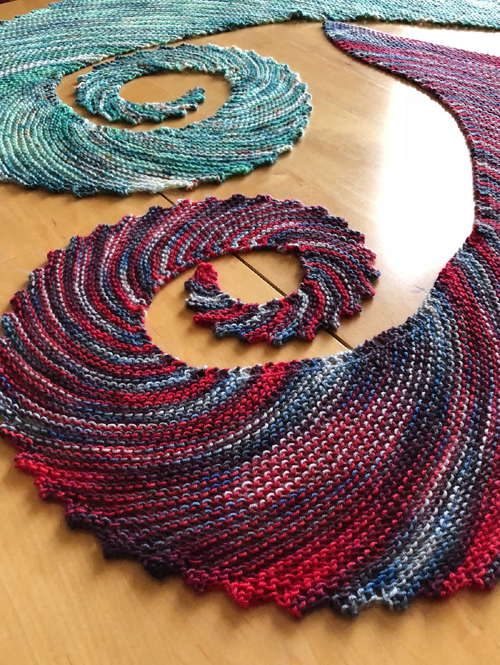
One Skein Wonder is an easy scarf that is worked from corner to edge using increases as well as bind-off stitches in order to show off the color changes in the skein on a bias. Although it isn’t necessary, a variegated skein of yarn is highly recommended for this project. It is a lot of fun to watch the colors as they stripe and pool throughout the scarf. These instructions are easy to follow and only include basic knitting skills.

Download Pattern: One Skein Wonder

Decorative Knitted Maple Leaf – Autumn Leaf Knitting Pattern


Decorative Knitted Maple Leaf pattern by Svetlana Gordon

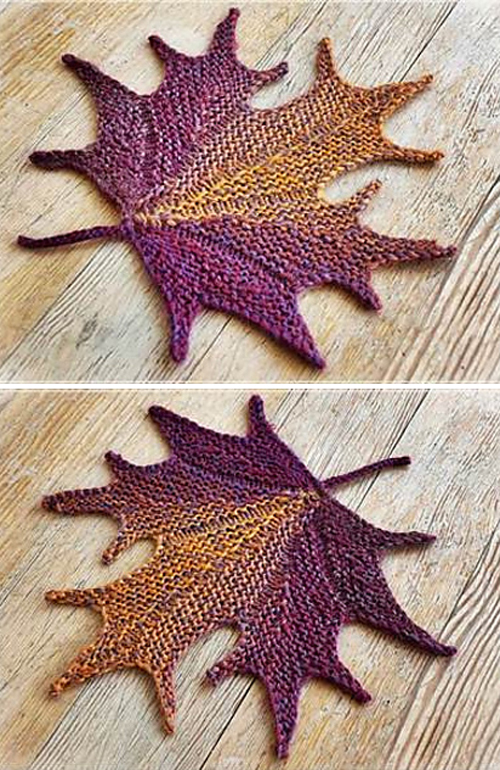
Decorative knitted maple Leaf by Svetlana Gordon. Project photo © agasi.

Decorative knitted maple Leaf by Svetlana Gordon is a beautifully shaped knitted leaf motif inspired by the dramatic colors and distinctive silhouette of autumn maple leaves.

Rather than knitting a simple flat leaf outline, this design uses thoughtful shaping to create the characteristic lobes of a maple leaf. The pattern includes three different sizes and can be worked in many yarn weights, making it surprisingly versatile.

A small leaf can become a brooch or embellishment, a medium leaf can be used as seasonal home decor, and thicker yarn can transform the same concept into a much larger decorative piece.

Availability update: the exact Svetlana Gordon pattern featured here is currently a paid pattern. During our latest review, we did not find an authorized free version of this exact design, so the link near the end of this guide goes to the designer's current pattern page.

Decorative Knitted Maple Leaf at a Glance

  • Pattern: Decorative knitted maple Leaf
  • Designer: Svetlana Gordon
  • Published: September 2013
  • Category: Applique / embellishment
  • Sizes: Small, Medium and Large
  • Sample yarn weight: Lace
  • Suggested yarn: Zitron Filigran
  • Sample needle size: US 0 / 2 mm
  • Gauge: 28 sts × 34 rows = 4 in / 10 cm in garter stitch
  • Construction: Seamless
  • Shaping: Short rows
  • Fabric: Reversible
  • Instructions: Written with detailed photographs
  • Language: English
  • Current availability: Paid pattern

Three Maple Leaf Sizes

The original pattern contains instructions for three different leaf sizes.

  • Small: approximately 12 × 10.5 cm (4.7 × 4.1 in)
  • Medium: approximately 18 × 17 cm (7 × 6.6 in)
  • Large: approximately 20 × 22 cm (7.8 × 8.6 in)

These measurements are based on the yarn and gauge used for the designer's samples. Changing yarn weight can substantially change the final dimensions.

Use Almost Any Yarn Weight

One of the most creative features of this pattern is that you are not limited to lace-weight yarn.

Svetlana Gordon explains that the motif can be worked using other yarn weights as well.

Thin yarn produces a smaller, more delicate leaf, while thicker yarn creates a progressively larger decorative piece.

This gives knitters considerable freedom to adapt the same leaf concept to different projects.

Make a Tiny Maple Leaf Brooch

Work one of the smaller versions in fine yarn and the finished leaf can become a lightweight seasonal embellishment or brooch.

Autumn shades such as red, burnt orange, mustard and russet work beautifully, but there is no reason to limit the design to realistic leaf colors.

Turn It Into a Coaster

A medium-sized leaf can make an attractive decorative coaster or table accent.

If you plan to use the leaf beneath cups or dishes, choose a practical yarn that can tolerate the intended use and cleaning method.

Use the Leaf as an Embellishment

The designer suggests using the knitted maple leaf to decorate many different handmade or purchased items.

Possible uses include:

  • Scarves and wraps
  • Hats
  • Jackets and cardigans
  • Sweaters
  • Fabric bags
  • Decorative pillows
  • Autumn table displays
  • Seasonal wreaths and garlands
  • Brooches and accessories

Try Bulky Yarn for a Large Leaf

Working the design in a much thicker yarn changes the scale dramatically.

The designer even suggests using bulky yarn to create a large decorative leaf suitable for the home.

When changing yarn weight, choose needles appropriate for that yarn rather than automatically using the 2 mm needles from the lace-weight sample.

Original Yarn: Zitron Filigran

The original sample uses Zitron Filigran, a fine lace-weight merino yarn.

The yarn contains approximately 600 meters per 100 grams, allowing the detailed shaping of the leaf to remain light and refined.

You do not need the original yarn to explore this pattern because the designer specifically allows for different yarn weights.

Choosing Yarn for an Autumn Leaf

Color is one of the most enjoyable parts of this project.

A single solid shade gives the leaf a clean sculptural appearance, while gently variegated yarn can imitate the natural color changes found in autumn foliage.

Consider shades such as:

  • Crimson red
  • Burnt orange
  • Golden yellow
  • Rust
  • Burgundy
  • Olive green
  • Brown

Multicolored yarn can also create a striking leaf, particularly when its color changes are gradual rather than extremely busy.

Garter Stitch Forms the Fabric

The sample gauge is measured in garter stitch.

Garter stitch is useful for a decorative motif because it produces a flexible fabric with texture on both sides.

Its horizontal ridges also interact beautifully with the changing direction of the leaf shaping.

A Reversible Decorative Leaf

Ravelry identifies the design as reversible.

That is particularly useful for decorations such as garlands, embellishments and hanging pieces where both sides of the knitting may remain visible.

Careful finishing and neatly woven yarn ends will help preserve that polished appearance.

Seamless Construction

The maple leaf is also classified as seamless.

This means you do not knit five completely separate leaf lobes and sew them together afterward.

Instead, the distinctive maple shape develops through the pattern's knitting and shaping techniques.

Short Rows Create the Shape

Short-row shaping is one of the important techniques used in this design.

Short rows allow a knitter to work only part of a row before turning the work. This adds extra rows to selected areas of the fabric and allows curves, angles and three-dimensional shaping to develop.

In a maple leaf motif, that technique helps create the complex outline without relying on seams between separate pieces.

What Does Wrap and Turn Mean?

The pattern uses short-row shaping that includes wrapping and turning.

Instead of knitting all the way to the end of a row, you stop at the specified point, prepare the turning stitch and reverse direction.

If short rows are new to you, practicing the technique on a small swatch before beginning the leaf can make the project much easier to follow.

Selvedge Stitches Matter

Svetlana Gordon gives specific treatment to the selvedge stitches along the edges.

Maintaining those edge stitches consistently helps produce the clean, defined outline that is particularly important in a decorative motif.

Avoid automatically working the first and last stitches according to your usual habits; follow the designer's edge instructions carefully.

Needle Size

The lace-weight sample uses approximately US 0 / 2 mm needles.

This needle size corresponds to the fine sample yarn and should not be treated as the required size for every version of the leaf.

If you use DK, worsted or bulky yarn, choose a needle size appropriate for that yarn and the fabric you want to create.

Gauge

For the original lace-weight sample, the published gauge is approximately 28 stitches and 34 rows = 4 inches / 10 cm in garter stitch.

Gauge determines the scale of the finished motif.

Because this is a decorative piece rather than a fitted garment, you have more freedom to experiment with scale as long as you are happy with the resulting fabric.

Is This a Beginner Pattern?

This is not simply a basic knit-and-purl leaf.

The pattern uses short rows, specialized shaping and careful edge treatment to achieve its realistic maple outline.

A knitter who already understands the basic stitches and wants to learn more advanced shaping techniques may find it a rewarding small project.

The detailed photographs included with the original pattern are particularly useful when working through unfamiliar steps.

Skills That Will Help

  • Casting on
  • Knit and purl stitches
  • Garter stitch
  • Working increases and decreases
  • Short-row shaping
  • Wrap and turn
  • Slipping stitches
  • Working selvedge stitches
  • Following written instructions
  • Binding off
  • Weaving in yarn ends neatly

Detailed Photo Tutorial

One of the strengths of Svetlana Gordon's pattern is the inclusion of detailed photographs.

The designer describes the instructions as a row-by-row guide supported by photos for all three leaf sizes.

That visual support can be particularly valuable when working the short rows and shaping that form the leaf's distinctive points.

Keep Track of Your Rows

Shaped motifs are less forgiving of misplaced rows than a simple rectangular scarf.

Use a row counter or mark completed rows on your pattern as you work.

If the shaping begins to look asymmetrical in an unexpected way, check your progress before continuing.

Do Not Rush the Short Rows

The beauty of the finished maple shape depends on working the turns in the correct places.

Take your time when you reach a turning point and confirm that you are working the correct size and row before reversing direction.

Block the Leaf Into Shape

Careful blocking can help emphasize the points and lobes of the finished maple leaf.

Arrange the leaf on a suitable blocking surface and gently encourage the different sections into their intended shape.

Avoid stretching the knitting excessively. The goal is to refine the outline, not distort the stitch structure.

Always choose a blocking method appropriate for the fiber content of your yarn.

Make an Autumn Leaf Collection

Because the pattern offers several sizes and works with different yarn weights, you can create a collection of leaves rather than knitting only one.

Try combining several autumn colors and sizes for a table display, seasonal garland or decorative arrangement.

Using related colors while varying the size can create a more natural, collected-leaves appearance.

A Creative Scrap-Yarn Project

Decorative leaves can be a useful way to experiment with smaller quantities of yarn left from other projects.

The amount required will depend heavily on the size of leaf and yarn weight you choose.

Before using leftover yarn, make sure you have enough to complete the selected leaf or be prepared to turn the color change into an intentional design feature.

Decorative Knitted Maple Leaf Pattern Availability

Decorative knitted maple Leaf by Svetlana Gordon is currently a paid knitting pattern.

The exact original design featured on this Amazing Knitting page is currently sold through Svetlana Gordon's Ravelry Store.

During our latest review, we did not verify a legitimate free source for this exact pattern.

Other free knitted maple-leaf patterns do exist online, but they are different designs. Amazing Knitting does not substitute a similarly named free pattern and present it as though it were Svetlana Gordon's original design.

Get the Decorative Knitted Maple Leaf Pattern

Visit Svetlana Gordon's current pattern page for the complete instructions, detailed photographs and all three leaf sizes.

View the Decorative Knitted Maple Leaf Pattern →

Decorative knitted maple Leaf is designed by Svetlana Gordon. Amazing Knitting does not reproduce the designer's copyrighted row-by-row instructions or photographs from the pattern. The exact pattern is currently sold by the designer, and availability or pricing may change. Please check the linked source for current information.

Read Our Pattern Availability Policy →

ZigZag Dishcloth - Free Knitting Pattern

ZigZag Dishcloth - Free Knitting Pattern
The photo above © Martingale
What beautiful dishcloth knitting pattern! I found it on Pinterest...
Textured stitches always make fabulous dishcloths - the bumps make it easy to get a good scrub on those dirty dishes! This pattern features an easy to memorize zigzag that is repeated through the pattern and is fun to watch the design move across your dishcloth as you knit it.

Full Post: ZigZag Dishcloth

Discover More From the Archive

A fresh mix of knitting patterns and tutorials from the Amazing Knitting archive.

Finding patterns from the archive…