![]() |
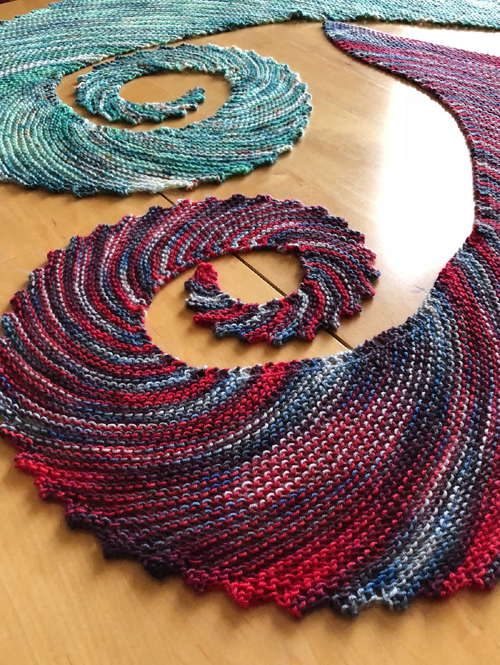
| The photo above © Amanda Kremer |
...
One Skein Wonder - Free Knitting Pattern
Decorative Knitted Maple Leaf – Autumn Leaf Knitting Pattern
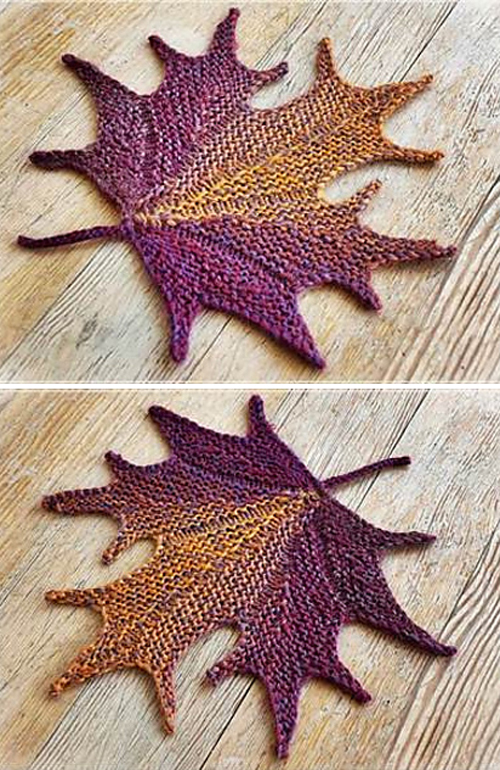
Decorative knitted maple Leaf by Svetlana Gordon. Project photo © agasi.
Decorative knitted maple Leaf by Svetlana Gordon is a beautifully shaped knitted leaf motif inspired by the dramatic colors and distinctive silhouette of autumn maple leaves.
Rather than knitting a simple flat leaf outline, this design uses thoughtful shaping to create the characteristic lobes of a maple leaf. The pattern includes three different sizes and can be worked in many yarn weights, making it surprisingly versatile.
A small leaf can become a brooch or embellishment, a medium leaf can be used as seasonal home decor, and thicker yarn can transform the same concept into a much larger decorative piece.
Availability update: the exact Svetlana Gordon pattern featured here is currently a paid pattern. During our latest review, we did not find an authorized free version of this exact design, so the link near the end of this guide goes to the designer's current pattern page.
Decorative Knitted Maple Leaf at a Glance
- Pattern: Decorative knitted maple Leaf
- Designer: Svetlana Gordon
- Published: September 2013
- Category: Applique / embellishment
- Sizes: Small, Medium and Large
- Sample yarn weight: Lace
- Suggested yarn: Zitron Filigran
- Sample needle size: US 0 / 2 mm
- Gauge: 28 sts × 34 rows = 4 in / 10 cm in garter stitch
- Construction: Seamless
- Shaping: Short rows
- Fabric: Reversible
- Instructions: Written with detailed photographs
- Language: English
- Current availability: Paid pattern
Three Maple Leaf Sizes
The original pattern contains instructions for three different leaf sizes.
- Small: approximately 12 × 10.5 cm (4.7 × 4.1 in)
- Medium: approximately 18 × 17 cm (7 × 6.6 in)
- Large: approximately 20 × 22 cm (7.8 × 8.6 in)
These measurements are based on the yarn and gauge used for the designer's samples. Changing yarn weight can substantially change the final dimensions.
Use Almost Any Yarn Weight
One of the most creative features of this pattern is that you are not limited to lace-weight yarn.
Svetlana Gordon explains that the motif can be worked using other yarn weights as well.
Thin yarn produces a smaller, more delicate leaf, while thicker yarn creates a progressively larger decorative piece.
This gives knitters considerable freedom to adapt the same leaf concept to different projects.
Make a Tiny Maple Leaf Brooch
Work one of the smaller versions in fine yarn and the finished leaf can become a lightweight seasonal embellishment or brooch.
Autumn shades such as red, burnt orange, mustard and russet work beautifully, but there is no reason to limit the design to realistic leaf colors.
Turn It Into a Coaster
A medium-sized leaf can make an attractive decorative coaster or table accent.
If you plan to use the leaf beneath cups or dishes, choose a practical yarn that can tolerate the intended use and cleaning method.
Use the Leaf as an Embellishment
The designer suggests using the knitted maple leaf to decorate many different handmade or purchased items.
Possible uses include:
- Scarves and wraps
- Hats
- Jackets and cardigans
- Sweaters
- Fabric bags
- Decorative pillows
- Autumn table displays
- Seasonal wreaths and garlands
- Brooches and accessories
Try Bulky Yarn for a Large Leaf
Working the design in a much thicker yarn changes the scale dramatically.
The designer even suggests using bulky yarn to create a large decorative leaf suitable for the home.
When changing yarn weight, choose needles appropriate for that yarn rather than automatically using the 2 mm needles from the lace-weight sample.
Original Yarn: Zitron Filigran
The original sample uses Zitron Filigran, a fine lace-weight merino yarn.
The yarn contains approximately 600 meters per 100 grams, allowing the detailed shaping of the leaf to remain light and refined.
You do not need the original yarn to explore this pattern because the designer specifically allows for different yarn weights.
Choosing Yarn for an Autumn Leaf
Color is one of the most enjoyable parts of this project.
A single solid shade gives the leaf a clean sculptural appearance, while gently variegated yarn can imitate the natural color changes found in autumn foliage.
Consider shades such as:
- Crimson red
- Burnt orange
- Golden yellow
- Rust
- Burgundy
- Olive green
- Brown
Multicolored yarn can also create a striking leaf, particularly when its color changes are gradual rather than extremely busy.
Garter Stitch Forms the Fabric
The sample gauge is measured in garter stitch.
Garter stitch is useful for a decorative motif because it produces a flexible fabric with texture on both sides.
Its horizontal ridges also interact beautifully with the changing direction of the leaf shaping.
A Reversible Decorative Leaf
Ravelry identifies the design as reversible.
That is particularly useful for decorations such as garlands, embellishments and hanging pieces where both sides of the knitting may remain visible.
Careful finishing and neatly woven yarn ends will help preserve that polished appearance.
Seamless Construction
The maple leaf is also classified as seamless.
This means you do not knit five completely separate leaf lobes and sew them together afterward.
Instead, the distinctive maple shape develops through the pattern's knitting and shaping techniques.
Short Rows Create the Shape
Short-row shaping is one of the important techniques used in this design.
Short rows allow a knitter to work only part of a row before turning the work. This adds extra rows to selected areas of the fabric and allows curves, angles and three-dimensional shaping to develop.
In a maple leaf motif, that technique helps create the complex outline without relying on seams between separate pieces.
What Does Wrap and Turn Mean?
The pattern uses short-row shaping that includes wrapping and turning.
Instead of knitting all the way to the end of a row, you stop at the specified point, prepare the turning stitch and reverse direction.
If short rows are new to you, practicing the technique on a small swatch before beginning the leaf can make the project much easier to follow.
Selvedge Stitches Matter
Svetlana Gordon gives specific treatment to the selvedge stitches along the edges.
Maintaining those edge stitches consistently helps produce the clean, defined outline that is particularly important in a decorative motif.
Avoid automatically working the first and last stitches according to your usual habits; follow the designer's edge instructions carefully.
Needle Size
The lace-weight sample uses approximately US 0 / 2 mm needles.
This needle size corresponds to the fine sample yarn and should not be treated as the required size for every version of the leaf.
If you use DK, worsted or bulky yarn, choose a needle size appropriate for that yarn and the fabric you want to create.
Gauge
For the original lace-weight sample, the published gauge is approximately 28 stitches and 34 rows = 4 inches / 10 cm in garter stitch.
Gauge determines the scale of the finished motif.
Because this is a decorative piece rather than a fitted garment, you have more freedom to experiment with scale as long as you are happy with the resulting fabric.
Is This a Beginner Pattern?
This is not simply a basic knit-and-purl leaf.
The pattern uses short rows, specialized shaping and careful edge treatment to achieve its realistic maple outline.
A knitter who already understands the basic stitches and wants to learn more advanced shaping techniques may find it a rewarding small project.
The detailed photographs included with the original pattern are particularly useful when working through unfamiliar steps.
Skills That Will Help
- Casting on
- Knit and purl stitches
- Garter stitch
- Working increases and decreases
- Short-row shaping
- Wrap and turn
- Slipping stitches
- Working selvedge stitches
- Following written instructions
- Binding off
- Weaving in yarn ends neatly
Detailed Photo Tutorial
One of the strengths of Svetlana Gordon's pattern is the inclusion of detailed photographs.
The designer describes the instructions as a row-by-row guide supported by photos for all three leaf sizes.
That visual support can be particularly valuable when working the short rows and shaping that form the leaf's distinctive points.
Keep Track of Your Rows
Shaped motifs are less forgiving of misplaced rows than a simple rectangular scarf.
Use a row counter or mark completed rows on your pattern as you work.
If the shaping begins to look asymmetrical in an unexpected way, check your progress before continuing.
Do Not Rush the Short Rows
The beauty of the finished maple shape depends on working the turns in the correct places.
Take your time when you reach a turning point and confirm that you are working the correct size and row before reversing direction.
Block the Leaf Into Shape
Careful blocking can help emphasize the points and lobes of the finished maple leaf.
Arrange the leaf on a suitable blocking surface and gently encourage the different sections into their intended shape.
Avoid stretching the knitting excessively. The goal is to refine the outline, not distort the stitch structure.
Always choose a blocking method appropriate for the fiber content of your yarn.
Make an Autumn Leaf Collection
Because the pattern offers several sizes and works with different yarn weights, you can create a collection of leaves rather than knitting only one.
Try combining several autumn colors and sizes for a table display, seasonal garland or decorative arrangement.
Using related colors while varying the size can create a more natural, collected-leaves appearance.
A Creative Scrap-Yarn Project
Decorative leaves can be a useful way to experiment with smaller quantities of yarn left from other projects.
The amount required will depend heavily on the size of leaf and yarn weight you choose.
Before using leftover yarn, make sure you have enough to complete the selected leaf or be prepared to turn the color change into an intentional design feature.
Decorative Knitted Maple Leaf Pattern Availability
Decorative knitted maple Leaf by Svetlana Gordon is currently a paid knitting pattern.
The exact original design featured on this Amazing Knitting page is currently sold through Svetlana Gordon's Ravelry Store.
During our latest review, we did not verify a legitimate free source for this exact pattern.
Other free knitted maple-leaf patterns do exist online, but they are different designs. Amazing Knitting does not substitute a similarly named free pattern and present it as though it were Svetlana Gordon's original design.
Get the Decorative Knitted Maple Leaf Pattern
Visit Svetlana Gordon's current pattern page for the complete instructions, detailed photographs and all three leaf sizes.
View the Decorative Knitted Maple Leaf Pattern →
Decorative knitted maple Leaf is designed by Svetlana Gordon. Amazing Knitting does not reproduce the designer's copyrighted row-by-row instructions or photographs from the pattern. The exact pattern is currently sold by the designer, and availability or pricing may change. Please check the linked source for current information.
ZigZag Dishcloth - Free Knitting Pattern
![]() |
| The photo above © Martingale |
Textured stitches always make fabulous dishcloths - the bumps make it easy to get a good scrub on those dirty dishes! This pattern features an easy to memorize zigzag that is repeated through the pattern and is fun to watch the design move across your dishcloth as you knit it.
How to Remove Purl Dash Lines - Knitting Technique
![]() |
| Photos above © Studio Knit |
Hooded Sleep Sack - Free Knitting Pattern
![]() |
| The photo above © Jack Deutsch |
Vintage Cardigan - Knitting Pattern
![]() |
| The photo above © kararstanley |
Easy Slippers - Free Knitting Pattern
![]() |
| Easy Knitting Tutorial |
Vine Lace Cardi - Knitting Pattern
![]() |
| The photo above © jadoreknitting |
Fish and Chip Babies - Free Knitting Pattern
![]() |
| The photo above © Cordelia |
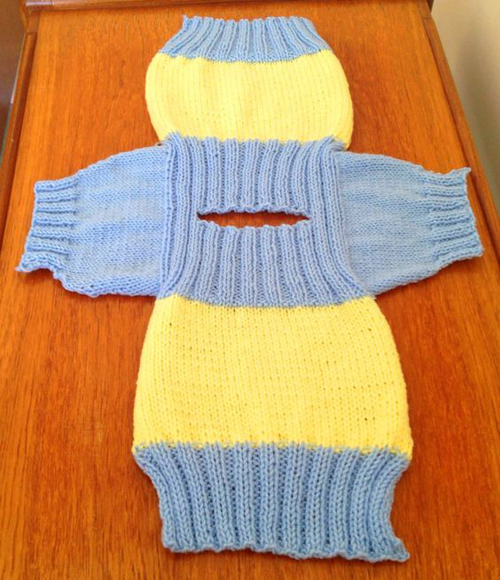
Looking for a simple baby jumper and beanie knitting project with a long history of charity knitting? The pattern commonly known as the Fish and Chip Babies jumper has circulated for many years among knitting groups, churches, community organizations, and charity projects.
The design is intentionally simple: a small baby jumper is knitted in one piece and paired with a basic beanie. Its straightforward construction made it popular with knitters who wanted to create warm baby garments quickly for donation.
Fish and Chip Babies Pattern at a Glance
Pattern Type: Baby Jumper and Beanie
Craft: Knitting
Category: Charity Baby Knitting
Construction: Jumper knitted in one piece
Yarn Weight: Double Knitting / DK
Needles: Approximately 4.5–5.0 mm, depending on tension
Matching Item: Baby Beanie
Pattern History: Widely circulated charity pattern
What Are Fish and Chip Baby Jumpers?
“Fish and Chip Babies” is a name that became associated with a simple knitted baby jumper distributed through charity knitting campaigns.
Older appeals explained that the garments were intended for babies in communities where suitable newborn clothing could be difficult to obtain. The unusual name came from stories that some newborns were being kept warm using newspaper.
Versions of the appeal and pattern have circulated through community groups for many years, so there is no single modern pattern publisher that can easily be identified as the original designer.
A Simple One-Piece Baby Jumper
One reason this pattern became popular for charity knitting is its uncomplicated construction. The jumper is worked largely as a single piece, reducing the amount of shaping and finishing required.
Traditional versions combine ribbing and stockinette stitch, with stitches added to form the sleeves and an opening created for the baby's head.
This makes the project approachable for knitters who are comfortable with basic knit and purl stitches but may not yet want to tackle a more complicated baby sweater.
Yarn for the Baby Jumper
The commonly circulated versions specify Double Knitting (DK) yarn, also known as approximately 8-ply in some countries.
Older charity instructions often requested bright or mixed colors rather than very pale shades. However, donation requirements can change significantly between organizations.
If you intend to knit these garments for charity, always check the receiving organization's current requirements before purchasing yarn or starting the project.
Needle Sizes
Traditional copies of the jumper pattern commonly recommend:
- 5.0 mm needles for tighter knitters
- 4.5 mm needles for looser knitters
These recommendations are intended to produce an appropriately sized and flexible baby garment, but your personal knitting tension may vary.
The Matching Baby Beanie
A simple knitted beanie is frequently included alongside the jumper pattern. Like the jumper, the hat is designed to be quick to knit and uses basic ribbing, stockinette stitch, and crown decreases.
Matching the hat and jumper in coordinating colors can create a complete little newborn set.
Why This Pattern Became Popular for Charity Knitting
Charity knitting projects often need designs that are economical, practical, and easy to reproduce in larger numbers.
The Fish and Chip baby jumper fits those requirements well because it uses familiar knitting techniques, can be made with relatively small amounts of DK yarn, and does not require complicated garment construction.
It is also useful for groups because knitters of different experience levels can contribute to the same type of project.
Important: Check Current Donation Requirements
Many versions of this pattern online come from older charity appeals. That does not necessarily mean the same organization is currently requesting these garments.
Before knitting specifically for donation, confirm that your chosen charity currently accepts knitted baby jumpers and hats and check its latest requirements for yarn type, colors, sizing, washing, labeling, and delivery.
If no current charity appeal is available in your area, the same simple style can still be useful as inspiration for personal baby knitting or local donation projects that accept handmade garments.
View a Traditional Fish and Chip Baby Pattern
Amazing Knitting does not reproduce the full circulated knitting instructions here. A historical copy of the jumper and hat pattern is available from the source below.
View the Fish and Chip Baby Pattern →
Pattern note: This is a widely circulated charity knitting pattern. Amazing Knitting has not identified a definitive original designer. The linked copy is provided by an external organization, and current charity requirements should always be verified separately.
More Baby Knitting Inspiration
Explore more baby sweater knitting patterns, baby hat knitting patterns, and baby knitting patterns from the Amazing Knitting archive.
Before You Start
If you are knitting this project for donation, contact the intended charity first. Organizations may have specific rules about fiber content, colors, sizing, safety, finishing, and whether handmade baby garments are currently needed.
Baby Tweed Knitting Cardigan – Pattern Inspiration & Free Alternatives
Baby Tweed knitted cardigan. Project photo © EraLunaris.
This beautiful Baby Tweed knitted cardigan has long attracted knitters because of its understated texture and classic, handmade appearance.
The fabric uses simple-looking combinations of knit and purl texture, interrupted by smoother stockinette sections. The result is a subtle tweed-like surface that gives an otherwise traditional cardigan plenty of character.
Unfortunately, the original pattern link associated with this older Amazing Knitting post can no longer be reliably verified. Rather than send you to an unrelated pattern with a similar name, we have preserved this page as knitting inspiration and included currently available alternatives below.
About the Baby Tweed Cardigan
The original description associated with this project explains that its texture was created through combinations of knit and purl stitches, separated by simpler stockinette sections.
Its inspiration reportedly came from an older adult-sized acrylic cardigan, with the knitted version shown here demonstrating how much richer this type of texture can look when worked in wool.
Why This Cardigan Still Looks So Appealing
The strength of the design is its simplicity.
Instead of relying on complicated colorwork or elaborate cables, the surface of the cardigan creates interest through changes in texture. Knit and purl stitches catch the light differently, producing subtle horizontal sections across the fabric.
This is a useful reminder that even basic knitting stitches can create a sophisticated garment when they are arranged thoughtfully.
A Classic Textured Cardigan Style
Textured cardigans are especially versatile because the stitch pattern provides visual interest without requiring several colors of yarn.
Depending on the yarn, the same basic idea can produce very different results:
- A smooth wool can emphasize every knit-and-purl detail.
- A tweed yarn can create a rustic traditional appearance.
- A soft merino can make the fabric feel more refined.
- A wool blend can balance warmth, durability and easier care.
Why Tweed Yarn Works So Well
A tweed-style yarn is a natural match for this kind of cardigan.
Small flecks of contrasting fiber add color without overwhelming the knitted texture. The result can feel traditional and slightly rustic, particularly in neutral shades such as oatmeal, gray, brown, cream or muted green.
However, you do not need actual tweed yarn to achieve an attractive result. A solid yarn with good stitch definition can show textured knit-and-purl patterns even more clearly.
Texture Without Complicated Colorwork
One advantage of knit-and-purl texture is that you can create an interesting surface while working with a single yarn color.
That means there are no strands of unused colors running across the back of the work as there would be with stranded colorwork.
For knitters who enjoy simple repetitive stitching, textured patterns can provide an appealing middle ground between plain stockinette and more advanced decorative techniques.
Choosing Yarn for a Similar Cardigan
If you want to knit a cardigan with a similar appearance using another pattern, choose yarn based on the requirements of that specific pattern rather than attempting to copy the yarn from this photograph.
For textured baby or child garments, consider:
- Softness against sensitive skin
- Good stitch definition
- Washability
- Durability
- Fiber content
- Correct yarn weight
- Enough yardage for your chosen size
Gauge Matters When Substituting Yarn
Never choose a substitute based only on whether the yarn looks similar.
Two yarns labeled with the same general weight can behave differently. Always compare the gauge required by the pattern you ultimately choose and make a swatch before starting the garment.
Correct gauge is particularly important for cardigans because it affects chest circumference, length, armholes and sleeve fit.
Use the Photo for Inspiration, Not Instructions
The photograph is useful for studying the overall visual effect of the cardigan, but a finished project photo should not be treated as a substitute for a knitting pattern.
Garment construction involves important details that cannot reliably be determined from a photograph alone, including stitch counts, gauge, shaping, buttonhole placement, sleeve construction and sizing.
For that reason, we recommend choosing a complete pattern from a reputable source rather than attempting to reconstruct this cardigan from the image.
What Happened to the Original Baby Tweed Pattern?
This Amazing Knitting post was originally published as a discovery link to a pattern found through Ravelry.
During our latest review, we were unable to verify the exact original designer and authorized pattern page associated with this particular project photograph.
There are other knitting patterns online with very similar Baby Tweed names, but similarity of title is not enough to establish that they are the same design.
We therefore will not redirect readers to an unrelated pattern simply because its name looks similar.
Important: A Different Baby Tweed Cardigan Exists
You may find a pattern online called Baby Tweed Cardigan by Natasha Dueck.
That is a different design and should not be confused with the cardigan shown on this page.
Natasha Dueck's pattern was published separately and has its own construction, yarn requirements and pattern source.
Currently Available Free Alternatives
If you arrived here looking for a pattern you can actually start knitting, the best solution is to use a currently available cardigan pattern from a reliable designer or yarn company.
Here are free official alternatives from DROPS Design that are worth exploring.
1. Sweet Marie by DROPS Design
Sweet Marie / DROPS 70-6 is an official free cardigan knitting pattern from DROPS Design.
It is designed for children rather than babies and includes several sizes. The pattern can be worked with the yarn options currently suggested by DROPS, and the complete instructions are available free on the official Garnstudio website.
View the Free Sweet Marie Cardigan Pattern →
2. Explore More Free DROPS Cardigans
DROPS Design maintains a large collection of free knitting patterns, including cardigans and jackets in many yarn weights and sizes.
If Sweet Marie is not the size or style you need, browse the official DROPS collection and select a cardigan whose measurements, yarn weight and construction suit your project.
Explore Free Knitting Patterns at DROPS Design →
How to Choose the Best Alternative
Do not choose an alternative only because it uses the word tweed in its title.
Instead, compare the features that matter for the garment you want to make:
- Baby or child size
- Cardigan shape
- Yarn weight
- Gauge
- Buttoned front
- Sleeve style
- Worked flat or seamless construction
- Textured versus plain fabric
Want a Similar Textured Look?
If the texture in the Baby Tweed photograph is what attracted you, search for cardigan patterns featuring:
- Knit-and-purl texture
- Broken rib
- Seed stitch
- Double seed stitch
- Garter ridges
- Textured stripe patterns
These techniques can create the same general feeling of subtle, traditional texture while allowing you to work from a complete, currently available pattern.
Pattern Availability Note
We periodically review older Amazing Knitting posts to make sure readers are not sent to missing, unrelated or incorrectly identified patterns.
At the time of this review, we could not confidently verify the original authorized pattern source for the exact Baby Tweed cardigan shown above.
If the original designer or an authorized source becomes verifiable again, this page can be updated with the correct pattern information.
Until then, the image and original description are retained for knitting inspiration, while the links above provide currently available alternatives.
Amazing Knitting does not reproduce copyrighted pattern instructions. The original pattern associated with the project shown on this page could not be reliably verified during our latest availability review. Photo © EraLunaris.
Berry Baby Hat - Free Pattern
![]() |
| Photos above © sonnentaler |
The Back Porch Shawl - Free Pattern
![]() |
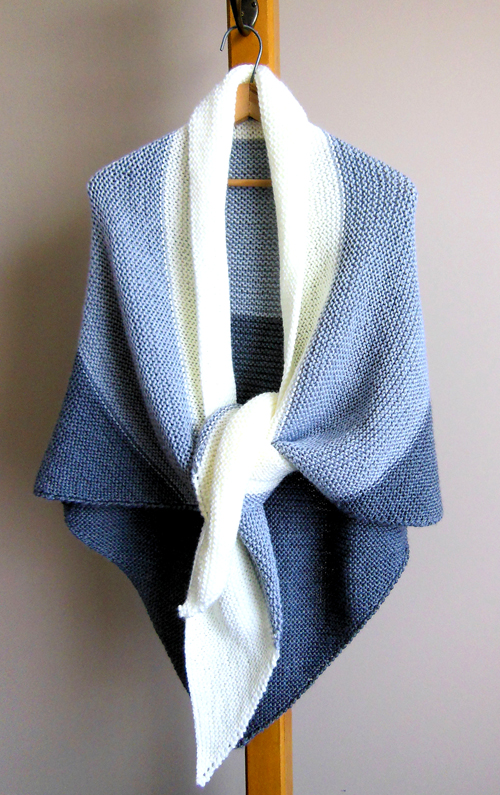
| The photo above © Diana Poirier |
Discover More From the Archive
A fresh mix of knitting patterns and tutorials from the Amazing Knitting archive.