Skip to content

...

Knit Stitch Patterns for Beginning Knitters

Knit Stitch Patterns for Beginning Knitters
Photos above © Studio Knit
Which texture design is your favorite? Easy Knit Stitch Patterns for Beginning Knitters with Written Instructions and Charts.
Knit and Purl Stitch Patterns with Free Patterns and Video Tutorials in the Absolute Beginning Knitter Series by Studio Knit.

Lace Cotton Ponchette - Free Pattern

 Lace Cotton Ponchette - Free Pattern
Photo above ©  swellknits
I found this beautiful knitting pattern on archive org...
This is working up beautifully. Covington has just the right drape and sheen for this piece. The pattern is simple; half garter and half eyelet. The eyelets are staggered so it’s interesting enough yet easy to read.

Download Pattern: Lace Cotton Ponchette

Green Is The Hope – Free Lace Socks Knitting Pattern

Green Is The Hope free lace socks knitting pattern by Stephanie van der Linden

Green Is The Hope. Photo © Stephanie van der Linden

Green Is The Hope, originally titled Grün ist die Hoffnung, is a free lace sock knitting pattern by Stephanie van der Linden with a wonderfully unusual construction.

Instead of beginning traditionally at the cuff or toe, these knitted socks start with a decorative lace section around the center of the upper foot. The rest of the sock is then developed around this starting point, making the pattern an interesting choice for experienced sock knitters looking for something different.

Green Is The Hope Pattern Details

  • Designer: Stephanie van der Linden
  • Original name: Grün ist die Hoffnung
  • Published: July 2008
  • Craft: Knitting
  • Category: Mid-calf socks
  • Pattern availability: Free download
  • Yarn weight: Fingering / 4 ply
  • Suggested yarn: Schachenmayr Regia 4-fädig 4-ply
  • Yardage: Approximately 350–437 yards (320–400 m)
  • Construction: Unusual center-start sock construction
  • Techniques: Lace, short rows and knitting in the round
  • Heel: Short-row heel
  • Pattern format: Includes charted instructions
  • Languages: English and German

An Unusual Way to Knit Socks

What makes Green Is The Hope particularly interesting is its unconventional starting point.

Most hand-knit socks begin either at the cuff and work toward the toe, or begin at the toe and work upward. This design takes a different approach by beginning with a lace motif positioned on the upper part of the foot.

The sock is then developed outward from this decorative starting point, creating a construction that feels very different from a conventional sock pattern.

Decorative Lace Socks

The lace motif is one of the defining features of the design. It creates an eye-catching geometric texture across the upper foot while also becoming an important part of the sock's construction.

Fingering-weight yarn keeps the fabric relatively fine, allowing the lace openings and stitch definition to remain visible.

A solid, semi-solid or gently tonal yarn can be especially effective if you want the lace structure to remain the main visual feature.

Yarn for Green Is The Hope

The pattern is designed for fingering-weight / 4-ply sock yarn.

Stephanie van der Linden suggests Schachenmayr Regia 4-fädig 4-ply, a traditional sock yarn containing wool and nylon.

The pattern listing gives an estimated requirement of approximately 350–437 yards (320–400 metres).

Another fingering-weight sock yarn can be substituted, but choose your yarn and needles according to the gauge and fabric required by the pattern rather than relying only on the yarn-weight label.

Short-Row Heel Construction

Green Is The Hope incorporates a short-row heel. Short rows allow the knitted fabric to curve around the heel without requiring the traditional heel-flap-and-gusset construction used in many cuff-down sock patterns.

Combined with the unusual center-start construction, this gives the project a very different knitting experience from a basic pair of socks.

Skills Used in Green Is The Hope

This is an especially interesting project for knitters who already have some sock-knitting experience and would like to explore a less conventional construction.

Useful techniques include:

  • Knitting in the round
  • Lace knitting
  • Reading a knitting chart
  • Yarn overs and decreases
  • Short rows
  • Short-row heel construction
  • Picking up or working into existing stitches
  • Following an unconventional sock construction

Designed for a German Sock KAL

Stephanie van der Linden originally designed Grün ist die Hoffnung for the Socken-Kreativ-Liste, a German Yahoo knitting community and knit-along that had around 2,000 members.

The original German title translates as “Green Is The Hope”, which is why the pattern may appear under either name when you search for it online.

English and German Versions

The design is available in both English and German.

The English version is available through Stephanie van der Linden's Ravelry store. The designer's pattern information asks knitters seeking the German version to contact her.

Why Knit Green Is The Hope?

Green Is The Hope is not simply another lace sock pattern. Its unusual starting point changes the way the sock develops on the needles and makes the construction itself part of the appeal.

If you have already knitted traditional cuff-down or toe-up socks, this pattern offers an opportunity to approach familiar sock components from a very different direction.

The combination of fingering-weight yarn, lace, short rows and the center-start construction makes it a memorable project for knitters who enjoy exploring unusual techniques.

Get the Free Green Is The Hope Sock Pattern

The complete Grün ist die Hoffnung (Green Is The Hope) pattern by Stephanie van der Linden is currently available as a free download from the designer's Ravelry store.

Get the Free Green Is The Hope Sock Pattern

Pattern availability was checked when this article was updated. Availability on external websites may change over time.

Rainbow Blanket - Free Pattern

Photo above © mrspetersson 
The sample is shown in the recommended yarn, but the pattern can be used for many yarn weights--gorgeous in variegated yarns! For a fairly solid-looking Blanket, use the needle size recommended on the ball band of your chosen yarn. Go up a couple of needle sizes for a lacier-looking Blanket.

Download Pattern: Multidirectional Diagonal

Waving Lace Baby Blanket - Free Pattern

Waving Lace Baby Blanket - Free Pattern
Photo above ©  Melandry
I found this blanket knitting pattern on Ravelry...
A baby blanket with just the right amount of texture for both interest in stitching and softness for baby.
PDF version of the pattern includes guidance for converting to a smaller or larger size and/or using a different weight of yarn.

Download Pattern: Waving Lace Baby Blanke

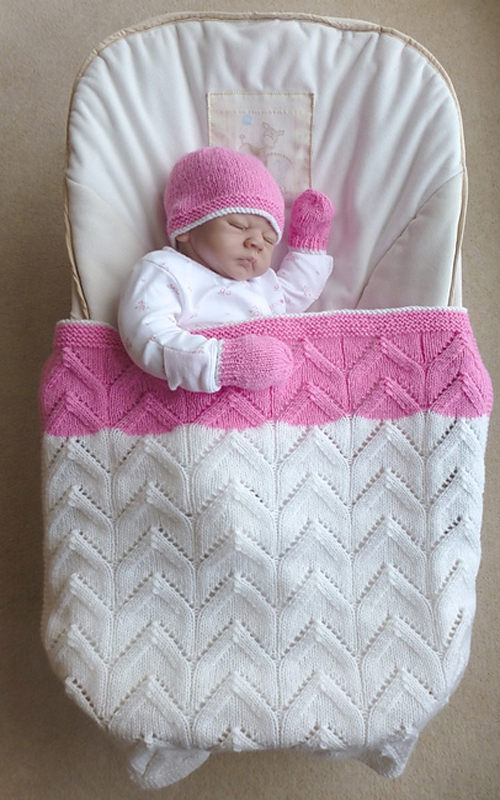
Arches Baby Blanket Free Knitting Pattern

Arches Baby Blanket free knitting pattern by LJM Designs

Arches Baby Blanket designed by © LJM Designs

Arches Baby Blanket by LJM Designs is a free lace baby blanket knitting pattern featuring an elegant repeating zigzag design. Even better, the pattern also includes instructions for a matching baby hat and mittens, making it a lovely handmade gift set for a new baby.

The blanket is knitted flat in one piece using DK-weight yarn. Its repeating lace motif creates the distinctive arches while the simple border gives the finished blanket a neat frame.

Arches Baby Blanket Pattern Details

  • Designer: LJM Designs
  • Craft: Knitting
  • Category: Baby blanket
  • Pattern availability: Free download
  • Yarn weight: DK
  • Blanket needles: 4 mm (US 6)
  • Hat and mitten needles: 3.25 mm (US 3) and 4 mm (US 6)
  • Gauge: 22 stitches and 30 rows = 4 inches
  • Suggested yardage: 793–820 yards (725–750 m)
  • Blanket size: Approximately 85 × 73 cm after blocking
  • Construction: Worked flat in one piece
  • Language: English

A Beautiful Zigzag Lace Baby Blanket

The defining feature of the Arches Baby Blanket is its repeating lace pattern. The combination of increases and decreases produces graceful zigzag arches across the fabric, giving the blanket plenty of texture without requiring separate knitted panels.

The lace motif uses a 16-stitch and 16-row repeat. Once you become familiar with the repetition, the developing arches make it easier to see how the design is progressing.

Yarn and Needles

The pattern is designed for DK-weight yarn. Several DK yarns are suitable for the original specifications, giving you plenty of flexibility when choosing a soft, washable yarn for a baby project.

The blanket uses 4 mm (US 6) needles. The complete set requires approximately 725–750 m (793–820 yards) of DK yarn.

Blanket, Hat and Mittens in One Free Pattern

One of the nicest features of this pattern is that the download is not limited to the blanket. LJM Designs also includes instructions for a simple matching baby hat and mittens.

The hat and mittens are sized for an average baby up to approximately three months old and can be worked either flat or in the round.

Can You Change the Blanket Size?

Yes. The designer notes that the Arches Baby Blanket can be adapted by adding or subtracting stitches and pattern repeats. This makes the design useful if you want a different finished size.

Changing the dimensions or yarn weight will also change the amount of yarn required, so plan additional yardage if you decide to make a larger blanket.

Skills Used in the Pattern

In addition to basic knit and purl stitches, the lace design uses common increases and decreases such as yarn overs, knit-two-together and slip-slip-knit. The instructions are written line by line.

Blocking is an important finishing step for this project because it helps open the lace and show the repeating arches more clearly.

Get the Free Arches Baby Blanket Pattern

The complete Arches Baby Blanket pattern by LJM Designs, including the matching baby hat and mittens, is currently available as a free download from the designer's pattern store.

Get the Free Arches Baby Blanket Pattern

Pattern availability was checked when this article was updated. Availability on external websites may change over time.

Stripes & Eyelets Urban Easy Blanket - Free Pattern

Stripes & Eyelets Urban Easy Blanket - Free Pattern
Photos above © Jessica - Mama In A Stitch
What beautiful blanket knitting pattern! I found it on Pinterest...
This blanket reminds me a bit of my Easy Heirloom Knit Blanket, as it’s simple and classic while still being on-trend. The pattern’s definitely easy, but you do need to be ready to go just beyond the basic knit and purl stitches. You can do it!

Easy Tweed Blanket – Free Textured Knitting Pattern

Easy Tweed Blanket free textured knitting pattern by Patons UK

The Easy Tweed Blanket by Patons UK, officially listed as A5351 Tweed Blanket, is a classic textured throw made with a simple combination of knit and purl stitches.

The design creates a checkerboard-style surface without cables, lace or complicated shaping, making it an appealing project for knitters who want a large blanket with plenty of texture but relatively straightforward techniques.

Worked in bulky yarn on 5 mm needles, the finished throw measures approximately 136 × 150 cm (53.5 × 59 in), making it large enough for sofas, beds or cozy everyday use.

Design and original pattern © Patons UK.

Easy Tweed Blanket Pattern Overview

  • Designer: Patons UK
  • Pattern: A5351 Tweed Blanket
  • Craft: Knitting
  • Category: Throw / blanket
  • Published: September 2017
  • Finished size: Approximately 136 × 150 cm / 53.5 × 59 in
  • Suggested yarn: Patons UK Tweed Style
  • Yarn weight: Bulky
  • Yardage: Approximately 1968 yd / 1800 m
  • Needles: US 8 / 5 mm
  • Gauge: 16 stitches × 22 rows = 4 in / 10 cm in checkerboard pattern
  • Construction: One piece
  • Direction: Bottom up
  • Shape: Rectangle
  • Main techniques: Knit, purl, textured checkerboard pattern and chart reading
  • Language: English
  • Pattern availability: Free Ravelry download from Patons UK

A Simple Blanket With Rich Texture

The main feature of the Easy Tweed Blanket is its all-over textured surface. Instead of relying on cables or complicated stitch manipulation, the pattern uses combinations of basic knit and purl stitches to form repeating blocks.

Those blocks create a checkerboard-style effect across the entire blanket, giving the finished piece more visual depth than plain stockinette or garter stitch.

This is a good example of how basic knitting techniques can create a much more detailed-looking fabric when arranged carefully.

Why It Is Called a Tweed Blanket

The original design was created for Patons UK Tweed Style, a bulky yarn with a wool-and-acrylic blend and a naturally textured appearance.

The yarn itself adds subtle flecks and visual interest, while the knit-and-purl checkerboard pattern adds a second layer of texture.

Together, those two elements create the rustic tweed look associated with the design.

Checkerboard Texture

The central stitch pattern is based on repeating textured blocks.

Rather than knitting every row in the same way, knit and purl sections are alternated to create raised and recessed areas in the fabric.

The effect is geometric but still soft, making it suitable for a large throw that will be used rather than simply displayed.

Worked in One Piece

The blanket is worked as one continuous rectangular piece.

There are no separate squares to sew together and no complicated assembly at the end.

This keeps the construction simple and allows the main focus to remain on maintaining the repeating textured pattern.

Bottom-Up Construction

The project is worked from the lower edge upward.

As the blanket grows, the checkerboard texture develops in repeated sections across the width.

Because the pattern is geometric, it becomes easier to recognize mistakes once several repeats are visible.

Finished Size

The published size is approximately:

136 × 150 cm / 53.5 × 59 in.

This makes the Easy Tweed Blanket a generous throw rather than a small baby blanket.

It works well for a sofa, reading chair or the foot of a bed.

Yarn for the Easy Tweed Blanket

The original pattern uses Patons UK Tweed Style.

This yarn is classified as bulky and combines approximately 50% wool with 50% acrylic.

The original version uses approximately 24 balls of the Tweed Sage color, which corresponds to roughly 1968 yards / 1800 meters.

Choosing a Yarn Substitute

If the original Patons yarn is difficult to find, choose another bulky yarn that produces the required gauge and has enough stitch definition to show the checkerboard texture.

A wool blend can give the blanket warmth and elasticity, while acrylic blends may offer easier care and durability.

Avoid an extremely fuzzy yarn if you want the knit-and-purl blocks to remain clearly visible.

Gauge

The published gauge is:

16 stitches × 22 rows = 4 in / 10 cm in the checkerboard pattern.

Even though this is a blanket rather than a fitted garment, gauge still affects the final size and total yarn requirement.

If your gauge is looser, the throw may become larger and consume more yarn. If your gauge is tighter, it may become smaller and denser.

Needles

The pattern lists US 8 / 5 mm knitting needles.

For a blanket this wide, many knitters will find a long circular needle more comfortable because the flexible cable can support the weight of the growing fabric.

The blanket can still be worked flat on circular needles.

Skills You'll Use

  • Casting on
  • Knit stitches
  • Purl stitches
  • Working flat
  • Following a chart
  • Maintaining a checkerboard repeat
  • Reading knit-and-purl texture
  • Keeping even tension
  • Binding off
  • Weaving in ends

Is the Easy Tweed Blanket Beginner Friendly?

The stitch techniques themselves are simple because the blanket relies mainly on knit and purl stitches.

For that reason, a confident beginner who already understands those two basic stitches can approach the project successfully.

The main challenge is not technical difficulty but scale: the finished blanket is large, so maintaining consistent tension and keeping track of the repeating pattern requires patience.

Why the Pattern Is Good for Practicing Purl Stitches

Many beginner projects use only garter stitch, but this blanket gives knitters a chance to become more comfortable switching between knit and purl sections.

Repeatedly working the textured blocks helps develop consistency in both stitches while producing a useful finished project.

That makes the blanket a natural progression after very basic knit-only projects.

Using Stitch Markers

Even if the original pattern does not require markers throughout the entire blanket, markers can be useful when first learning the checkerboard repeat.

Place them between major pattern sections to help identify where each block begins and ends.

Once the texture becomes visually obvious, you may find that you no longer need them.

Tips for a Neater Checkerboard Pattern

Read your knitting. Learn to recognize the visual difference between knit and purl stitches so mistakes can be caught quickly.

Count regularly. A missed stitch can shift the pattern and become much harder to fix several rows later.

Keep tension consistent. Alternating frequently between knit and purl can sometimes create uneven stitches if the yarn is pulled differently between transitions.

Use a row counter. This is especially helpful when working a large repeating chart.

Check the pattern before long knitting sessions. Confirm where you are in the repeat before continuing after a break.

Blocking the Finished Blanket

Blocking can help even out the checkerboard texture and improve the overall shape of the finished throw.

Always follow the care instructions for your chosen yarn.

If using a wool blend, avoid excessive heat or agitation that could cause the fabric to felt.

Can You Change the Blanket Size?

The published pattern is designed for one finished size.

Experienced knitters may be able to adjust the width and length by working additional complete pattern repeats, but any modification will change the yarn requirement.

Always preserve the full checkerboard repeat and any edge stitches specified by the original pattern.

Is the Easy Tweed Blanket Pattern Free?

Yes. A5351 Tweed Blanket by Patons UK is currently available as a free knitting pattern.

The exact design is offered as a free download through the Patons UK pattern listing on Ravelry.

Because this is the Patons UK publication source for the pattern, Amazing Knitting links directly to that page rather than to copied PDFs or unofficial pattern websites.

Get the Free Easy Tweed Blanket Pattern →

Why This Blanket Is Worth Knitting

The Easy Tweed Blanket is a strong project for knitters who want a large, classic throw without complicated techniques.

The checkerboard texture creates enough visual interest to keep the blanket from looking plain, while the knit-and-purl construction remains approachable.

Bulky yarn also helps the fabric grow faster than a similar blanket knitted in DK or fingering-weight yarn.

The finished throw has a timeless textured look that can work with traditional, rustic or modern home décor.

Pattern Availability

Amazing Knitting links readers to legitimate designer or publisher sources whenever possible. Pattern prices, download locations and availability can change after an article is published.

Read Our Pattern Availability Policy →

Amazing Knitting is an independent pattern discovery and project-guide site. The A5351 Tweed Blanket design, chart and complete knitting instructions remain the intellectual property of Patons UK. This guide does not reproduce the publisher's complete row-by-row instructions or chart.

Heart Blanket - Free Pattern

Heart Blanket - Free Pattern
Photo above © Sarah Patterson - Making a Life
What beautiful blanket knitting pattern! I found it on Pinterest...
Sarah Patterson: "I saw a super cute picture of a blanket with a heart on it so I searched Ravelry and Pinterest for a pattern and came up empty, so I used a plain blanket pattern and incorporated a heart.  This is the perfect Valentine’s gift for my two littlest loves.  I hope they get lots of snuggles in these warm wooly blankets."

Full Post: Heart Blanket 

Dreambaby DK Baby Squares Afghan - Free Pattern

Dreambaby DK Baby Squares Afghan - Free Pattern
Photo above © Plymouth Yarn
I found this blanket knitting pattern on Pinterest...
An adorable baby blanket that can be made in a variety of sizes. The different pattern stitches give this blanket a lot of texture, which will surely be fun for the baby to feel and play with. It also makes it a more interesting and engaging project for the knitter.

Double Seed Stitch Blanket – Free Easy Blanket Knitting Pattern

Double Seed Stitch Blanket free easy textured blanket knitting pattern by Purl Soho

Double Seed Stitch Blanket. Photo © Purl Soho

The Double Seed Stitch Blanket by Purl Soho is a wonderfully simple free blanket knitting pattern that turns basic knit and purl stitches into a rich, nubbly texture.

Originally designed in cozy bulky-weight merino, this reversible blanket is available in five sizes from Baby to Queen. The straightforward repeating stitch pattern makes it a relaxing project while still producing a beautifully textured finished blanket.

Best of all, the original pattern is still available free from Purl Soho.

Double Seed Stitch Blanket Pattern Details

  • Designer: Purl Soho
  • Originally published: January 2013
  • Craft: Knitting
  • Category: Baby blanket, throw and bed blanket
  • Pattern availability: Free
  • Yarn weight: Bulky
  • Original yarn: Purl Soho Super Soft Merino
  • Needles: US 13 (9 mm) circular needles
  • Gauge: 11 stitches = 4 inches in Double Seed Stitch
  • Construction: One-piece rectangle worked flat
  • Stitch pattern: Double Seed Stitch
  • Texture: Reversible
  • Sizes: Baby, Crib, Throw, Twin and Queen

Five Blanket Sizes

One of the most useful features of the original Double Seed Stitch Blanket pattern is its wide range of sizes.

The approximate finished dimensions are:

  • Baby: 28 × 30 inches
  • Crib: 45 × 60 inches
  • Throw: 60 × 60 inches
  • Twin: 66 × 90 inches
  • Queen: 90 × 95 inches

This means you can use the same basic design for anything from a small baby blanket to a substantial bed-sized blanket.

What Is Double Seed Stitch?

Double Seed Stitch is a textured knitting pattern created entirely from knit and purl stitches.

Instead of alternating every stitch and every row exactly as you would in traditional seed stitch, the arrangement changes over a short repeating sequence.

The result is a dense field of small raised textures that gives the blanket its distinctive nubbly surface.

A Simple Knit-and-Purl Blanket

One of the biggest attractions of this design is that the texture looks more complicated than the techniques required to create it.

There are no cables, lace motifs or complicated colorwork sections. The visual interest comes from arranging basic knit and purl stitches into a consistent repeating pattern.

Once you become familiar with the sequence, the blanket can settle into a relaxing rhythm.

A Reversible Knitted Texture

Double Seed Stitch creates an attractive texture on both sides of the fabric.

This is particularly useful for blankets because there is no need to worry about keeping one specific side facing outward when the blanket is being used.

A reversible stitch also gives the finished project a clean, well-finished appearance from either direction.

Original Yarn: Super Soft Merino

The original Purl Soho version was designed using Super Soft Merino, a bulky-weight merino wool.

The original sample color was Oyster Gray, which emphasizes the stitch texture without distracting from it.

Bulky yarn also gives the blanket a substantial feel and allows the textured stitches to appear large and clearly defined.

How Much Yarn Do You Need?

The approximate yardage listed for the five original sizes is:

  • Baby: 522 yards / 477 m
  • Crib: 1,479 yards / 1,352 m
  • Throw: 1,914 yards / 1,750 m
  • Twin: 3,132 yards / 2,864 m
  • Queen: 4,524 yards / 4,137 m

These amounts are based on the original bulky yarn and pattern gauge. Your actual requirement may change if you substitute yarn or alter the blanket dimensions.

Choosing Substitute Yarn

You do not have to use the original Purl Soho yarn to knit this blanket.

Look for a bulky-weight yarn that produces a pleasant fabric at the required gauge. A smooth yarn with good stitch definition will help show off the Double Seed Stitch texture.

For a blanket that will receive frequent use, also consider fiber care. Washable wool blends or other easy-care fibers may be practical choices, particularly for baby and family blankets.

Needles and Gauge

The original pattern uses US 13 (9 mm) circular needles.

The specified gauge is:

11 stitches = 4 inches (10 cm)
in Double Seed Stitch

Circular needles are useful even though the blanket is worked flat. Their flexible cable provides room to hold the large number of stitches, especially for the larger sizes.

Why Use Circular Needles for a Flat Blanket?

Circular needles are not only for knitting in the round.

When knitting a wide blanket flat, a long circular needle can distribute the weight of the project across the cable rather than forcing all the stitches onto a pair of long straight needles.

This becomes increasingly useful as the blanket grows heavier.

Is the Double Seed Stitch Blanket Beginner Friendly?

This is a very approachable project for knitters who already know the basic knit and purl stitches.

The construction is a simple rectangle, and the texture does not require complicated shaping.

The main skill is learning to recognize whether the next stitch should be knitted or purled and keeping your place in the repeating sequence.

A Good First Textured Blanket

If you have already knitted plain garter or stockinette projects and want to try something with more texture, Double Seed Stitch is a natural next step.

It demonstrates how dramatically a fabric can change simply by arranging knit and purl stitches in a different sequence.

Because the same texture continues throughout the blanket, you also get plenty of practice reading your knitting.

Learn to Read Your Knitting

A project like this becomes much easier once you can recognize knit and purl stitches visually.

Rather than relying entirely on counting every stitch from the beginning of each row, look at the texture directly below the stitch on your needle.

Learning to recognize the structure of the fabric can help you catch mistakes before they continue across several rows.

Use Stitch Markers on Larger Blankets

Although the original construction is straightforward, optional stitch markers can be helpful when working one of the larger sizes.

Dividing a very long row into manageable sections gives you convenient checkpoints for spotting mistakes.

Just remember that these markers are an optional organizational aid, not a required part of the original design.

Keep Your Tension Relaxed

Textured knit-and-purl patterns can become tight if the yarn is pulled firmly every time it moves between the front and back of the work.

Try to maintain an even, relaxed tension as you alternate between knit and purl stitches.

A consistent gauge will help the finished texture look regular across the entire blanket.

A Great Solid-Color Blanket

Double Seed Stitch is particularly effective in a single color because the shadows created by the raised texture provide plenty of visual interest on their own.

Neutral shades can create a timeless blanket, while brighter colors can transform the same simple stitch pattern into a cheerful baby or family throw.

Tonal yarns can also work beautifully as long as the color changes do not obscure the stitch definition.

Make It a Baby Blanket

The smallest original size measures approximately 28 × 30 inches, making it suitable as a compact baby blanket.

If knitting for a baby, consider choosing an easy-care yarn that is soft against the skin and appropriate for frequent washing.

Always follow current safe-sleep guidance when deciding how and where a handmade blanket should be used with an infant.

Make It a Cozy Throw

The original Throw size measures approximately 60 × 60 inches.

Combined with bulky yarn and the dense Double Seed Stitch texture, this creates a substantial blanket for a sofa or favorite chair.

It is also a good option when you want a simple pattern that allows the quality and color of the yarn to become the focus.

There Is Also a Cotton Pure Version

Purl Soho later published a separate Double Seed Stitch Blanket in Cotton Pure.

That version uses sport-weight cotton and smaller needles, creating a lighter and more delicate interpretation of the same reversible stitch pattern.

The Cotton Pure version includes Crib and Throw sizes and is also currently available free from Purl Soho.

Bulky Merino or Cotton?

Choose the original bulky version if you want a thick, warm blanket with bold stitch definition.

Consider the later Cotton Pure version if you prefer a lighter blanket, plant-based fiber or a fabric suitable for machine washing according to the yarn's care instructions.

Both designs use the same basic Double Seed Stitch idea, but the different yarn weights produce noticeably different fabrics.

Why Knit the Double Seed Stitch Blanket?

This pattern is a great example of simple knitting producing a polished result.

You need only basic knit-and-purl skills to create a rich reversible texture, while the five original sizes allow the same design to become anything from a baby blanket to a full-size bed blanket.

It is an especially appealing project when you want relaxing knitting without ending up with a completely plain fabric.

Get the Free Double Seed Stitch Blanket Pattern

Double Seed Stitch Blanket by Purl Soho is still available as a free knitting pattern from its original publisher.

Get the Free Pattern from Purl Soho →

Pattern availability was checked when this article was updated. Amazing Knitting does not reproduce the designer's complete pattern; use the official Purl Soho page above for the original instructions.

What Weight Is My Yarn? An Easy Way to Figure It Out

Photos above © Bluprint
I found this knitting tutorial on Pinterest...
Got a huge stash of second-hand, or even hand-me-down yarn? Jackpot! But not so fast...now you need to figure out if these mystery skeins will work for the project you were dreaming up. 

Discover More From the Archive

A fresh mix of knitting patterns and tutorials from the Amazing Knitting archive.

Finding patterns from the archive…