Skip to content

...

Easy Tweed Blanket – Free Textured Knitting Pattern

Easy Tweed Blanket free textured knitting pattern by Patons UK

The Easy Tweed Blanket by Patons UK, officially listed as A5351 Tweed Blanket, is a classic textured throw made with a simple combination of knit and purl stitches.

The design creates a checkerboard-style surface without cables, lace or complicated shaping, making it an appealing project for knitters who want a large blanket with plenty of texture but relatively straightforward techniques.

Worked in bulky yarn on 5 mm needles, the finished throw measures approximately 136 × 150 cm (53.5 × 59 in), making it large enough for sofas, beds or cozy everyday use.

Design and original pattern © Patons UK.

Easy Tweed Blanket Pattern Overview

  • Designer: Patons UK
  • Pattern: A5351 Tweed Blanket
  • Craft: Knitting
  • Category: Throw / blanket
  • Published: September 2017
  • Finished size: Approximately 136 × 150 cm / 53.5 × 59 in
  • Suggested yarn: Patons UK Tweed Style
  • Yarn weight: Bulky
  • Yardage: Approximately 1968 yd / 1800 m
  • Needles: US 8 / 5 mm
  • Gauge: 16 stitches × 22 rows = 4 in / 10 cm in checkerboard pattern
  • Construction: One piece
  • Direction: Bottom up
  • Shape: Rectangle
  • Main techniques: Knit, purl, textured checkerboard pattern and chart reading
  • Language: English
  • Pattern availability: Free Ravelry download from Patons UK

A Simple Blanket With Rich Texture

The main feature of the Easy Tweed Blanket is its all-over textured surface. Instead of relying on cables or complicated stitch manipulation, the pattern uses combinations of basic knit and purl stitches to form repeating blocks.

Those blocks create a checkerboard-style effect across the entire blanket, giving the finished piece more visual depth than plain stockinette or garter stitch.

This is a good example of how basic knitting techniques can create a much more detailed-looking fabric when arranged carefully.

Why It Is Called a Tweed Blanket

The original design was created for Patons UK Tweed Style, a bulky yarn with a wool-and-acrylic blend and a naturally textured appearance.

The yarn itself adds subtle flecks and visual interest, while the knit-and-purl checkerboard pattern adds a second layer of texture.

Together, those two elements create the rustic tweed look associated with the design.

Checkerboard Texture

The central stitch pattern is based on repeating textured blocks.

Rather than knitting every row in the same way, knit and purl sections are alternated to create raised and recessed areas in the fabric.

The effect is geometric but still soft, making it suitable for a large throw that will be used rather than simply displayed.

Worked in One Piece

The blanket is worked as one continuous rectangular piece.

There are no separate squares to sew together and no complicated assembly at the end.

This keeps the construction simple and allows the main focus to remain on maintaining the repeating textured pattern.

Bottom-Up Construction

The project is worked from the lower edge upward.

As the blanket grows, the checkerboard texture develops in repeated sections across the width.

Because the pattern is geometric, it becomes easier to recognize mistakes once several repeats are visible.

Finished Size

The published size is approximately:

136 × 150 cm / 53.5 × 59 in.

This makes the Easy Tweed Blanket a generous throw rather than a small baby blanket.

It works well for a sofa, reading chair or the foot of a bed.

Yarn for the Easy Tweed Blanket

The original pattern uses Patons UK Tweed Style.

This yarn is classified as bulky and combines approximately 50% wool with 50% acrylic.

The original version uses approximately 24 balls of the Tweed Sage color, which corresponds to roughly 1968 yards / 1800 meters.

Choosing a Yarn Substitute

If the original Patons yarn is difficult to find, choose another bulky yarn that produces the required gauge and has enough stitch definition to show the checkerboard texture.

A wool blend can give the blanket warmth and elasticity, while acrylic blends may offer easier care and durability.

Avoid an extremely fuzzy yarn if you want the knit-and-purl blocks to remain clearly visible.

Gauge

The published gauge is:

16 stitches × 22 rows = 4 in / 10 cm in the checkerboard pattern.

Even though this is a blanket rather than a fitted garment, gauge still affects the final size and total yarn requirement.

If your gauge is looser, the throw may become larger and consume more yarn. If your gauge is tighter, it may become smaller and denser.

Needles

The pattern lists US 8 / 5 mm knitting needles.

For a blanket this wide, many knitters will find a long circular needle more comfortable because the flexible cable can support the weight of the growing fabric.

The blanket can still be worked flat on circular needles.

Skills You'll Use

  • Casting on
  • Knit stitches
  • Purl stitches
  • Working flat
  • Following a chart
  • Maintaining a checkerboard repeat
  • Reading knit-and-purl texture
  • Keeping even tension
  • Binding off
  • Weaving in ends

Is the Easy Tweed Blanket Beginner Friendly?

The stitch techniques themselves are simple because the blanket relies mainly on knit and purl stitches.

For that reason, a confident beginner who already understands those two basic stitches can approach the project successfully.

The main challenge is not technical difficulty but scale: the finished blanket is large, so maintaining consistent tension and keeping track of the repeating pattern requires patience.

Why the Pattern Is Good for Practicing Purl Stitches

Many beginner projects use only garter stitch, but this blanket gives knitters a chance to become more comfortable switching between knit and purl sections.

Repeatedly working the textured blocks helps develop consistency in both stitches while producing a useful finished project.

That makes the blanket a natural progression after very basic knit-only projects.

Using Stitch Markers

Even if the original pattern does not require markers throughout the entire blanket, markers can be useful when first learning the checkerboard repeat.

Place them between major pattern sections to help identify where each block begins and ends.

Once the texture becomes visually obvious, you may find that you no longer need them.

Tips for a Neater Checkerboard Pattern

Read your knitting. Learn to recognize the visual difference between knit and purl stitches so mistakes can be caught quickly.

Count regularly. A missed stitch can shift the pattern and become much harder to fix several rows later.

Keep tension consistent. Alternating frequently between knit and purl can sometimes create uneven stitches if the yarn is pulled differently between transitions.

Use a row counter. This is especially helpful when working a large repeating chart.

Check the pattern before long knitting sessions. Confirm where you are in the repeat before continuing after a break.

Blocking the Finished Blanket

Blocking can help even out the checkerboard texture and improve the overall shape of the finished throw.

Always follow the care instructions for your chosen yarn.

If using a wool blend, avoid excessive heat or agitation that could cause the fabric to felt.

Can You Change the Blanket Size?

The published pattern is designed for one finished size.

Experienced knitters may be able to adjust the width and length by working additional complete pattern repeats, but any modification will change the yarn requirement.

Always preserve the full checkerboard repeat and any edge stitches specified by the original pattern.

Is the Easy Tweed Blanket Pattern Free?

Yes. A5351 Tweed Blanket by Patons UK is currently available as a free knitting pattern.

The exact design is offered as a free download through the Patons UK pattern listing on Ravelry.

Because this is the Patons UK publication source for the pattern, Amazing Knitting links directly to that page rather than to copied PDFs or unofficial pattern websites.

Get the Free Easy Tweed Blanket Pattern →

Why This Blanket Is Worth Knitting

The Easy Tweed Blanket is a strong project for knitters who want a large, classic throw without complicated techniques.

The checkerboard texture creates enough visual interest to keep the blanket from looking plain, while the knit-and-purl construction remains approachable.

Bulky yarn also helps the fabric grow faster than a similar blanket knitted in DK or fingering-weight yarn.

The finished throw has a timeless textured look that can work with traditional, rustic or modern home décor.

Pattern Availability

Amazing Knitting links readers to legitimate designer or publisher sources whenever possible. Pattern prices, download locations and availability can change after an article is published.

Read Our Pattern Availability Policy →

Amazing Knitting is an independent pattern discovery and project-guide site. The A5351 Tweed Blanket design, chart and complete knitting instructions remain the intellectual property of Patons UK. This guide does not reproduce the publisher's complete row-by-row instructions or chart.

Heart Blanket - Free Pattern

Heart Blanket - Free Pattern
Photo above © Sarah Patterson - Making a Life
What beautiful blanket knitting pattern! I found it on Pinterest...
Sarah Patterson: "I saw a super cute picture of a blanket with a heart on it so I searched Ravelry and Pinterest for a pattern and came up empty, so I used a plain blanket pattern and incorporated a heart.  This is the perfect Valentine’s gift for my two littlest loves.  I hope they get lots of snuggles in these warm wooly blankets."

Full Post: Heart Blanket 

Dreambaby DK Baby Squares Afghan - Free Pattern

Dreambaby DK Baby Squares Afghan - Free Pattern
Photo above © Plymouth Yarn
I found this blanket knitting pattern on Pinterest...
An adorable baby blanket that can be made in a variety of sizes. The different pattern stitches give this blanket a lot of texture, which will surely be fun for the baby to feel and play with. It also makes it a more interesting and engaging project for the knitter.

Double Seed Stitch Blanket – Free Easy Blanket Knitting Pattern

Double Seed Stitch Blanket free easy textured blanket knitting pattern by Purl Soho

Double Seed Stitch Blanket. Photo © Purl Soho

The Double Seed Stitch Blanket by Purl Soho is a wonderfully simple free blanket knitting pattern that turns basic knit and purl stitches into a rich, nubbly texture.

Originally designed in cozy bulky-weight merino, this reversible blanket is available in five sizes from Baby to Queen. The straightforward repeating stitch pattern makes it a relaxing project while still producing a beautifully textured finished blanket.

Best of all, the original pattern is still available free from Purl Soho.

Double Seed Stitch Blanket Pattern Details

  • Designer: Purl Soho
  • Originally published: January 2013
  • Craft: Knitting
  • Category: Baby blanket, throw and bed blanket
  • Pattern availability: Free
  • Yarn weight: Bulky
  • Original yarn: Purl Soho Super Soft Merino
  • Needles: US 13 (9 mm) circular needles
  • Gauge: 11 stitches = 4 inches in Double Seed Stitch
  • Construction: One-piece rectangle worked flat
  • Stitch pattern: Double Seed Stitch
  • Texture: Reversible
  • Sizes: Baby, Crib, Throw, Twin and Queen

Five Blanket Sizes

One of the most useful features of the original Double Seed Stitch Blanket pattern is its wide range of sizes.

The approximate finished dimensions are:

  • Baby: 28 × 30 inches
  • Crib: 45 × 60 inches
  • Throw: 60 × 60 inches
  • Twin: 66 × 90 inches
  • Queen: 90 × 95 inches

This means you can use the same basic design for anything from a small baby blanket to a substantial bed-sized blanket.

What Is Double Seed Stitch?

Double Seed Stitch is a textured knitting pattern created entirely from knit and purl stitches.

Instead of alternating every stitch and every row exactly as you would in traditional seed stitch, the arrangement changes over a short repeating sequence.

The result is a dense field of small raised textures that gives the blanket its distinctive nubbly surface.

A Simple Knit-and-Purl Blanket

One of the biggest attractions of this design is that the texture looks more complicated than the techniques required to create it.

There are no cables, lace motifs or complicated colorwork sections. The visual interest comes from arranging basic knit and purl stitches into a consistent repeating pattern.

Once you become familiar with the sequence, the blanket can settle into a relaxing rhythm.

A Reversible Knitted Texture

Double Seed Stitch creates an attractive texture on both sides of the fabric.

This is particularly useful for blankets because there is no need to worry about keeping one specific side facing outward when the blanket is being used.

A reversible stitch also gives the finished project a clean, well-finished appearance from either direction.

Original Yarn: Super Soft Merino

The original Purl Soho version was designed using Super Soft Merino, a bulky-weight merino wool.

The original sample color was Oyster Gray, which emphasizes the stitch texture without distracting from it.

Bulky yarn also gives the blanket a substantial feel and allows the textured stitches to appear large and clearly defined.

How Much Yarn Do You Need?

The approximate yardage listed for the five original sizes is:

  • Baby: 522 yards / 477 m
  • Crib: 1,479 yards / 1,352 m
  • Throw: 1,914 yards / 1,750 m
  • Twin: 3,132 yards / 2,864 m
  • Queen: 4,524 yards / 4,137 m

These amounts are based on the original bulky yarn and pattern gauge. Your actual requirement may change if you substitute yarn or alter the blanket dimensions.

Choosing Substitute Yarn

You do not have to use the original Purl Soho yarn to knit this blanket.

Look for a bulky-weight yarn that produces a pleasant fabric at the required gauge. A smooth yarn with good stitch definition will help show off the Double Seed Stitch texture.

For a blanket that will receive frequent use, also consider fiber care. Washable wool blends or other easy-care fibers may be practical choices, particularly for baby and family blankets.

Needles and Gauge

The original pattern uses US 13 (9 mm) circular needles.

The specified gauge is:

11 stitches = 4 inches (10 cm)
in Double Seed Stitch

Circular needles are useful even though the blanket is worked flat. Their flexible cable provides room to hold the large number of stitches, especially for the larger sizes.

Why Use Circular Needles for a Flat Blanket?

Circular needles are not only for knitting in the round.

When knitting a wide blanket flat, a long circular needle can distribute the weight of the project across the cable rather than forcing all the stitches onto a pair of long straight needles.

This becomes increasingly useful as the blanket grows heavier.

Is the Double Seed Stitch Blanket Beginner Friendly?

This is a very approachable project for knitters who already know the basic knit and purl stitches.

The construction is a simple rectangle, and the texture does not require complicated shaping.

The main skill is learning to recognize whether the next stitch should be knitted or purled and keeping your place in the repeating sequence.

A Good First Textured Blanket

If you have already knitted plain garter or stockinette projects and want to try something with more texture, Double Seed Stitch is a natural next step.

It demonstrates how dramatically a fabric can change simply by arranging knit and purl stitches in a different sequence.

Because the same texture continues throughout the blanket, you also get plenty of practice reading your knitting.

Learn to Read Your Knitting

A project like this becomes much easier once you can recognize knit and purl stitches visually.

Rather than relying entirely on counting every stitch from the beginning of each row, look at the texture directly below the stitch on your needle.

Learning to recognize the structure of the fabric can help you catch mistakes before they continue across several rows.

Use Stitch Markers on Larger Blankets

Although the original construction is straightforward, optional stitch markers can be helpful when working one of the larger sizes.

Dividing a very long row into manageable sections gives you convenient checkpoints for spotting mistakes.

Just remember that these markers are an optional organizational aid, not a required part of the original design.

Keep Your Tension Relaxed

Textured knit-and-purl patterns can become tight if the yarn is pulled firmly every time it moves between the front and back of the work.

Try to maintain an even, relaxed tension as you alternate between knit and purl stitches.

A consistent gauge will help the finished texture look regular across the entire blanket.

A Great Solid-Color Blanket

Double Seed Stitch is particularly effective in a single color because the shadows created by the raised texture provide plenty of visual interest on their own.

Neutral shades can create a timeless blanket, while brighter colors can transform the same simple stitch pattern into a cheerful baby or family throw.

Tonal yarns can also work beautifully as long as the color changes do not obscure the stitch definition.

Make It a Baby Blanket

The smallest original size measures approximately 28 × 30 inches, making it suitable as a compact baby blanket.

If knitting for a baby, consider choosing an easy-care yarn that is soft against the skin and appropriate for frequent washing.

Always follow current safe-sleep guidance when deciding how and where a handmade blanket should be used with an infant.

Make It a Cozy Throw

The original Throw size measures approximately 60 × 60 inches.

Combined with bulky yarn and the dense Double Seed Stitch texture, this creates a substantial blanket for a sofa or favorite chair.

It is also a good option when you want a simple pattern that allows the quality and color of the yarn to become the focus.

There Is Also a Cotton Pure Version

Purl Soho later published a separate Double Seed Stitch Blanket in Cotton Pure.

That version uses sport-weight cotton and smaller needles, creating a lighter and more delicate interpretation of the same reversible stitch pattern.

The Cotton Pure version includes Crib and Throw sizes and is also currently available free from Purl Soho.

Bulky Merino or Cotton?

Choose the original bulky version if you want a thick, warm blanket with bold stitch definition.

Consider the later Cotton Pure version if you prefer a lighter blanket, plant-based fiber or a fabric suitable for machine washing according to the yarn's care instructions.

Both designs use the same basic Double Seed Stitch idea, but the different yarn weights produce noticeably different fabrics.

Why Knit the Double Seed Stitch Blanket?

This pattern is a great example of simple knitting producing a polished result.

You need only basic knit-and-purl skills to create a rich reversible texture, while the five original sizes allow the same design to become anything from a baby blanket to a full-size bed blanket.

It is an especially appealing project when you want relaxing knitting without ending up with a completely plain fabric.

Get the Free Double Seed Stitch Blanket Pattern

Double Seed Stitch Blanket by Purl Soho is still available as a free knitting pattern from its original publisher.

Get the Free Pattern from Purl Soho →

Pattern availability was checked when this article was updated. Amazing Knitting does not reproduce the designer's complete pattern; use the official Purl Soho page above for the original instructions.

What Weight Is My Yarn? An Easy Way to Figure It Out

Photos above © Bluprint
I found this knitting tutorial on Pinterest...
Got a huge stash of second-hand, or even hand-me-down yarn? Jackpot! But not so fast...now you need to figure out if these mystery skeins will work for the project you were dreaming up. 

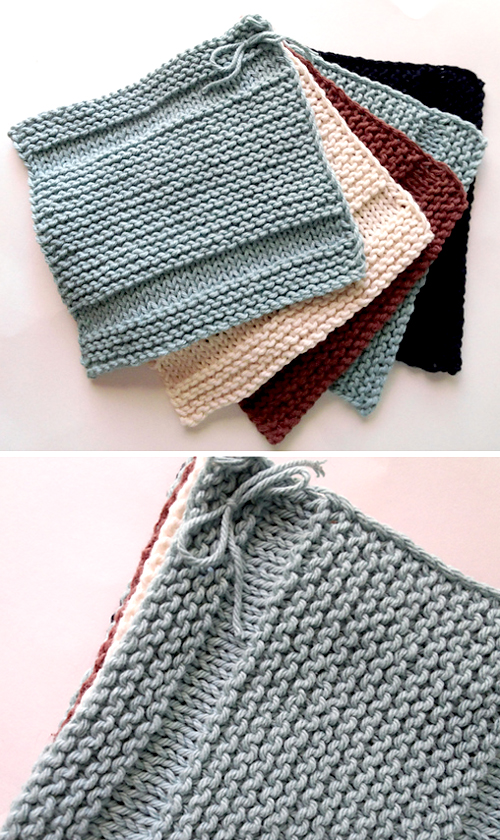
Copycat Dishcloth Free Knitting Pattern

Copycat Dishcloth free knitting pattern by Michelle Krause
Pattern design © Michelle Krause / Leah Michelle Designs

The Copycat Dishcloth by Michelle Krause is a free knitting pattern for a practical textured dishcloth worked with worsted-weight yarn.

Simple garter and stockinette sections create an attractive surface texture without requiring complicated techniques, making this a useful small project for everyday knitting or for using leftover cotton yarn.

Copycat Dishcloth Pattern at a Glance

Designer: Michelle Krause

Pattern: Copycat Dishcloth

Craft: Knitting

Category: Dishcloth / Washcloth

Yarn Weight: Worsted

Yardage: Approximately 80 yards (73 m)

Needles: US 8 (5 mm)

Gauge: 8 sts and 16 rows = 2 in in garter stitch

Size: One size

Construction: One piece

Techniques: Knit, purl, garter stitch and stockinette texture

Language: English

Pattern Availability: Free

About the Copycat Dishcloth

Copycat Dishcloth is a straightforward knitted cloth with a neat, textured appearance. The pattern combines familiar stitches to create visual interest while keeping the project manageable and repetitive.

Its compact size makes it a convenient project for practicing basic knitting skills, testing a new cotton yarn or making a quick handmade item for the kitchen.

Yarn and Needle Notes

The pattern uses approximately 80 yards (73 m) of worsted-weight yarn.

For a dishcloth intended for regular kitchen use, a washable cotton or cotton-rich yarn is a practical choice because it absorbs moisture well and can be washed frequently.

The recommended needle size is US 8 (5 mm). The listed gauge is 8 stitches and 16 rows = 2 inches in garter stitch.

A Useful Small Knitting Project

Dishcloth patterns are especially useful when you want a short project that does not require a large yarn investment. Copycat Dishcloth can also be a good way to use partial skeins left over from other worsted-weight projects.

Because the design relies on basic stitch textures rather than complicated shaping, it is also suitable for relaxed knitting while still producing a finished item with a distinctive surface.

Get the Free Copycat Dishcloth Pattern

The Copycat Dishcloth was designed by Michelle Krause of Leah Michelle Designs. The complete pattern is currently available as a free download.

Amazing Knitting does not reproduce the designer's complete knitting instructions. Use the button below to visit the original pattern page for the current authorized version.

Slippers With Border - Free Knitting Pattern

Slippers With Border -  Free Knitting Pattern
Photos above © Katerina Mushin
I found this wonderful knitting tutorial on Pinterest...
Here is a free knitting pattern for these soft and cute house slippers with border. Just follow the pattern link below and enjoy your knitting.

Who Needs a Pattern to Make Socks?

Who Needs a Pattern to Make Socks
Photo above © Michele Marabella
I found this wonderful knitting tutorial on Pinterest...
Sock tutorial. Not only does this show how to knit socks 2 at a time, but also how to calculate your own pattern for perfectly fitting socks, from just a couple of measurements Puritan Therapy...

Wool Cable Slippers – Cozy Cabled Slipper Knitting Pattern Guide

Wool Cable Slippers cabled knitted slipper design

These Wool Cable Slippers are a cozy knitted footwear design featuring prominent cable details and a warm, substantial appearance.

Amazing Knitting originally featured this project in 2019 and linked readers to an external knitting-pattern page. The design attracted considerable interest because it combines the comfort of house slippers with the textured look of traditional cable knitting.

Important availability update: the external pattern page originally linked from this article is no longer available. We have therefore updated this article as a pattern guide rather than continuing to describe the design as a currently available free pattern.

Photo credit: Katerina Mushin, as credited in the original Amazing Knitting article.

Wool Cable Slippers Overview

  • Project type: Knitted slippers
  • Style: Cozy indoor footwear
  • Main design feature: Cable knitting
  • Texture: Raised cable details
  • Original article: Published on Amazing Knitting in 2019
  • Original external source: No longer available
  • Current pattern status: Original linked pattern unavailable

About the Wool Cable Slippers

The defining feature of this slipper design is its strong cable texture. Instead of relying on plain stockinette or garter stitch for the entire surface, the knitted fabric uses raised cable sections to give the slippers a more decorative appearance.

Cable knitting is particularly effective on solid or lightly variegated yarns because the shadows created by the crossing stitches make the texture easier to see.

The result is a style of knitted footwear that feels more substantial than a simple flat-knit slipper while still retaining the handmade character that makes knitted house shoes so appealing.

Why Cable Knitting Works Well for Slippers

Cables are created by changing the order of stitches, producing raised columns that appear to twist or cross over one another.

On a small project such as slippers, this technique can create a strong visual effect without requiring the amount of knitting involved in a cabled sweater or blanket.

For knitters learning cables, smaller accessories can also provide useful practice with reading cable sections and maintaining an established texture.

Choosing Yarn for Cabled Slippers

A smooth yarn with good stitch definition is generally a useful choice when you want cable details to remain visible.

Very fuzzy yarn can soften the appearance of the cables, while a smooth wool or wool-blend yarn can make the crossings easier to distinguish.

For house slippers, durability and comfort are also important considerations. The fabric will experience more friction than many other knitted accessories, particularly around the heel and sole.

However, because the original pattern source is currently unavailable, we do not recommend substituting a specific yarn weight or needle size and presenting it as the original specification.

Skills Commonly Used in Cabled Slipper Projects

Although we cannot verify the complete original instructions from the former pattern page, knitters interested in similar cable-slipper designs will typically benefit from being comfortable with:

  • Casting on and binding off
  • Knit and purl stitches
  • Working textured stitch patterns
  • Basic cable knitting
  • Using a cable needle or an equivalent cable technique
  • Increasing and decreasing
  • Shaping knitted fabric
  • Seaming and finishing
  • Weaving in yarn ends

Understanding Cable Knitting

Cable patterns are formed by moving a group of stitches in front of or behind another group before knitting them.

Whether the stitches are held toward the front or back determines the direction in which the cable appears to cross.

The surrounding fabric is often worked in purl stitches because the recessed background makes the raised cable stand out more clearly.

Tips for Knitting Slippers

Pay close attention to finished size. Unlike scarves and blankets, footwear needs to fit a three-dimensional shape. Small differences in gauge can noticeably change the finished fit.

Make both slippers consistently. Keep notes about shaping and cable placement while knitting the first slipper so that the second one can be matched as closely as possible.

Check cable crossings carefully. A misplaced cable is much easier to correct shortly after it is worked than many rows later.

Consider the finished surface. Hand-knitted slippers can be slippery on smooth floors. If the finished slippers are intended for regular indoor wear, an appropriate non-slip treatment or sole can be considered.

Why These Wool Cable Slippers Are Still Worth Discovering

Even though the original linked pattern is no longer available, this design remains useful as knitting inspiration.

It shows how traditional cable motifs can be adapted from sweaters, scarves and hats to smaller pieces of knitted footwear.

The project can also help knitters identify the features they may want when searching for a currently available slipper pattern: substantial fabric, visible cable texture and a close-fitting house-slipper shape.

Is the Original Wool Cable Slippers Pattern Still Free?

When Amazing Knitting originally published this article, readers were directed to an external page that presented the Wool Cable Slippers instructions.

That original external page is no longer available. During our latest review, we were unable to verify a current authorized source for the same complete pattern.

For that reason, we no longer label this article as a currently available Free Knitting Pattern.

If a legitimate designer or publisher source for this exact design becomes available again, this guide can be updated with the new pattern location.

Looking for a Free Slipper Pattern You Can Knit Now?

Amazing Knitting has other sock and slipper projects whose pattern sources can be checked through our individual project guides.

Explore 8 Free Sock & Slipper Knitting Patterns →

Pattern Availability

Amazing Knitting links readers to legitimate designer or publisher sources whenever possible. Pattern prices, download locations and availability can change after an article is published.

Read Our Pattern Availability Policy →

Amazing Knitting is an independent pattern discovery and project-guide site. The design, photographs and original knitting instructions featured or referenced here remain the intellectual property of their respective creators. Amazing Knitting does not reproduce unavailable copyrighted pattern instructions or charts.

Reyna Shawl – Free One-Skein Sock Yarn Knitting Pattern

Reyna Shawl free one skein sock yarn knitting pattern by Noora Backlund

Reyna Shawl. Photo © Noora Laivola

Reyna by Noora Backlund is a free one-skein shawl knitting pattern designed especially for those beautiful skeins of variegated sock yarn that can sometimes be difficult to match with the right project.

Alternating sections of simple garter stitch and open mesh allow the yarn's changing colors to remain the star of the project. The shawl is worked from the top down in one seamless piece and requires approximately 380–420 yards (347–384 m) of fingering-weight yarn.

Reyna Shawl Pattern Details

  • Designer: Noora Backlund
  • Published: June 2015
  • Craft: Knitting
  • Category: Shawl / Wrap
  • Pattern availability: Free Ravelry download
  • Shape: Triangle
  • Style: Adult / teen / unisex
  • Yarn weight: Light Fingering / fingering sock yarn
  • Yardage: Approximately 380–420 yards (347–384 m)
  • Suggested needle: US 4 (3.5 mm)
  • Gauge: No fixed gauge specified by the designer
  • Construction: Top down and worked flat
  • Construction style: One piece and seamless
  • Stitches: Garter stitch and mesh
  • Pattern format: Written instructions
  • Languages: English, French and German, with an additional Hungarian translation available separately

A One-Skein Shawl for Variegated Sock Yarn

Reyna was created to solve a problem familiar to many knitters: finding the right project for a gorgeous skein of variegated sock yarn.

Highly variegated yarn can sometimes hide complicated lace or textured stitches. Reyna takes the opposite approach and uses relatively simple stitch patterns that give the colors room to shine.

One skein of fingering-weight yarn is enough for the original shawl, making this a particularly useful pattern for special hand-dyed yarn waiting in your stash.

Garter Stitch and Mesh

The shawl alternates between garter-stitch sections and open mesh sections.

Garter stitch creates calm bands of texture where the yarn's colors can flow naturally, while the mesh opens the fabric and adds a lighter, airier appearance.

The contrast between these two simple textures gives the shawl its distinctive look without competing with a colorful yarn.

Top-Down Triangle Construction

Reyna is a top-down triangular shawl.

The project begins at the middle of the long upper edge and gradually expands outward as you work toward the lower point.

The entire shawl is knitted flat as one continuous piece, so there are no separate sections to sew together afterward.

Finished Size

Noora Backlund's original blocked sample measures approximately 58 inches (148 cm) along the top edge.

From the middle of the top edge to the center tip, it measures about 21½ inches (55 cm).

These measurements are for the designer's sample. Your finished size can vary depending on yarn, needle size, gauge and how many rows you choose to work.

No Fixed Gauge Required

One unusual and useful feature of Reyna is that the designer intentionally does not specify one required gauge.

Instead, Noora recommends choosing a needle size that creates a fabric you like.

The goal is to achieve enough drape for a comfortable shawl without making the fabric excessively loose and see-through.

The listed 3.5 mm (US 4) needle is therefore a useful starting point rather than a rigid requirement.

The Original Reyna Yarn

The original sample was knitted with Miss Babs Cosmic Hand Painted Sock in the Gal Noir colorway.

This fingering-weight sock yarn contains 80% merino wool and 20% nylon and has approximately 400 yards per skein.

That combination fits the central idea behind Reyna perfectly: take one beautiful skein of colorful sock yarn and turn it into a wearable shawl.

Other Suggested Yarns

The current pattern listing also suggests popular fingering and sock yarns such as:

  • Malabrigo Yarn Sock
  • Hedgehog Fibres Sock
  • Miss Babs Cosmic Hand Painted Sock

You do not need to use one of these exact yarns. A fingering-weight yarn with suitable yardage and a fabric you enjoy can work well.

Solid, Tonal or Variegated Yarn?

Although Reyna was specifically designed with variegated yarn in mind, the pattern does not require it.

A solid yarn will emphasize the contrast between garter stitch and mesh, while a tonal yarn can provide subtle color movement.

Speckled and highly variegated yarns can be particularly fun because the simple stitch patterns allow their colors to remain clearly visible.

An Adjustable Shawl Pattern

Reyna is also easy to adapt if your skein contains slightly more or less yarn than the original.

The designer explains that the number of rows in the garter and mesh sections can be changed to adjust the finished size.

This flexibility is especially useful for one-skein projects because yarn quantities can vary from one brand or hand-dyed skein to another.

Can You Use a Different Yarn Weight?

Yes. Noora Backlund specifically notes that heavier or lighter yarn weights can also be used.

Changing the yarn weight will change both the finished dimensions and the amount of yarn required, so choose an appropriate needle size for your yarn rather than automatically using the original 3.5 mm needles.

The most important goal is a fabric with enough drape for a shawl.

Skills Used in the Reyna Shawl

Useful techniques for this project include:

  • Knitting and purling
  • Garter stitch
  • Working flat
  • Yarn overs
  • Basic increases
  • Basic decreases
  • Working a simple mesh pattern
  • Top-down shawl shaping
  • Binding off
  • Blocking a shawl

A Good Introduction to Simple Lace and Mesh

Reyna can be an appealing next step if you are comfortable with basic knitting and want to try an openwork shawl without starting with a highly intricate lace pattern.

The mesh creates the airy look of lace while the garter sections provide simpler stretches of knitting between the openwork sections.

The result is enough variation to keep the project interesting without hiding the colors of the yarn beneath a very complicated stitch pattern.

Tips for a Successful One-Skein Reyna

If you have a limited amount of yarn, it is helpful to keep track of how much remains as the shawl grows.

Remember that later rows contain many more stitches than the early rows, so they consume yarn more quickly.

Because the designer allows the garter and mesh sections to be adjusted, you have some flexibility to finish the shawl according to the amount of yarn available.

Blocking the Finished Shawl

Blocking helps the mesh open and allows the triangular shape to settle into its finished dimensions.

After washing according to your yarn's care instructions, gently shape the shawl so the top edge and center point are clearly defined.

Avoid overstretching if you want to preserve the contrast between the denser garter sections and the more open mesh.

A Popular Free Shawl Pattern

Reyna has become a favorite one-skein shawl project among knitters because it combines simple construction with a clever approach to colorful yarn.

Instead of requiring the perfect solid yarn for complicated lace, it embraces the color changes already present in hand-dyed and variegated sock yarn.

The combination of an adjustable size, modest yardage and straightforward garter-and-mesh construction also makes it a pattern that can be knitted again with very different results.

Why Knit Reyna?

Reyna is particularly useful when you have one skein of colorful sock yarn and want a project designed specifically to show it off.

With approximately 380–420 yards, simple garter and mesh sections, flexible sizing and no rigid gauge requirement, the pattern gives you plenty of freedom to work with the yarn already in your stash.

And because the shawl is worked top down, flat and in one piece, the construction remains straightforward while the changing texture and yarn colors provide the visual interest.

Get the Free Reyna Shawl Knitting Pattern

The complete Reyna by Noora Backlund is currently available as a free downloadable knitting pattern from the designer's Ravelry store.

Get the Free Reyna Shawl Knitting Pattern

Pattern availability was checked when this article was updated. Availability on external websites may change over time.

Fable Mitts - Free Knitting Pattern

Fable Mitts - Free Knitting Pattern
Photo above © Crafty Little Sew n' Sew
What Beautiful Mitts Knitting pattern! I found it on Pinterest...
Keep your hands cozy on a chilly day with a pair of cute fingerless mittens which are a favorite this time of year. 

Full Post: Fable Mitts 

How to Knit Raglan Jumper - Tutorial

How to Knit Raglan Jumper - Tutorial
Photo above © Knittingday
I found This Easy knitting tutorial on Pinterest...
The long-promised increase in knitting raglan bottom, We must sit down and start to knit a jumper to remove them  All the sun.

Full Post: Knit Raglan Jumper

Discover More From the Archive

A fresh mix of knitting patterns and tutorials from the Amazing Knitting archive.

Finding patterns from the archive…